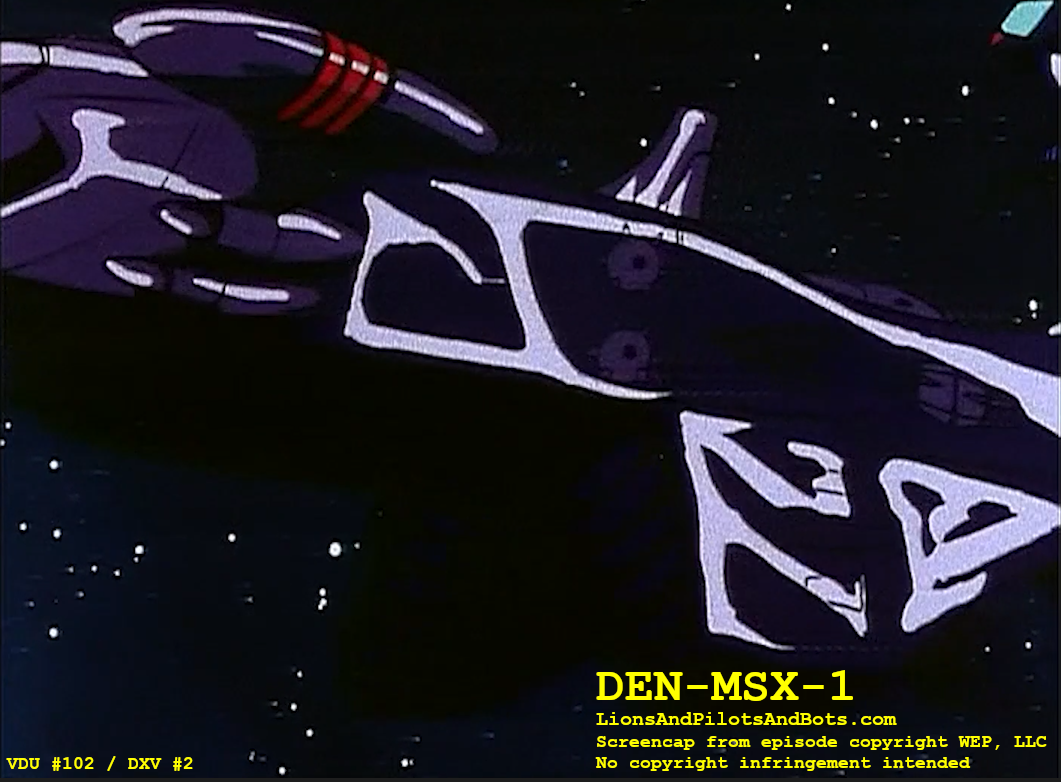
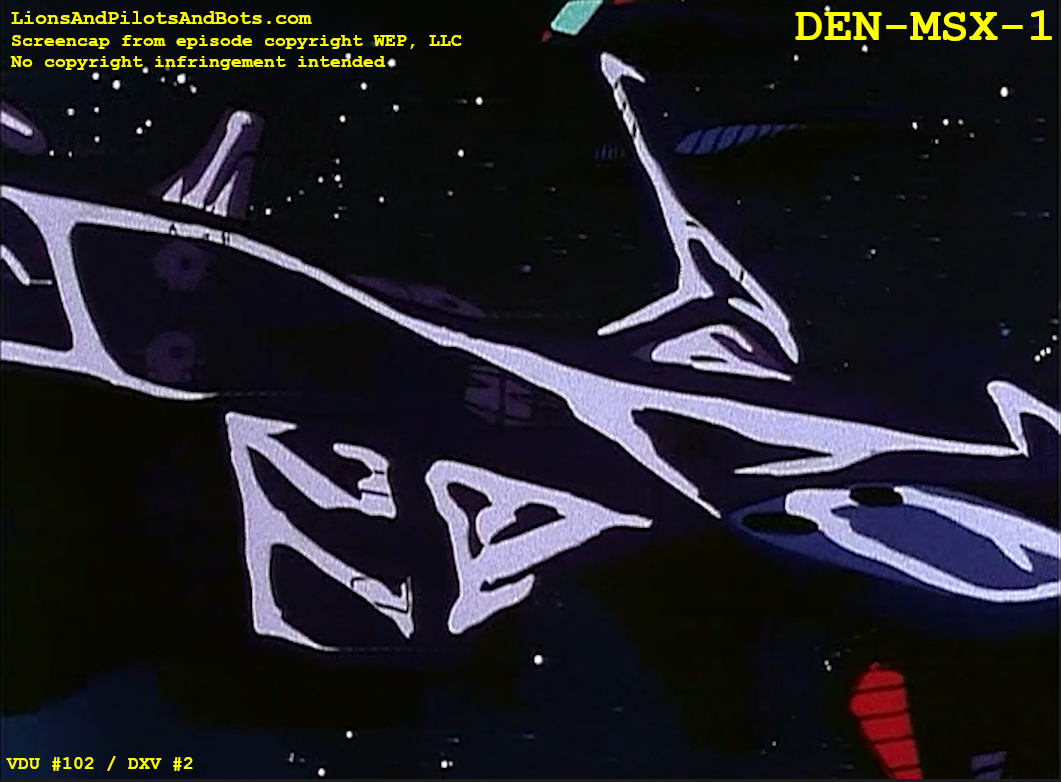
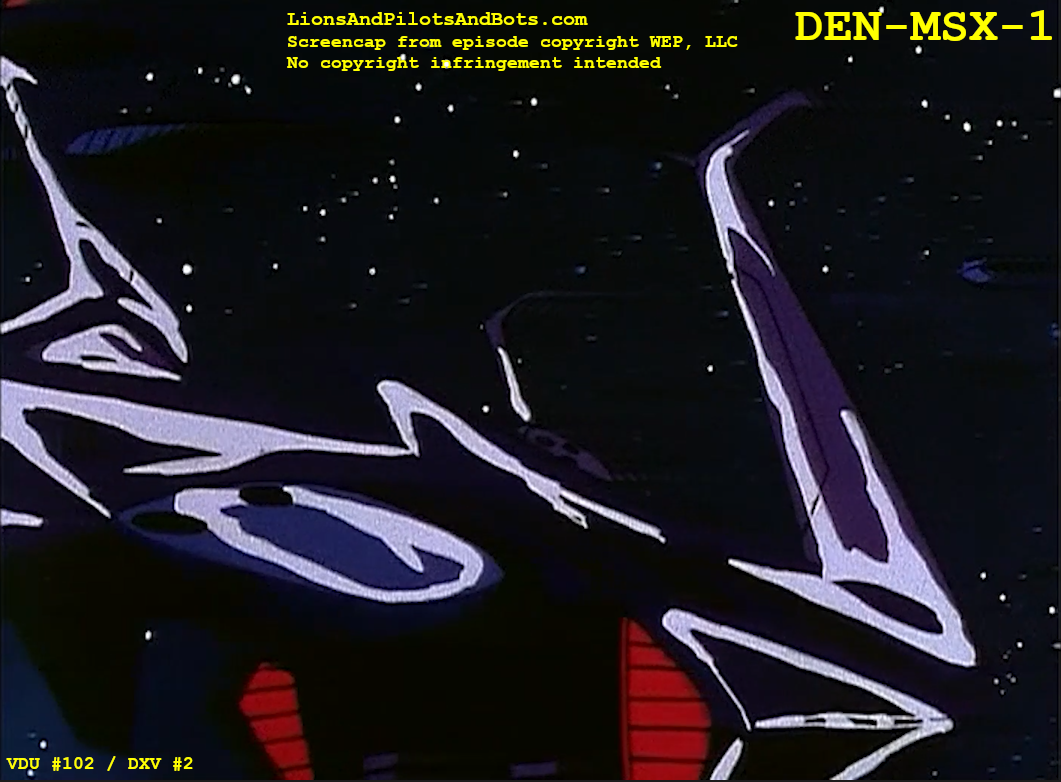
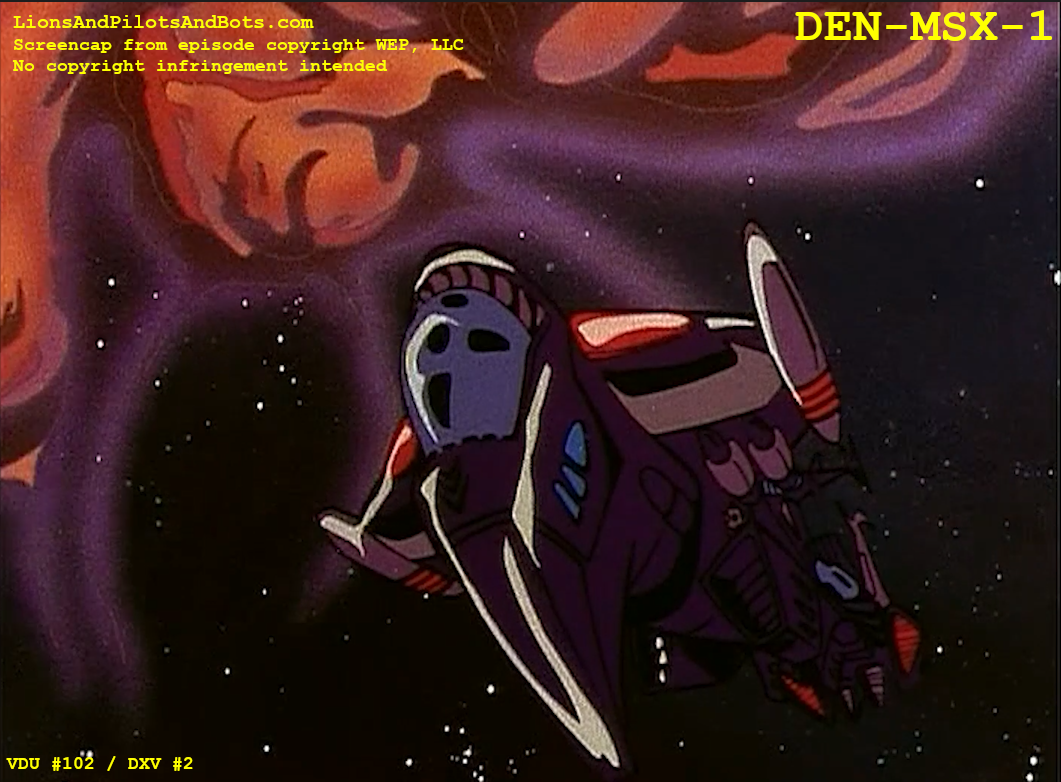
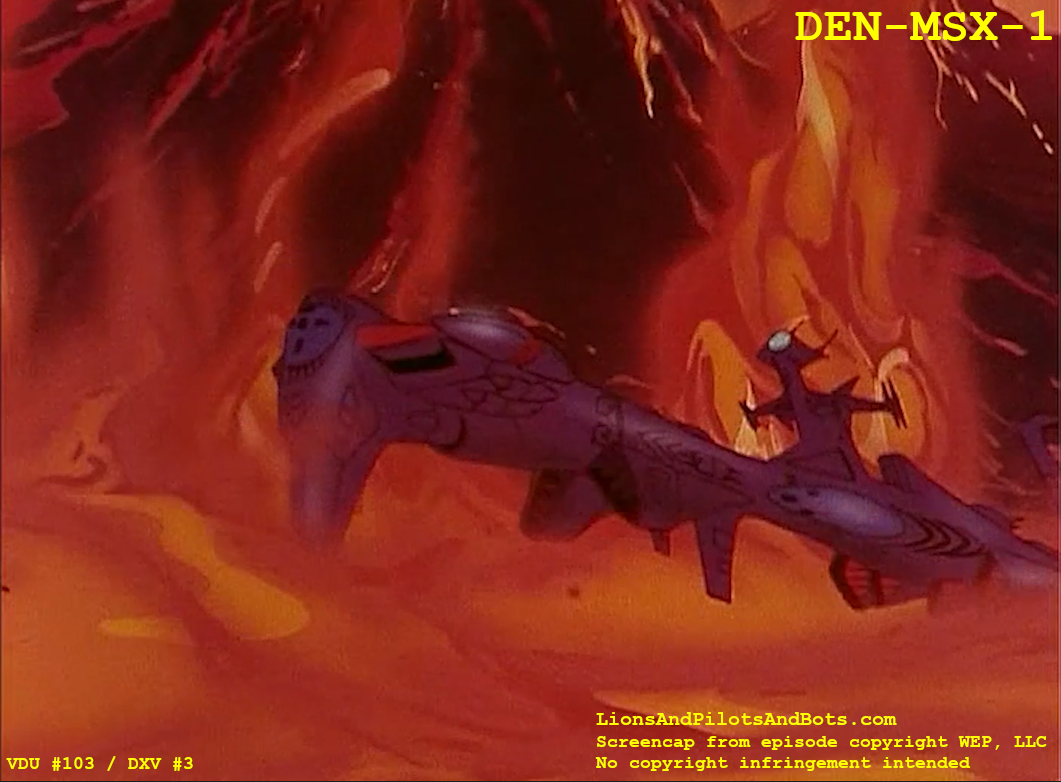
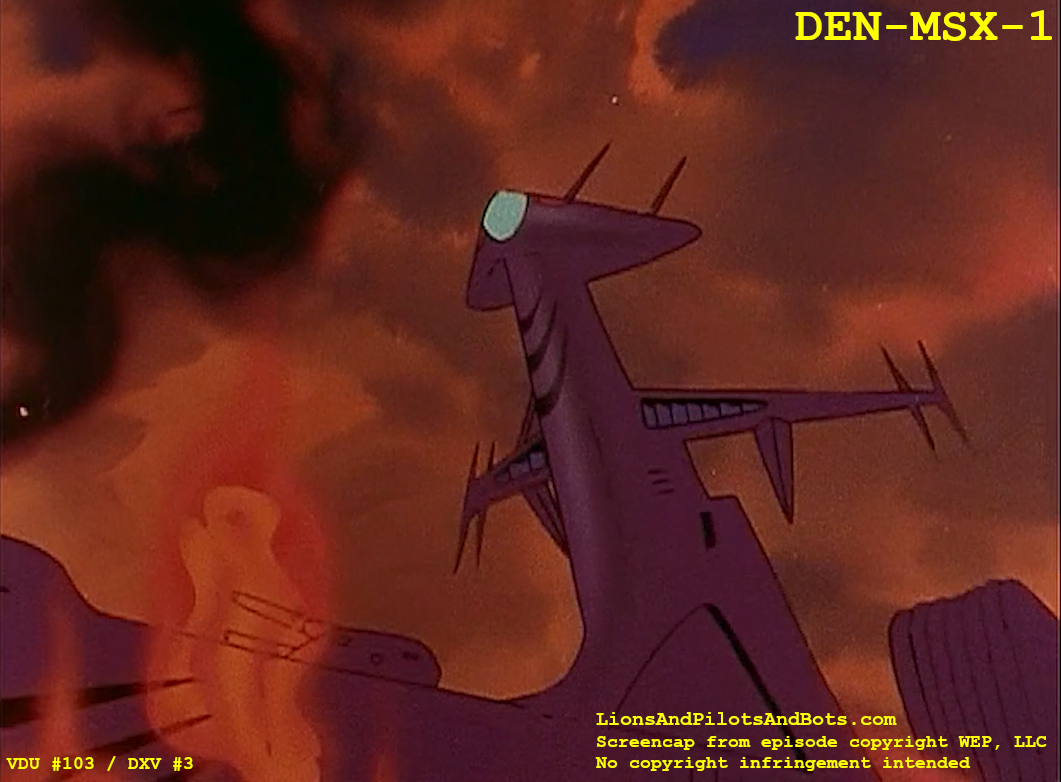
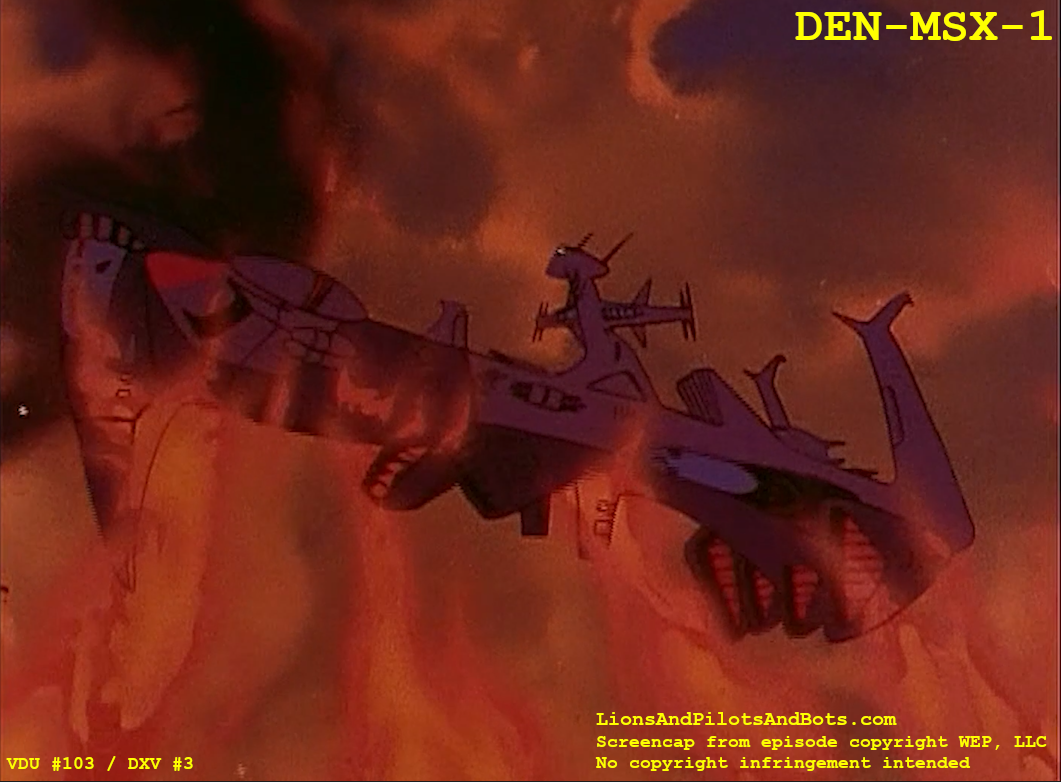
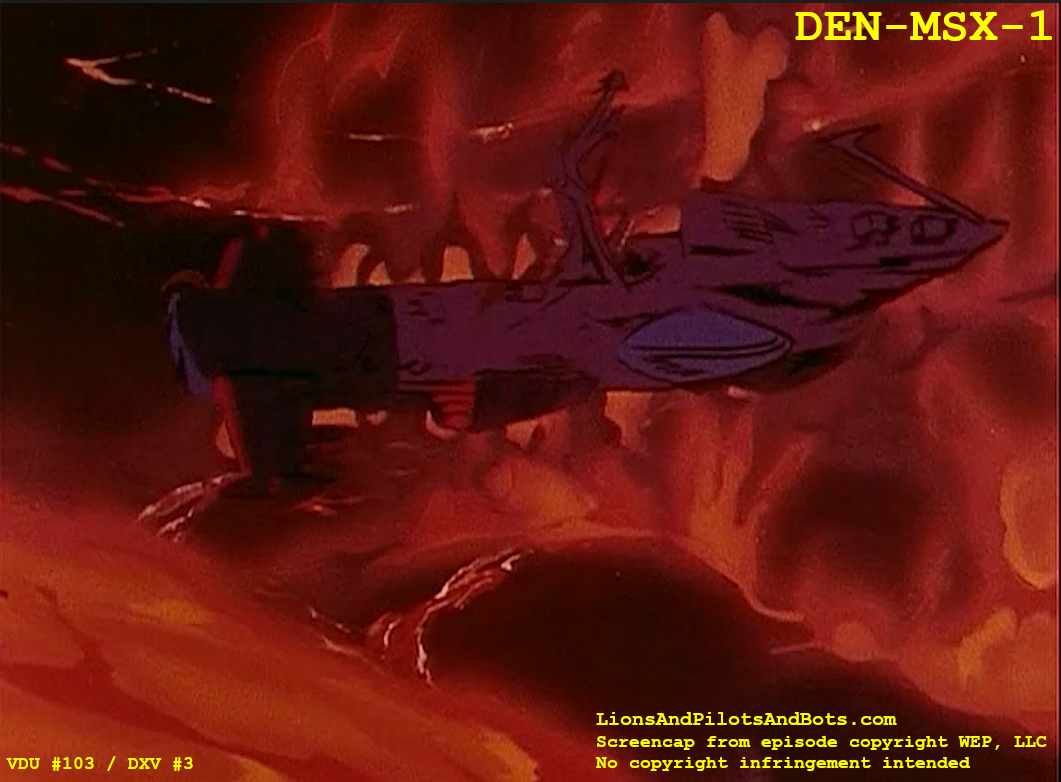
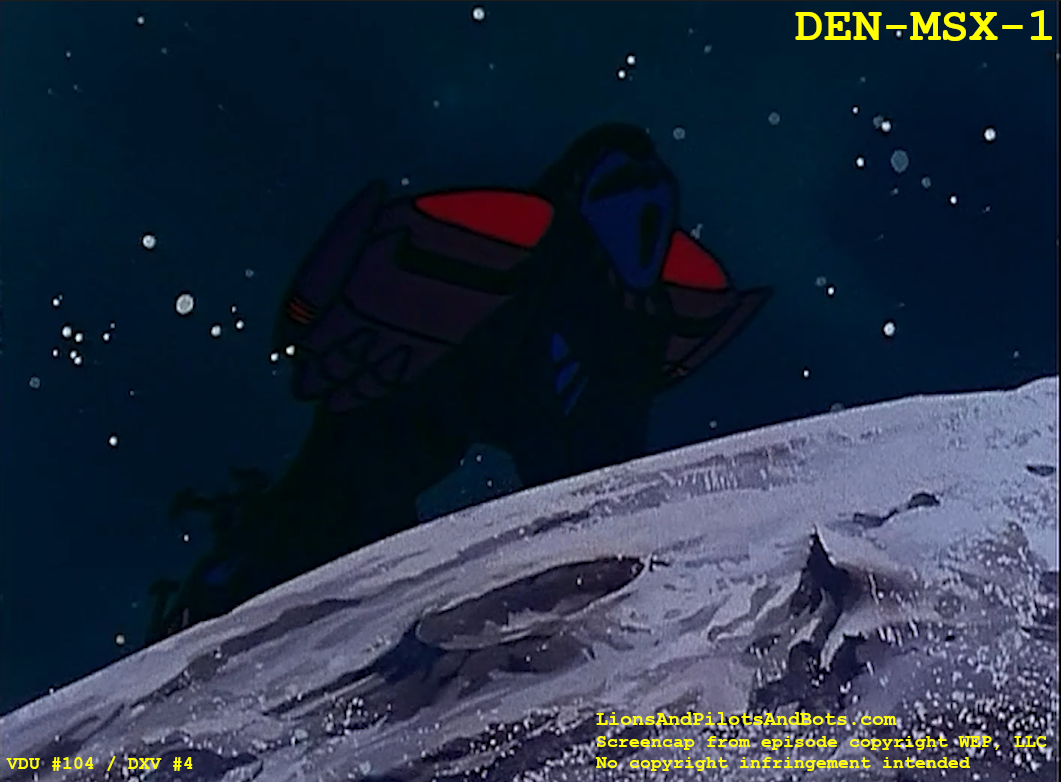
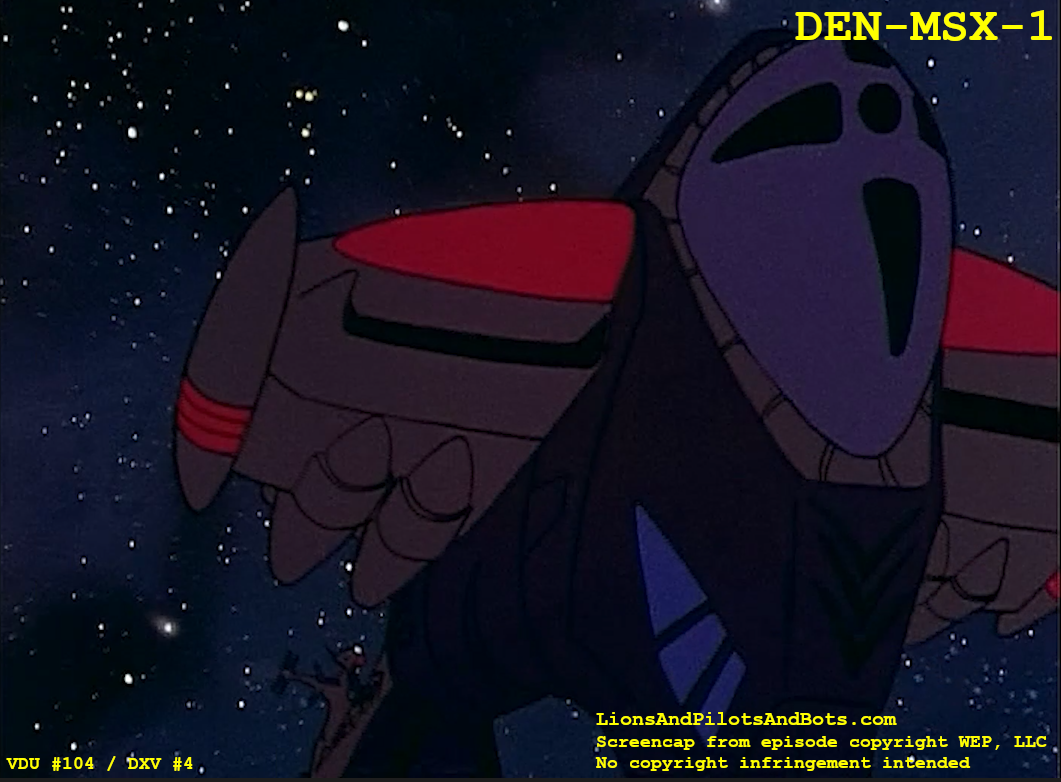
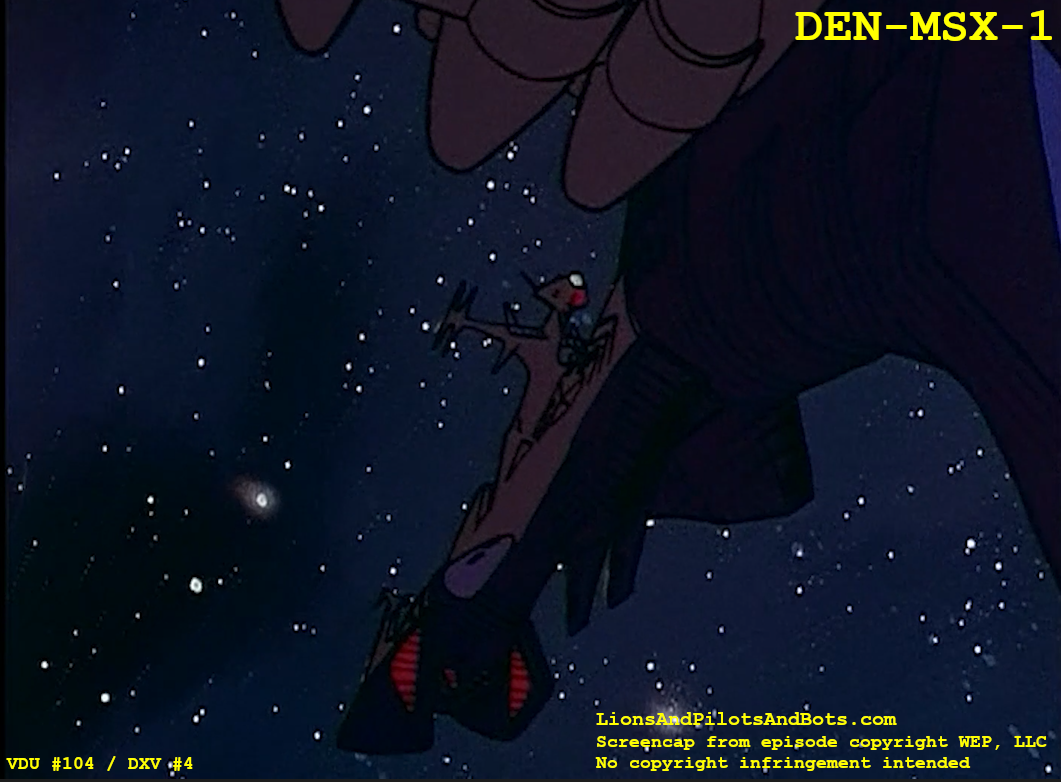
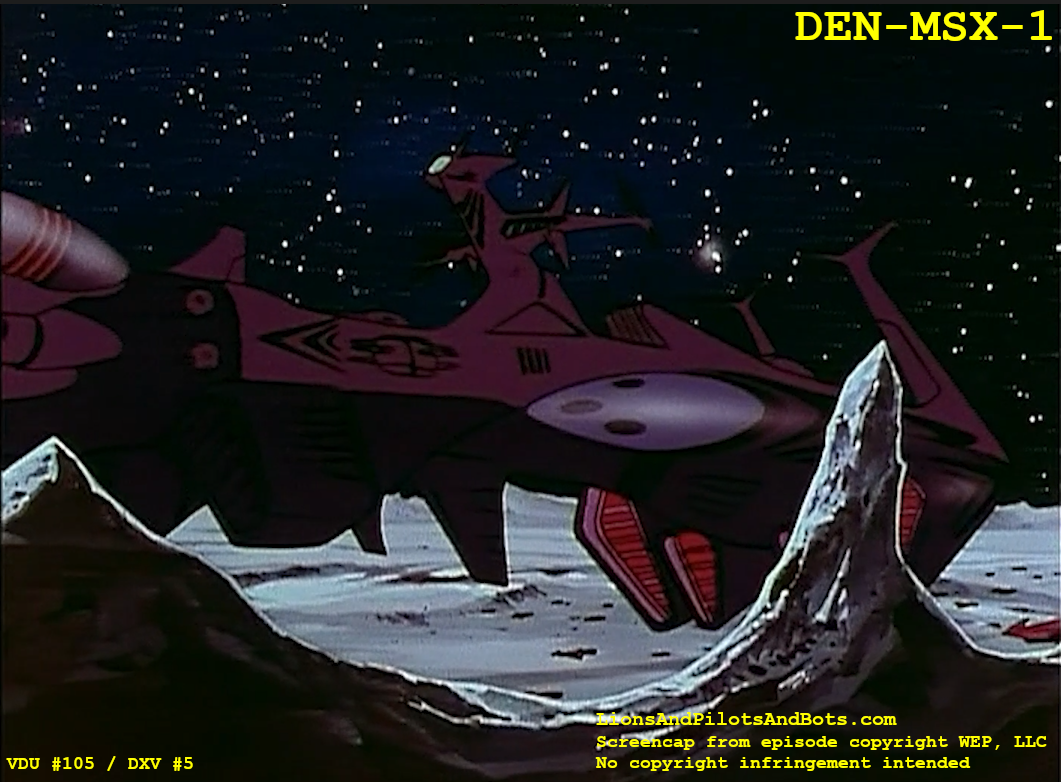
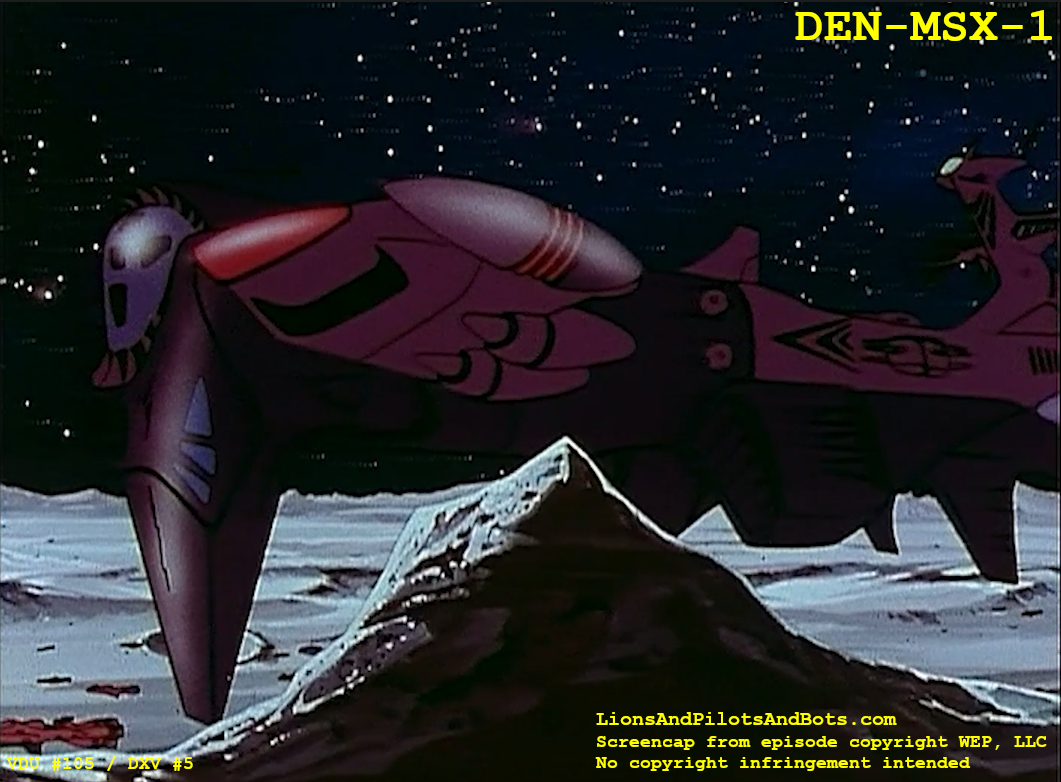
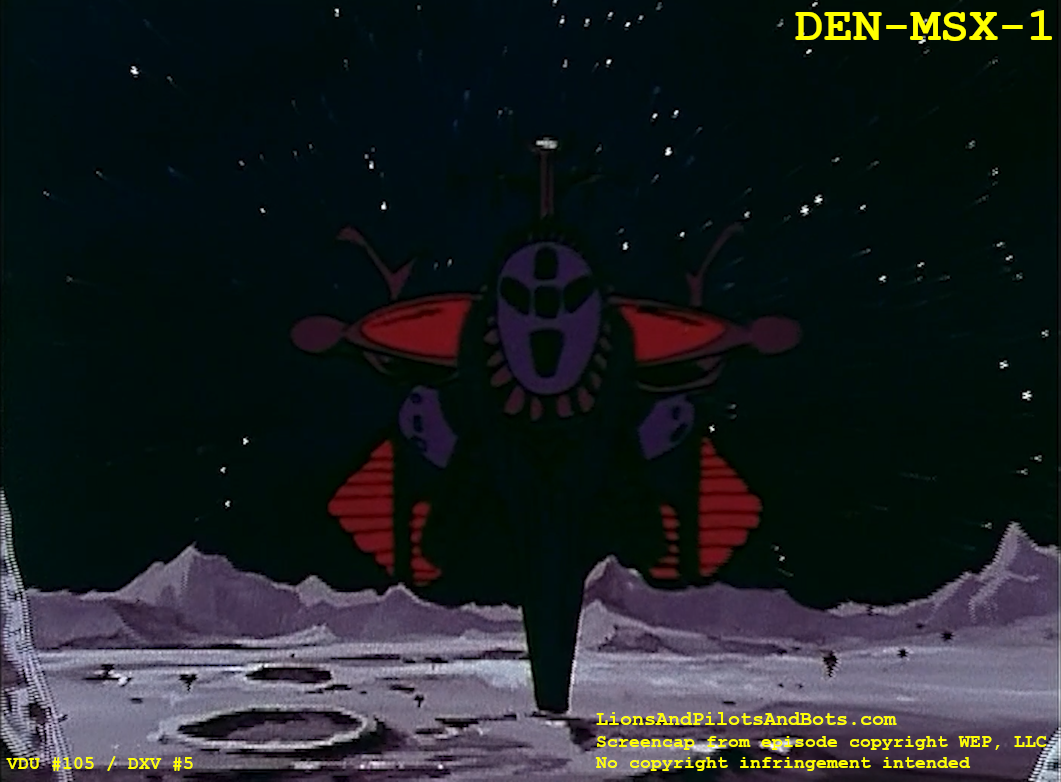
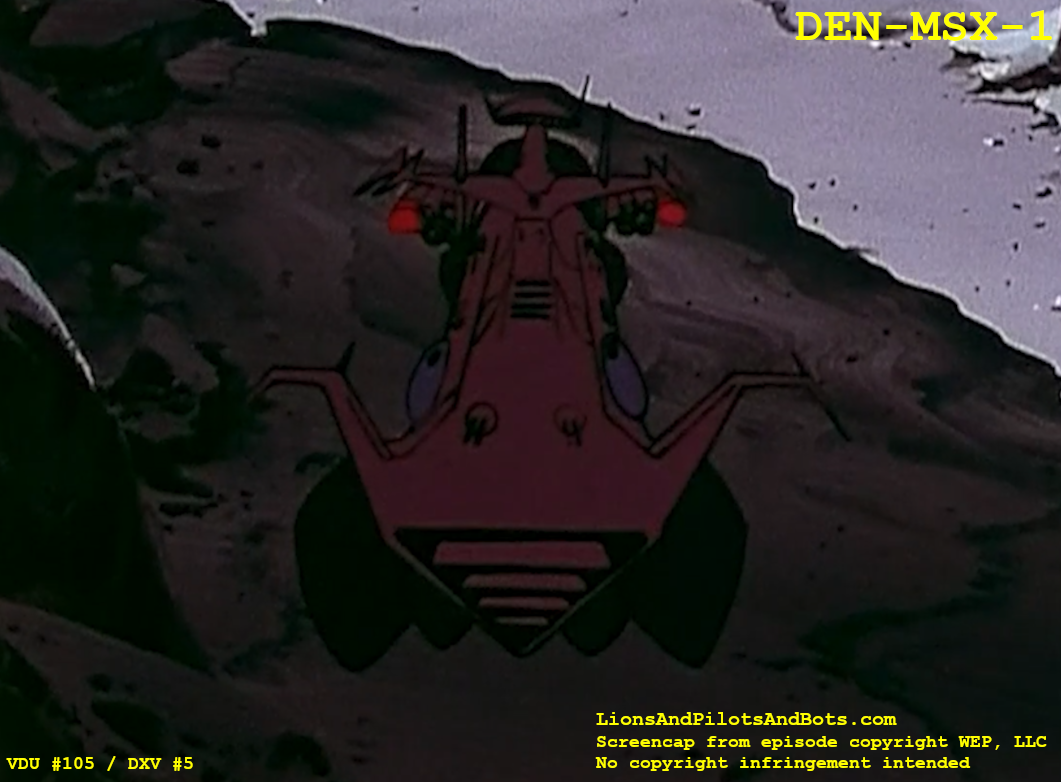
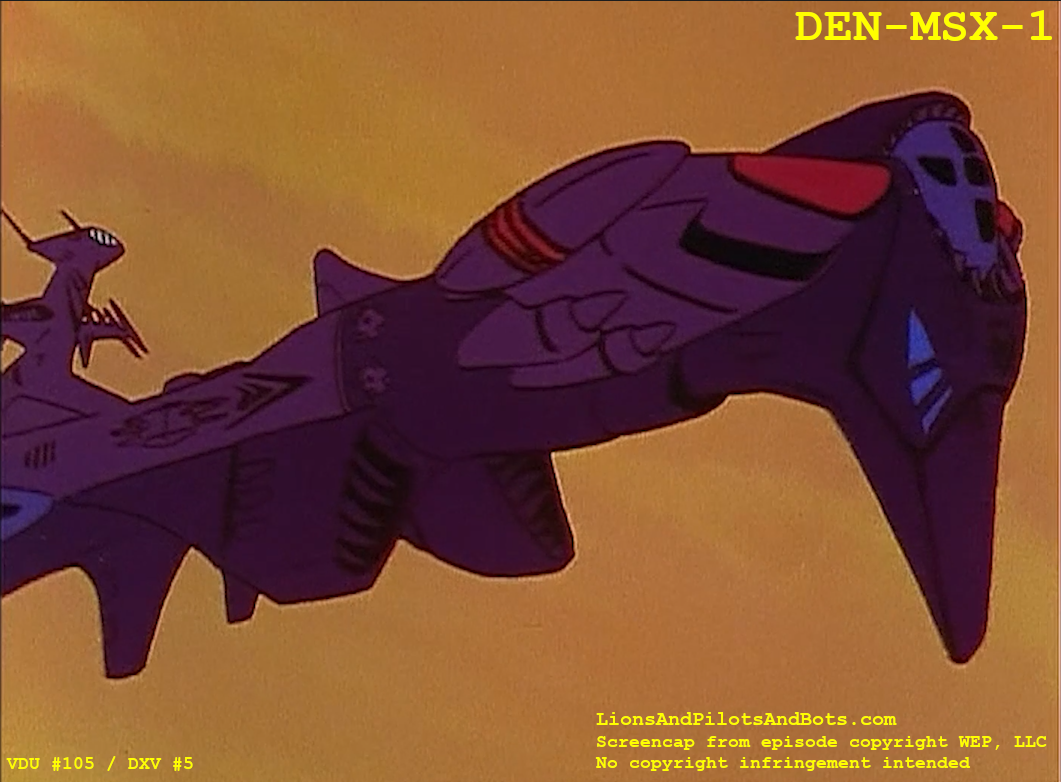
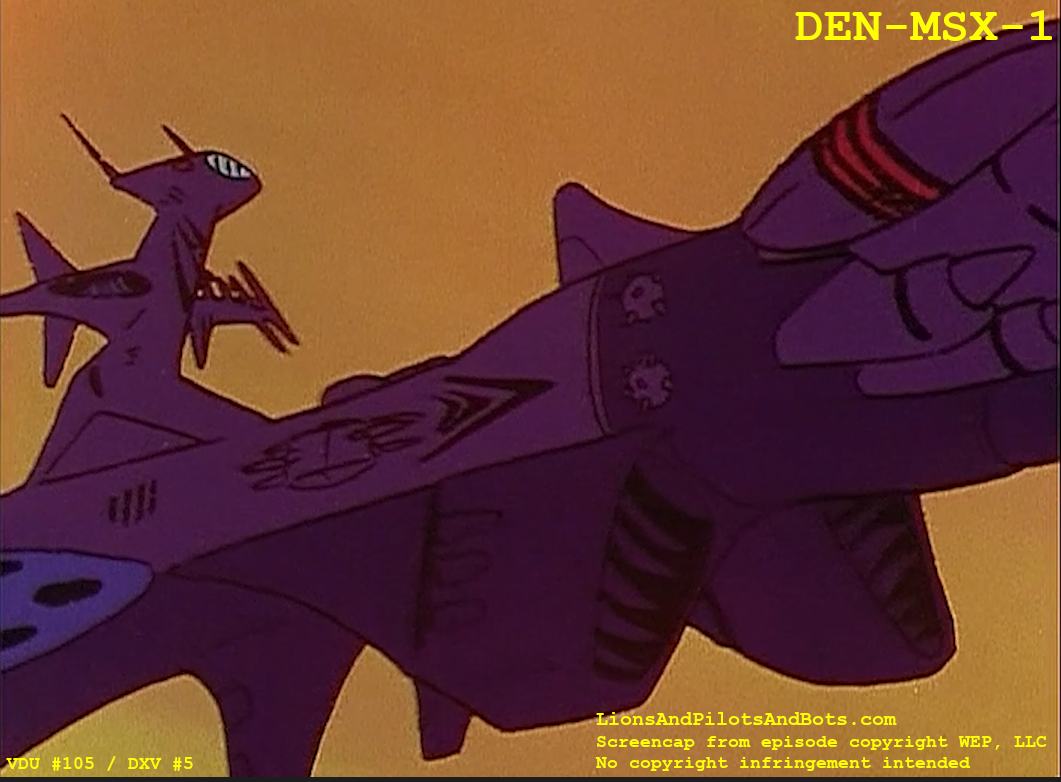
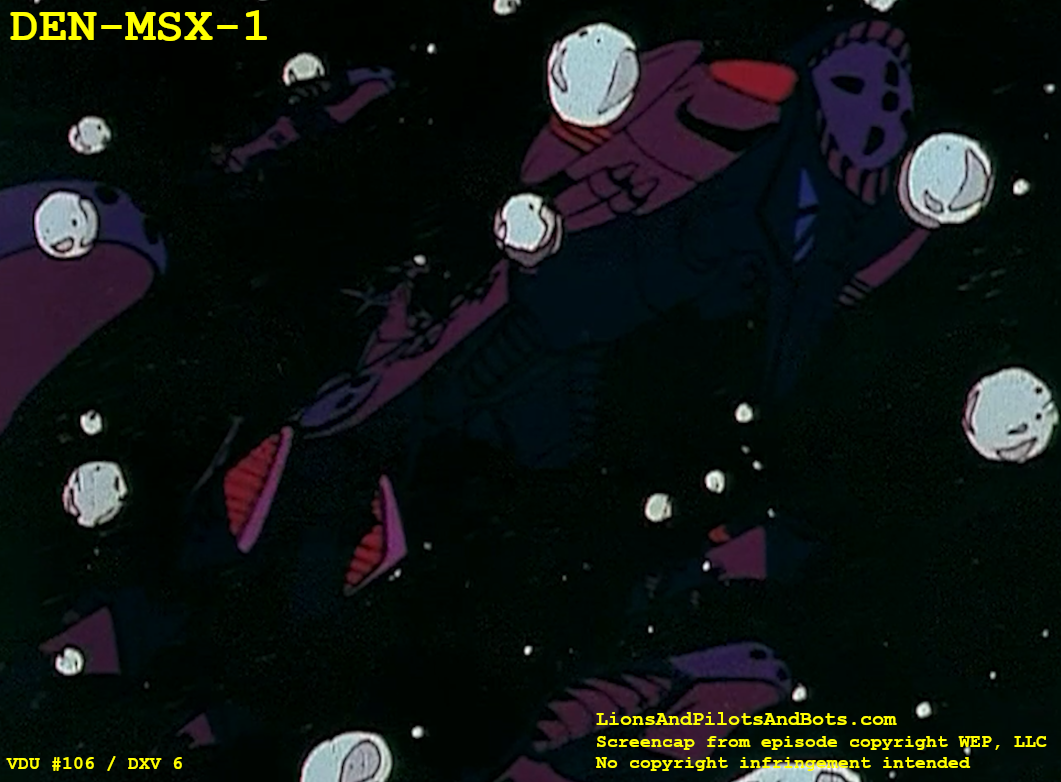
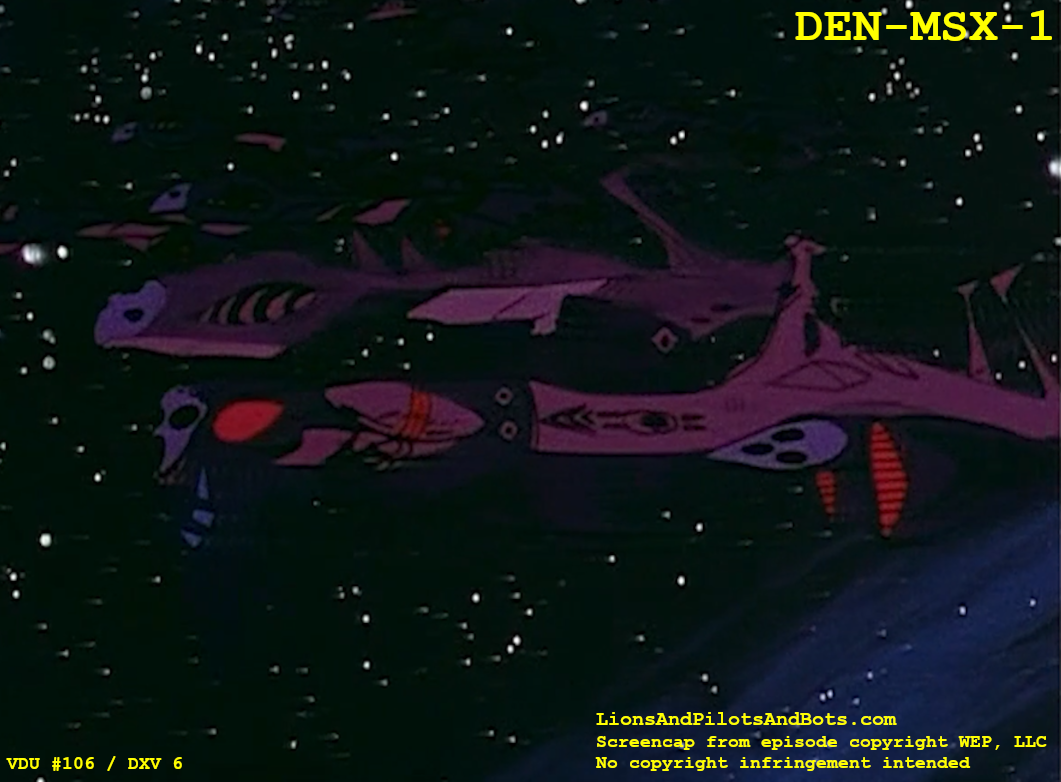
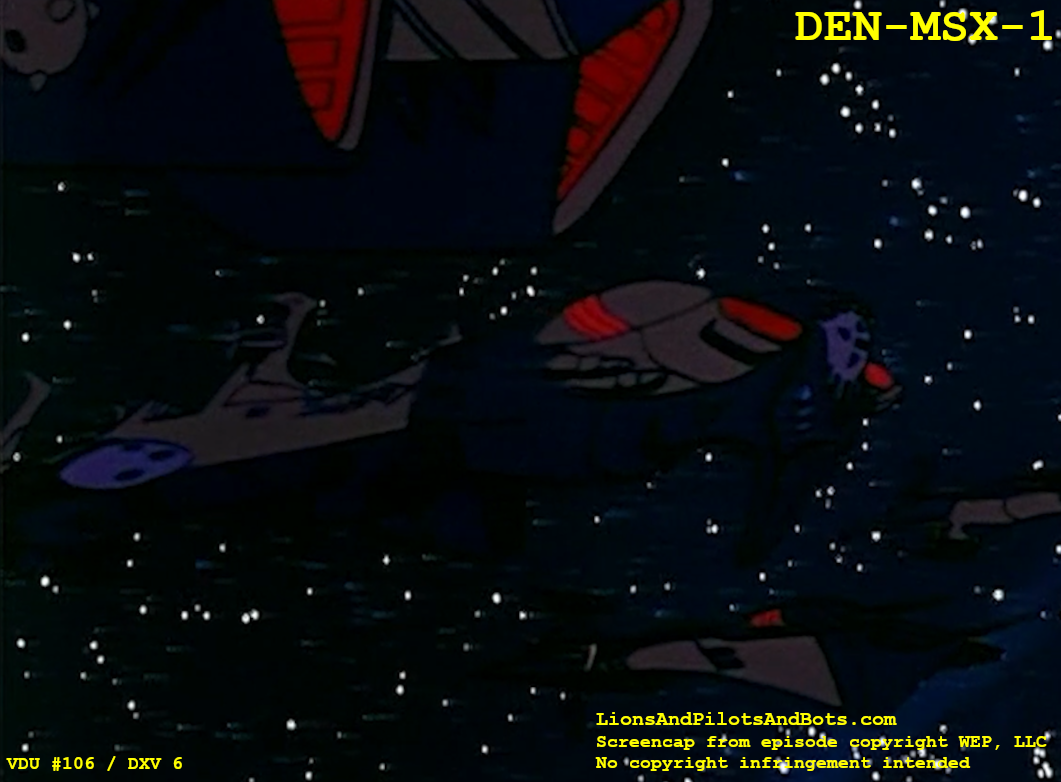
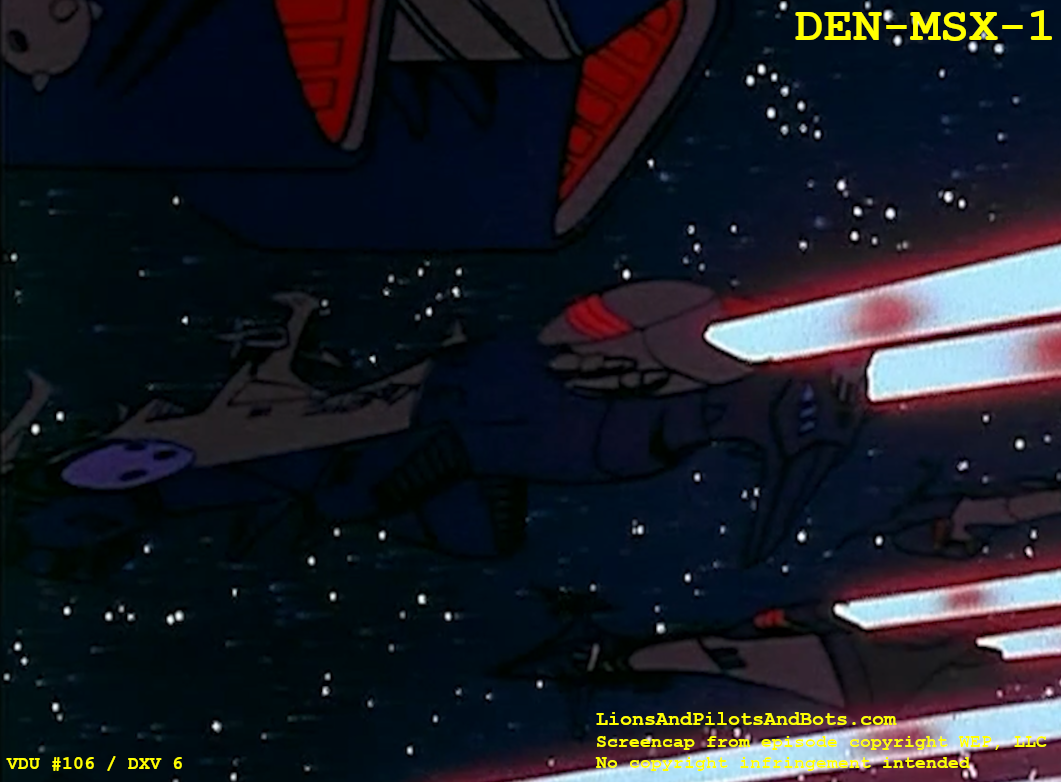
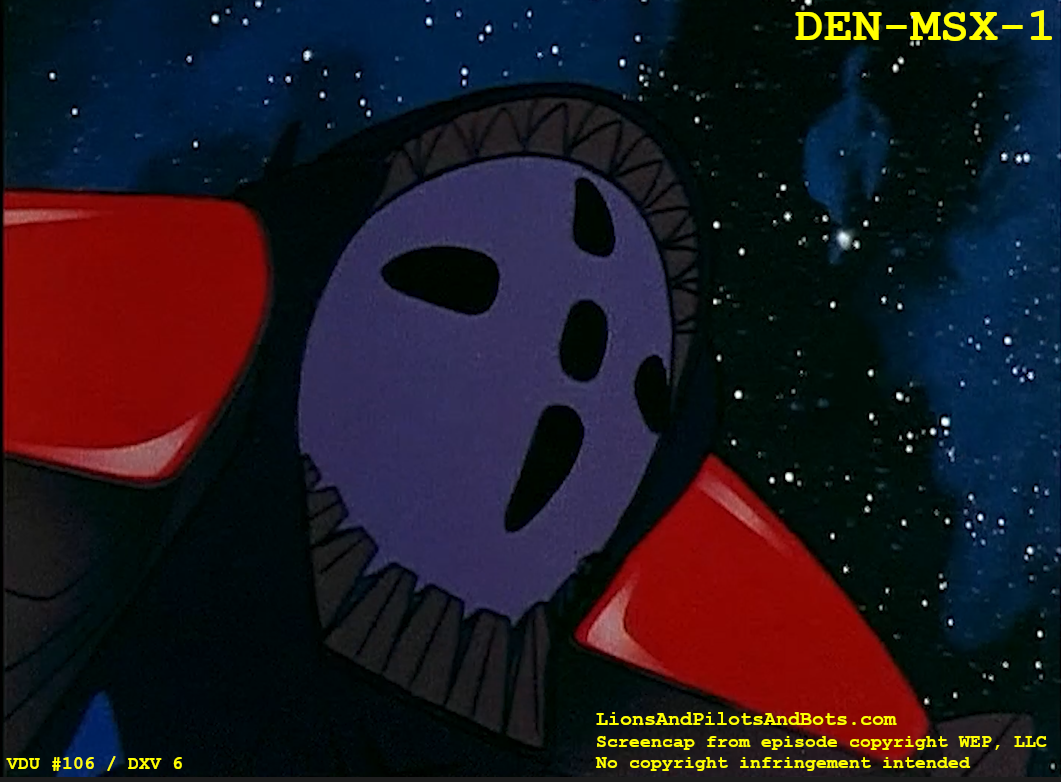
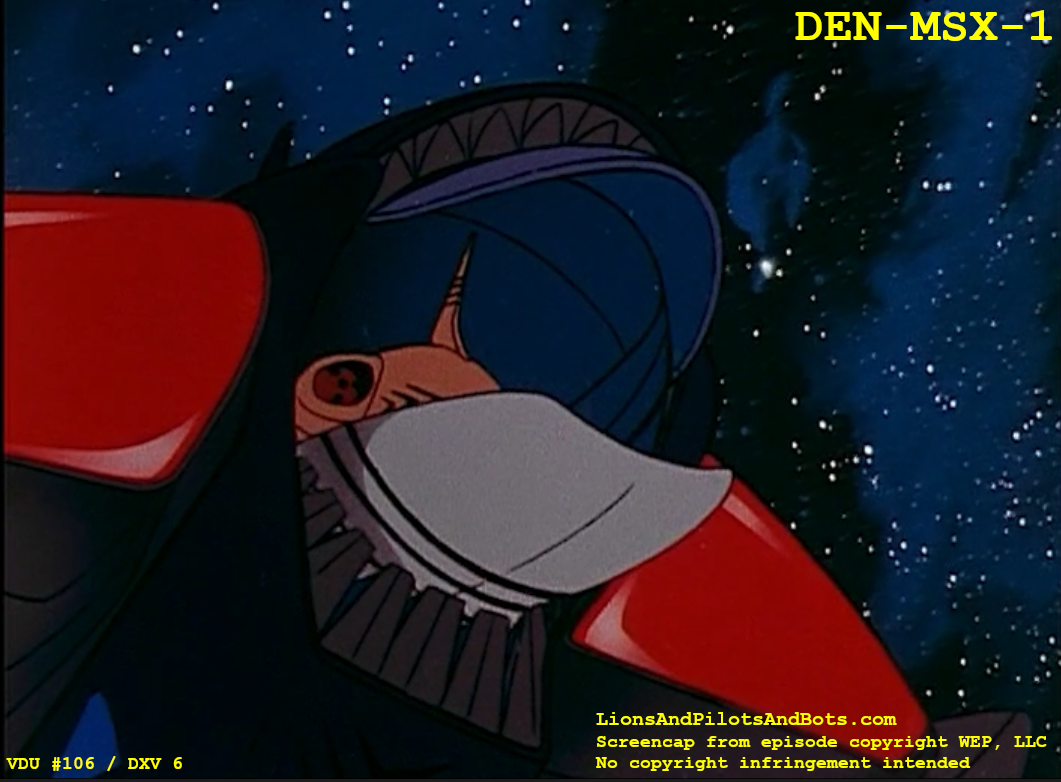
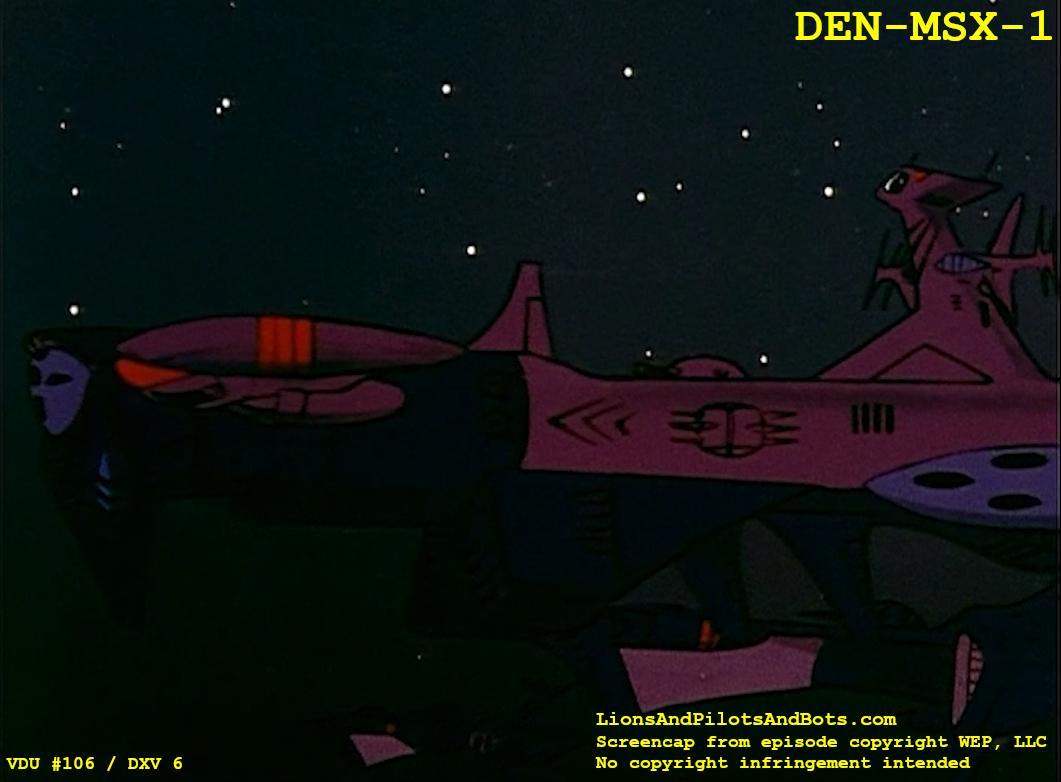
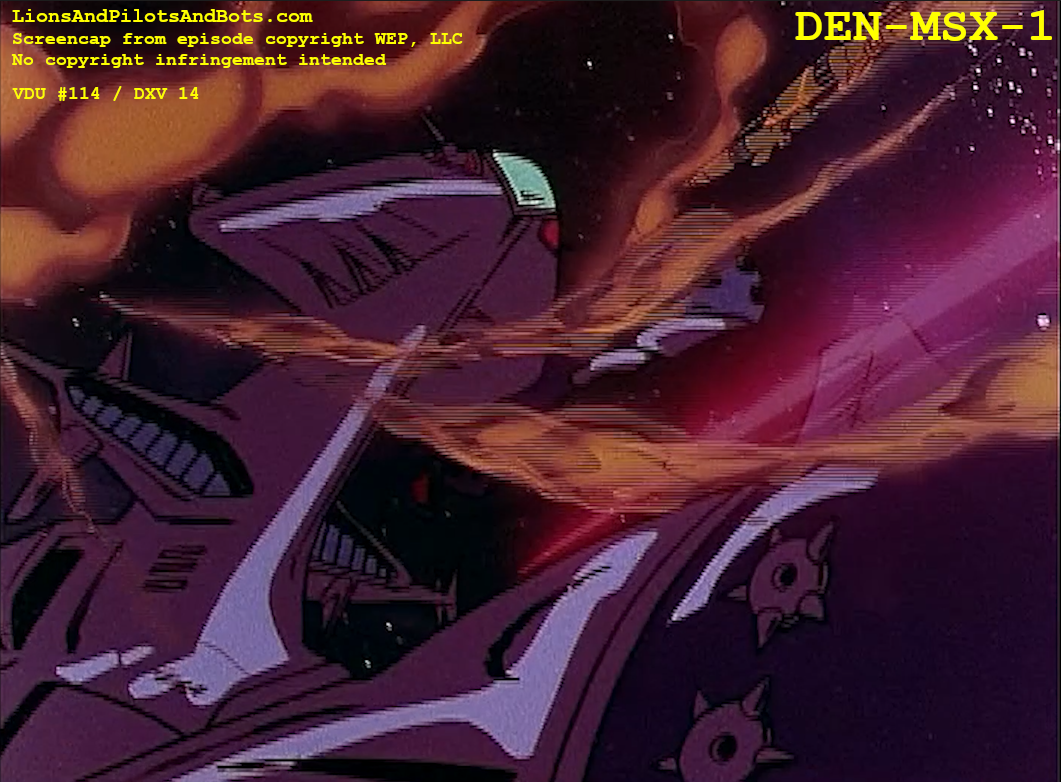
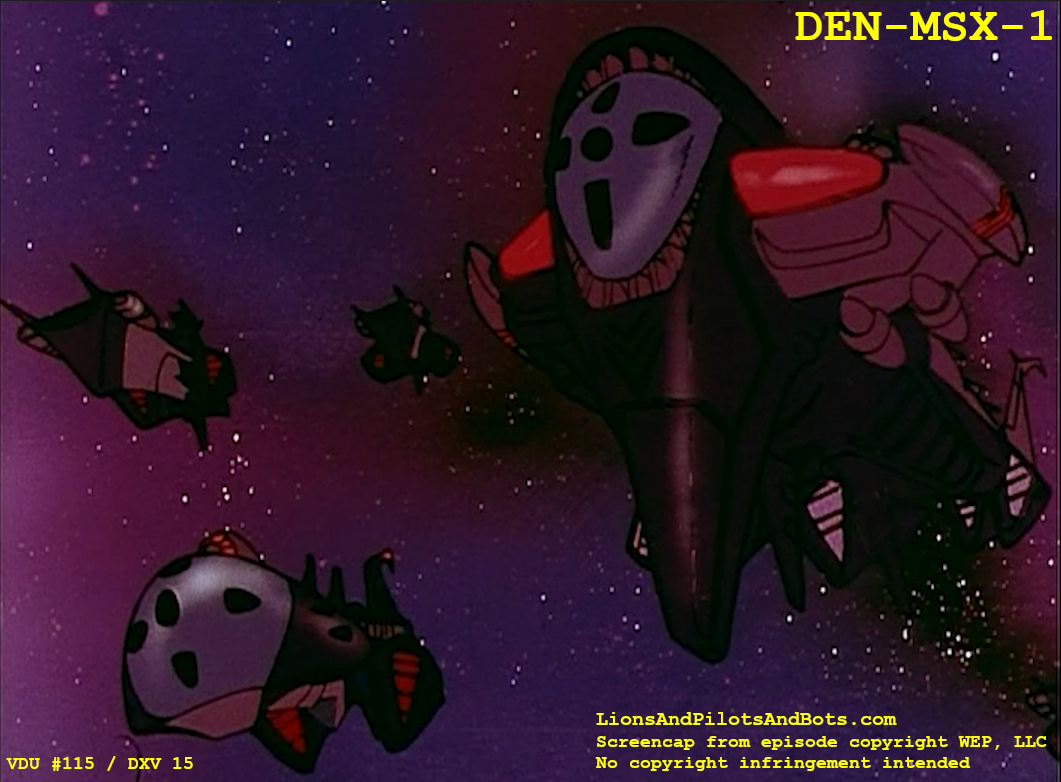
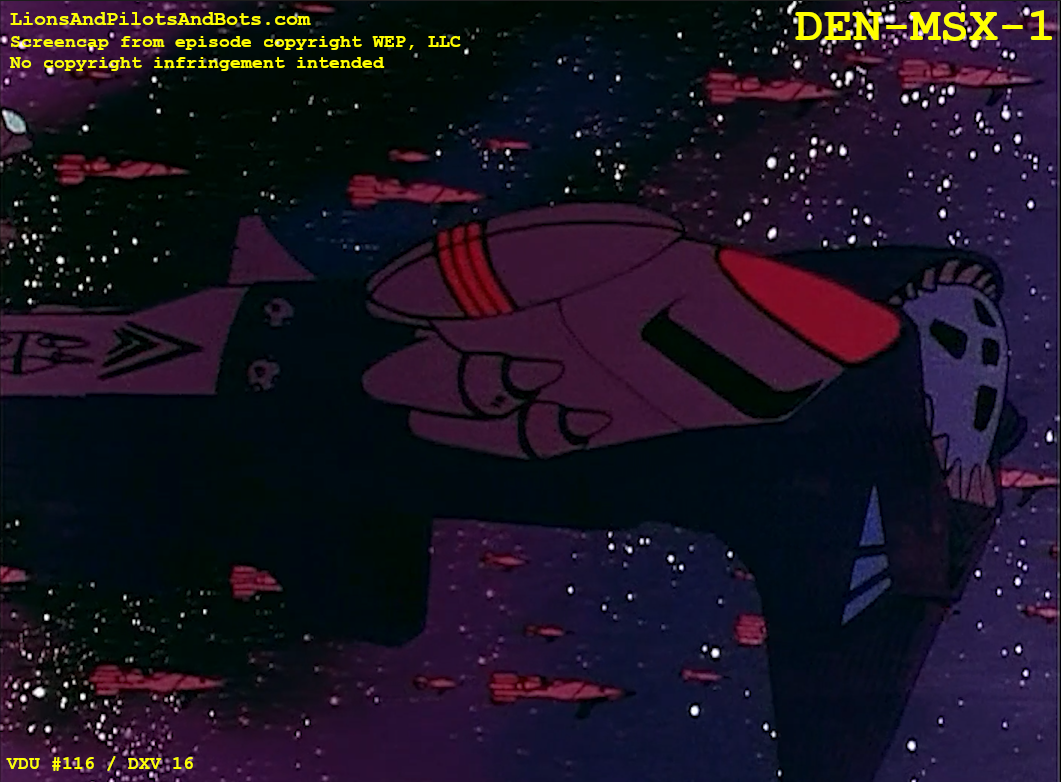
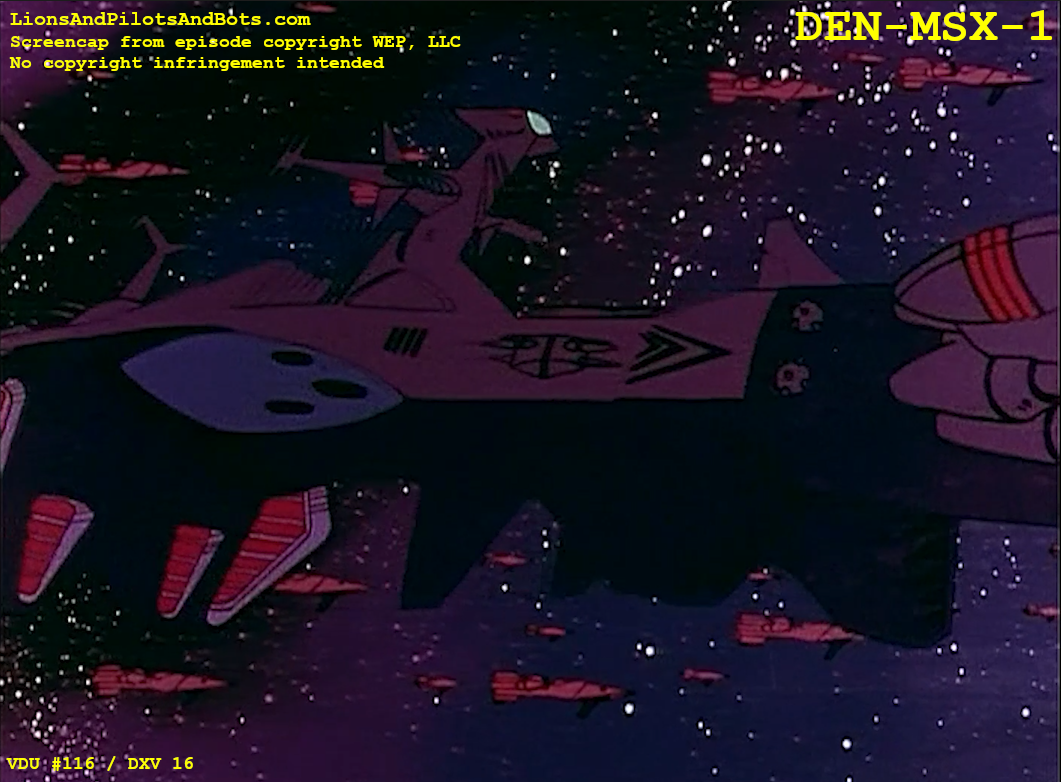
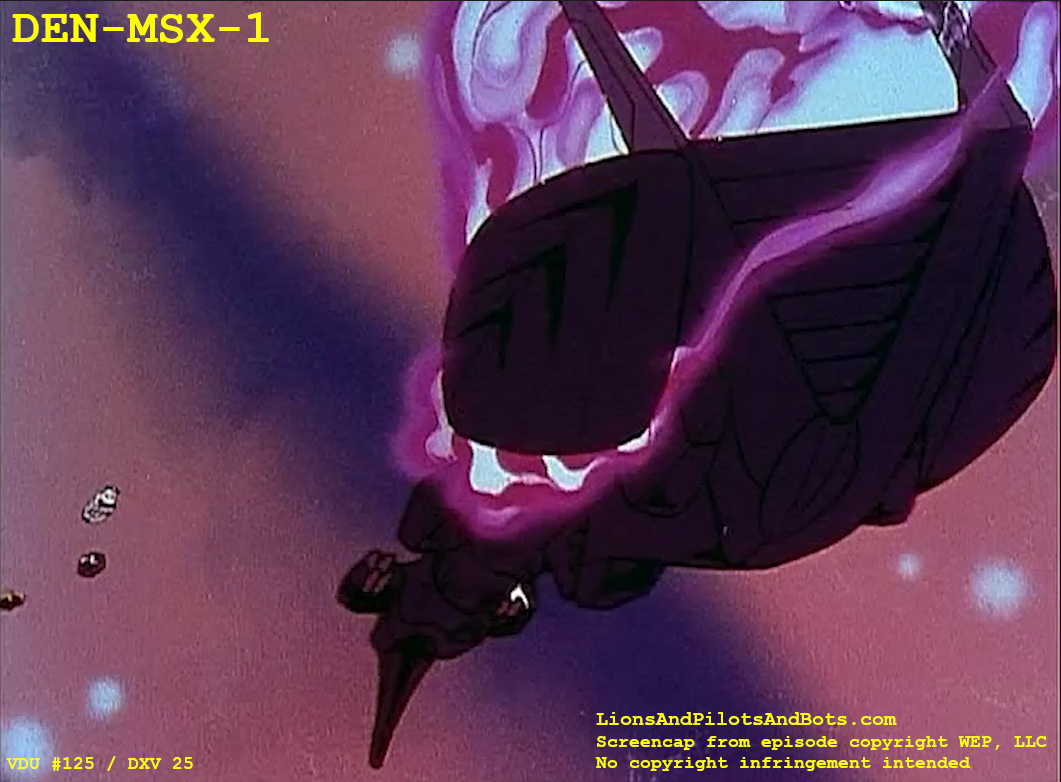
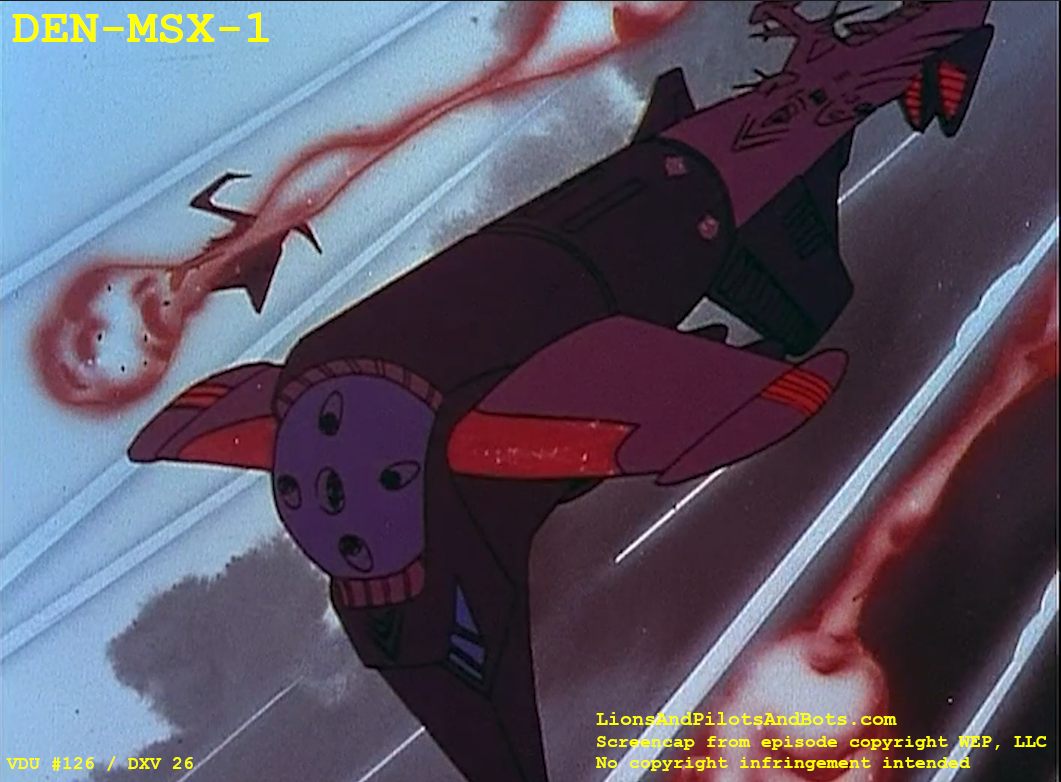
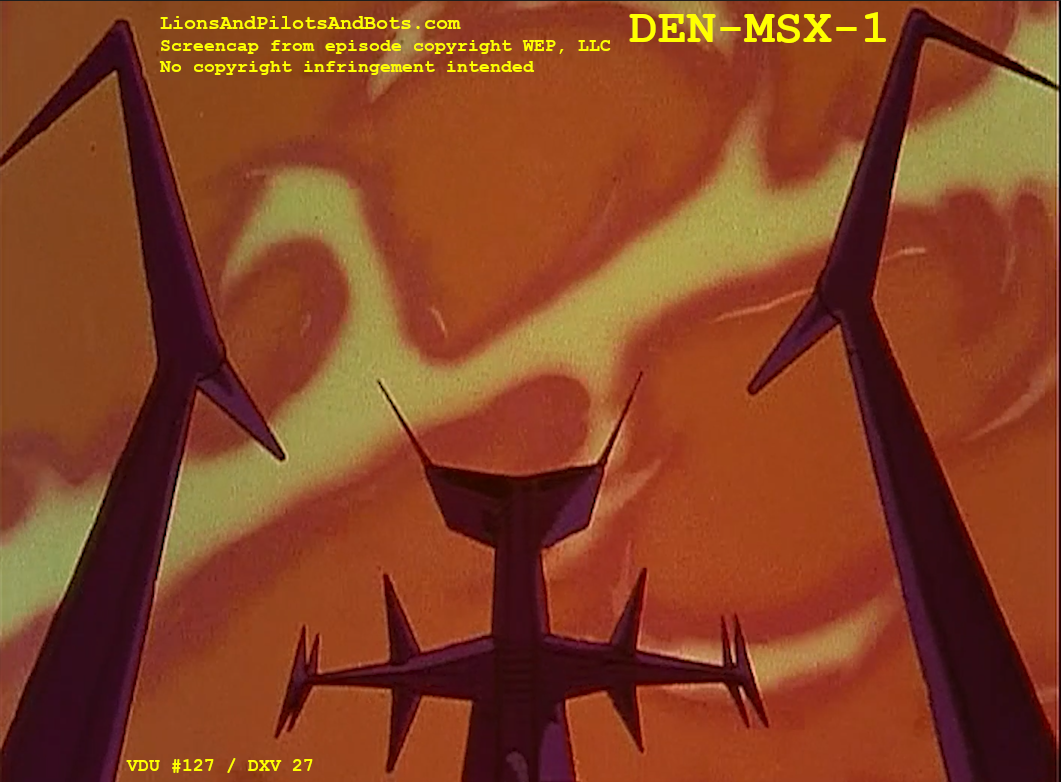
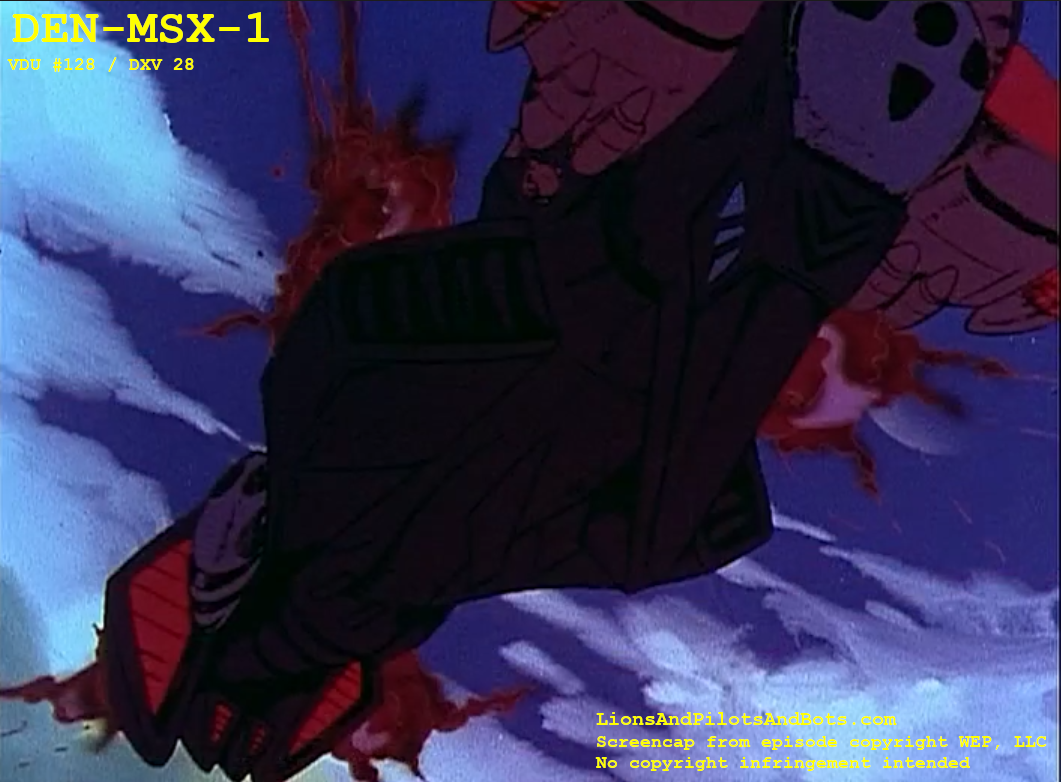
This article is part of a series of articles that examines some of the artwork from VOLTRON: DEFENDER OF THE UNIVERSE and the anime programs from which it was adapted.
This article examines the military installations, or bases, of the “Near Universe” Drule Empire from the Vehicle Team episodes of VOLTRON: DEFENDER OF THE UNIVERSE. These episodes were adapted from the anime program ARMORED FLEET DAIRUGGER XV (DXV), and VOLTRON‘s “Near Universe” Drule Empire was adapted from DAIRUGGER‘s Galveston Empire.
This article does not examine the home planet of the “Near Universe” Drule Empire, the planet Drule.
While researching for this article, I examined all 52 Vehicle Team episodes of VOLTRON, and I discovered 10 base types that are clearly associated with the Drule Empire of the Near Universe.
Base Type Identifiers
Neither VOLTRON nor DAIRUGGER established formal names for Drule or Galveston base types, respectively. To facilitate examination of these base types, I defined a unique identifier for each type. The identifiers follow the format:
{Authority Code}-{Category Code}-{Number}
where:
{Authority Code} identifies the operating authority for bases of that type. For each type that is associated with VOLTRON’s Drule Empire of the Near Universe, the Authority Code is “DEN” (for Drule Empire – Near Universe).
{Category Code} is “I” for installation – that is, a base.
{Number} is a natural number.
Base Types – Summary Information
The table below provides summary information for each base type. Click the type’s ID to view detail information about, and additional images of, the base type.
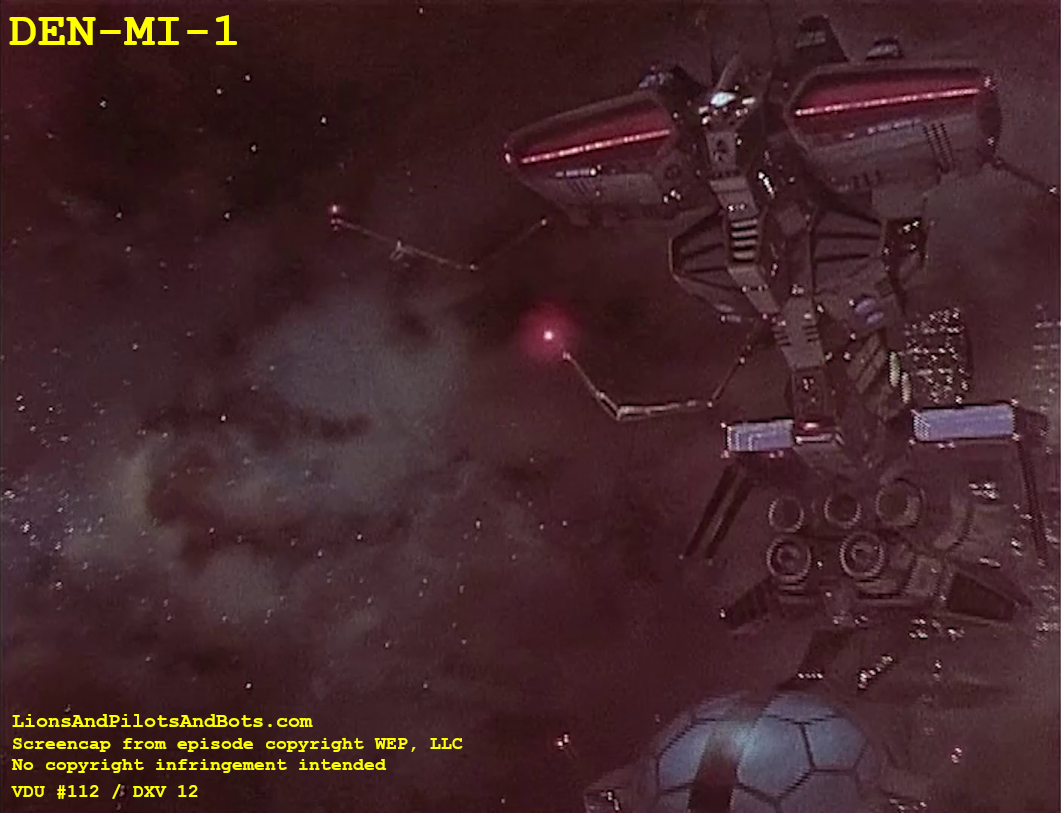
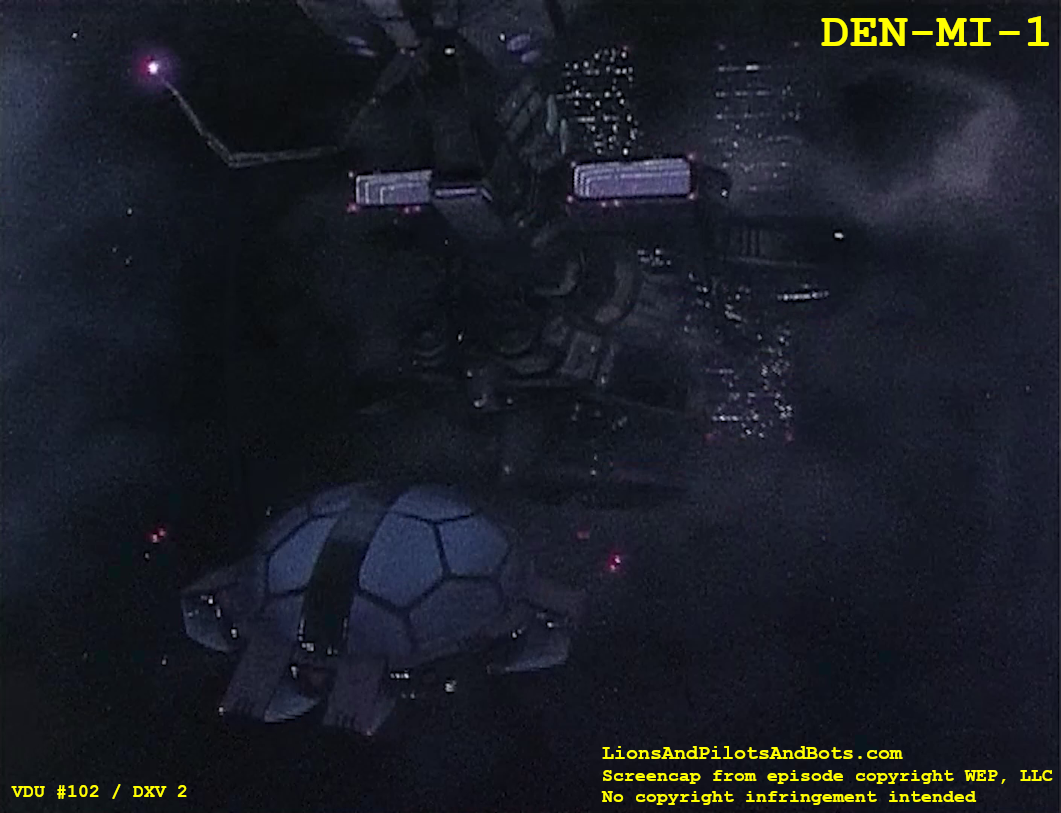
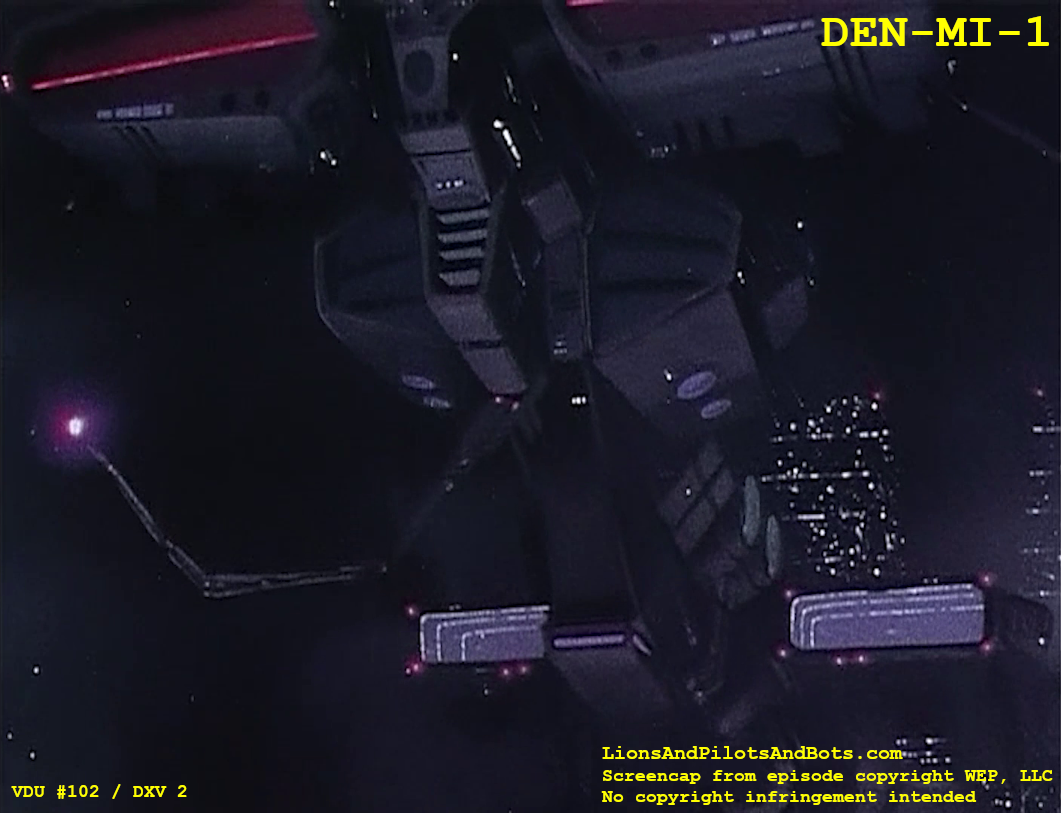
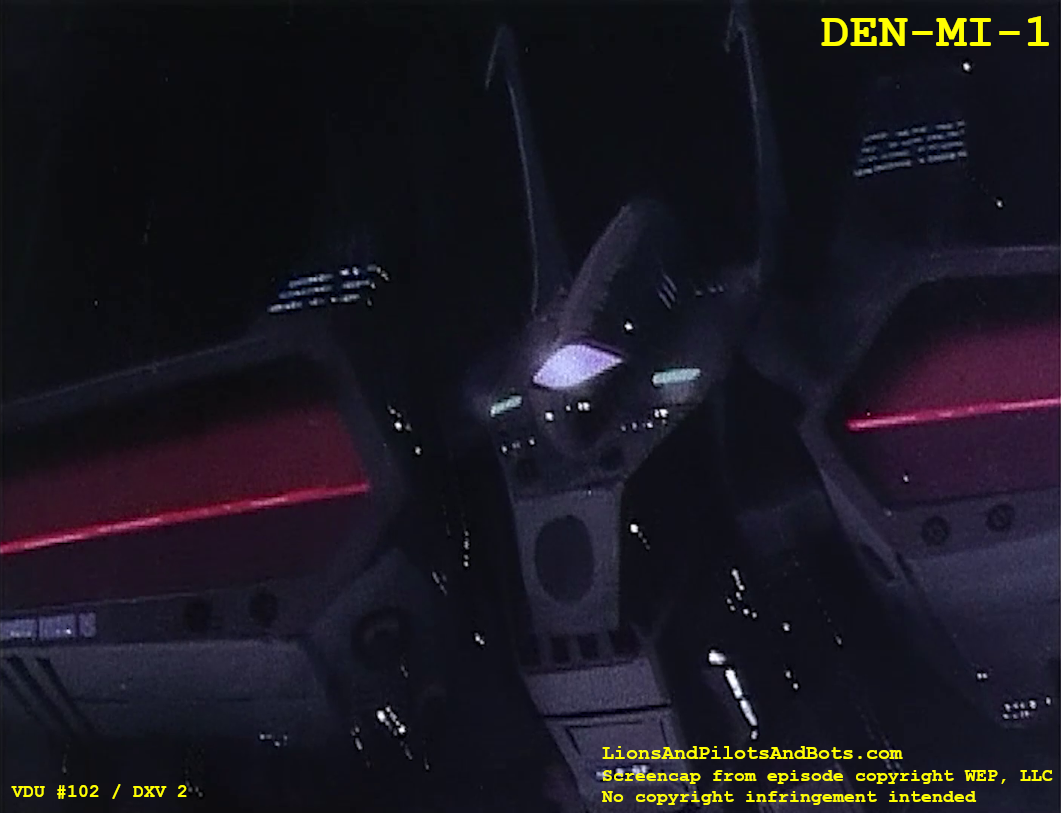
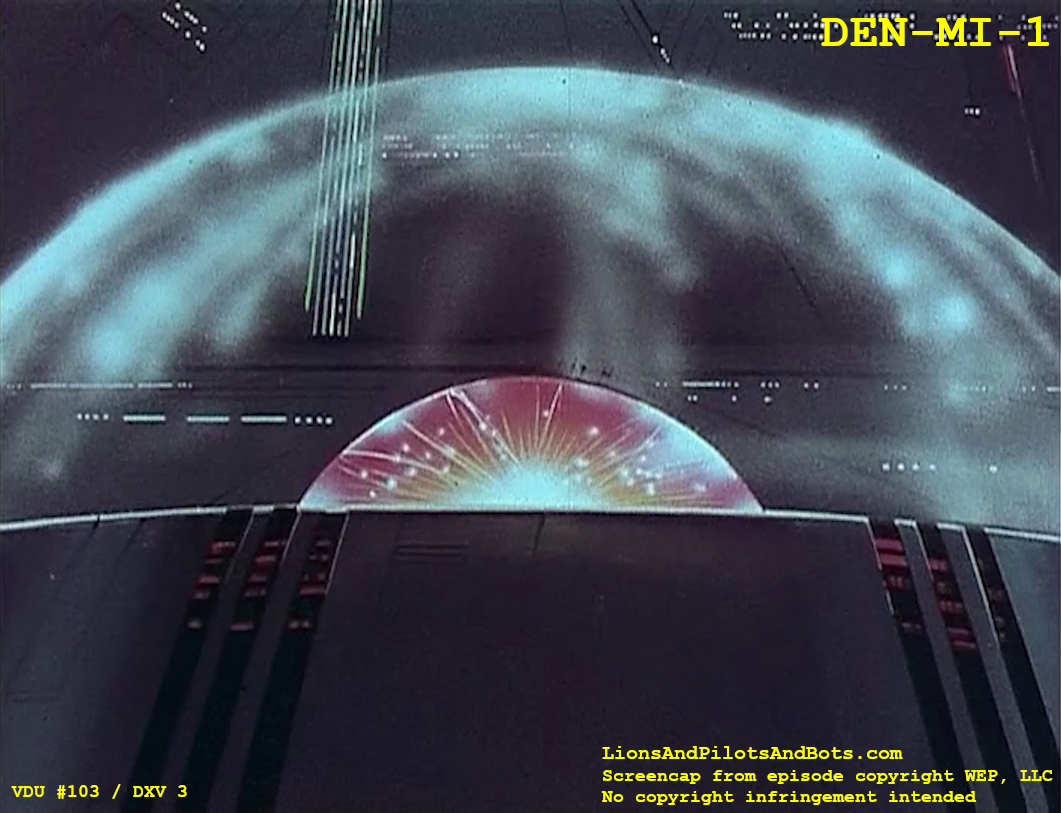
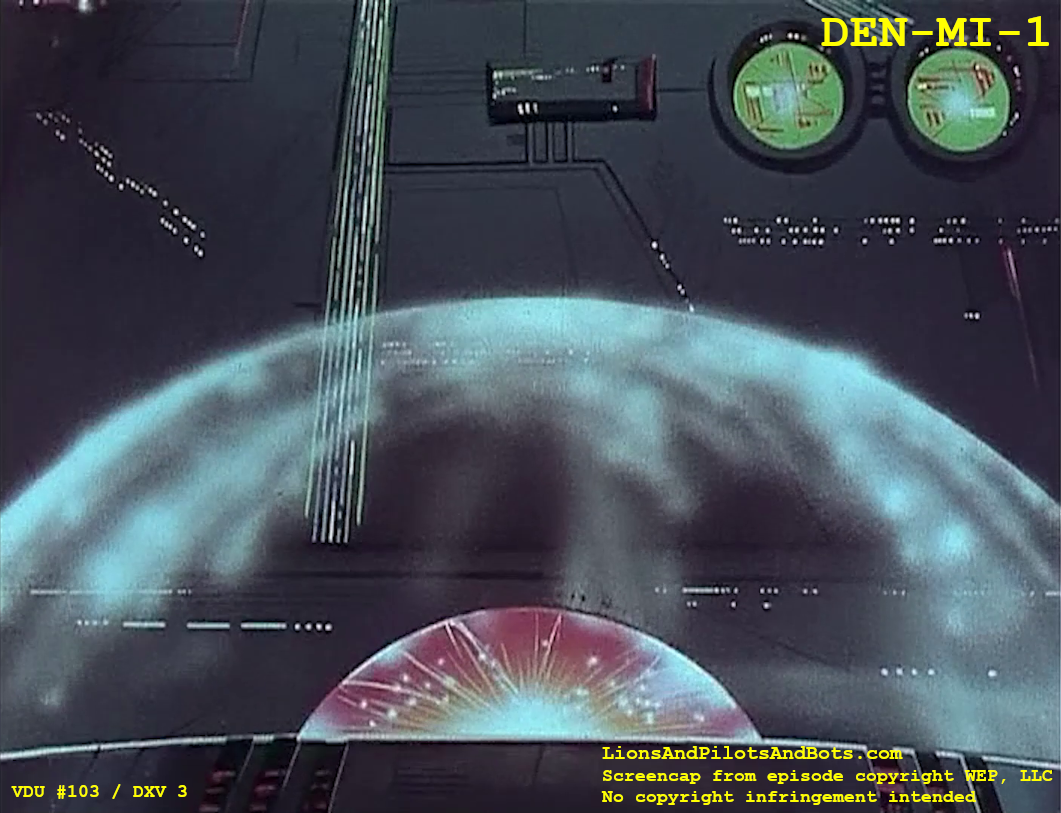
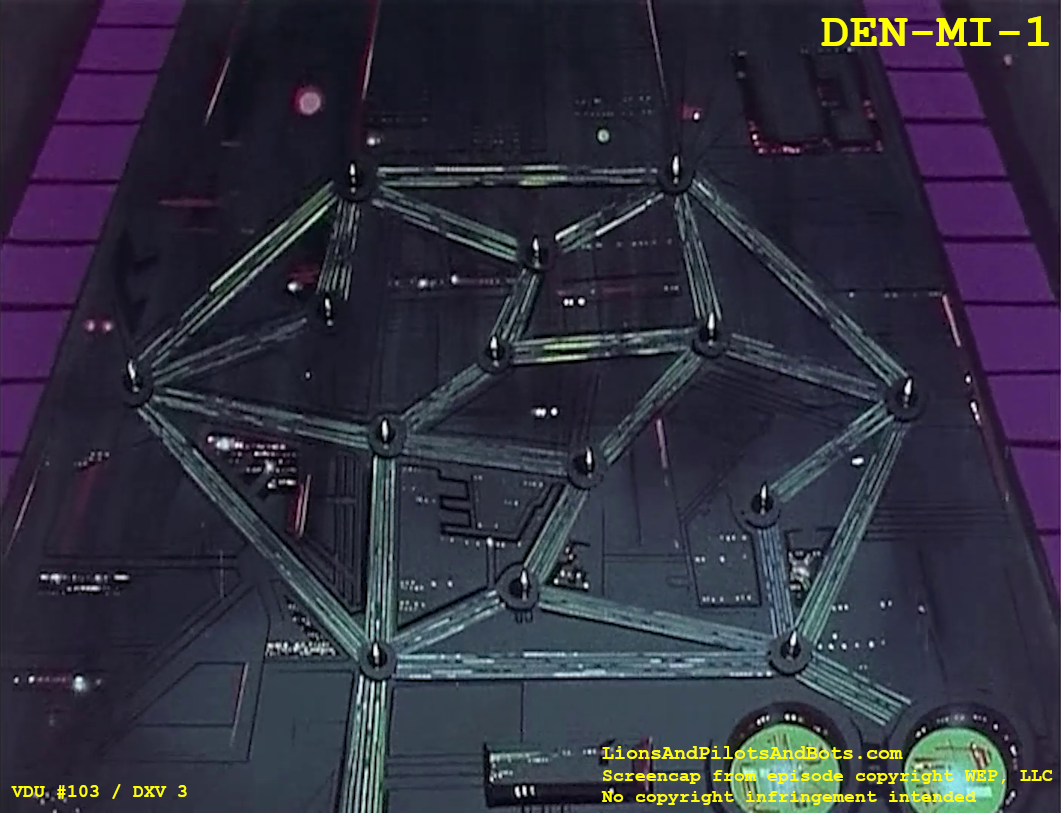
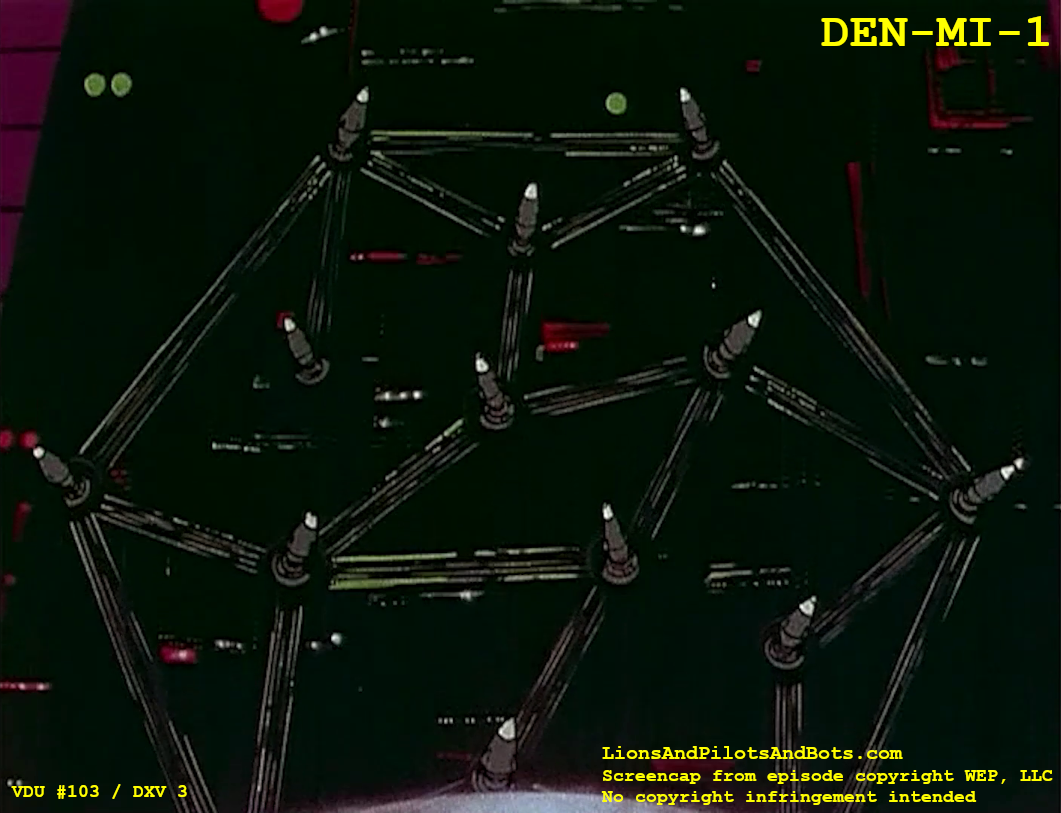
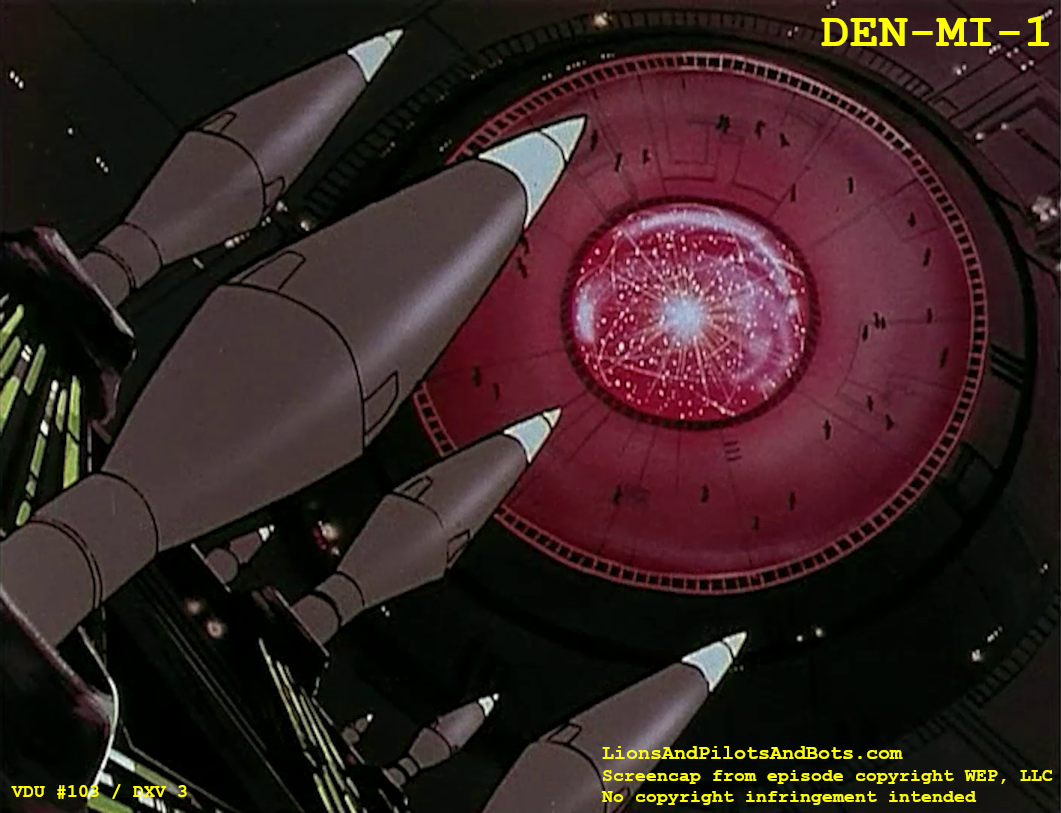
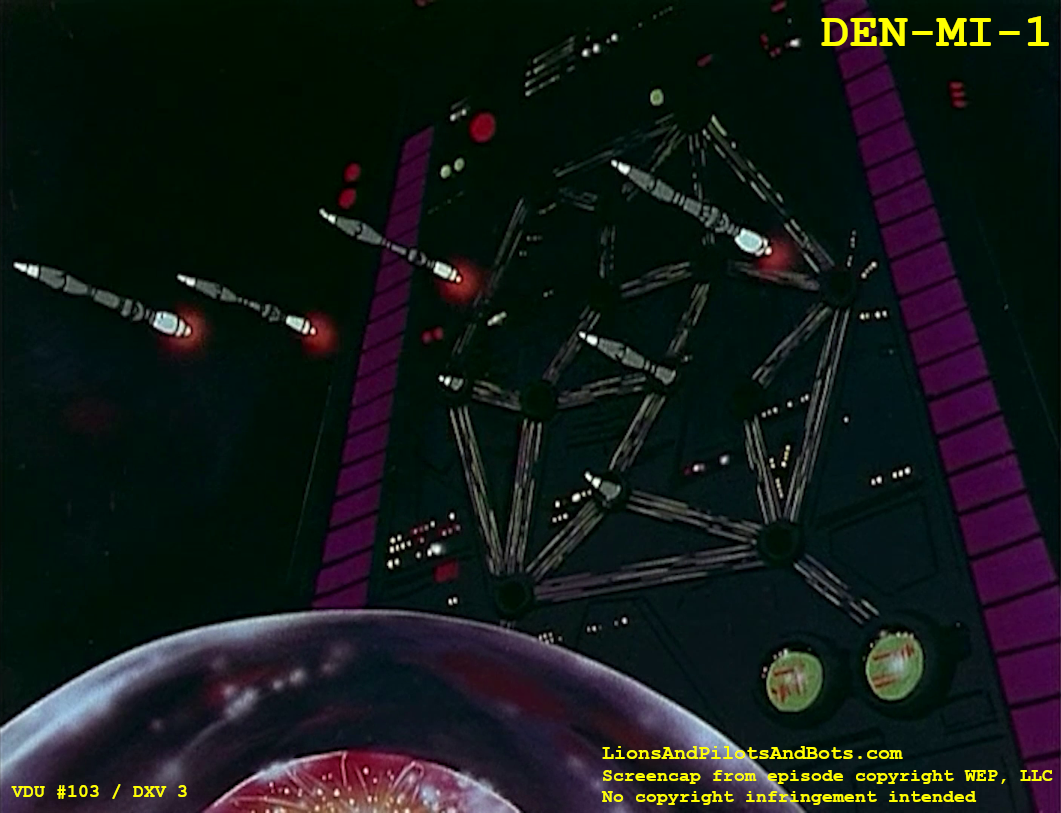
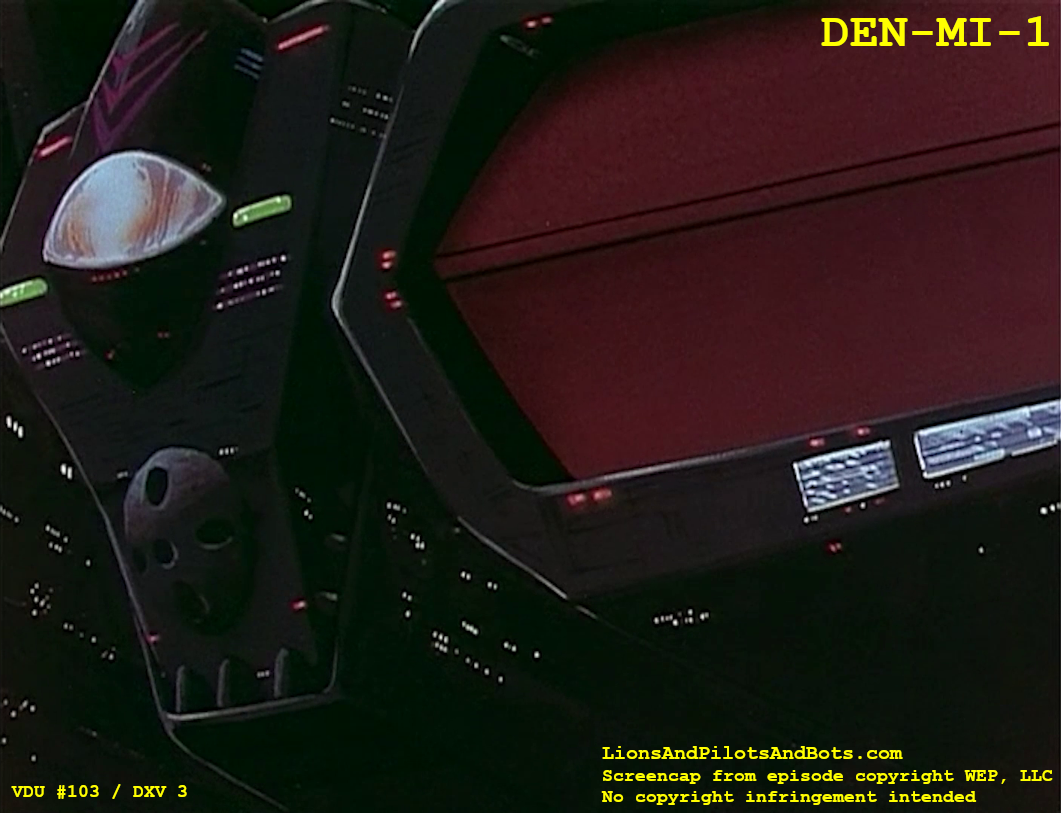
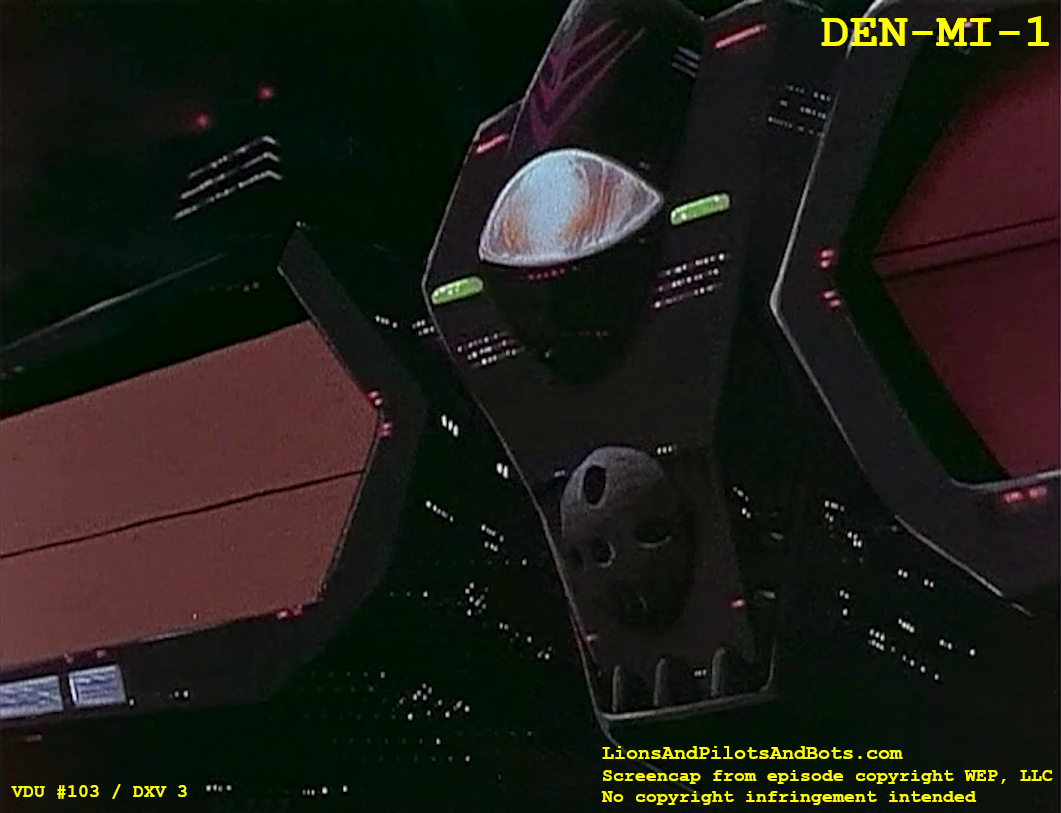
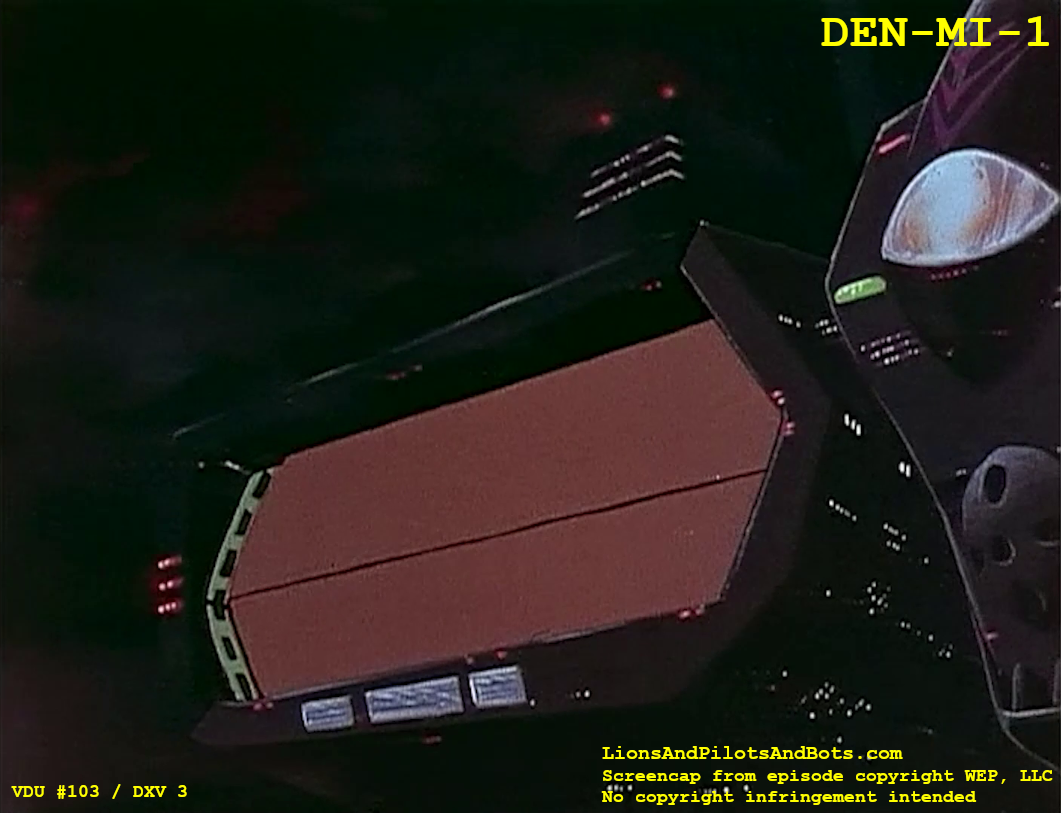
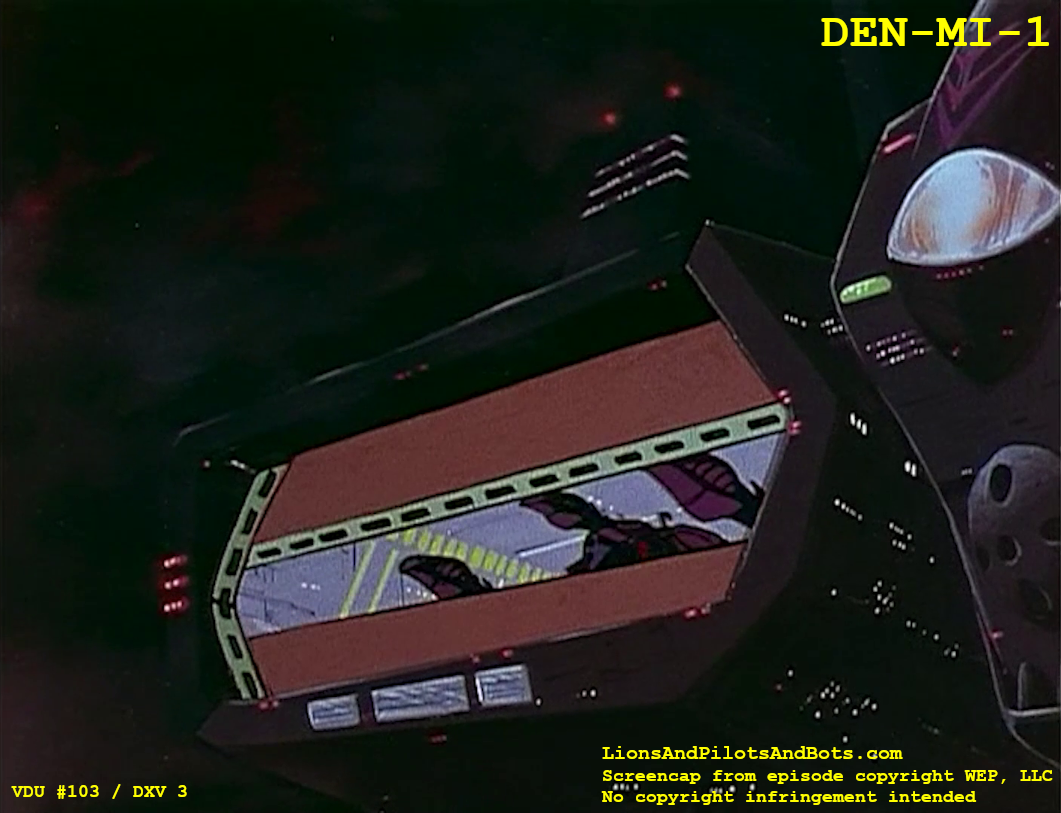
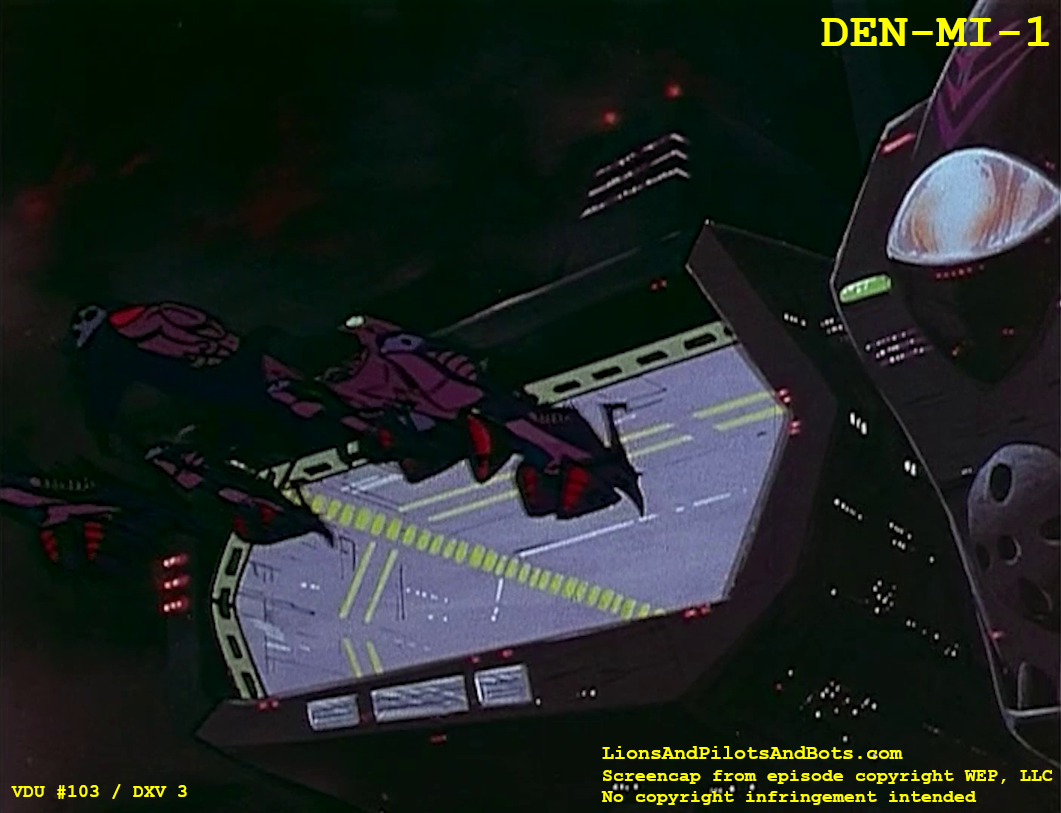
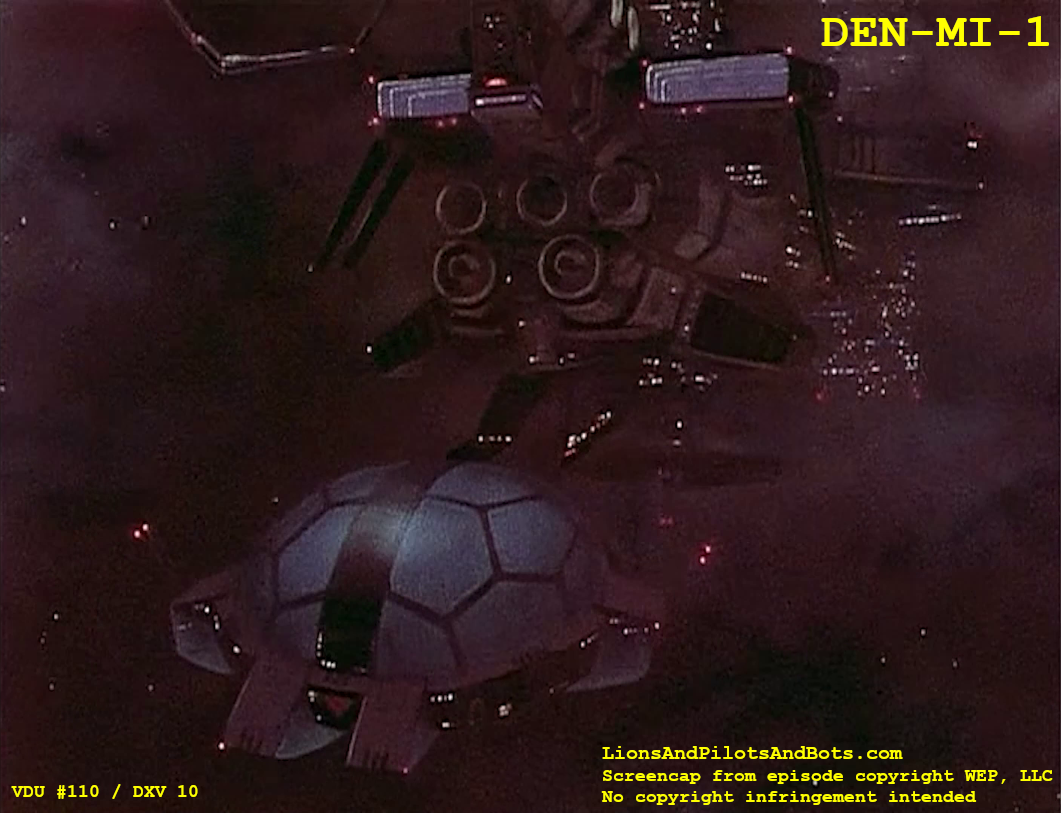
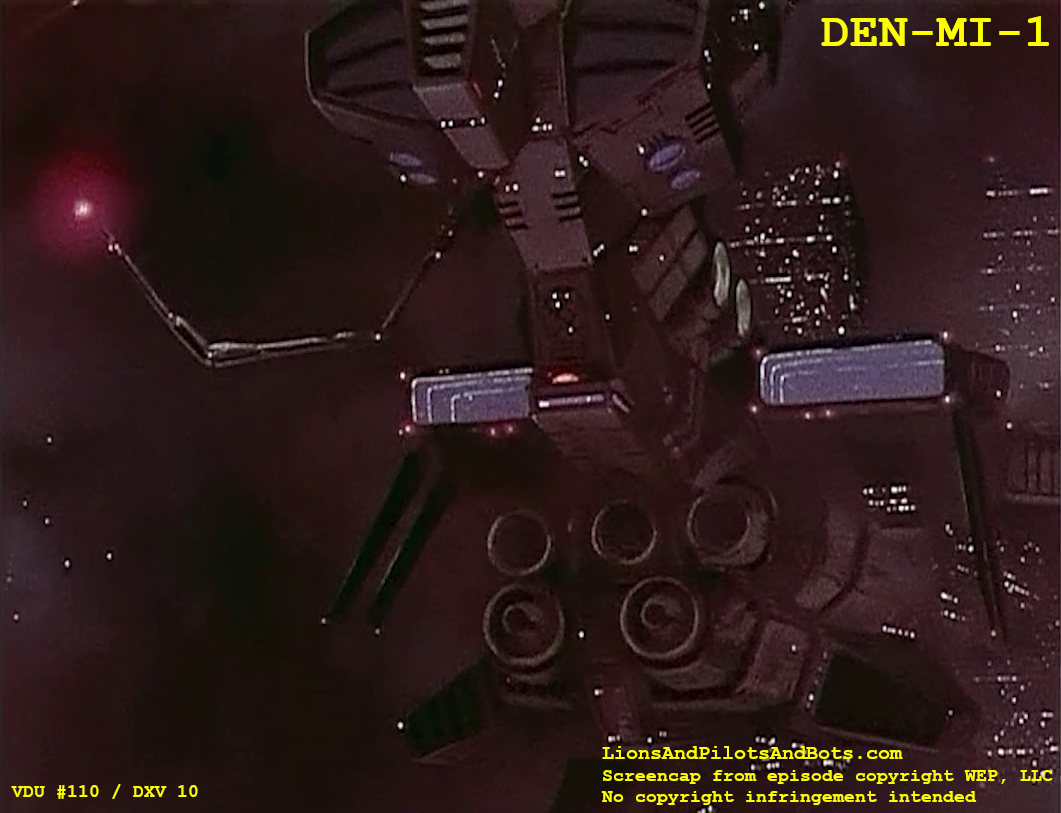
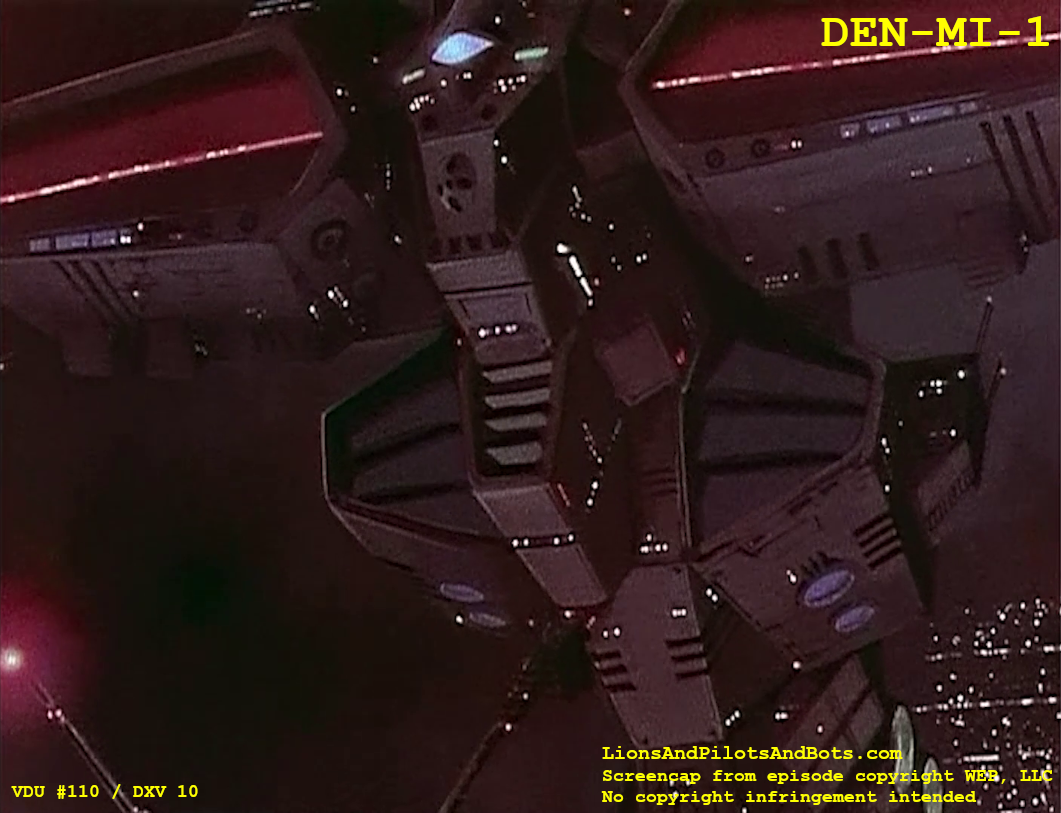
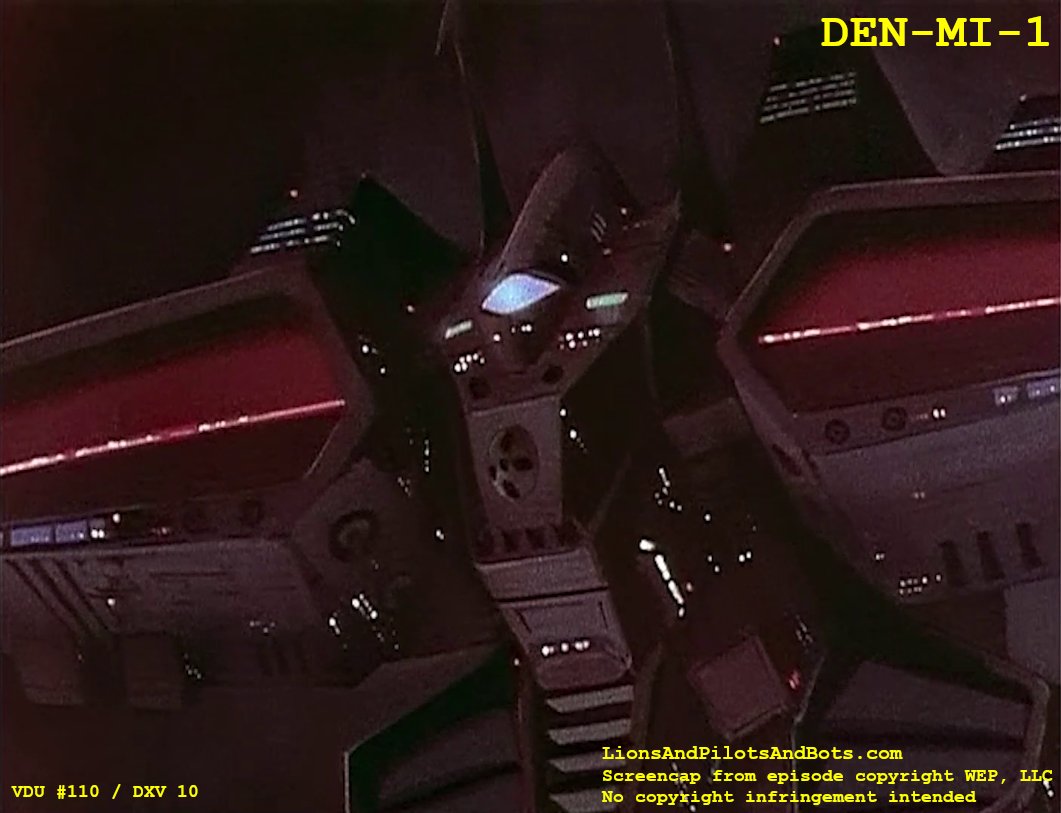
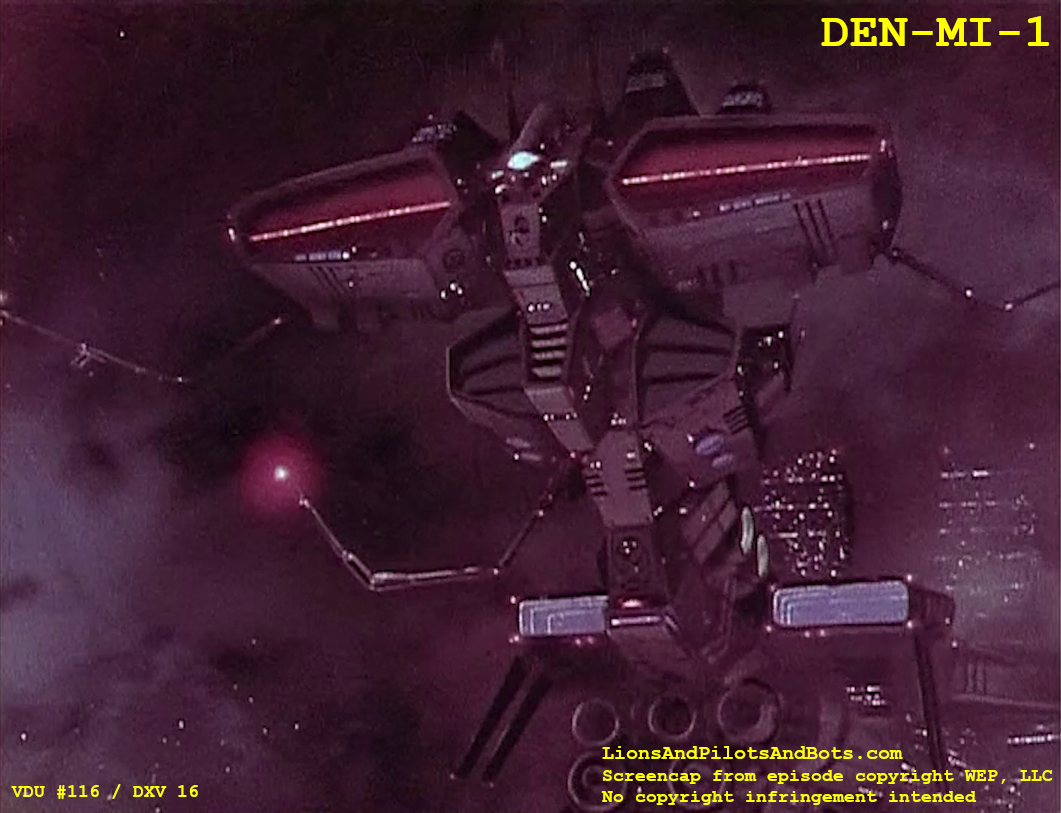
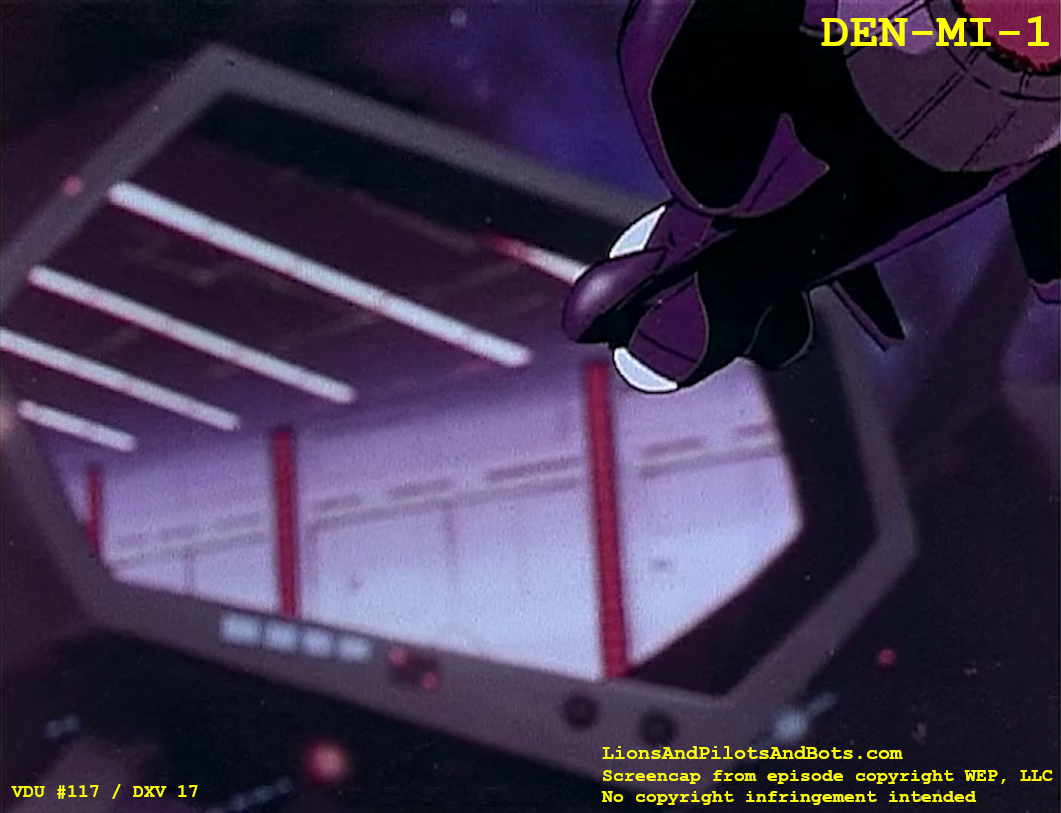
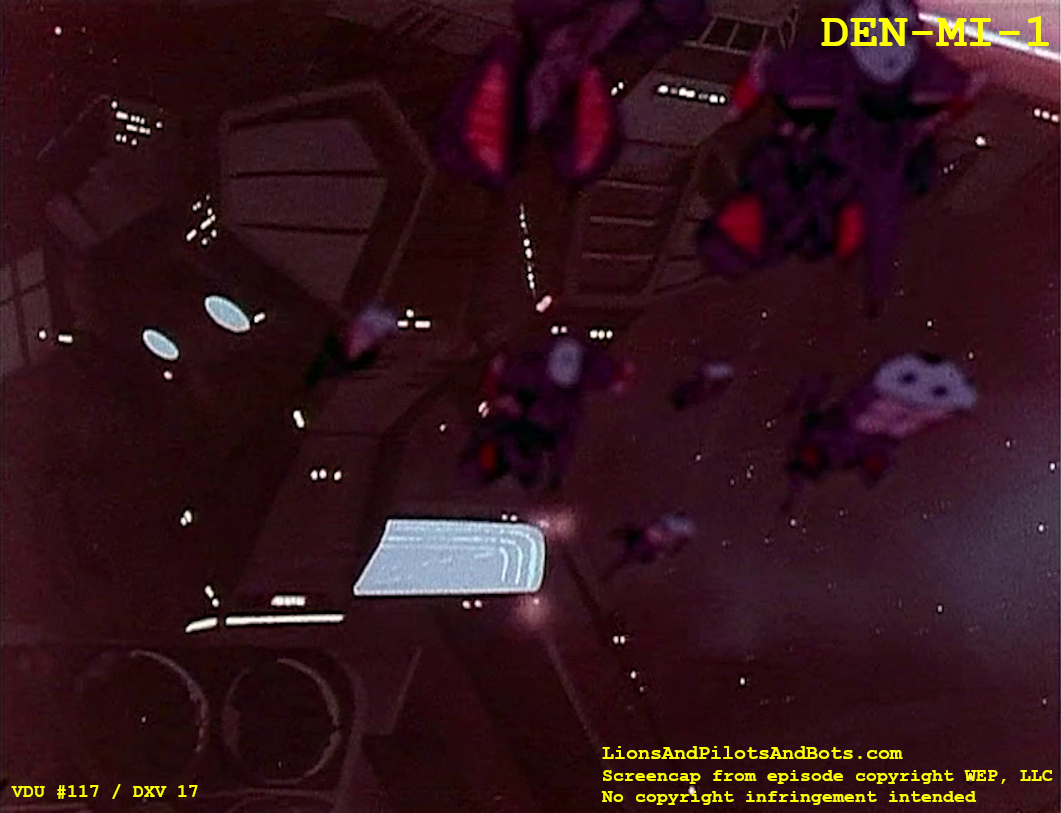
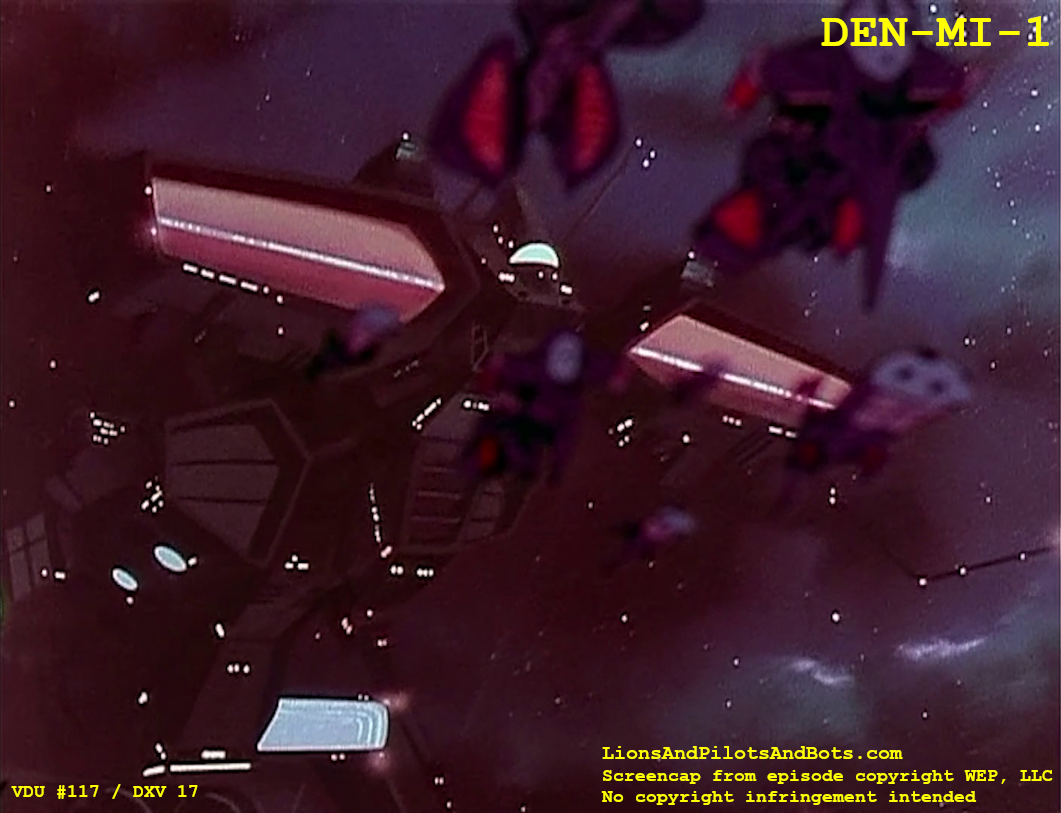
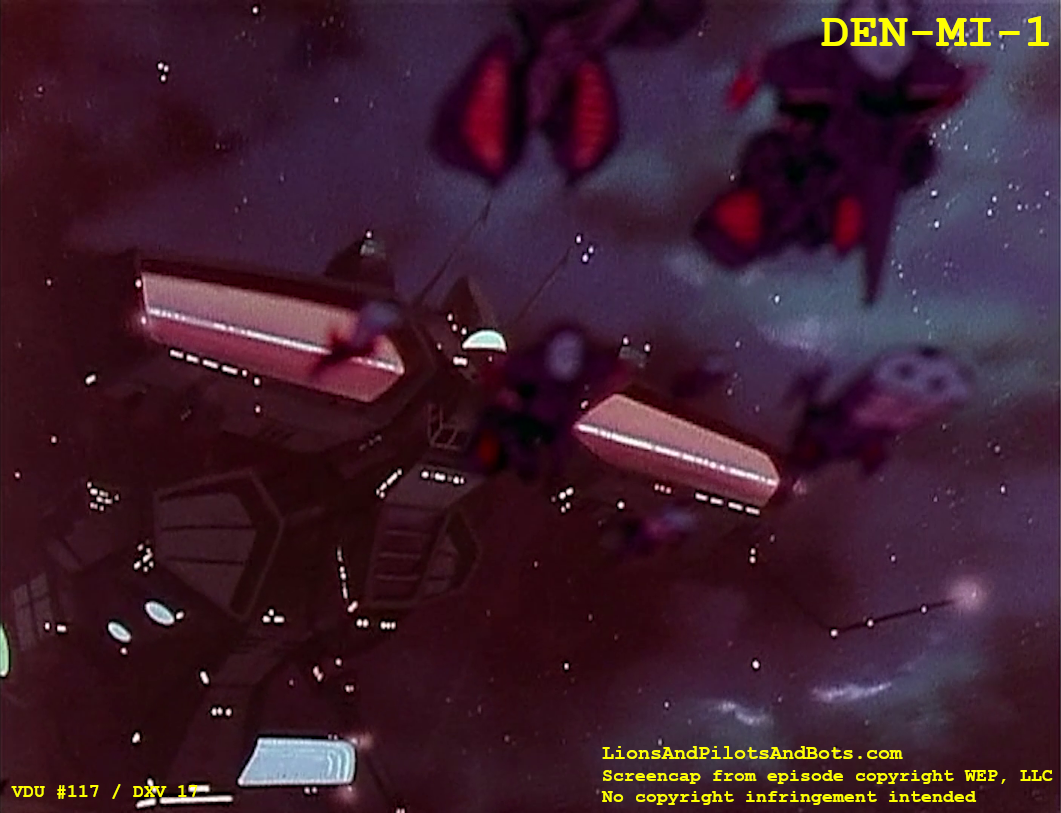
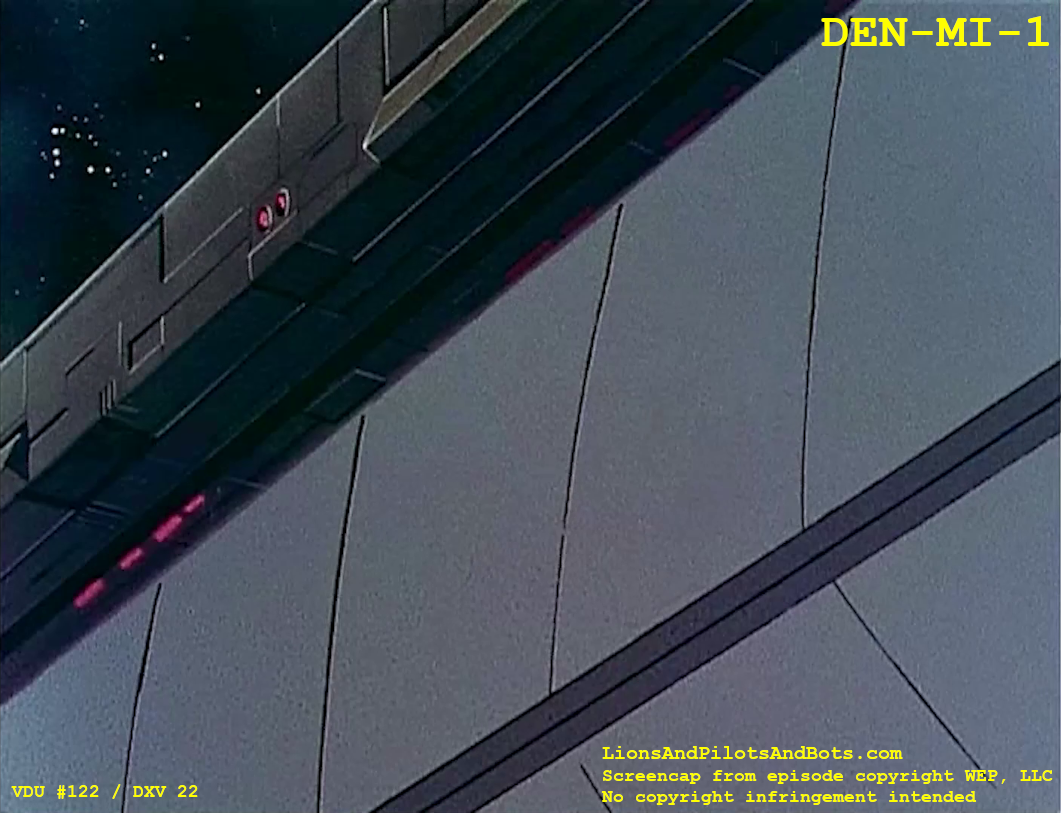
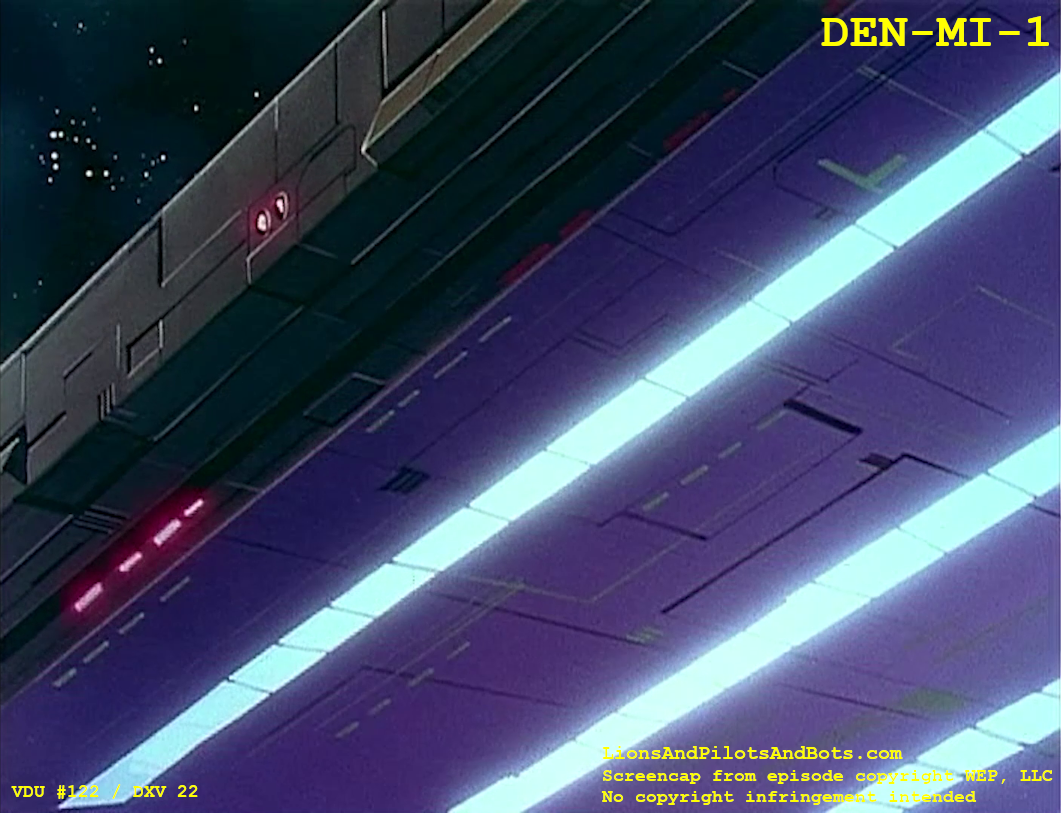
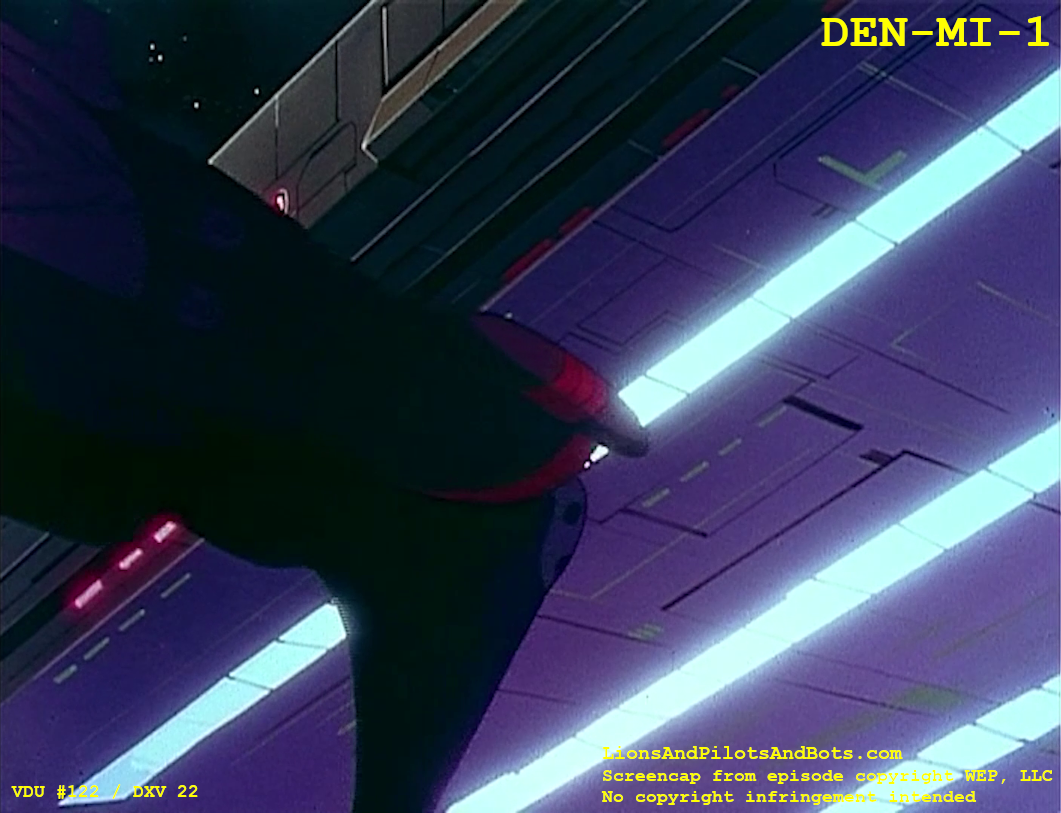
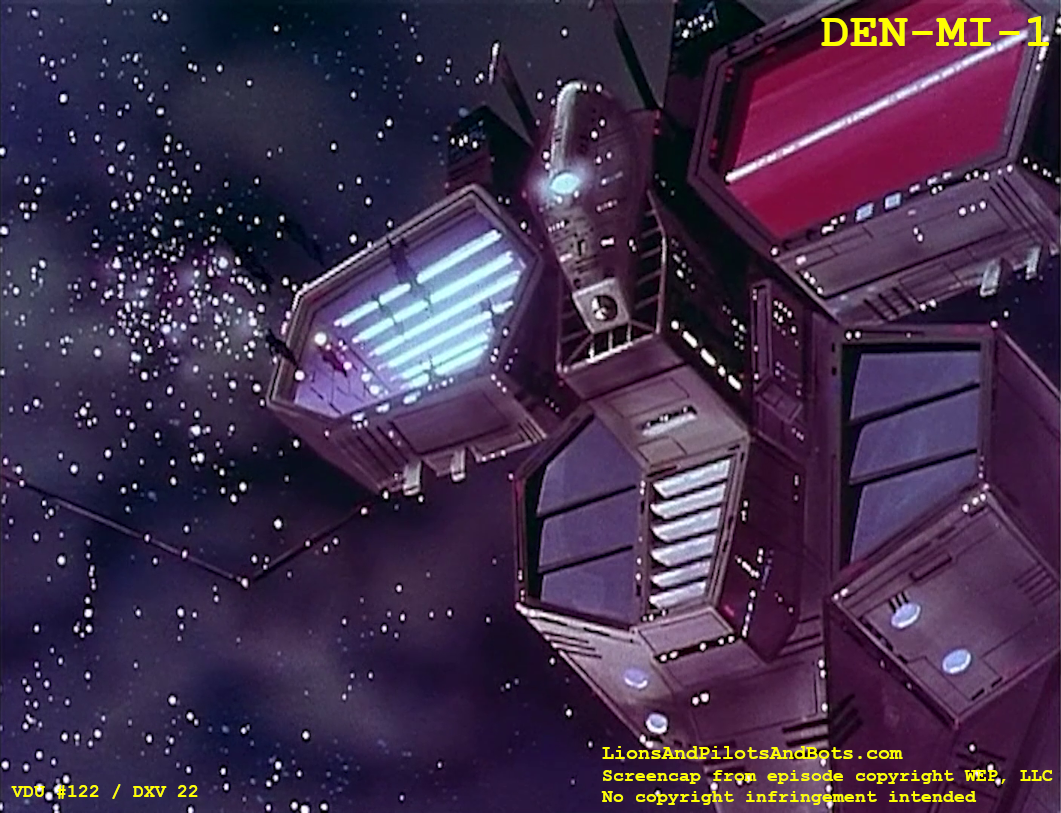
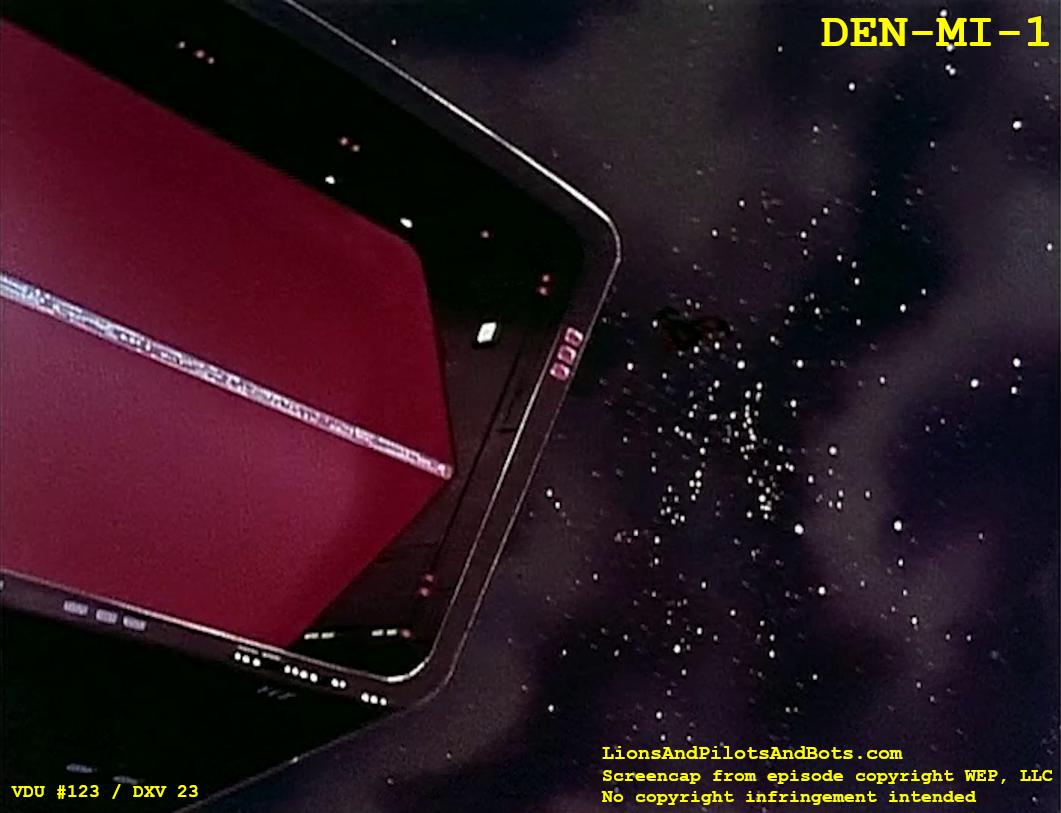
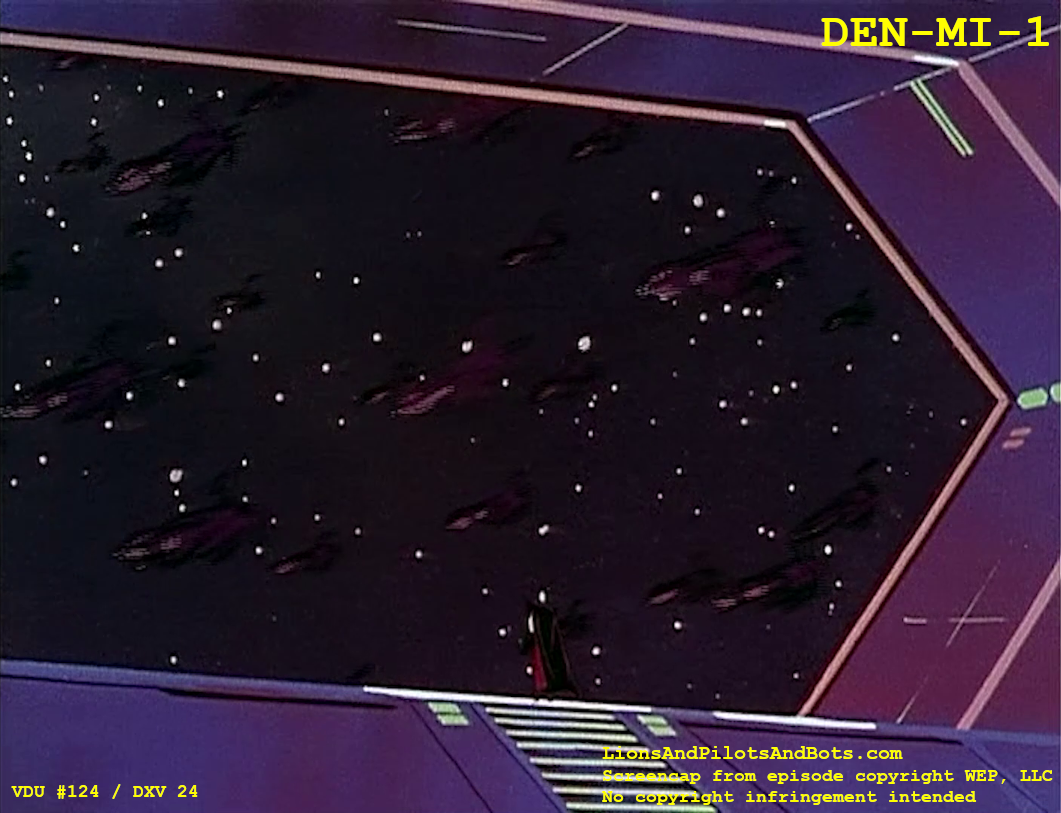
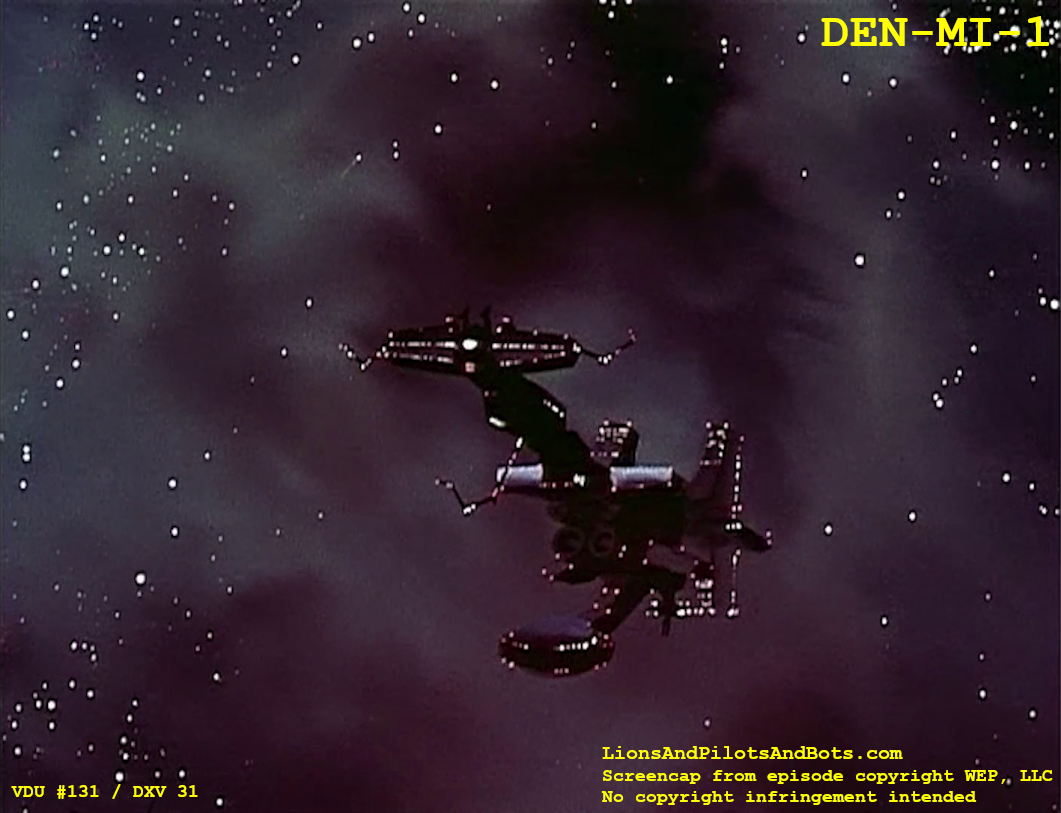
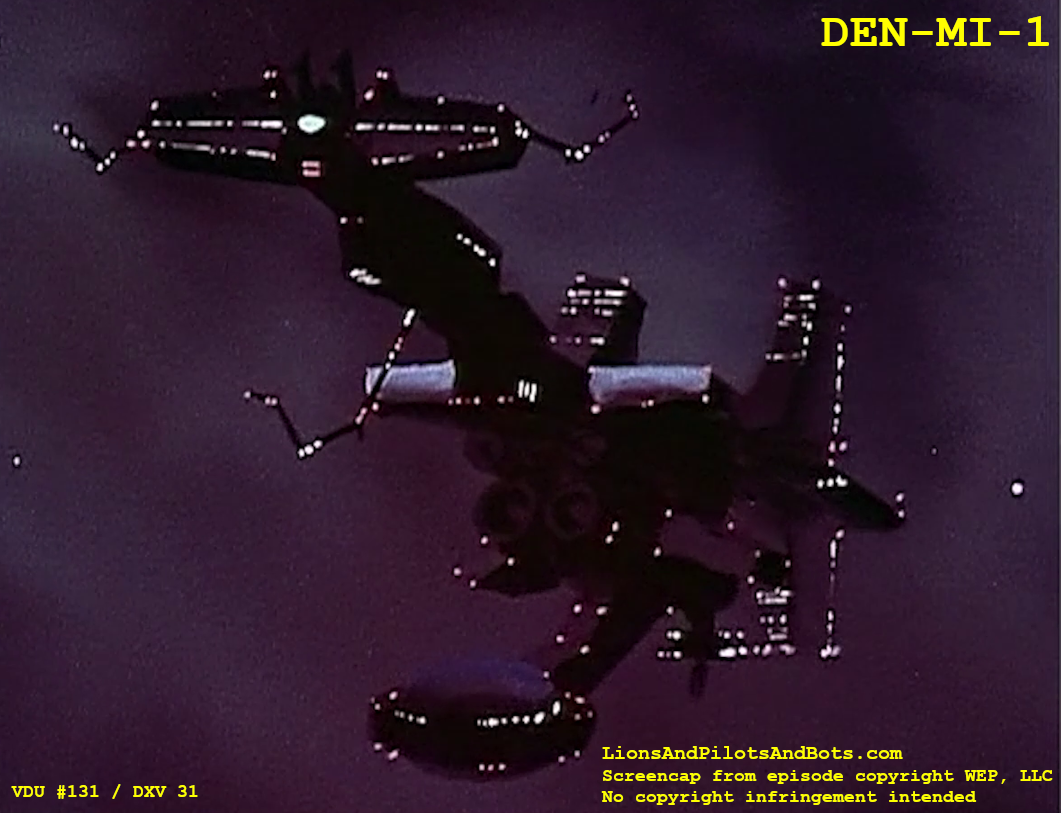
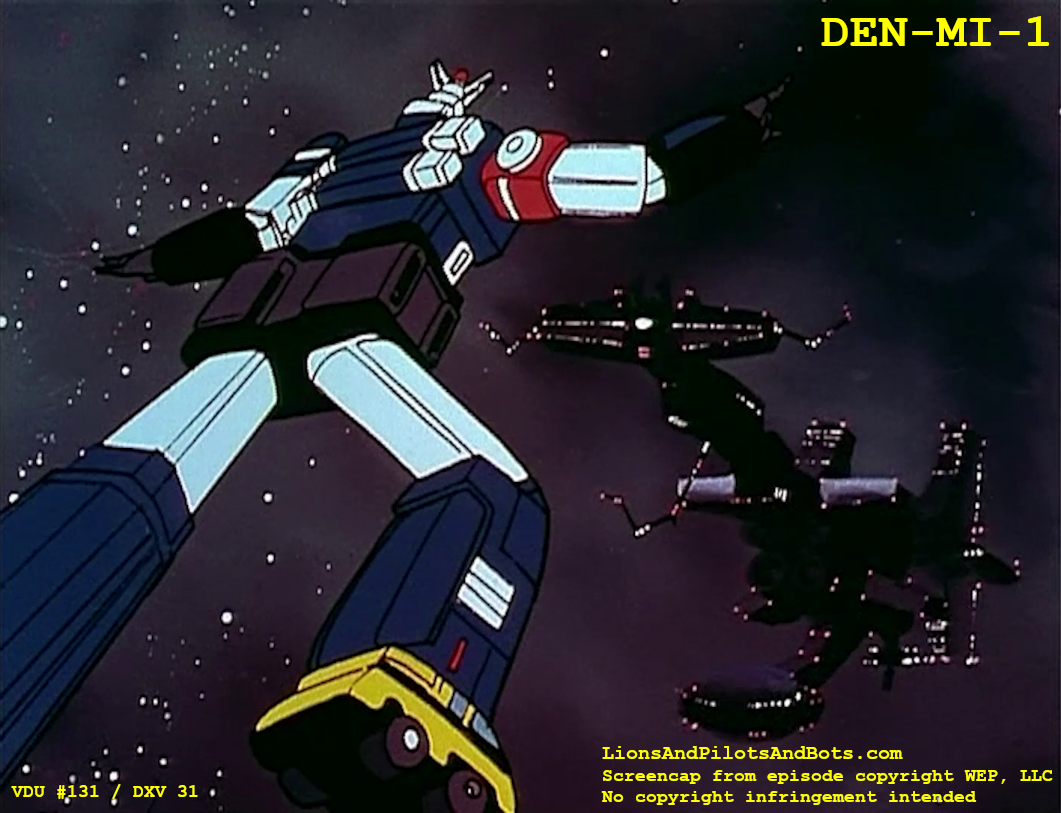
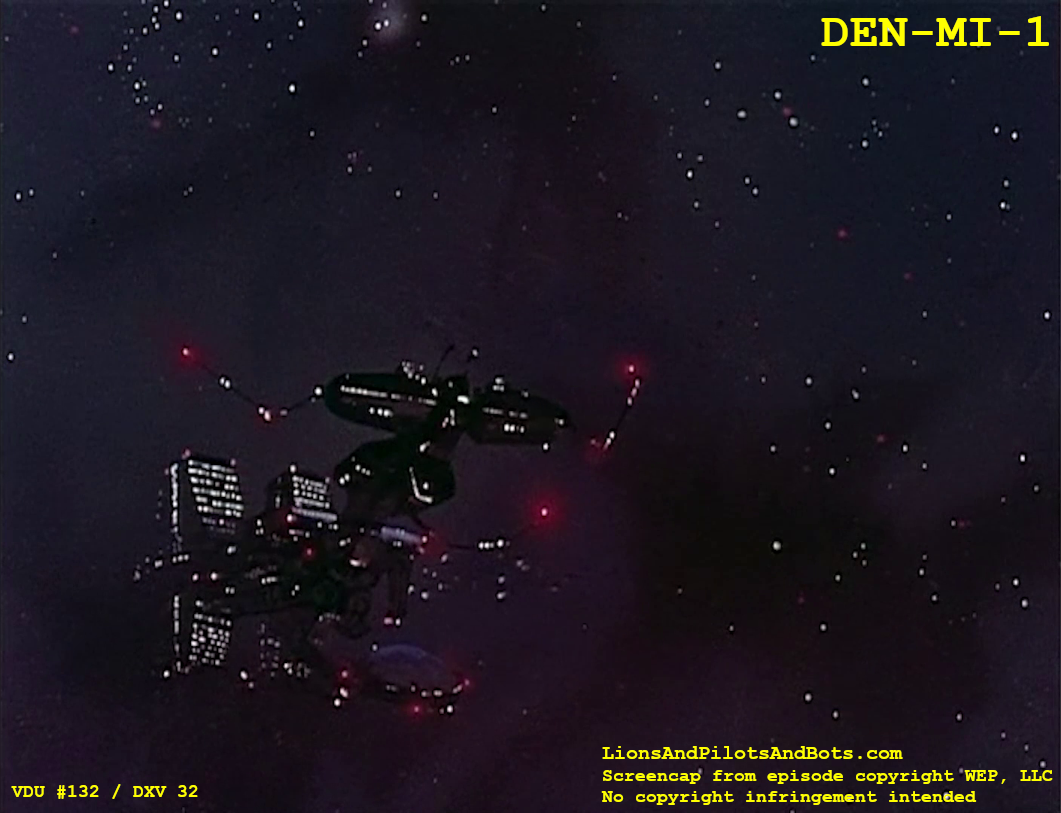
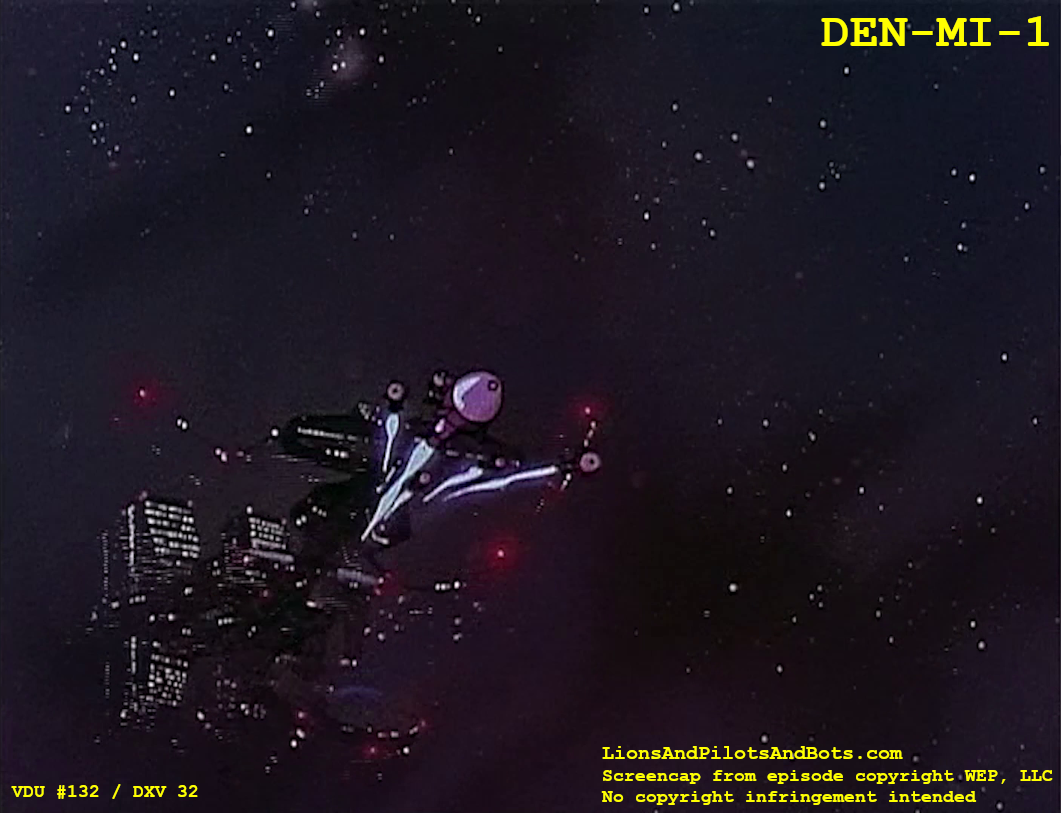
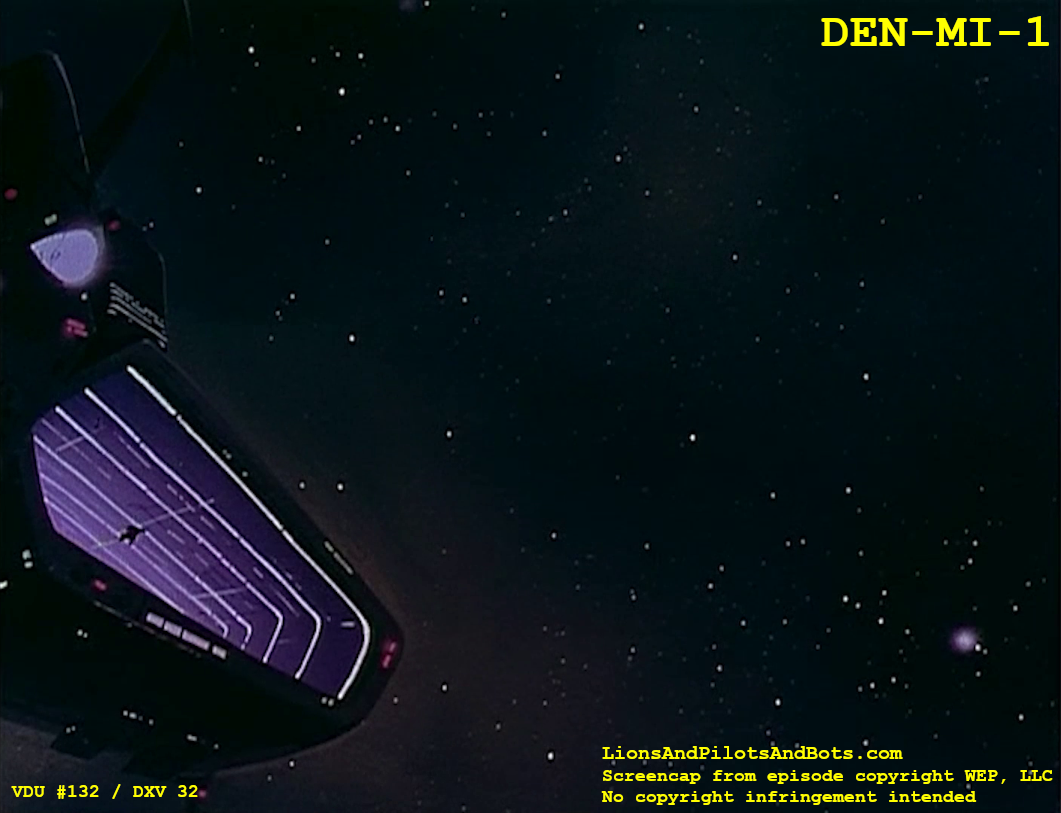
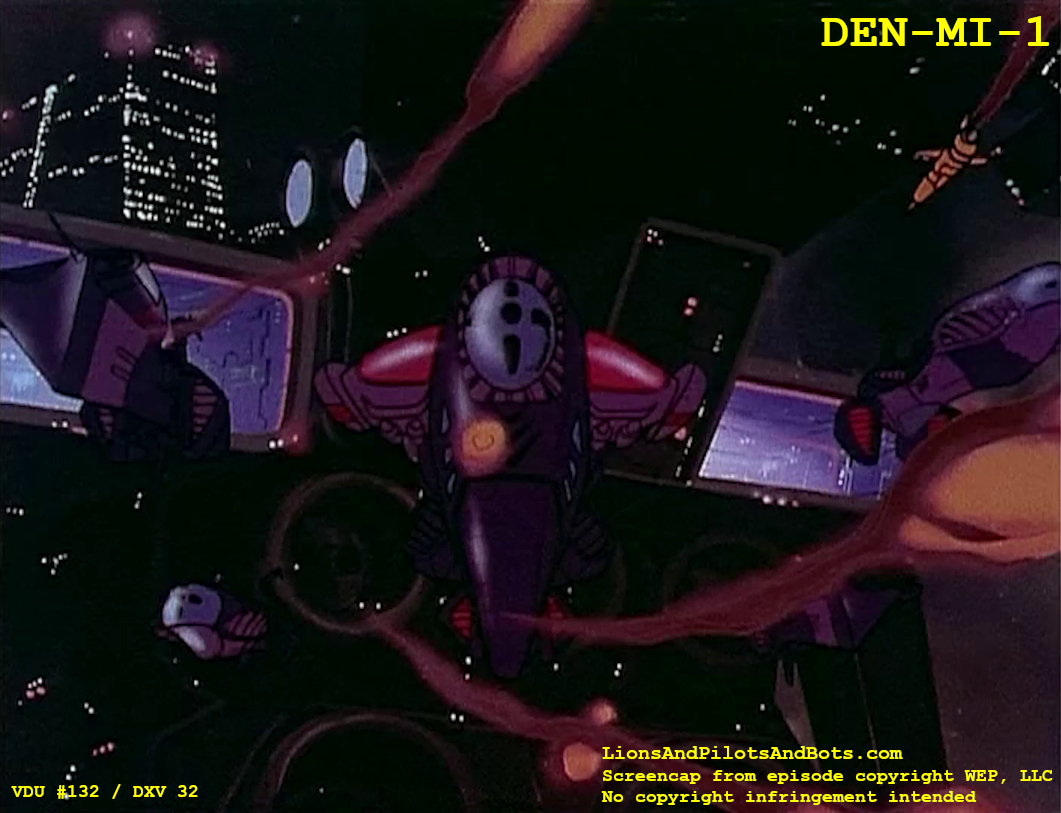
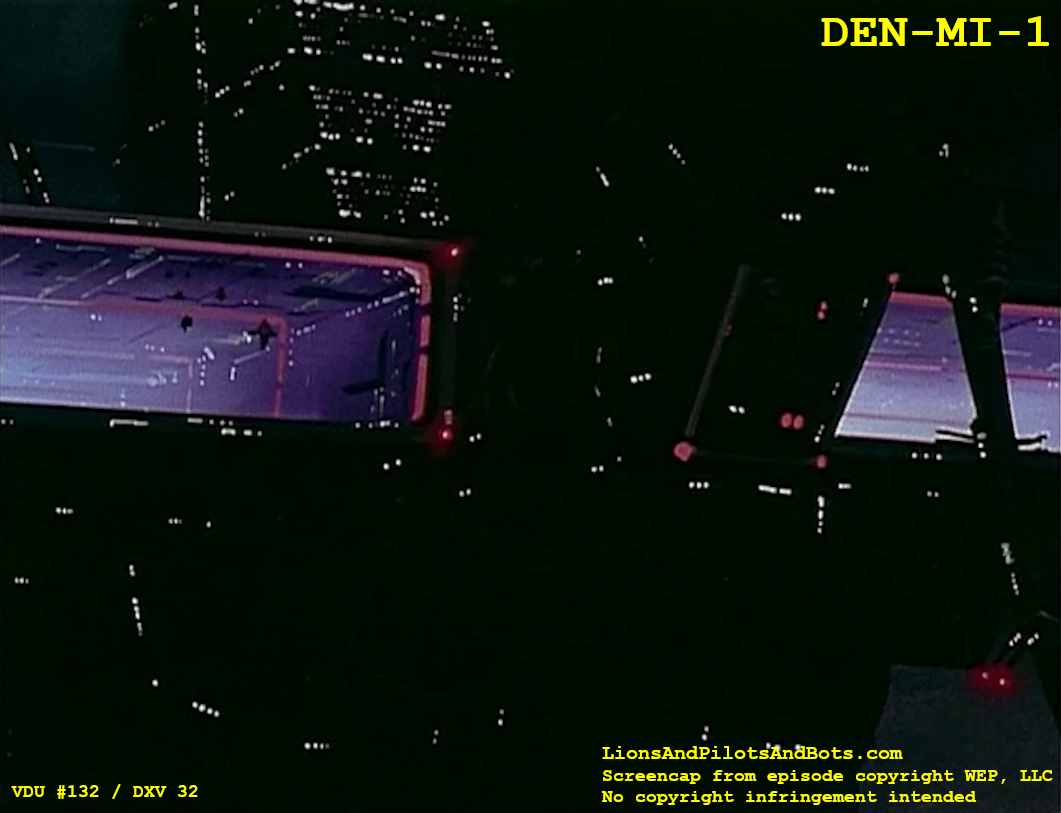
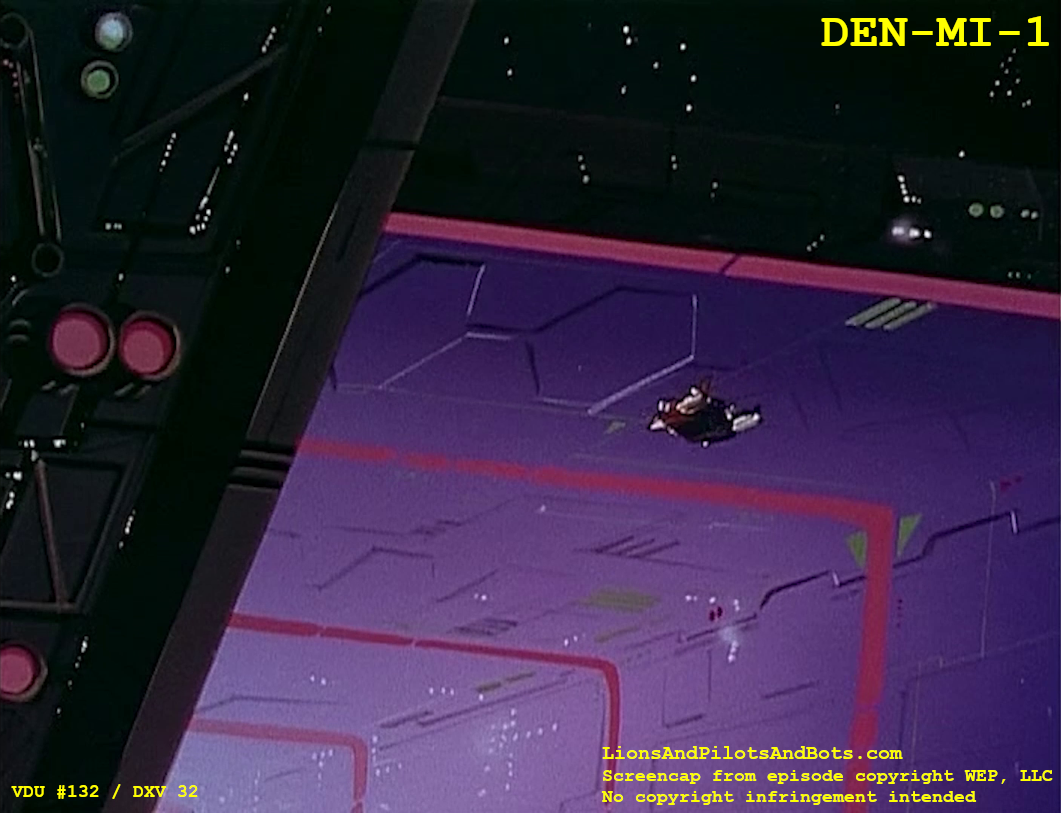
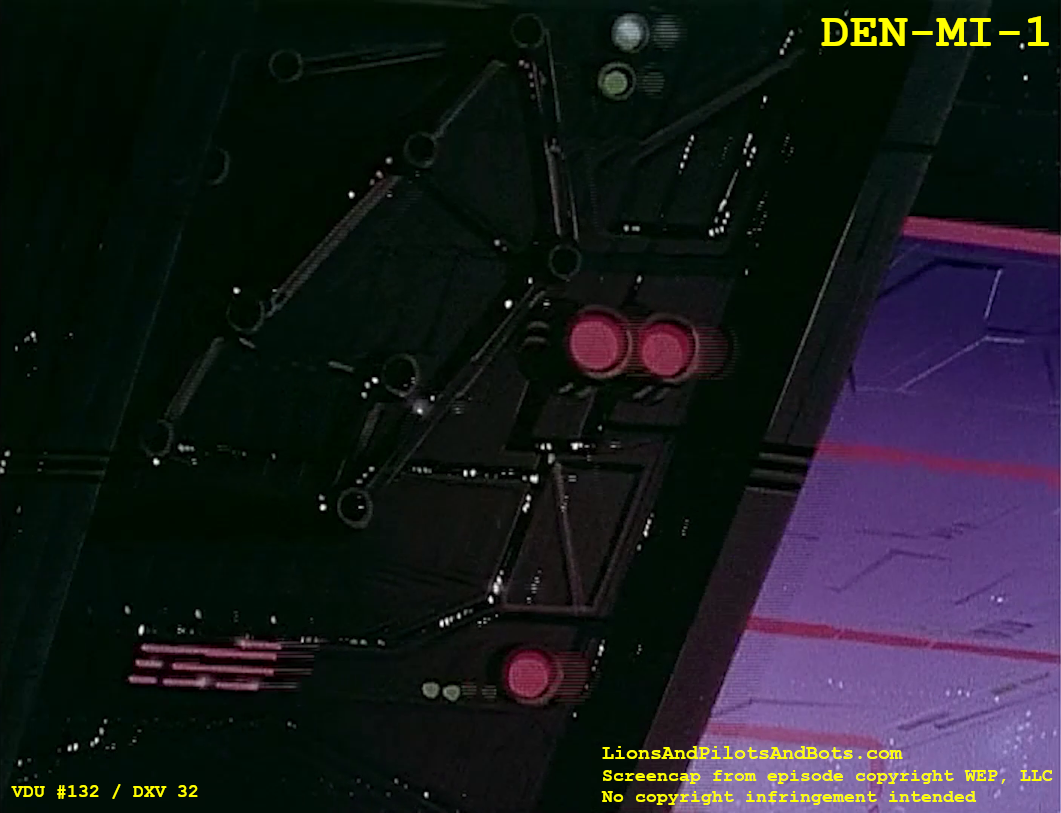
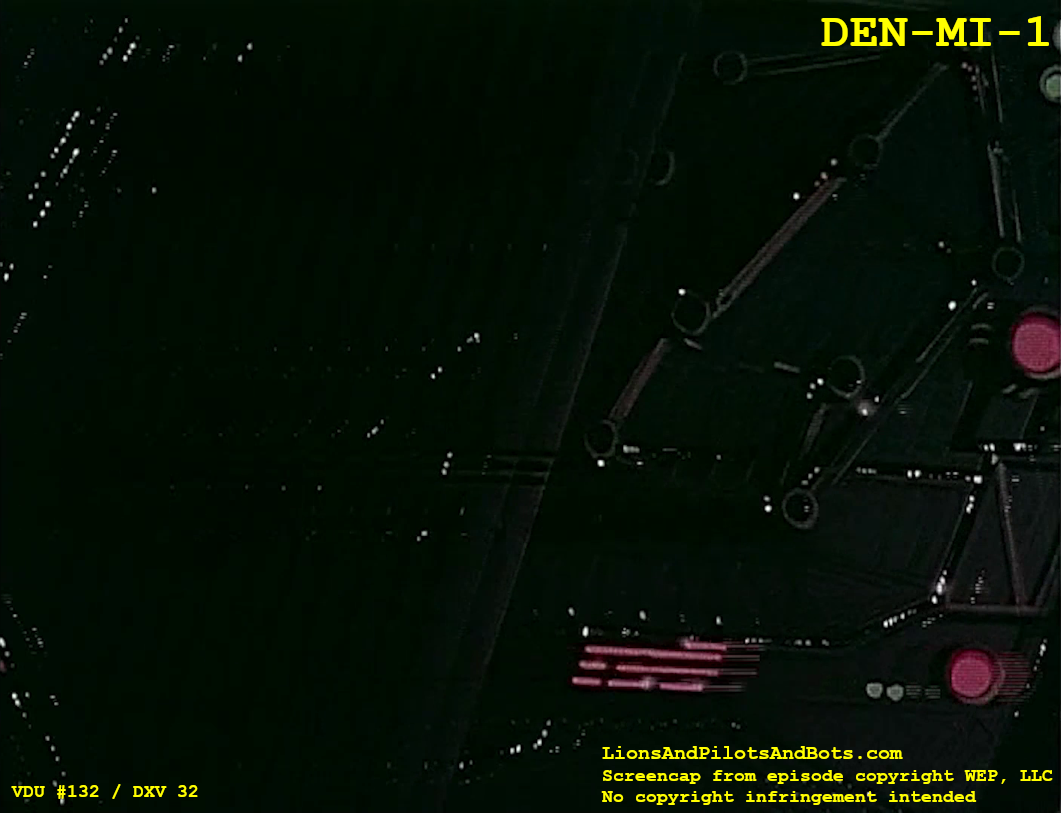
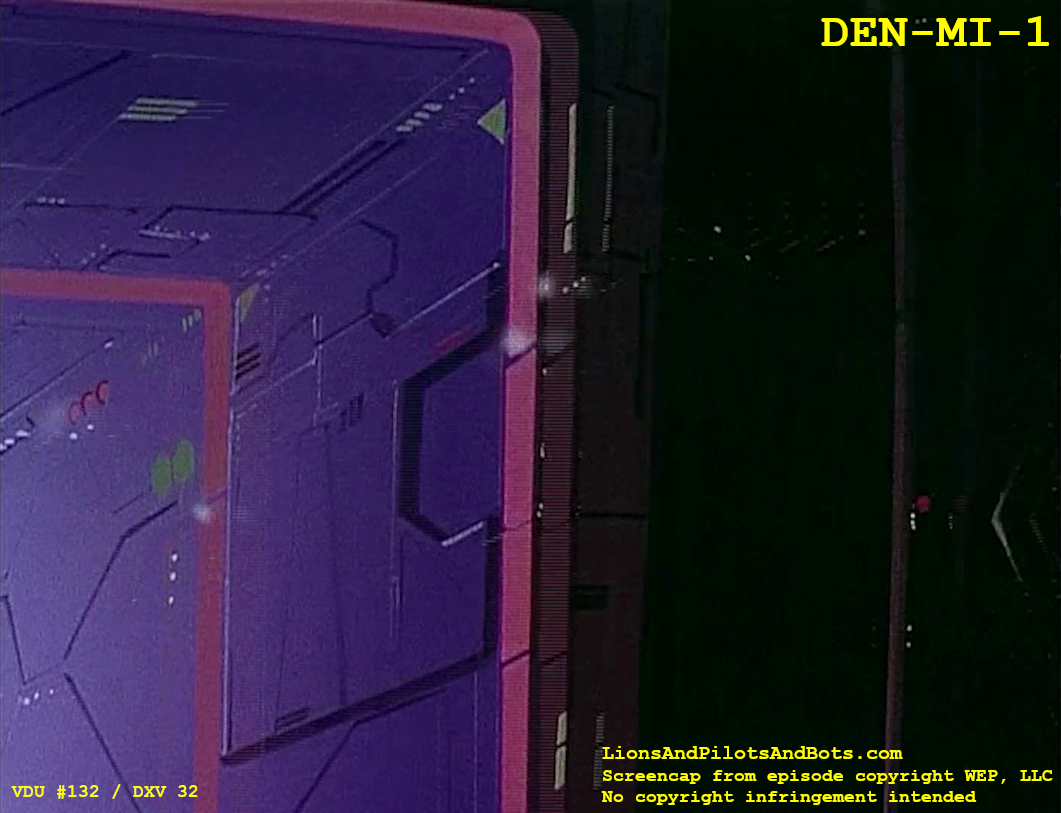
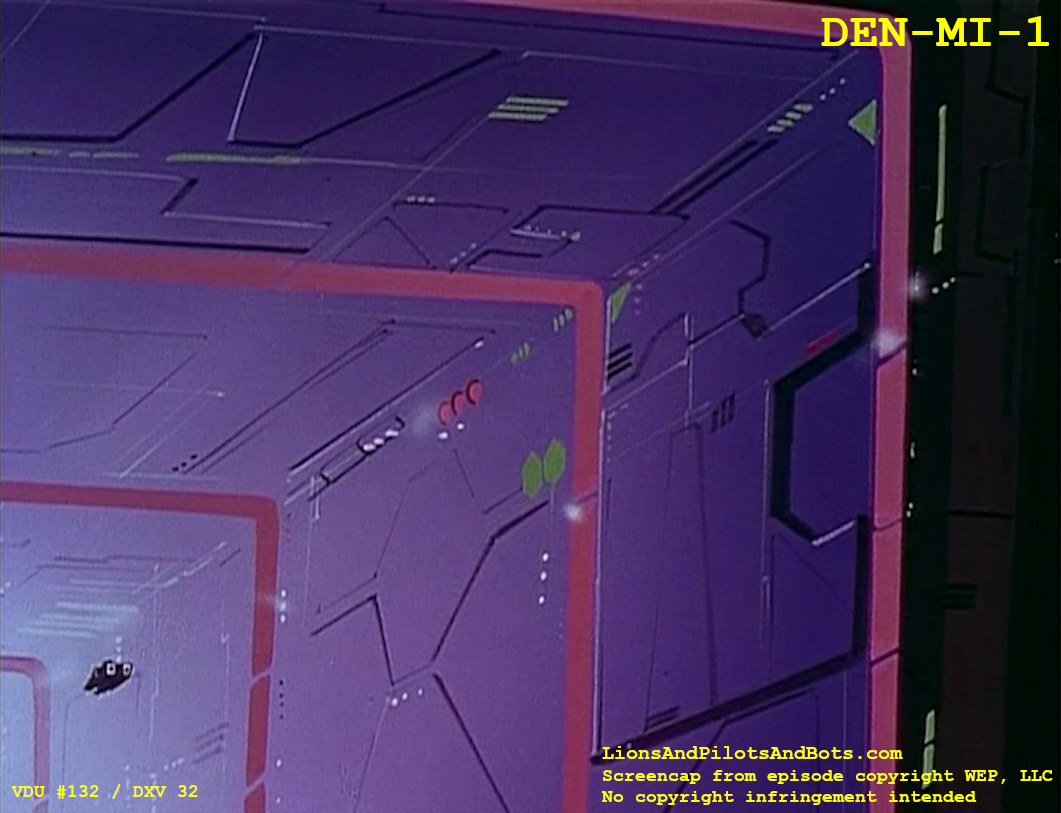
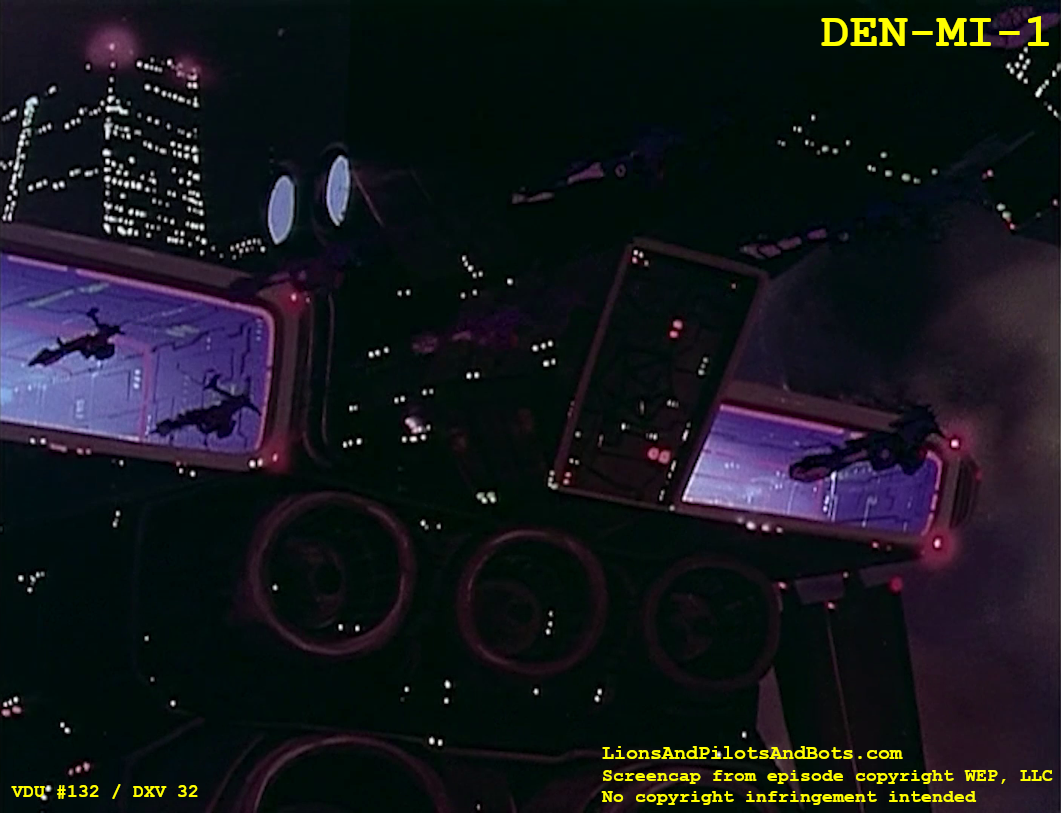
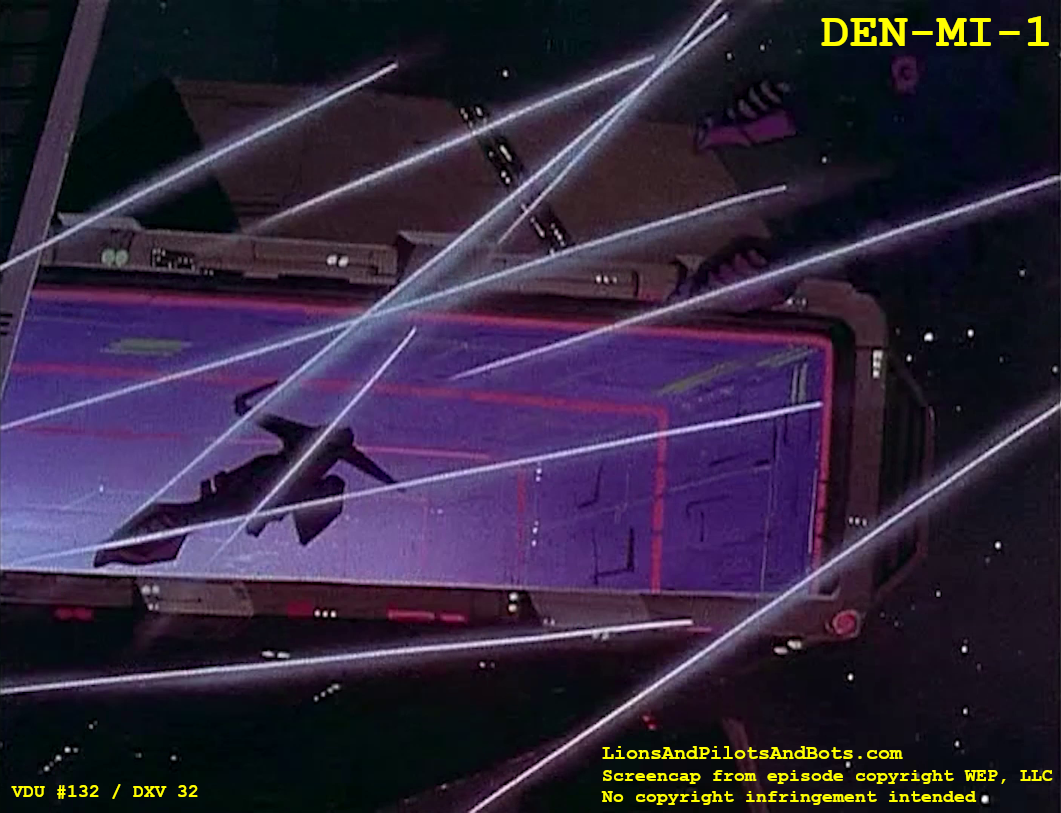
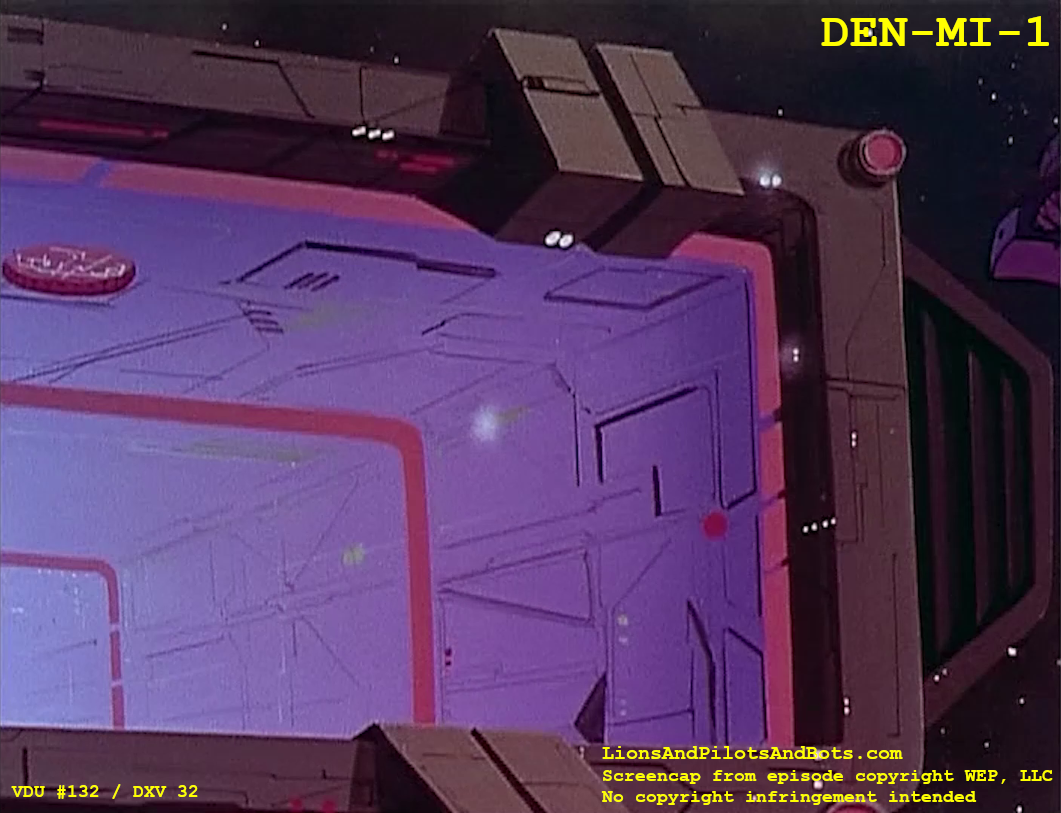
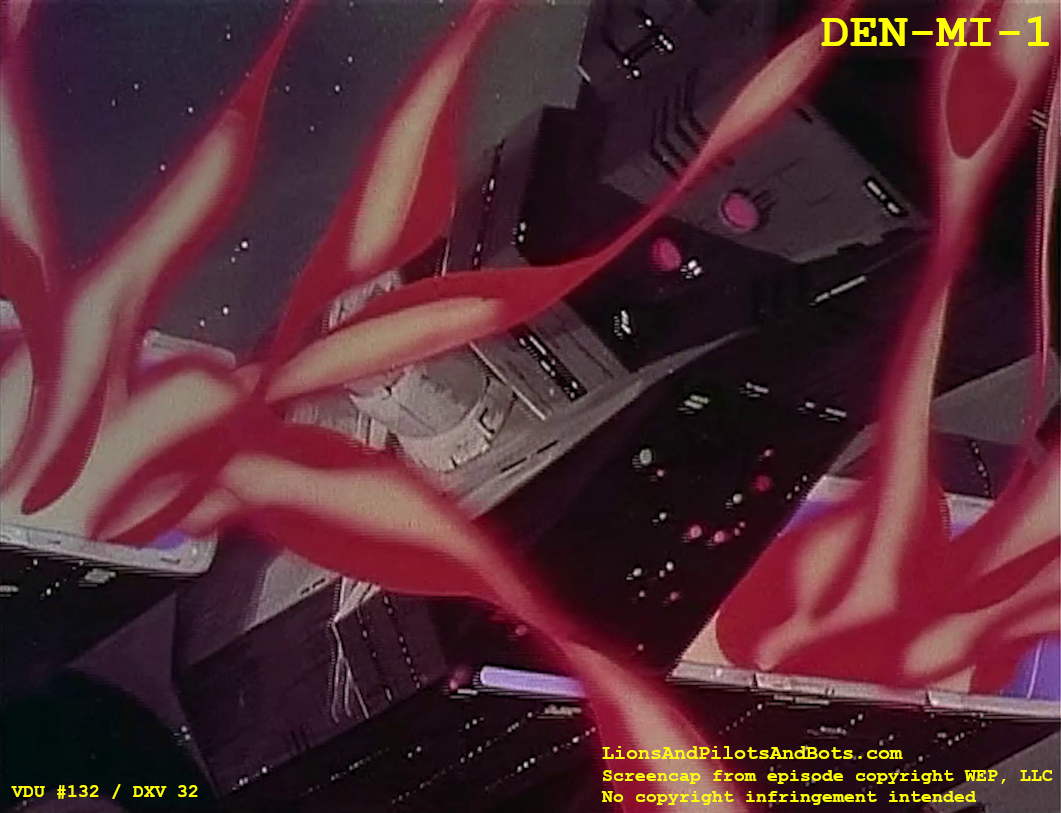
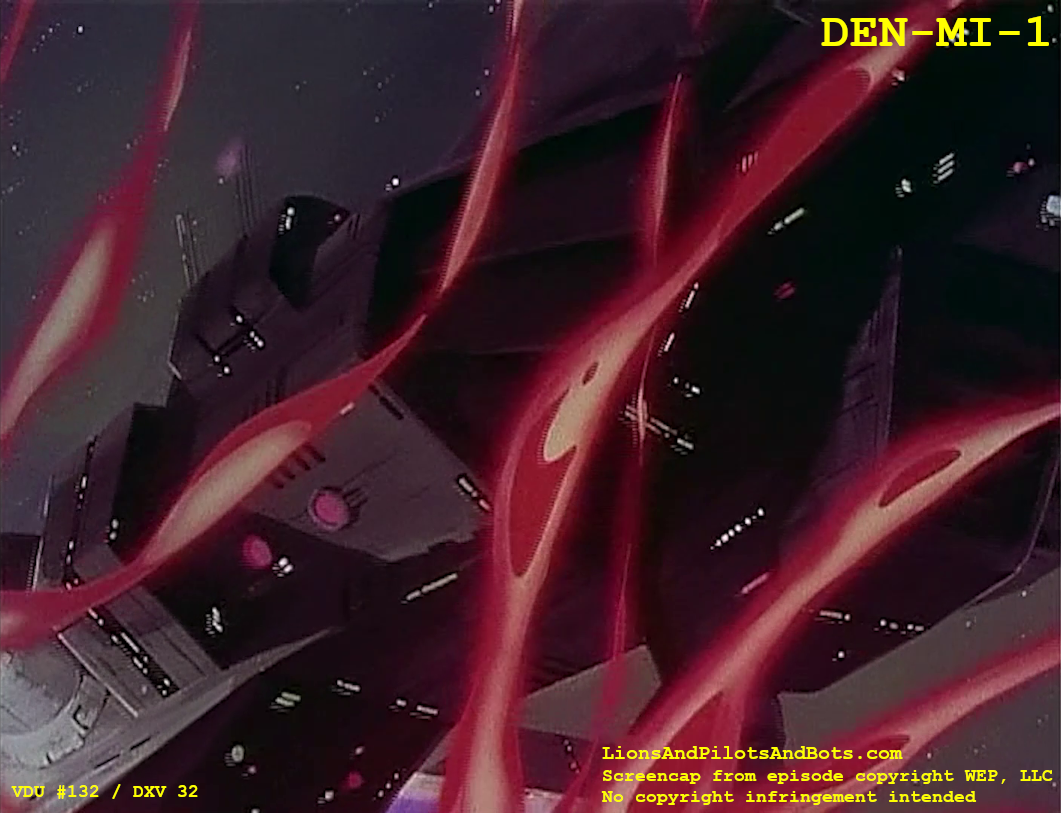
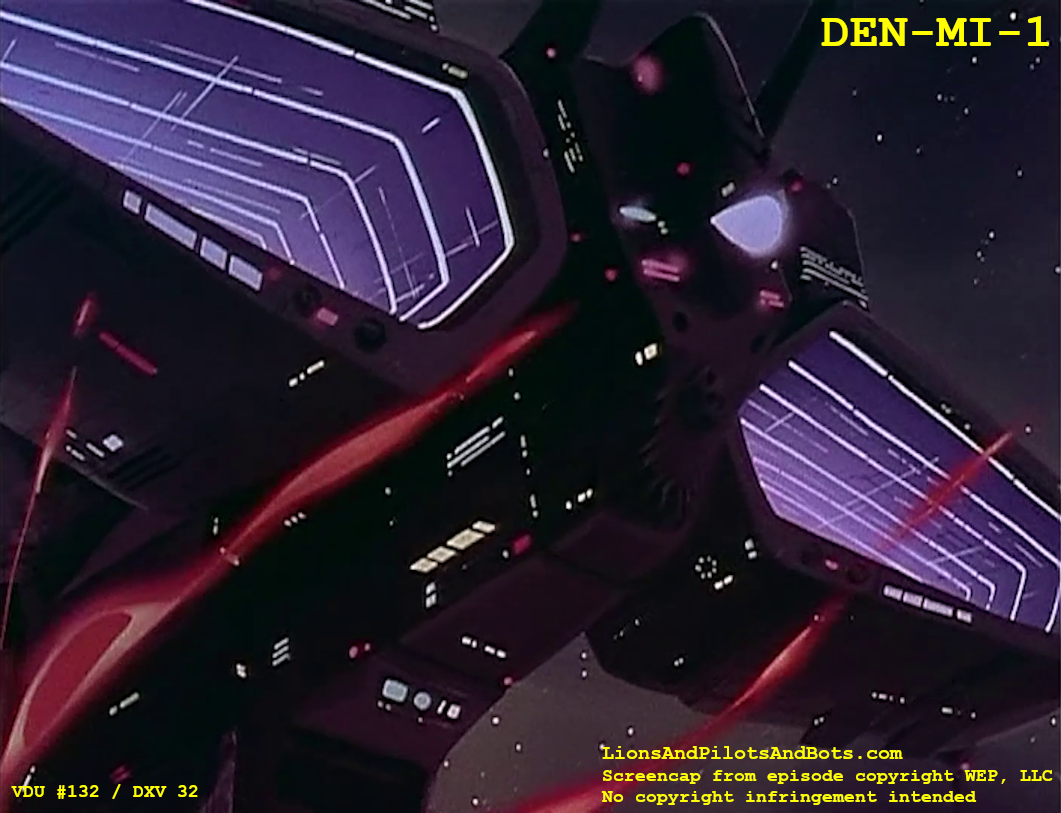
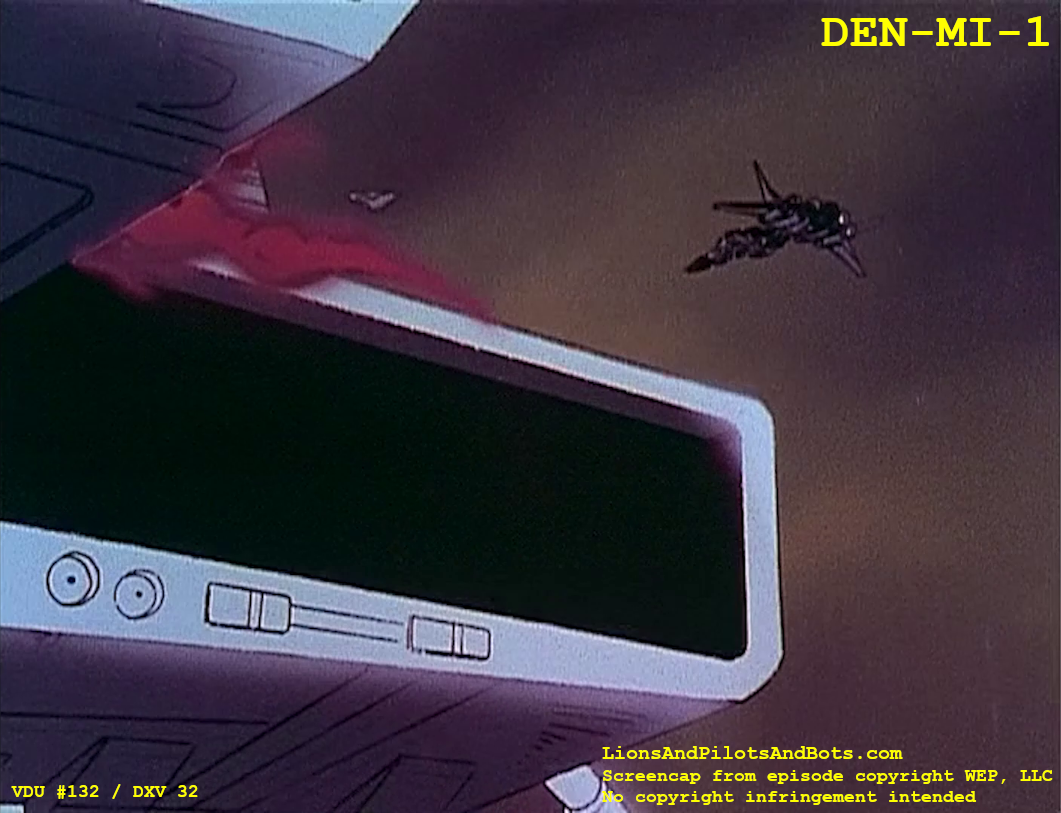
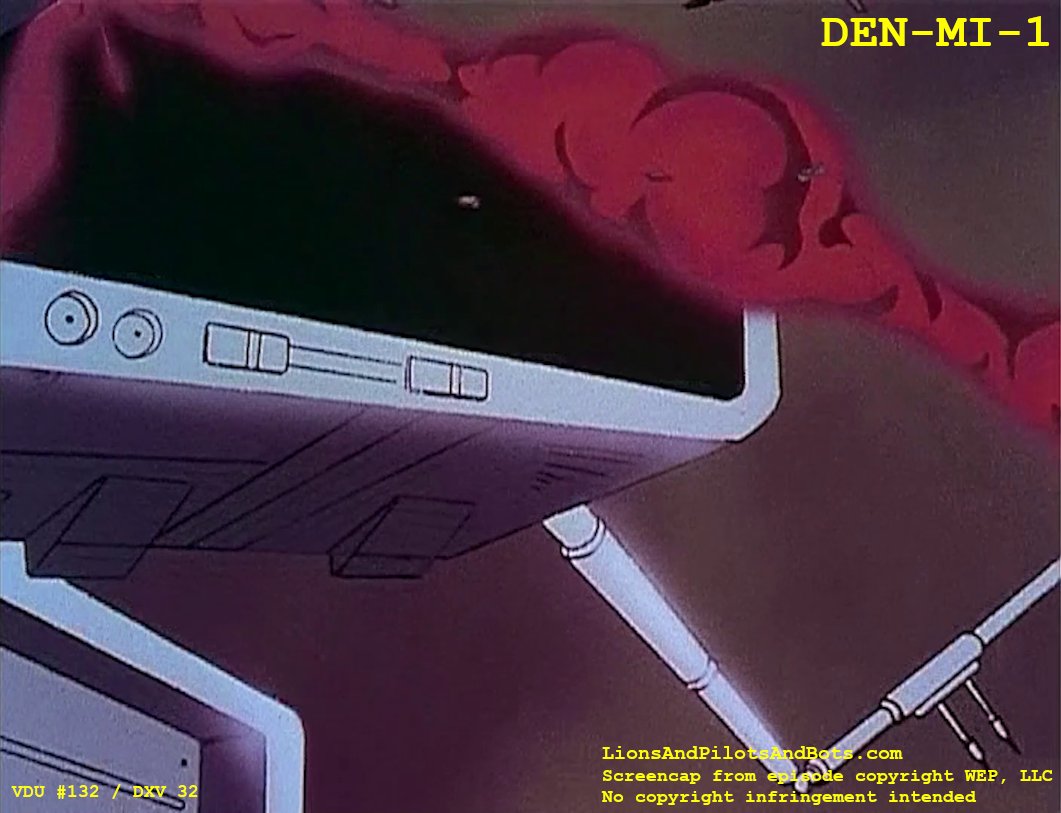
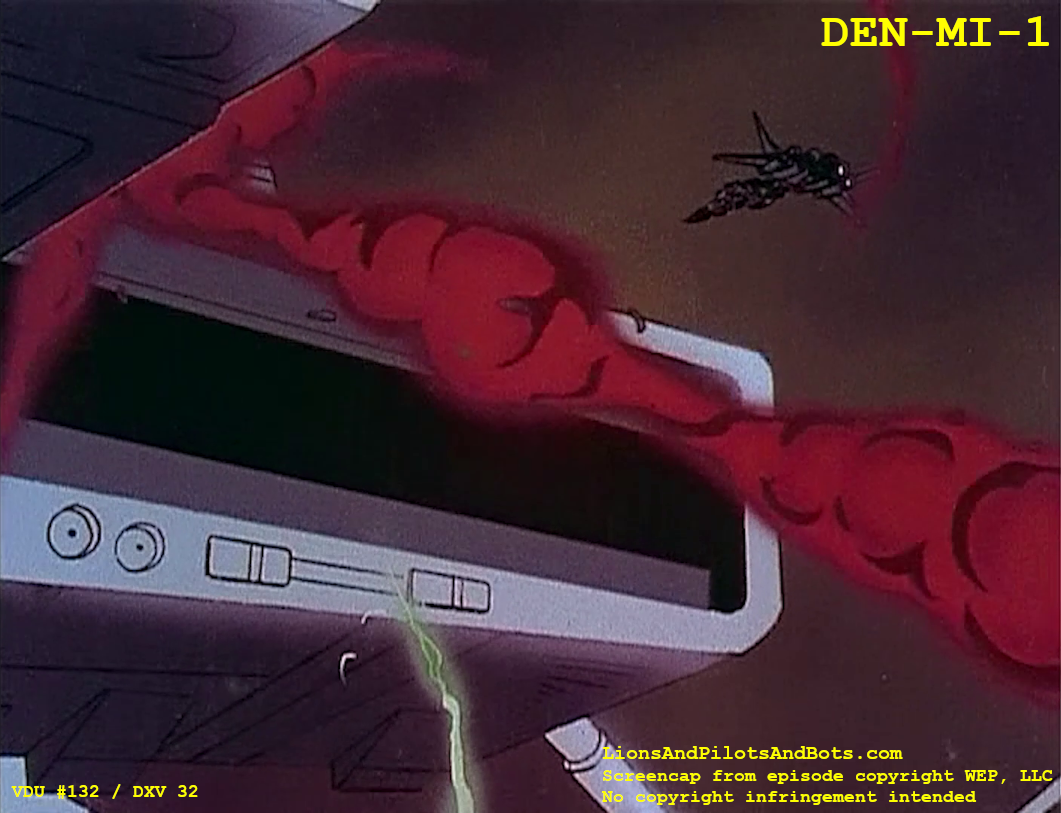
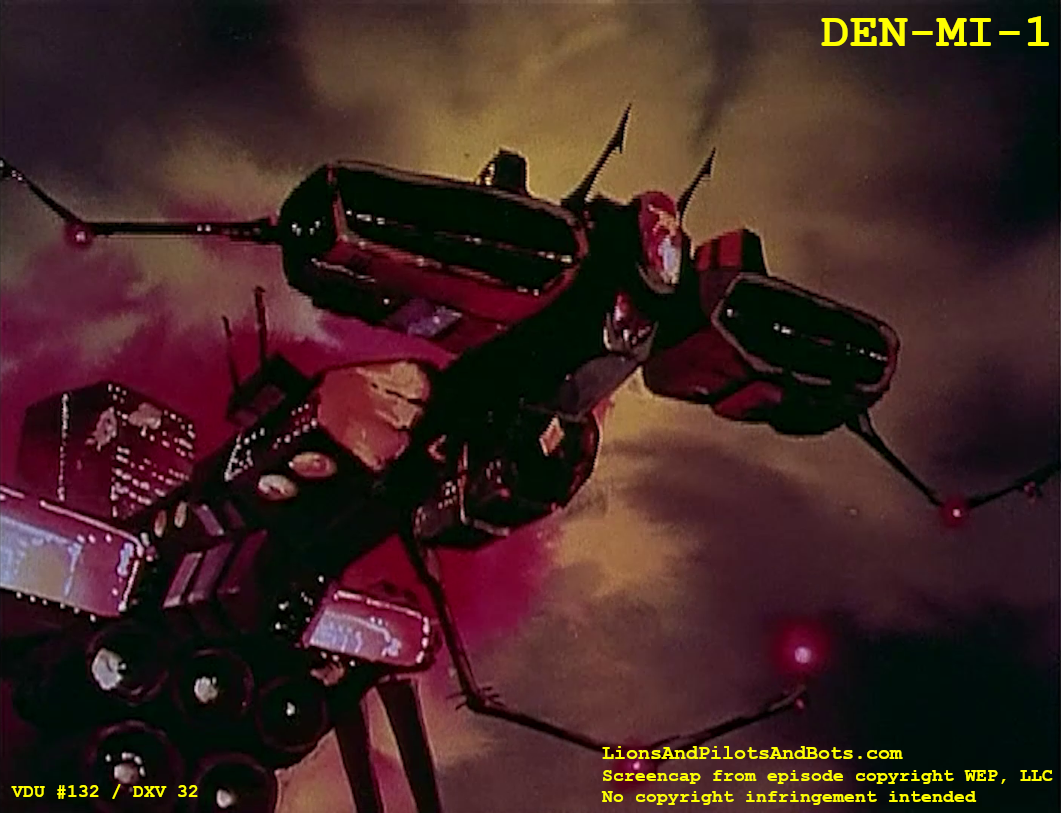
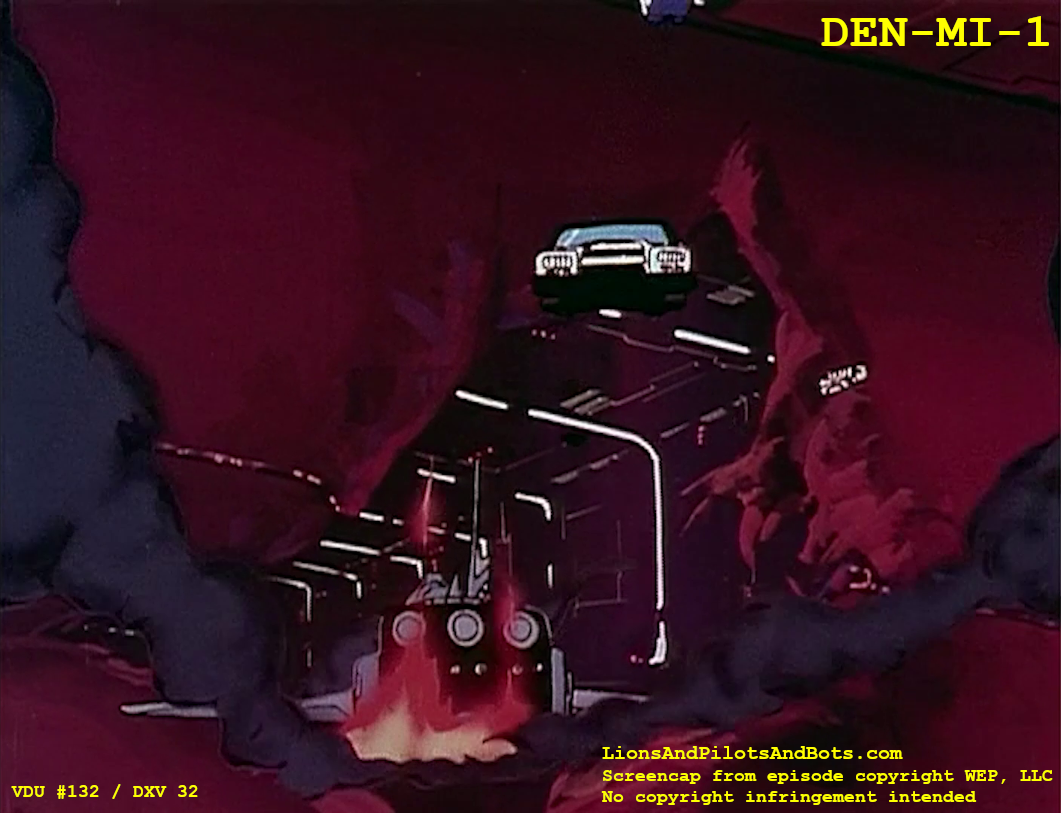
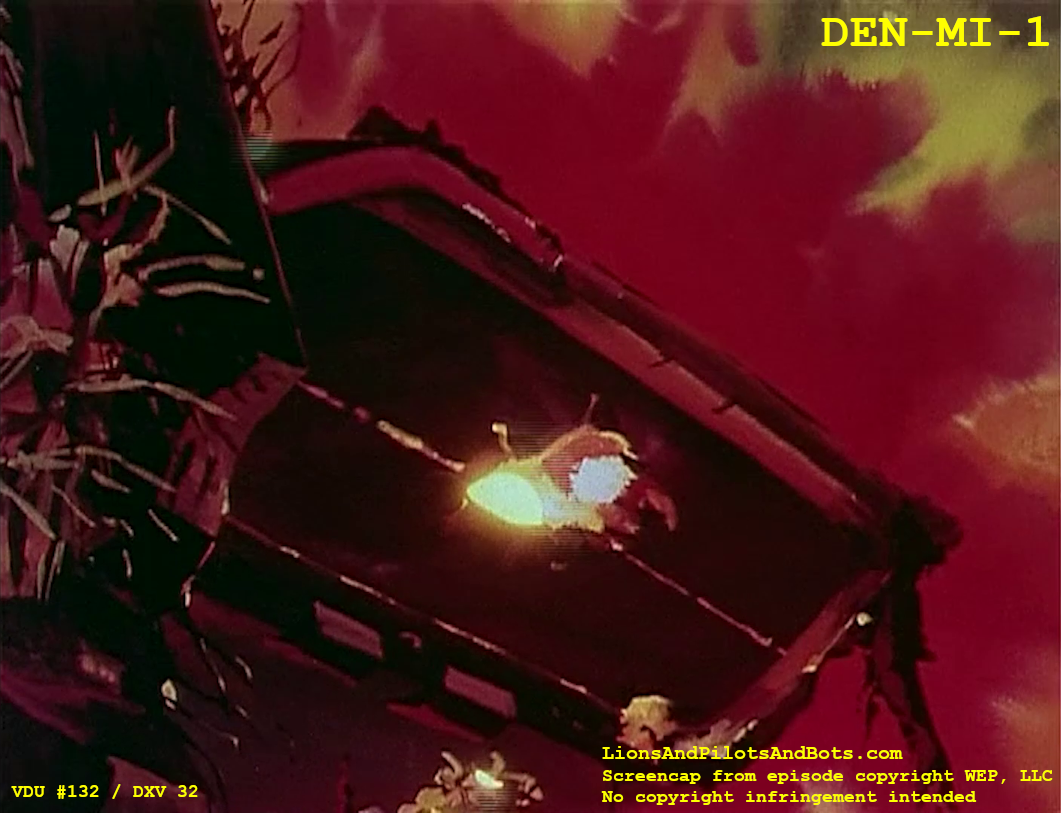
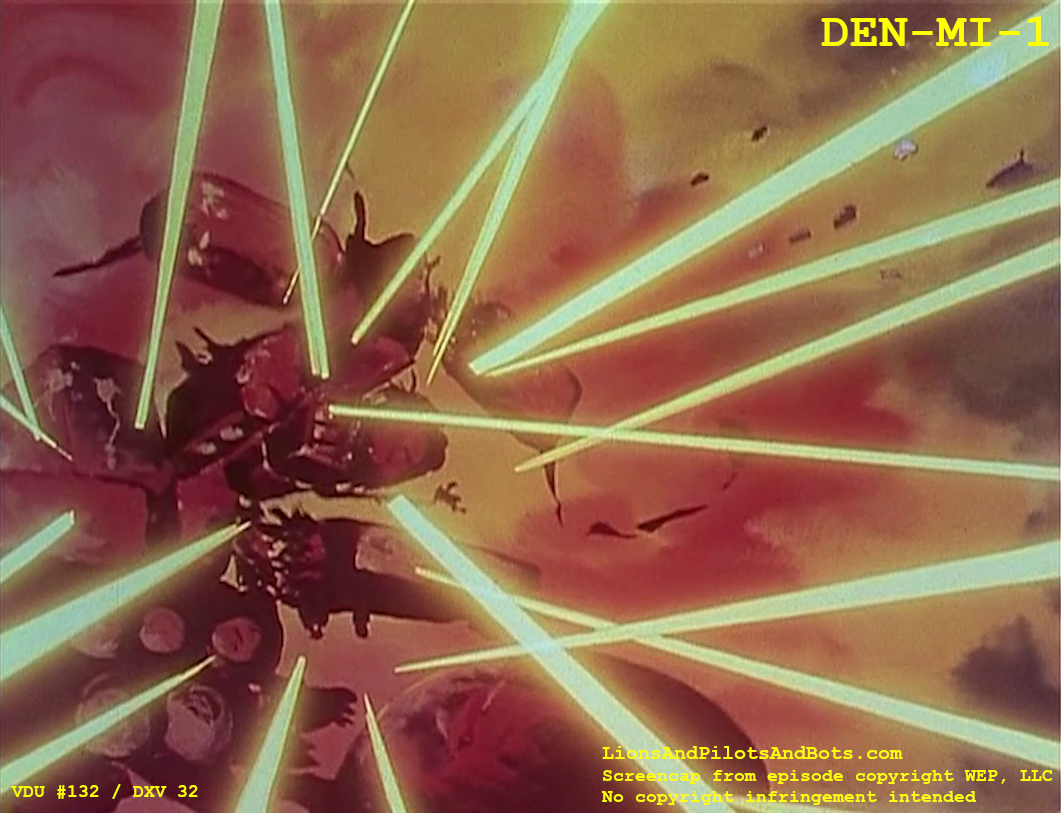
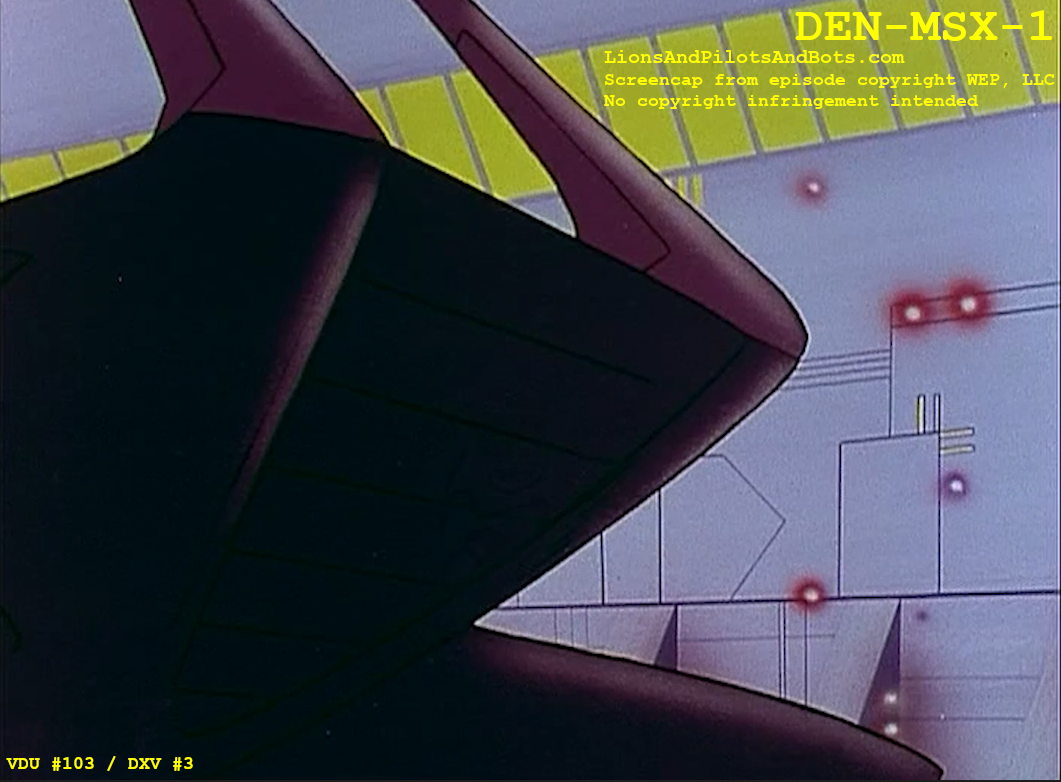
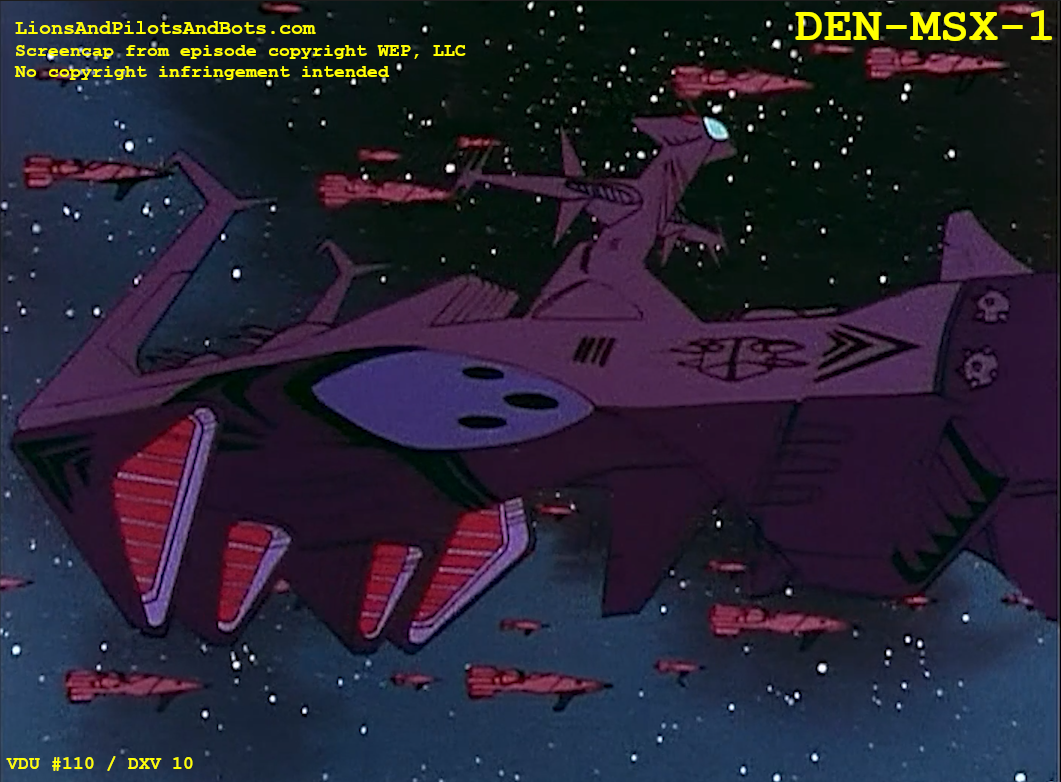
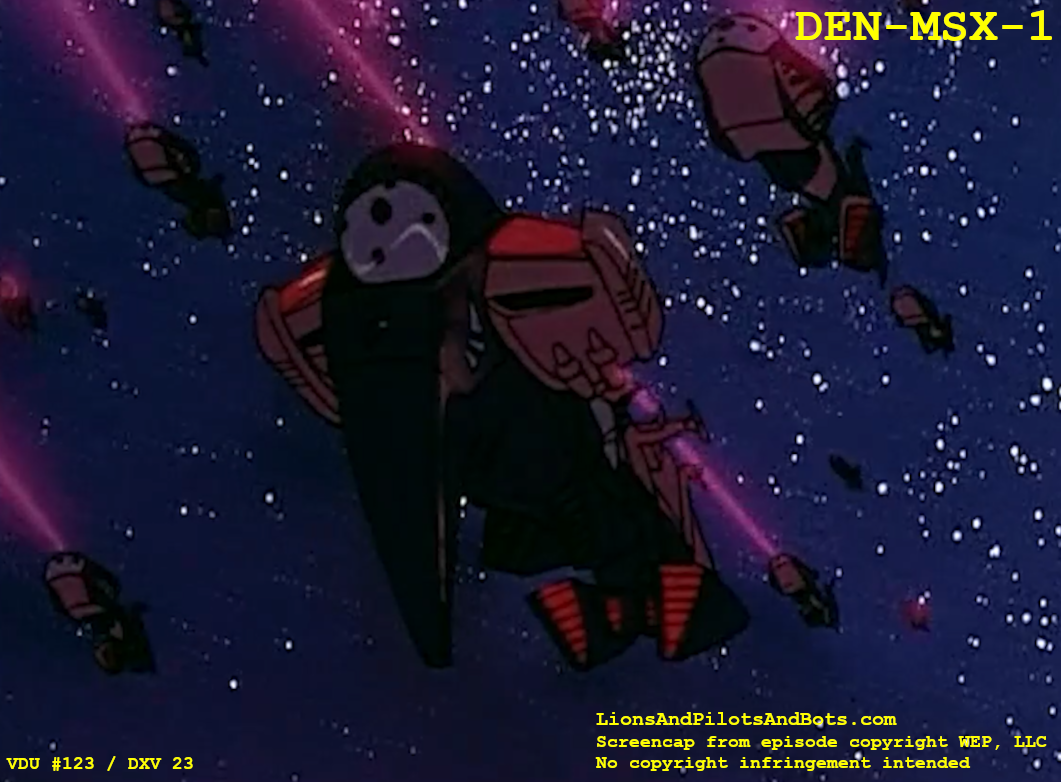
DEN-MI-1 military installations are large space stations that are not built on the surface of any planet. A prominent feature of these bases is a long, forward-protruding command tower at the top, flanked by twin hangar bay hatches.
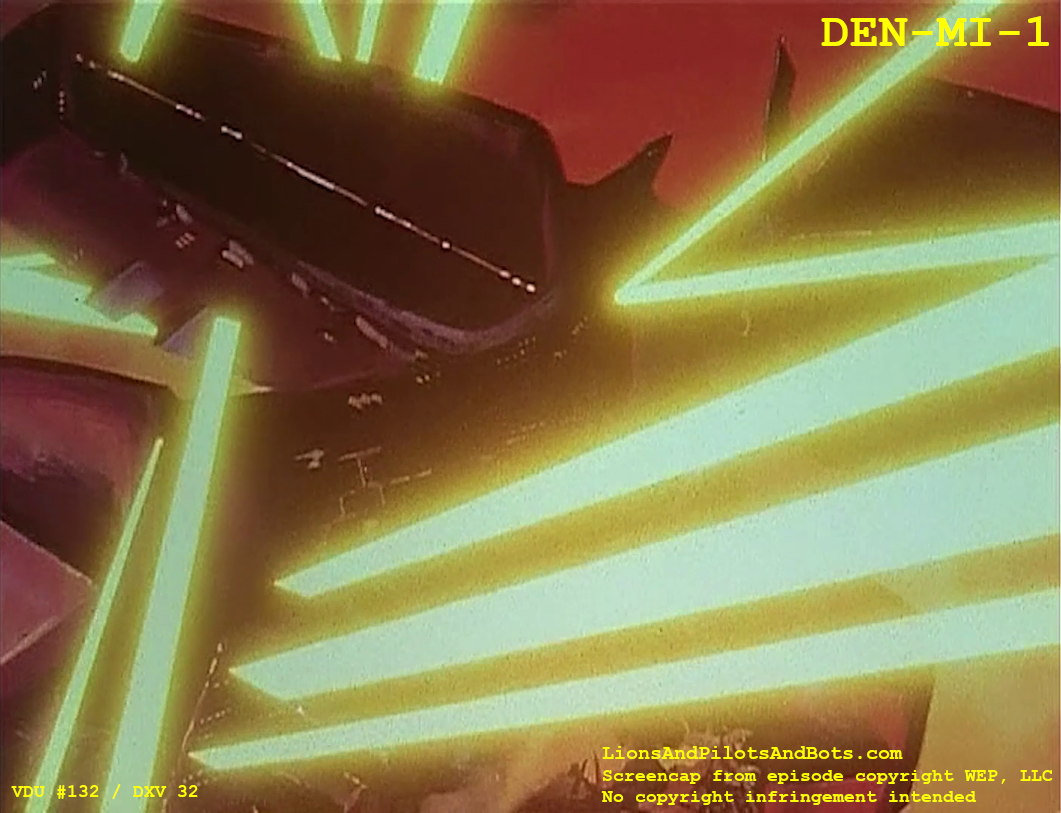
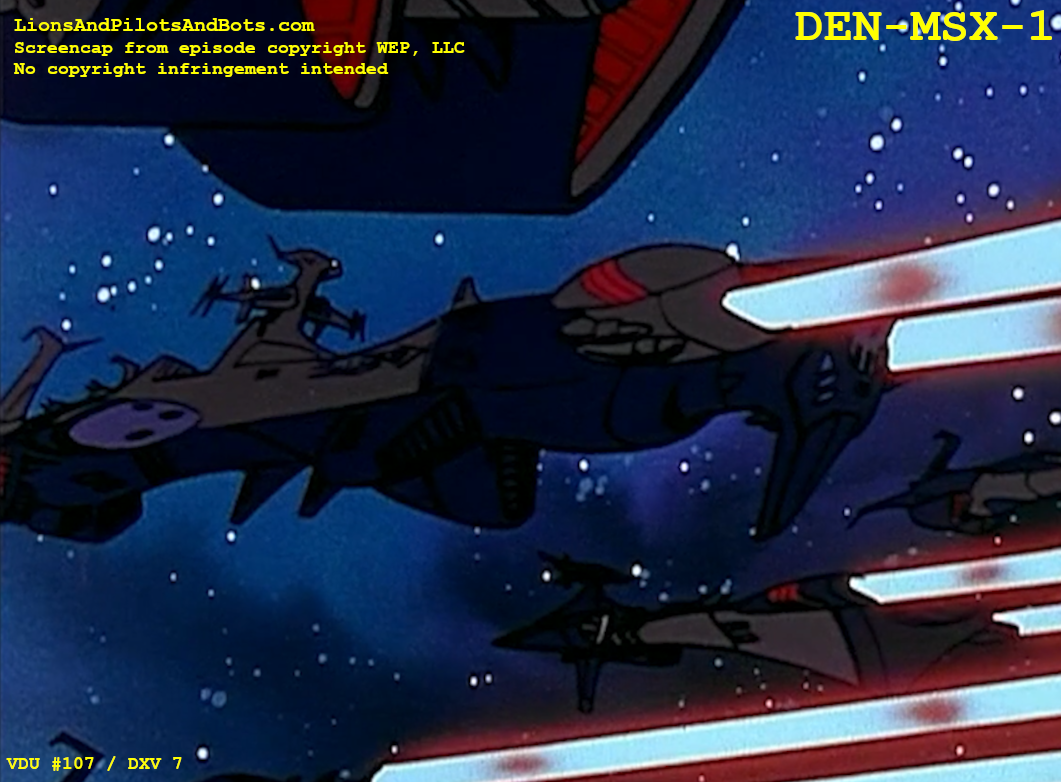
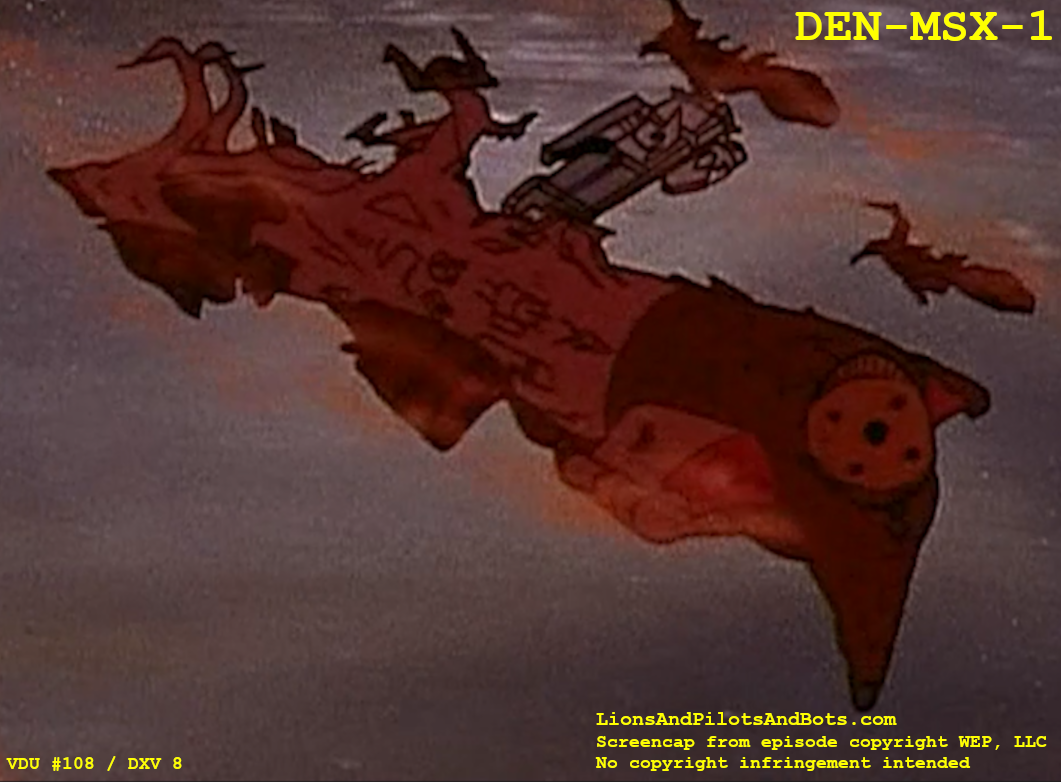
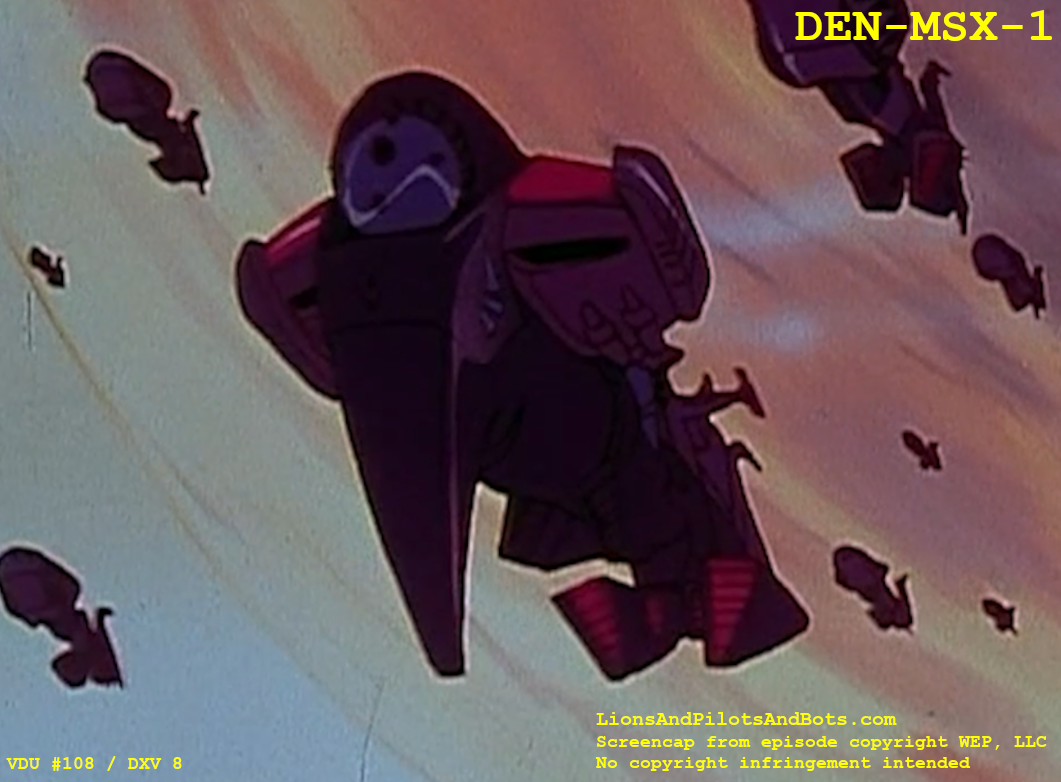
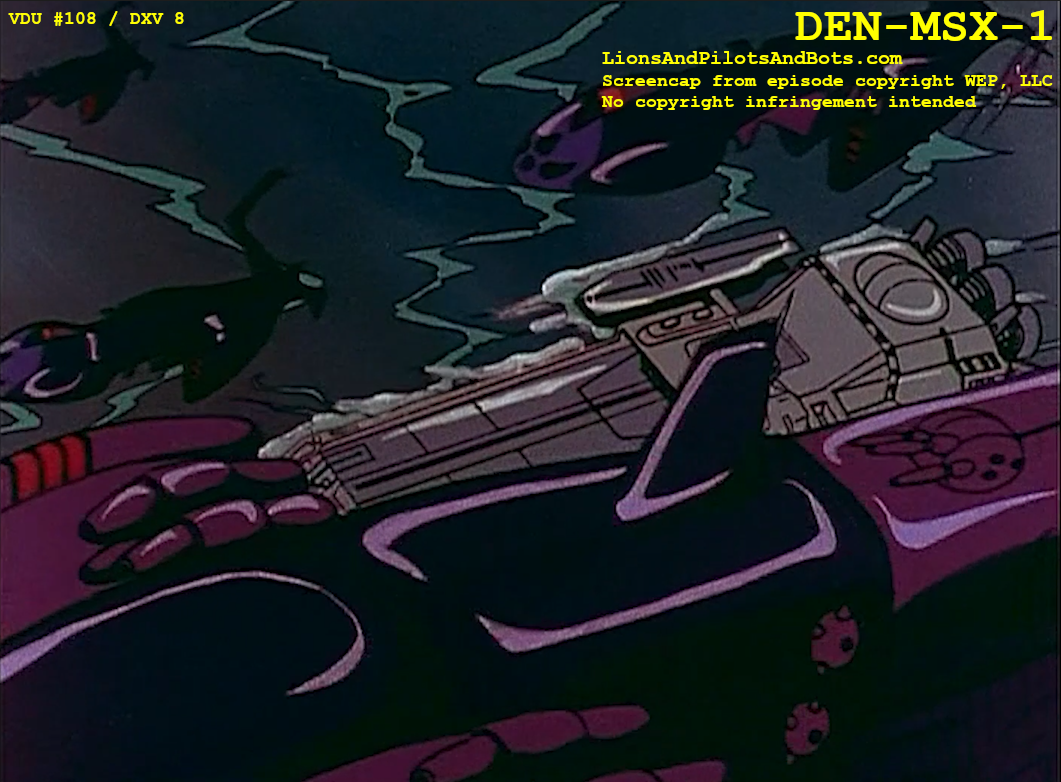
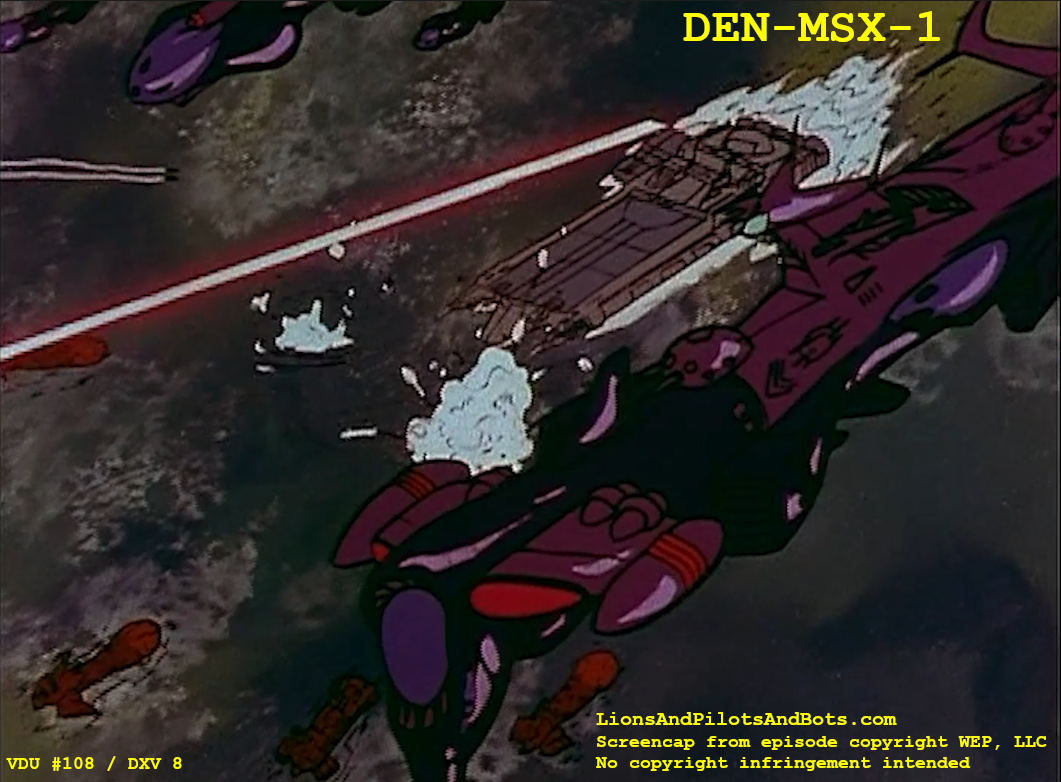
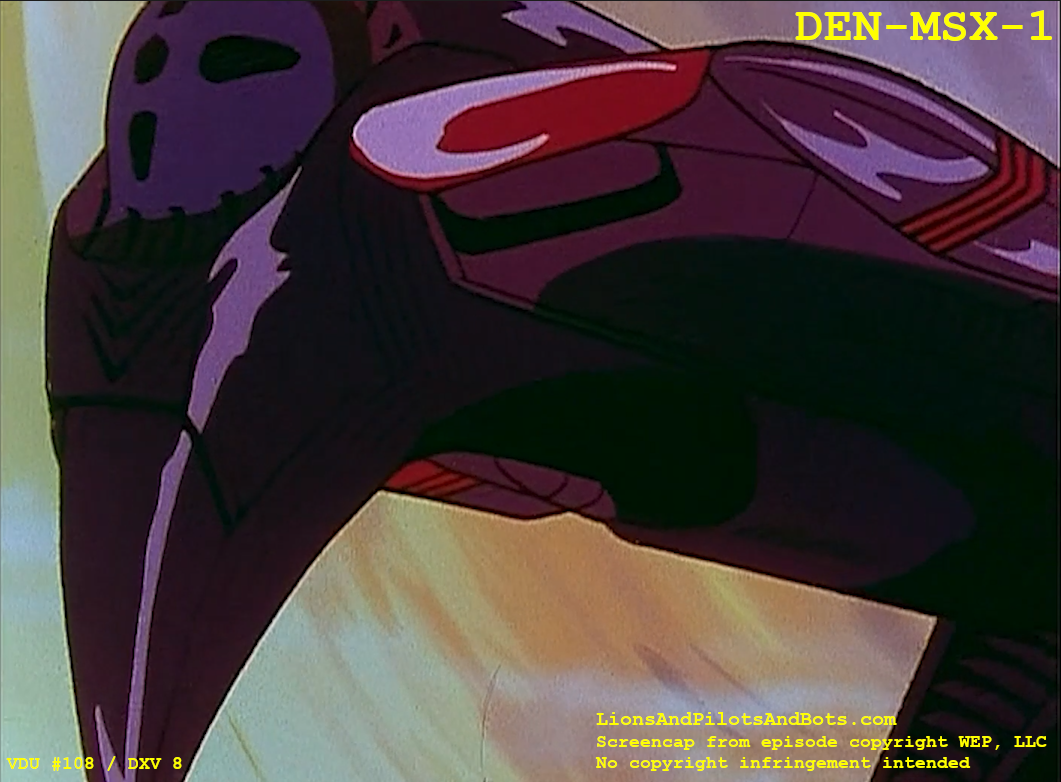
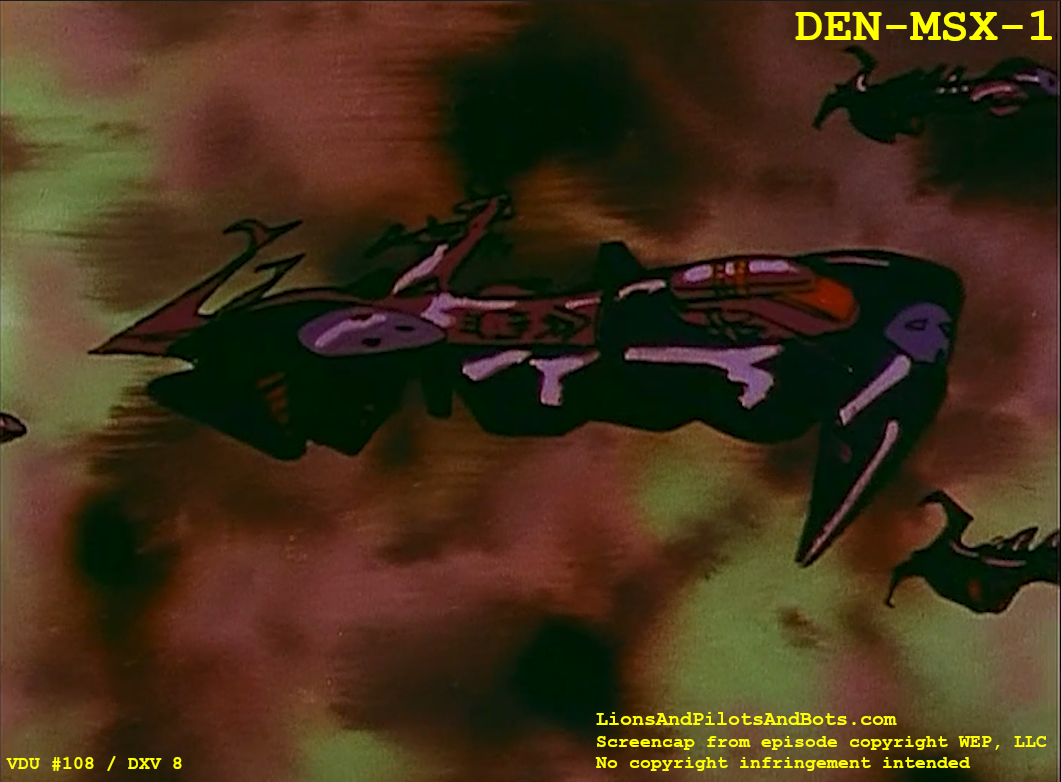
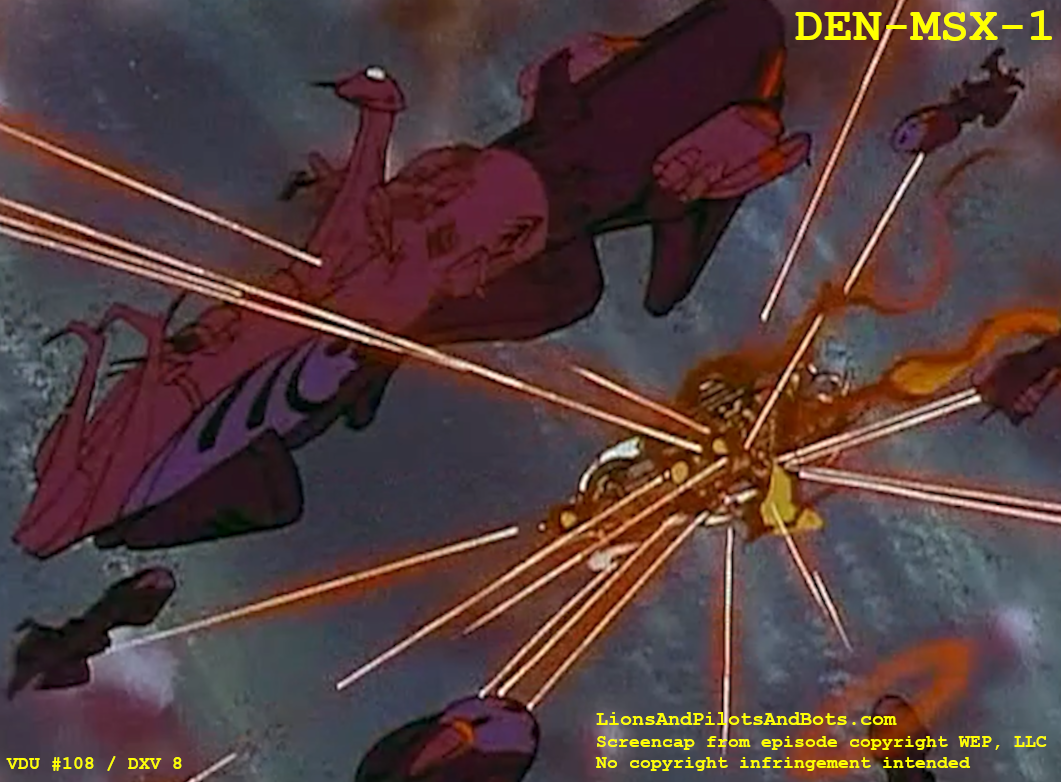
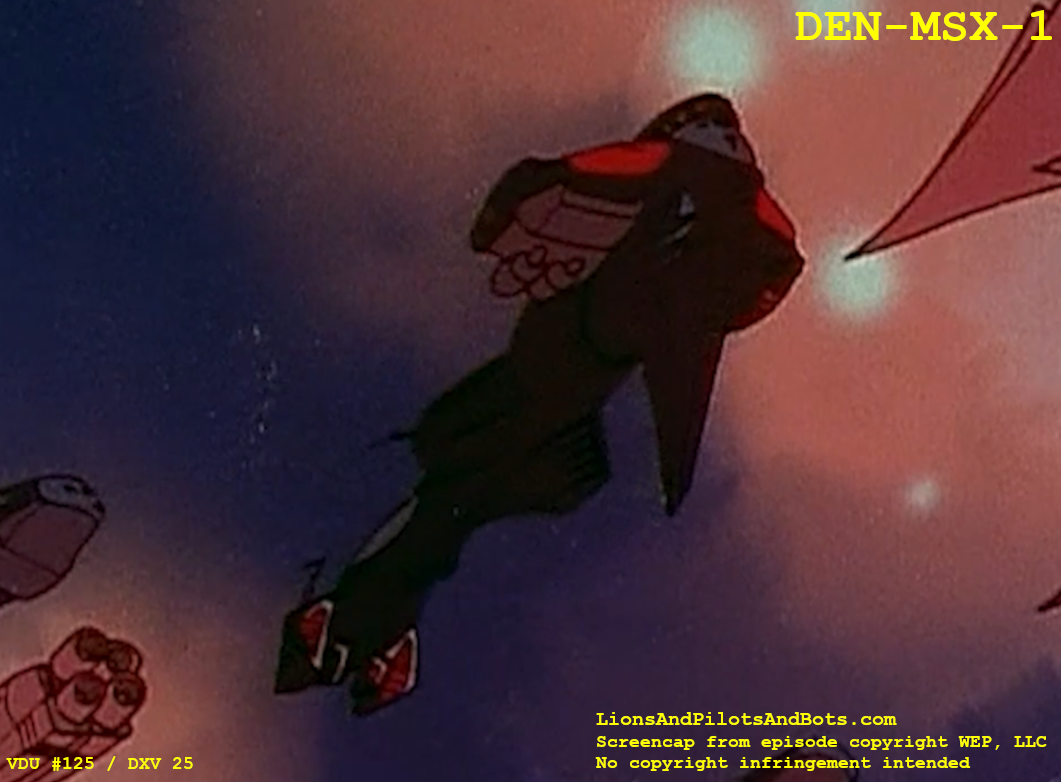
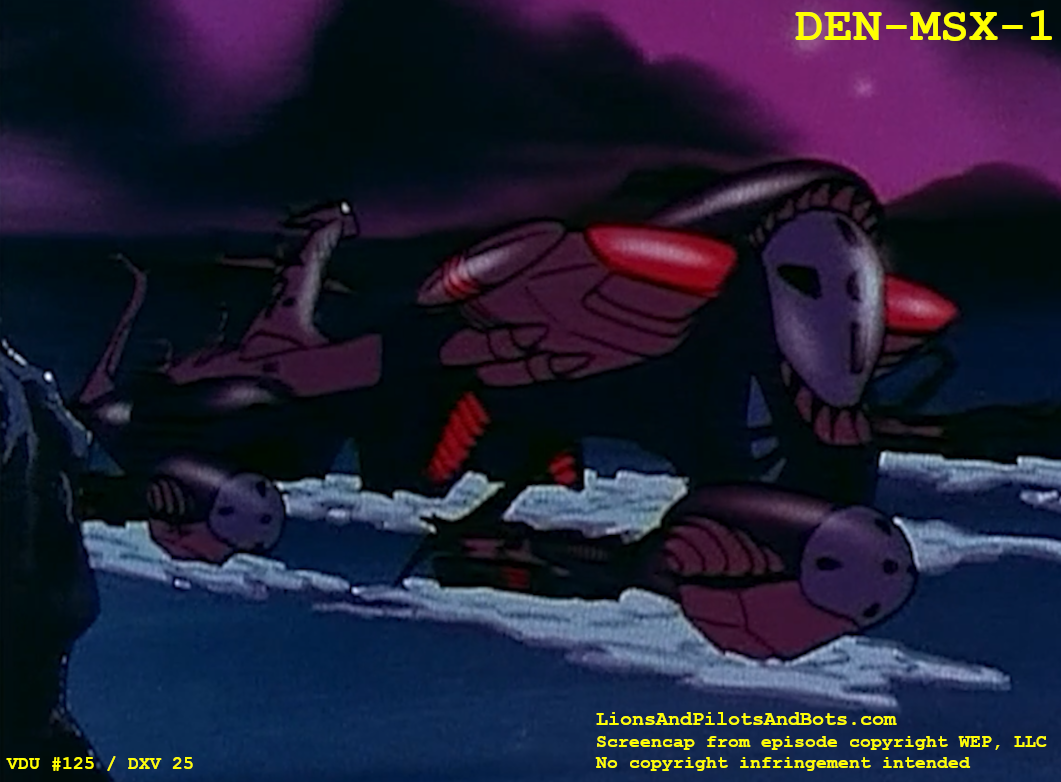
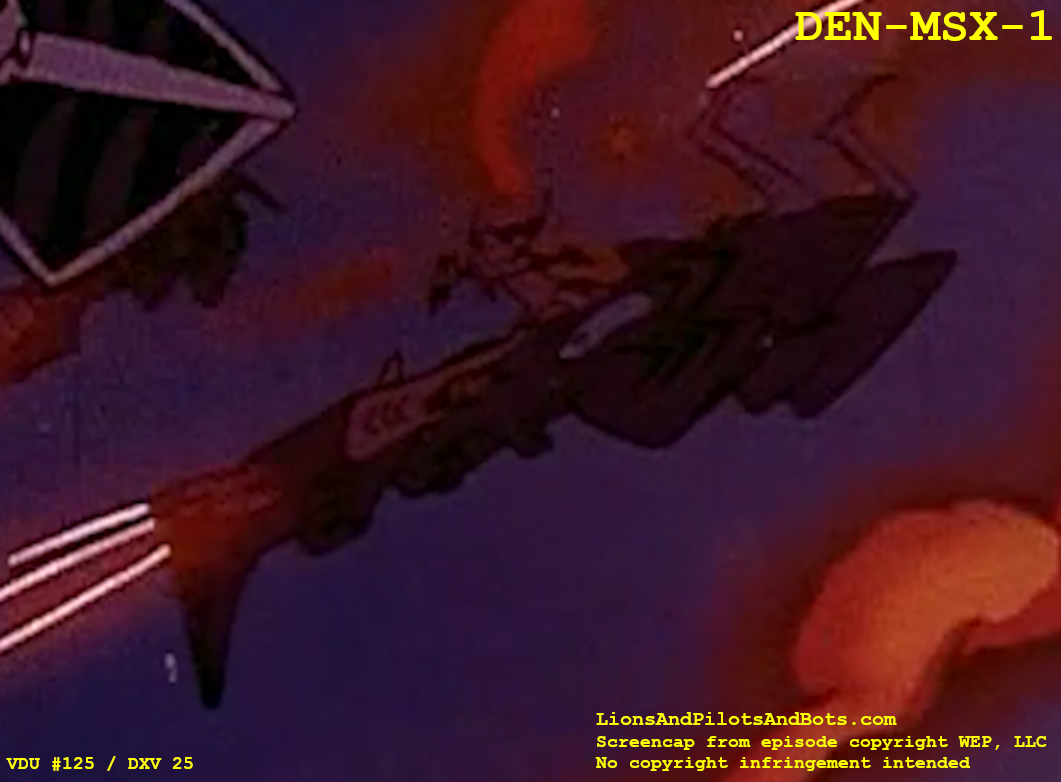
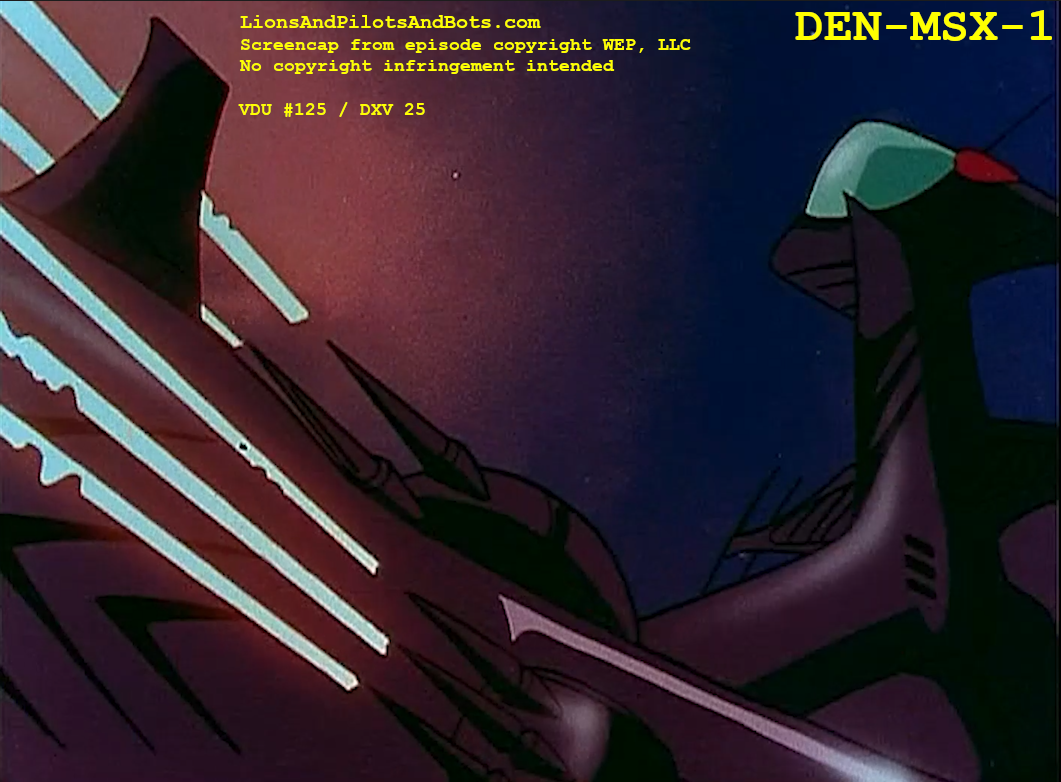
DEN-MI-1 bases can contain multiple MSX-1 and smaller ships, and they can launch long-range missiles.
Commander Hazar commands multiple fleets from a DEN-MI-1 base. Long after Hazar is reassigned elsewhere, Vehicle Team Voltron leads a successful attack that destroys Hazar’s old base.
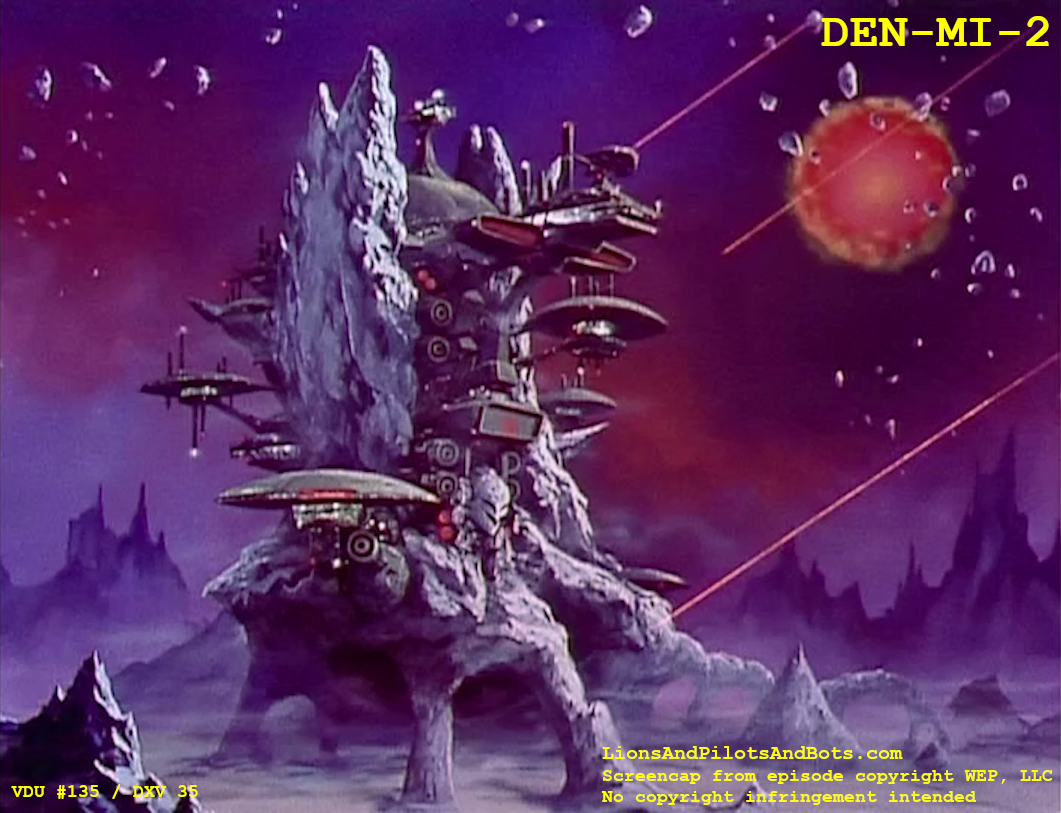
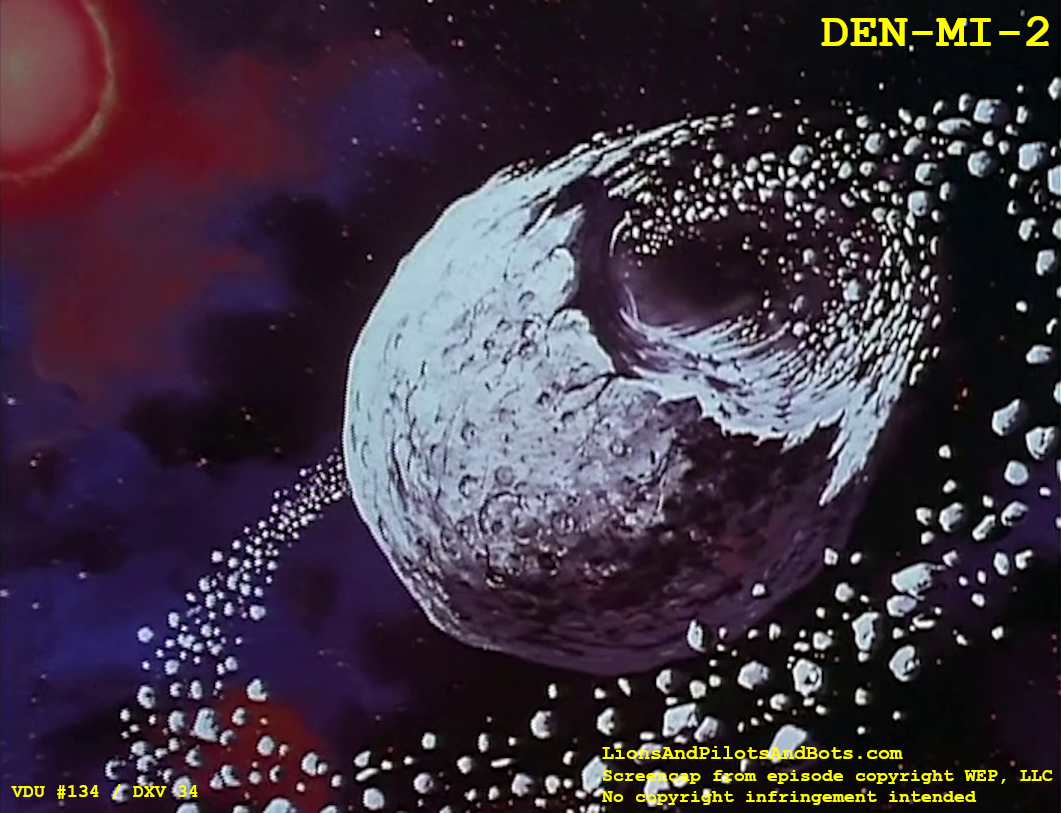
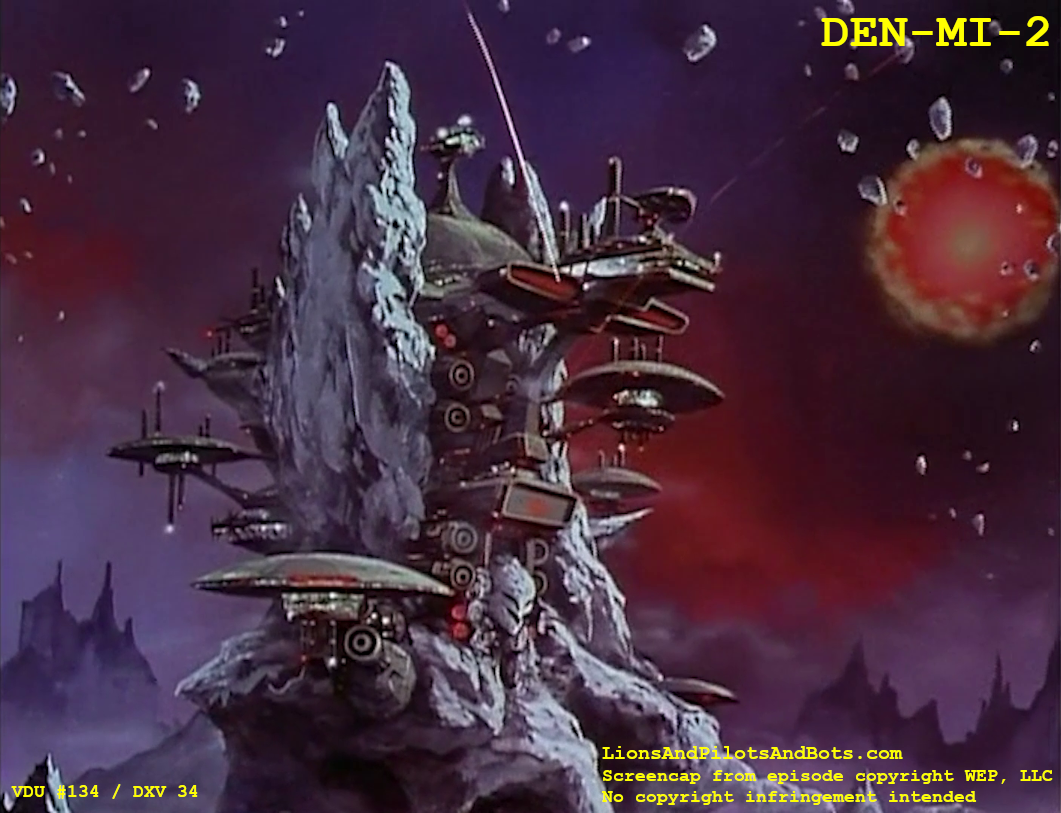
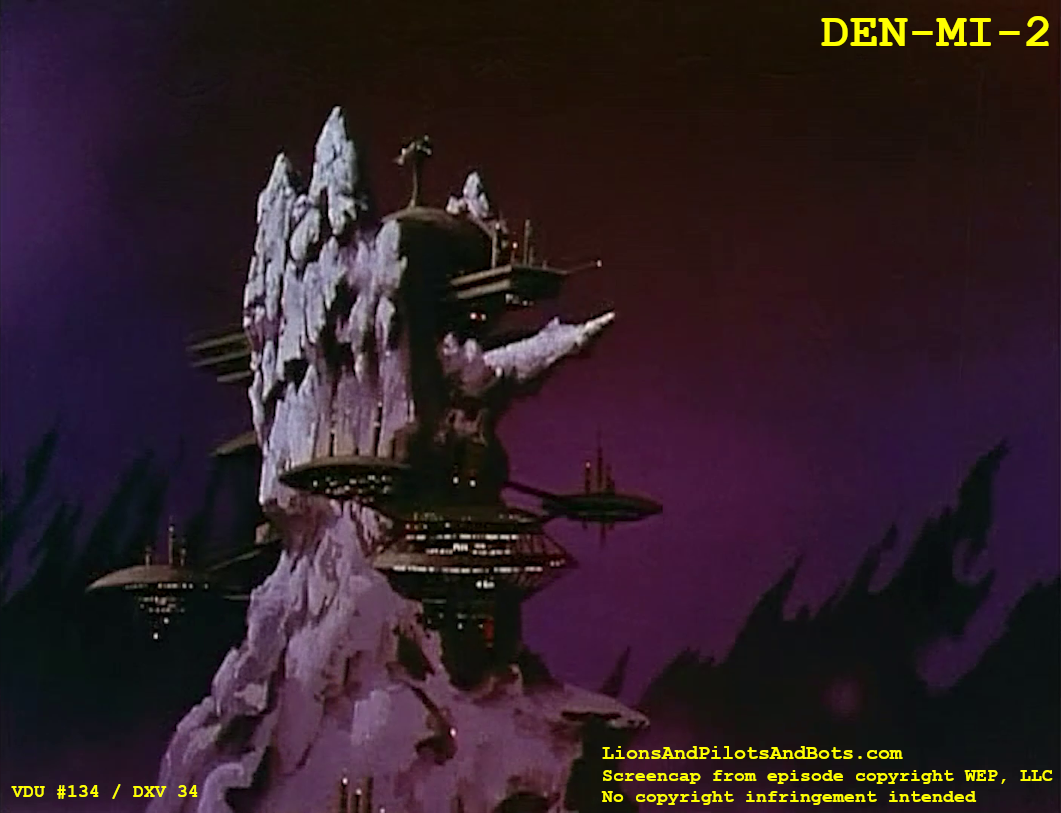
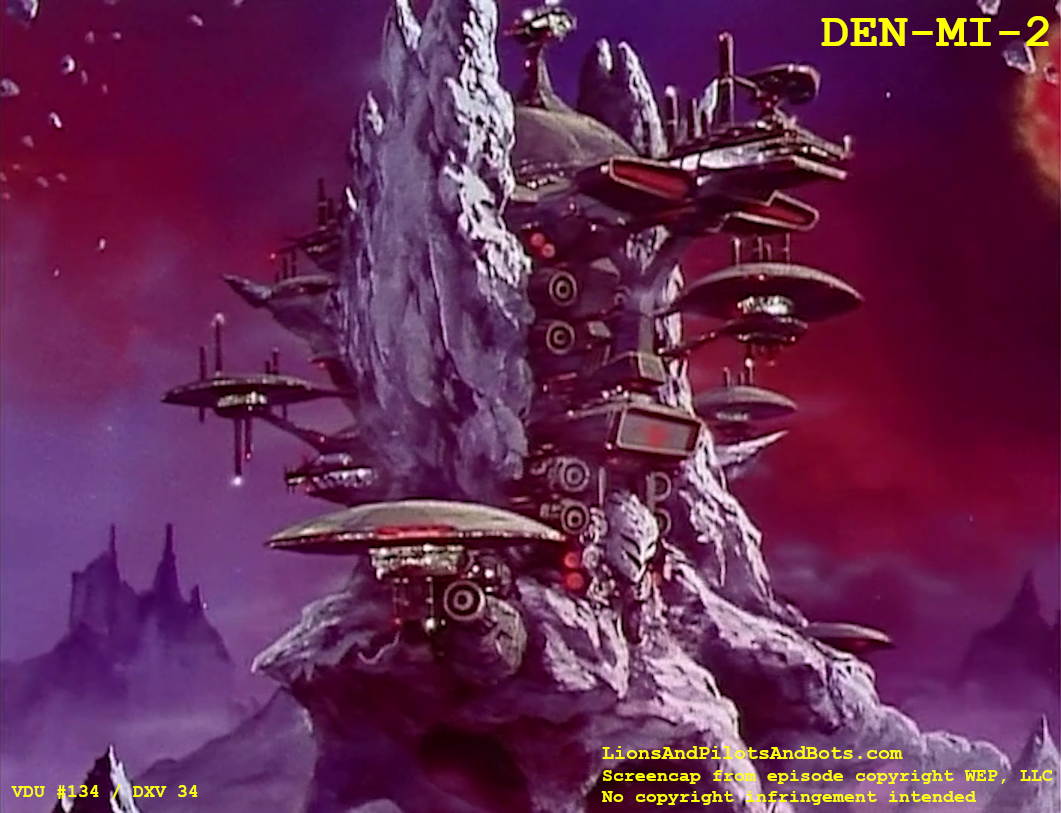
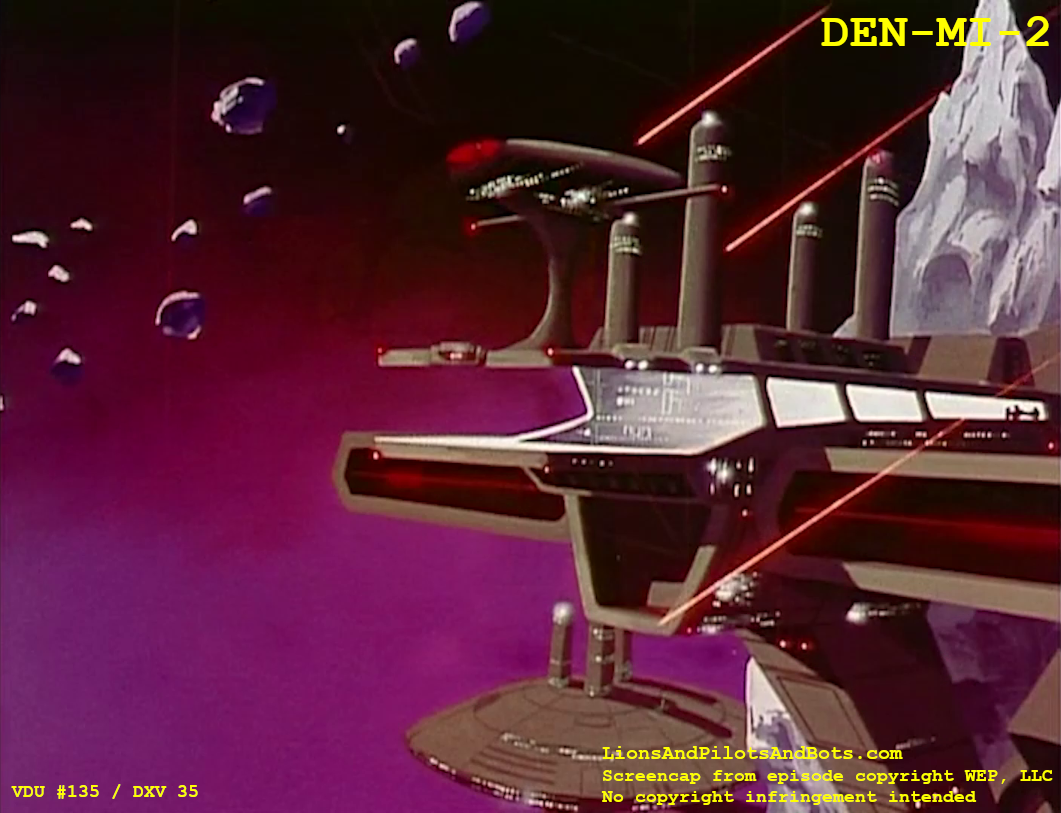
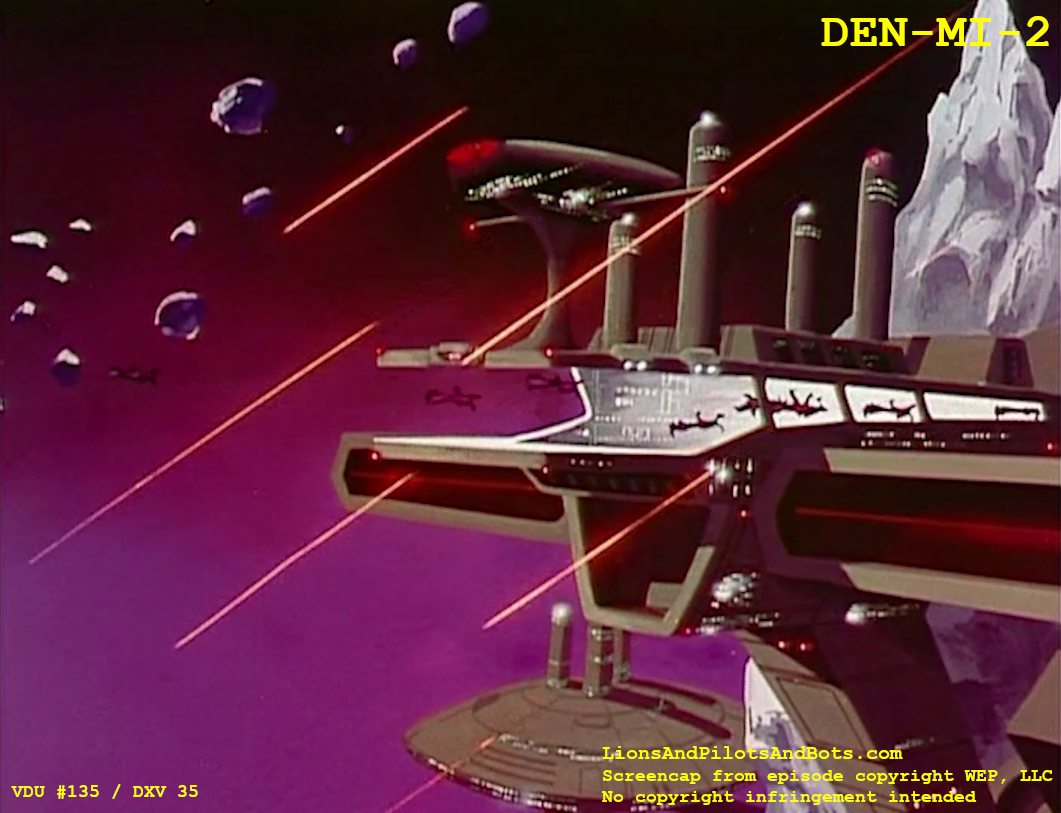
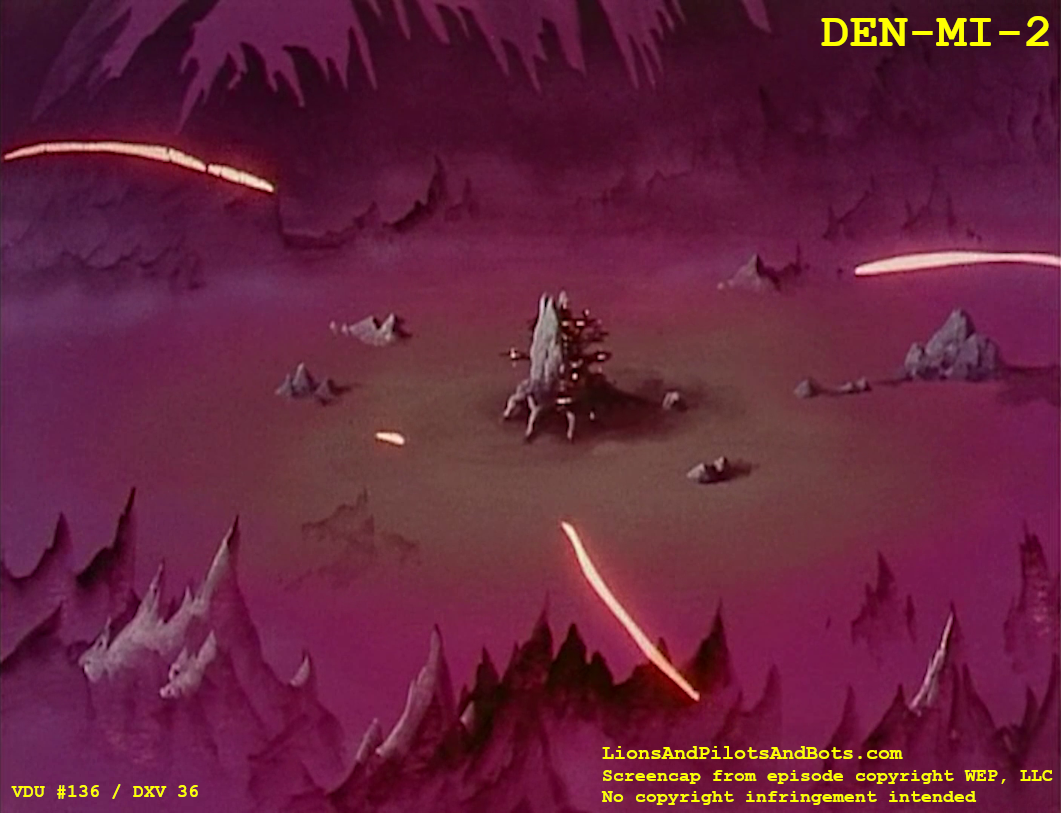
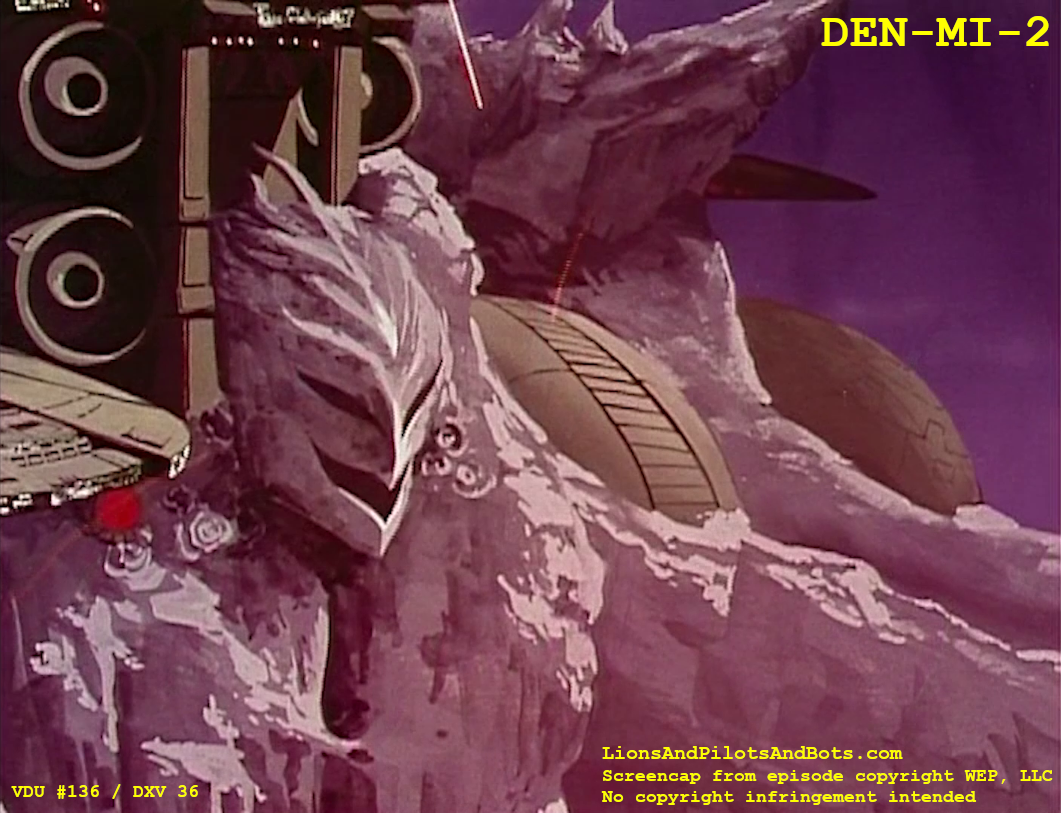
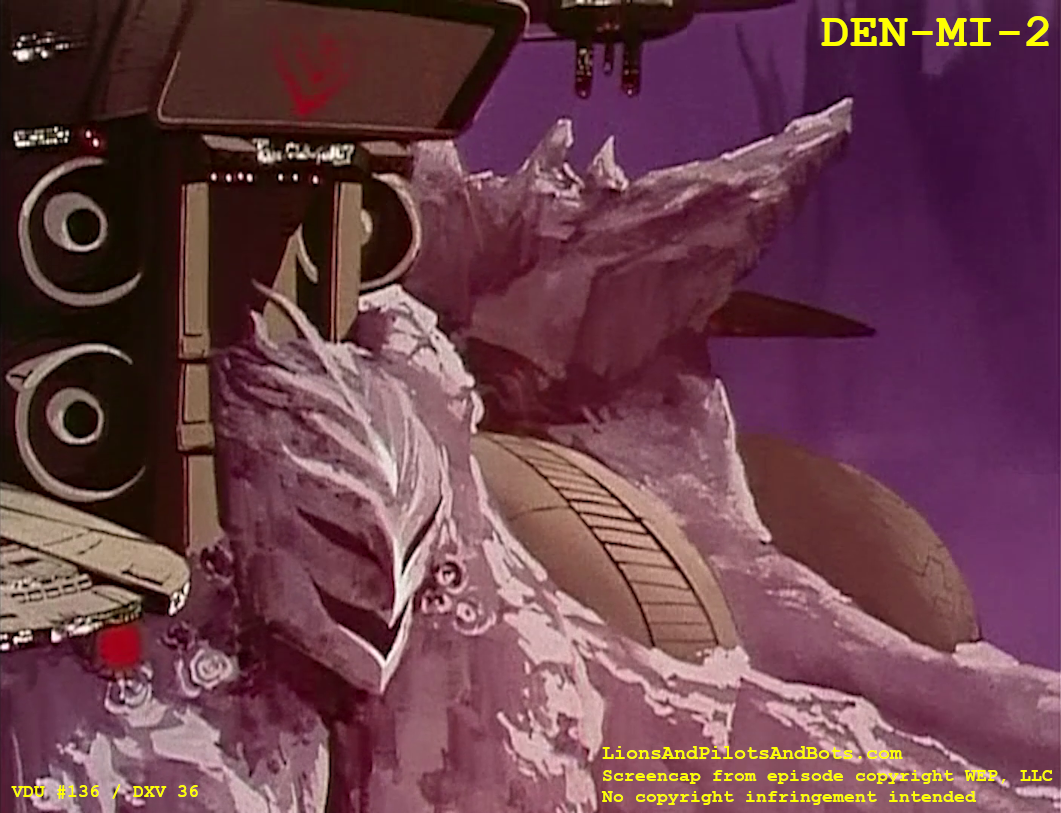
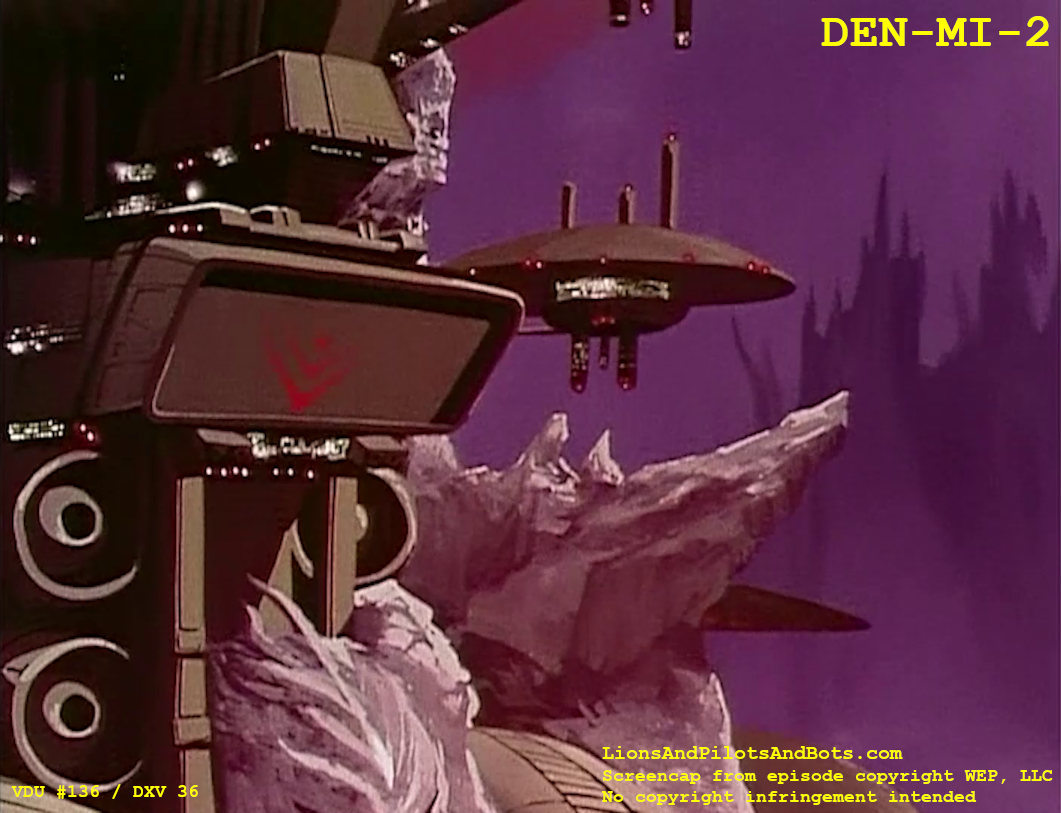
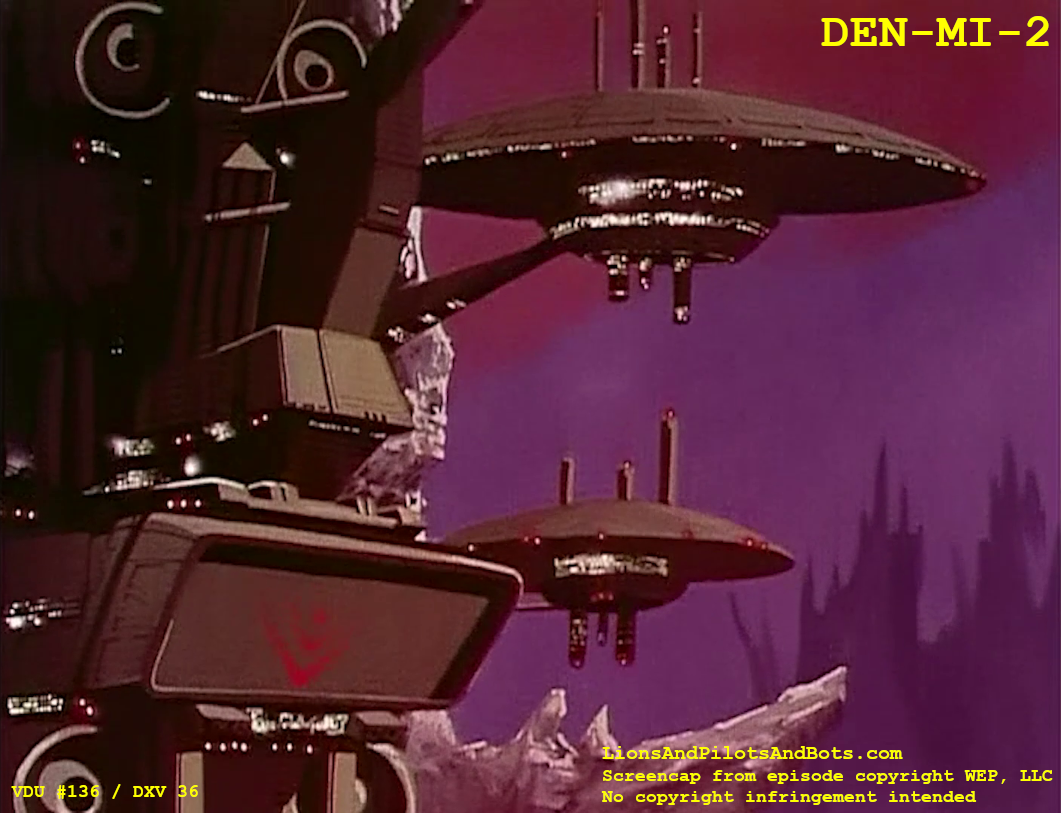
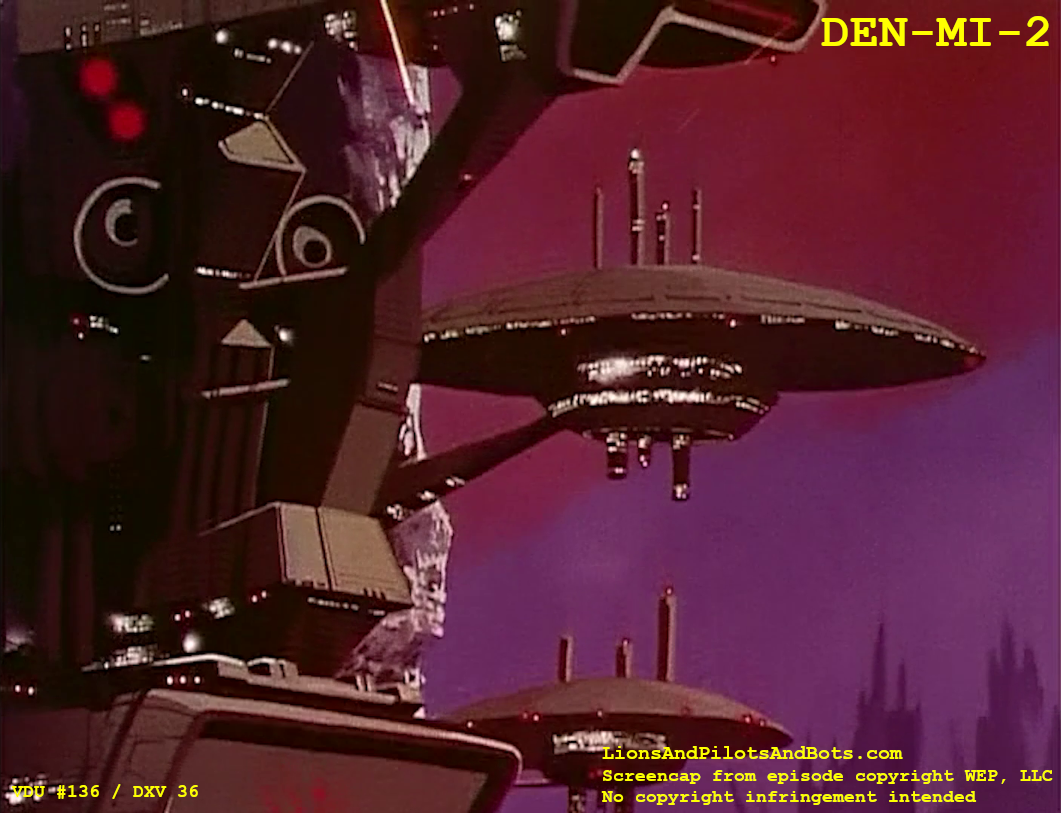
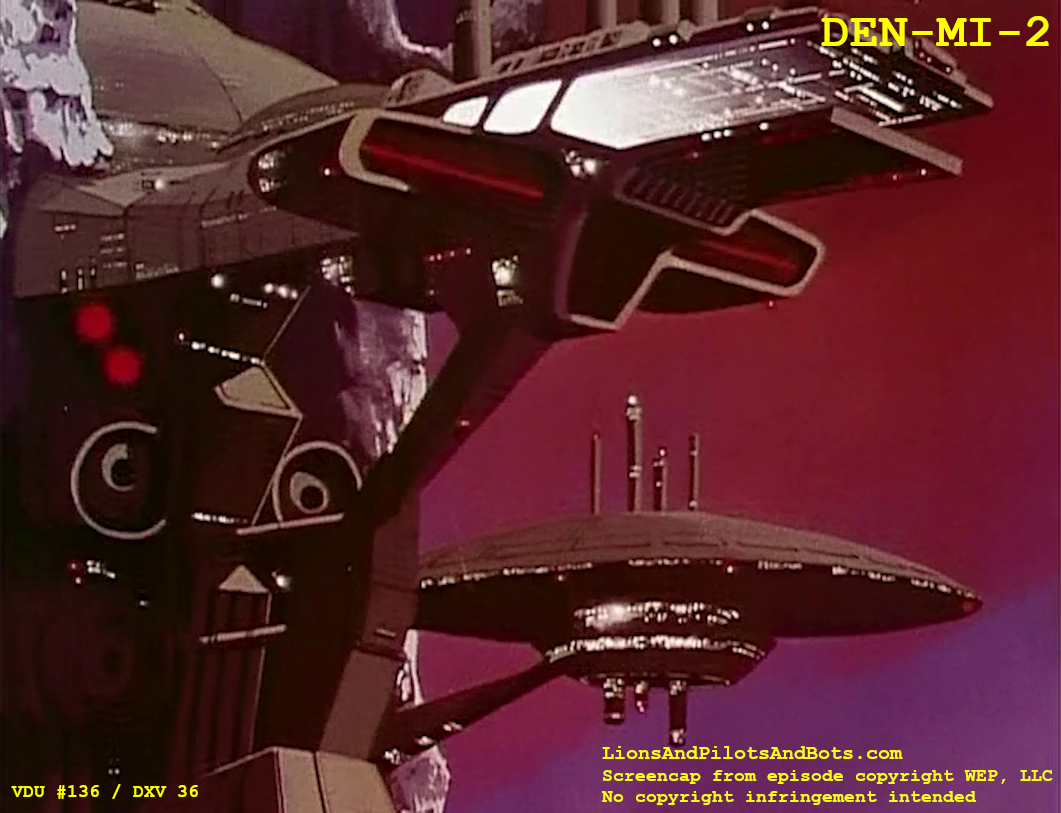
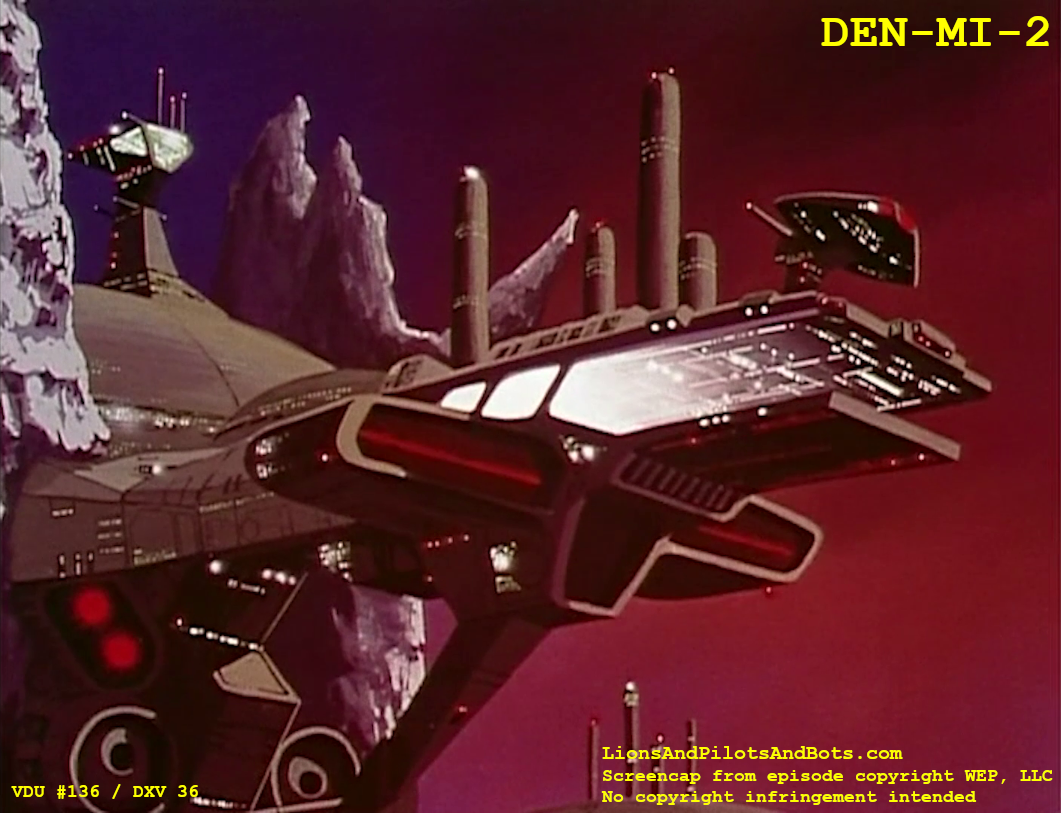
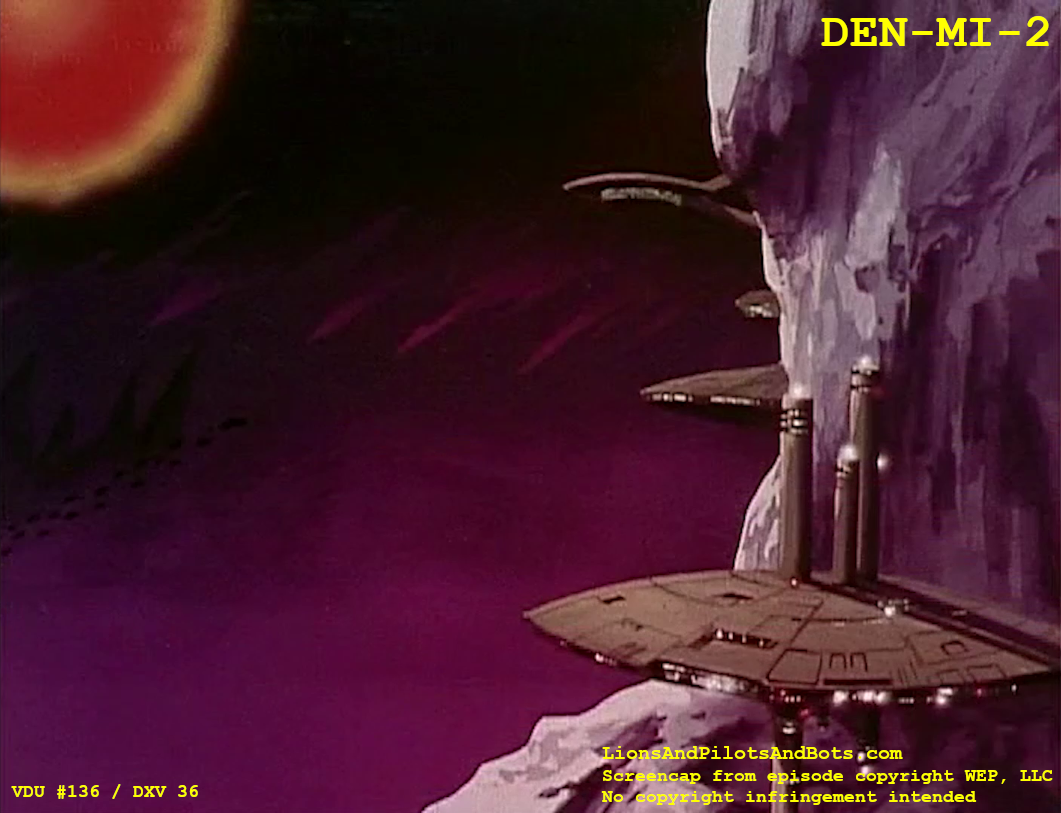
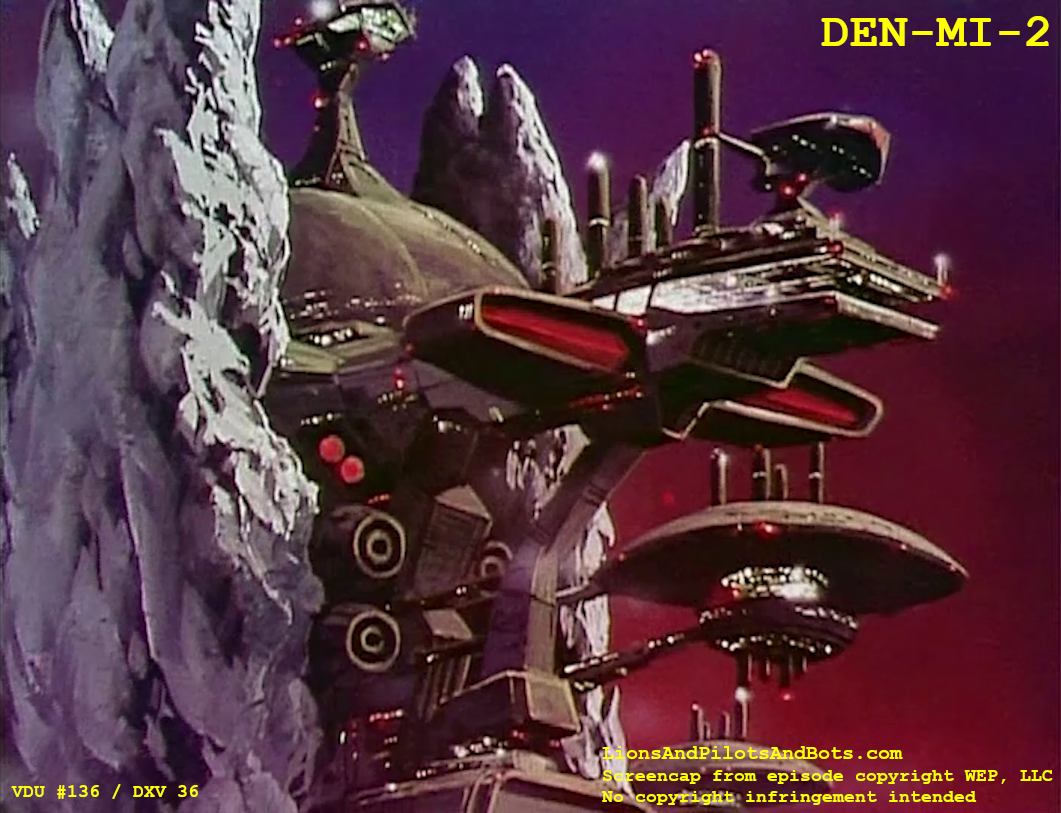
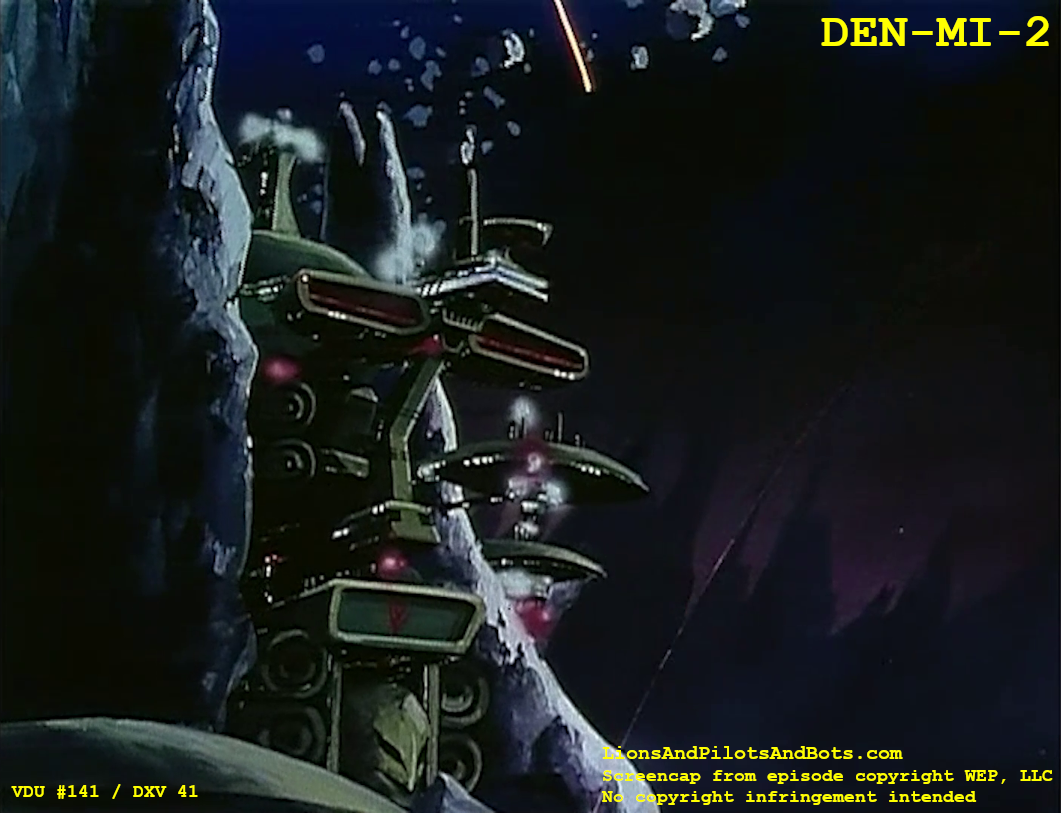
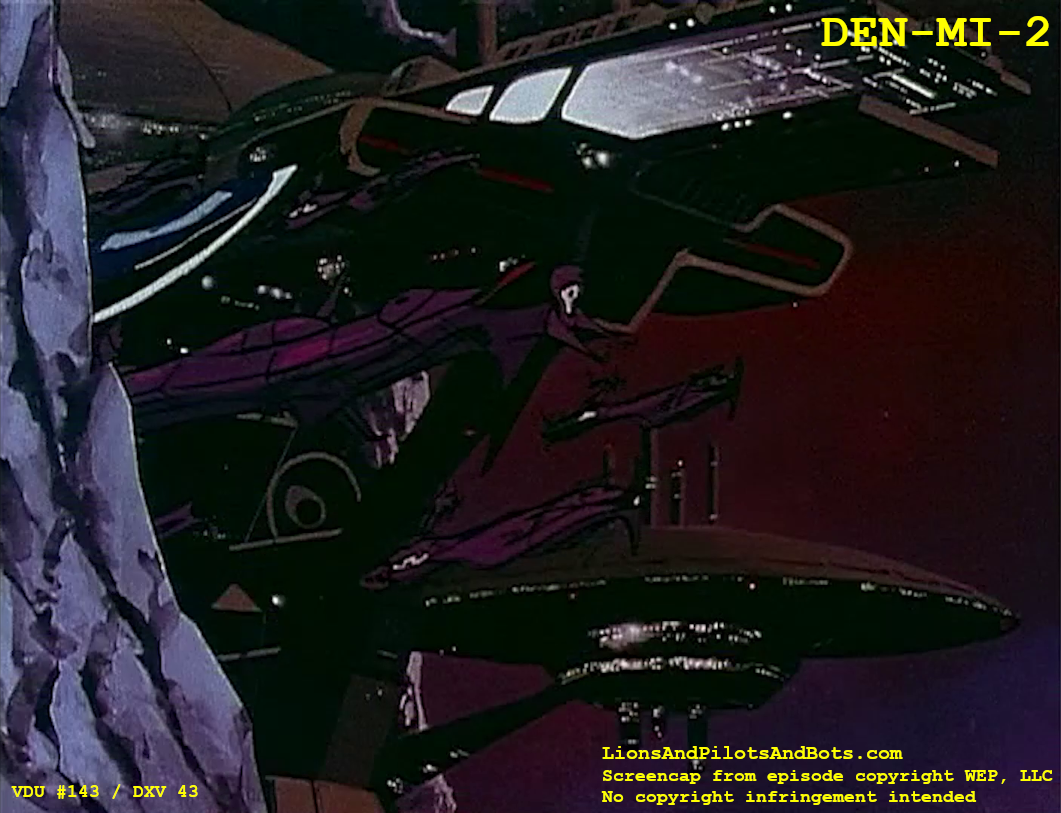
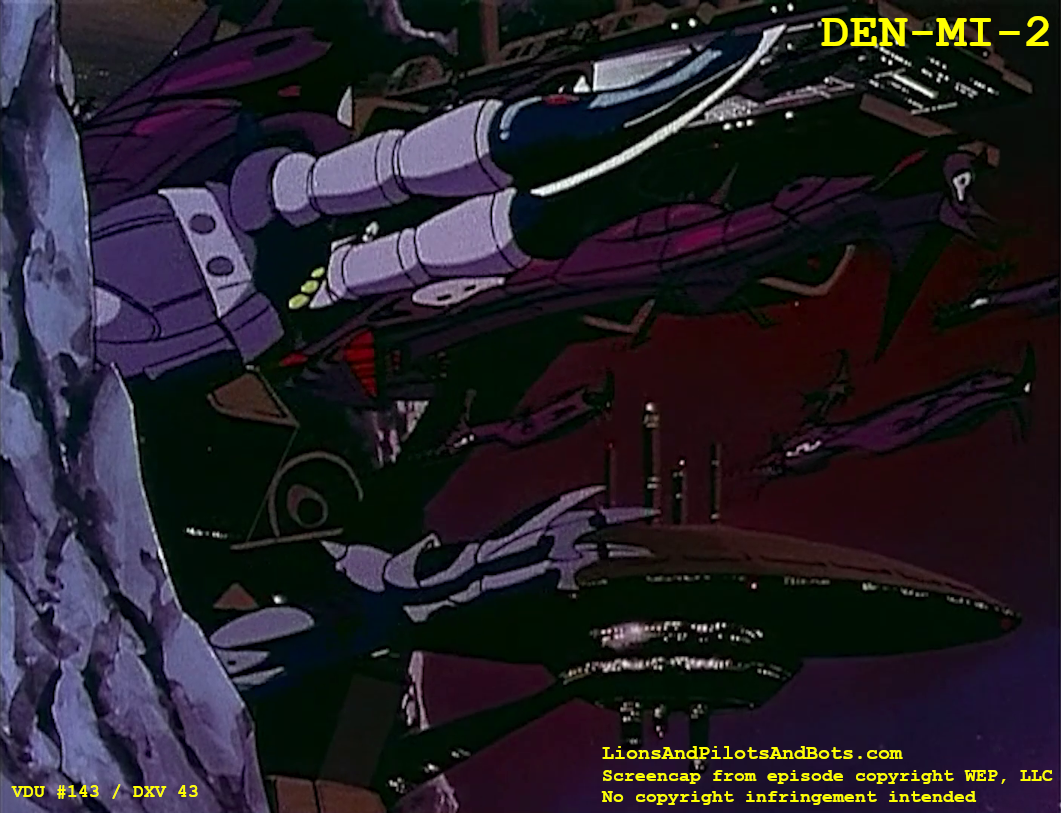
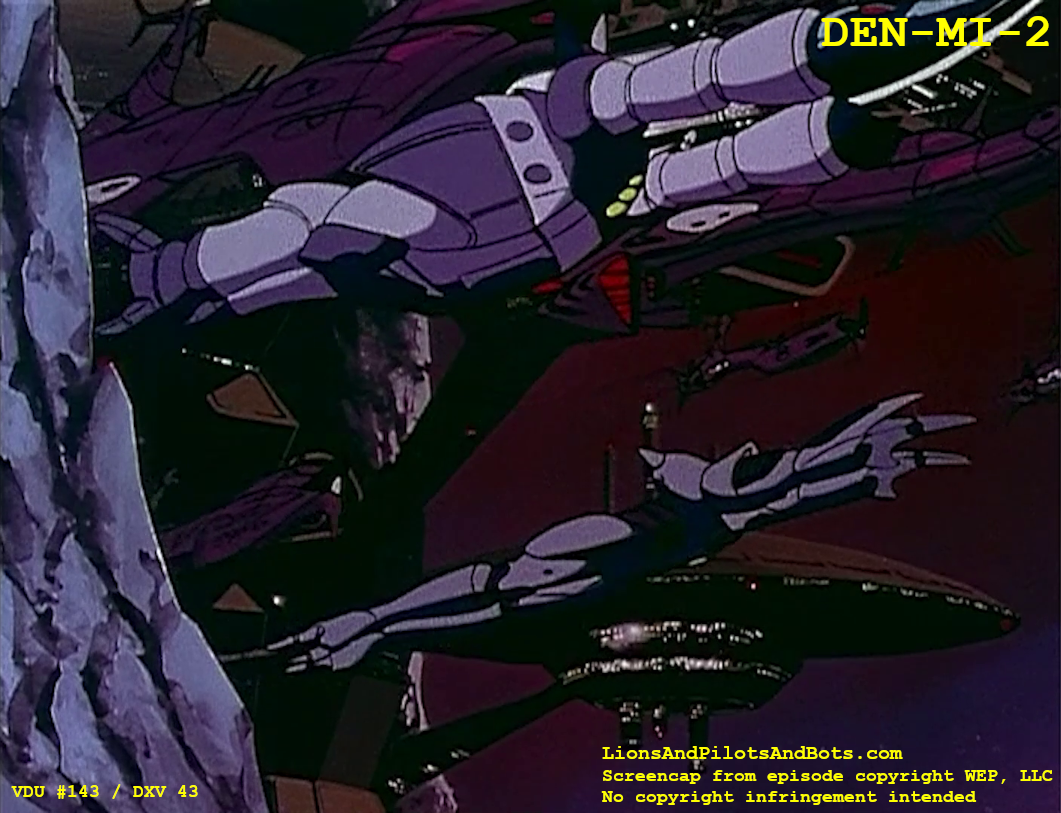
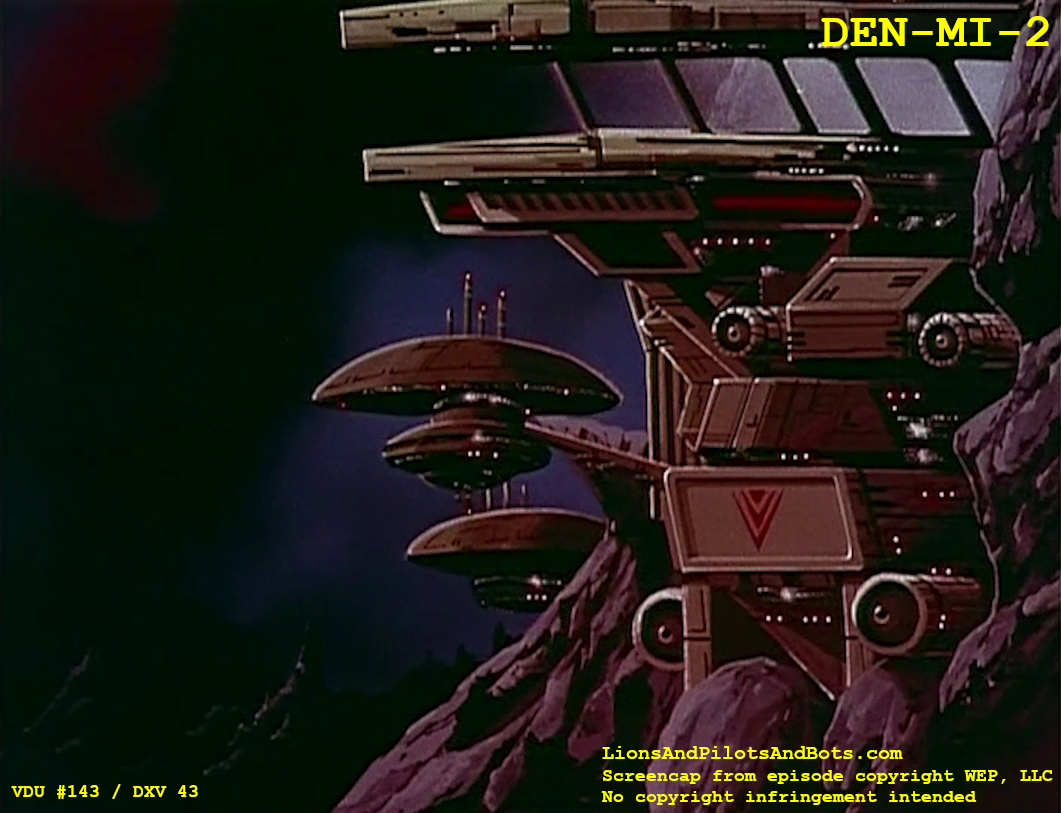
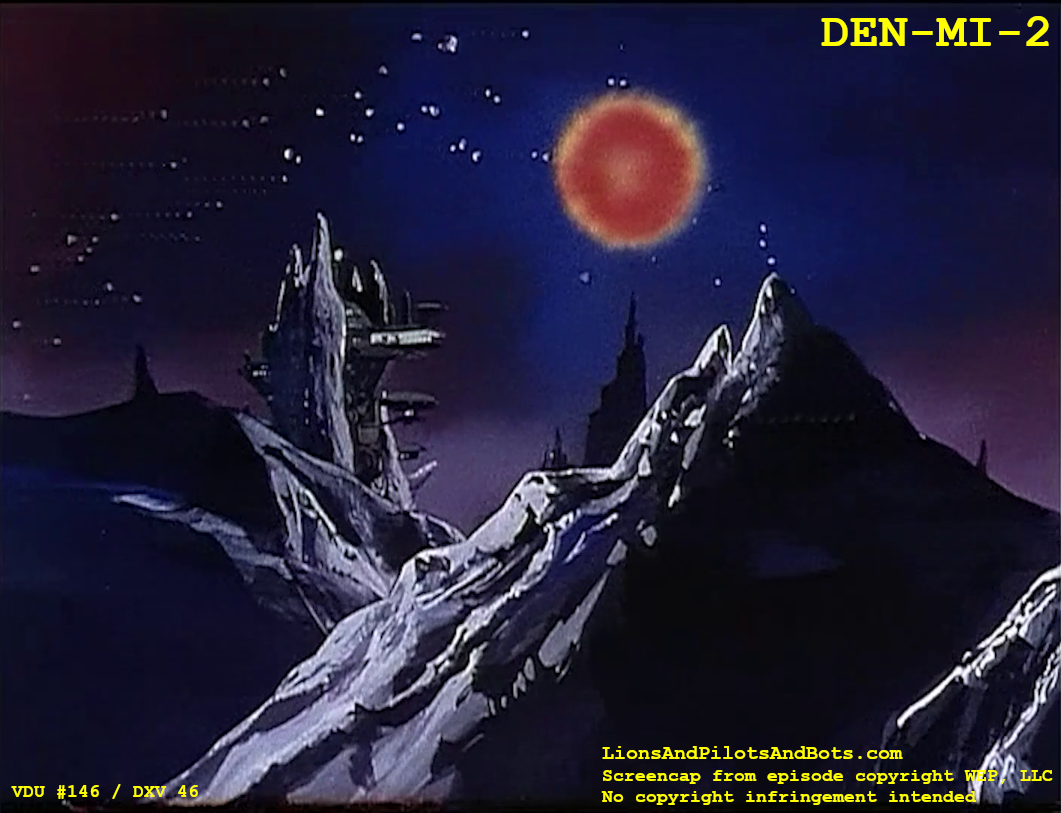
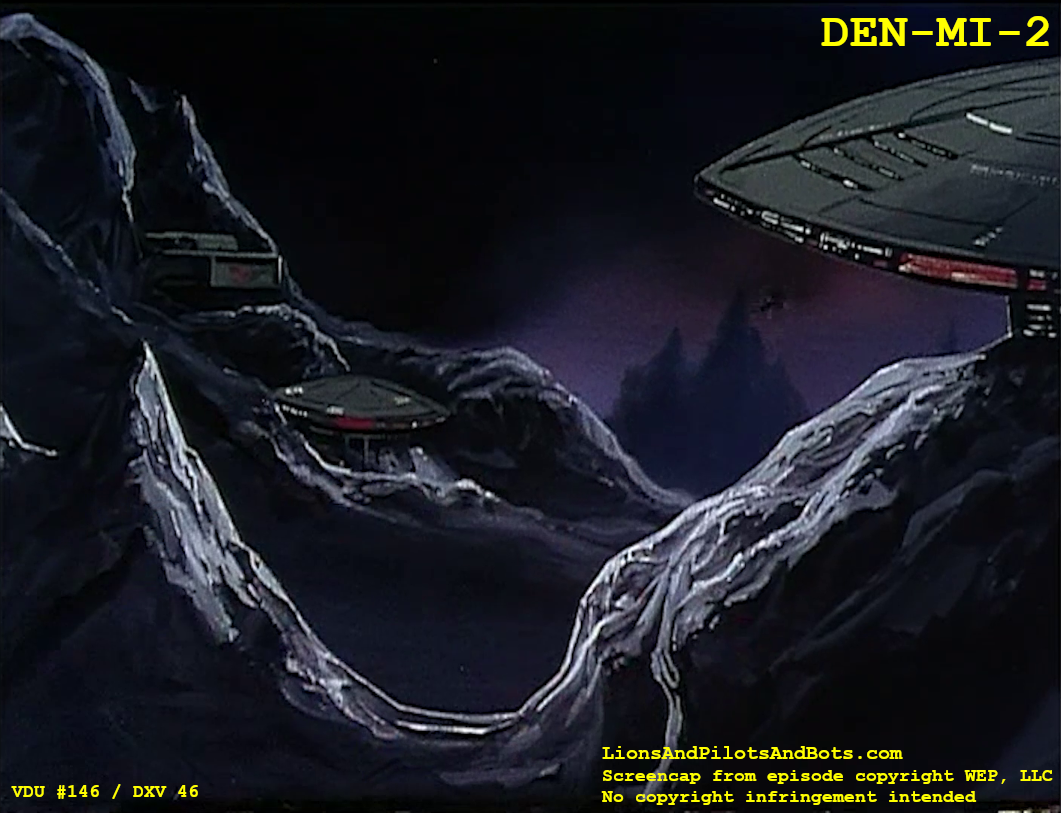
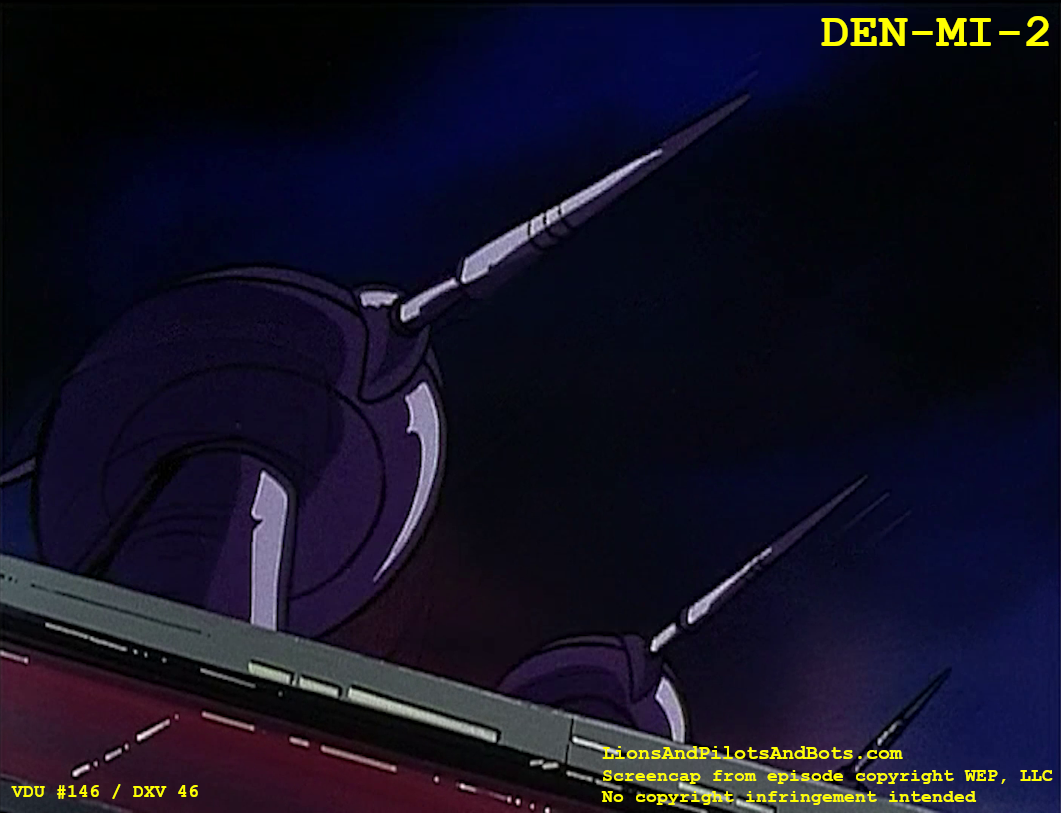
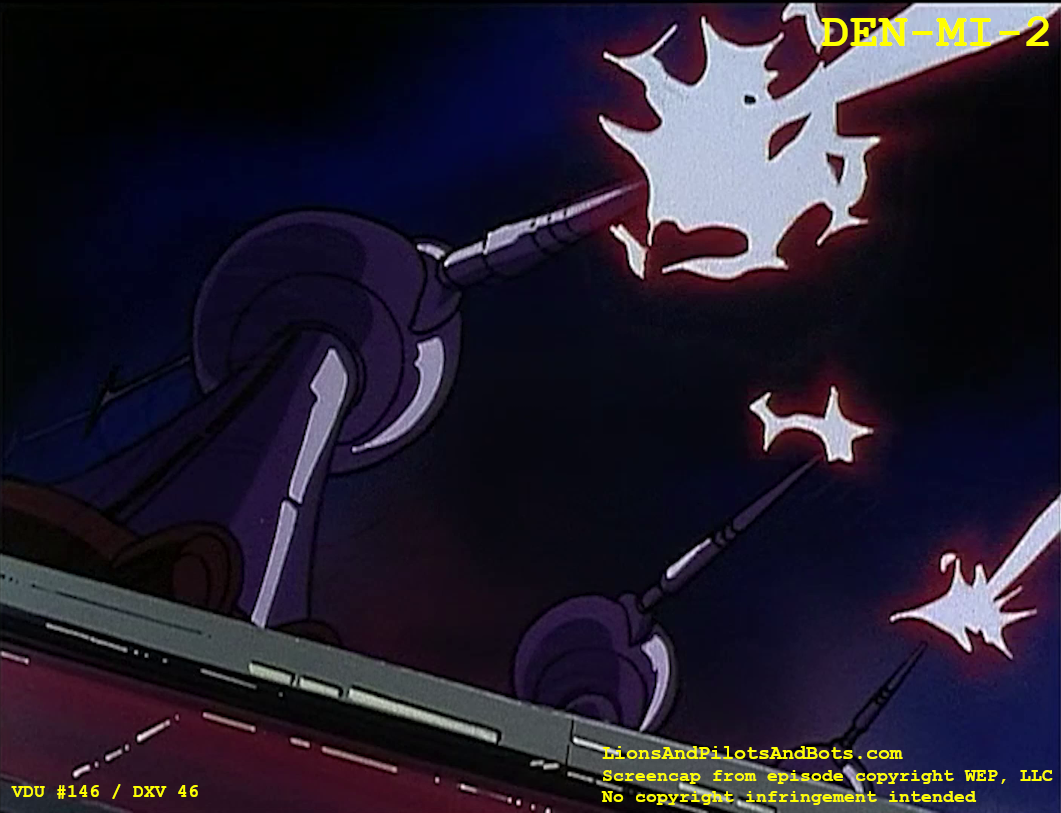
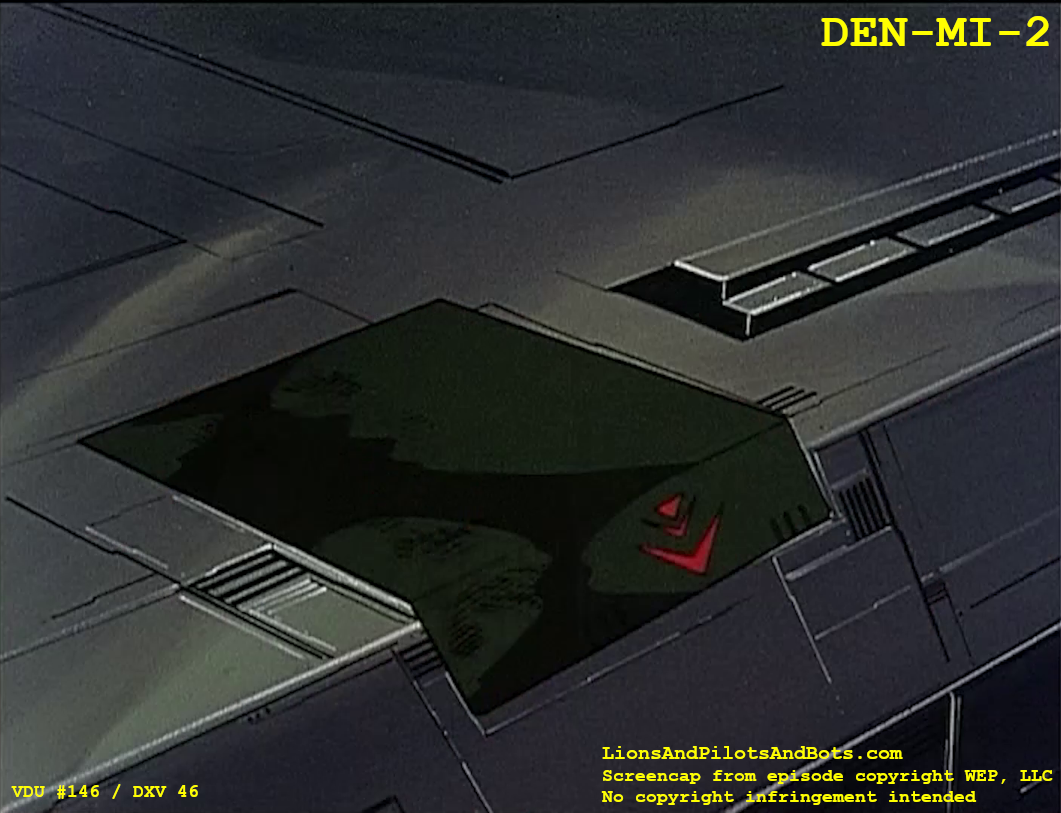
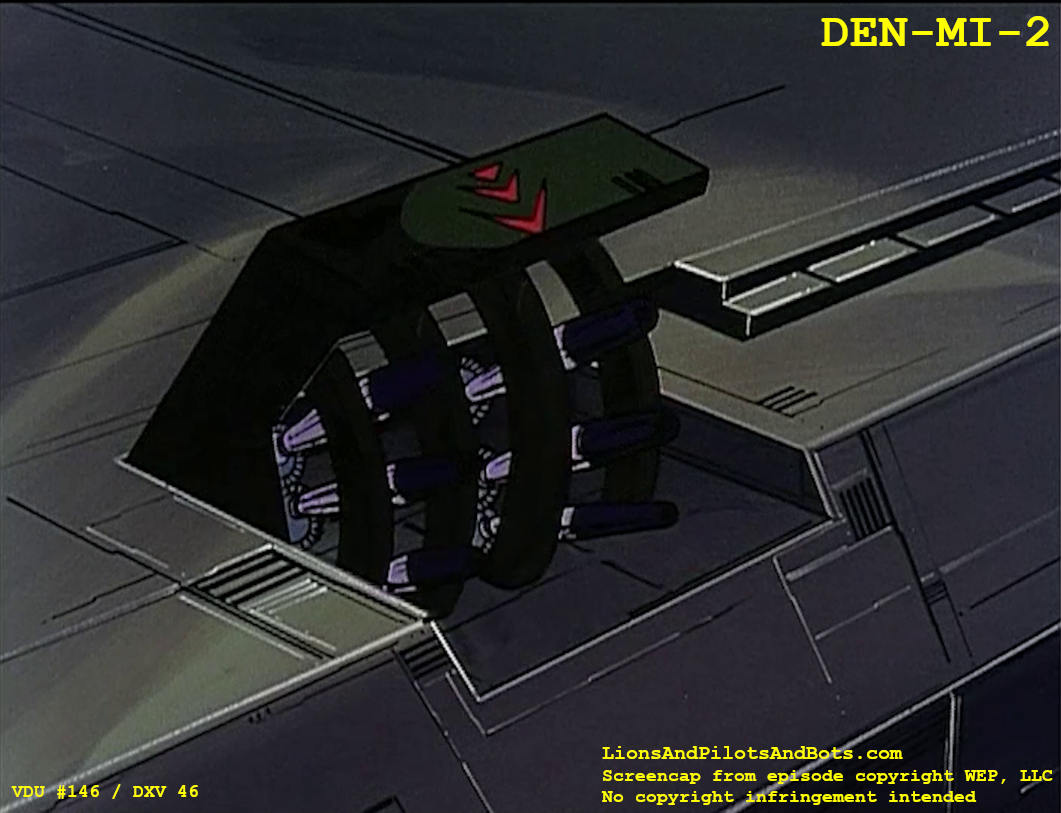
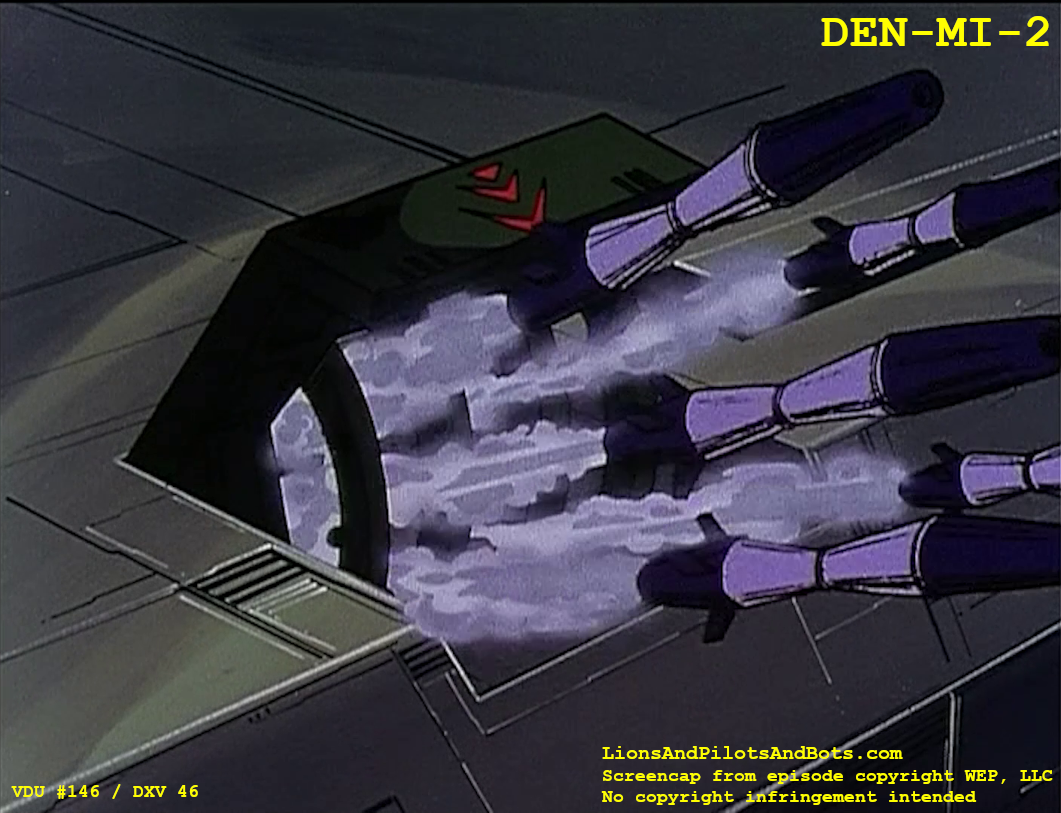
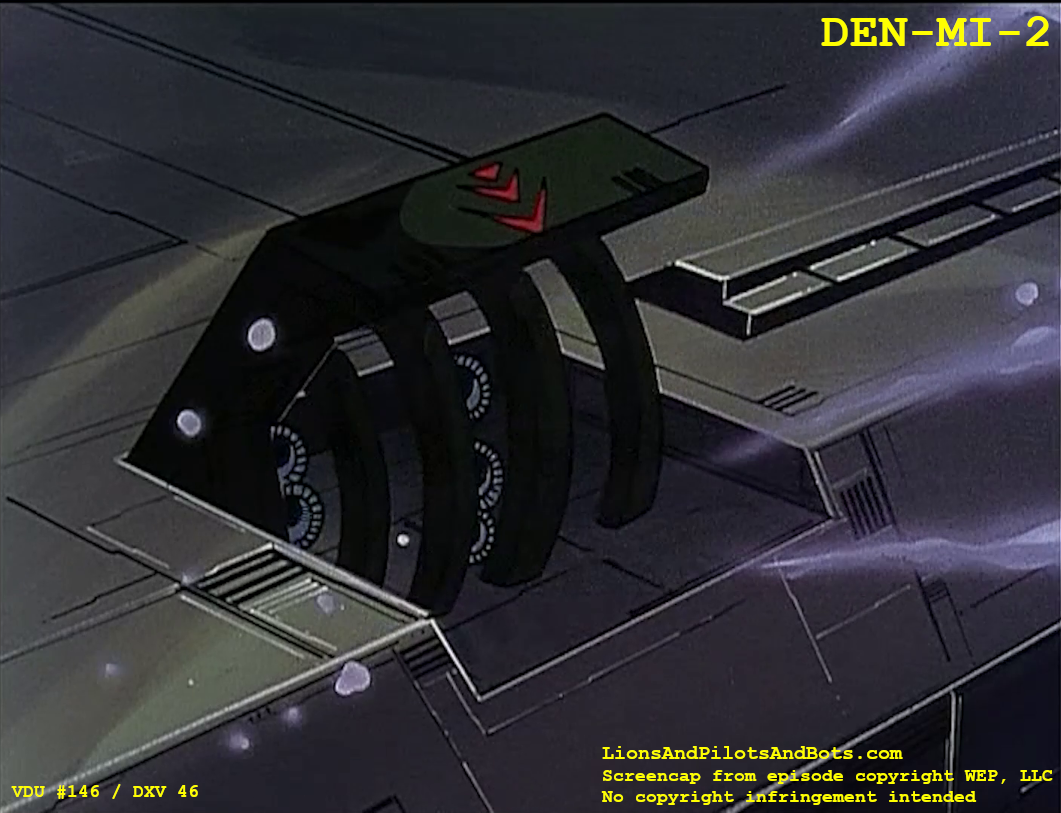
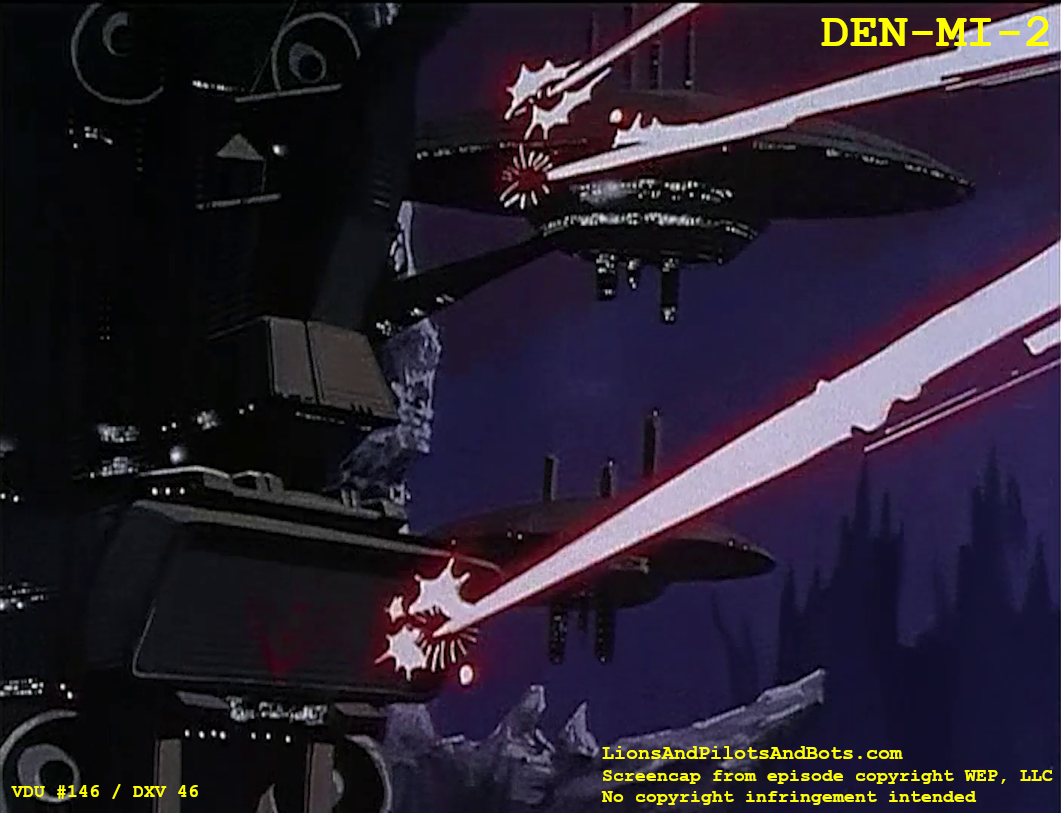
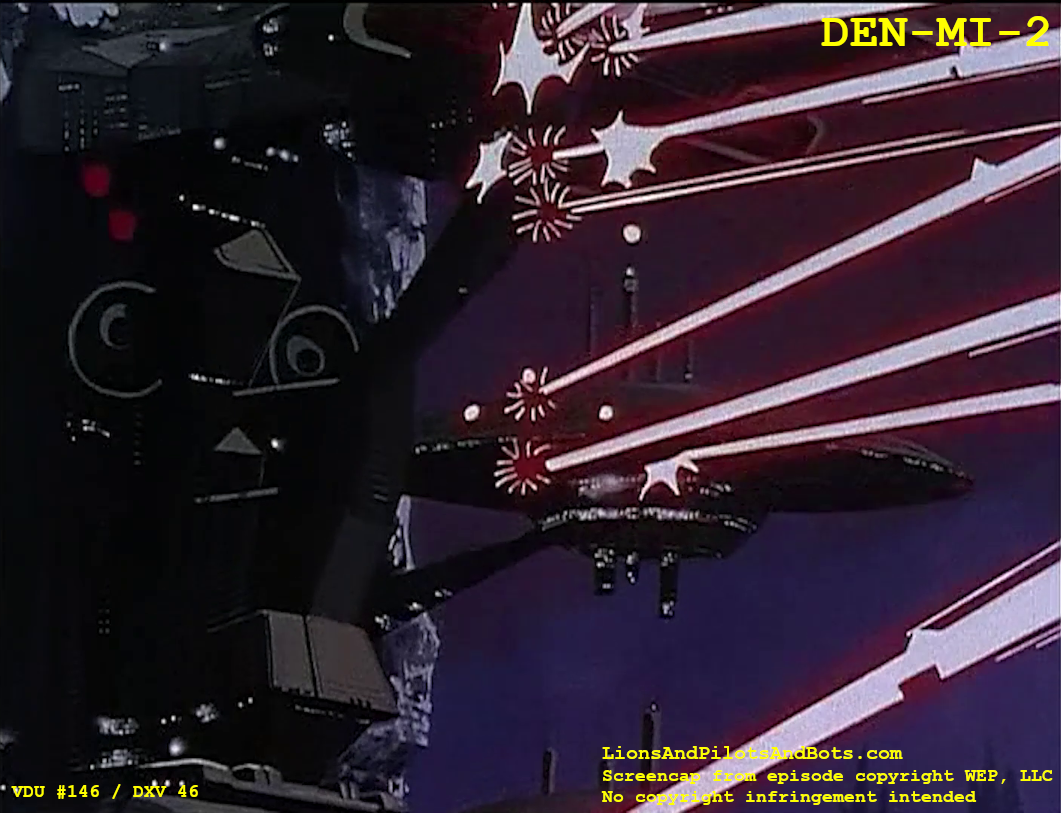
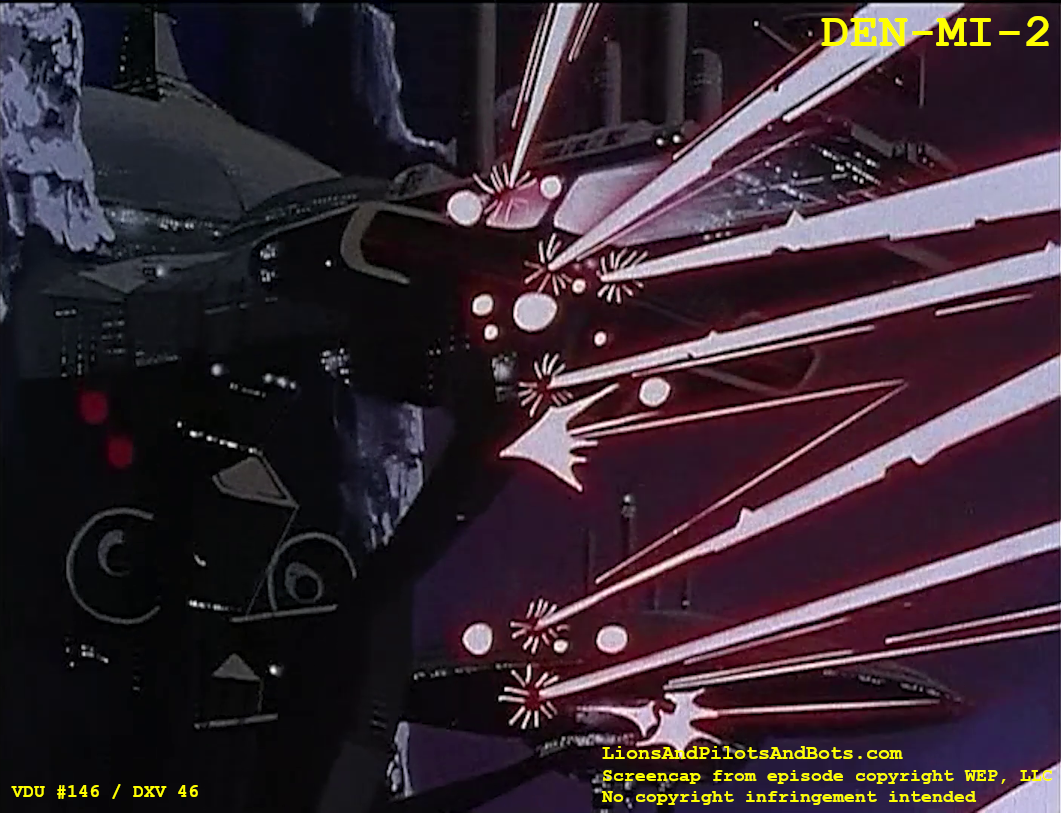
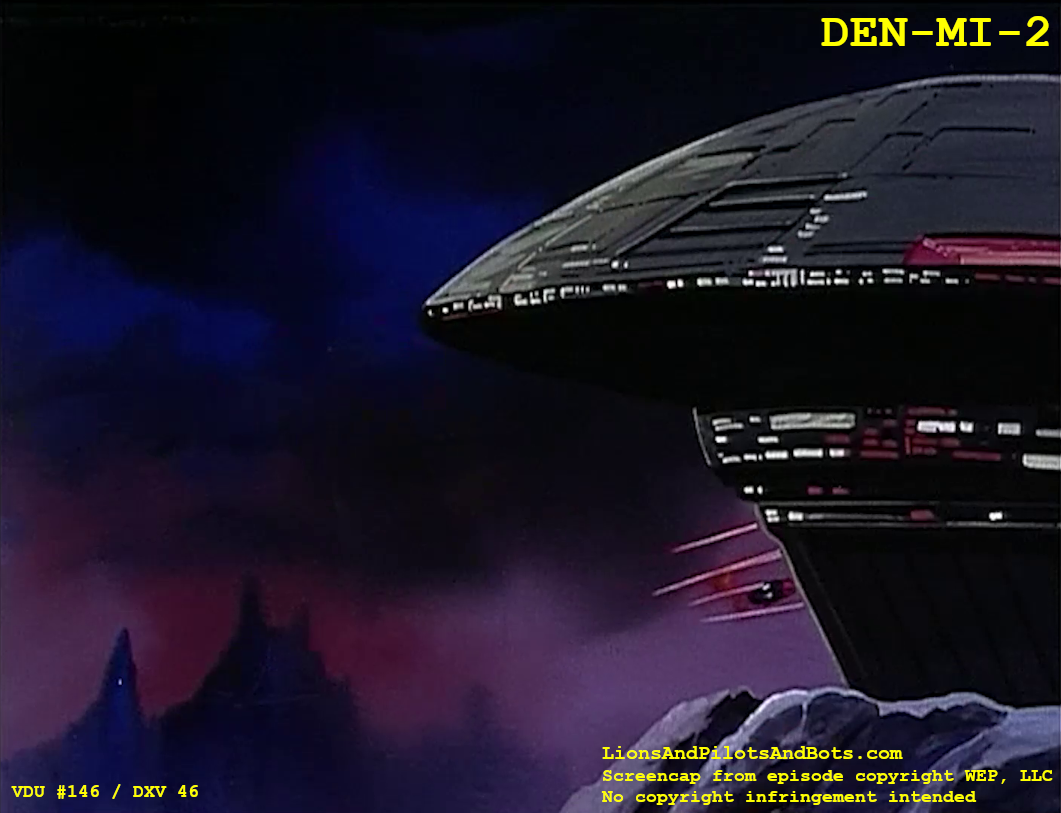
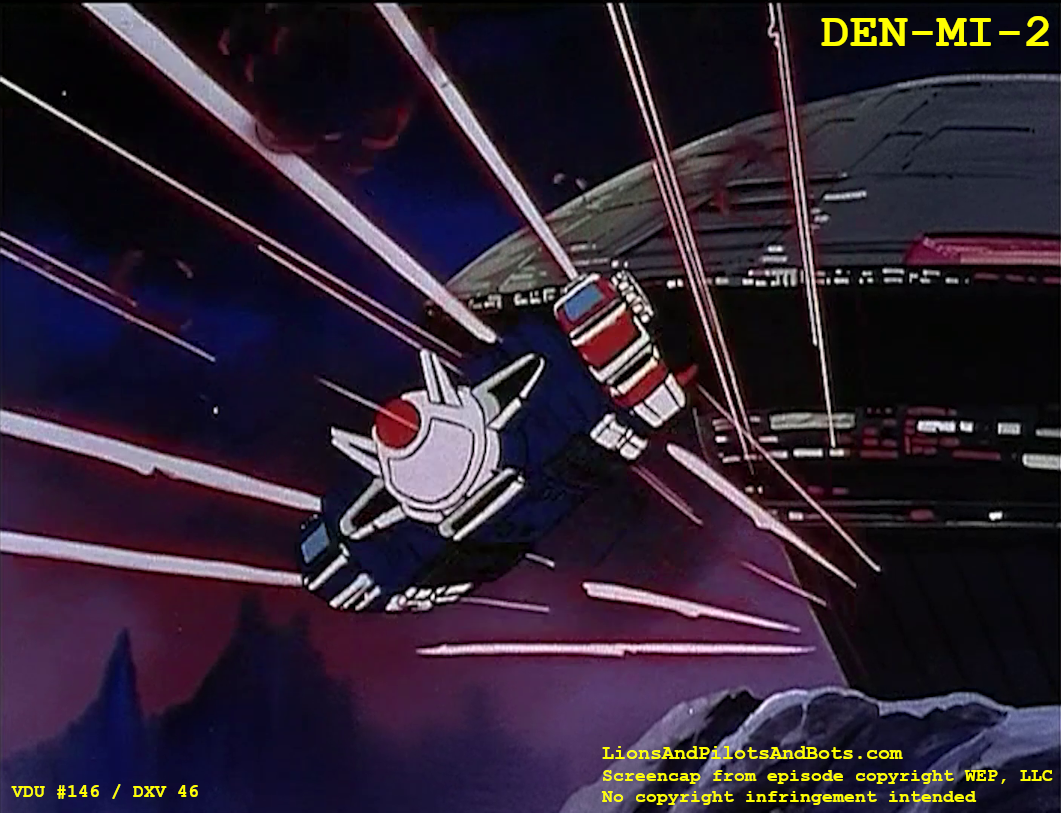
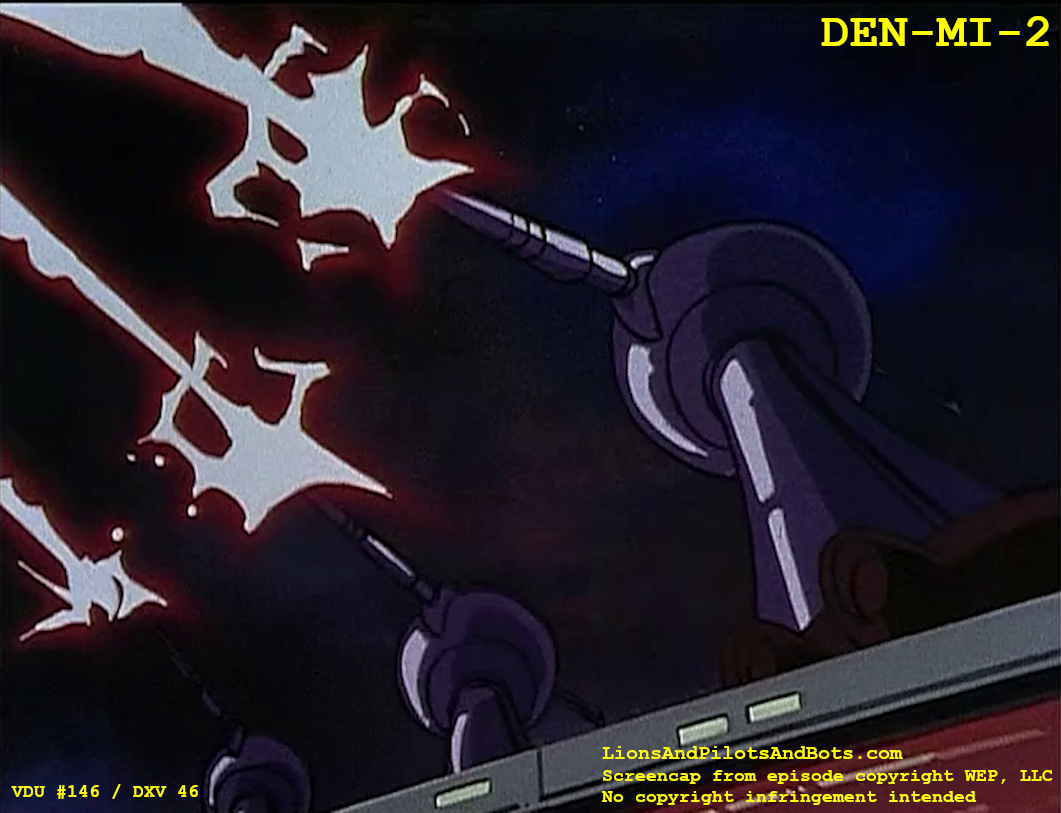
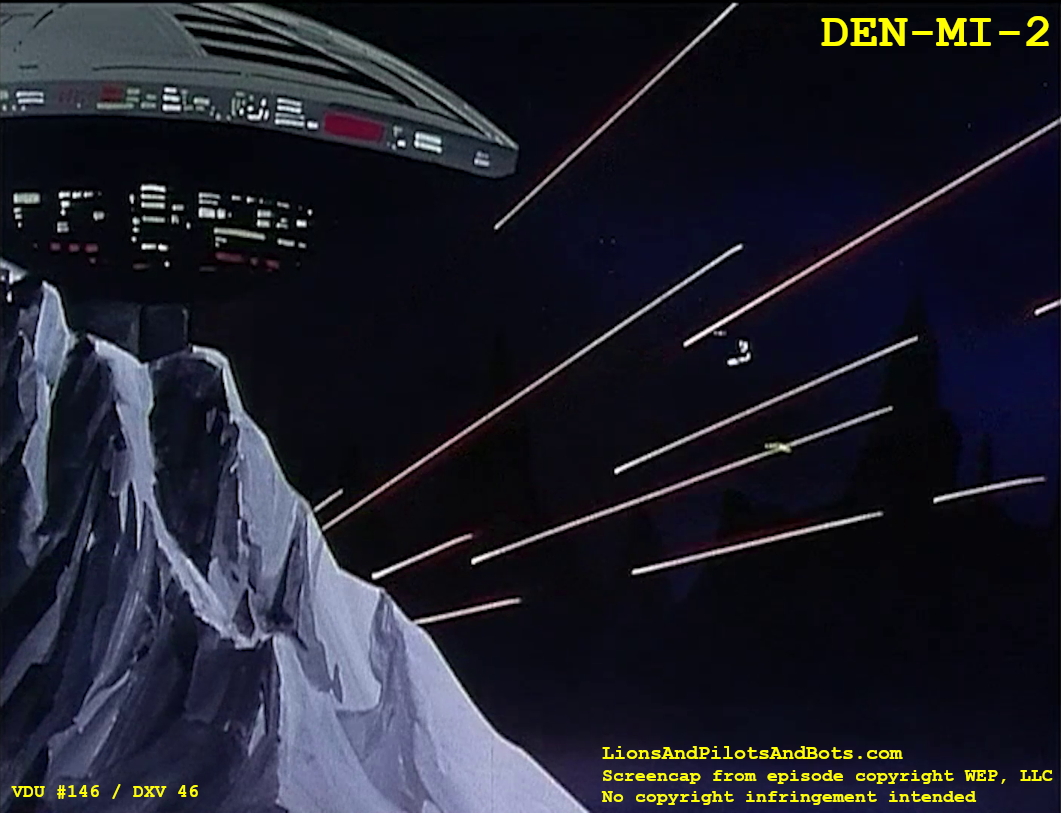
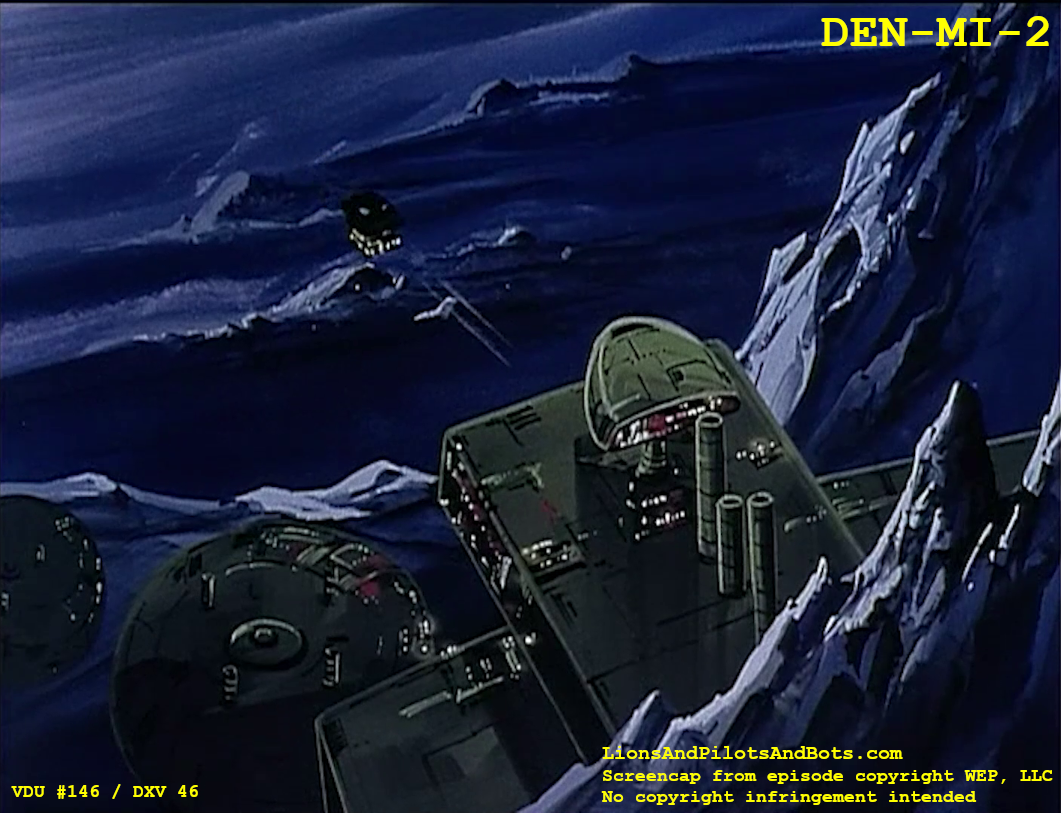
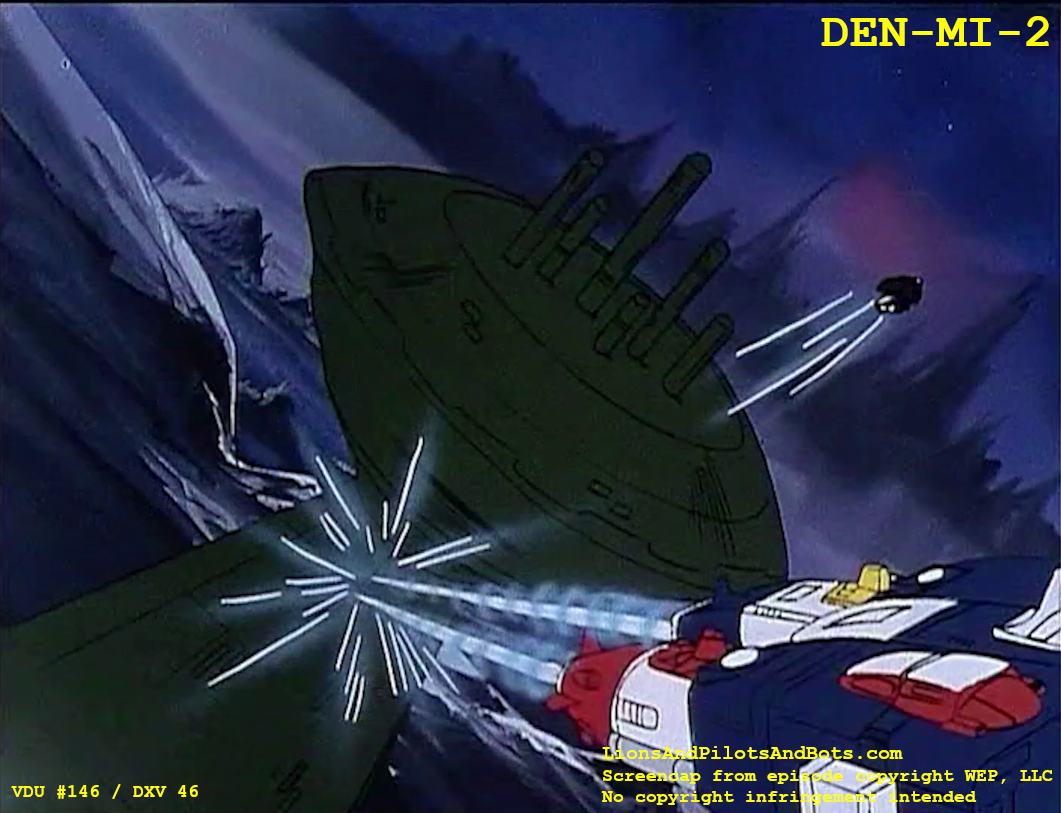
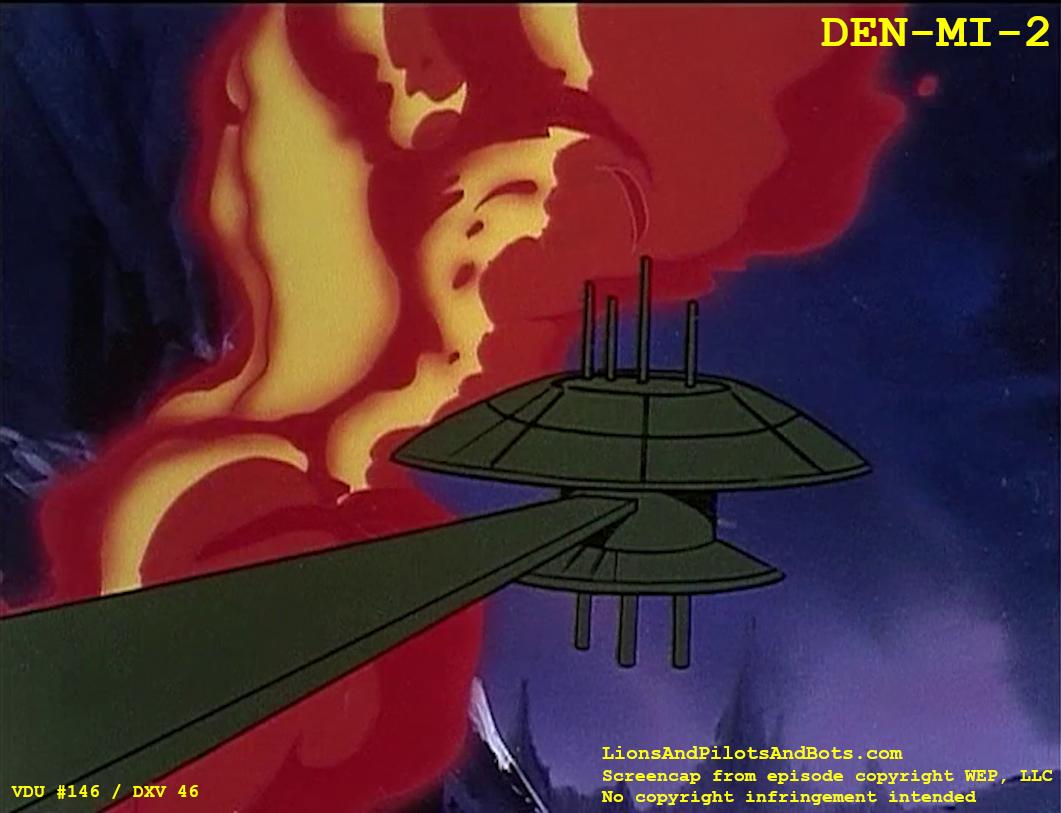
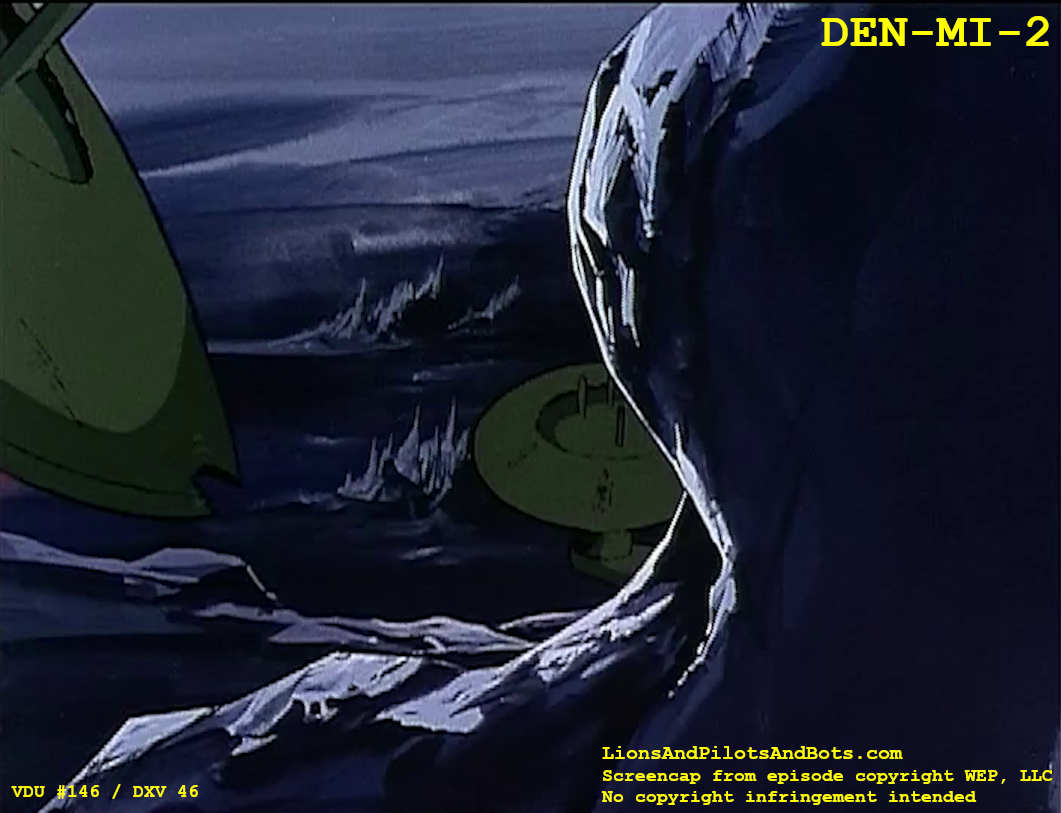
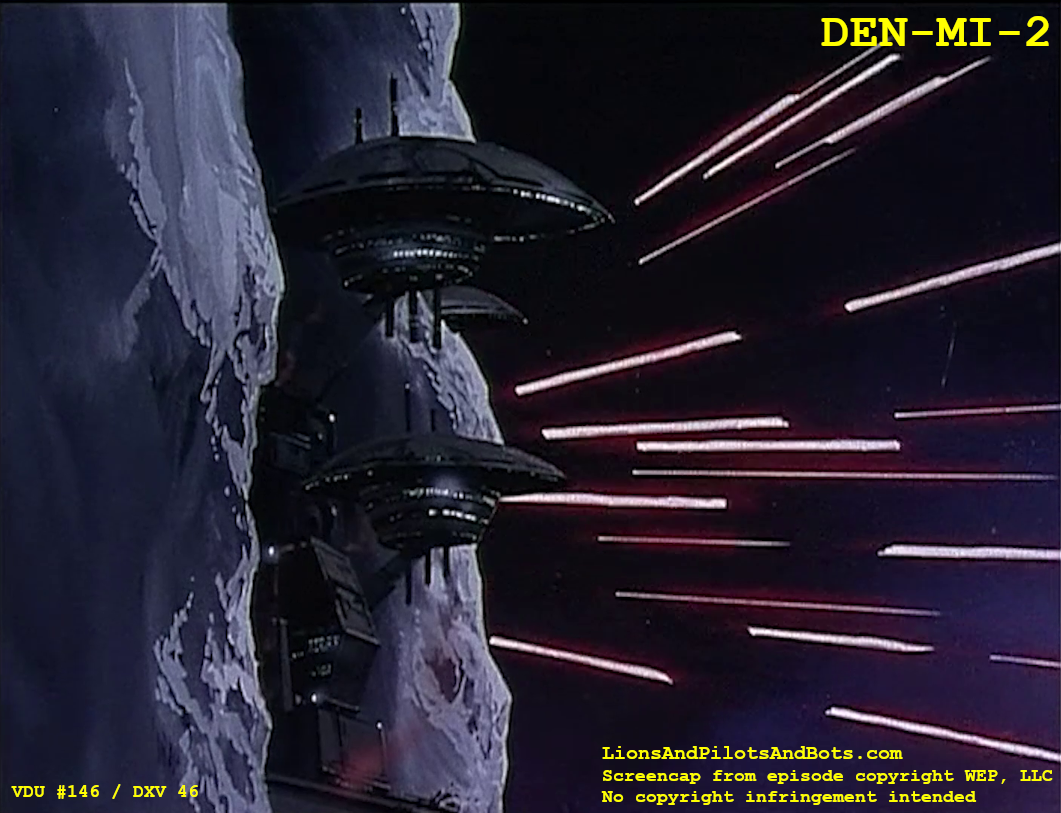
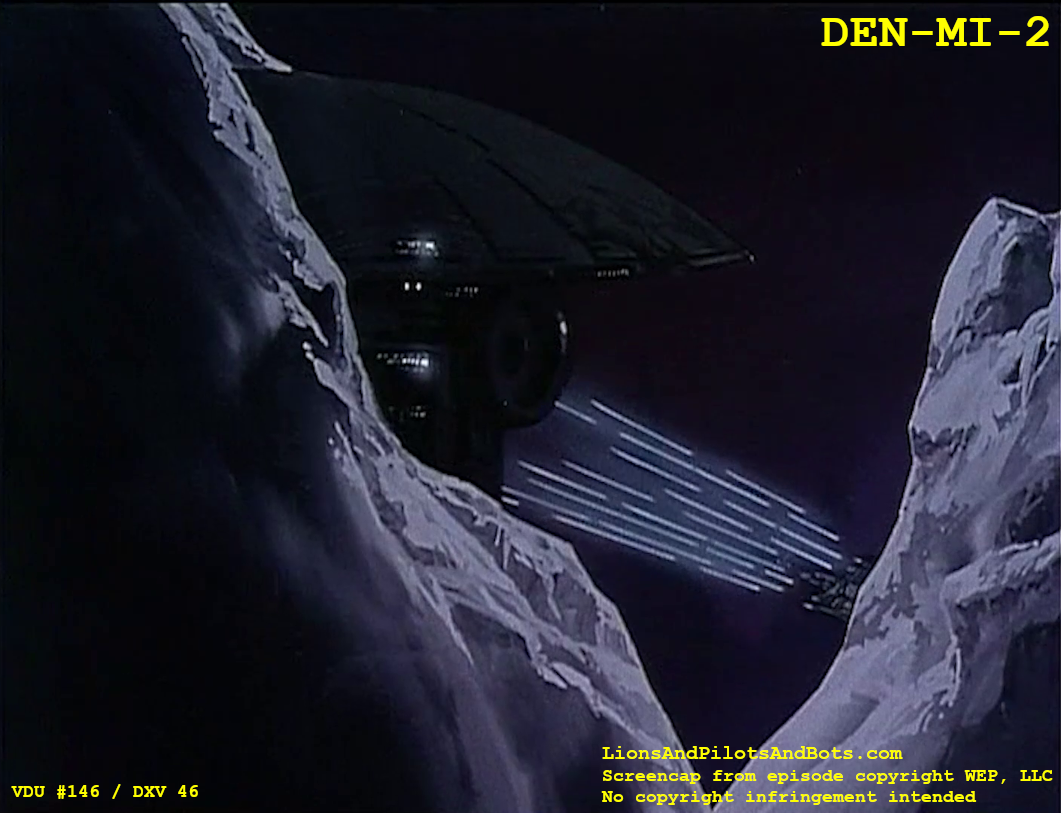
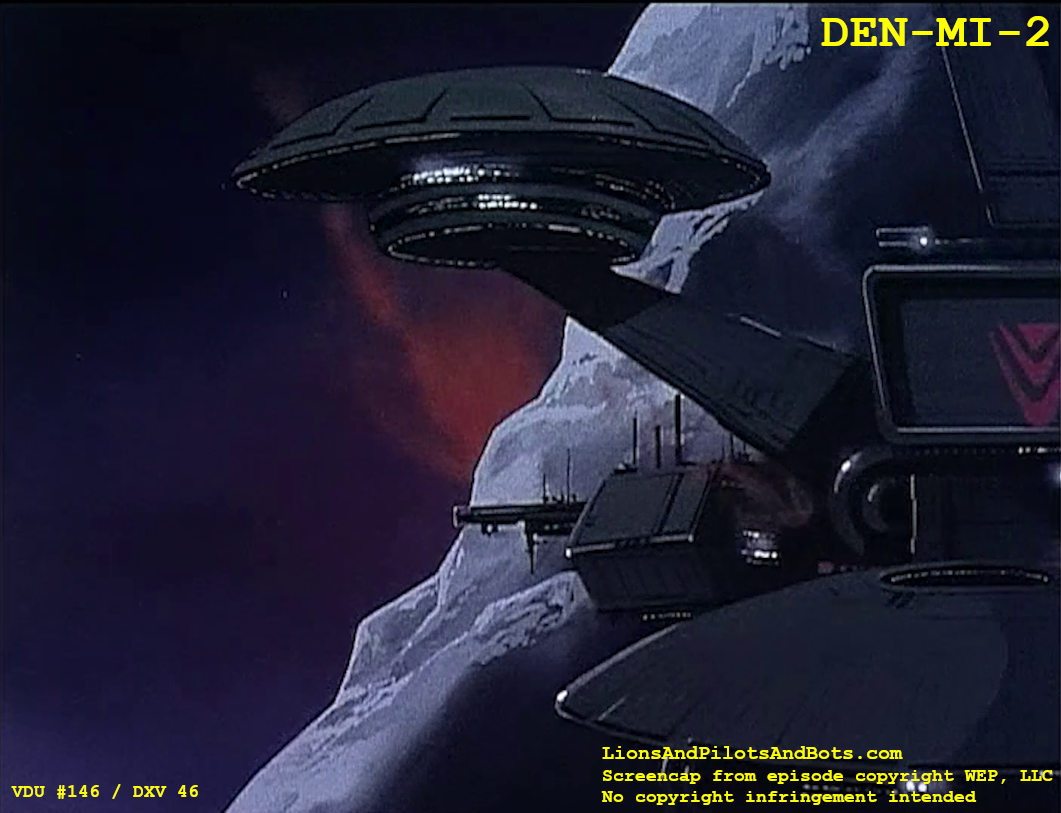
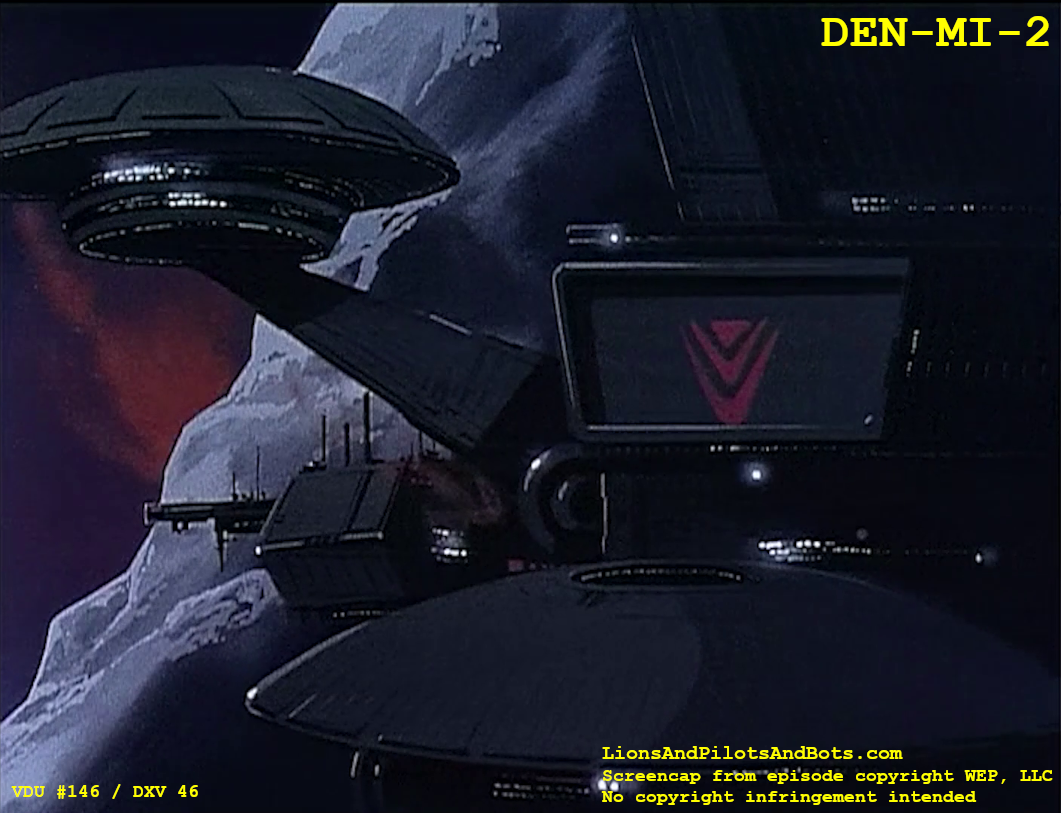
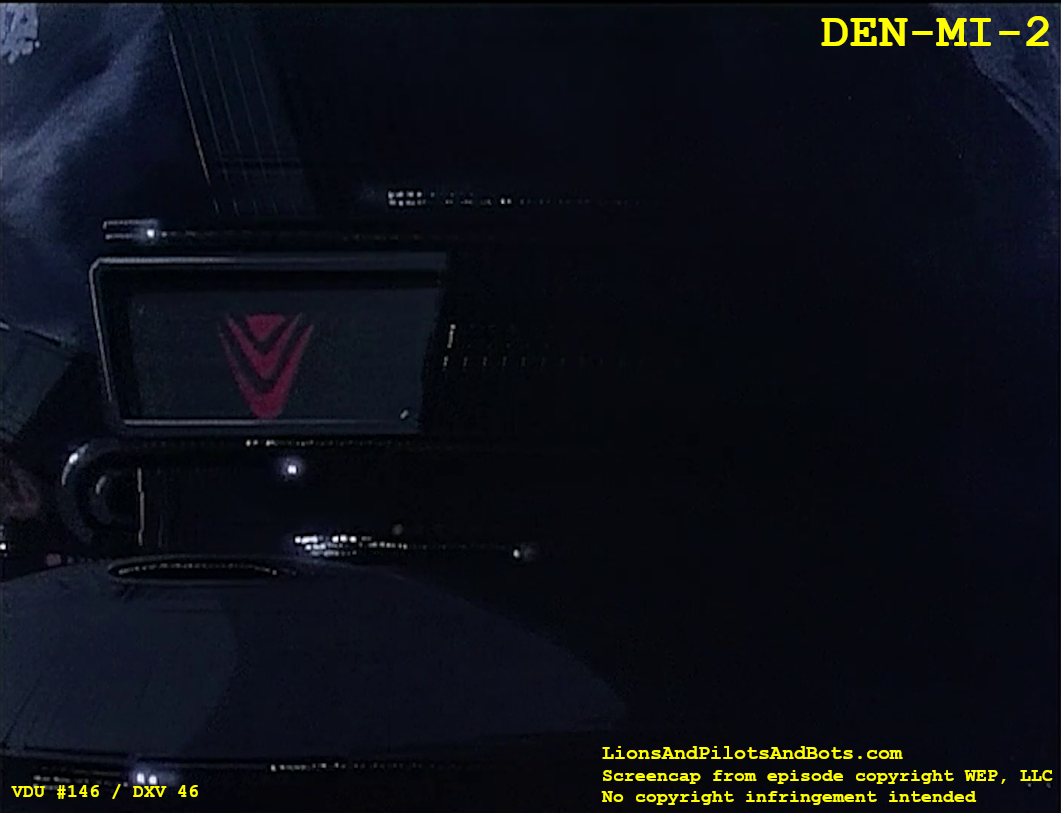
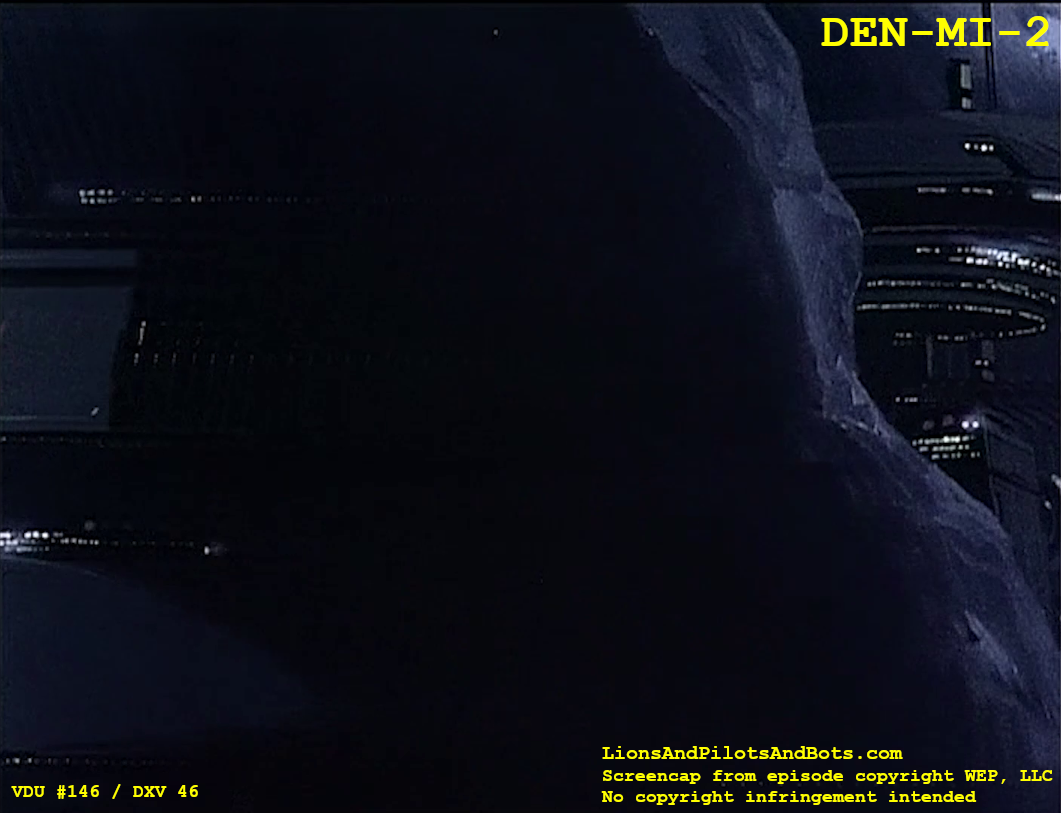
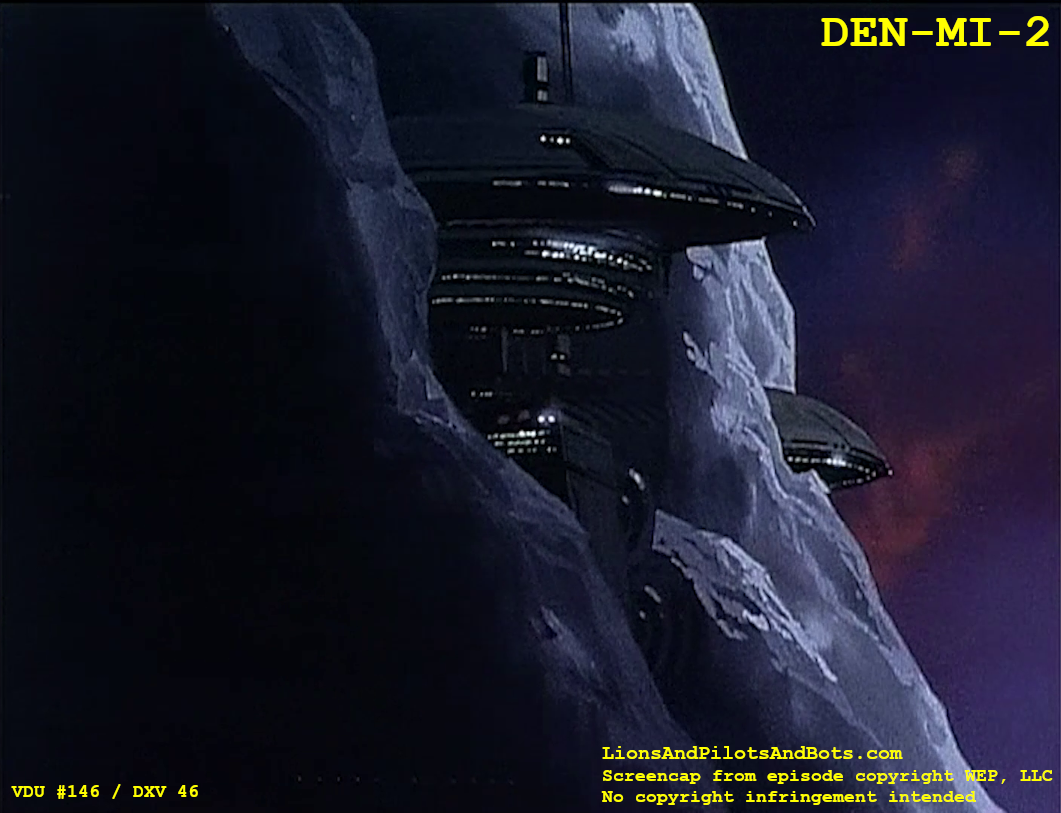
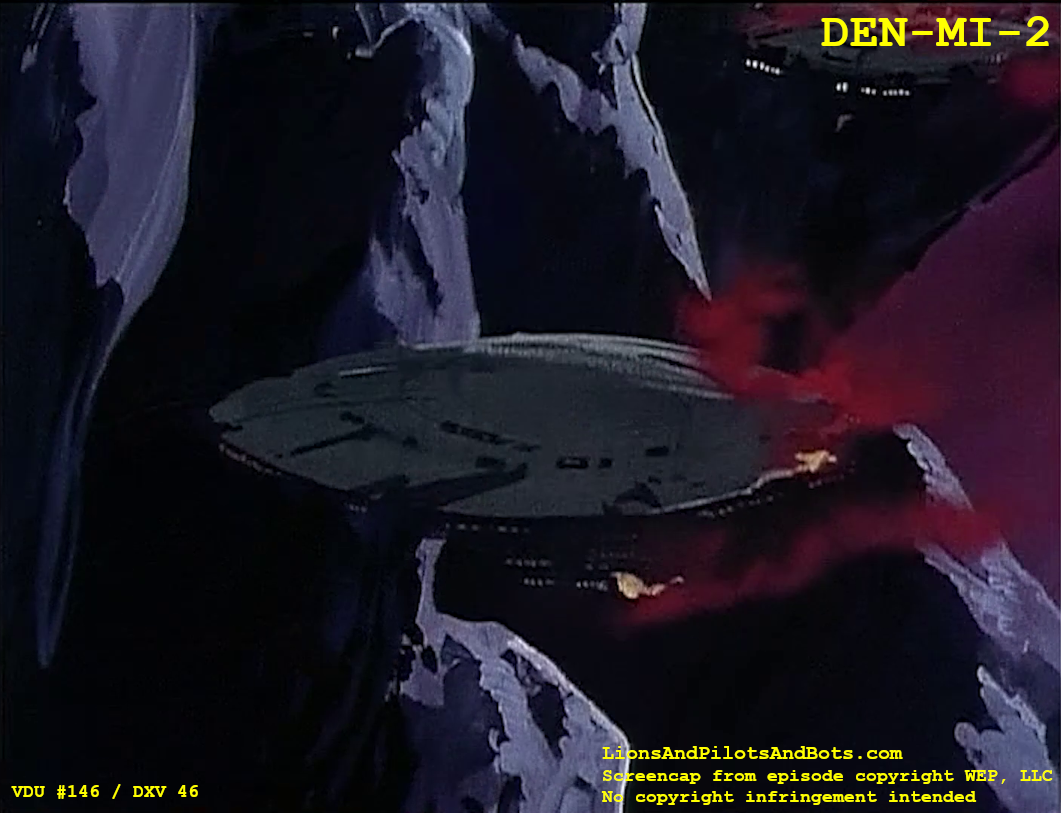
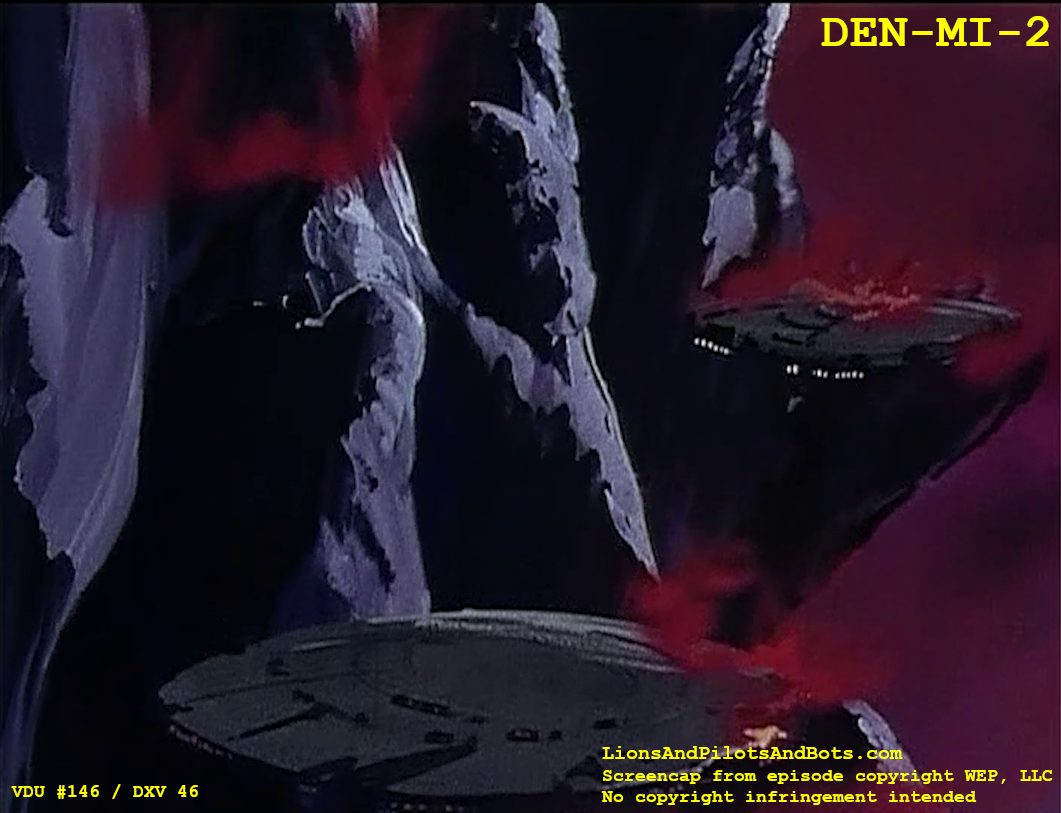
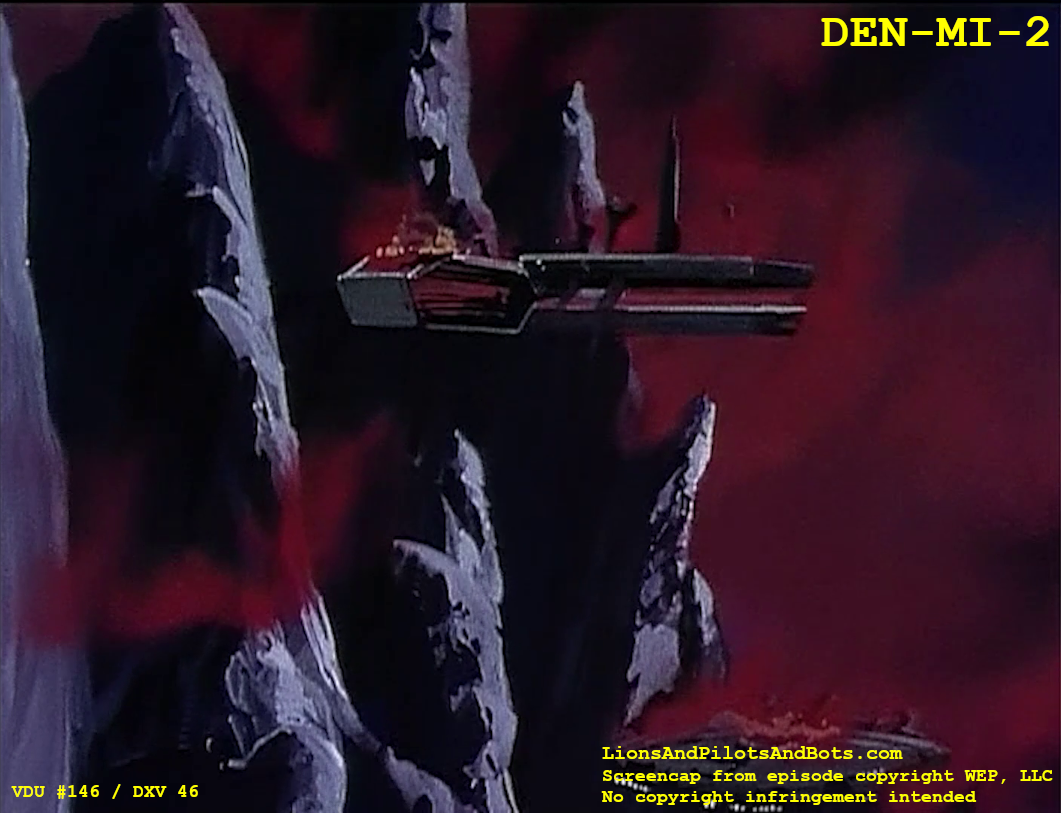
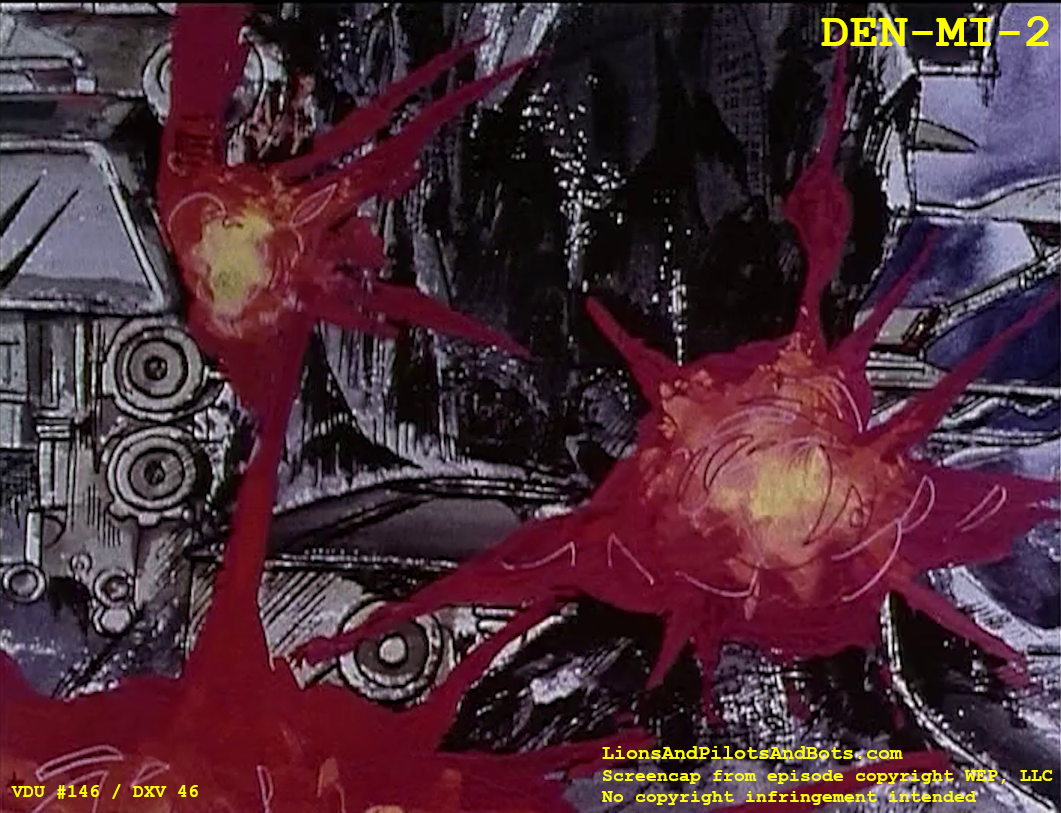
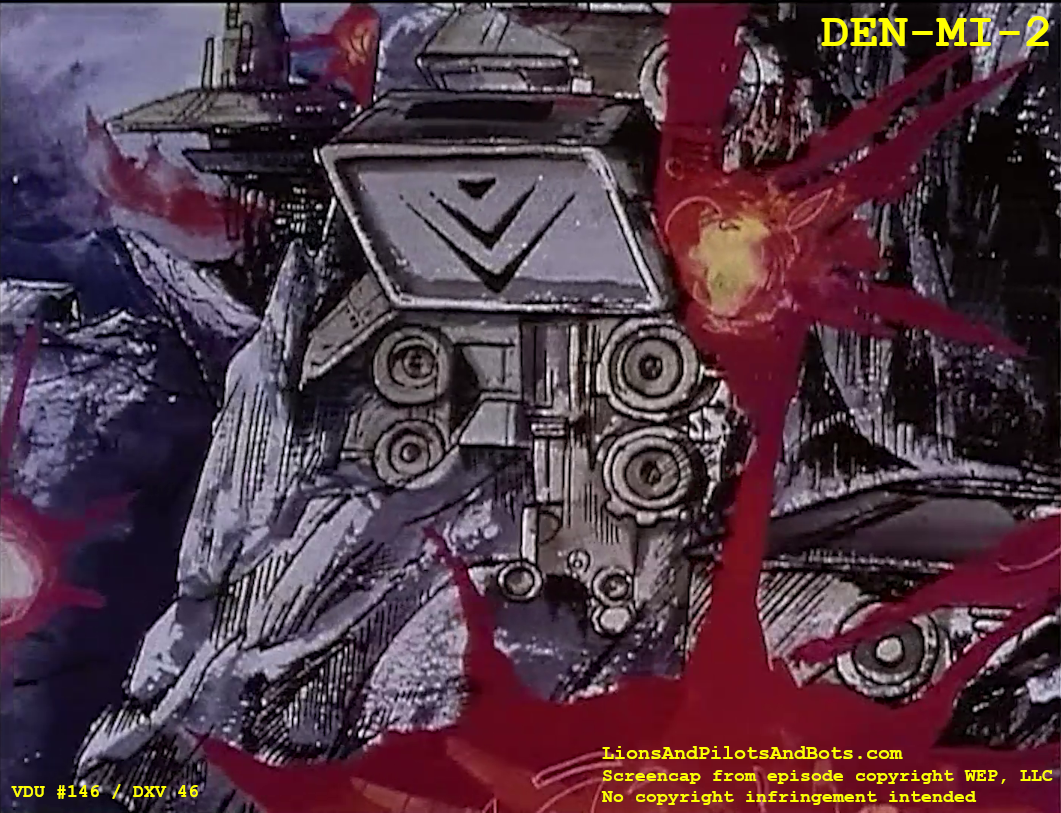
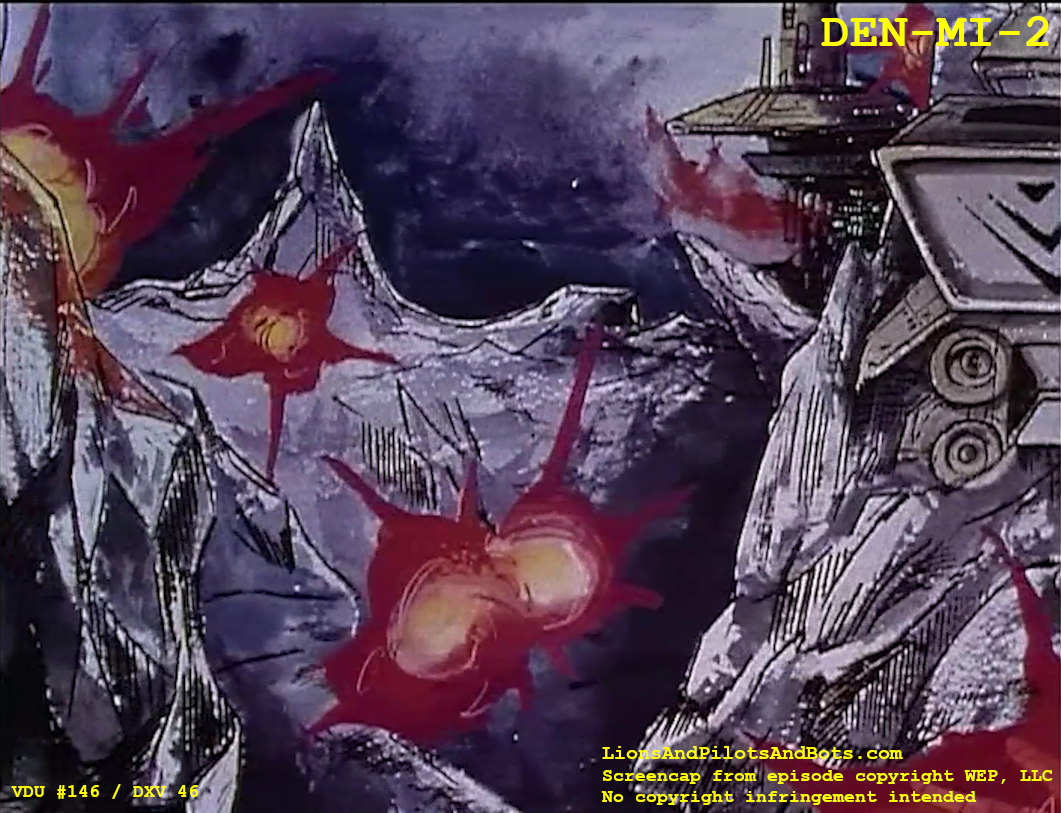
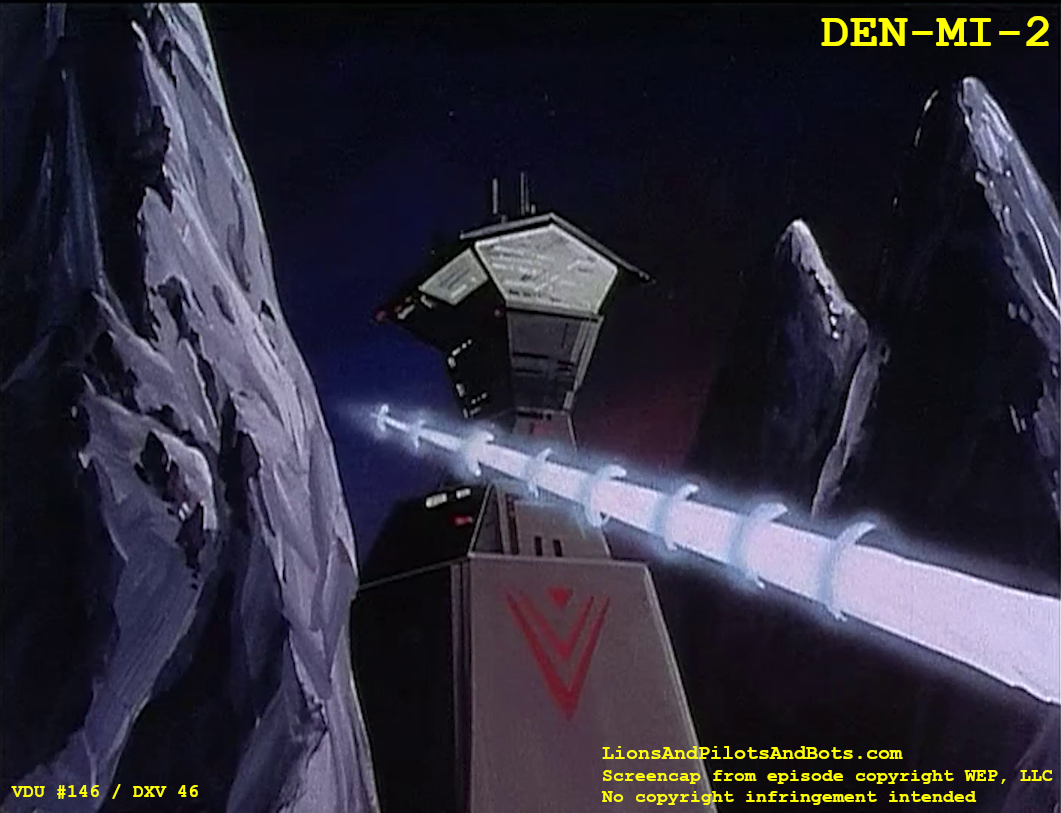
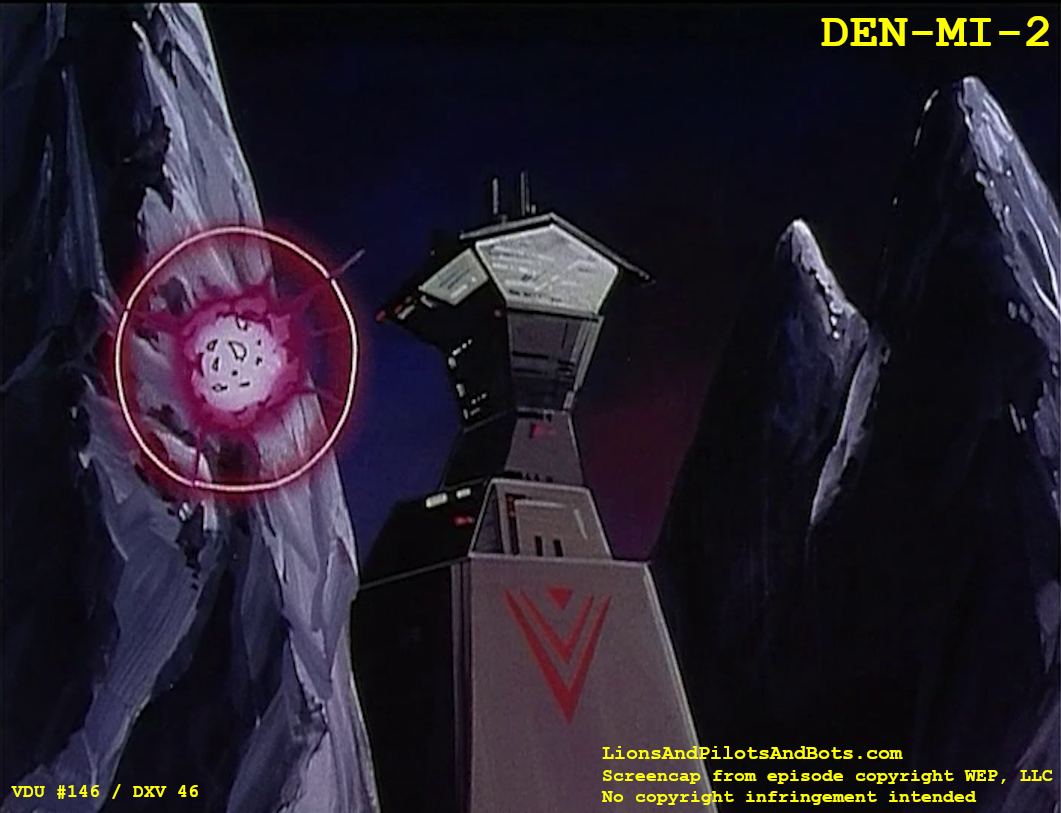
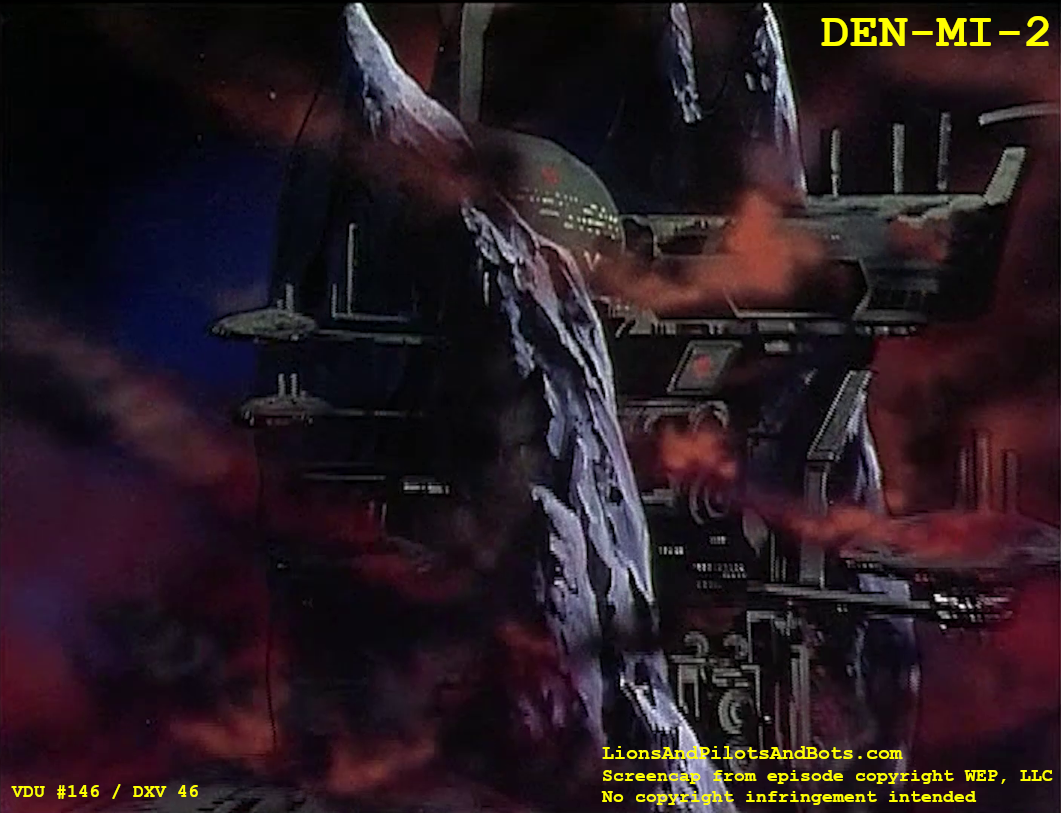
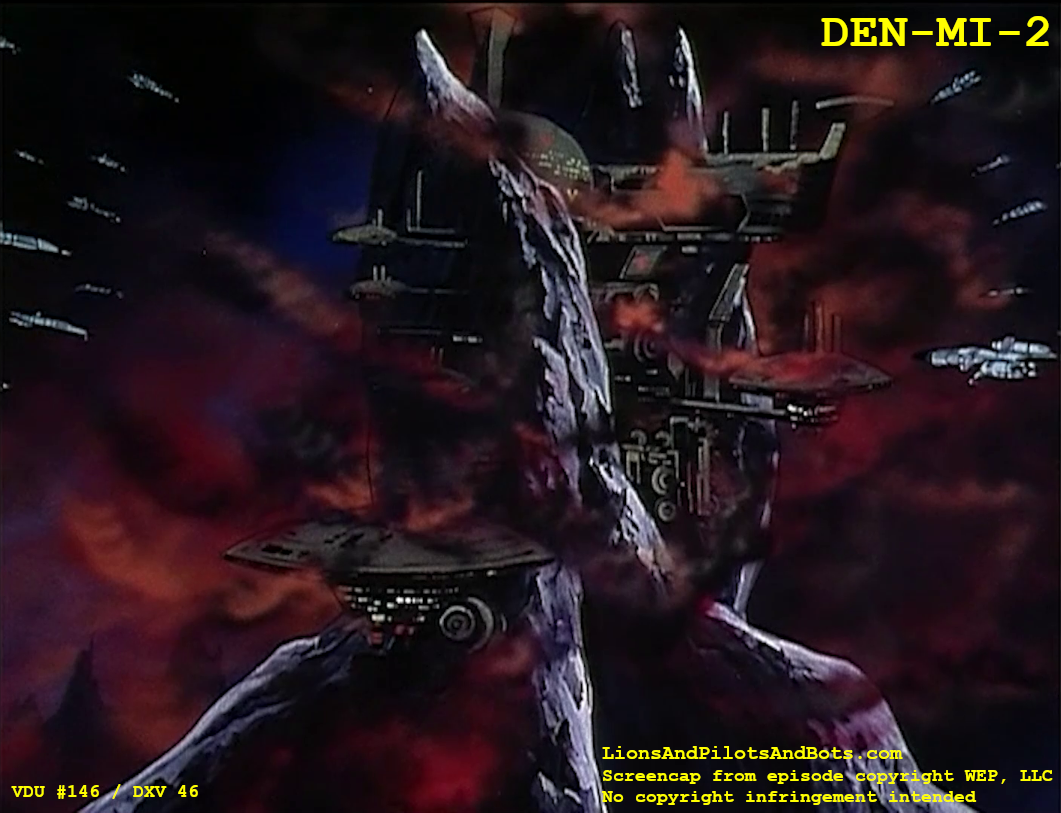
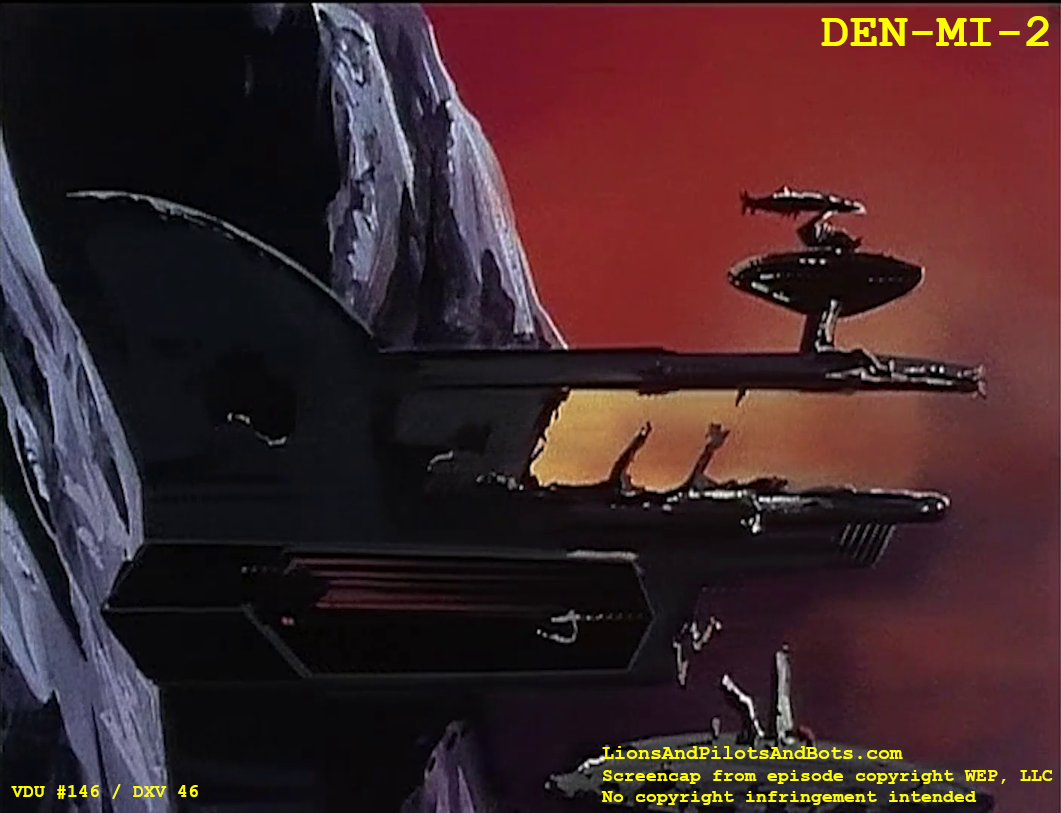
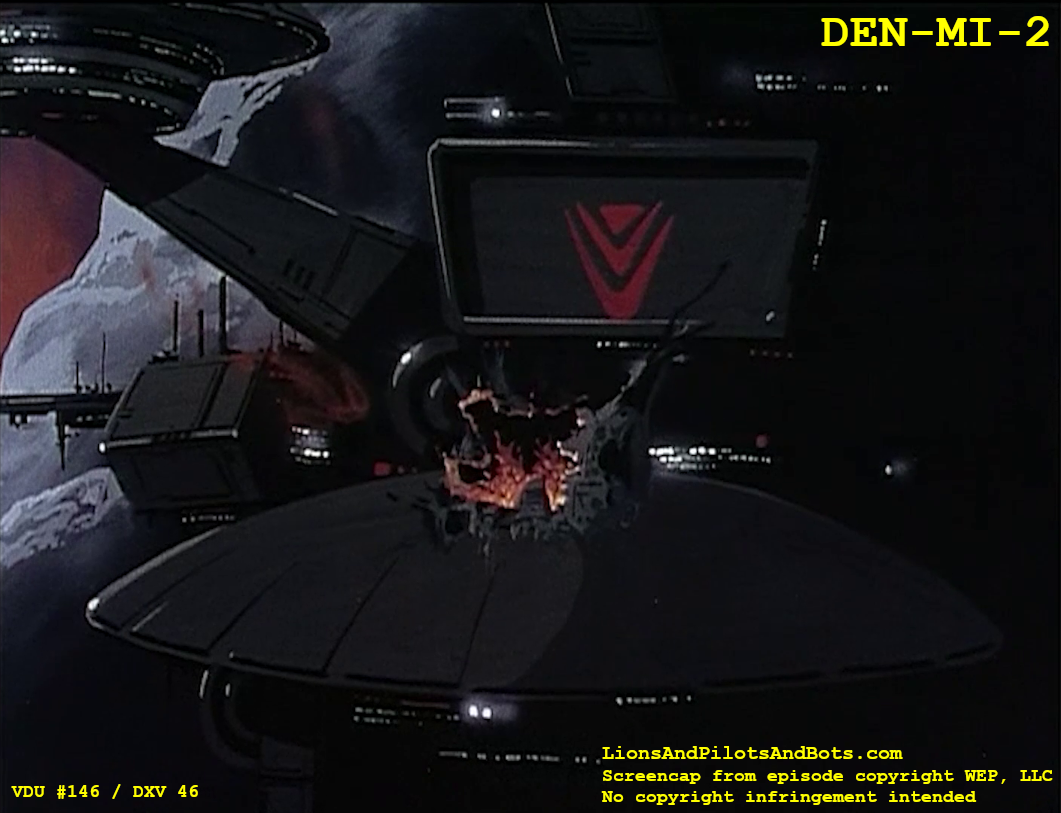
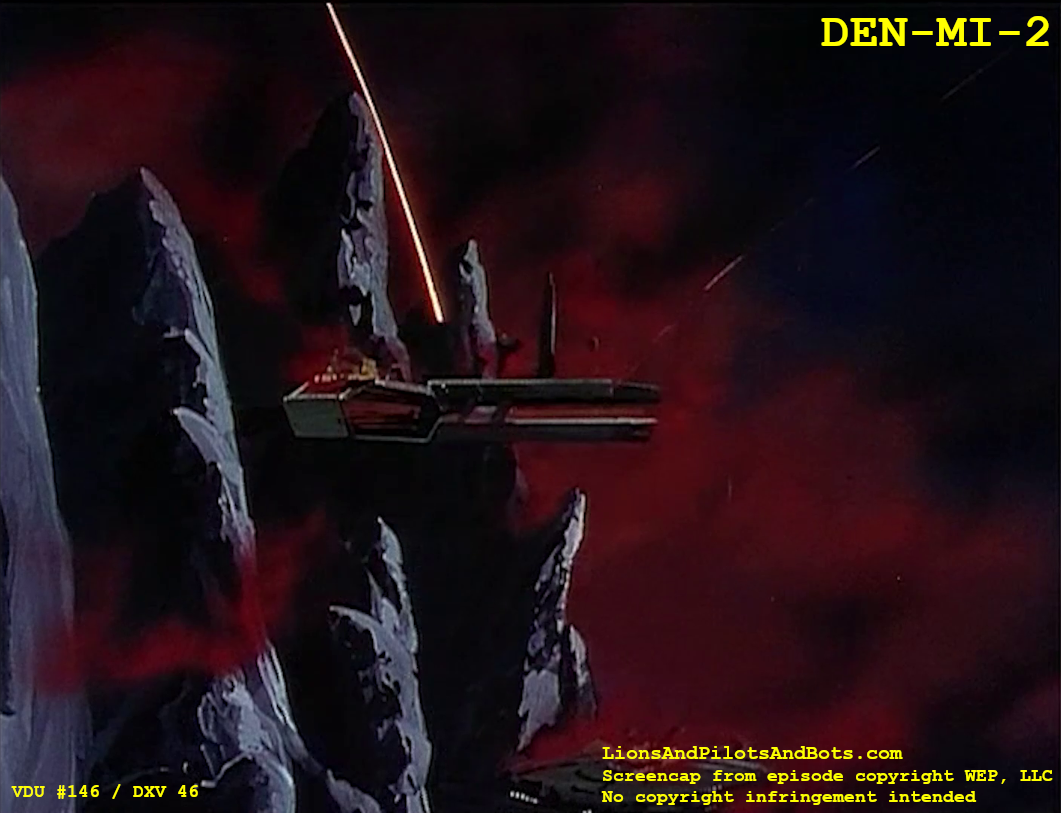
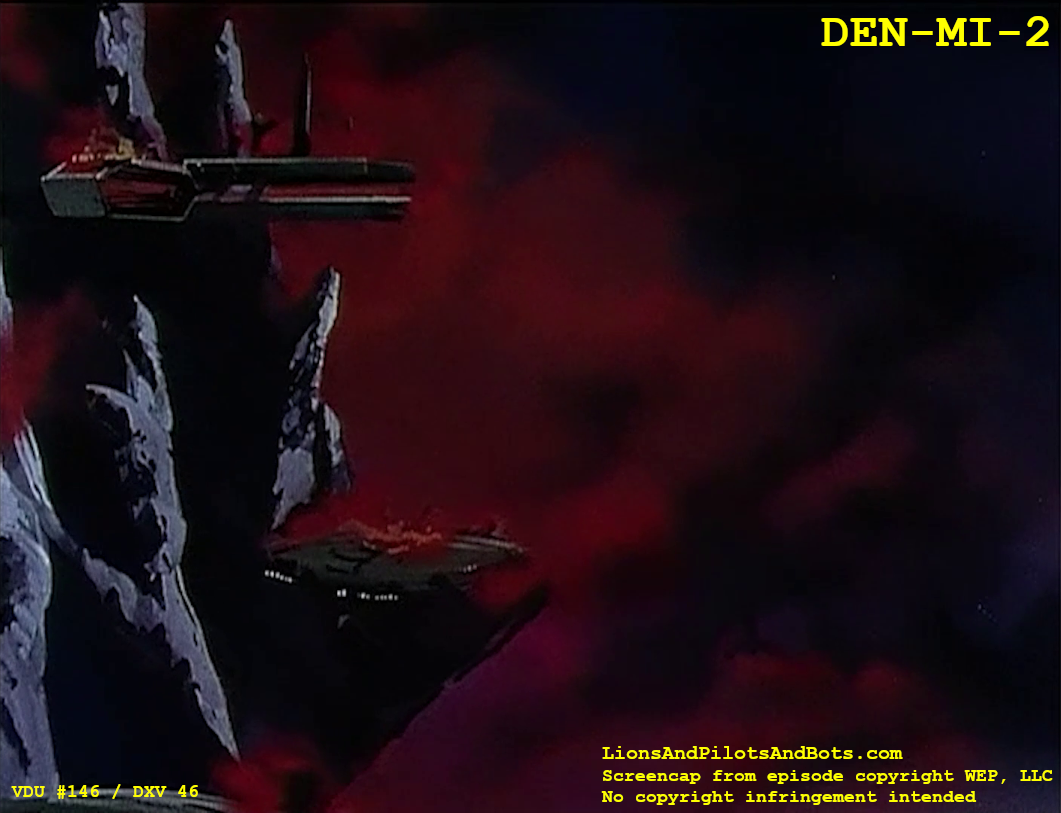
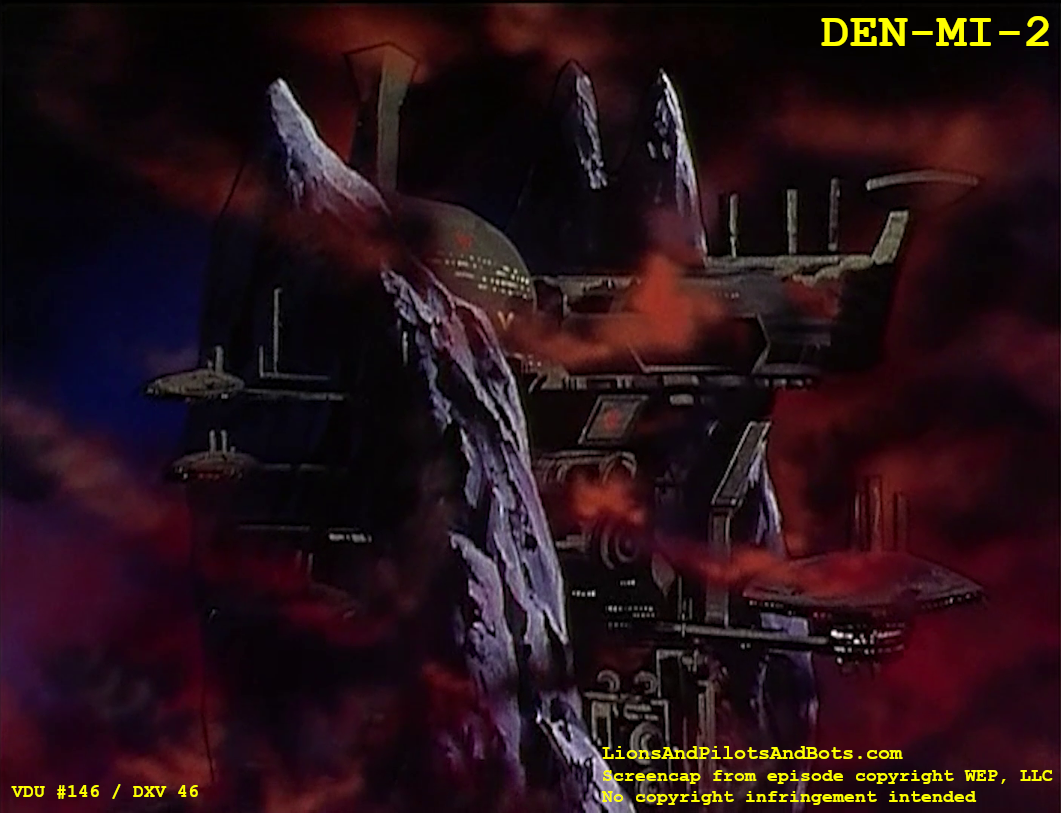
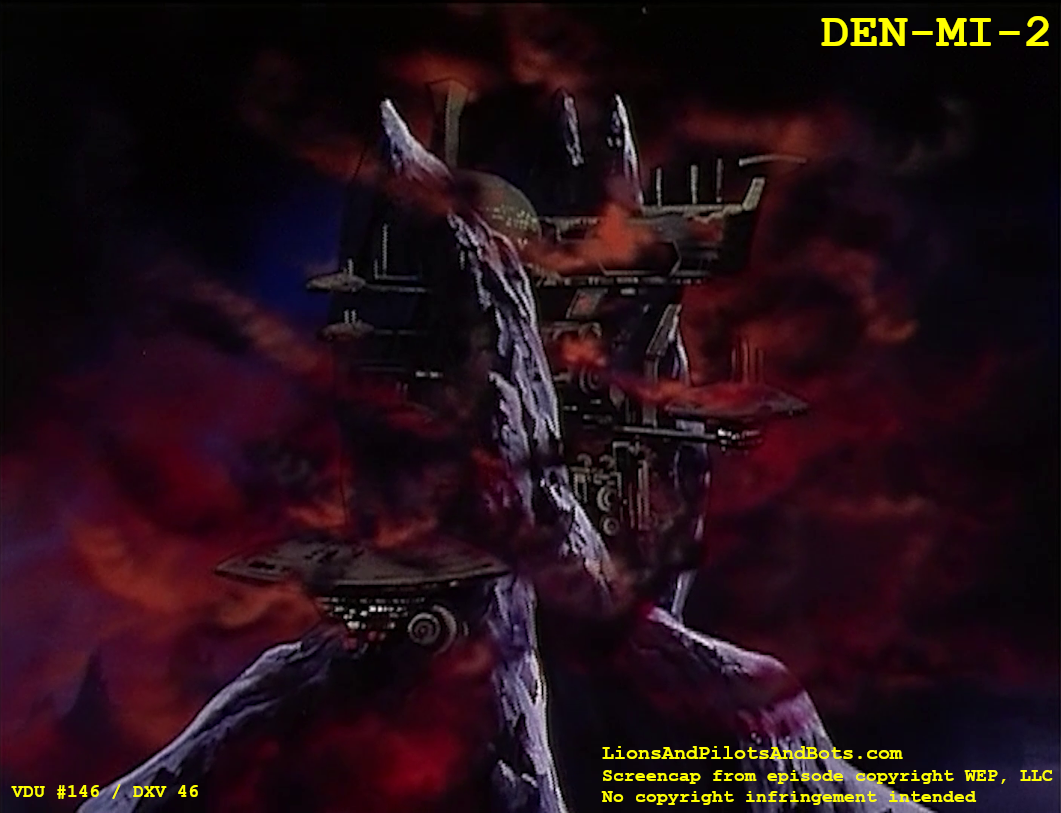
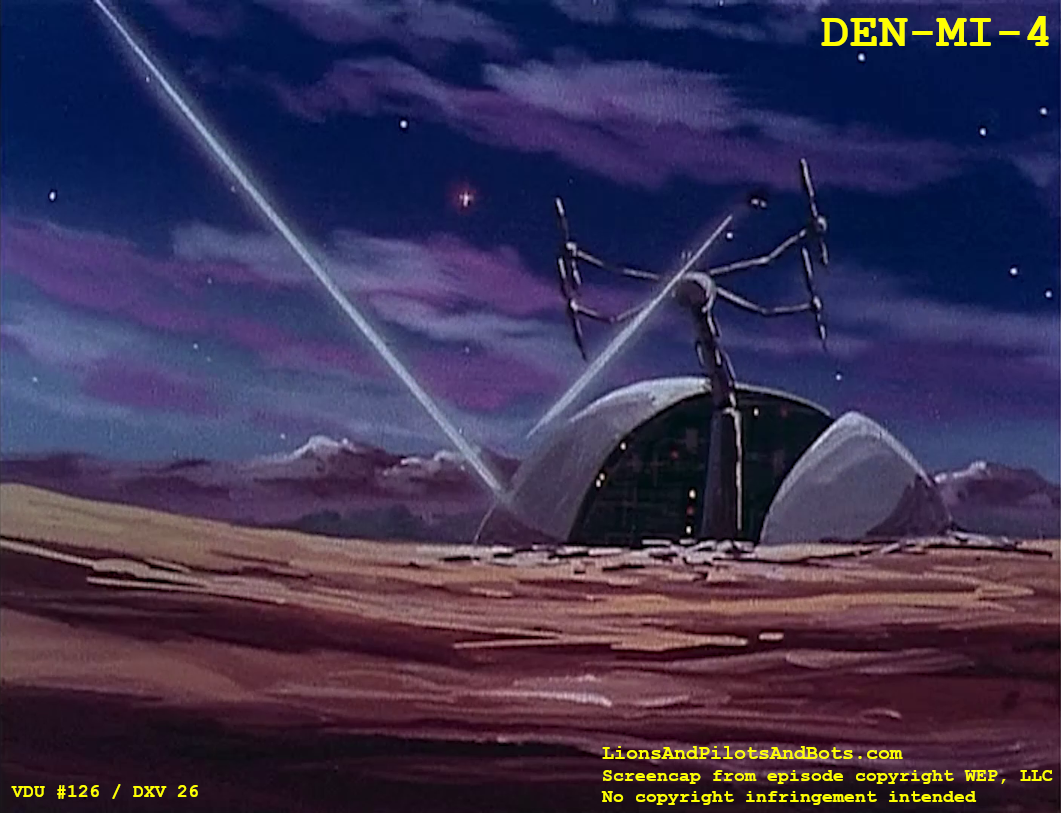
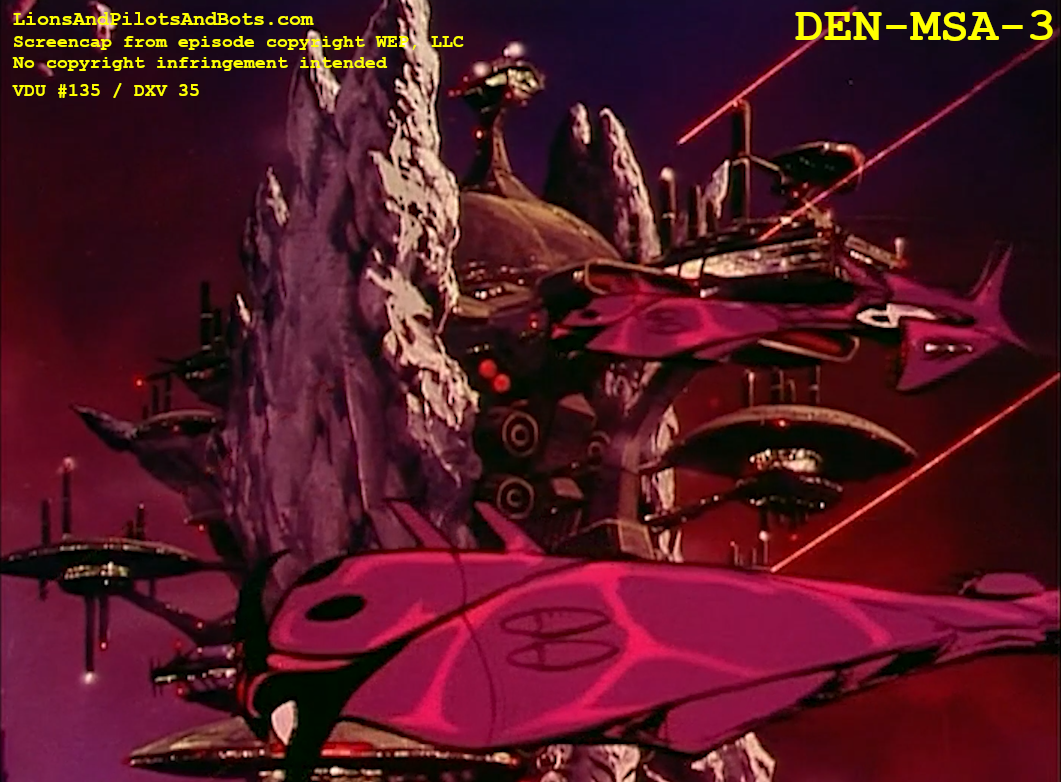
DEN-MI-2 bases are large structures that are built on the surface of a moon or planet, incorporated into geological structures such as a mountain. Like DEN-MI-1 bases, DEN-MI-2 bases have a long, forward-protruding command tower at the top, flanked by twin hangar bay hatches.
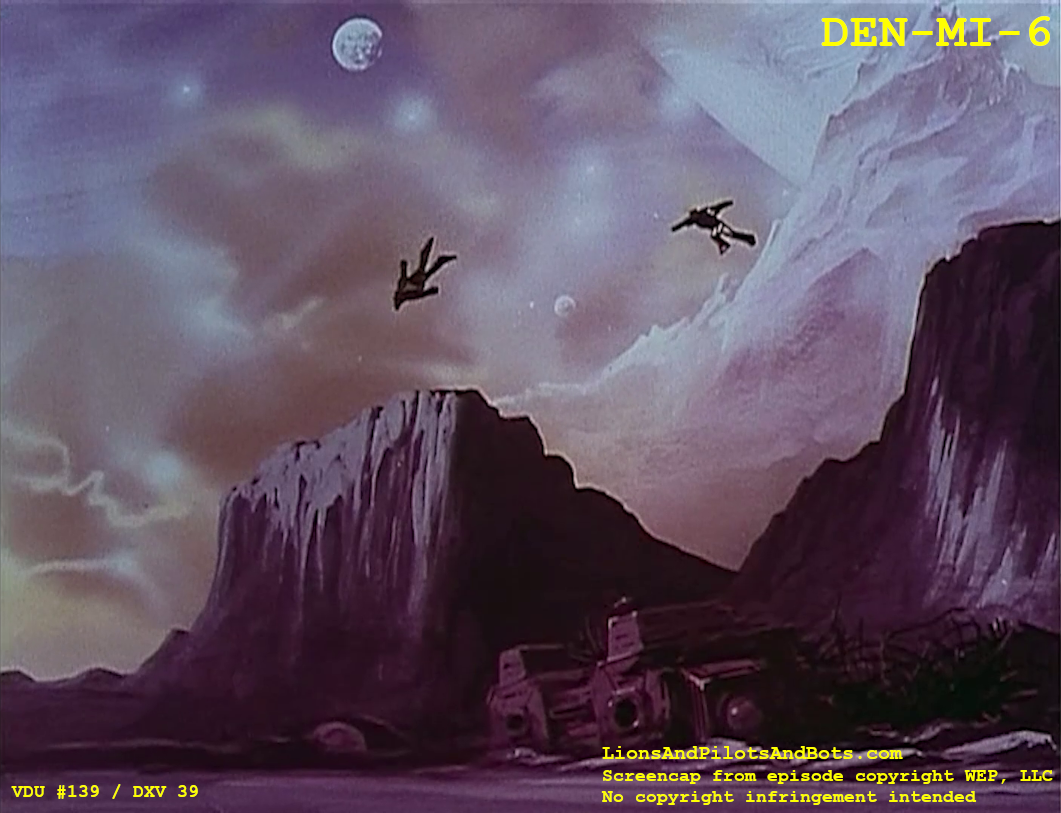
A DEN-MI-2 base is located on a battered moon that is constantly pelted by meteorites.
Another DEN-MI-2 base is located on a planet that resembles the moon of the other DEN-MI-2 base. The Stellar Ship Explorer and Voltron Force journey to the planet to meet the newly defeated ex-leaders of the Drule Empire.
(In ARMORED FLEET DAIRUGGER XV, only one DEN-MI-2 base is shown. For one DAIRUGGER-turned-VOLTRON episode that features the base [DAIRUGGER #46 “The Fall of the Survey Base”, adapted as VOLTRON #146 “It Could Be a Long War”], the VOLTRON writers treat the base as if were a second base of the same type, located on a similar-looking world.)
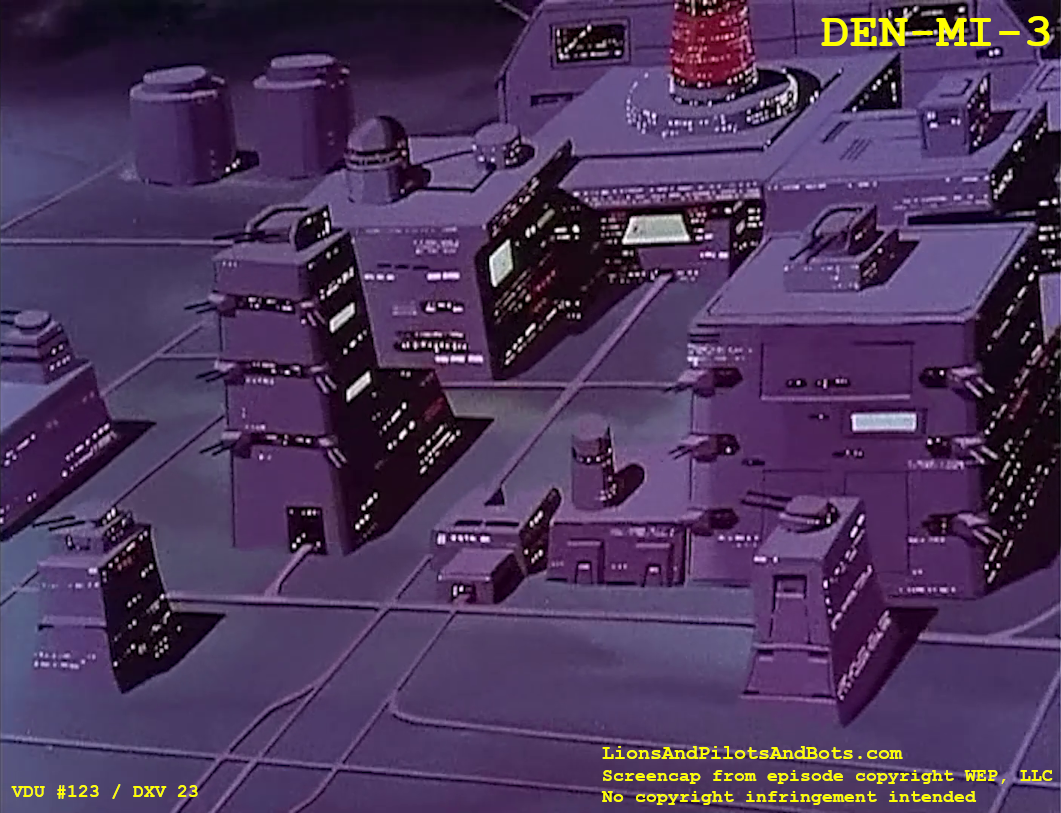
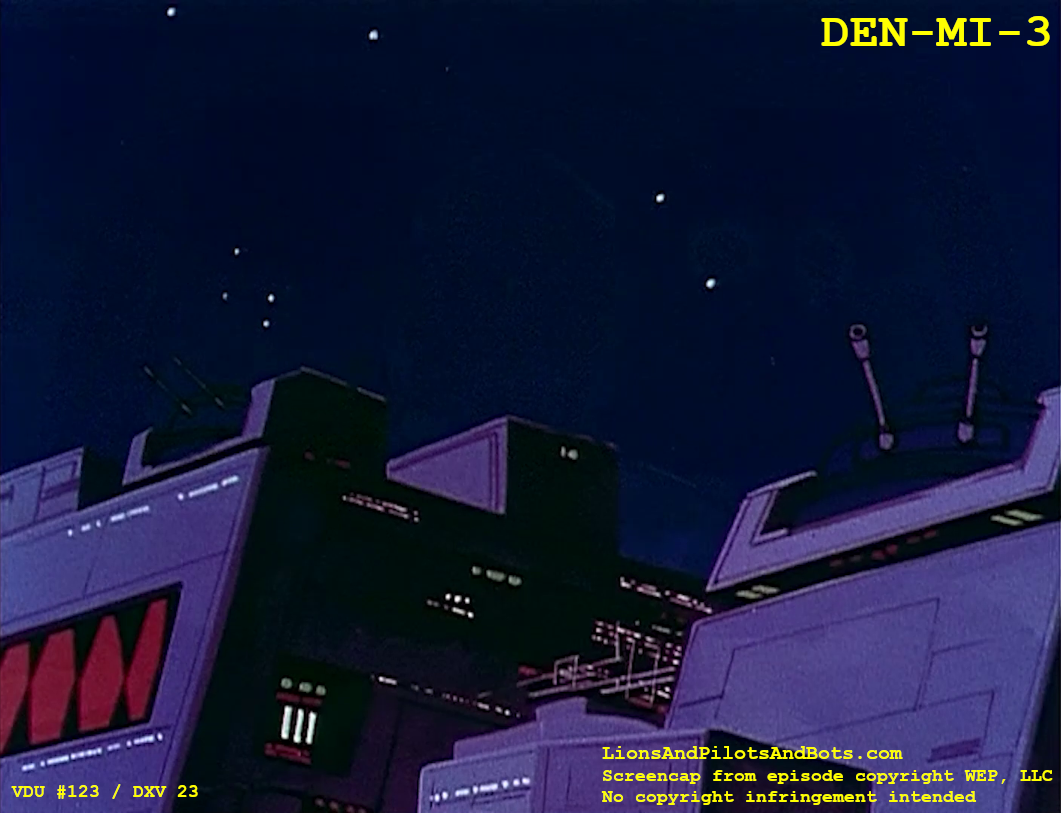
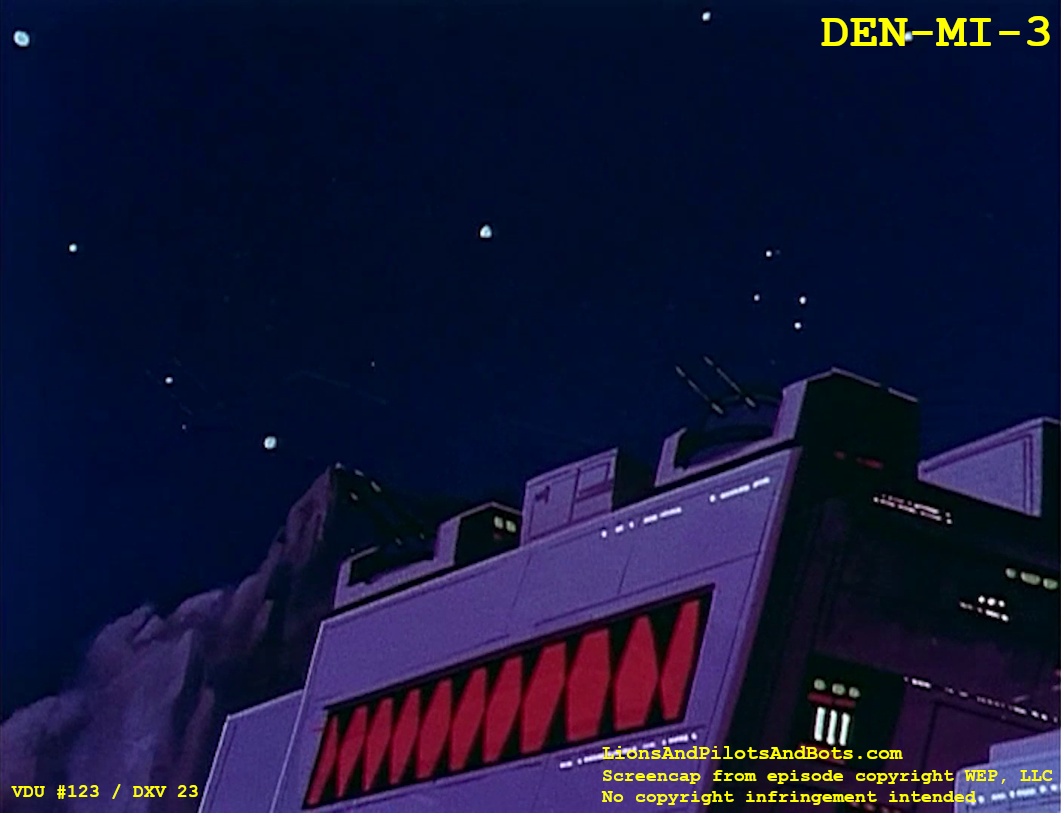
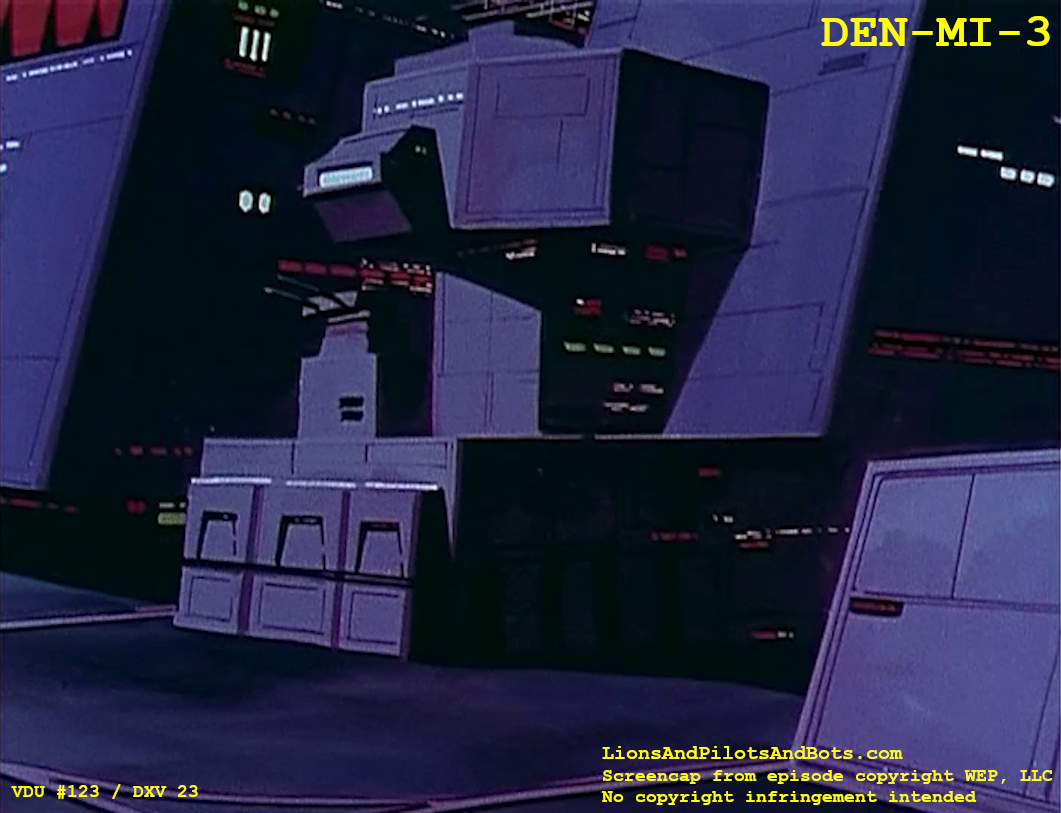
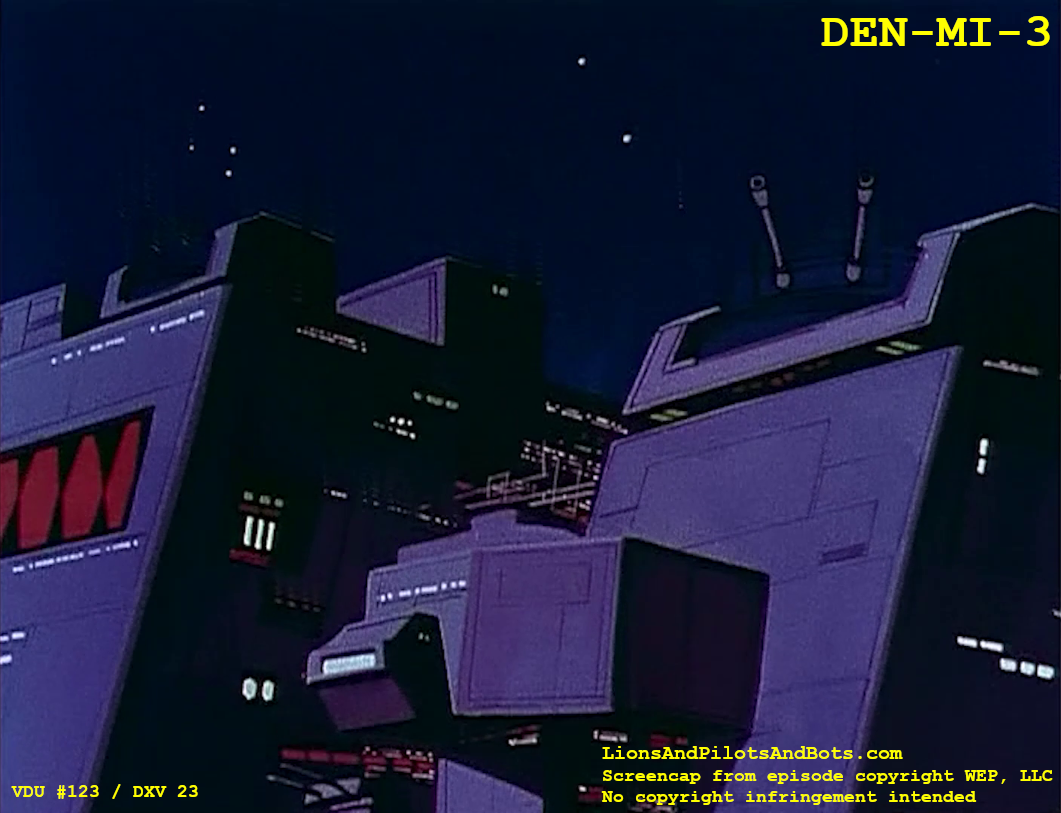
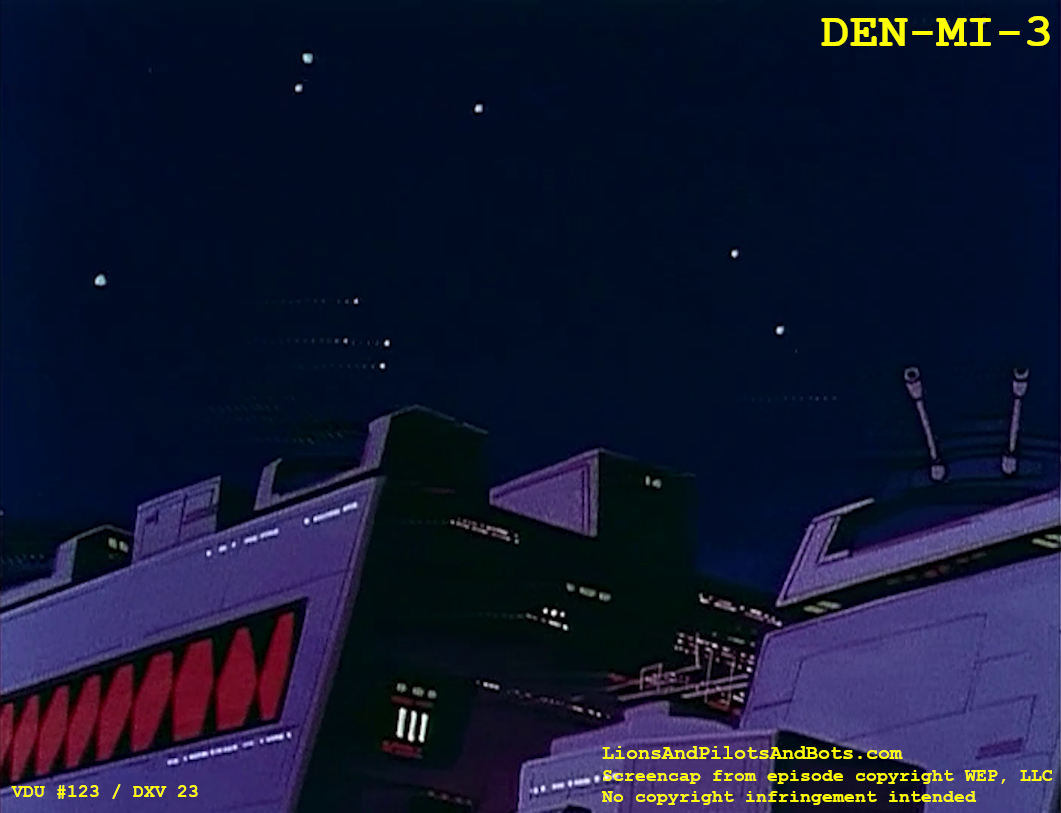
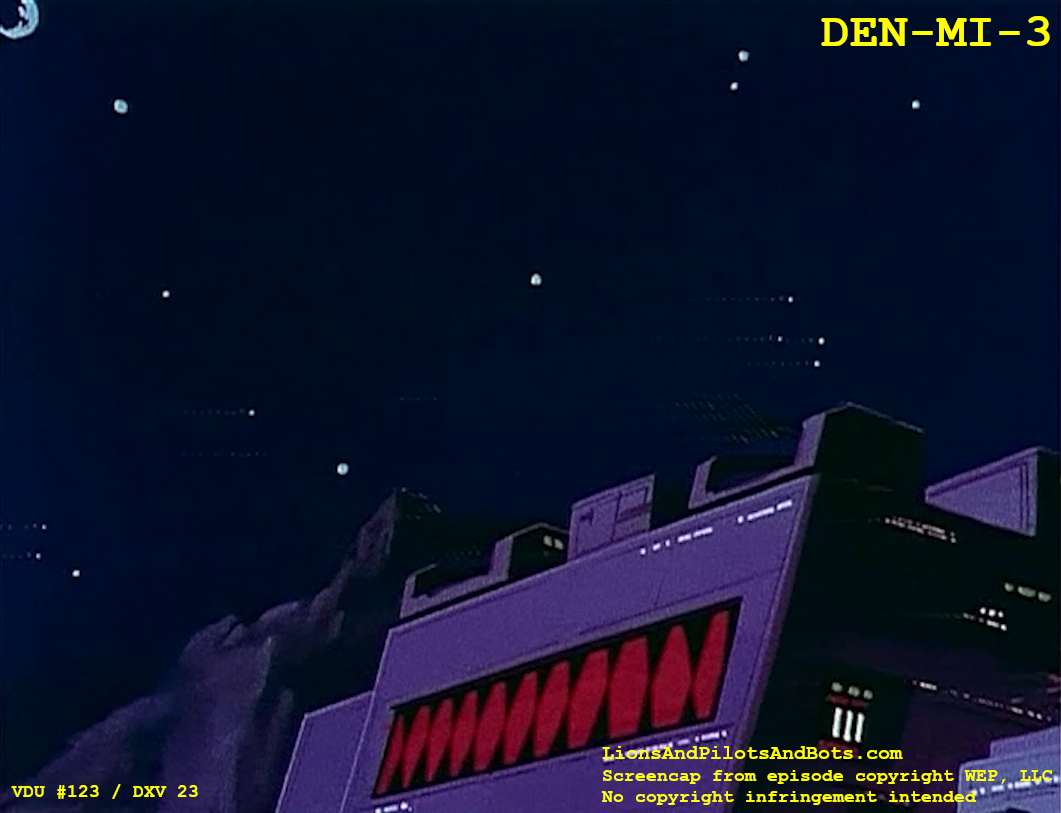
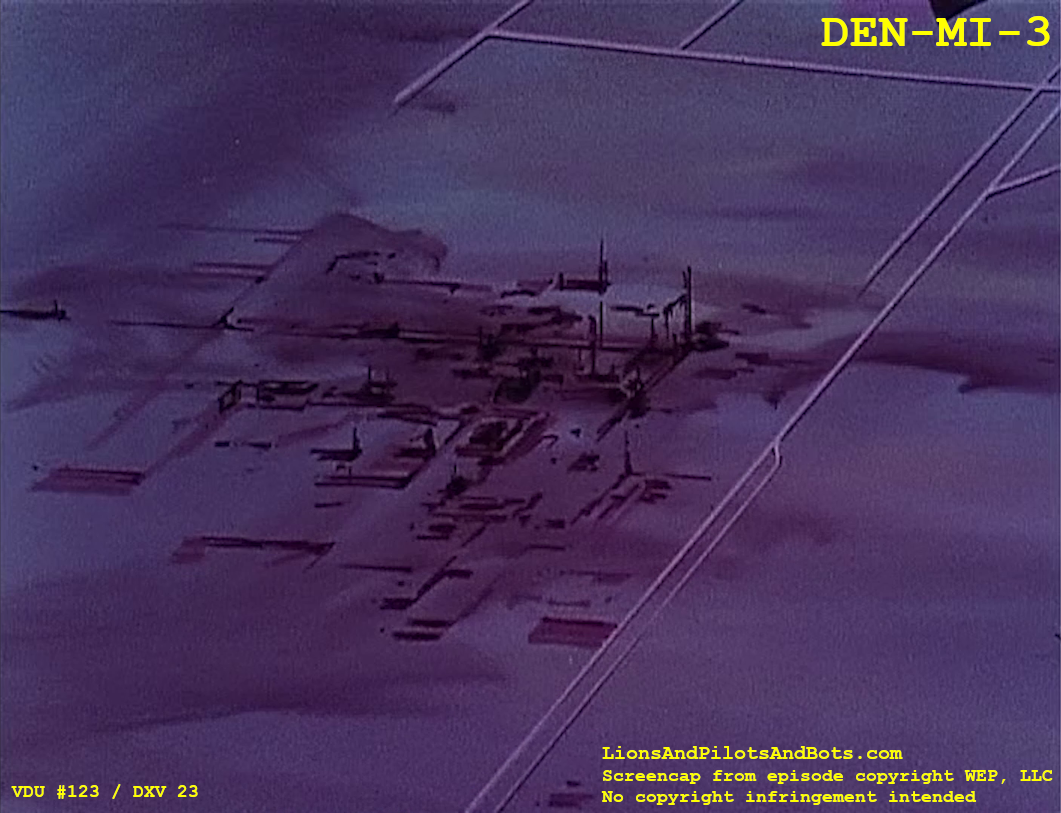
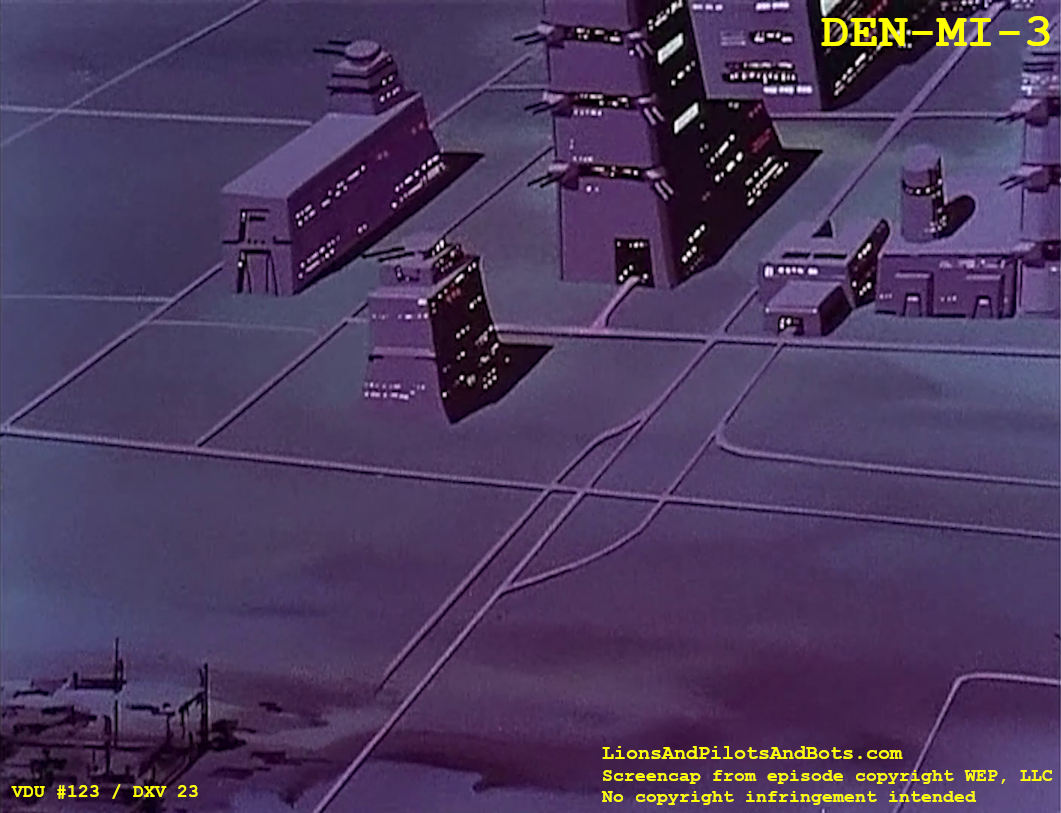
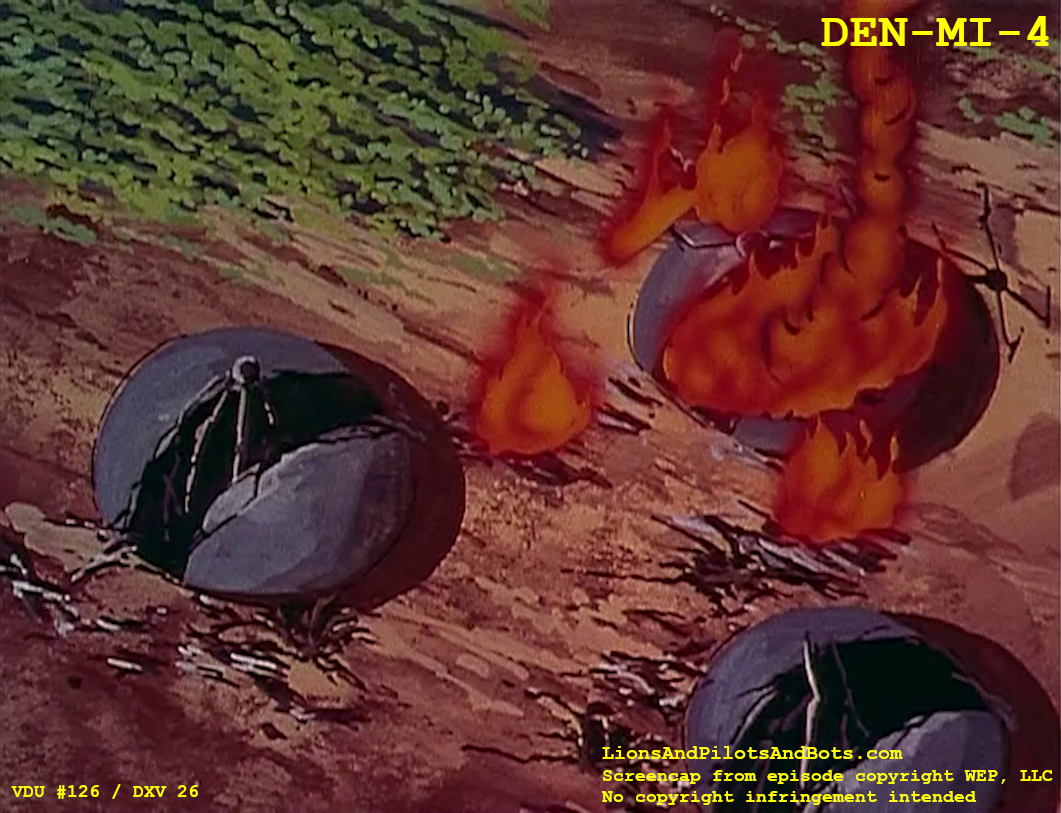
DEN-MI-3 bases are built on the surface of a moon or planet. They consist of an arrangement of buildings interconnected by a network of streets. Many of the buildings have weapons that can fire at overhead aircraft or spacecraft.
DEN-MI-2 bases can contain multiple MSX-2 and smaller ships, and they can launch long-range missiles.
The Voltron Vehicle Team encounters a DEN-MI-3 base on a Drule outpost planet.
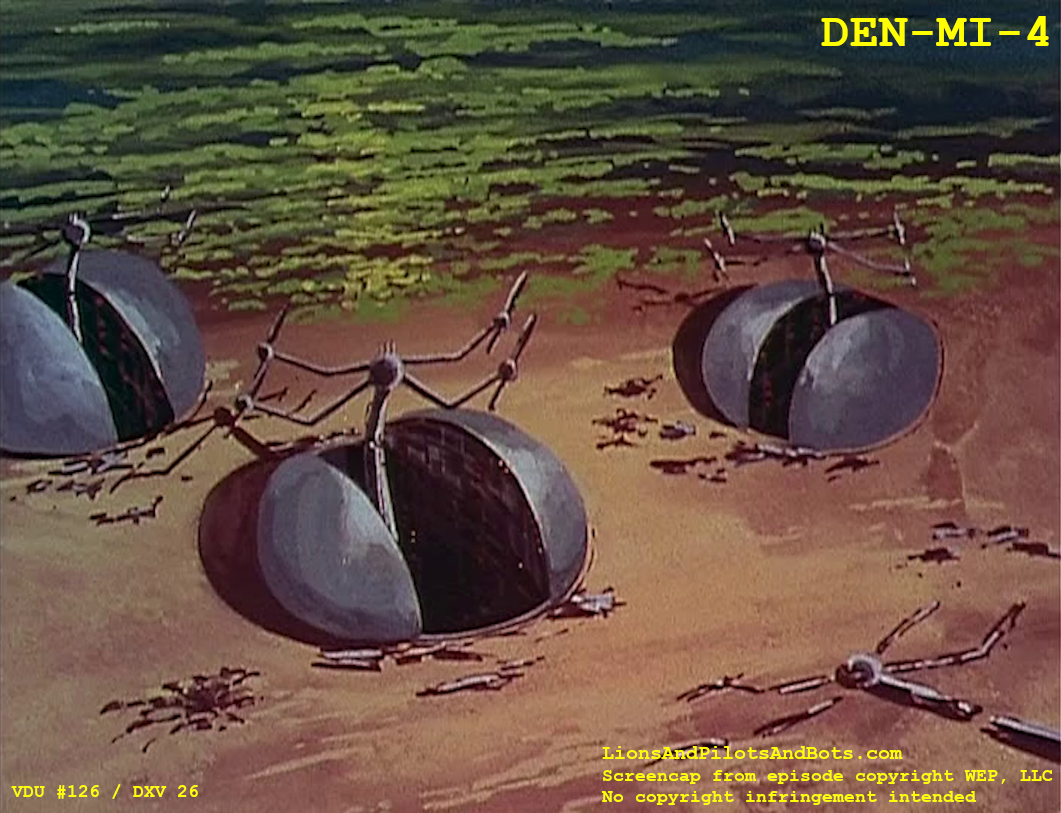
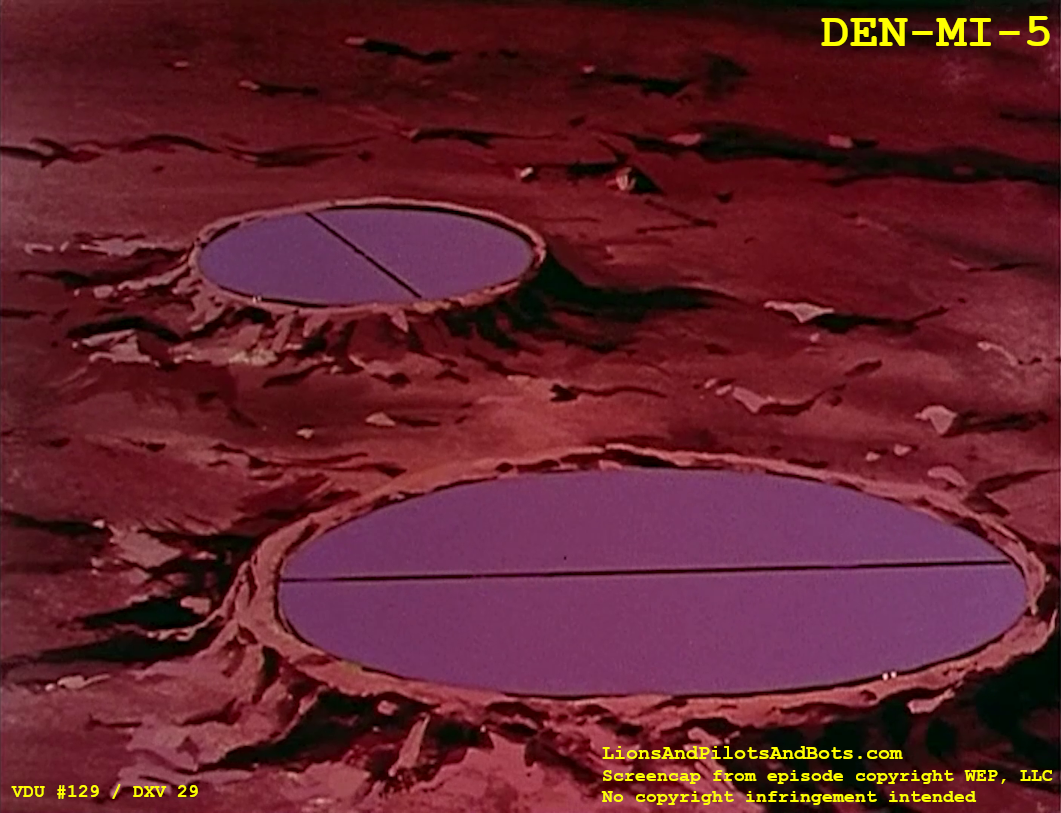
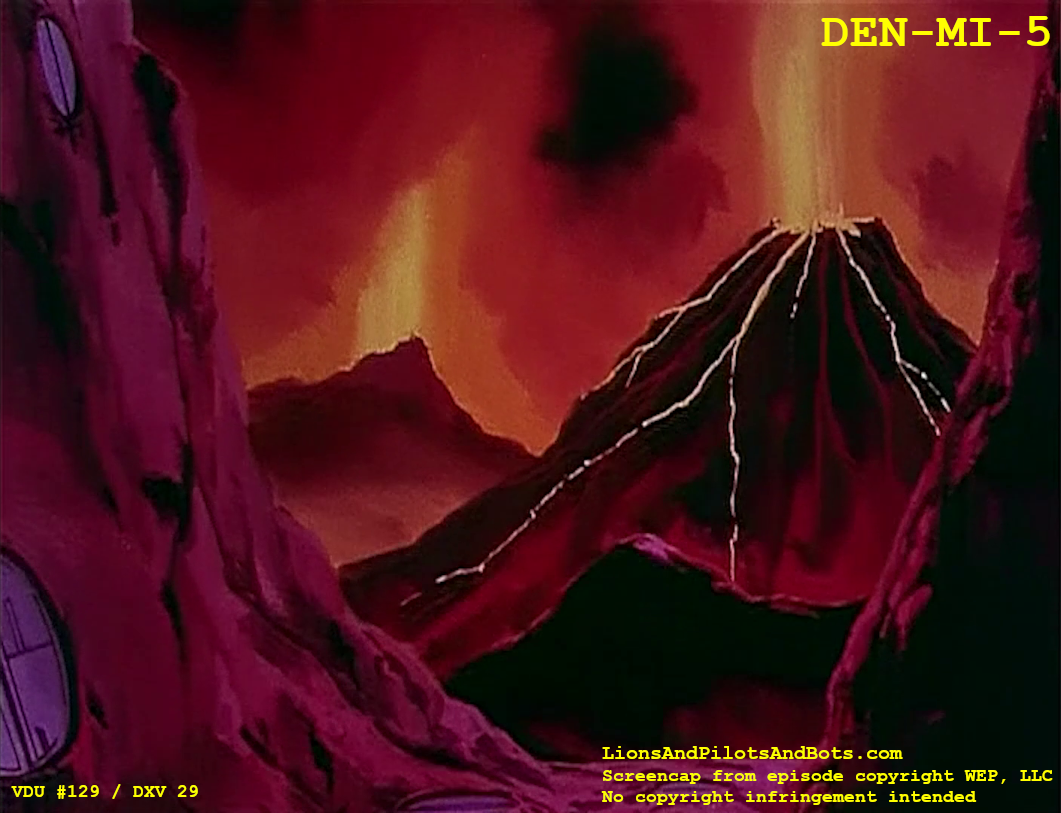
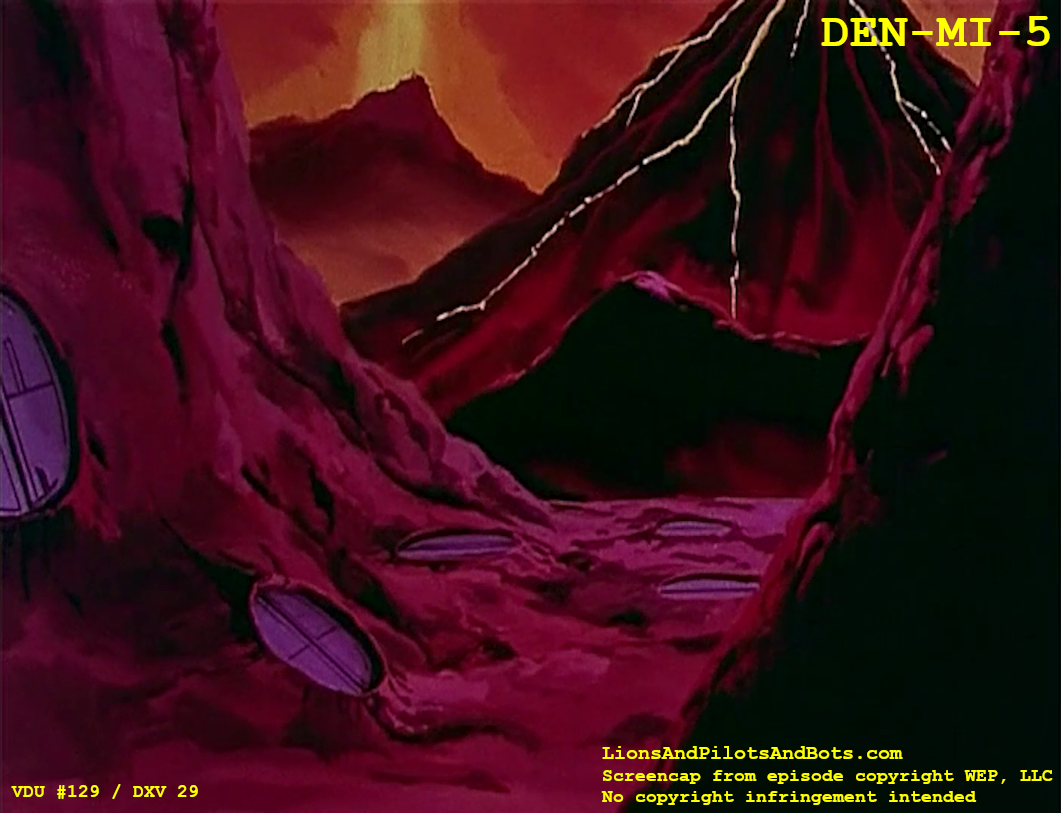
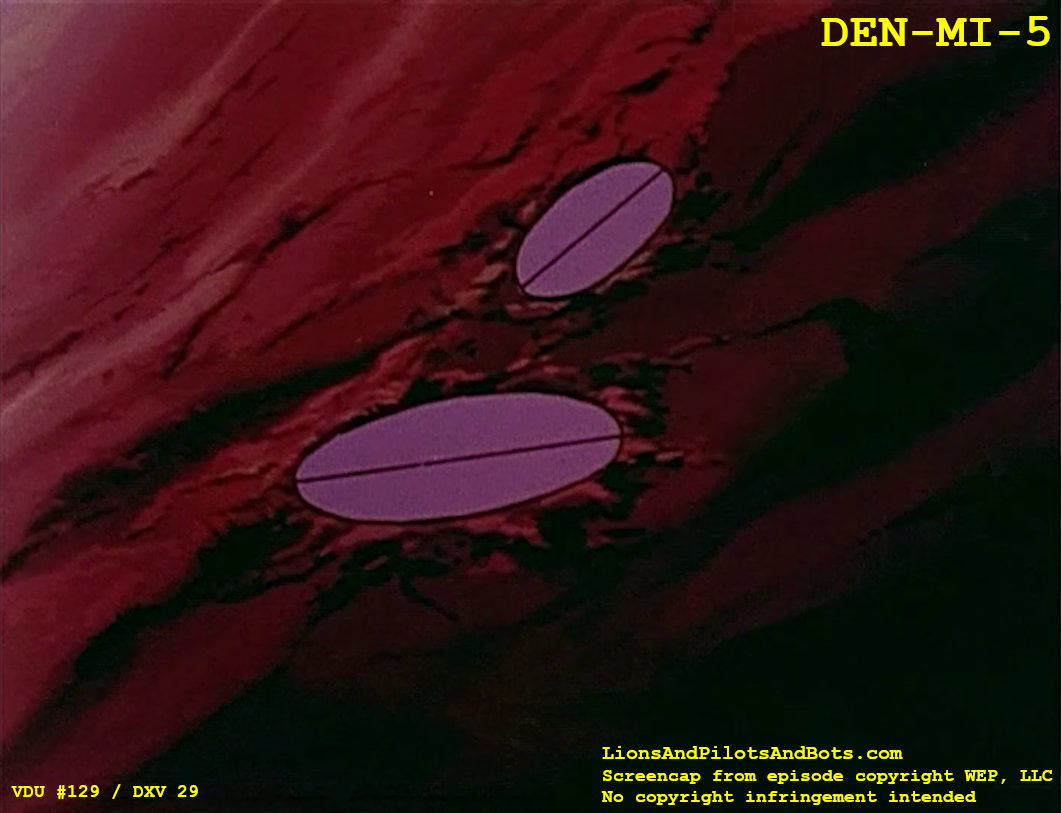
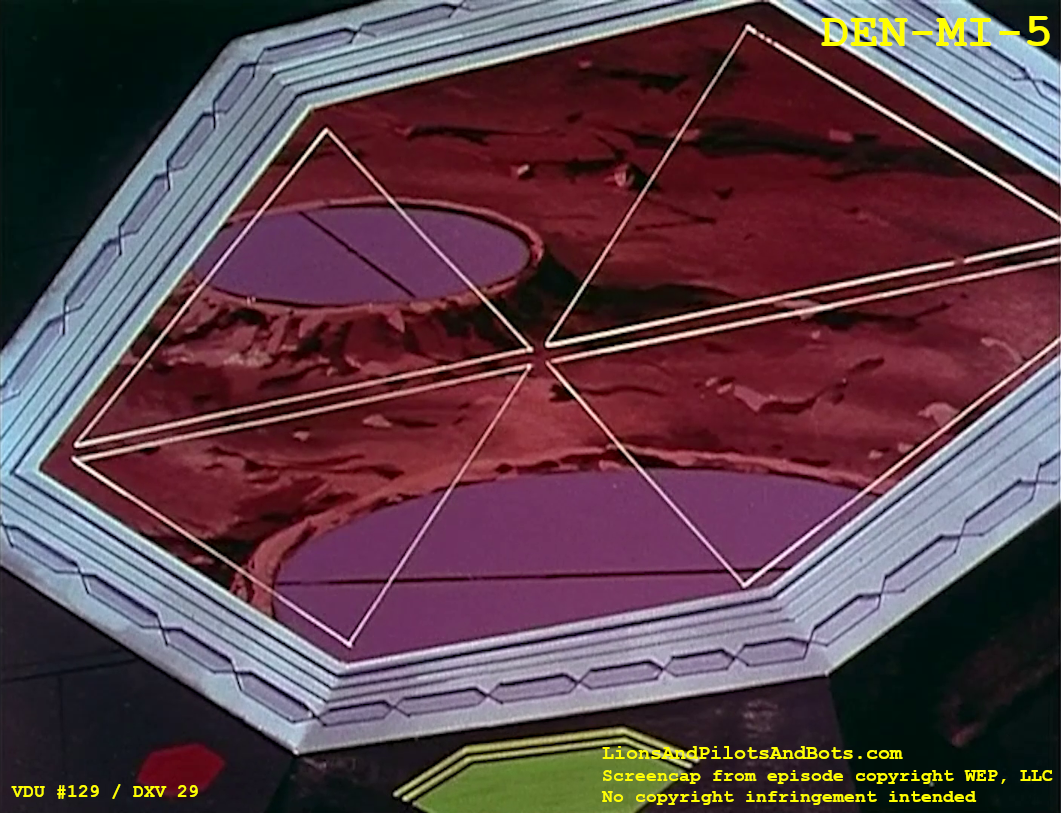
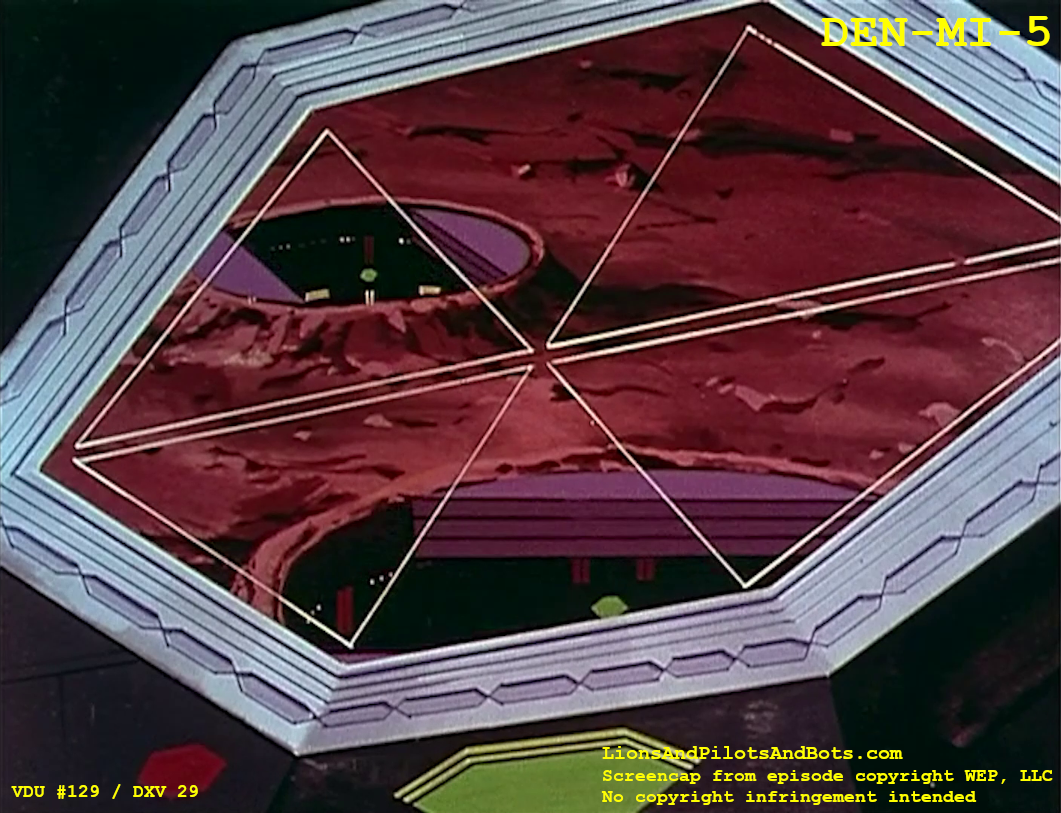
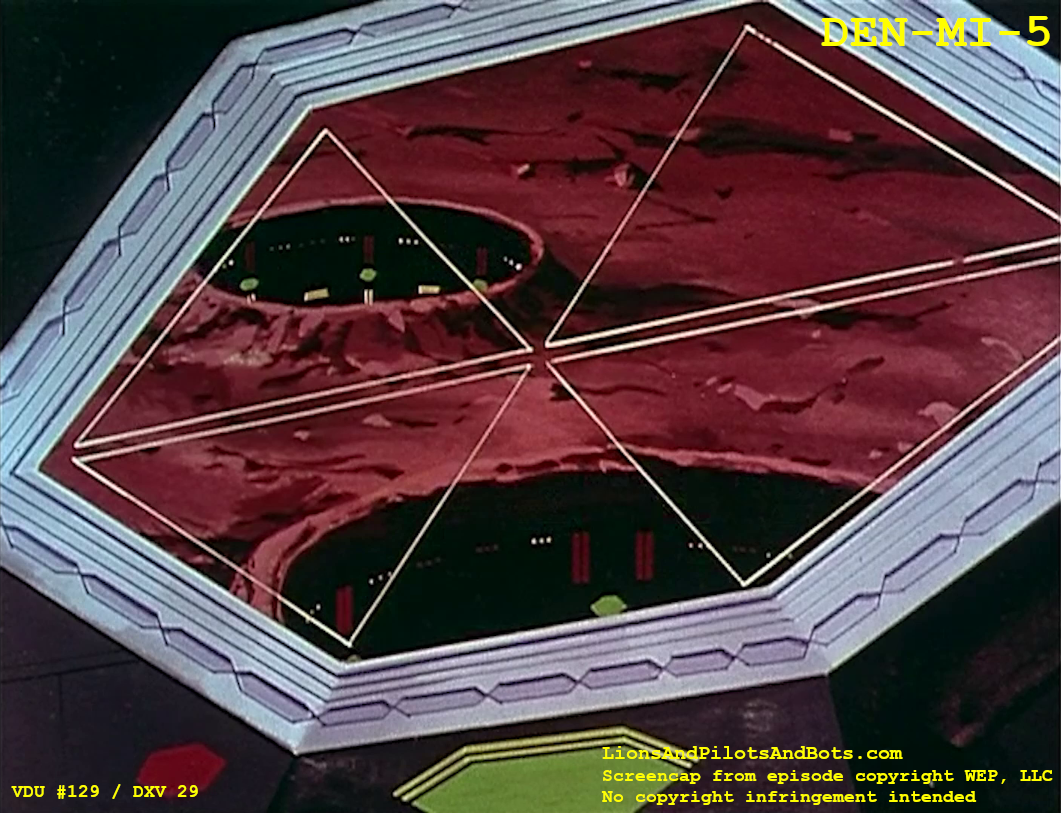
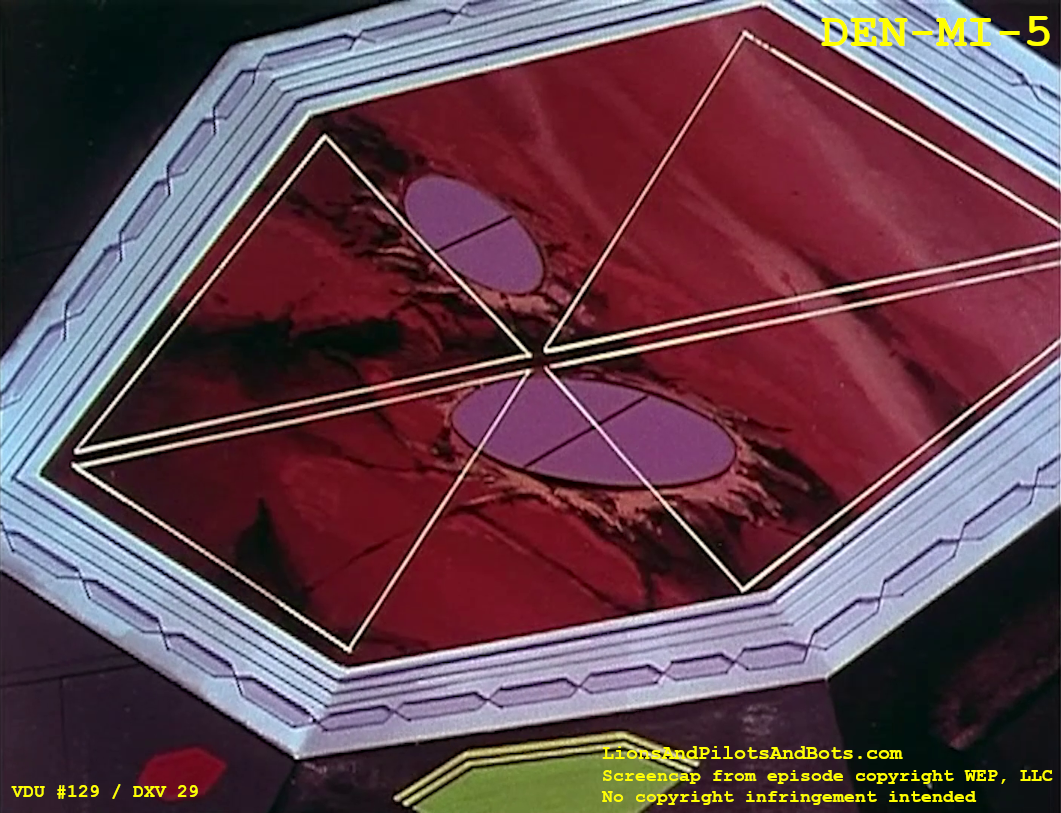
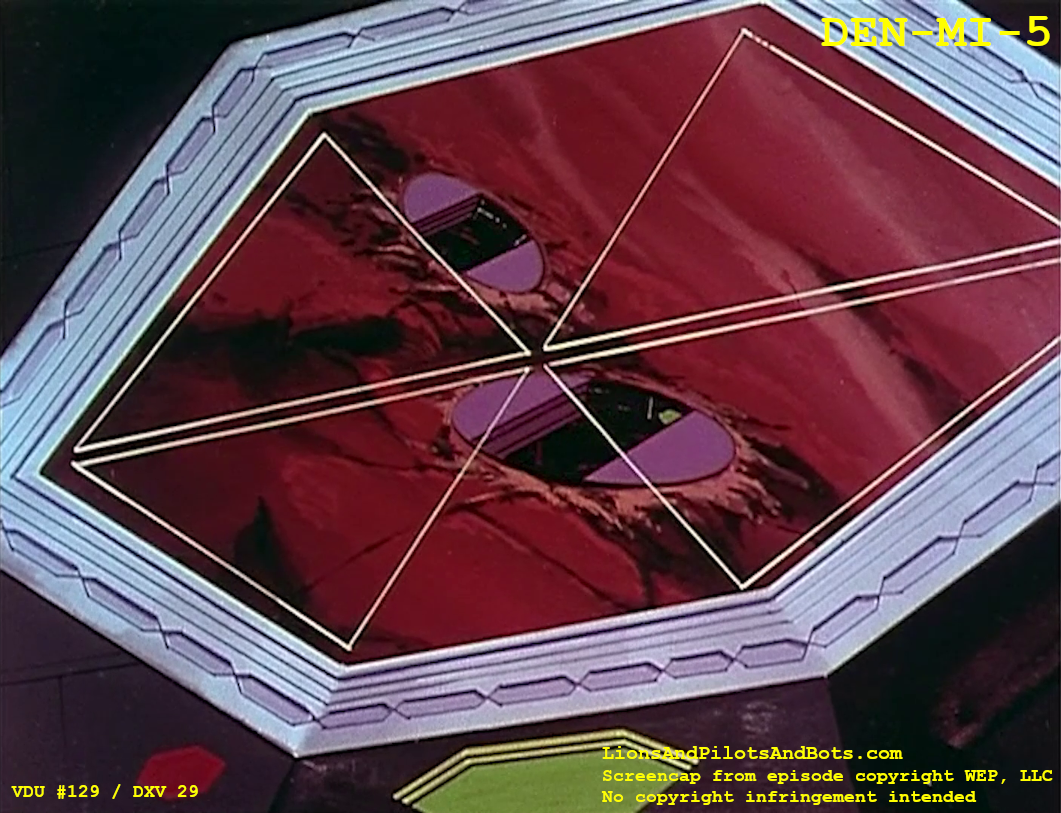
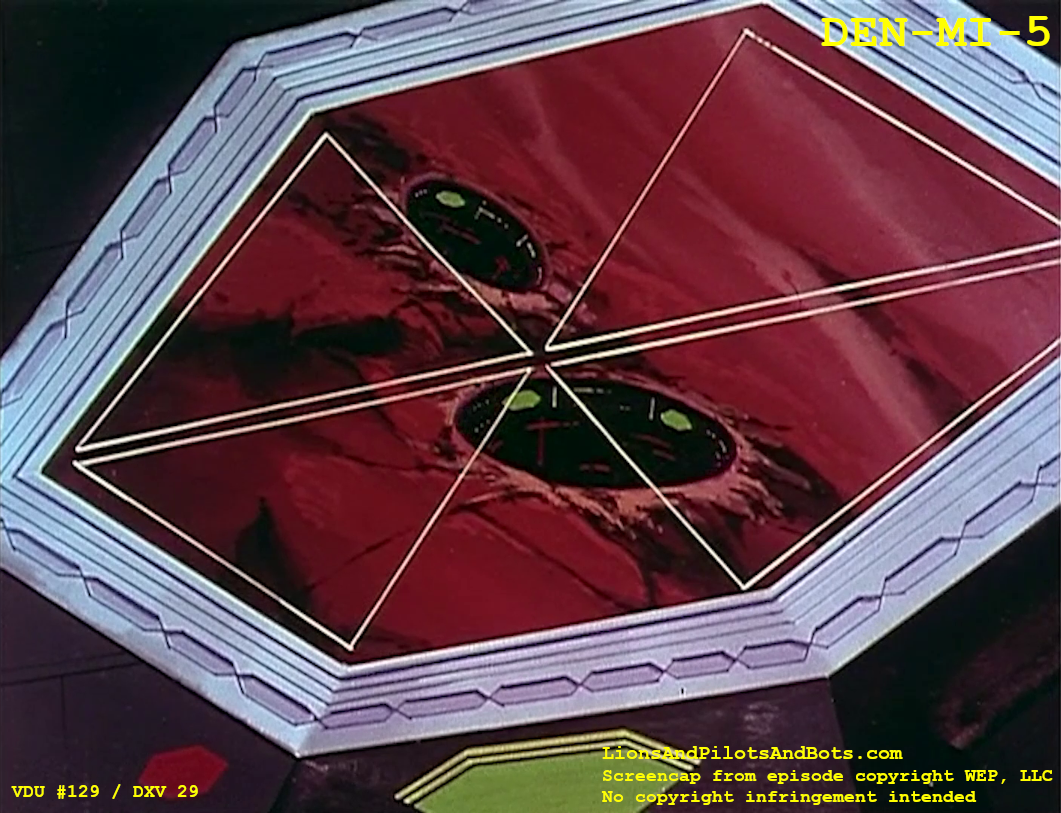
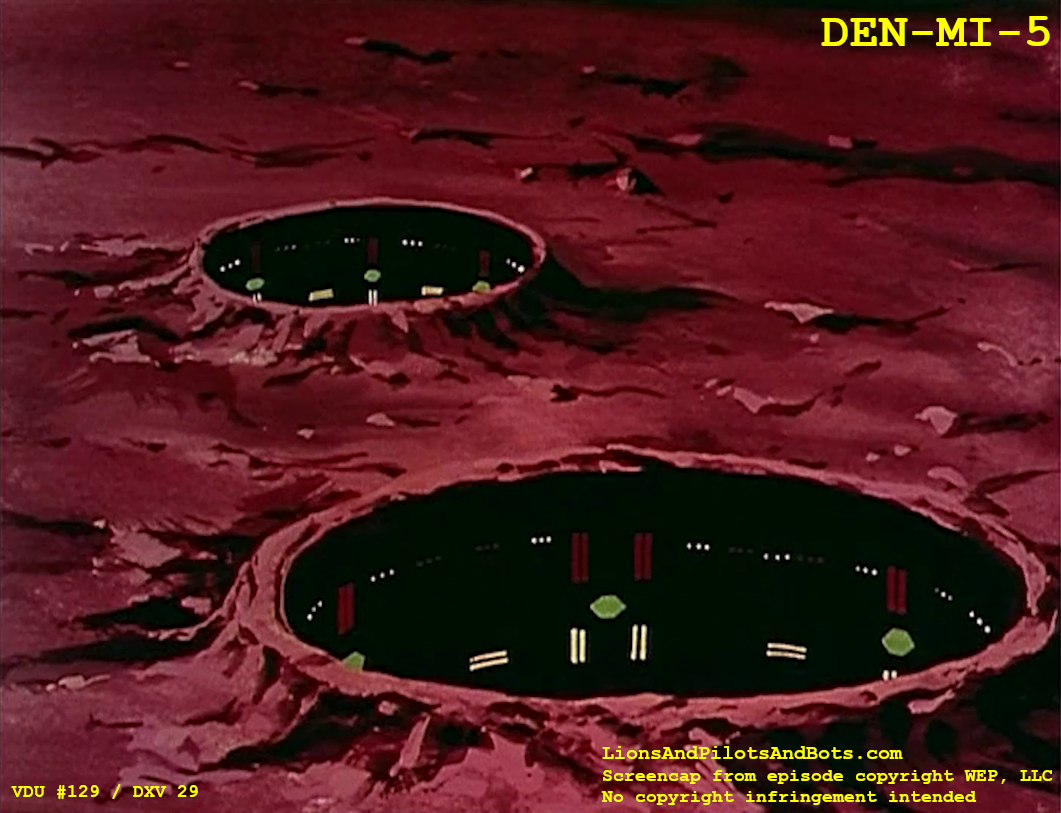
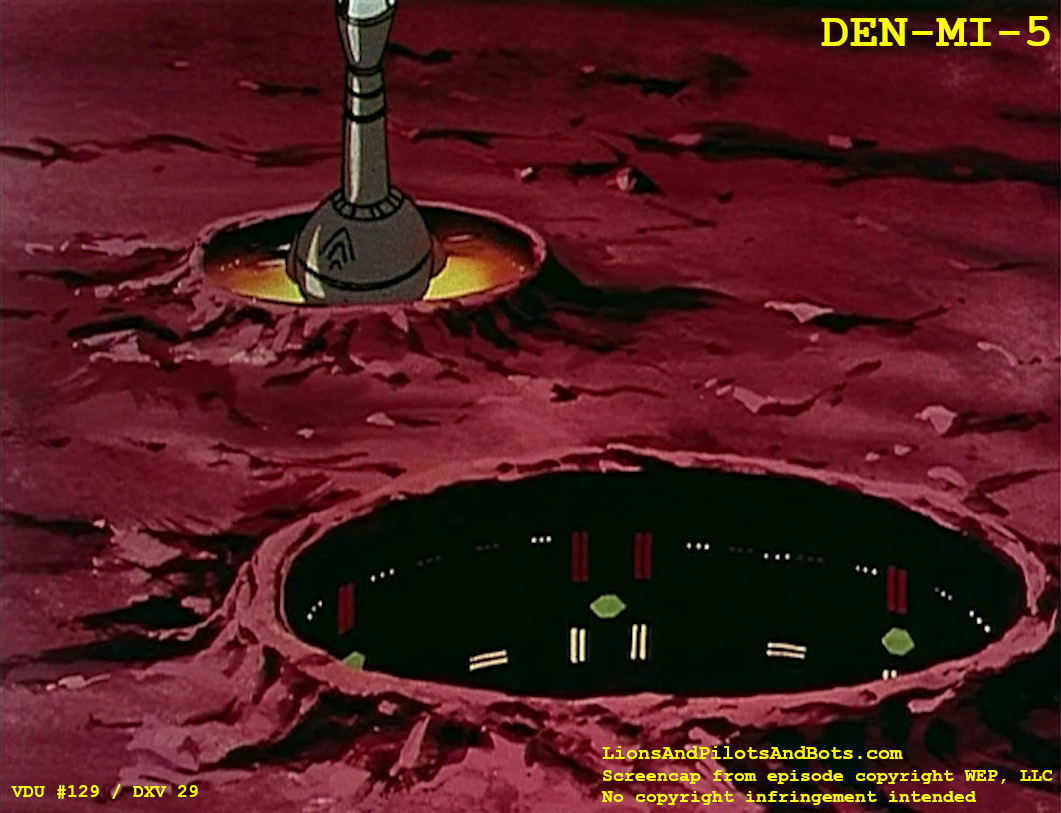
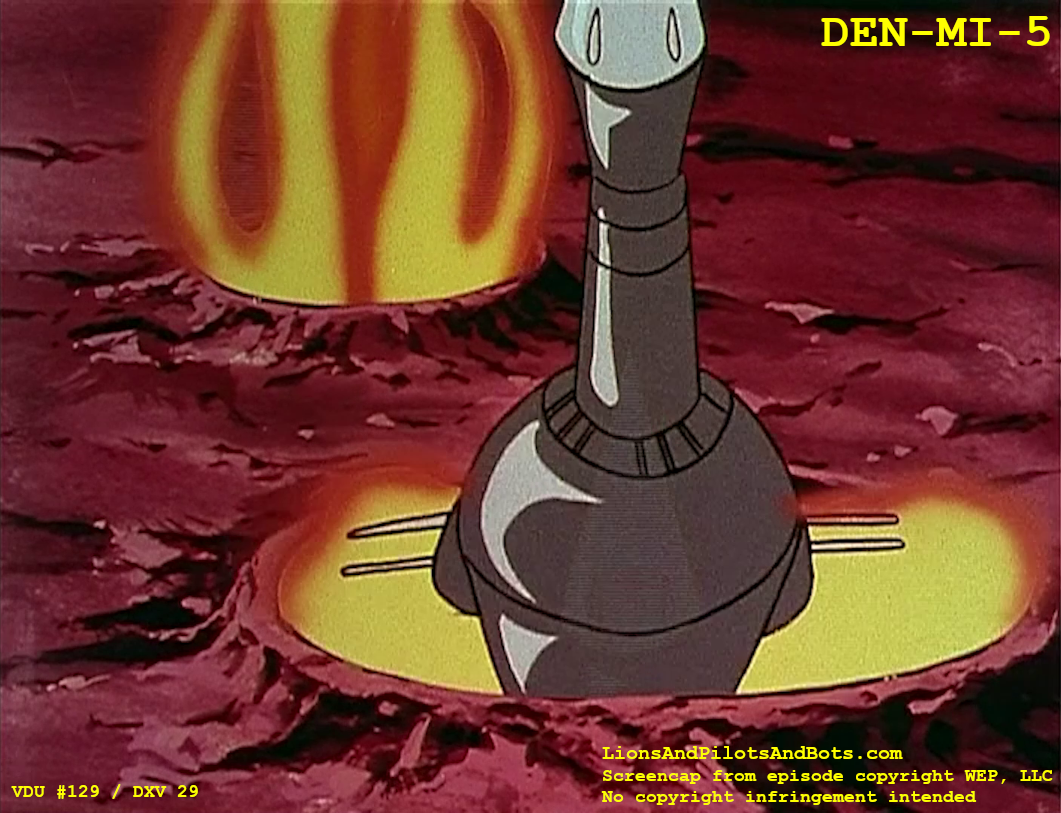
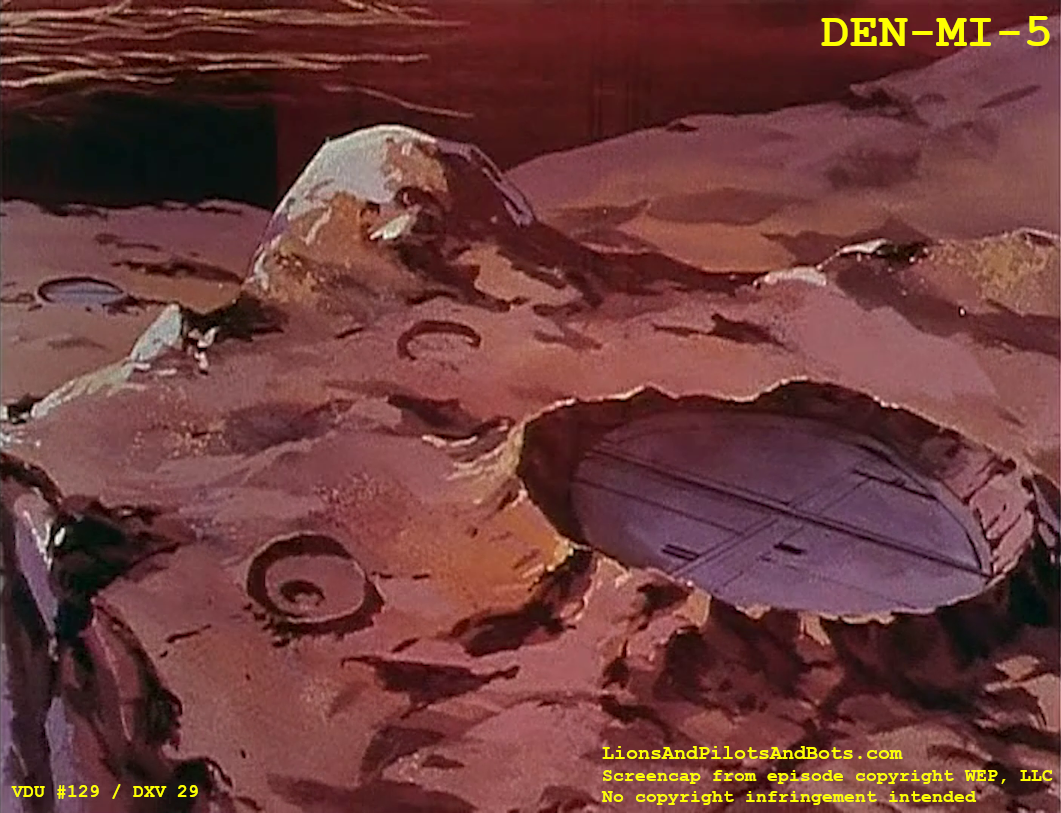
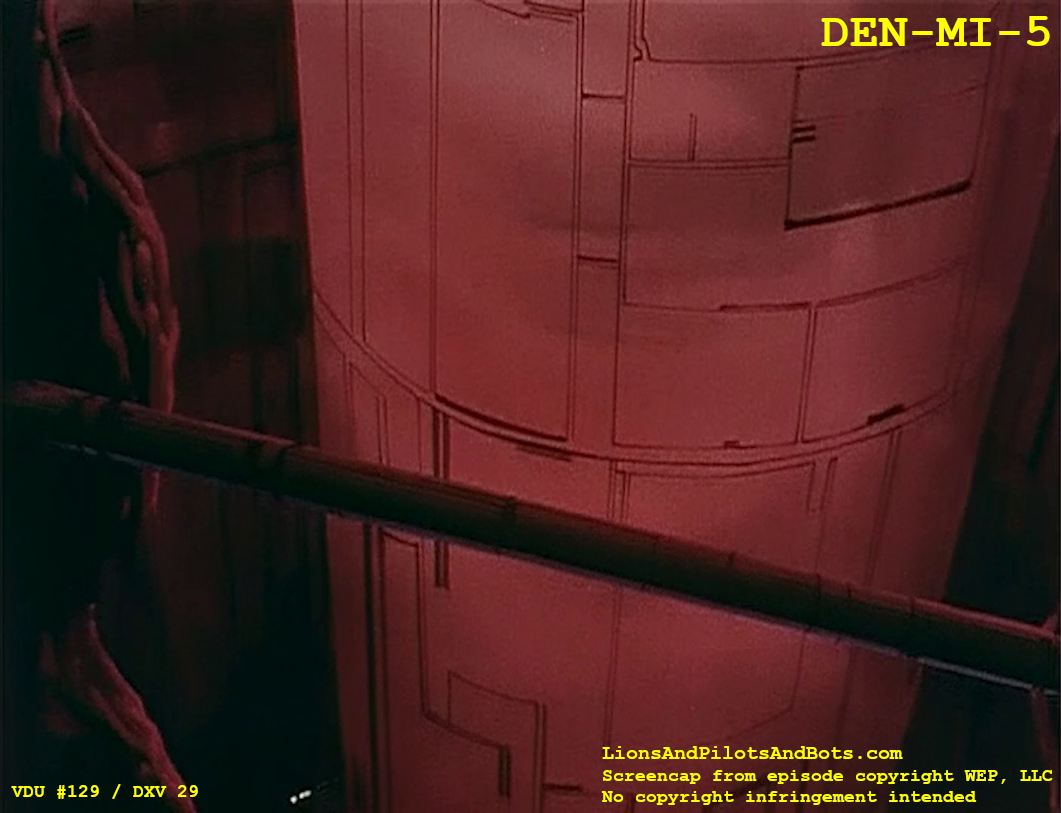
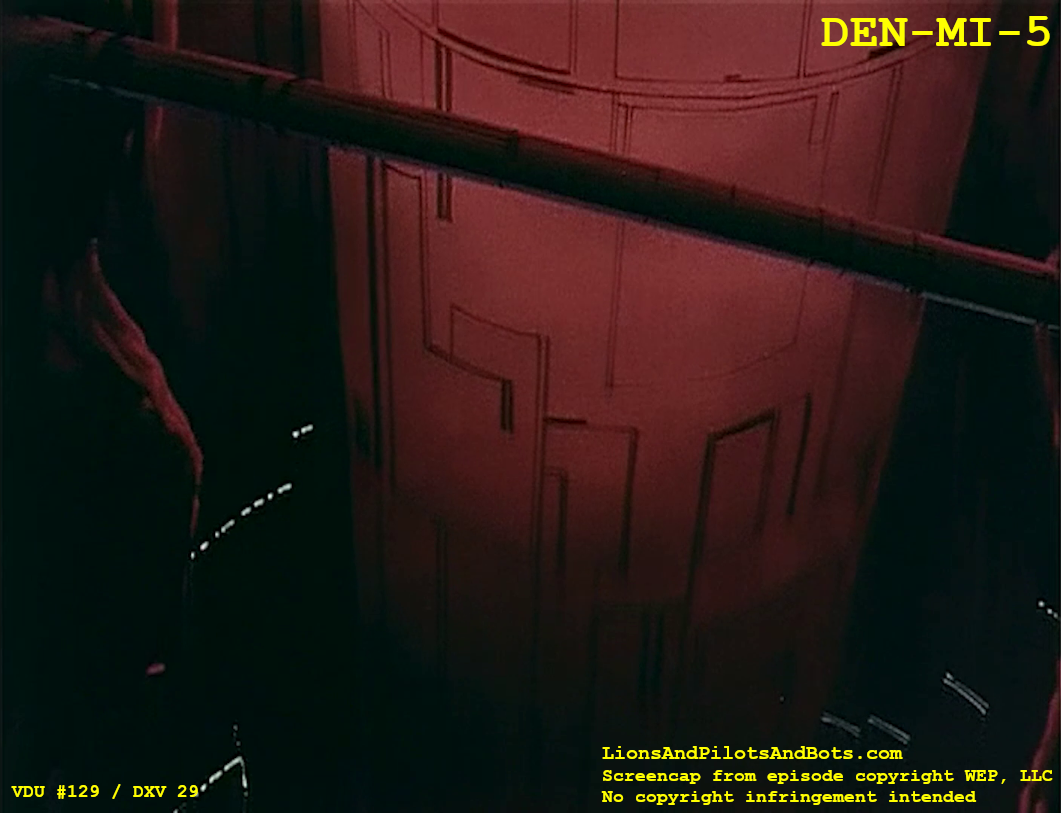
DEN-MI-5 bases are constructed beneath the surface of a planet or moon. Such bases have subsurface-to-air/space missiles that can be launched from underground silos that have ports scattered about the surface of the planet or moon.
Commander Flazon commands a DEN-MI-5 base on the planet Veema.
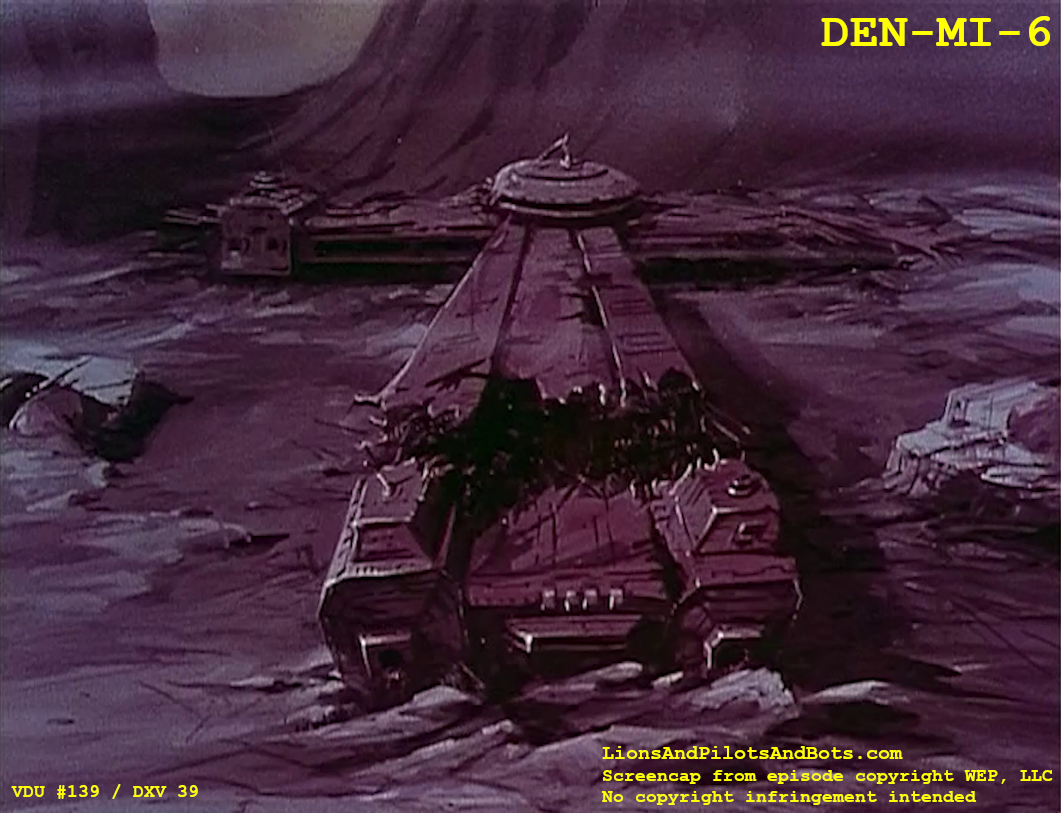
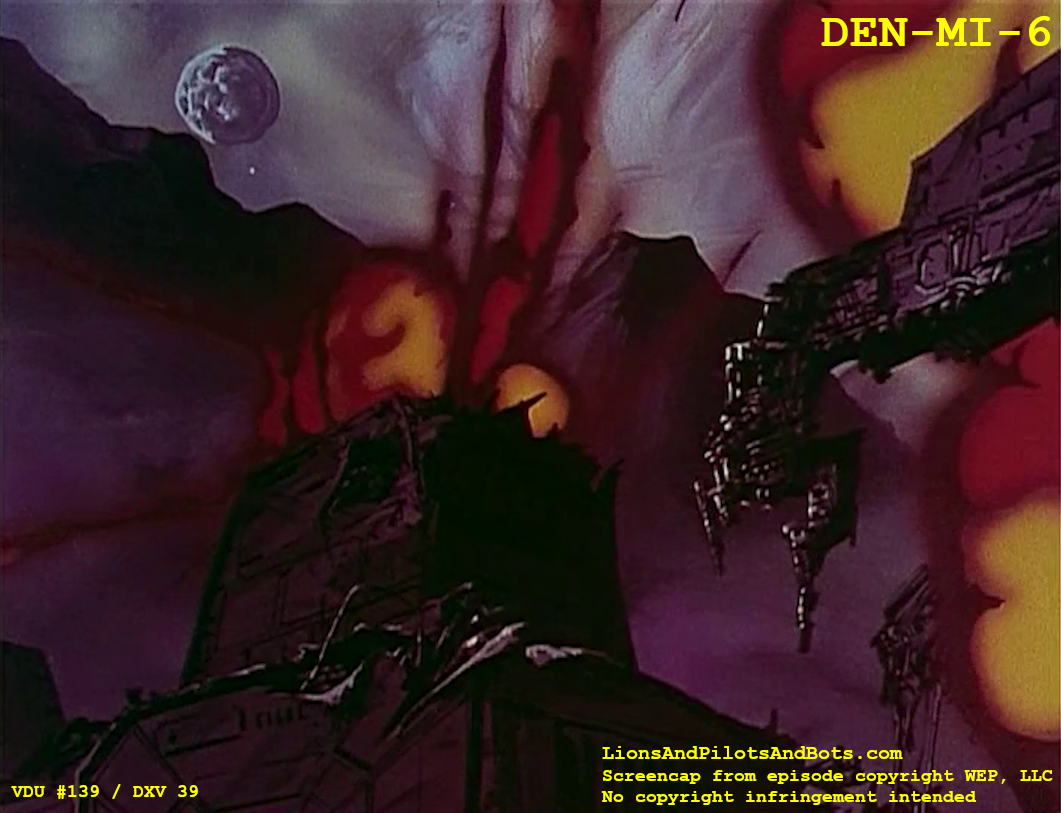
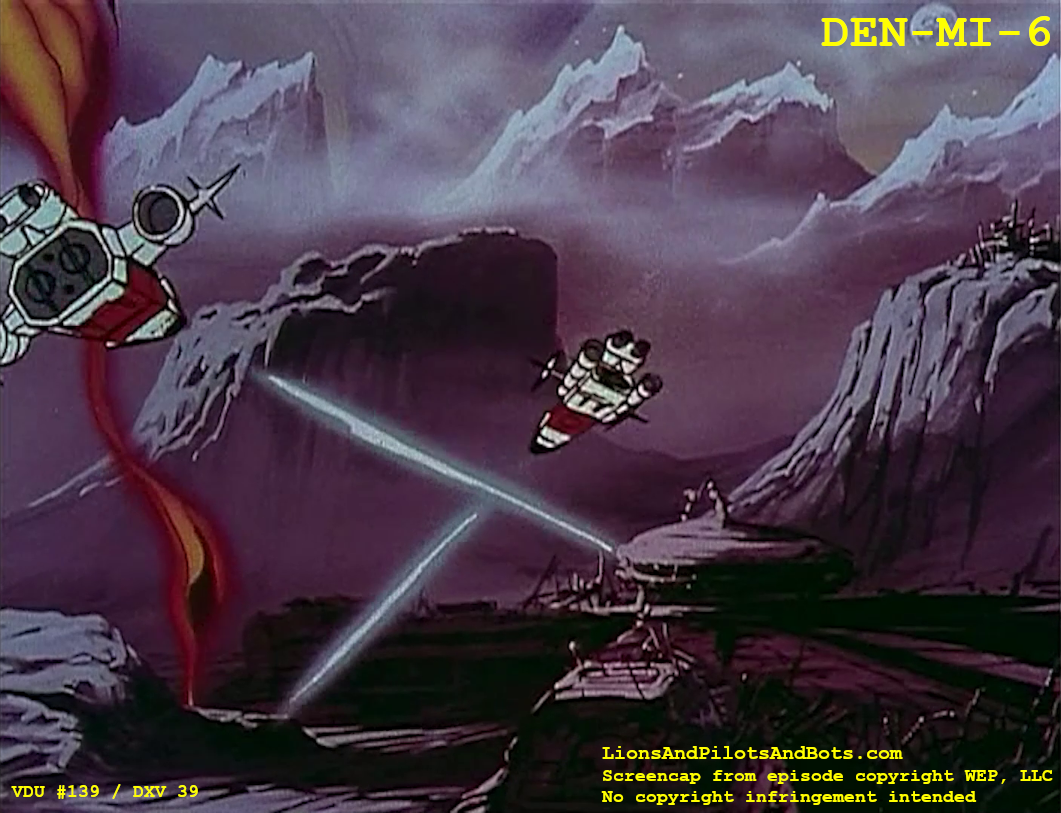
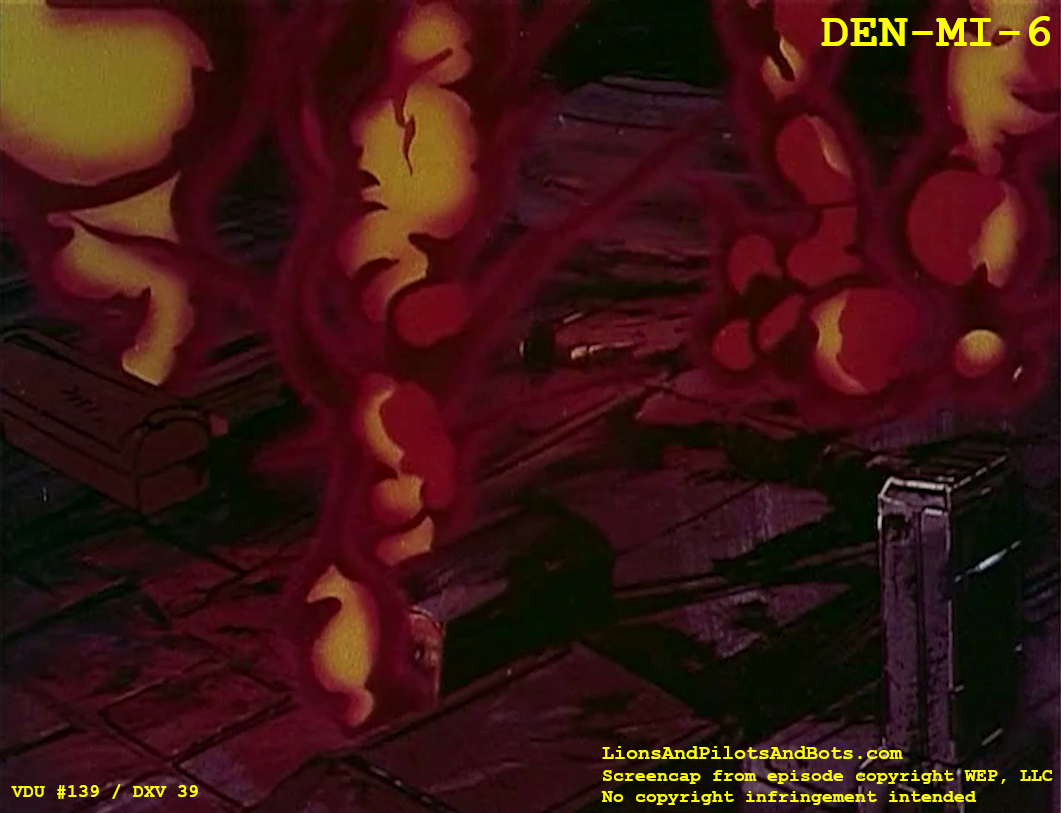
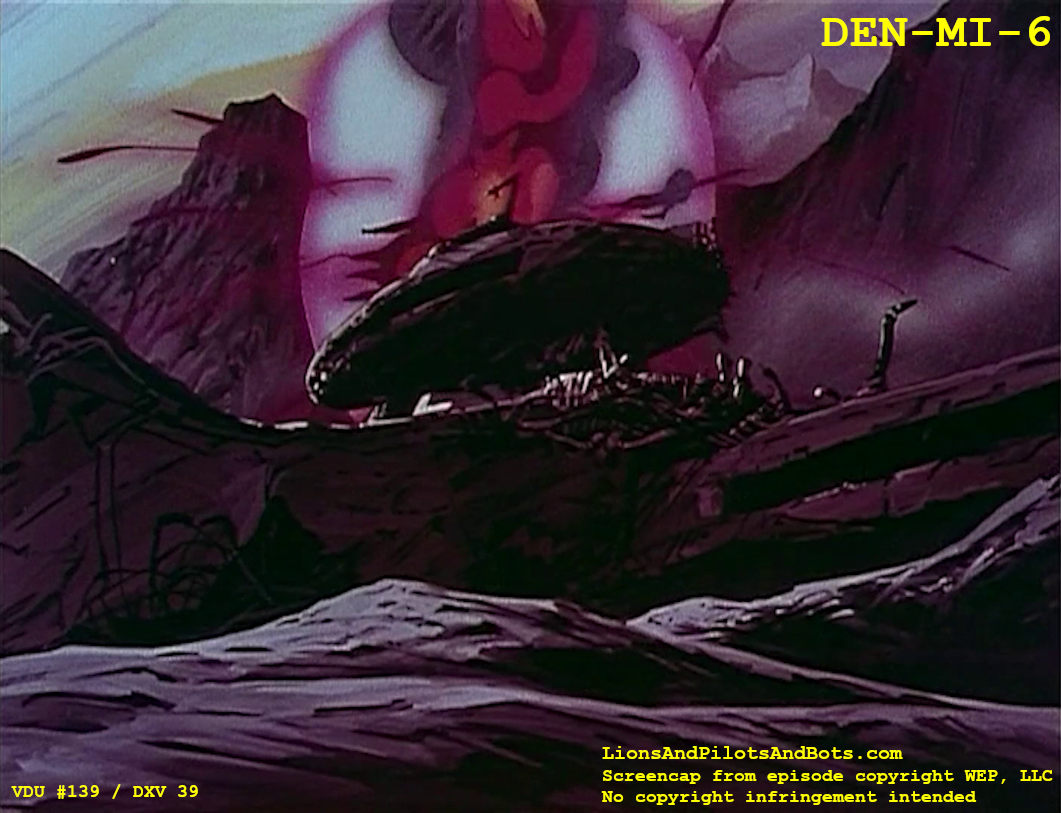
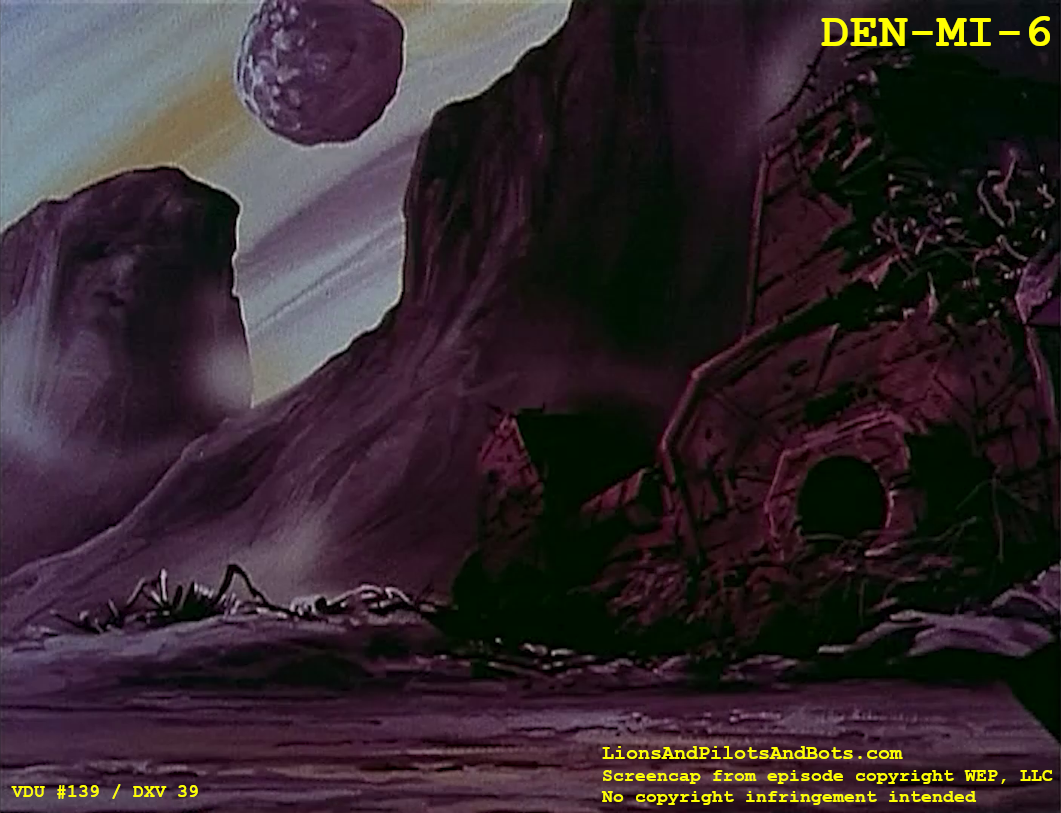
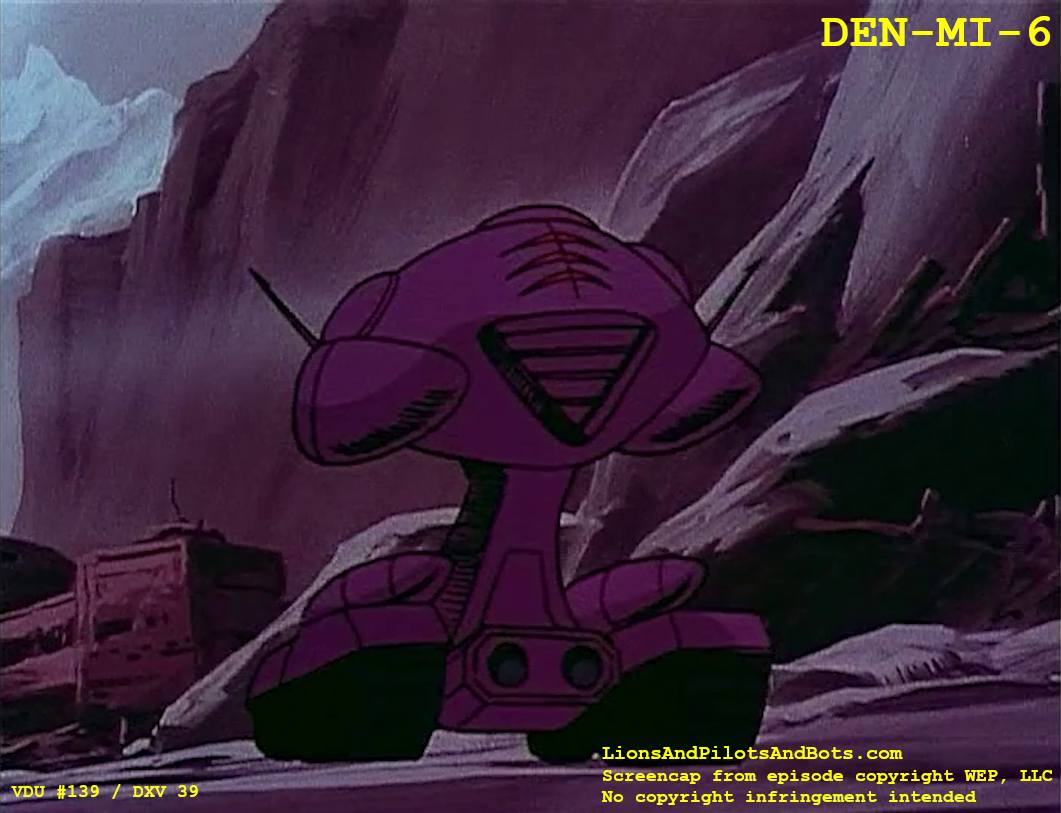
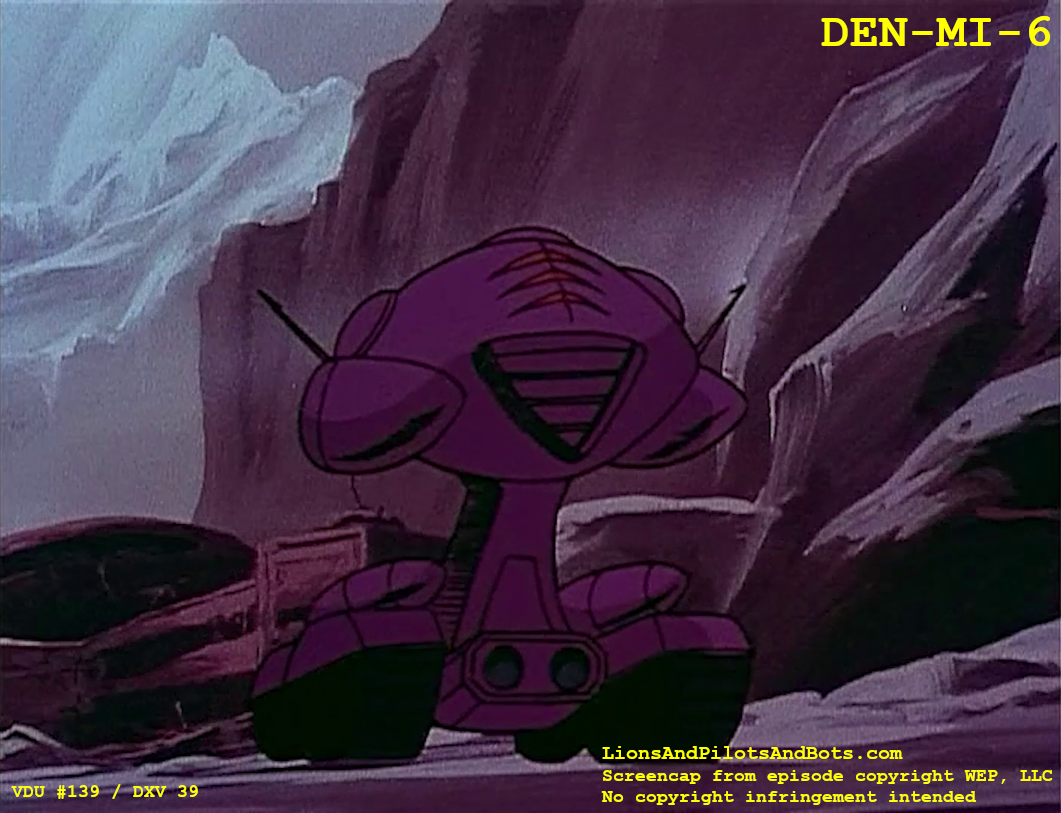
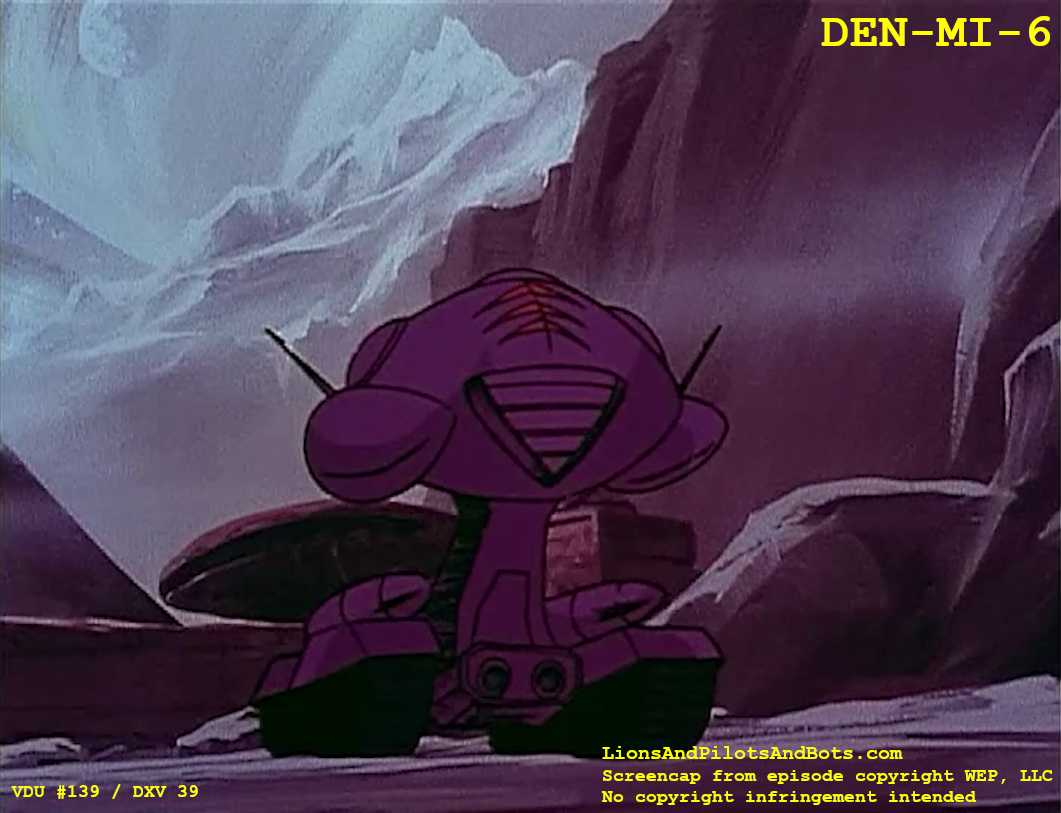
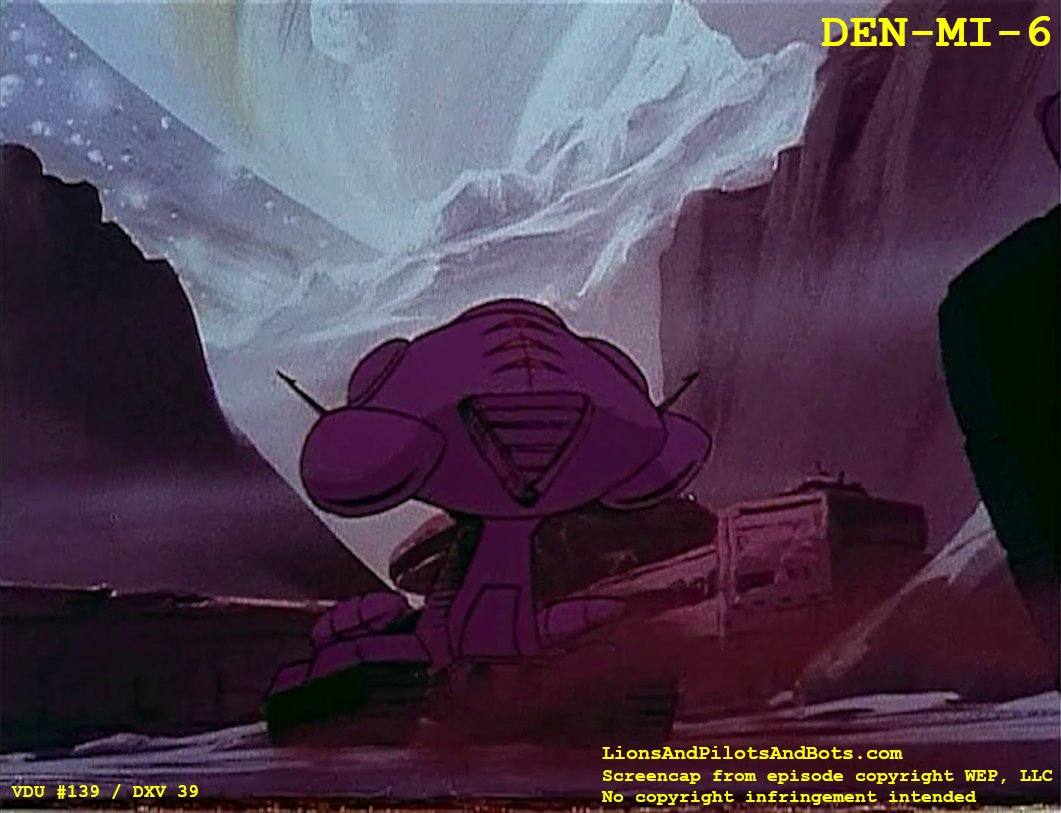
DEN-MI-6 bases can serve as supply bases for the Drule Empire. DEN-MI-6 bases include a large building that, when viewed from above, resembles an uppercase T, and has a dome-like tower at the intersection of the T.
After a DEN-MI-6 base is destroyed on the planet Erbee, the Voltron Vehicle Team befriends an abandoned group of Drule soldiers such as Lieutenant Antor.
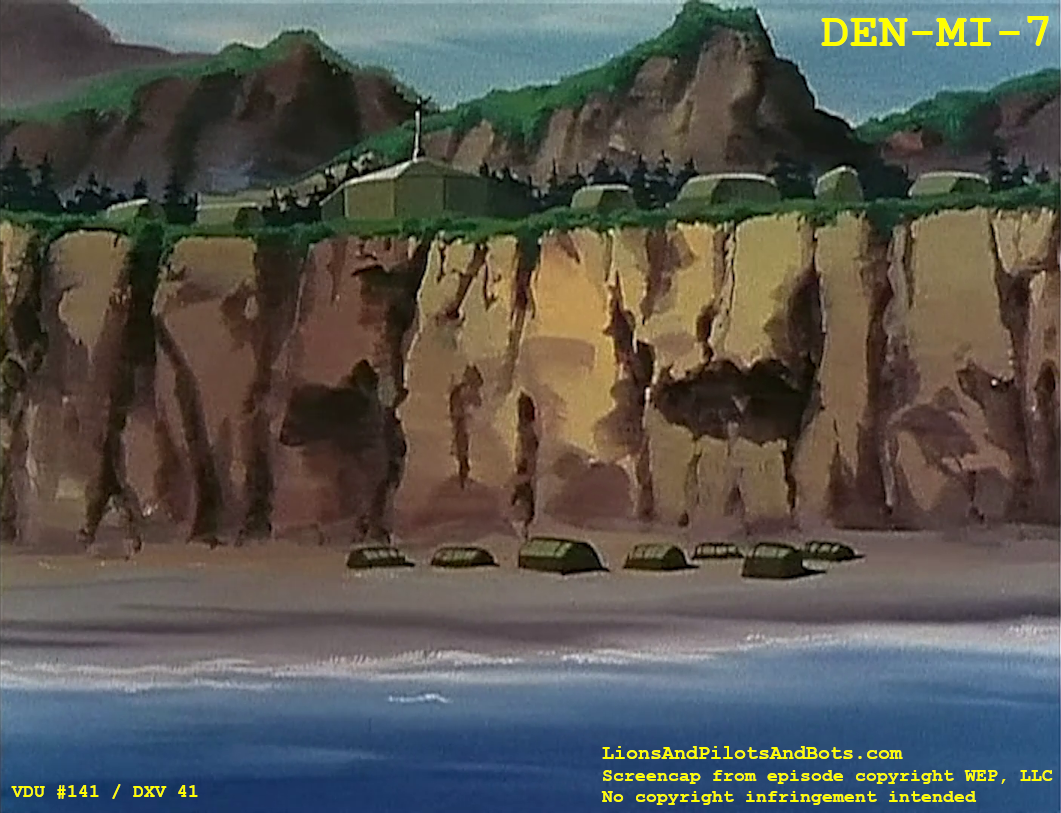
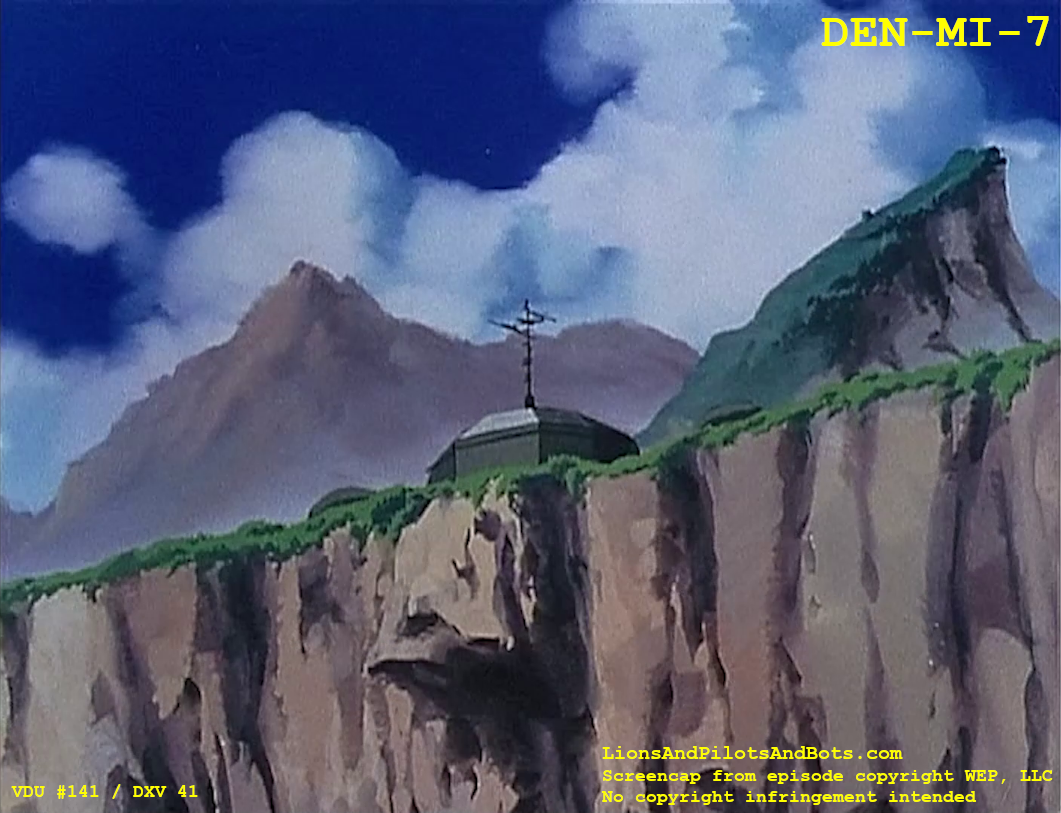
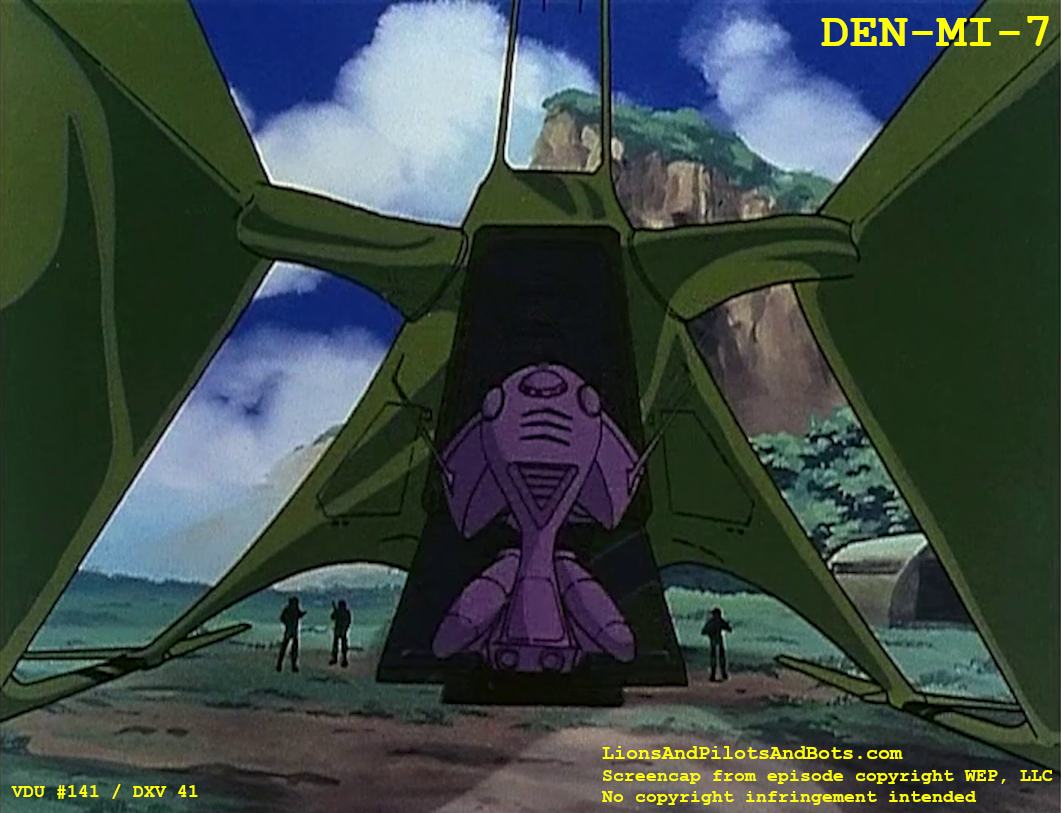
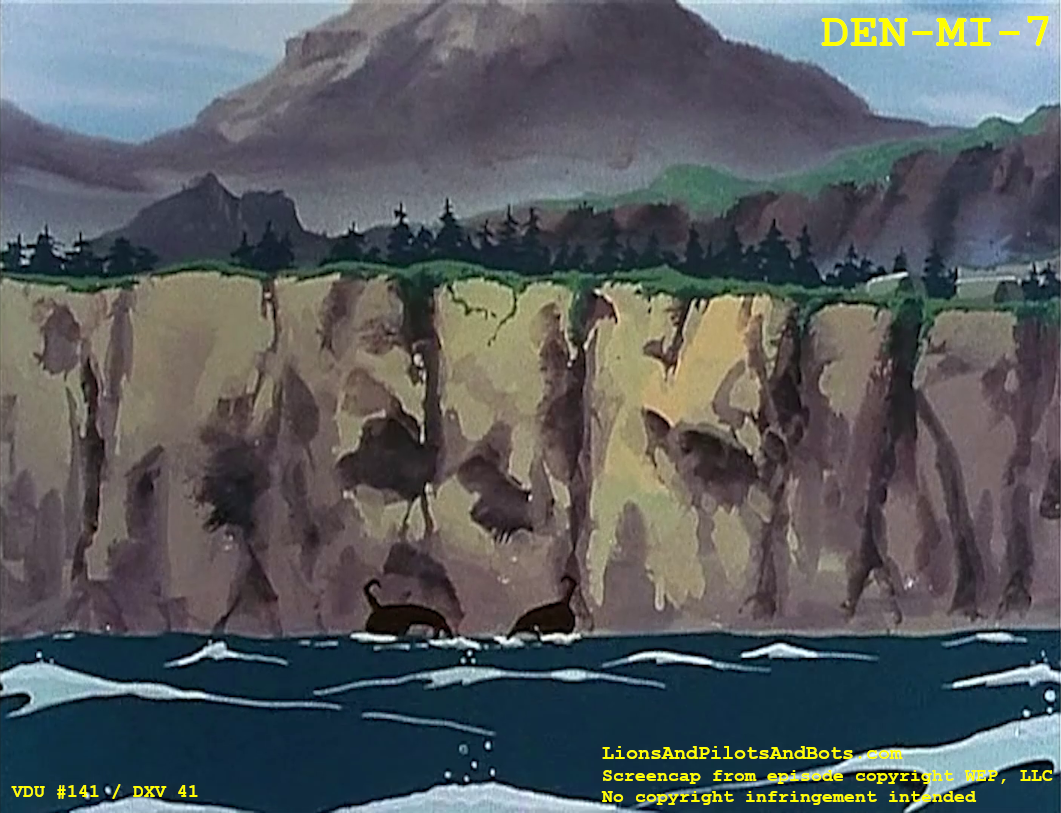
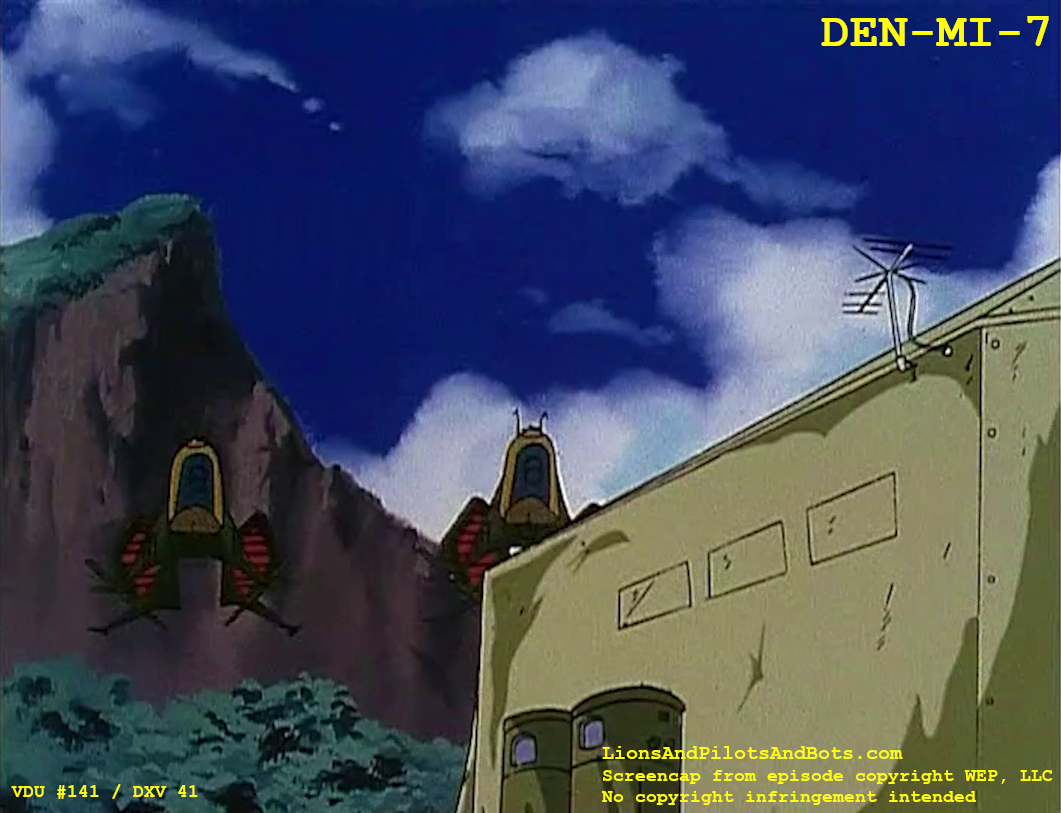
DEN-MI-7 bases are temporary installations that can be set up on the surface of a planet or moon.
Captain Garo’s expeditionary force sets up a temporary DEN-MI-7 base. When the Stellar Ship Explorer reaches the planet, the ill-equipped Drule force abandons the base.
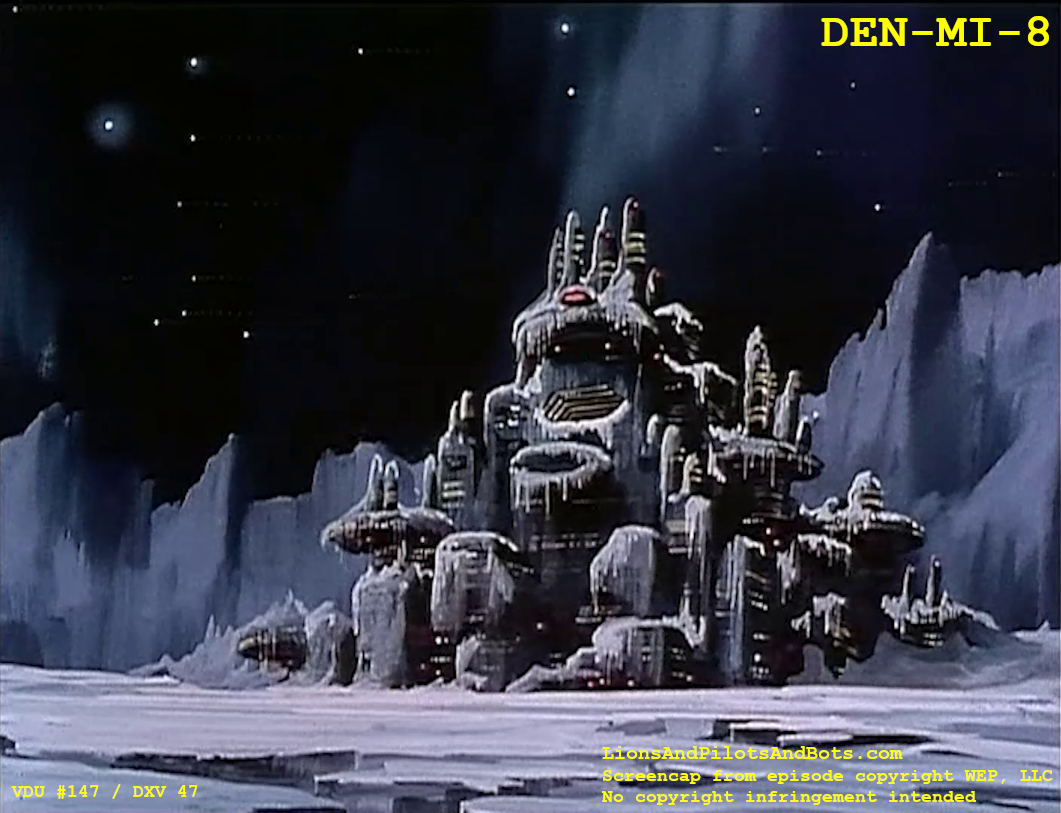
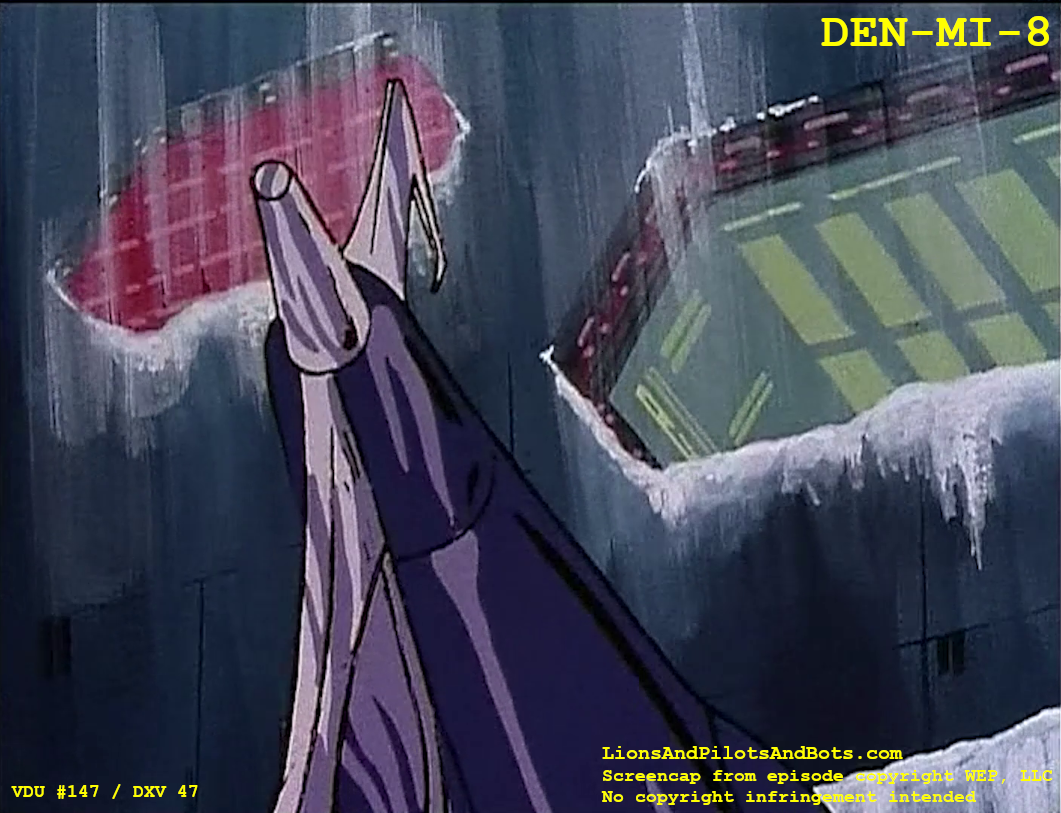
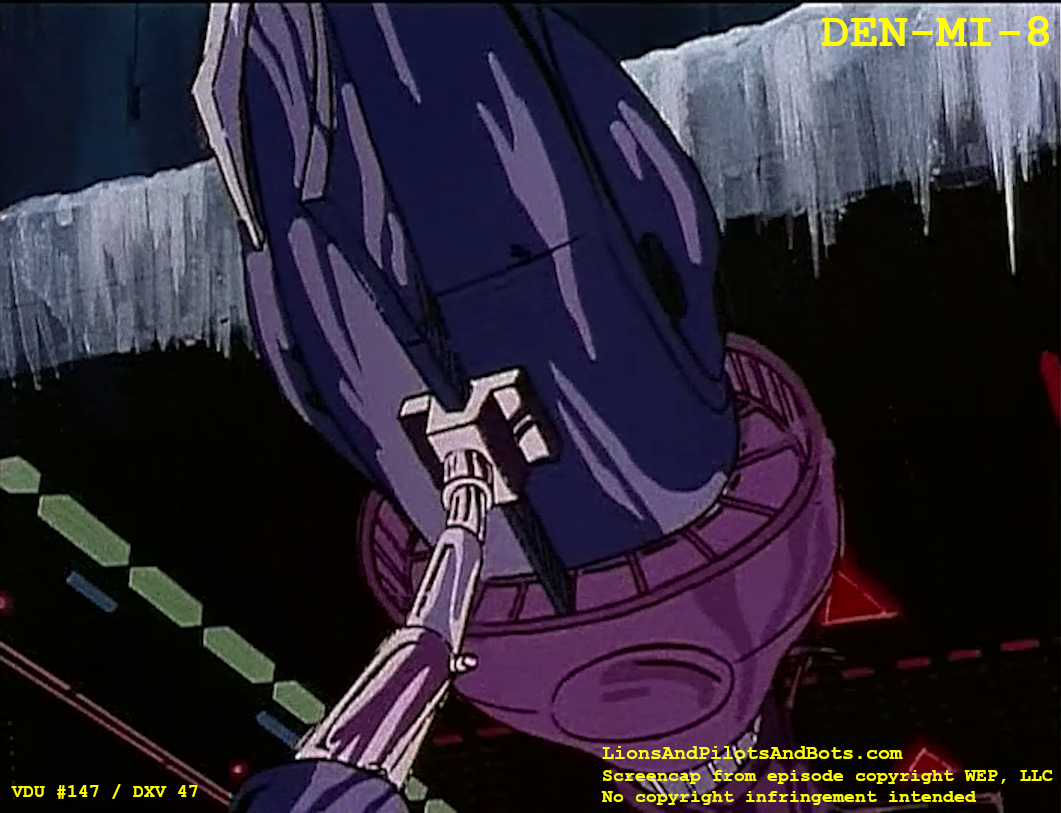
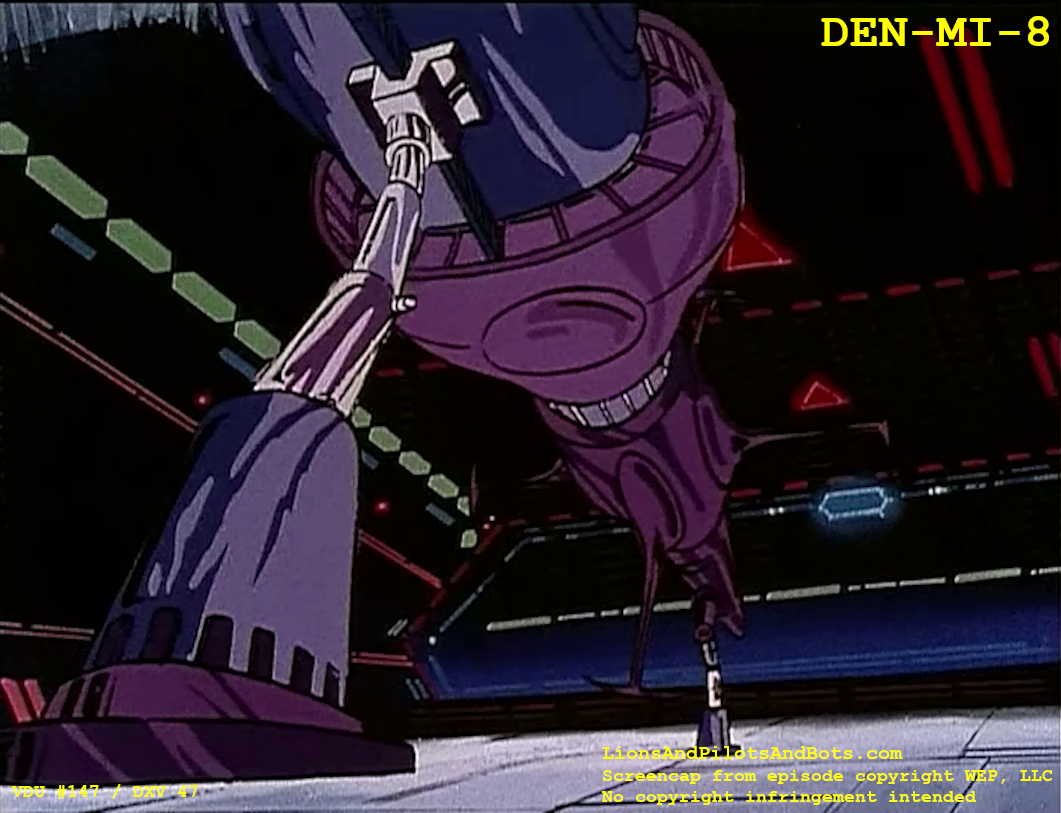
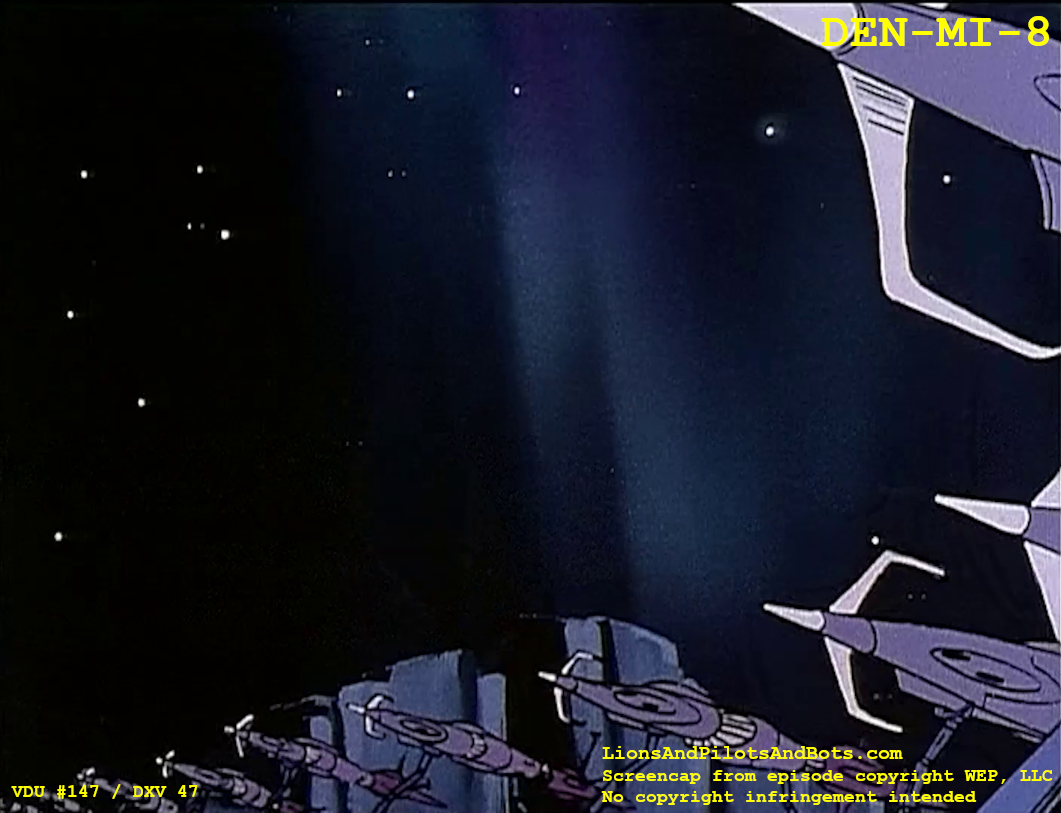
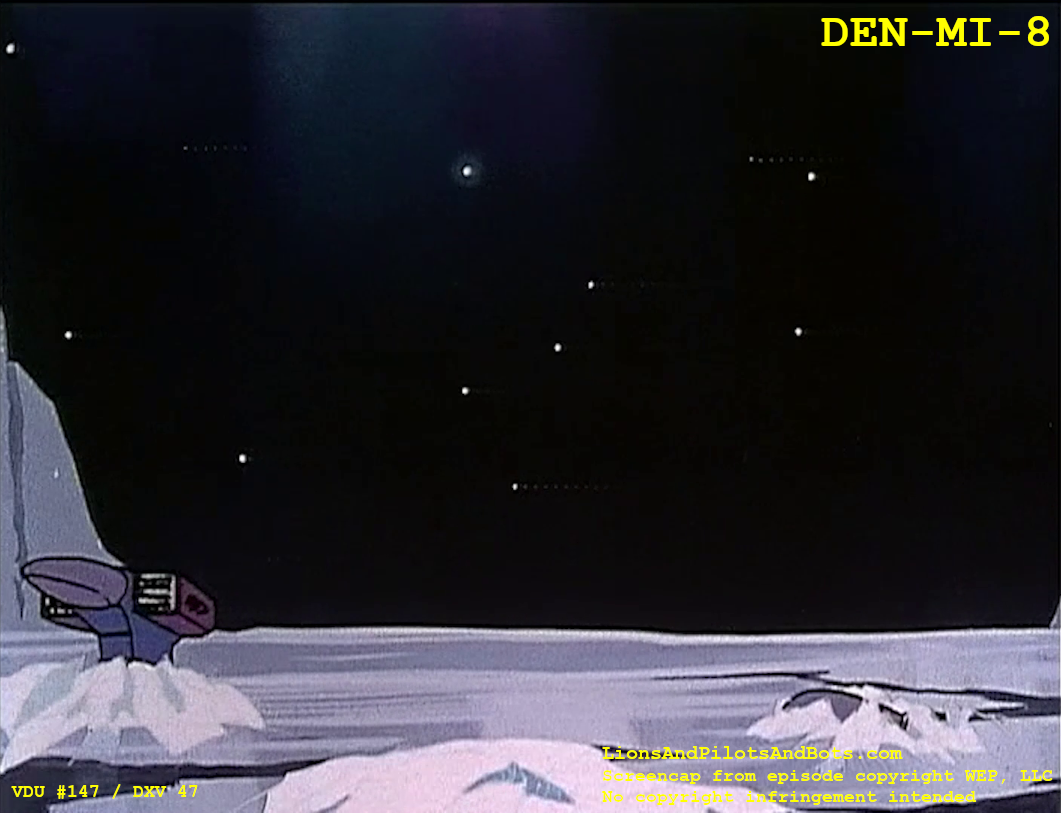
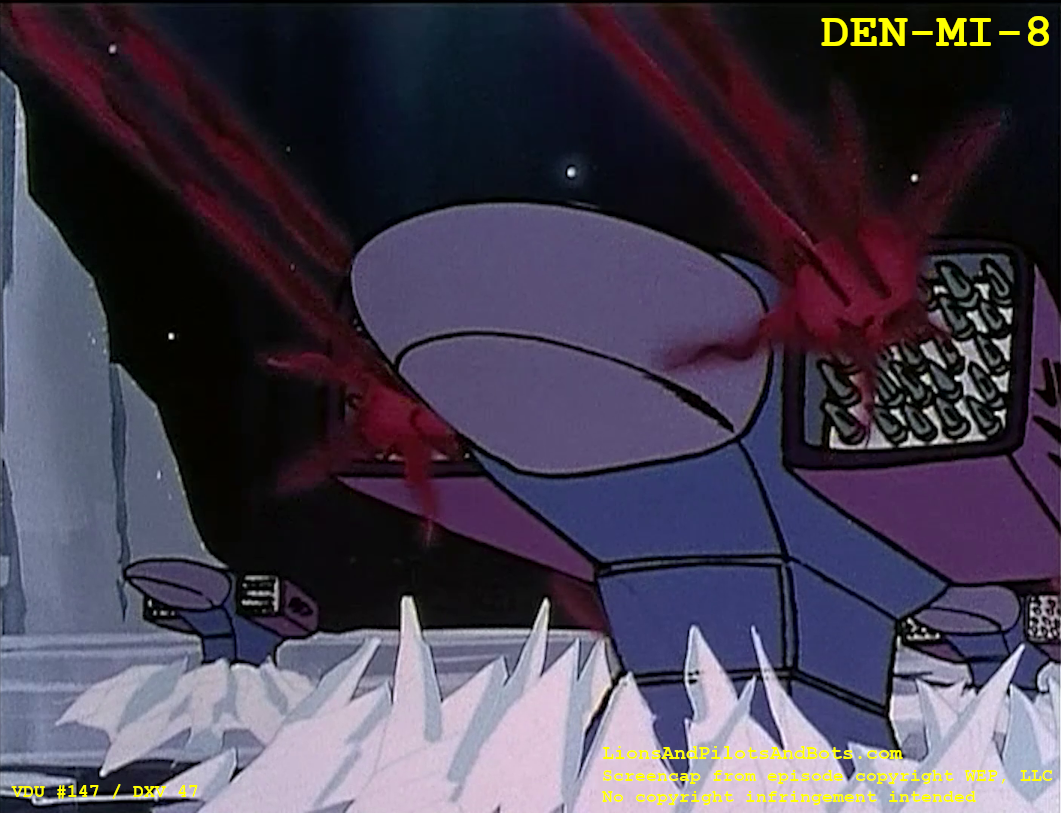
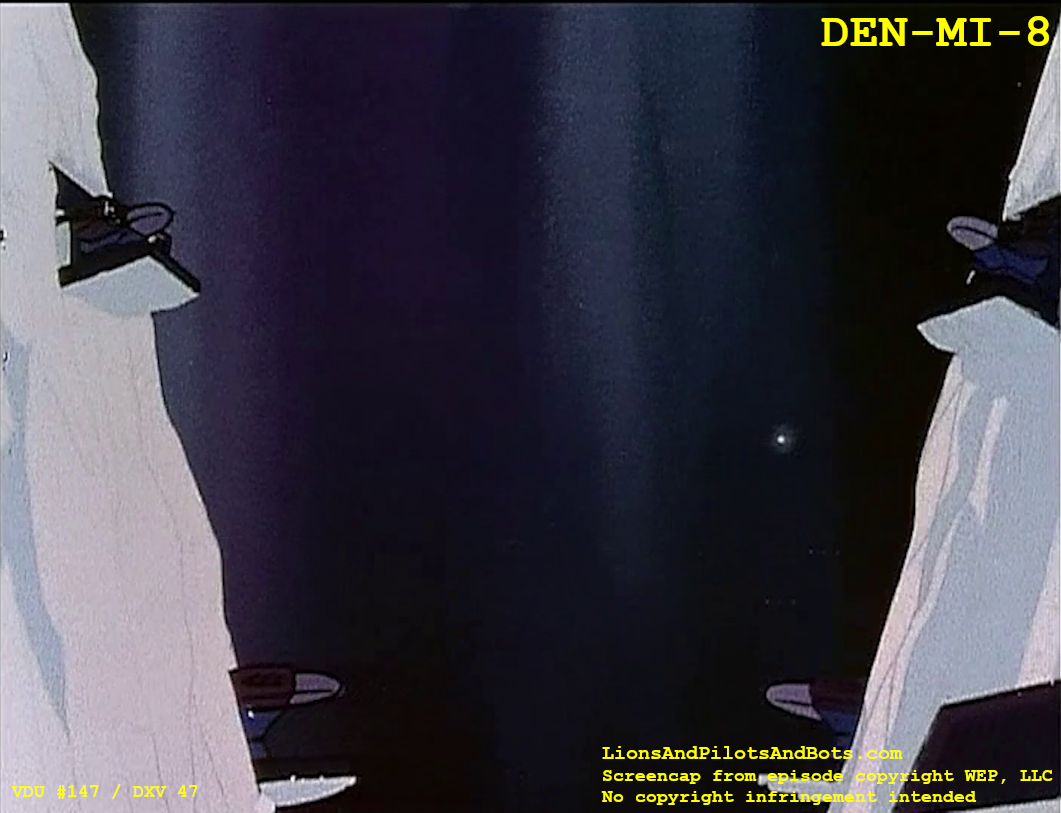
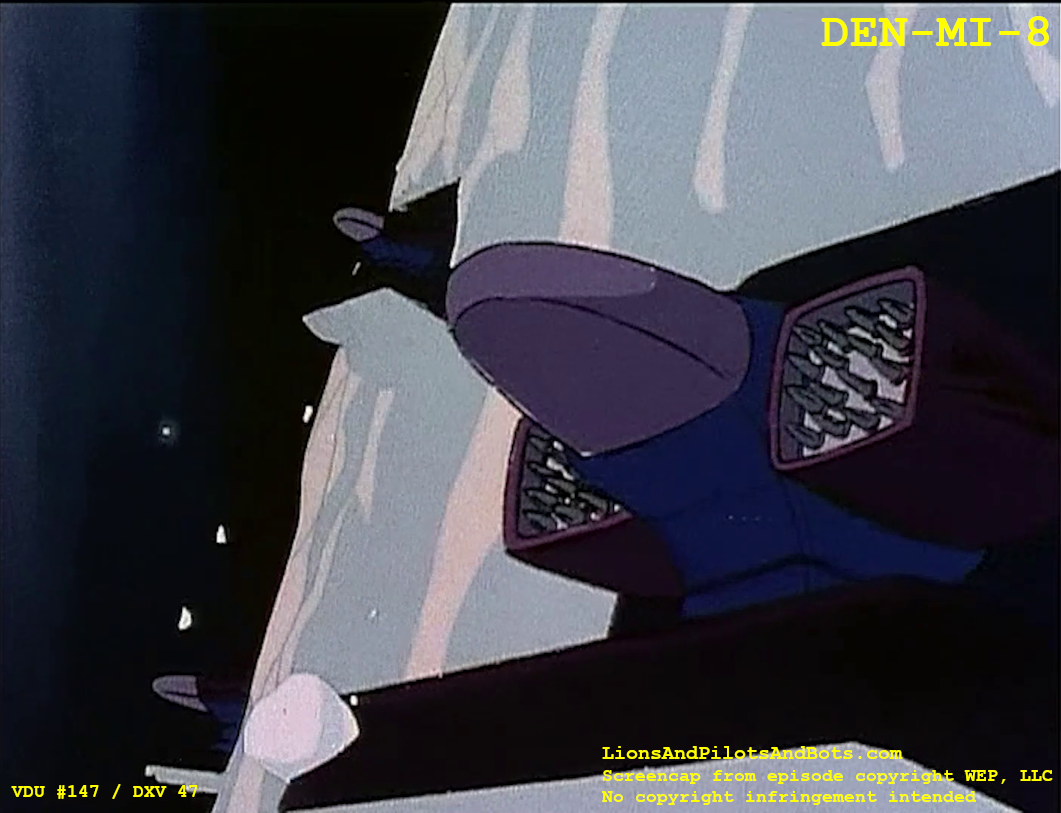
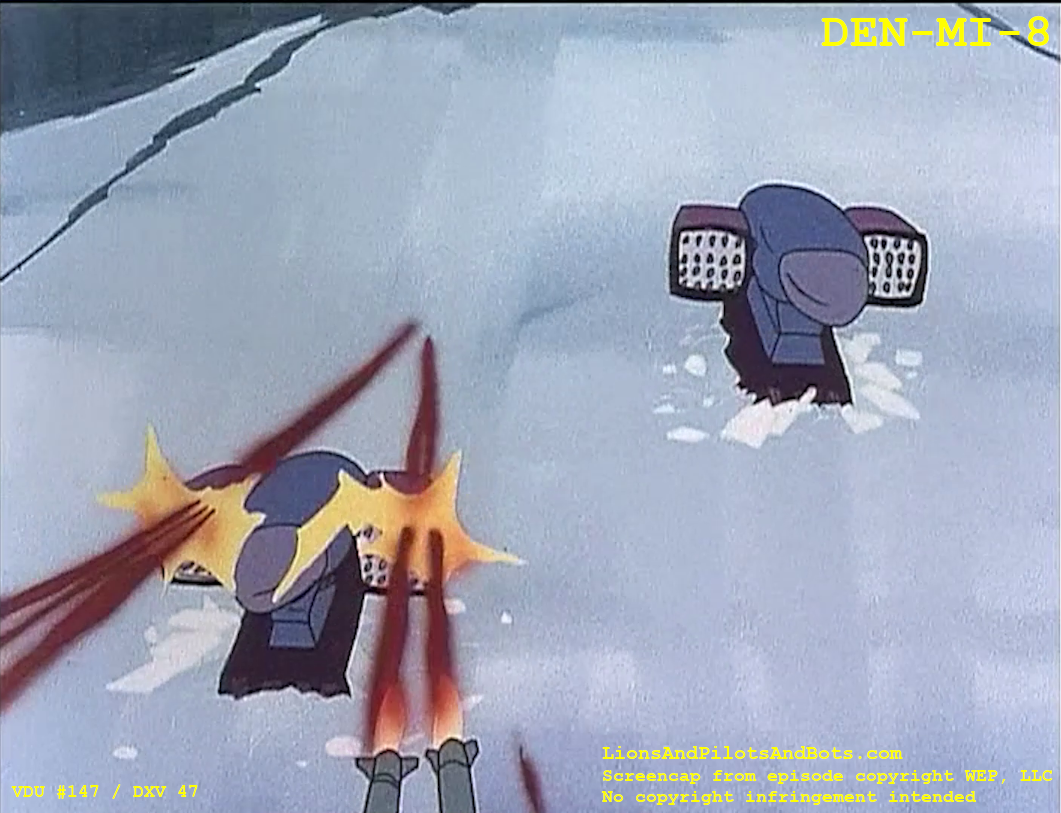
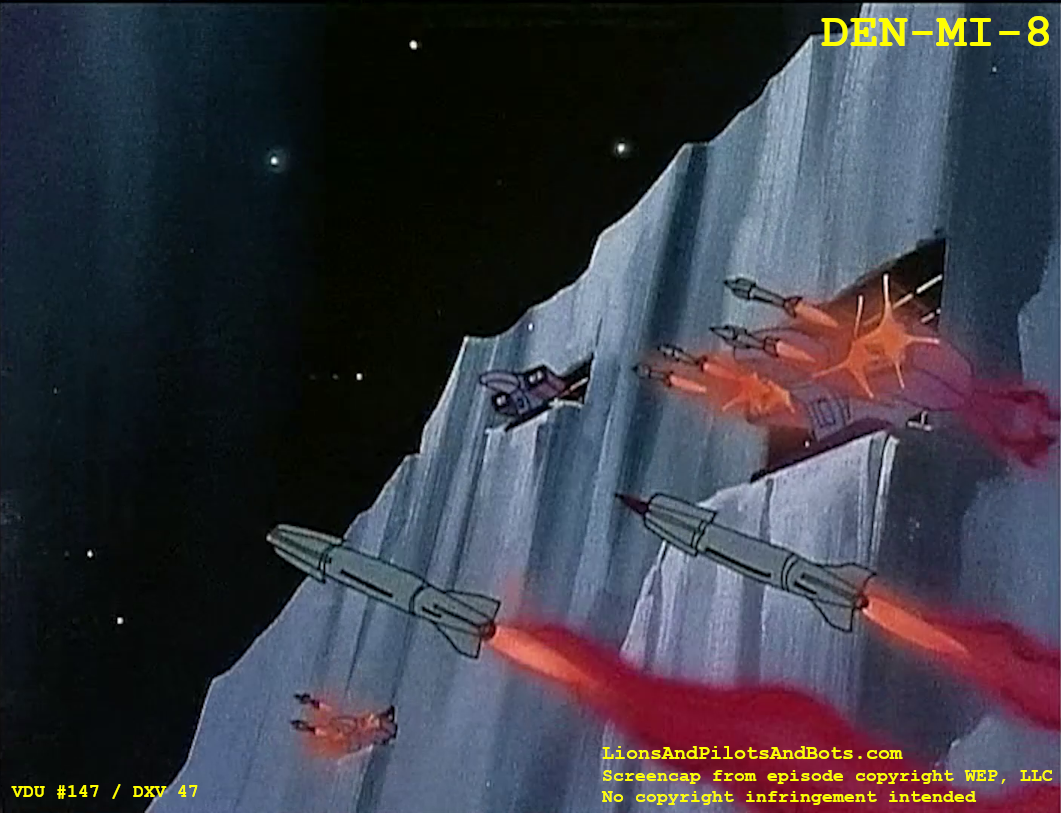
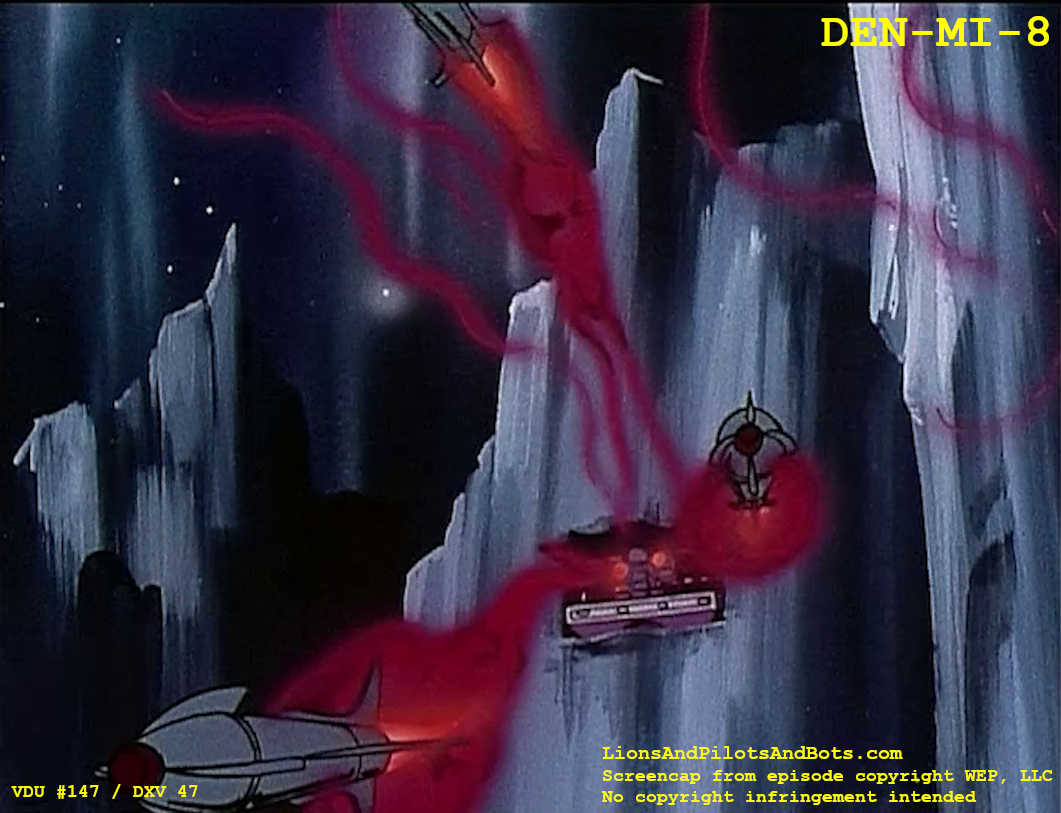
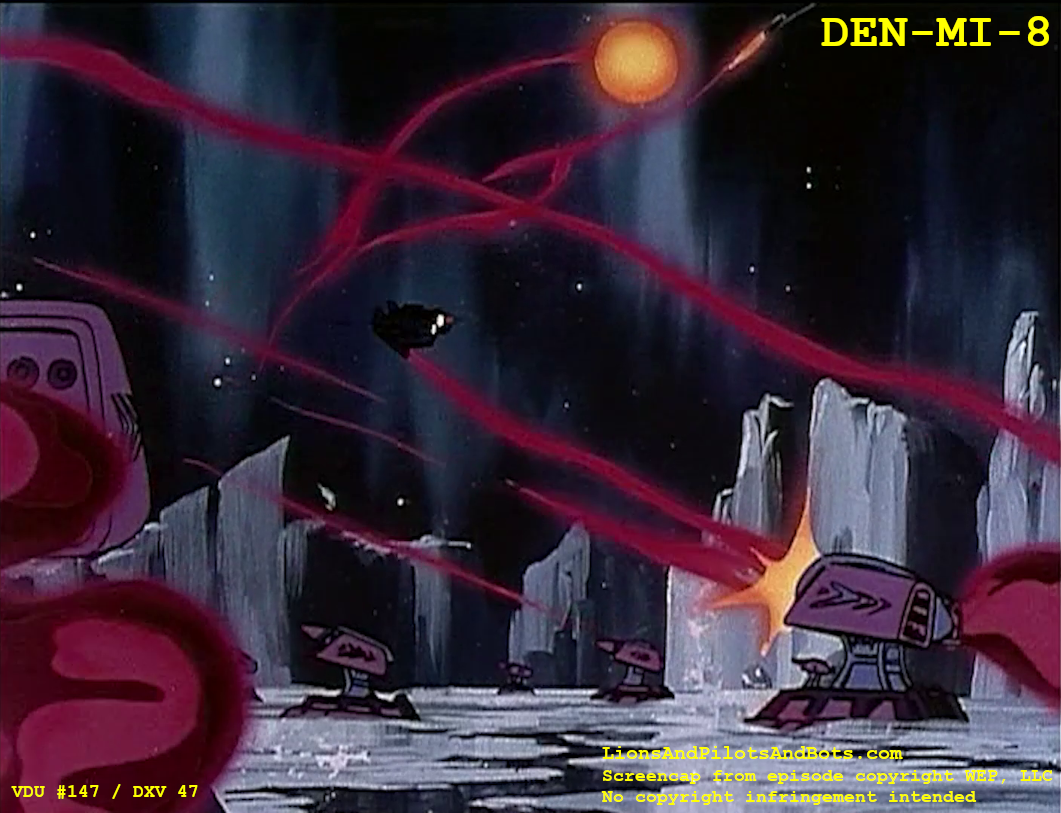
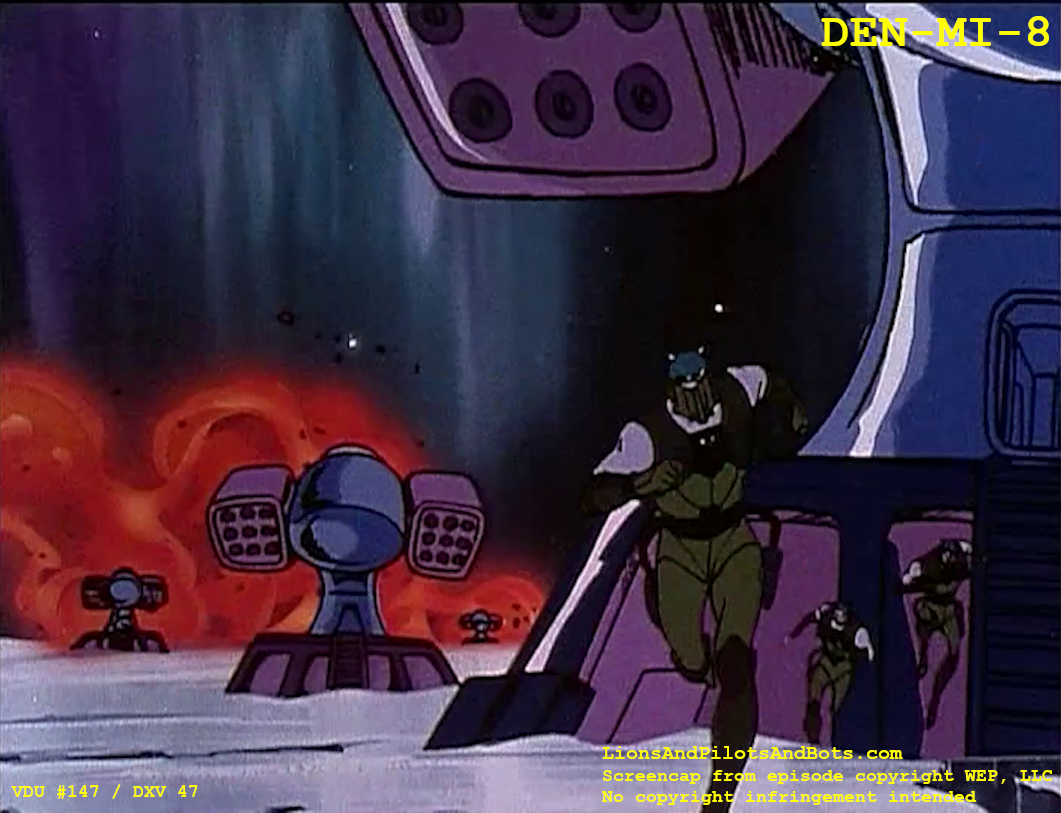
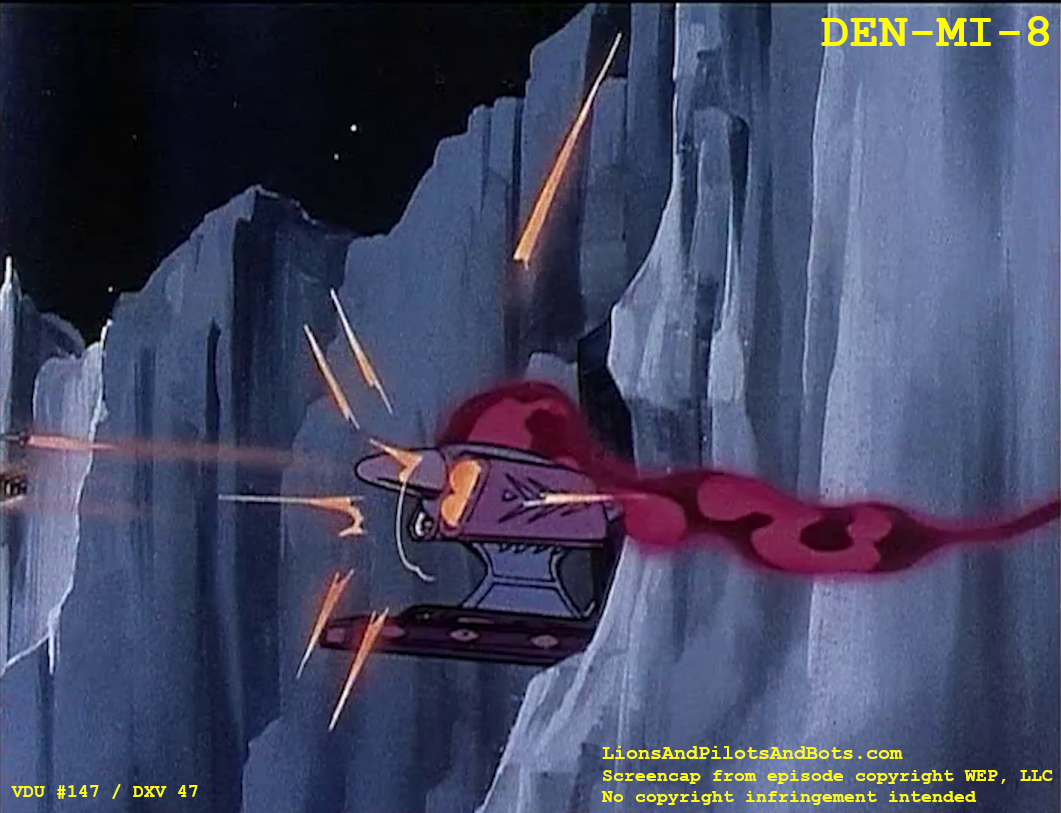
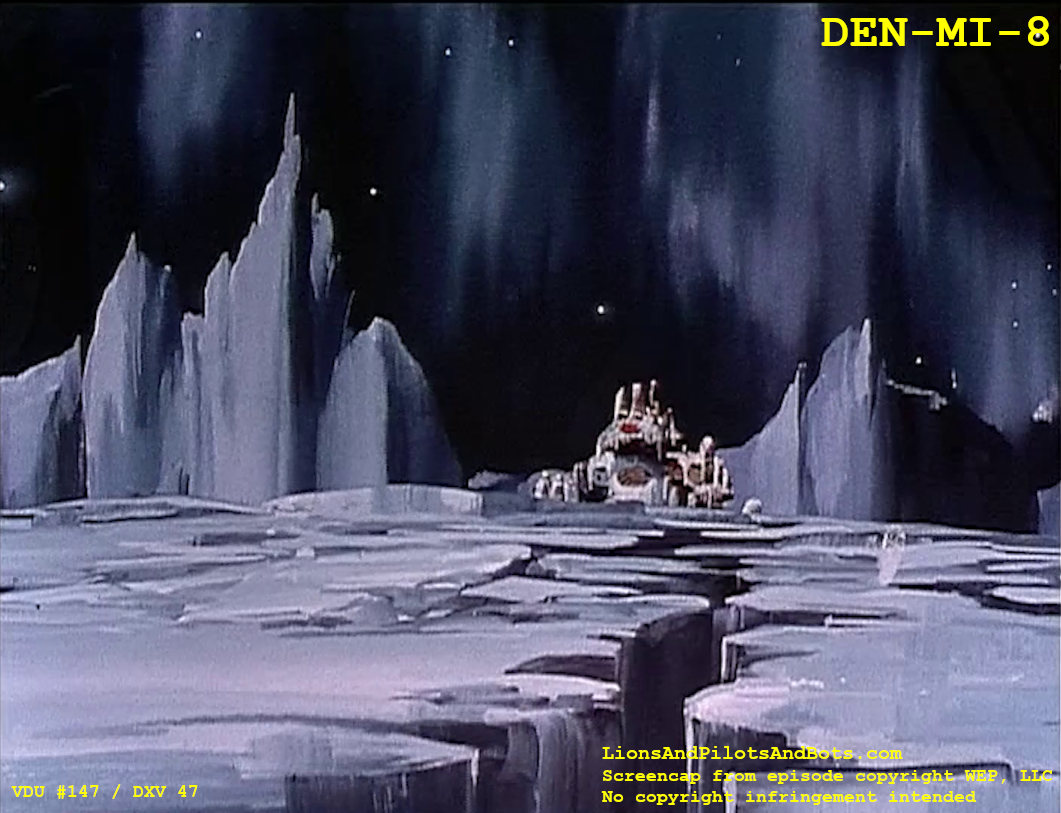
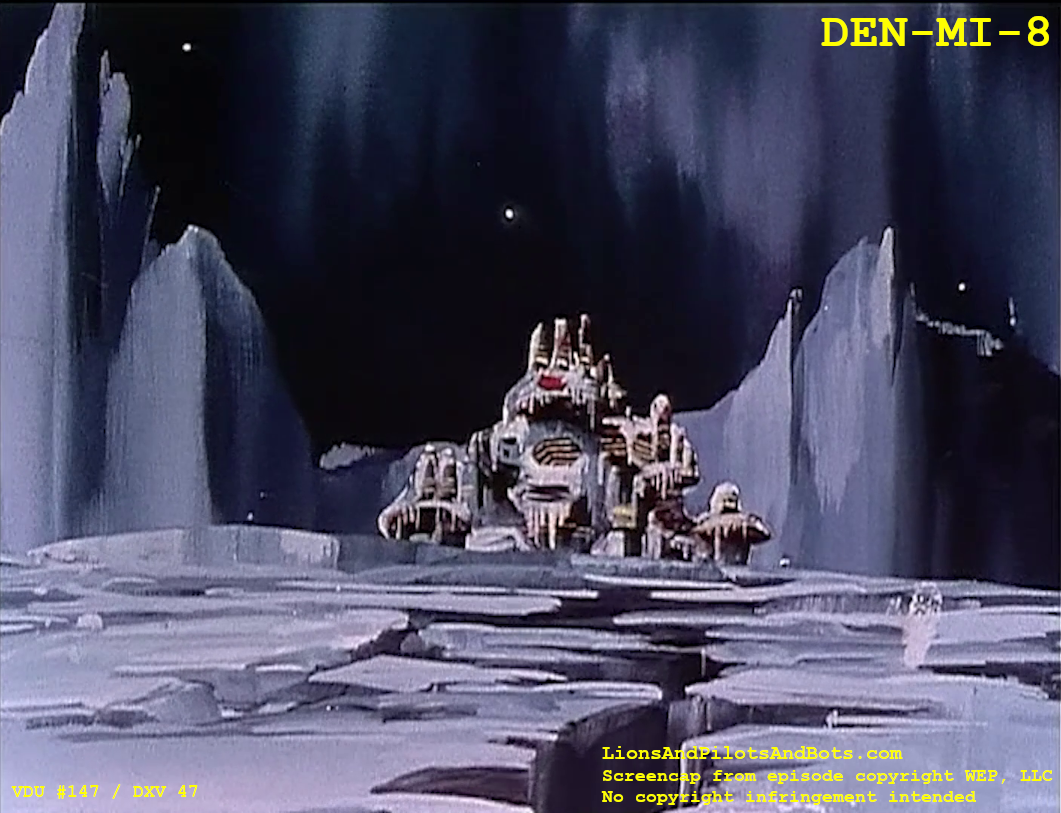
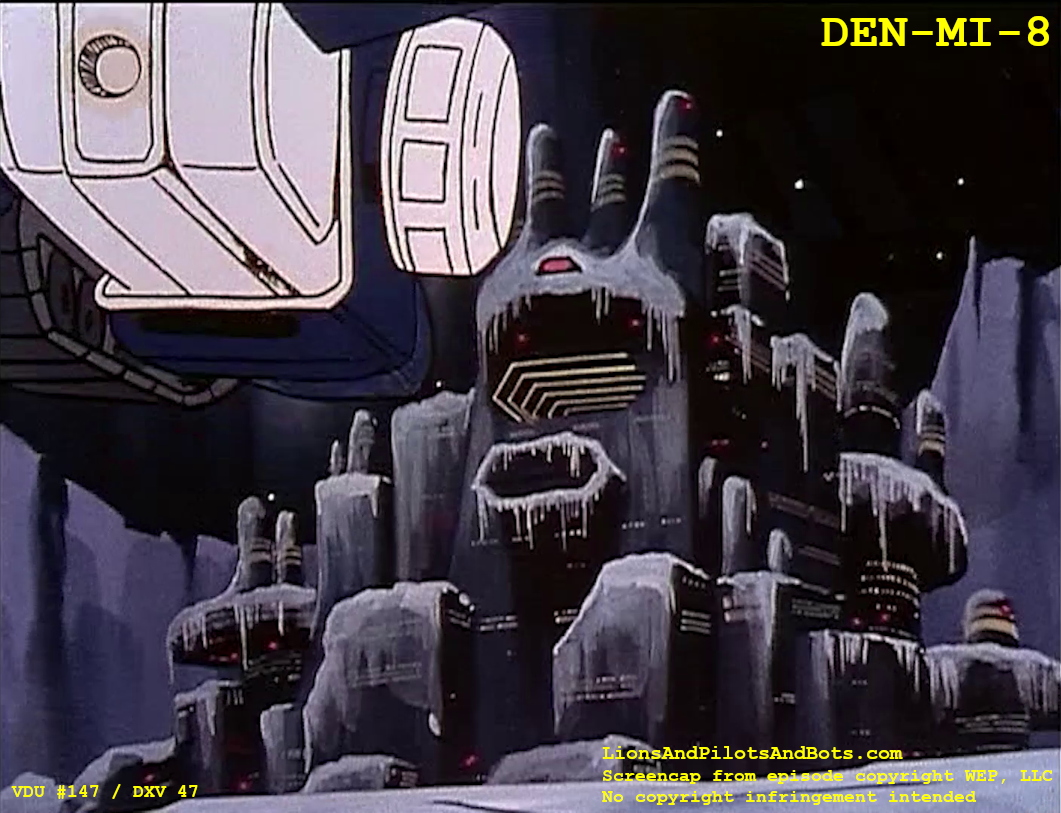
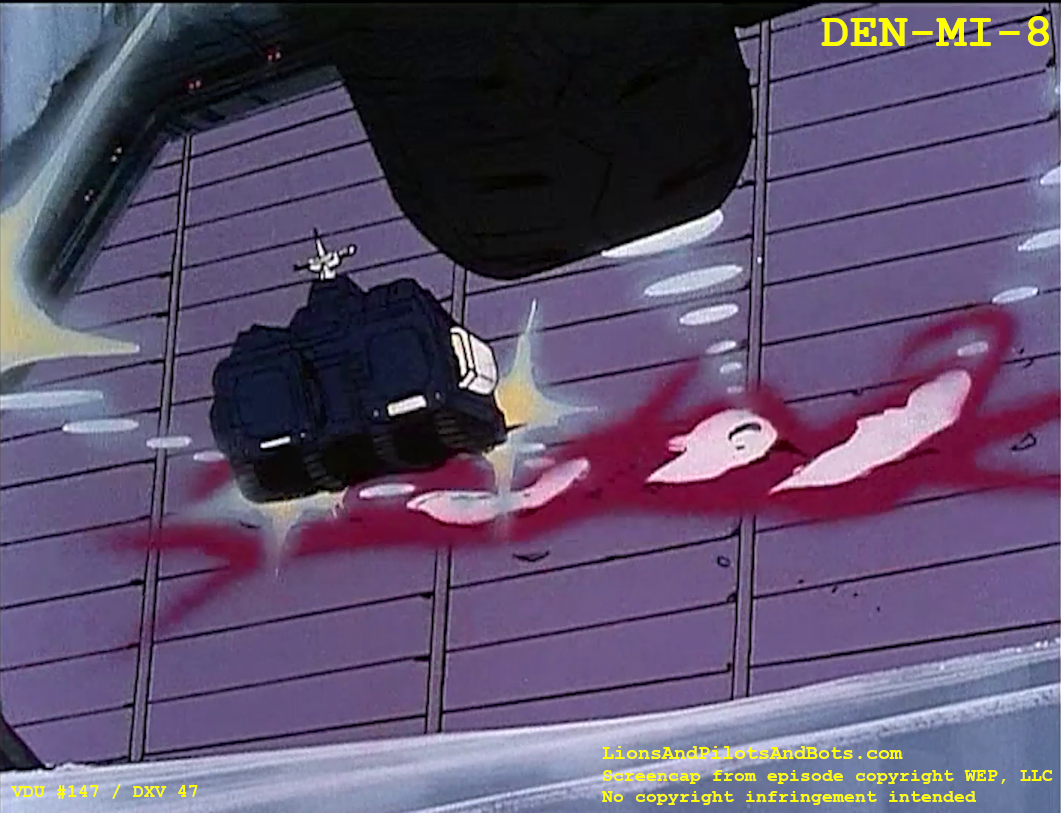
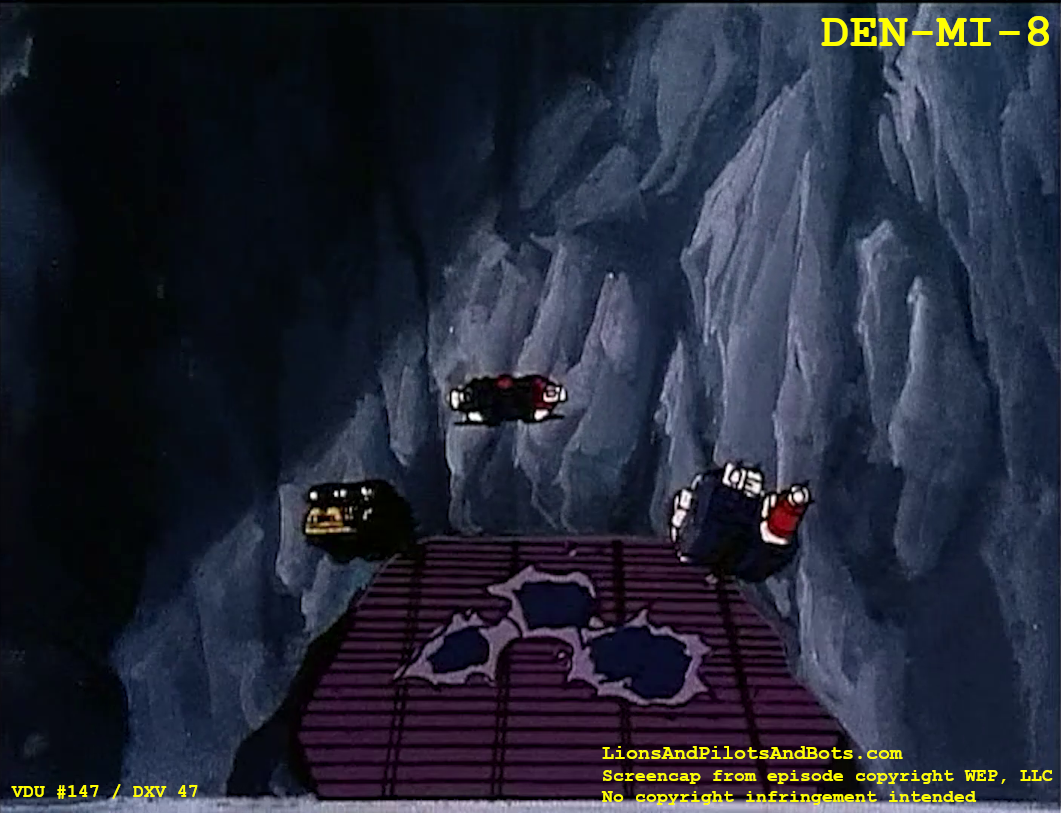
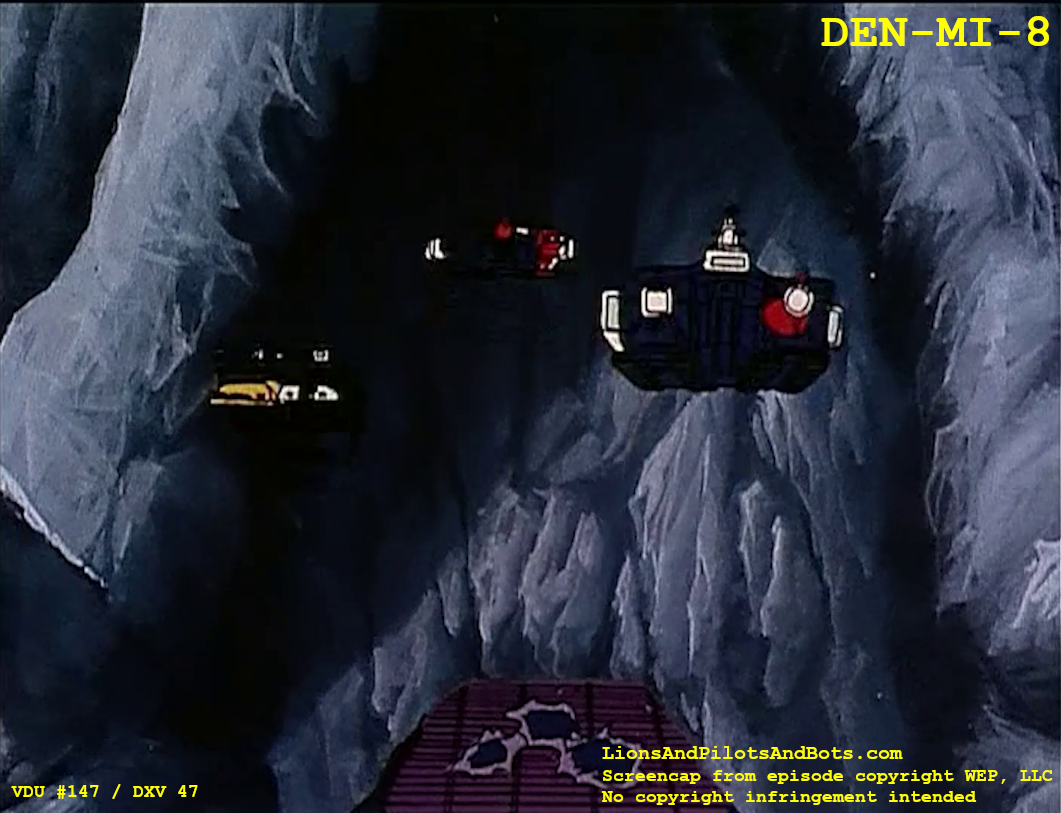
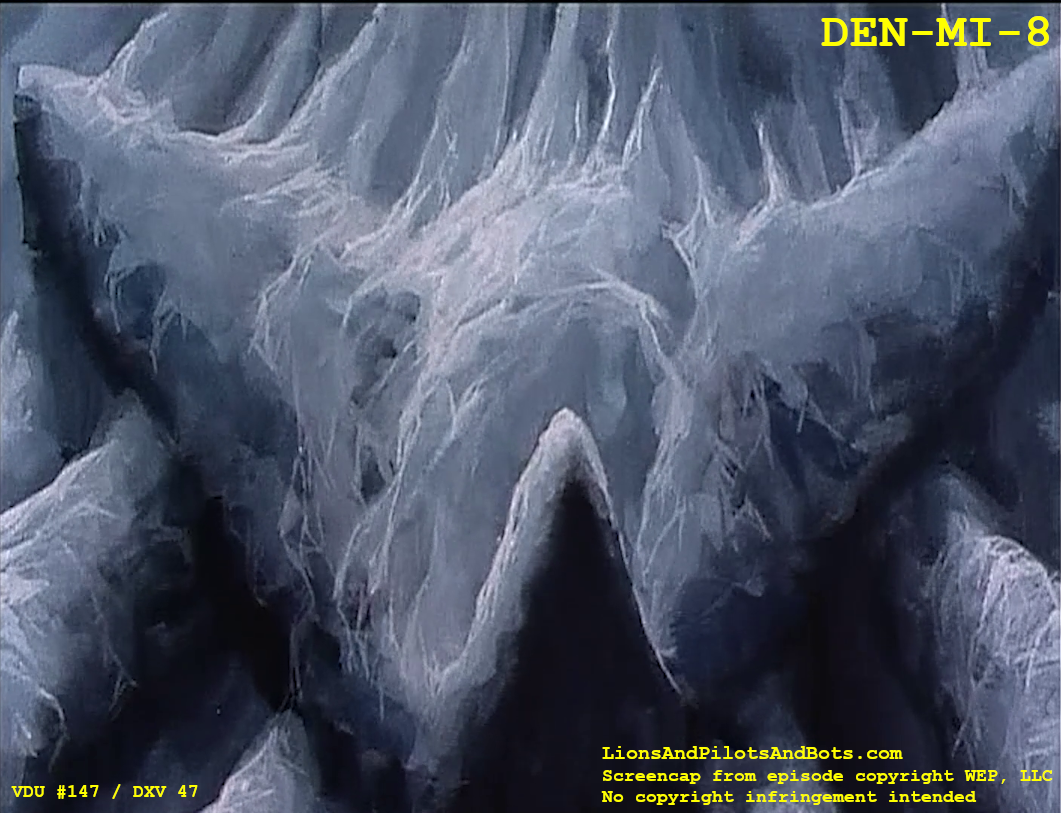
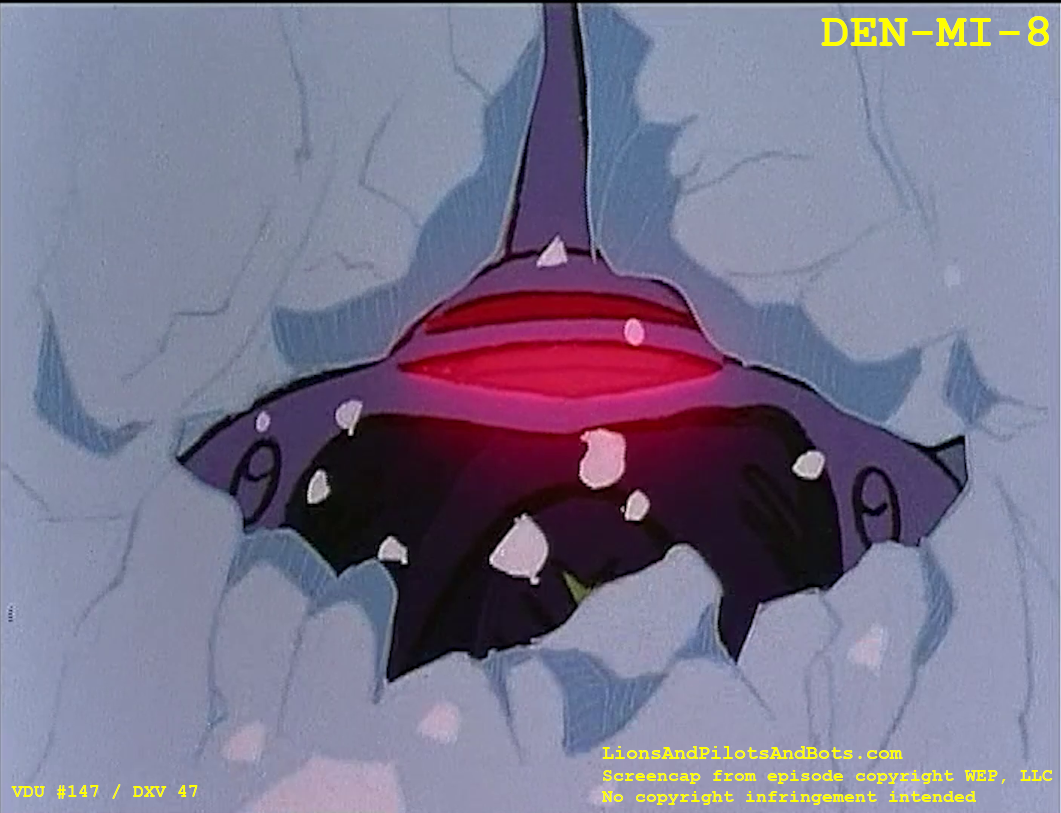
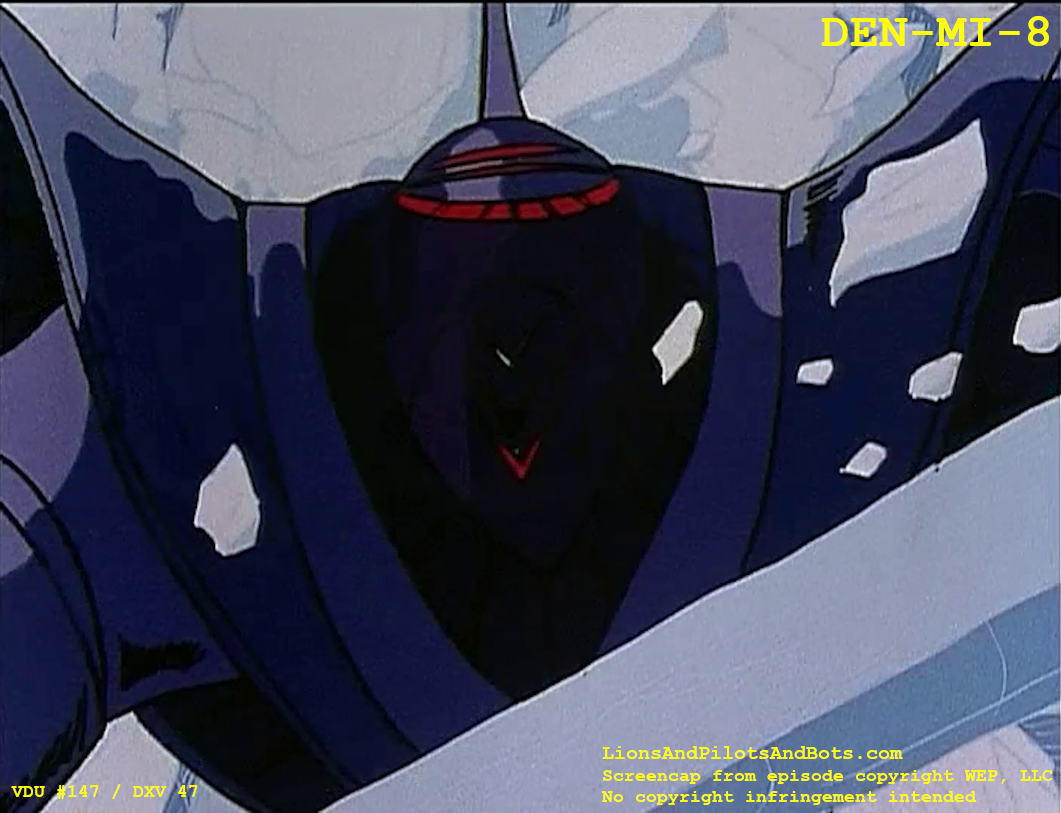
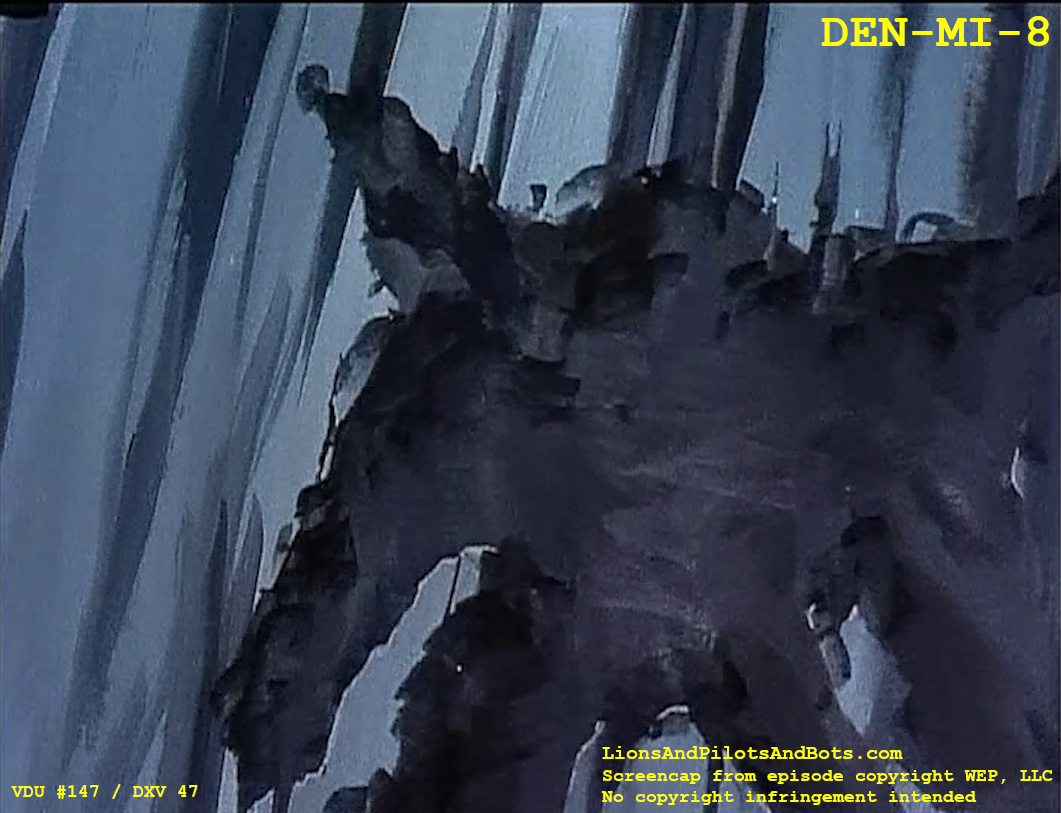
DEN-MI-8 fortresses are built on the surface of a planet or moon. The DEN-MI-8 base is an enormous, elaborate, castle-like structure with multiple towers. DEN-MI-8 bases can be equipped with DEN-MSB-8 ship launchers. The base can be surrounded by manned missile launchers that can emerge from concealed locations below ground or in the sides of hills.
The Voltron Vehicle Team discovers a seemingly abandoned DEN-MI-8 base on the arctic frost planet Altéus. The base is secretly manned, and leveraging the size of the base and the planet’s icy conditions, the Drules conceal a Robeast behind that stands with its back against one side of the base.
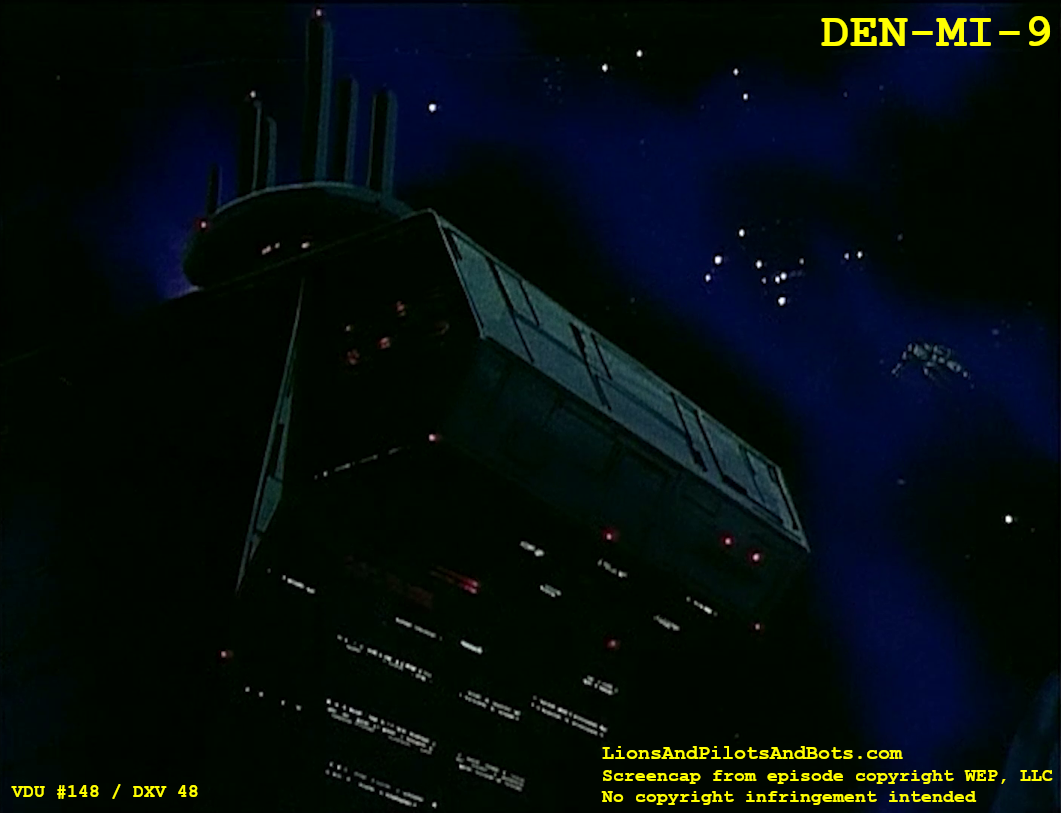
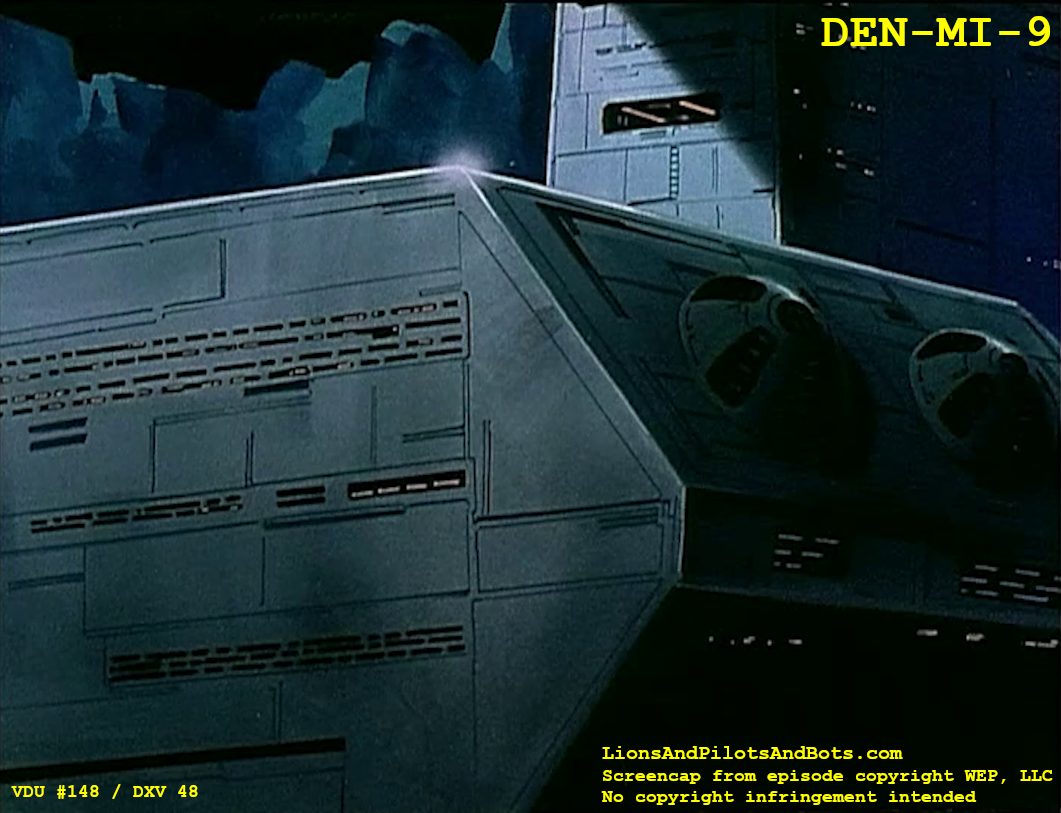
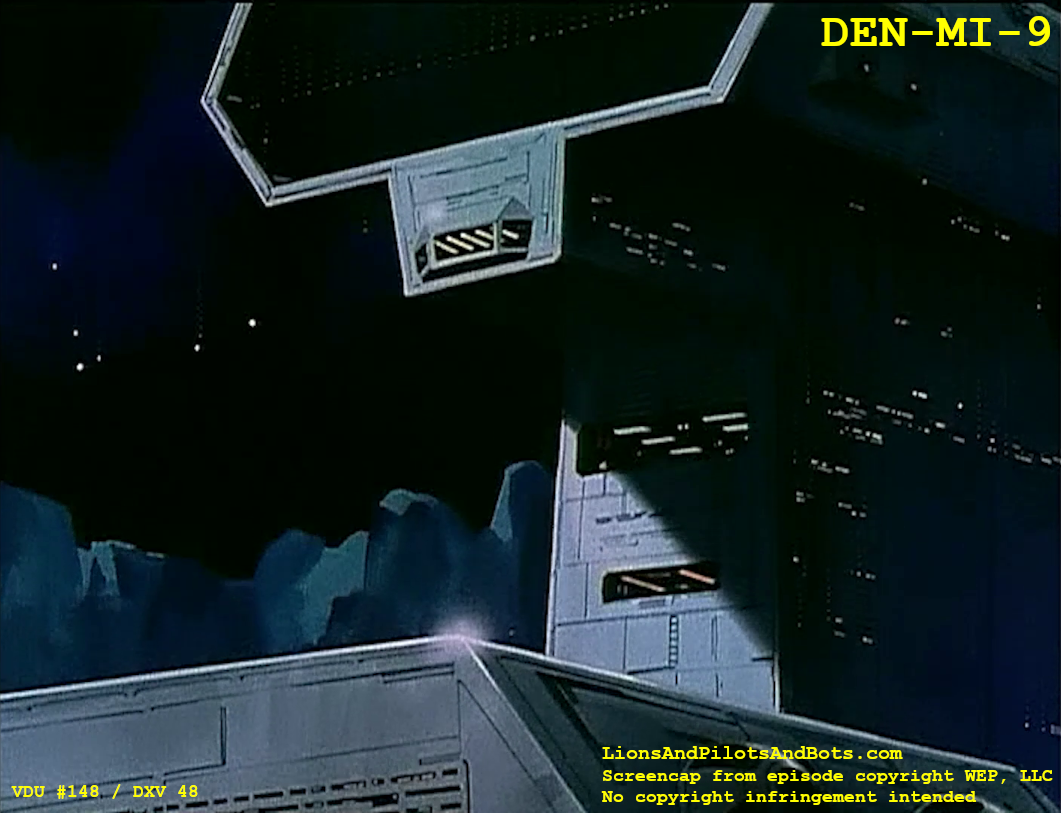
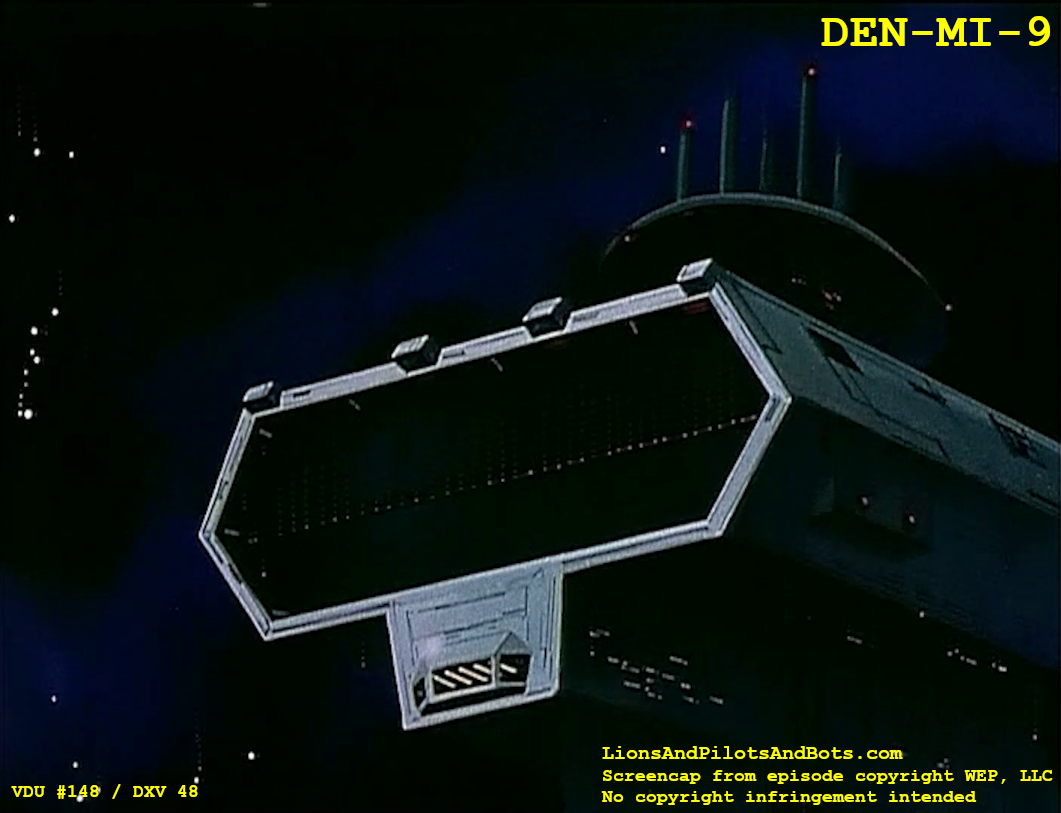
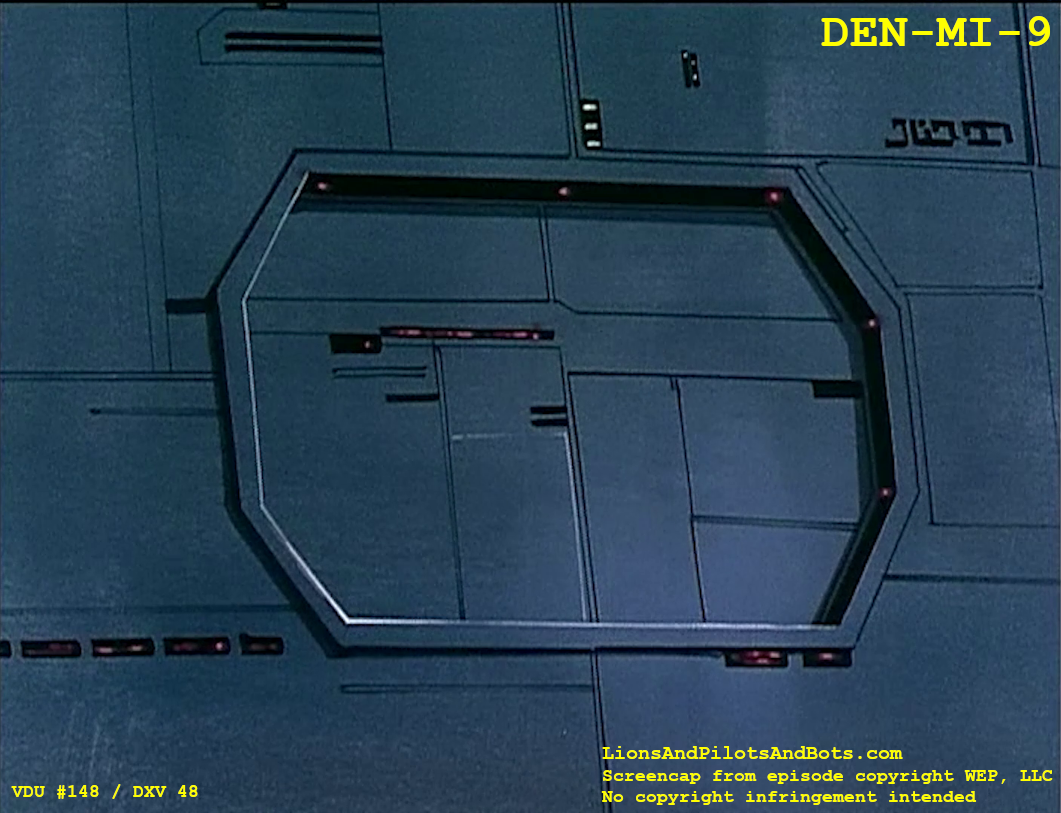
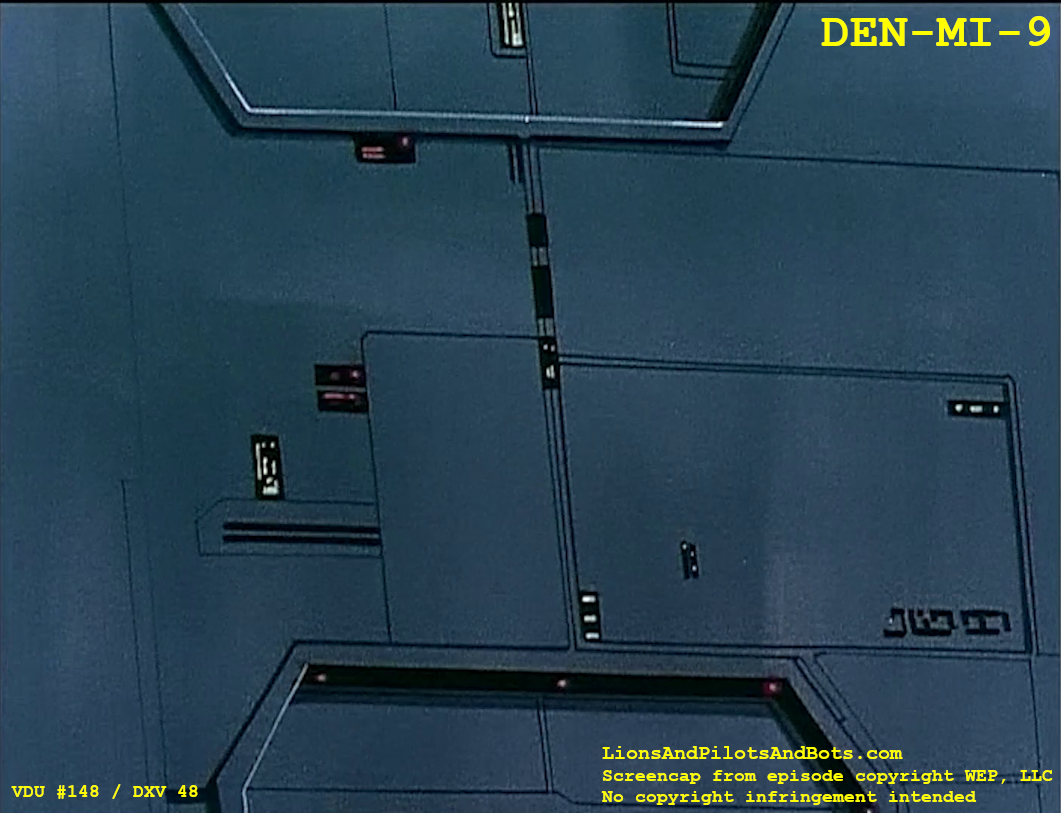
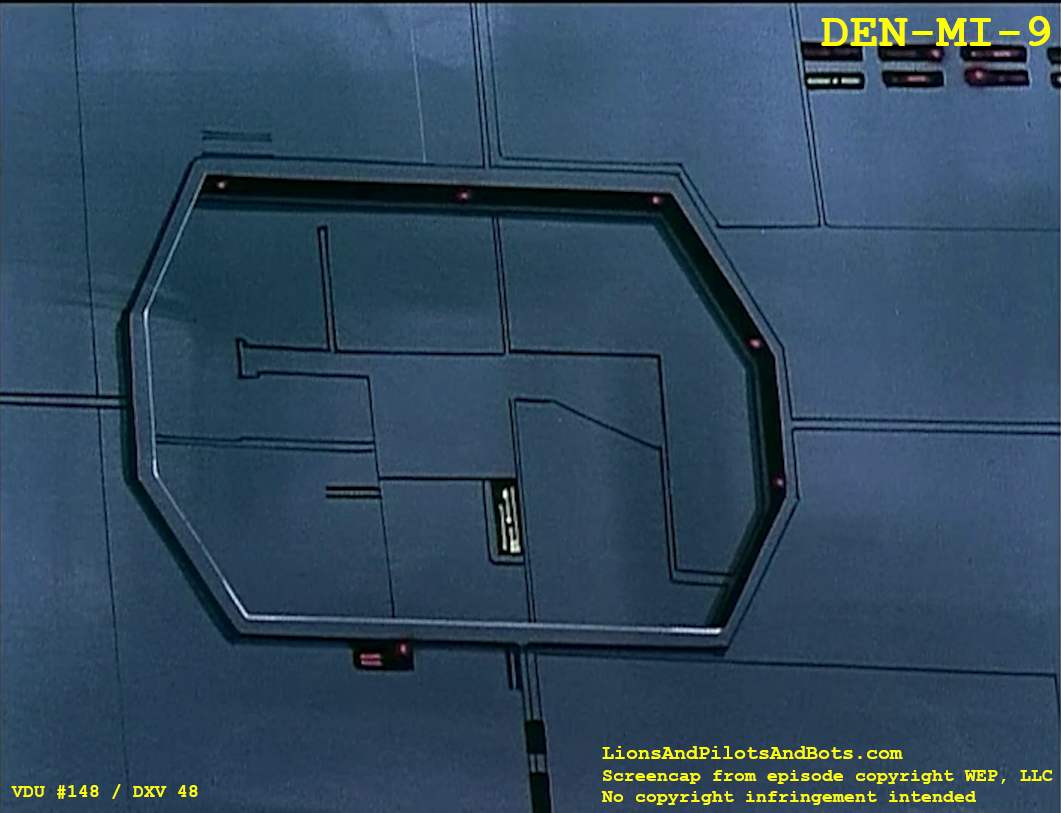
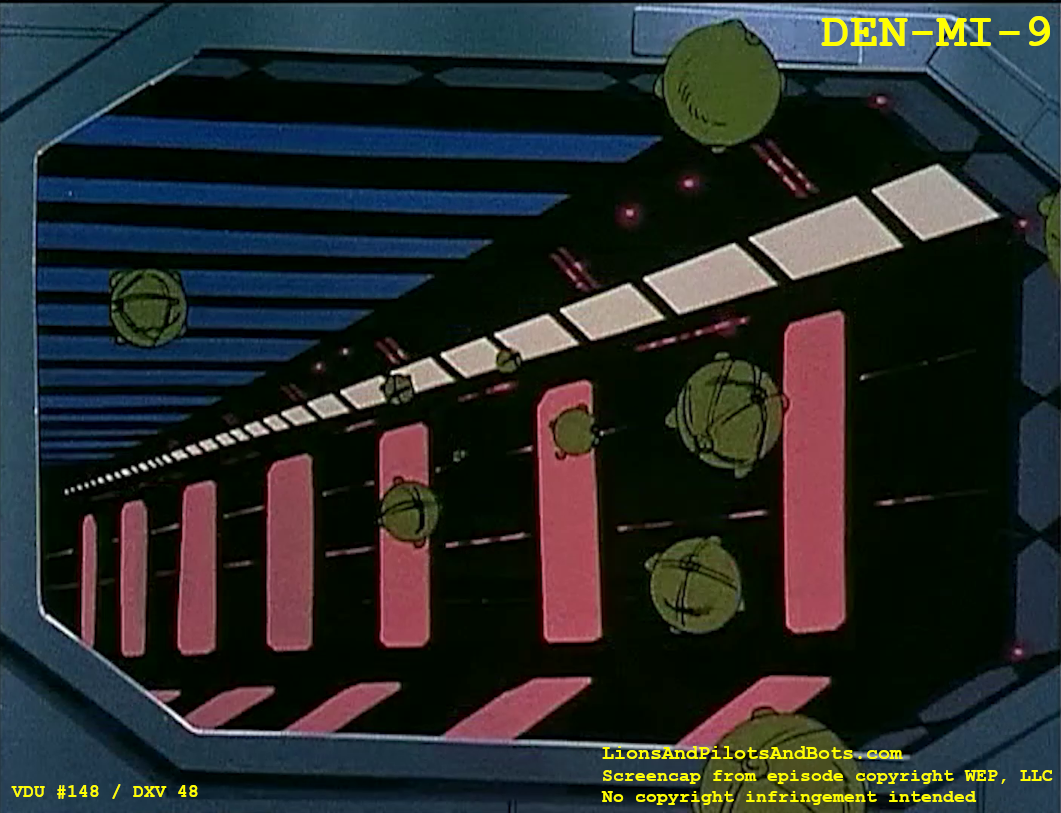
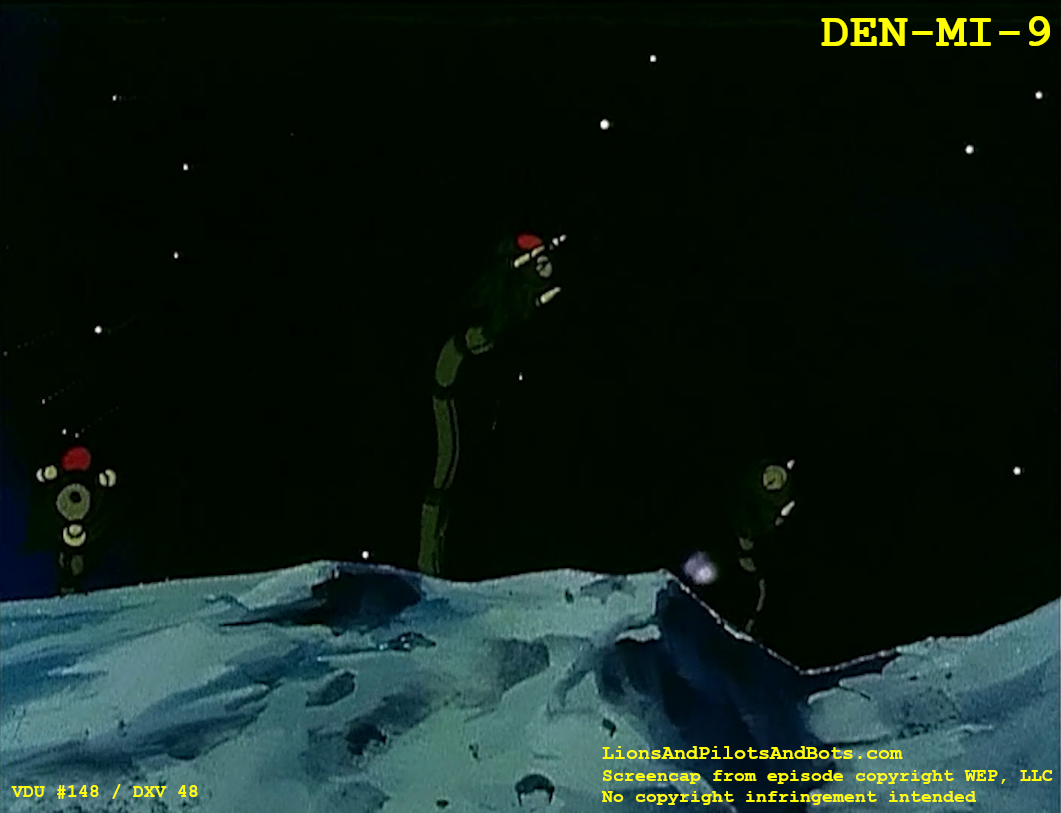
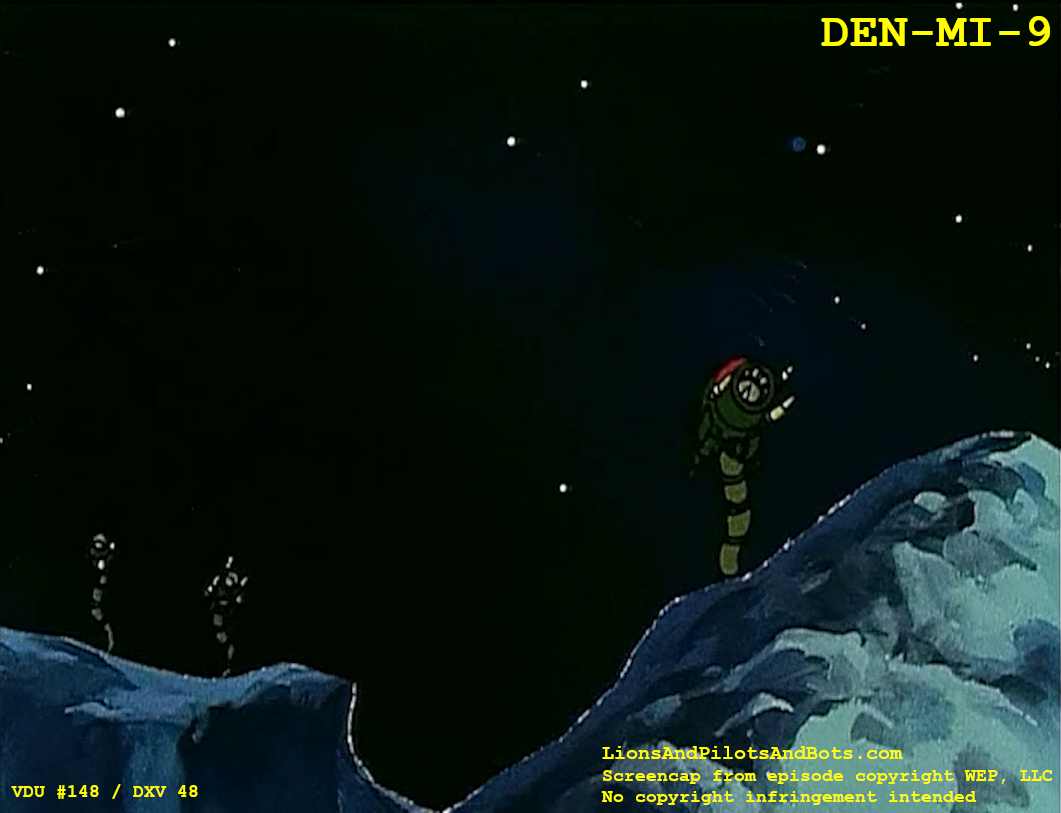
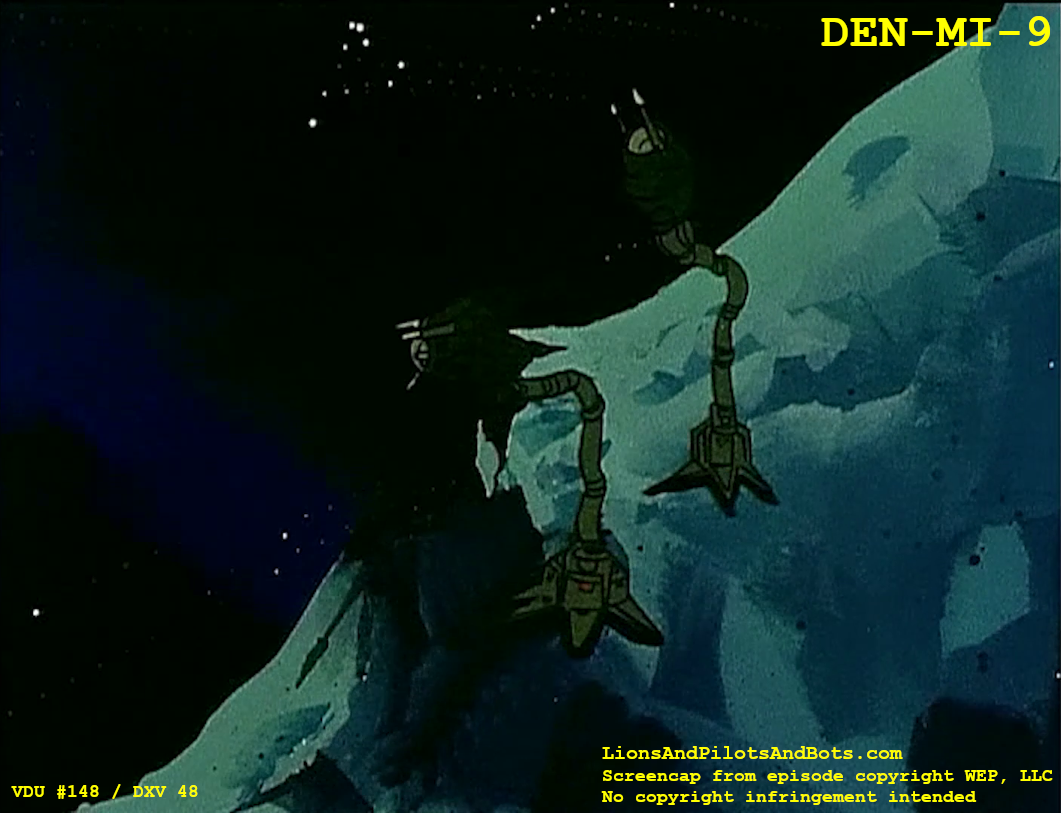
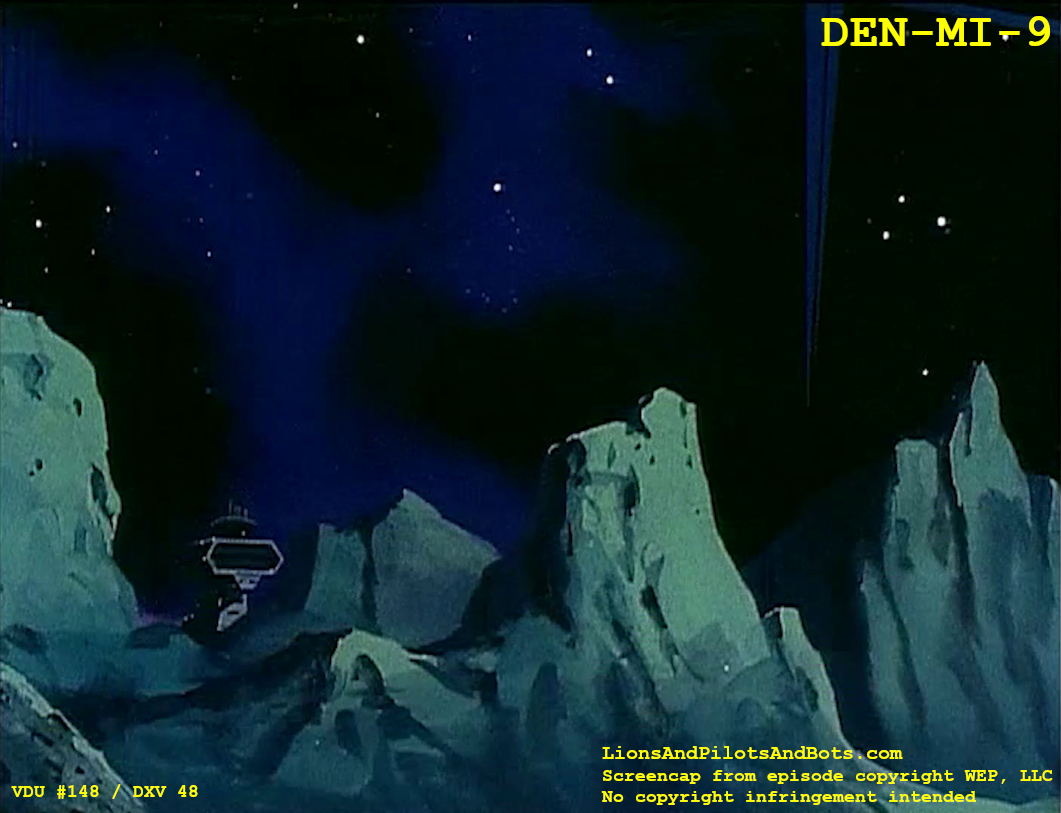
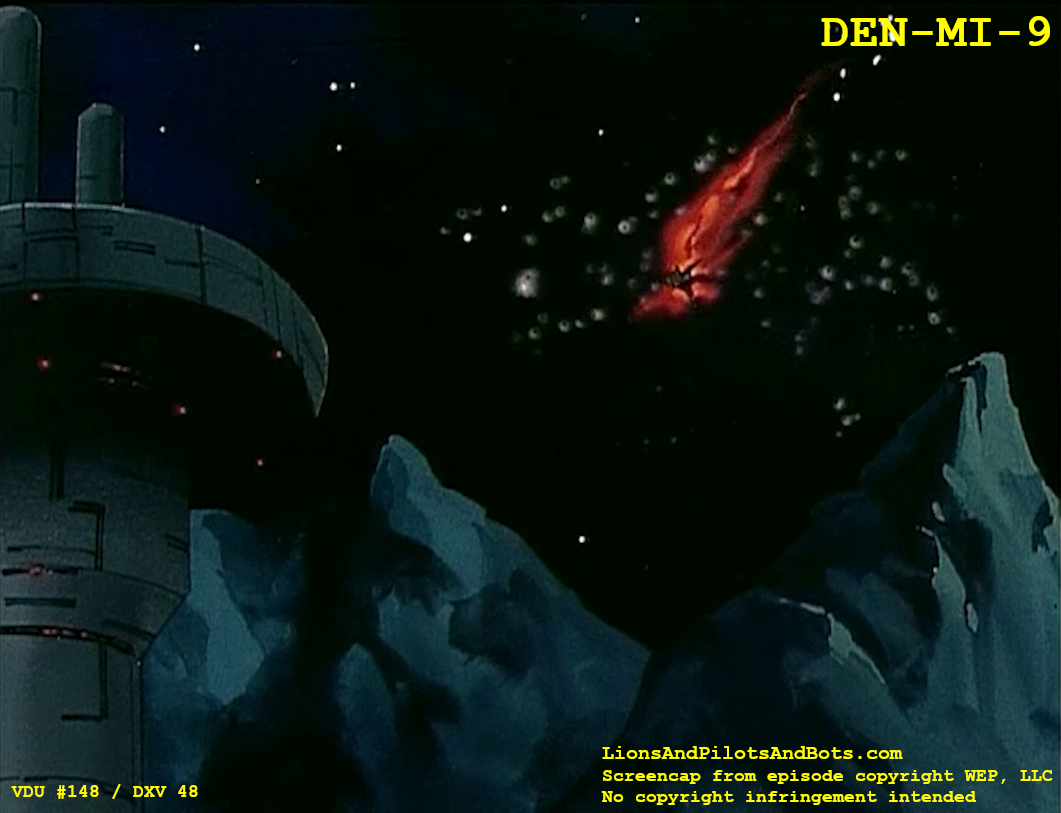
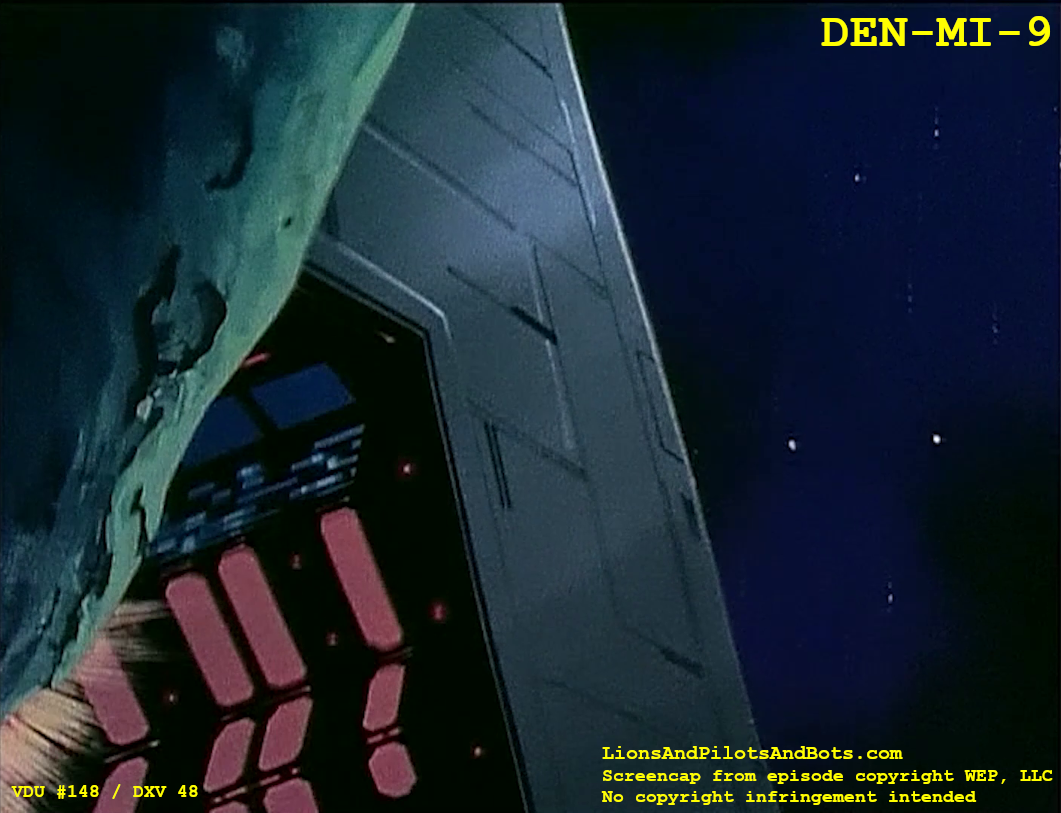
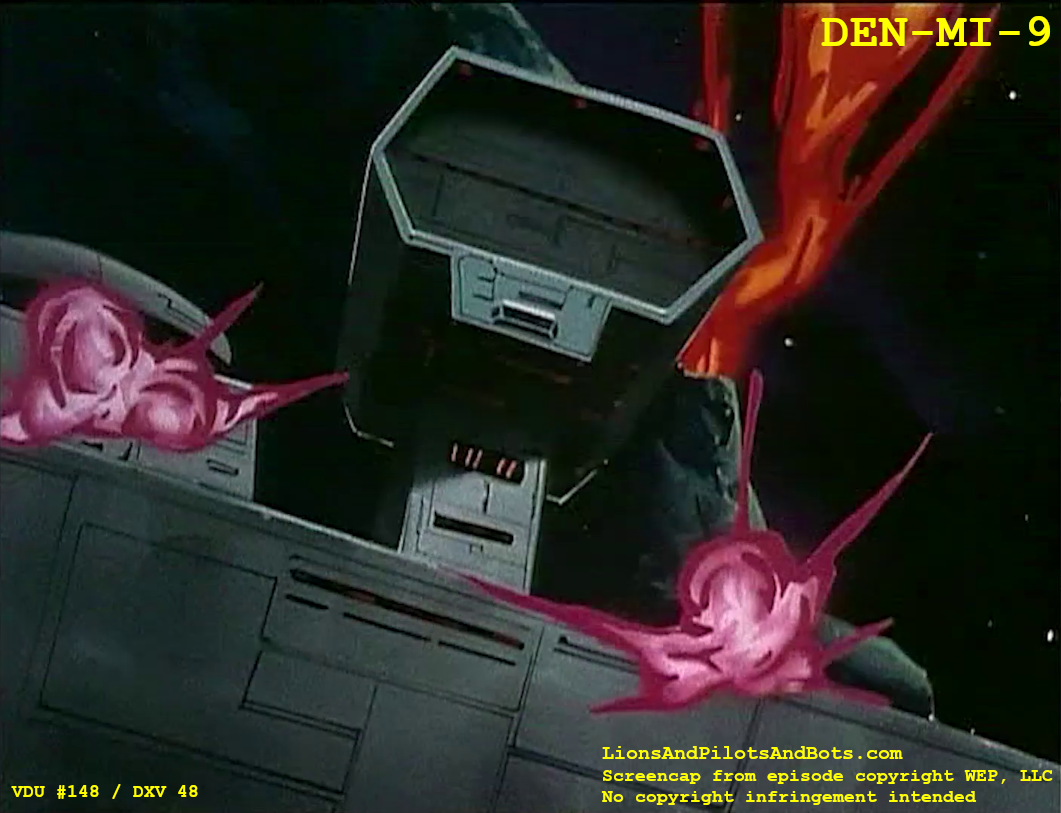
DEN-MI-9 bases are angular structures that are built on the surface of a planet or moon. DEN-MI-9 bases can launch magnetic mines into space. The bases are protected by snake-like laser blasters that emerge from the below ground from areas surrounding the base.
Captain Laro commands a DEN-MI-9 base on an arctic planet as the Voltron Vehicle Team approaches.
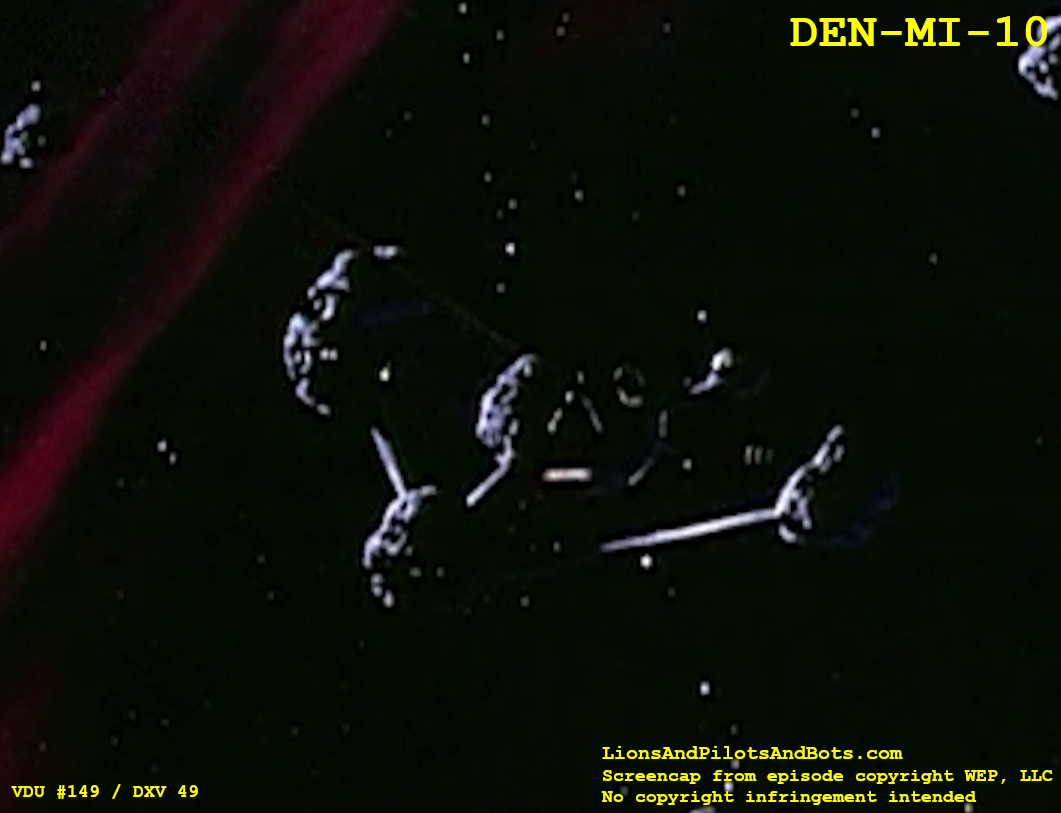
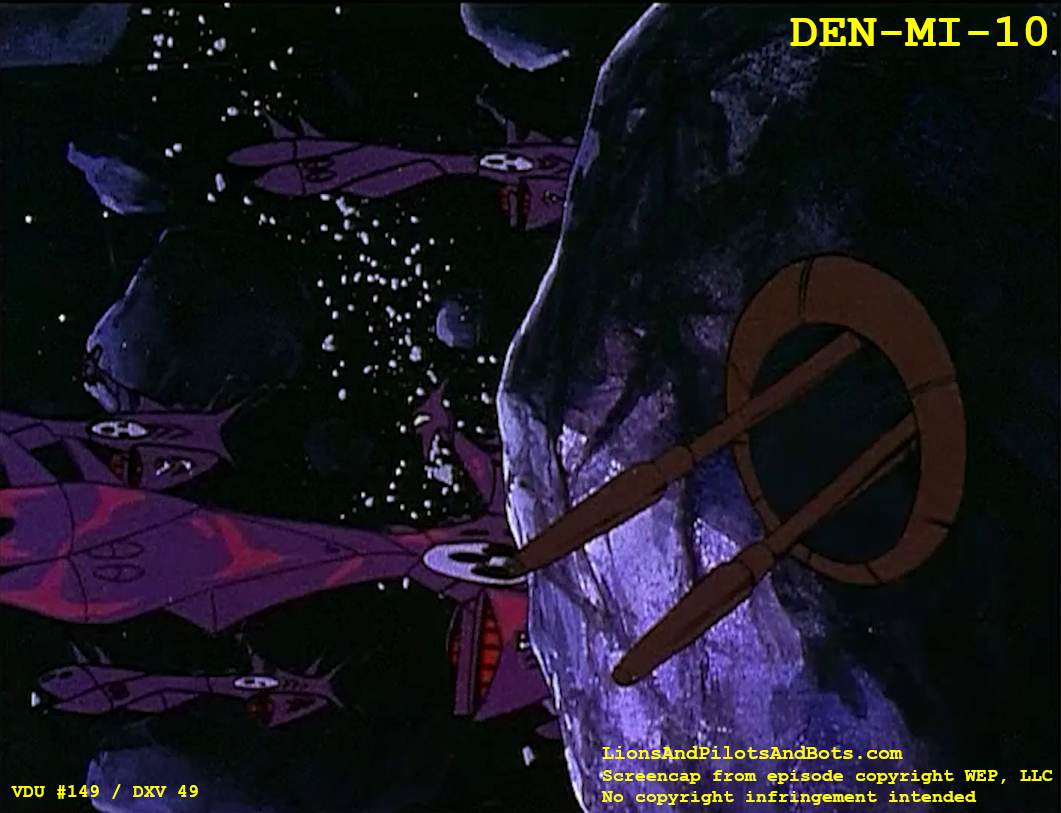
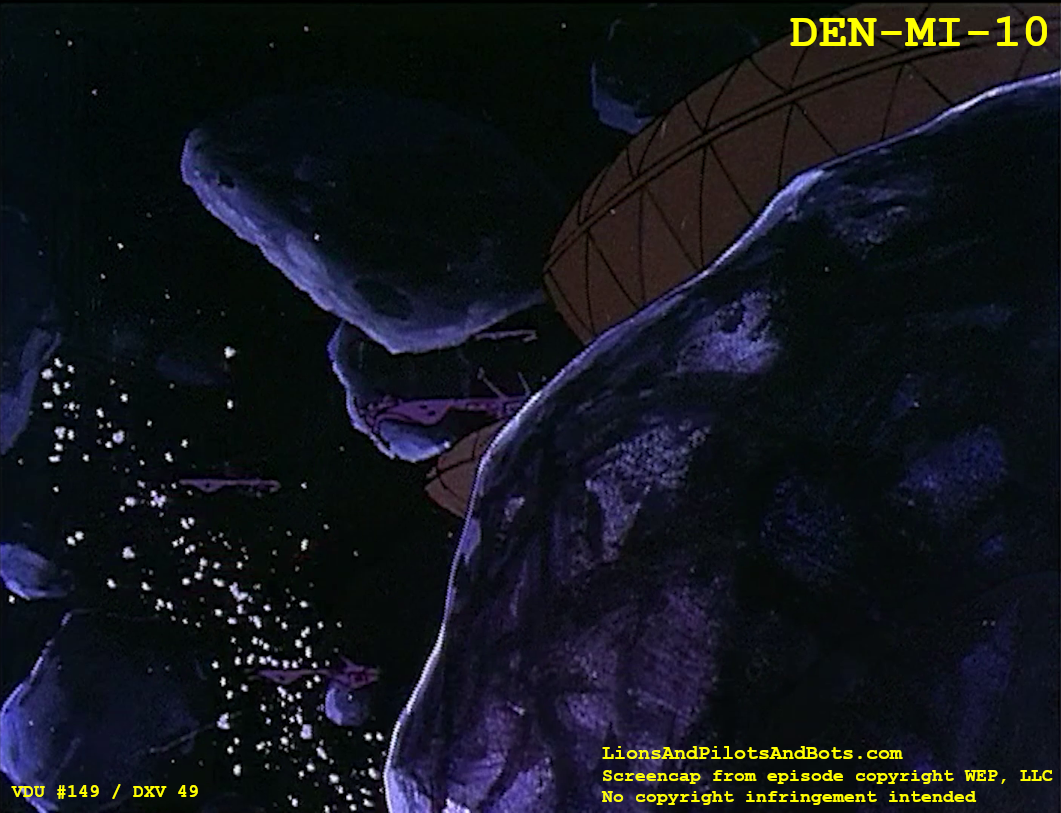
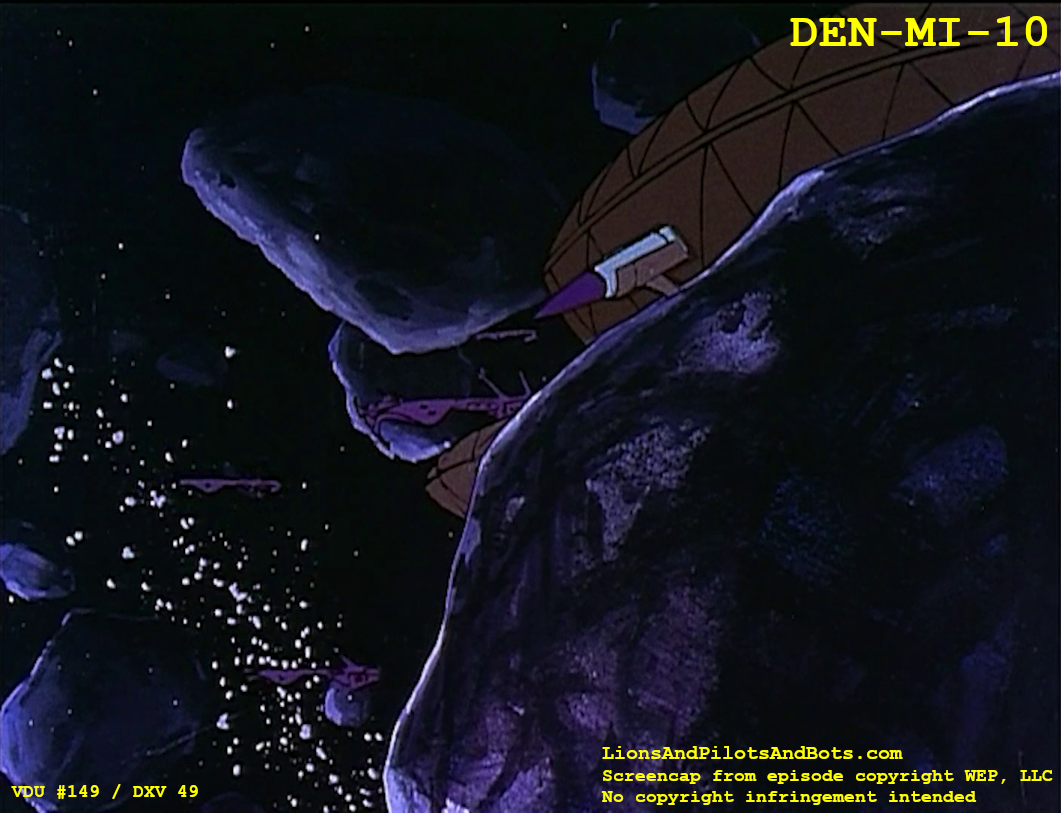
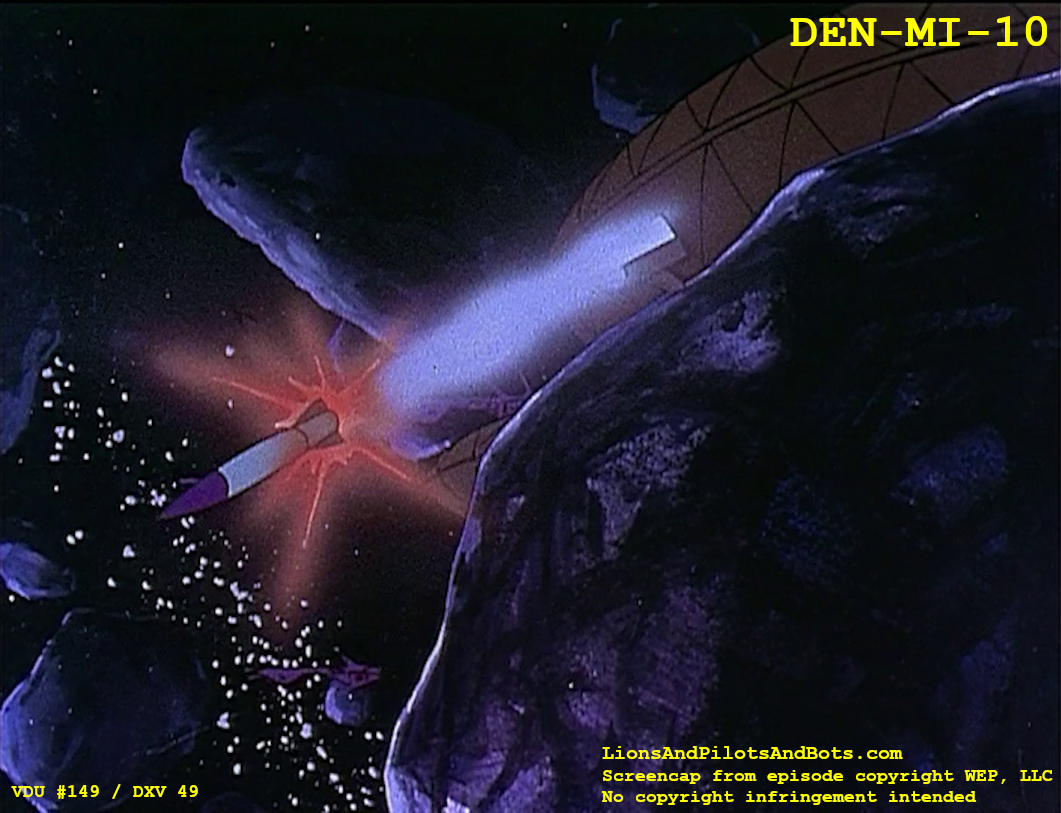
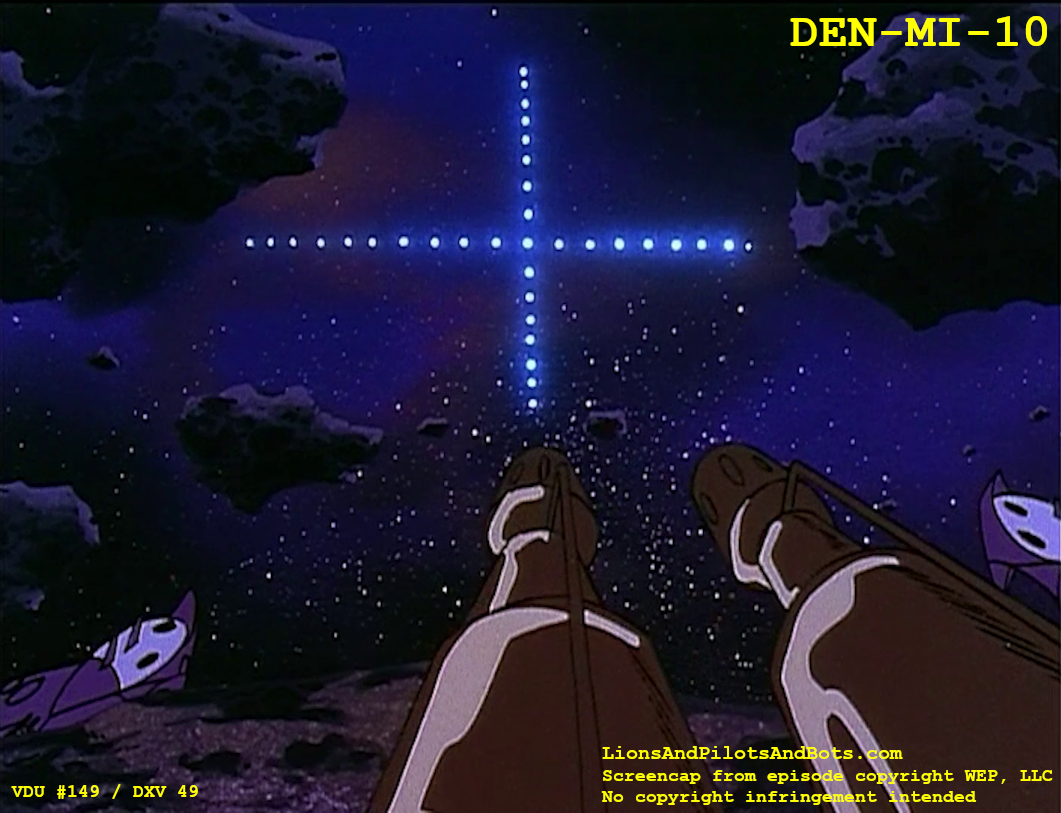
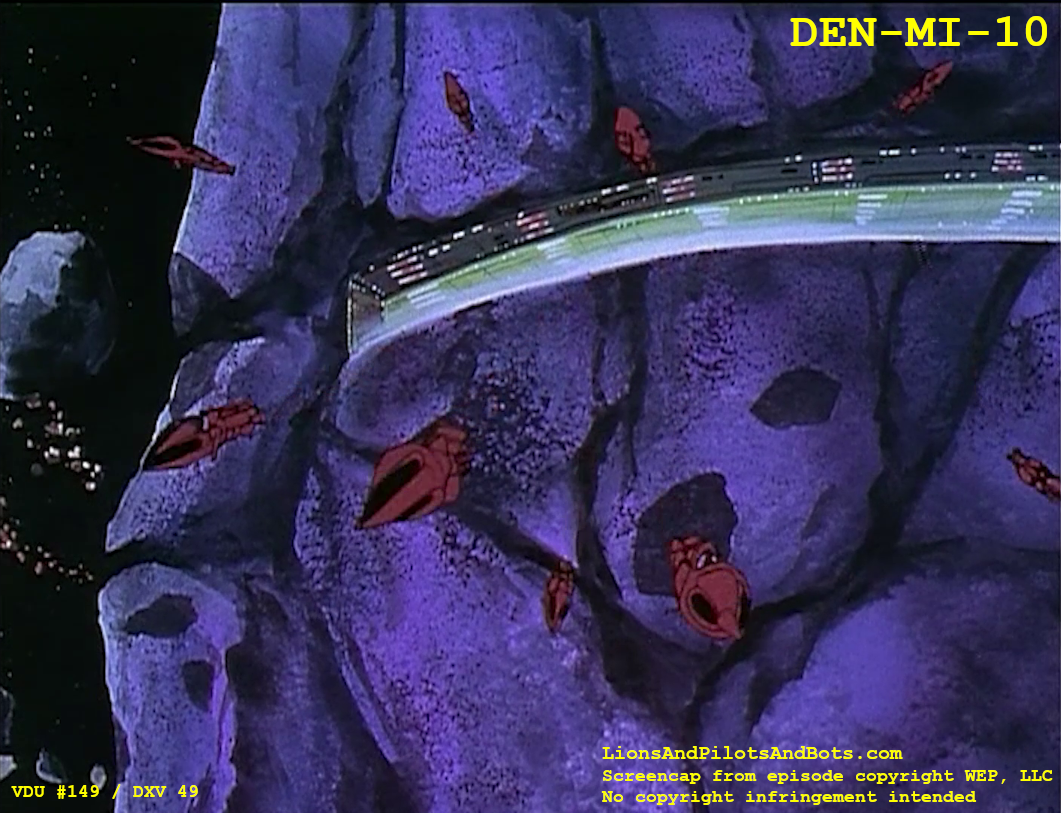
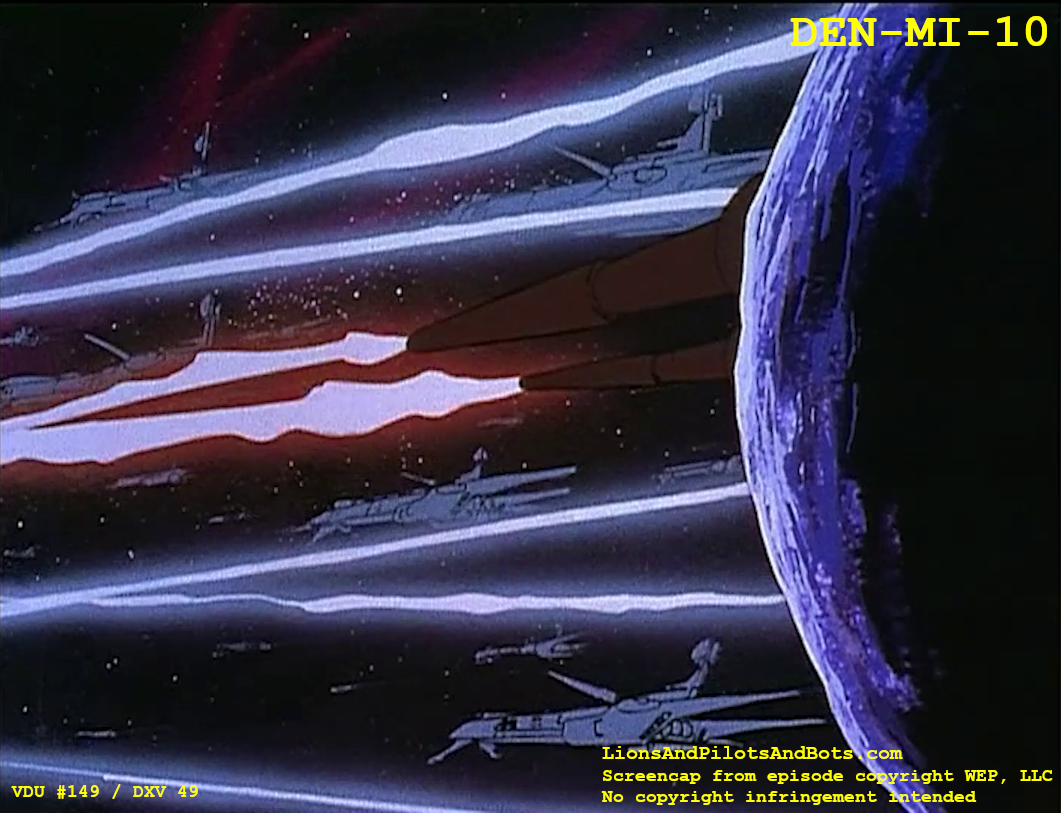
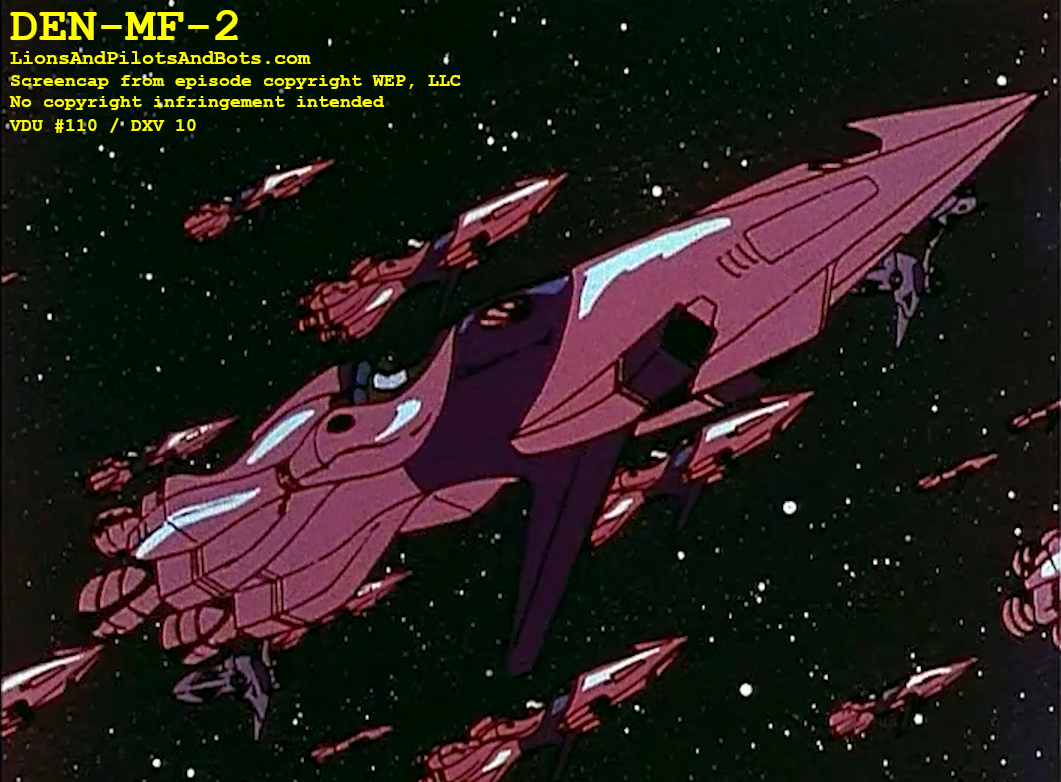
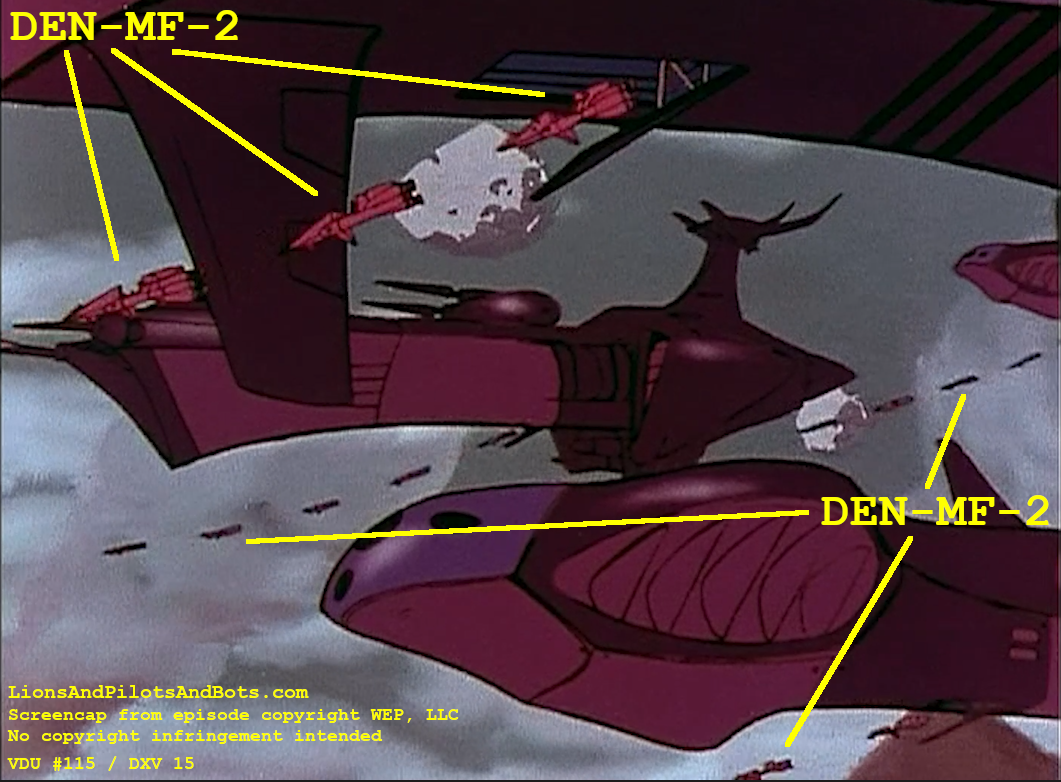
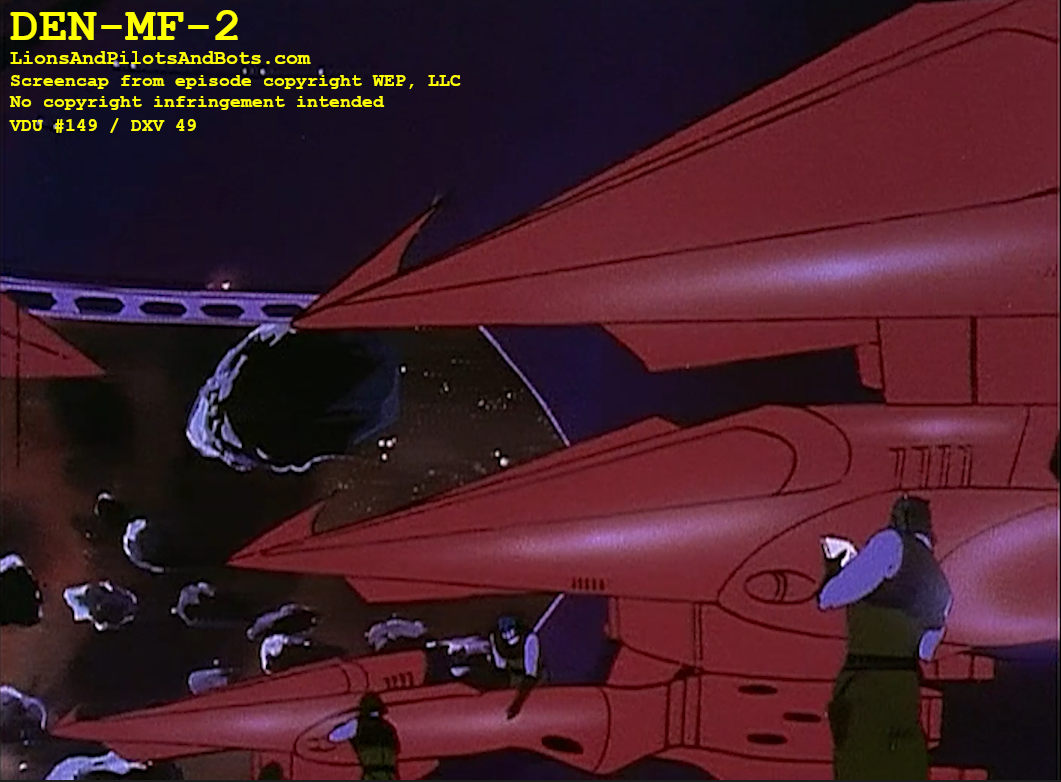
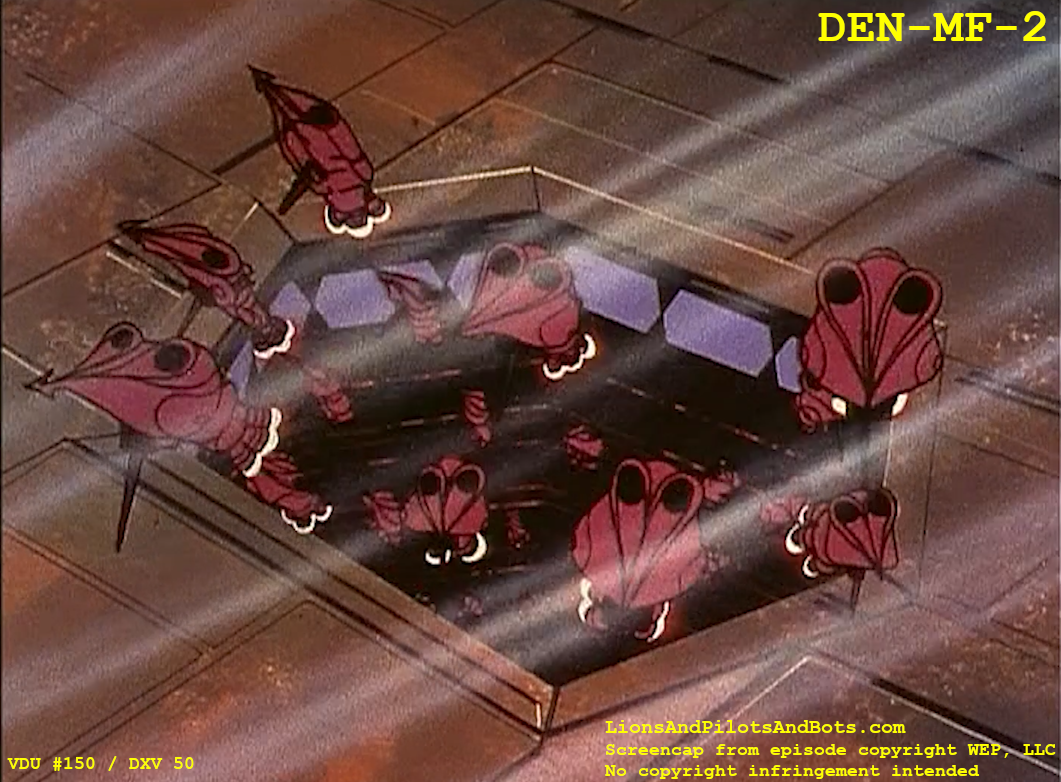
DEN-MI-10 bases can be built into a network of interconnected asteroids. They contain hangars from which a stinger attack force of DEN-MF-2 fighters can be launched. The base can fire lasers and a solar fire ray, as well as missiles from launchers that emerge from within the asteroid.
In an asteroid field near planet Drule, the Voltron Vehicle Team encounters and destroys a DEN-MI-10 base commanded by Captain Holtes.
The 52 Vehicle Team episodes of VOLTRON: DEFENDER OF THE UNIVERSE feature ten notably different types of “Near Universe” Drule bases. These designs demonstrate the imagination and creativity of the artists of ARMORED FLEET DAIRUGGER XV.
Future LionsAndPilotsAndBots… Dot Com articles will examine even more designs from VOLTRON: DEFENDER OF THE UNIVERSE.
This article is the first in what will be a series of articles that examines some of the artwork from VOLTRON: DEFENDER OF THE UNIVERSE and the anime programs from which it was adapted.
Like ROBOTECH, VOLTRON: DEFENDER OF THE UNIVERSE (VDU) was adapted from episodes of multiple anime programs. To date, unlike ROBOTECH, VOLTRON never had tie-in art books that featured art from the TV show or the anime programs from which it was adapted.
To appreciate the visual designs of VOLTRON, fans must take a closer look at the show itself. This article begins to do so by examining the vehicles of the “Near Universe” Drule Empire from the Vehicle Team episodes of VOLTRON: DEFENDER OF THE UNIVERSE. These episodes were adapted from the anime program ARMORED FLEET DAIRUGGER XV (DXV), and VOLTRON‘s “Near Universe” Drule Empire was adapted from DAIRUGGER‘s Galveston Empire.
It is somewhat challenging to identify distinct designs from VOLTRON episodes, because:
The line art is hand-drawn and inked, so shapes, proportions, and details can vary from episode to episode, shot to shot, and even frame to frame.
The art is hand-painted, so there can be a lot of color variation from episode to episode, shot to shot, and even frame to frame.
The episodes are available only in standard definition.
Some vehicles are shown in a small number of shots, and many don’t have great “beauty shots.”
While researching for this article, I examined all 52 Vehicle Team episodes of VOLTRON, and I discovered 35 vehicle types that are clearly associated with the Drule Empire of the Near Universe.
Vehicle Type Identifiers
Neither VOLTRON nor DAIRUGGER established formal names for Drule or Galveston vehicle types, respectively. To facilitate examination of these vehicle types, I defined a unique identifier for each type. The identifiers follow the format:
{Authority Code}-{Category Code}-{Number}
where:
{Authority Code} identifies the operating authority for vehicles of that type. For each type that is associated with VOLTRON’s Drule Empire of the Near Universe, the Authority Code is “DEN” (for Drule Empire – Near Universe).
{Category Code} identifies the category of the vehicle type. Category codes are defined in the table below.
{Number} is a natural number.
Category Code
Category
Description
MSX
Military Spacecraft – Carrier/Command
Military spacecraft of this category are large enough to accommodate at least one standing Robeast within the forward hull. The Robeast can exit the craft through a large hatch at the bow.
MSA
Military Spacecraft – Battleship
Military spacecraft of this category are presumably smaller than MSX ships, and they seemingly cannot transport or launch Robeasts.
MSB
Military Spacecraft – Small
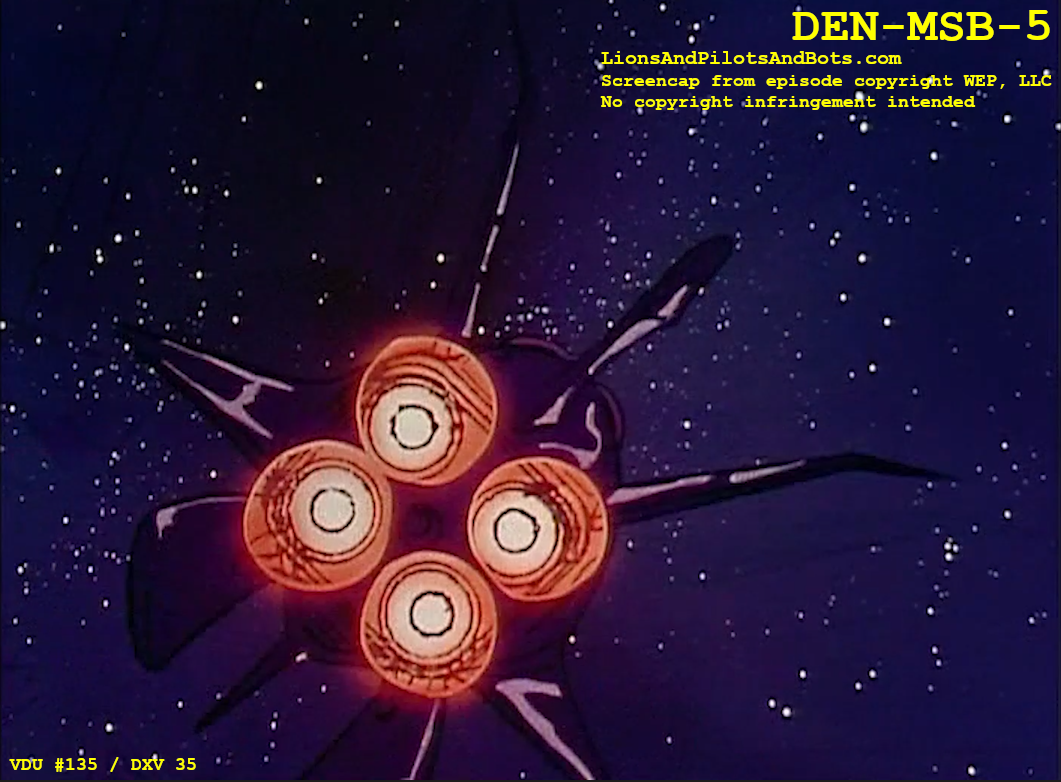
Military spacecraft of this category are presumably smaller than MSX and MSA ships. They seem to operate mainly as personnel transports or ground vehicle carriers.
MF
Military Fighter
Military vehicles of this category are small, flying fighter craft.
MG
Military Ground Vehicle
Military ground vehicles, such as tanks.
N
Non-Military Vehicle
Any type of seemingly non-military craft, such as cars.
Category Codes for Vehicles of the Drule Empire (Near Universe)
Vehicle Types – Summary Information
The table below provides summary information for each vehicle type. Click the type’s ID to view detail information about, and additional images of, the vehicle type.
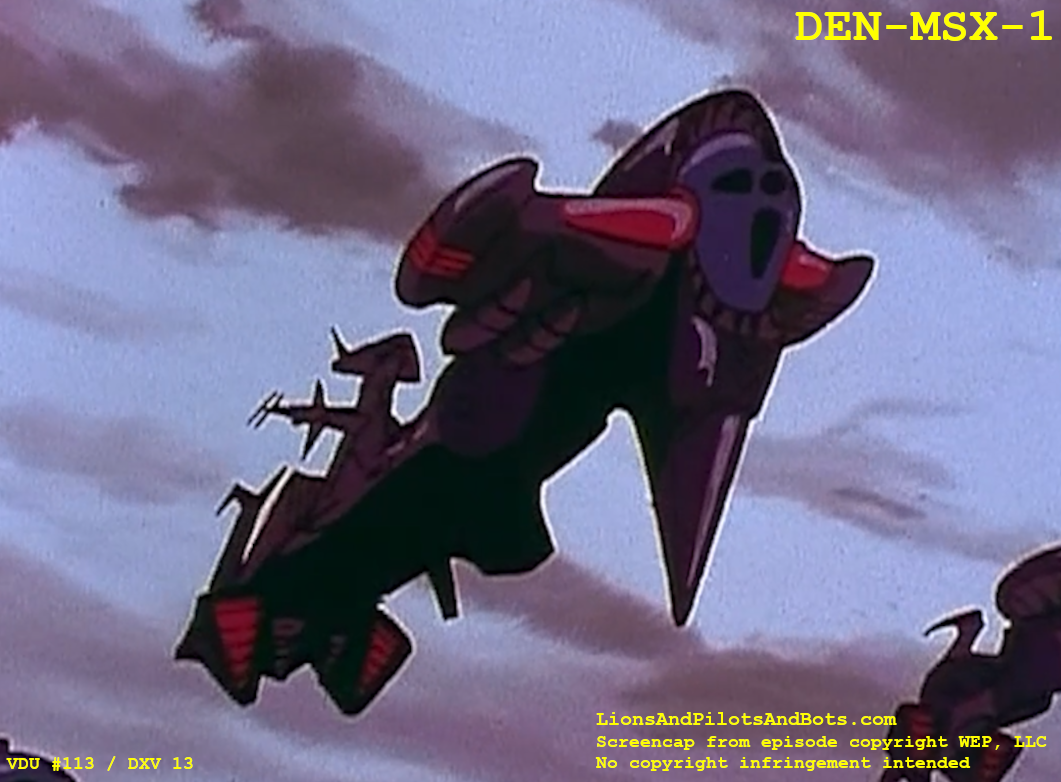
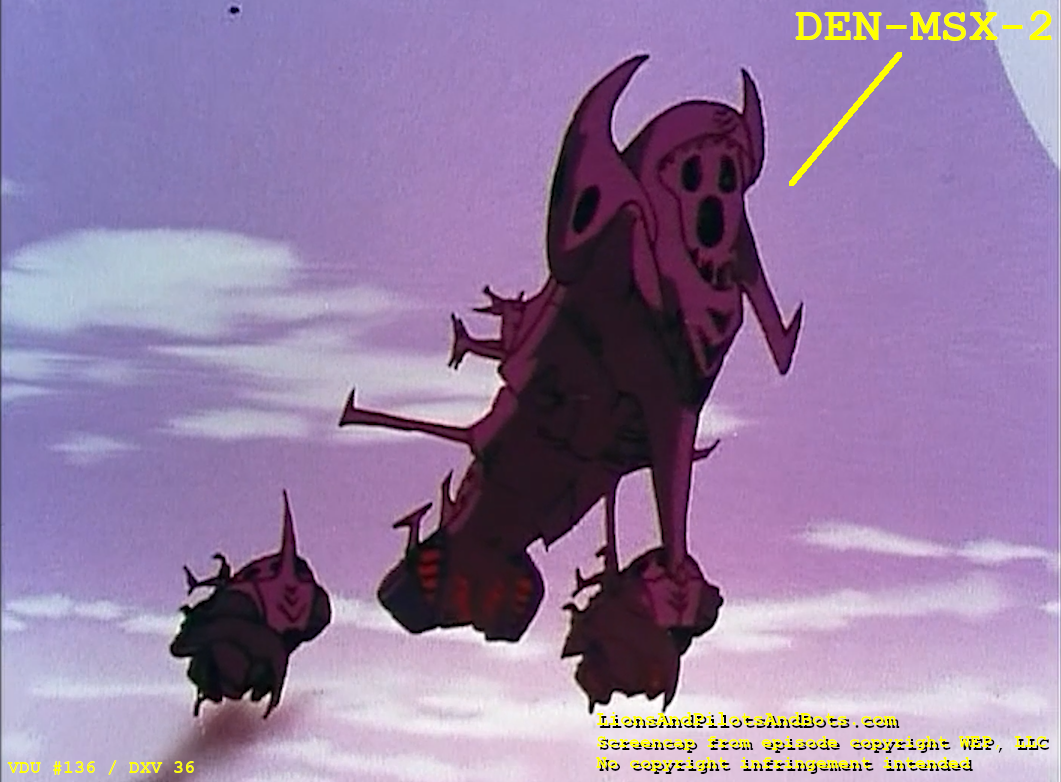
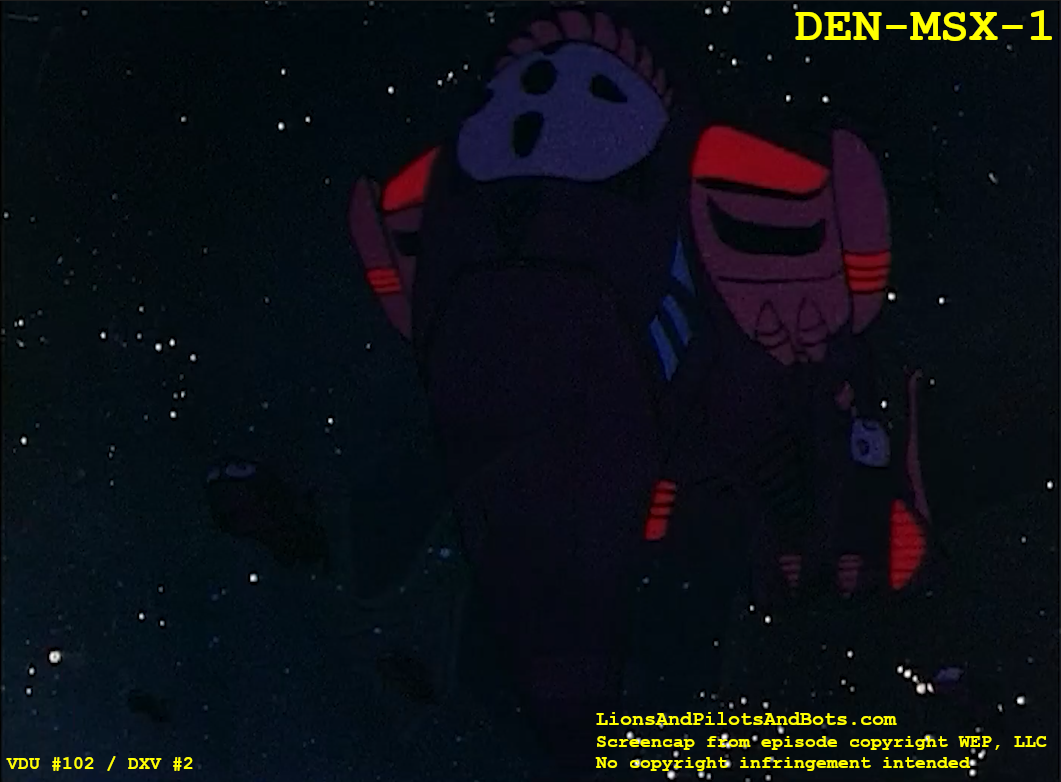
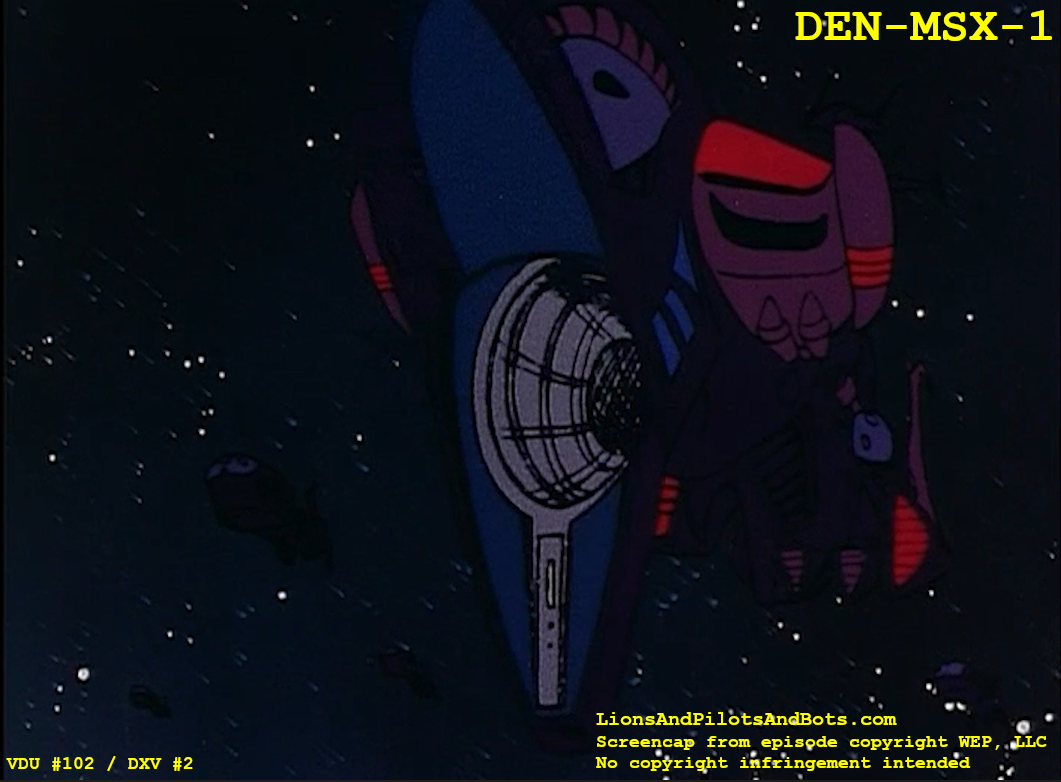
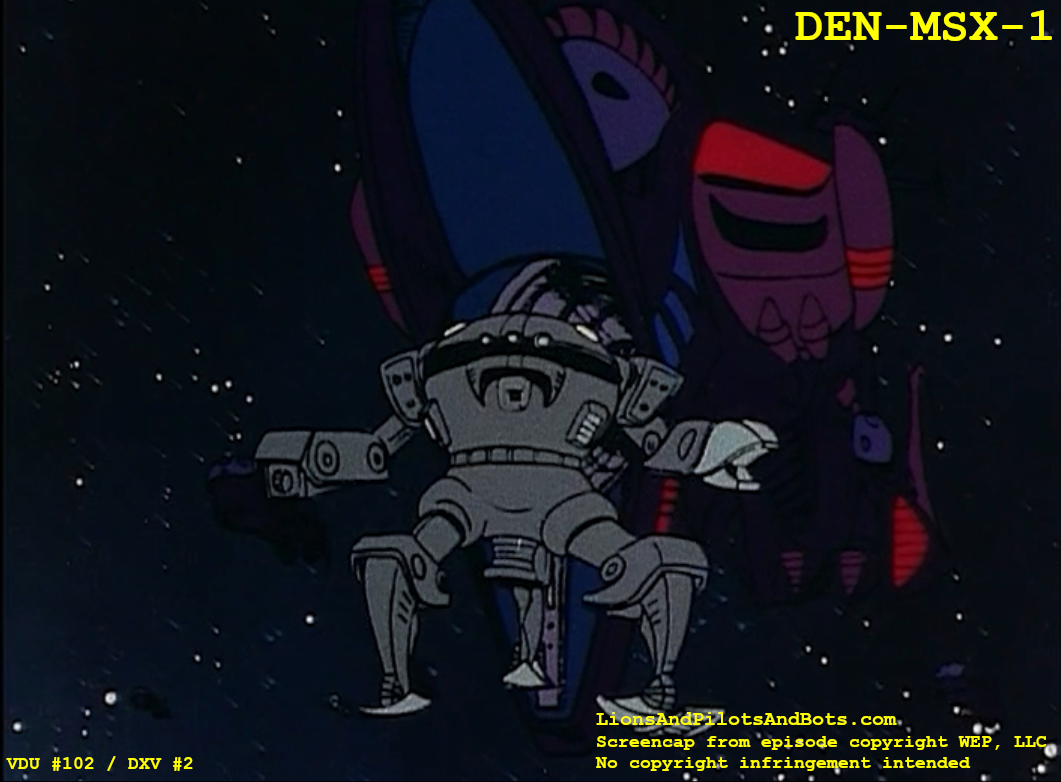
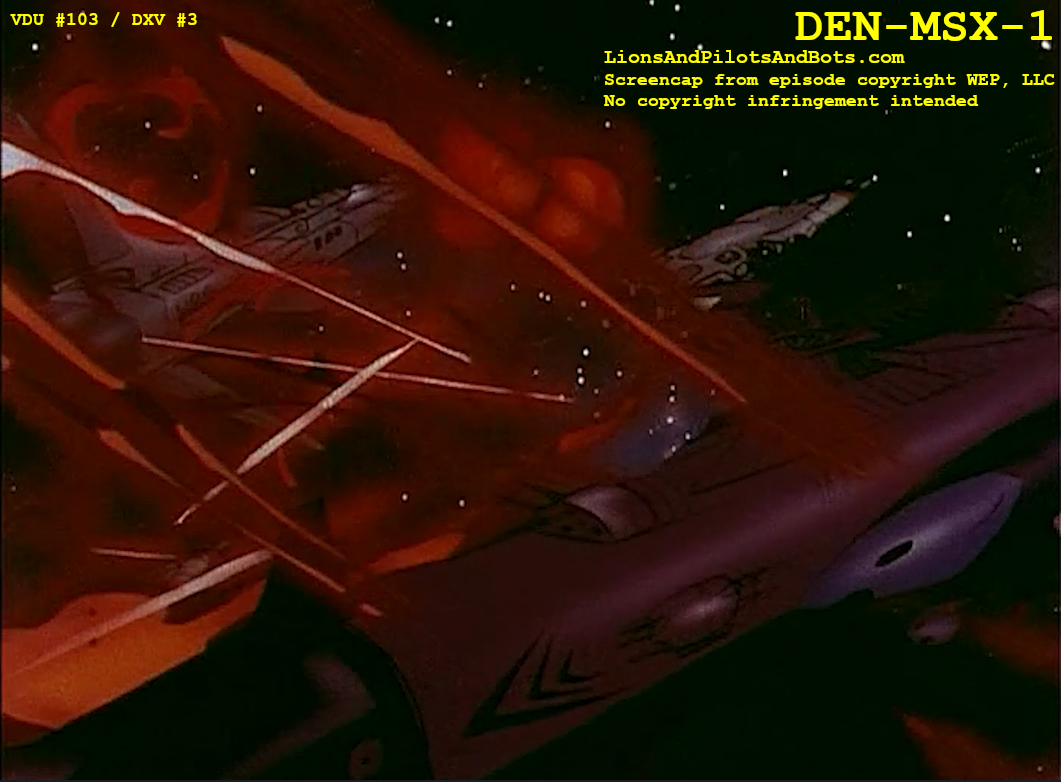
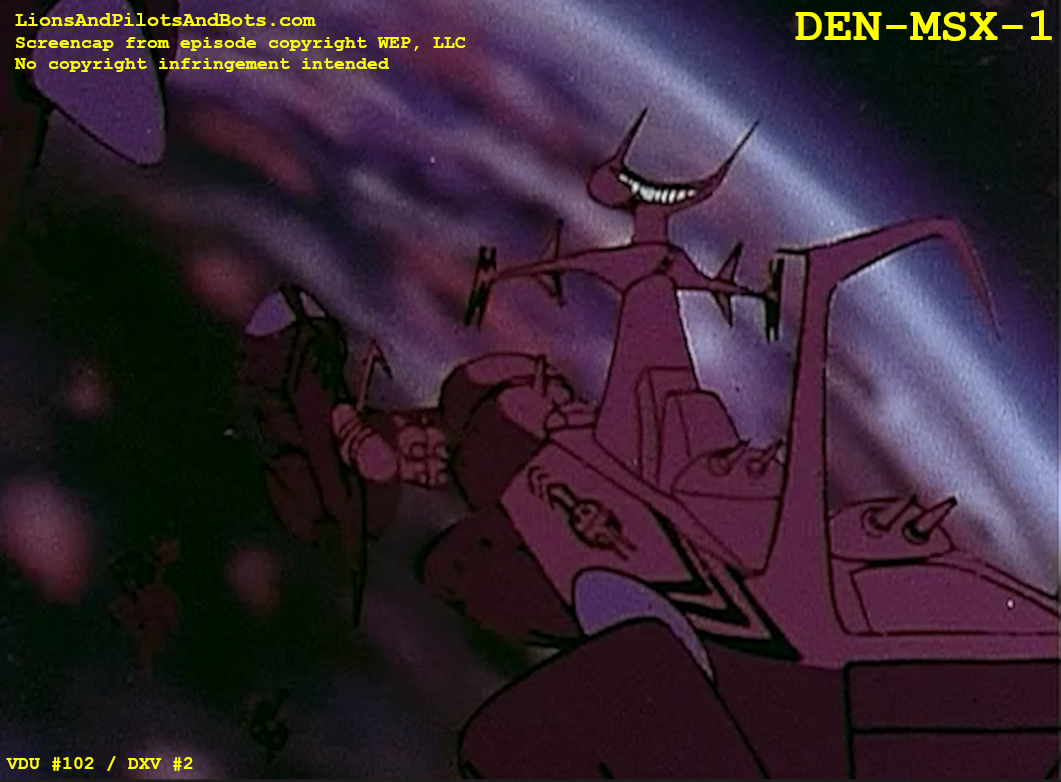
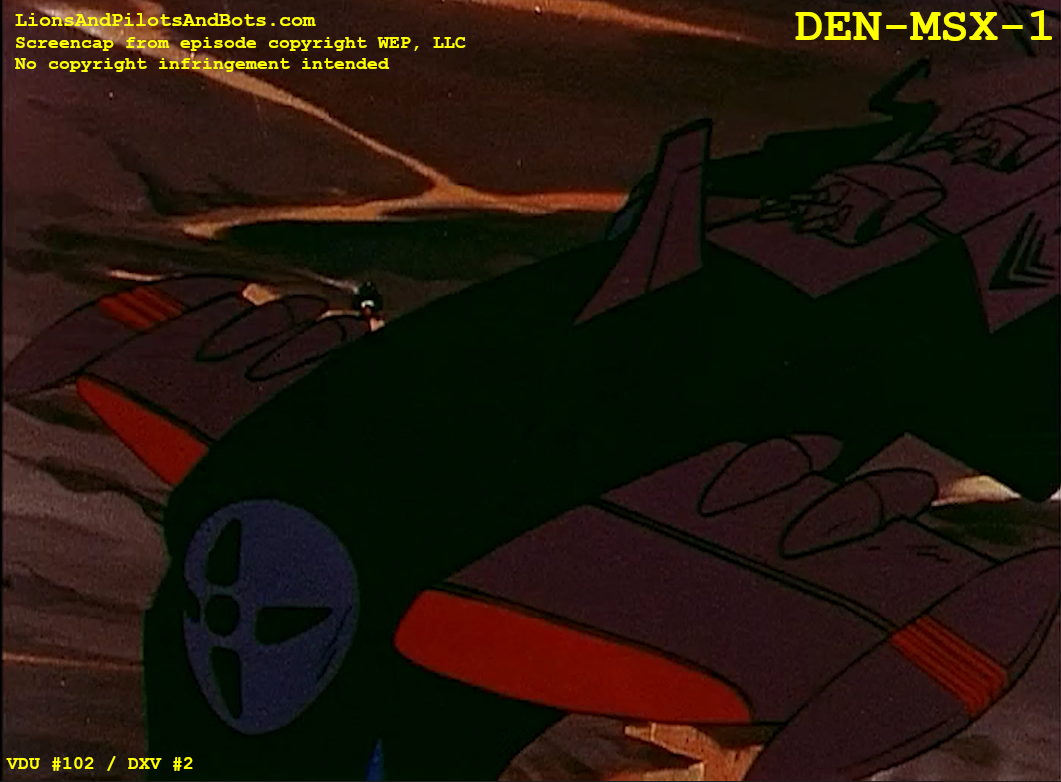
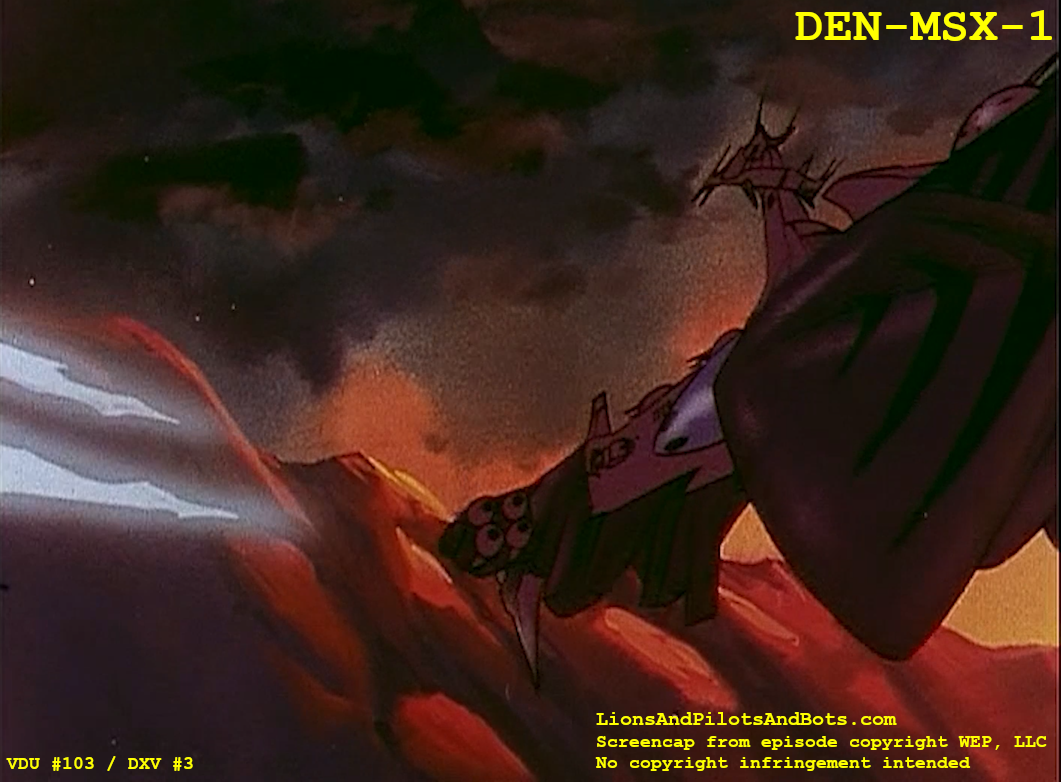
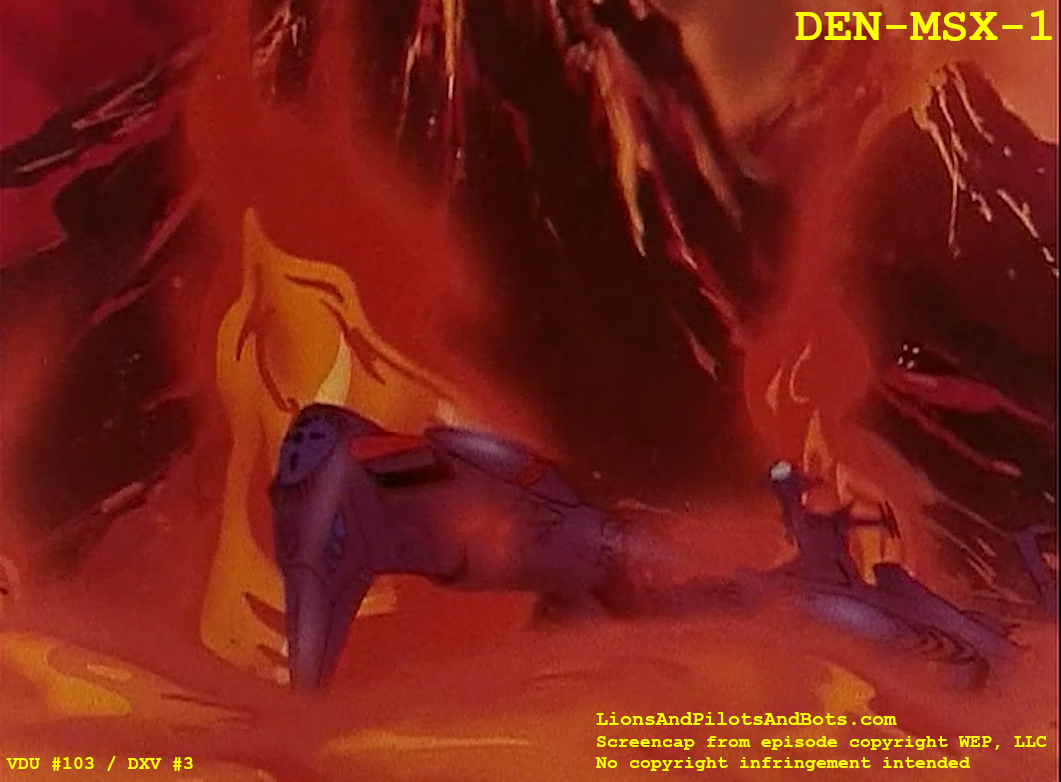
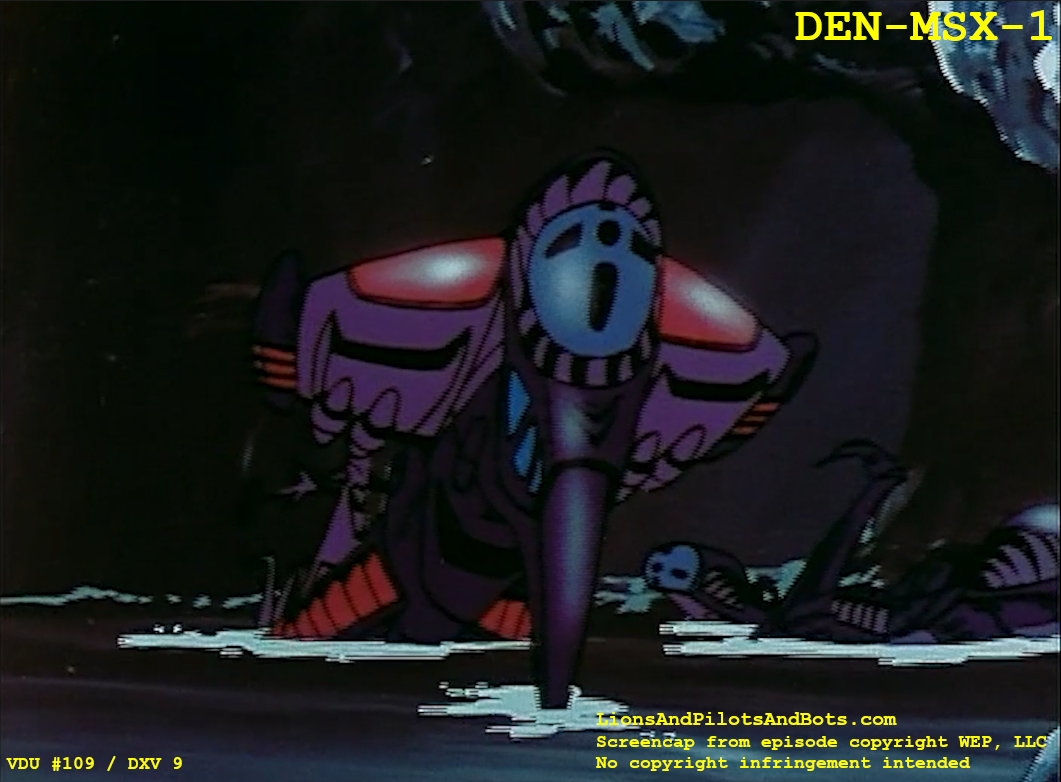
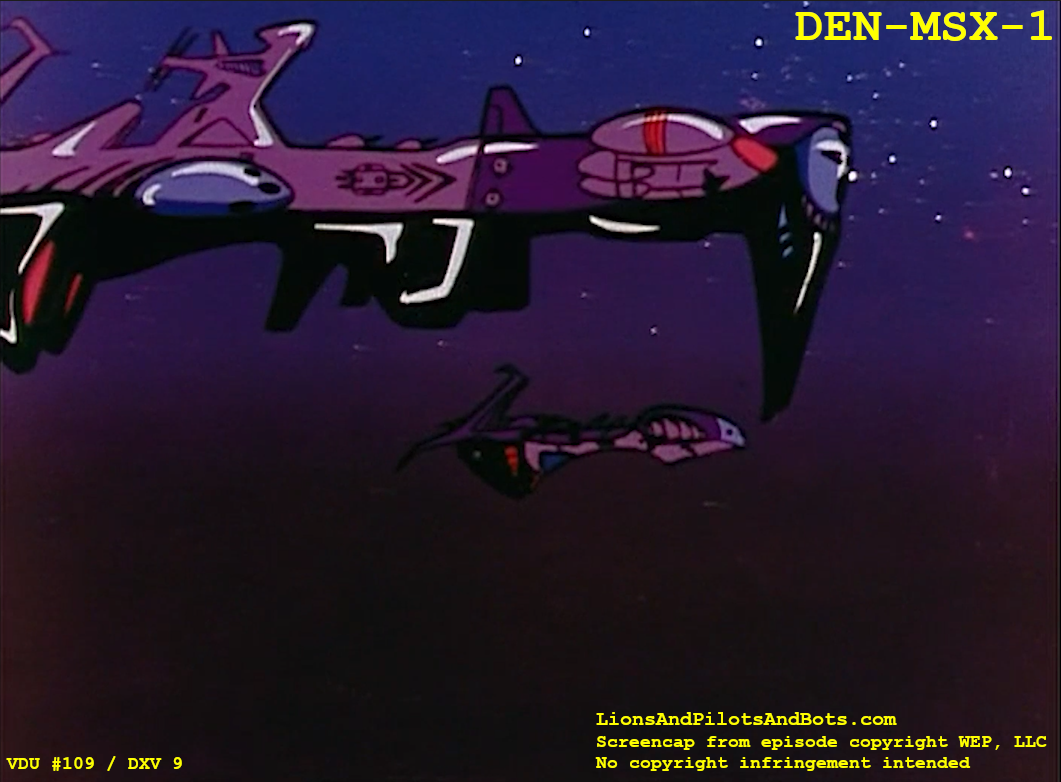
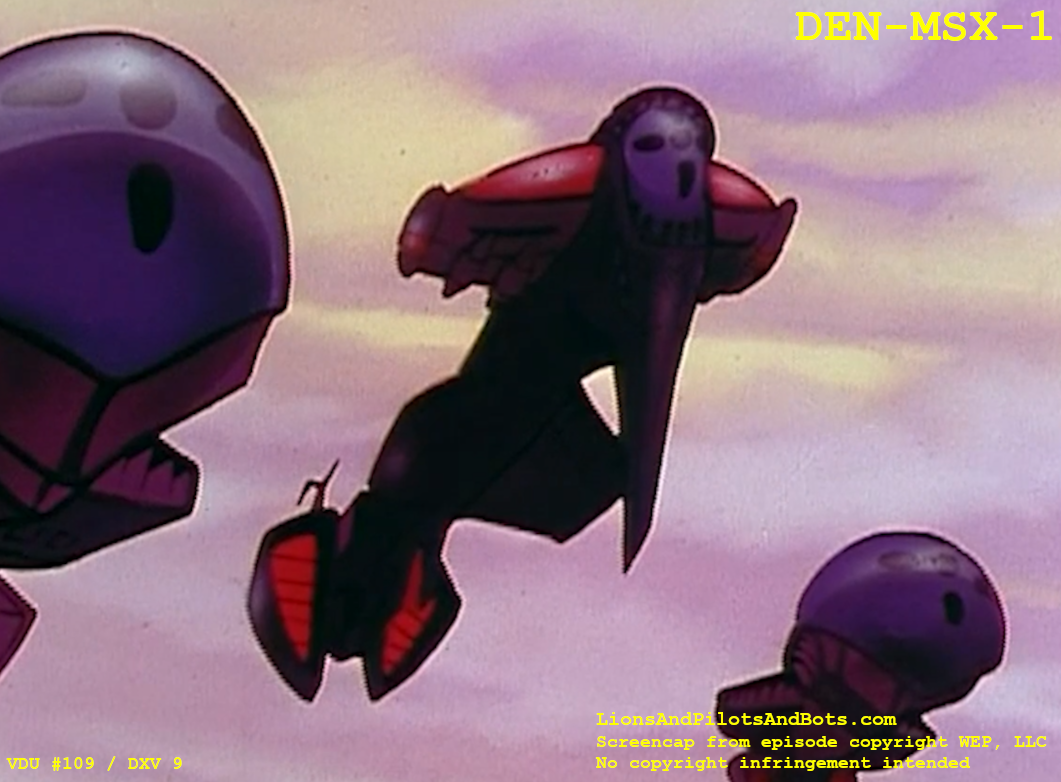
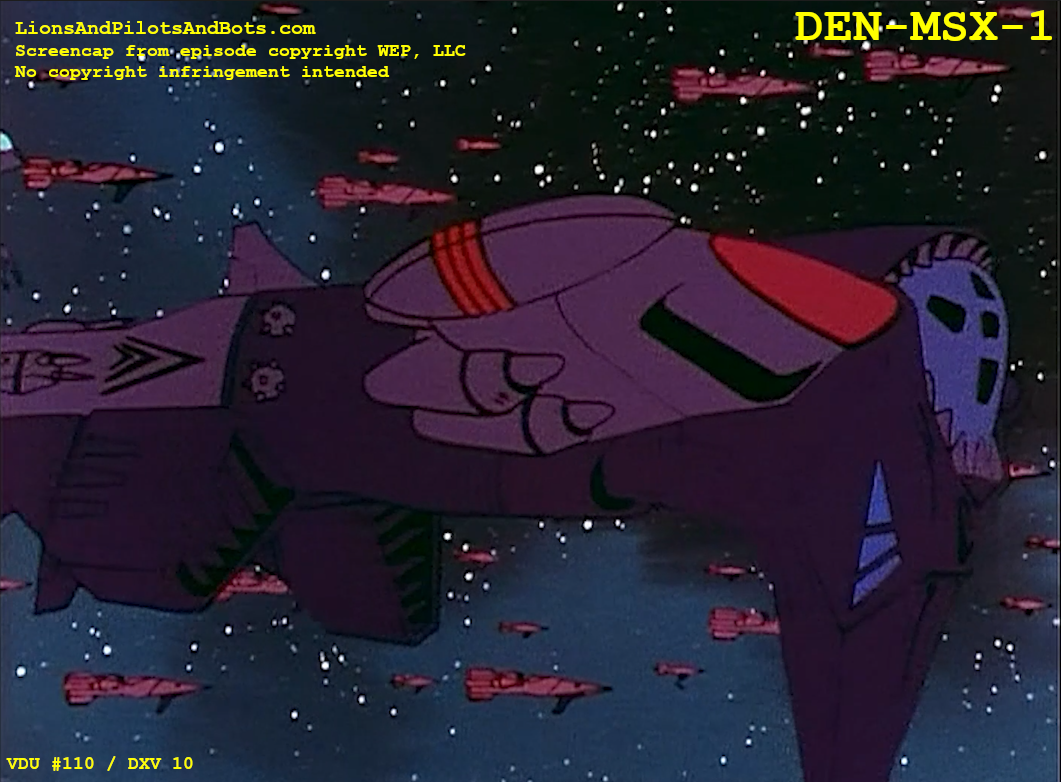
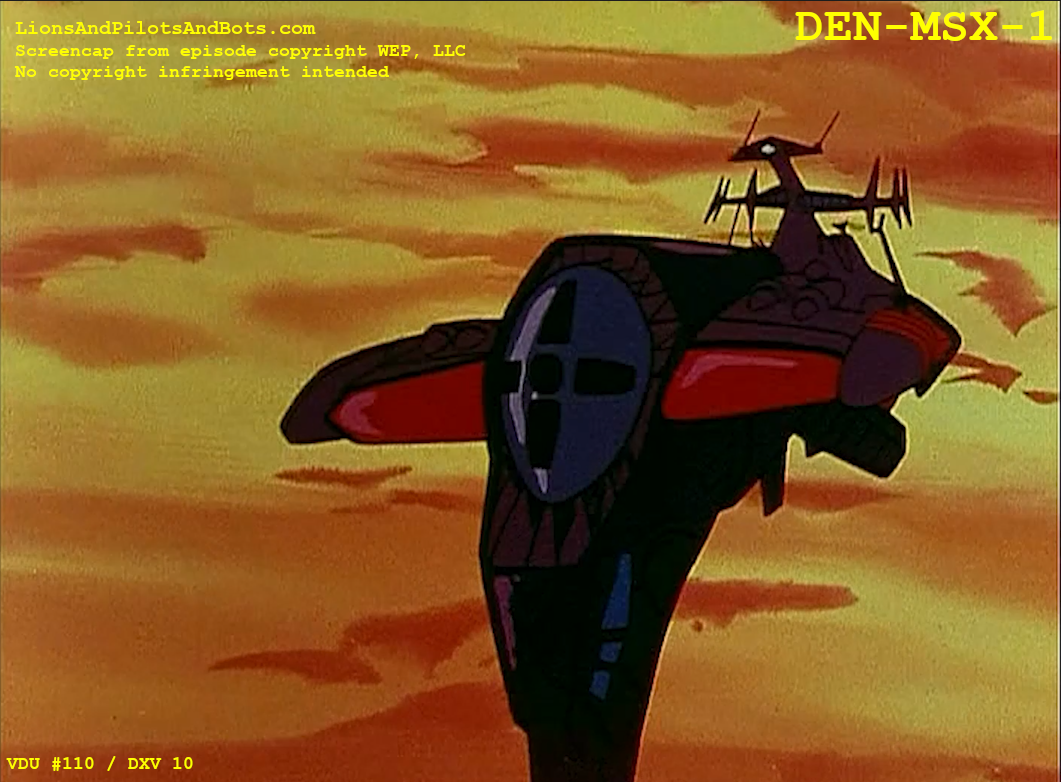
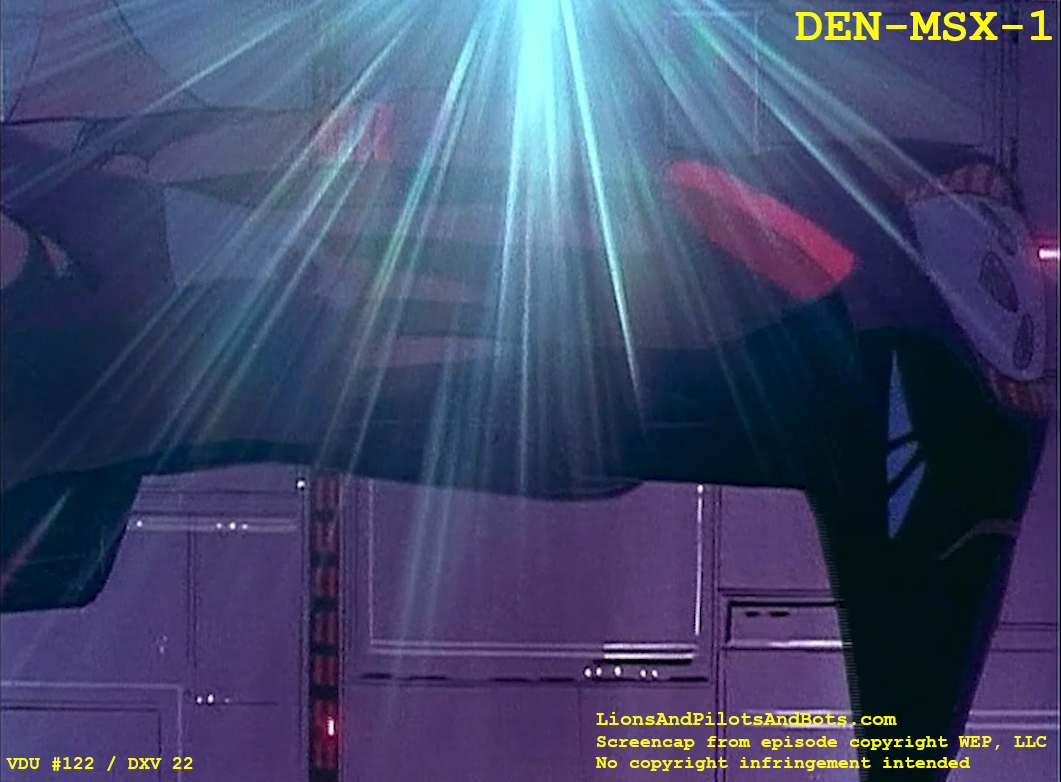
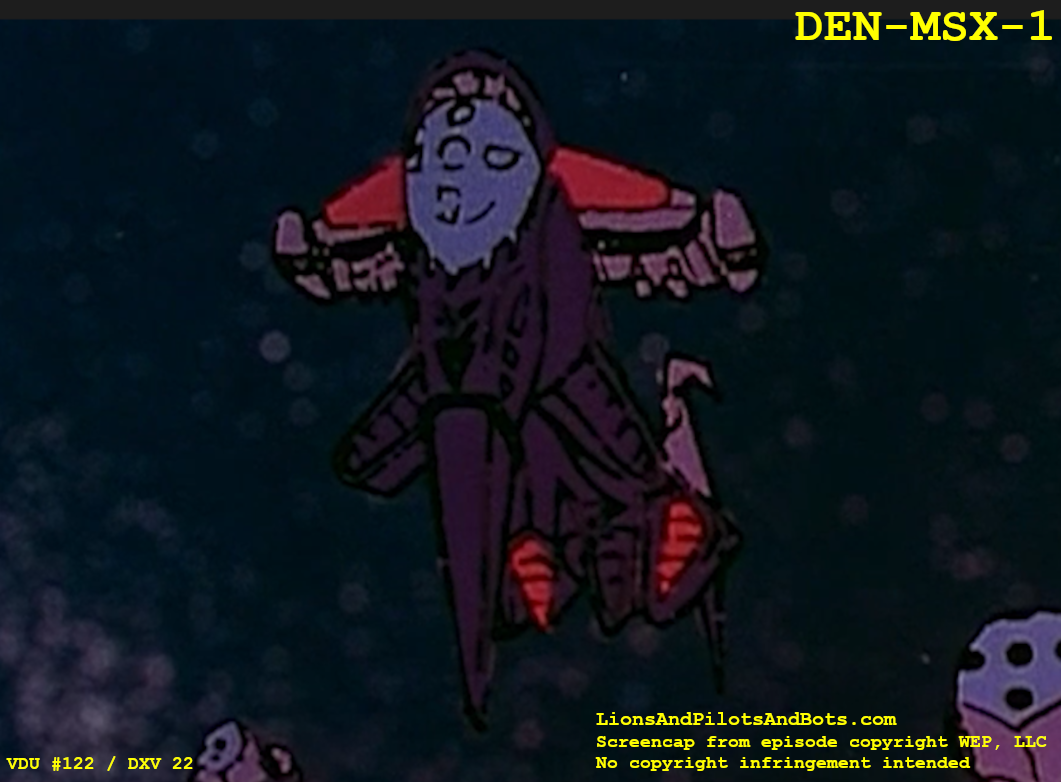
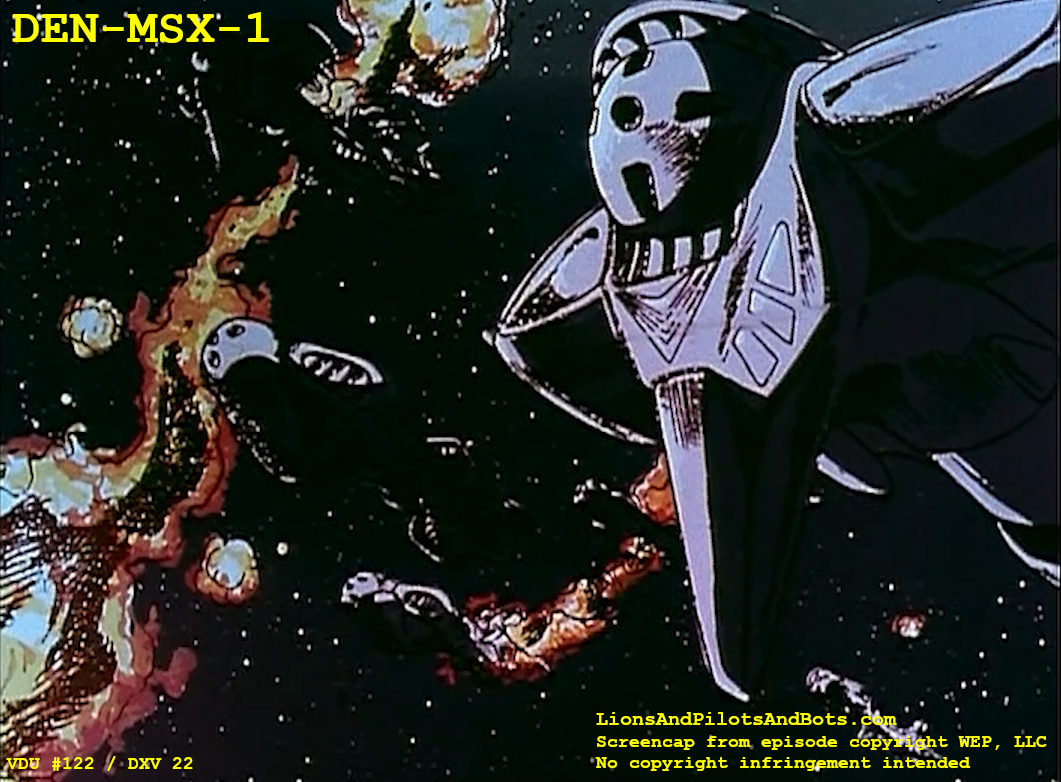
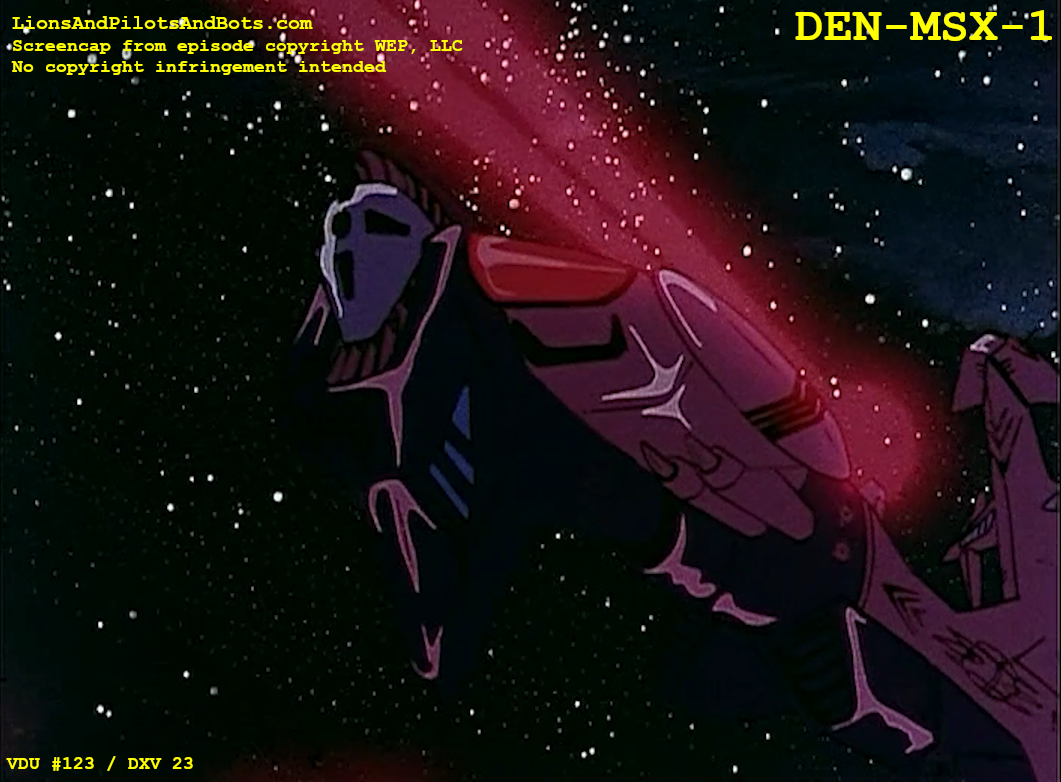
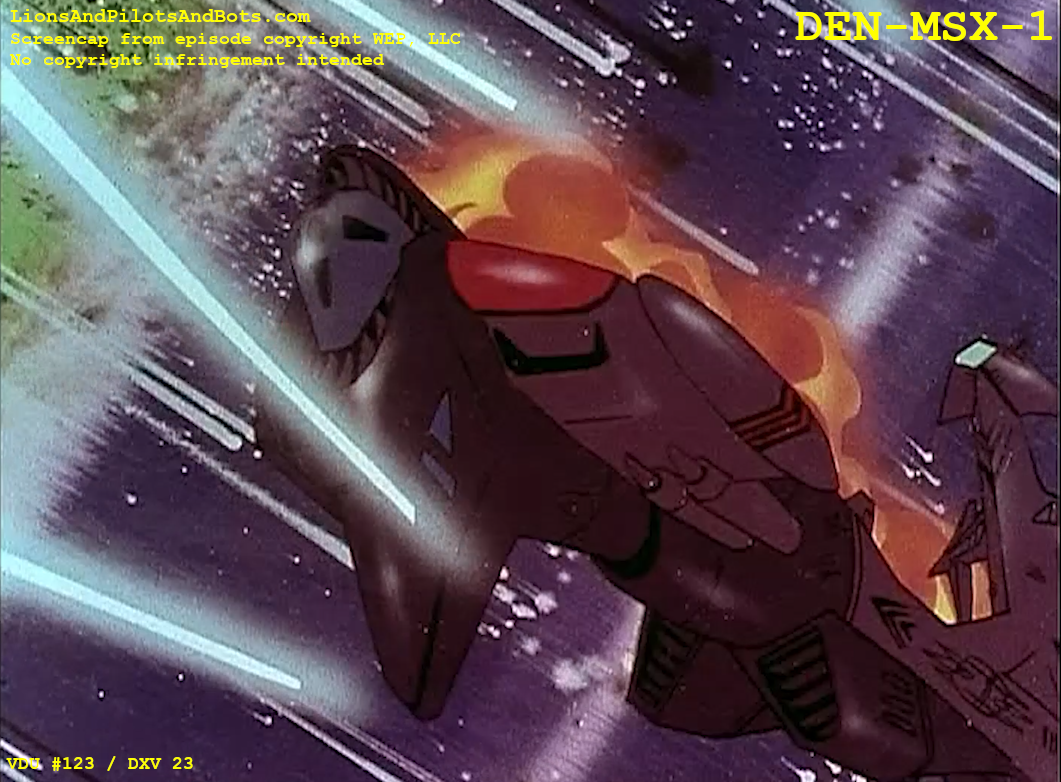
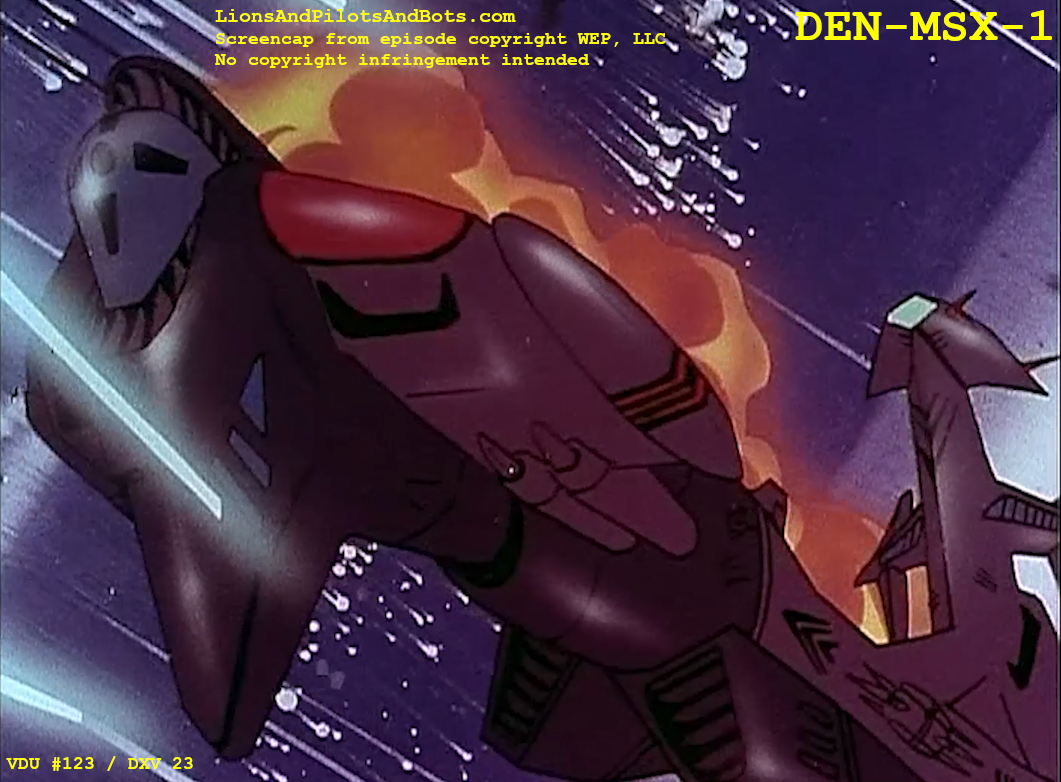
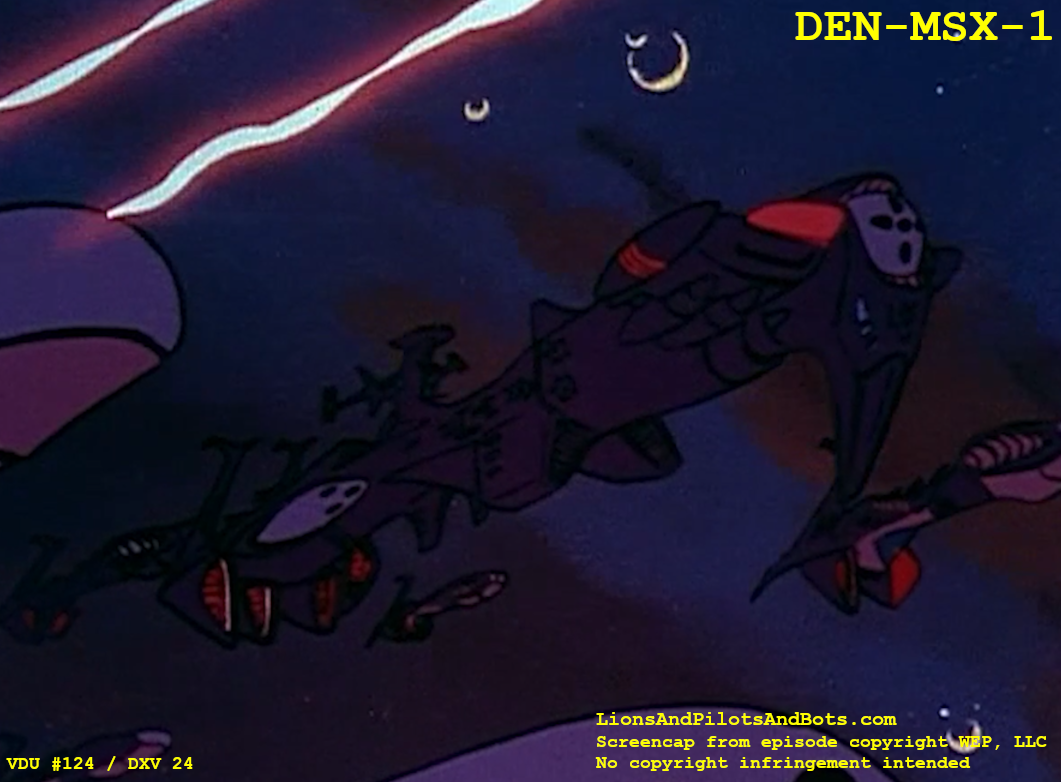
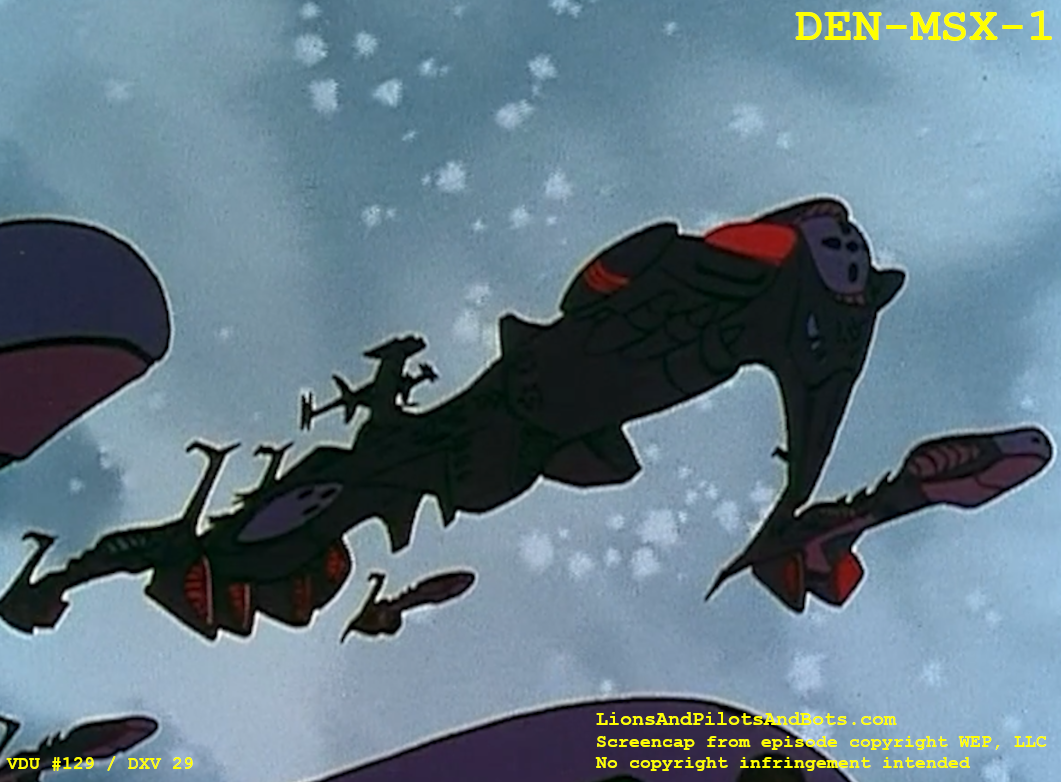
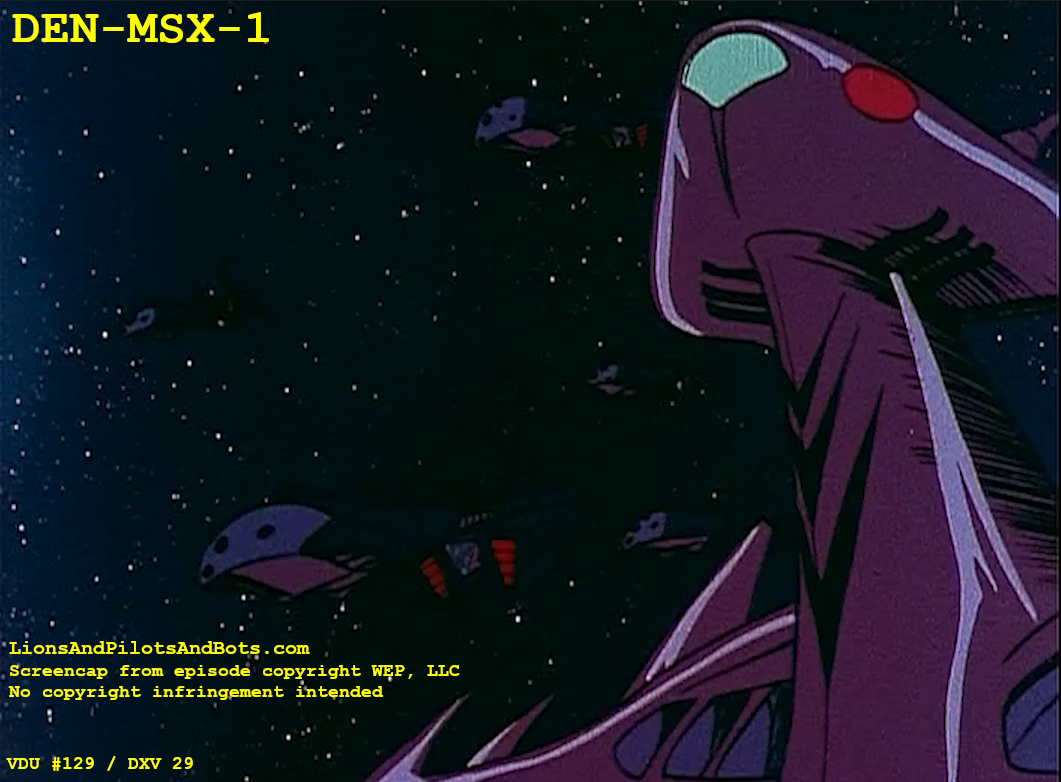
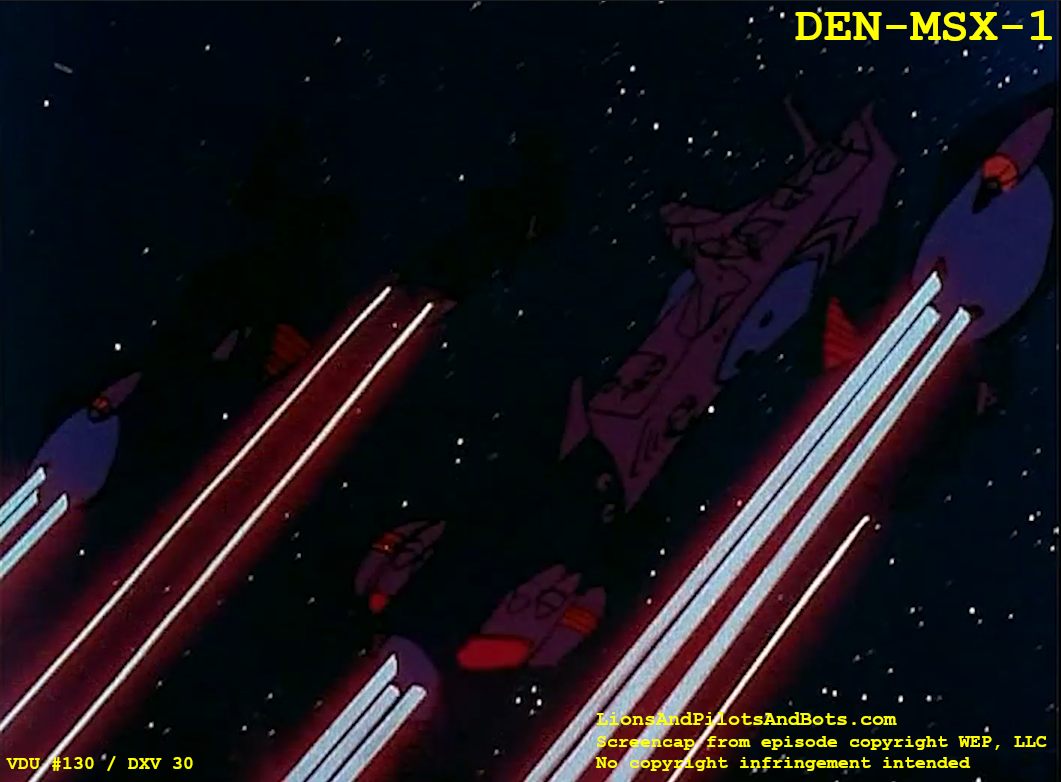
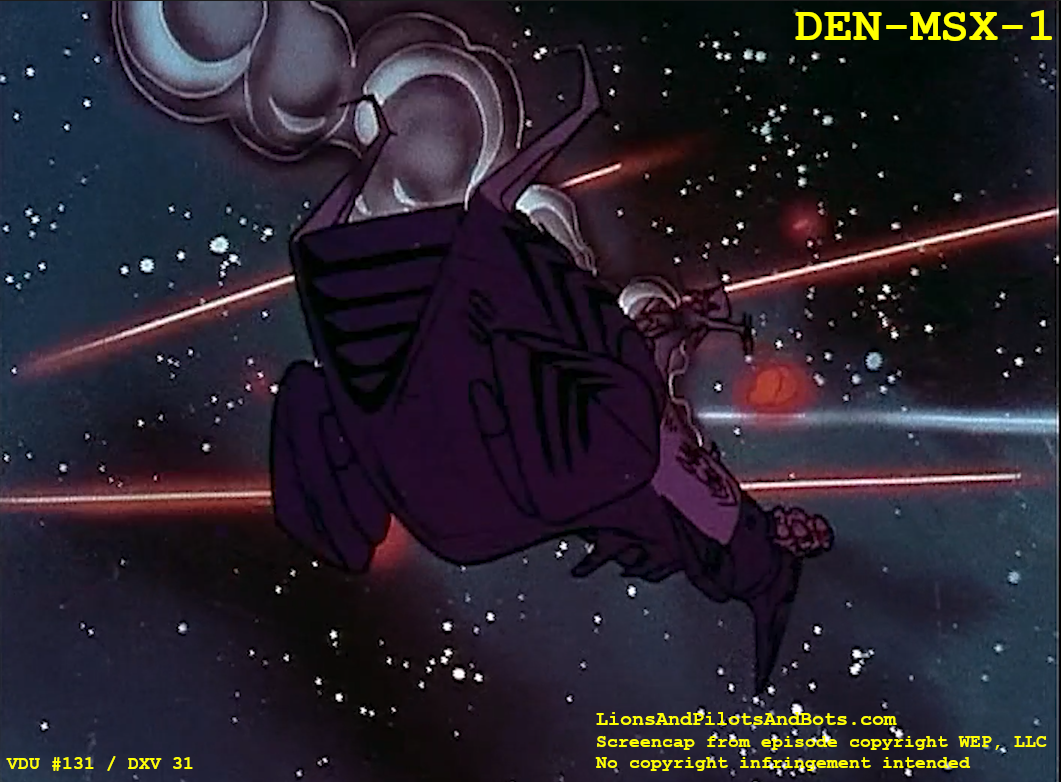
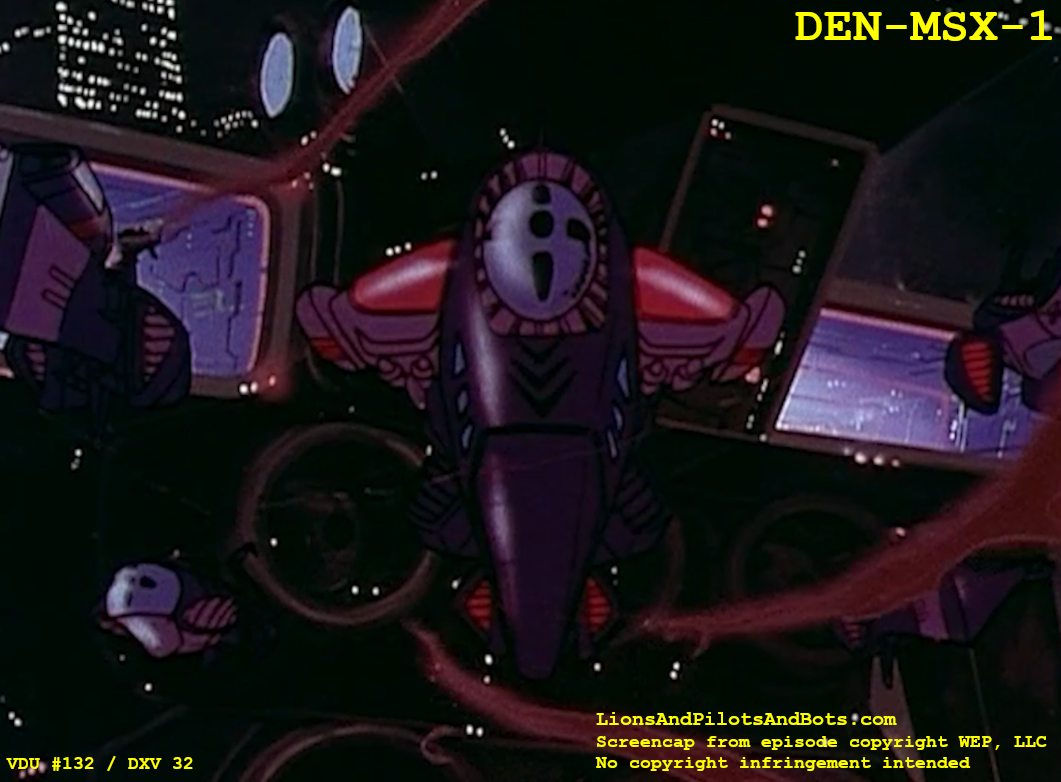
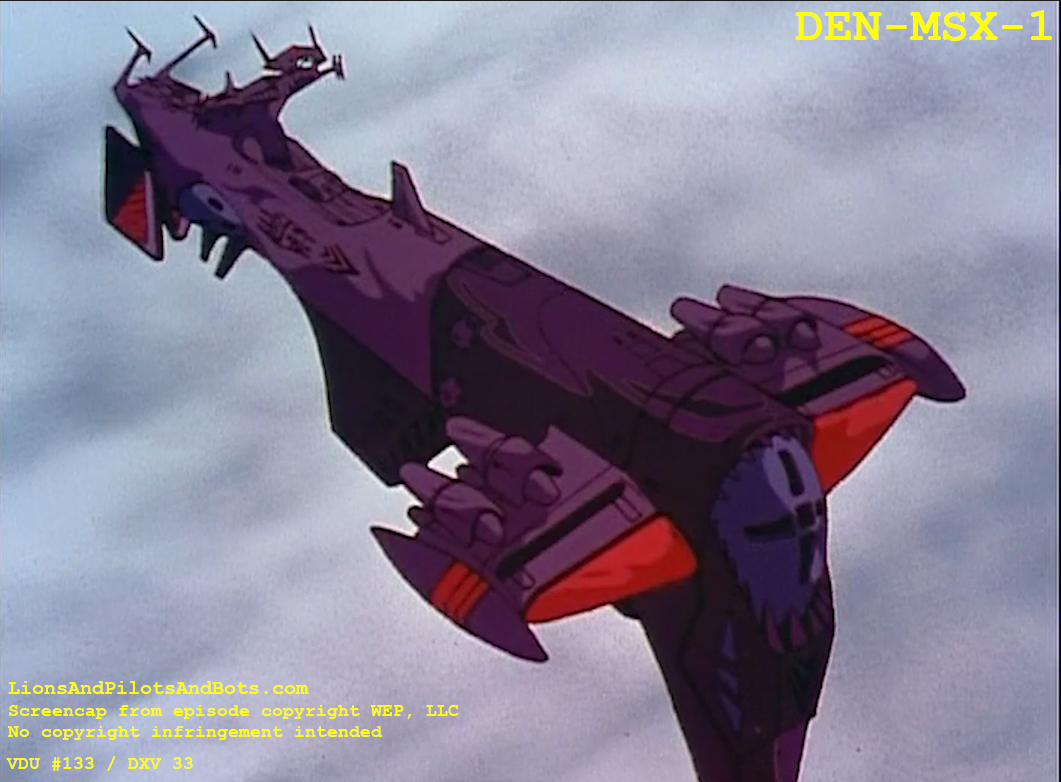
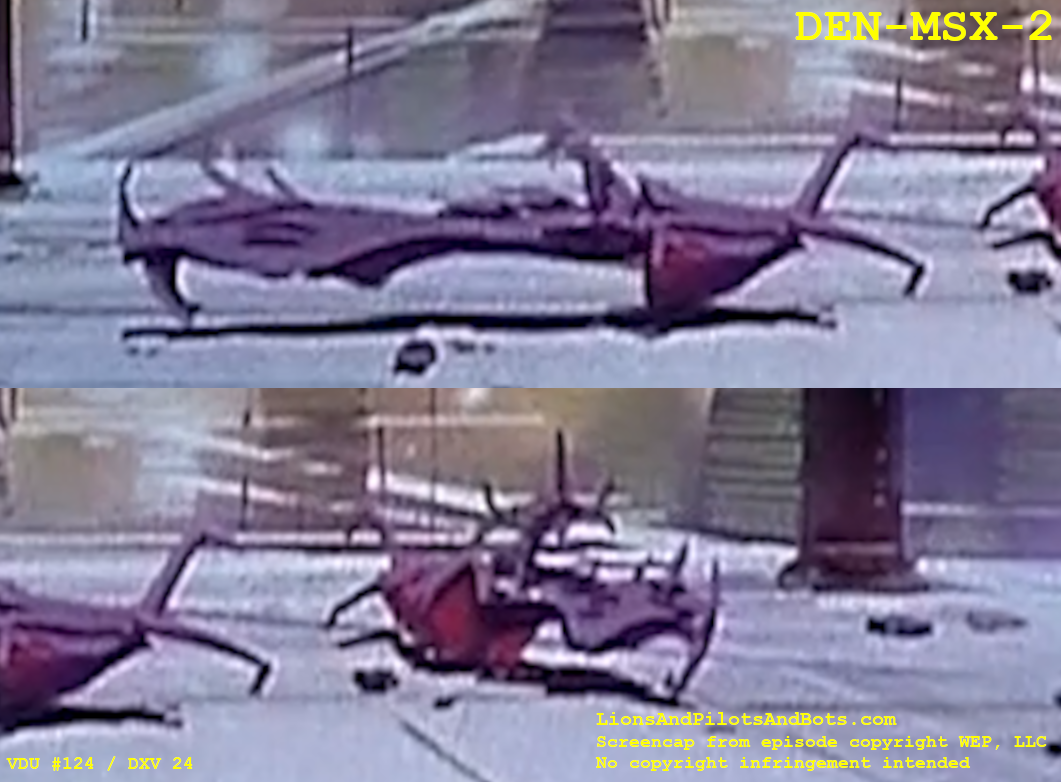
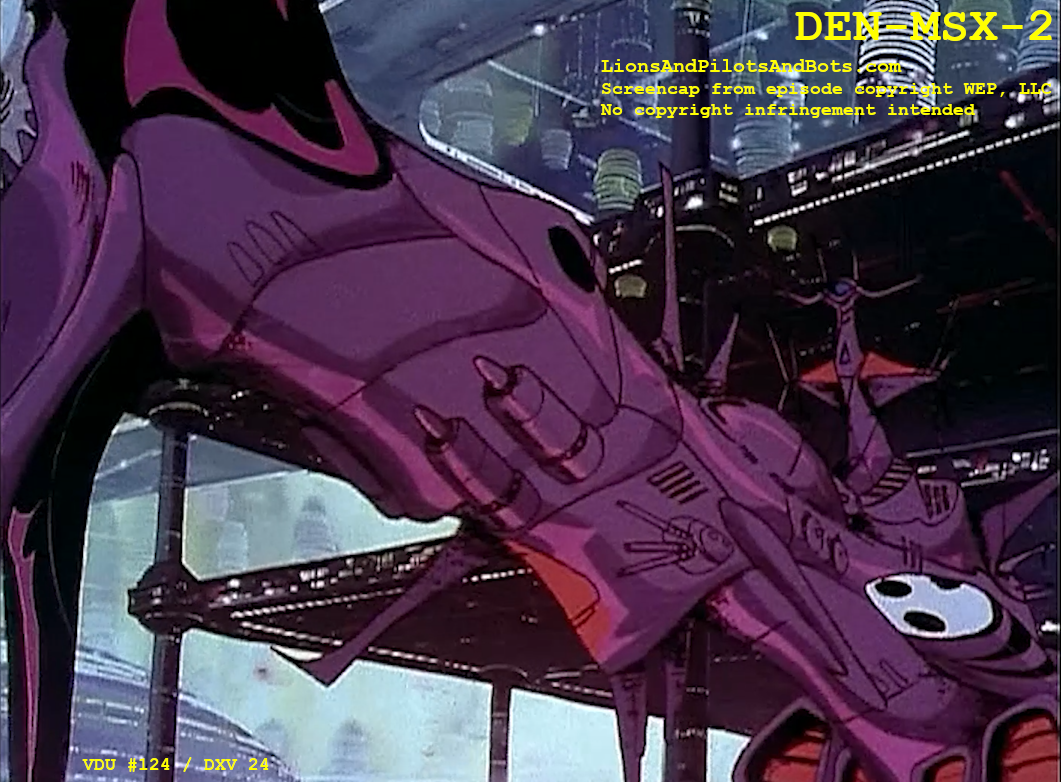
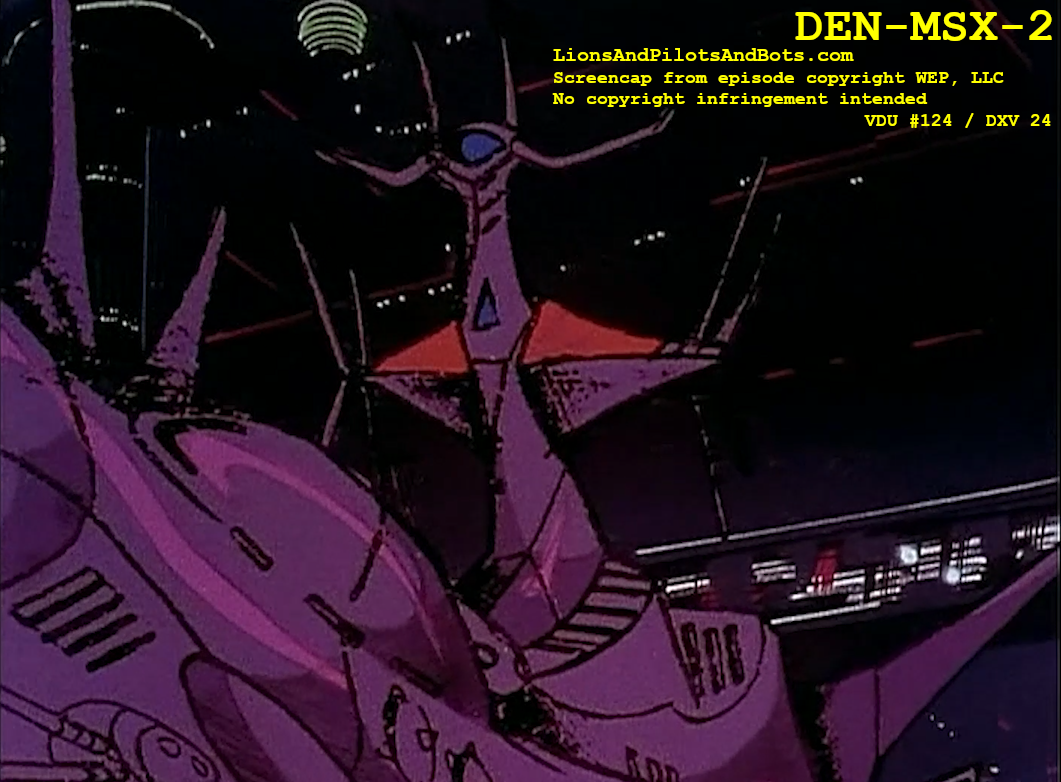
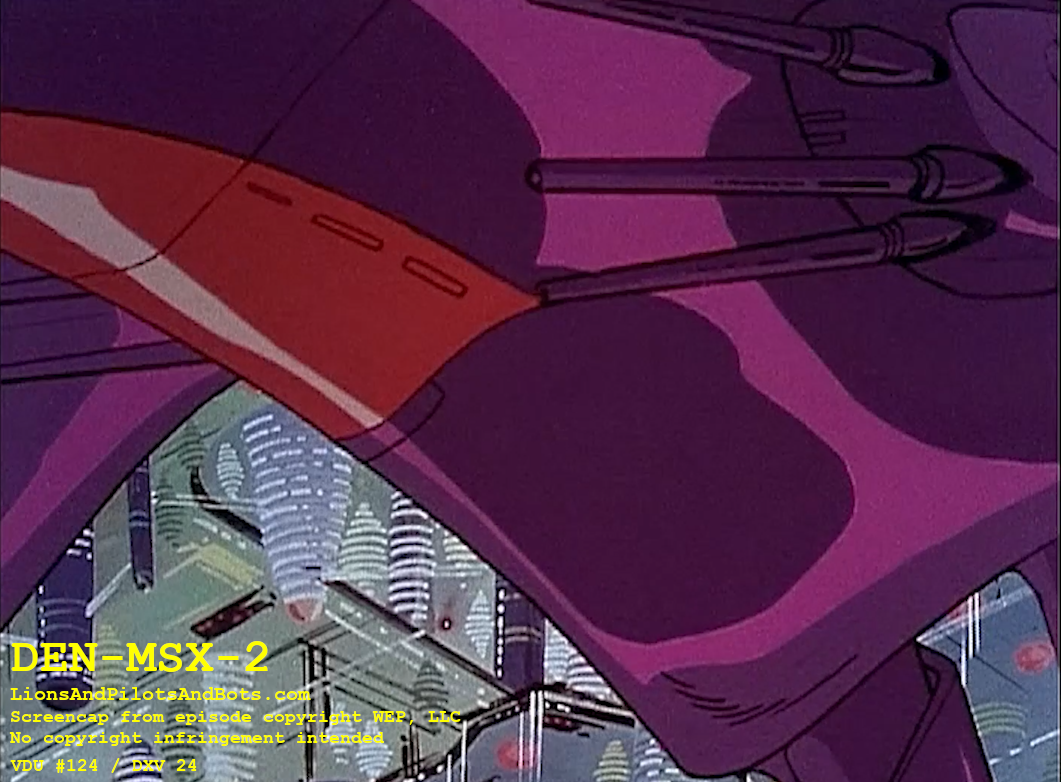
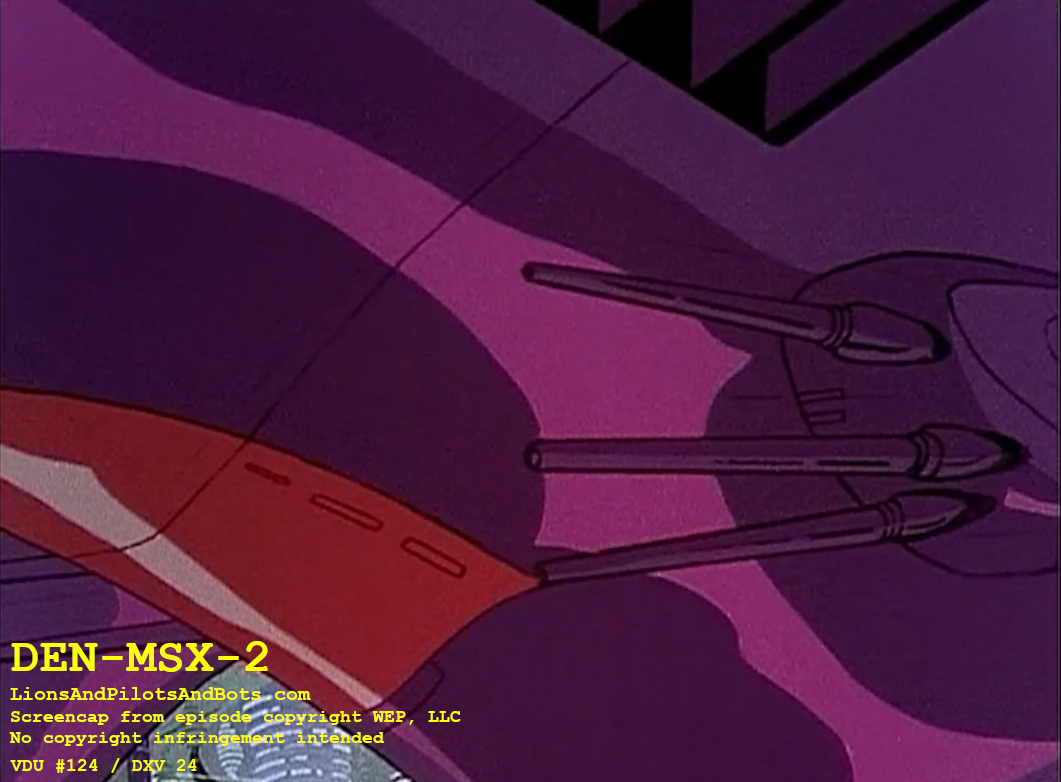
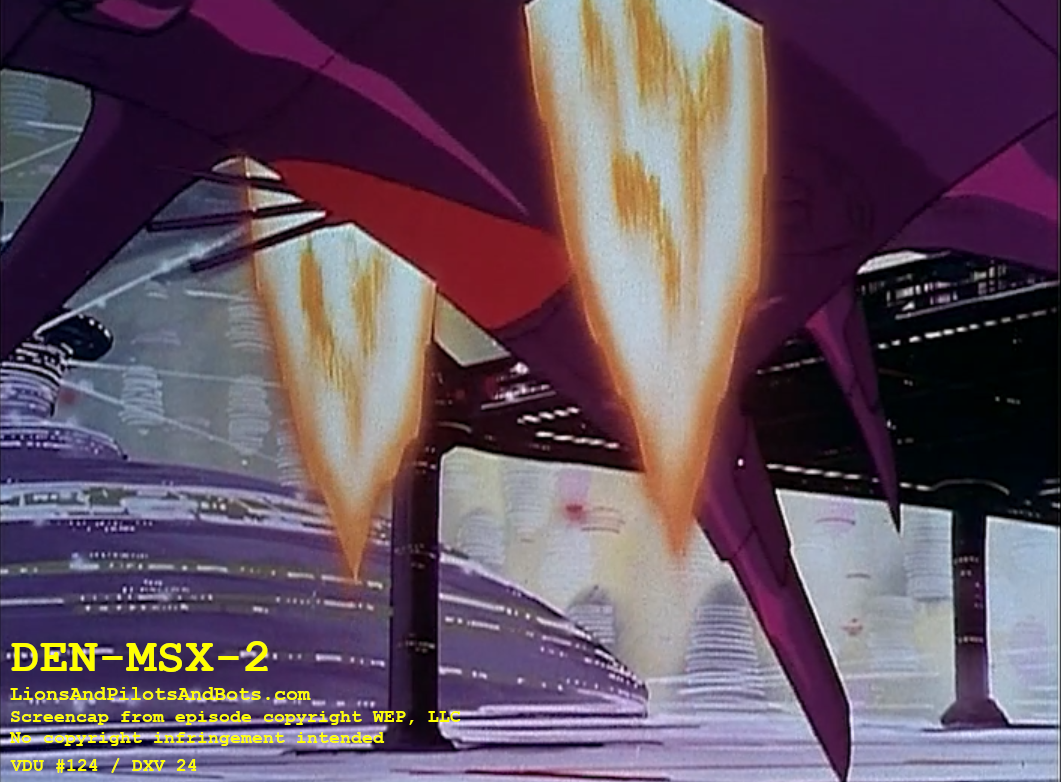
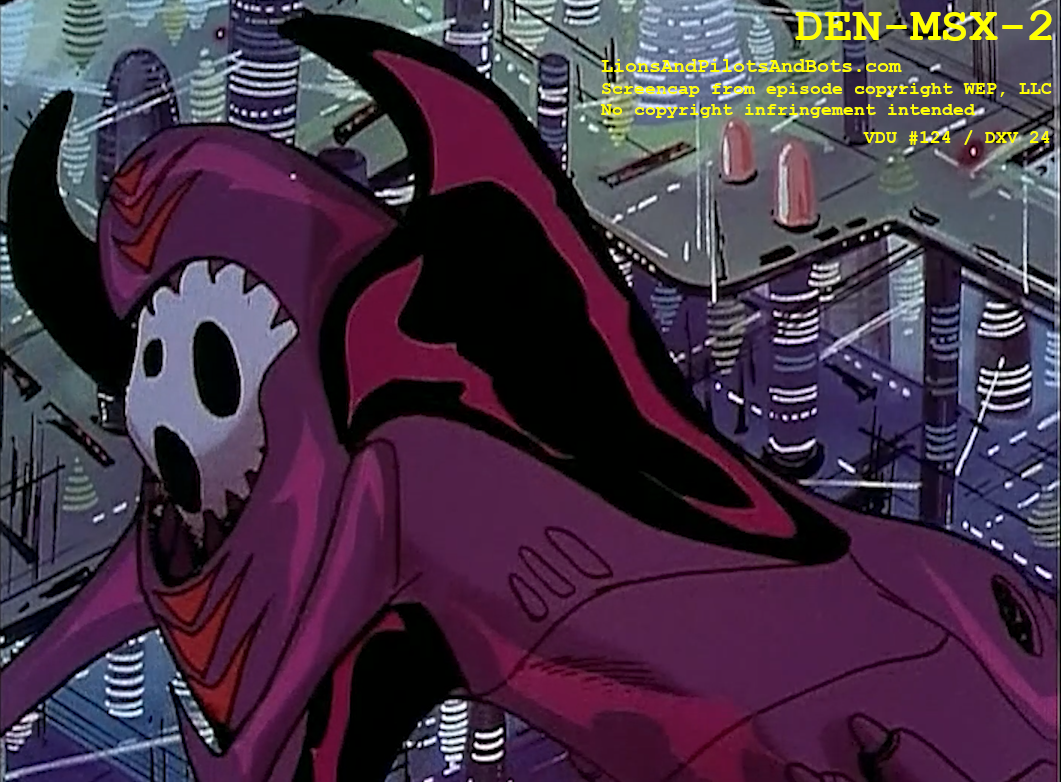
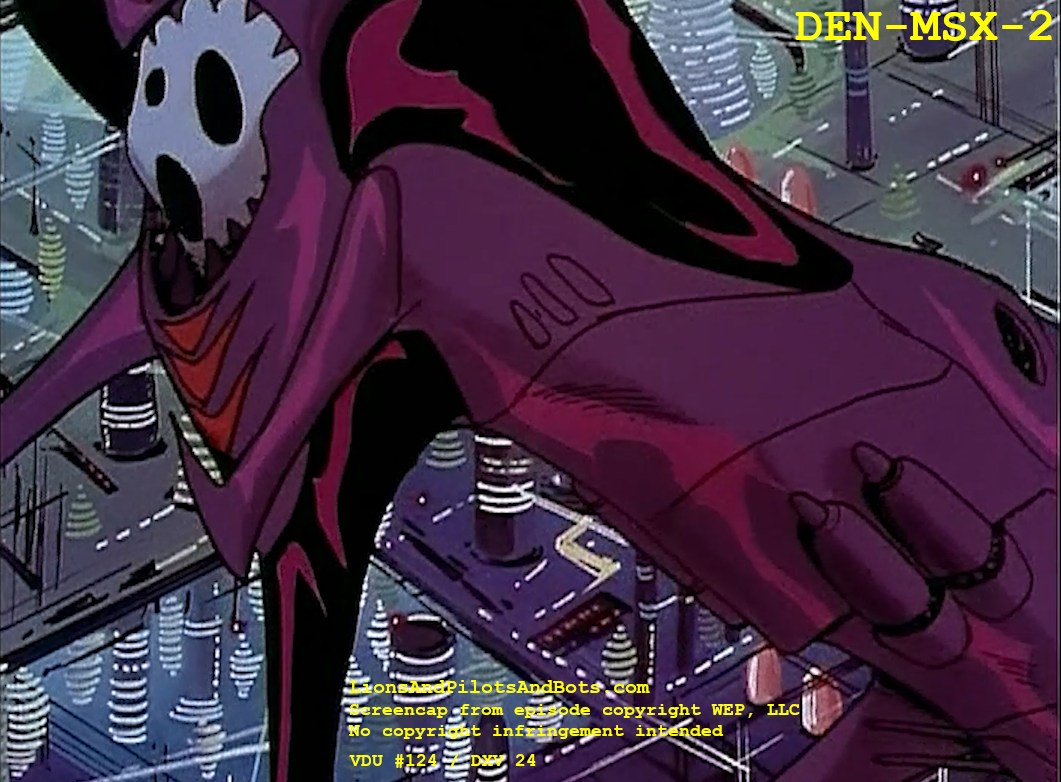
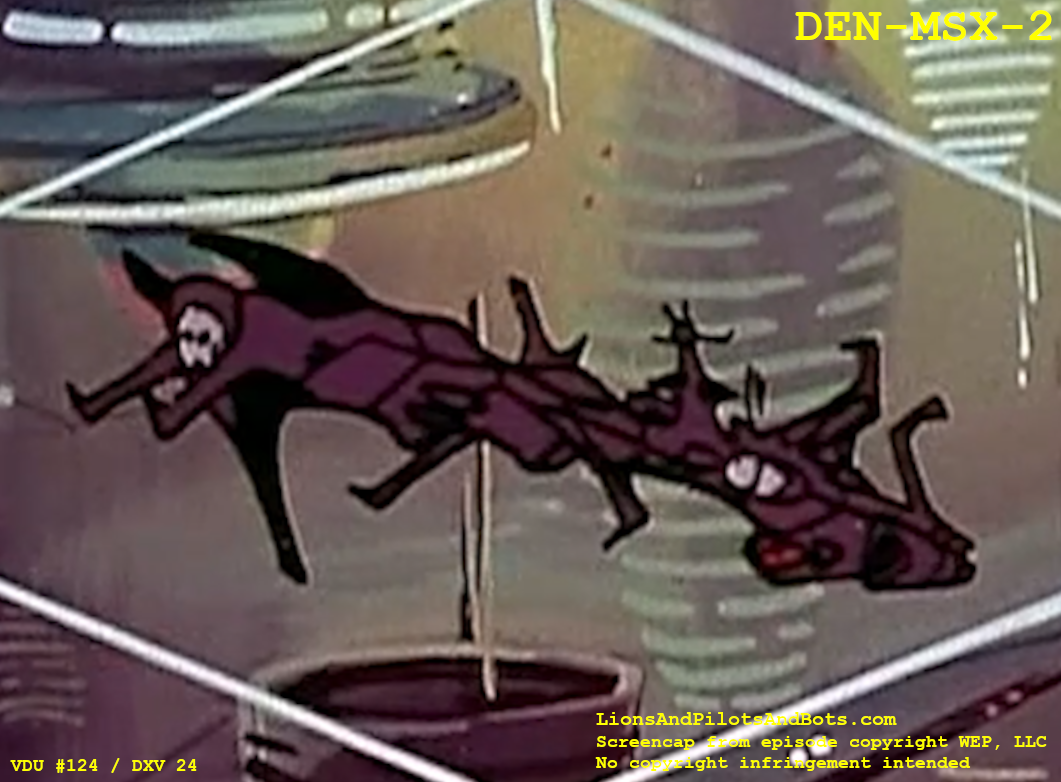
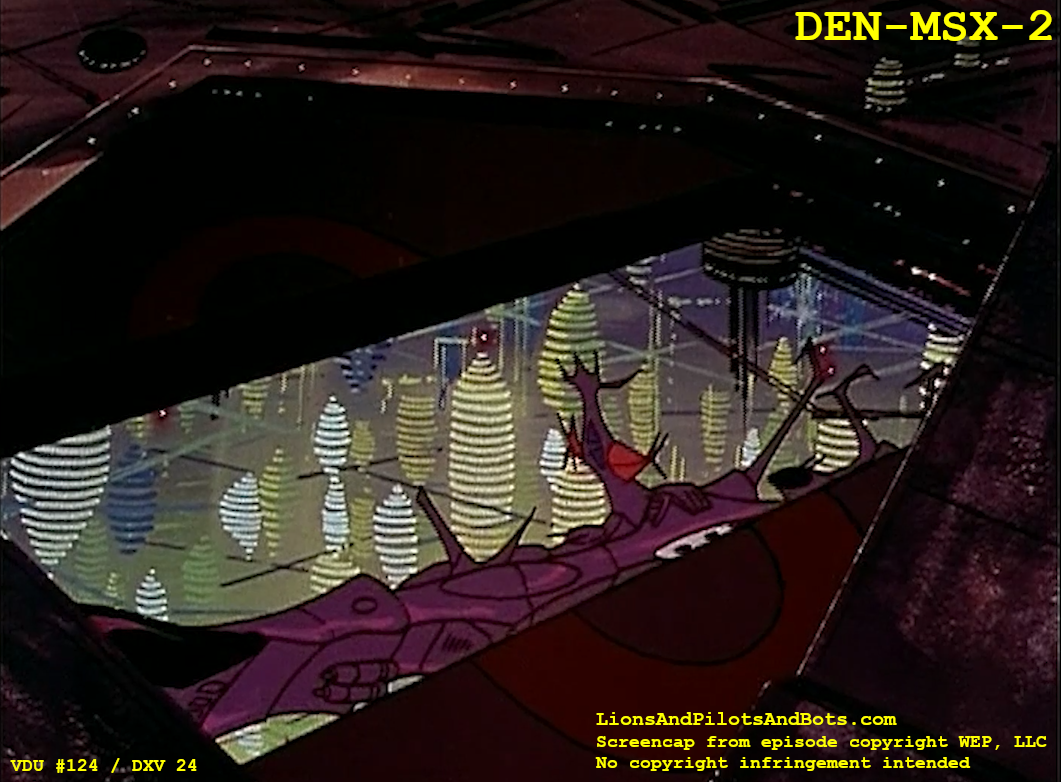
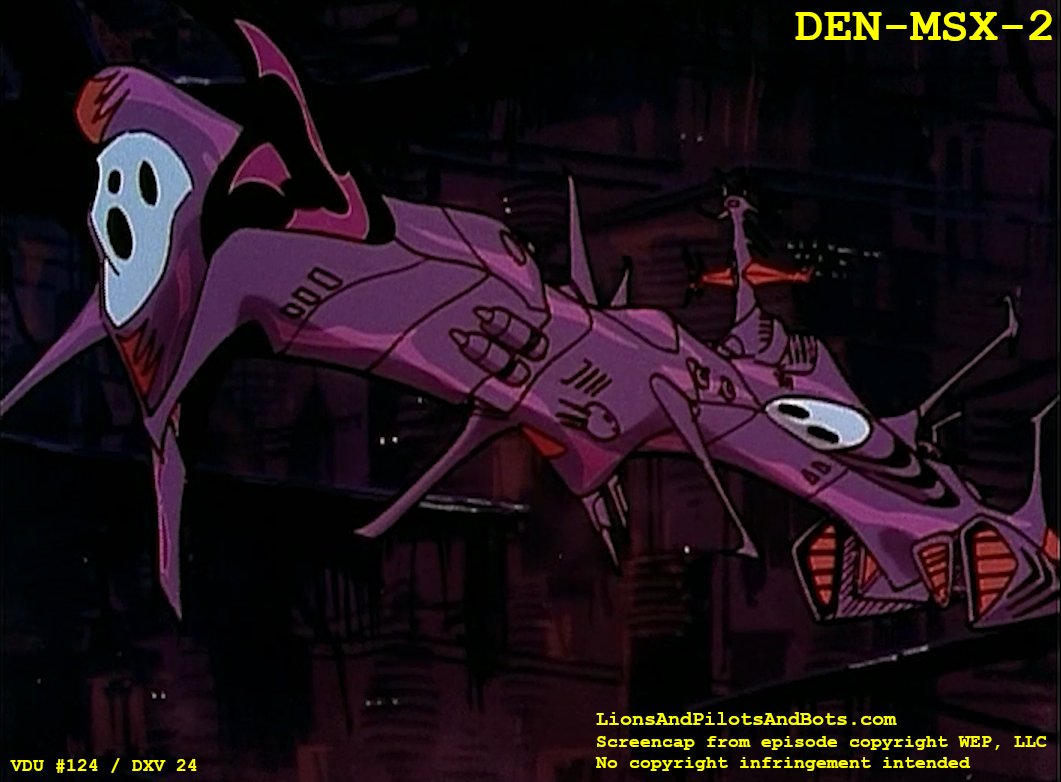
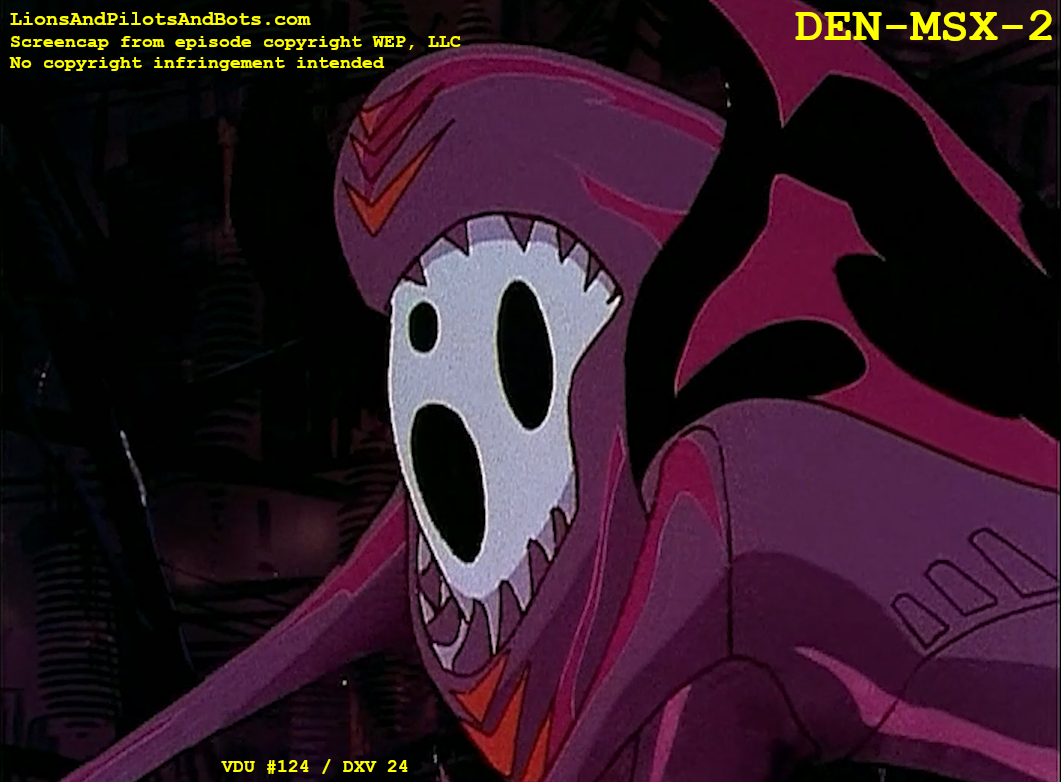
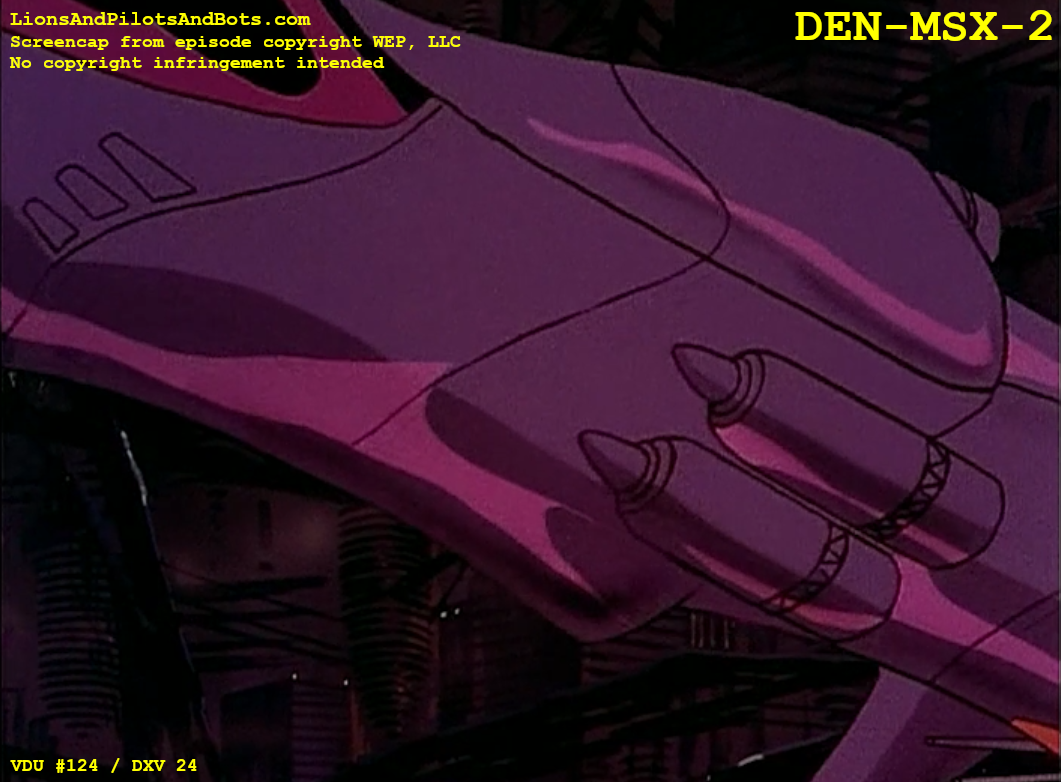
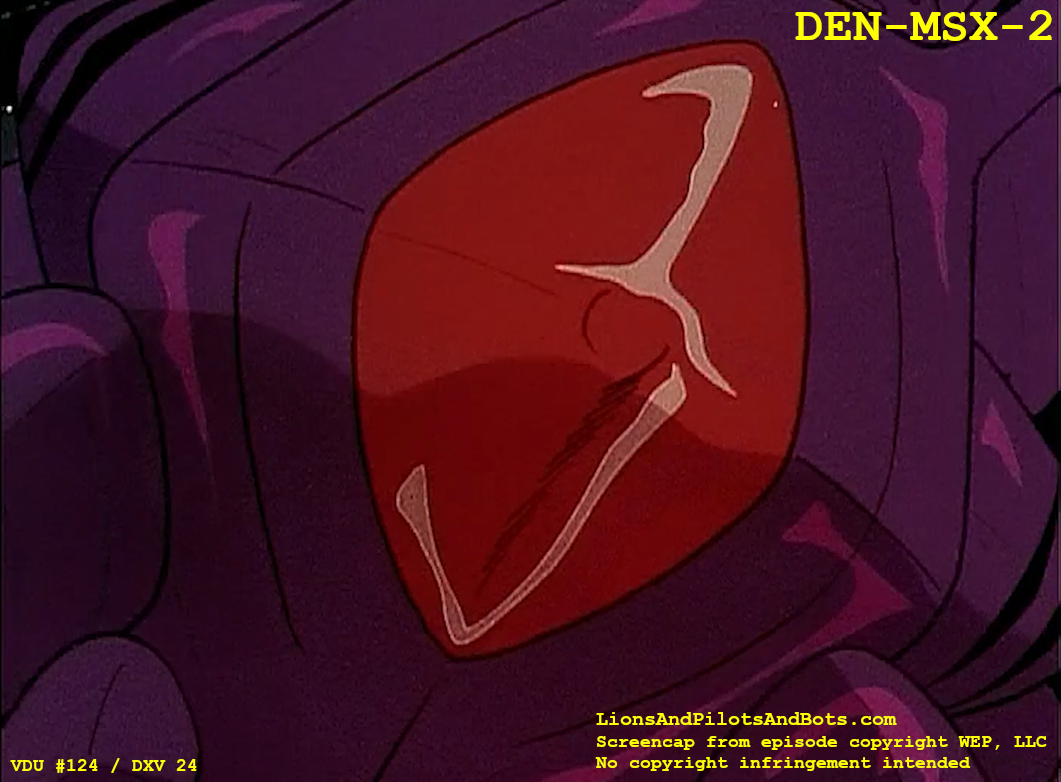
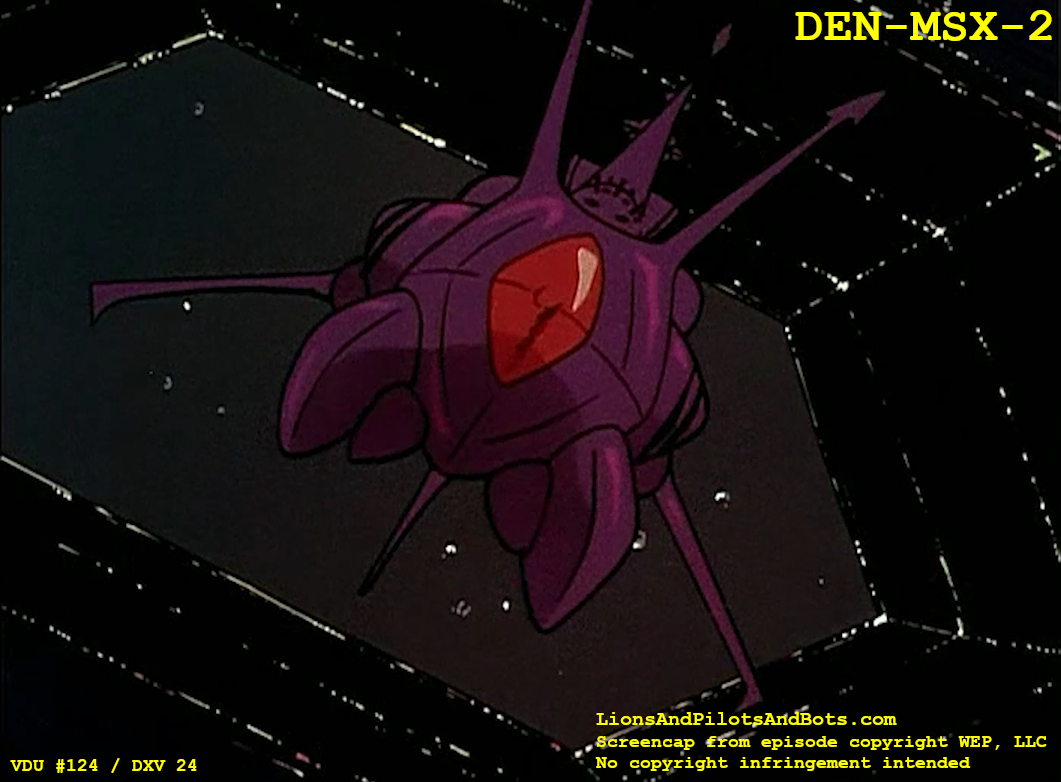
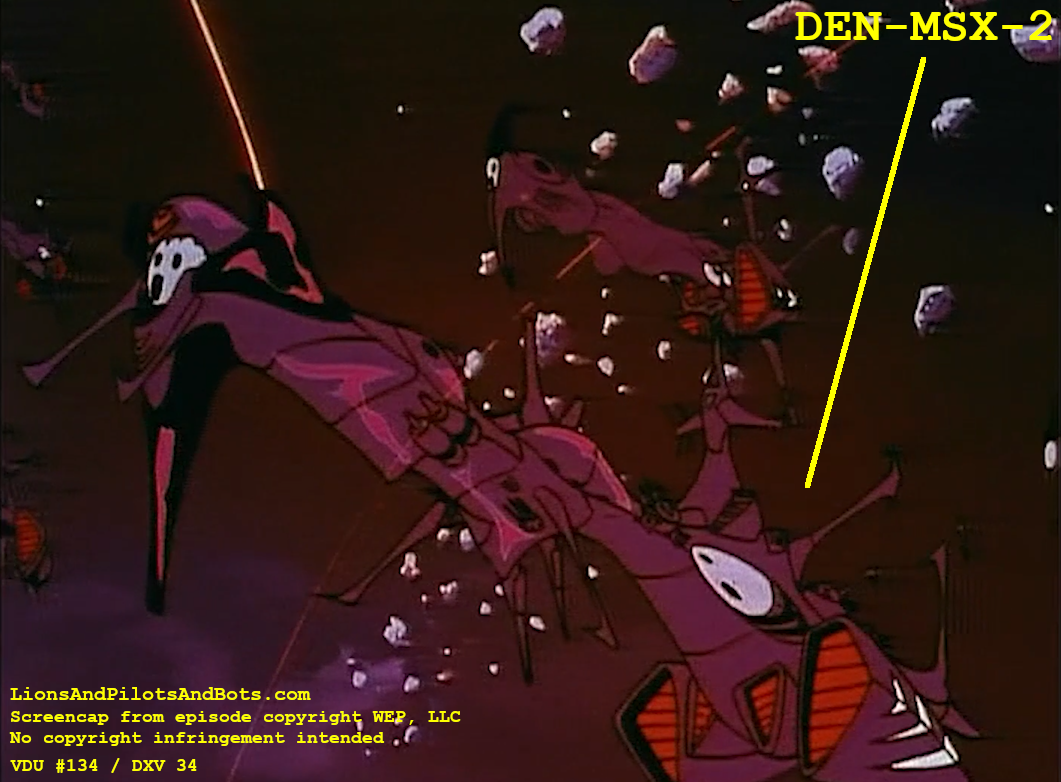
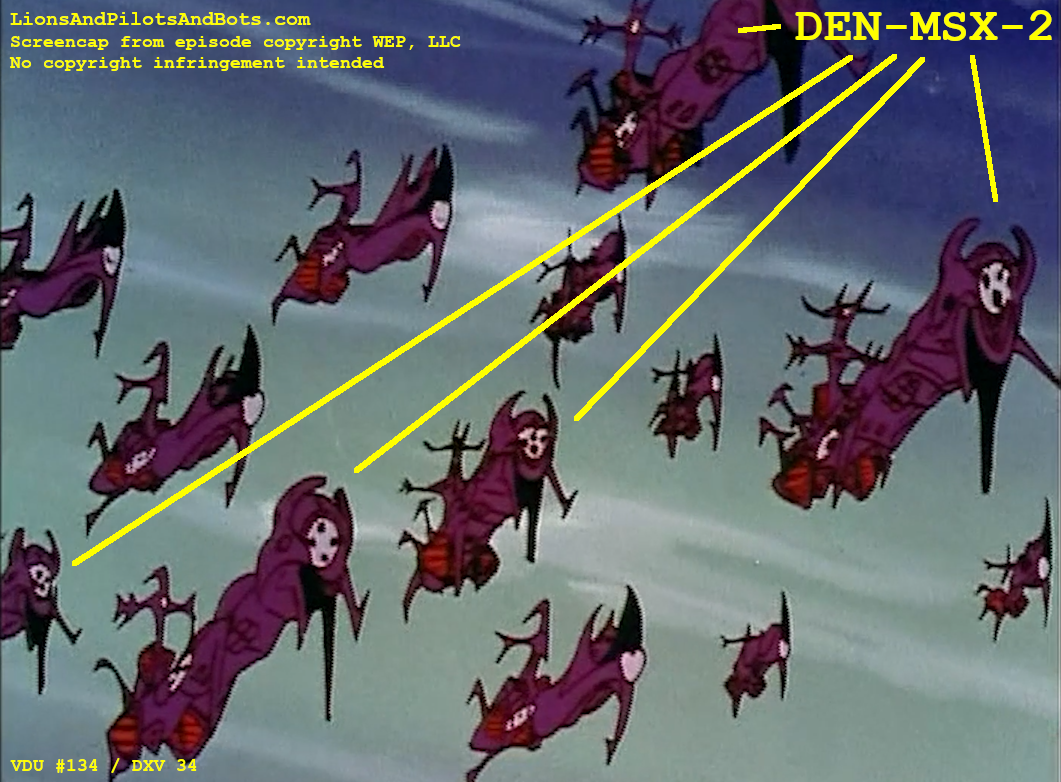
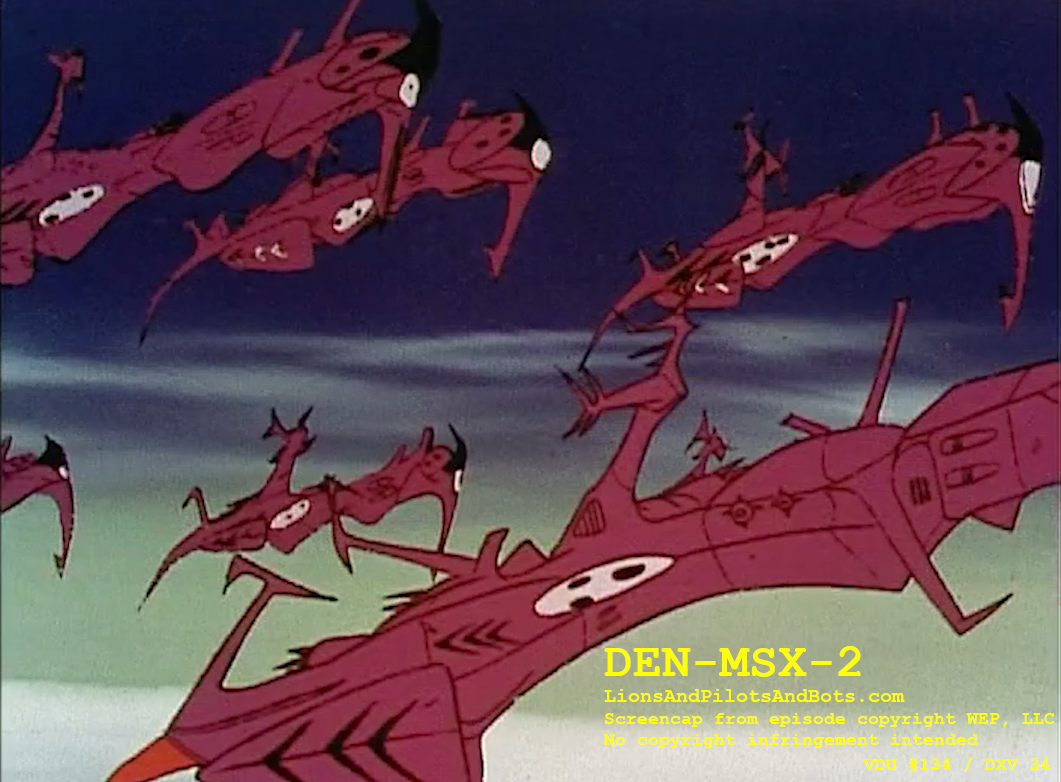
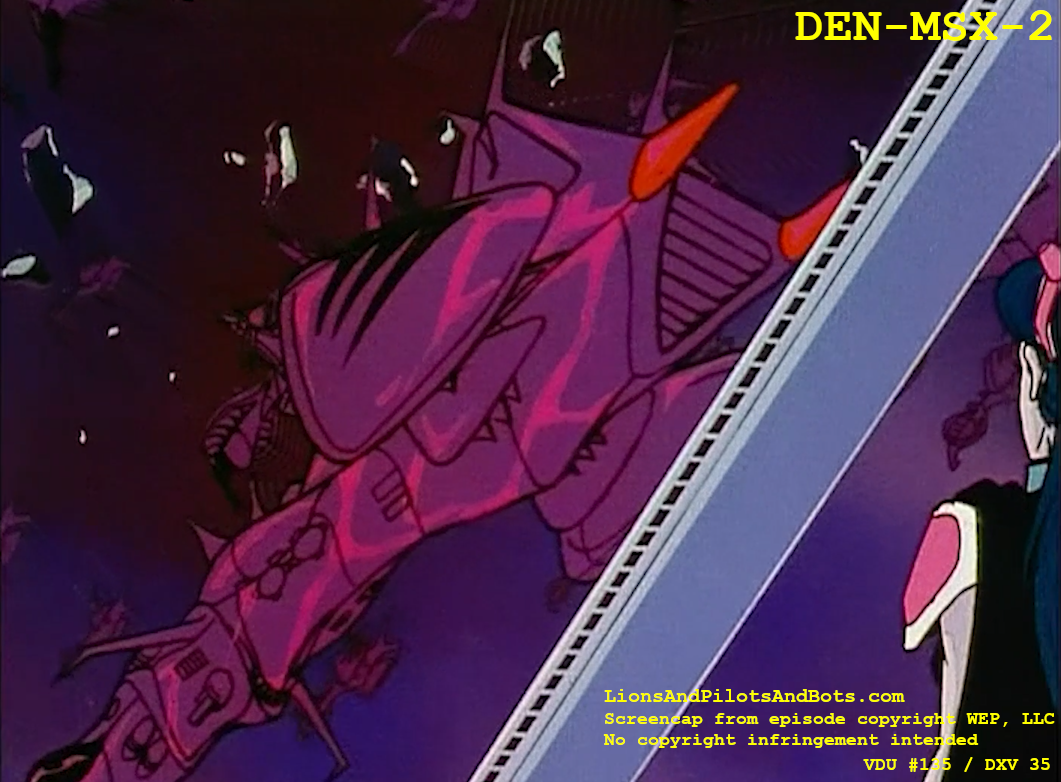
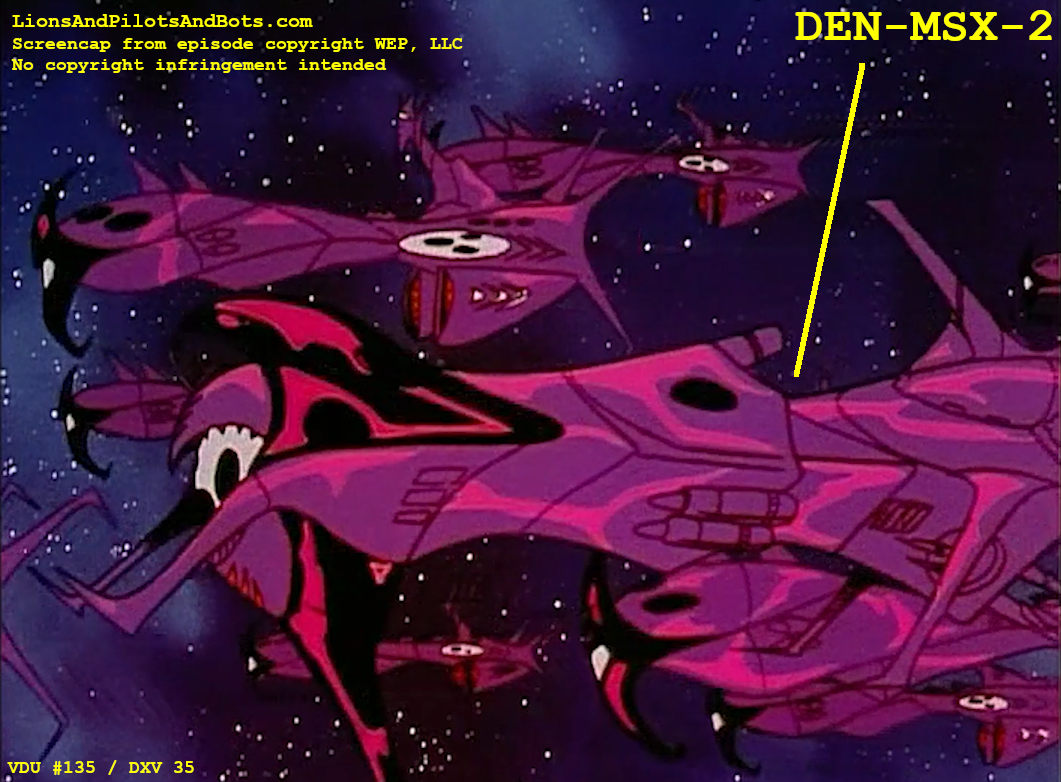
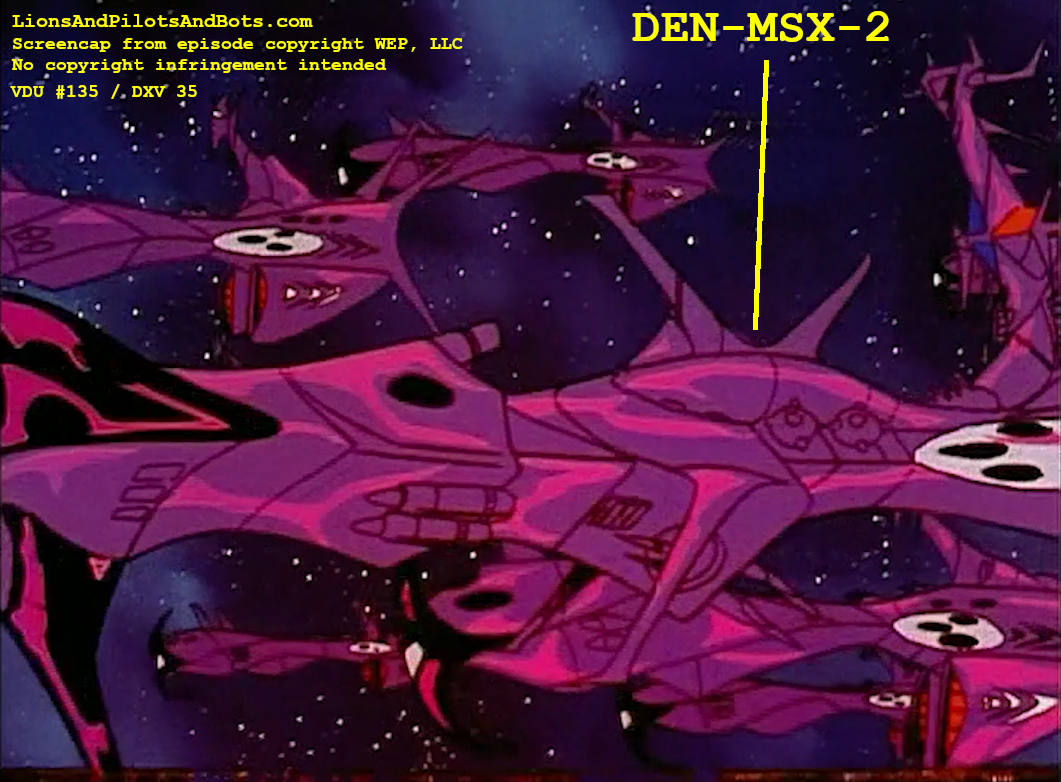
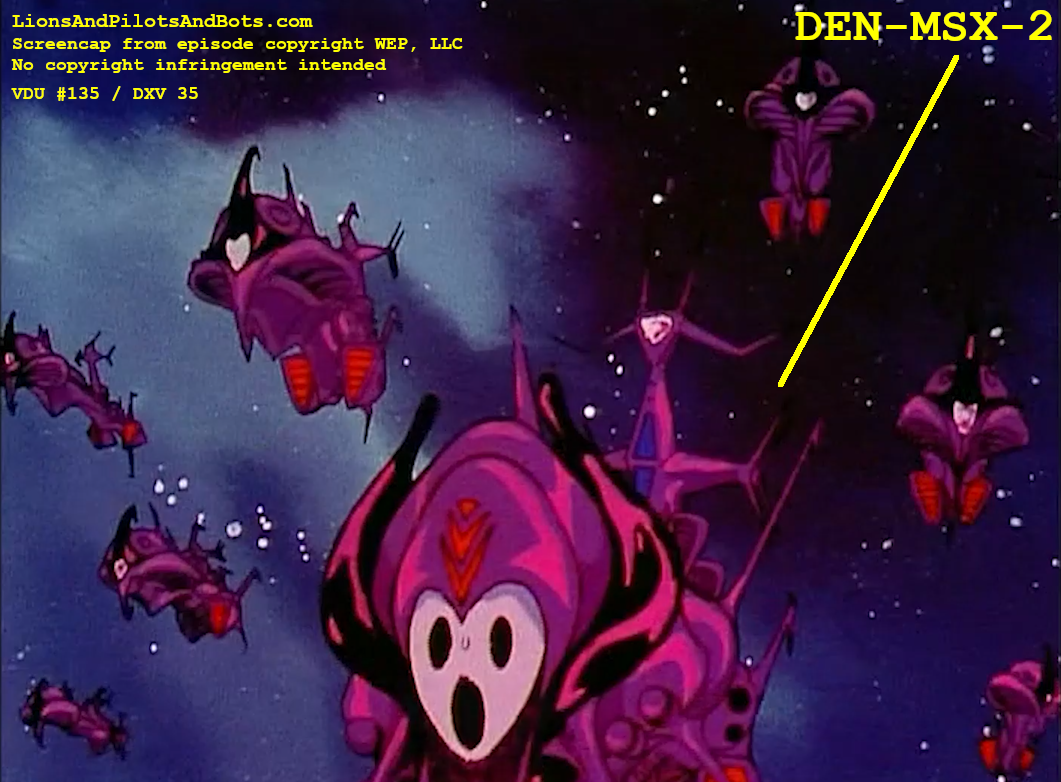
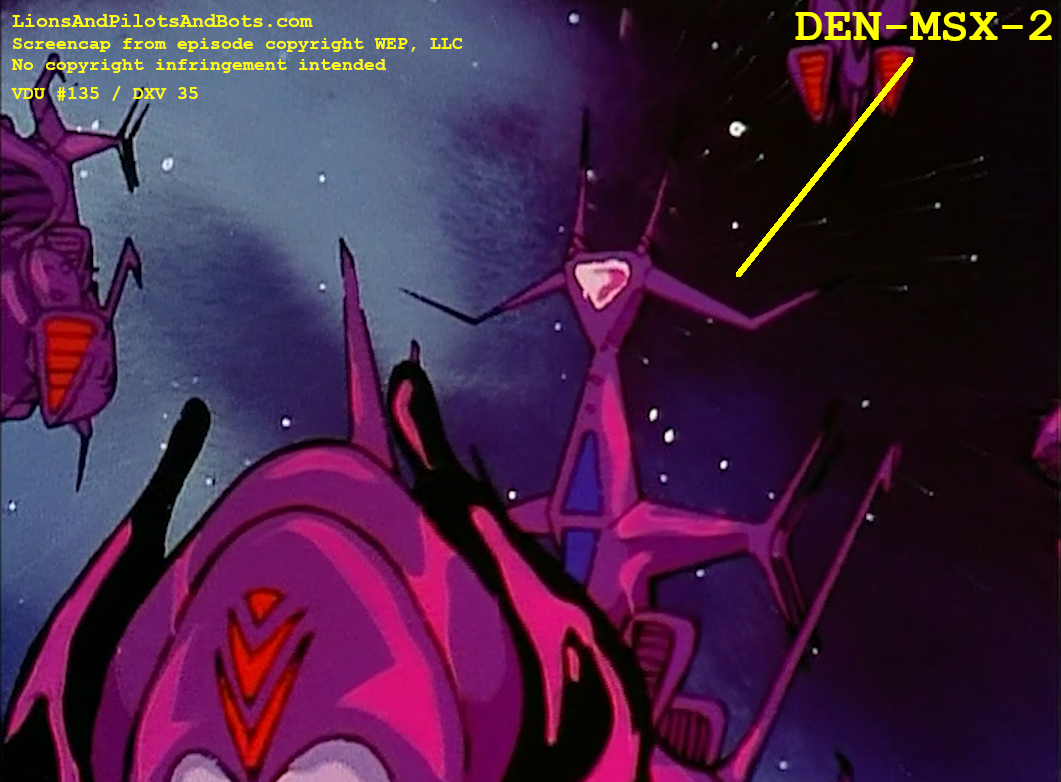
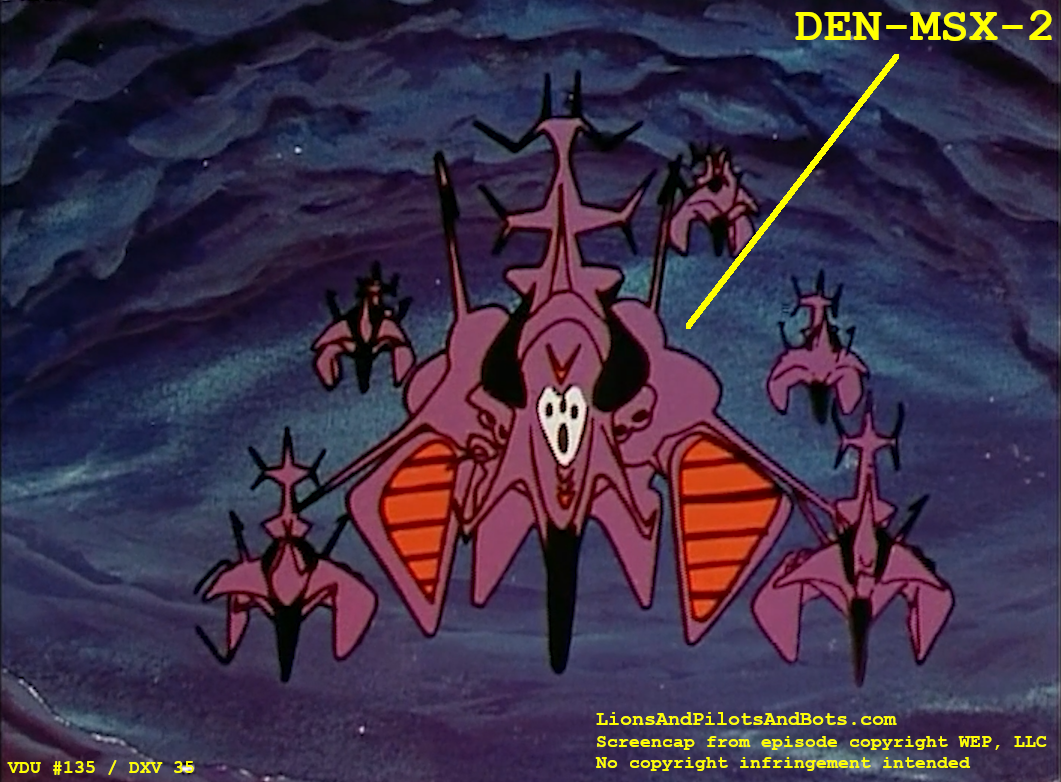
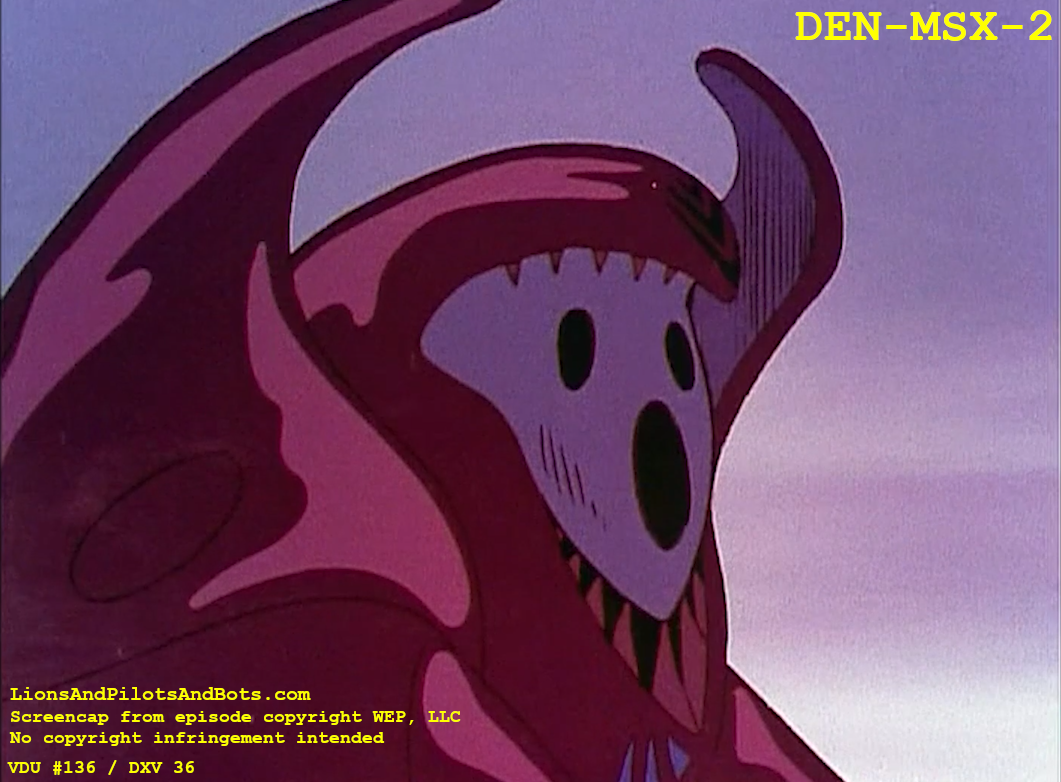
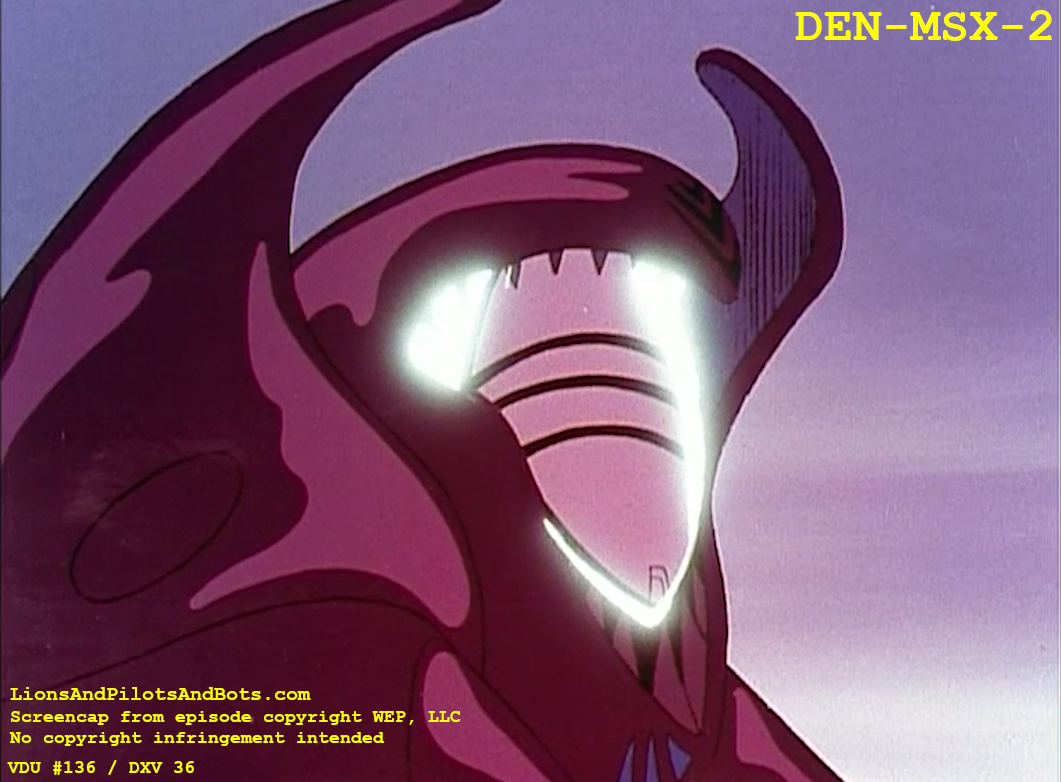
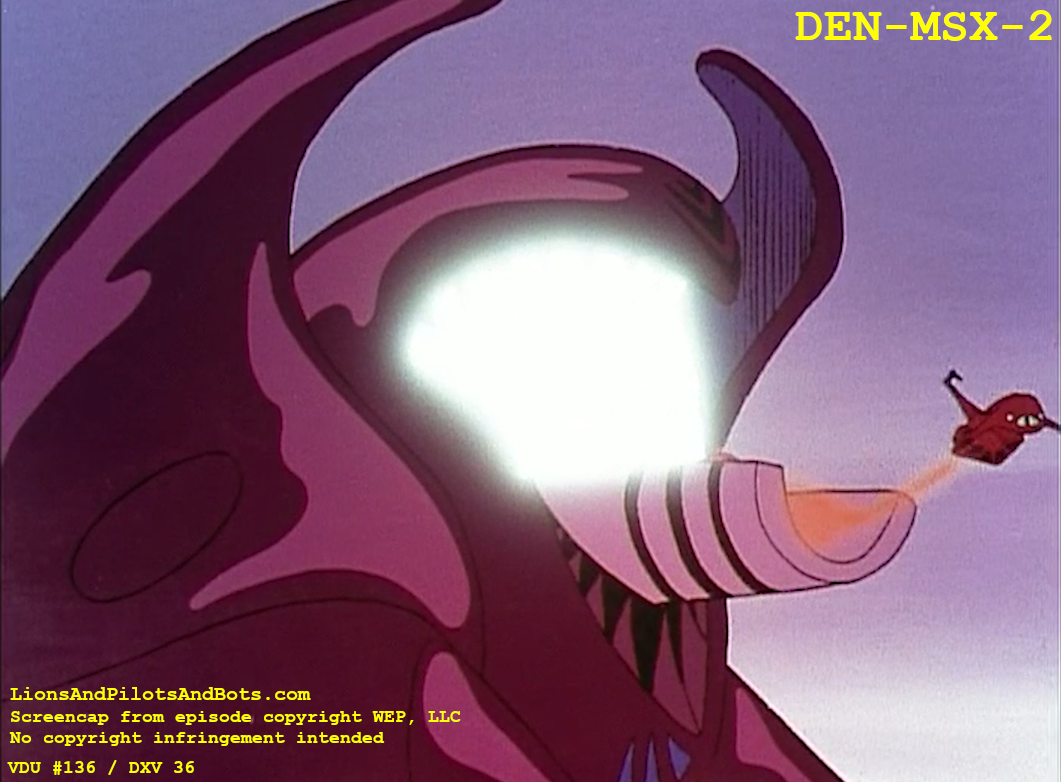
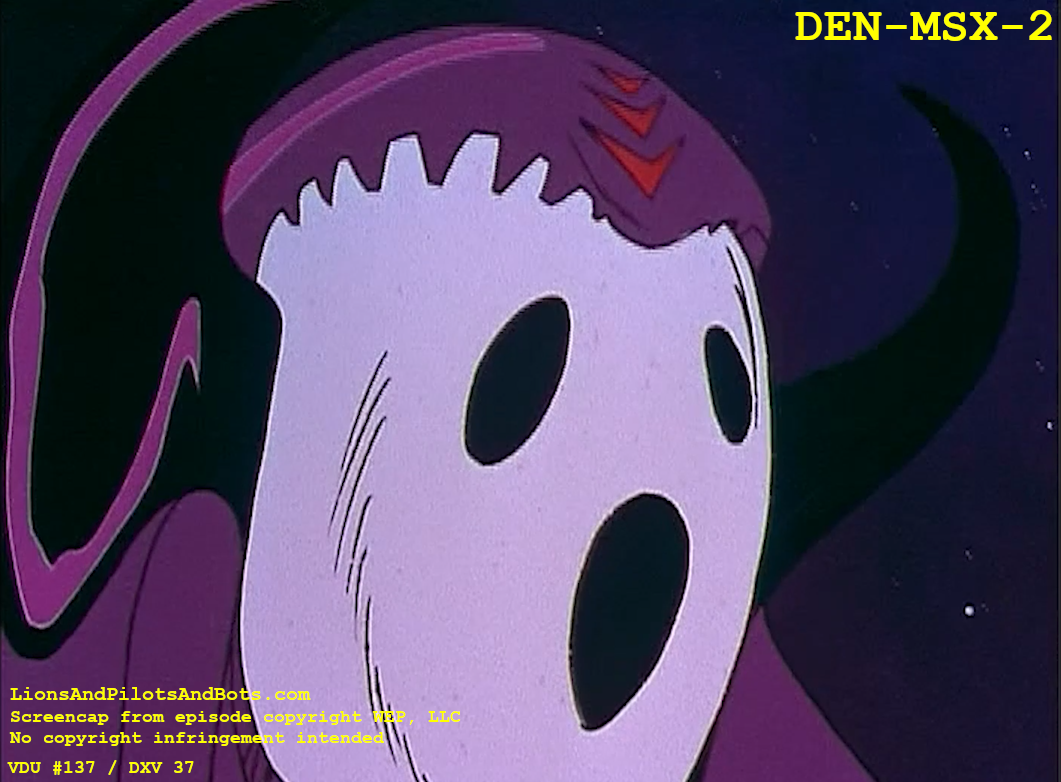
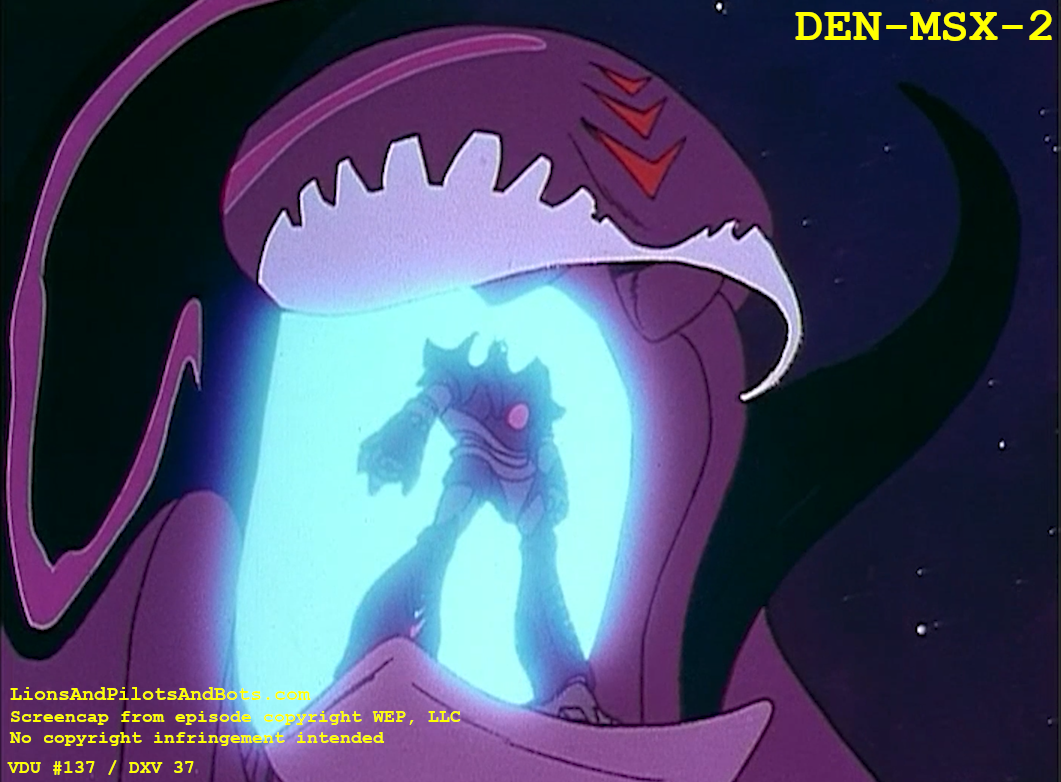
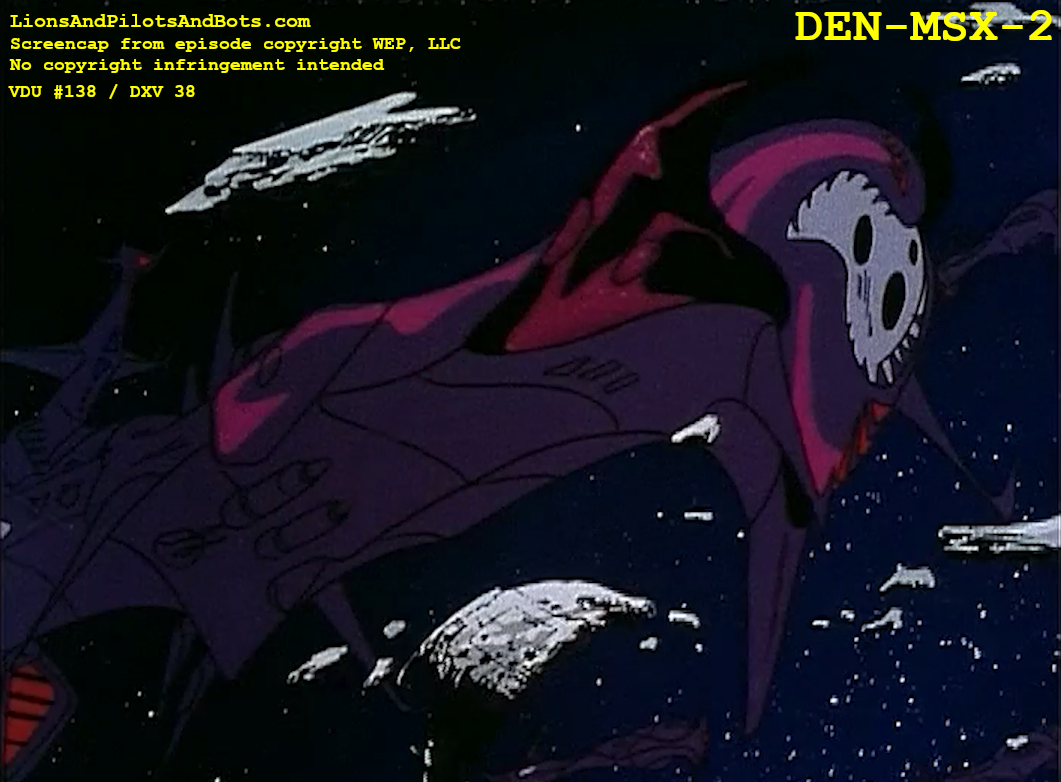
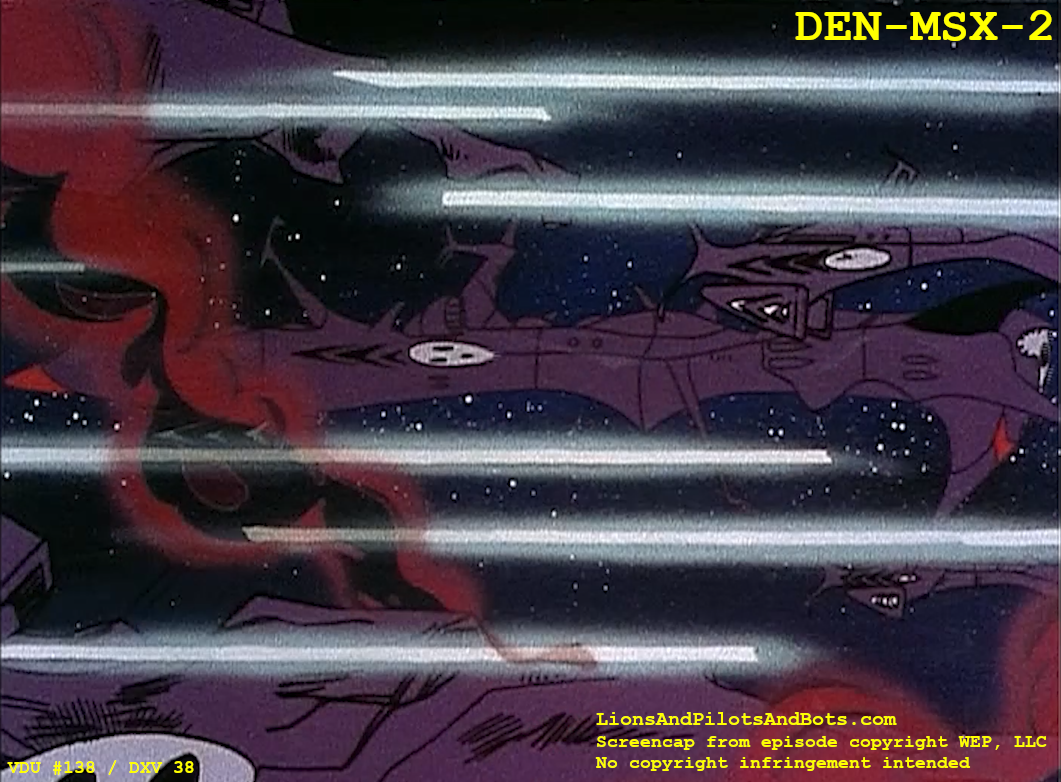
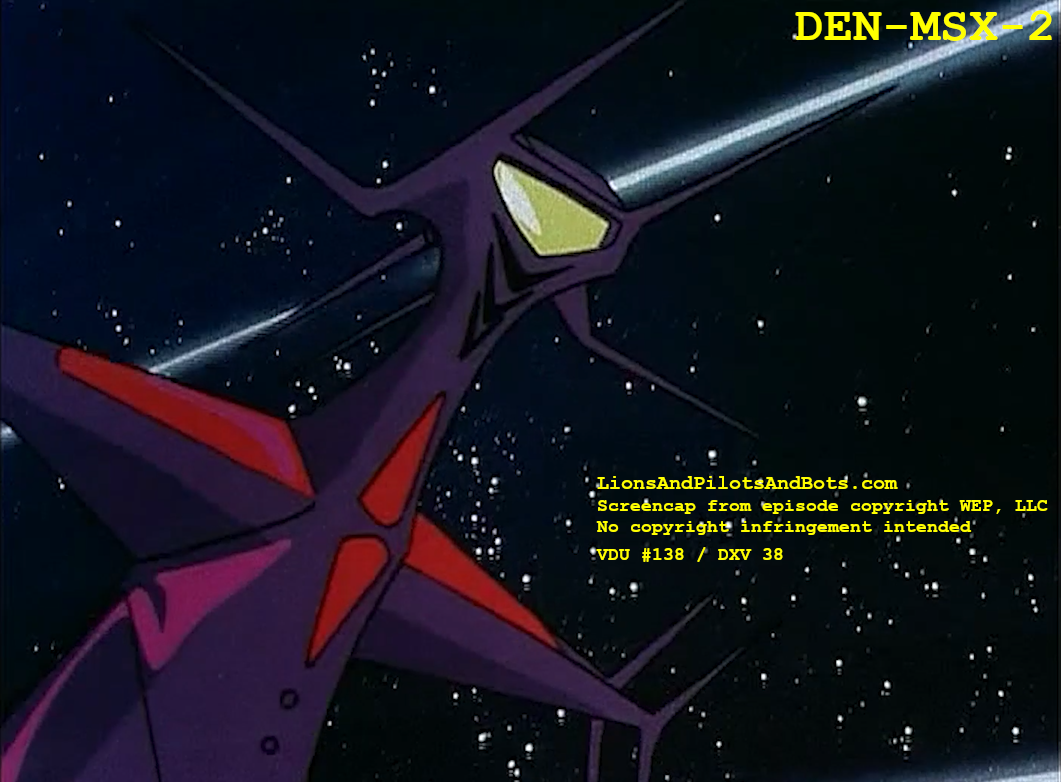
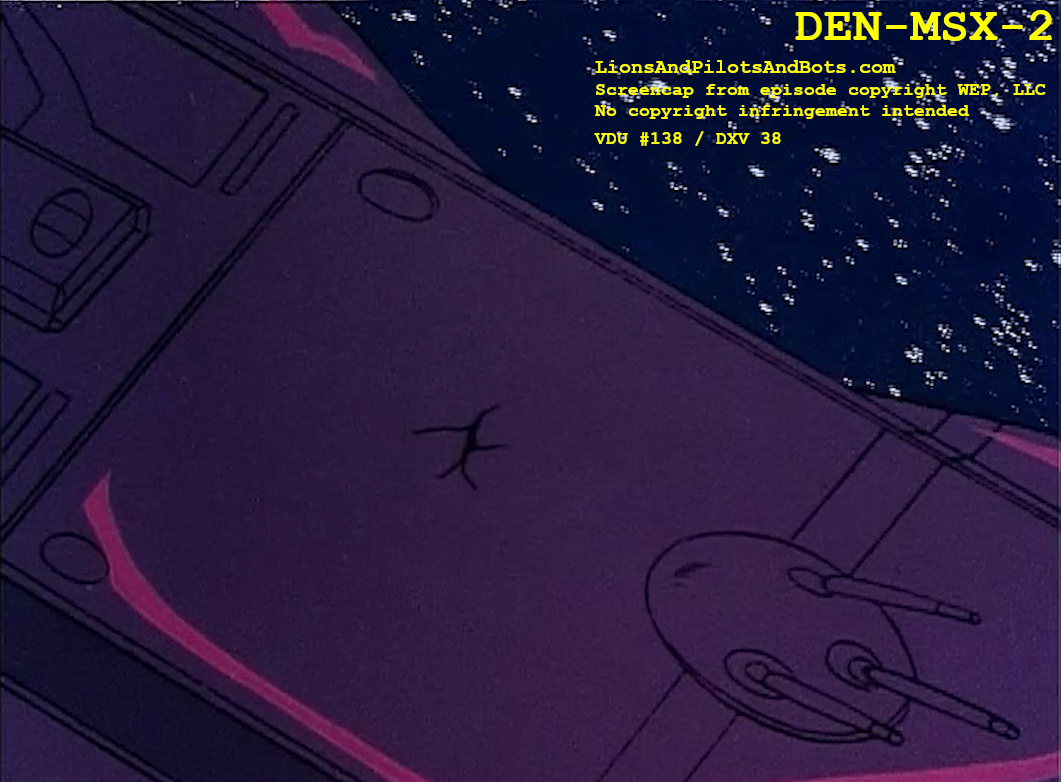
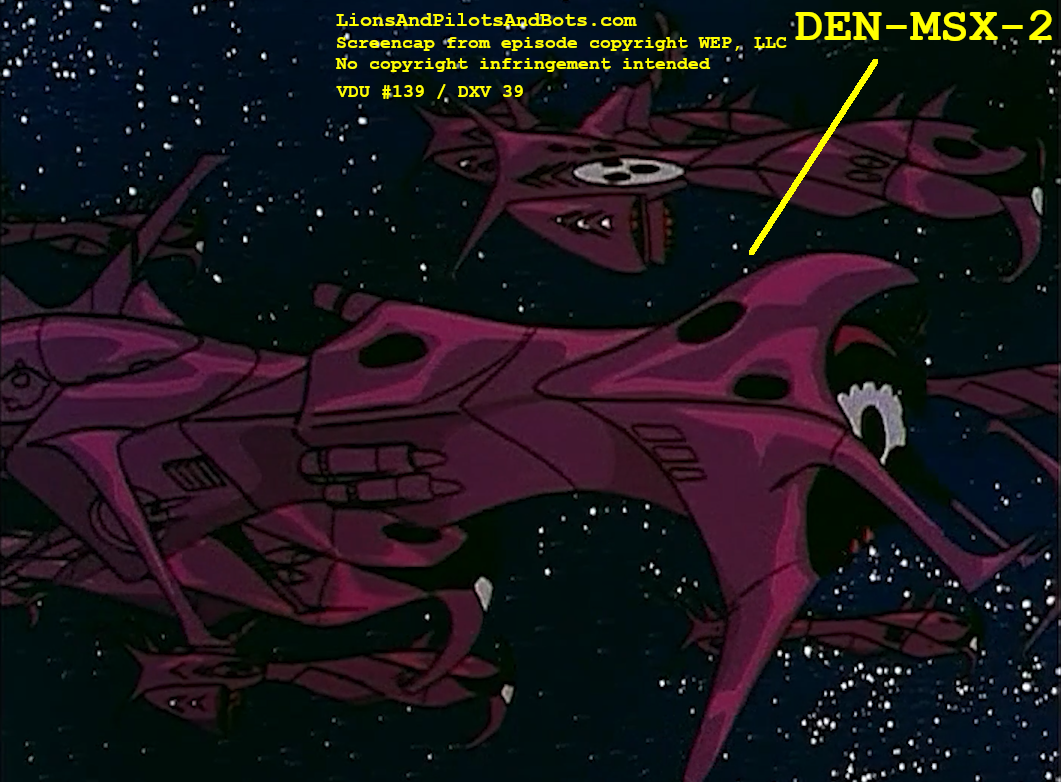
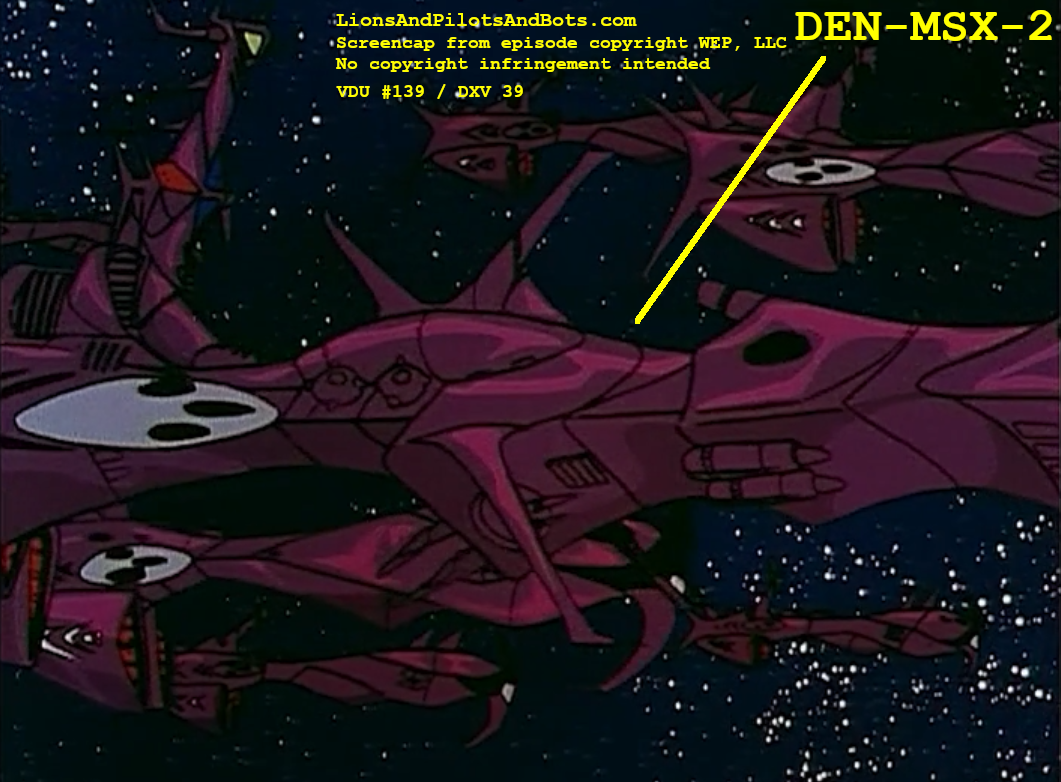
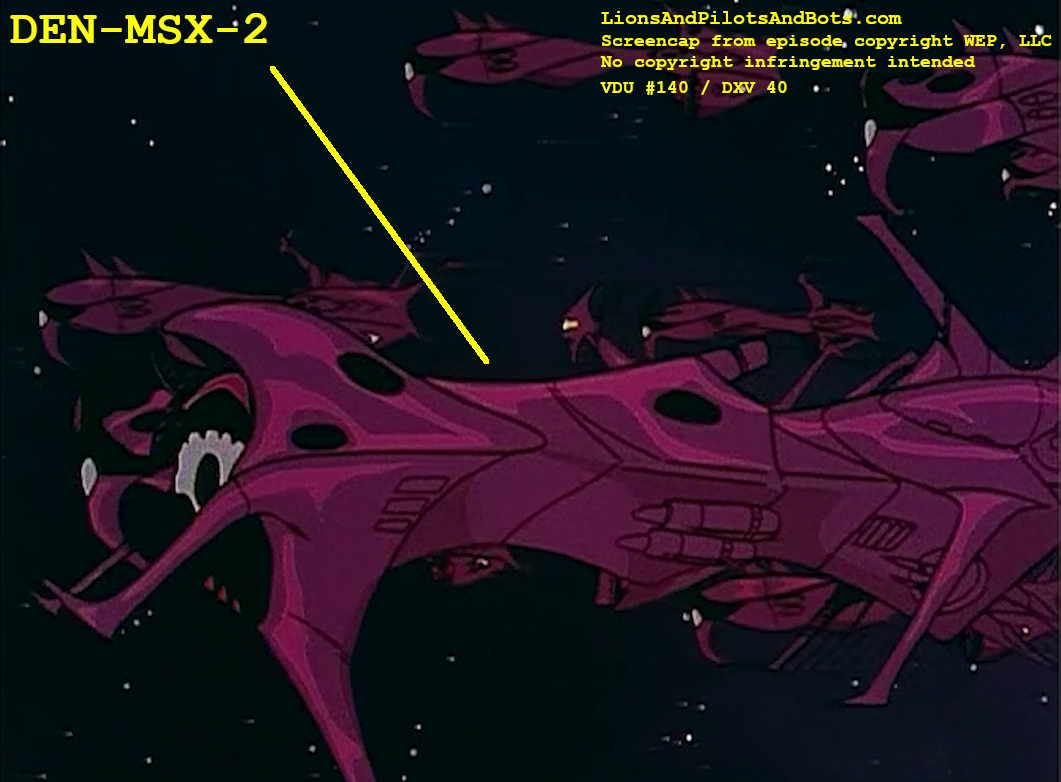
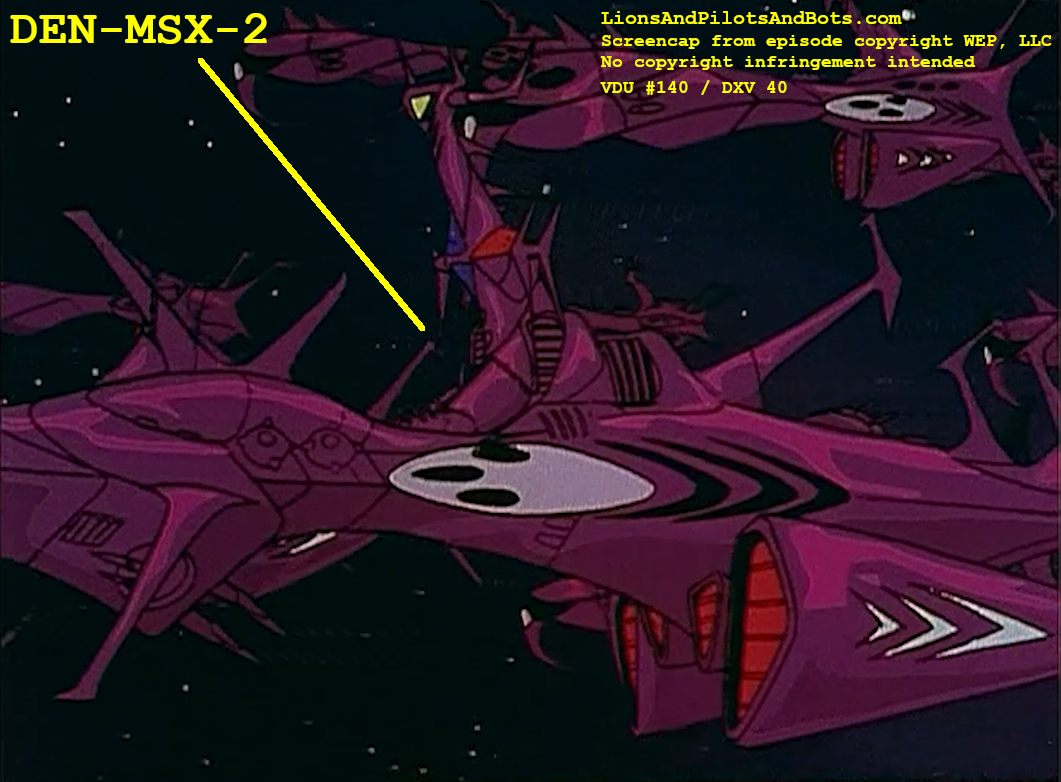
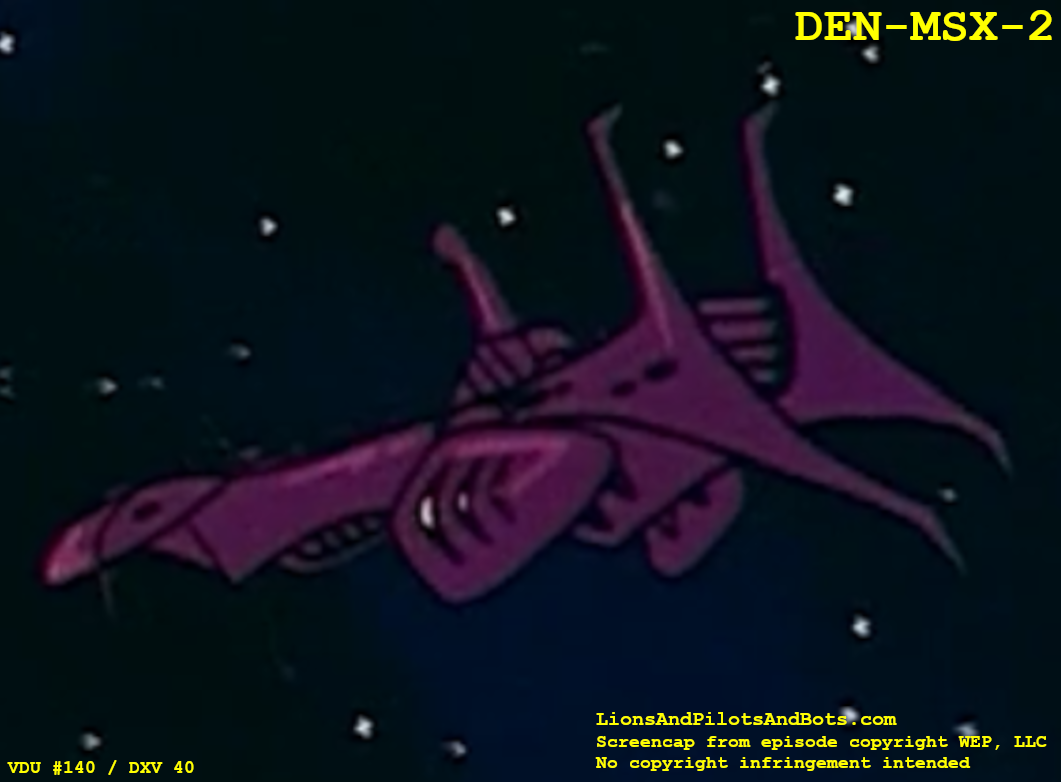
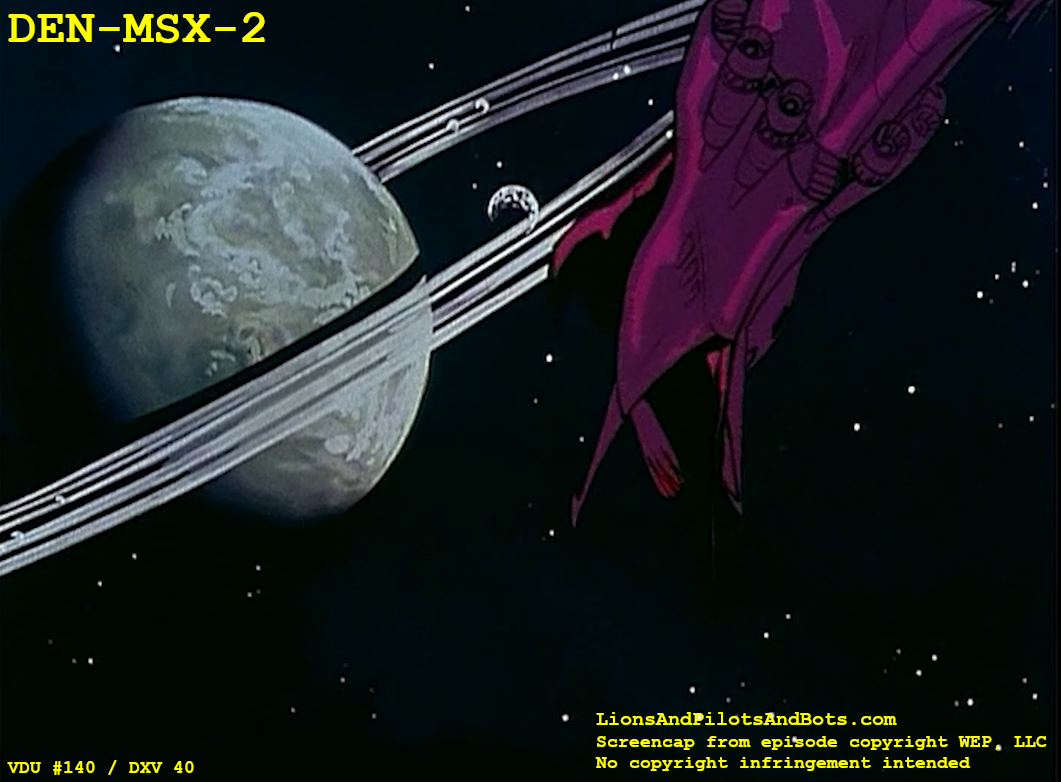
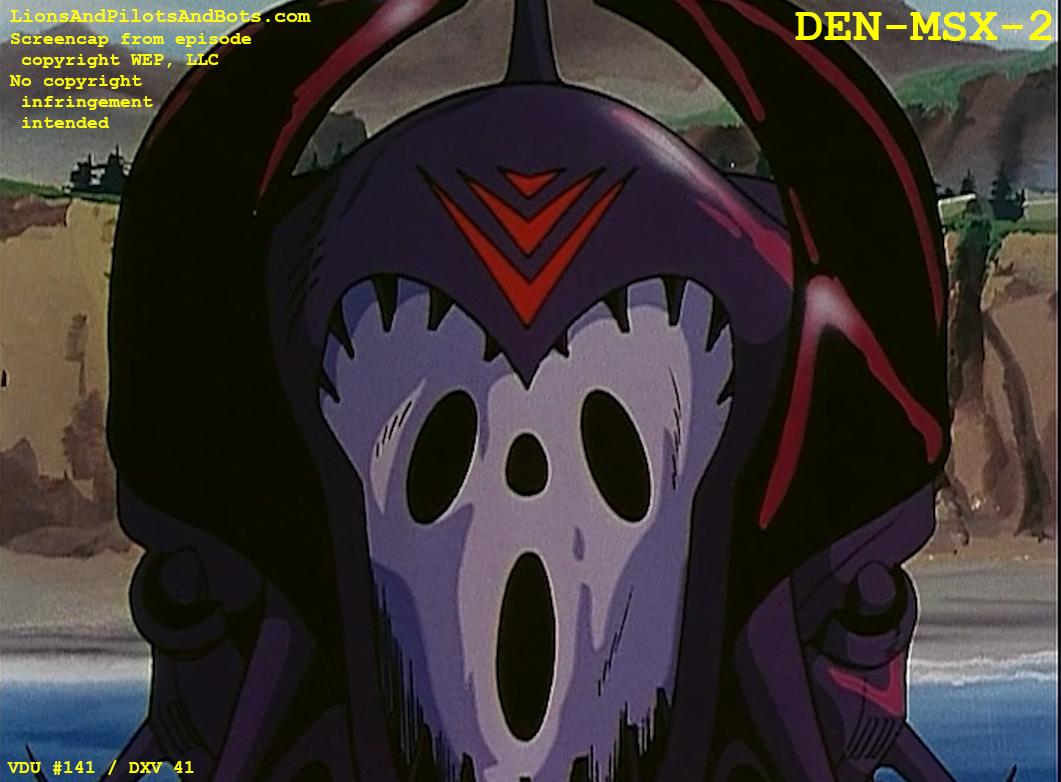
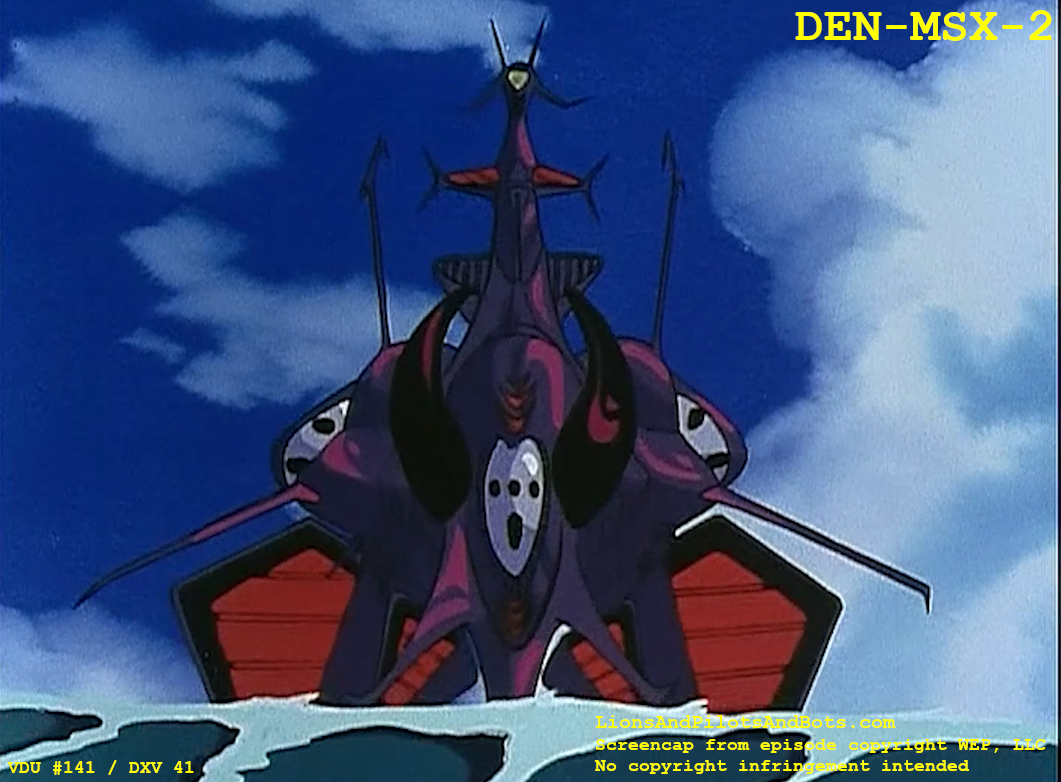
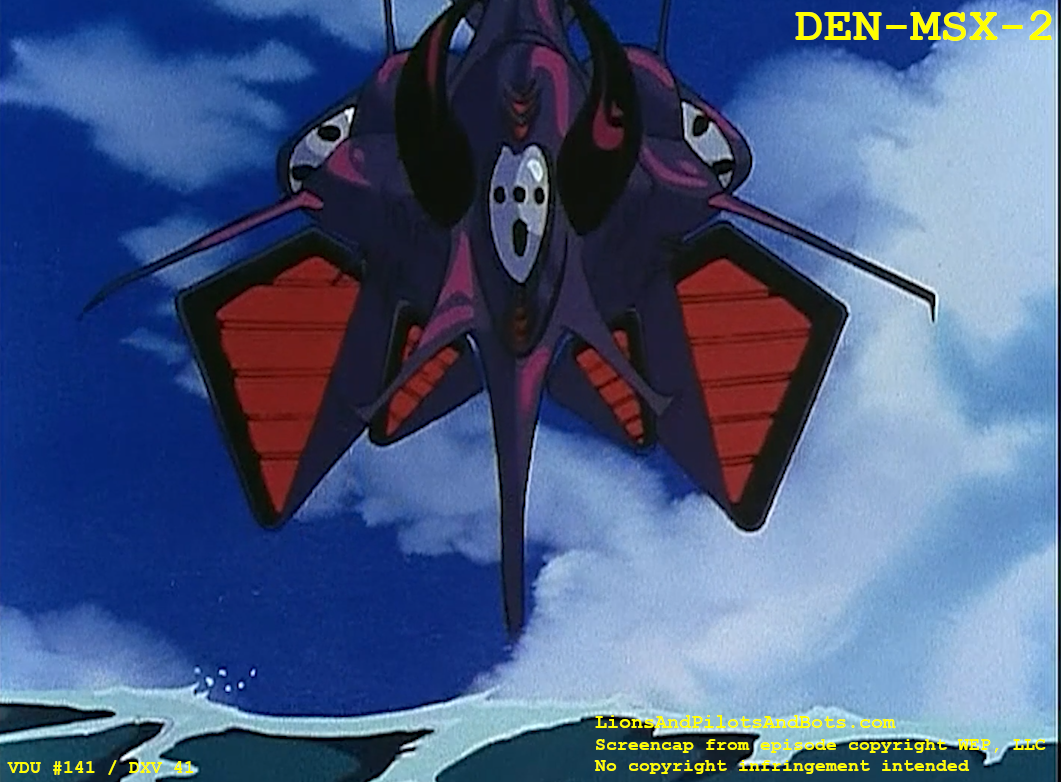
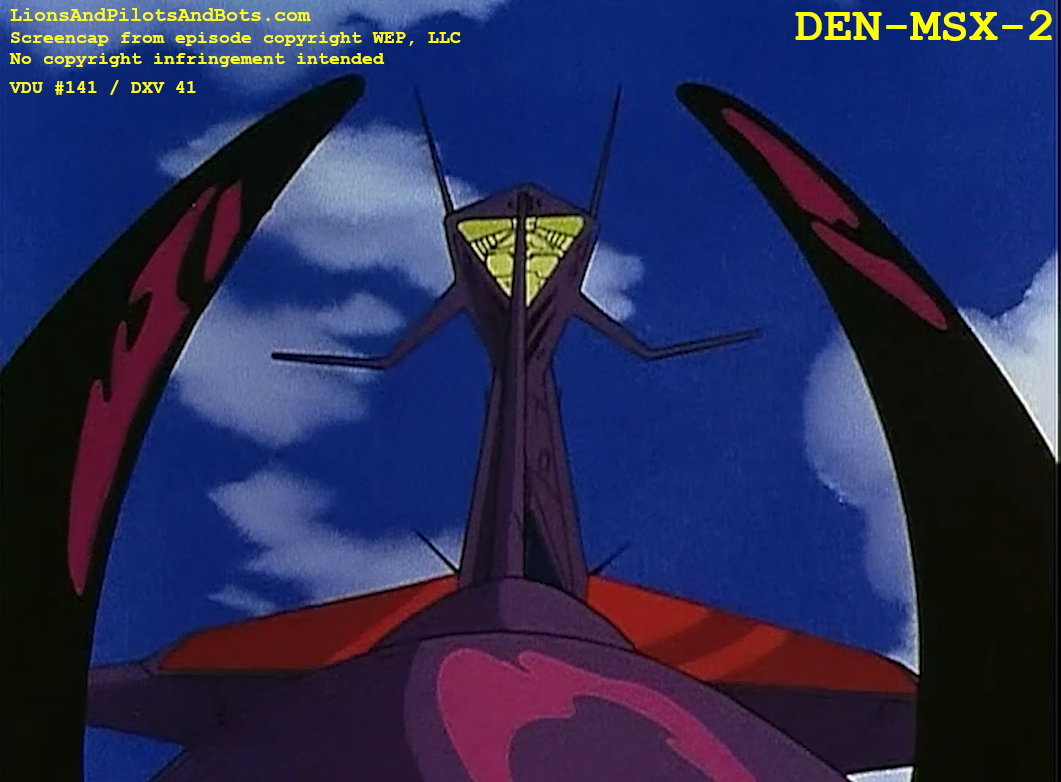
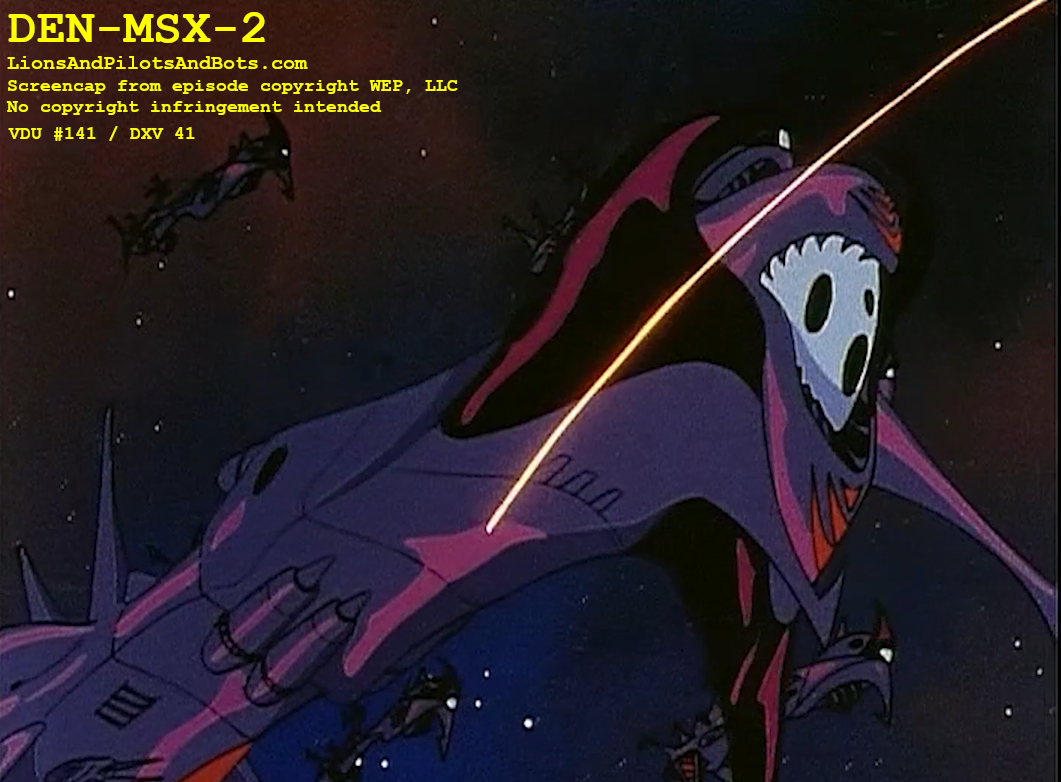
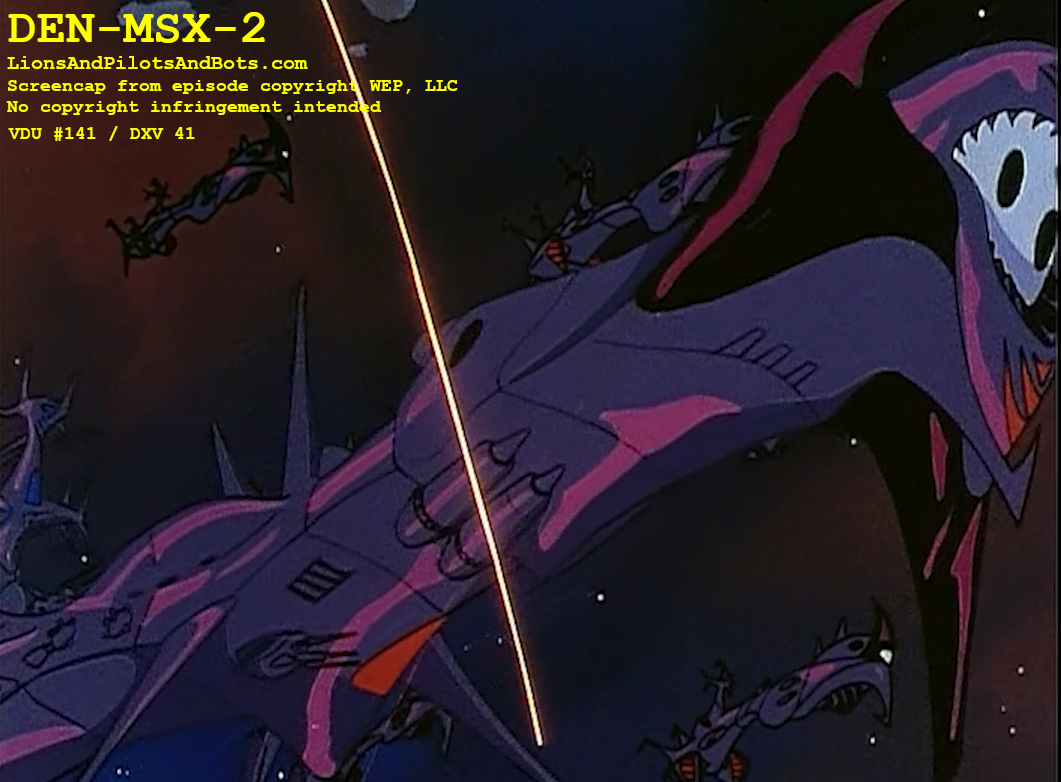
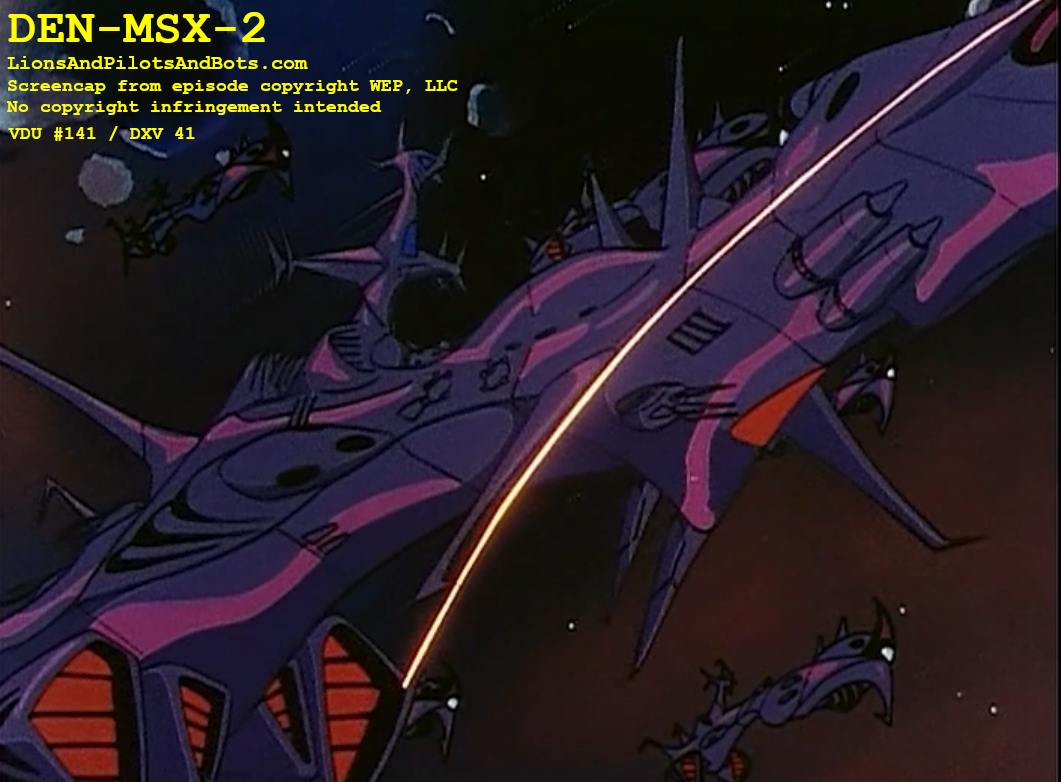
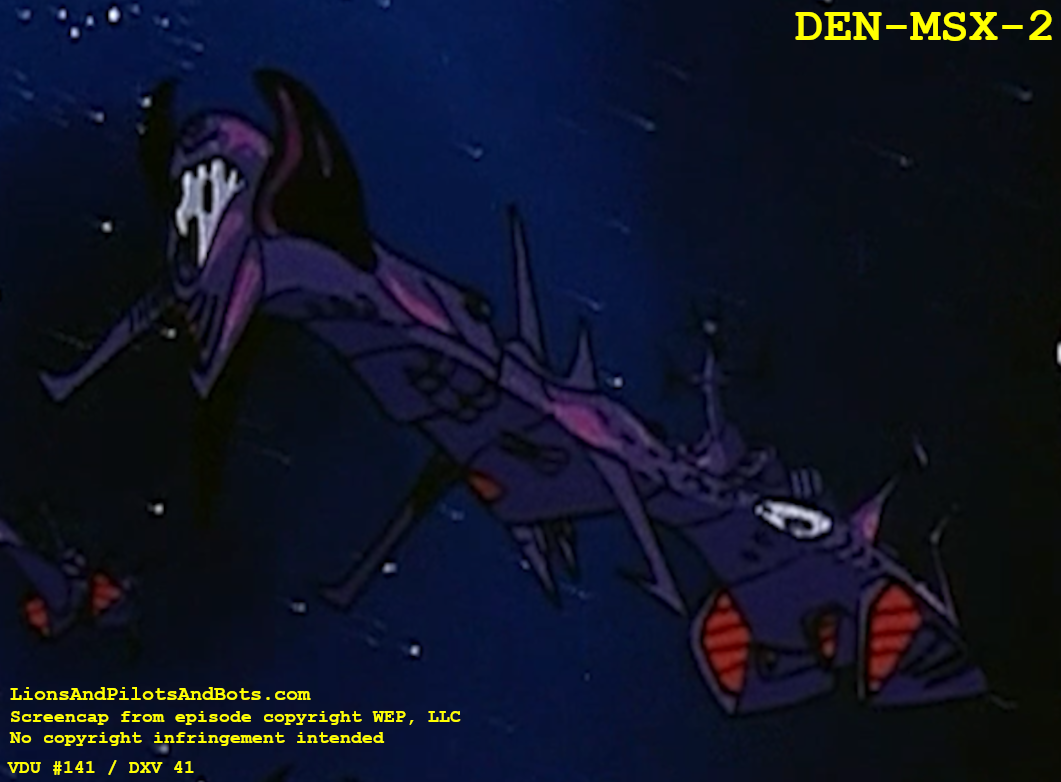
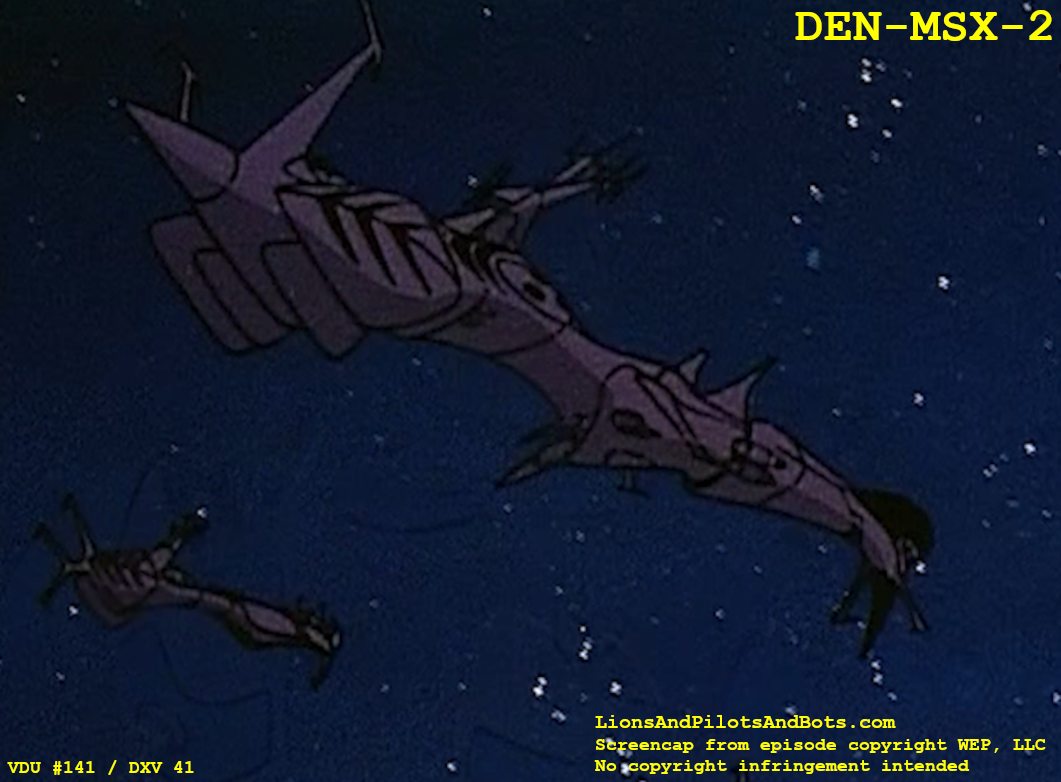
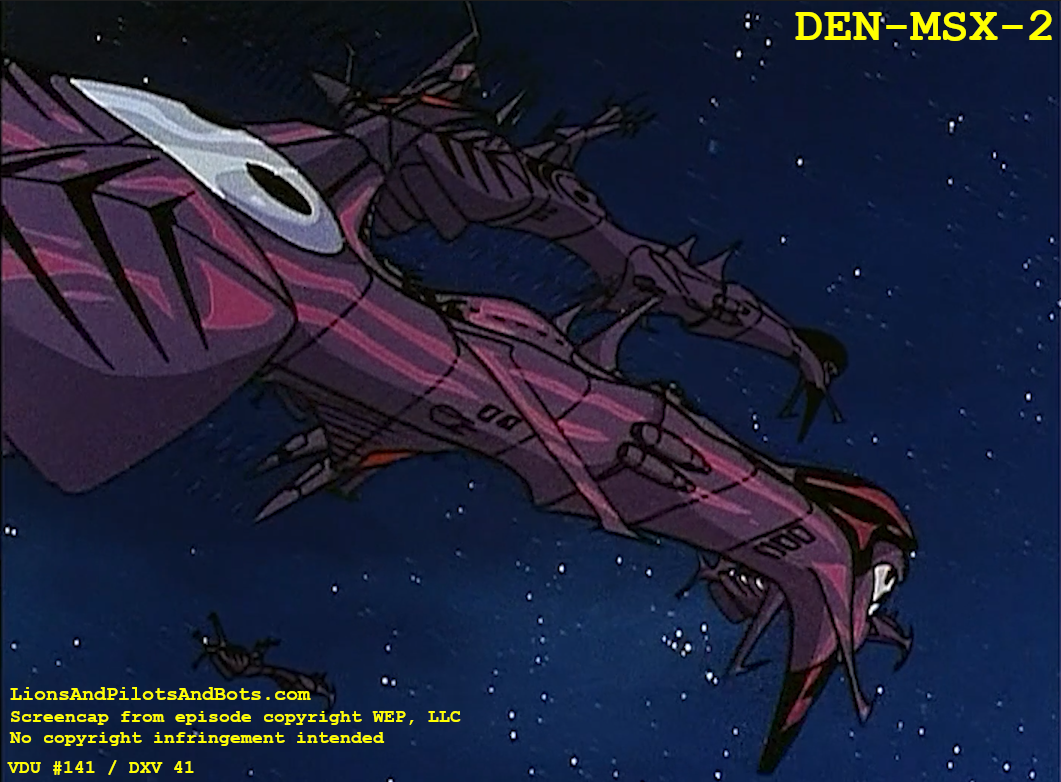
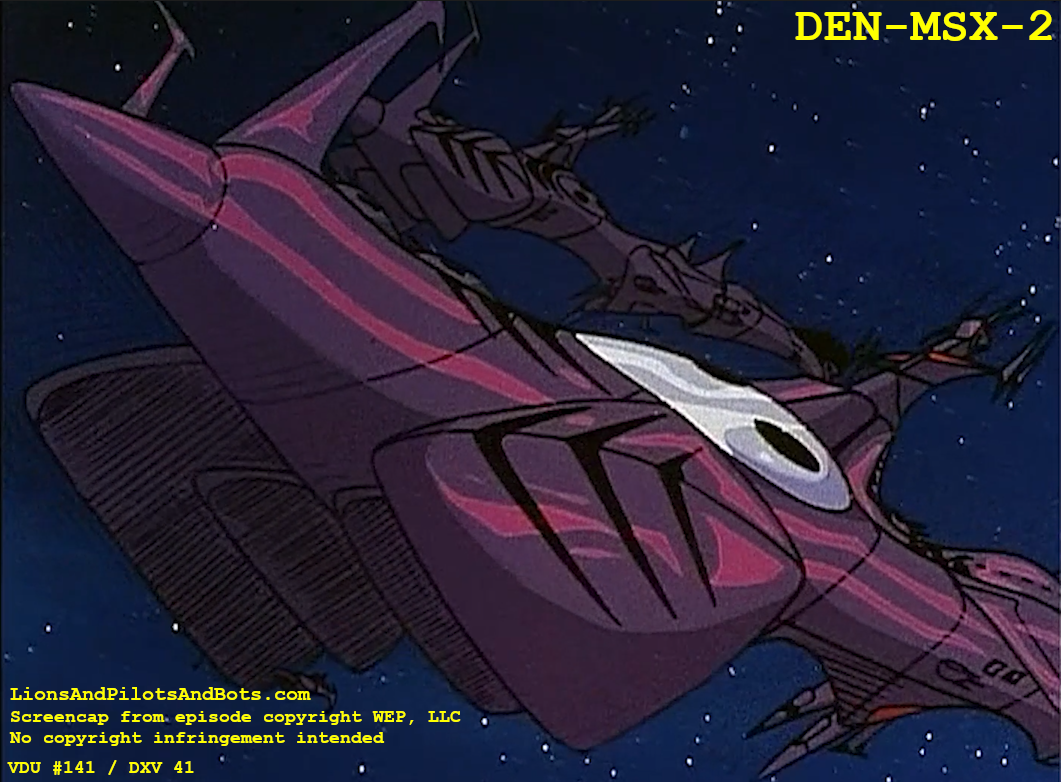
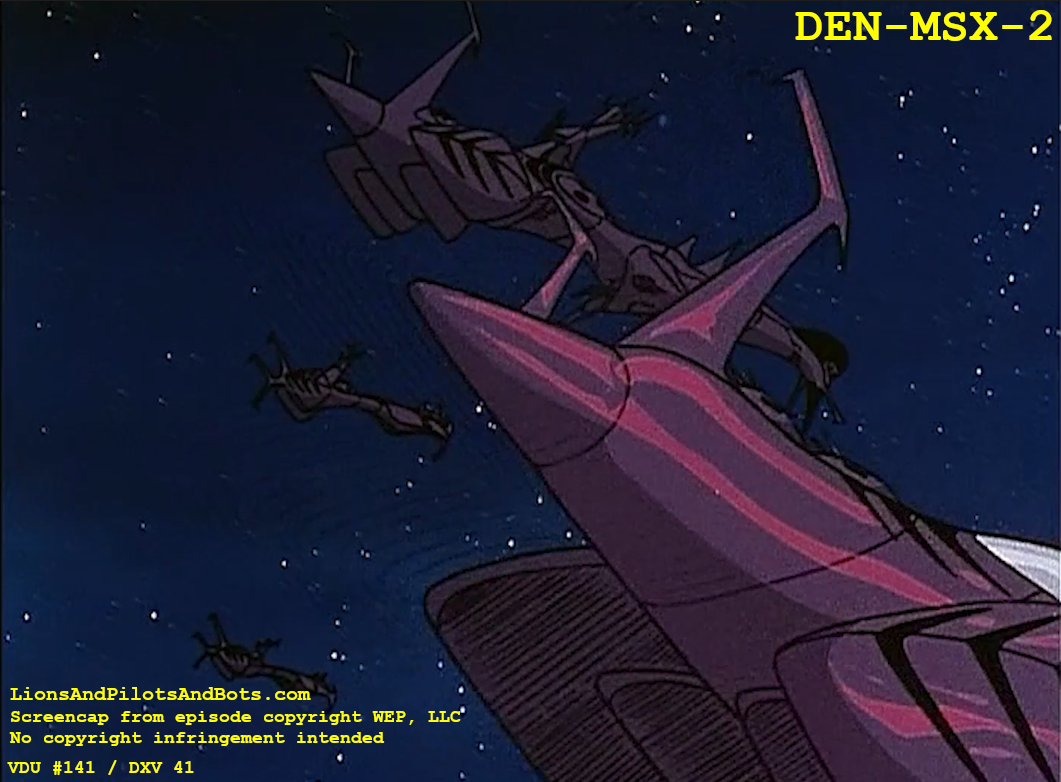
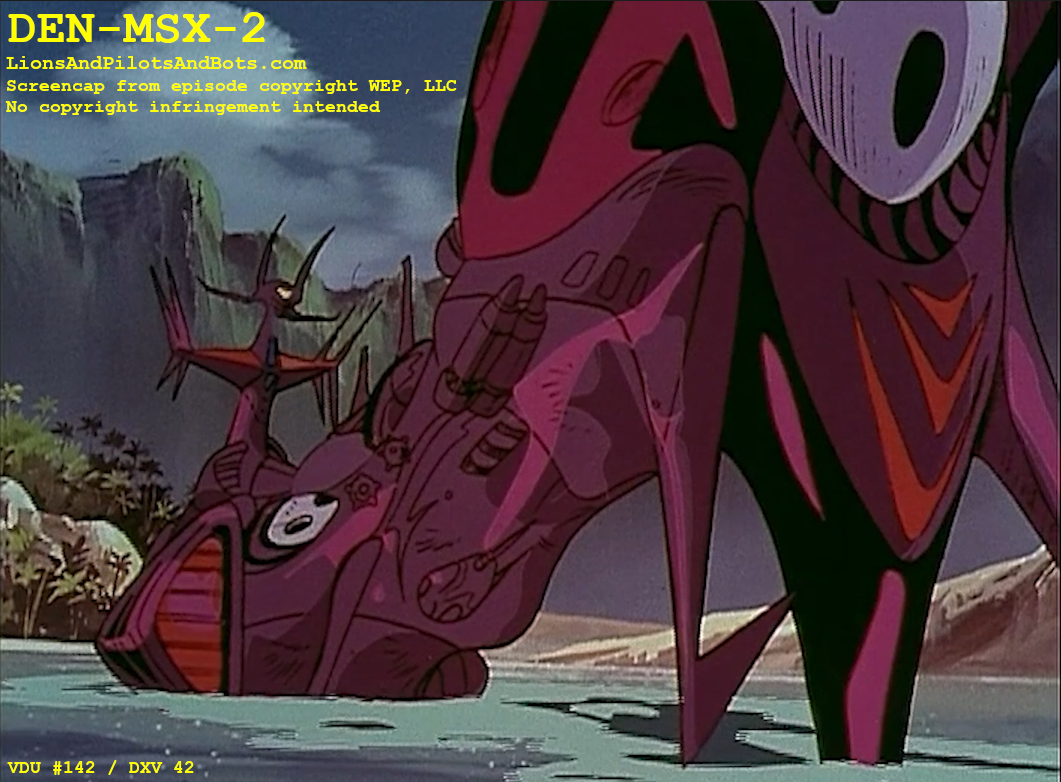
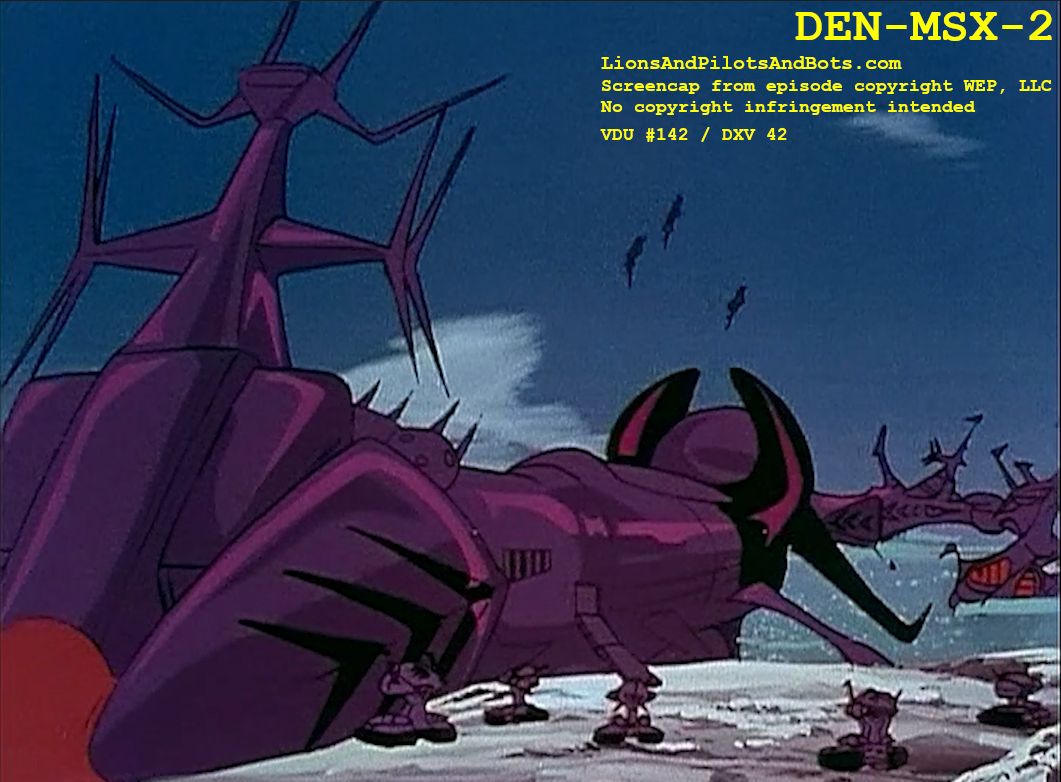
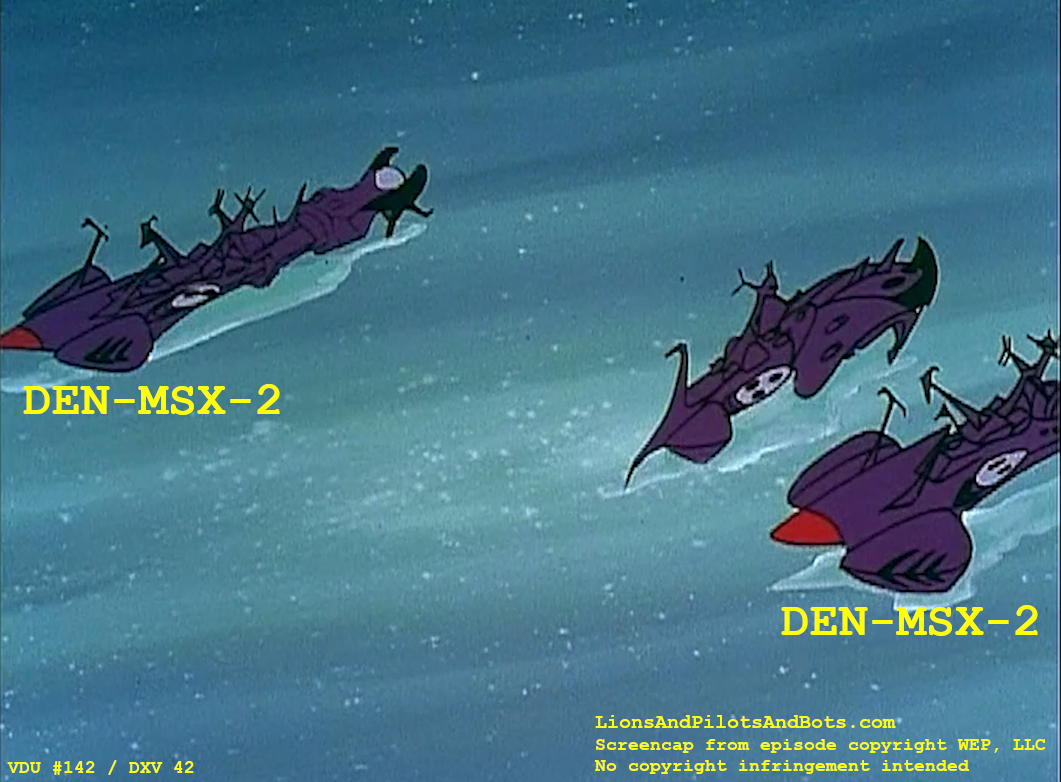
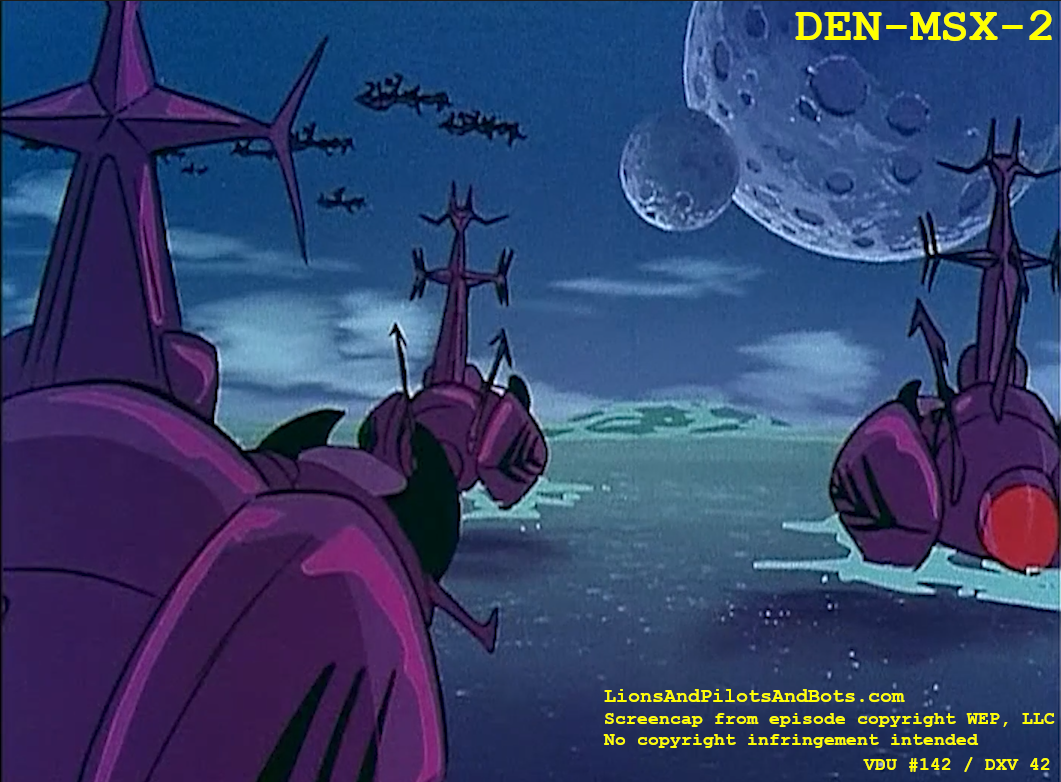
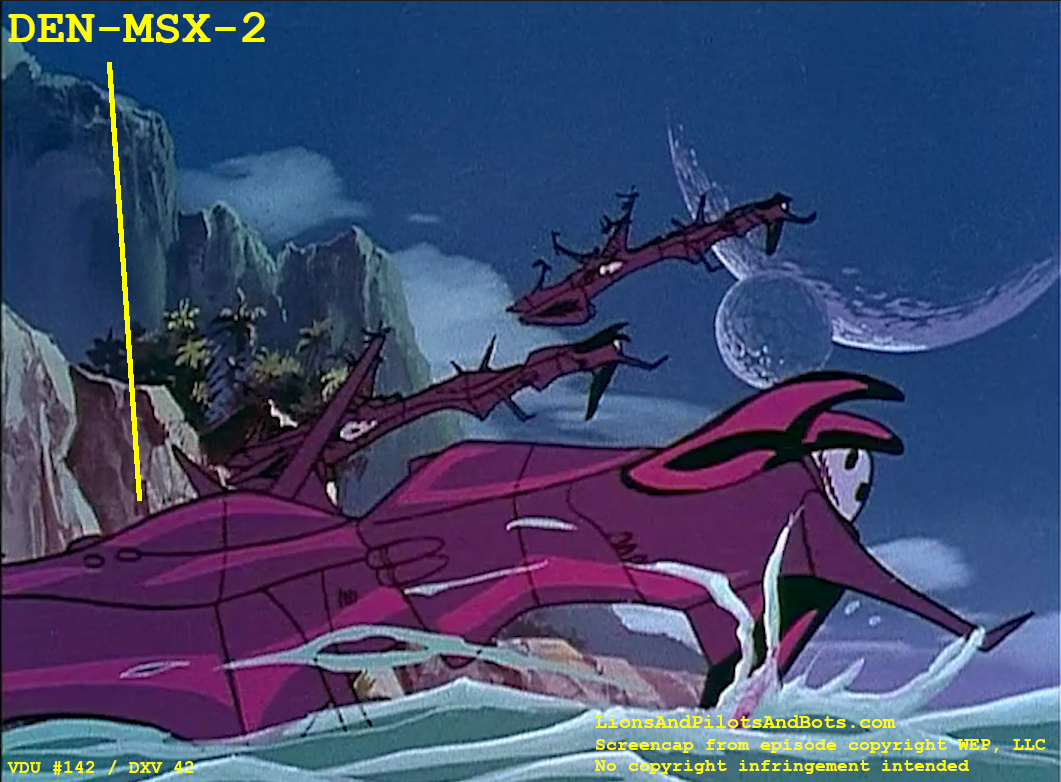
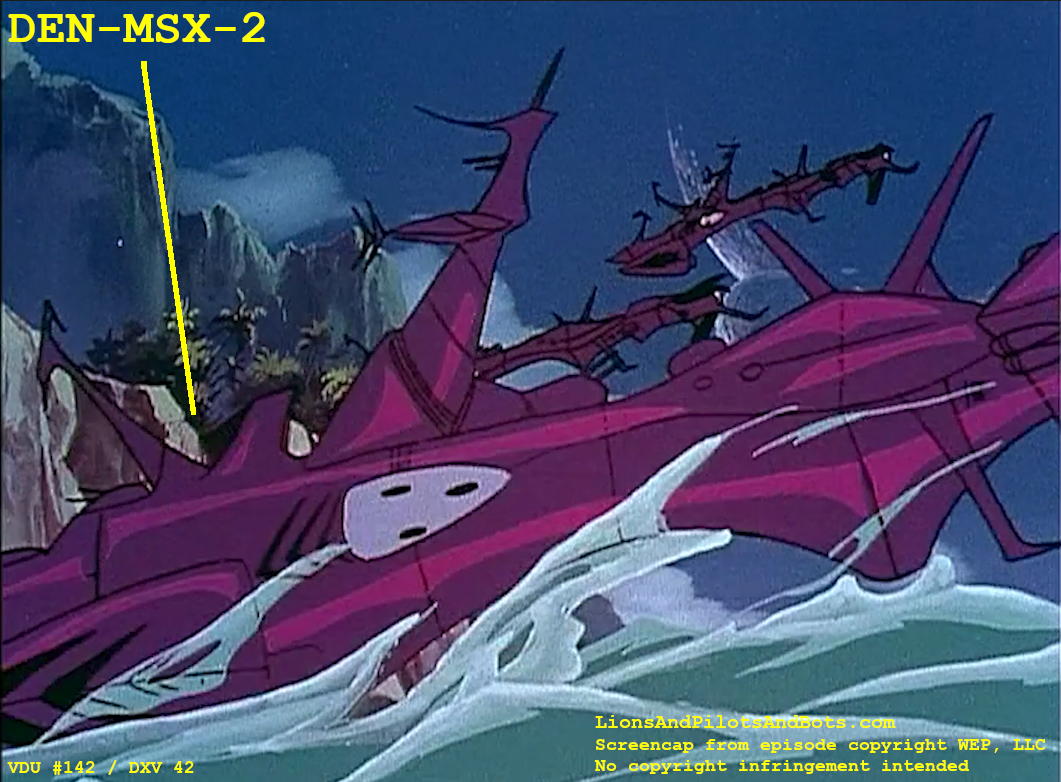
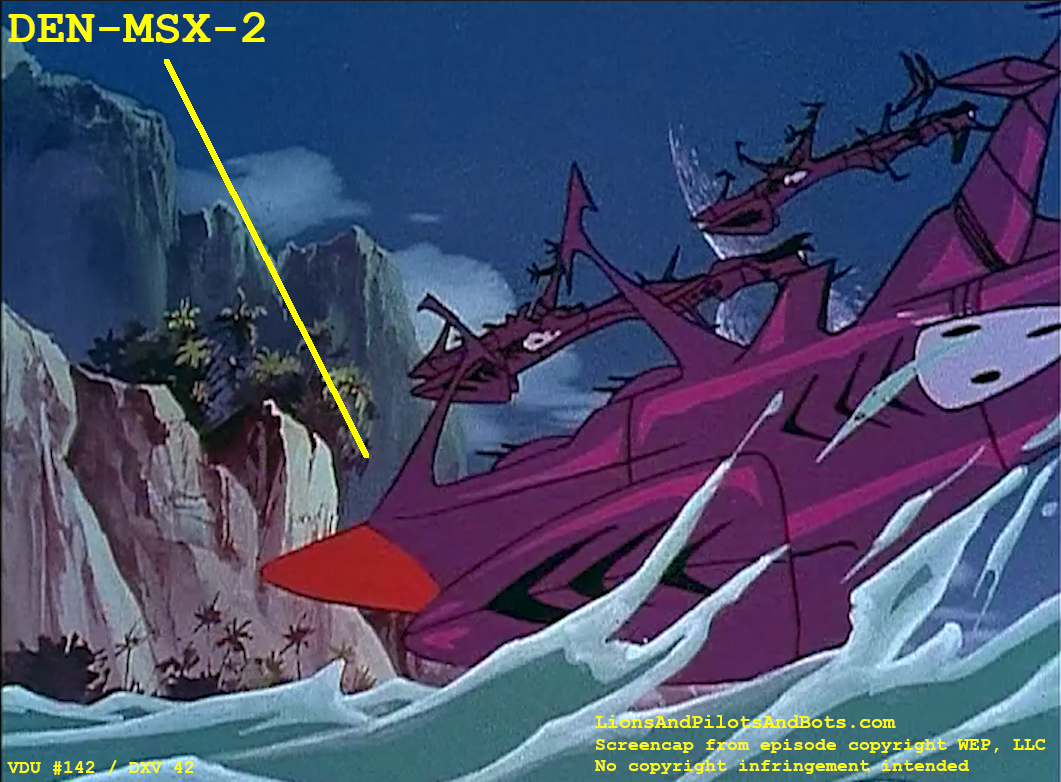
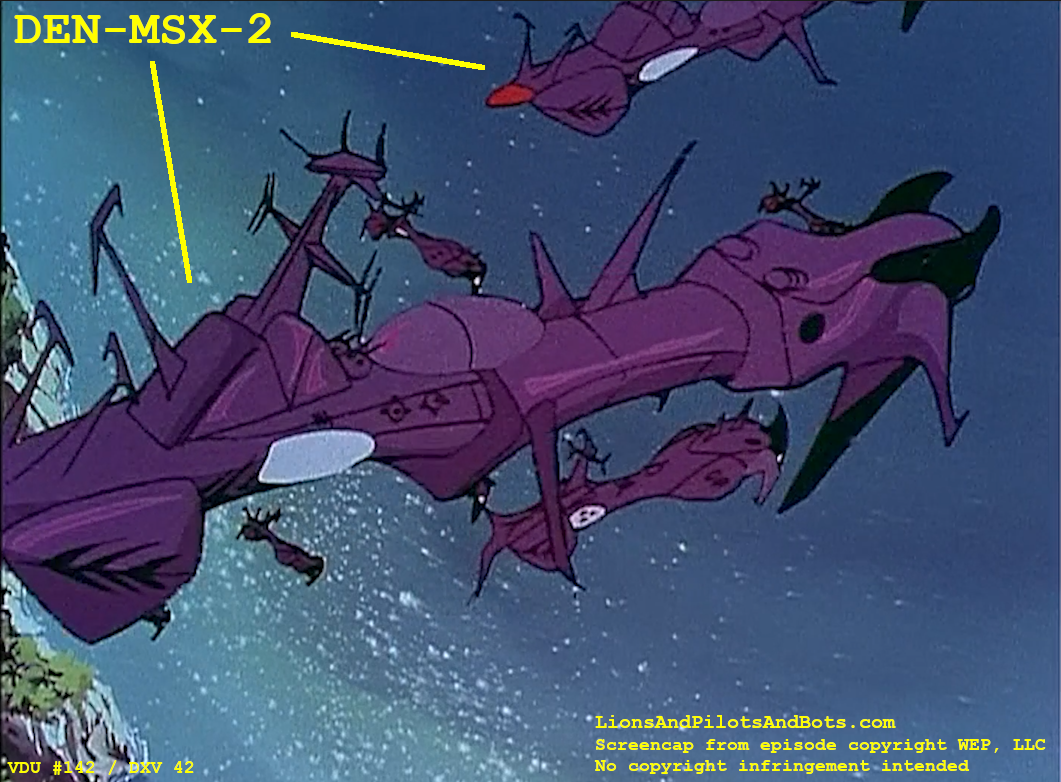
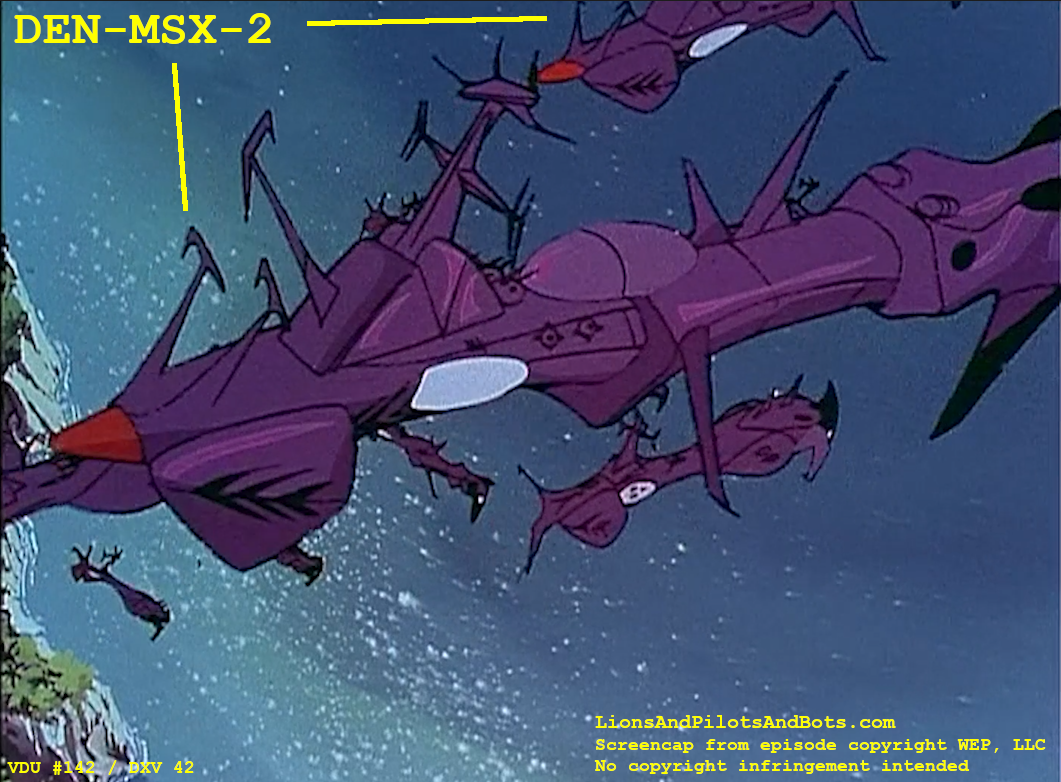
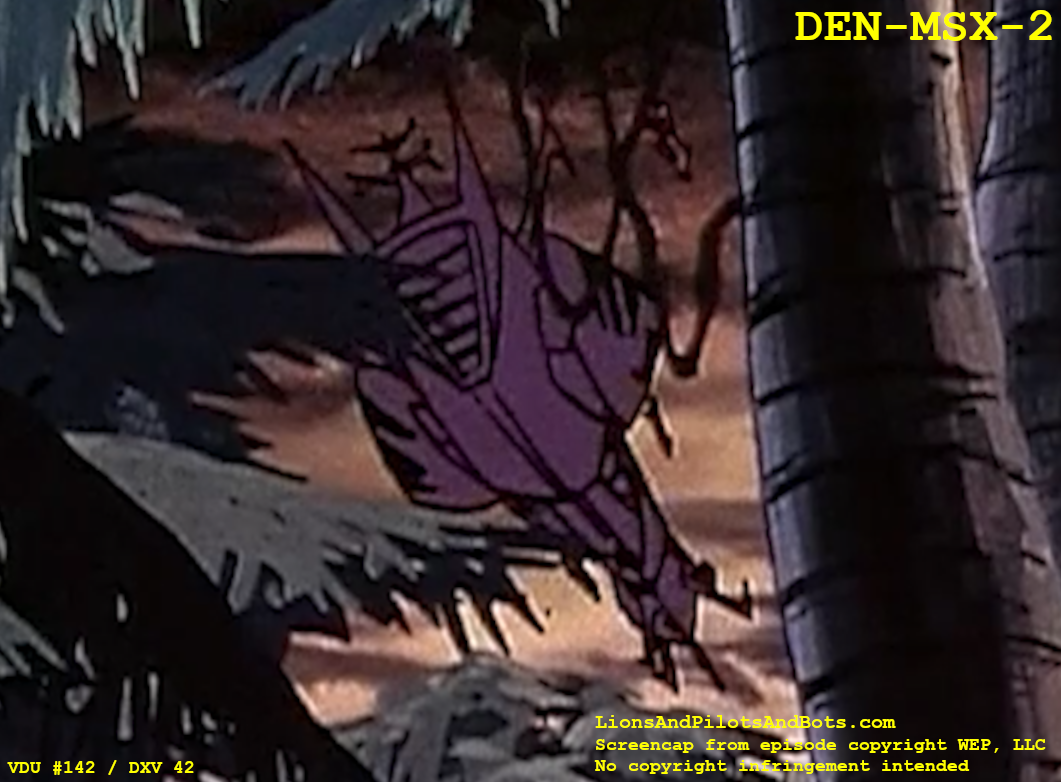
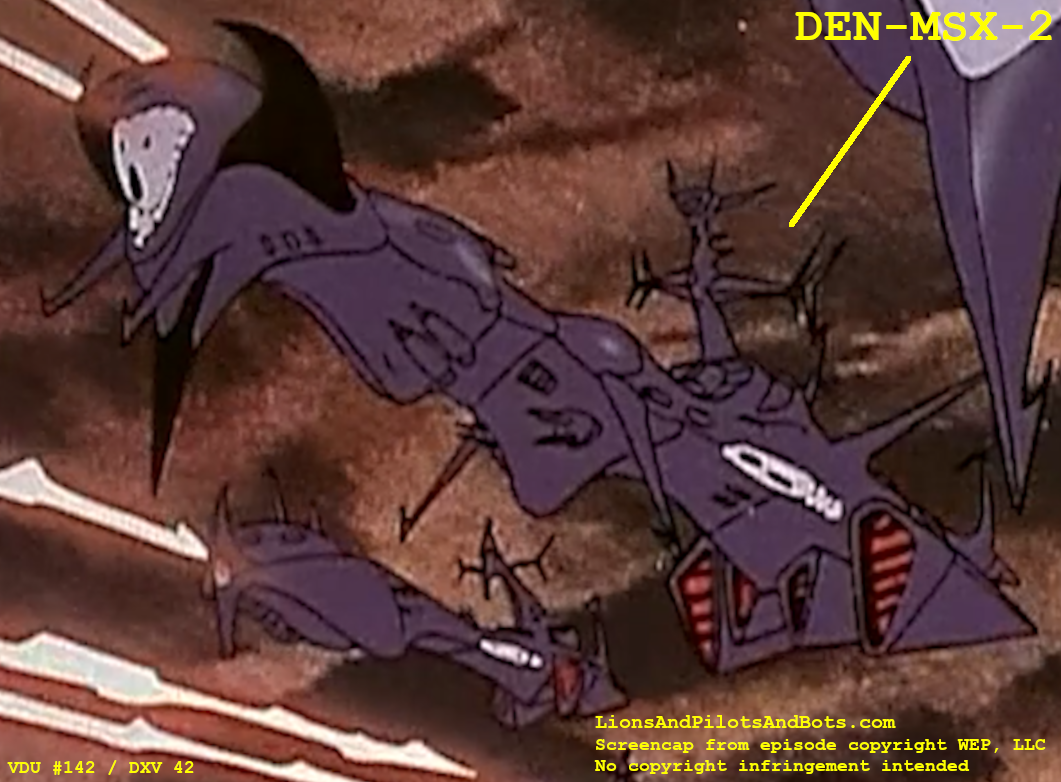
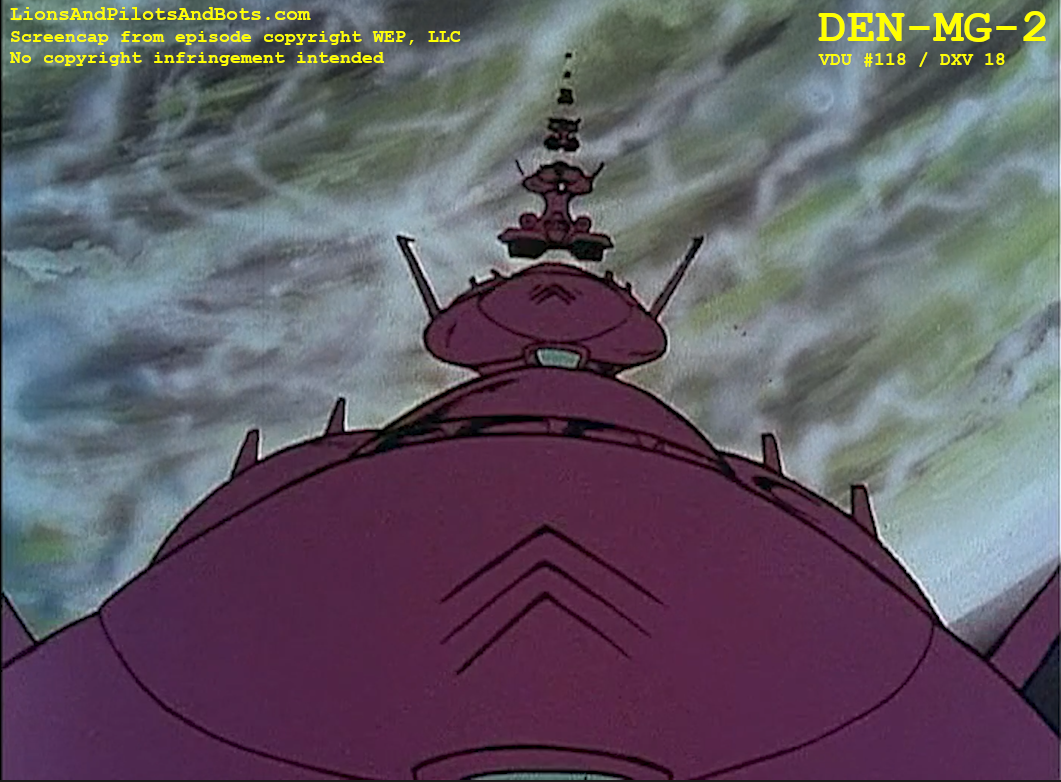
DEN-MSX-2 Robeast-launching carriers generally serve as command ships for officers such as Borgum and Twyla.
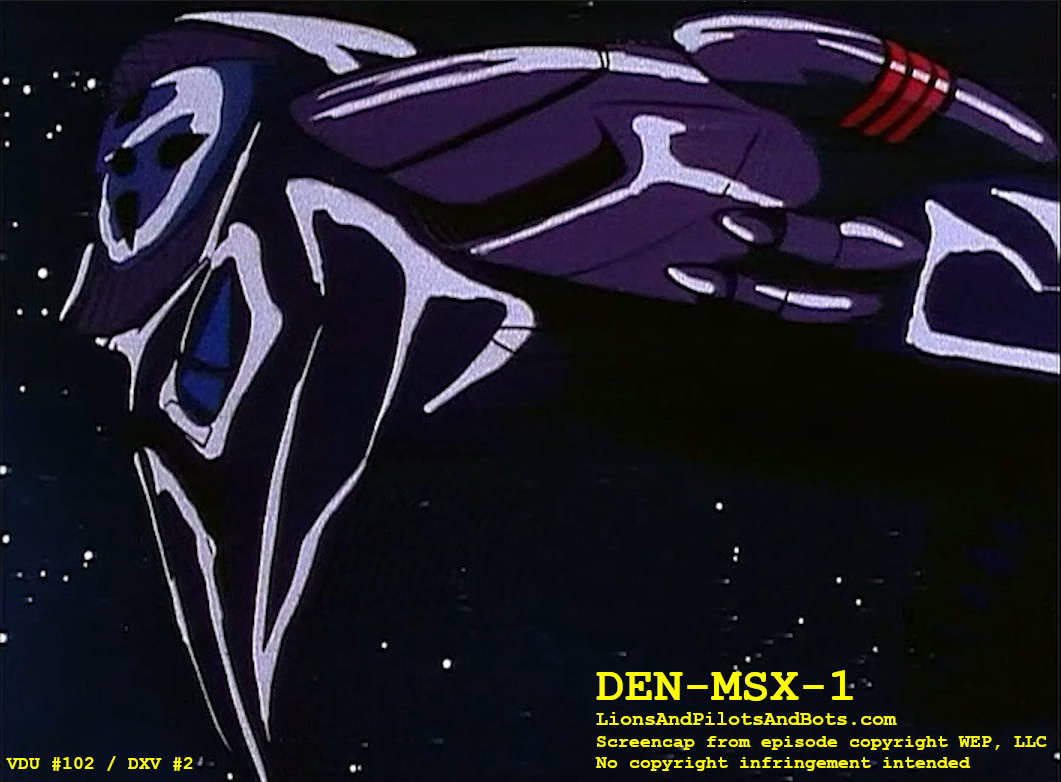
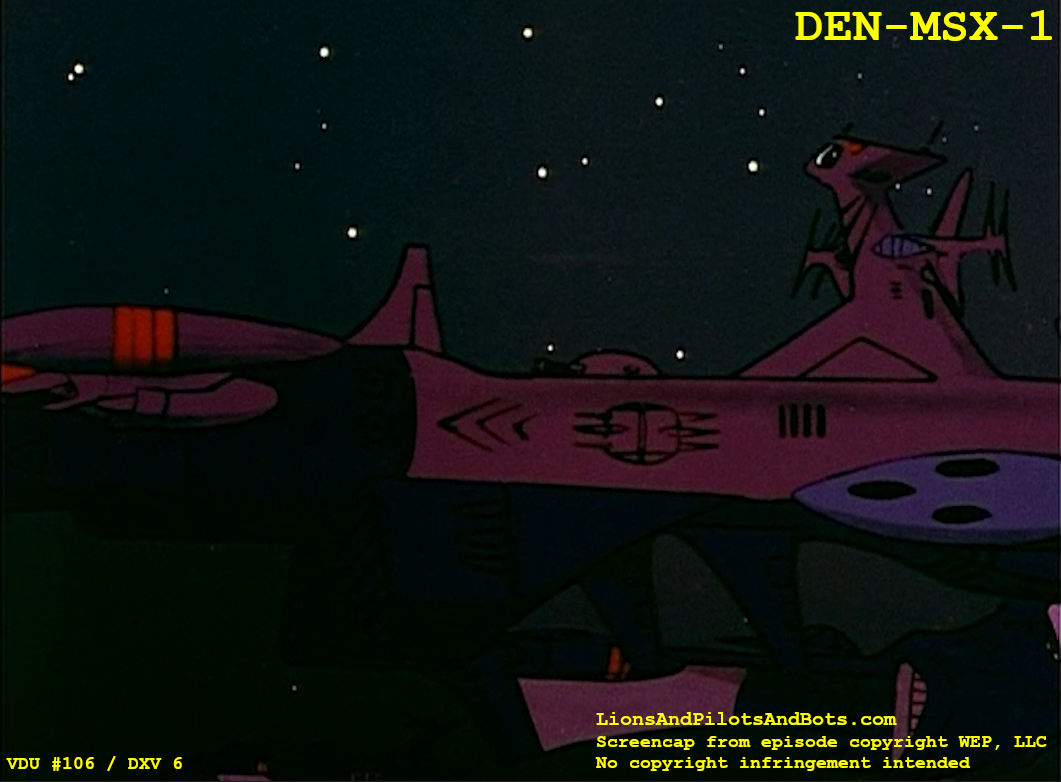
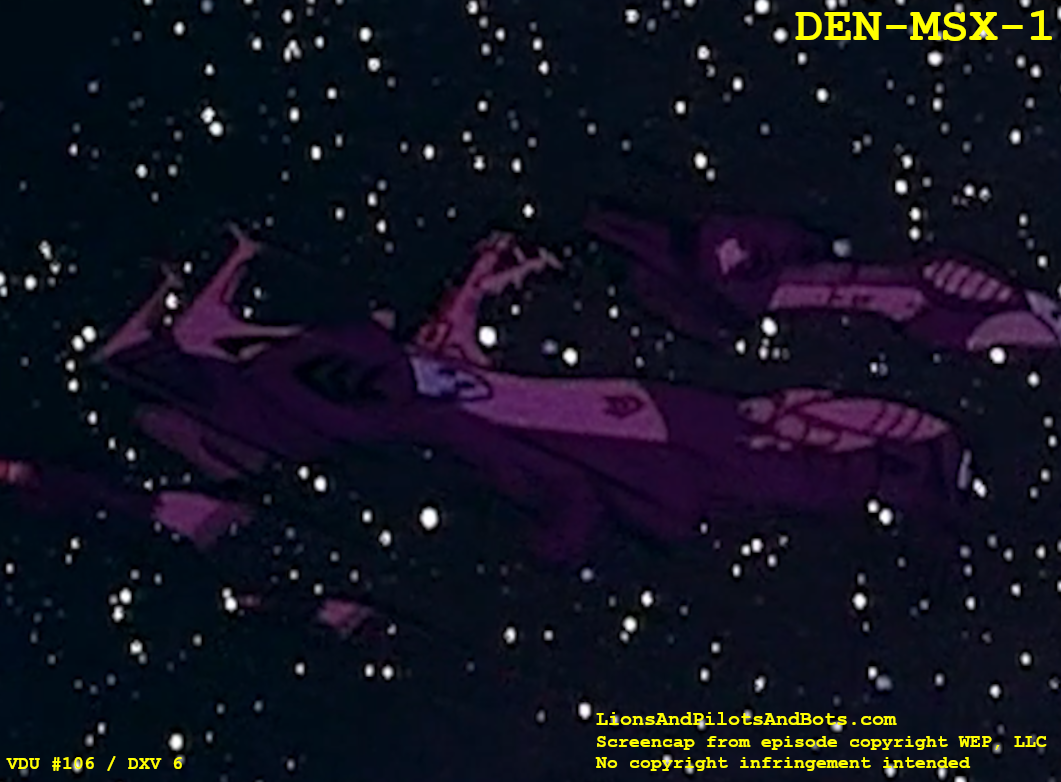
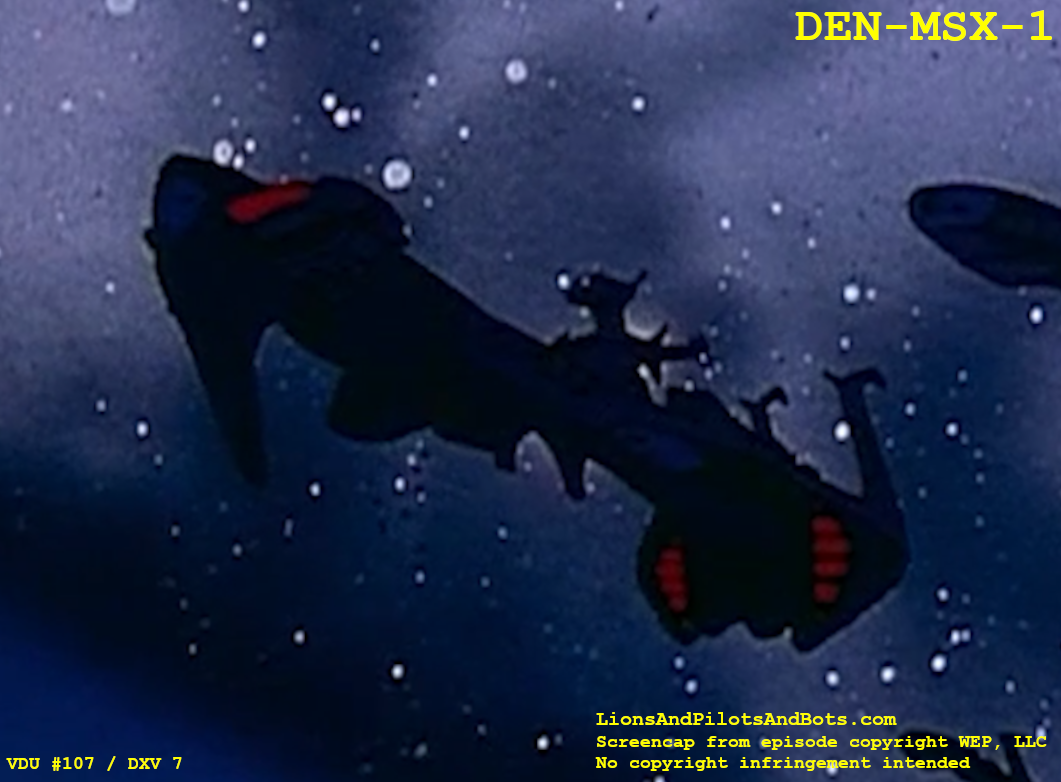
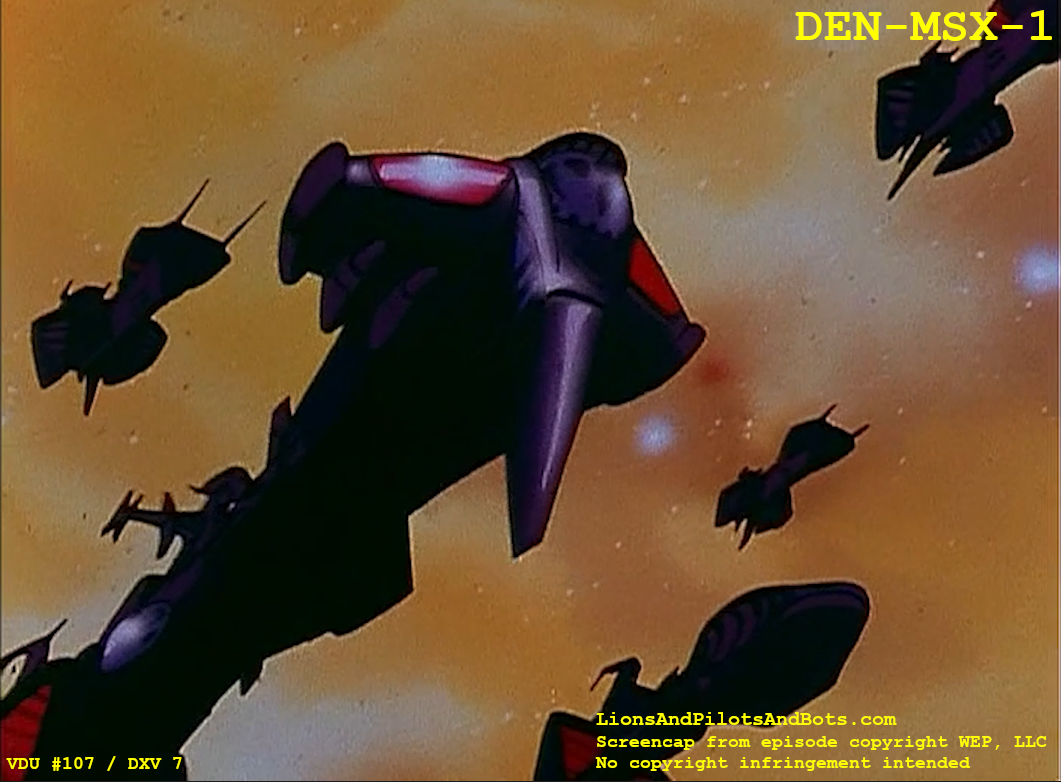
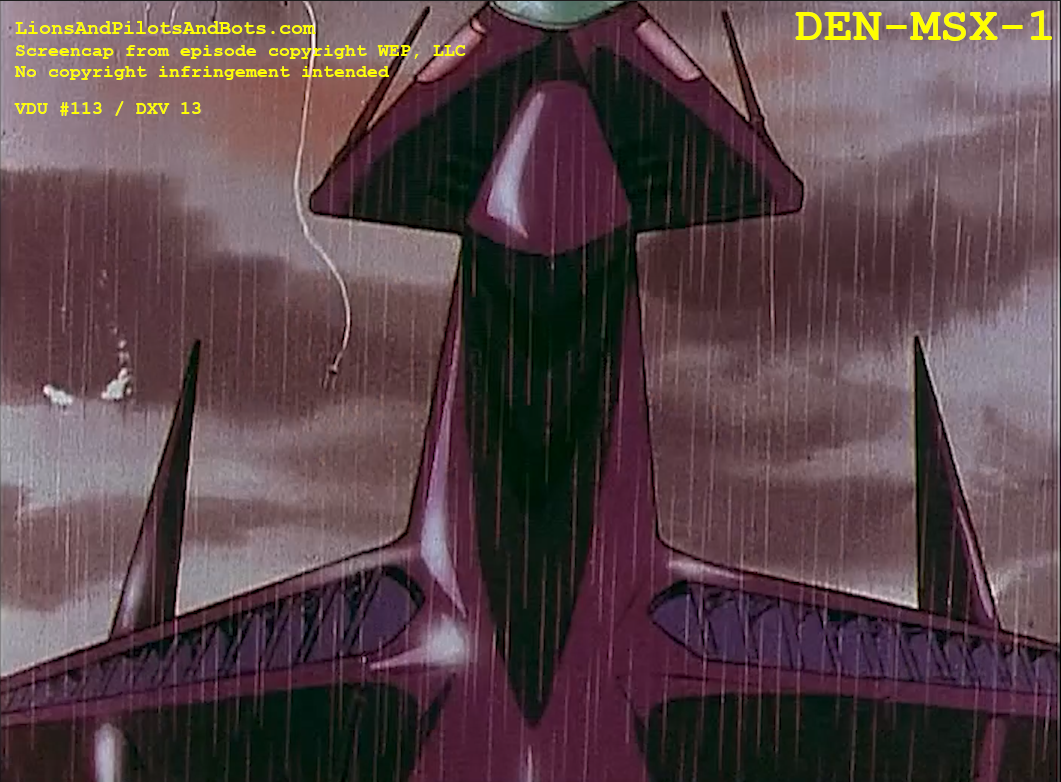
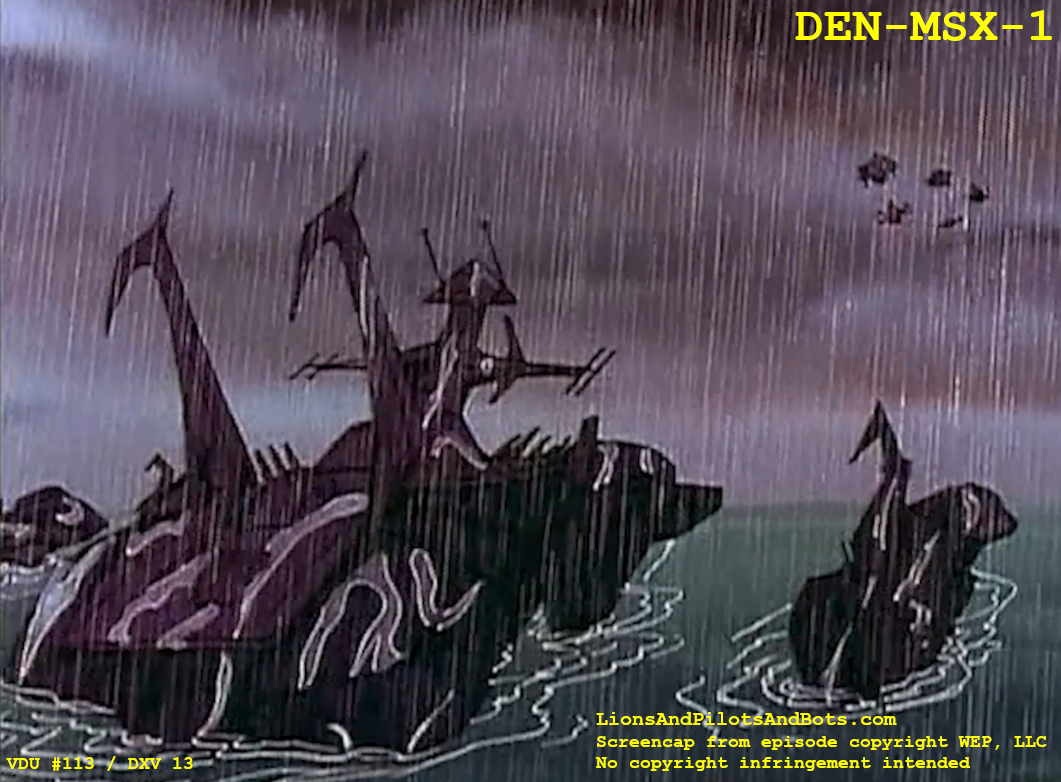
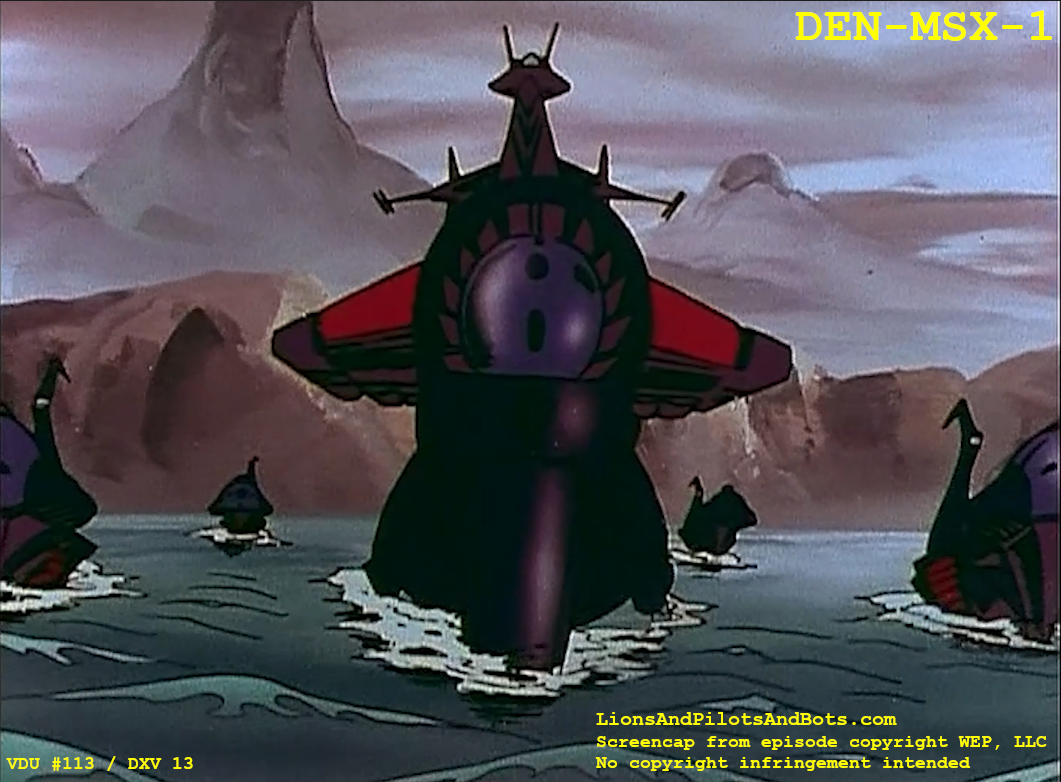
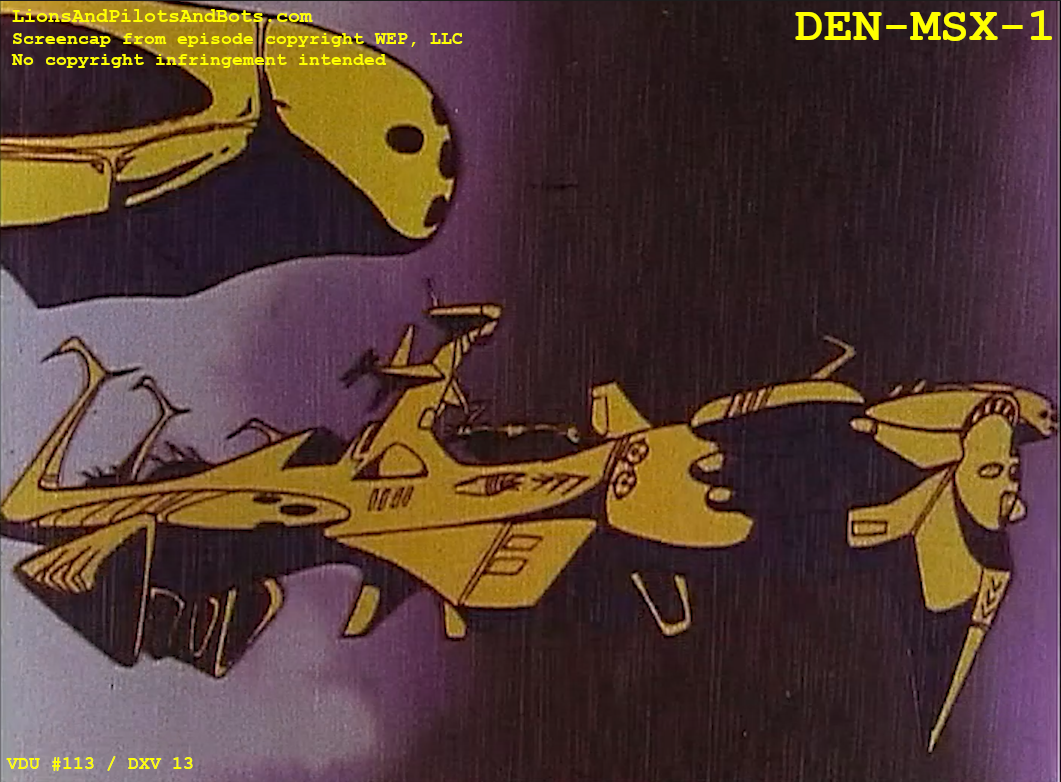
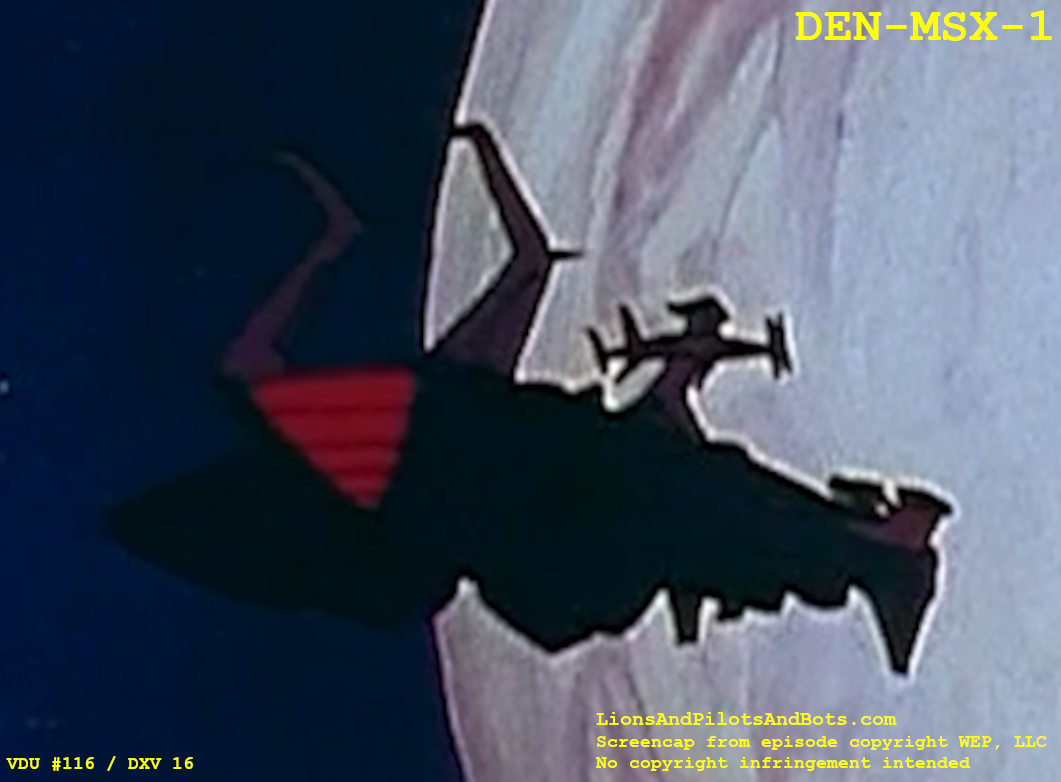
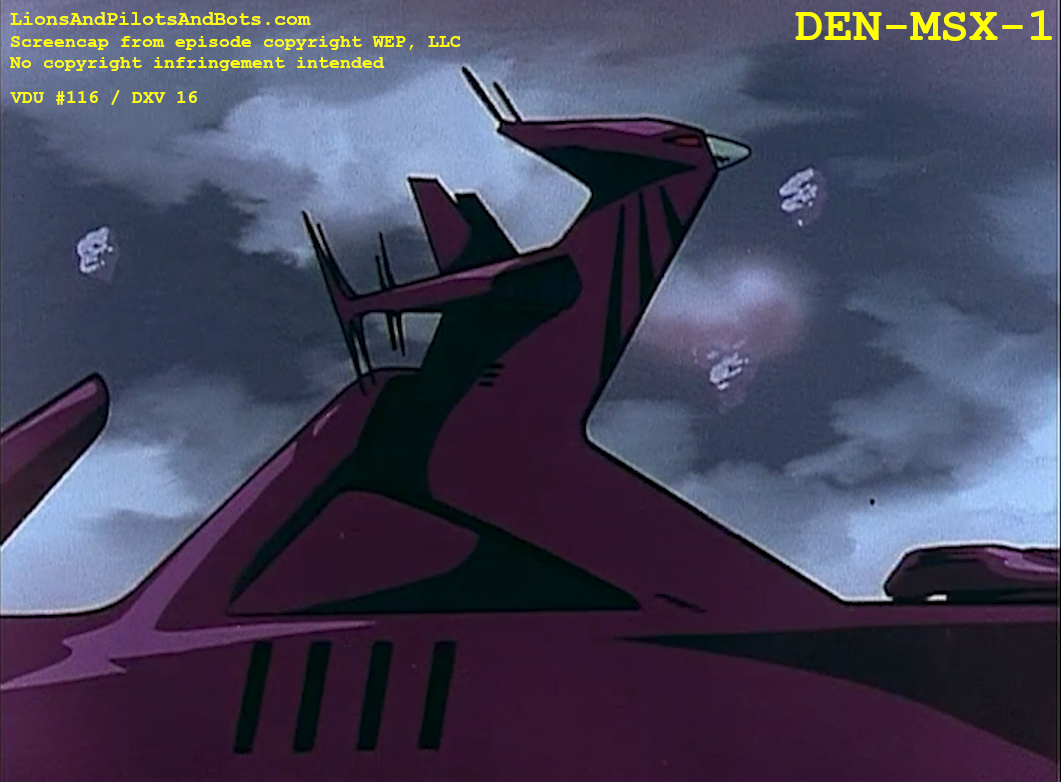
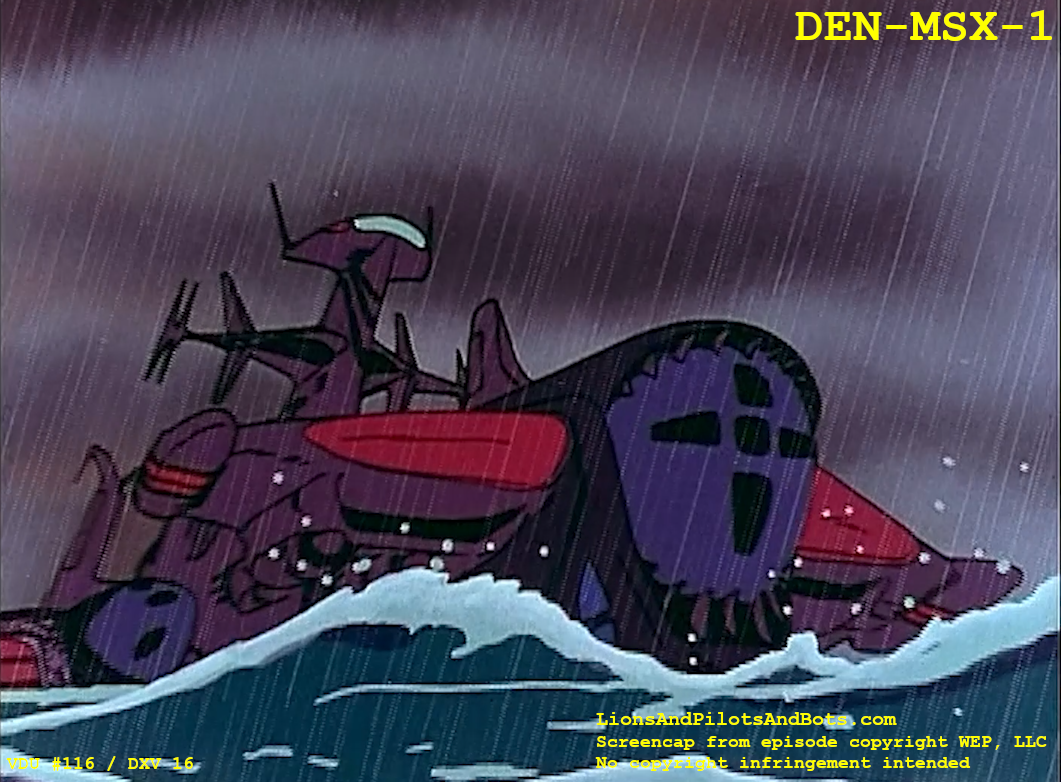
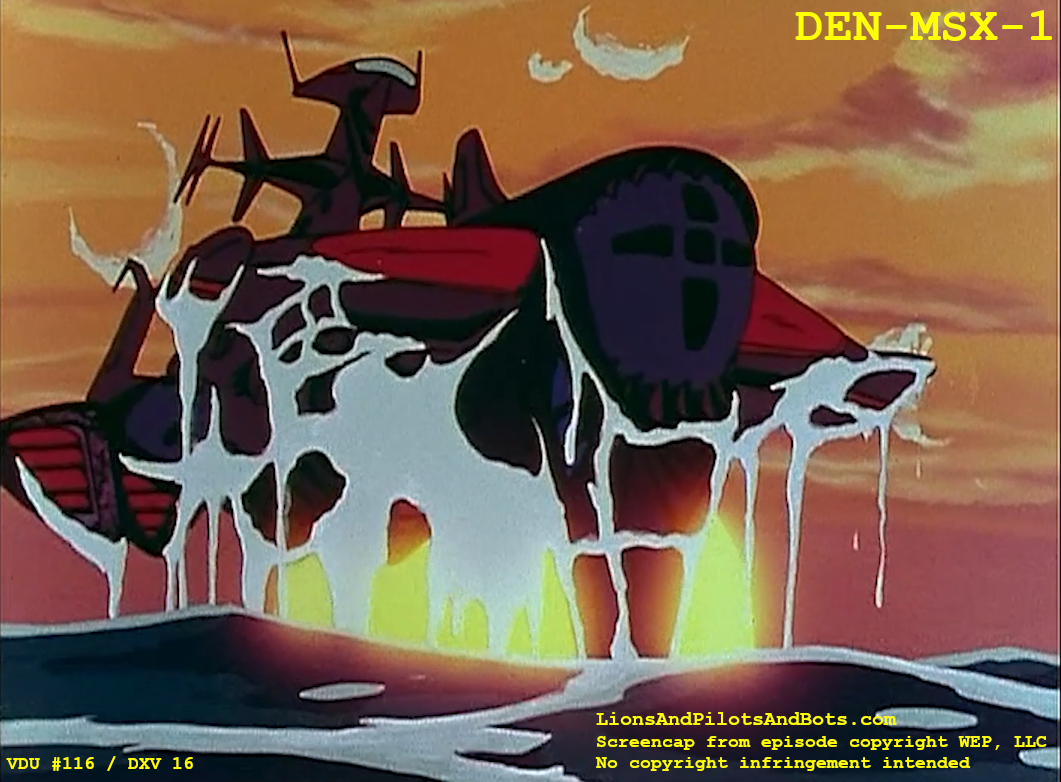
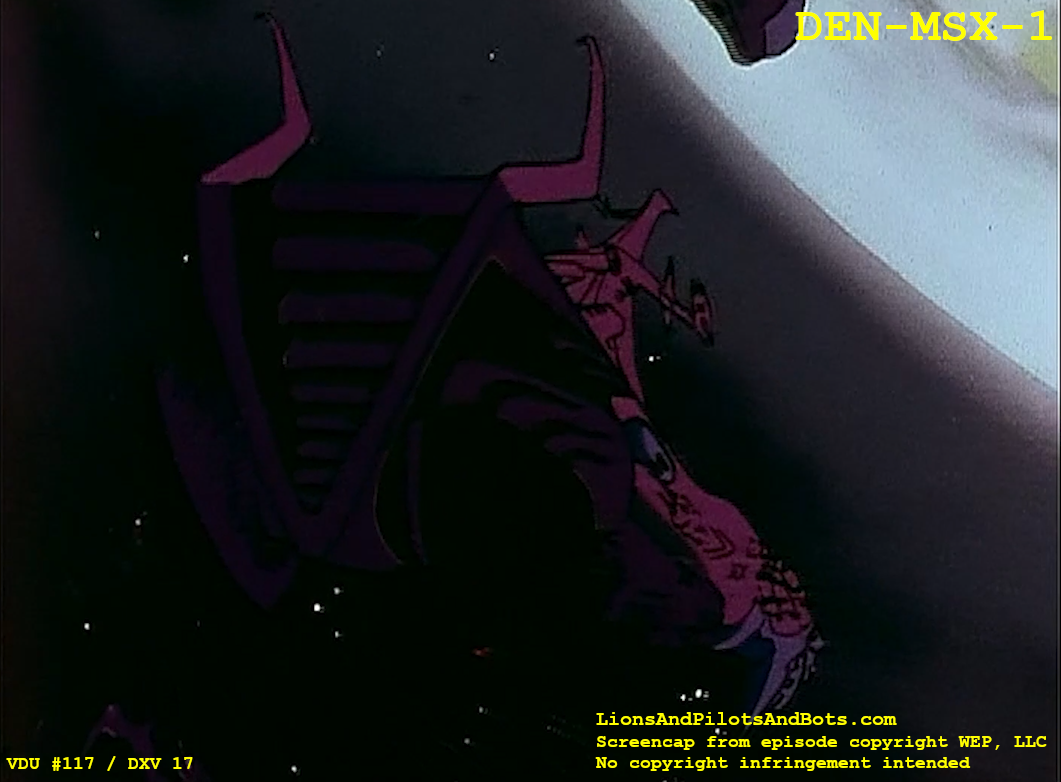
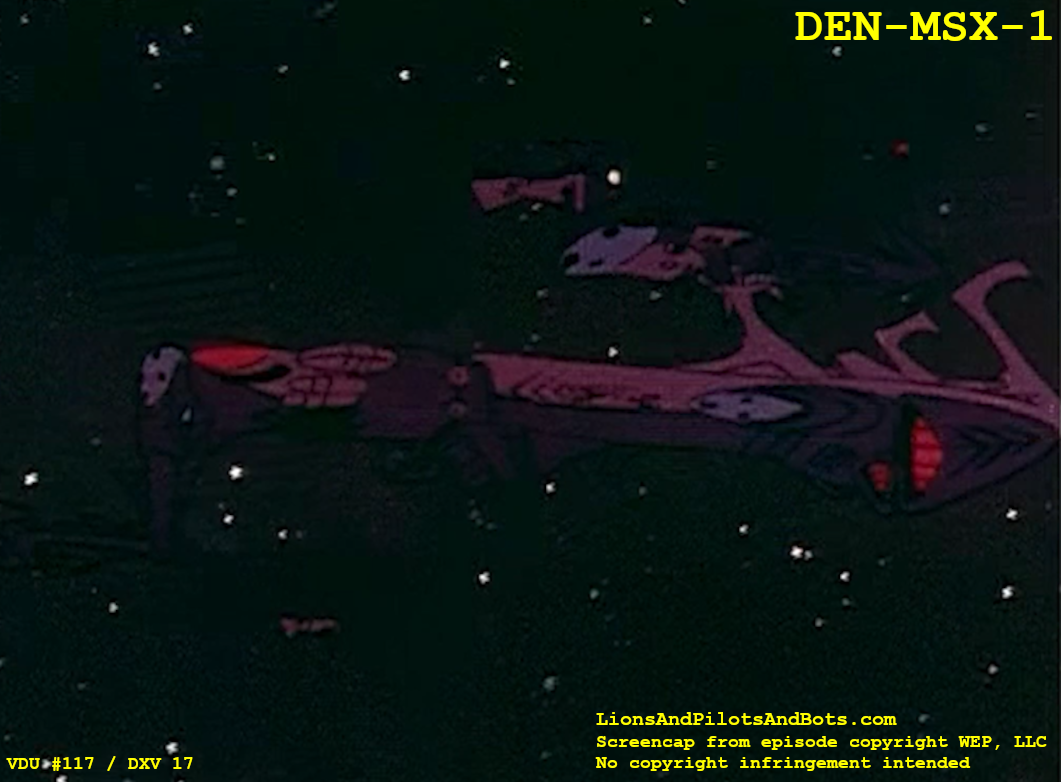
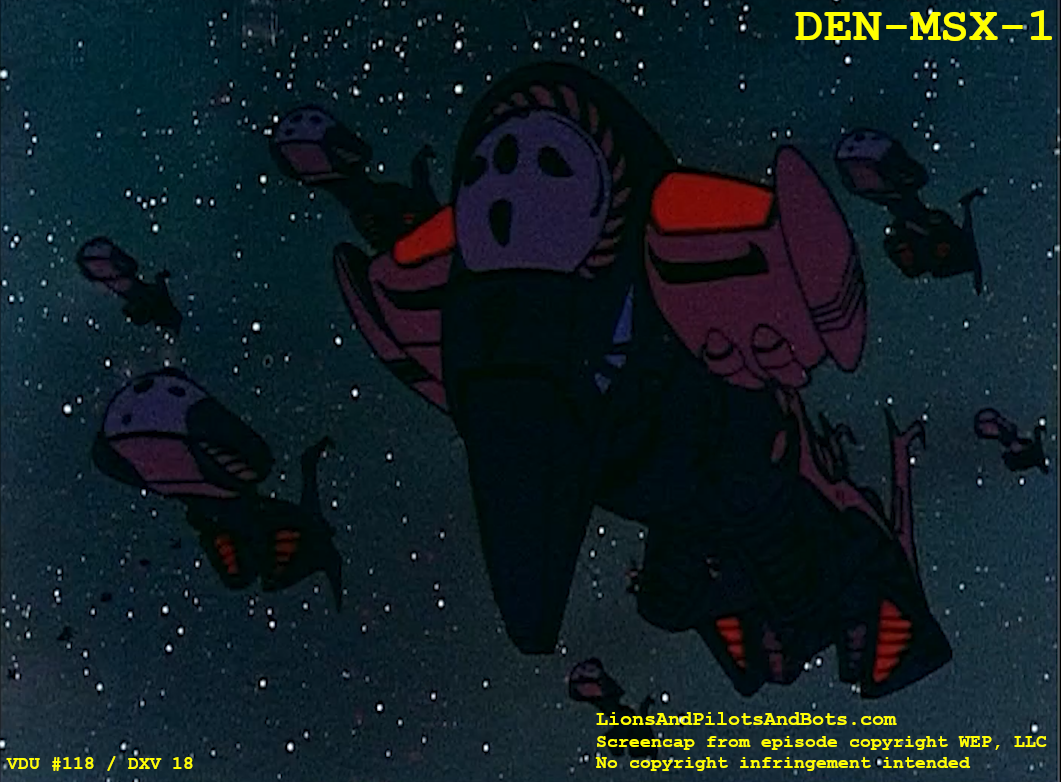
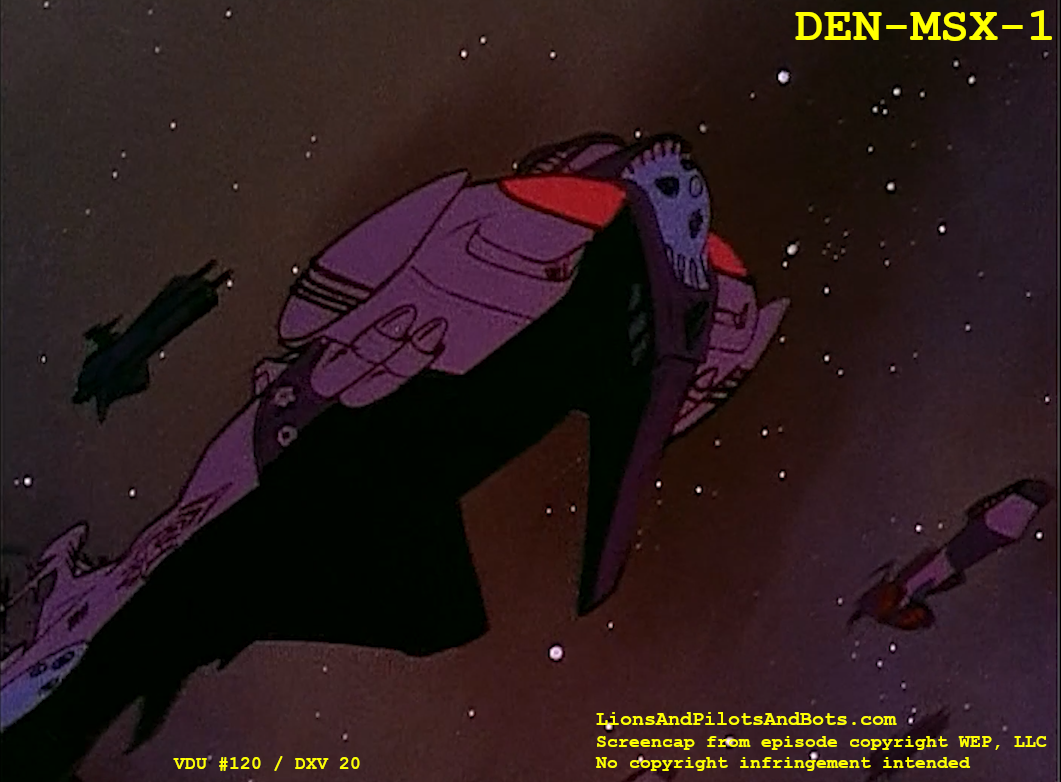
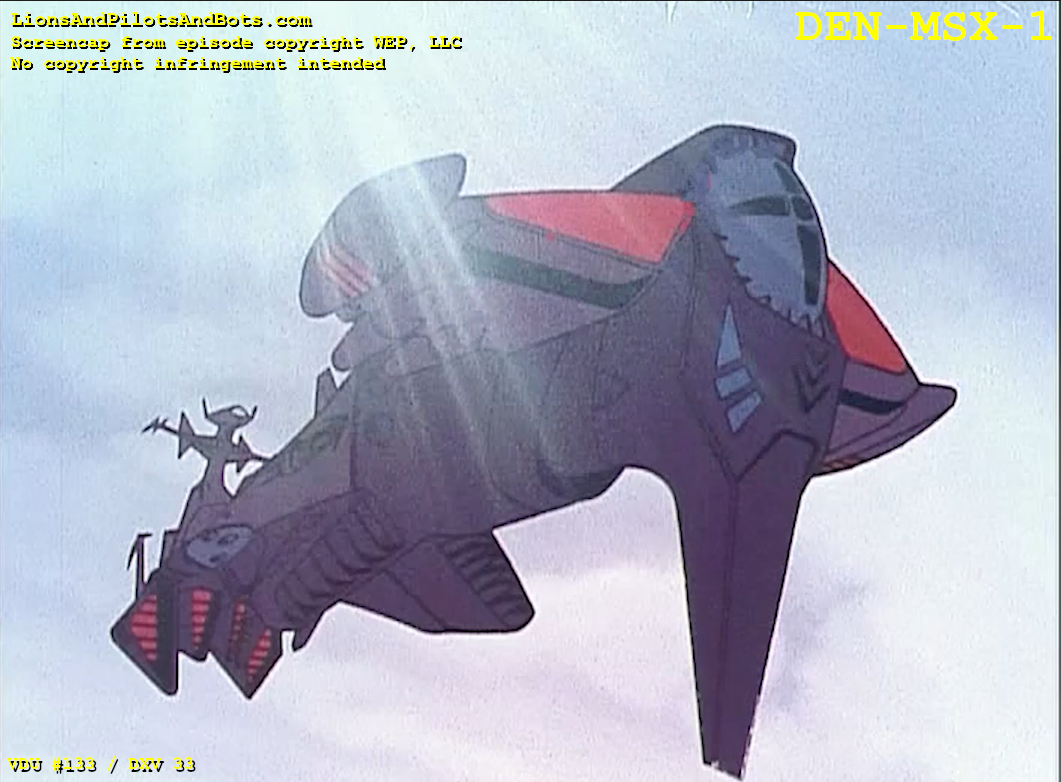
DEN-MSX-2 ships first appear in #124 “Hazar is Demoted,” as Hazar and Dorma depart Planet Drule in an DEN-MSX-2 ship. The ship appears again in recap footage in #125 “Just Like Earth.” After that, DEN-MSX-2 ships are not seen until #134 “Hazar Bucks the Empire,” and from this point onward, DEN-MSX-2 ships seem to have replaced DEN-MSX-1 ships entirely.
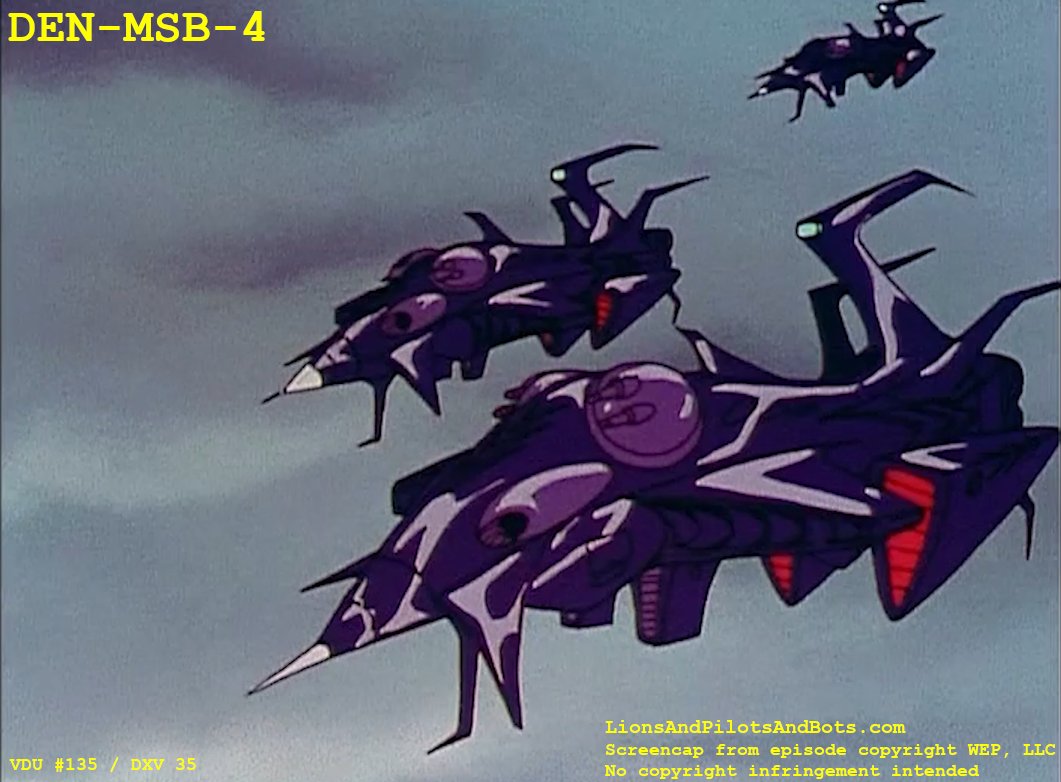
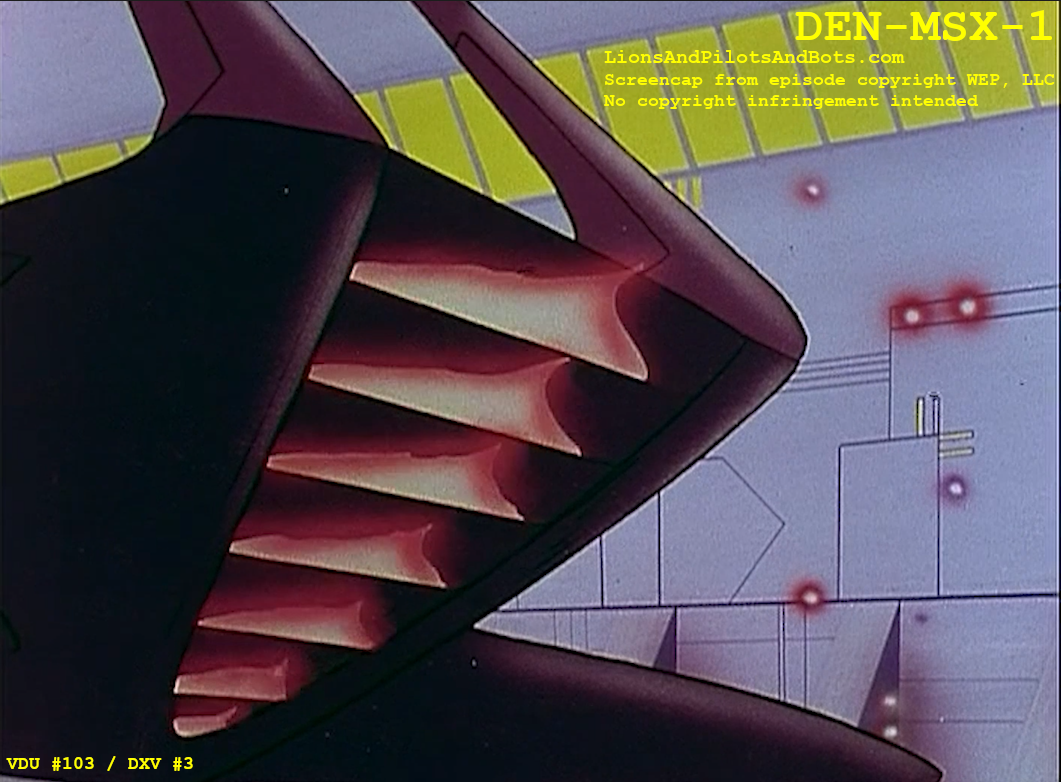
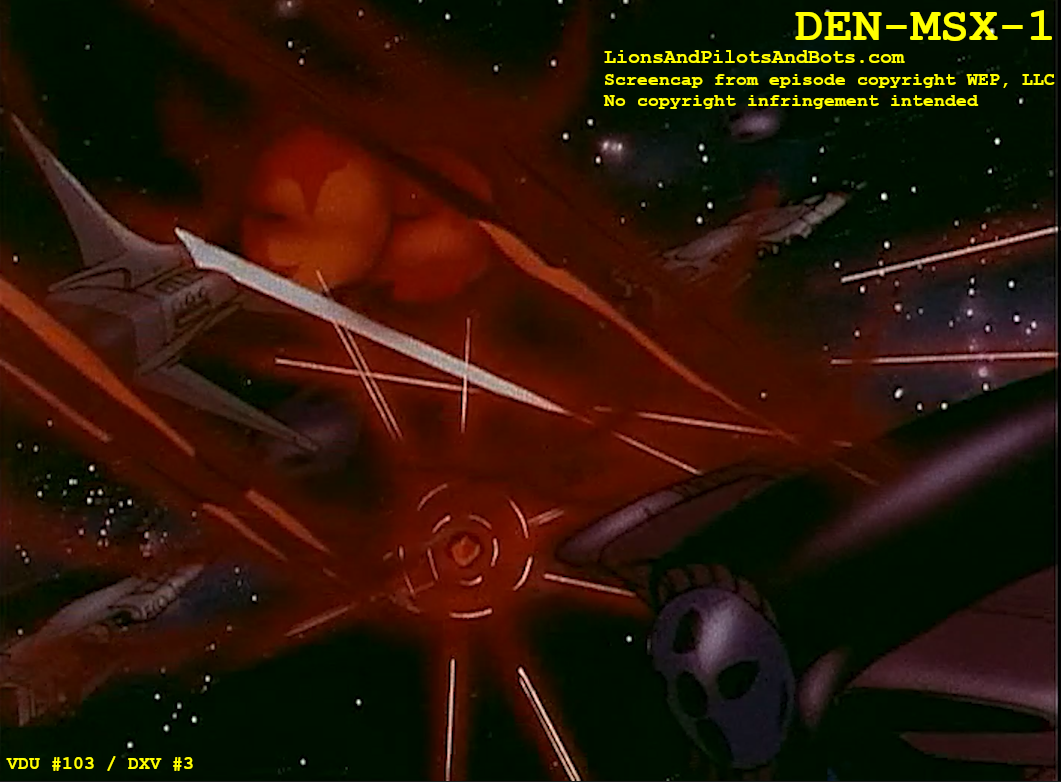
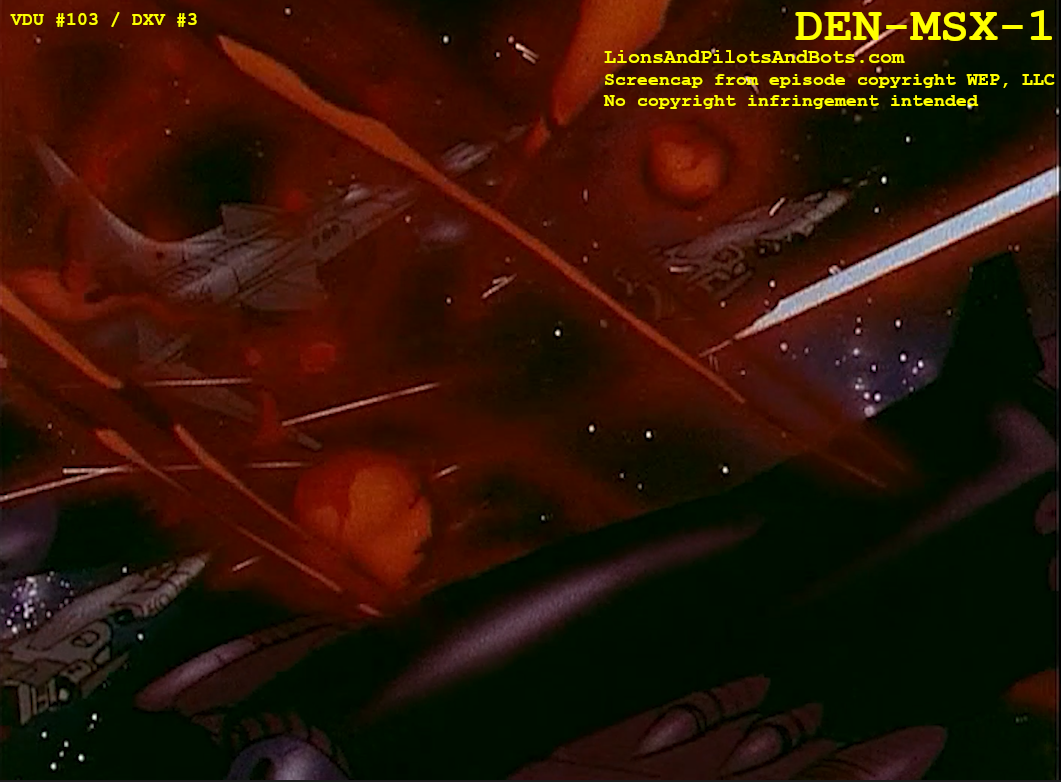
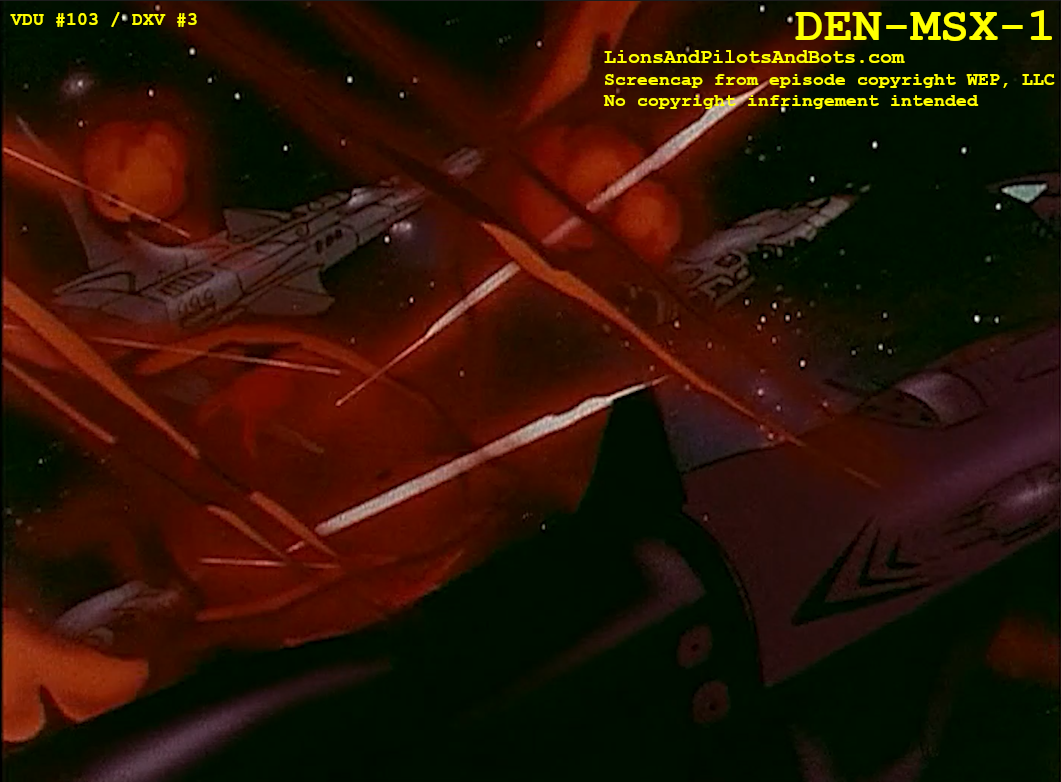
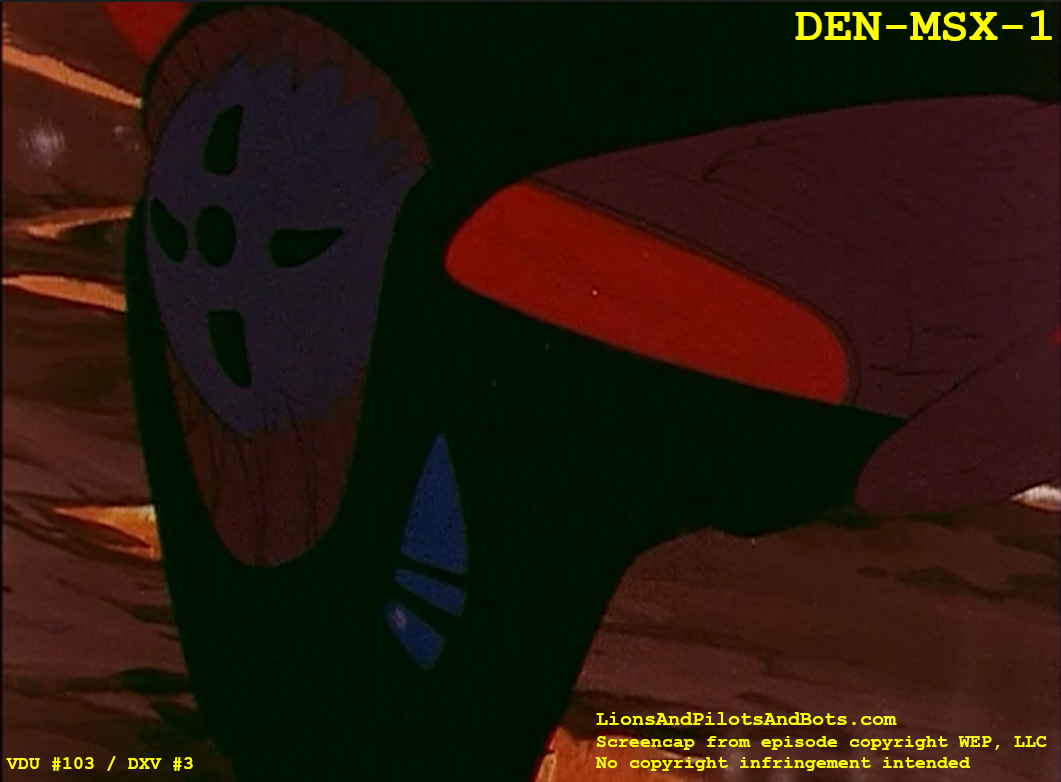
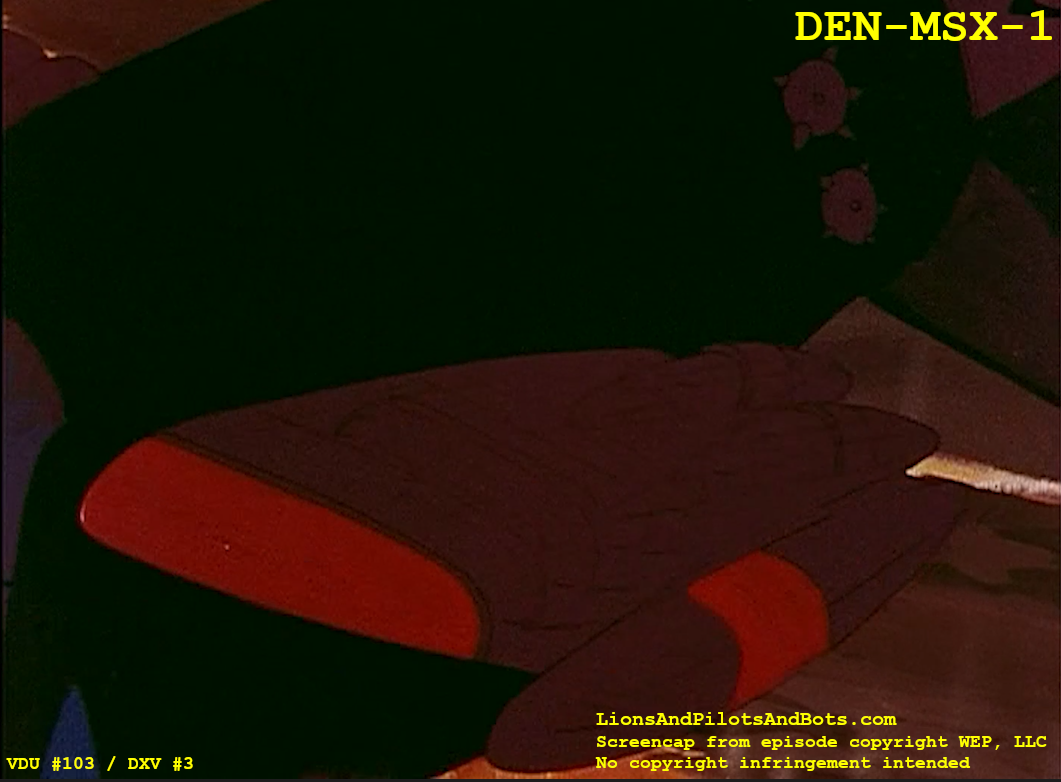
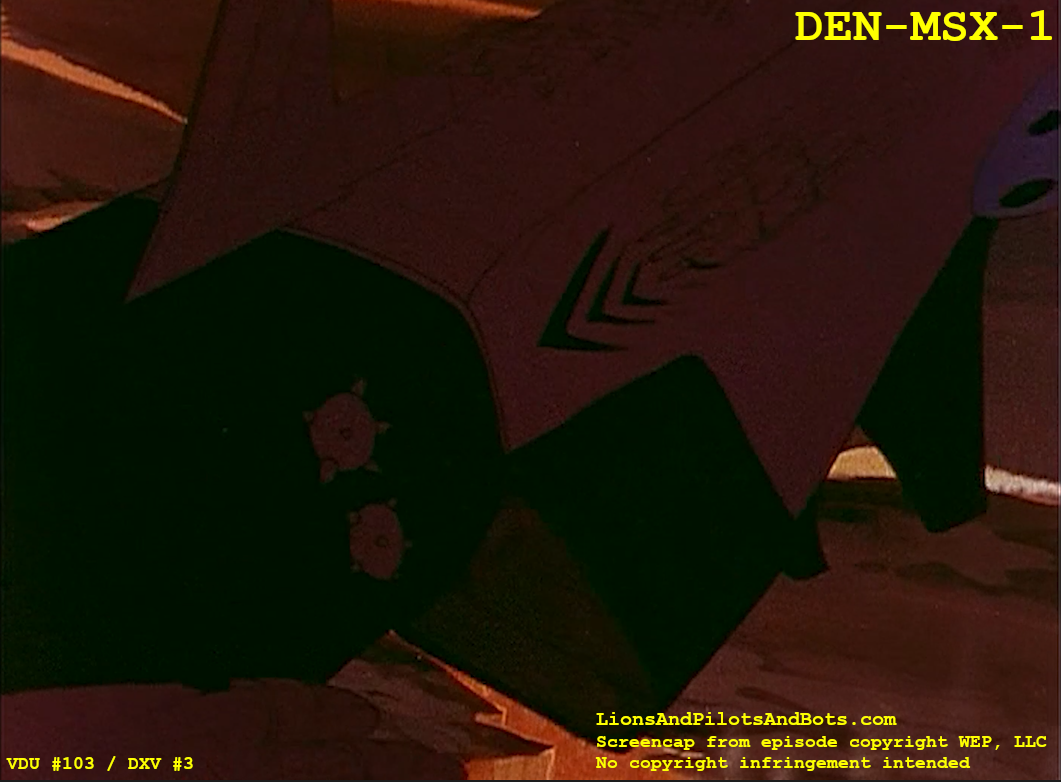
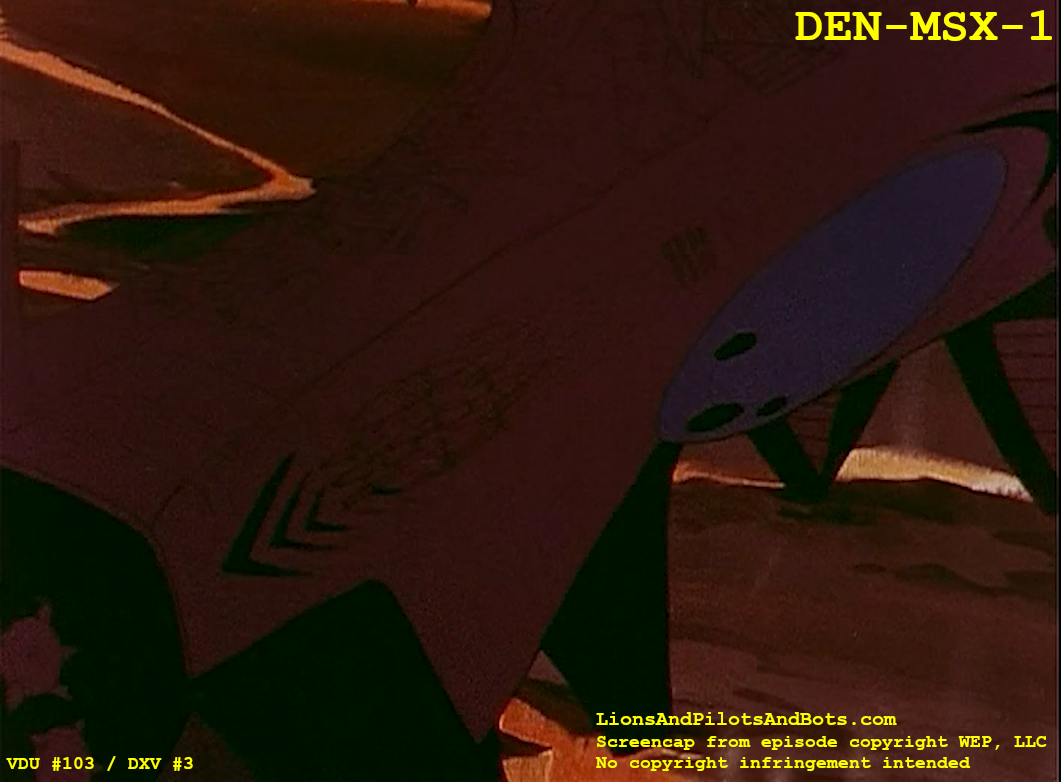
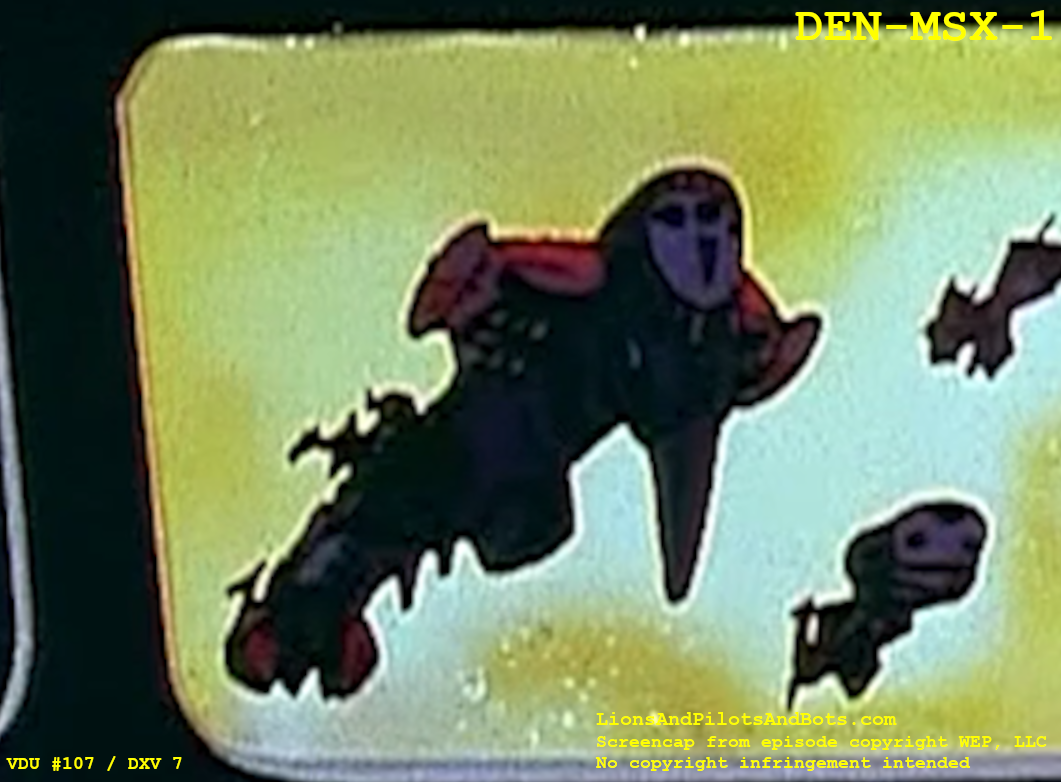
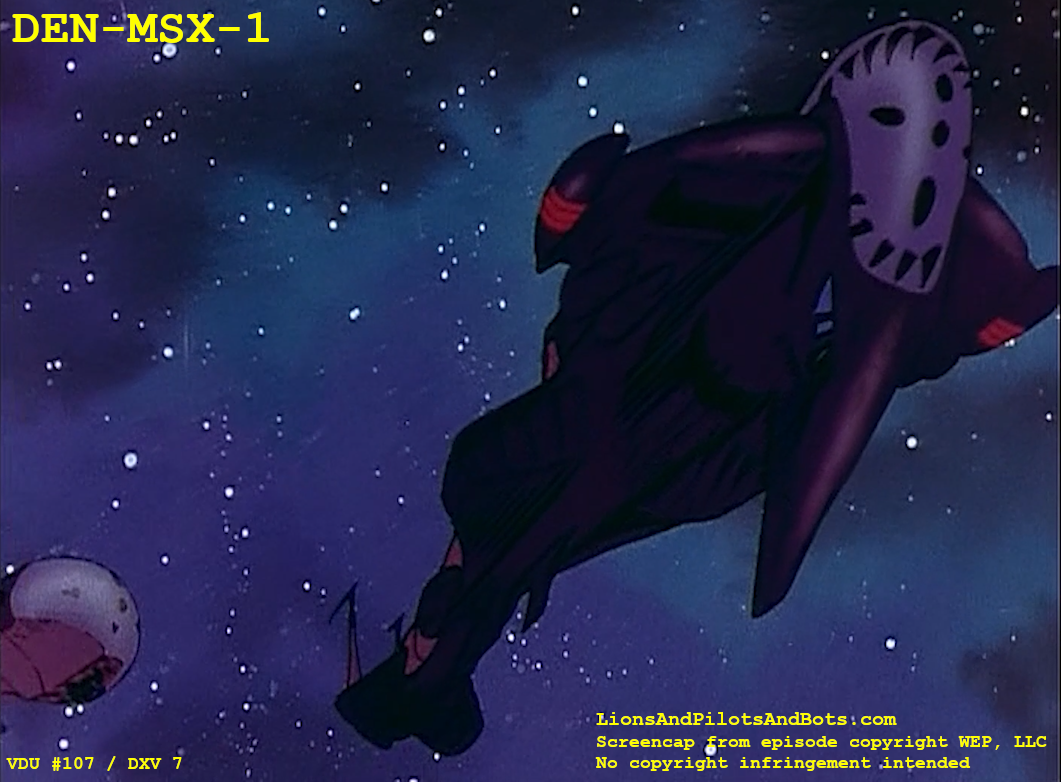
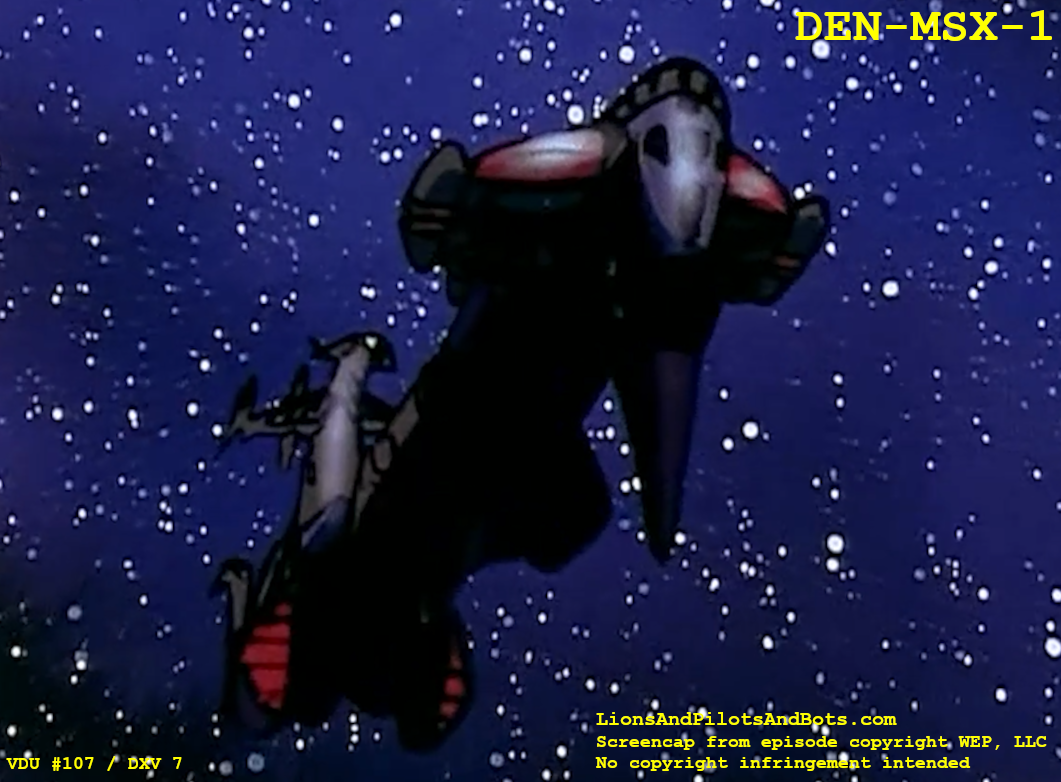
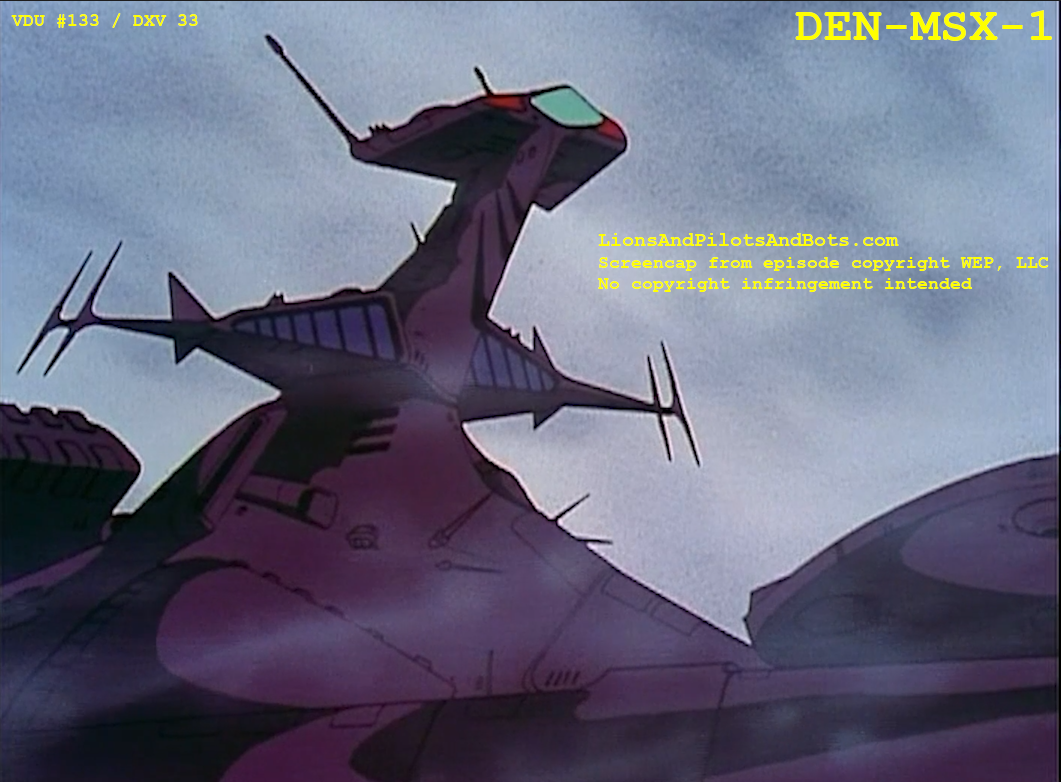
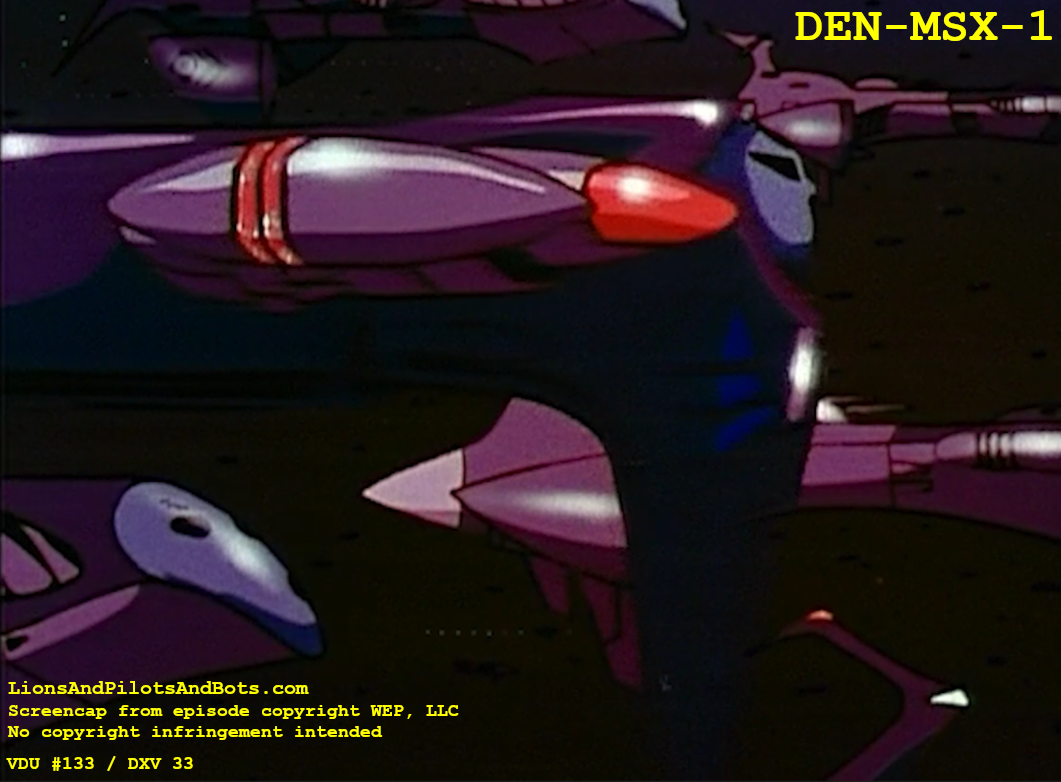
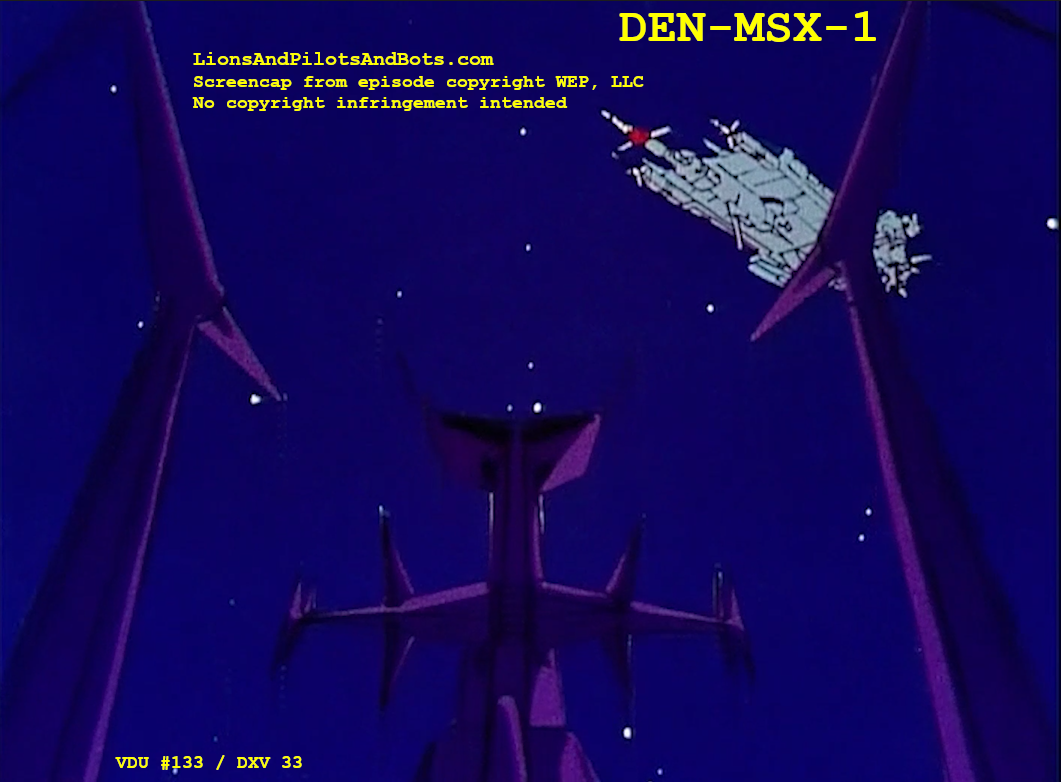
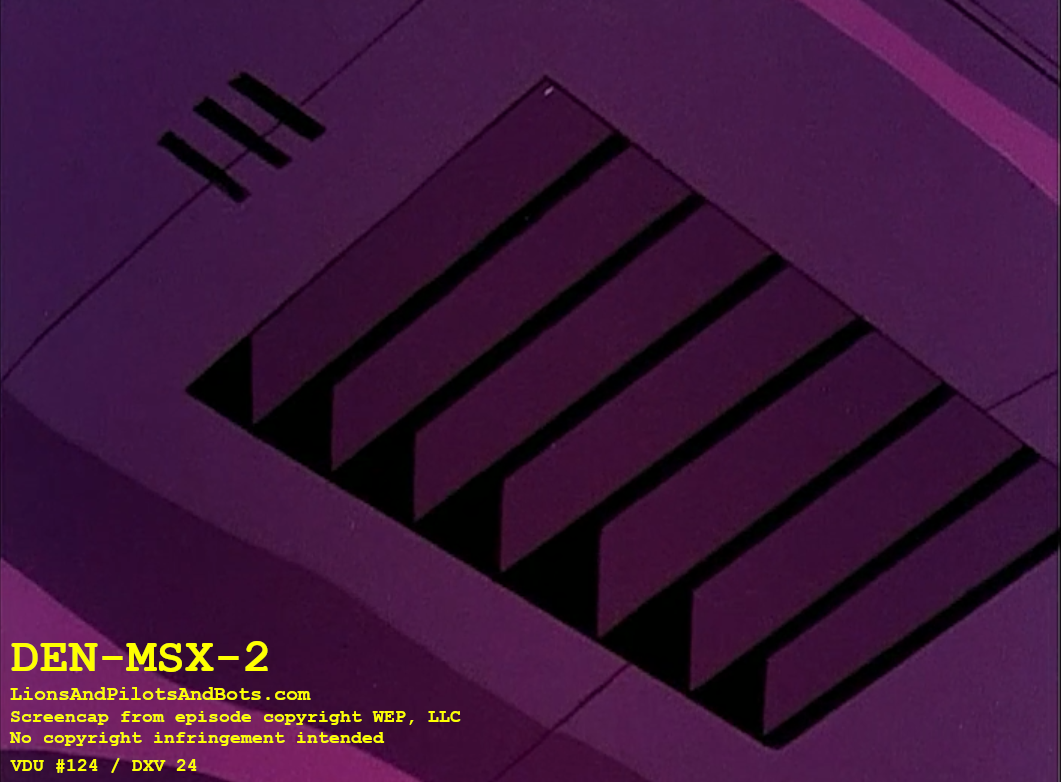
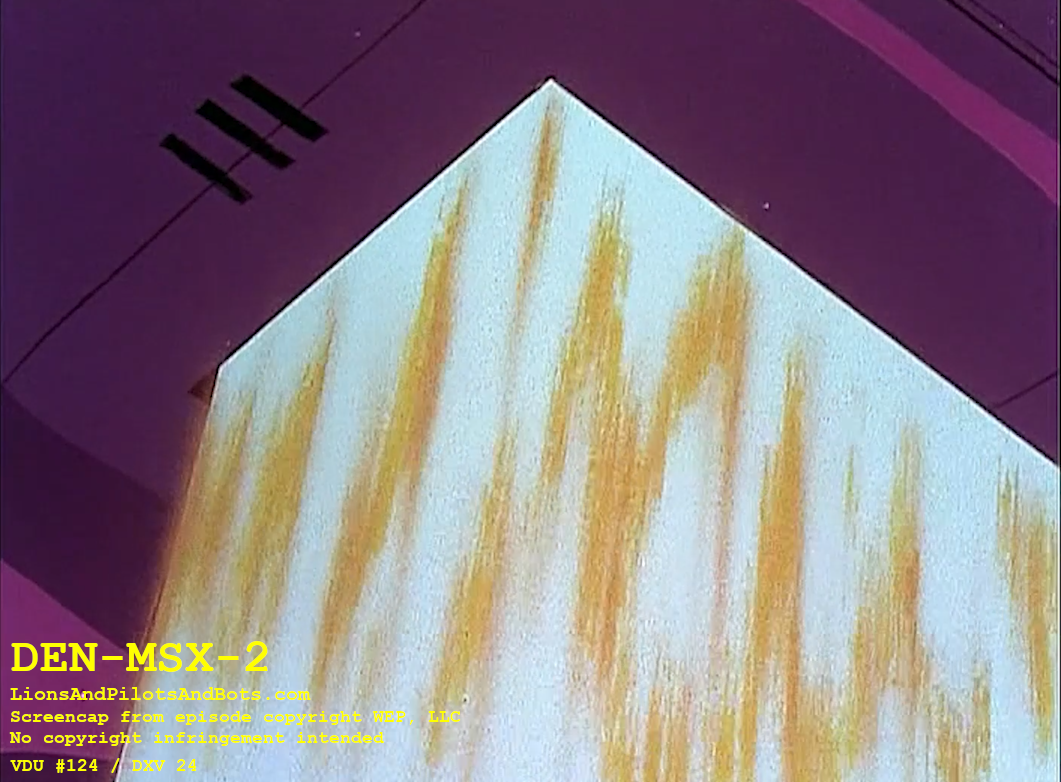
DEN-MSX-2 ships look like scarier versions of DEN-MSX-1 ships. Compared to DEN-MSX-1 ships, DEN-MSX-2 ships have additional spires and “hooks” that extend from various points along the fuselage.
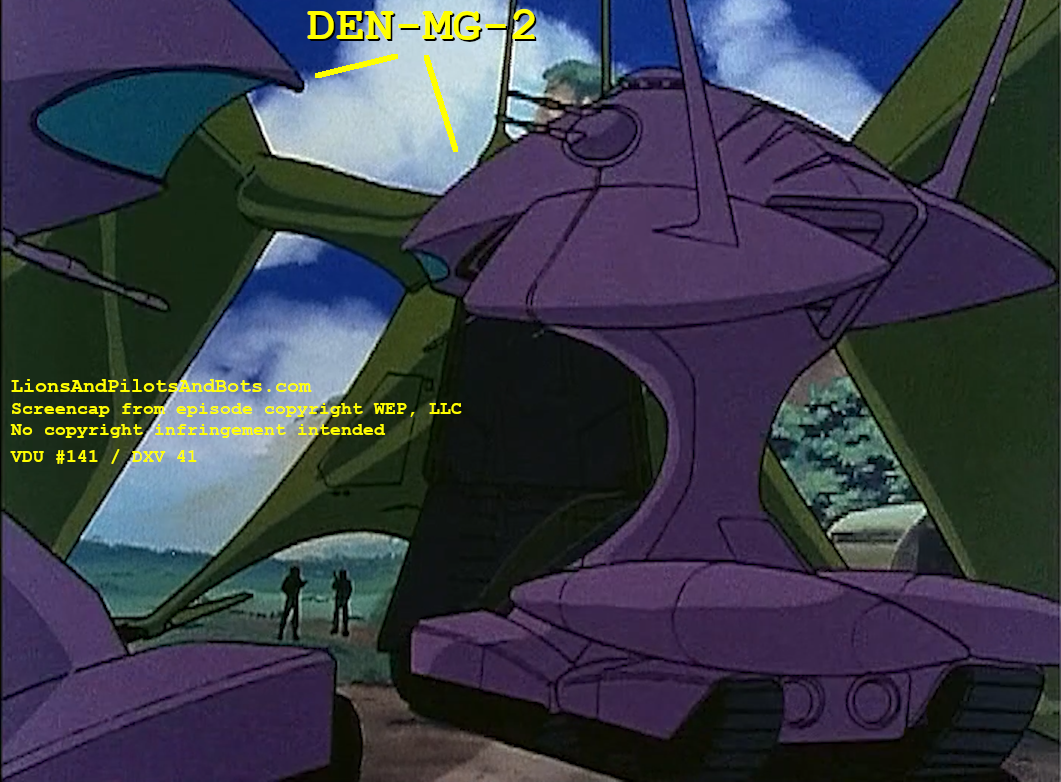
DEN-MSX-2 ships can “land” on a planetary surface. When landed, a hatch on either side of the fuselage can be lowered to the ground, enabling DEN-MG-2 tanks to enter or exit storage bays within the ship.
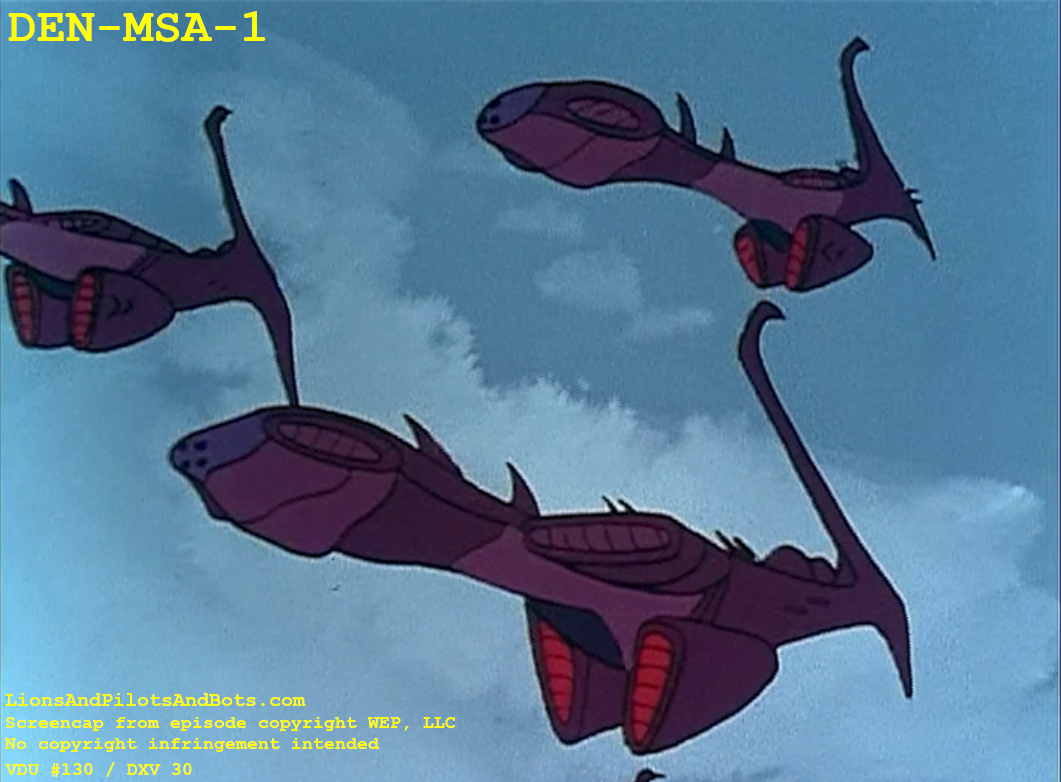
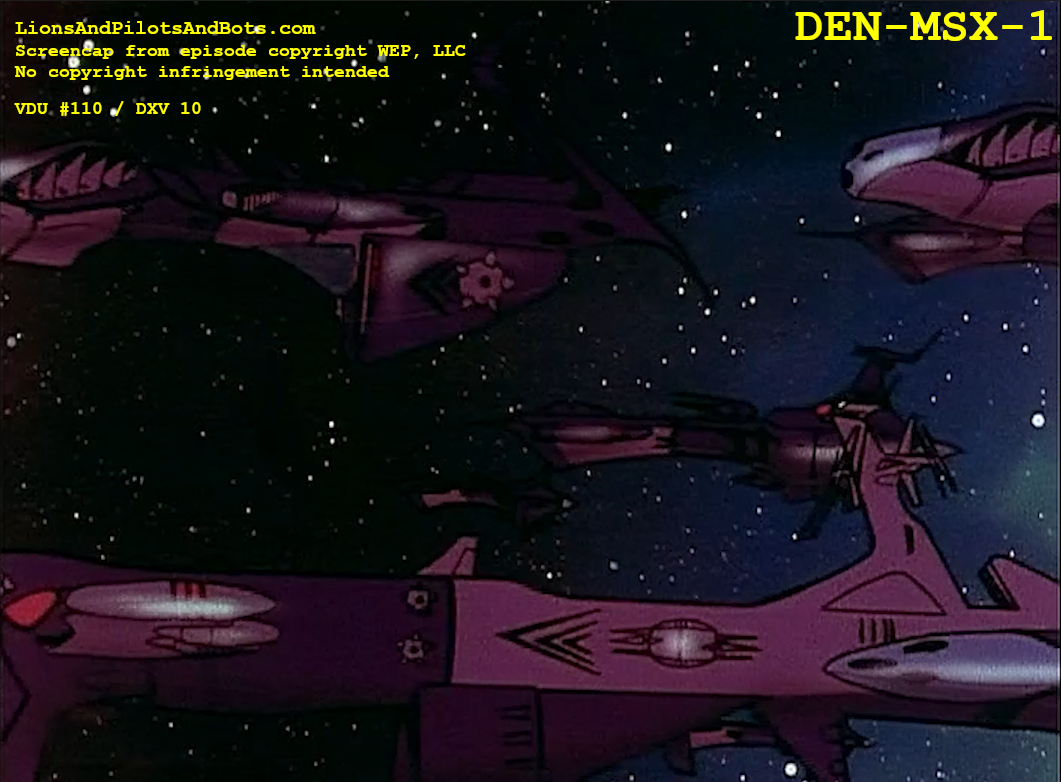
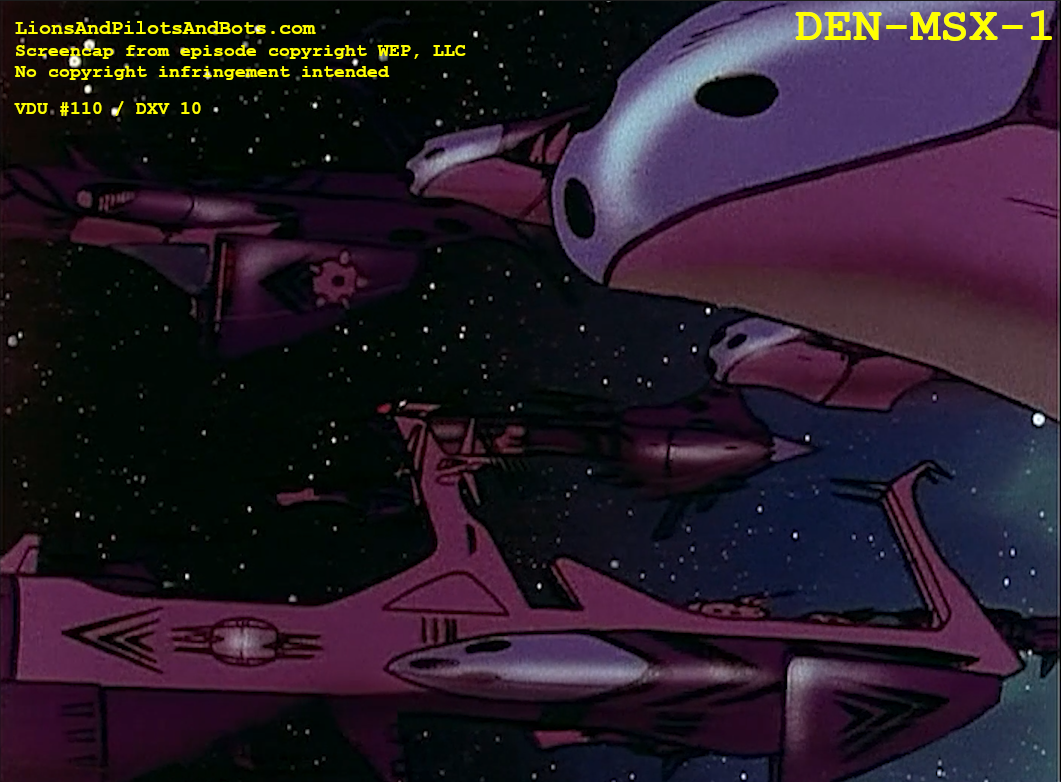
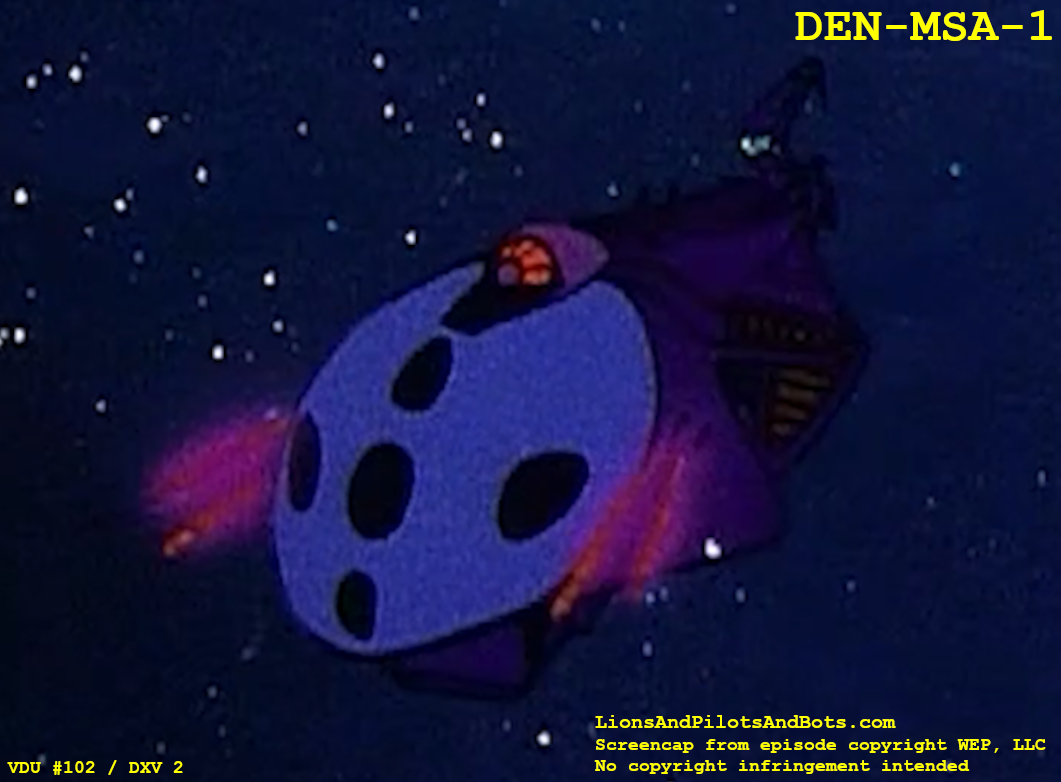
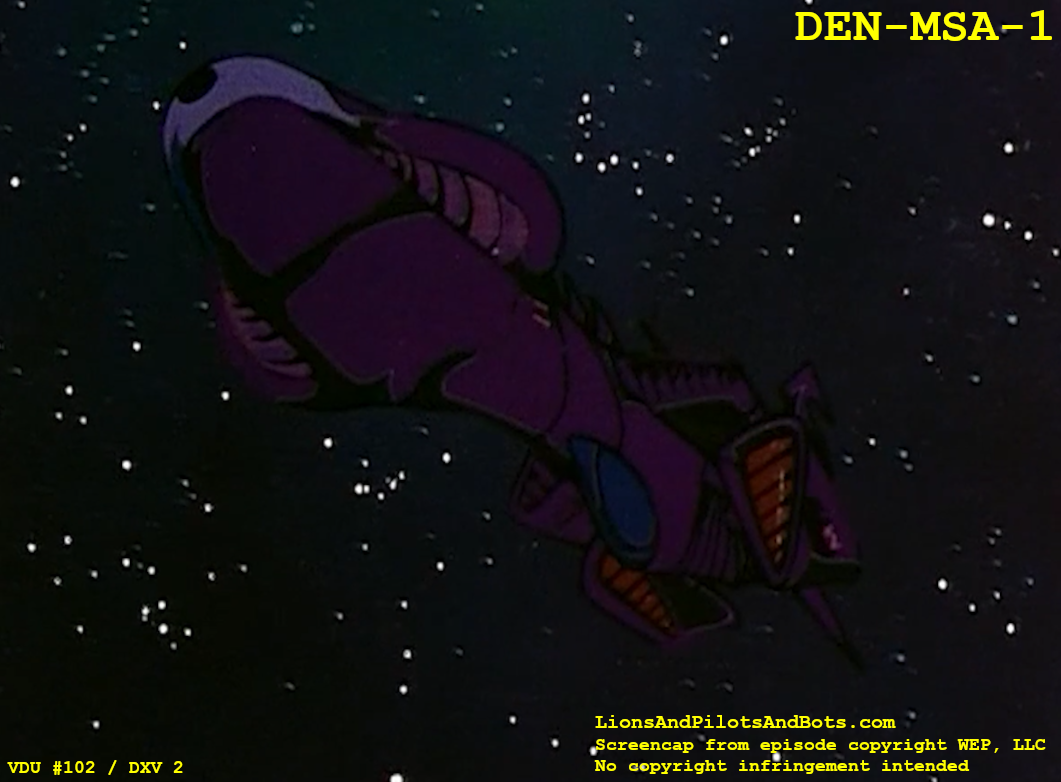
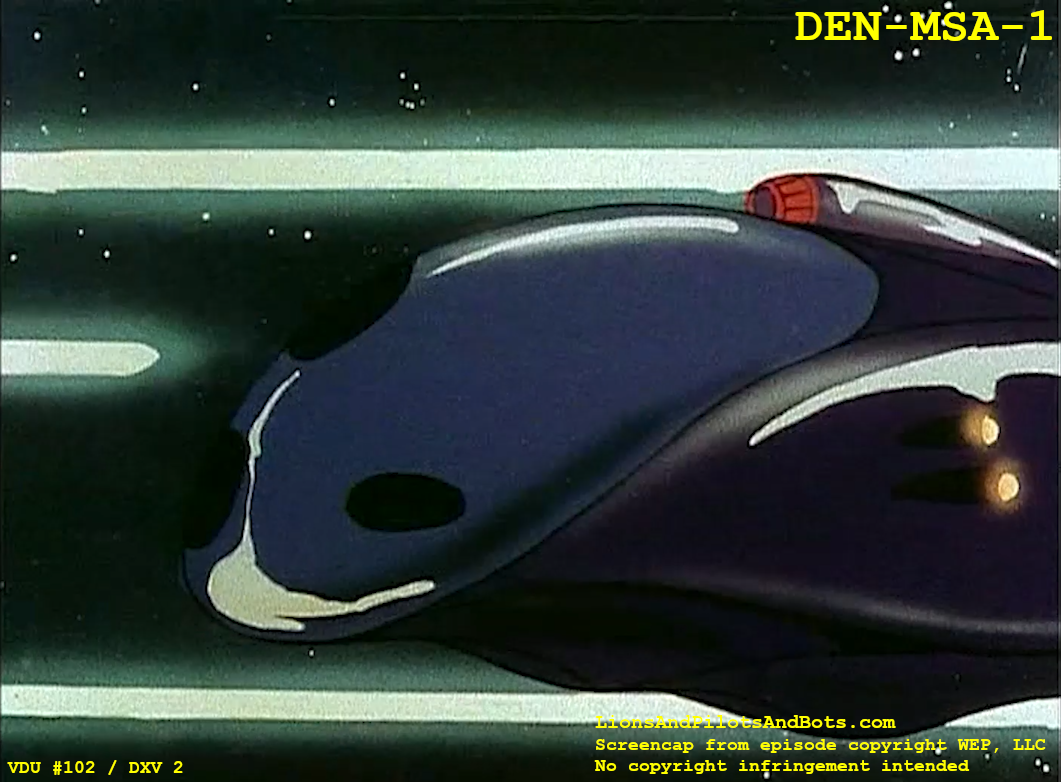
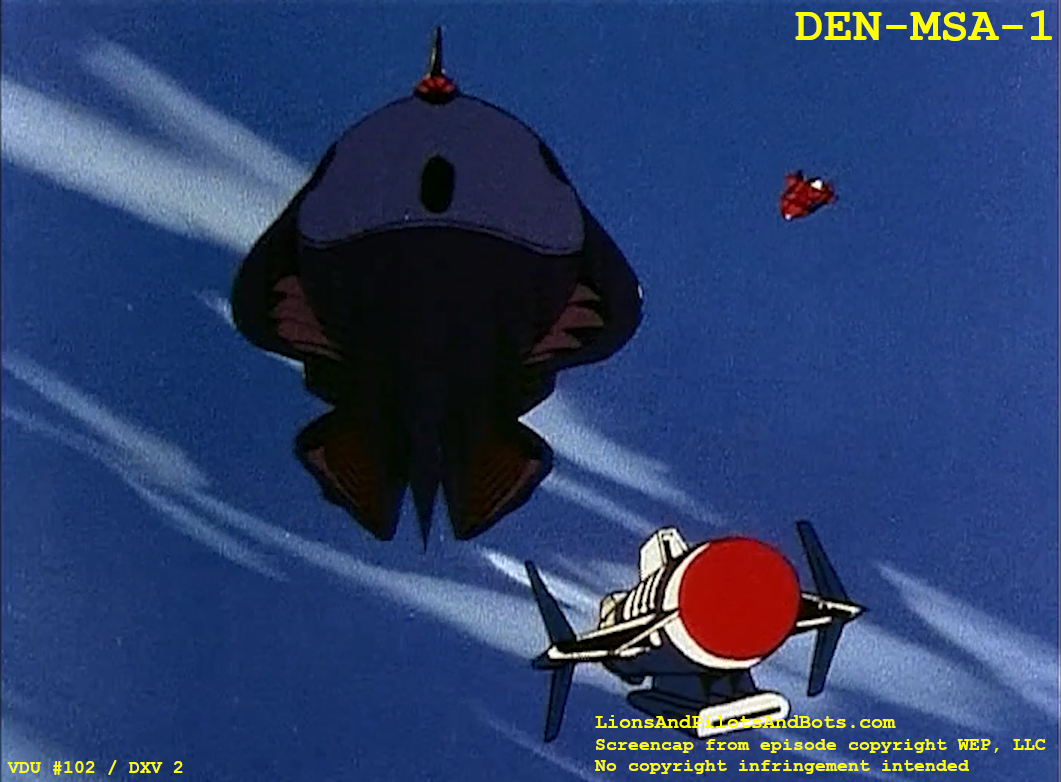
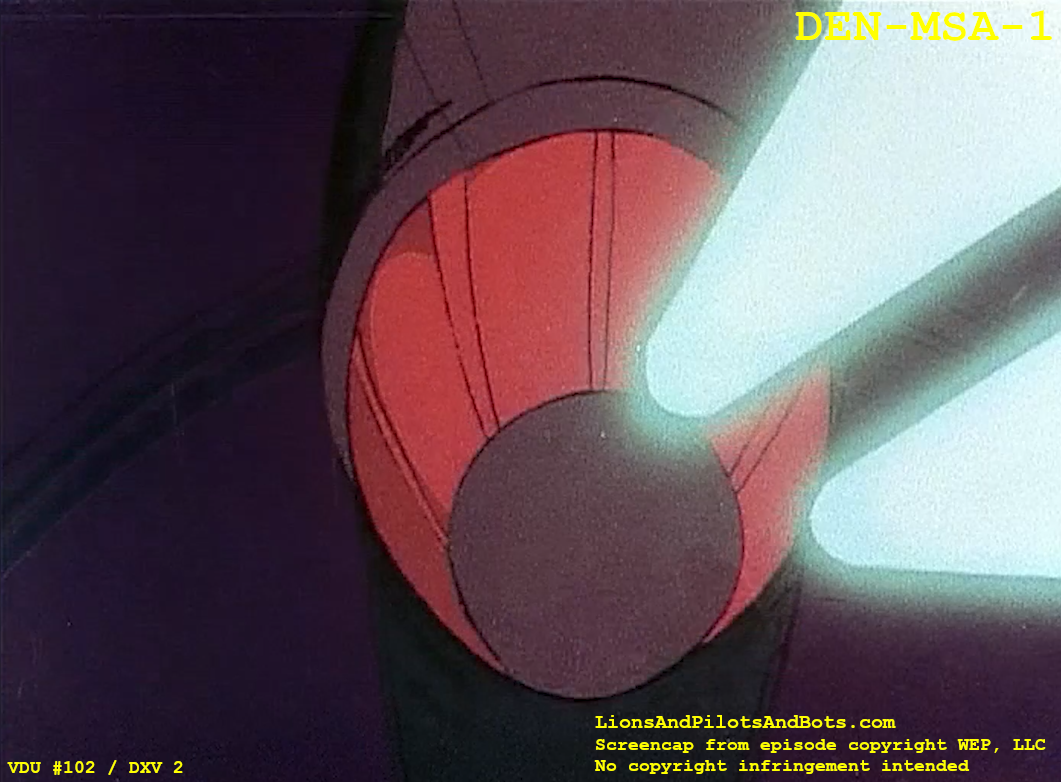
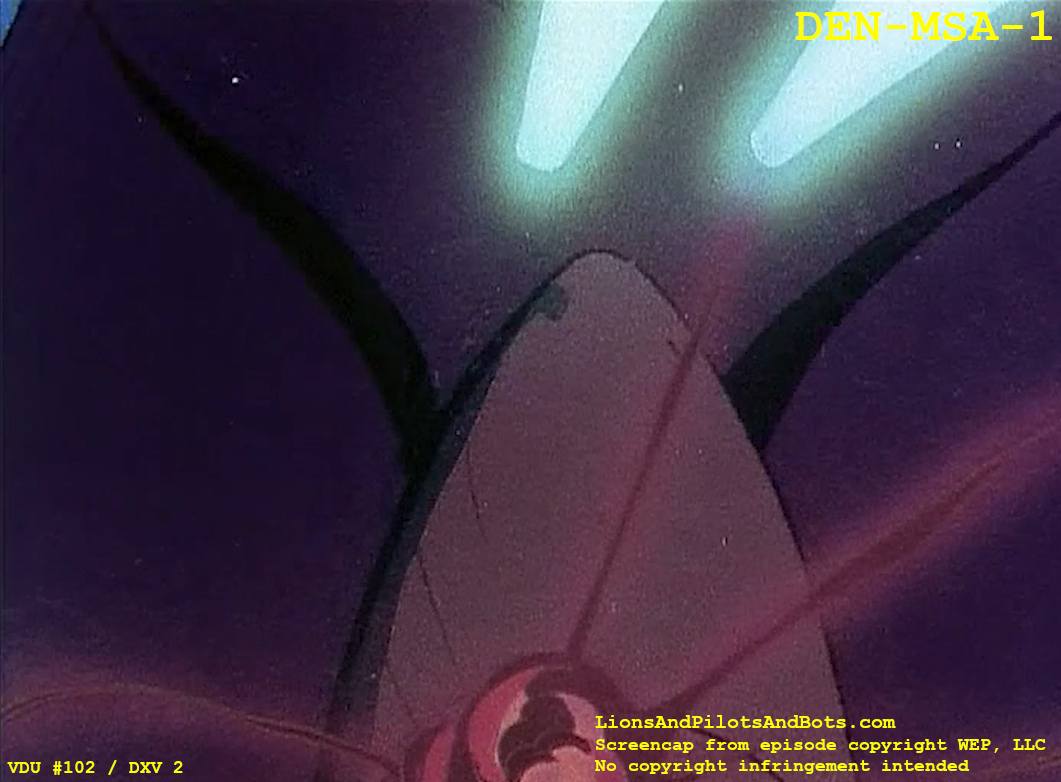
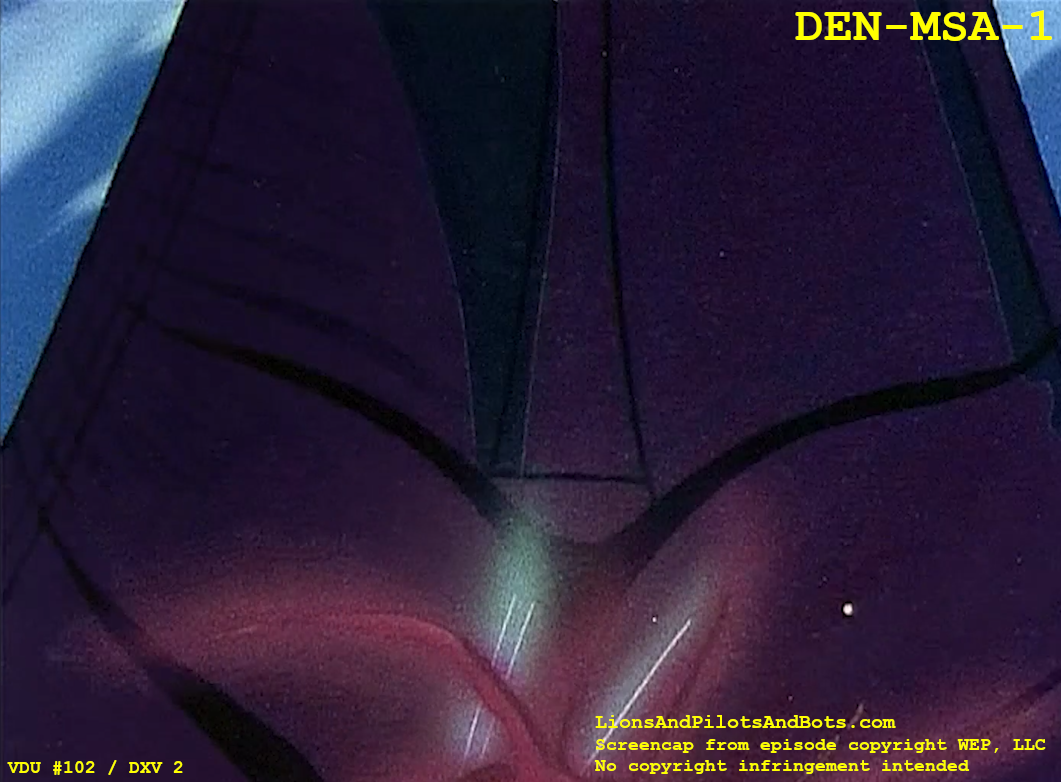
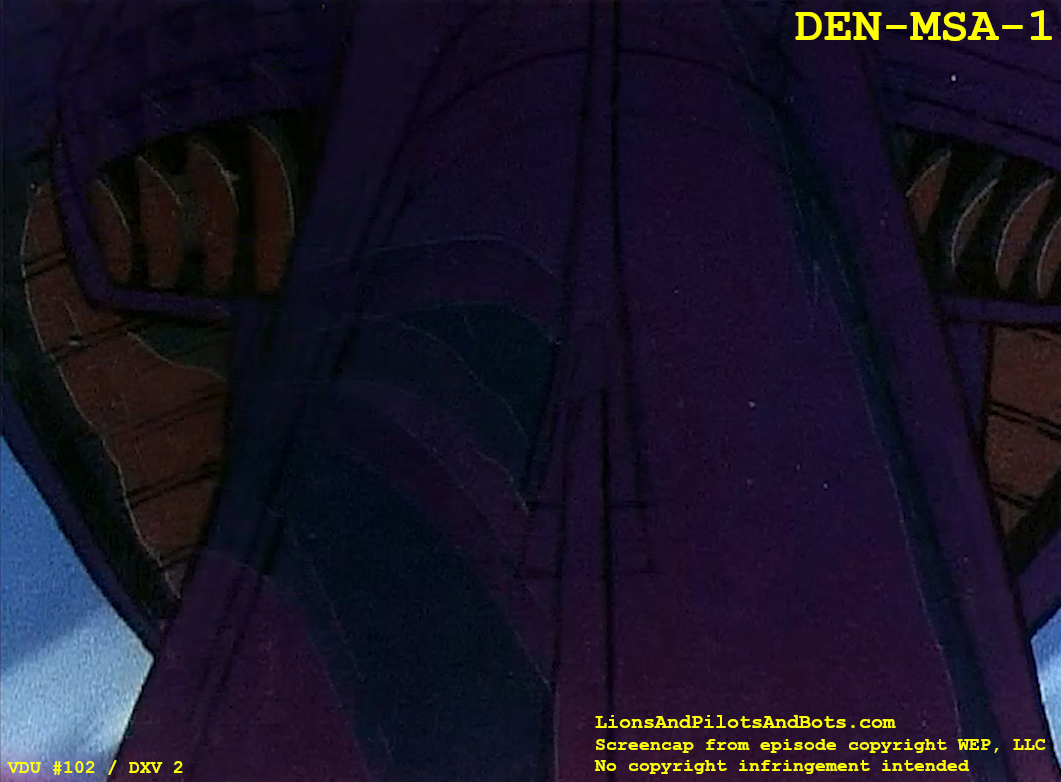
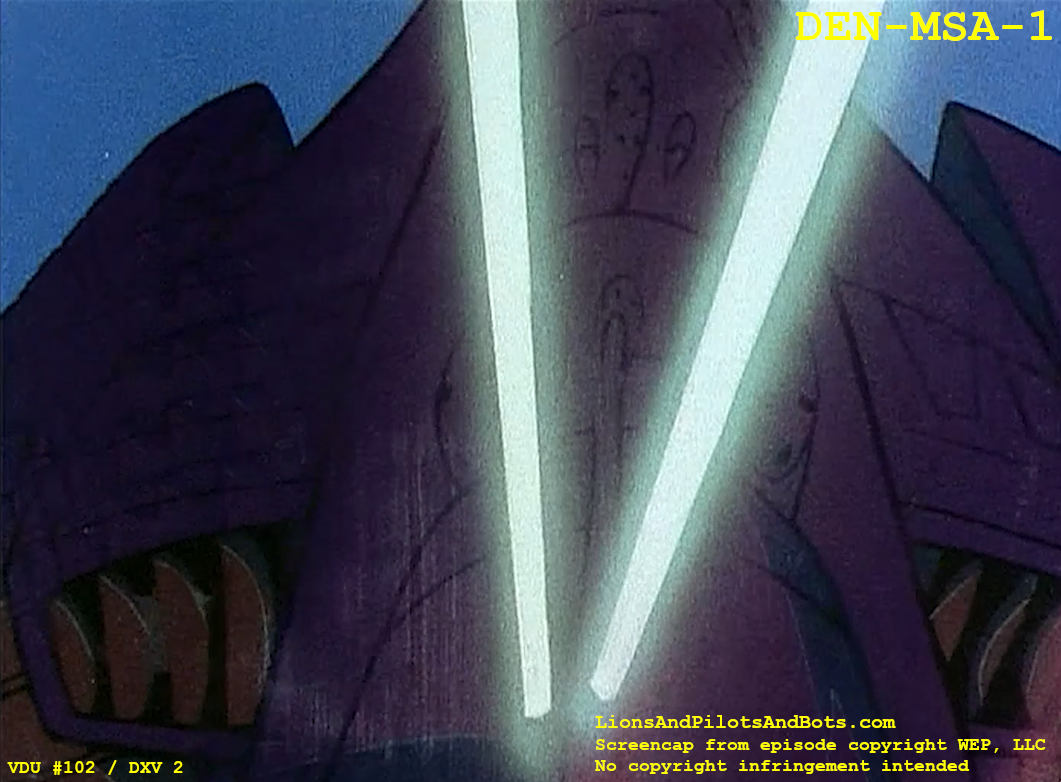
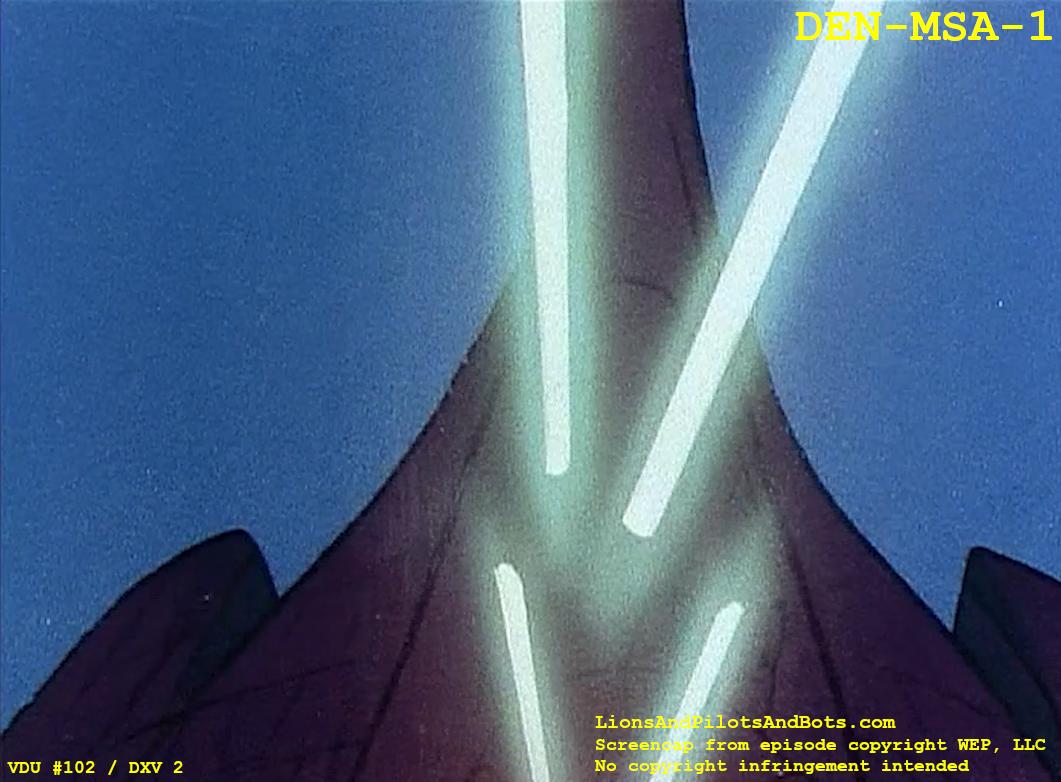
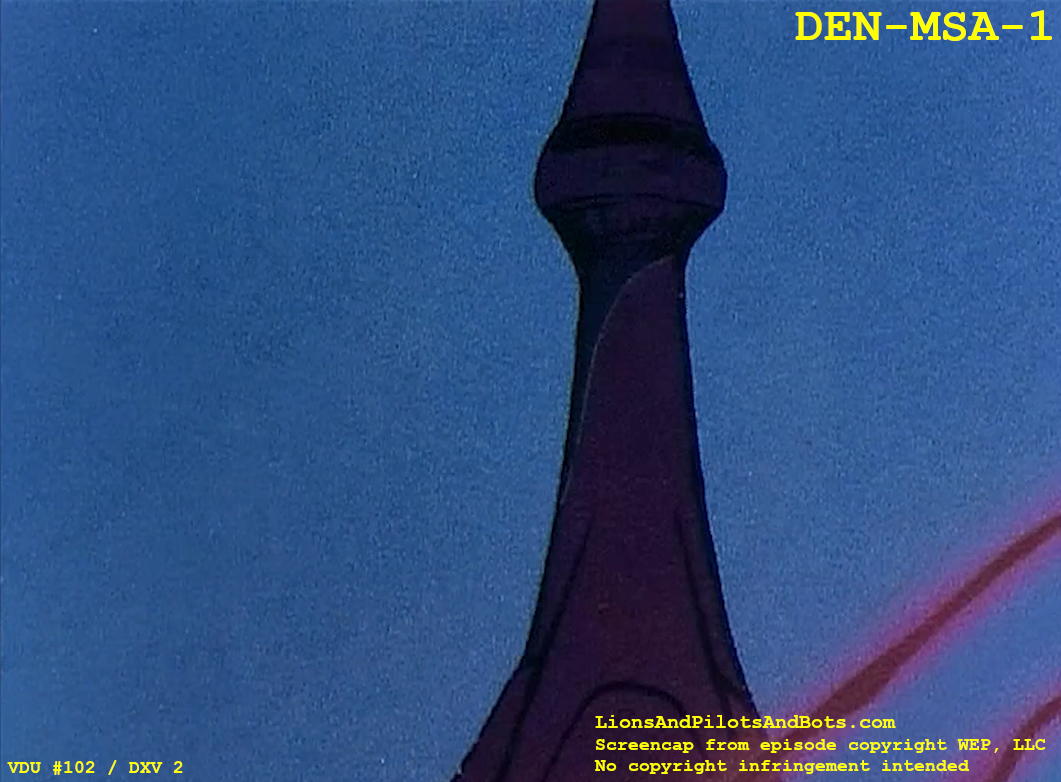
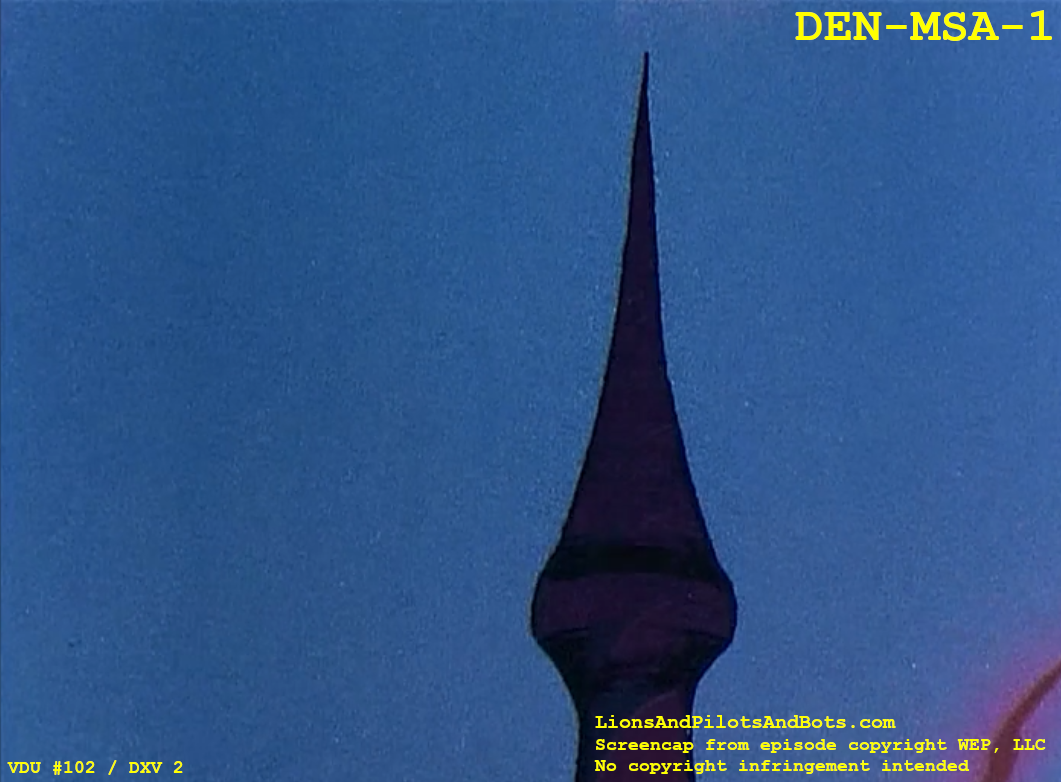
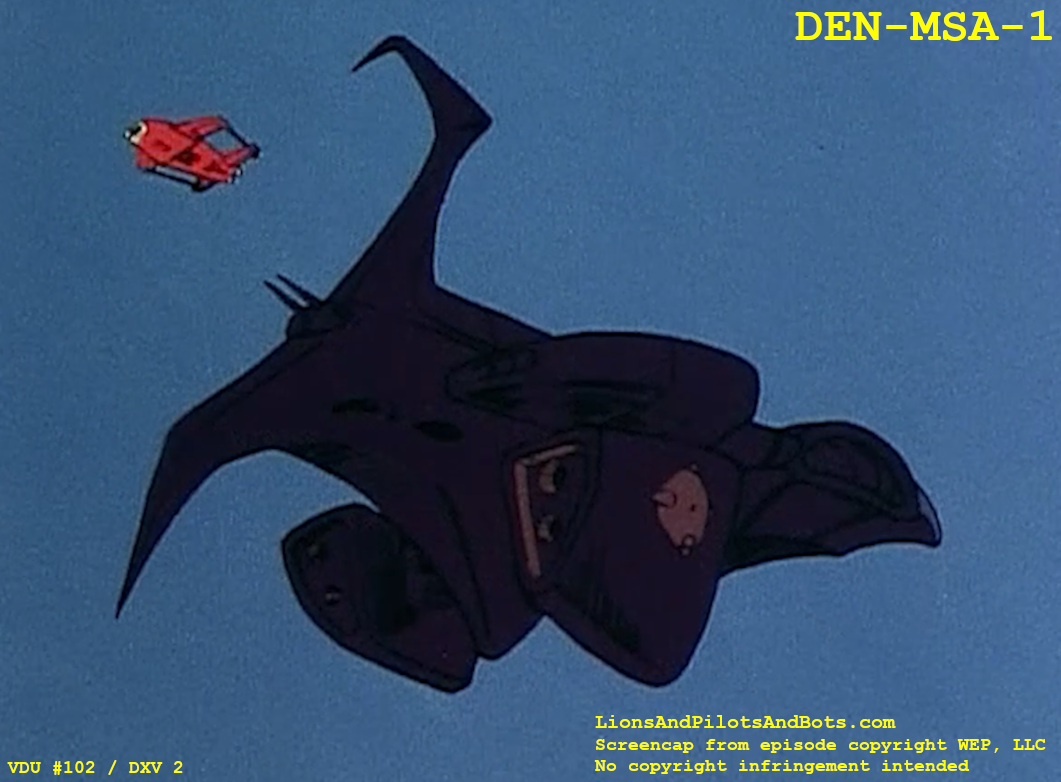
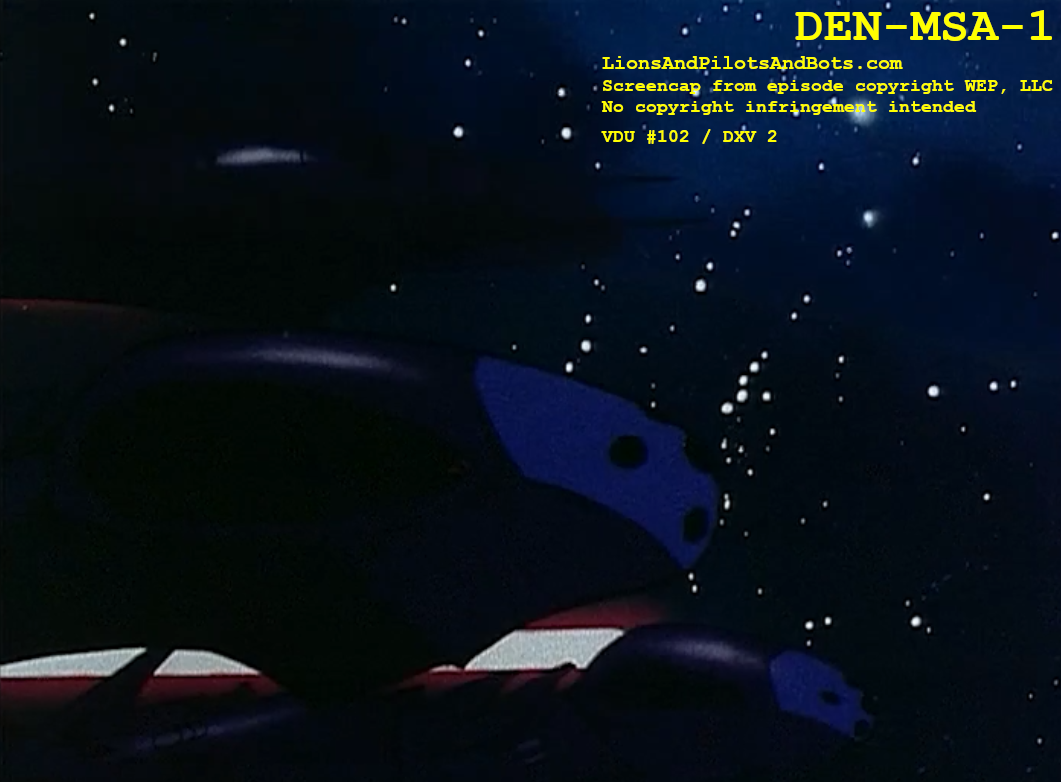
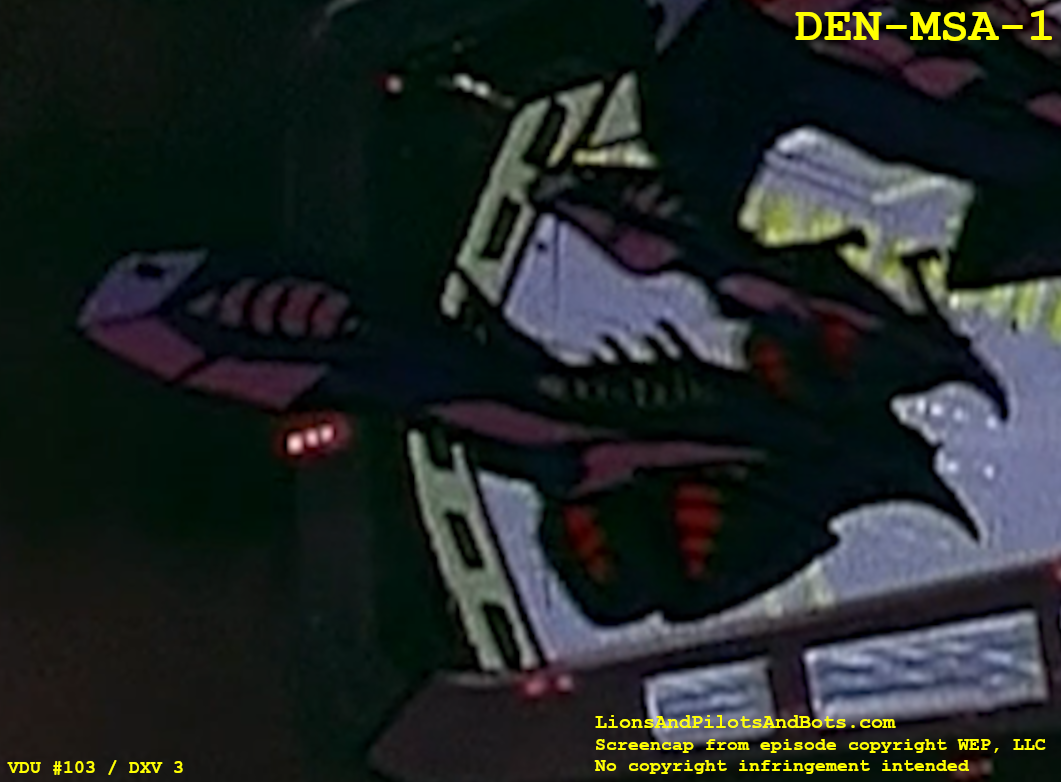
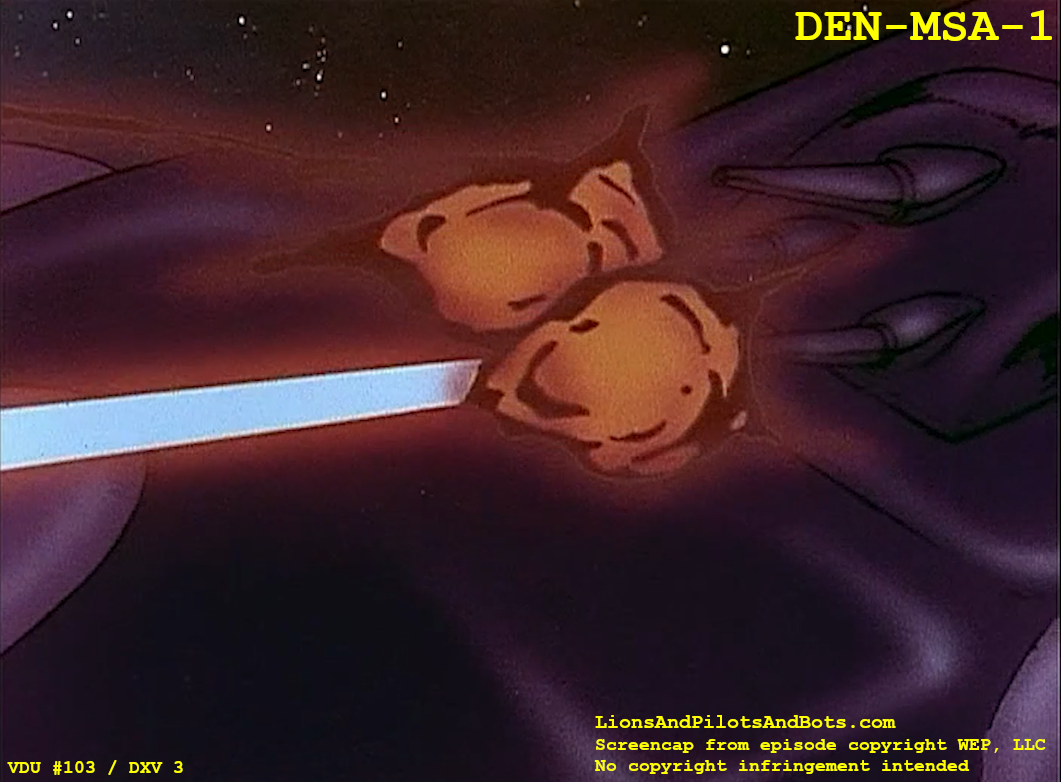
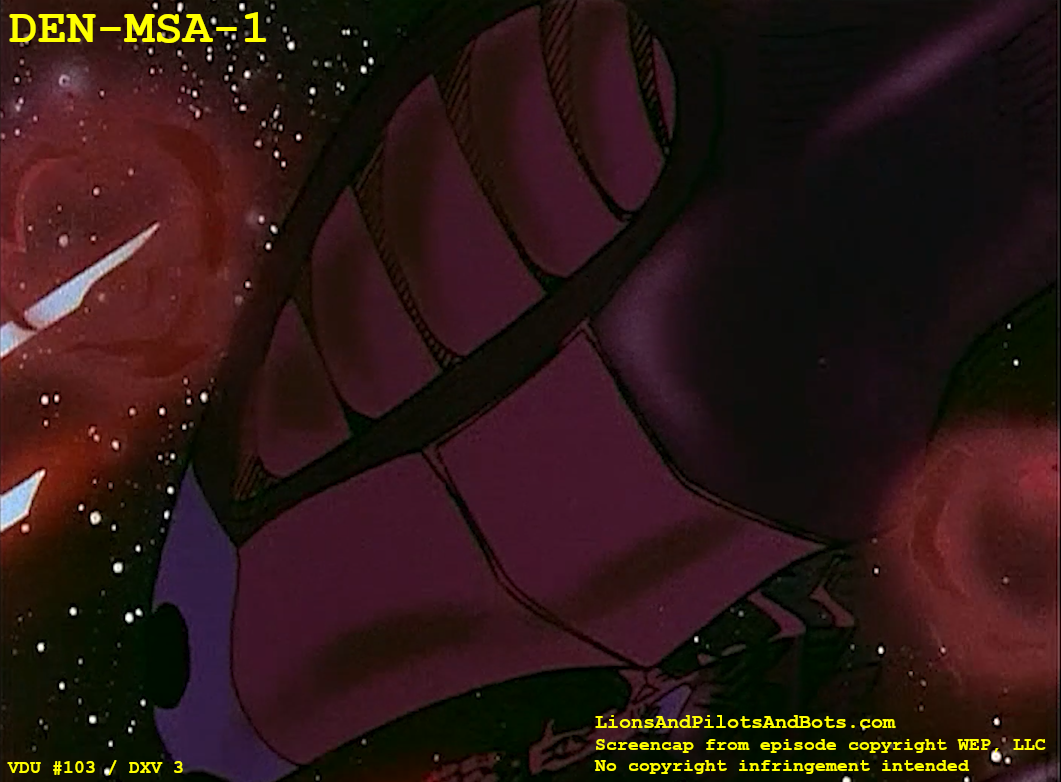
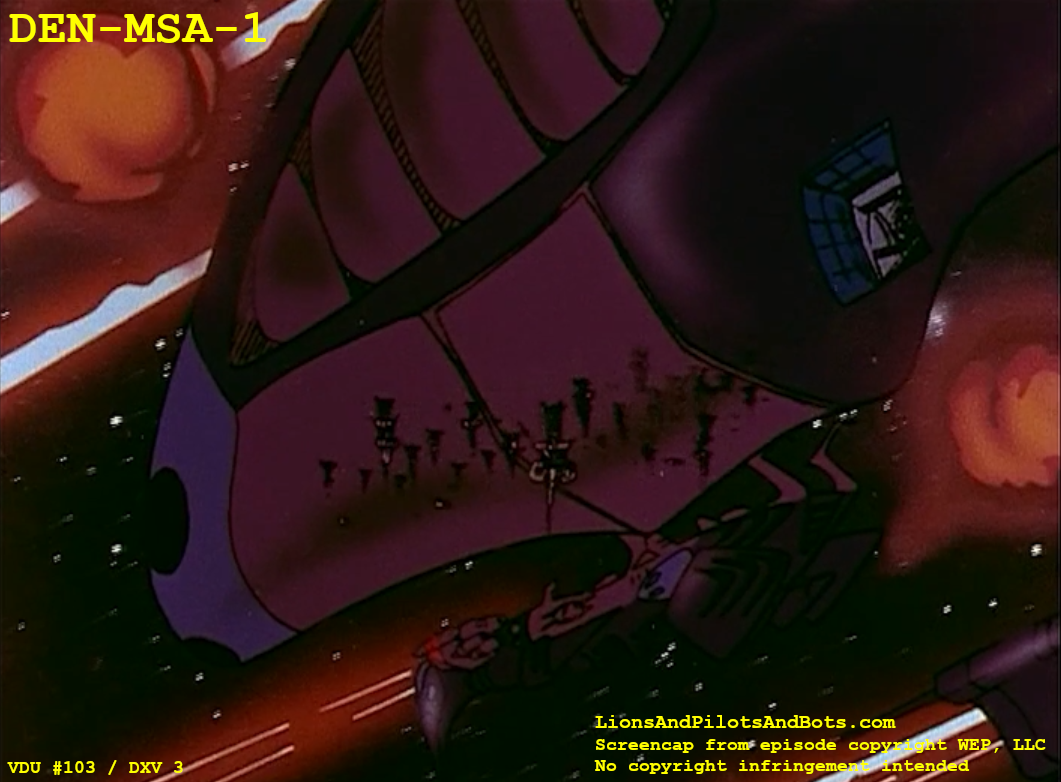
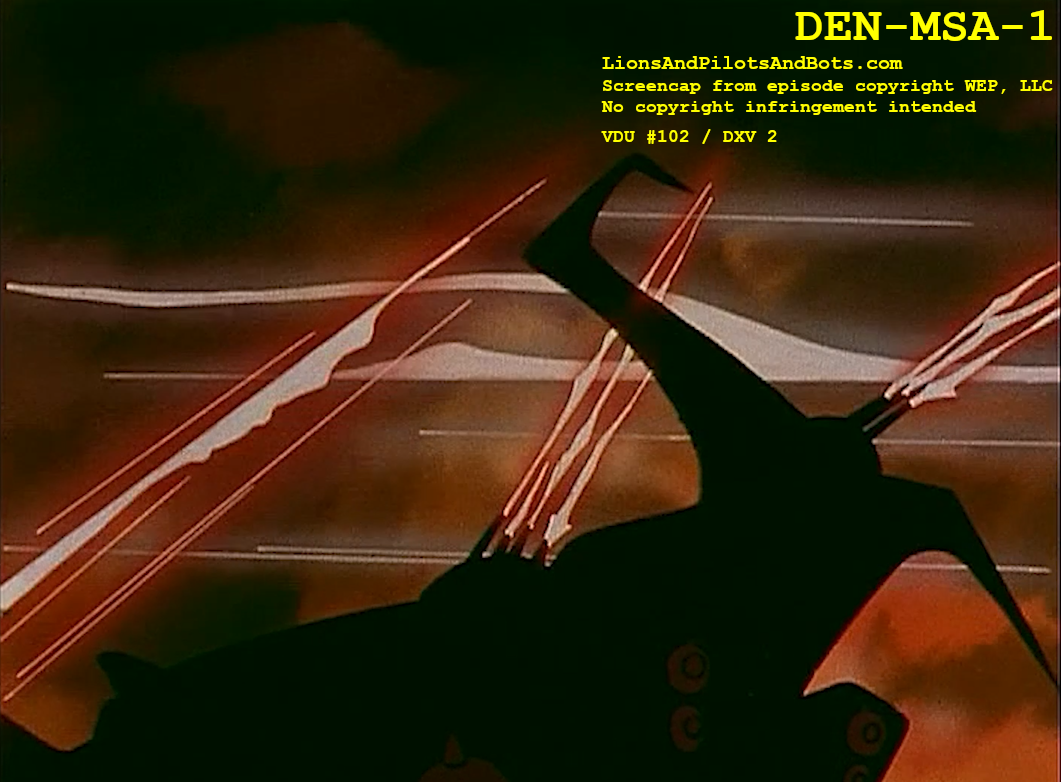
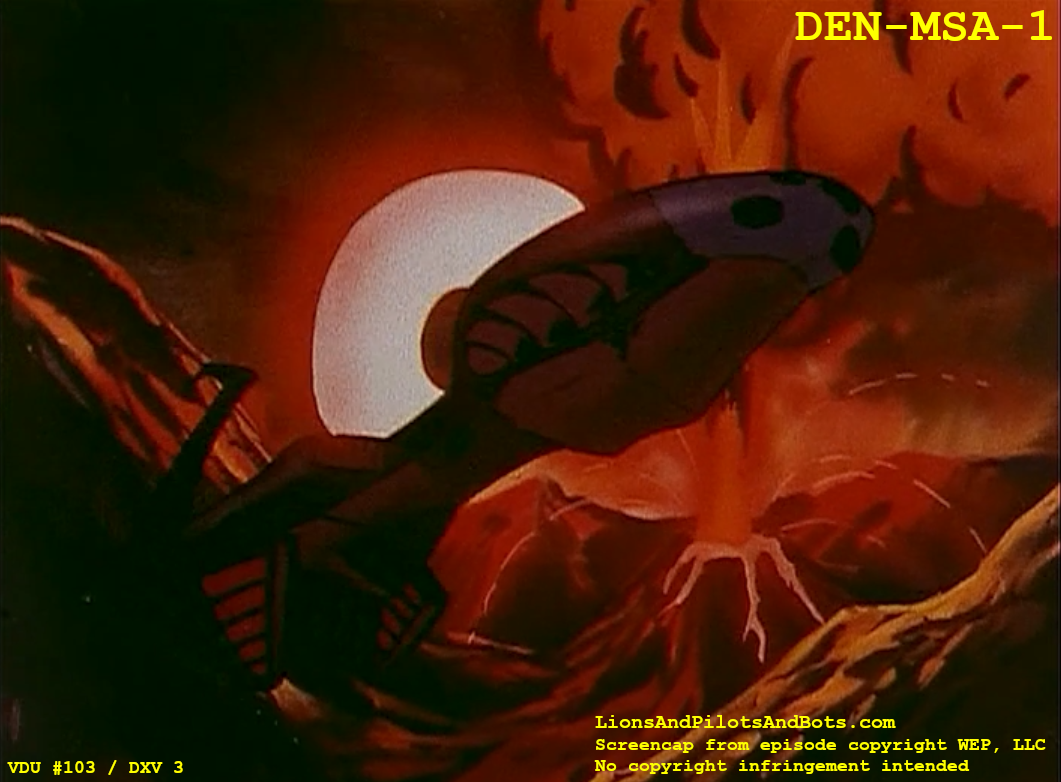
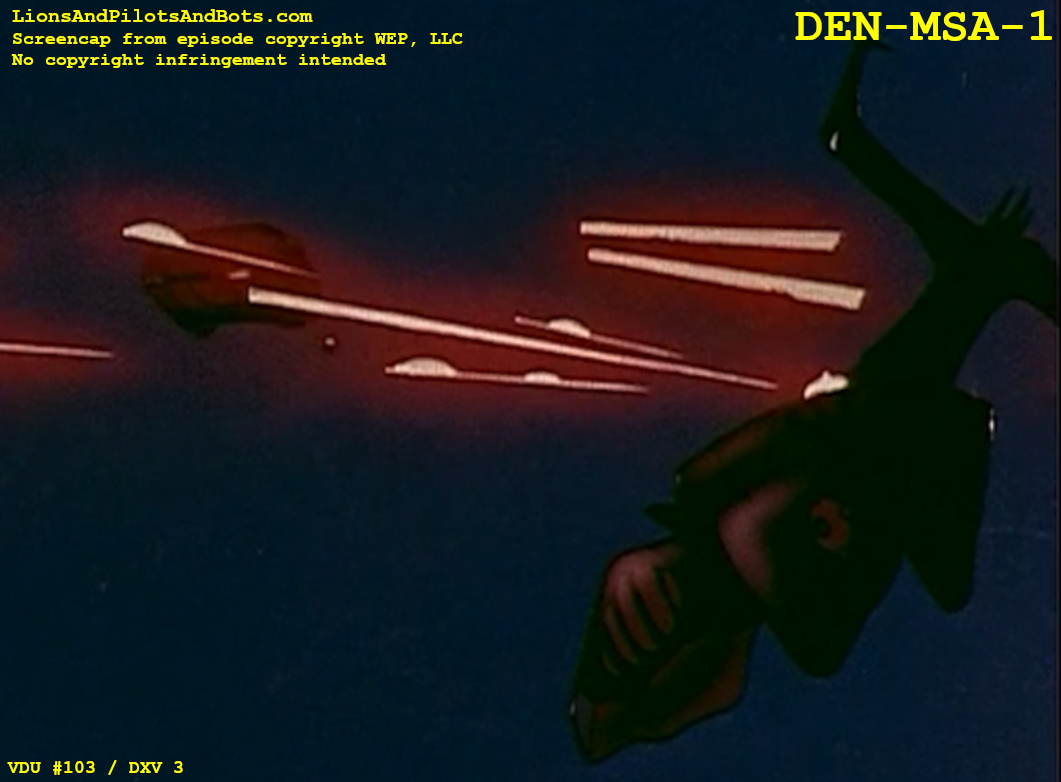
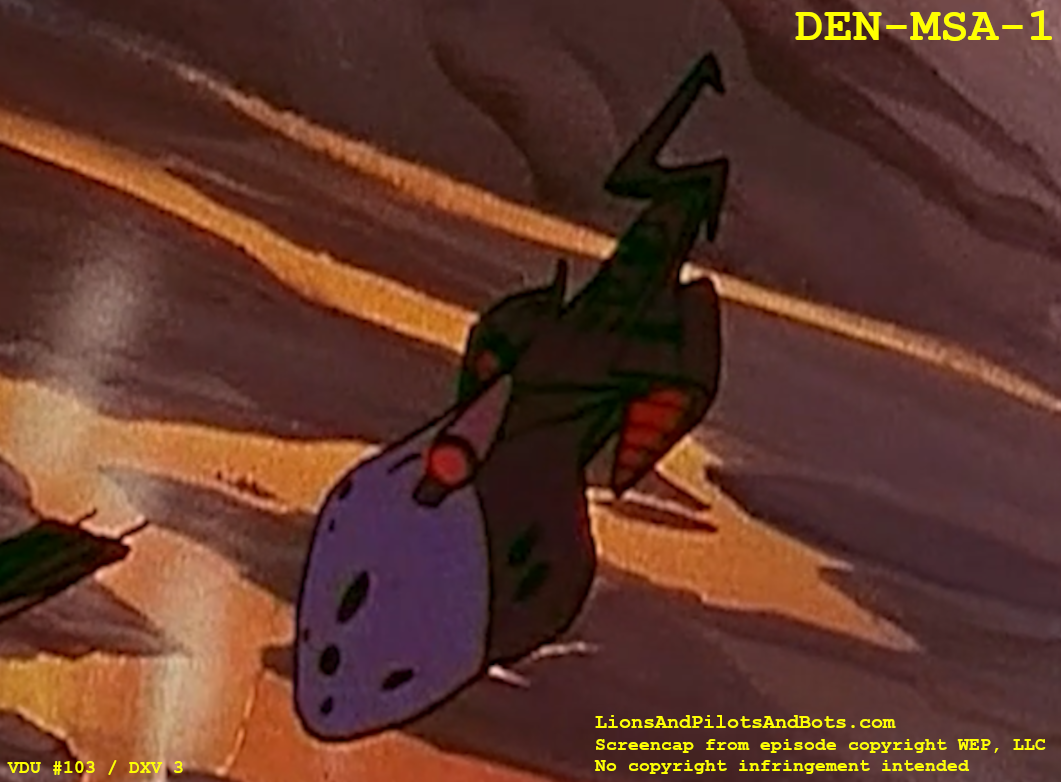
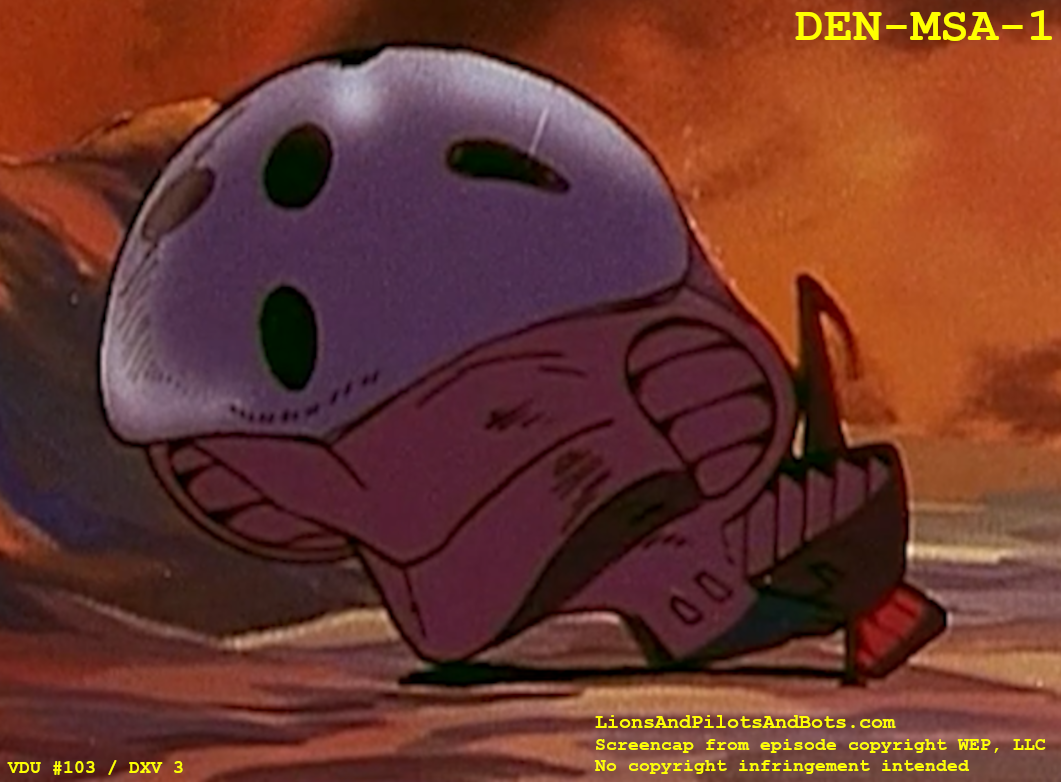
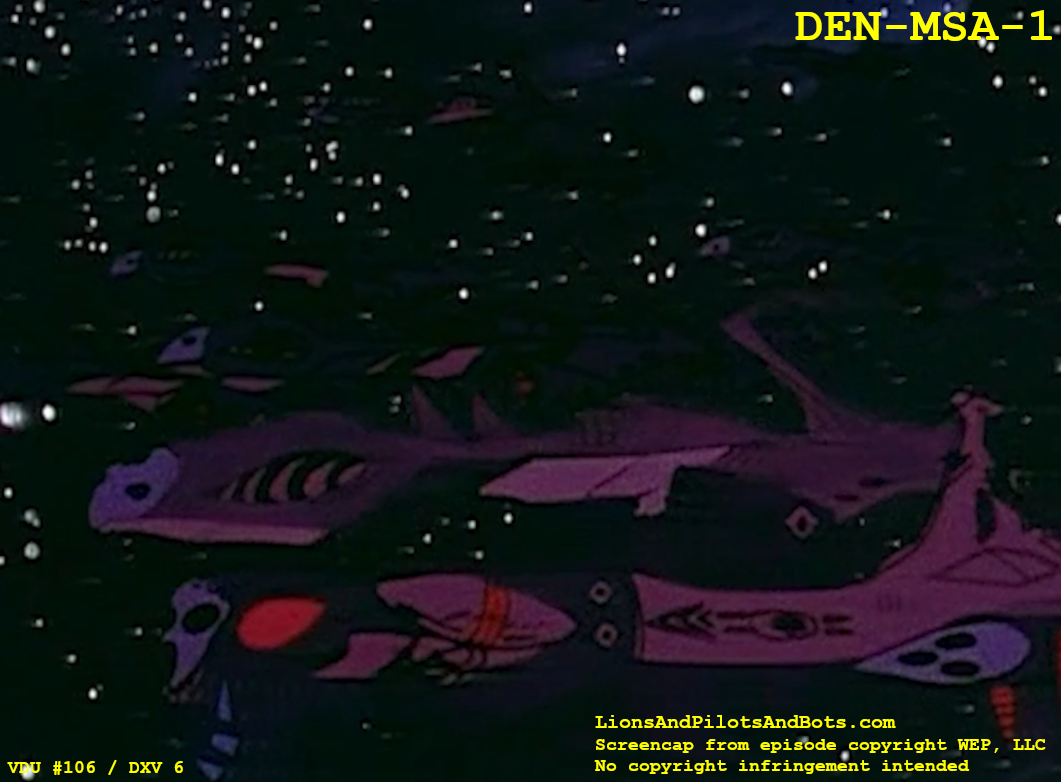
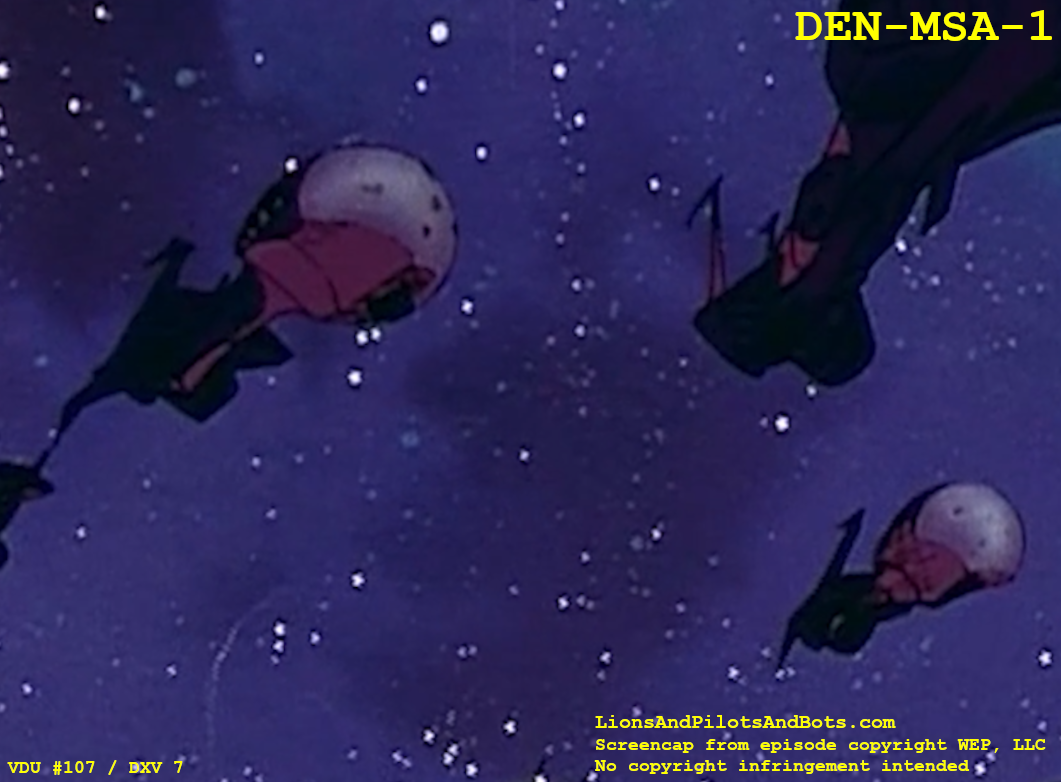
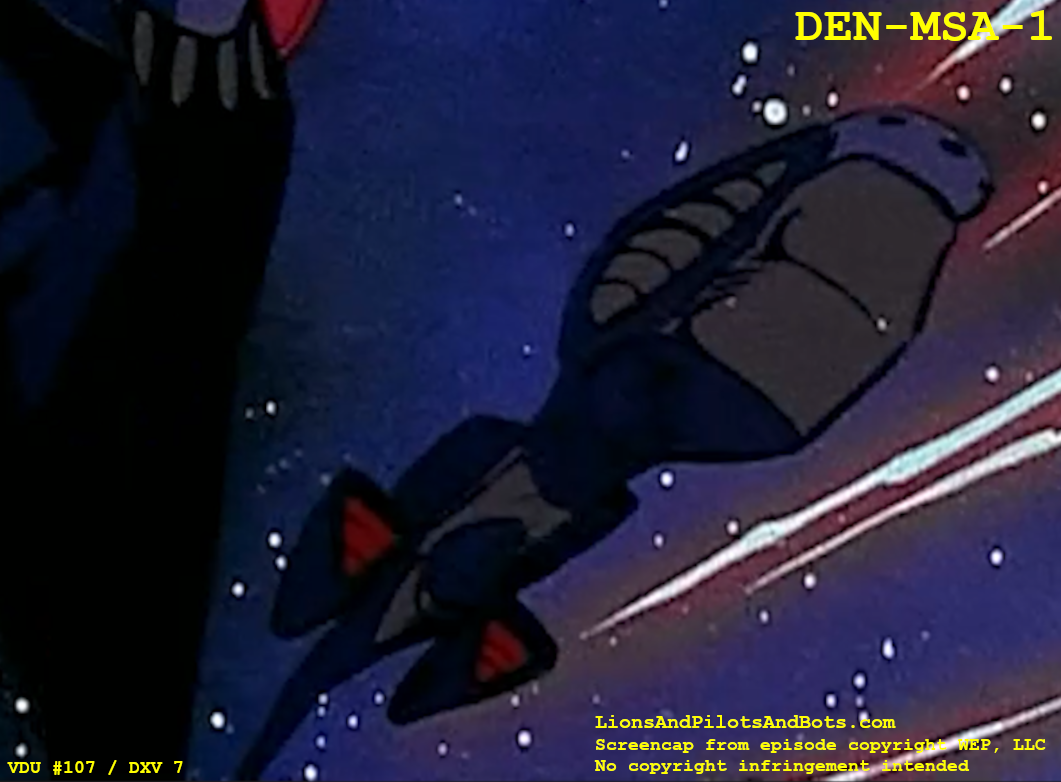
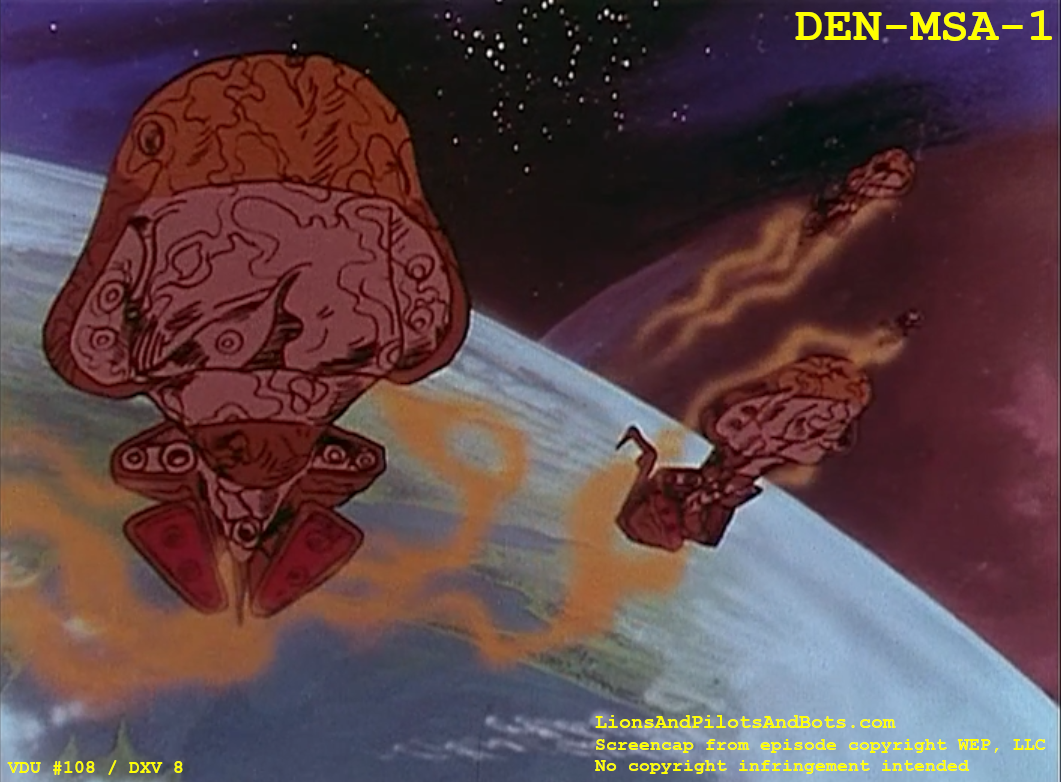
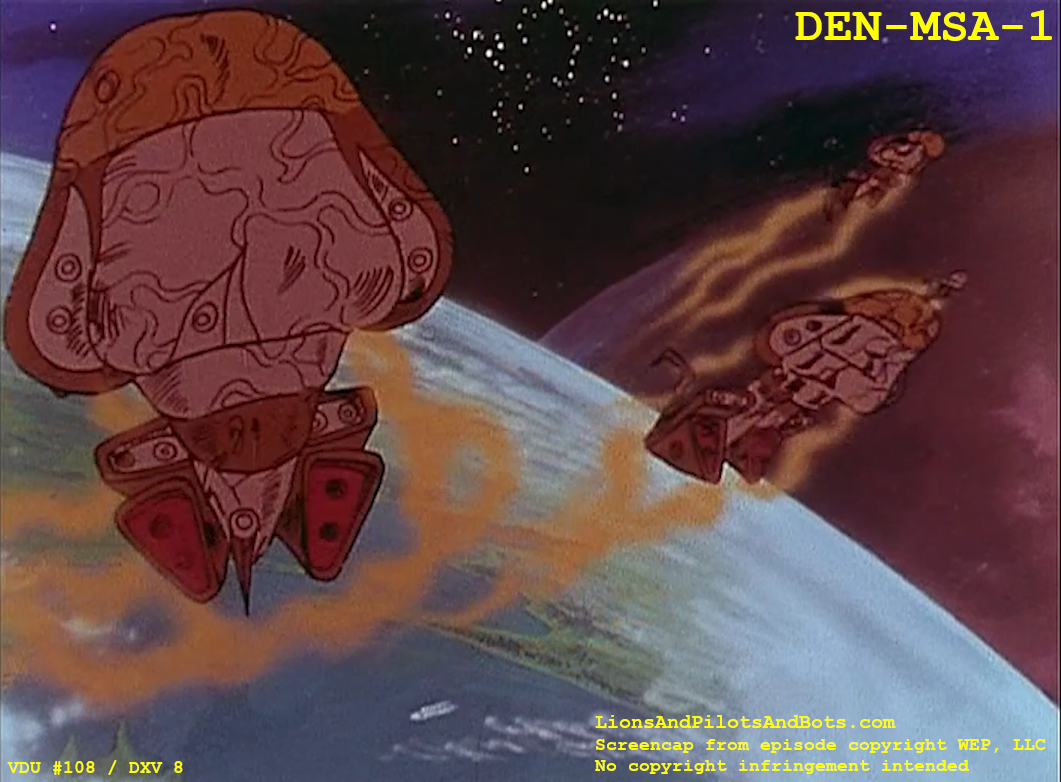
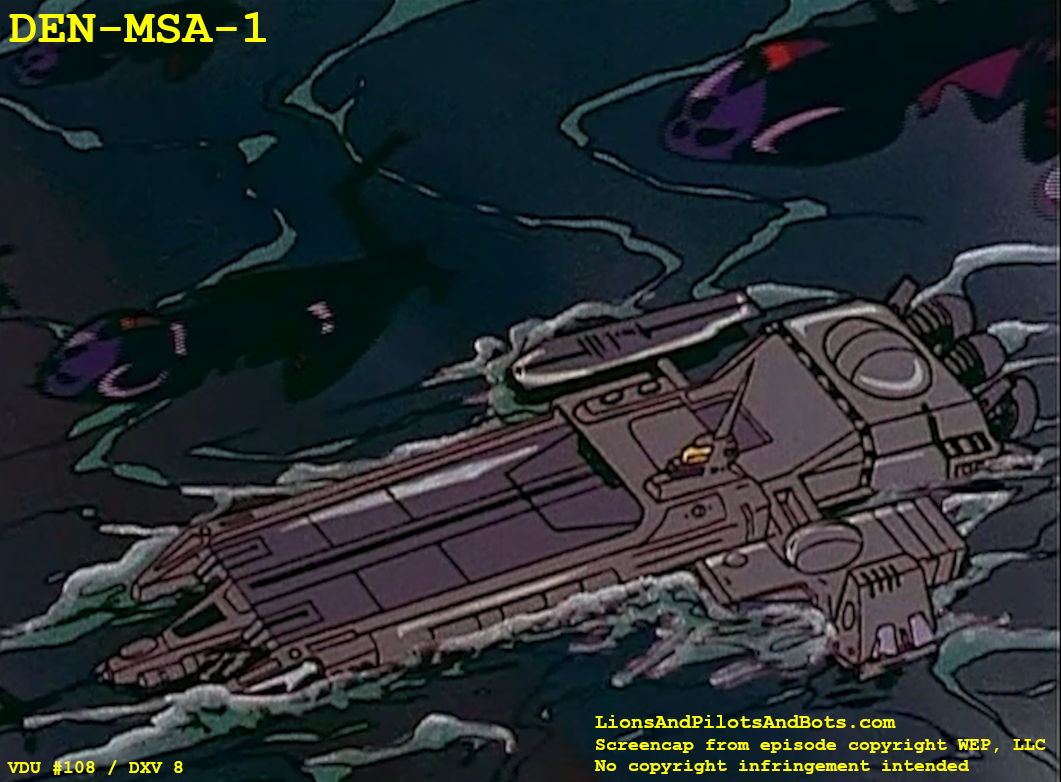
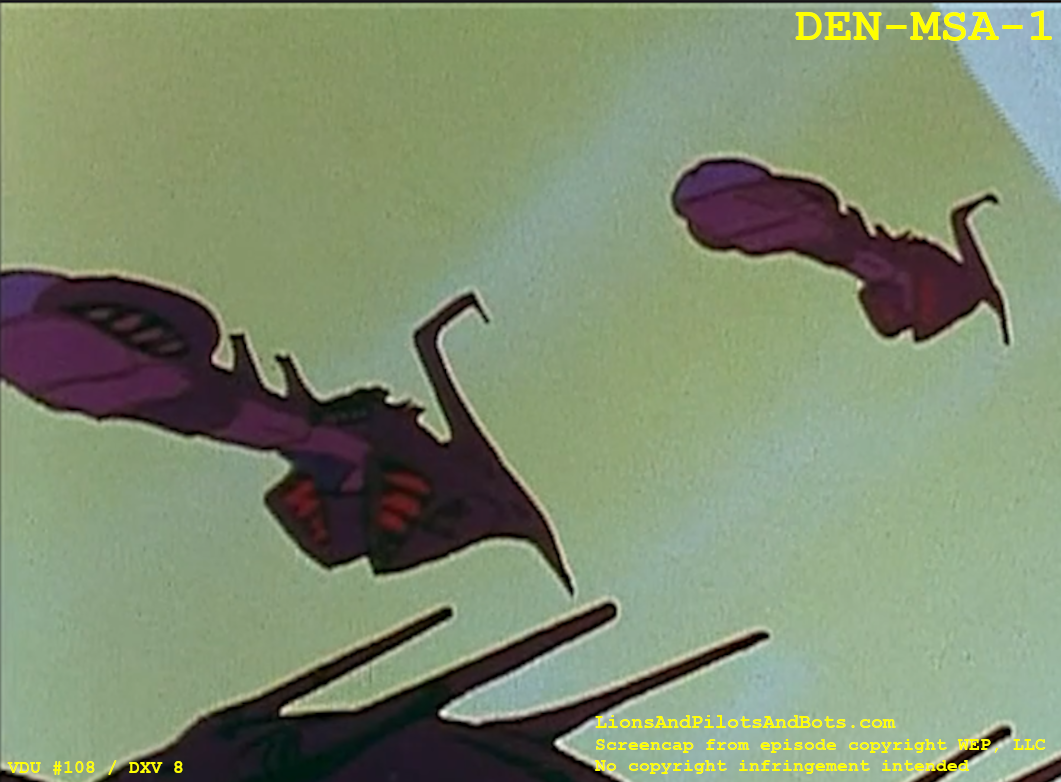
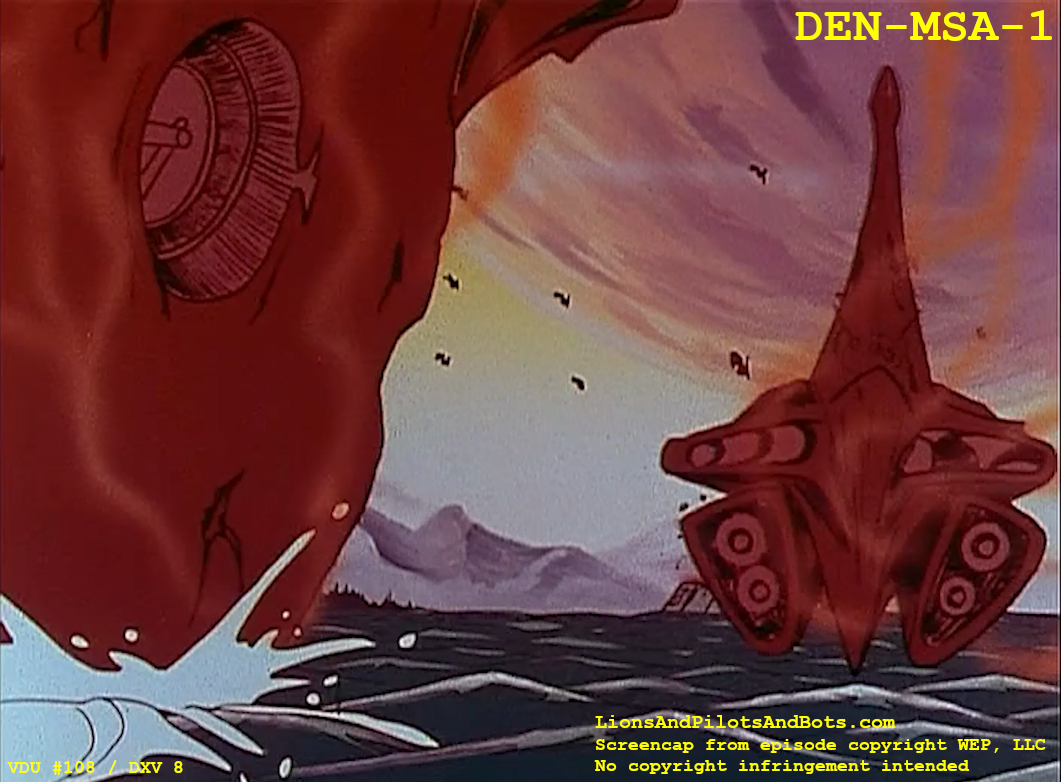
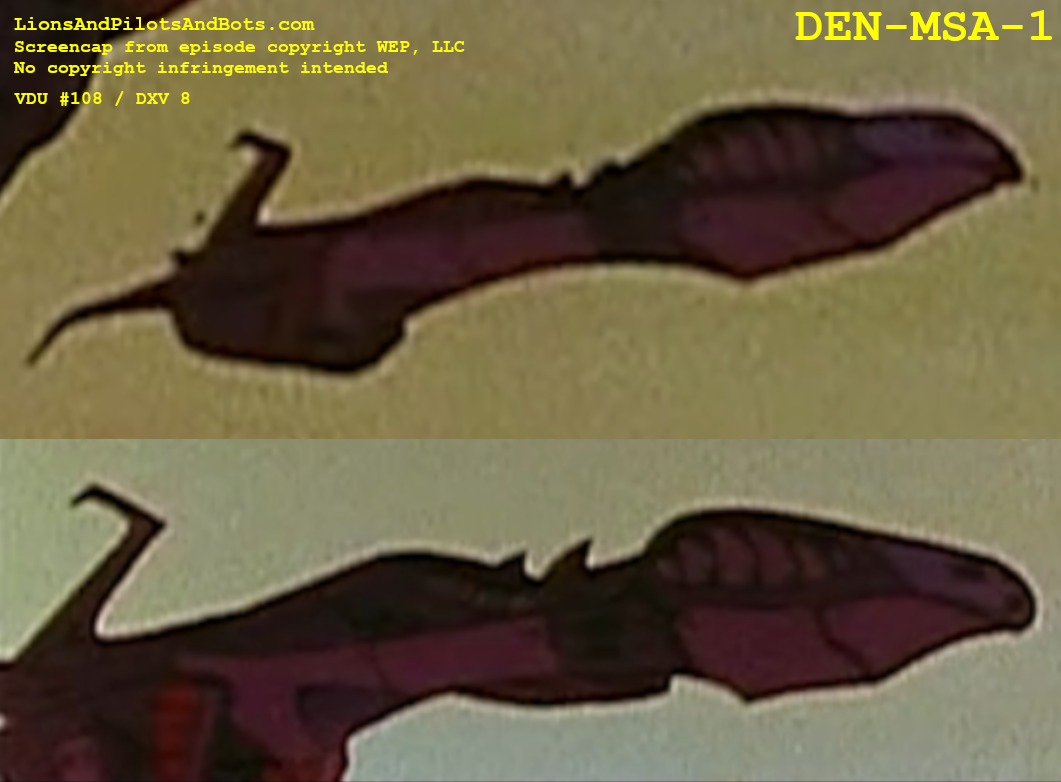
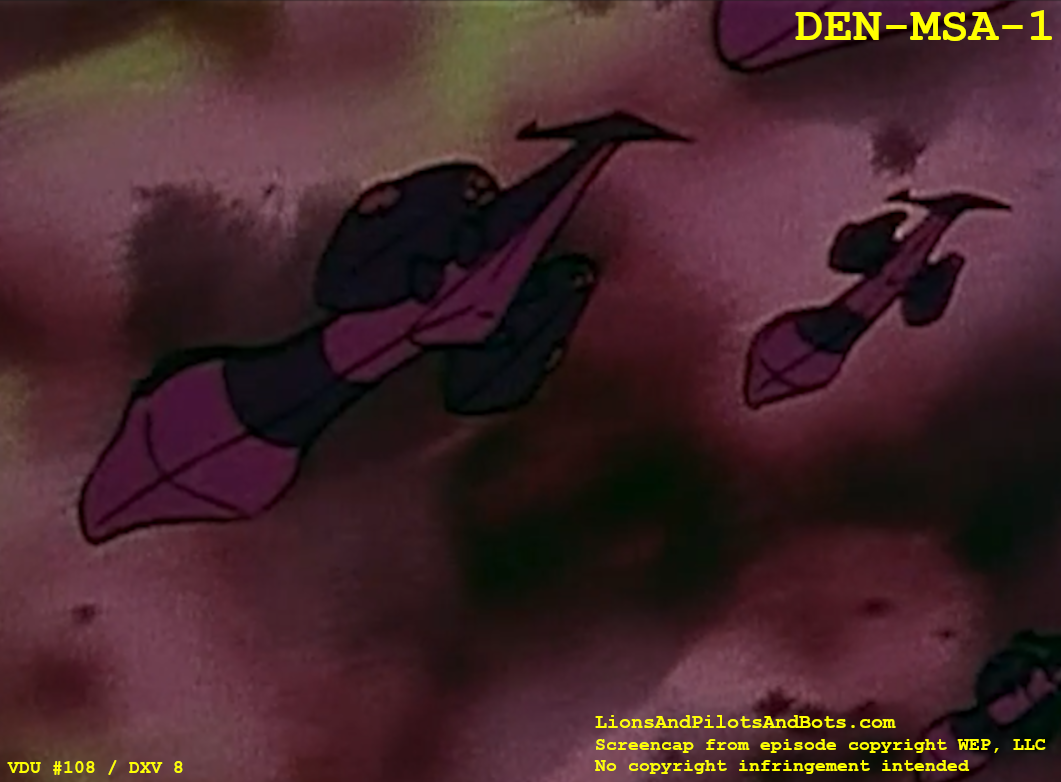
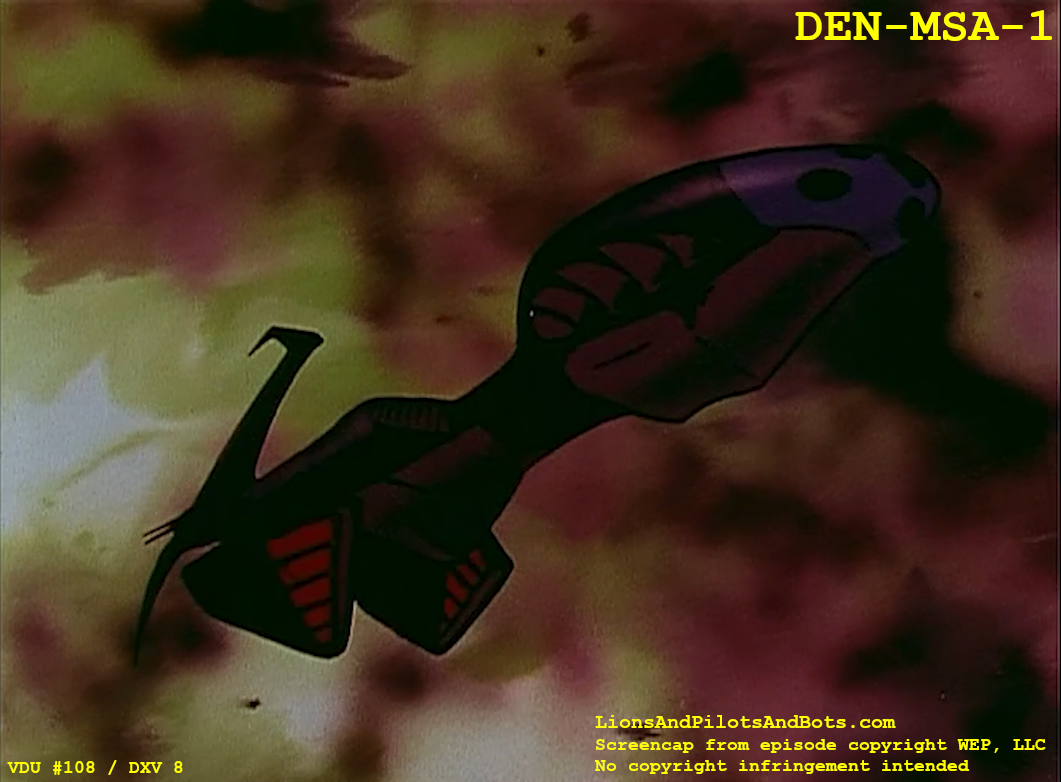
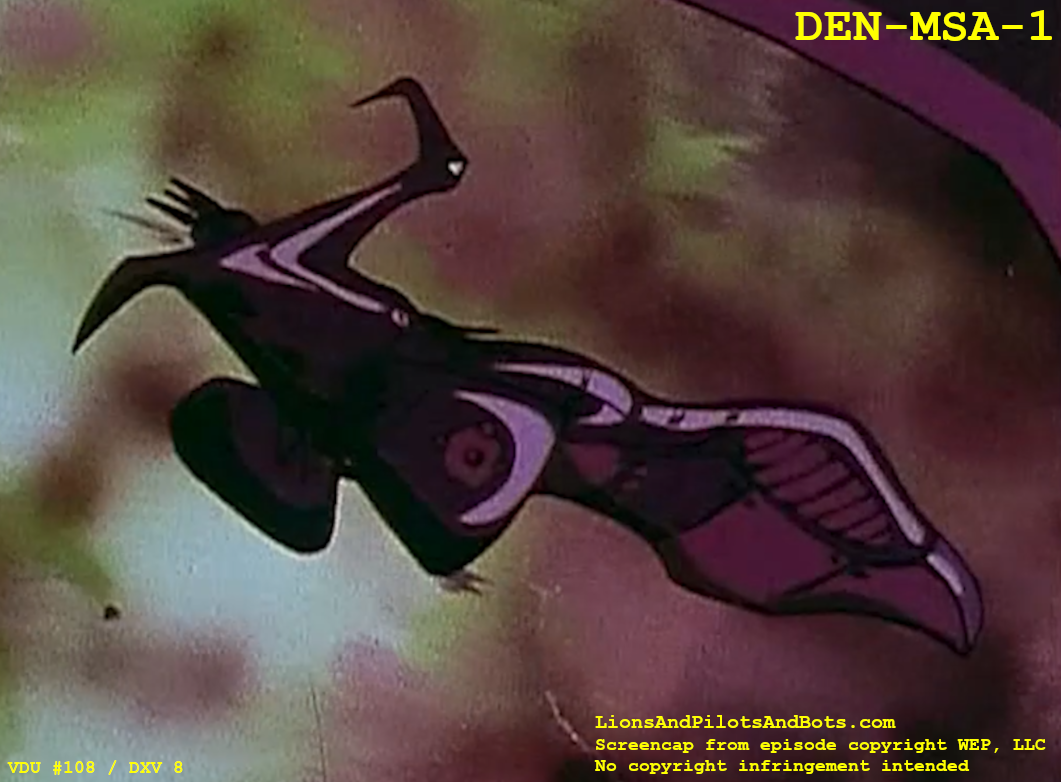
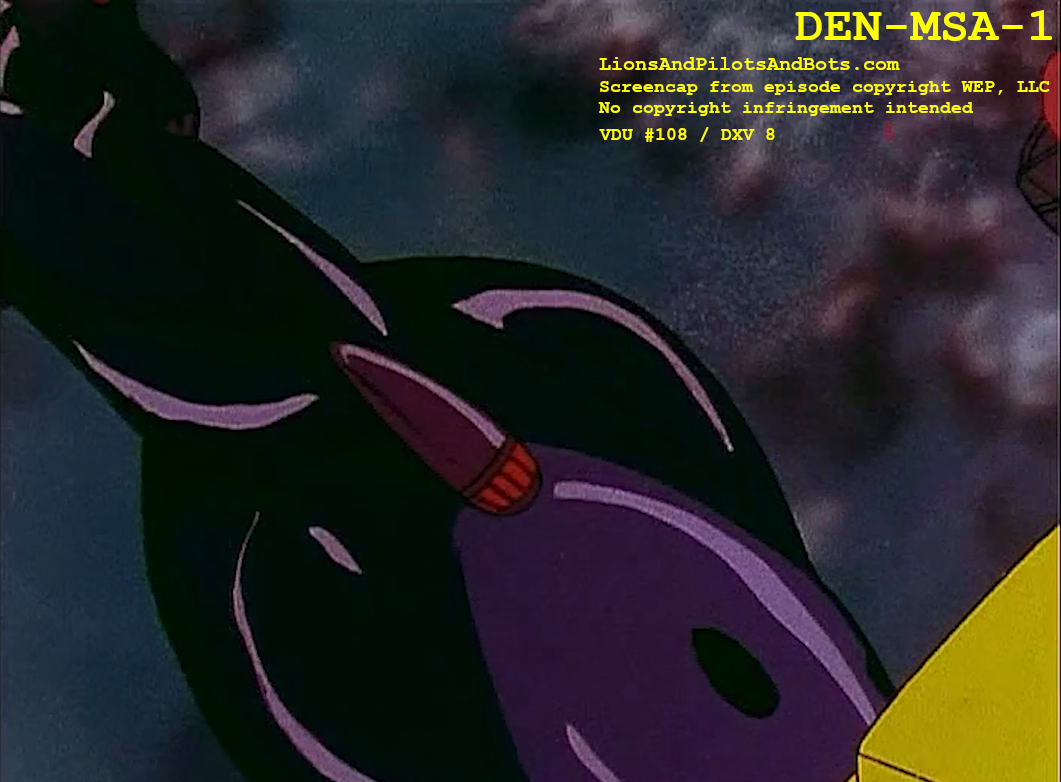
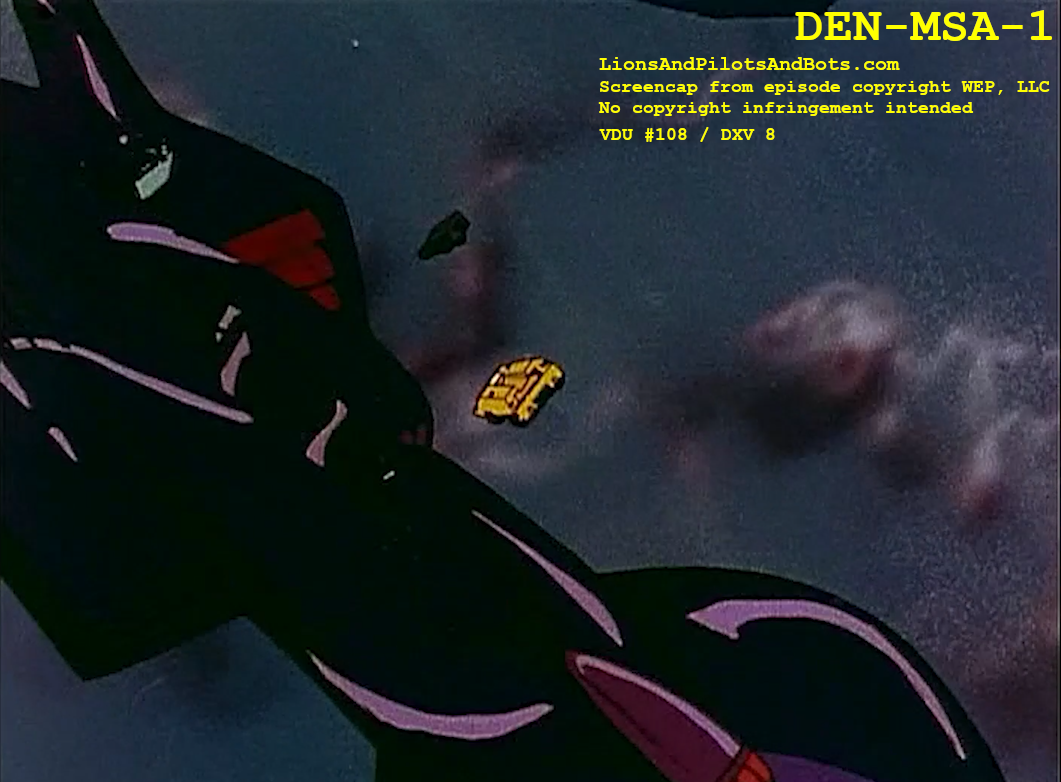
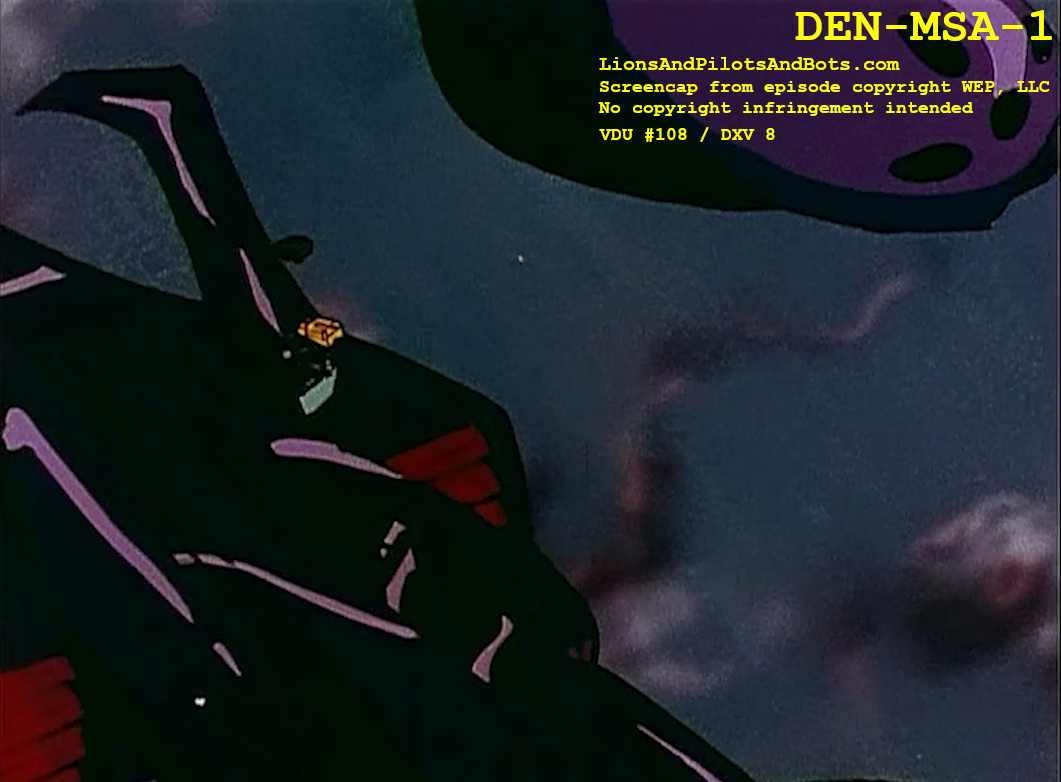
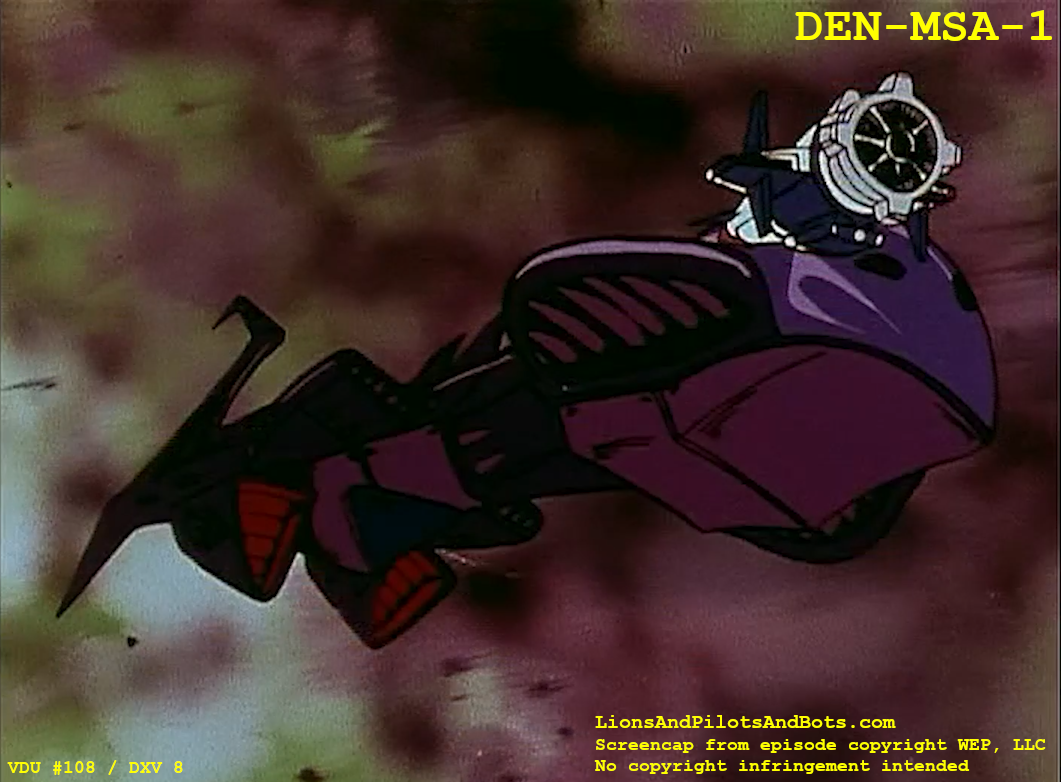
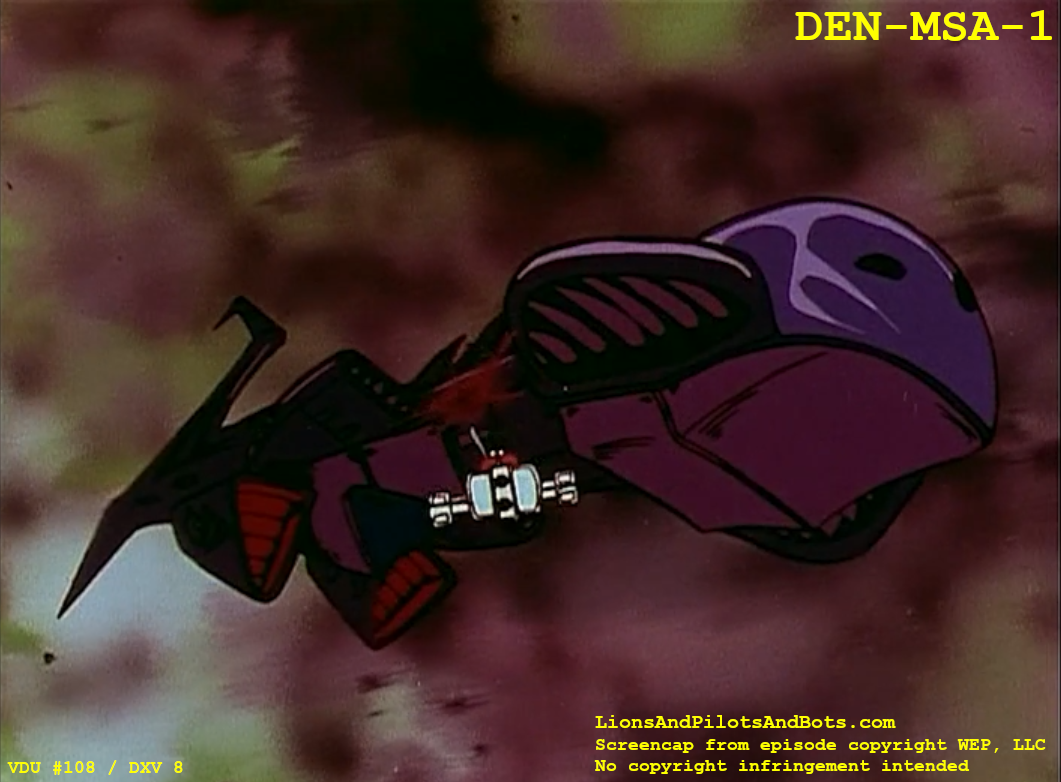
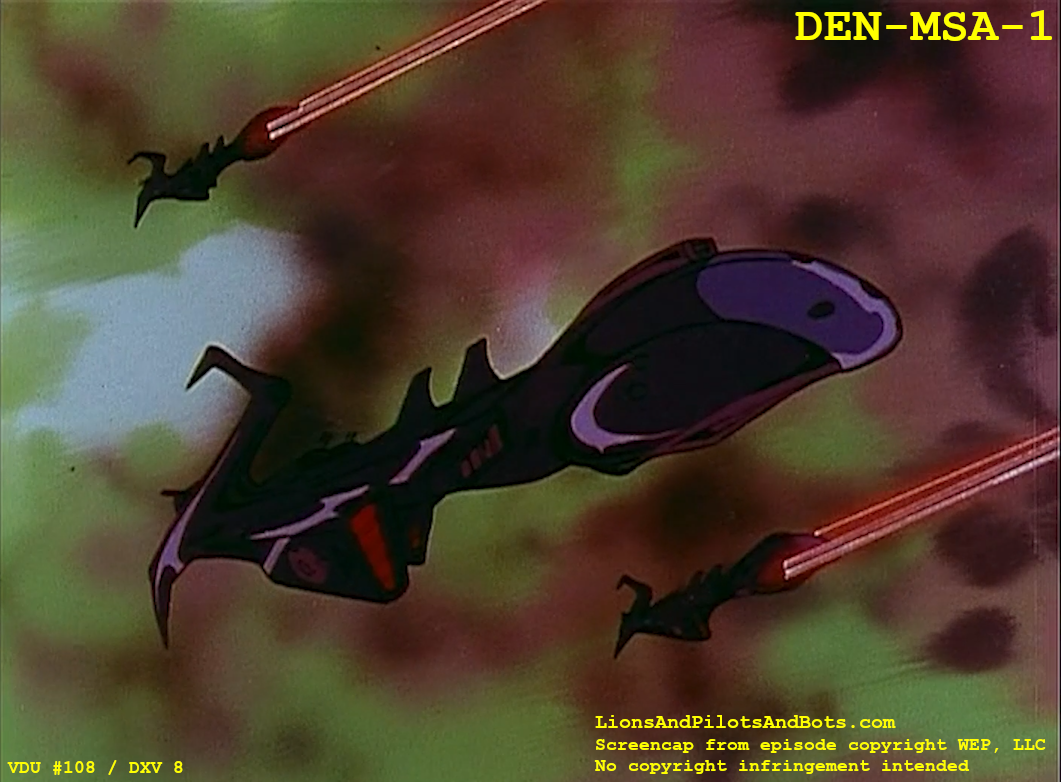
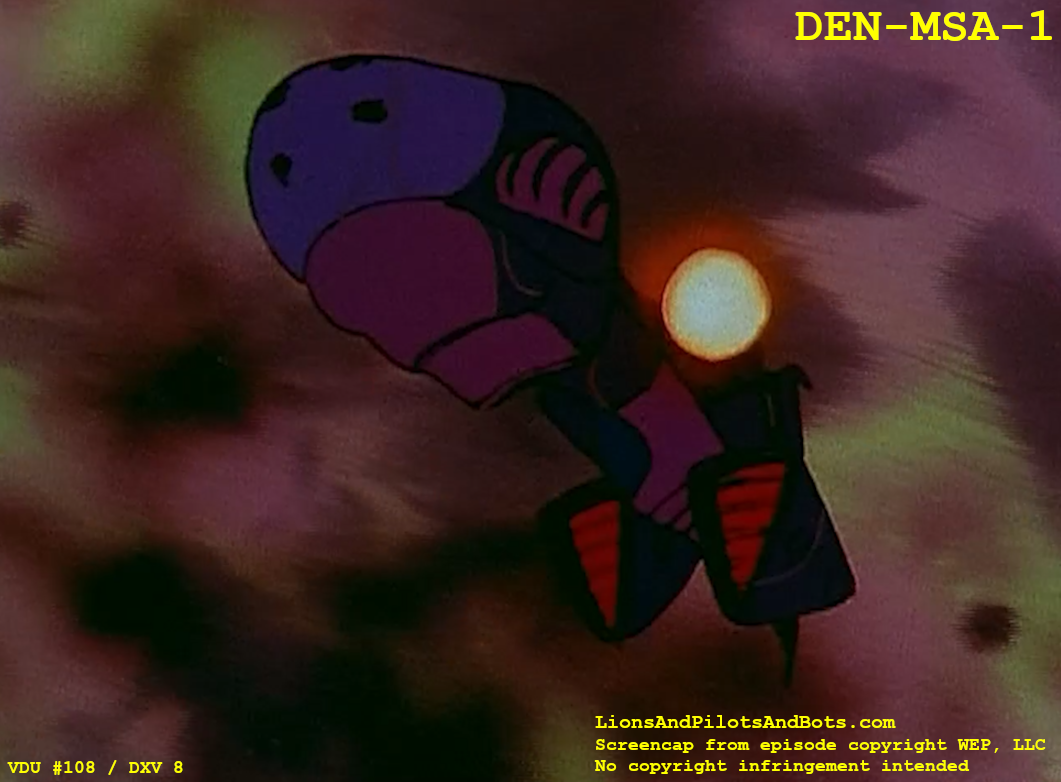
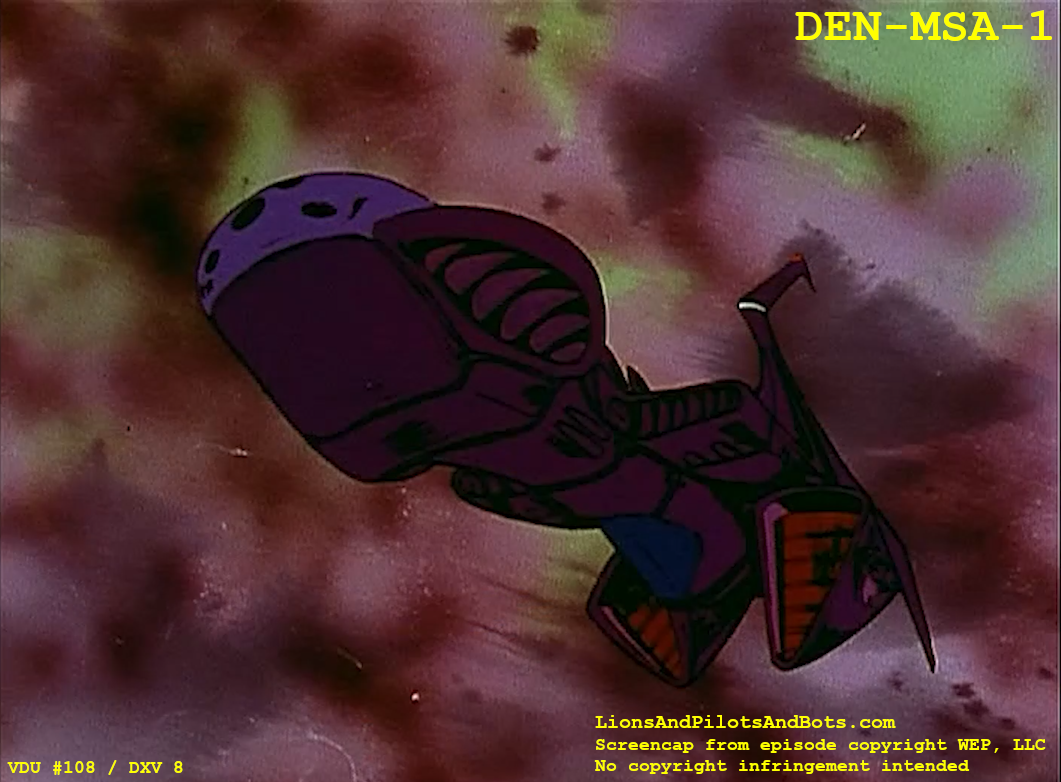
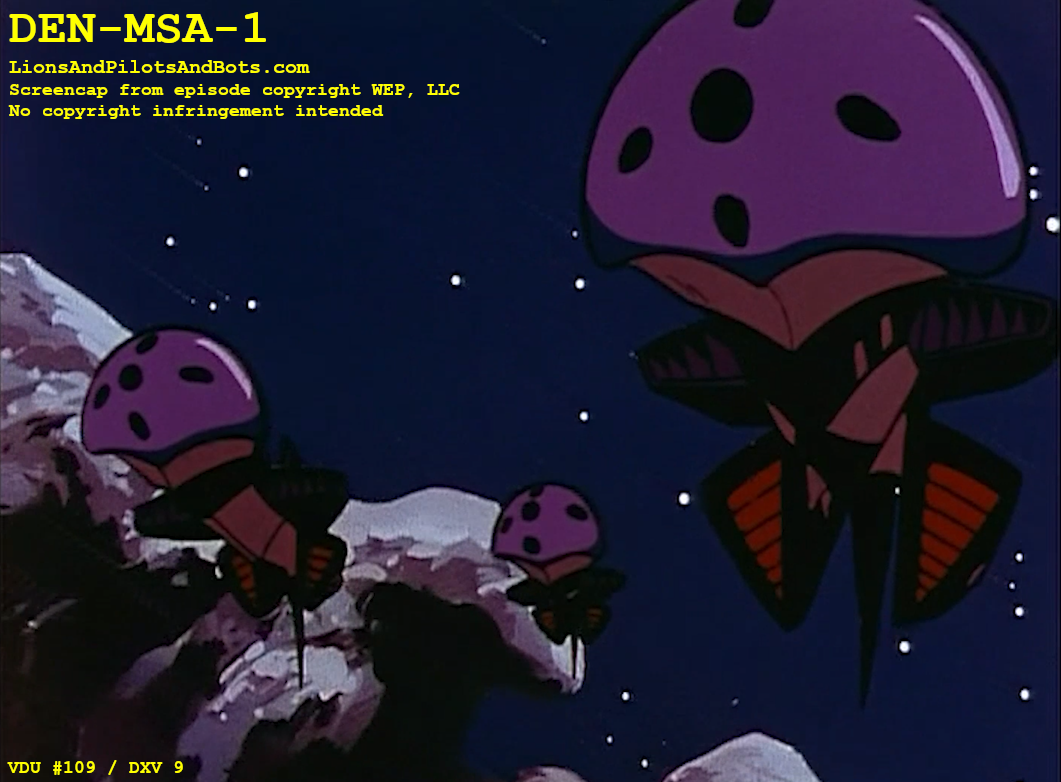
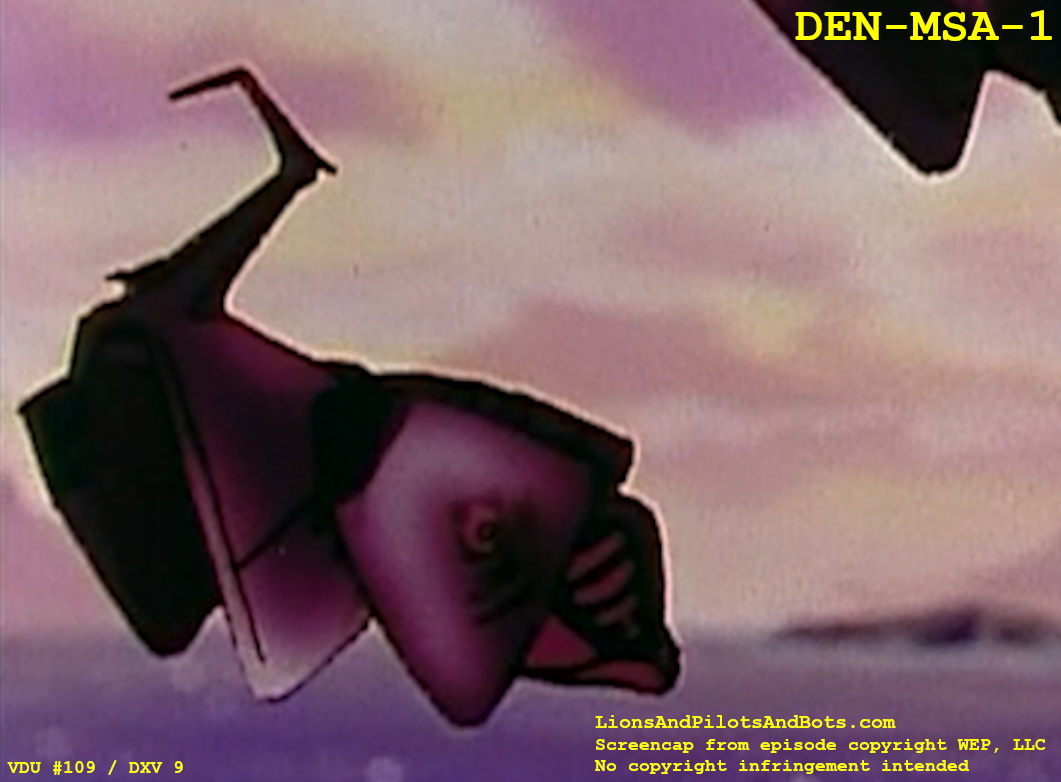
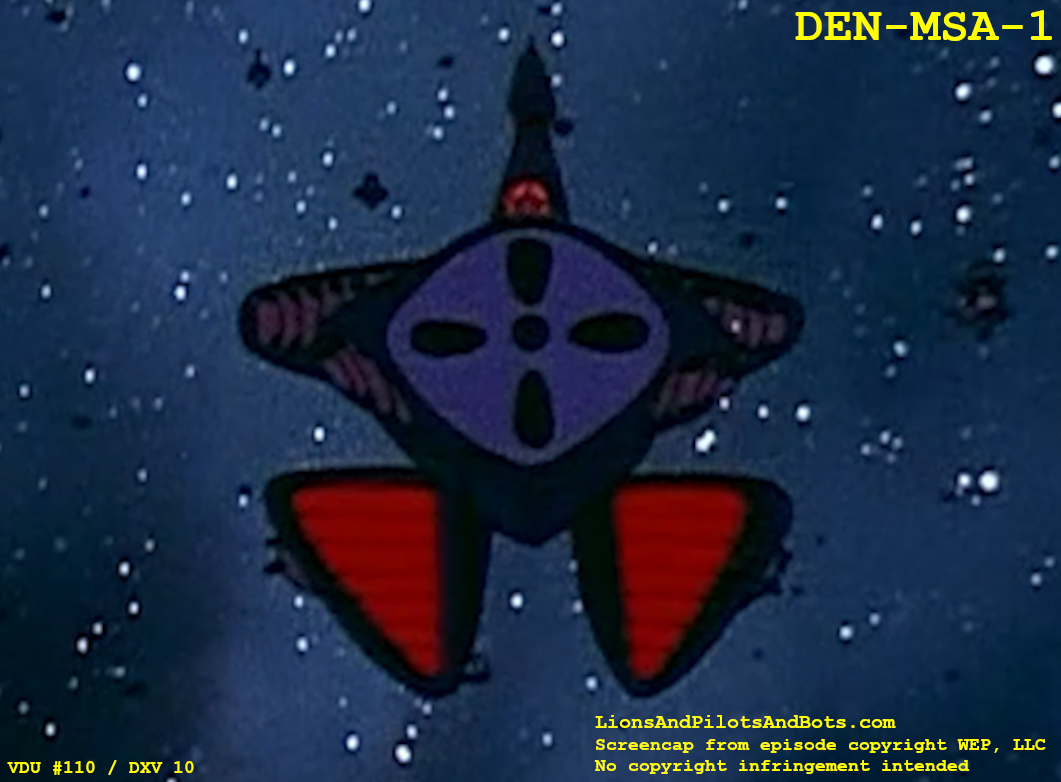
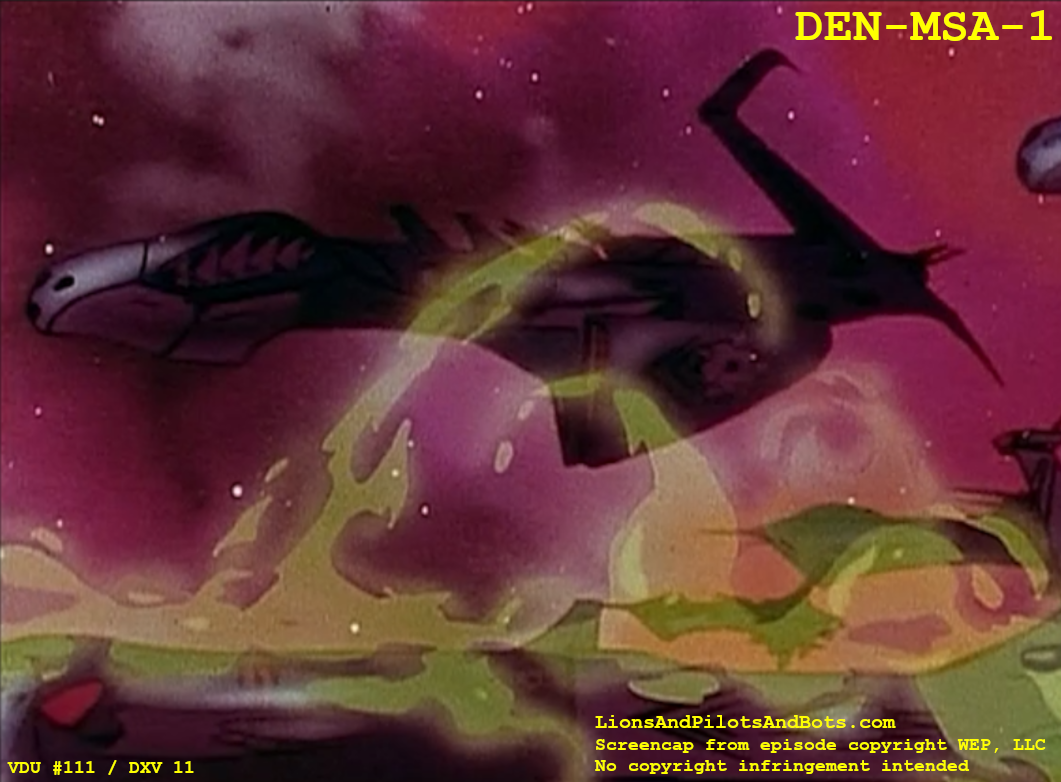
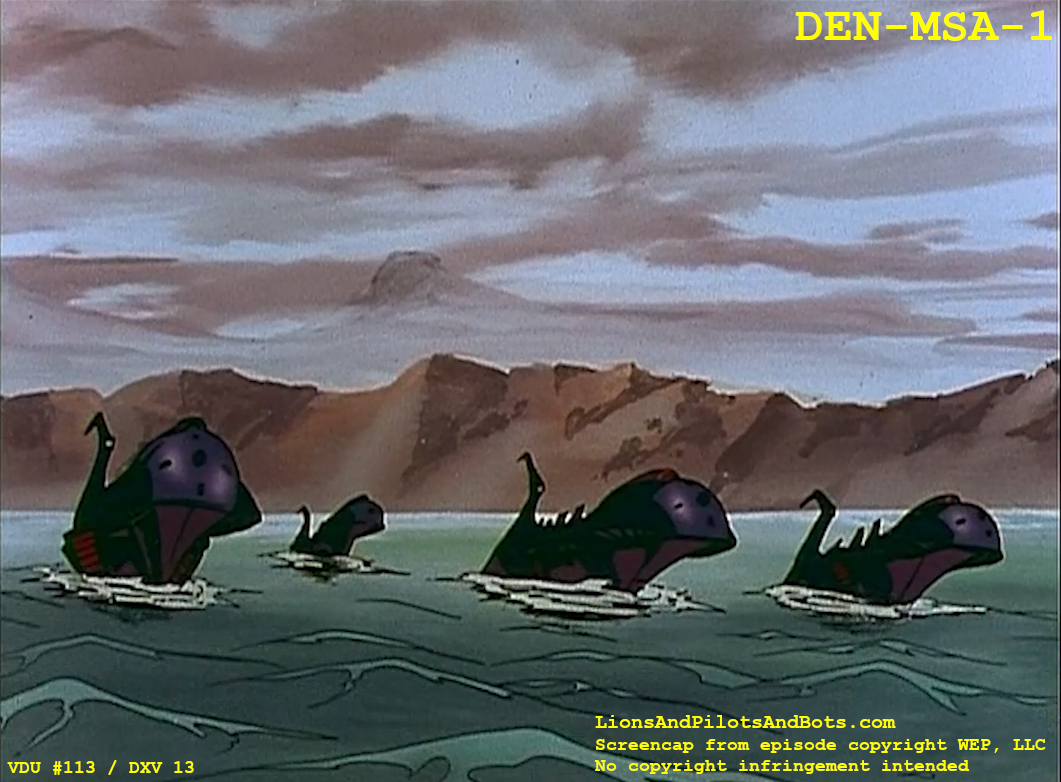
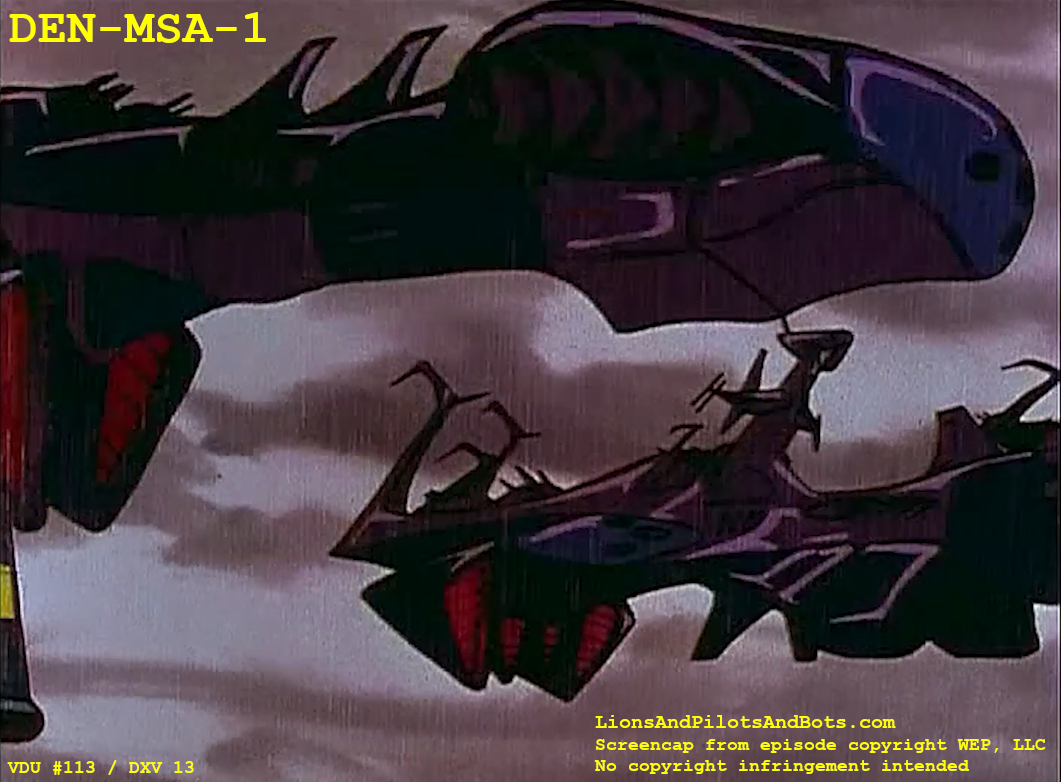
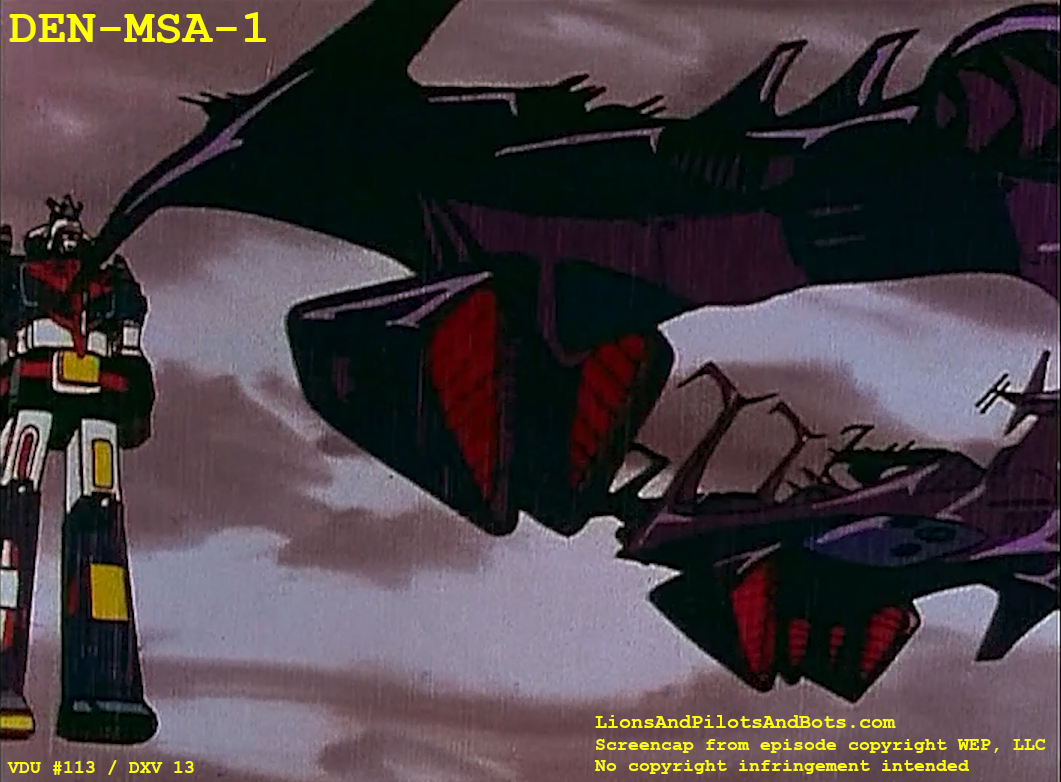
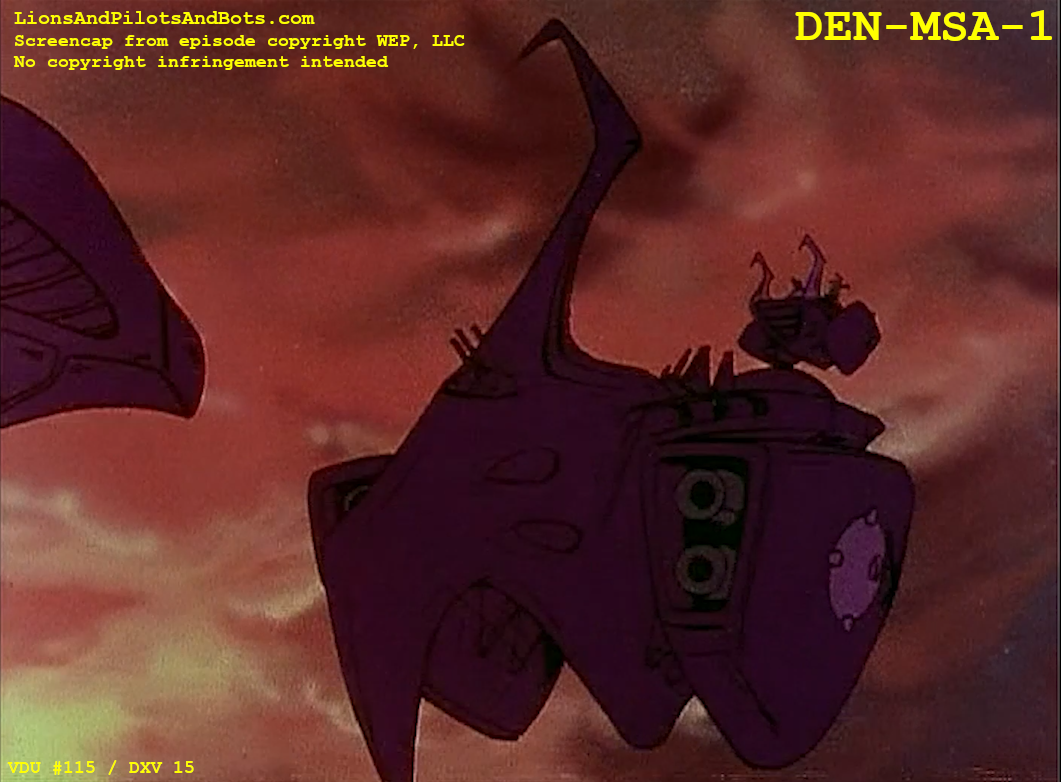
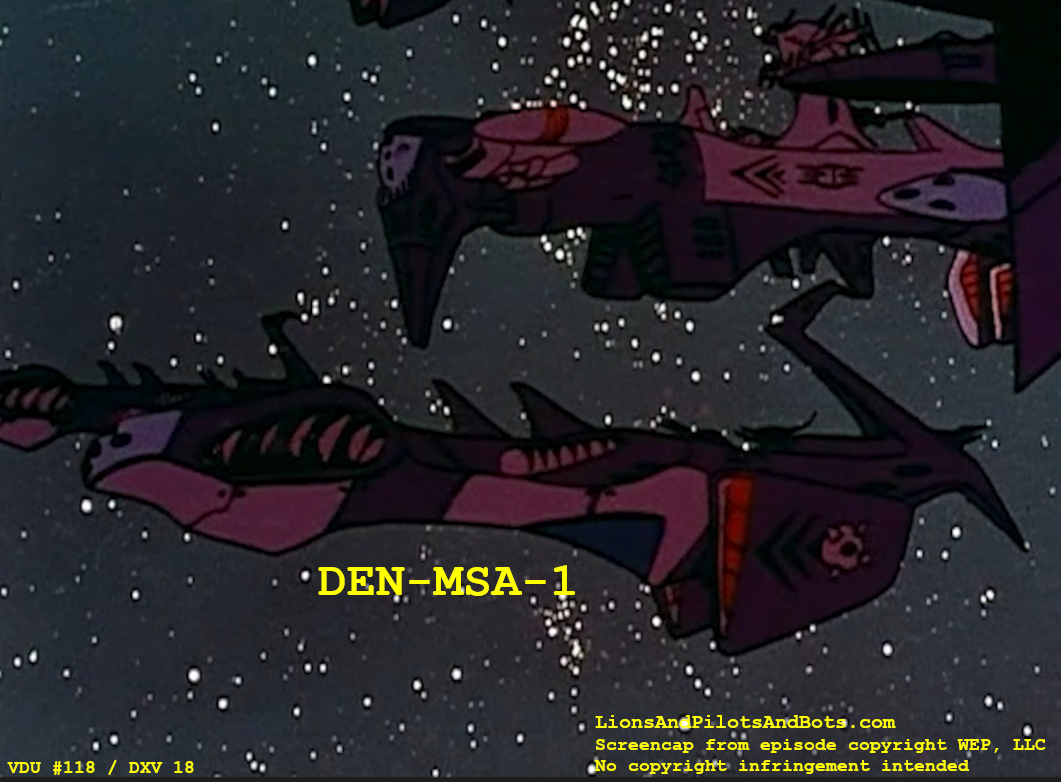
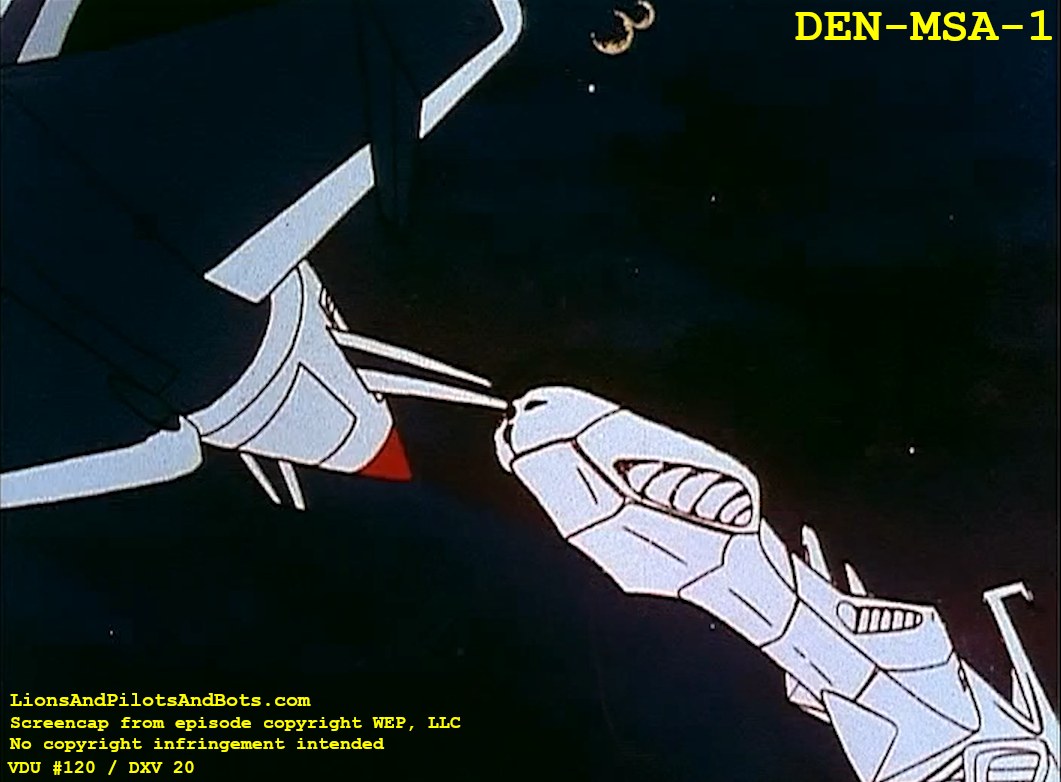
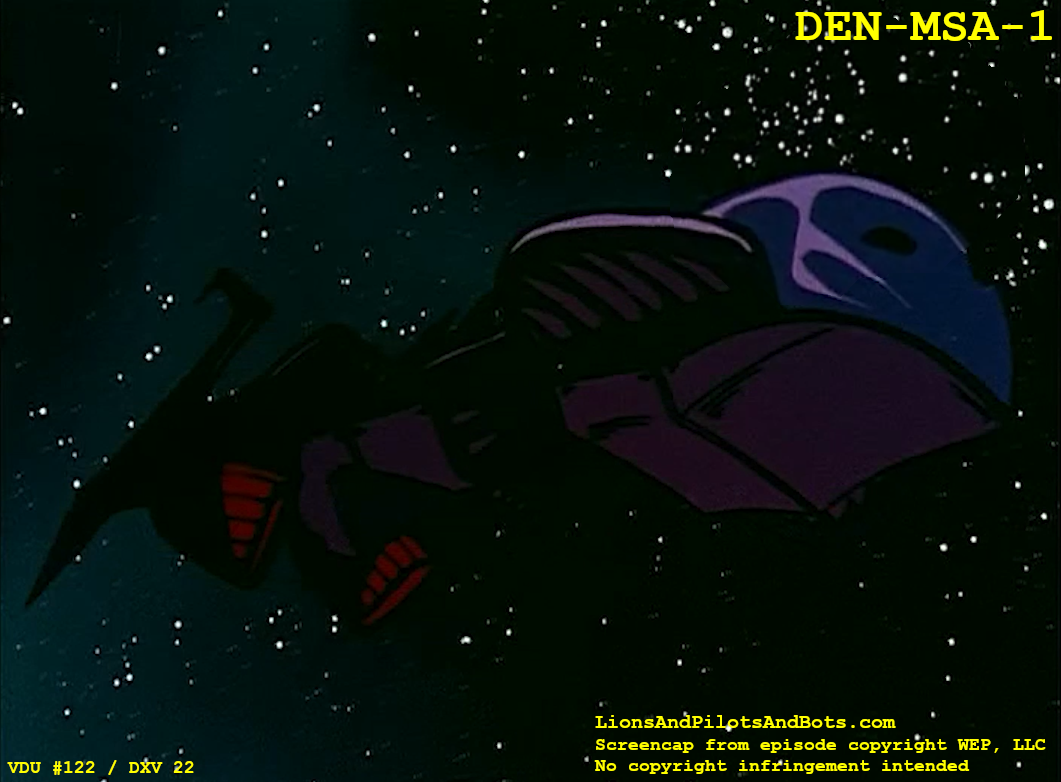
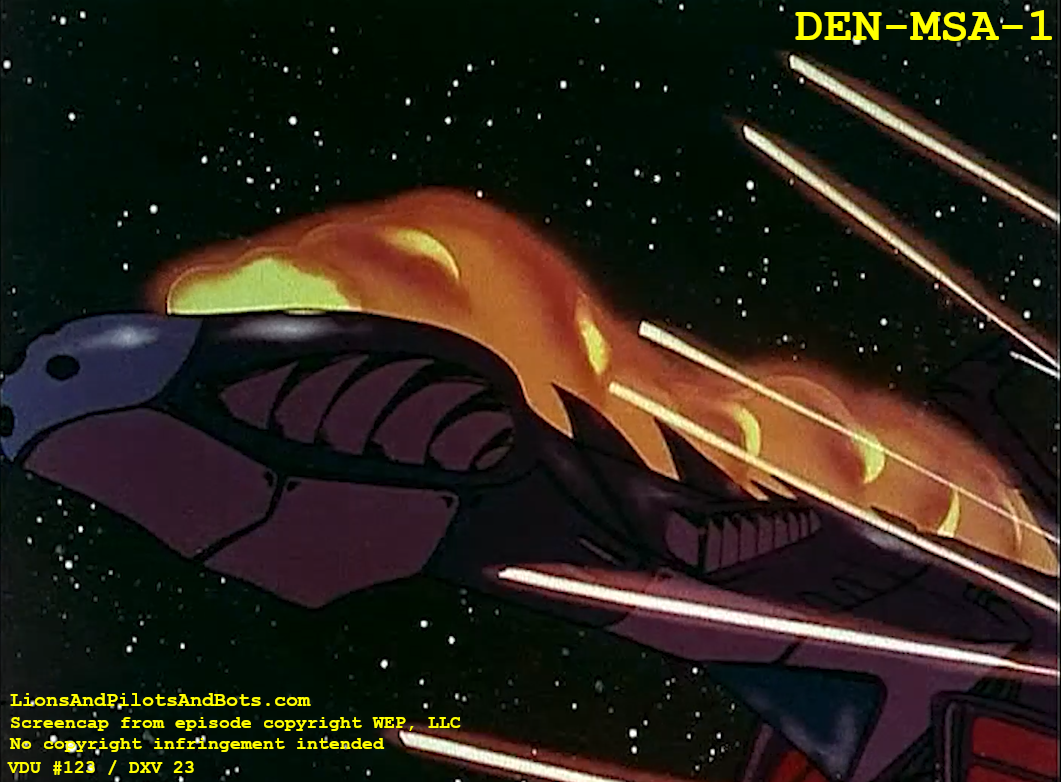
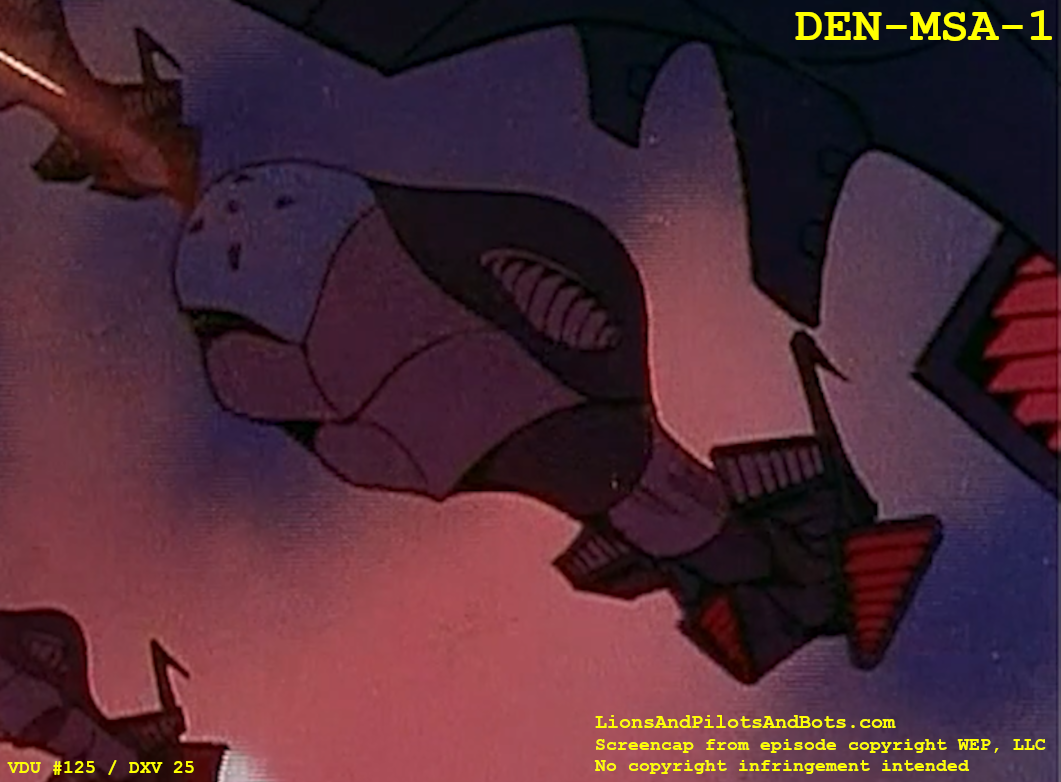
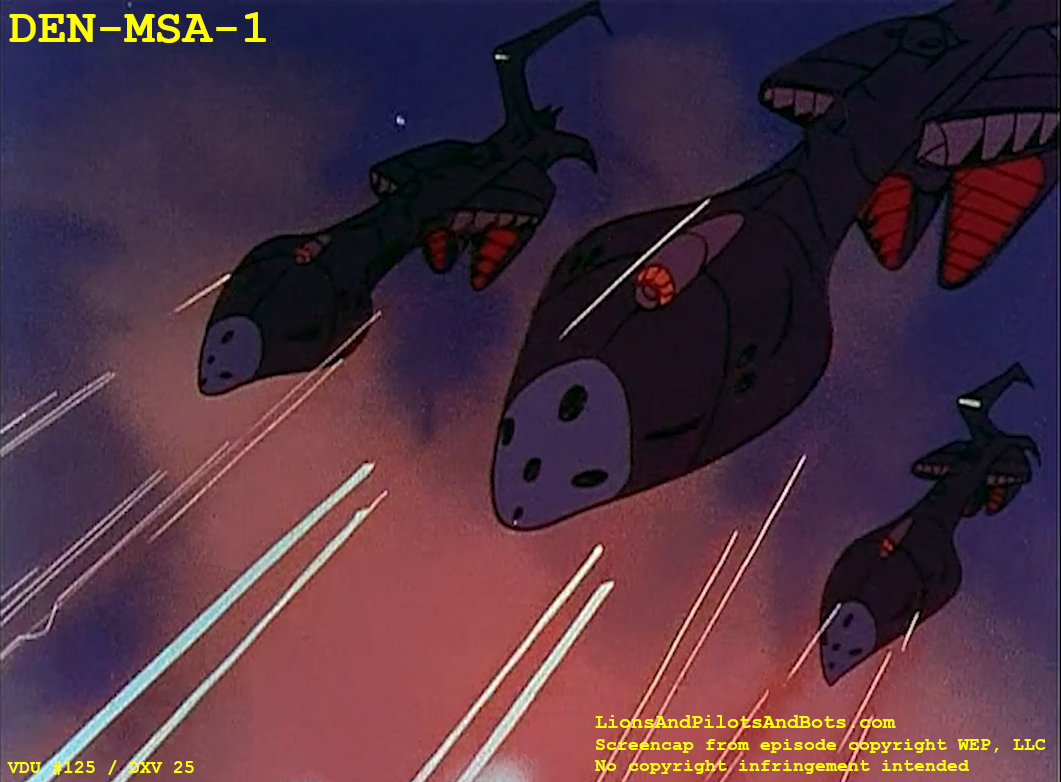
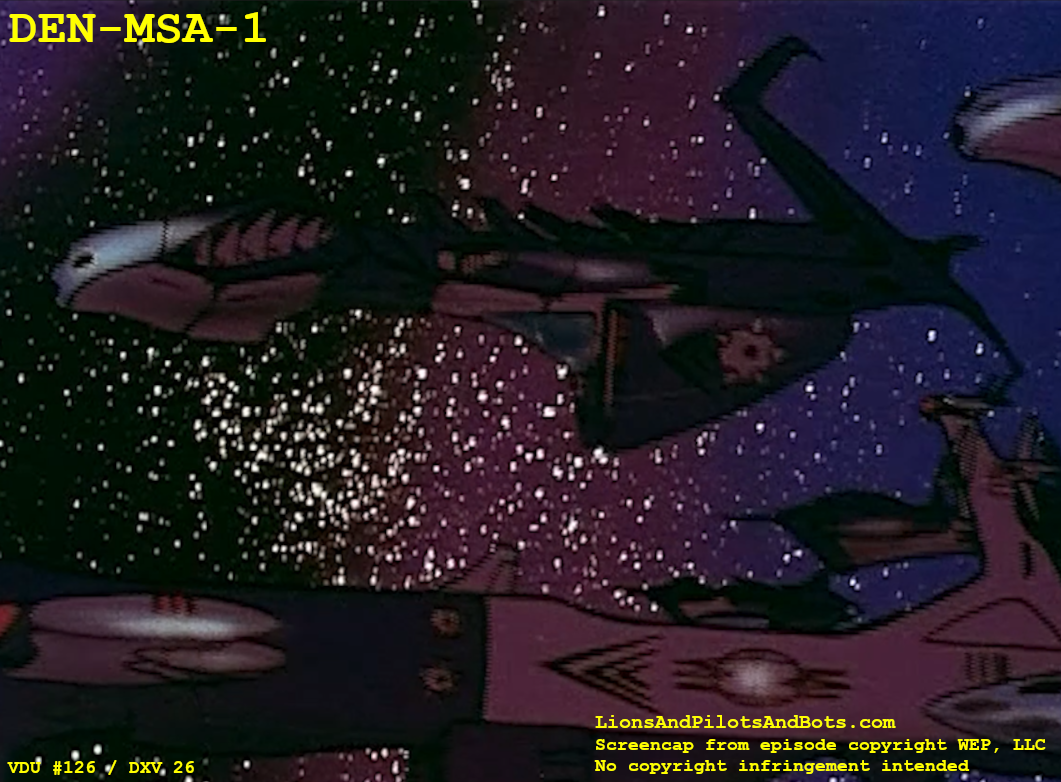
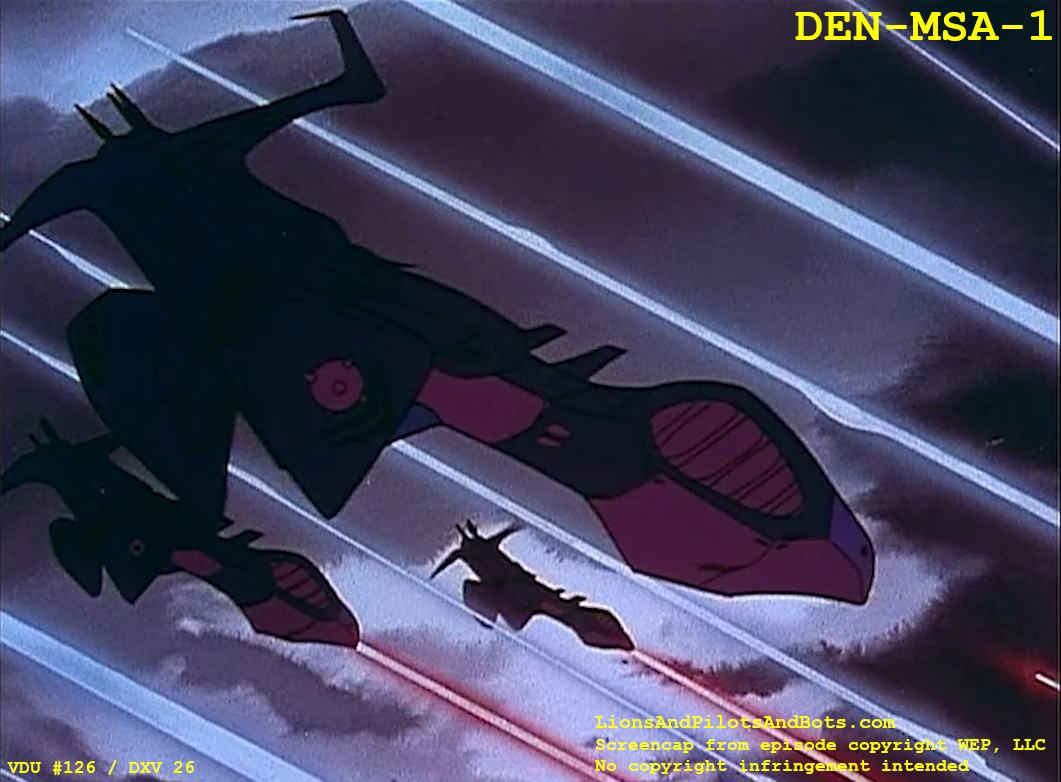
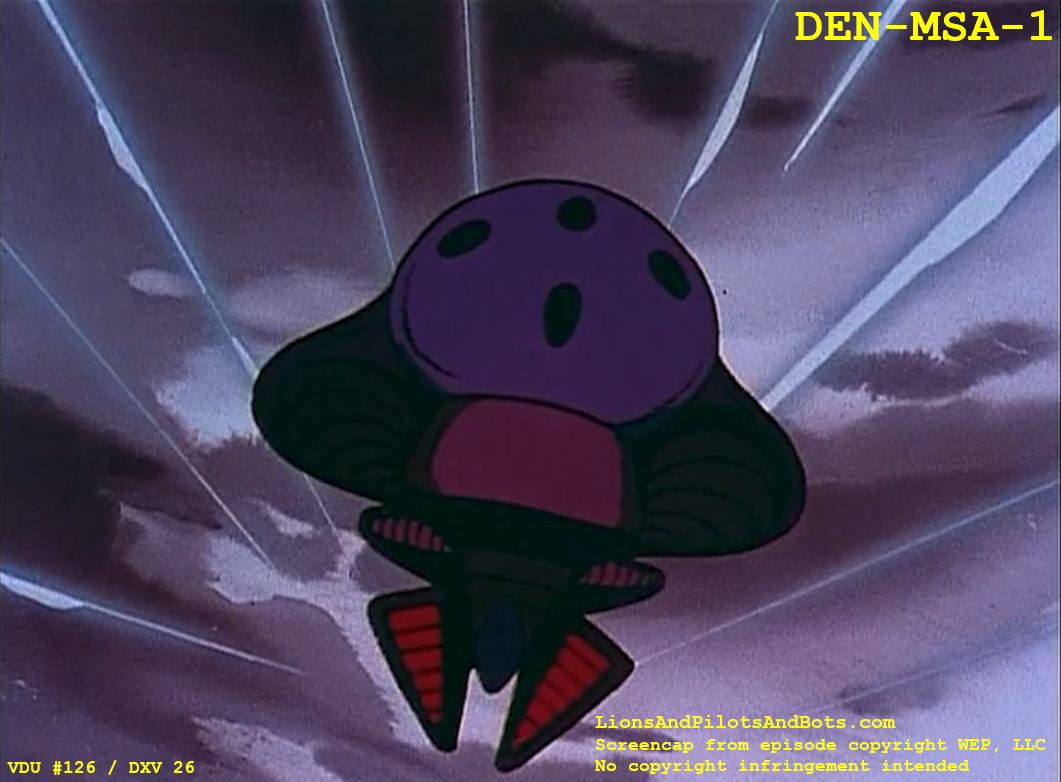
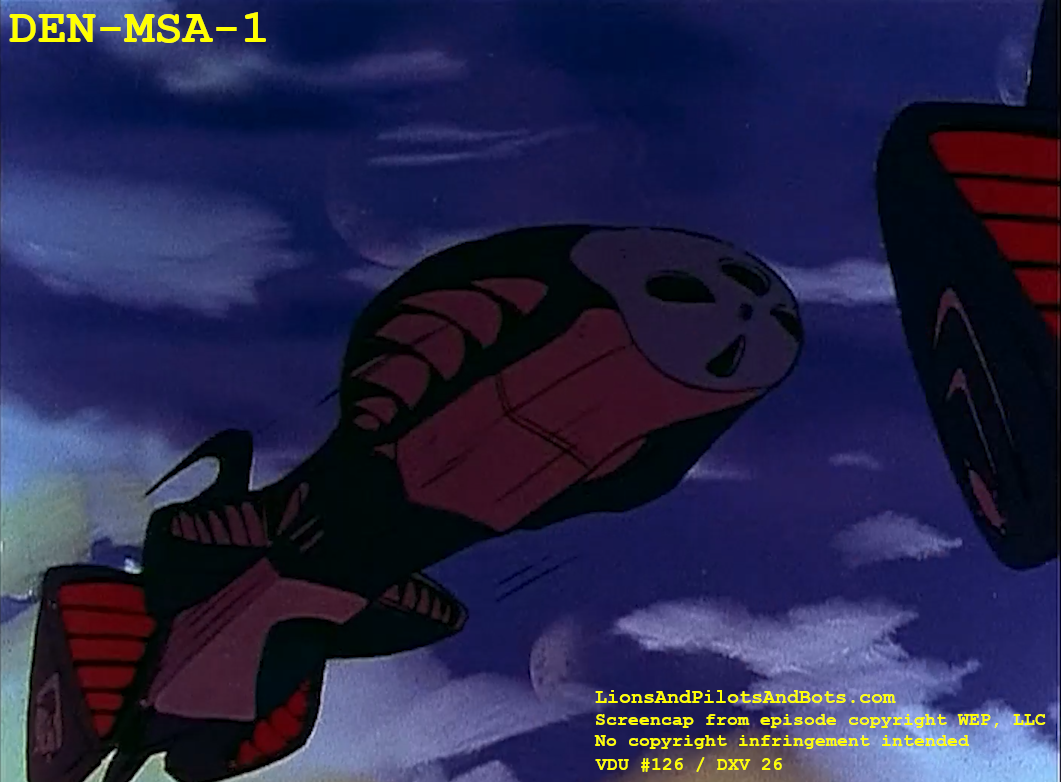
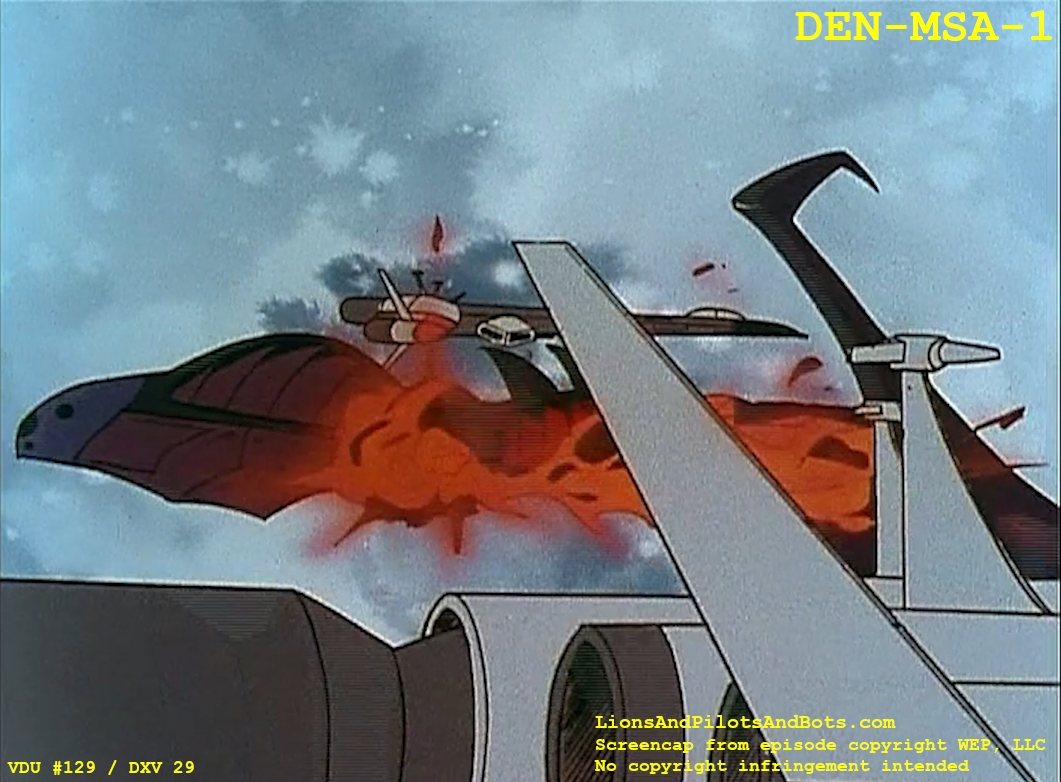
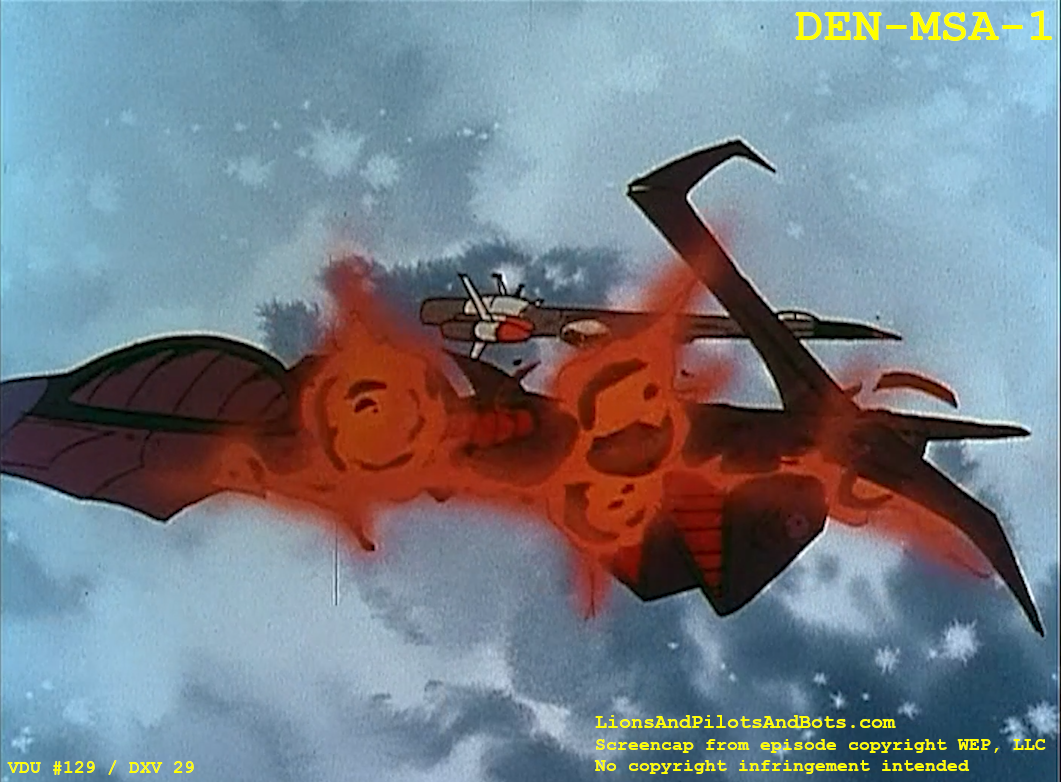
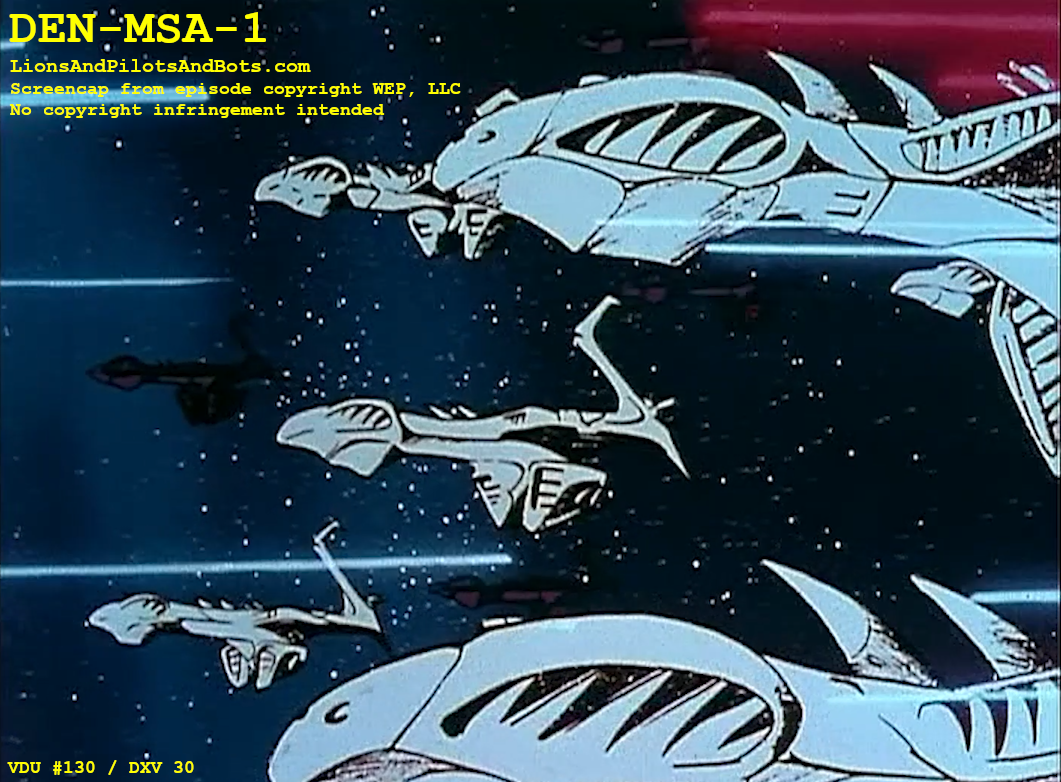
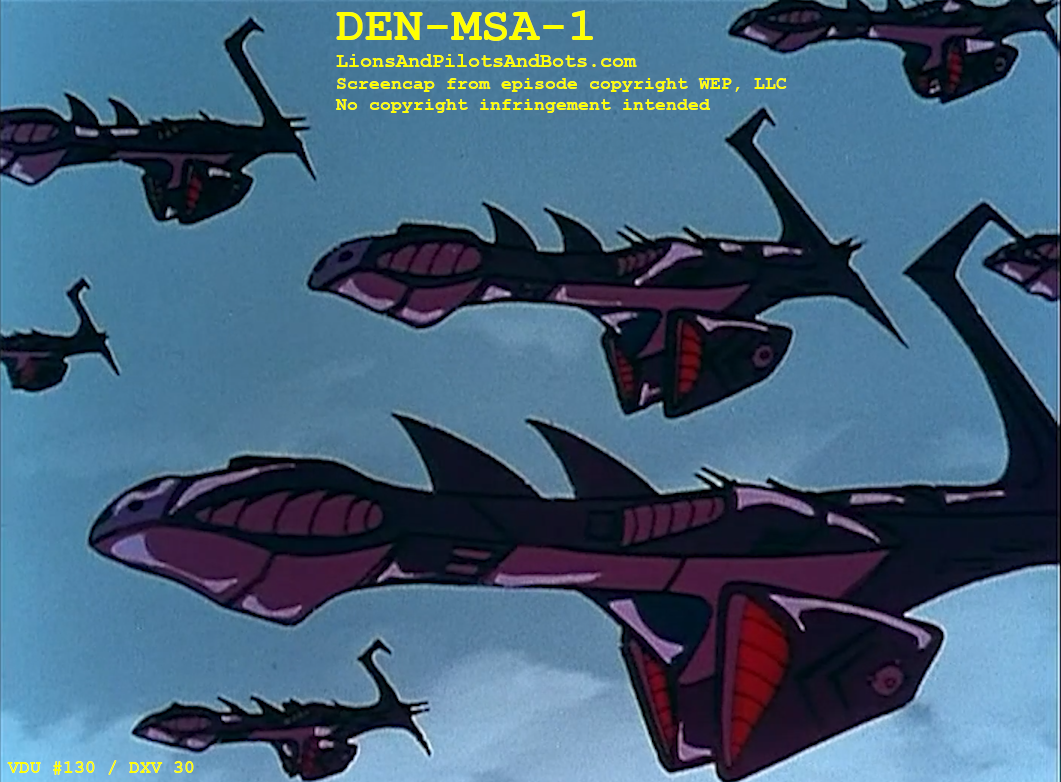
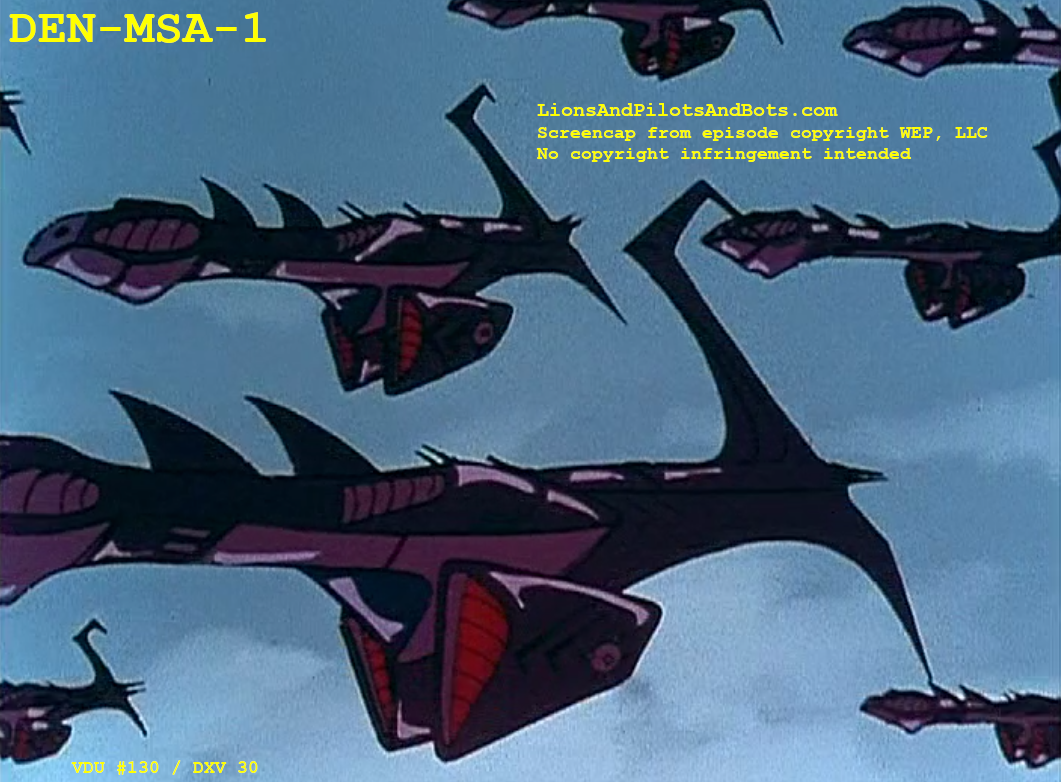
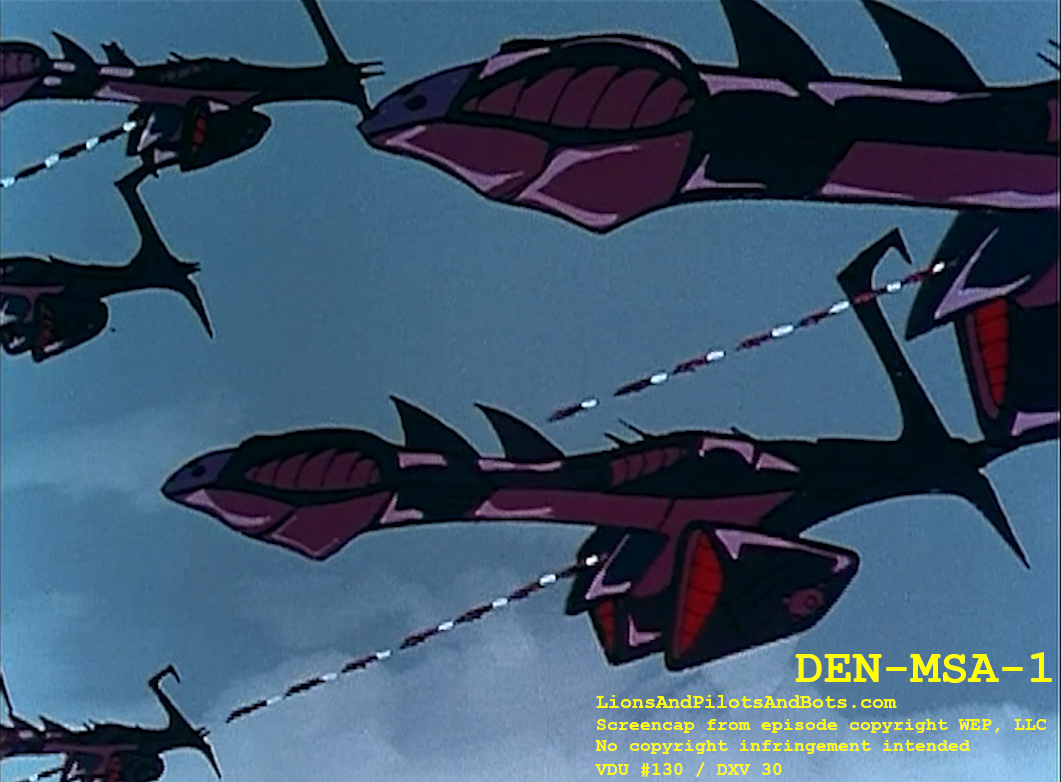
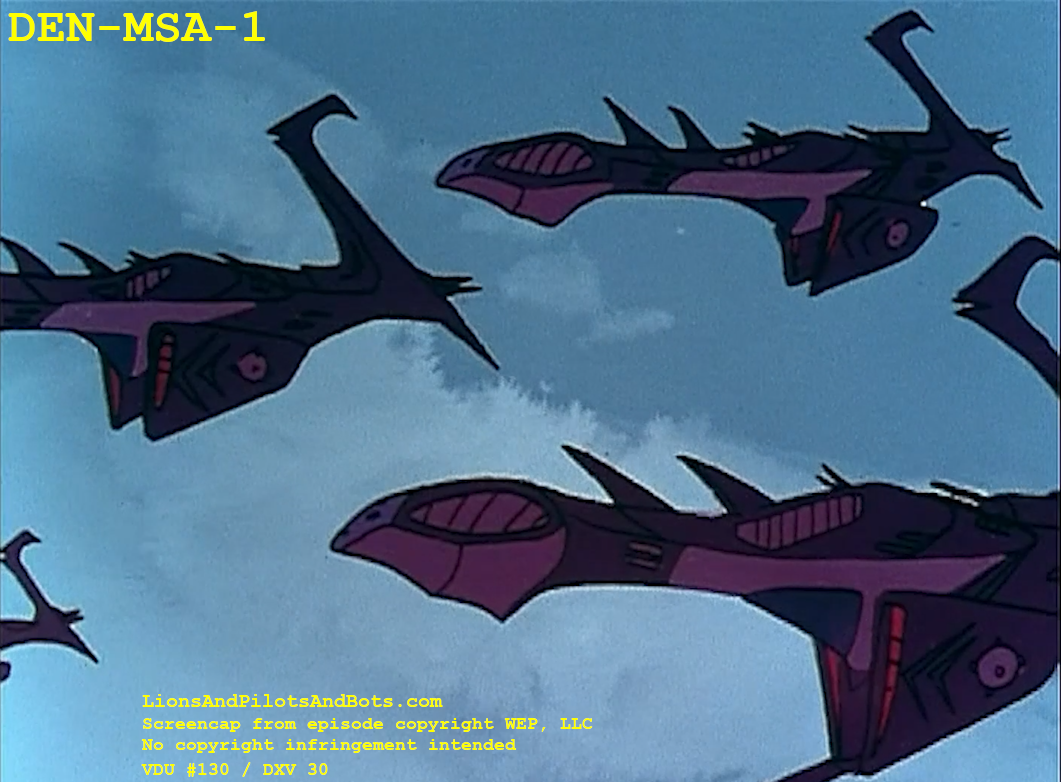
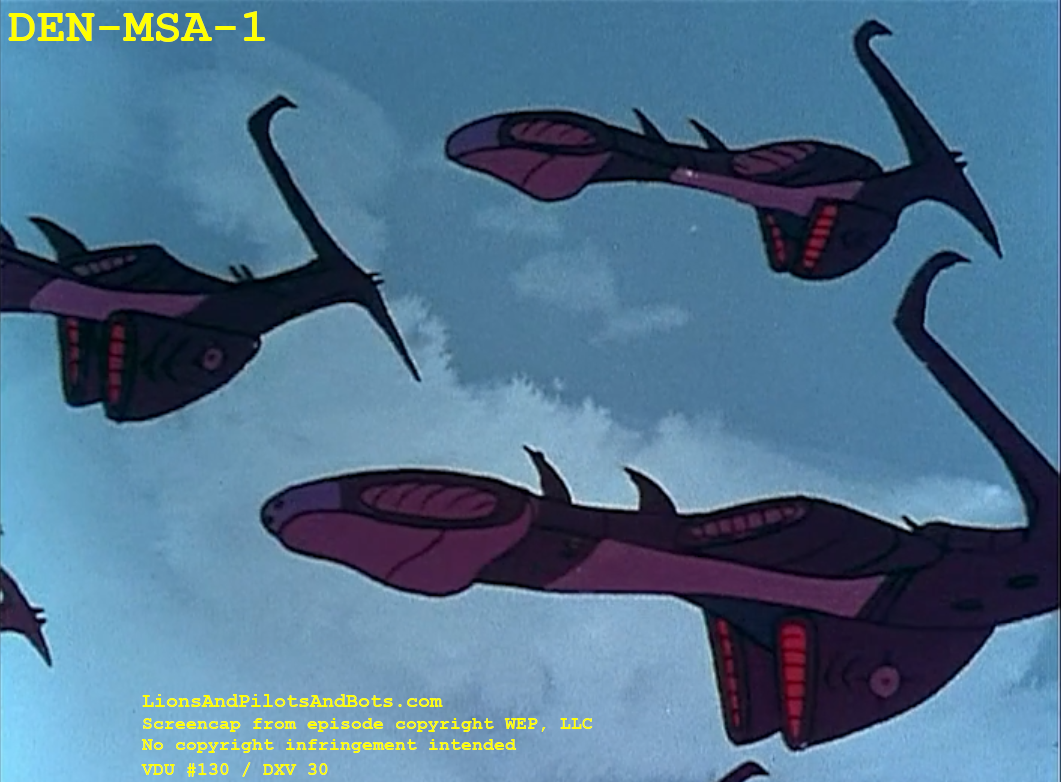
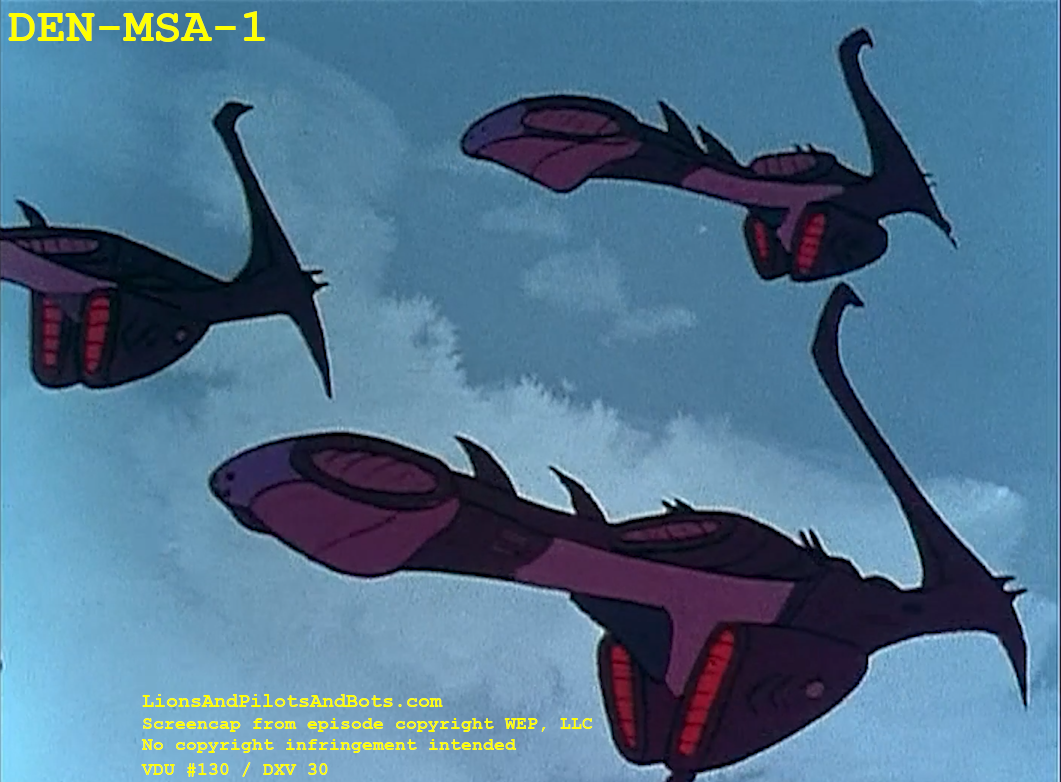
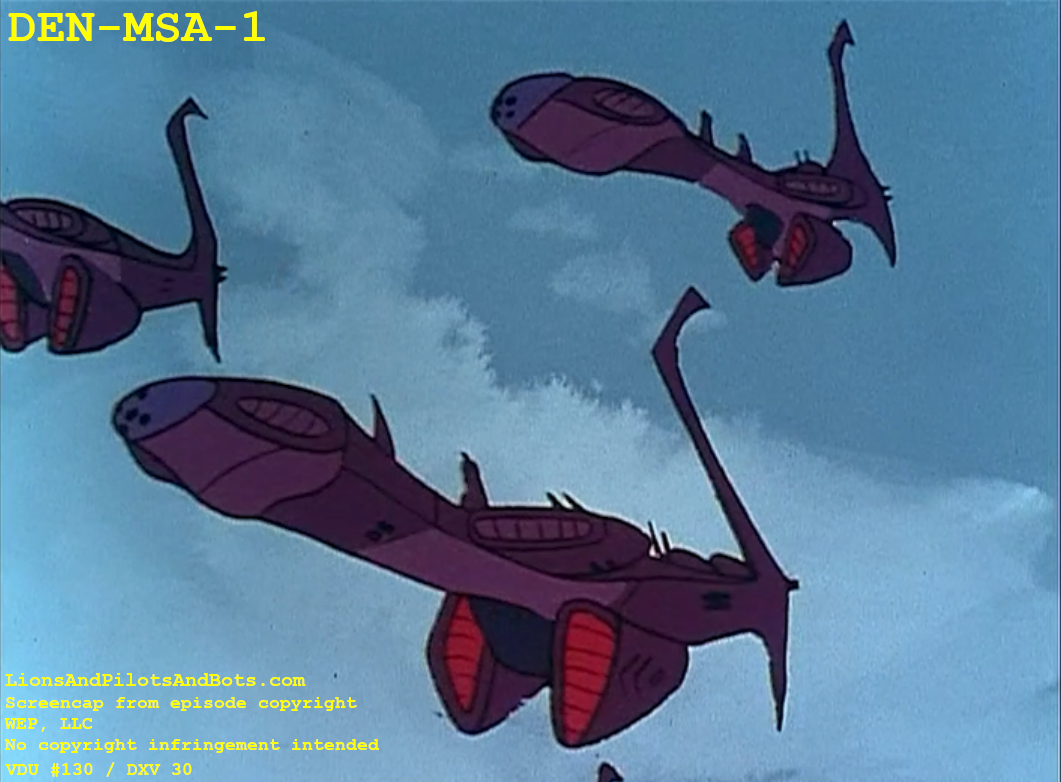
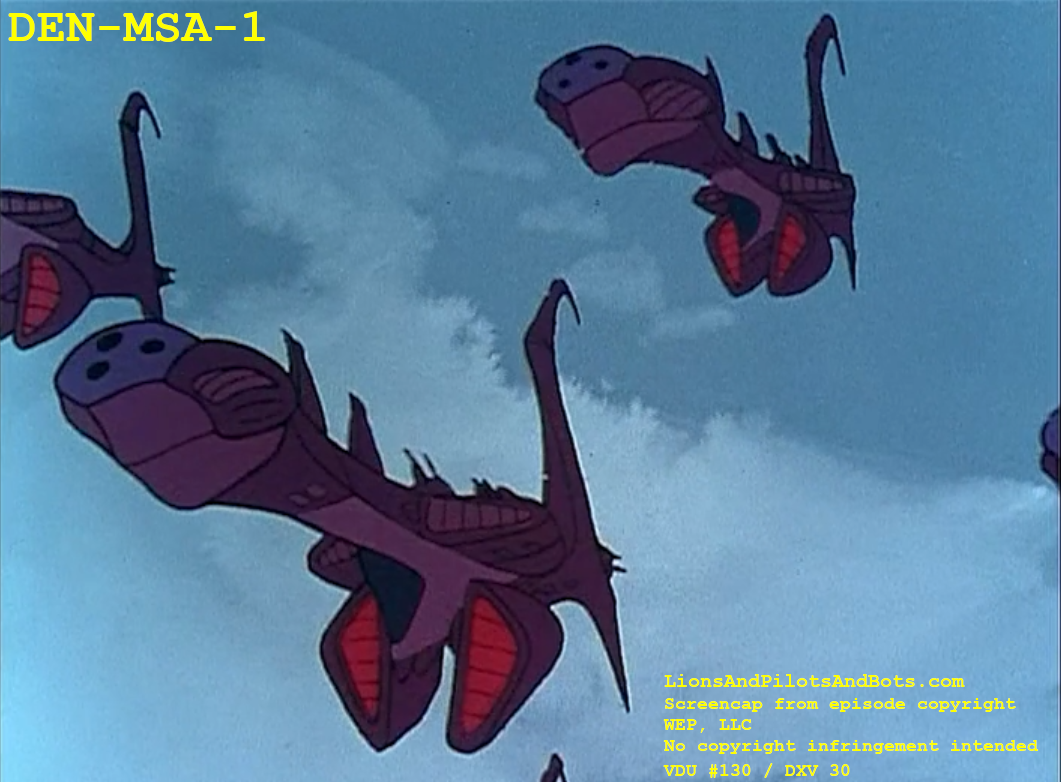
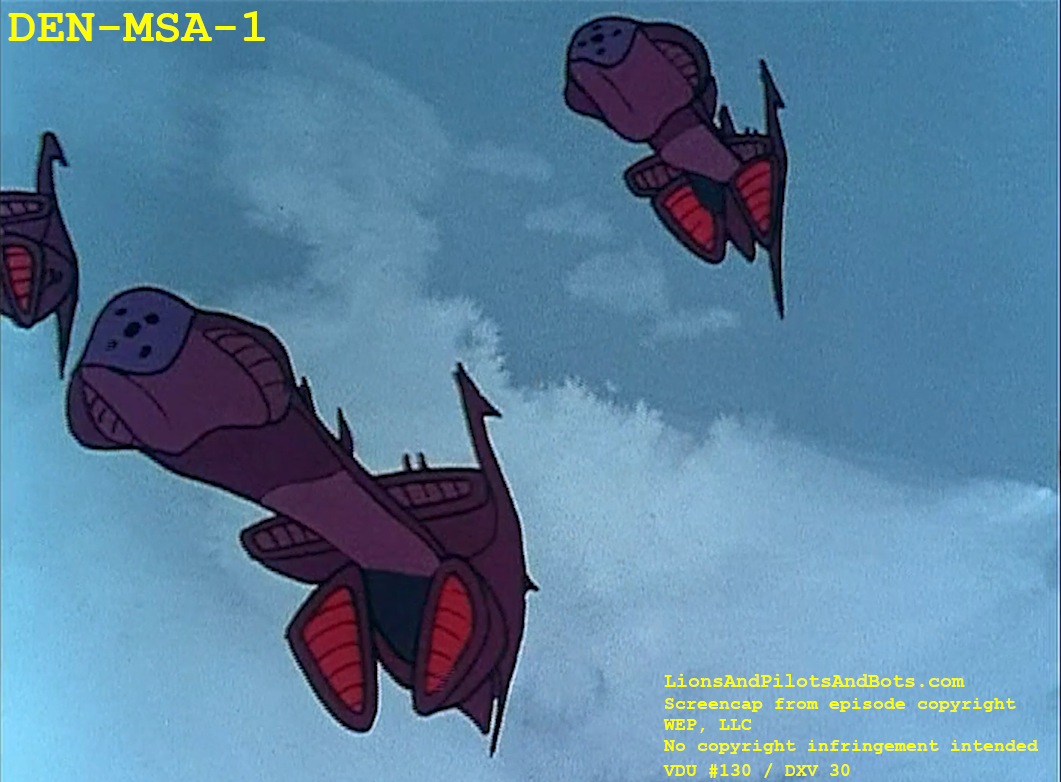
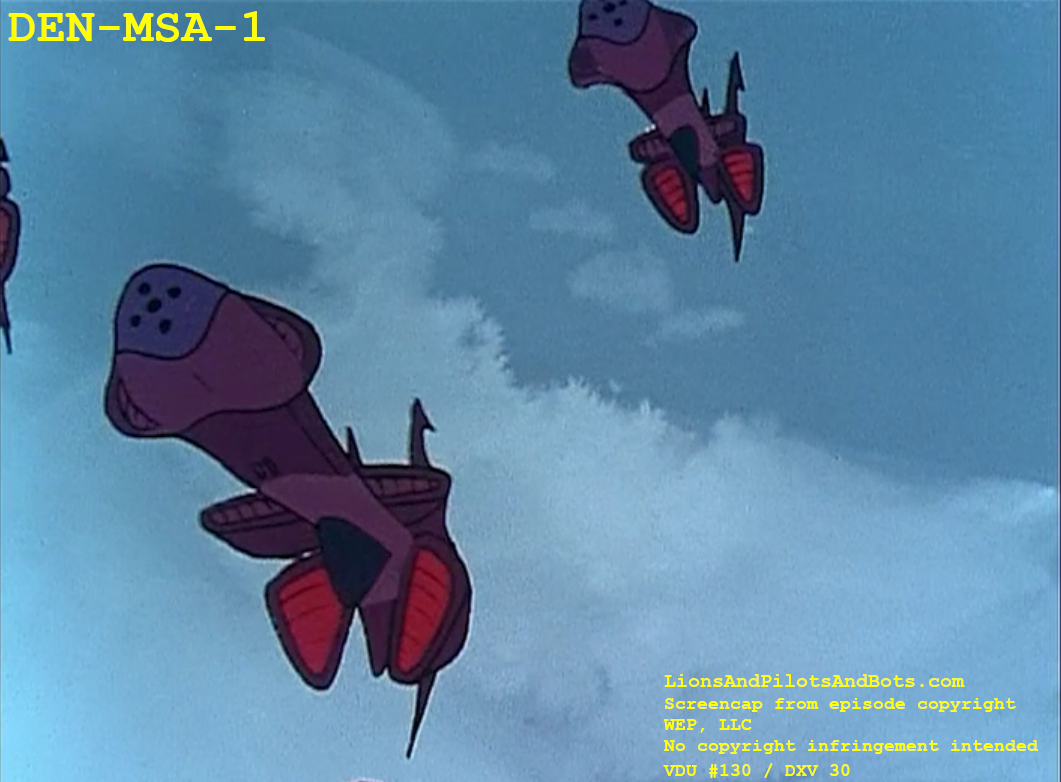
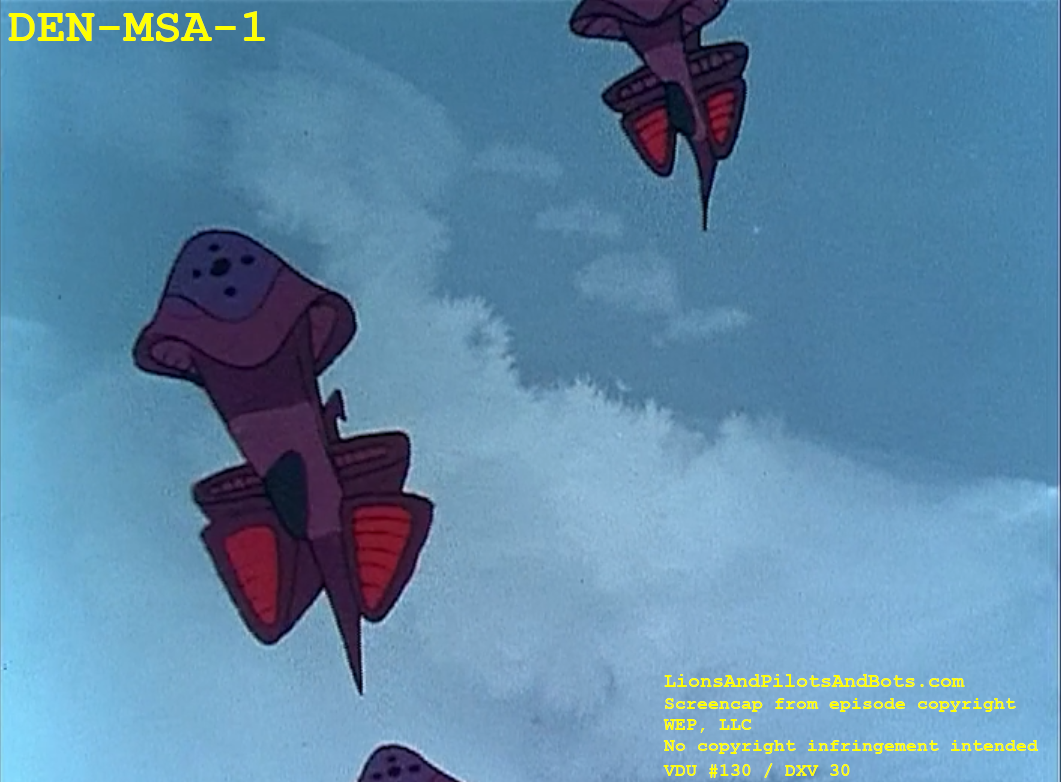
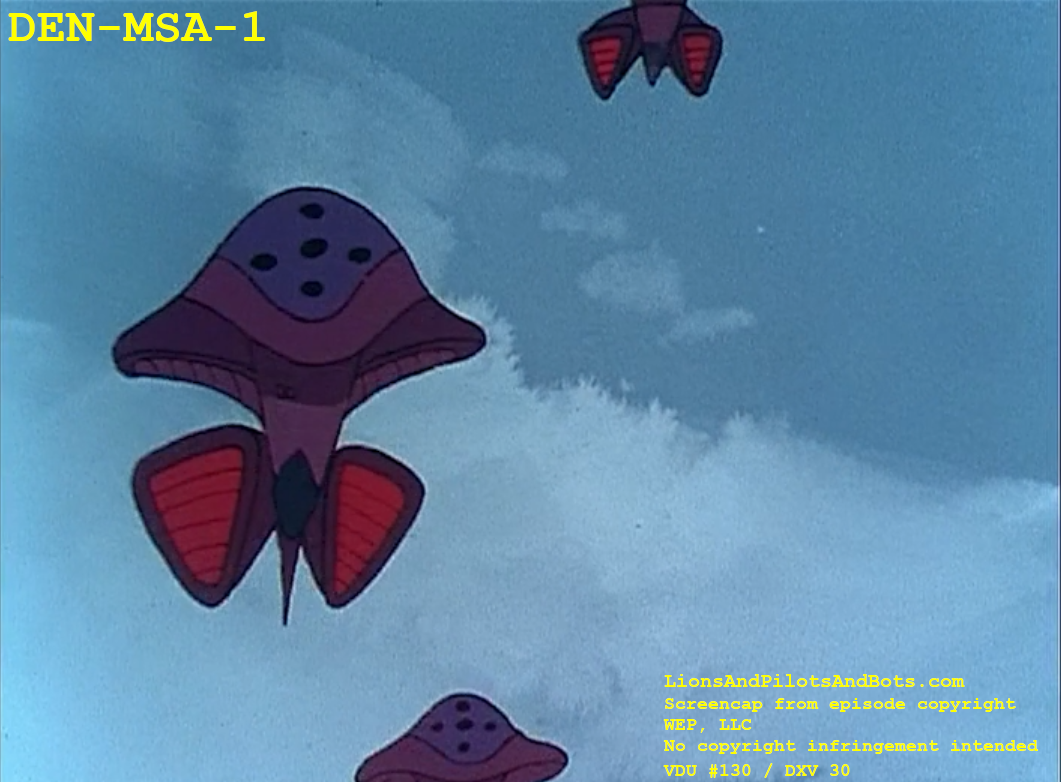
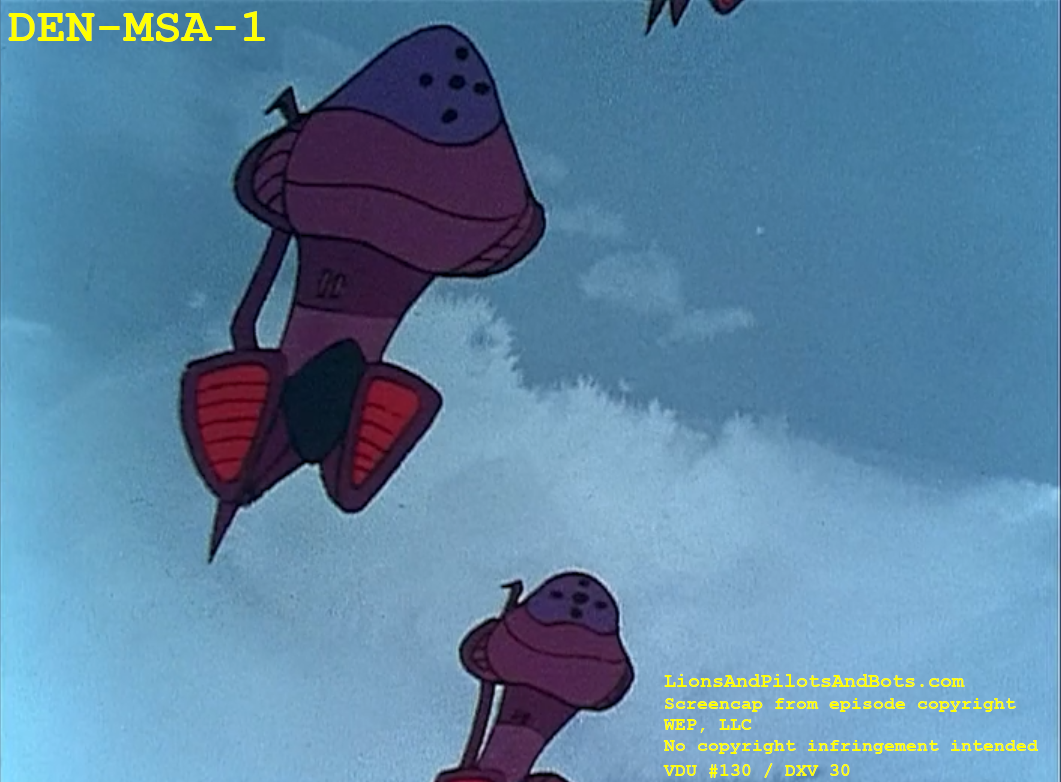
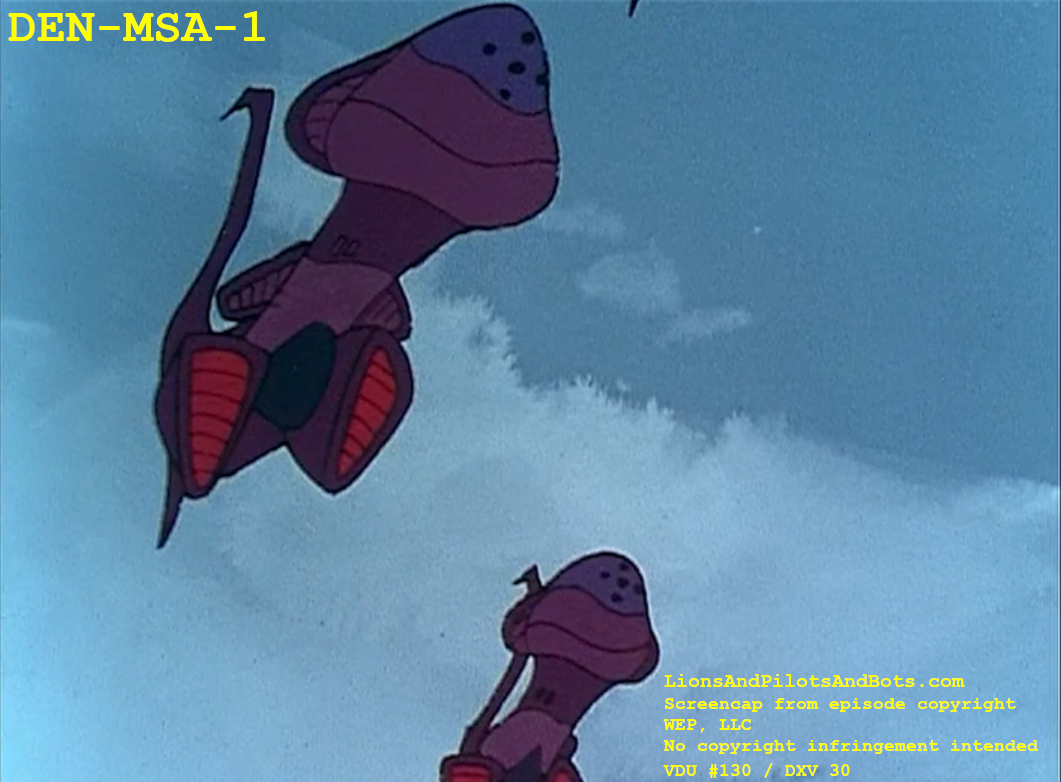
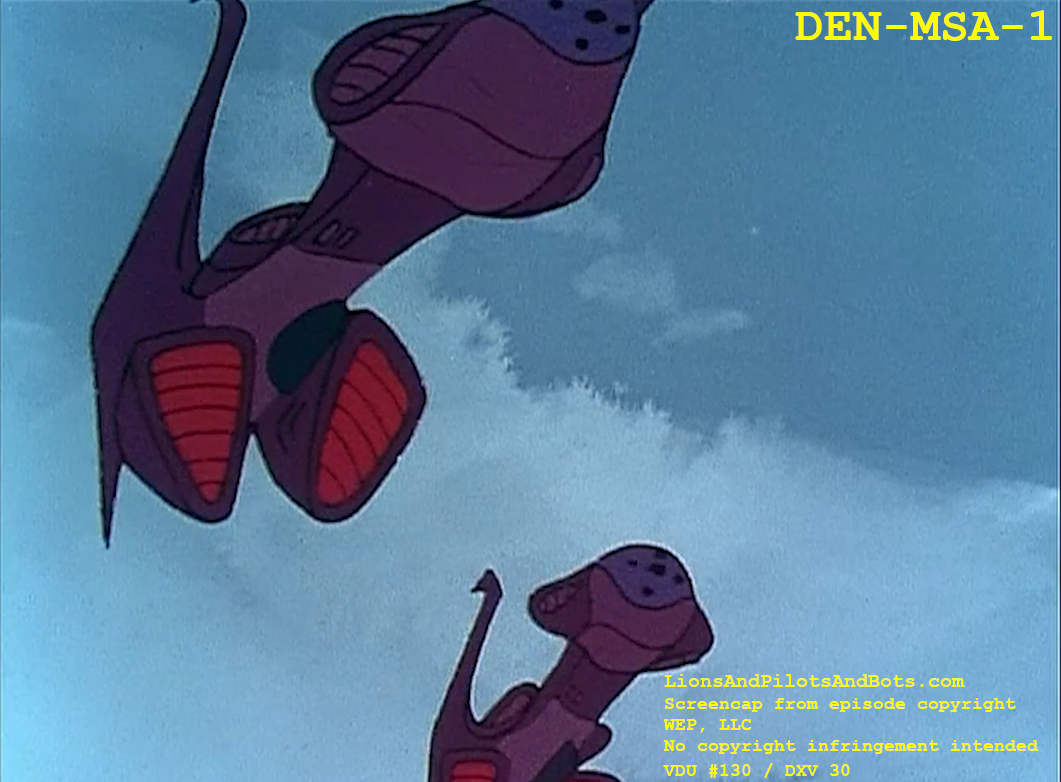
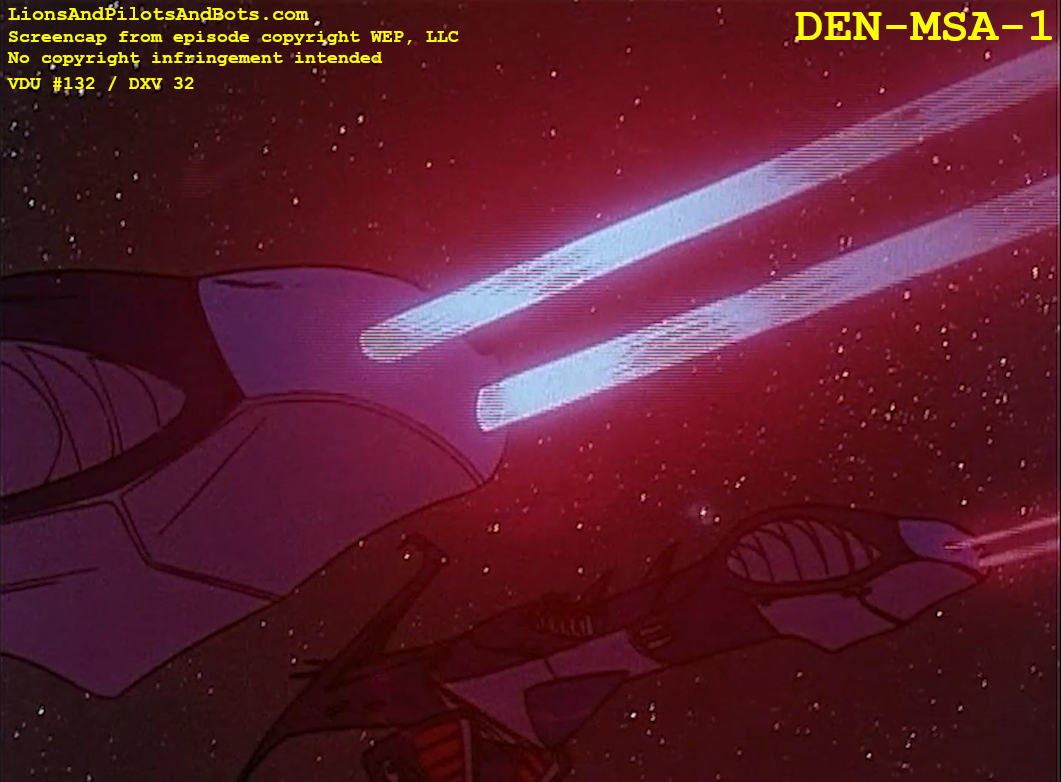
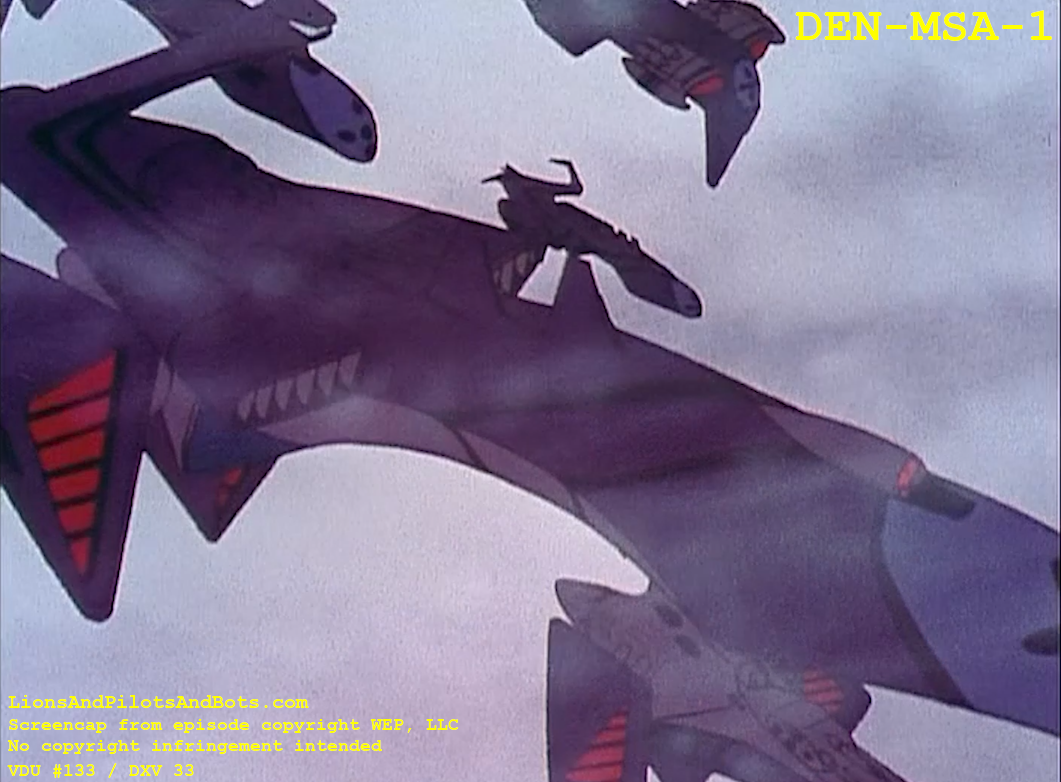
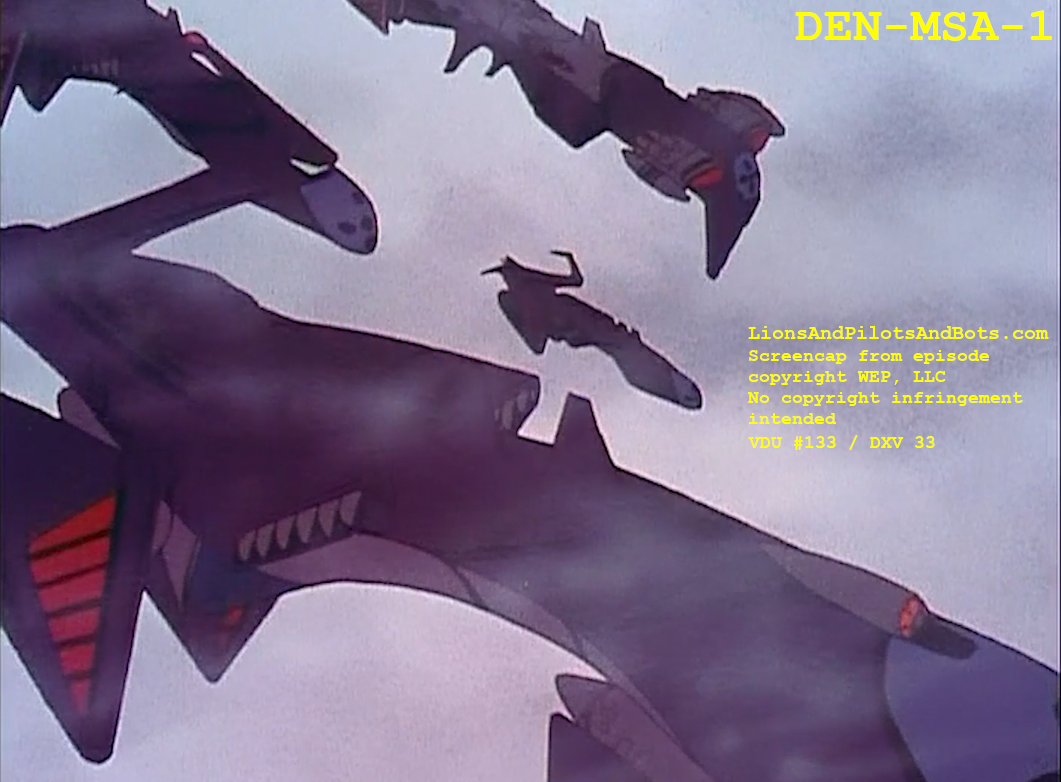
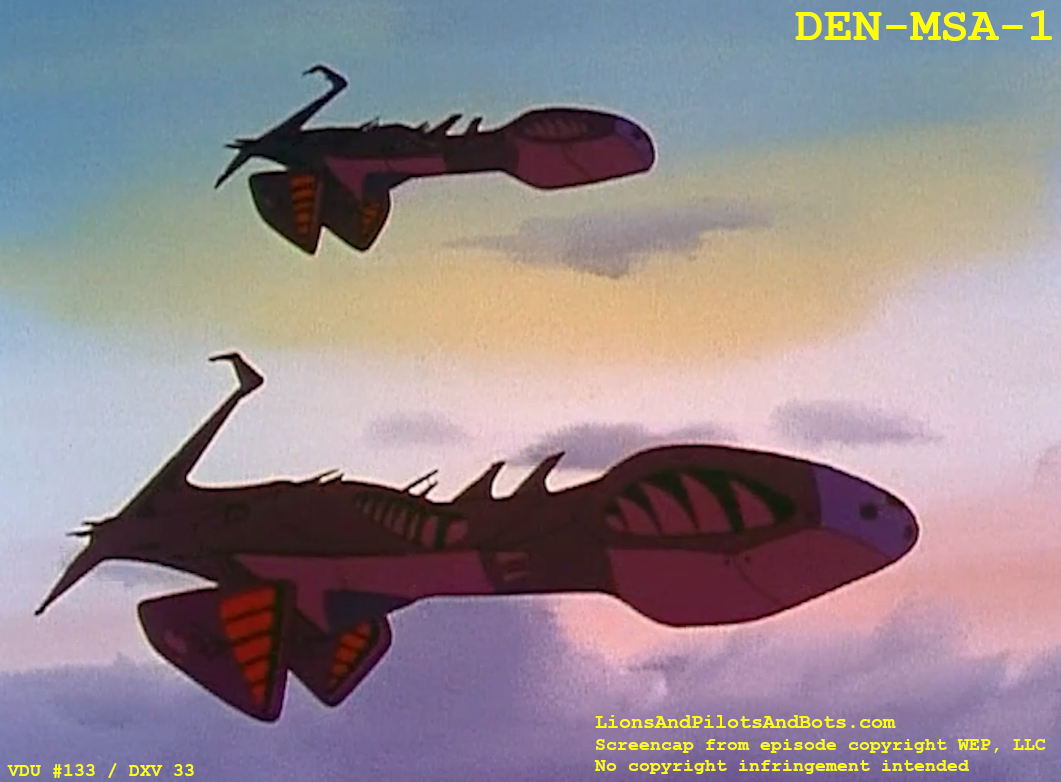
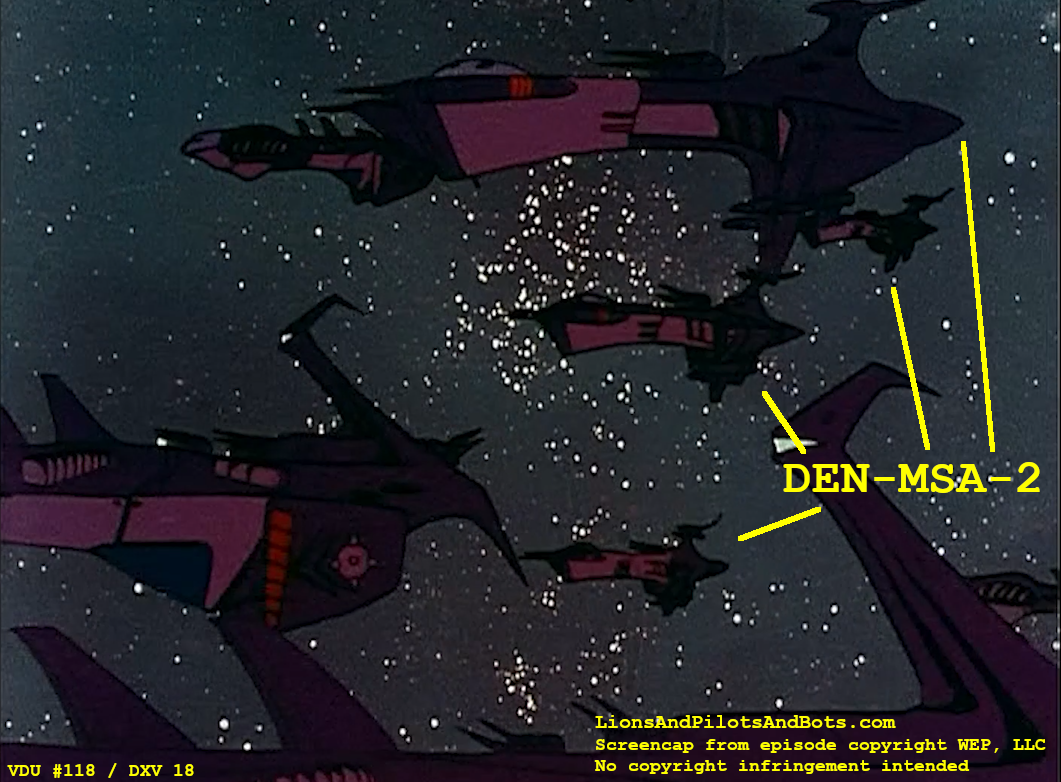
DEN-MSA-1 ships are presumably smaller than the DEN-MSX-1 ships that they typically accompany. These ships’ first and last appearances are the same episodes as those of DEN-MSX-1 ships.
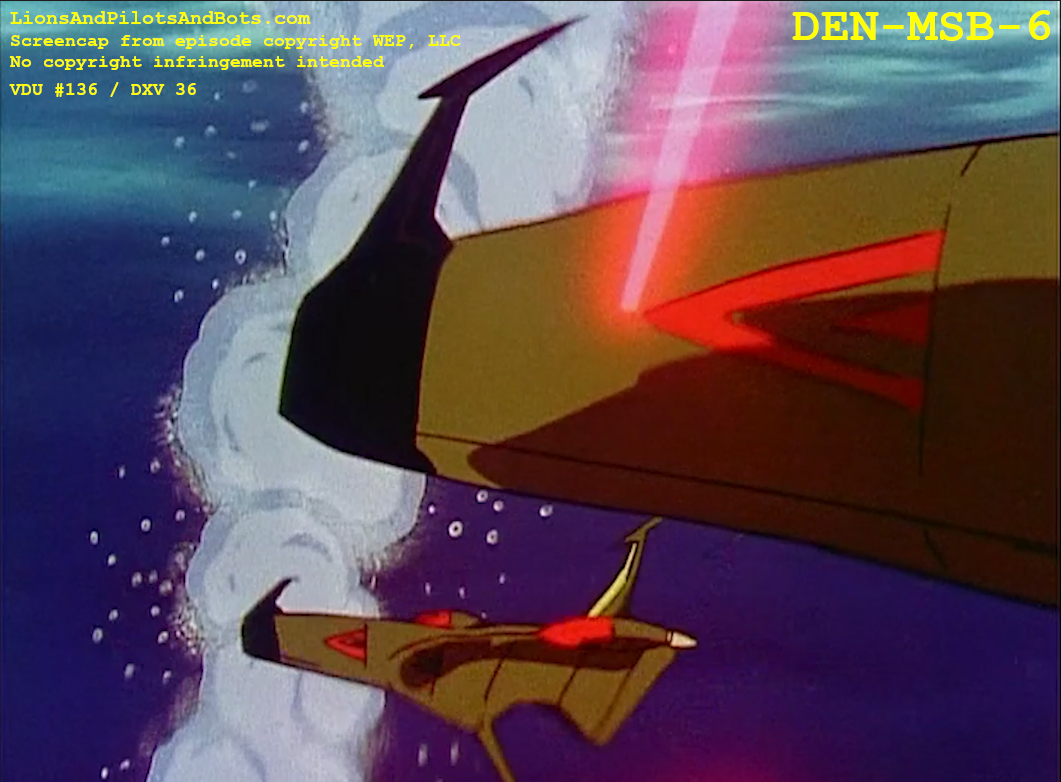
DEN-MSA-1 ships have blunt noses, twin large, ventral pods, and a single, hook-like bridge stalk that extends dorsally from the dorsal rear hull.
DEN-MSA-1 ships seem to be used primarily on the front lines.
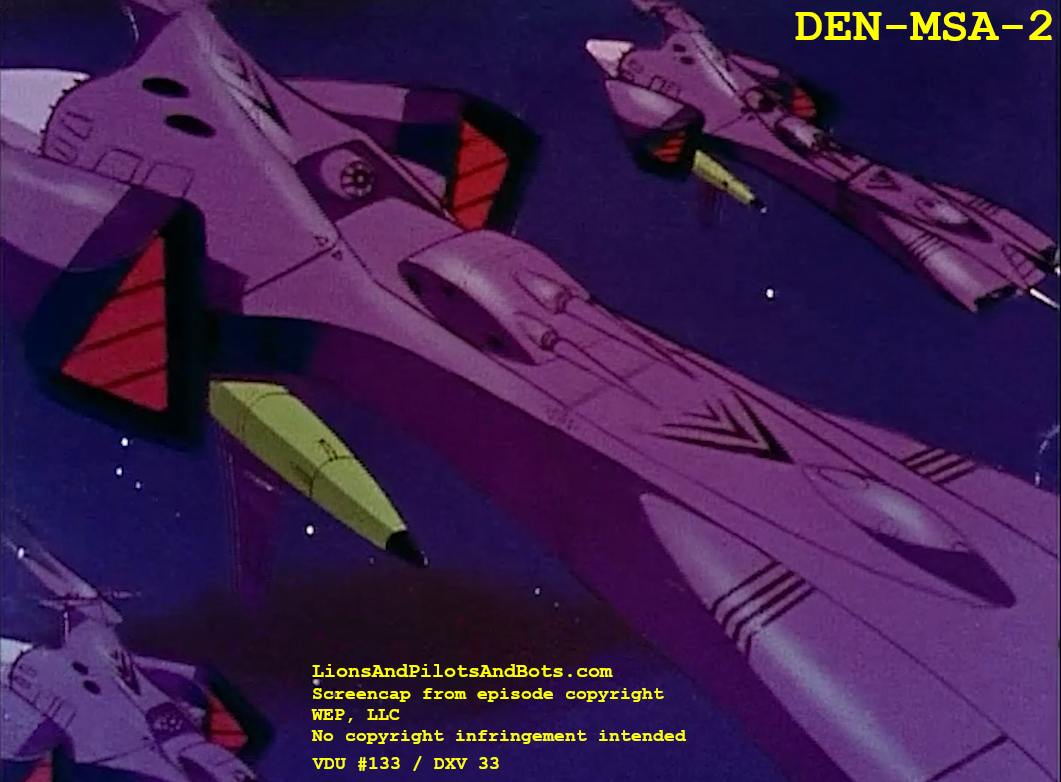
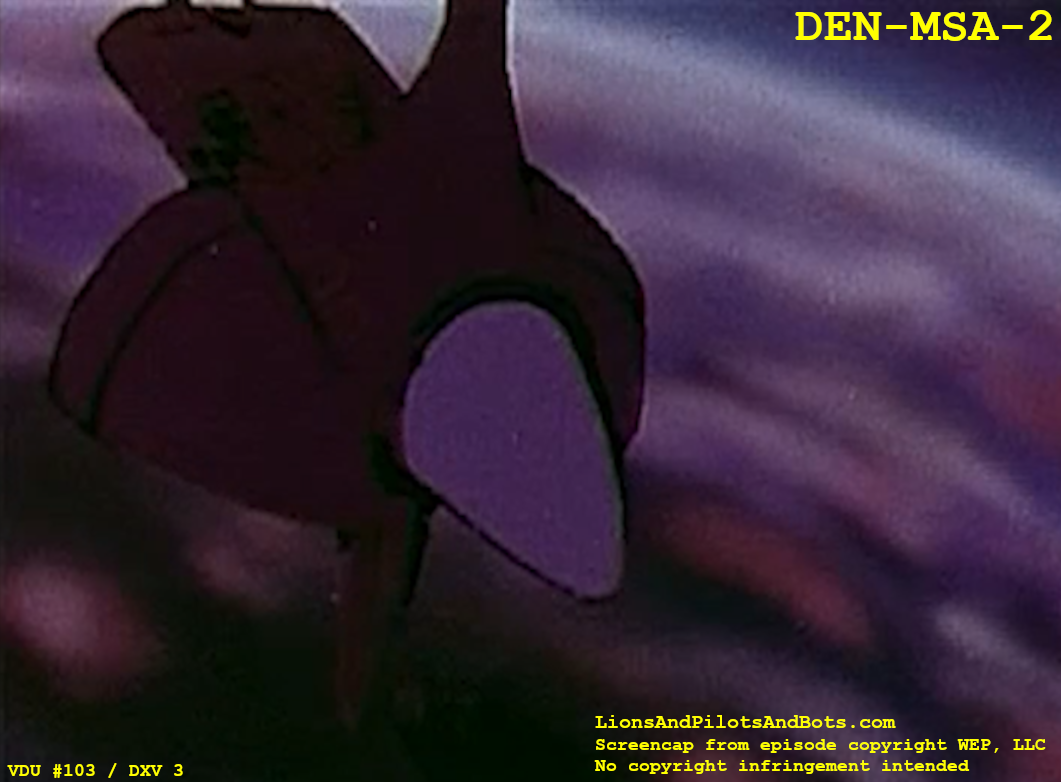
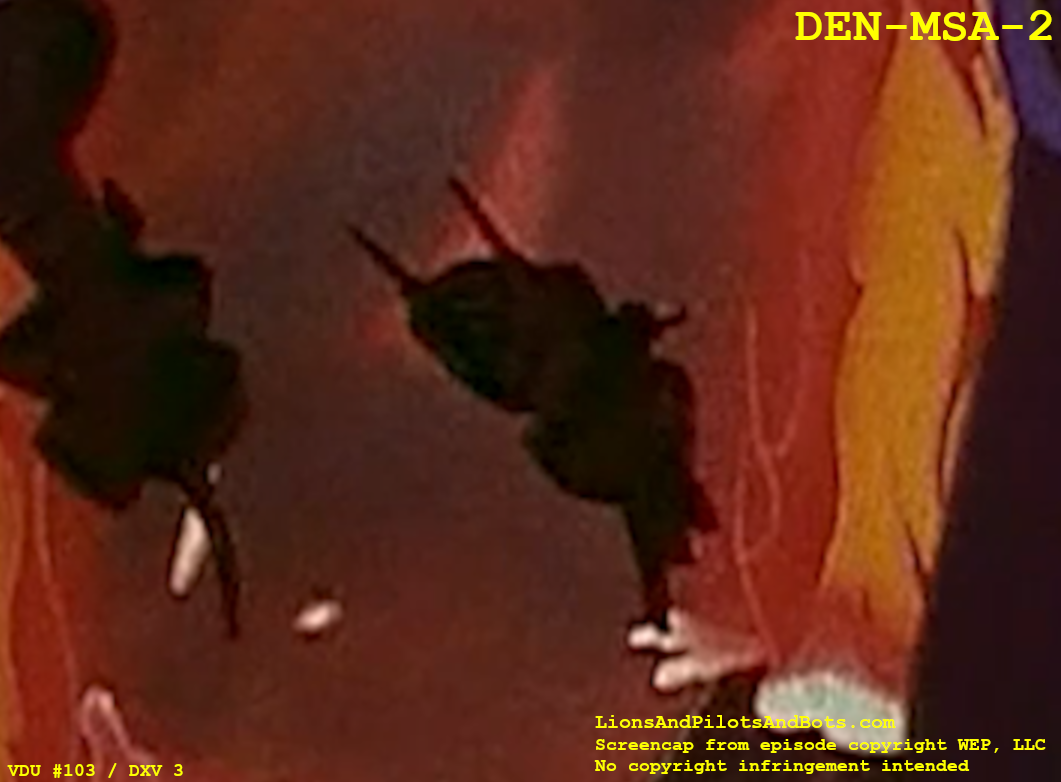
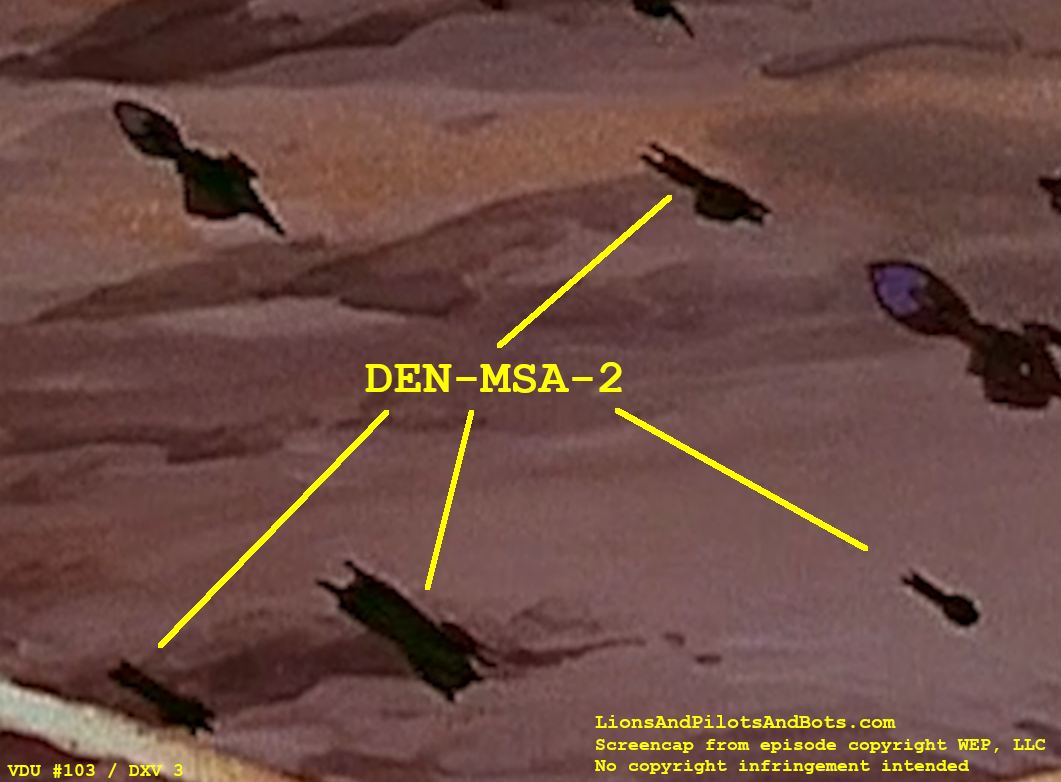
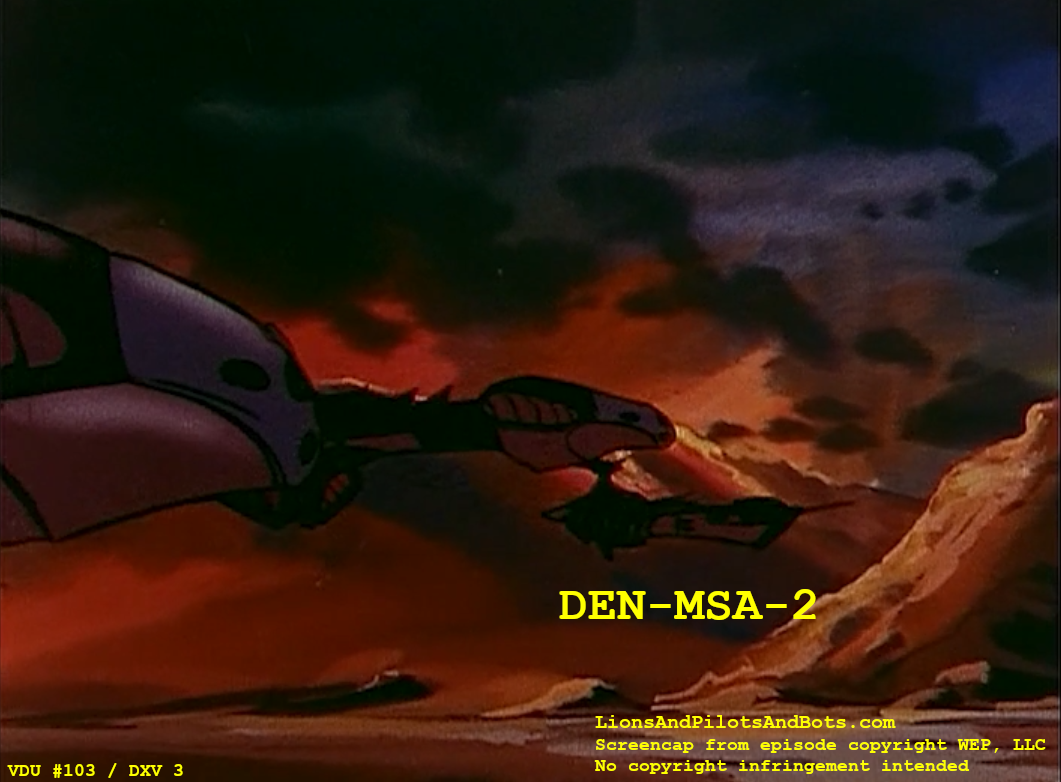
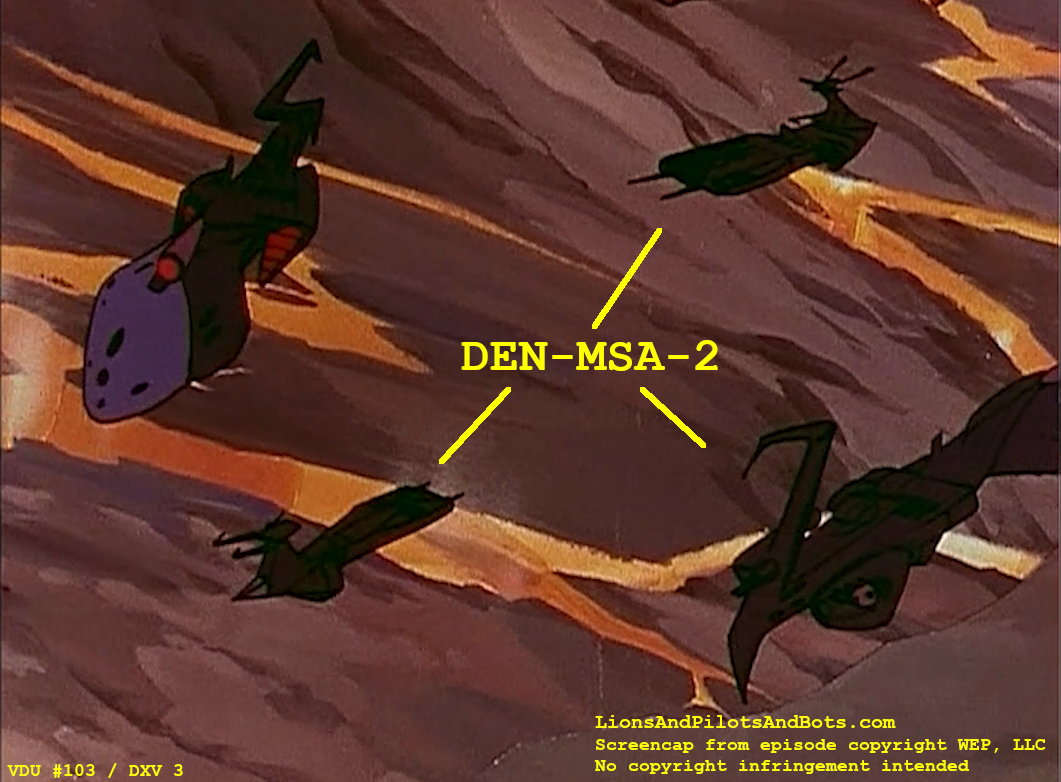
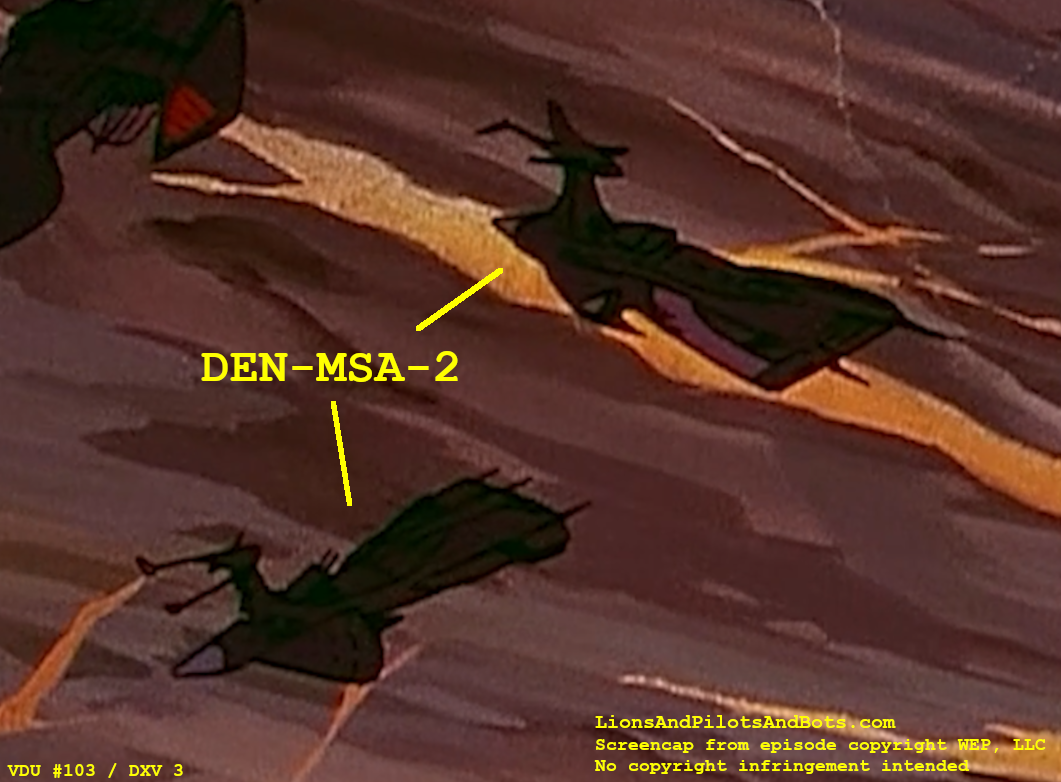
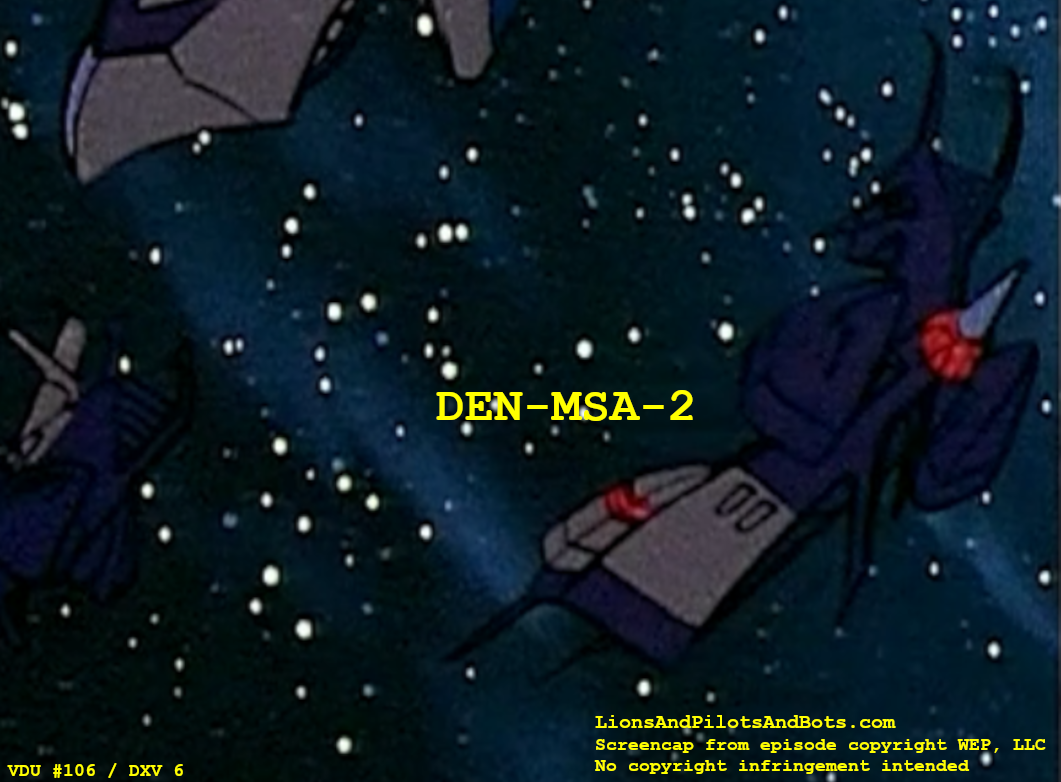
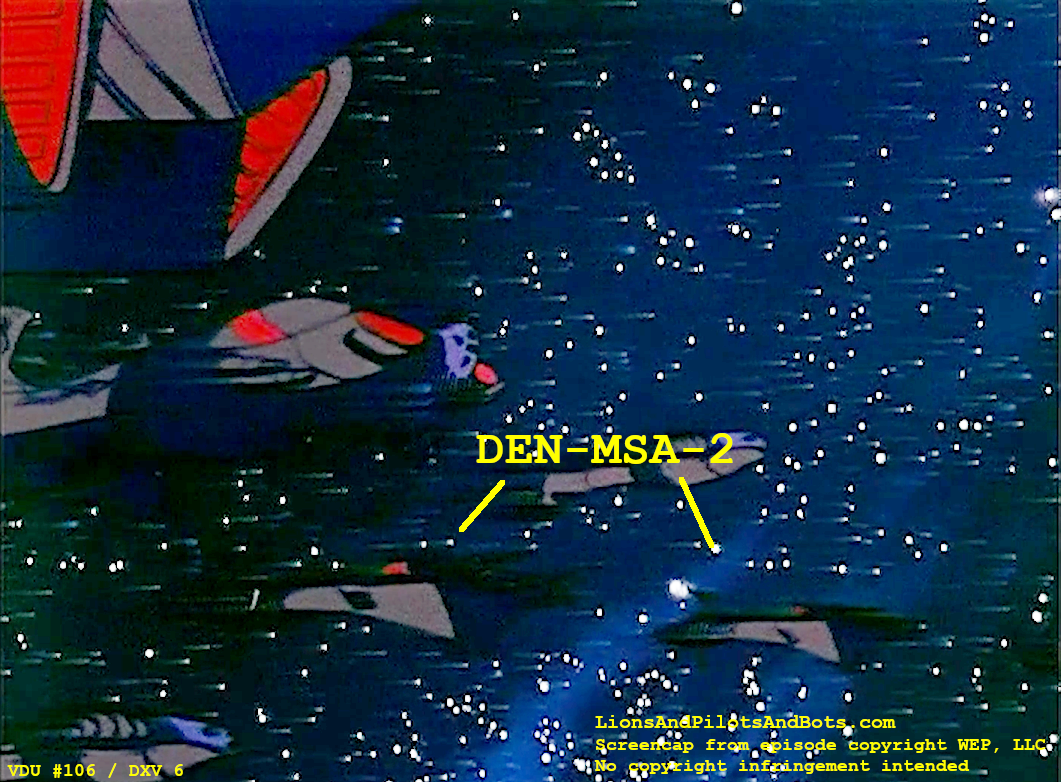
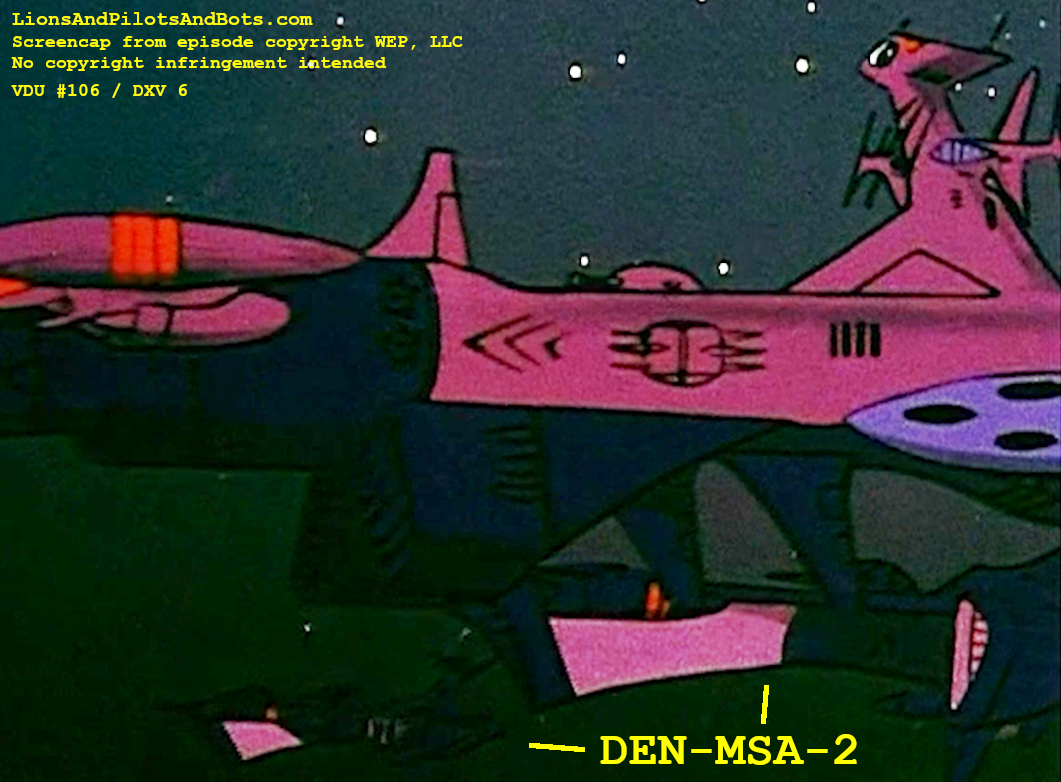
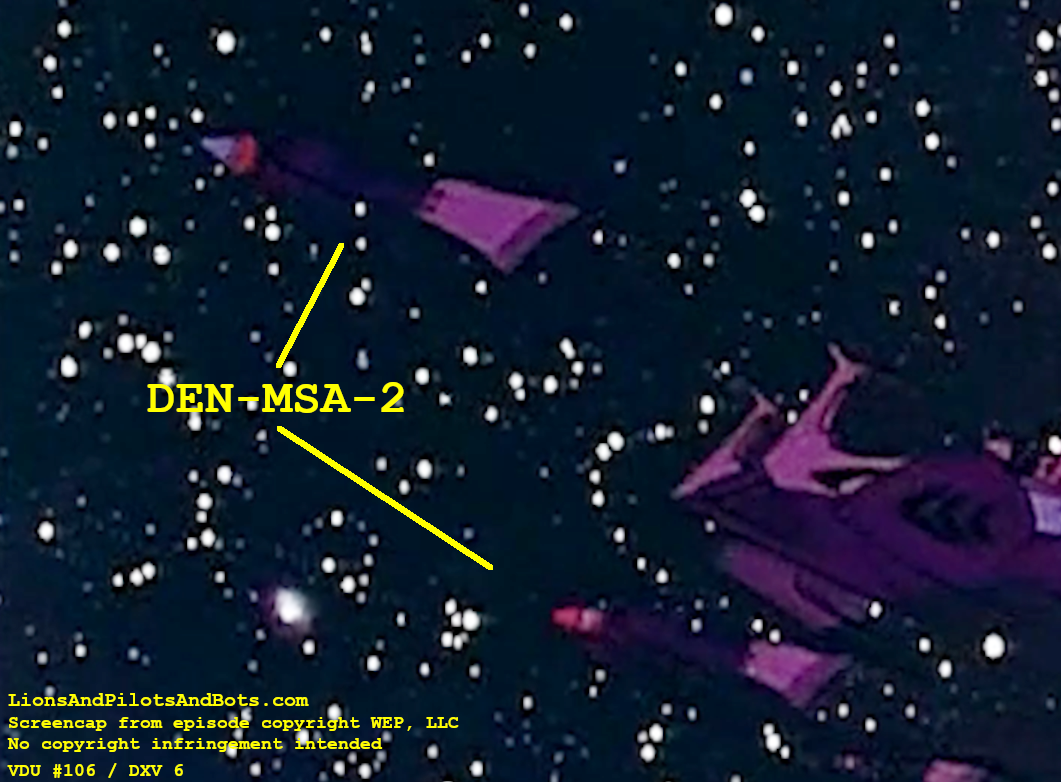
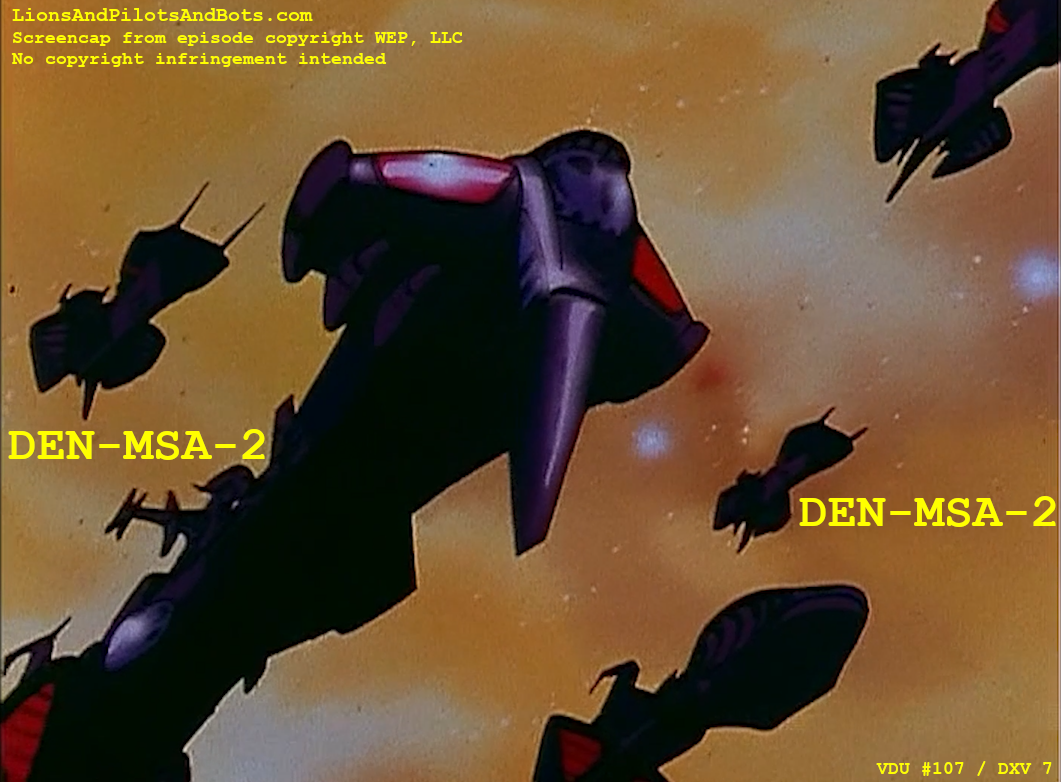
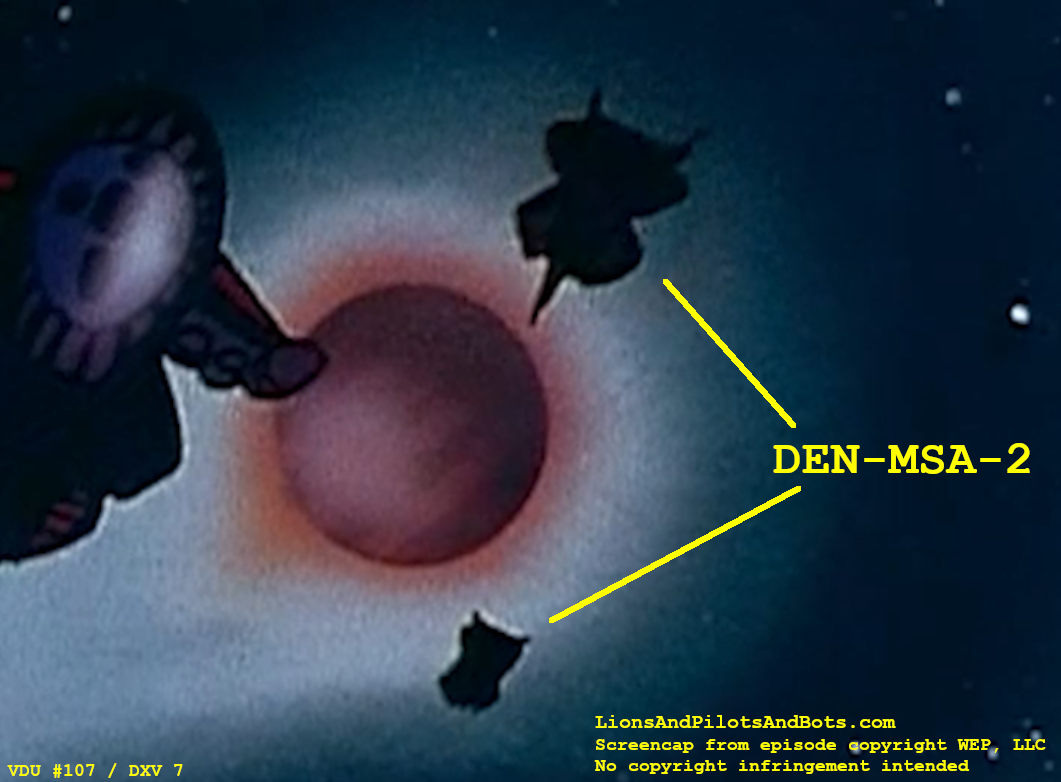
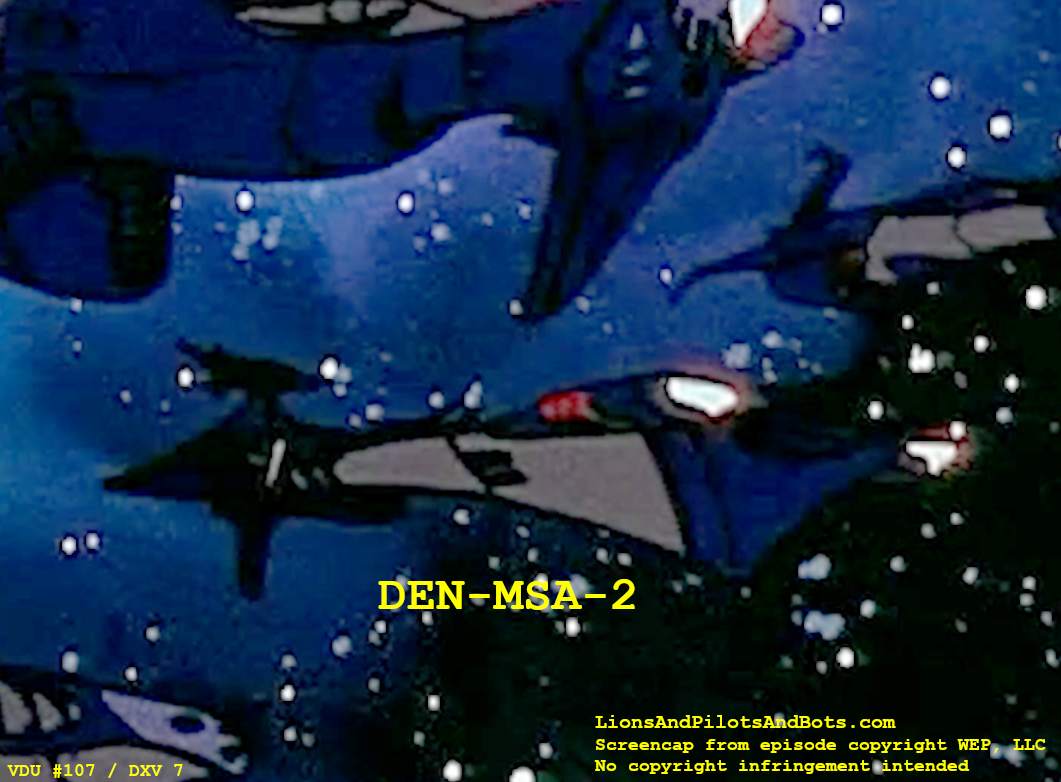
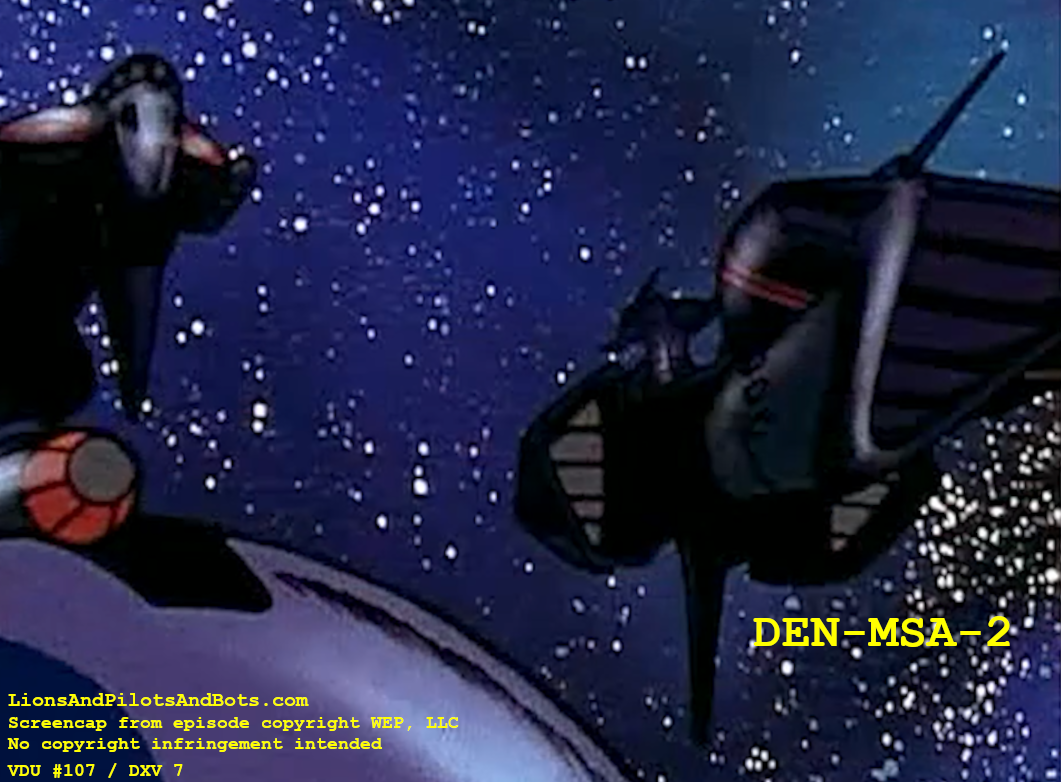
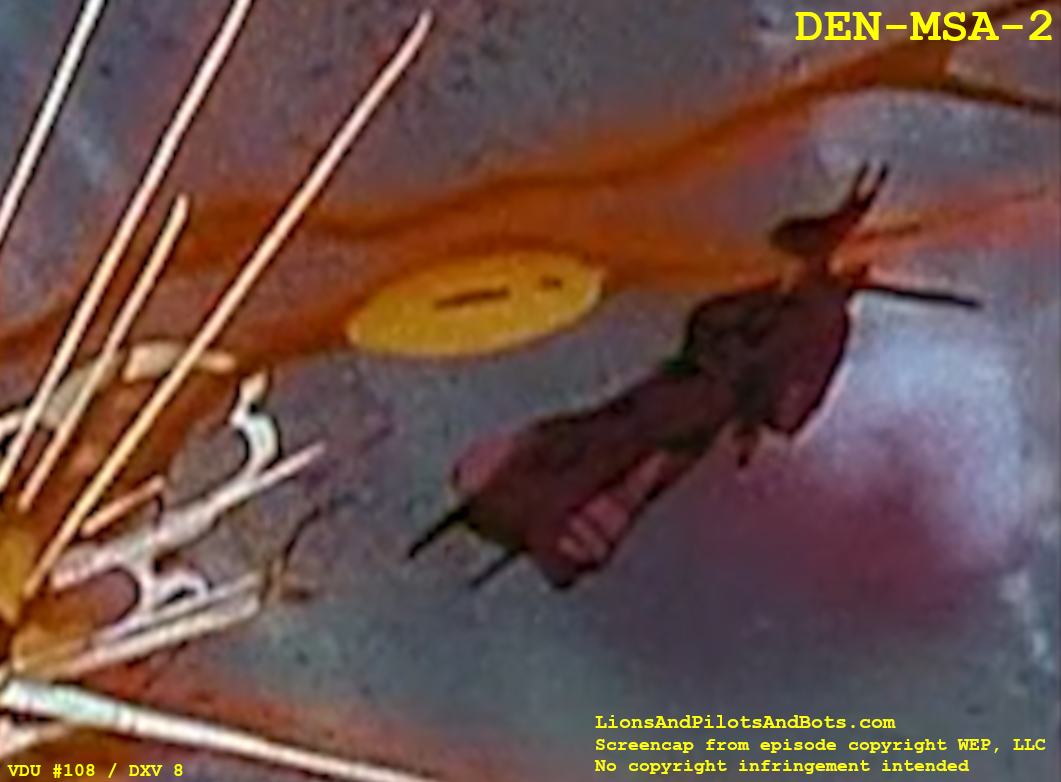
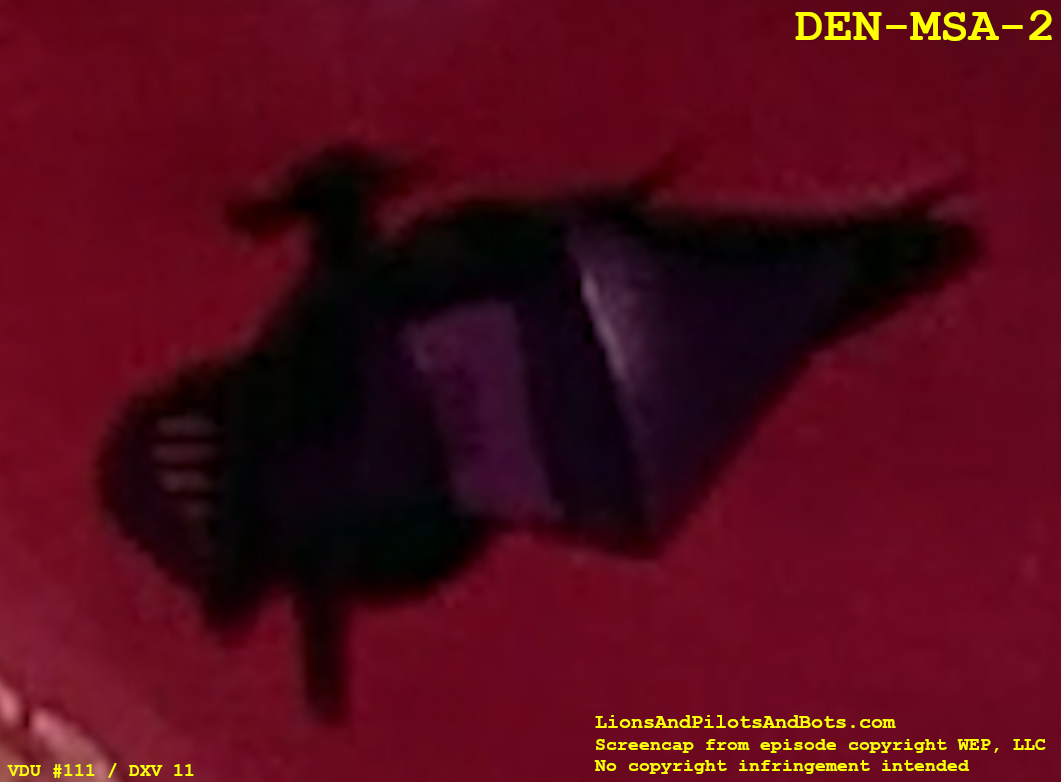
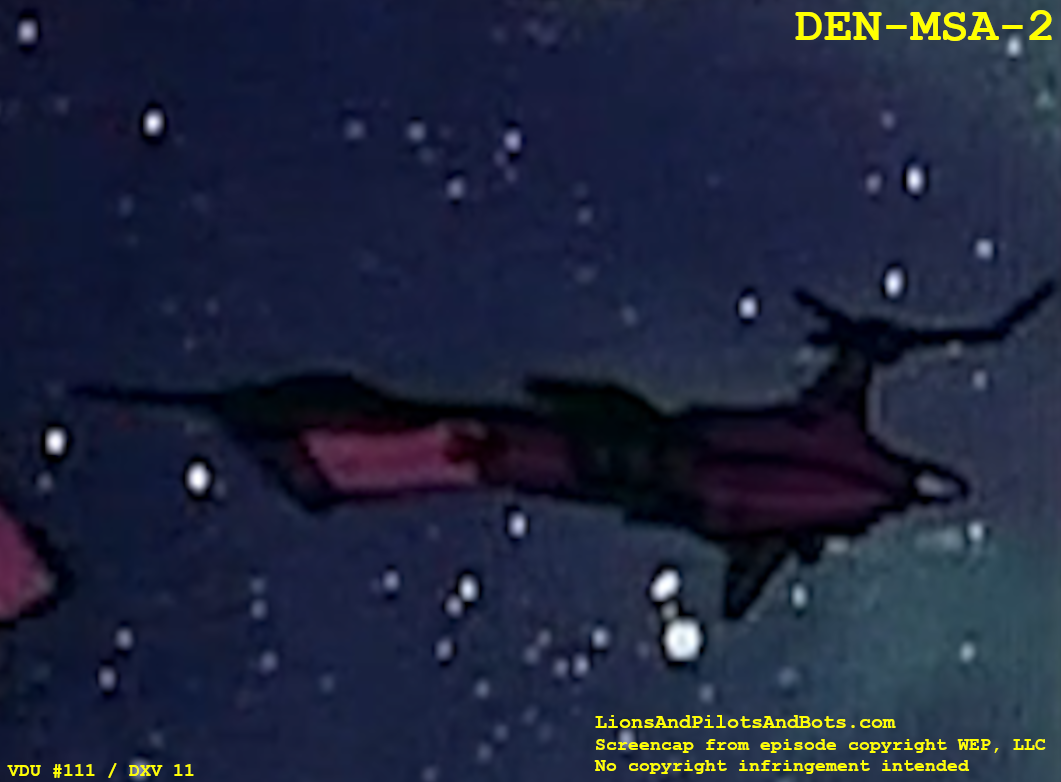
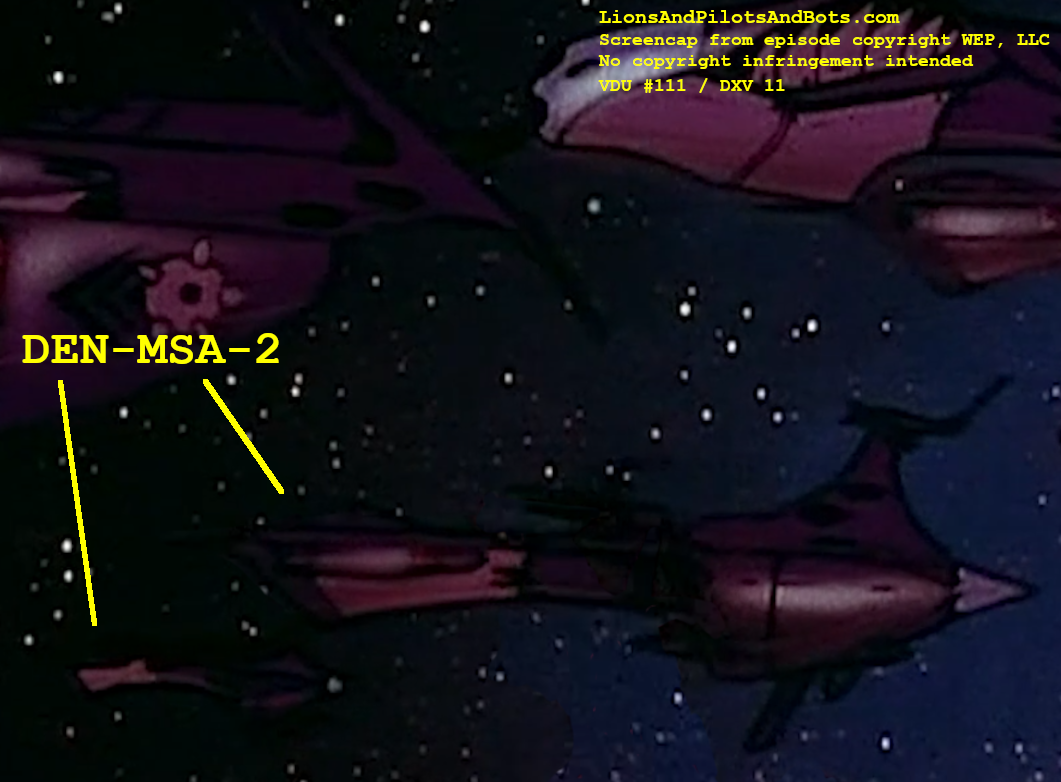
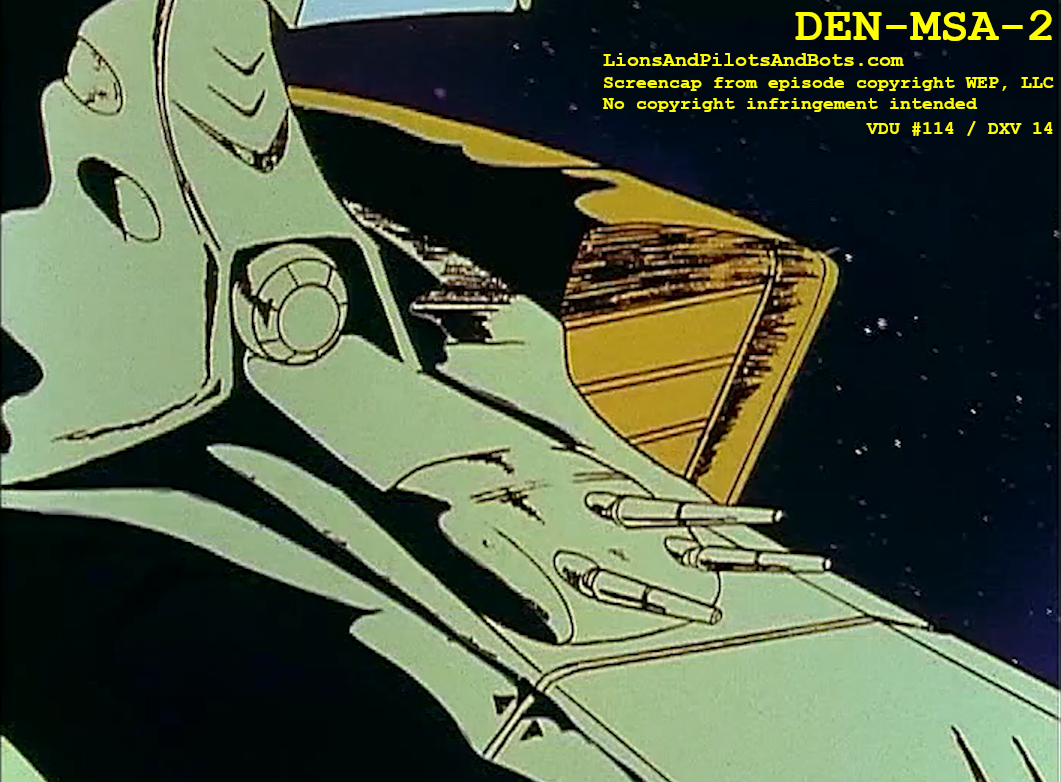
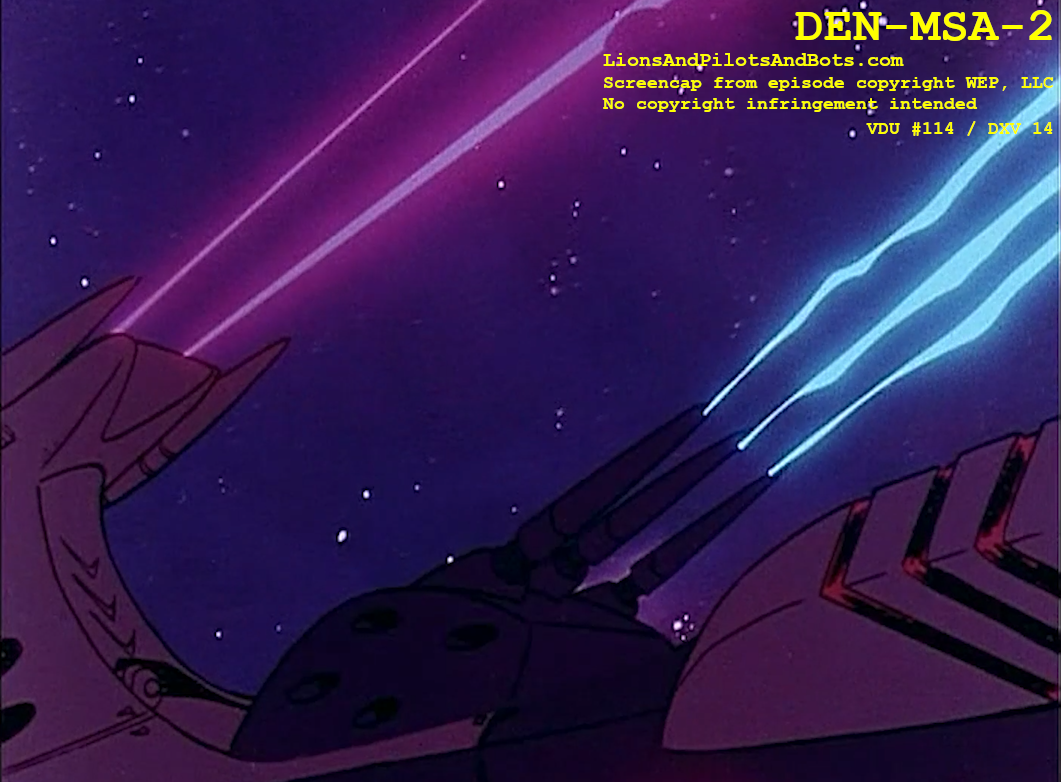
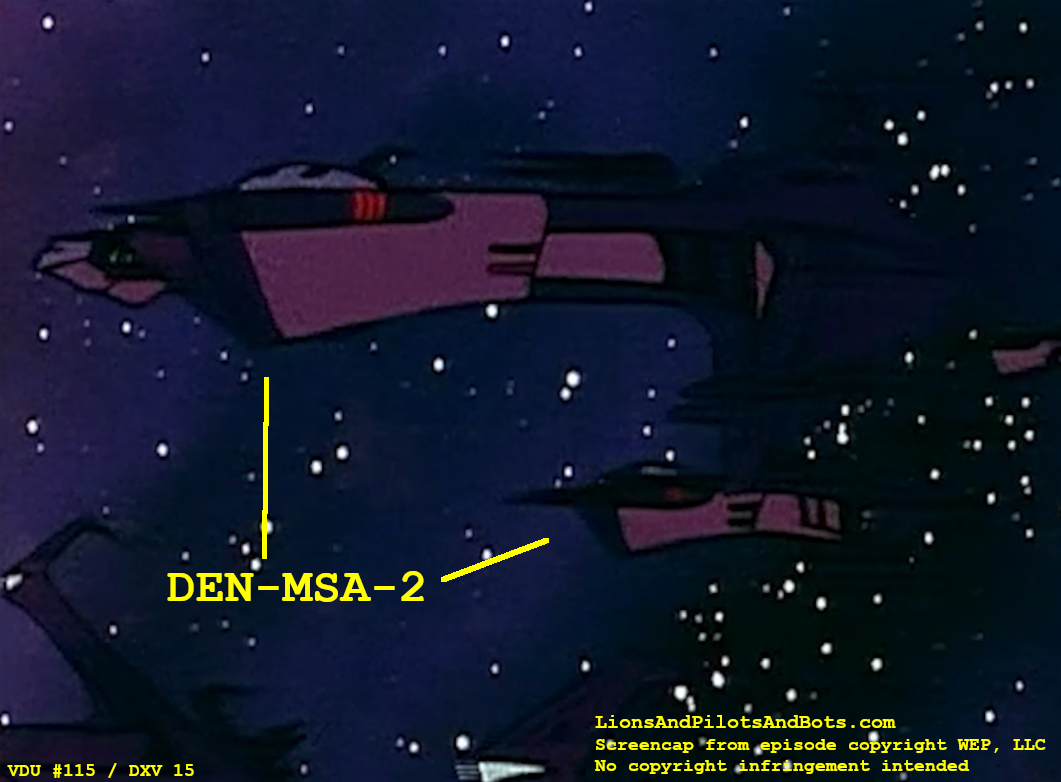
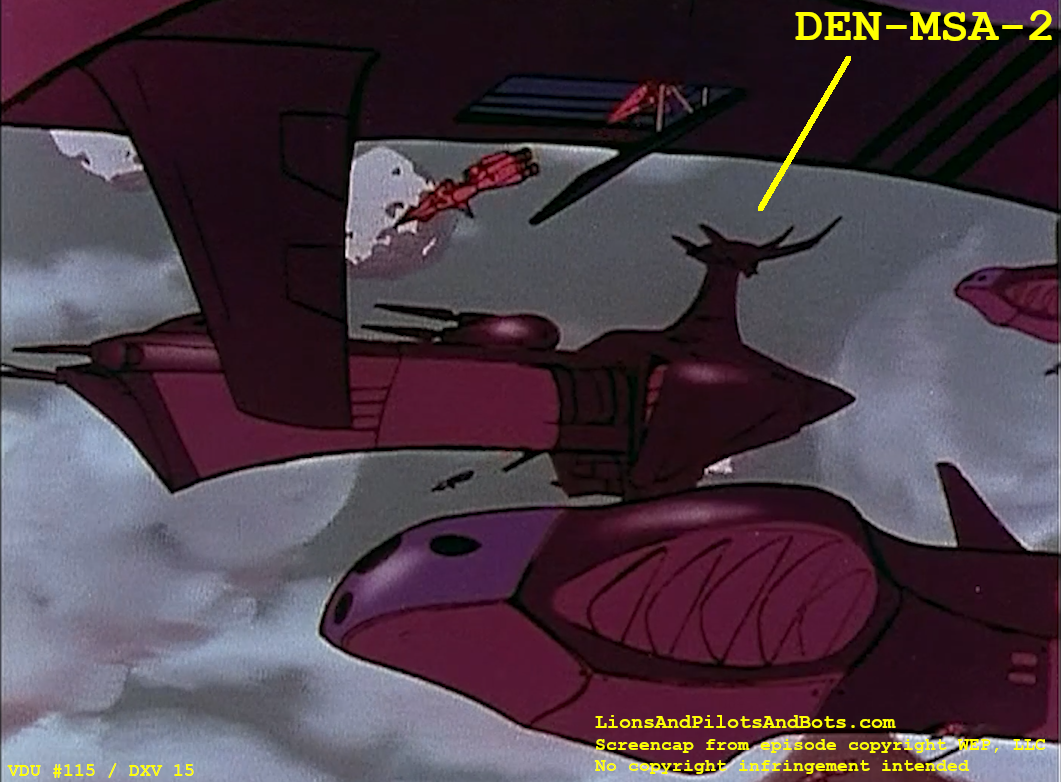
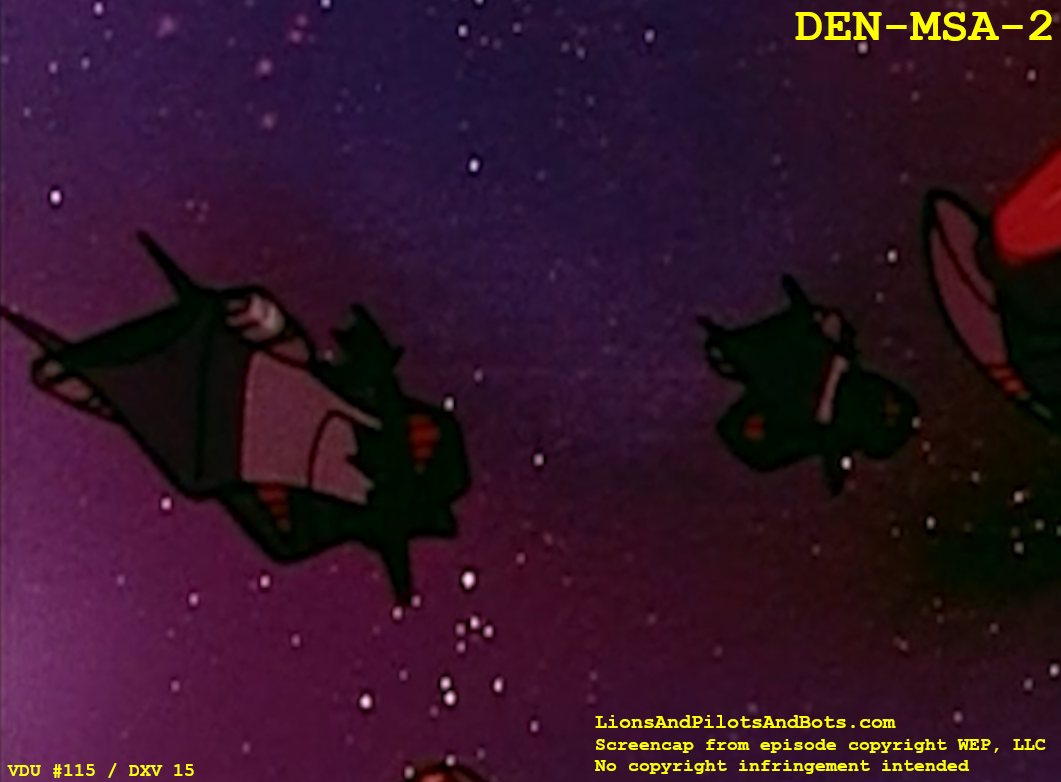
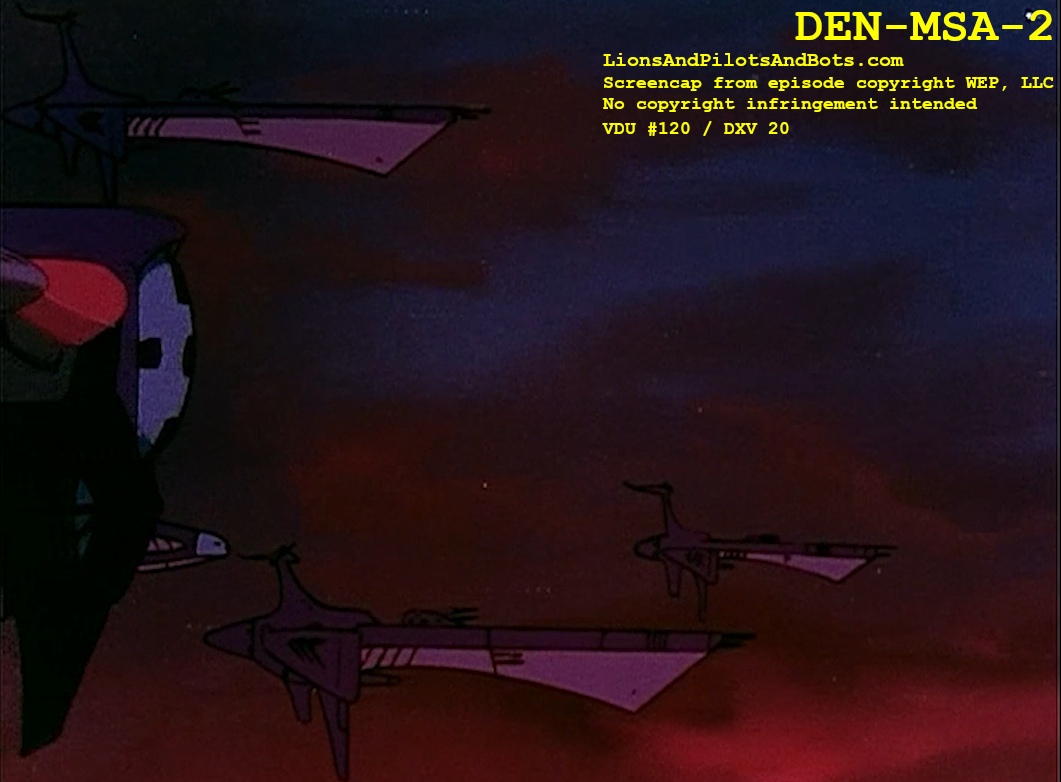
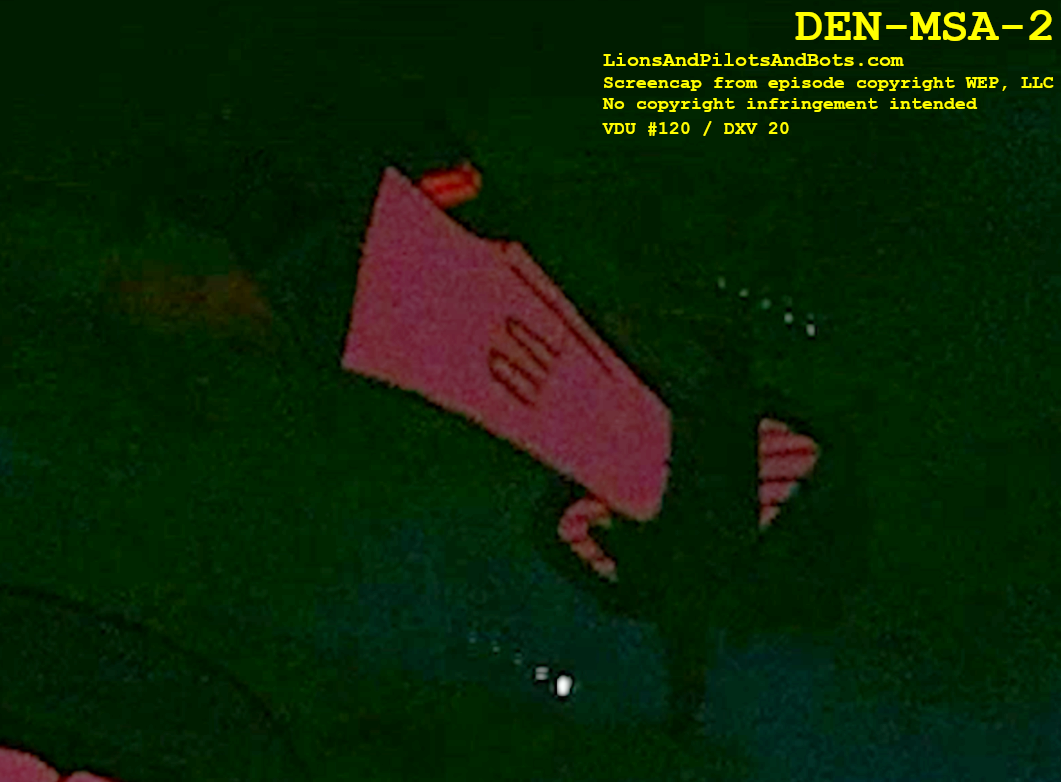
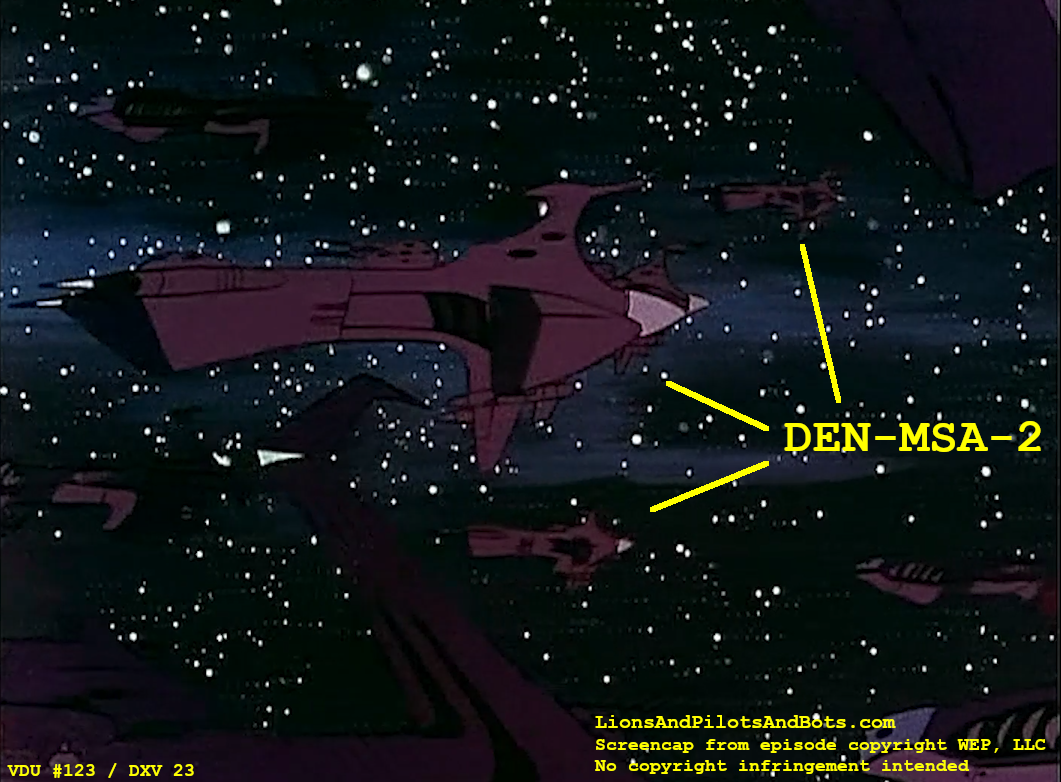
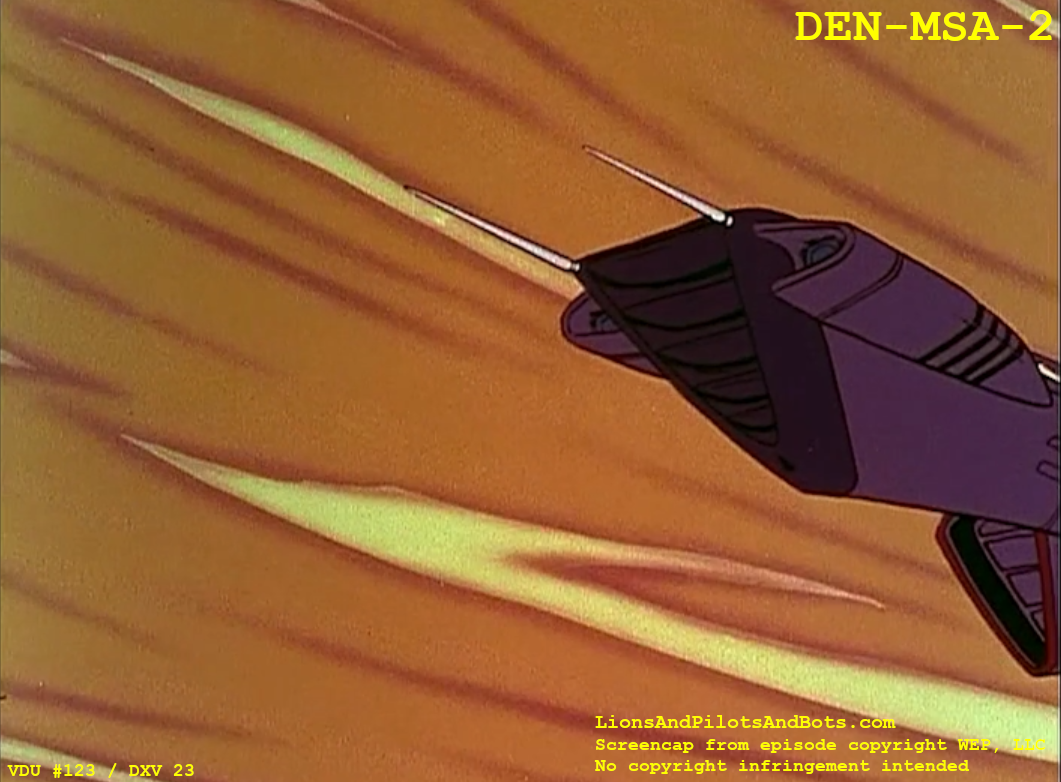
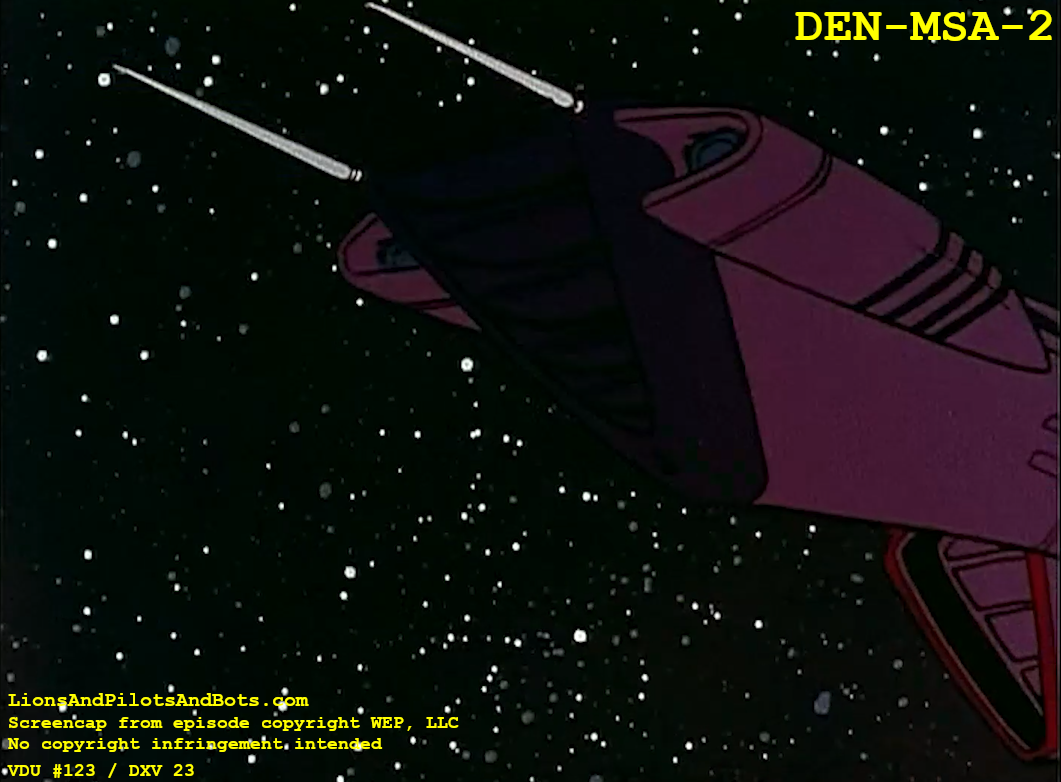
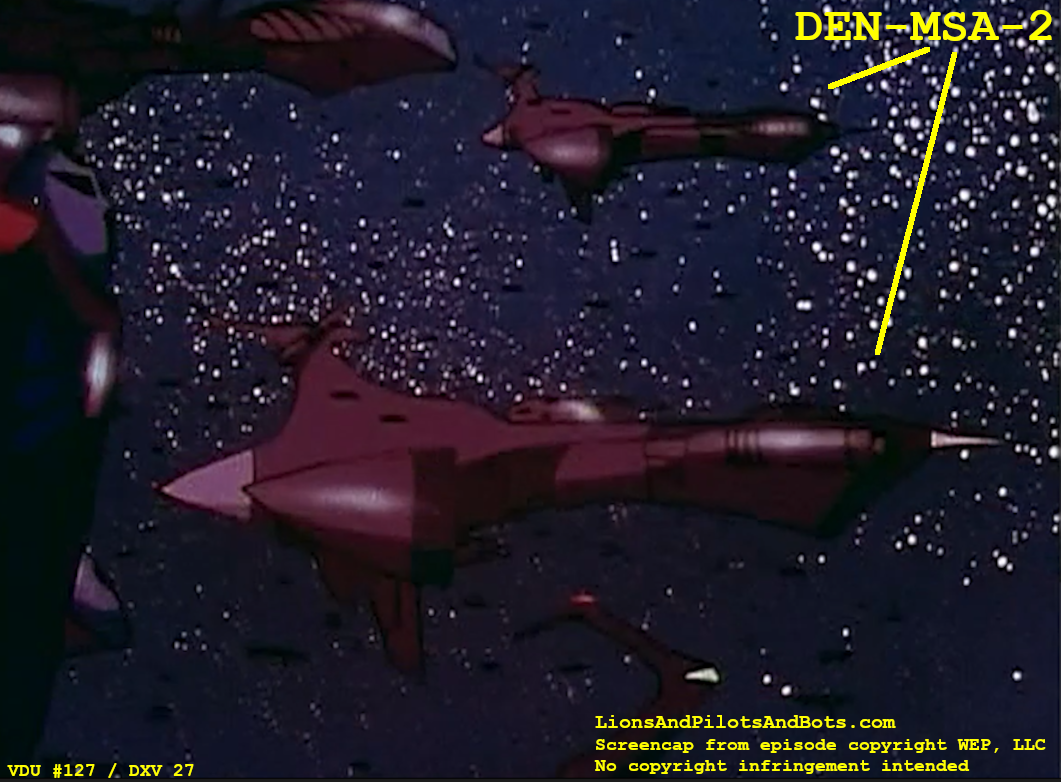
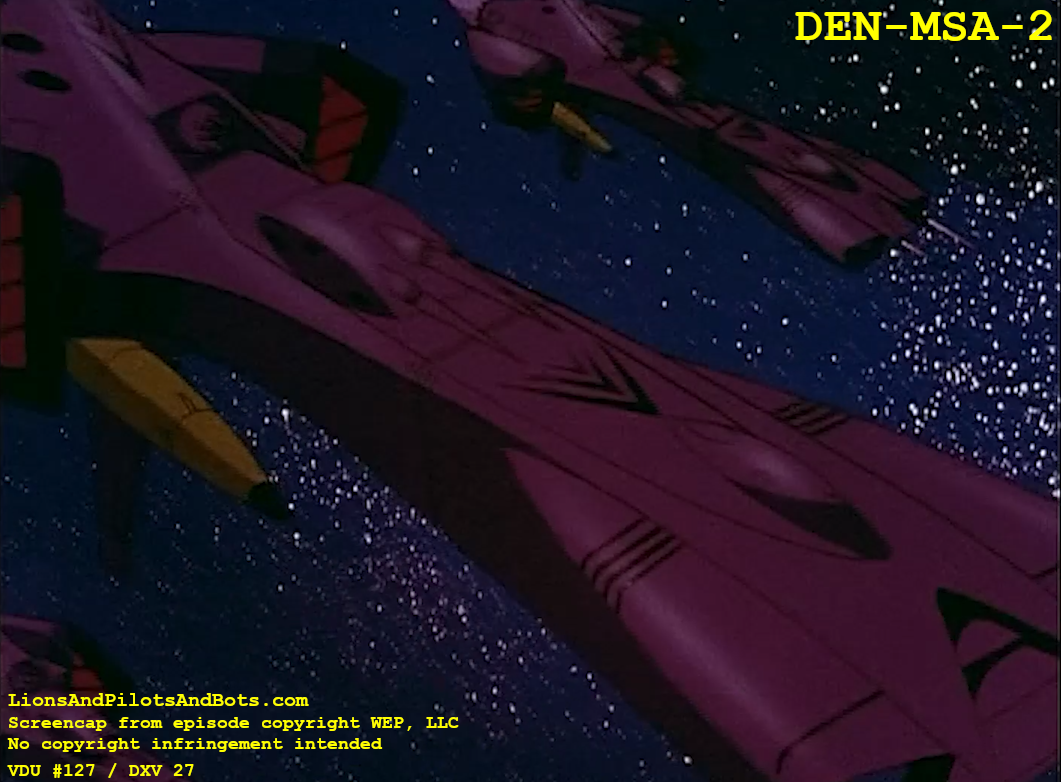
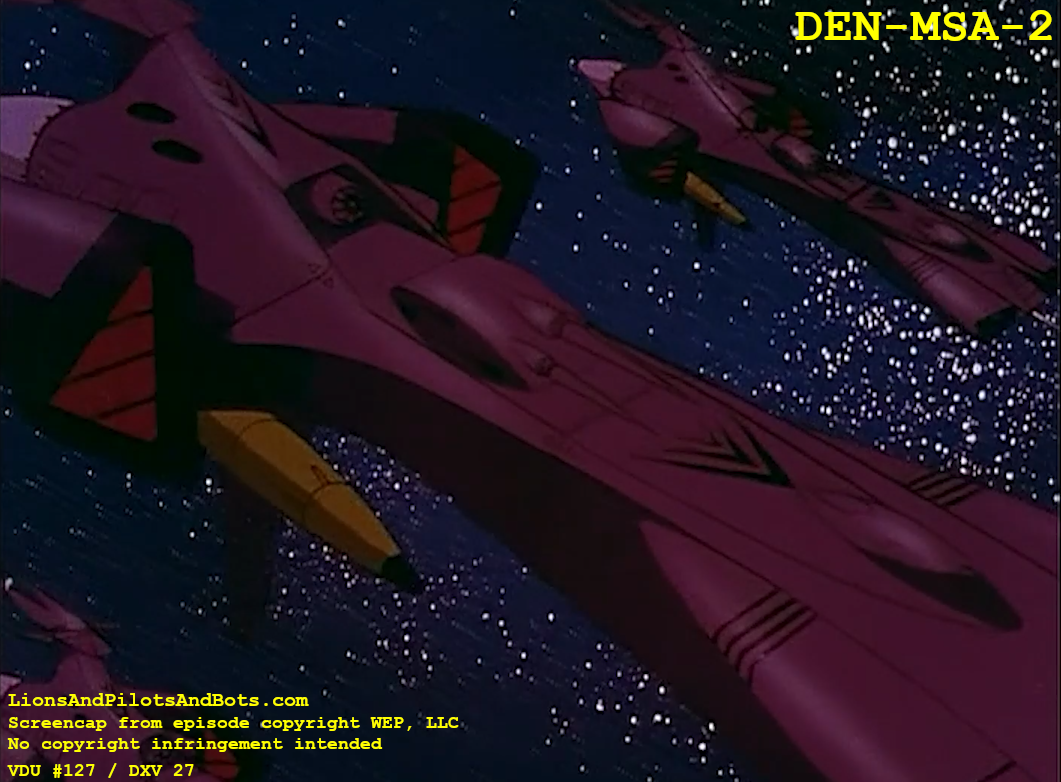
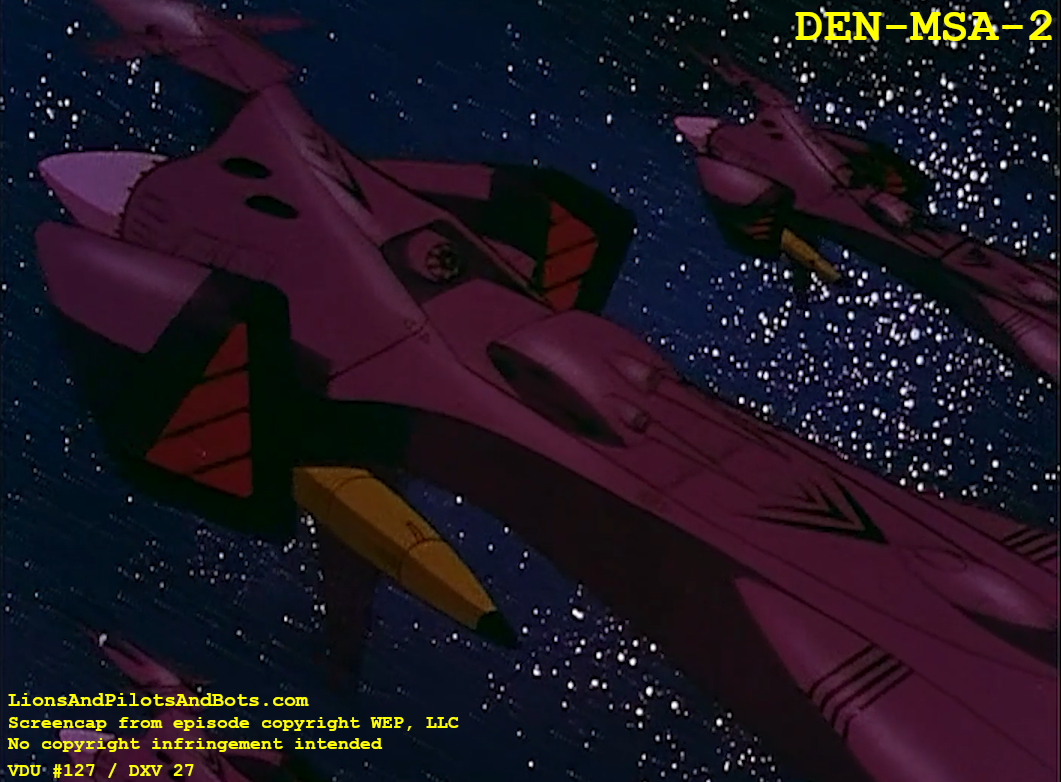
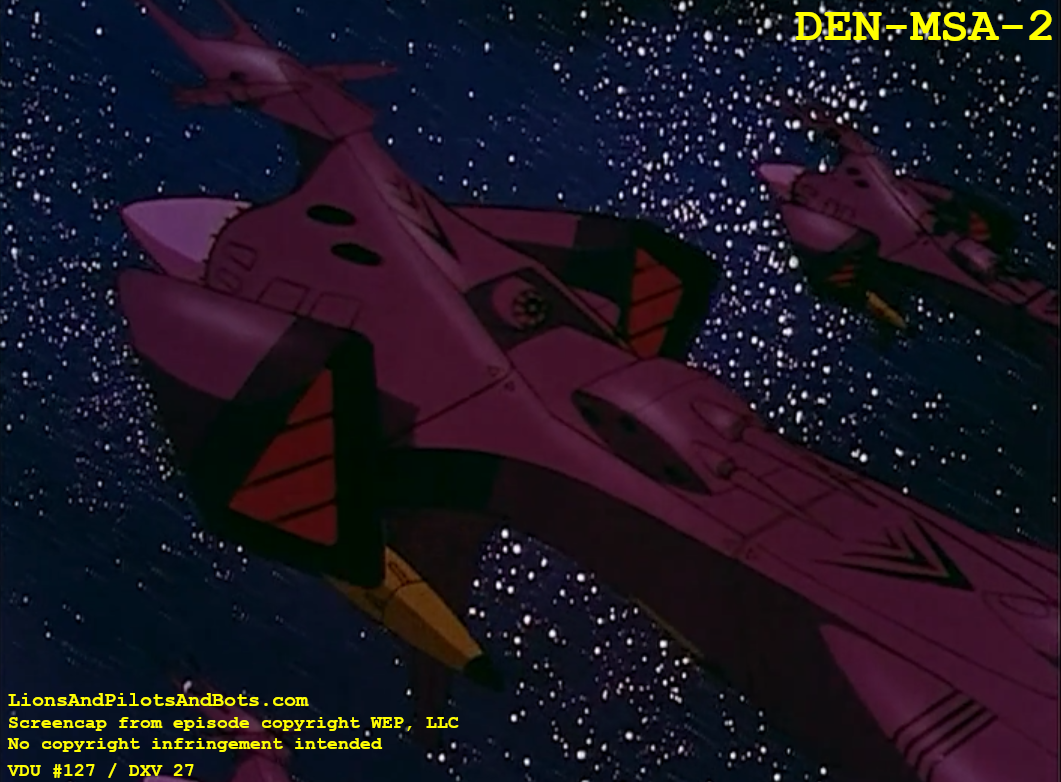
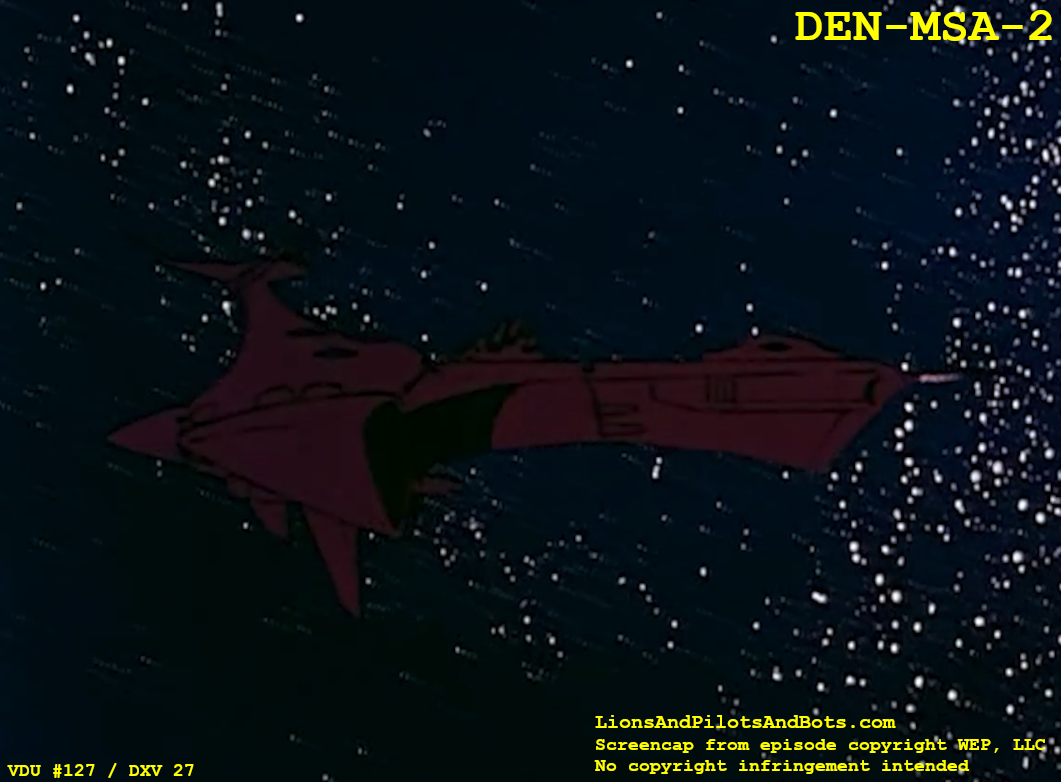
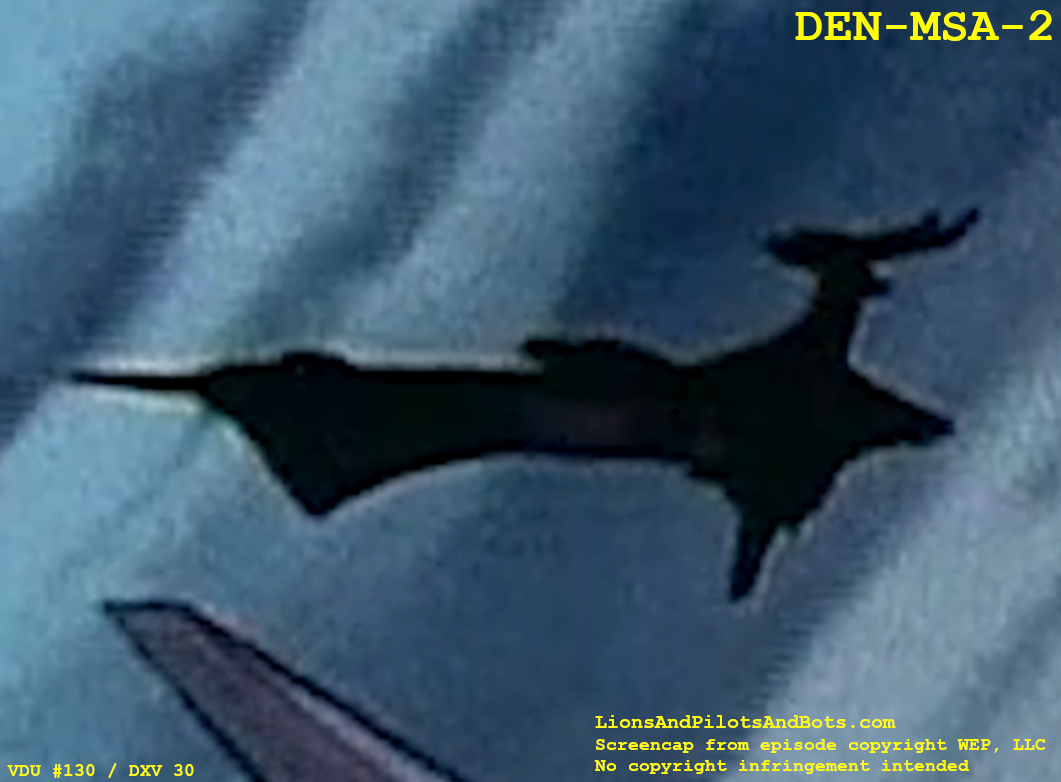
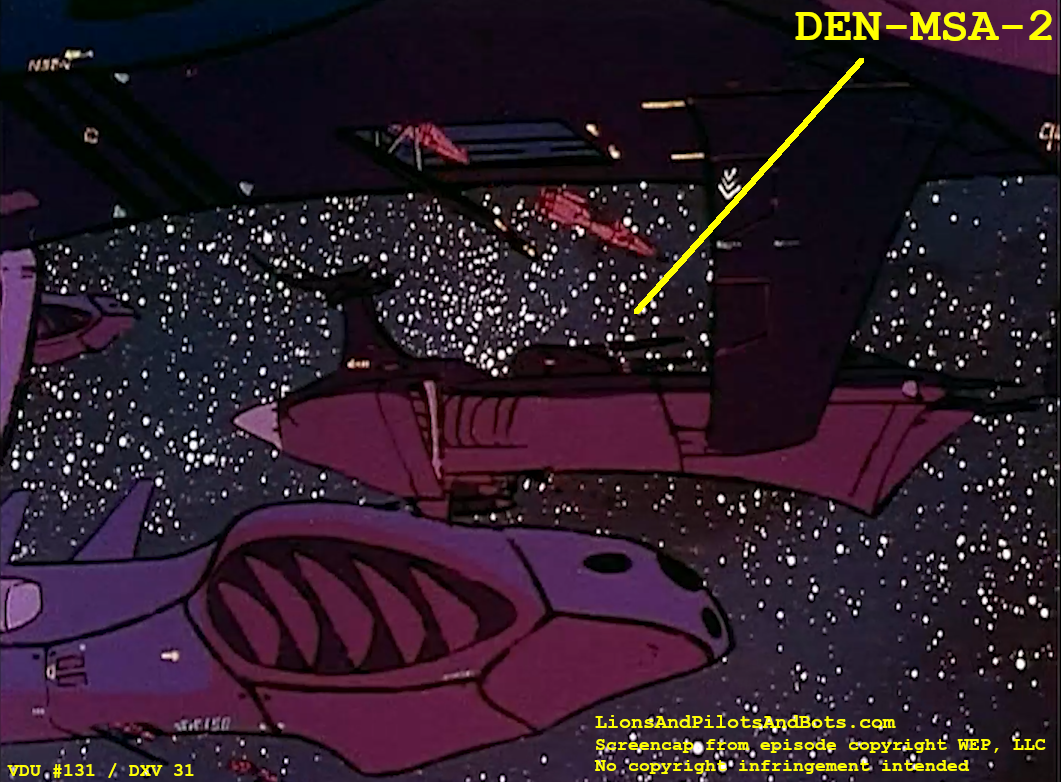
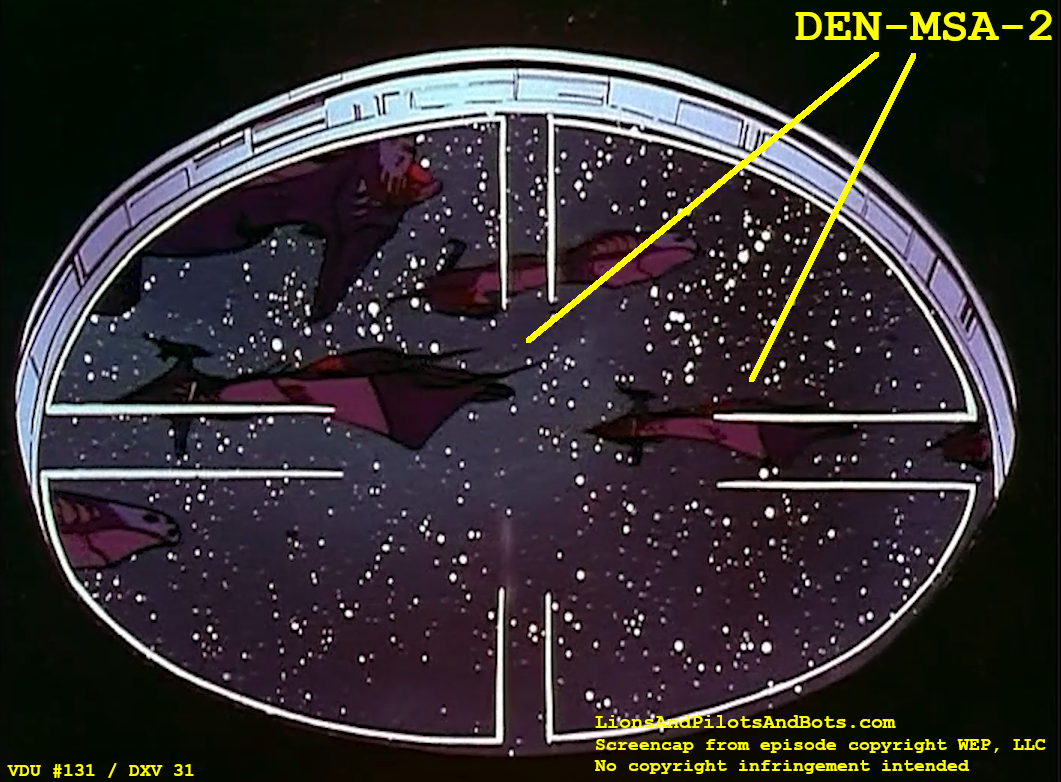
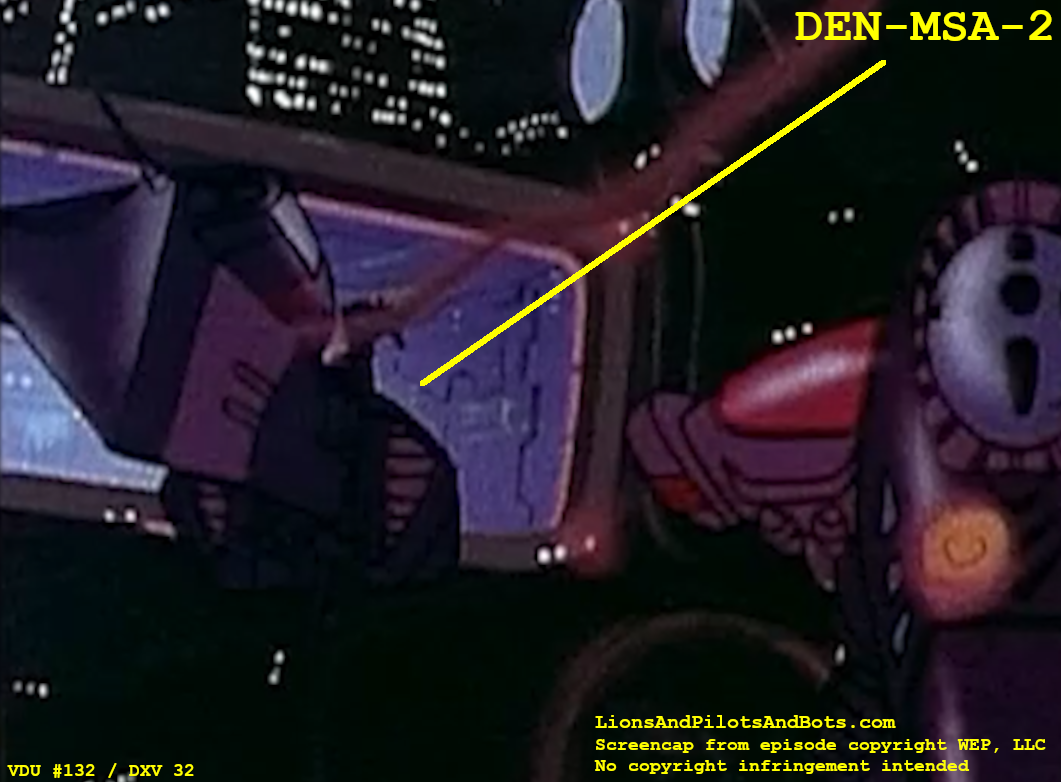
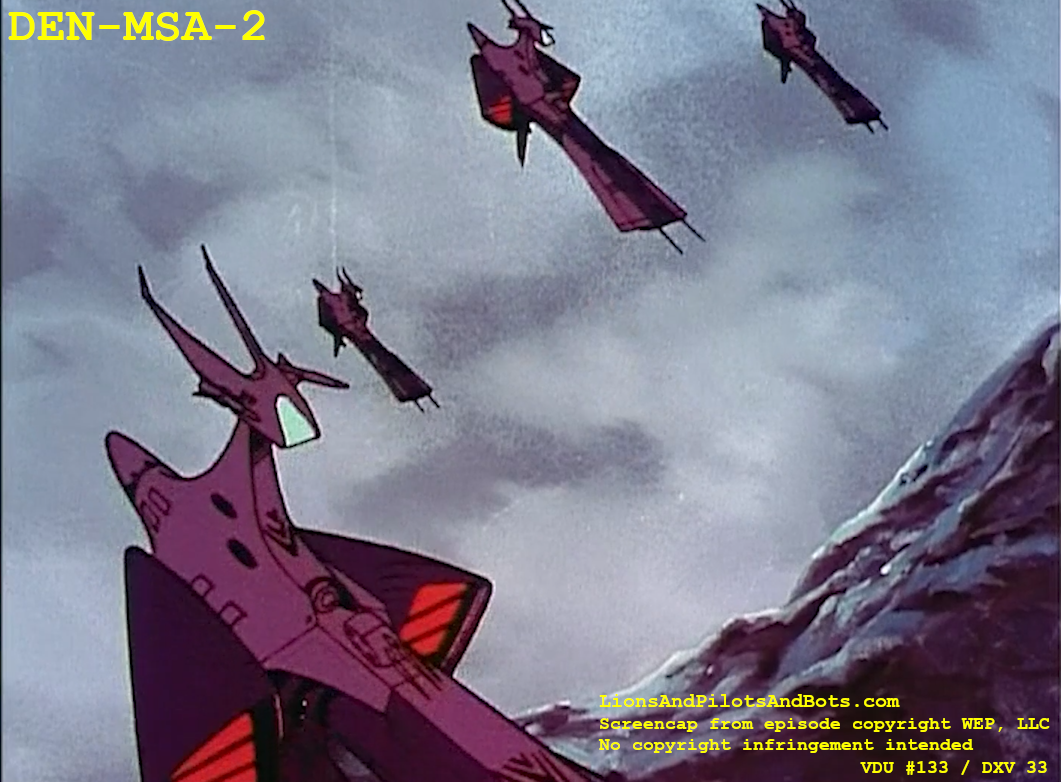
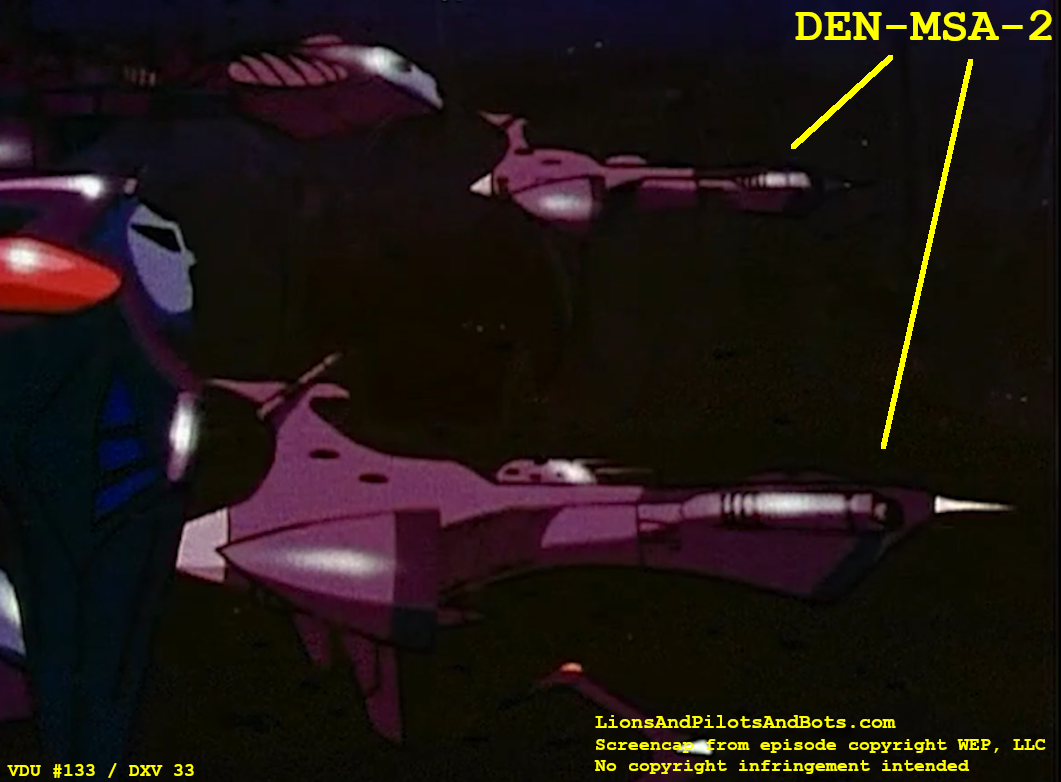
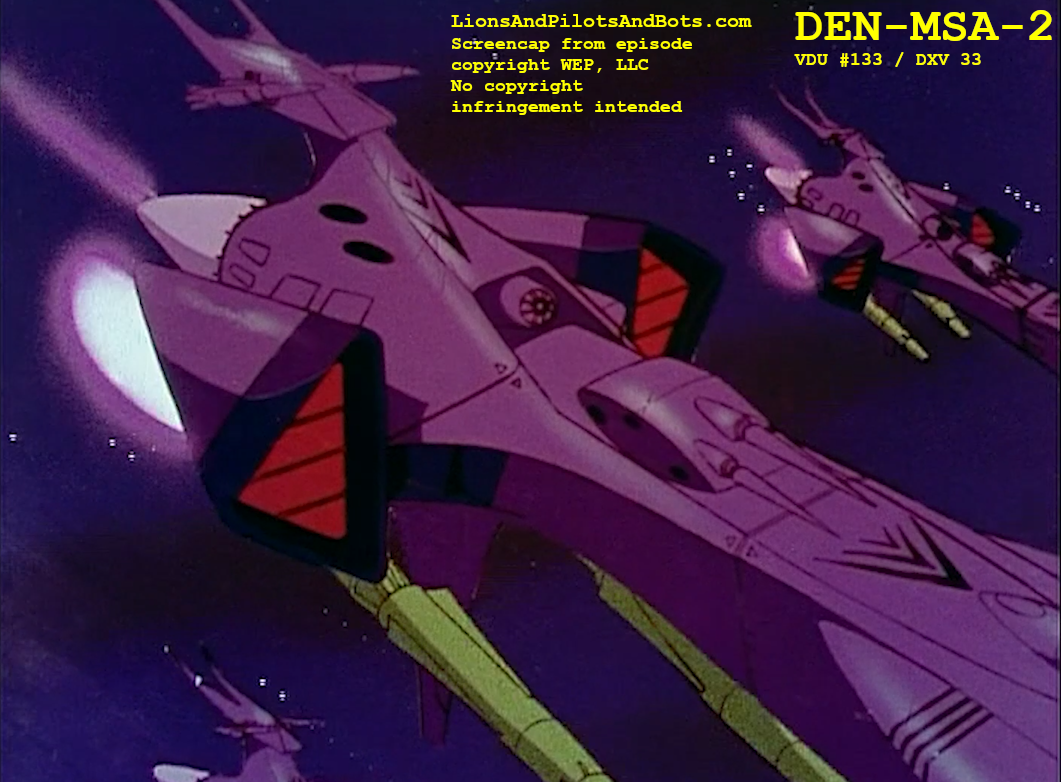
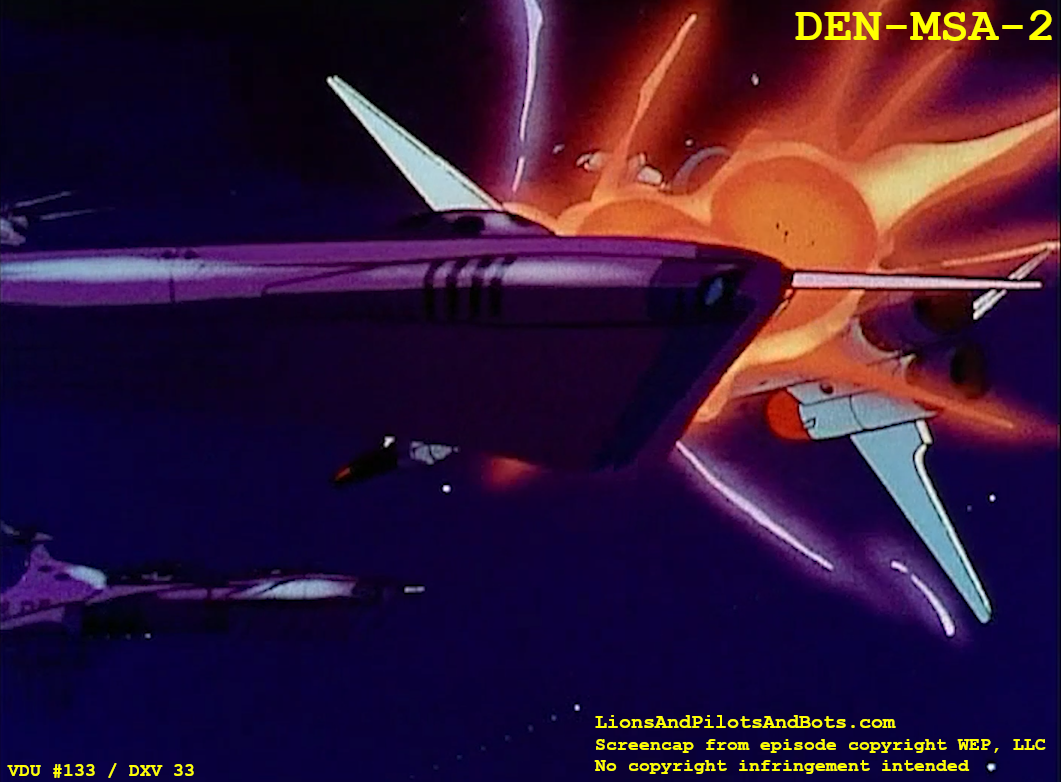
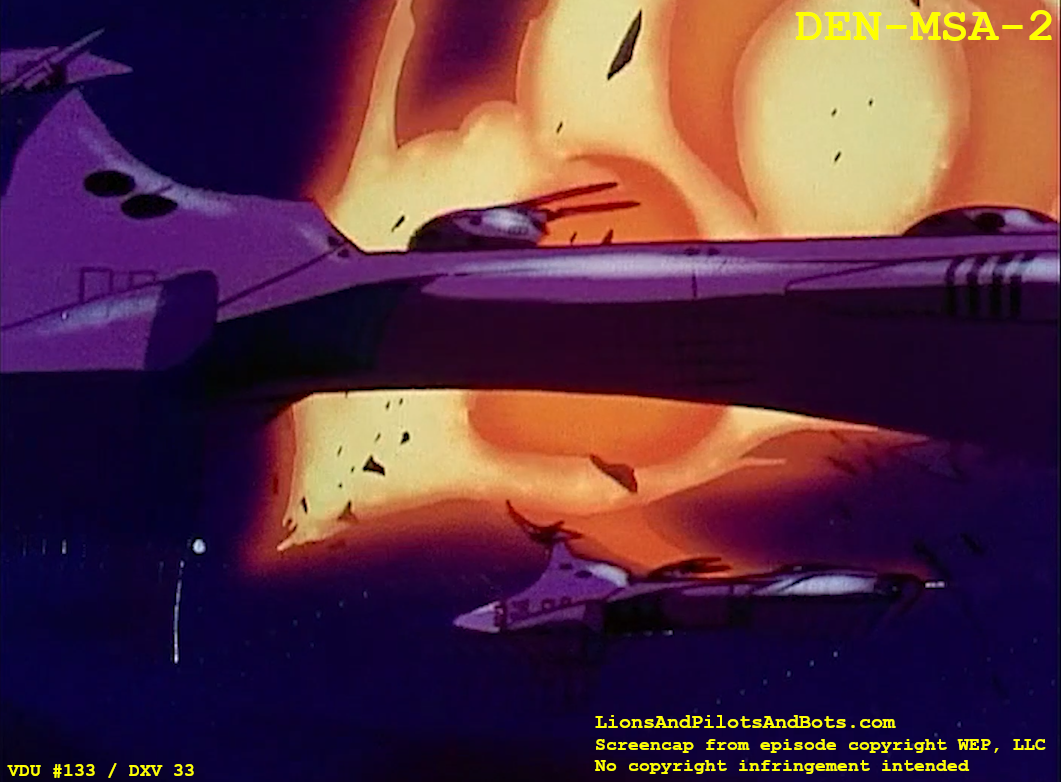
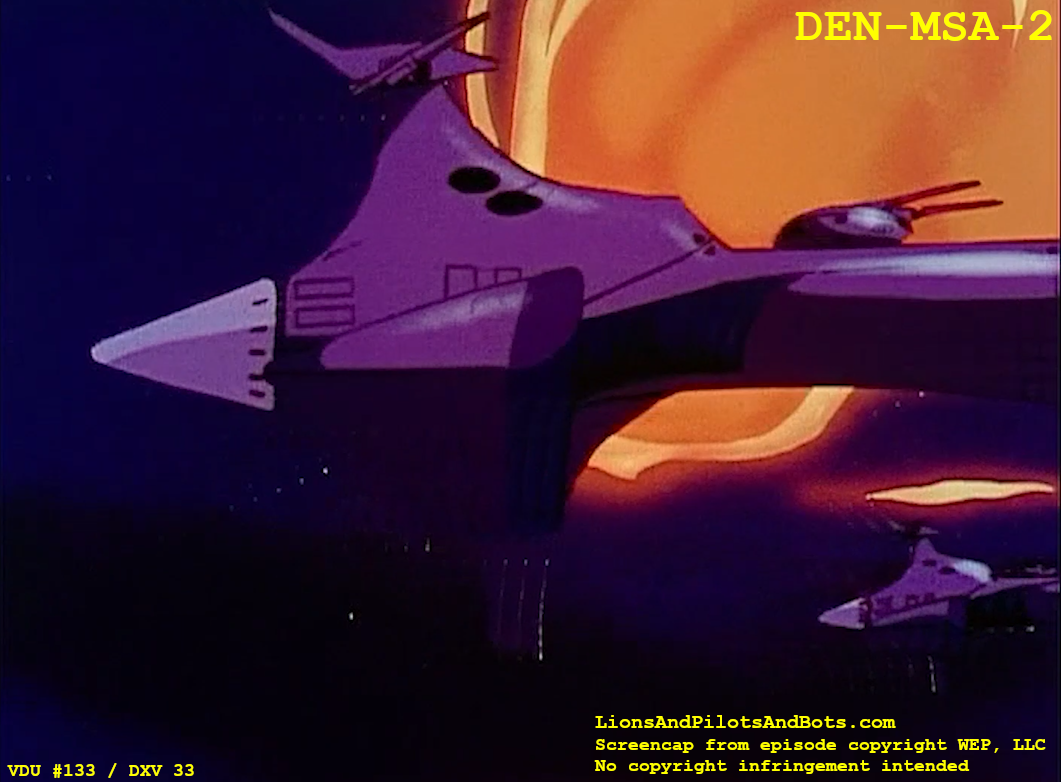
DEN-MSA-2 ships are presumably smaller than the DEN-MSX-1 ships that they typically accompany. These ships’ last appearance is the same episode as those of DEN-MSX-1 and DEN-MSA-1 ships.
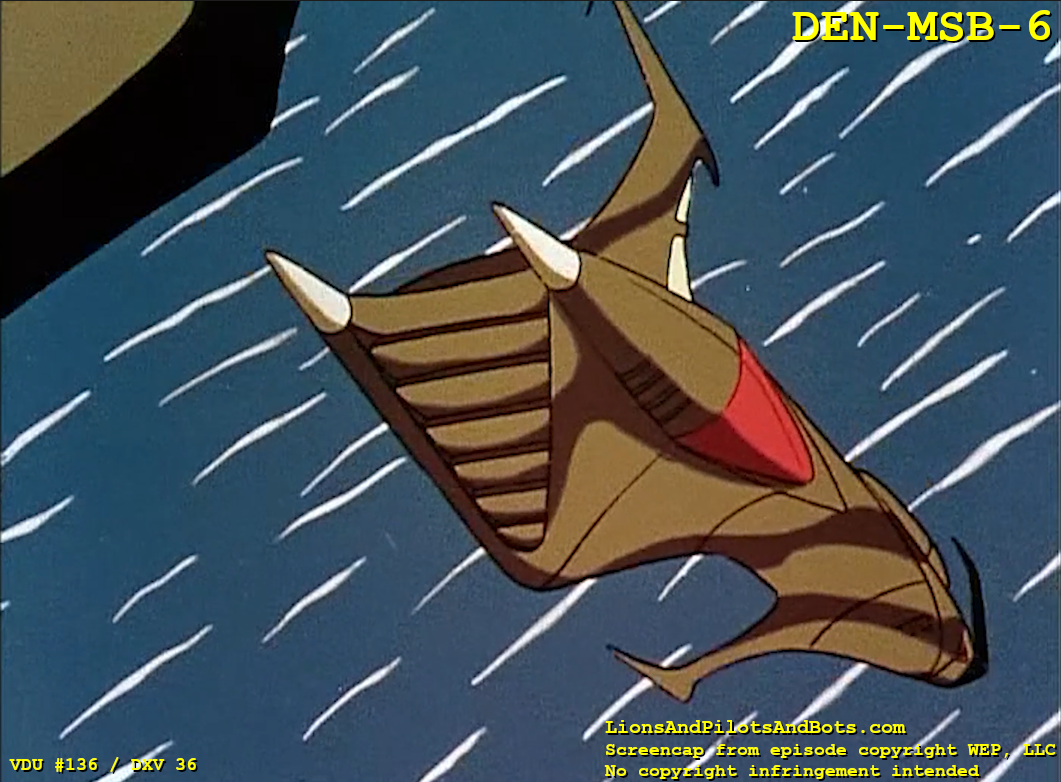
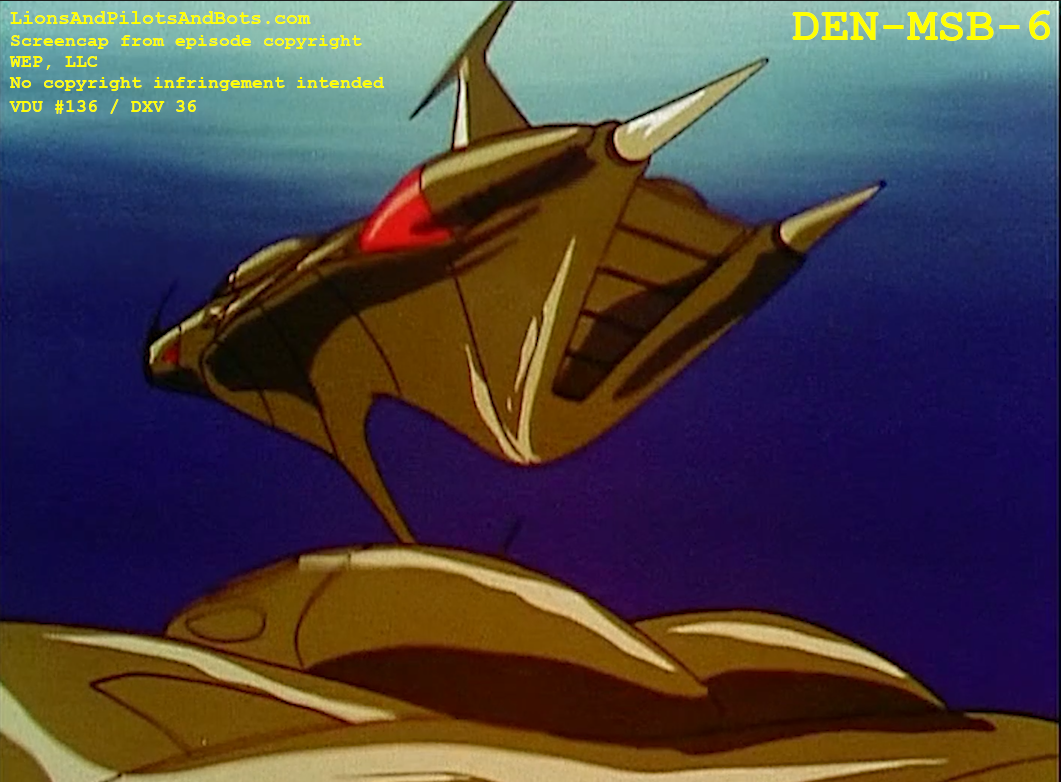
DEN-MSA-2 ships have twin spikes that protrude forward from the bow. They also have a large wedge that protrudes ventrally from the fuselage.
DEN-MSA-2 ships seem to be used primarily on the front lines.
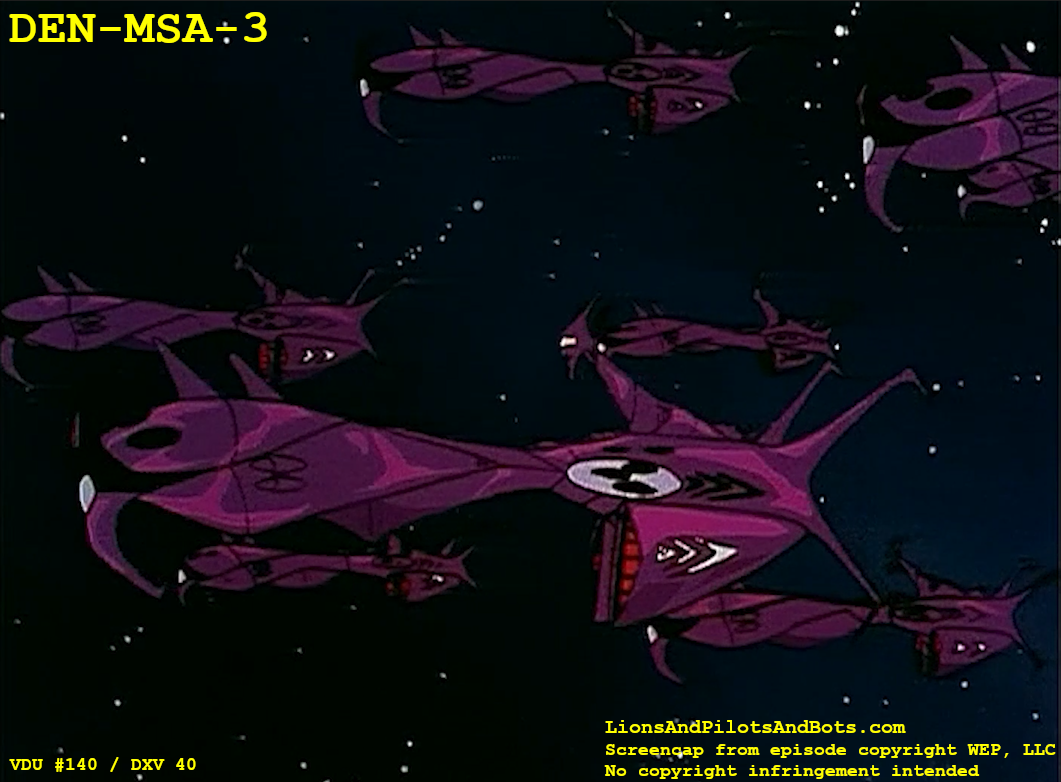
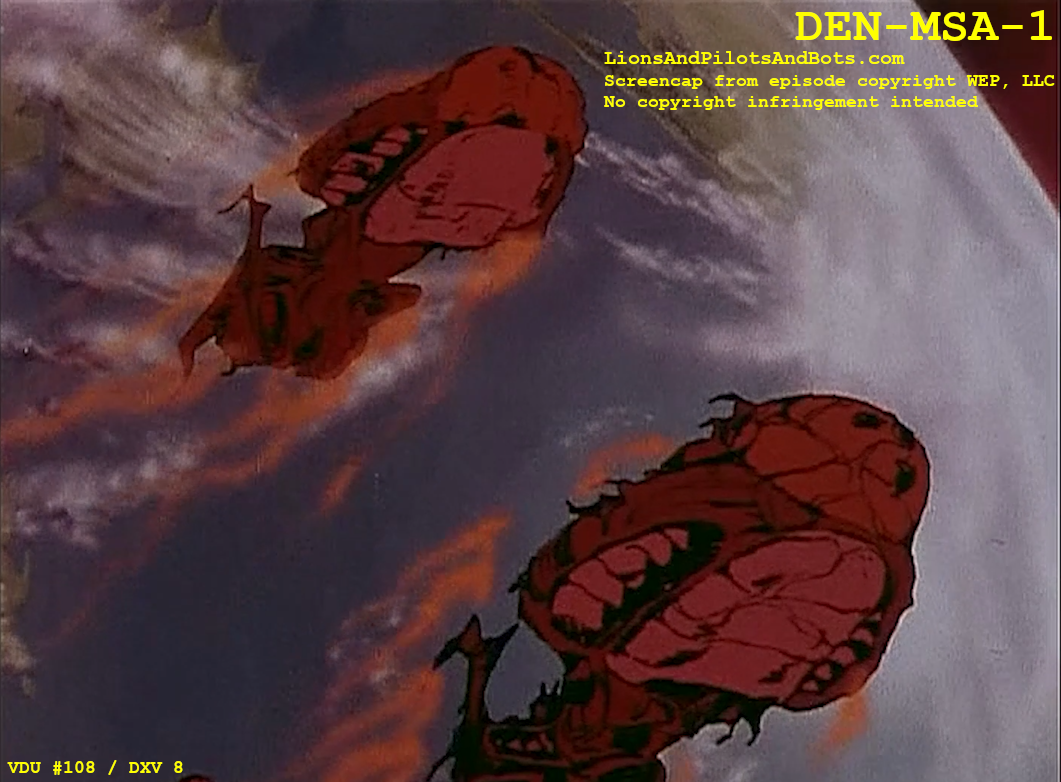
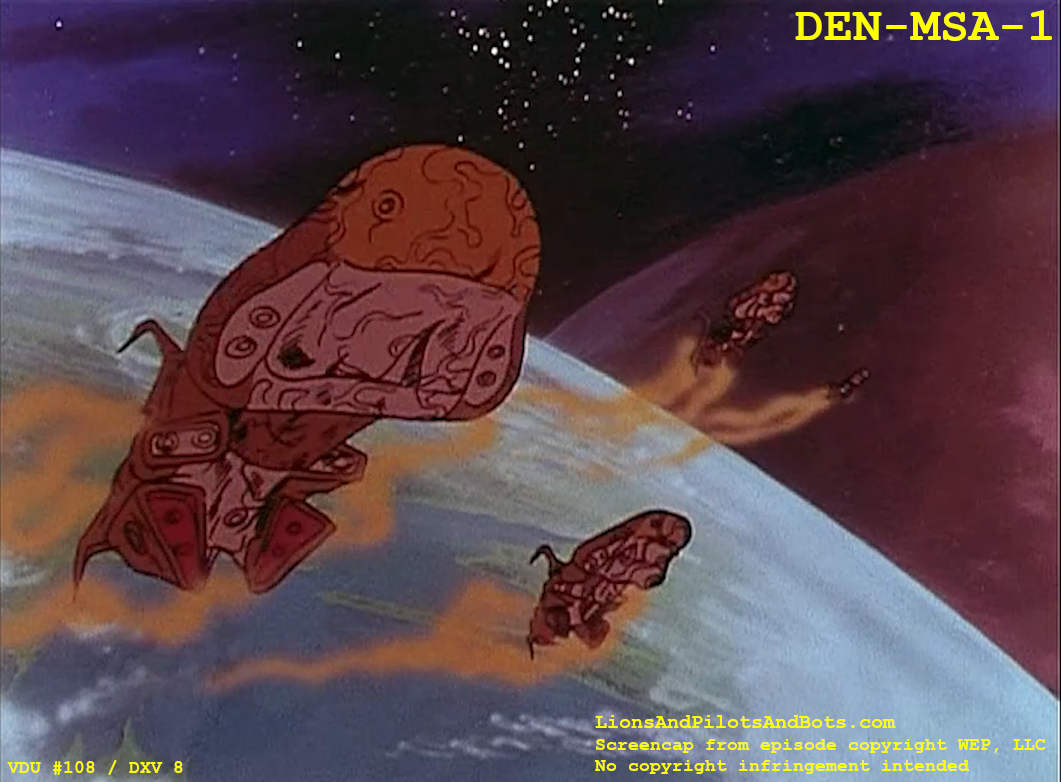
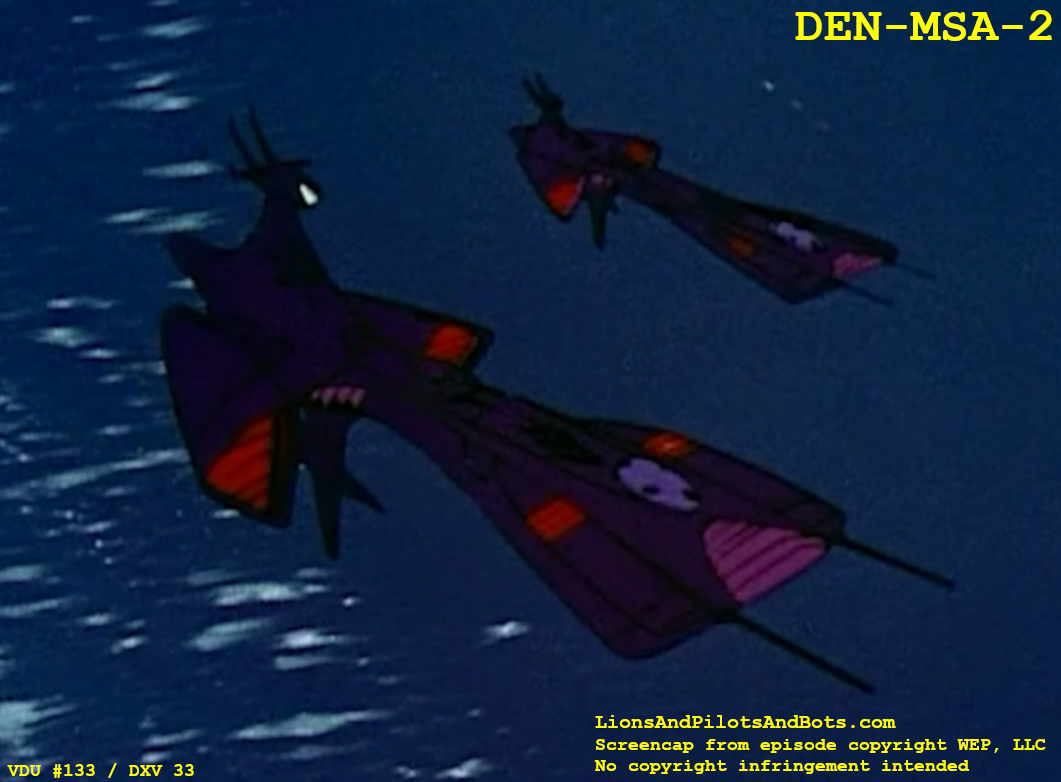
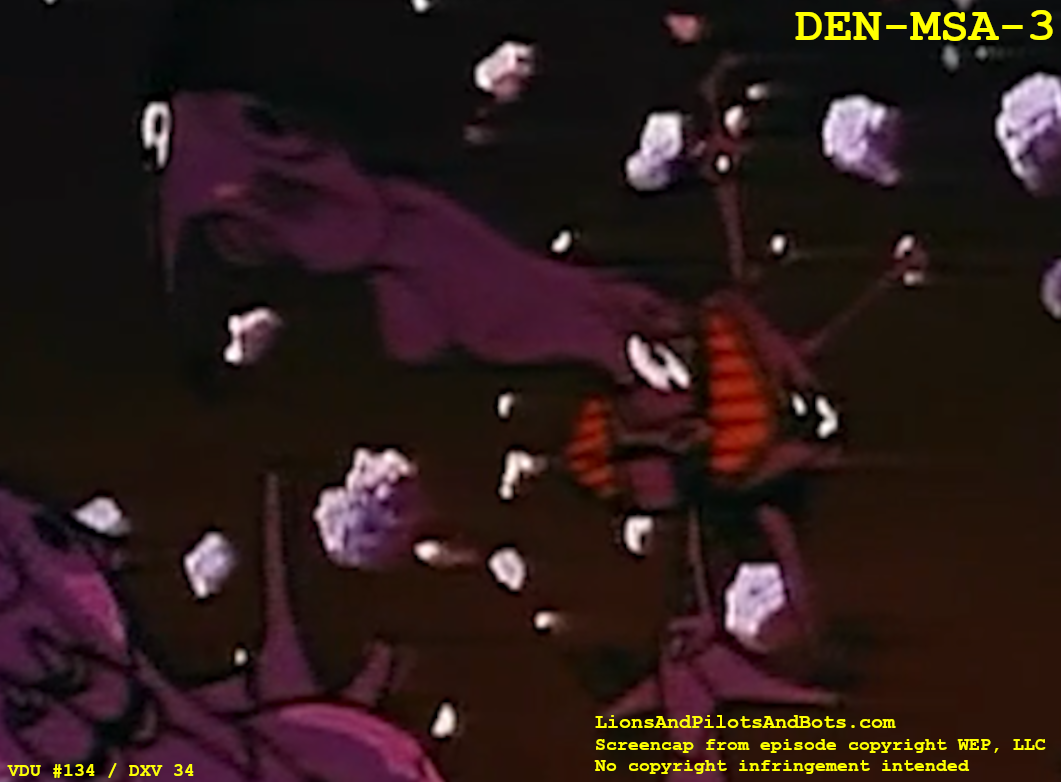
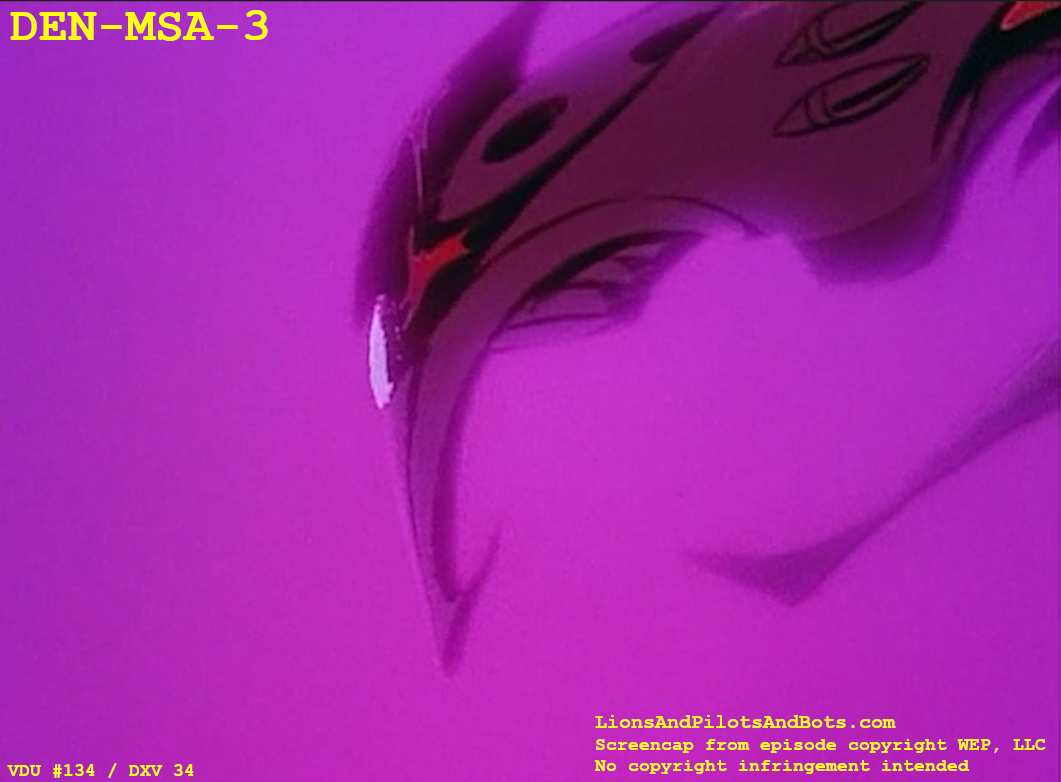
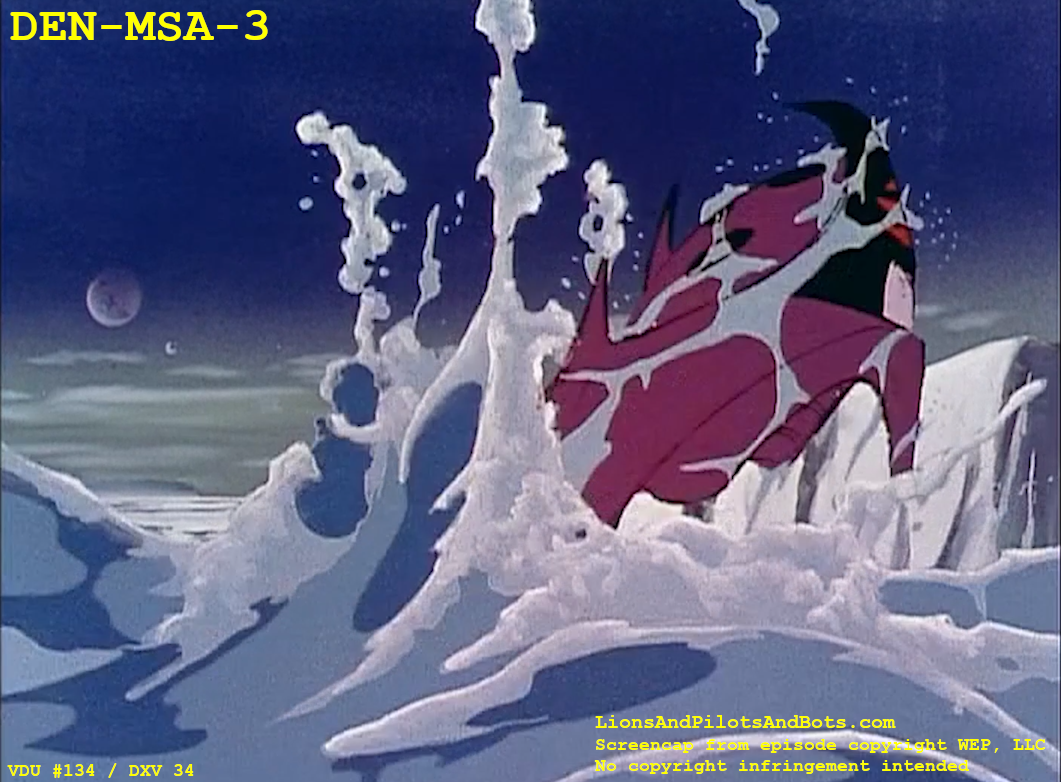
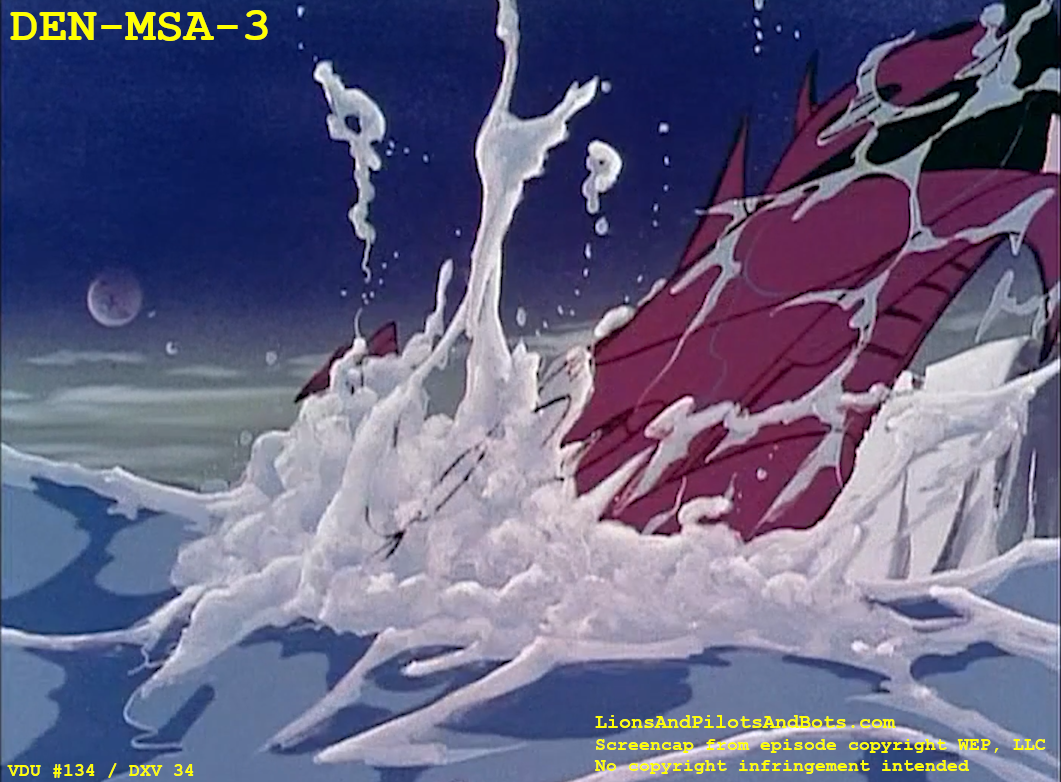
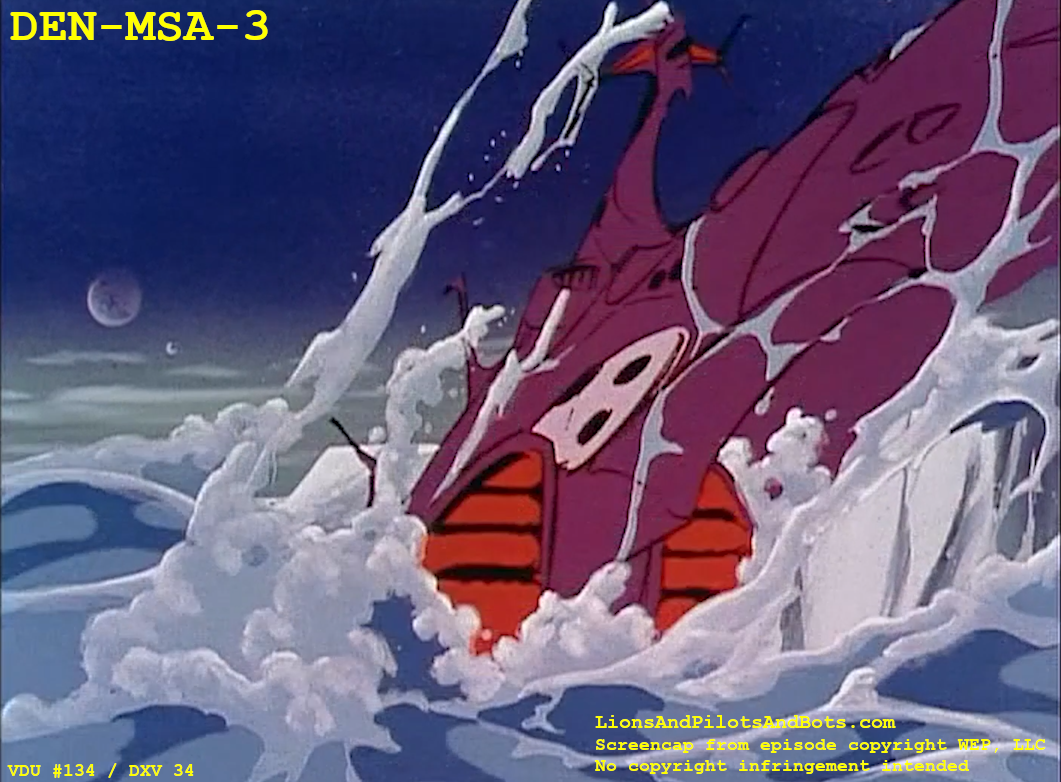
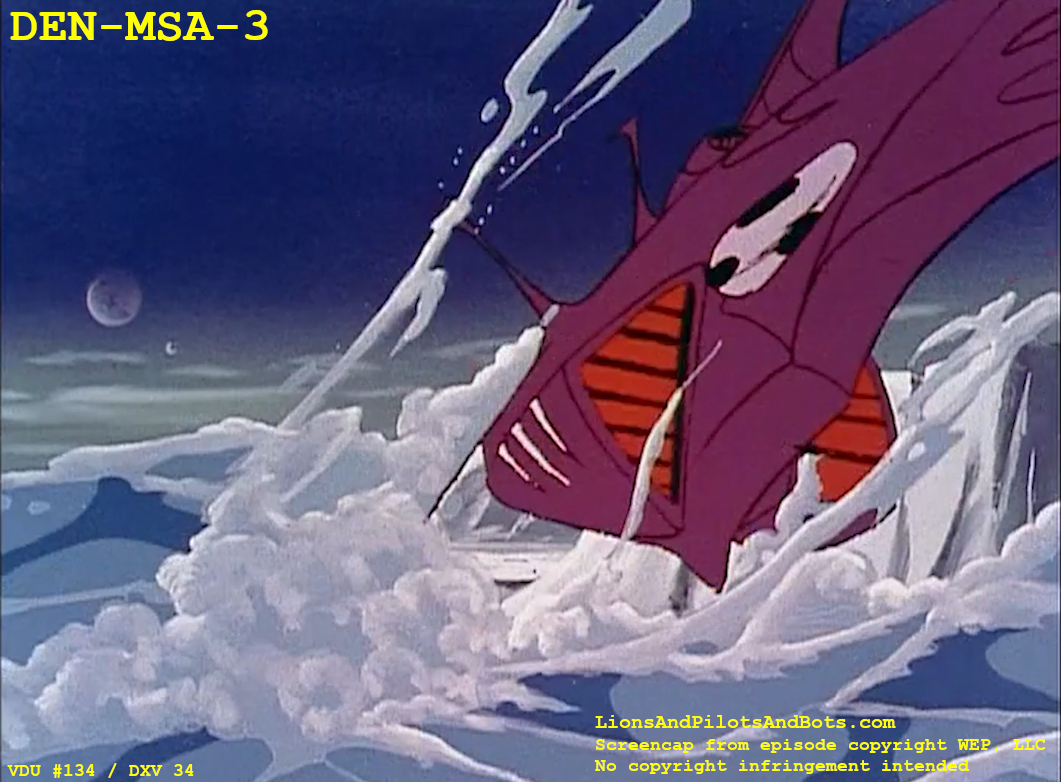
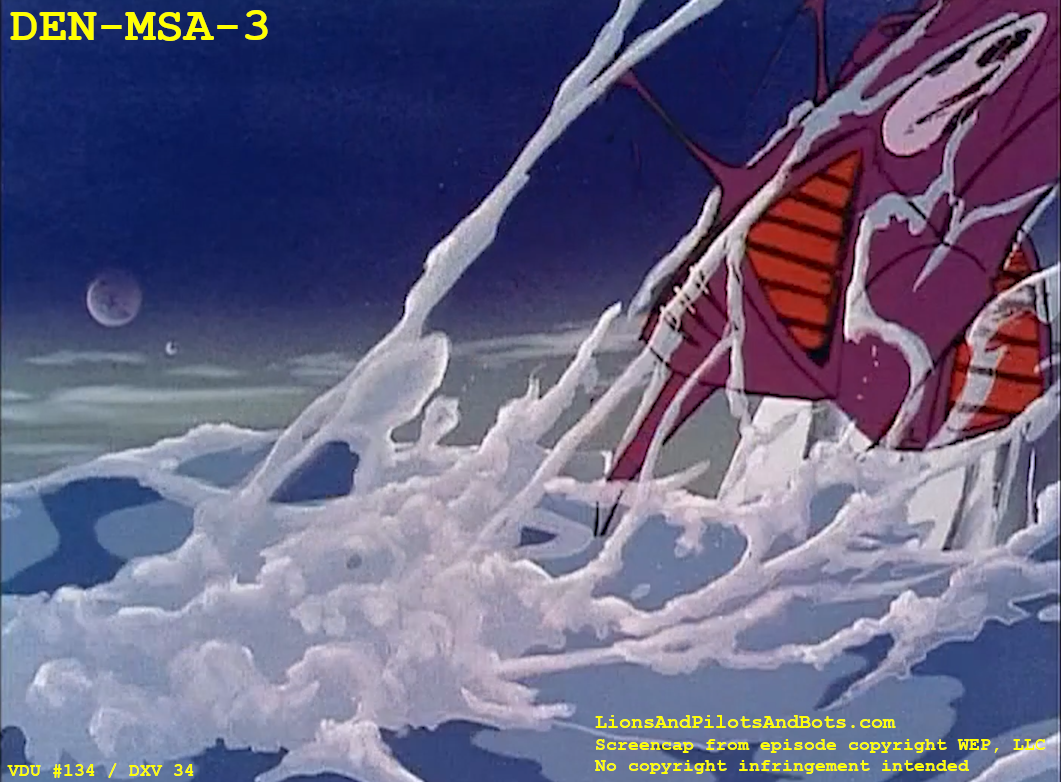
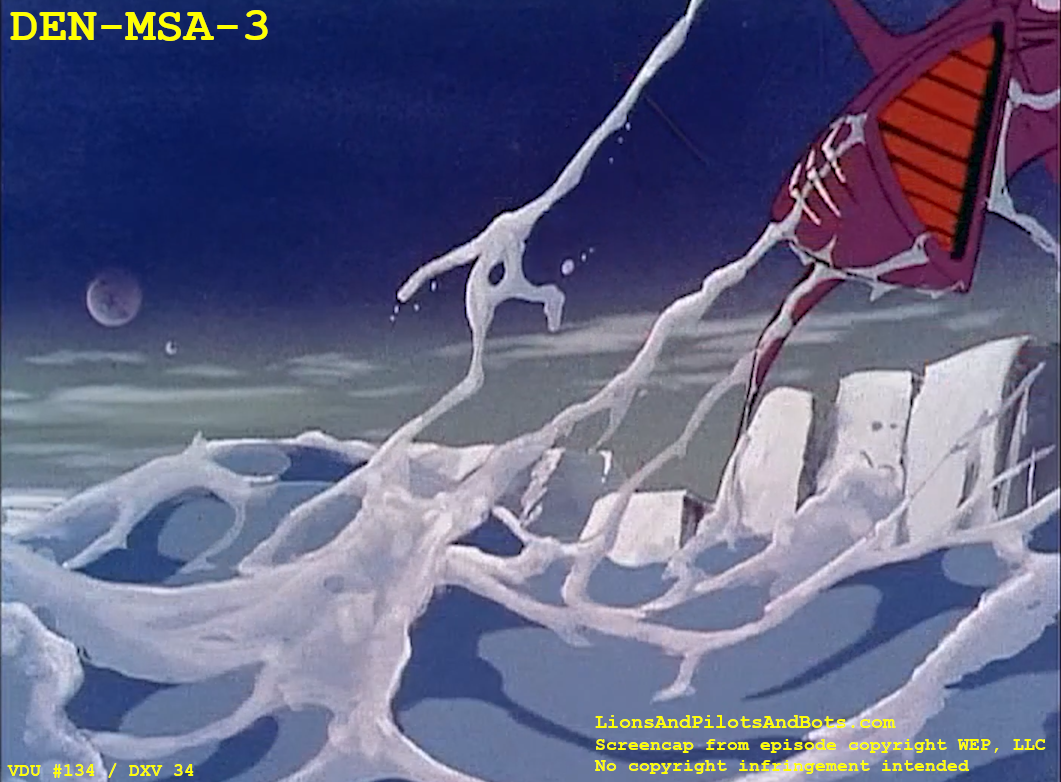
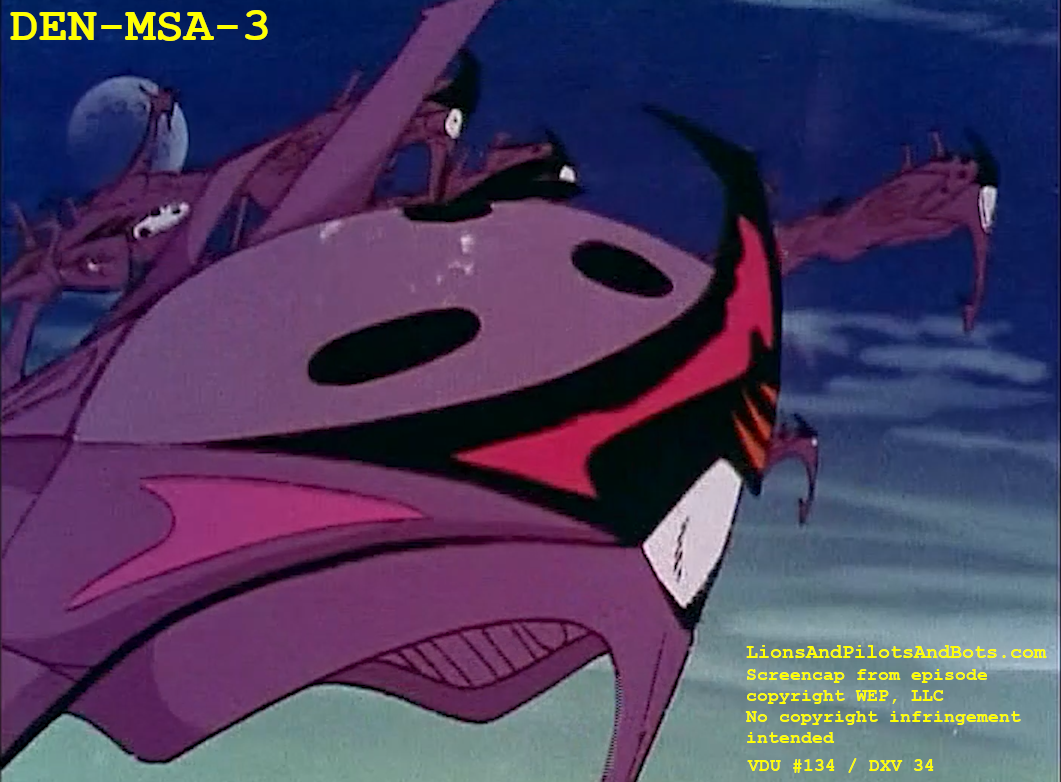
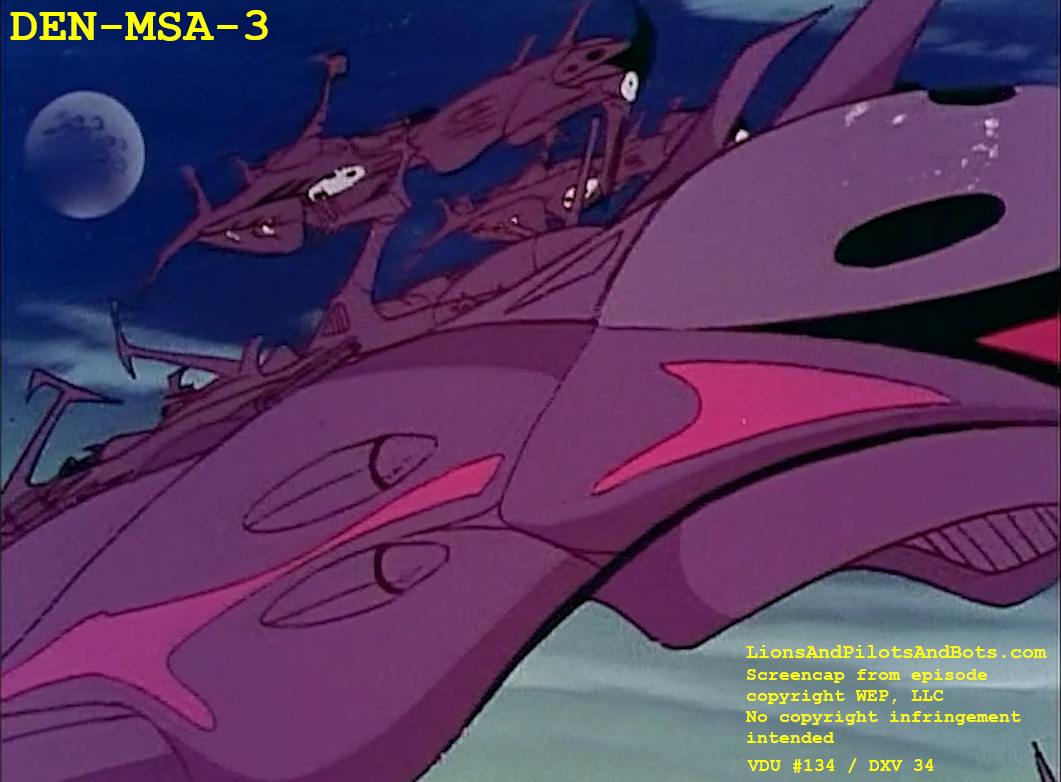
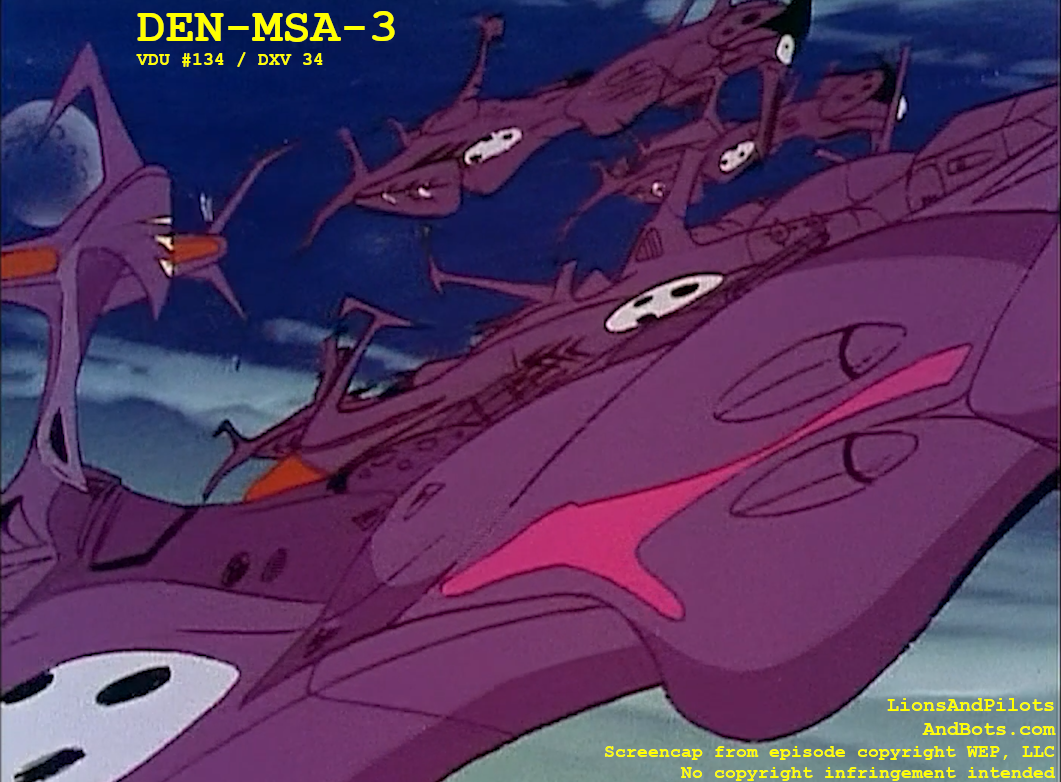
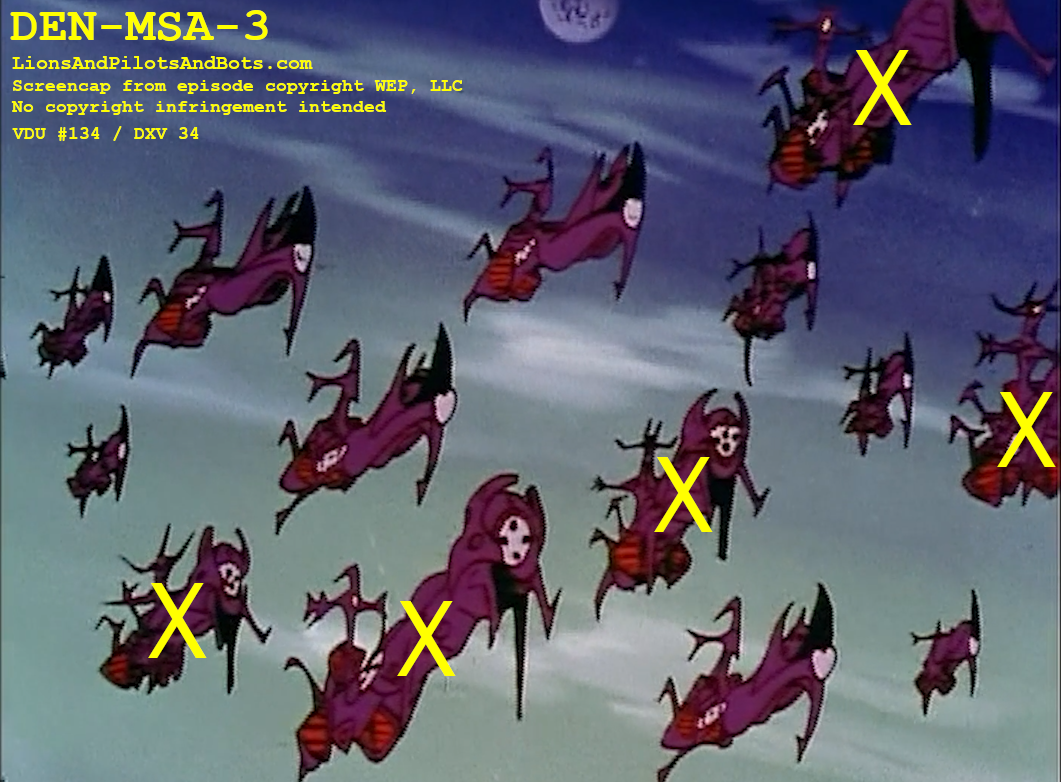
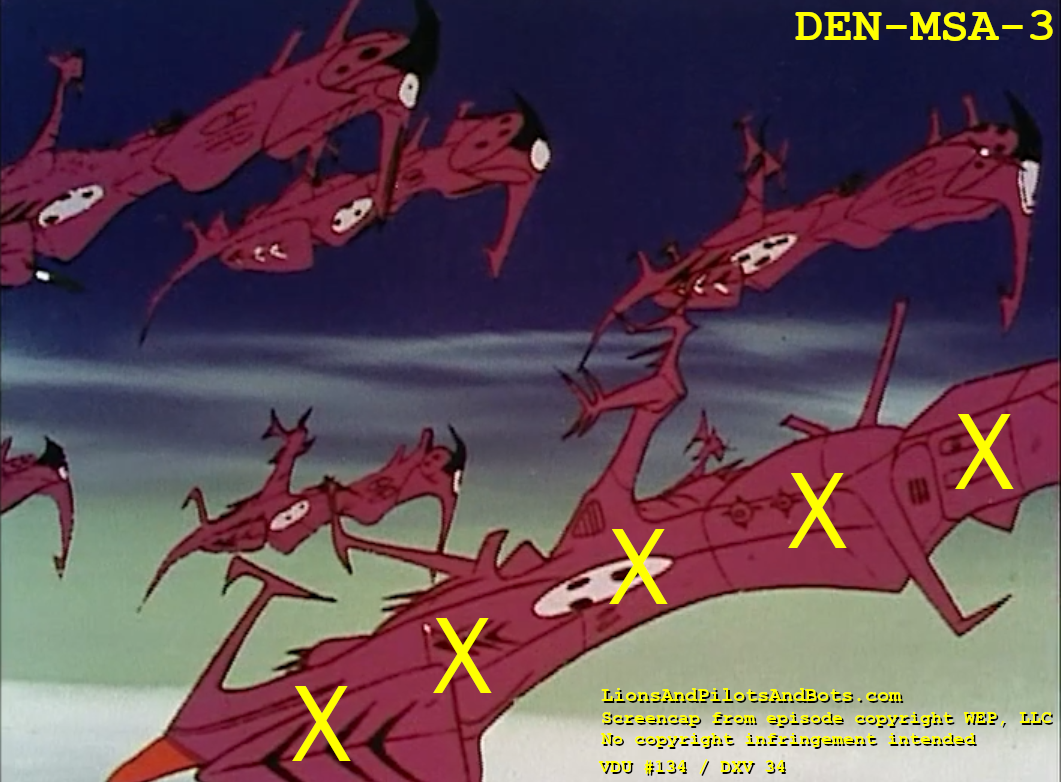
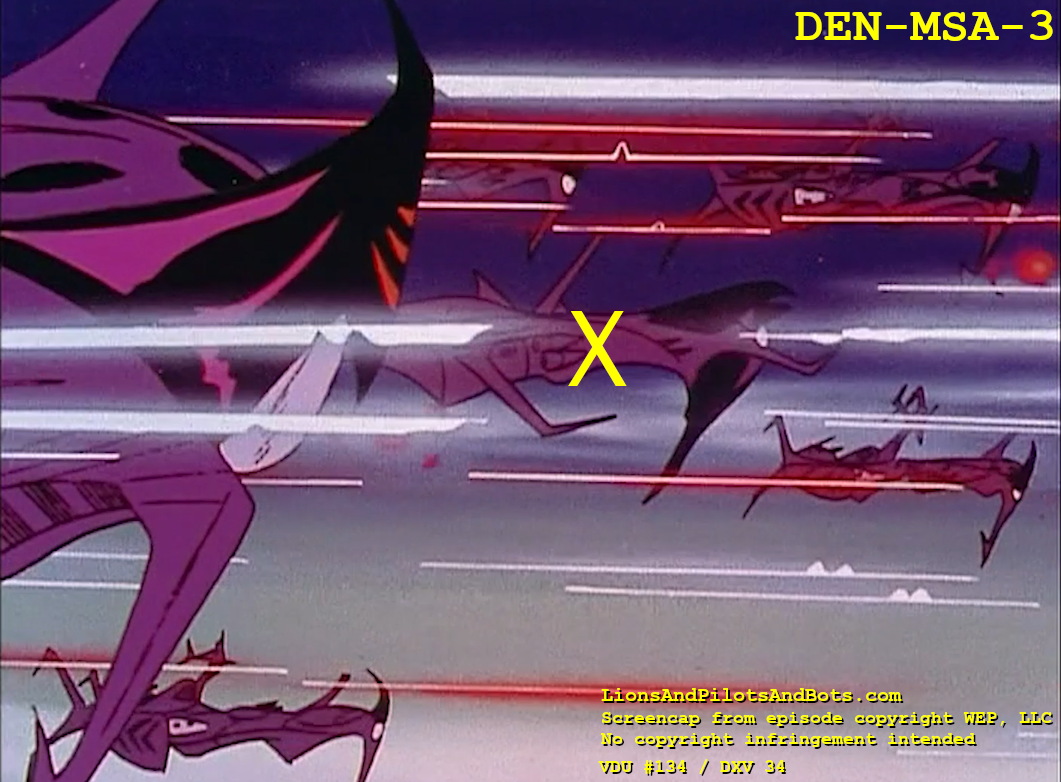
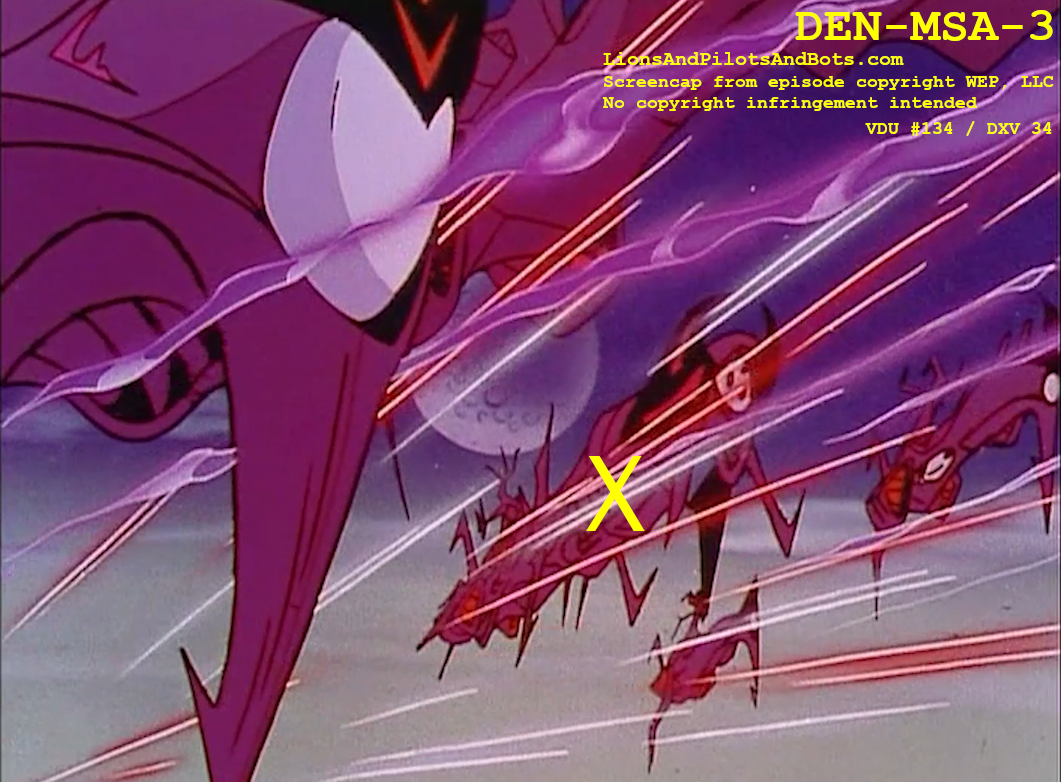
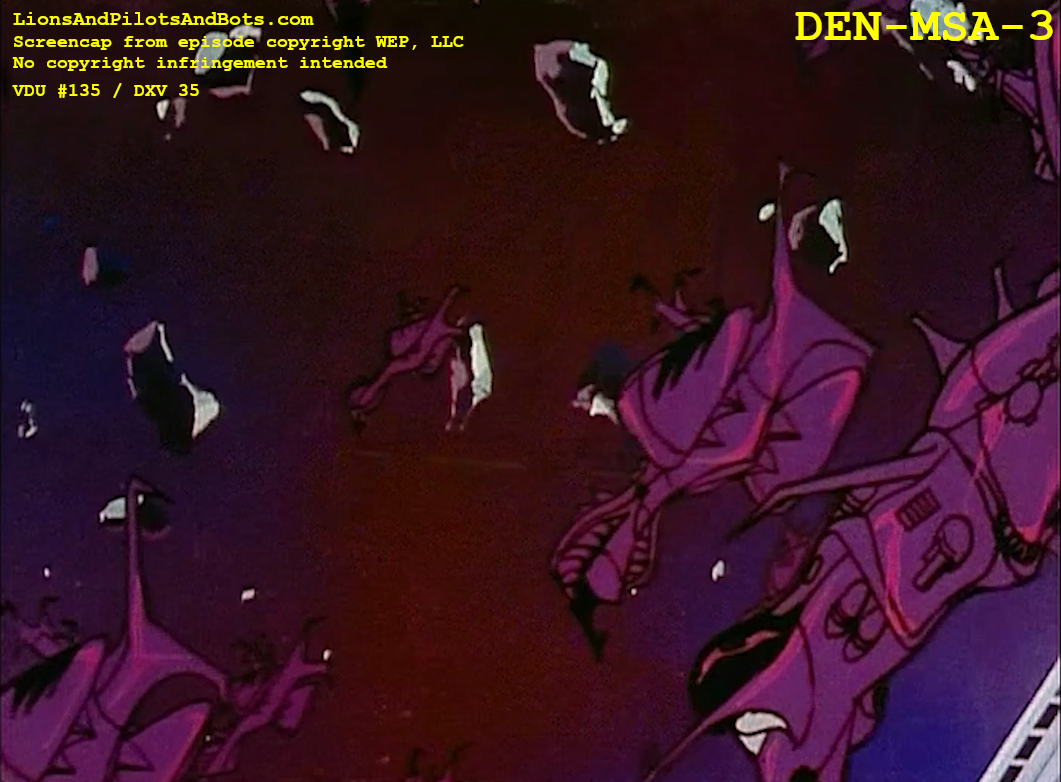
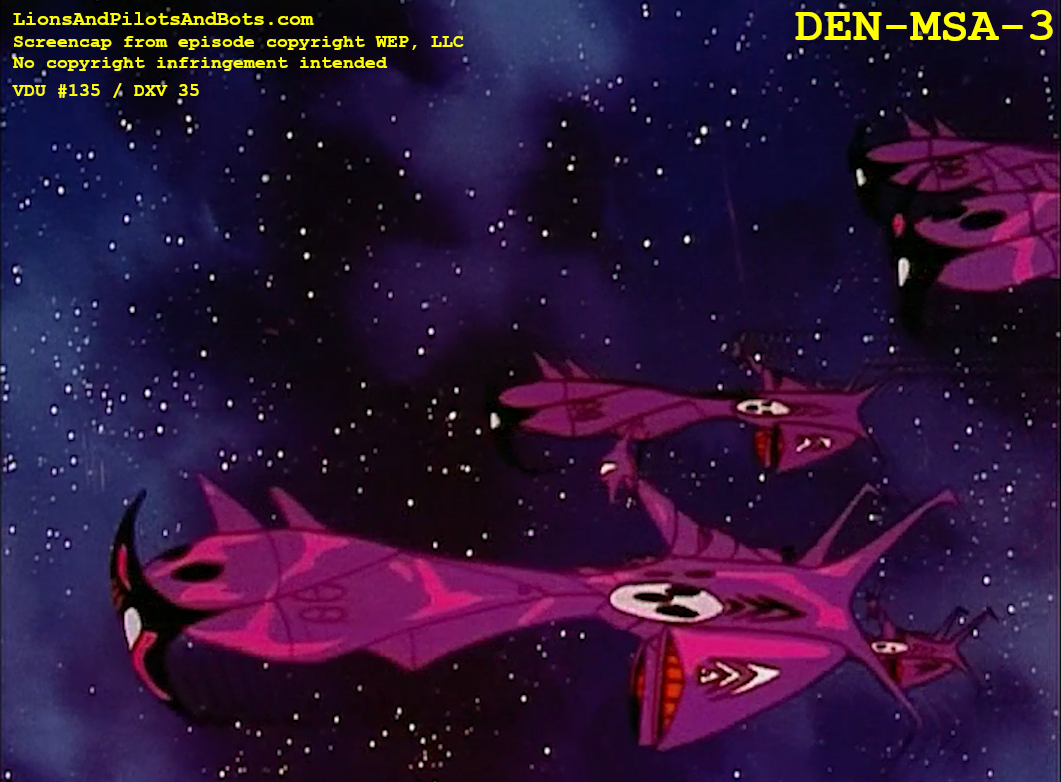
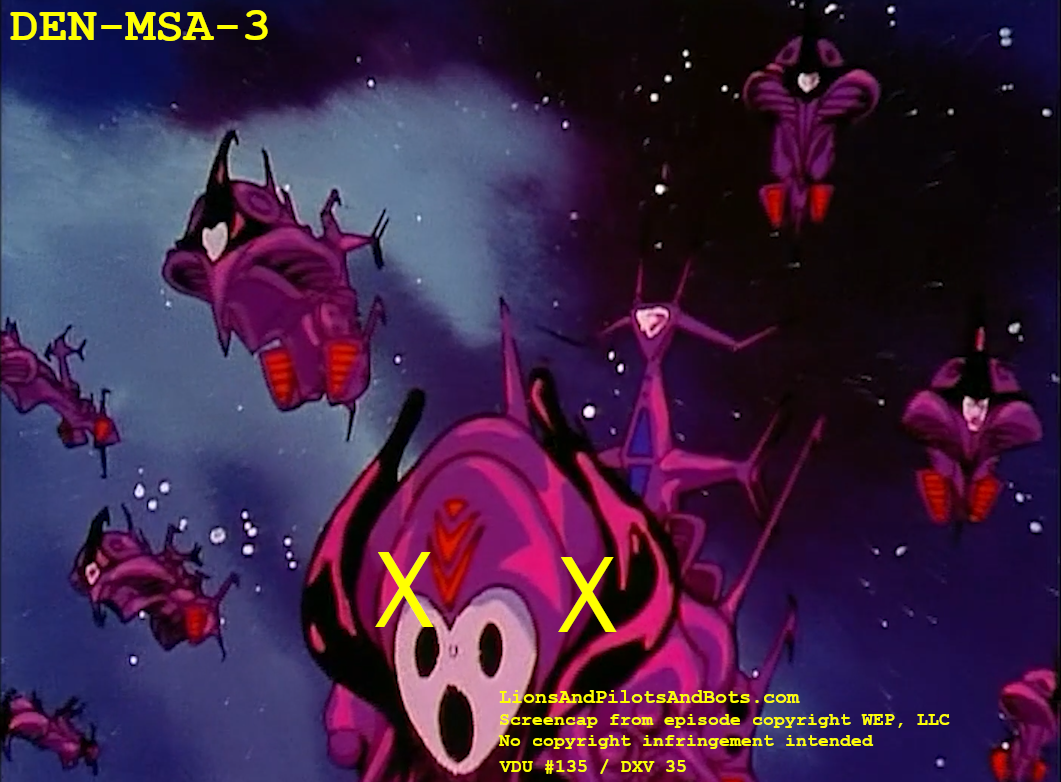
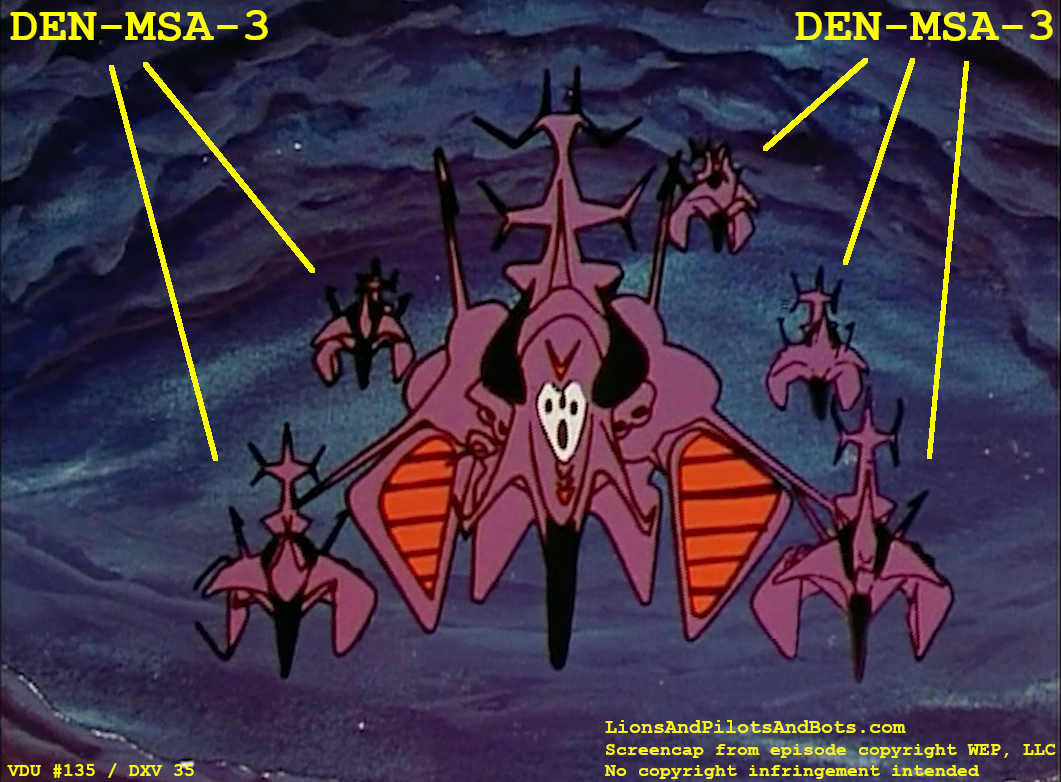
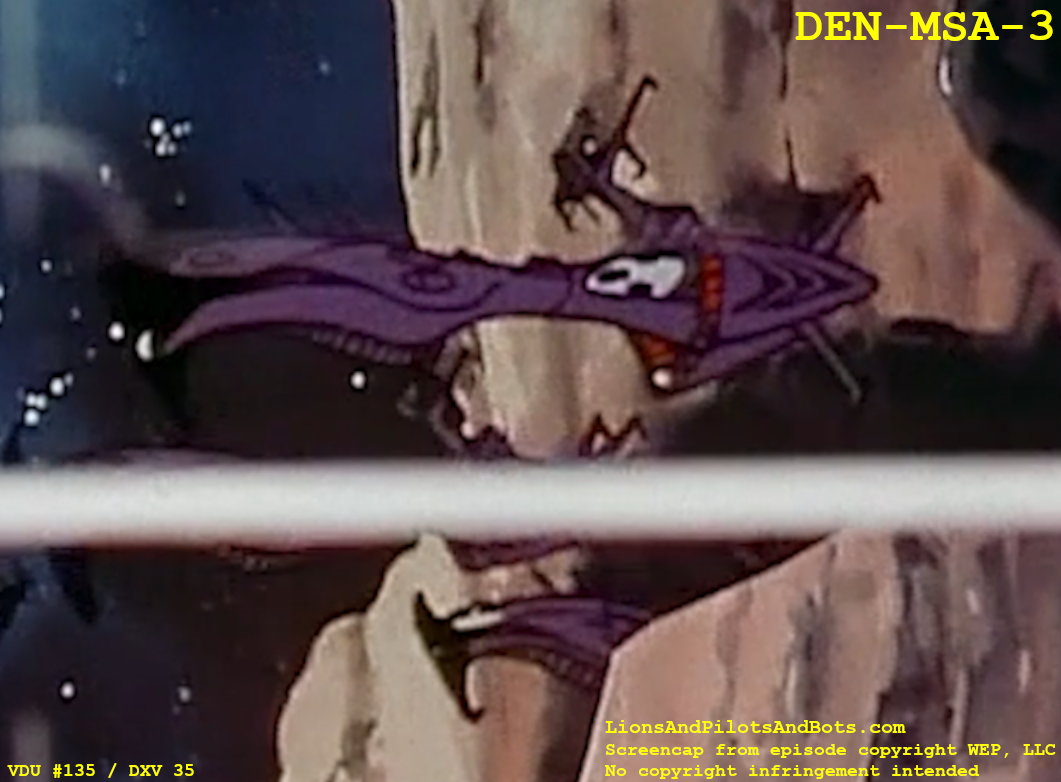
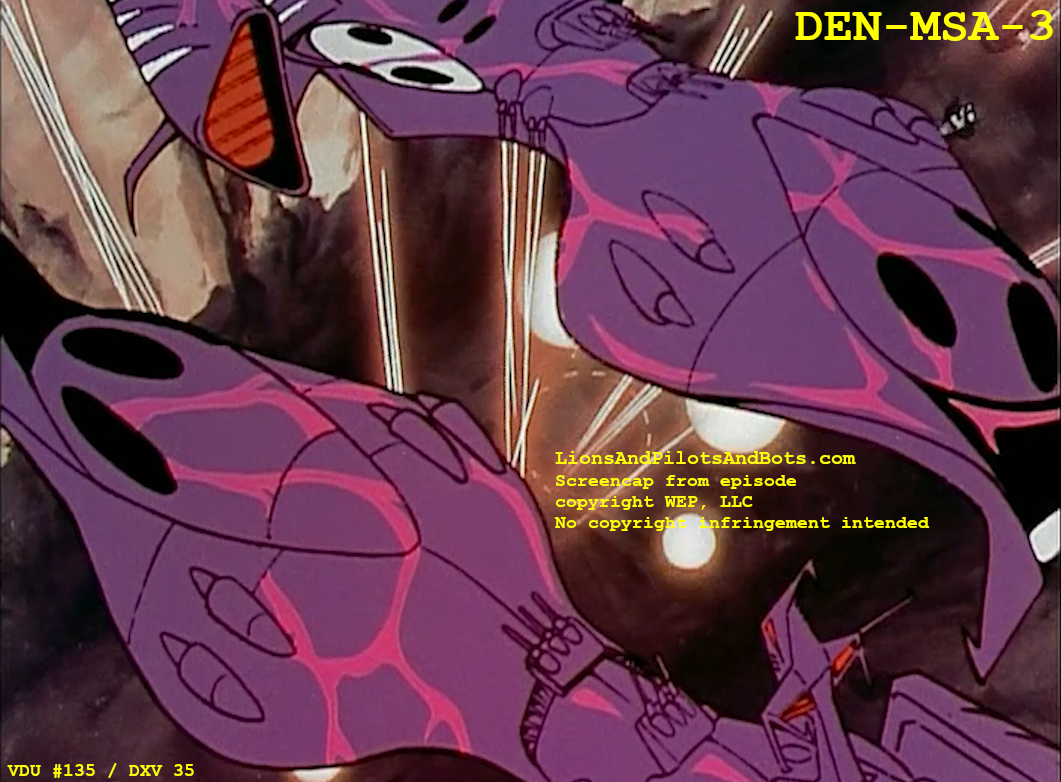
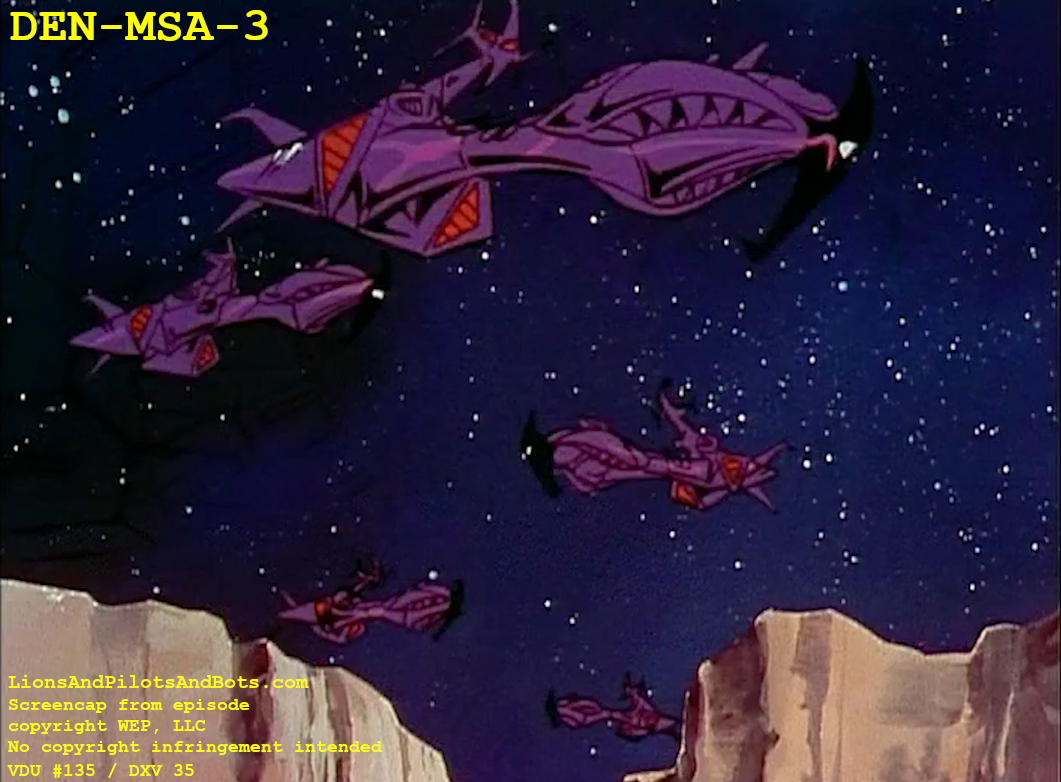
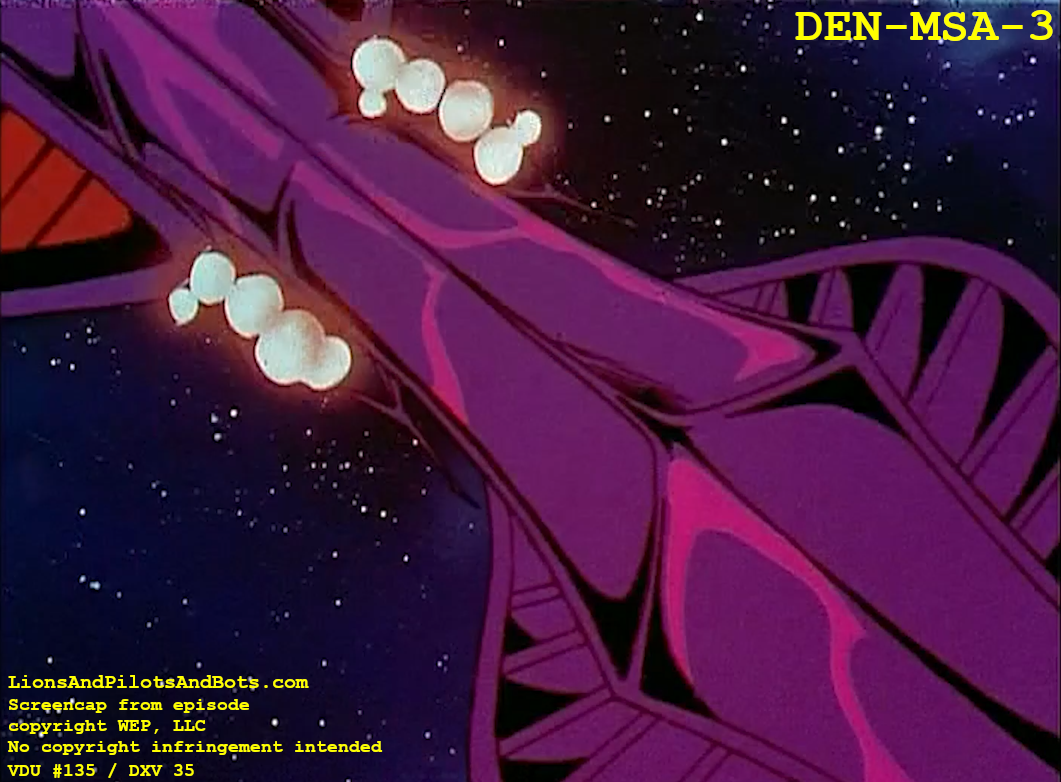
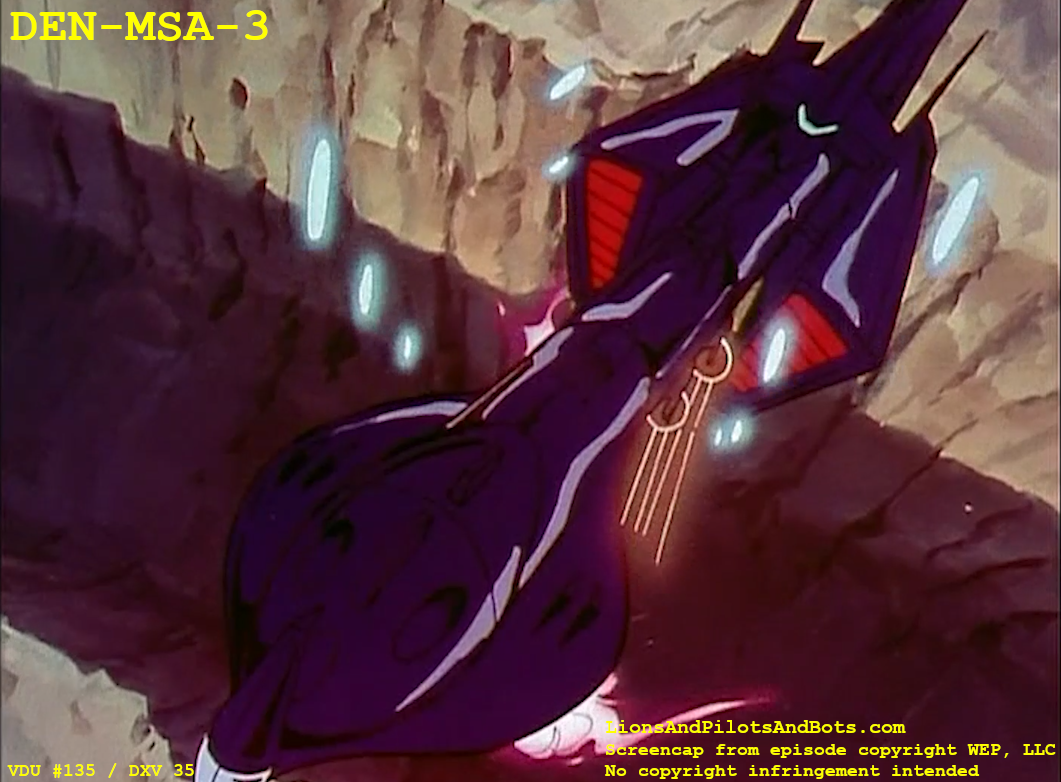
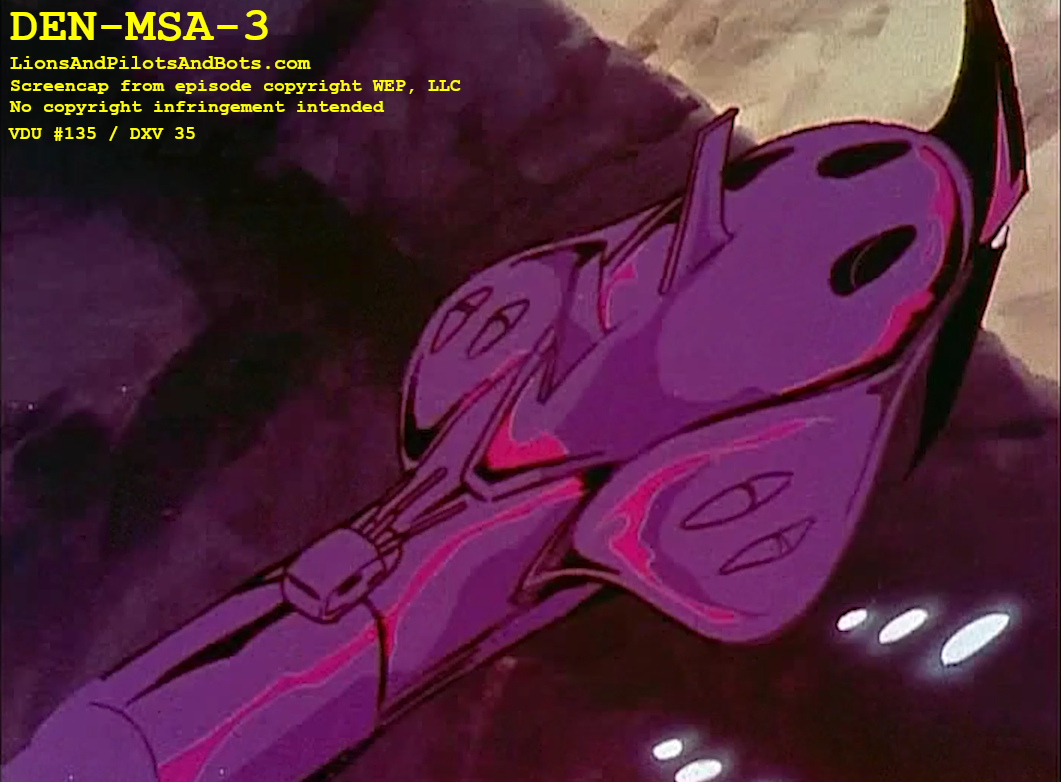
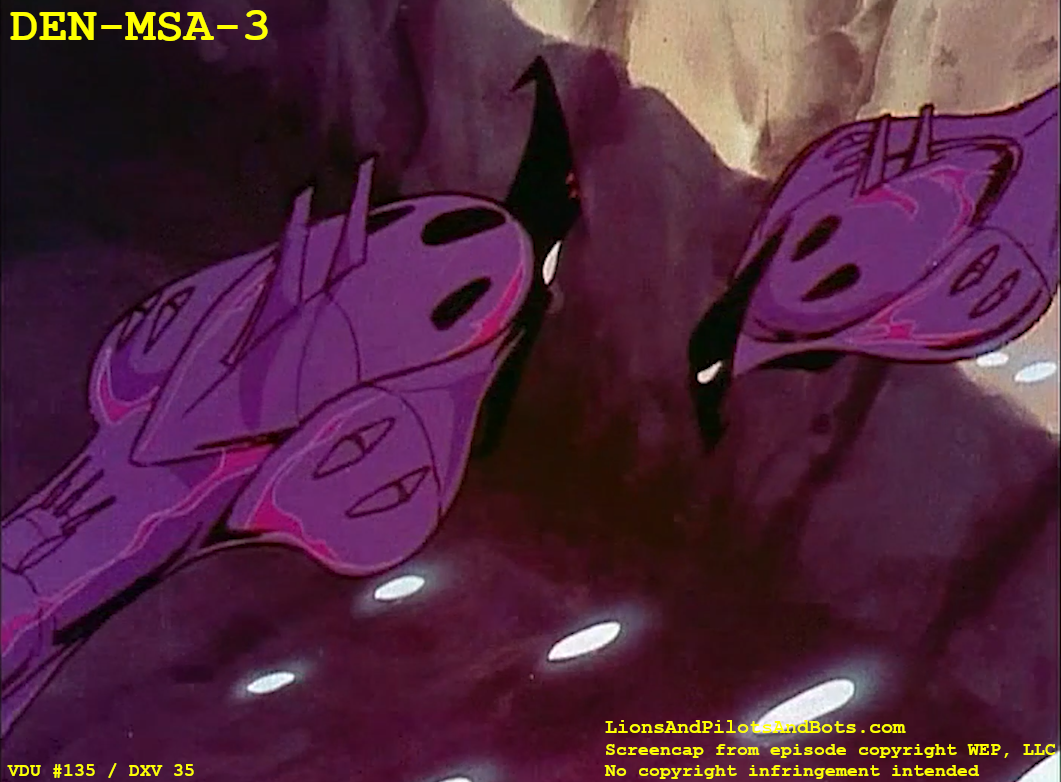
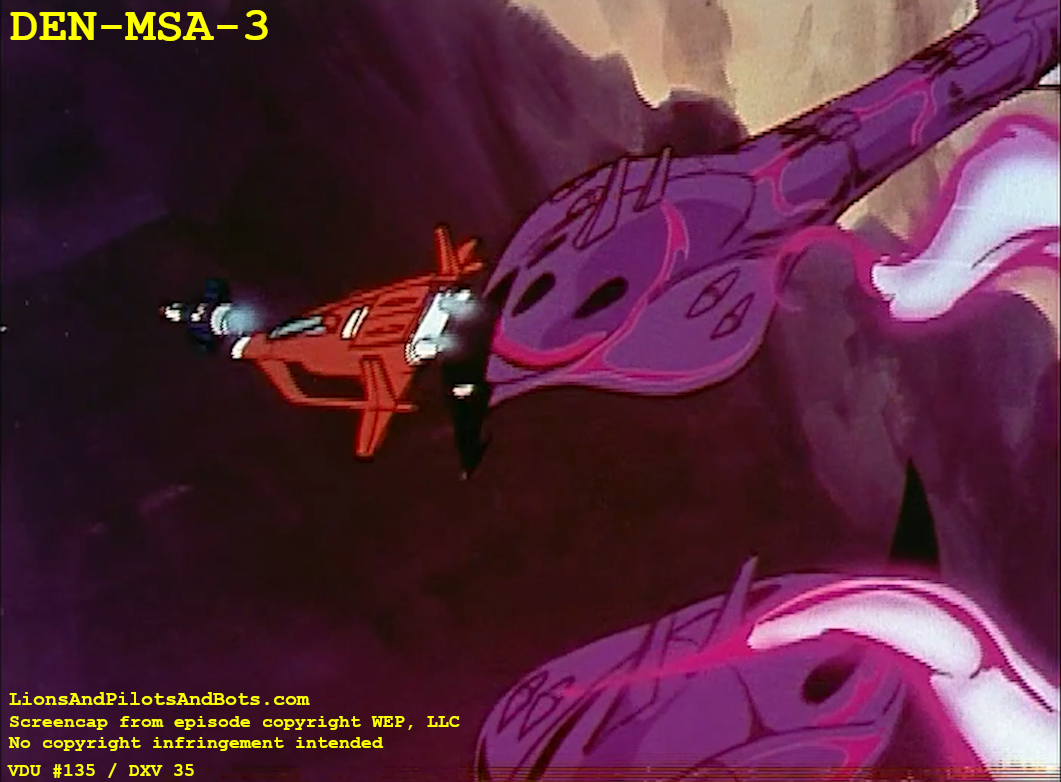
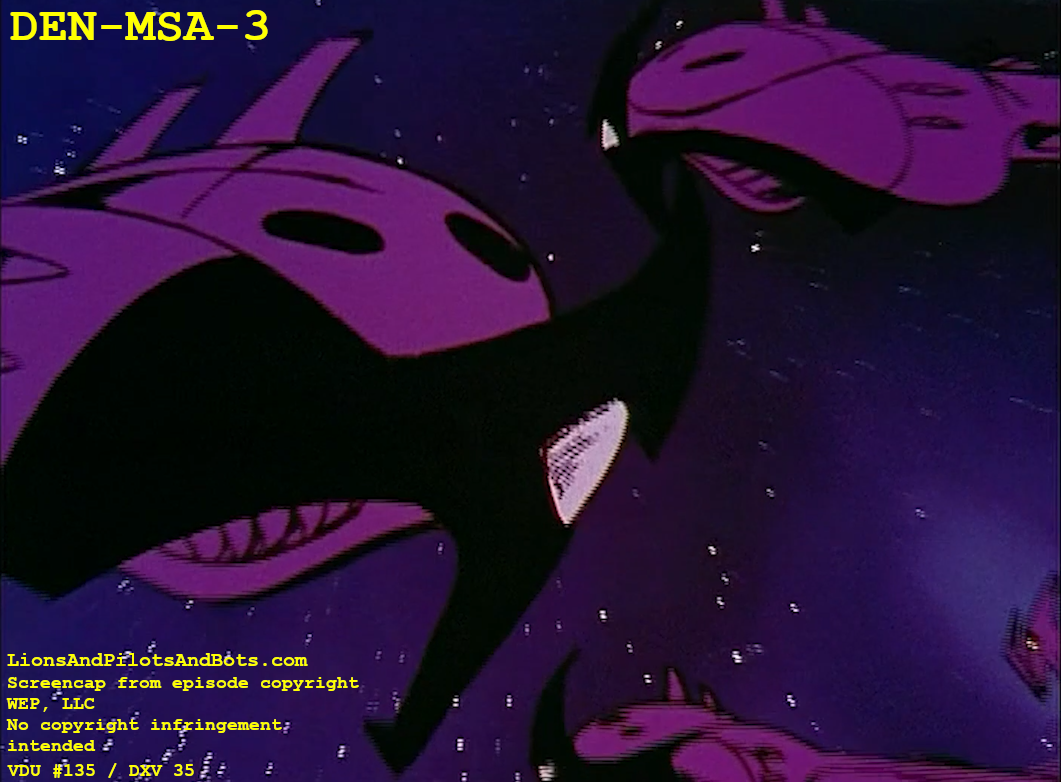
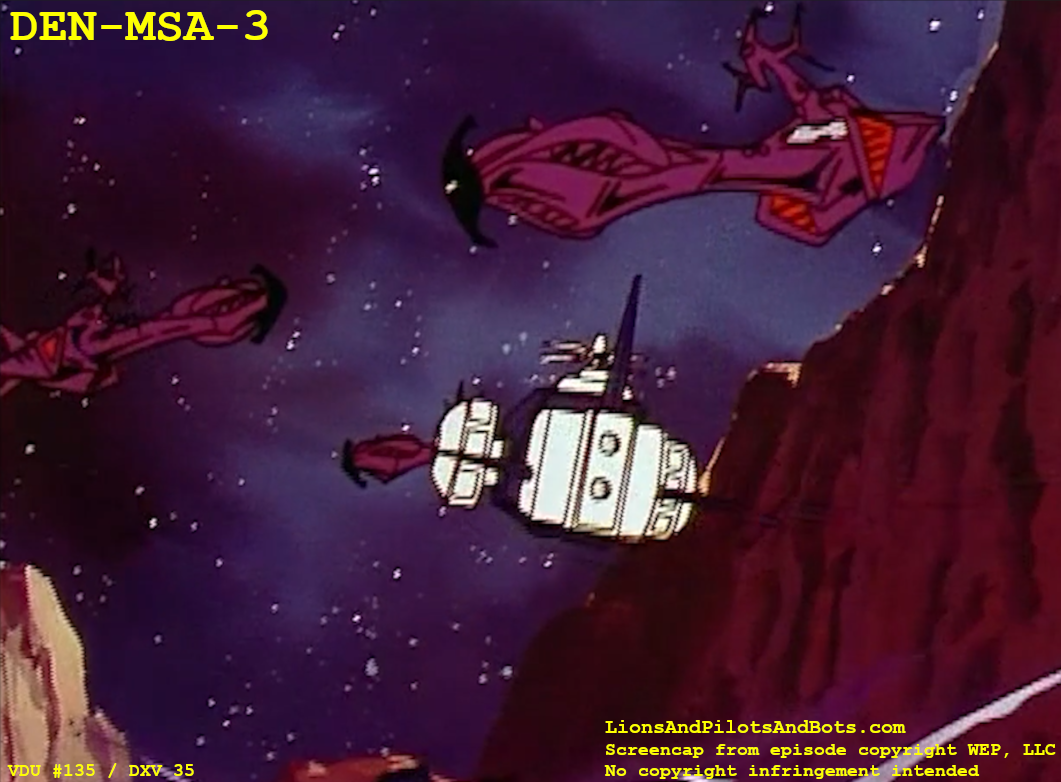
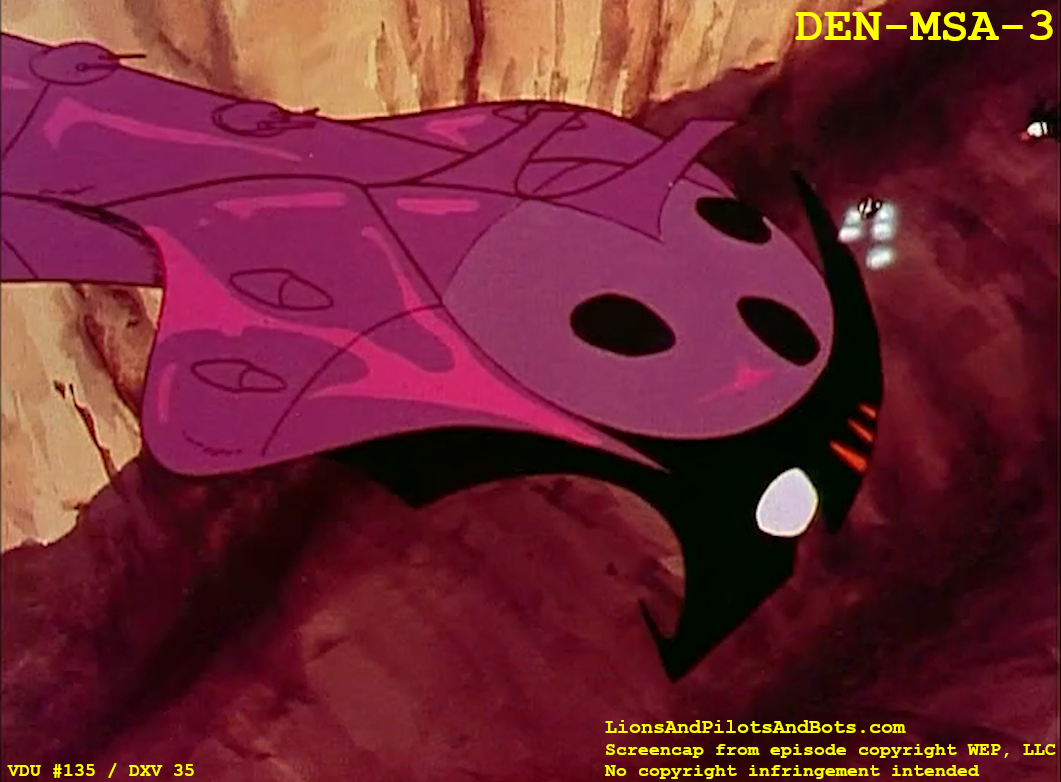
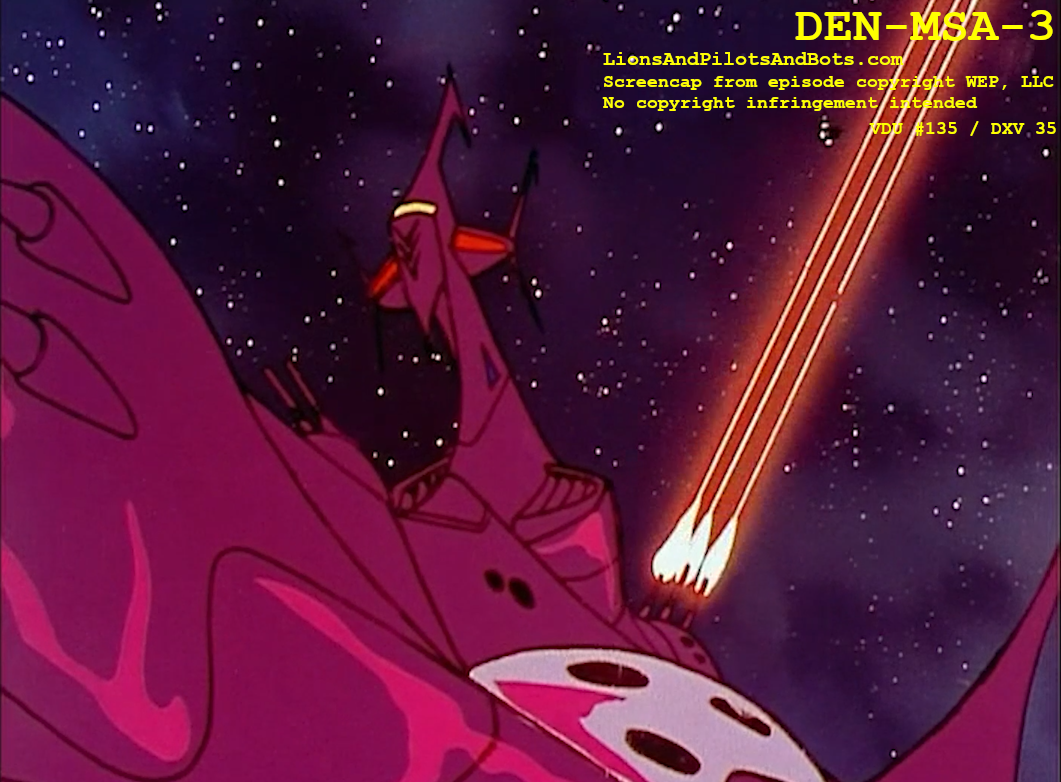
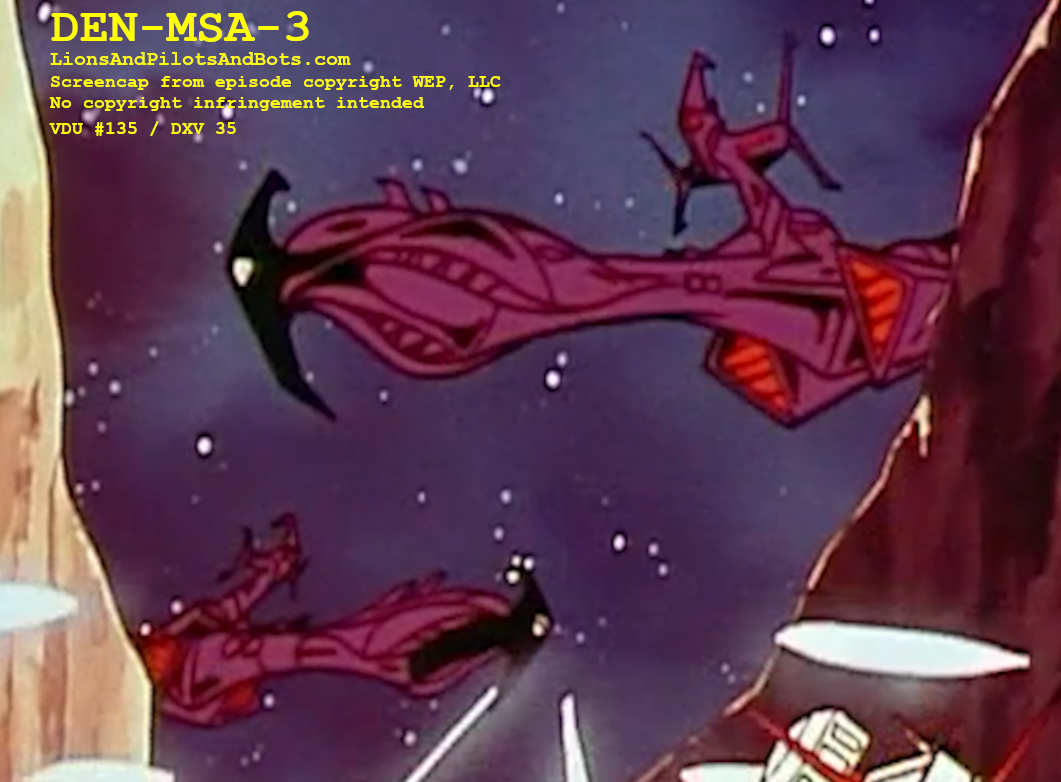
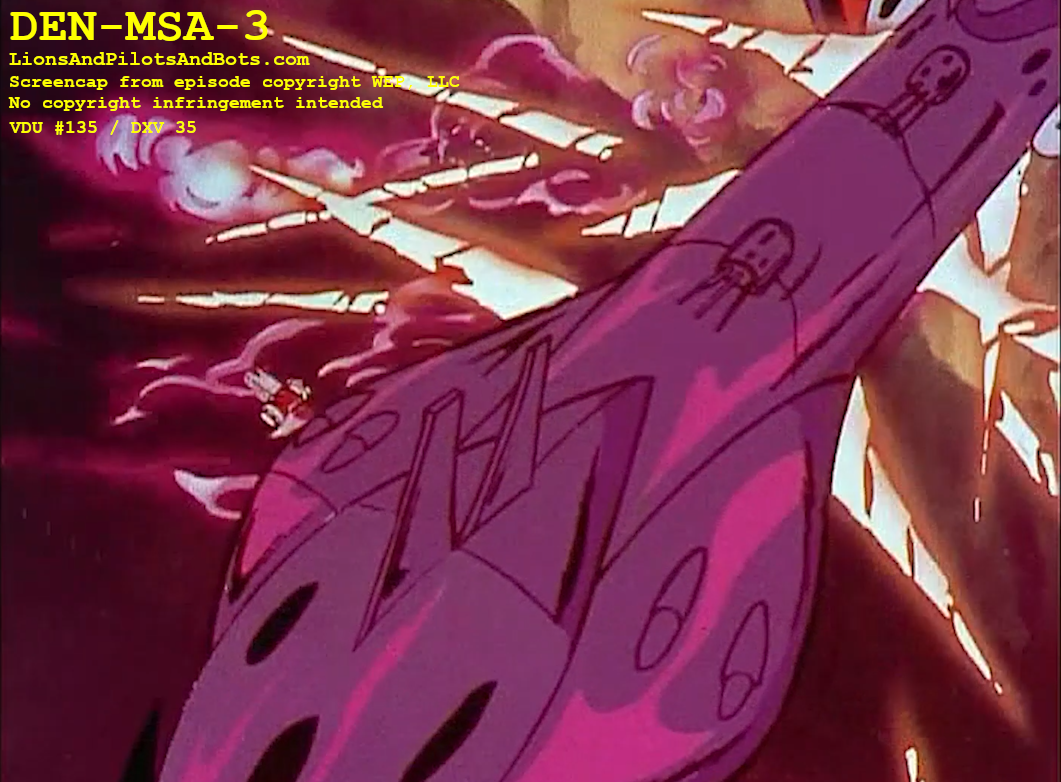
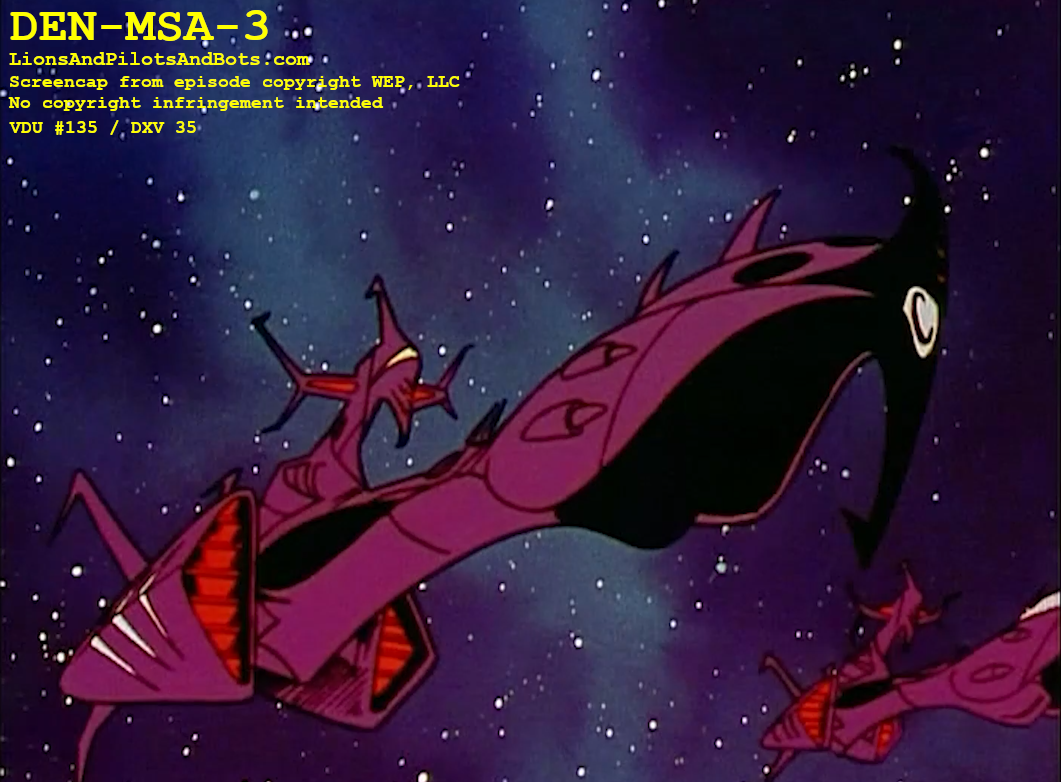
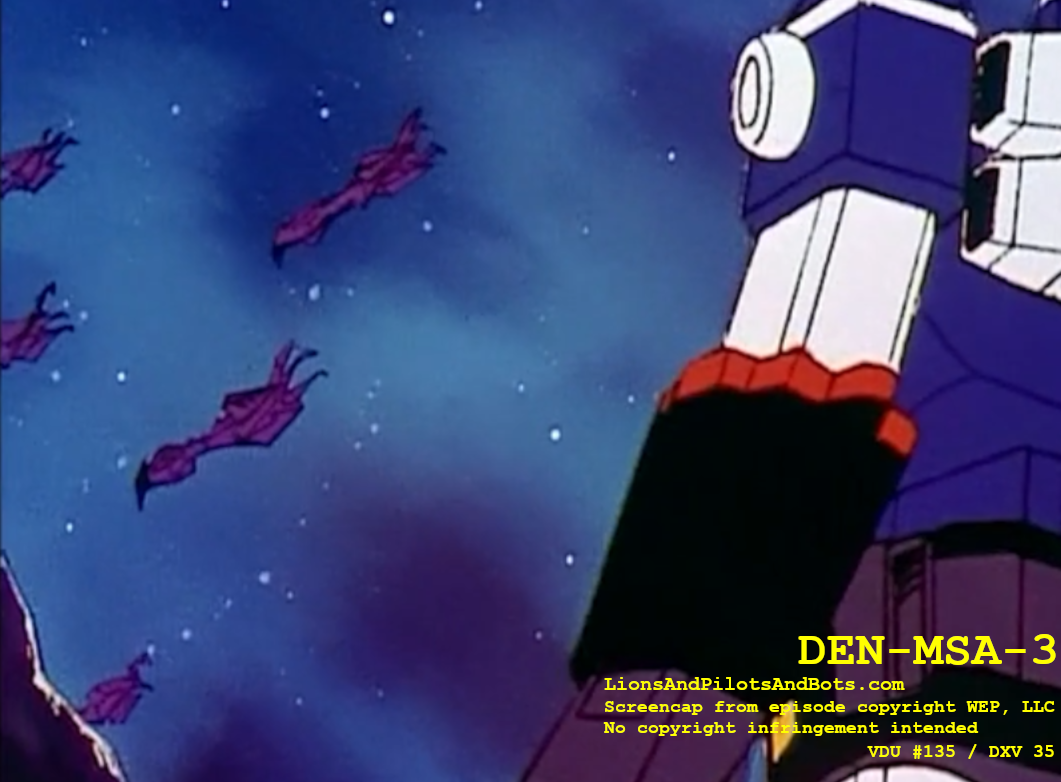
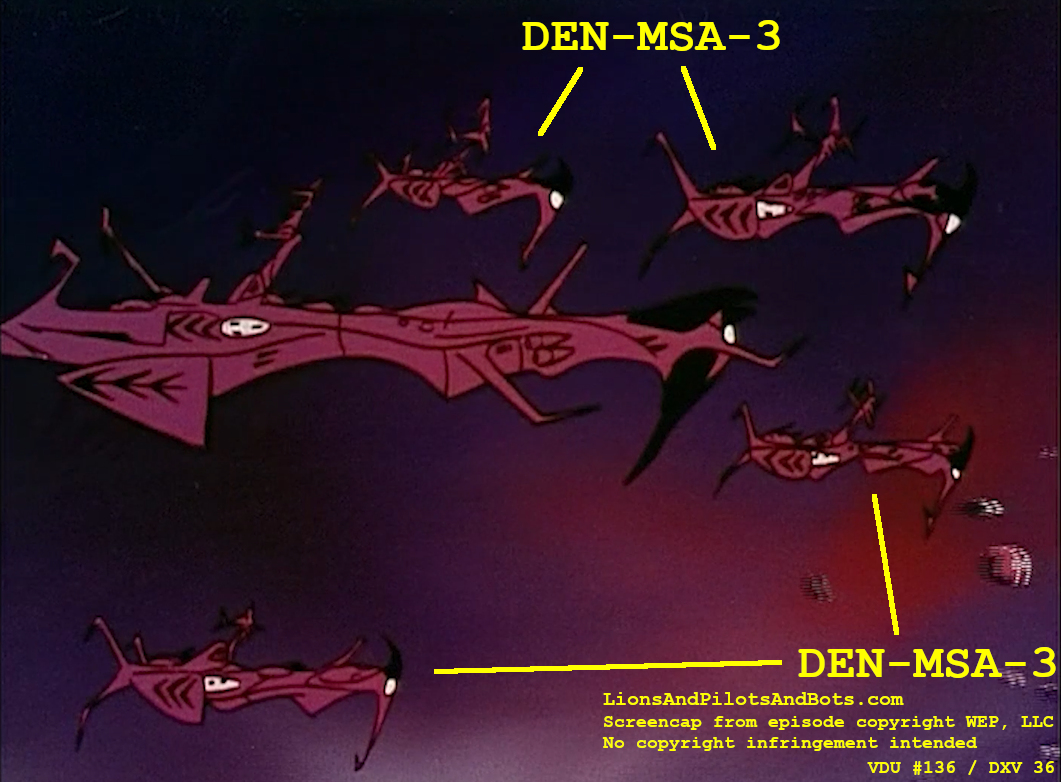
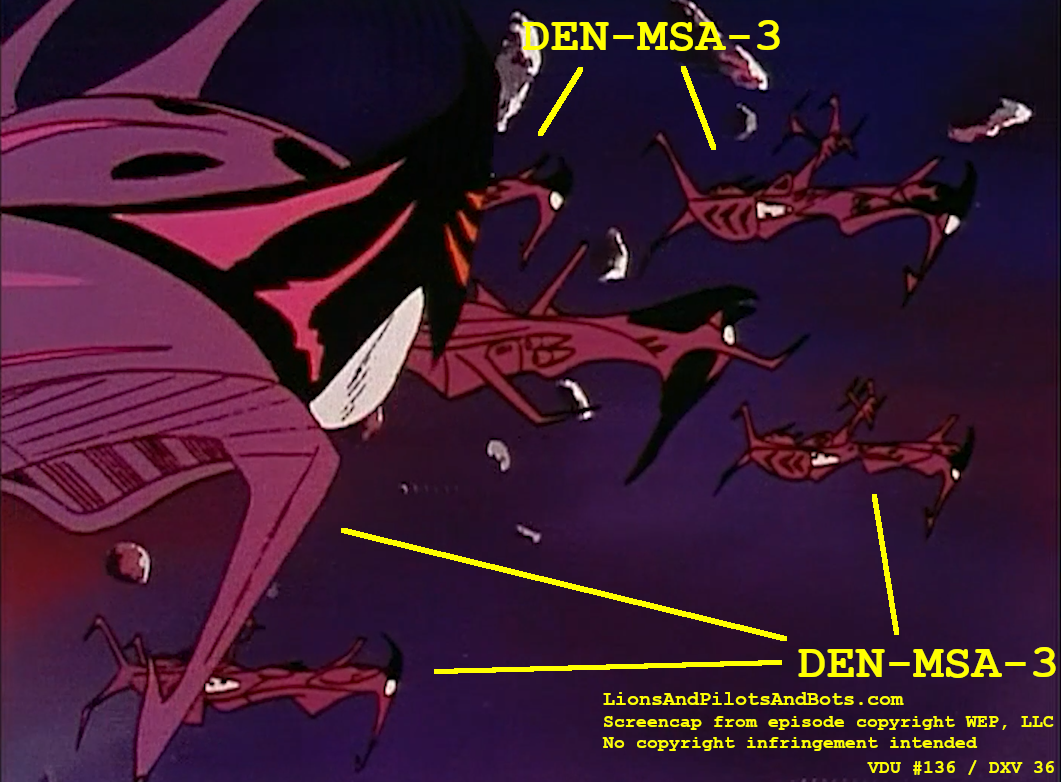
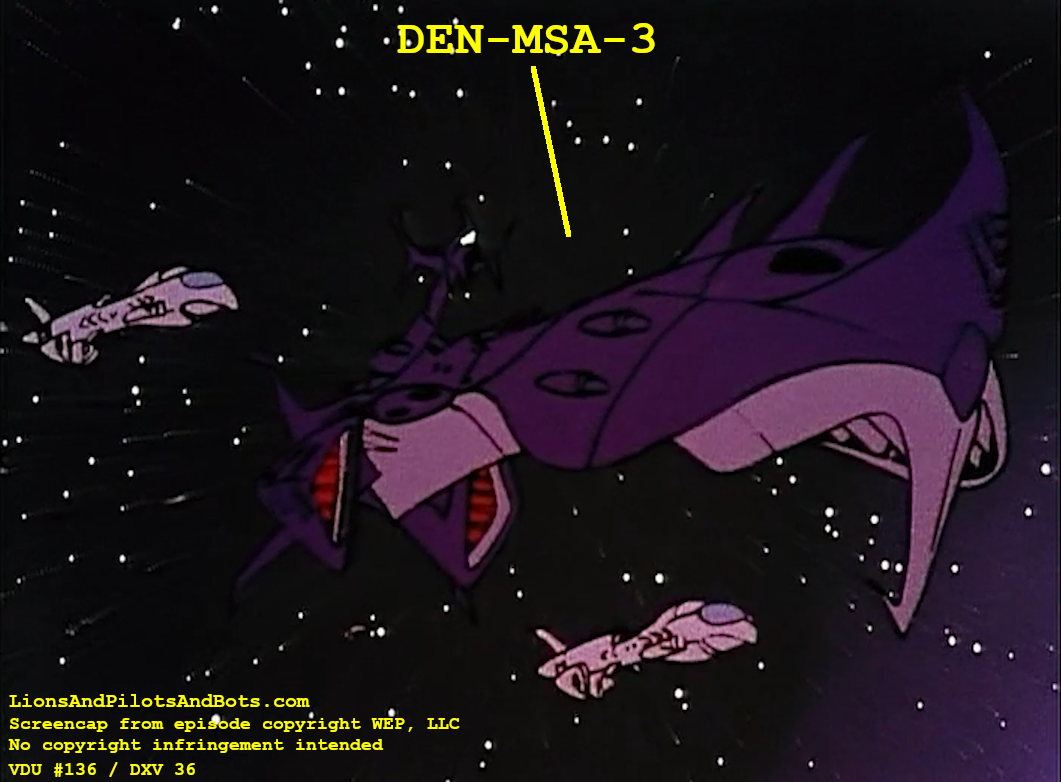
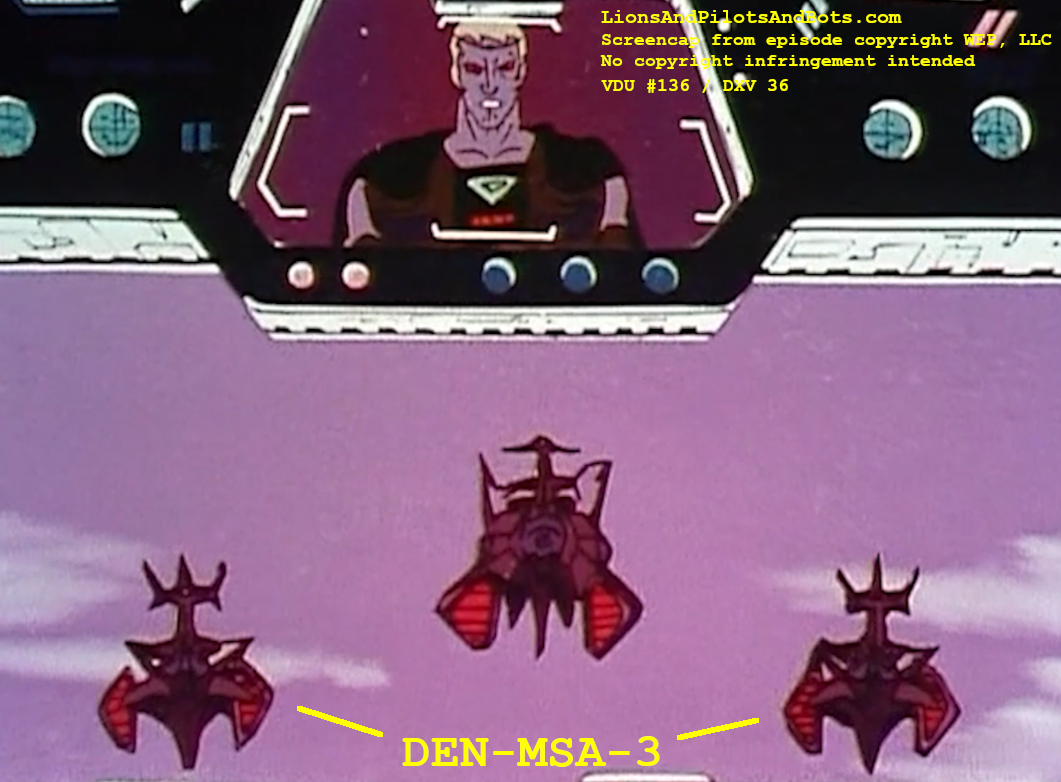
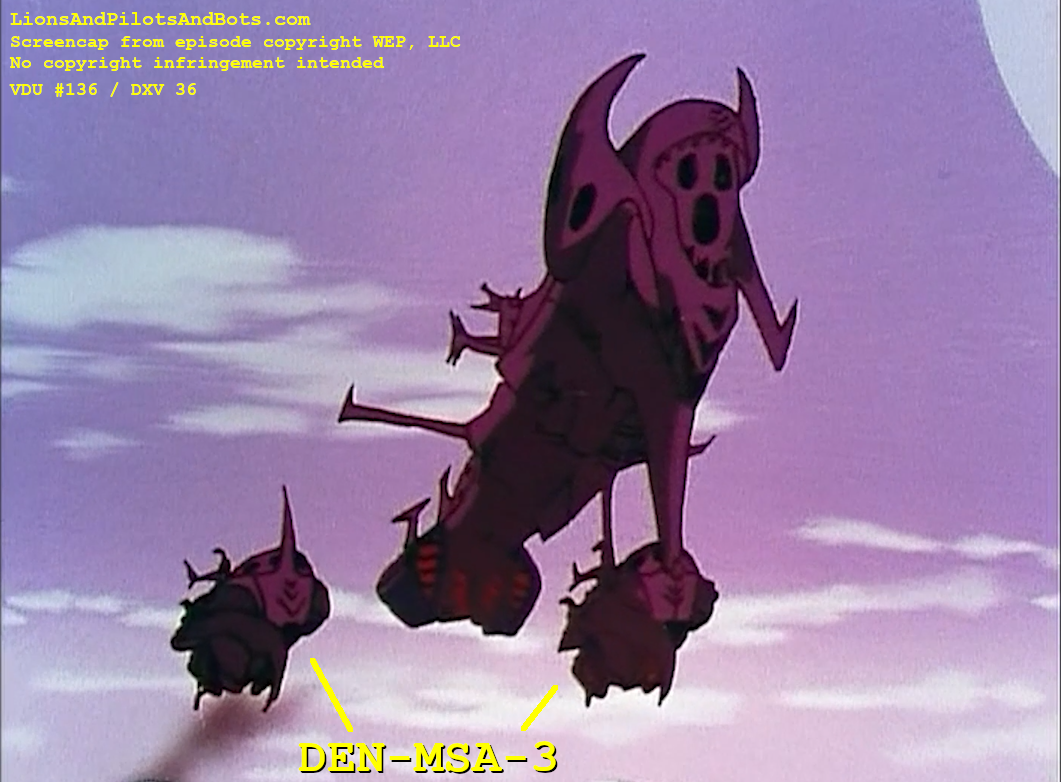
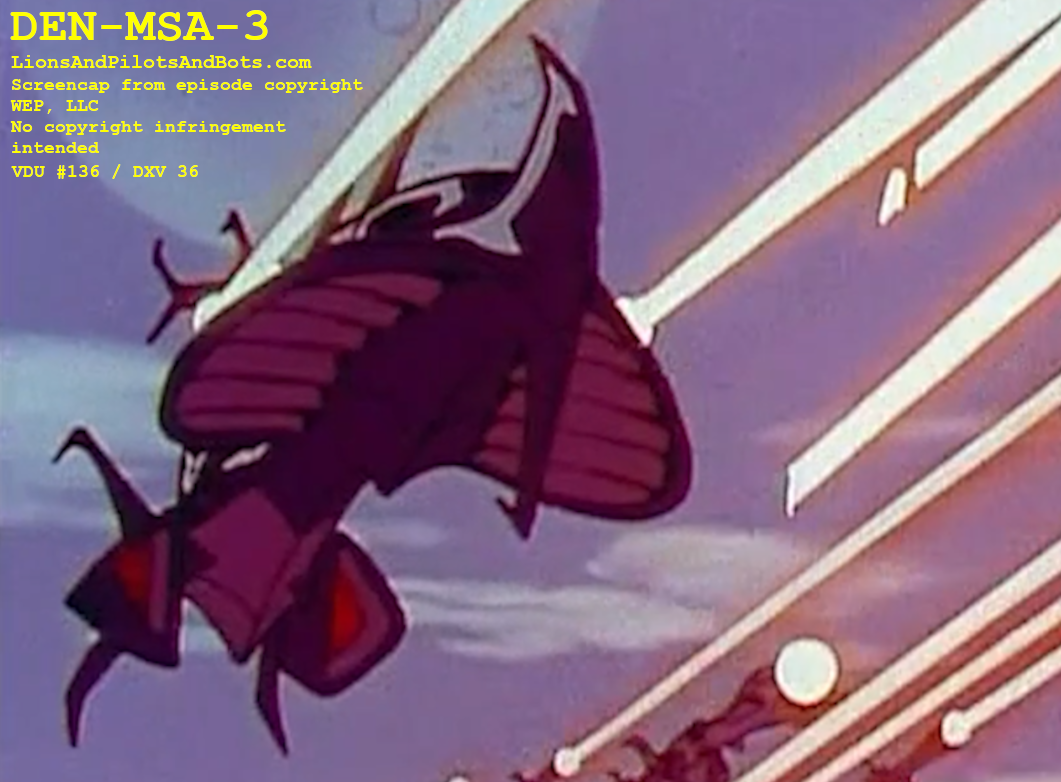
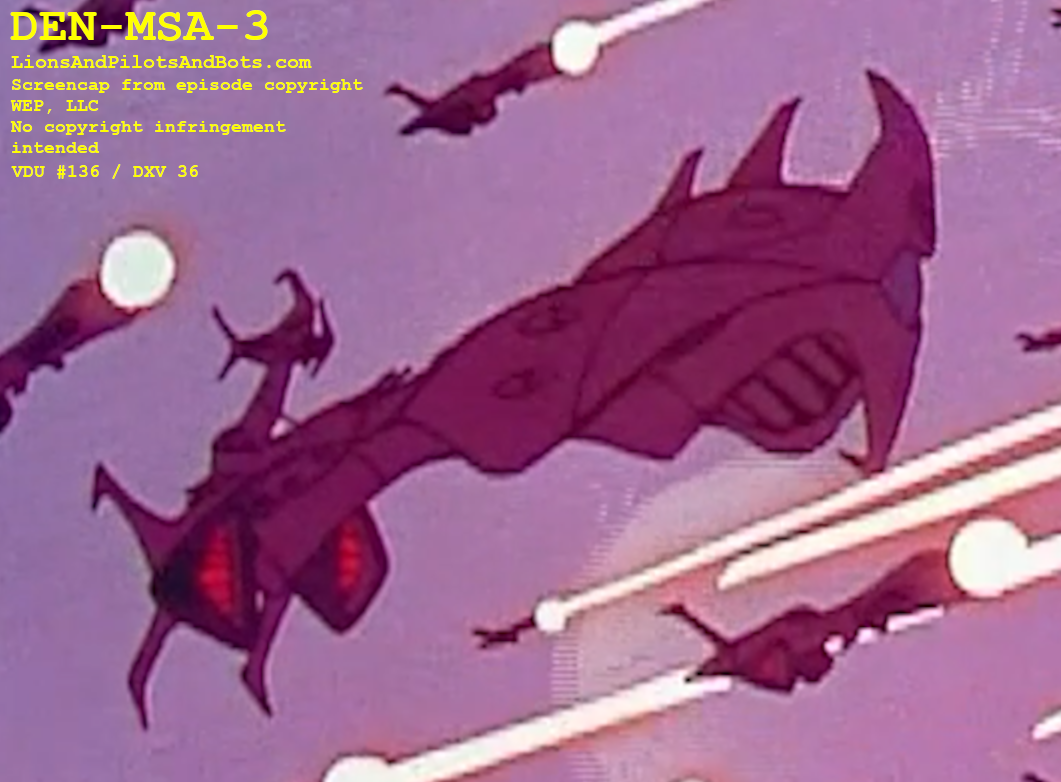
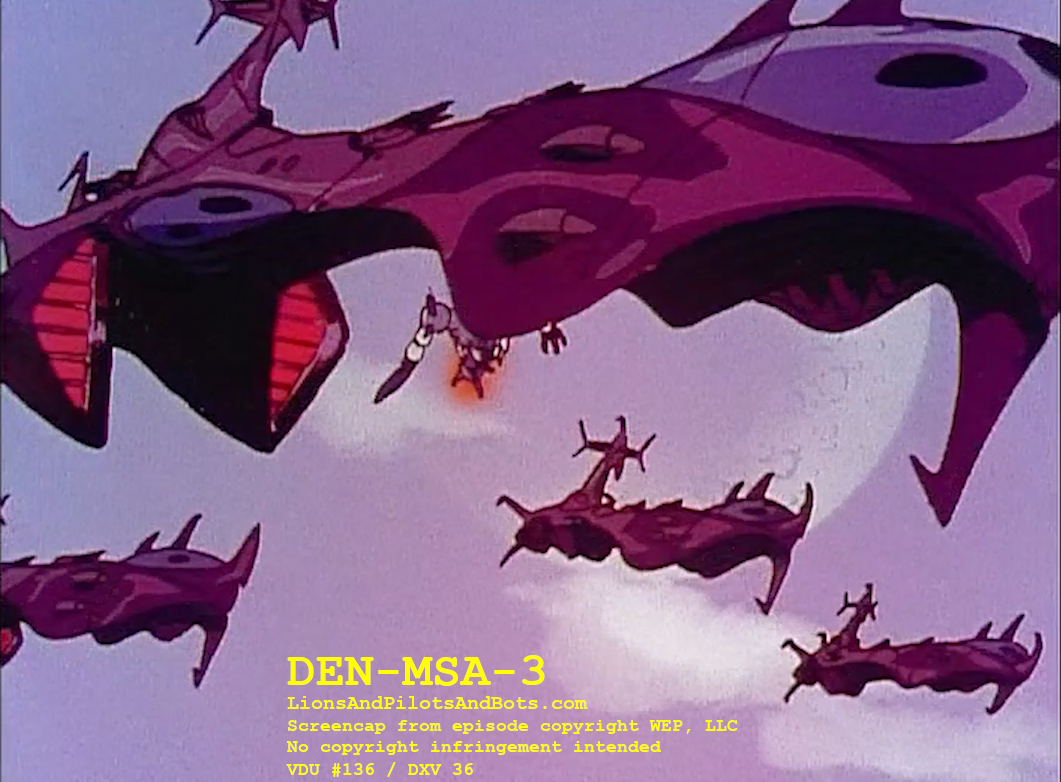
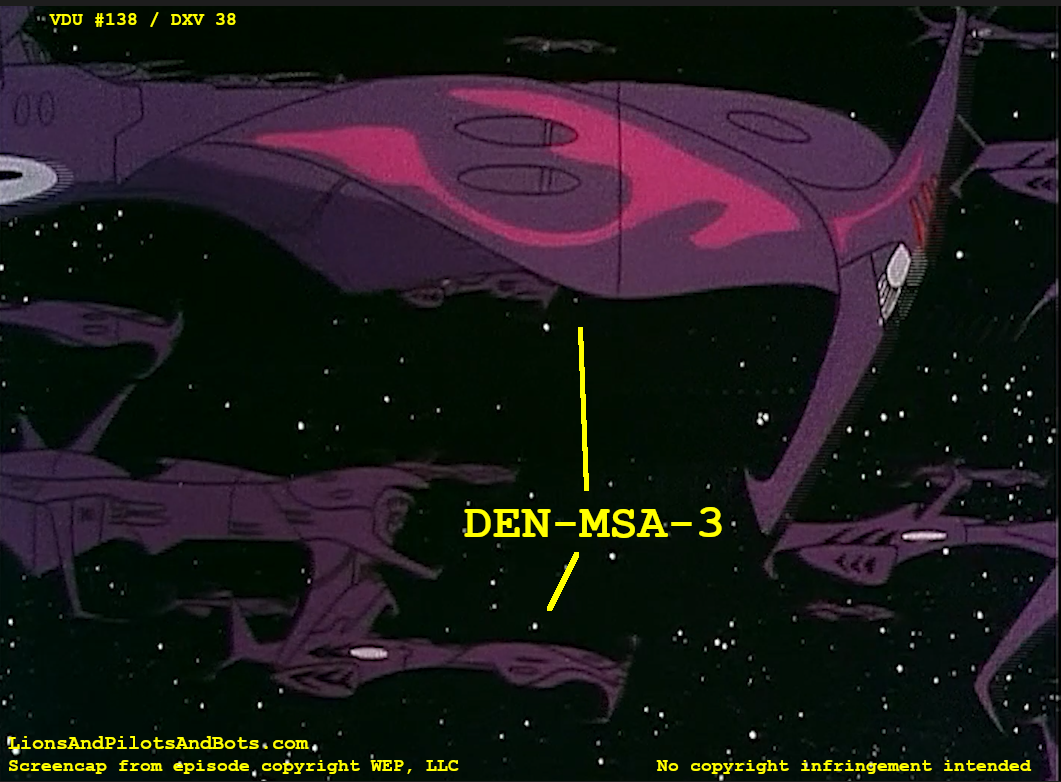
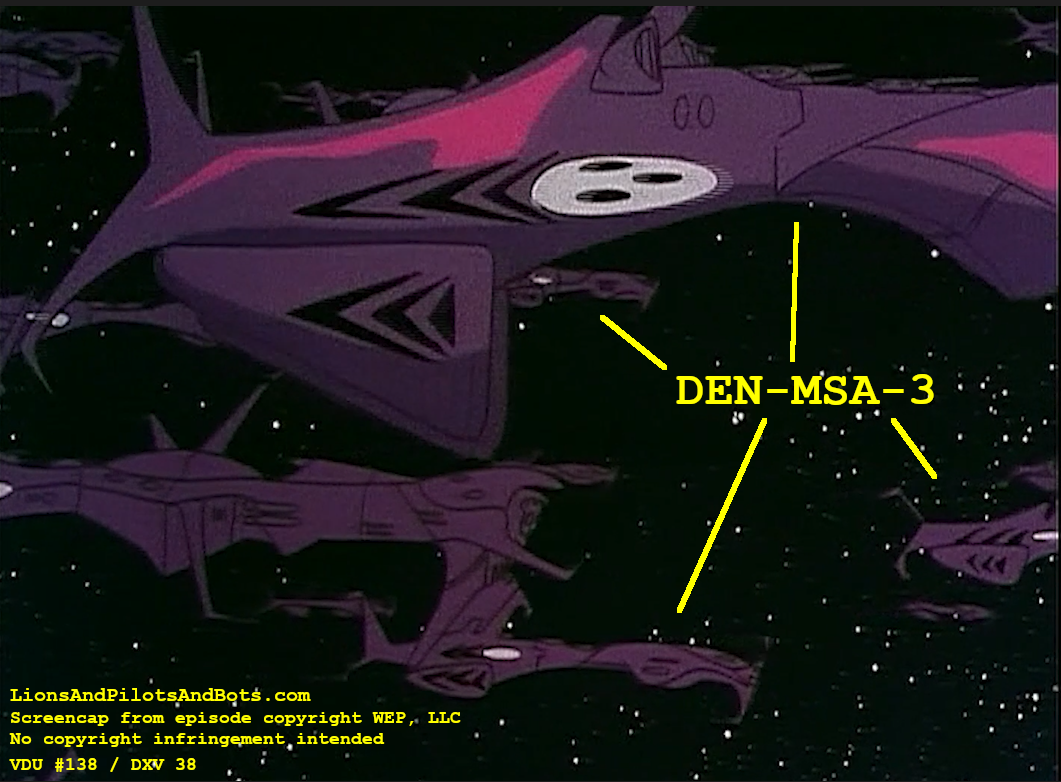
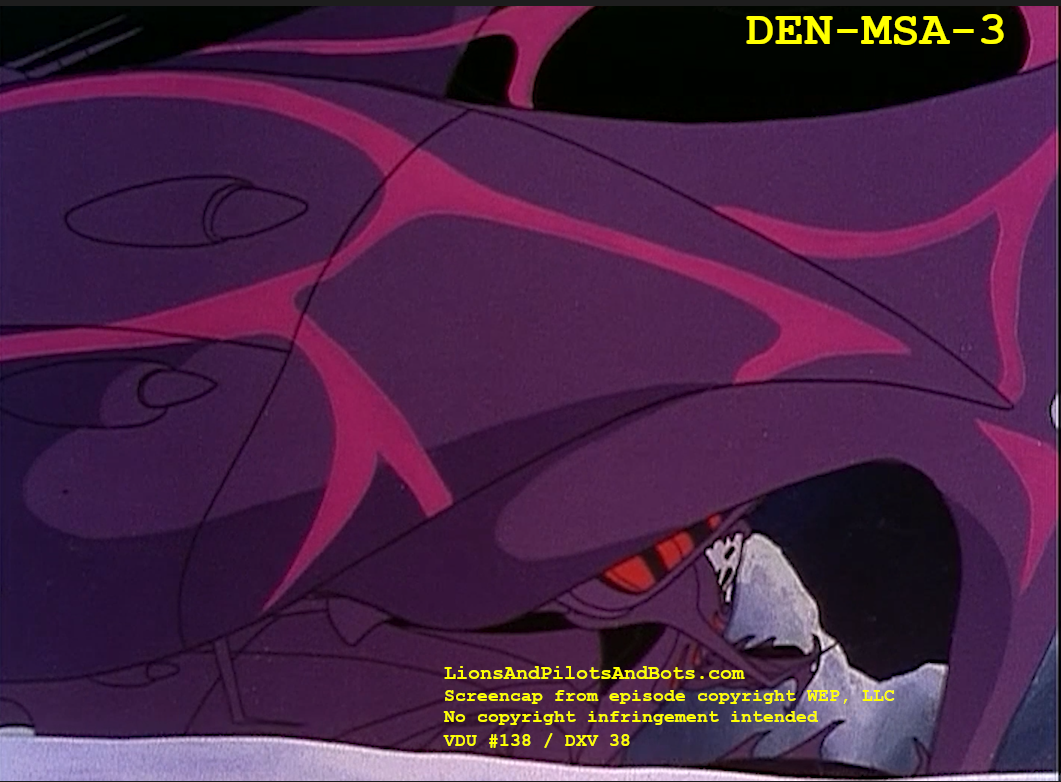
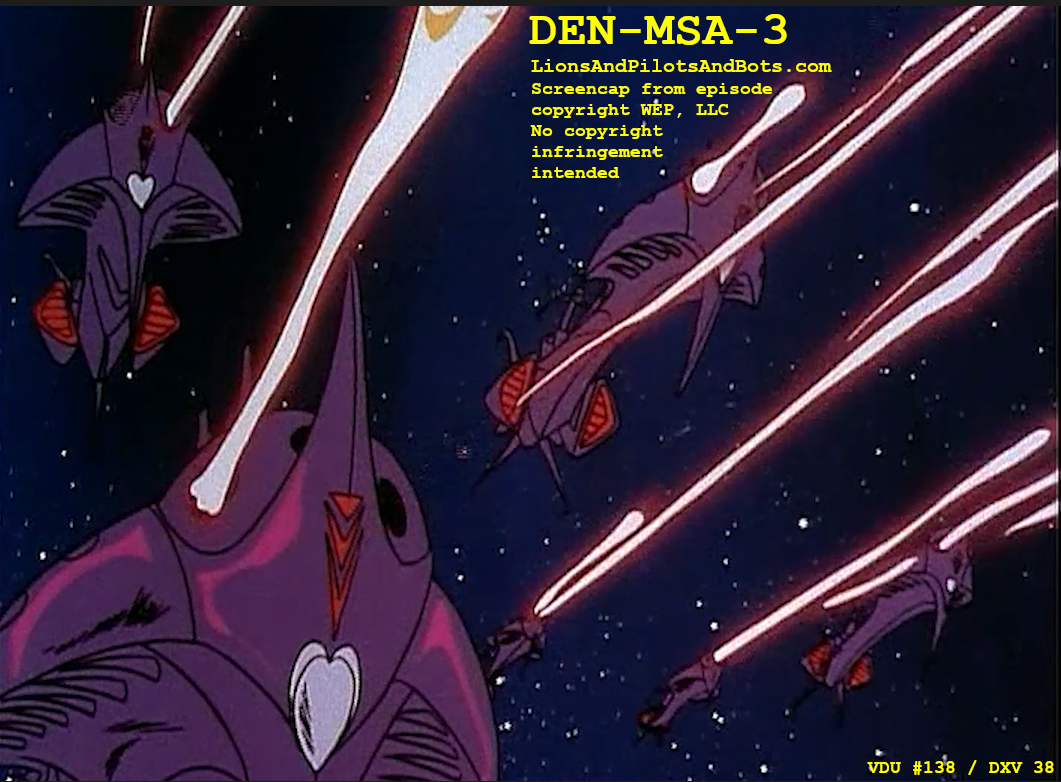
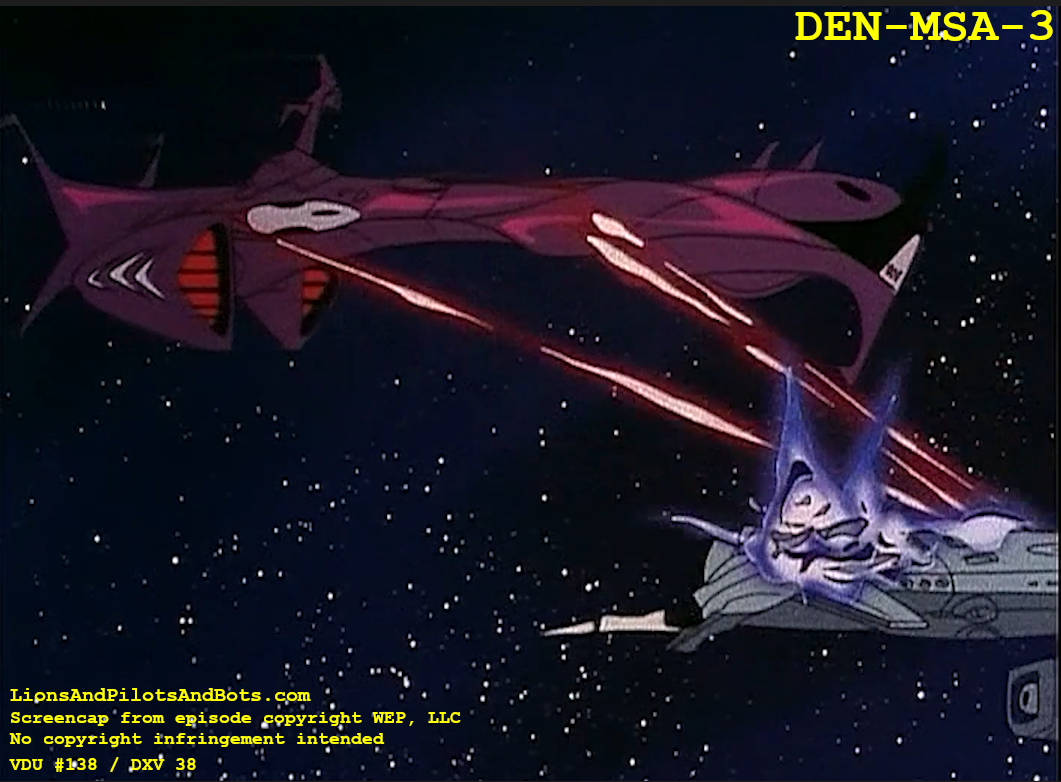
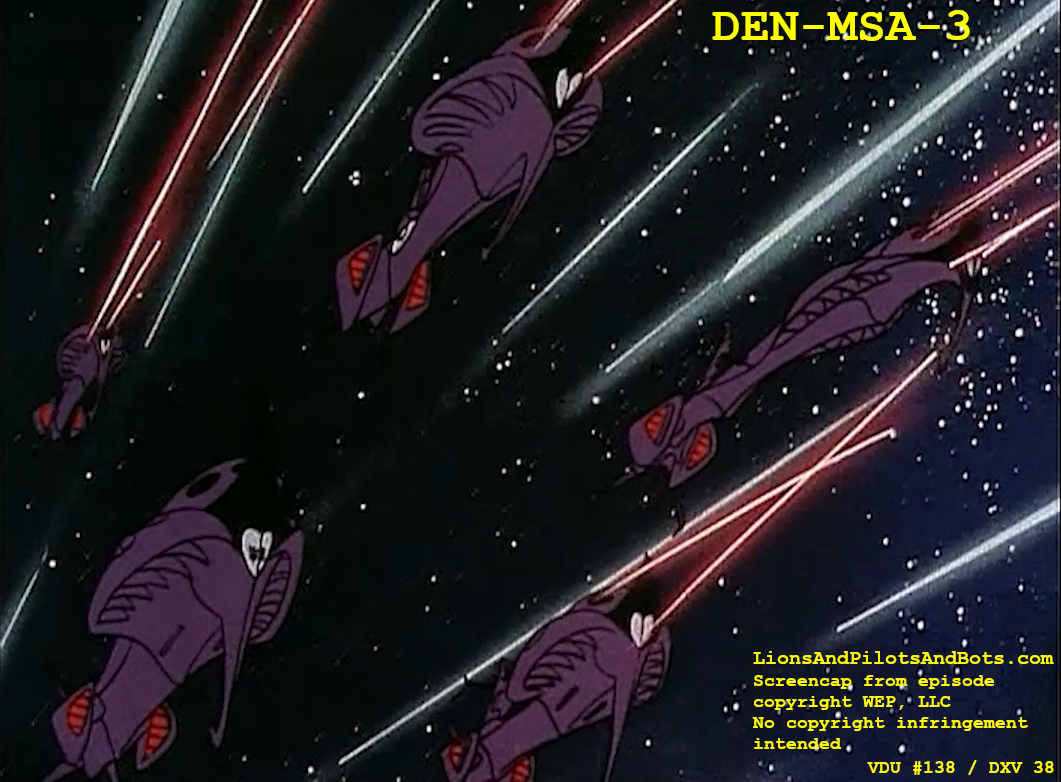
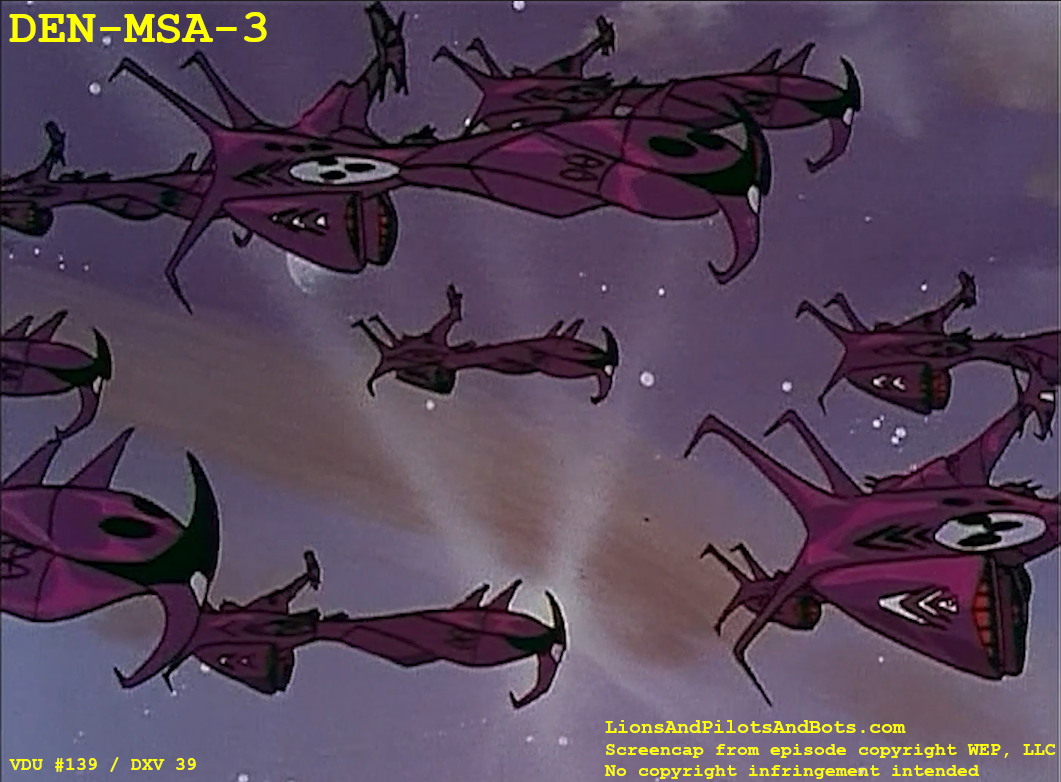
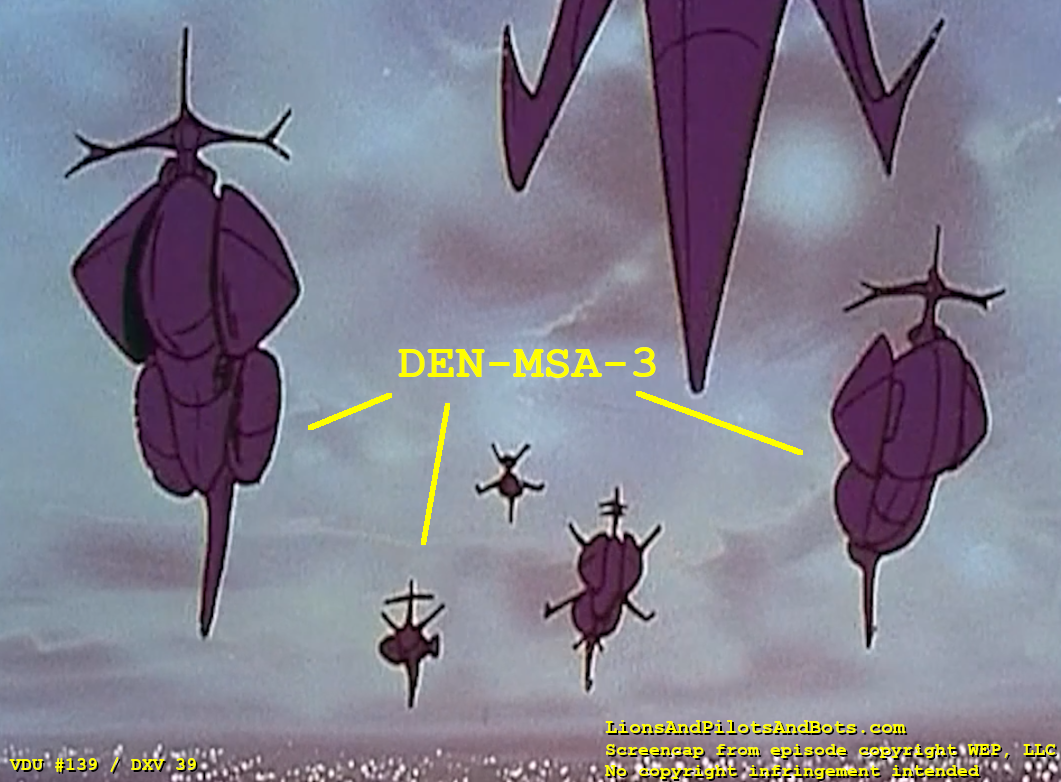
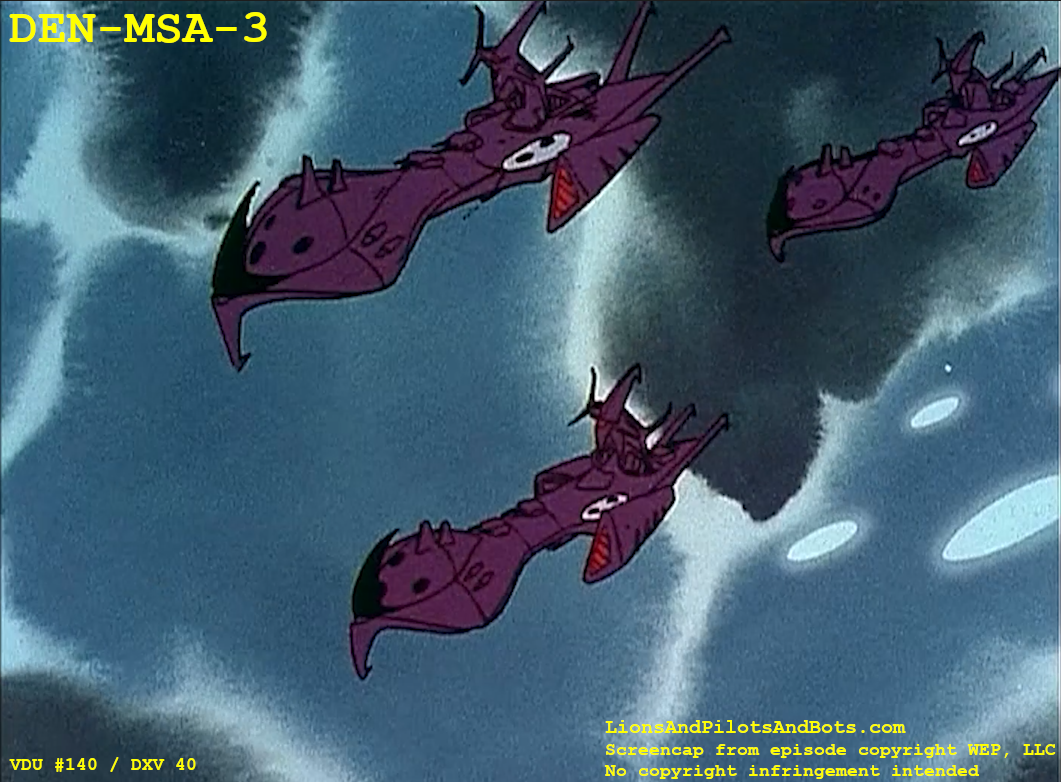
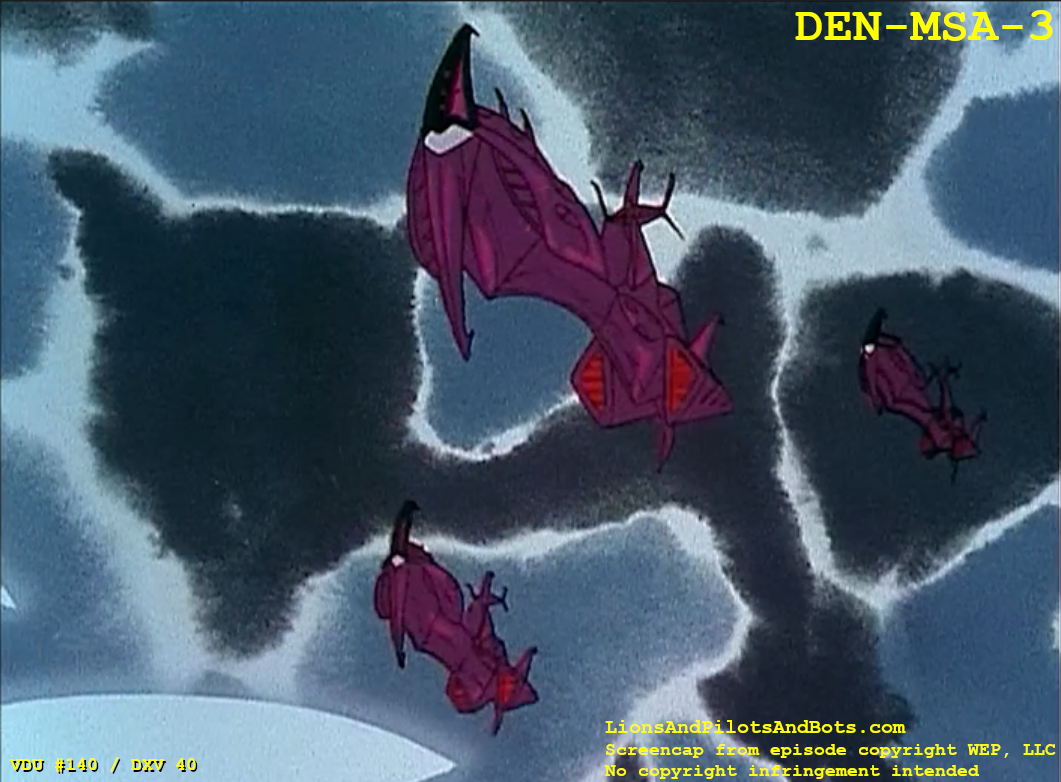
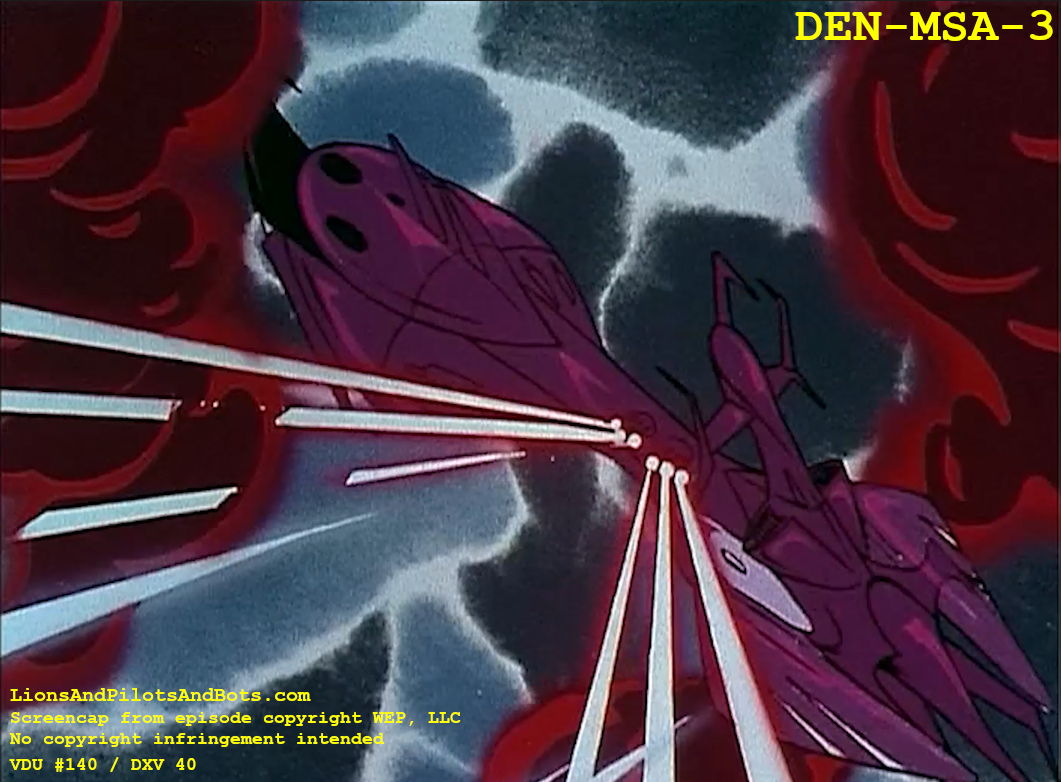
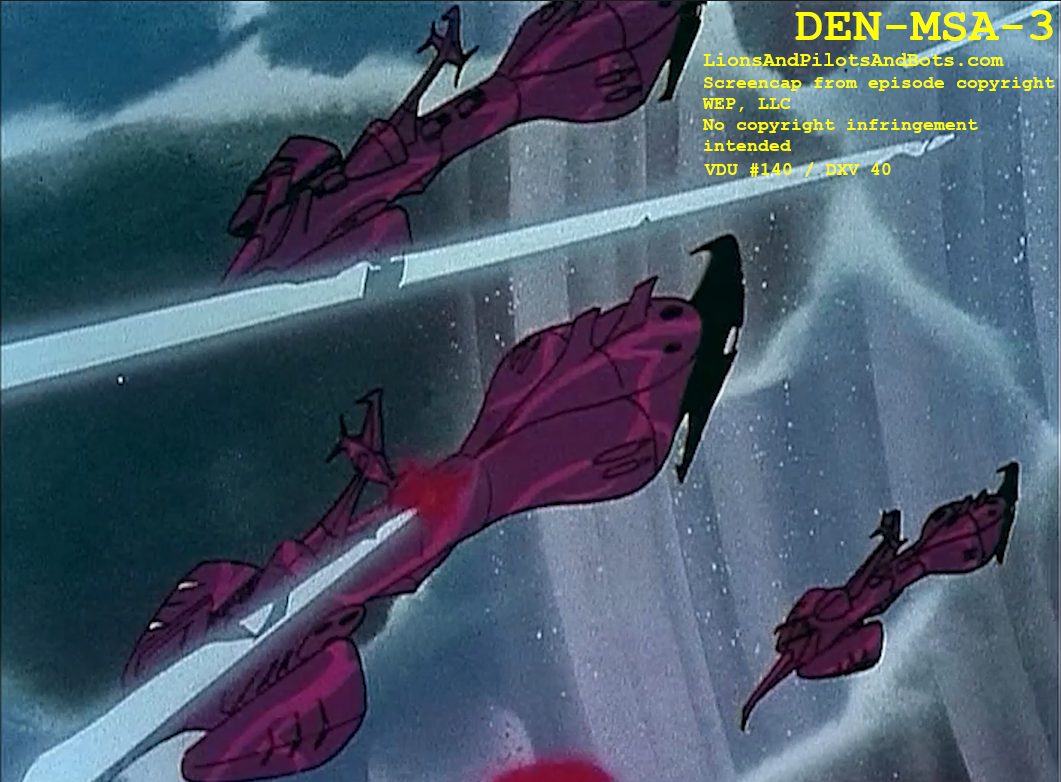
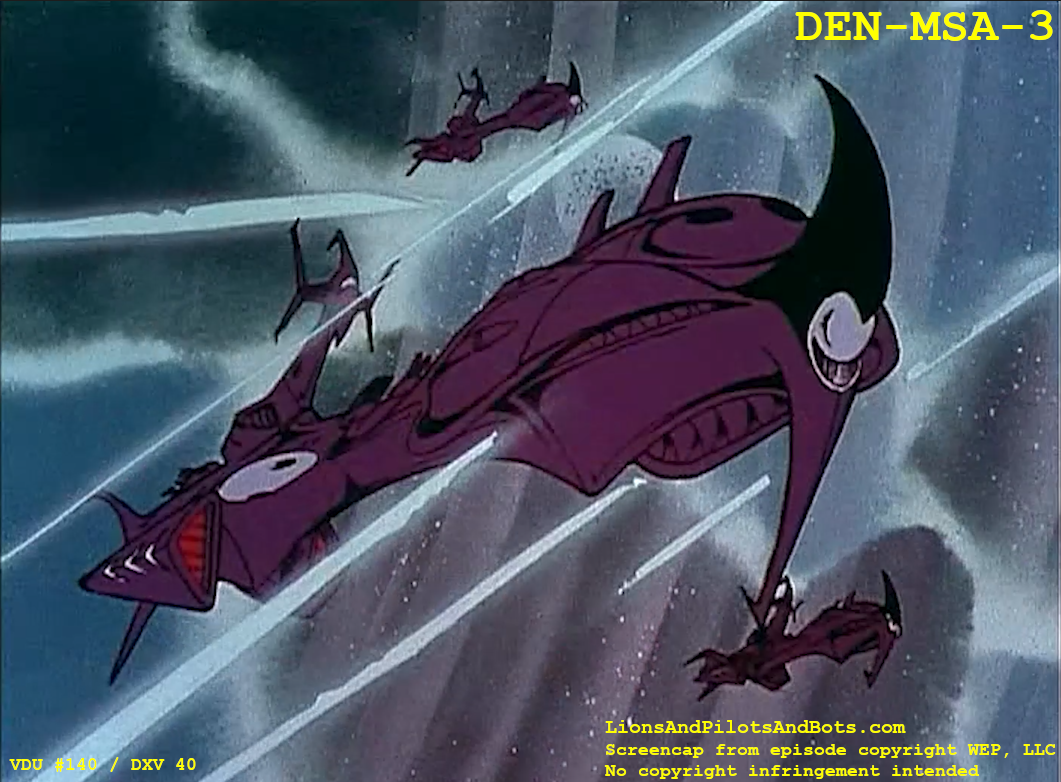
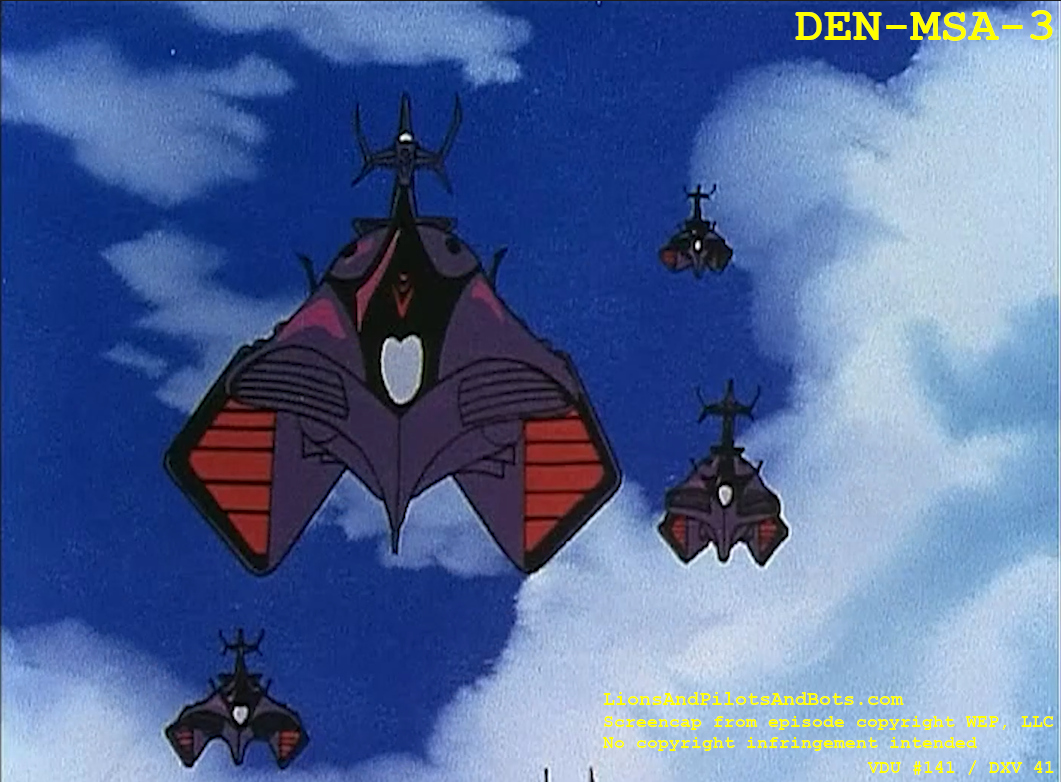
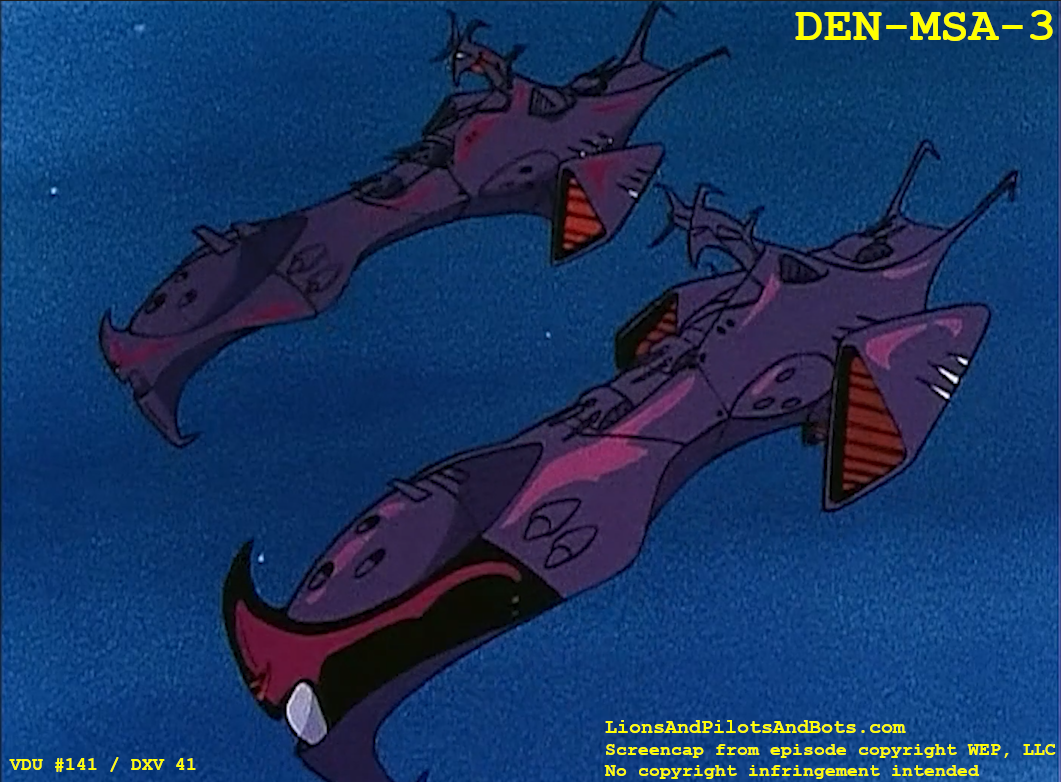
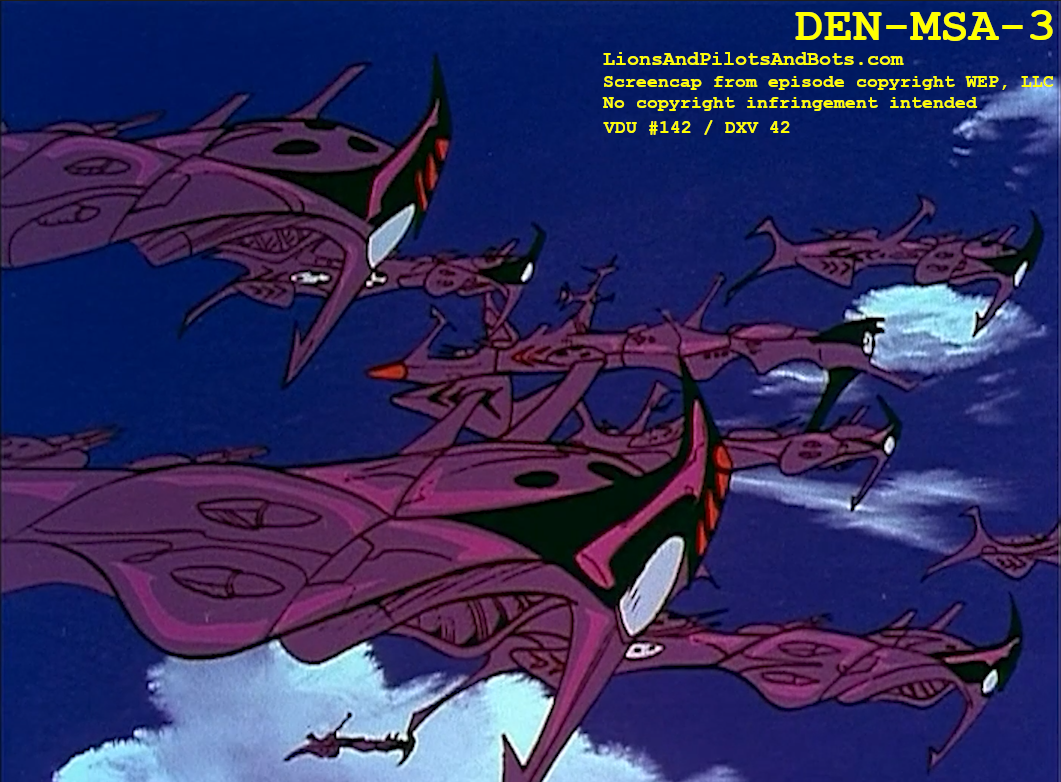
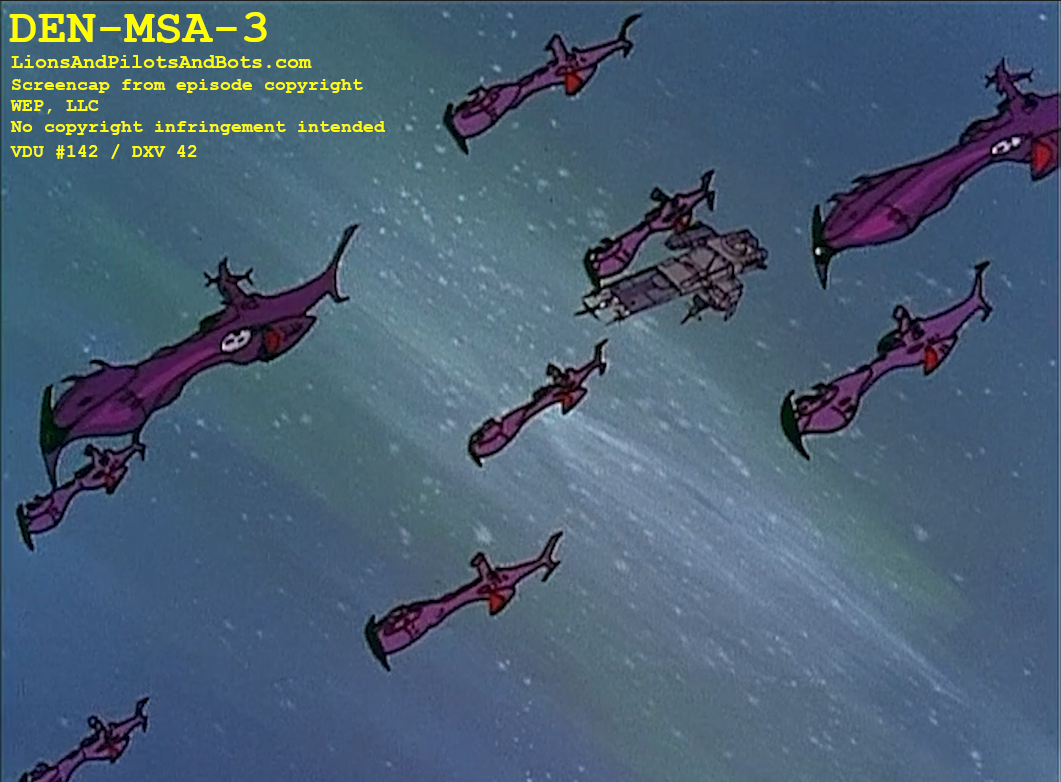
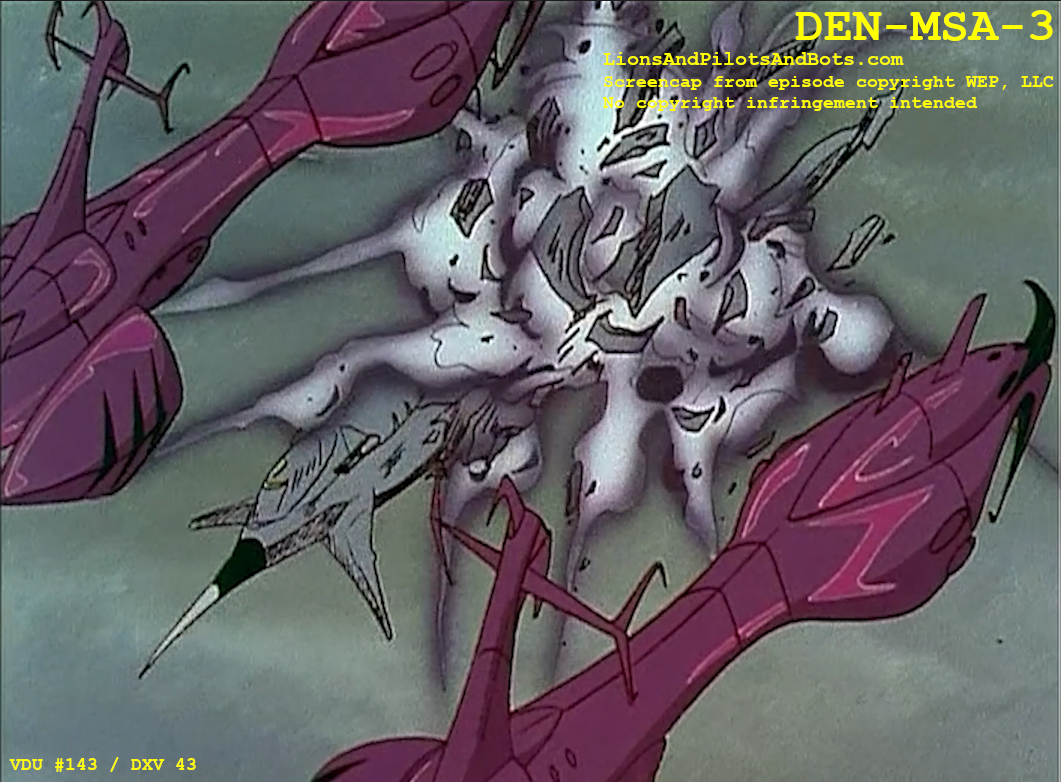
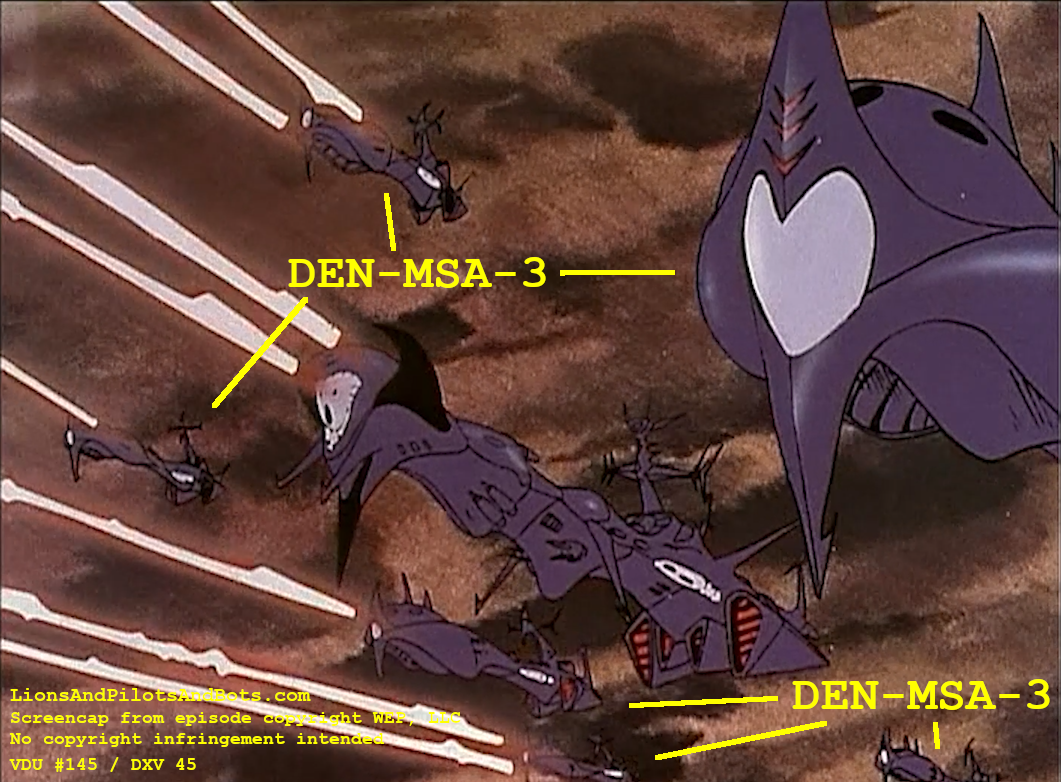
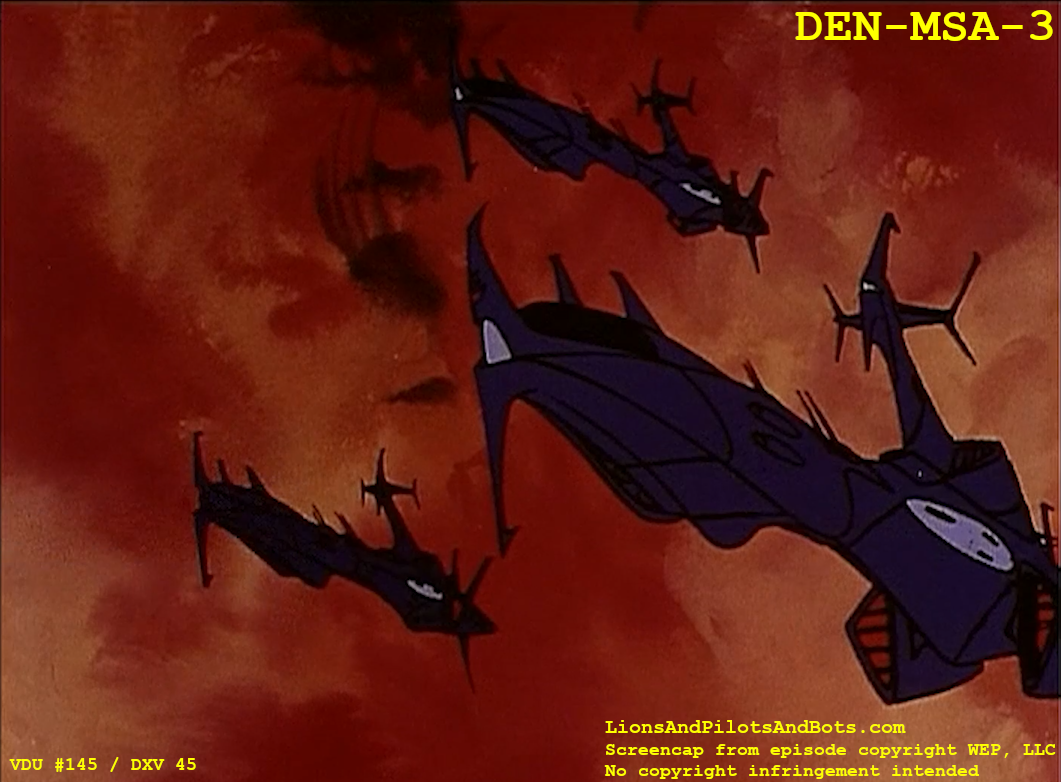
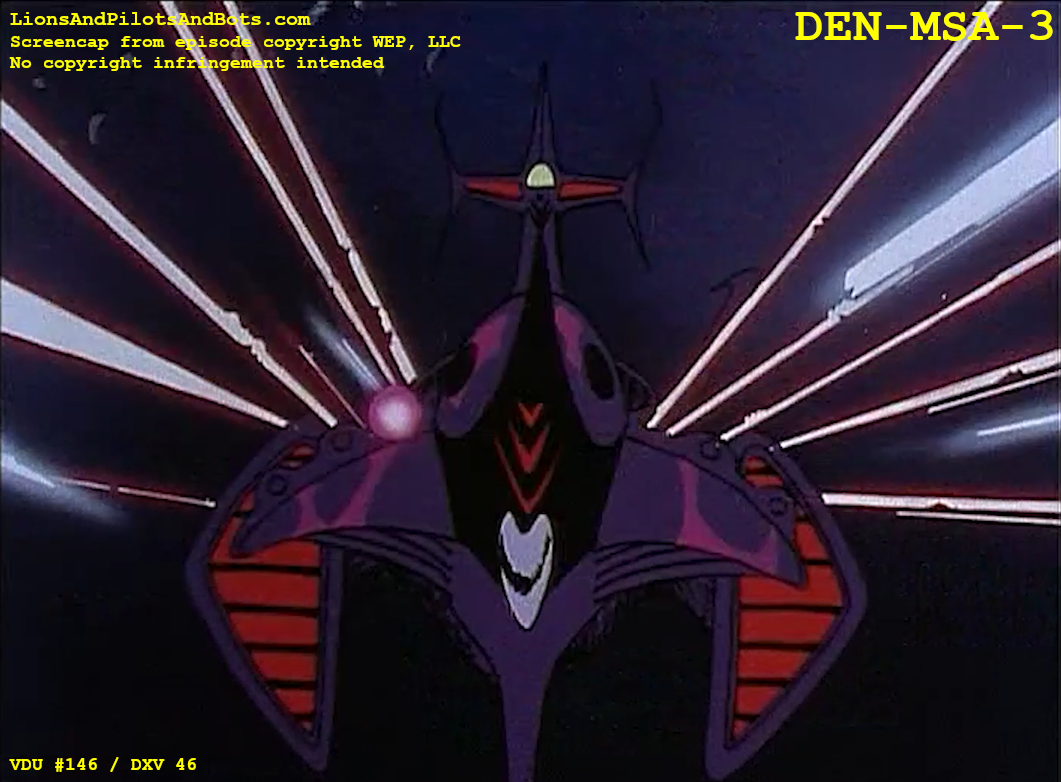
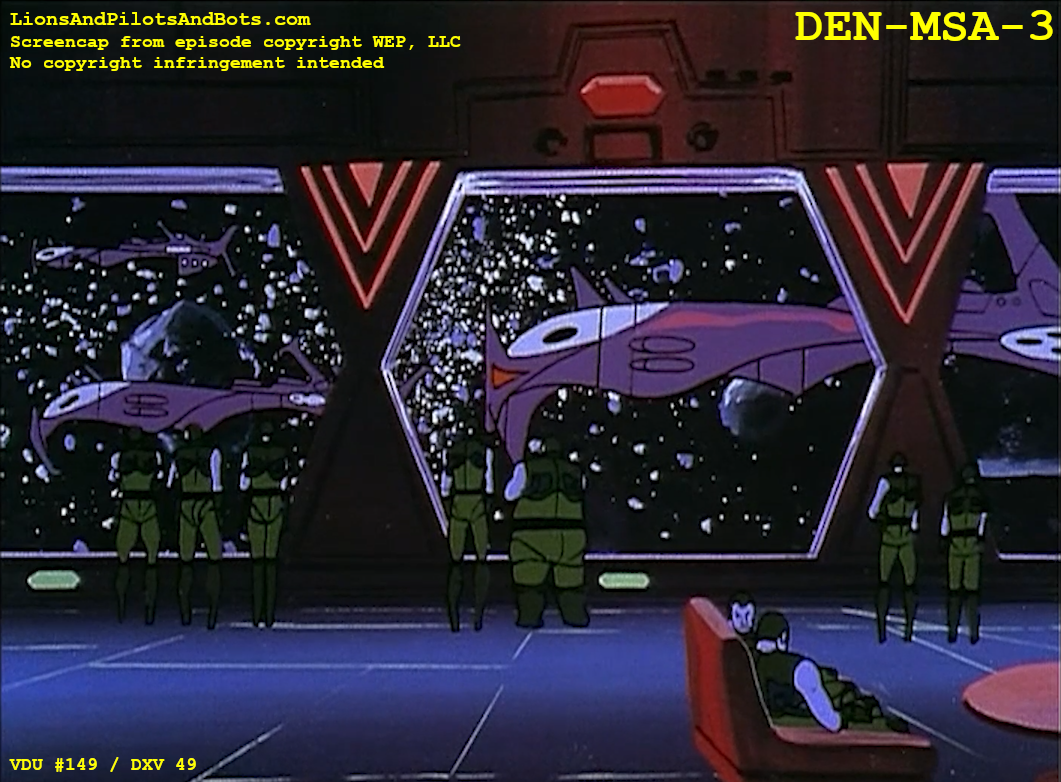
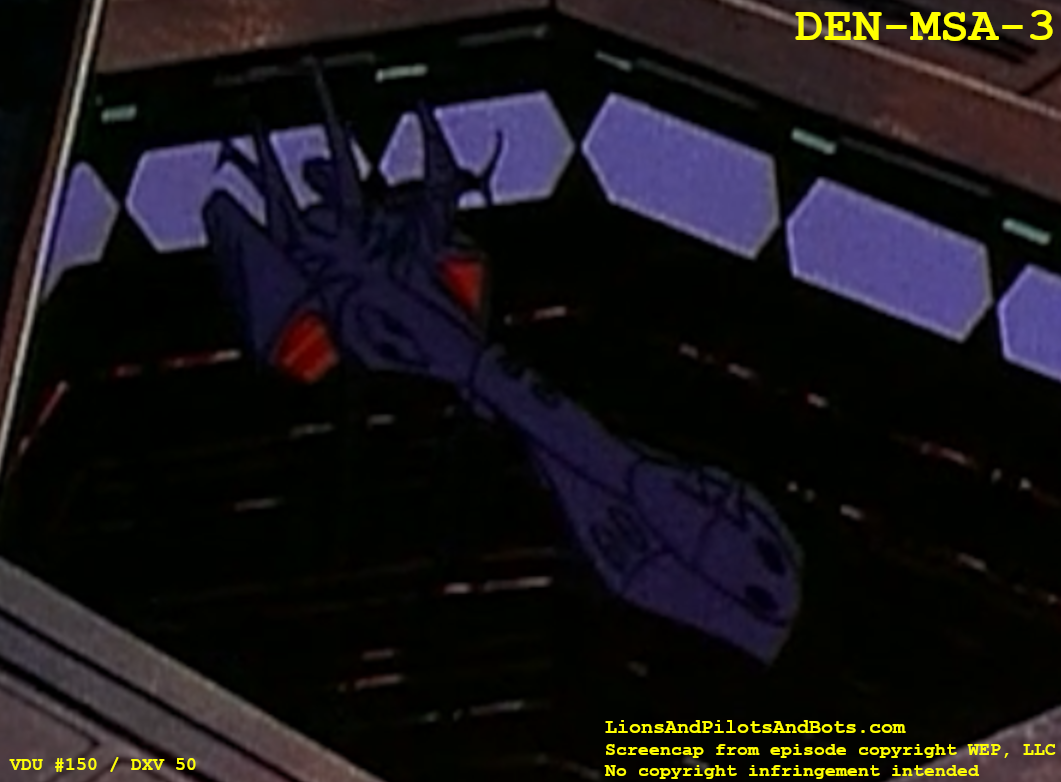
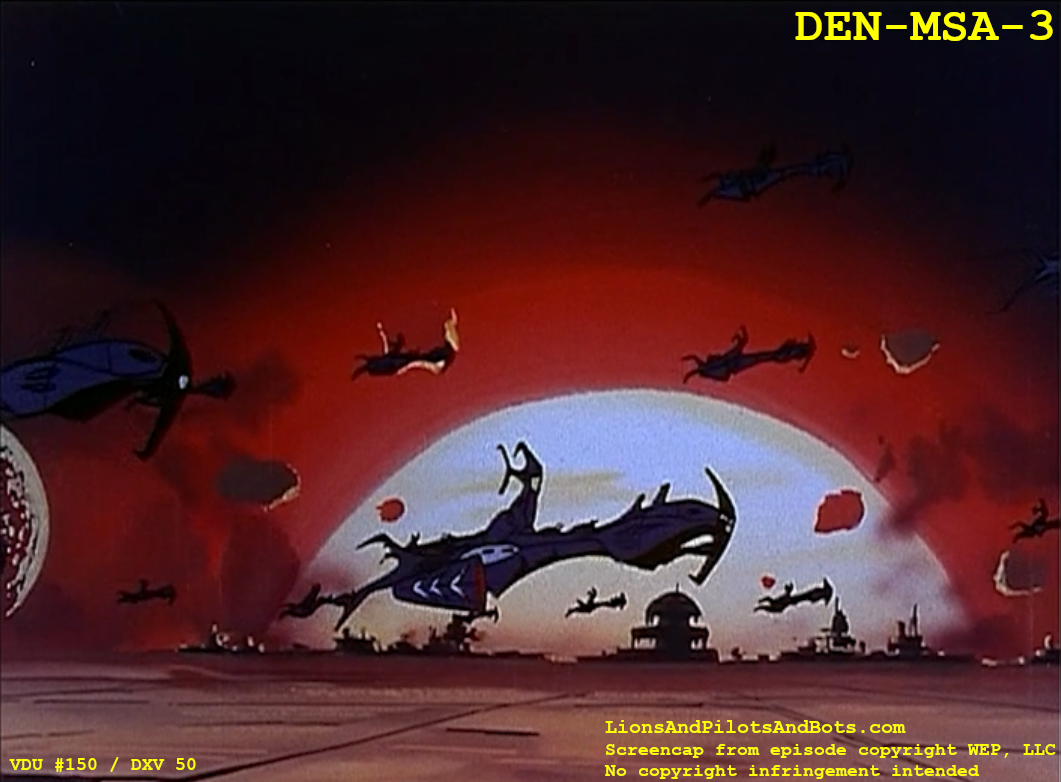
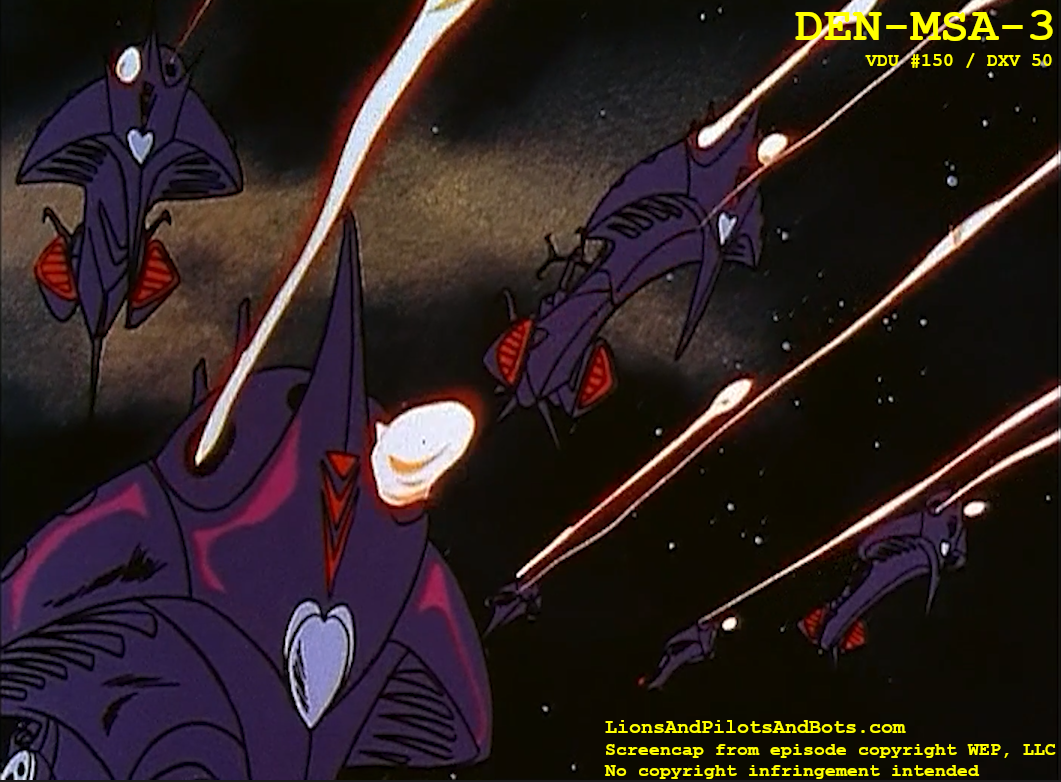
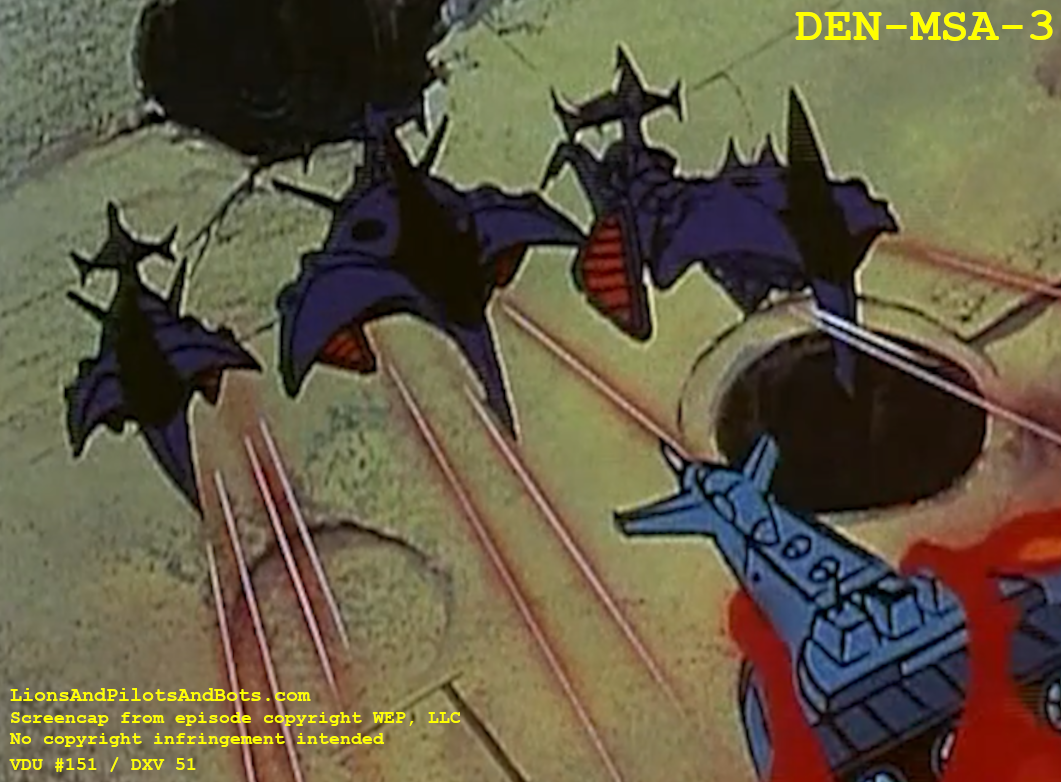
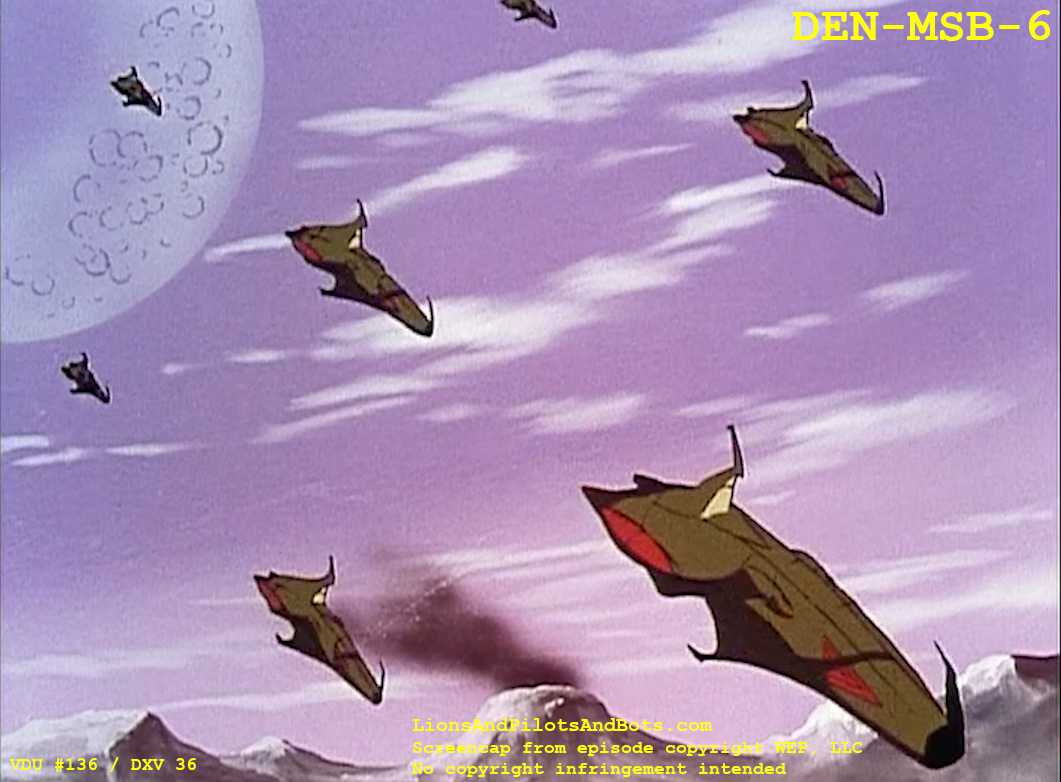
DEN-MSA-3 ships are presumably smaller than the DEN-MSX-2 ships that they typically accompany. Whether by deliberate intent or coincidence, DEN-MSA-3 ships look like scarier versions of DEN-MSA-1 ships.
DEN-MSA-3 ships have a vertical spire that protrudes to dorsal from the bow, and a barbed spire that protrudes to ventral from the bow.
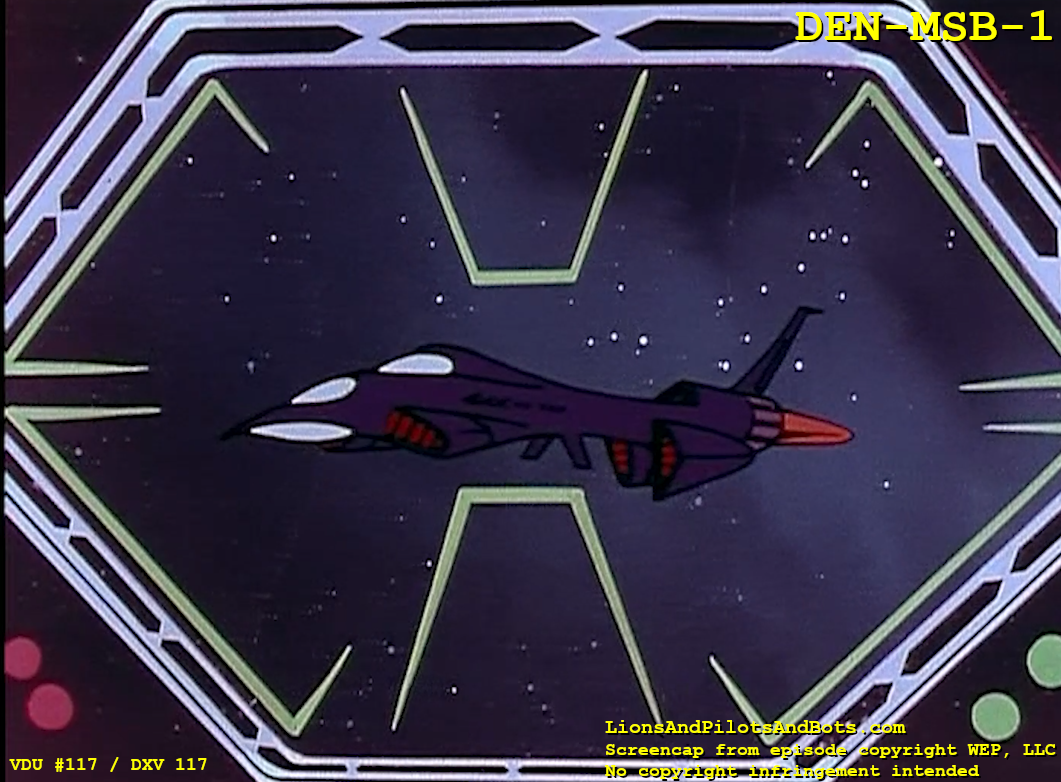
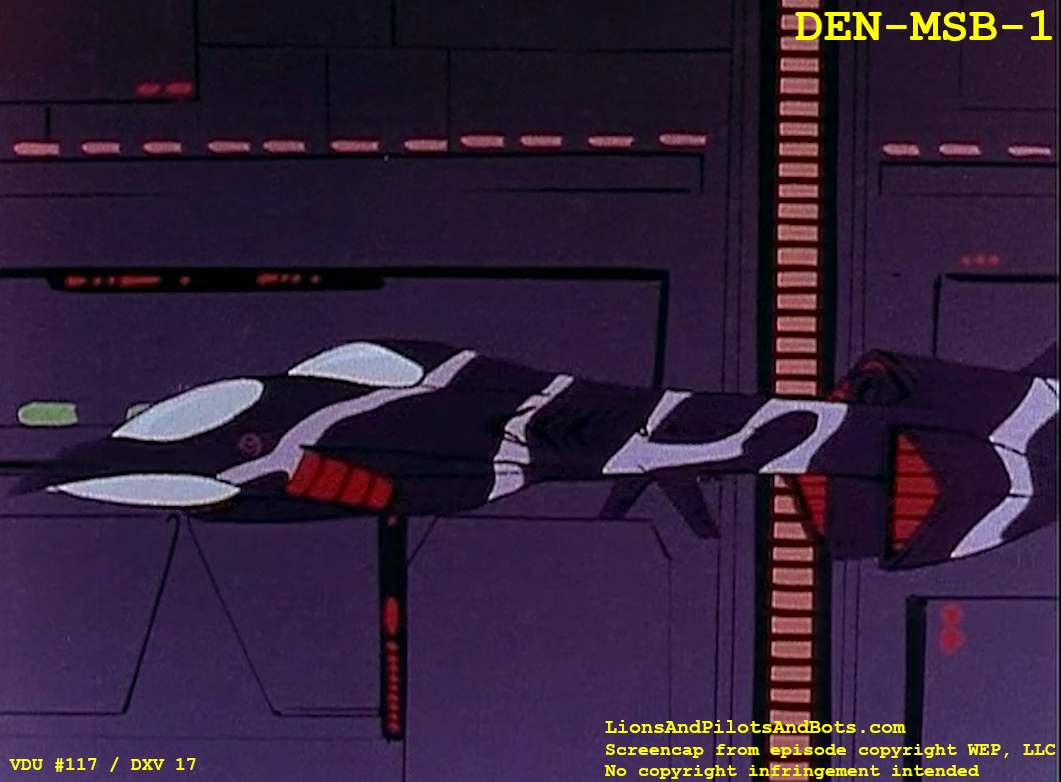
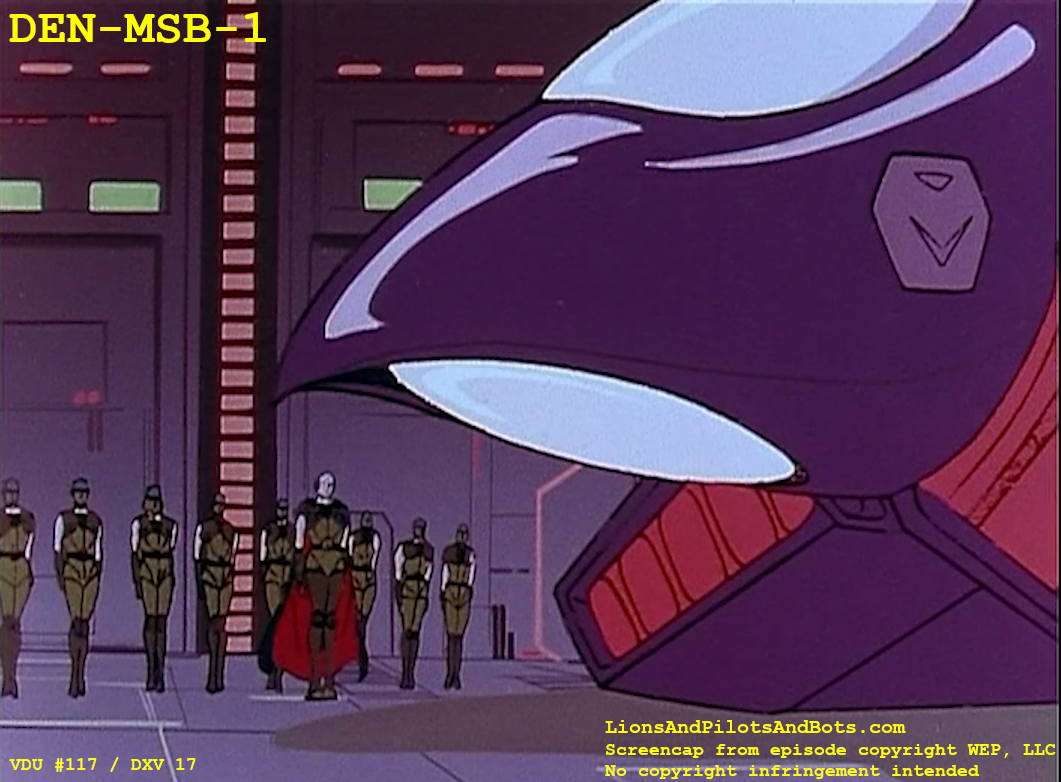
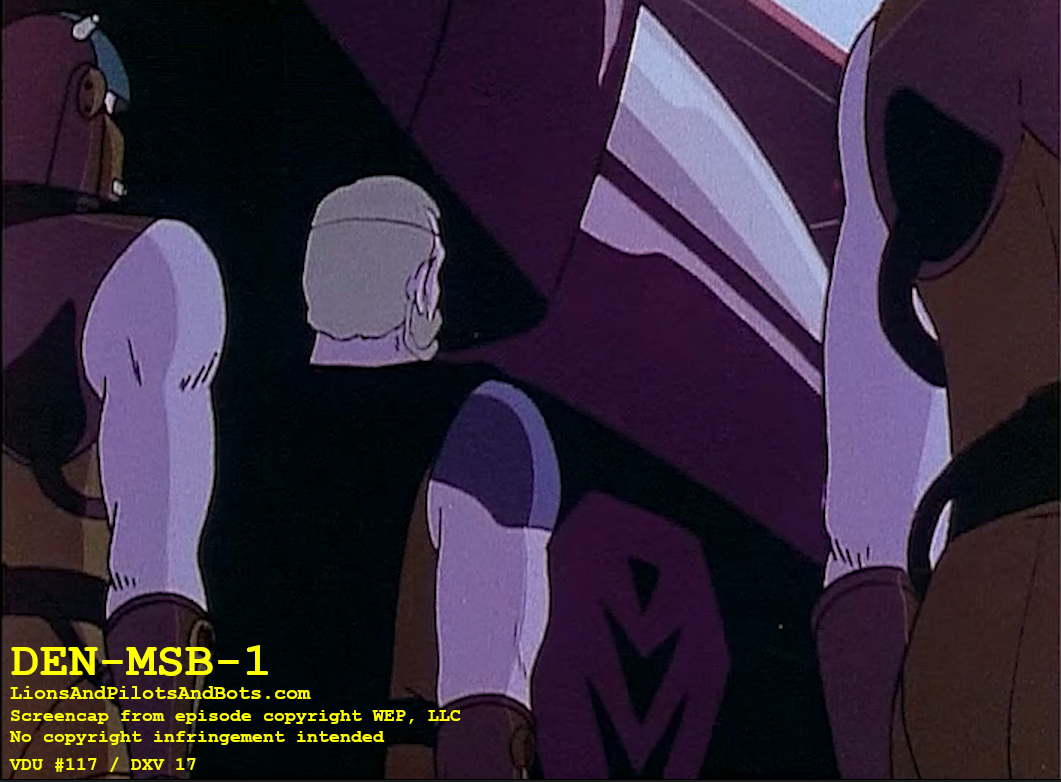
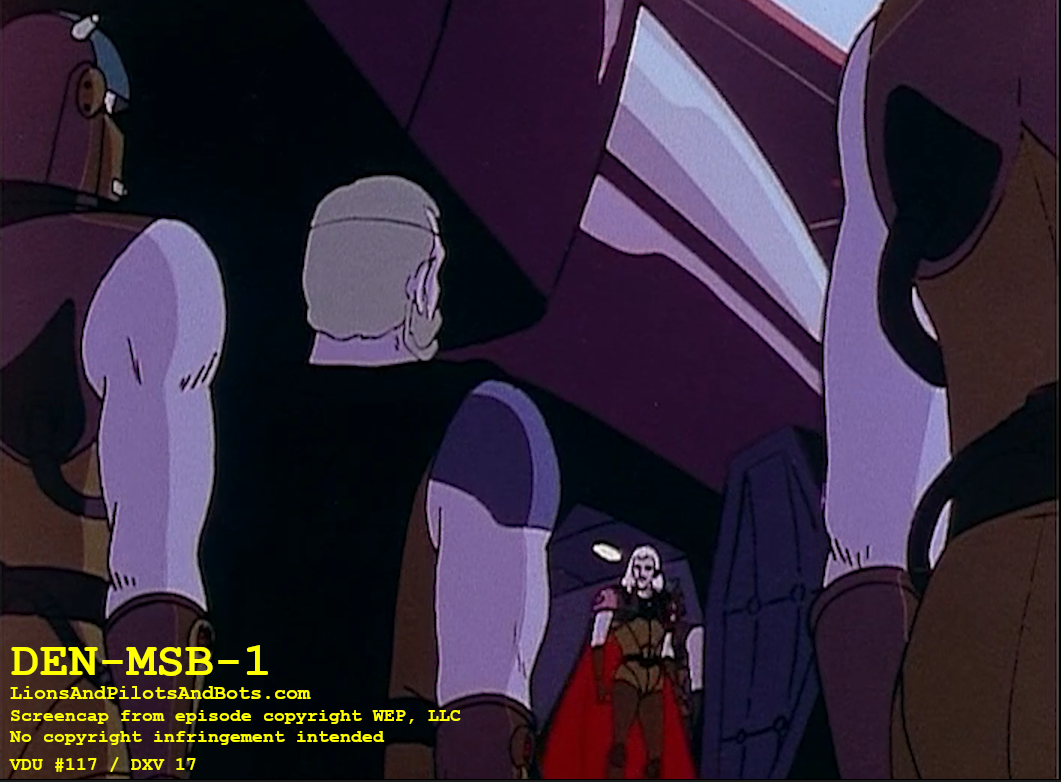
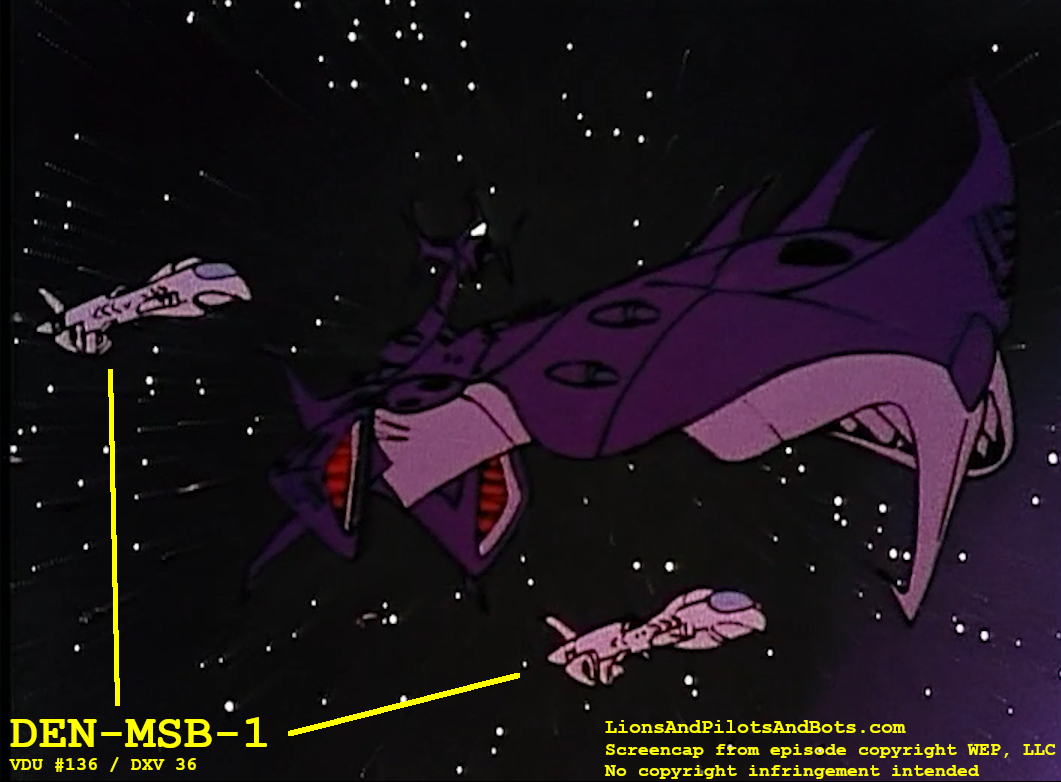
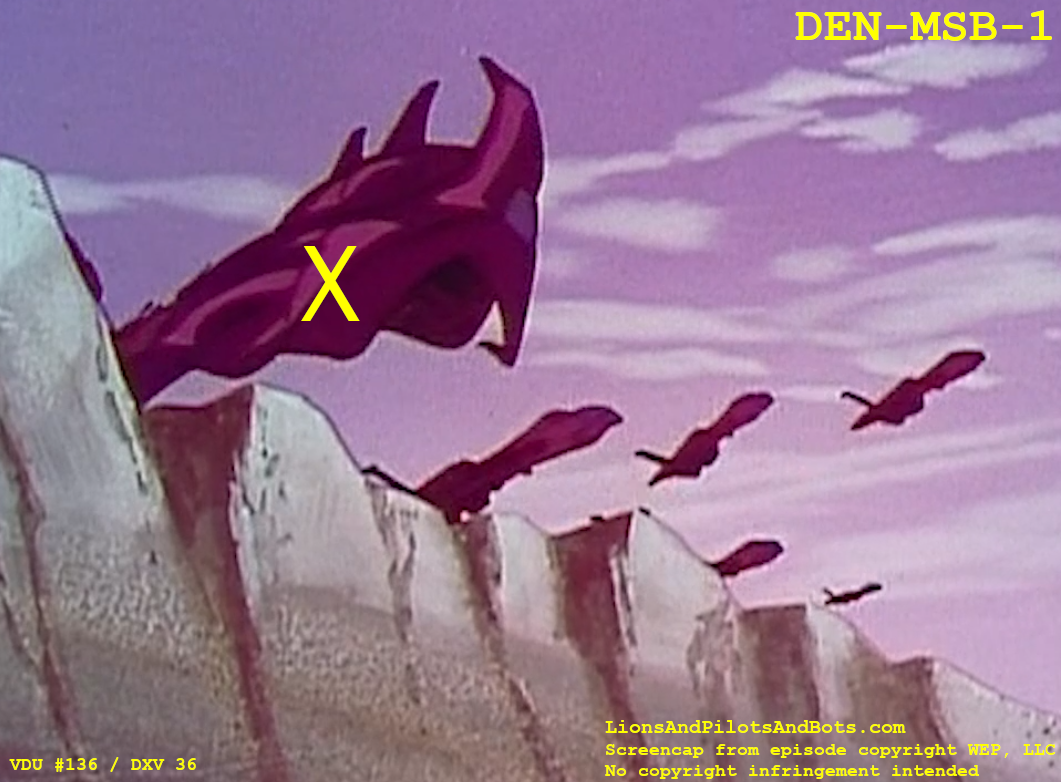
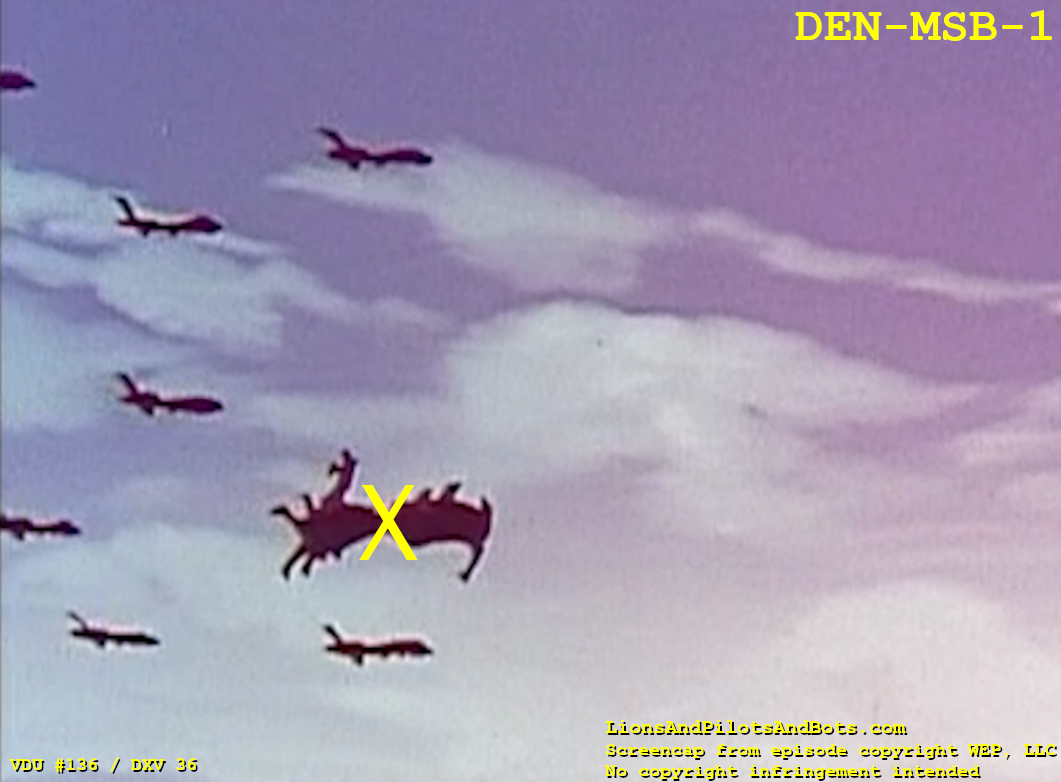
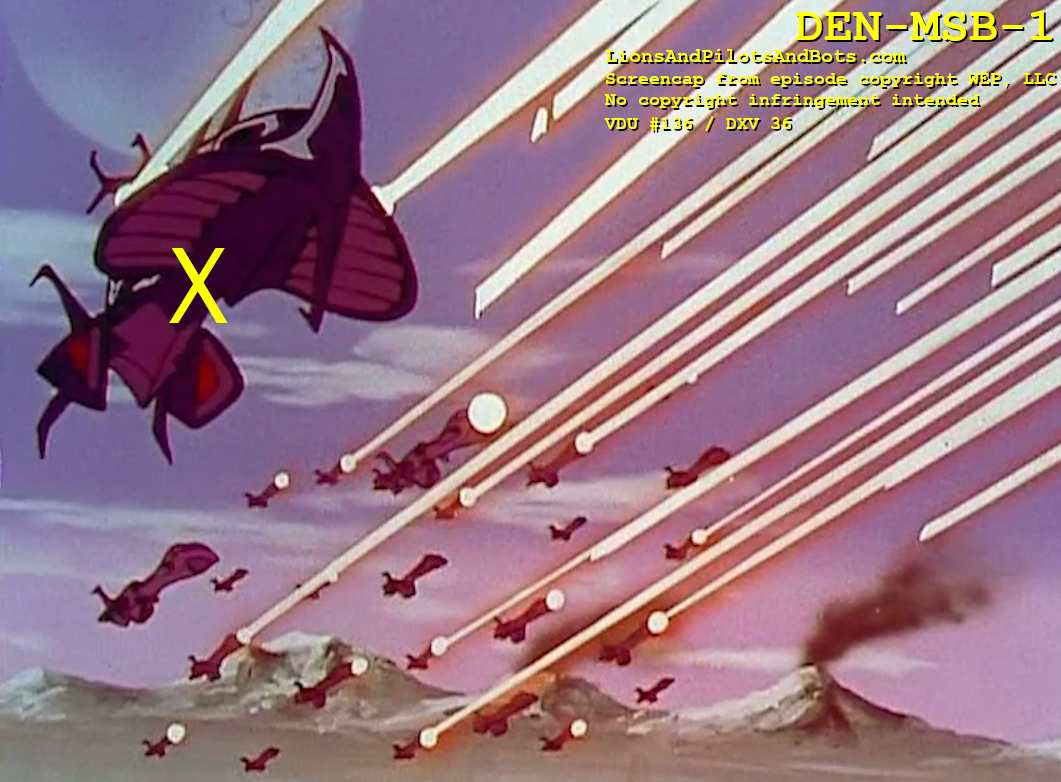
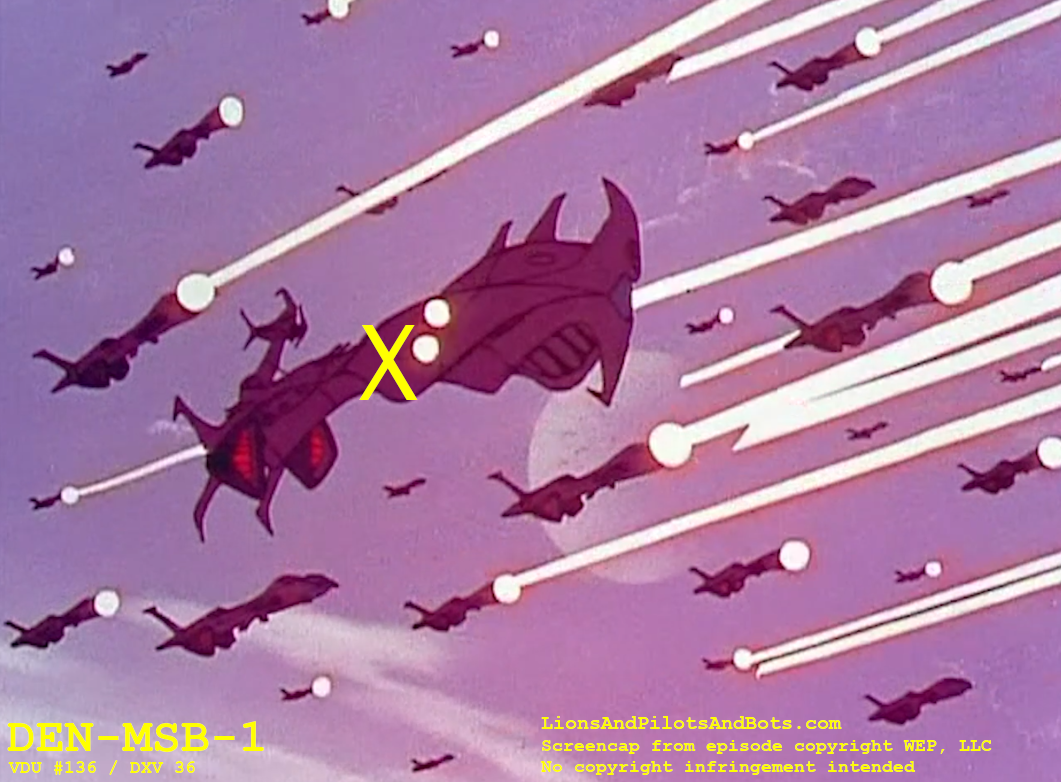
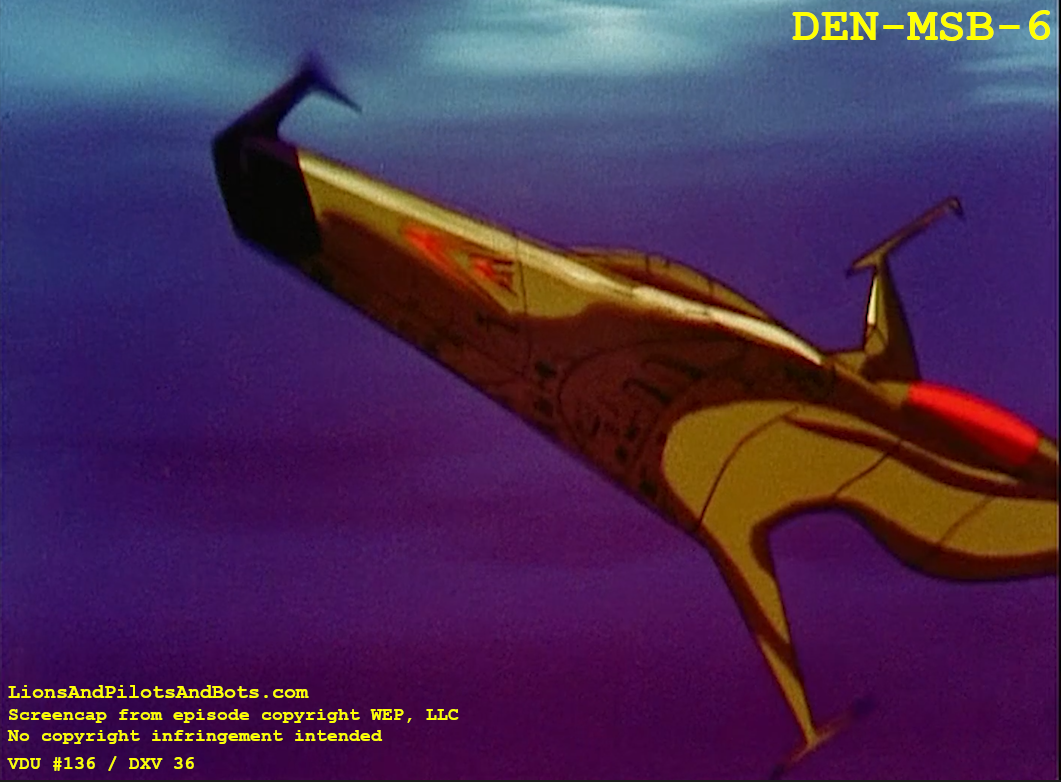
When viewed from the side, DEN-MSB-1 ships are relatively sleek “space planes.” They seem to be similar in size to a 20th-century passenger airliner of Earth. They have a port-side hatch through which passengers can enter and exit the ship.
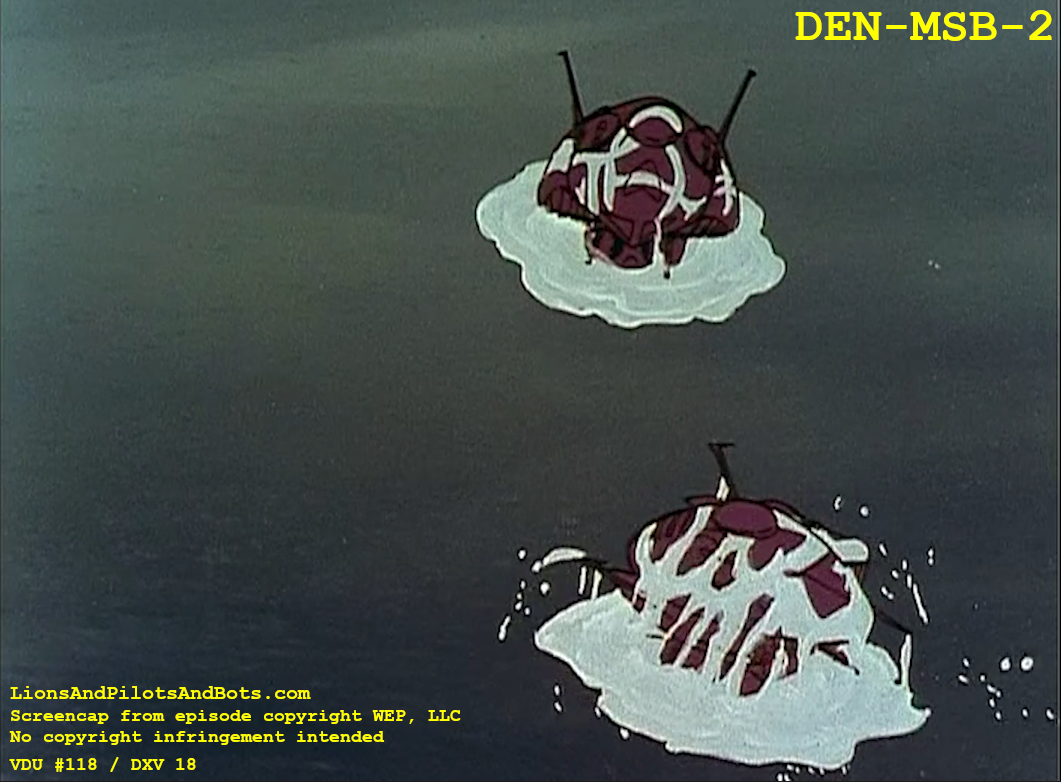
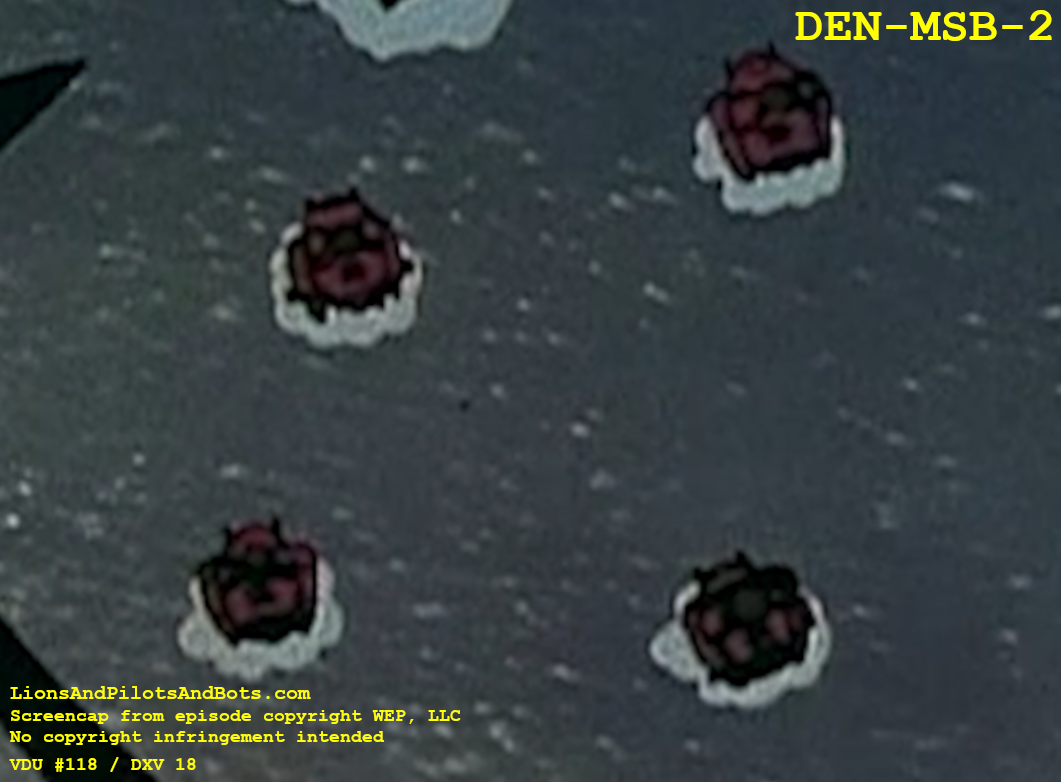
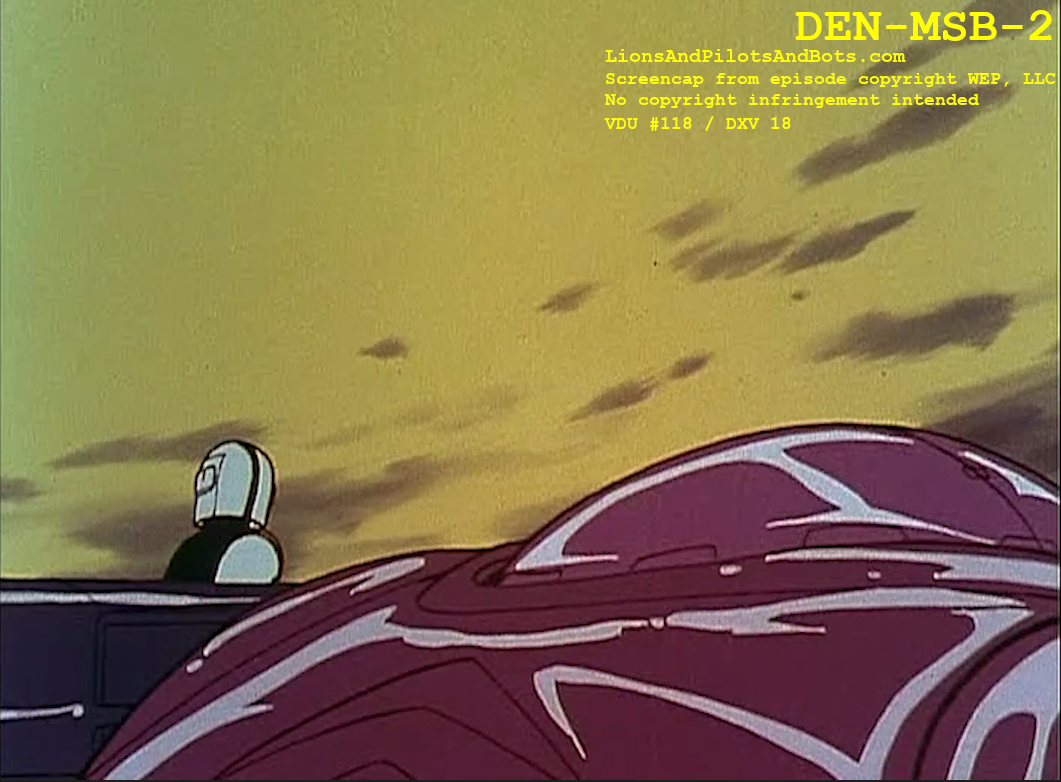
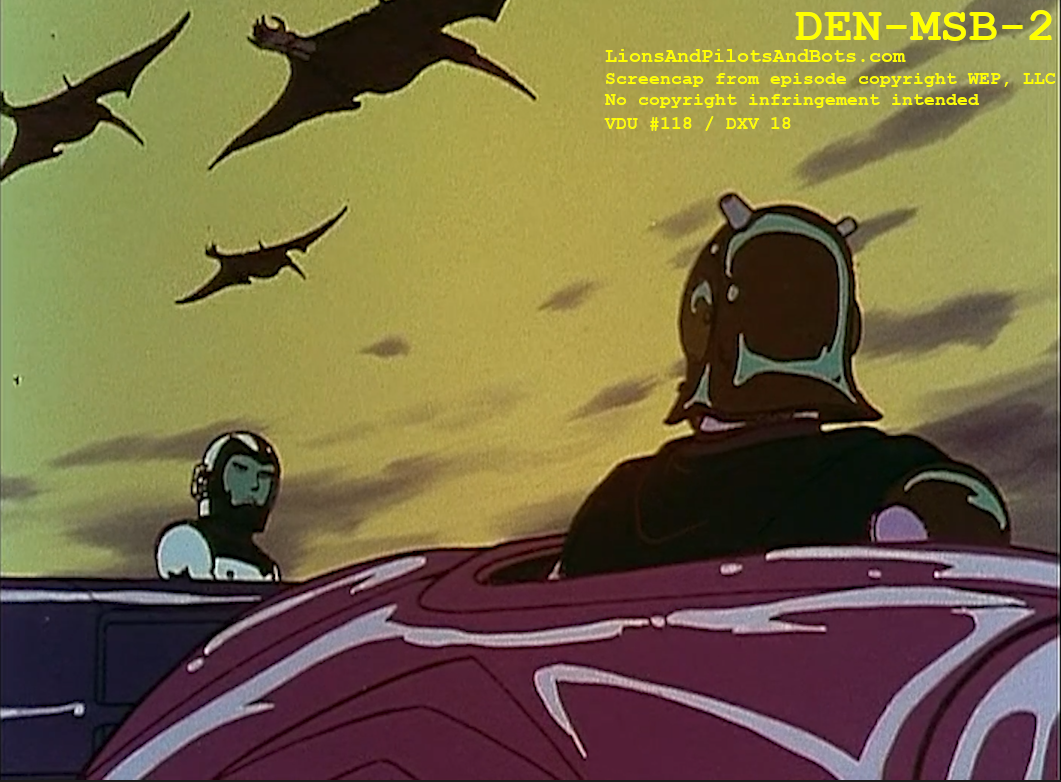
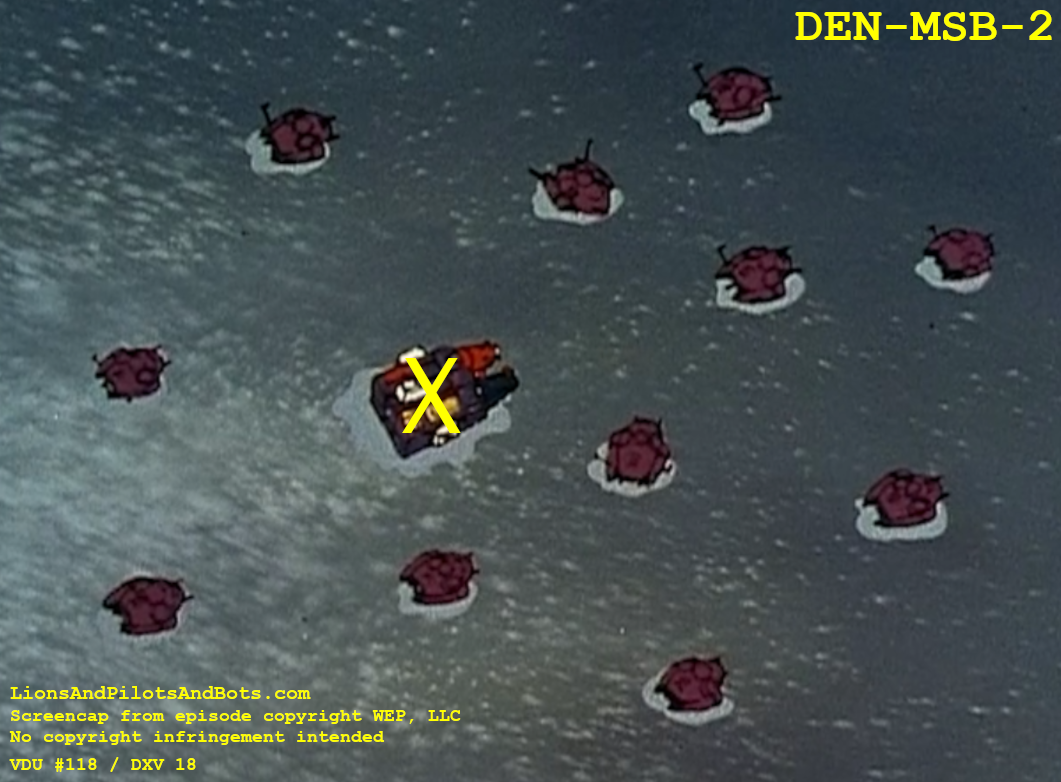
Much like the vehicles of the Voltron Sea Team, and the Aqua Fighter, DEN-MSB-2 ships can operate underwater, and they can rise to the surface of a body of water. DEN-MSB-2 ships are smaller than the Aqua Fighter.
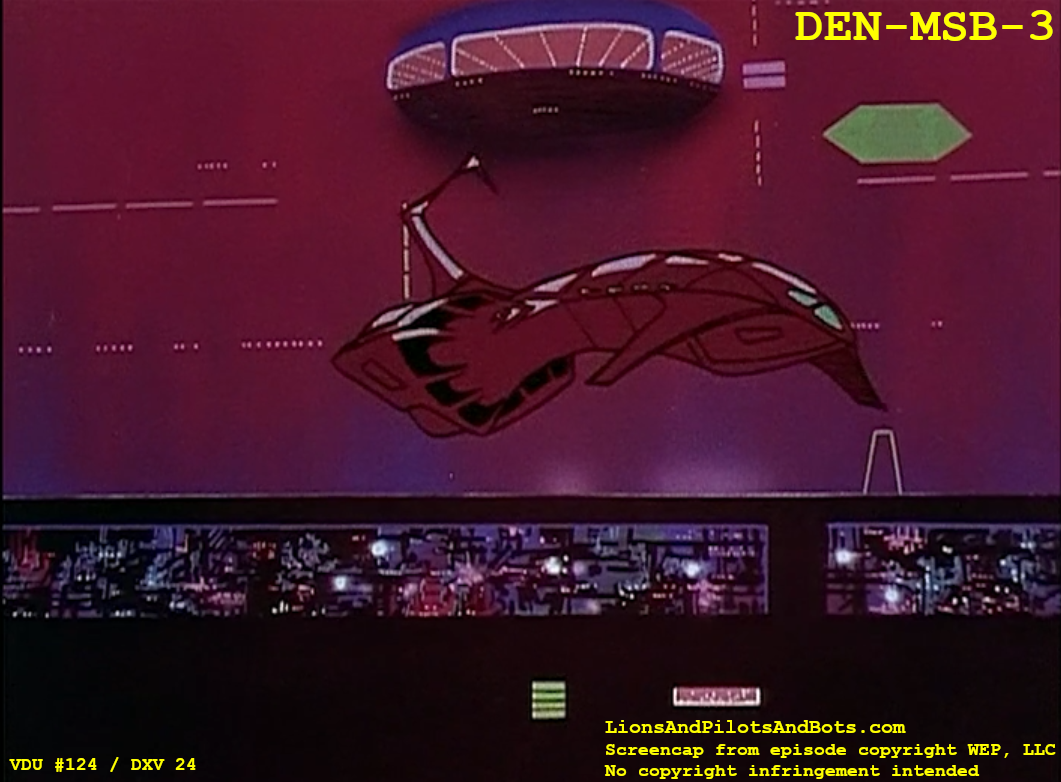
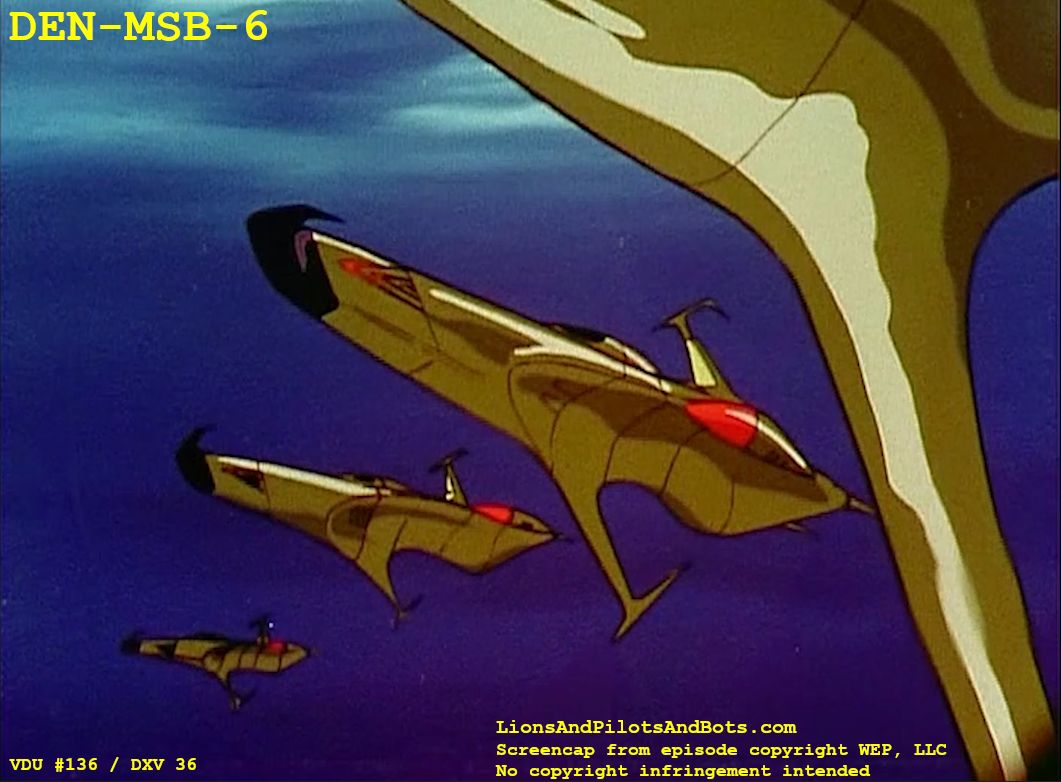
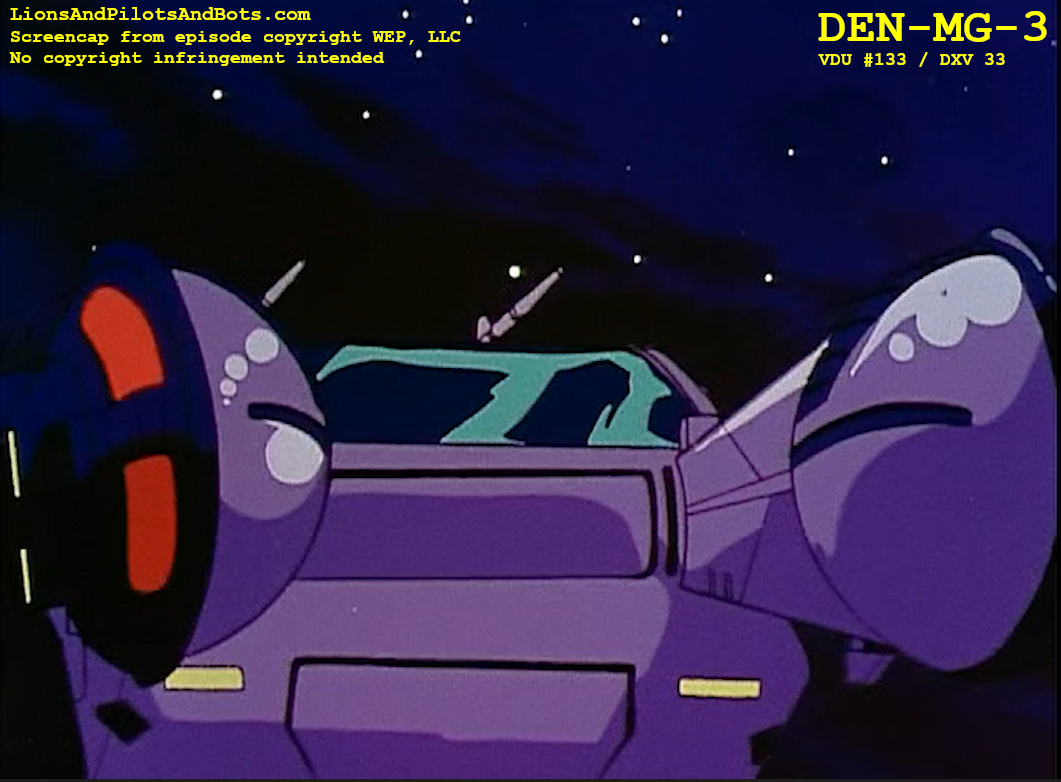
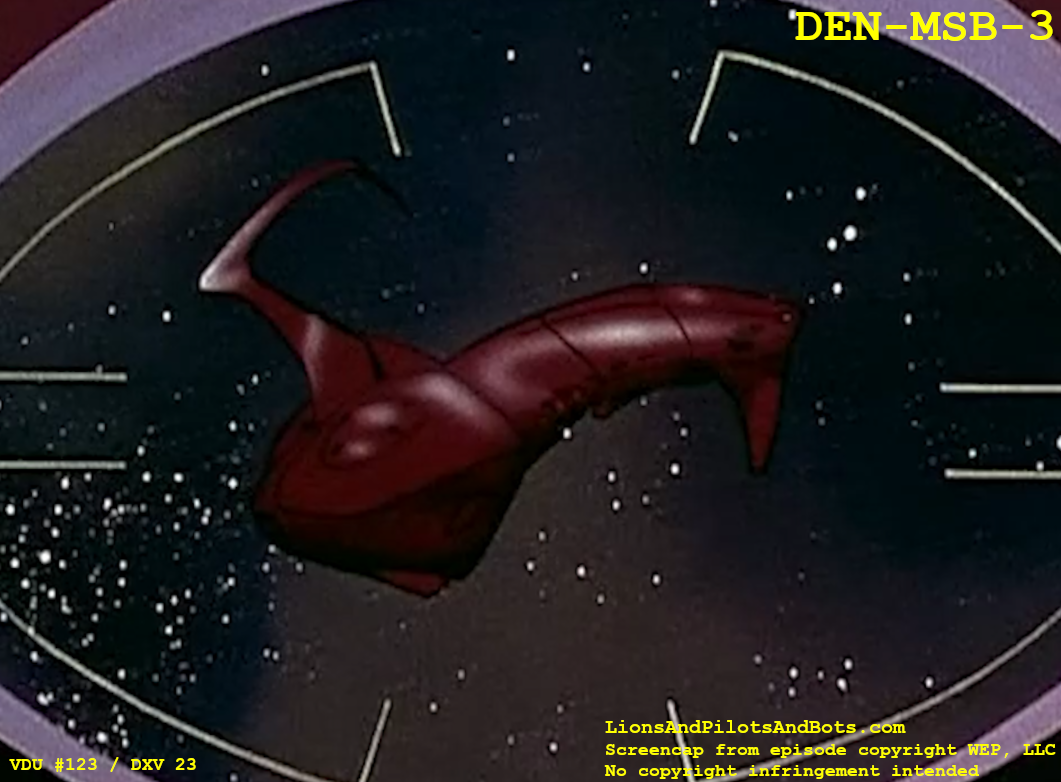
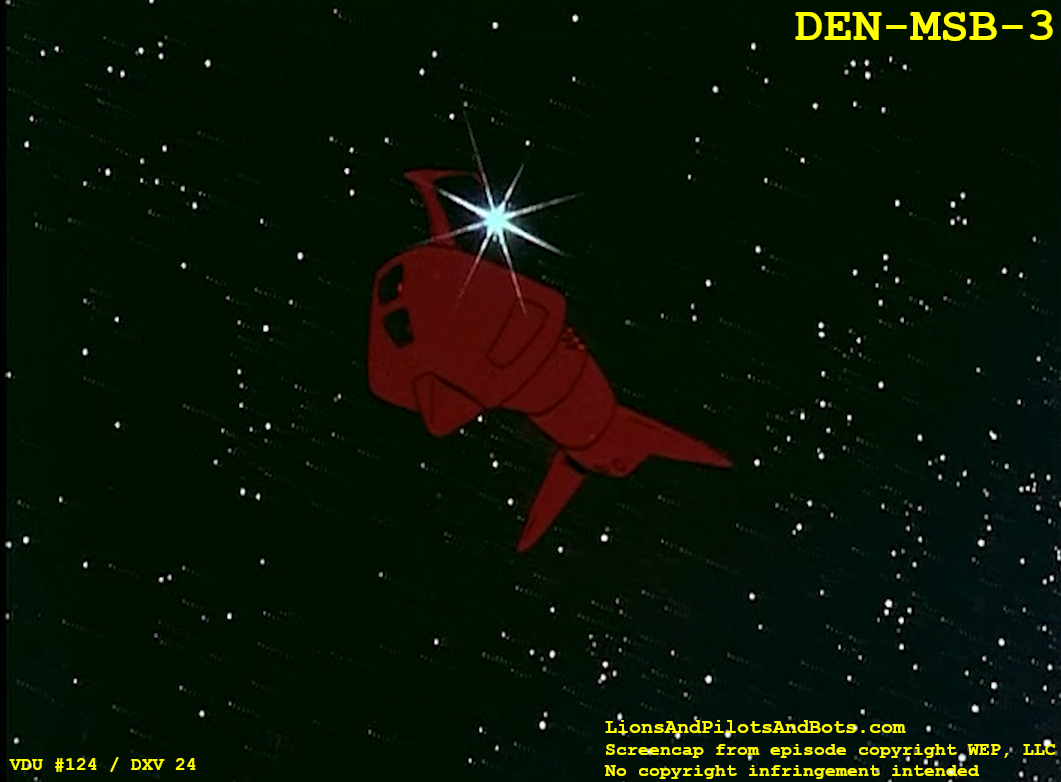
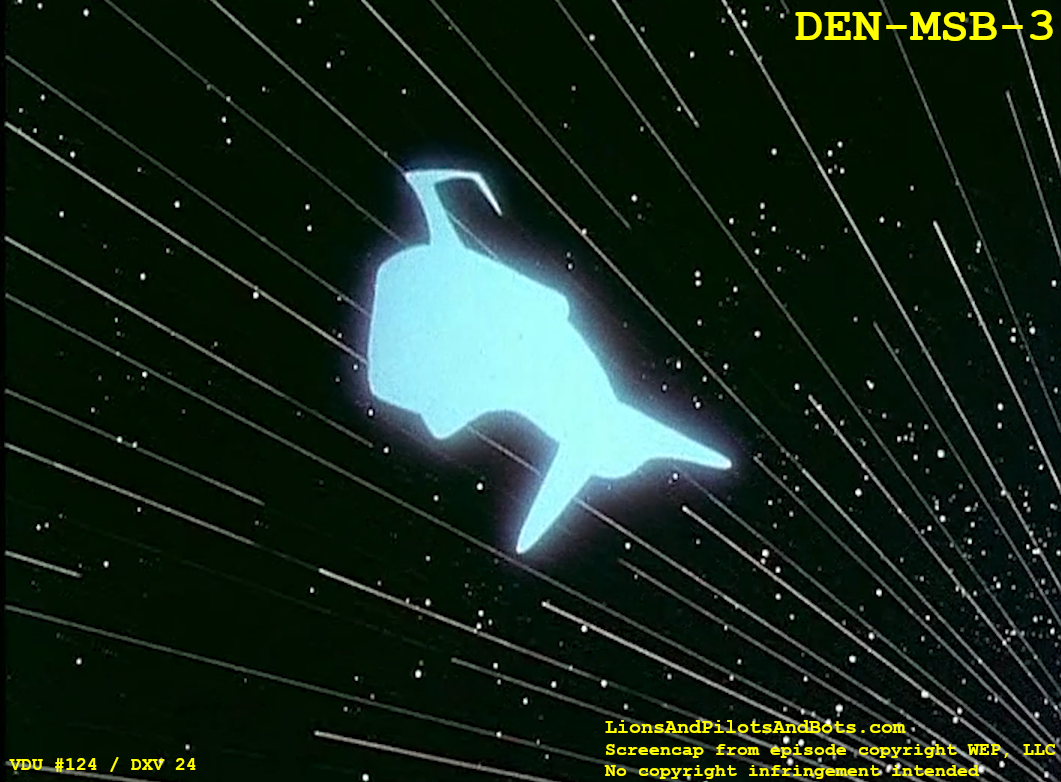
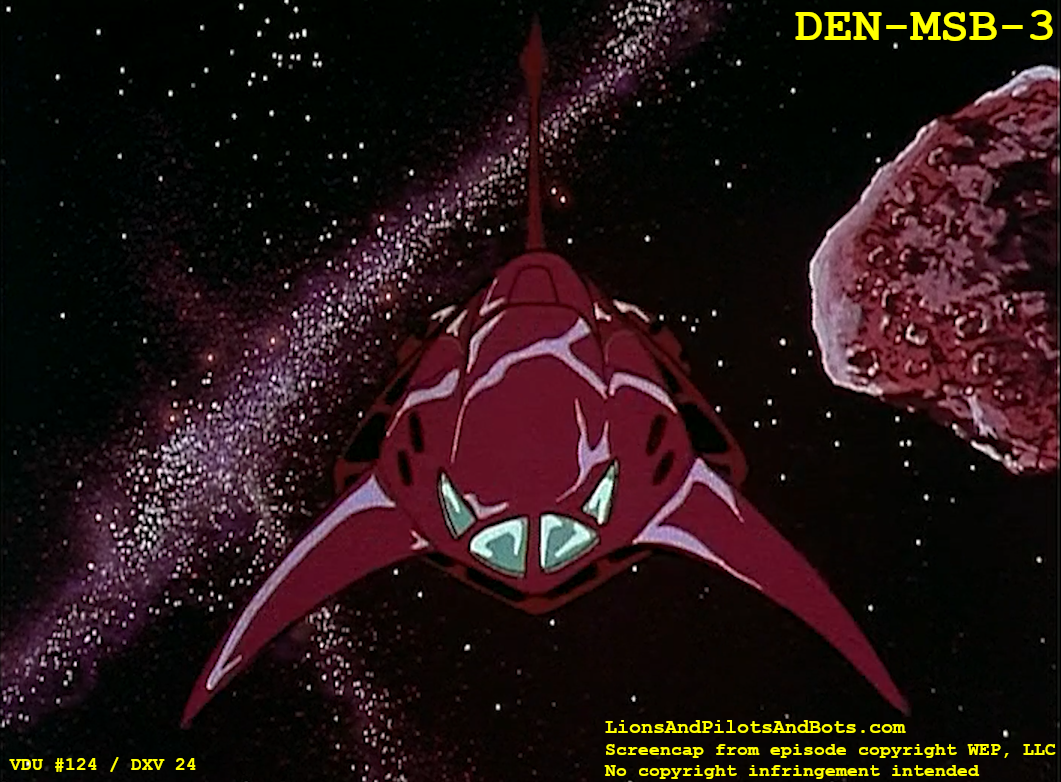
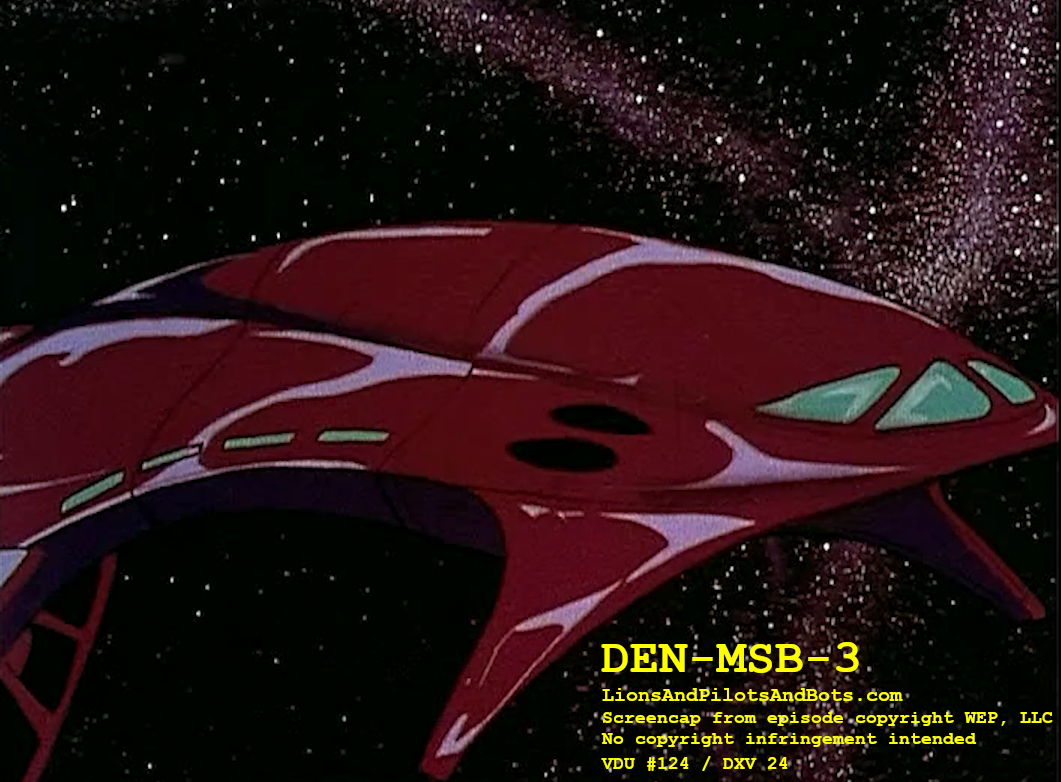
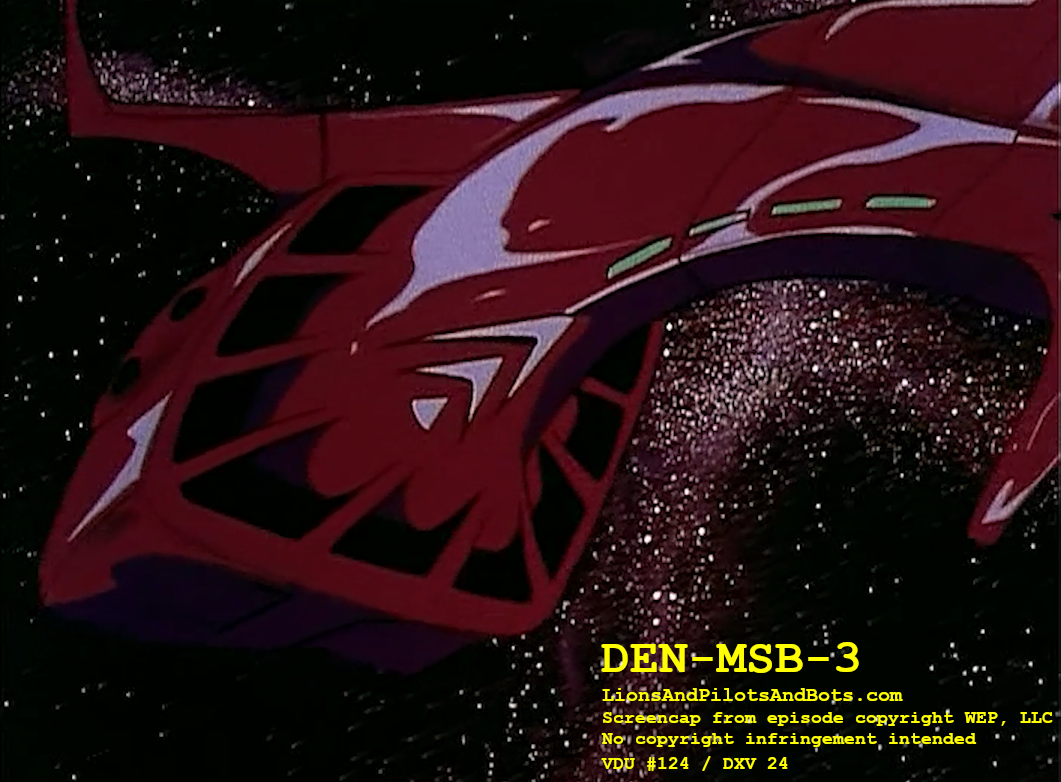
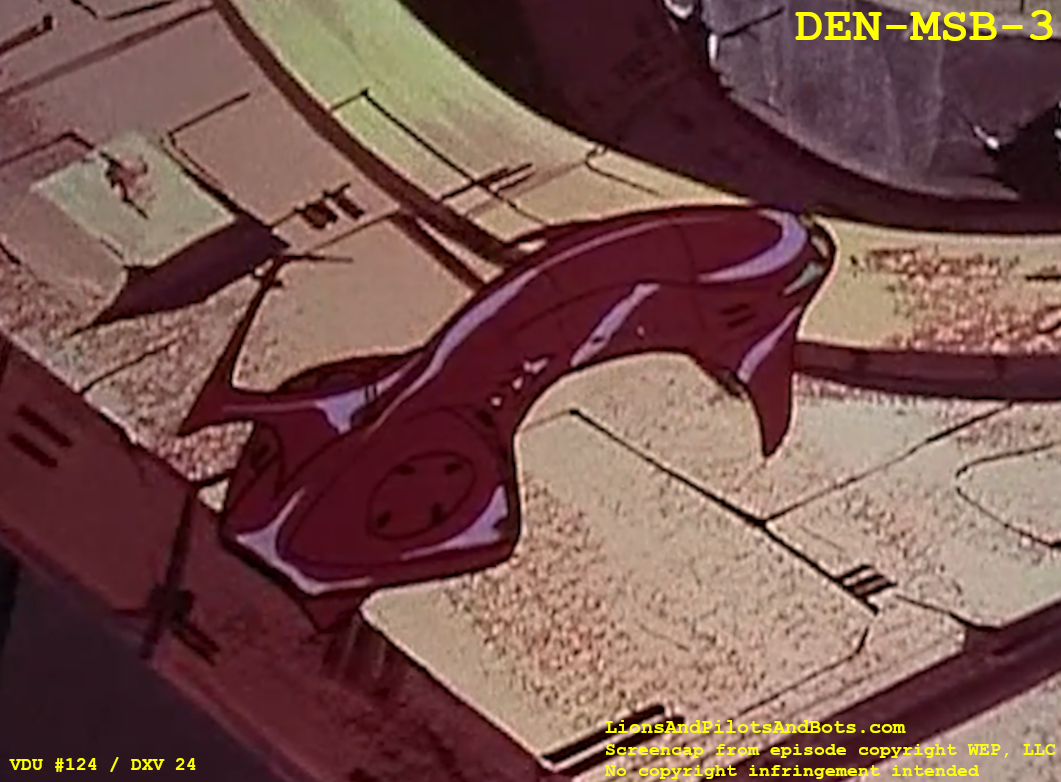
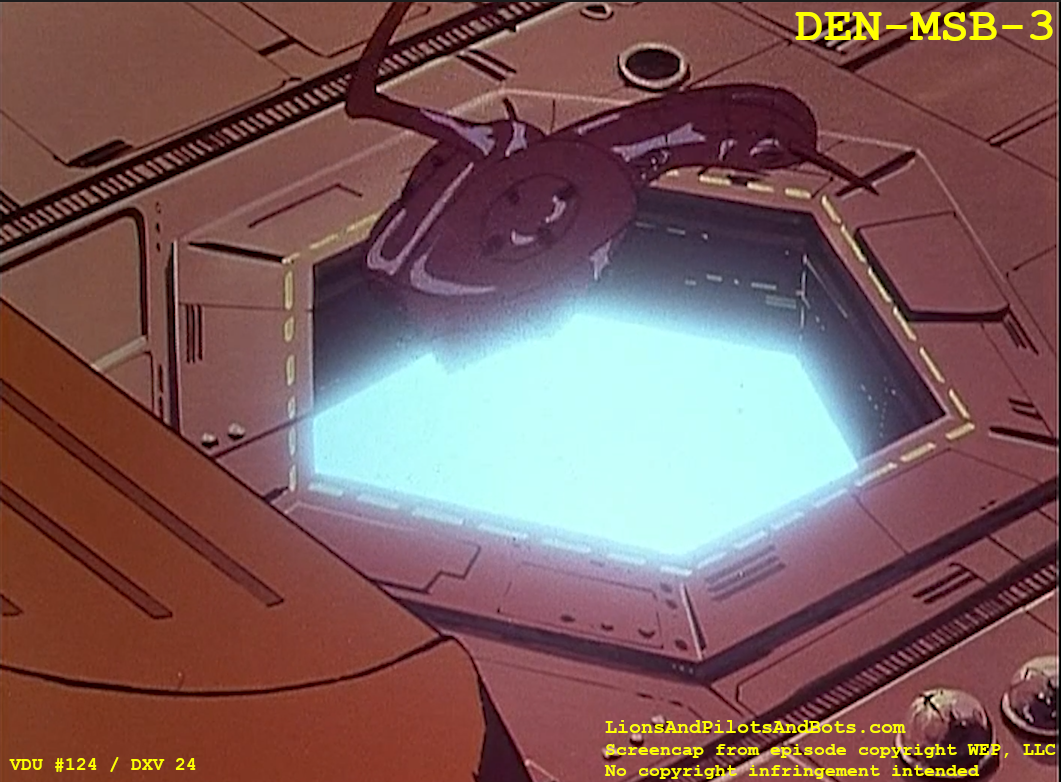
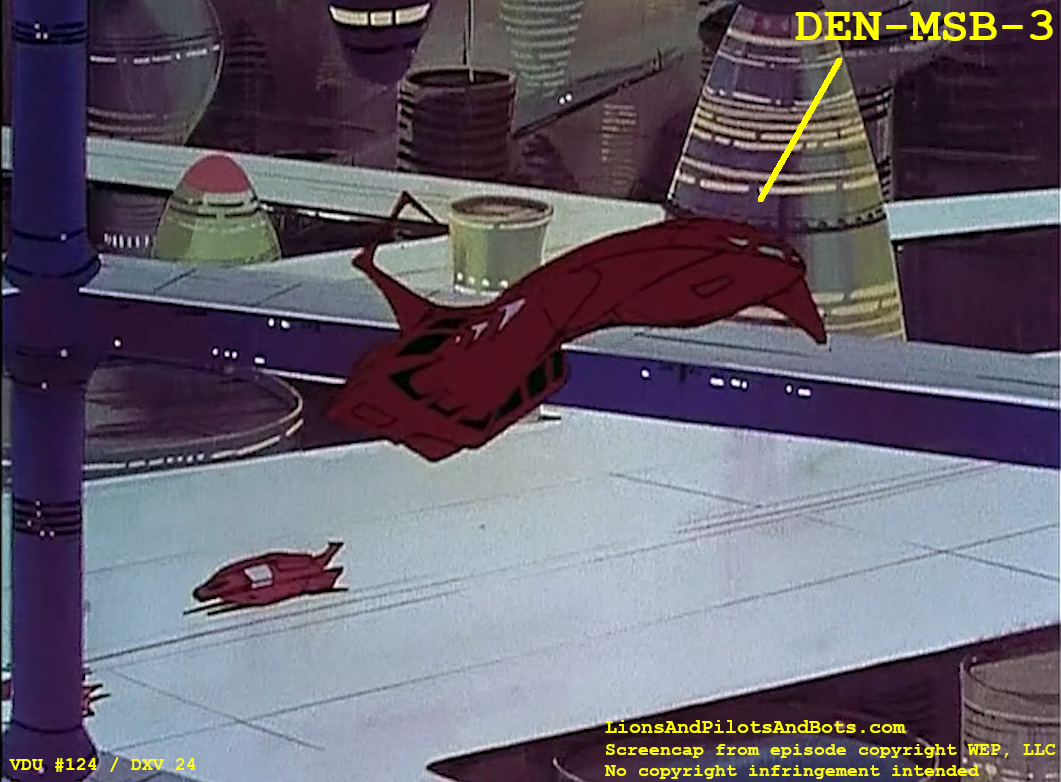
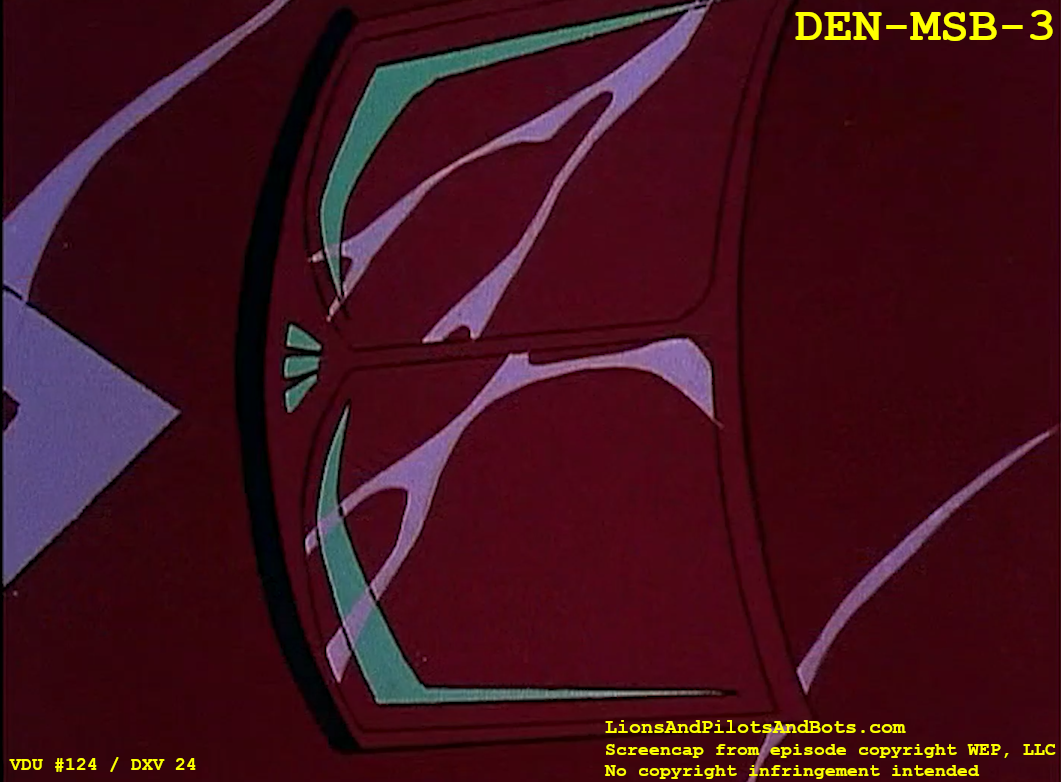
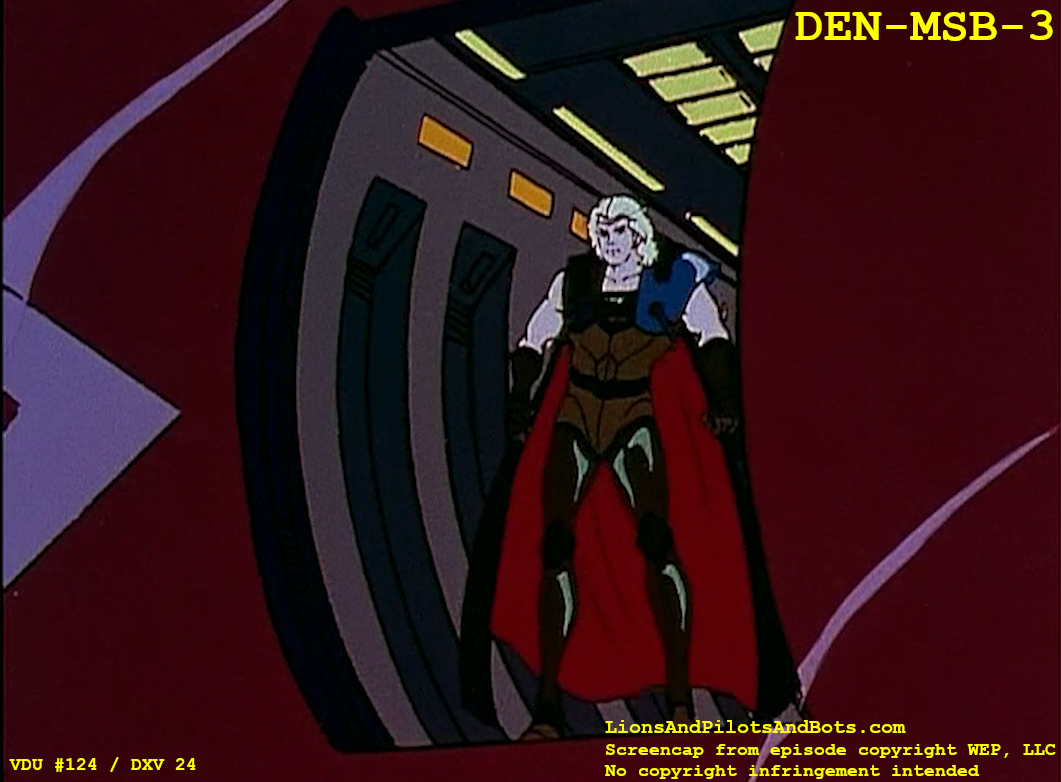
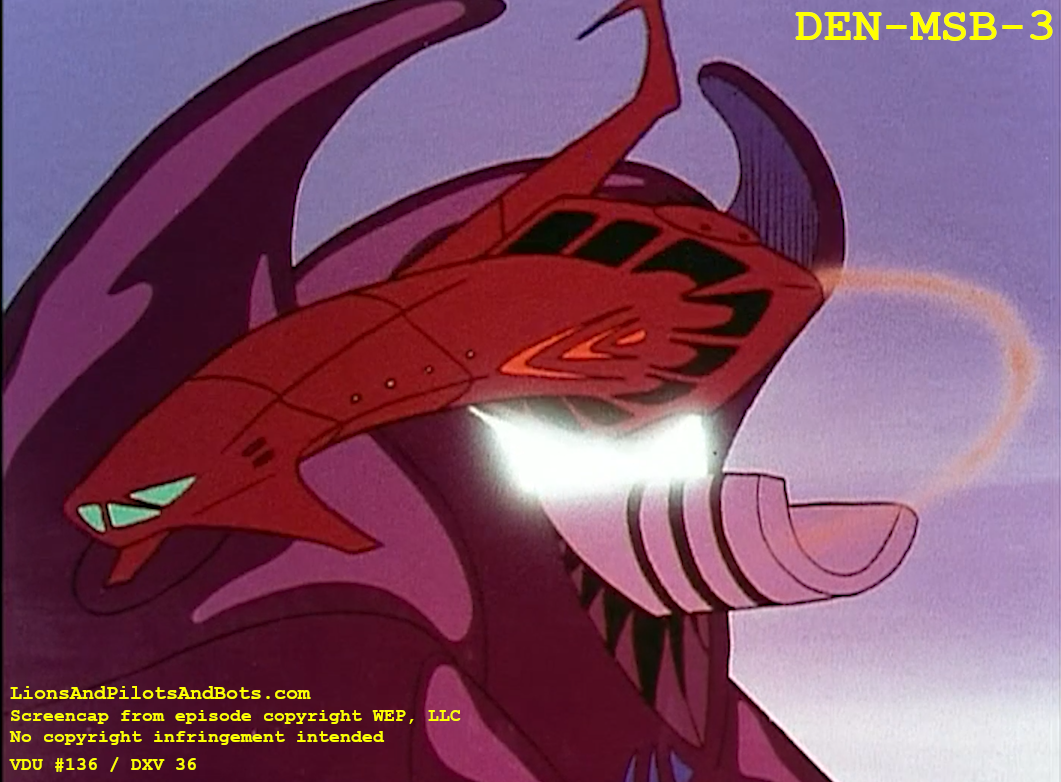
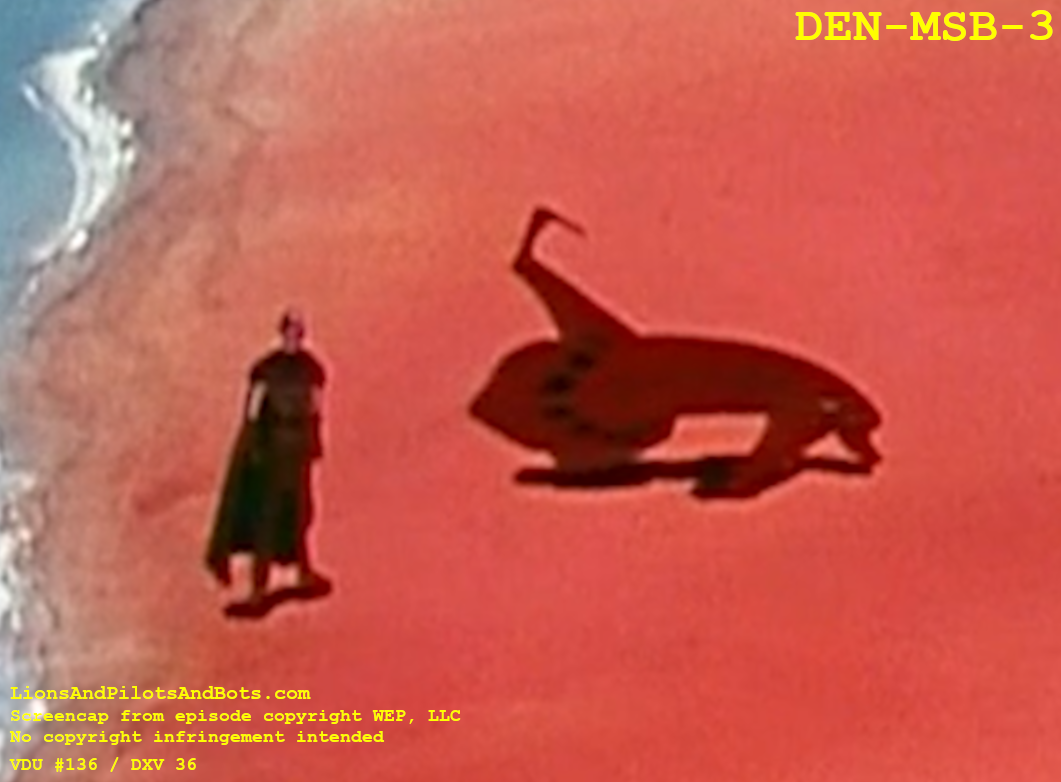
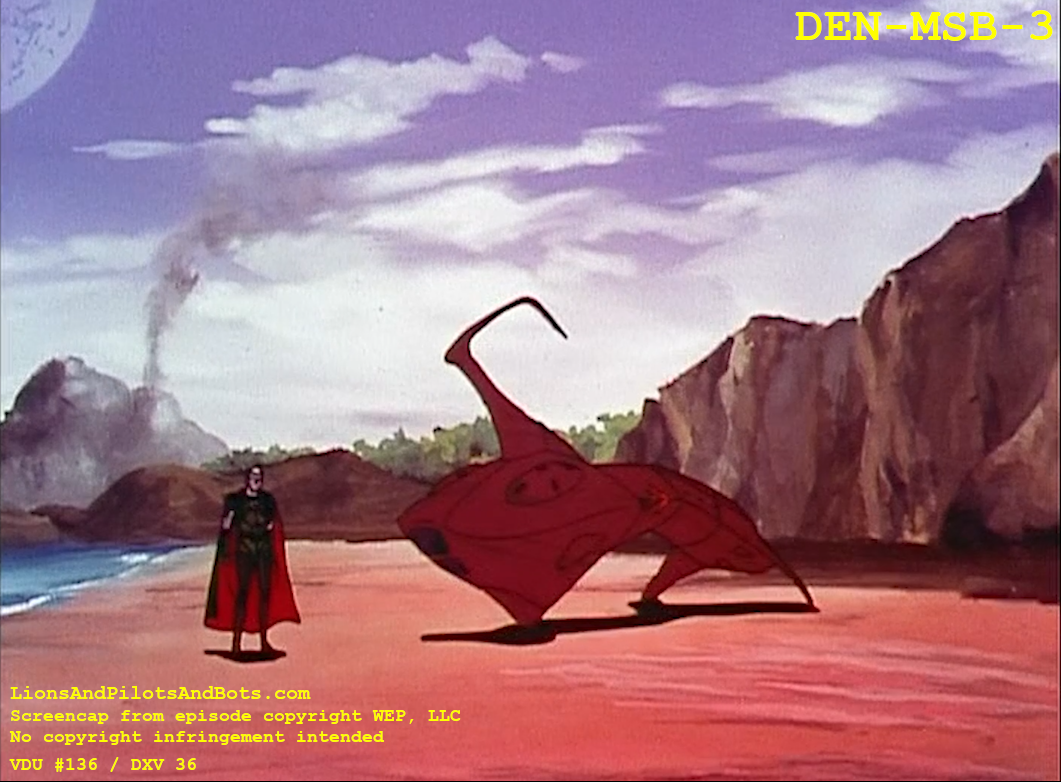
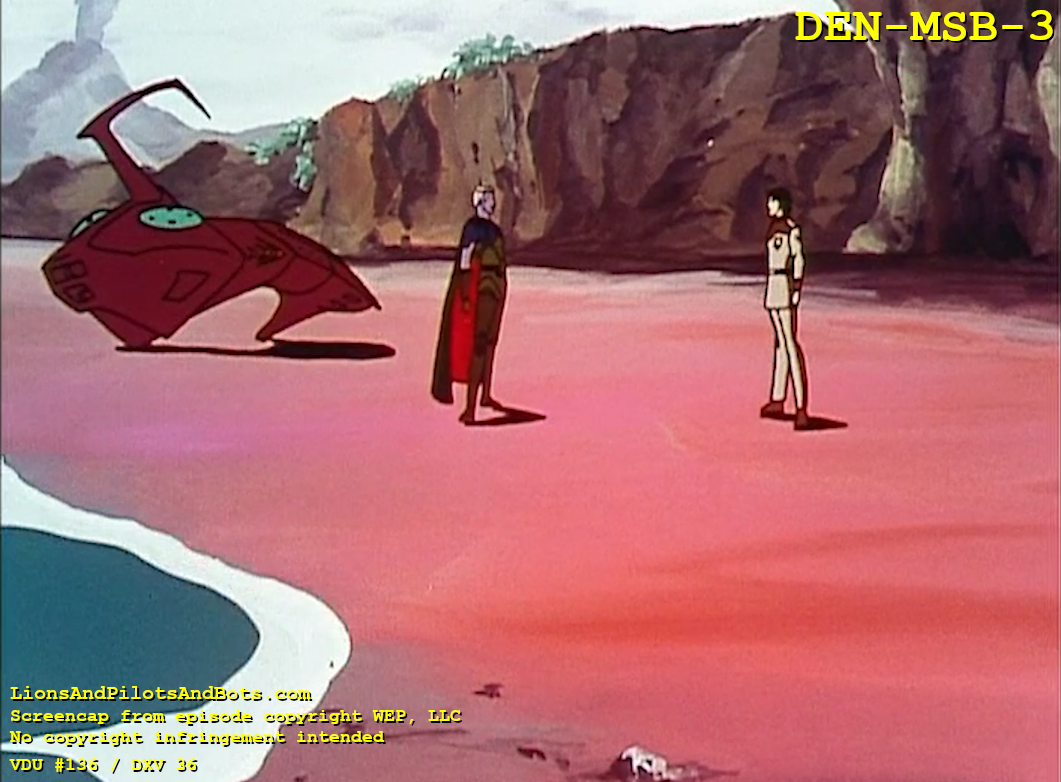
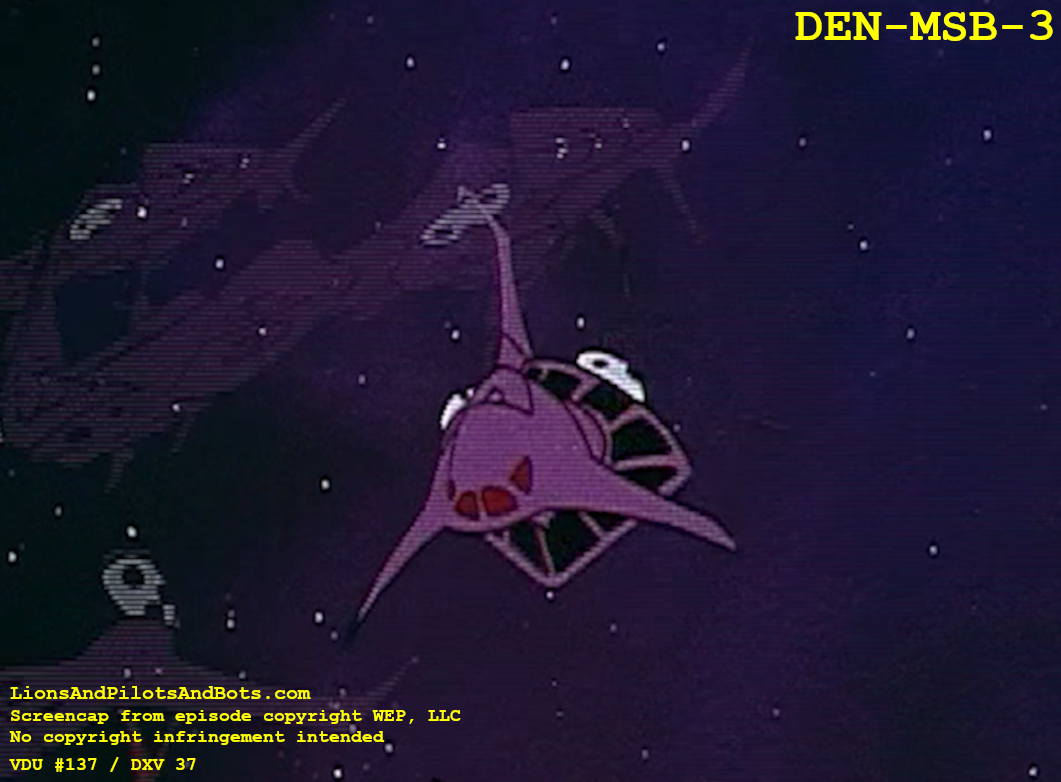
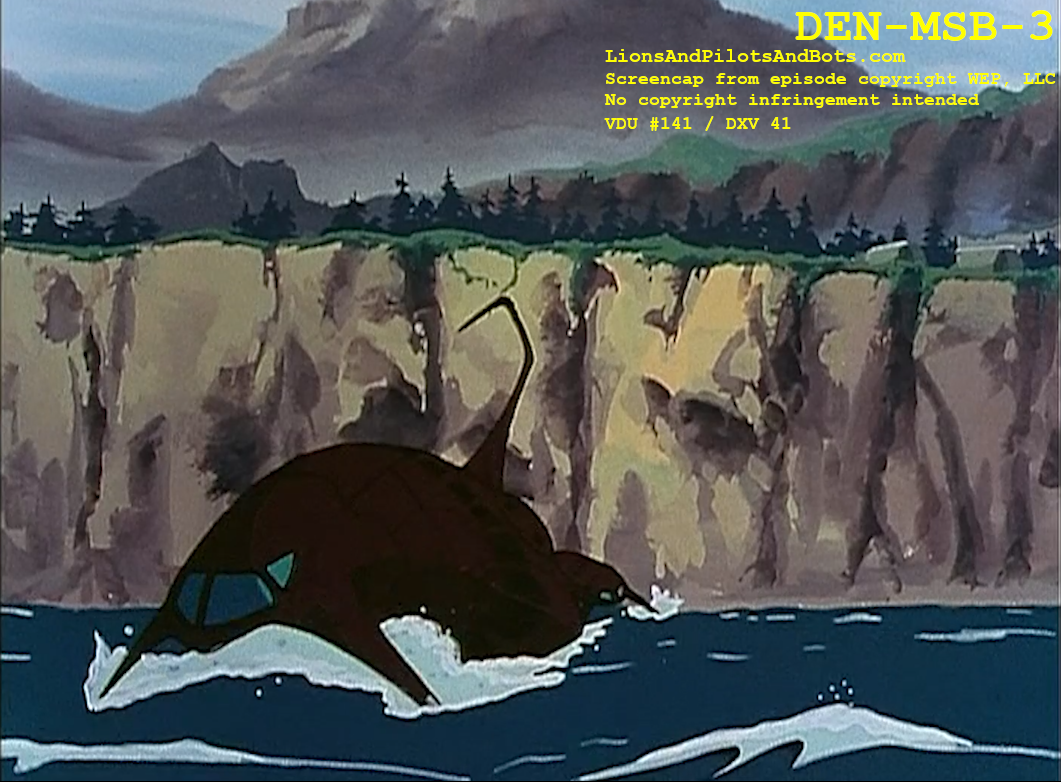
DEN-MSB-3 ships are small, sleek spacecraft. They have a set of laterally arranged front windows, and a single spire that protrudes dorsally from the aft dorsal hull. DEN-MSB-3 ships can land on a planet’s surface. The ships can be launched from the Robeast-launching bow hatch of DEN-MSX-2 ships.
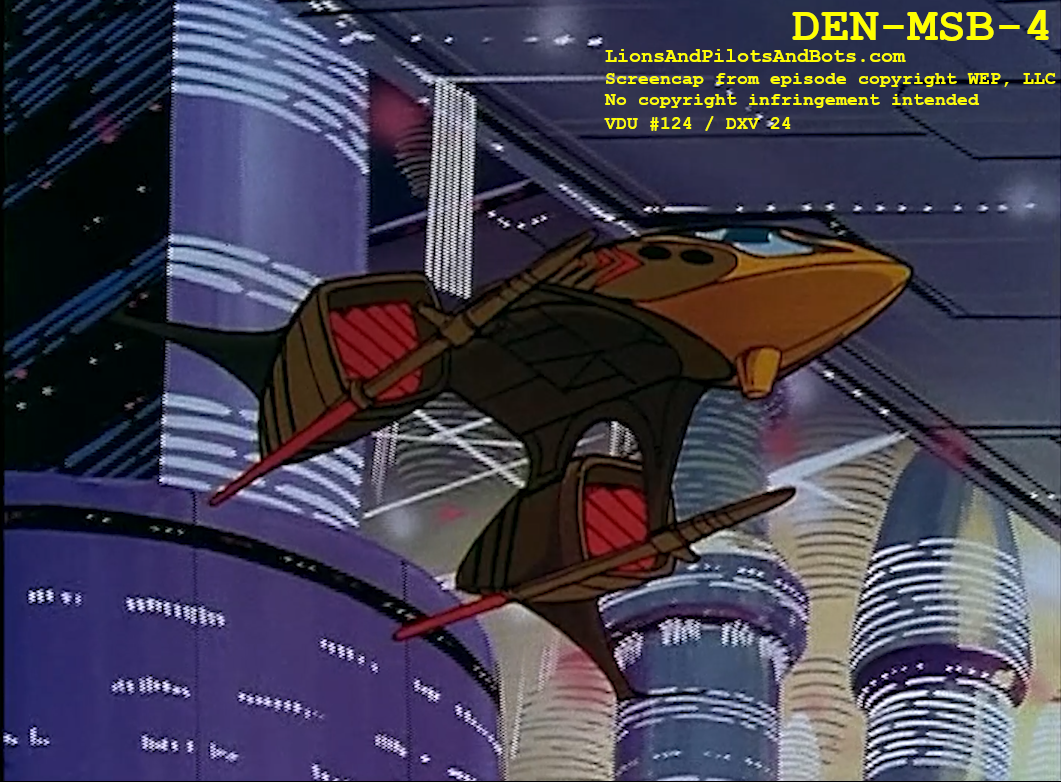
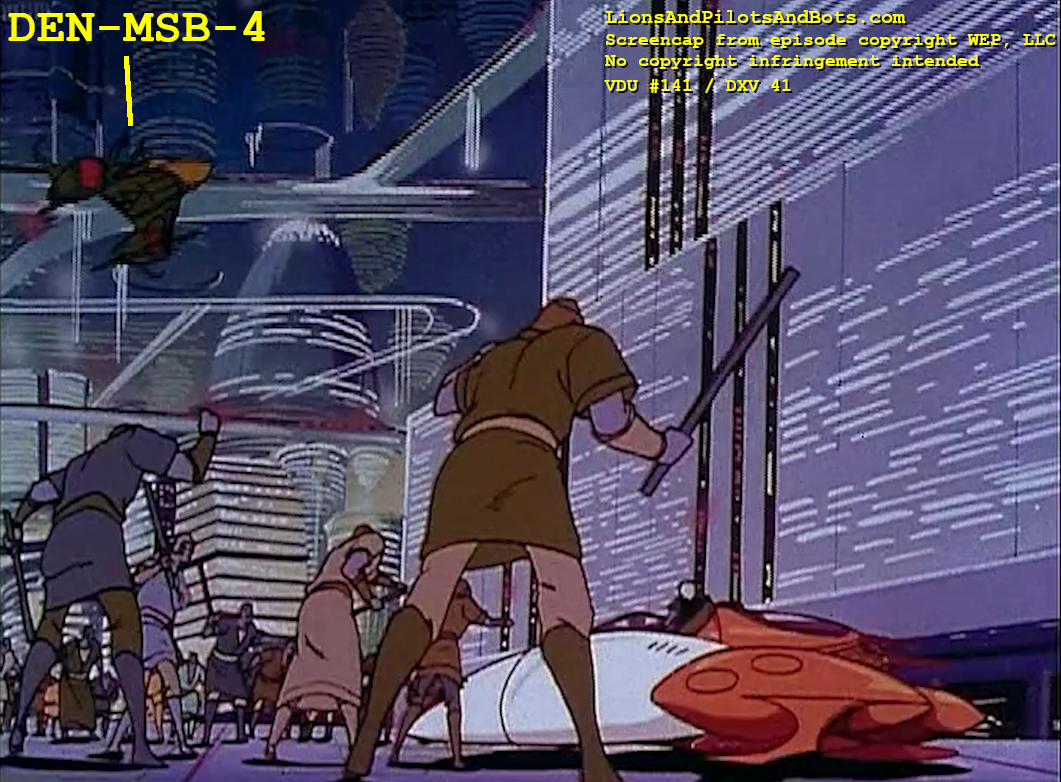
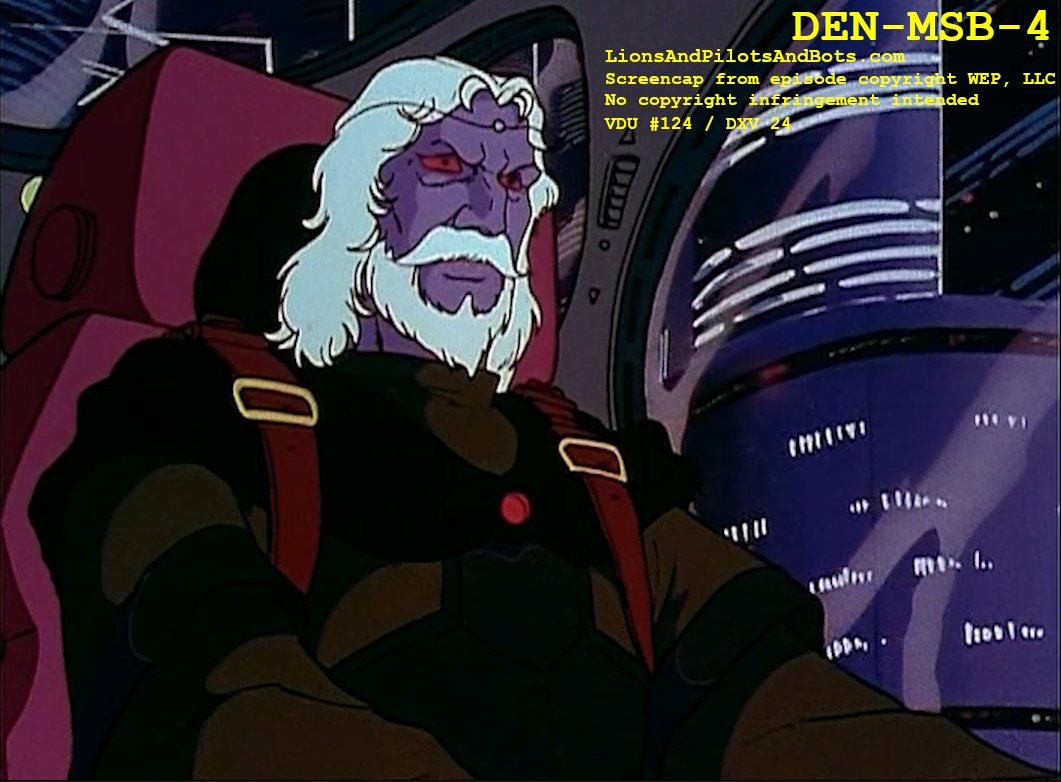
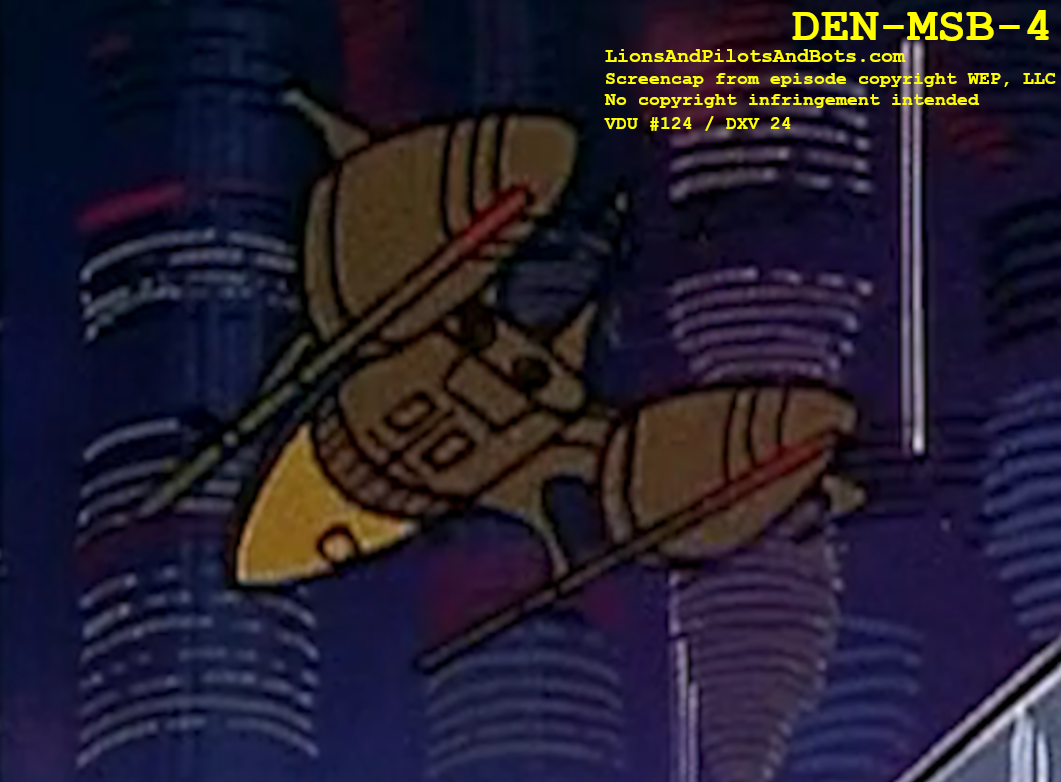
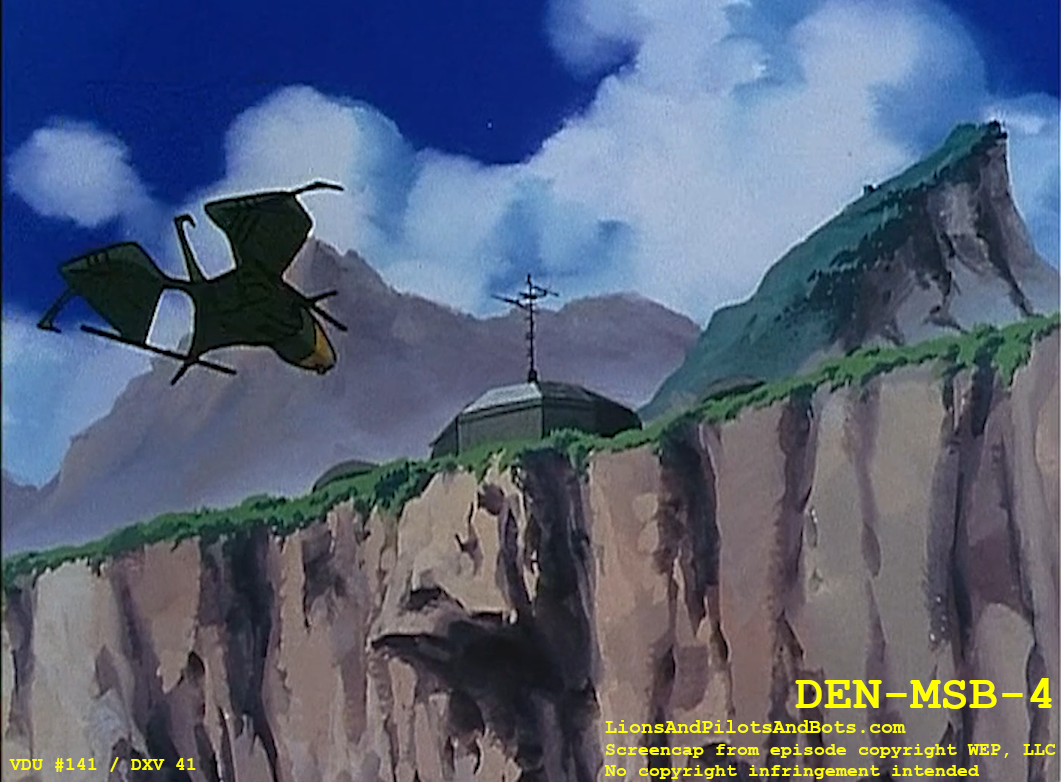
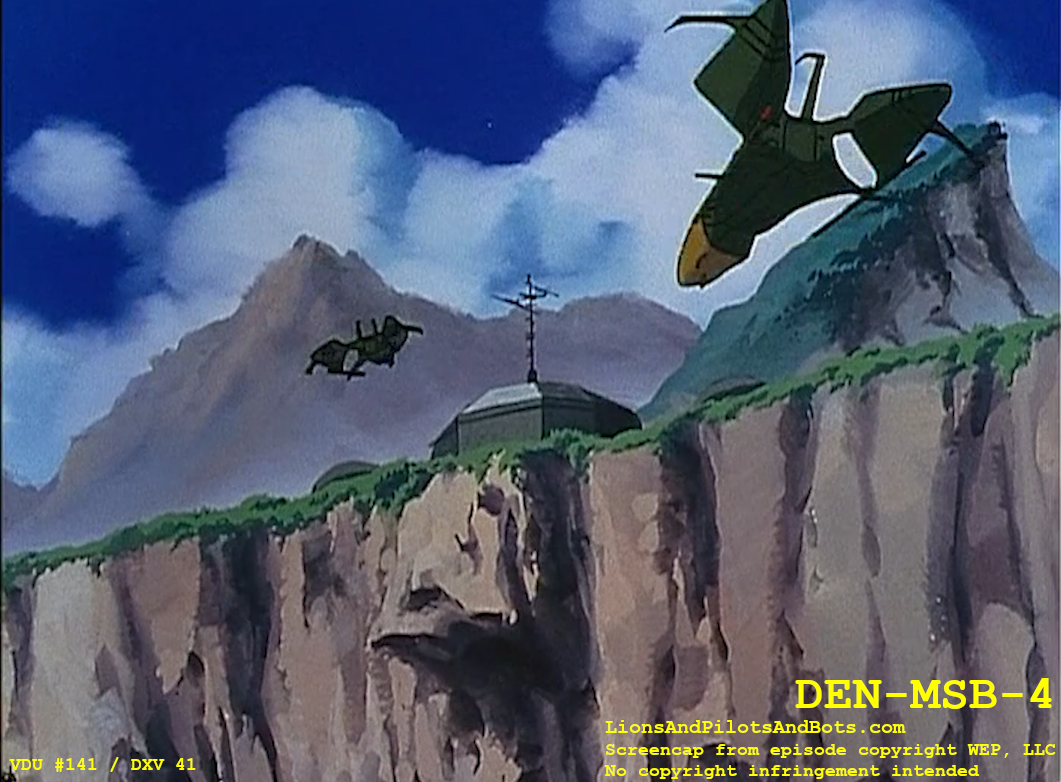
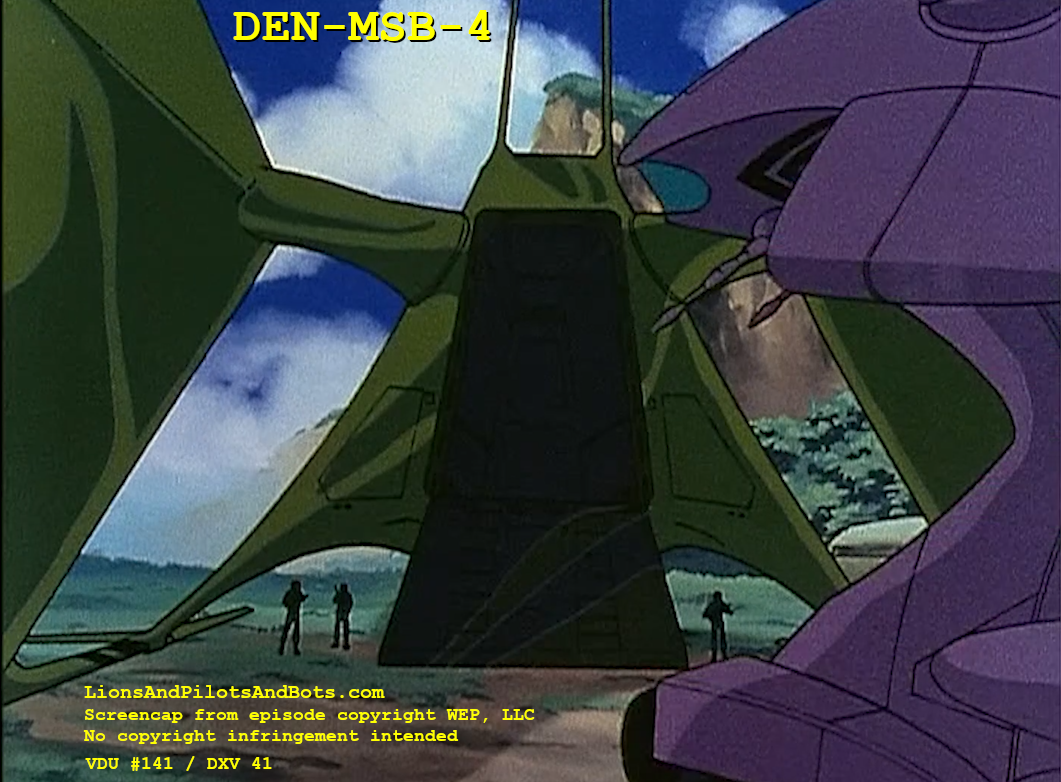
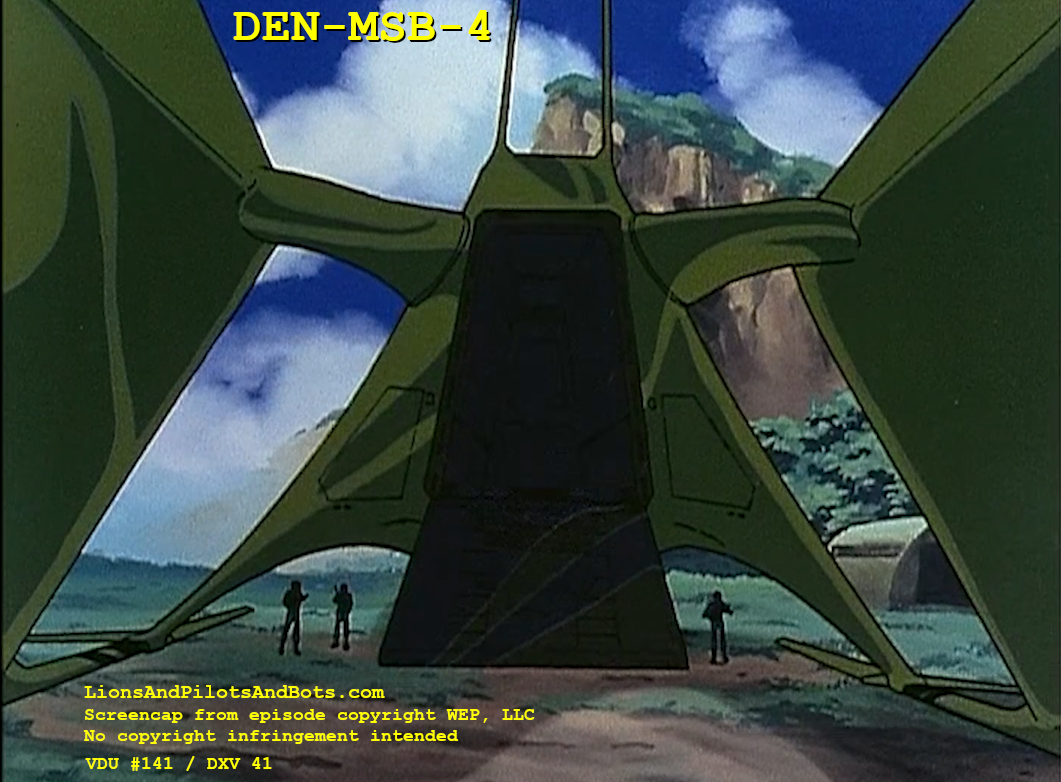
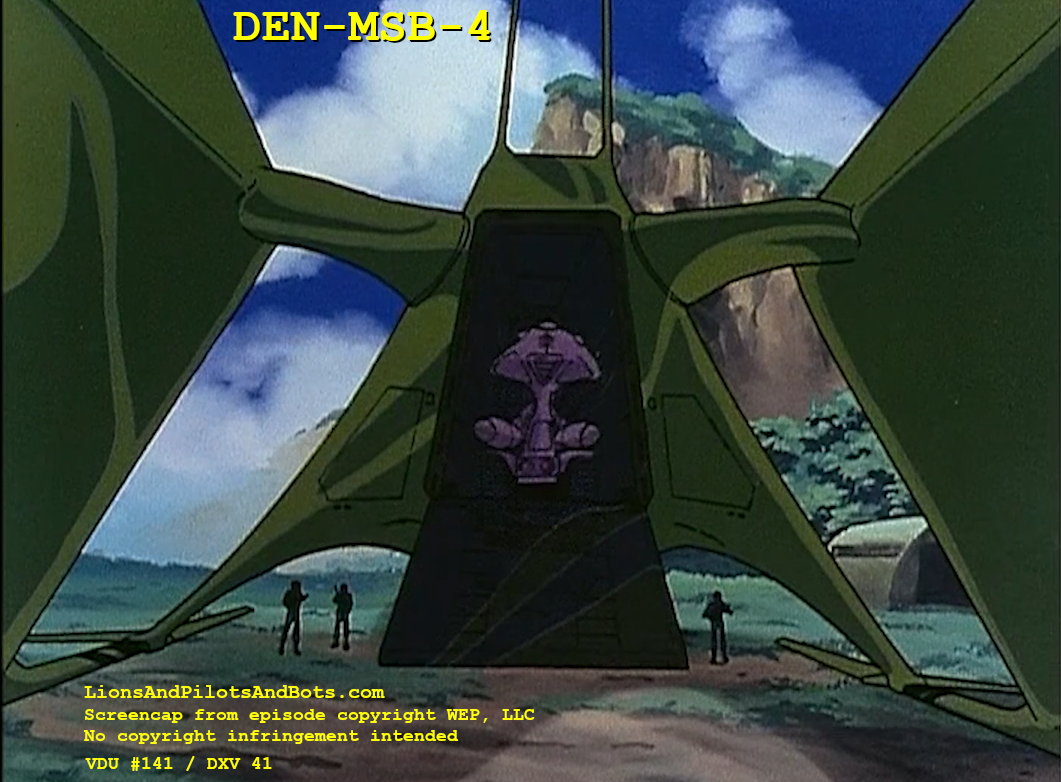
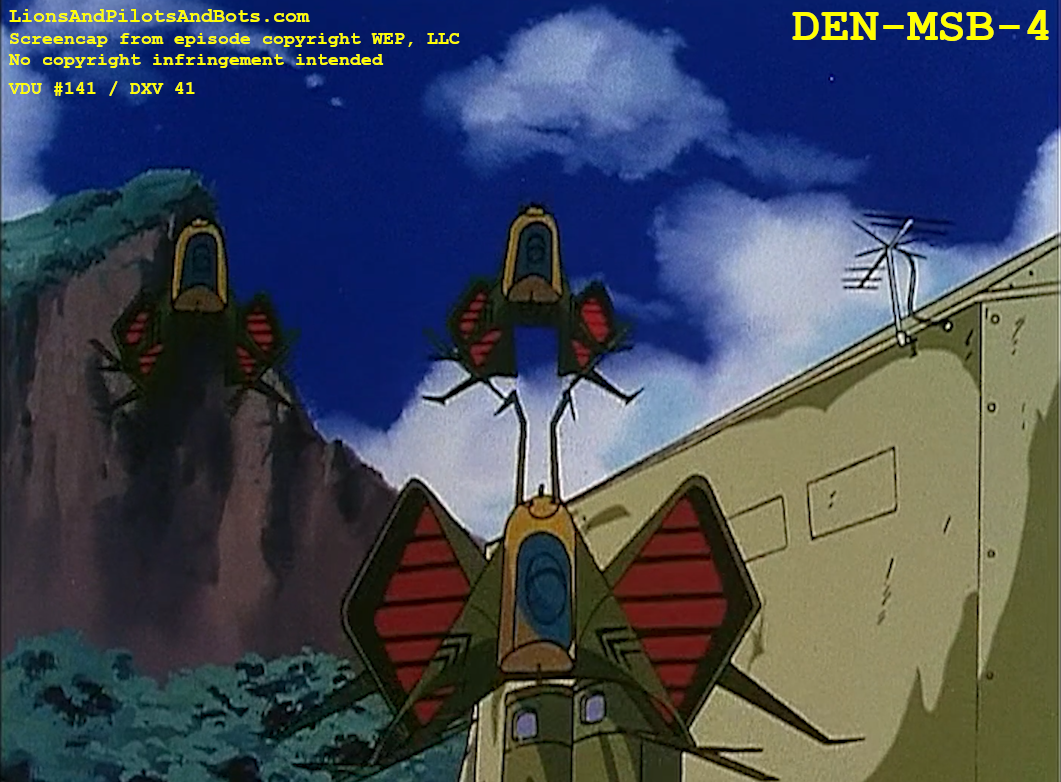
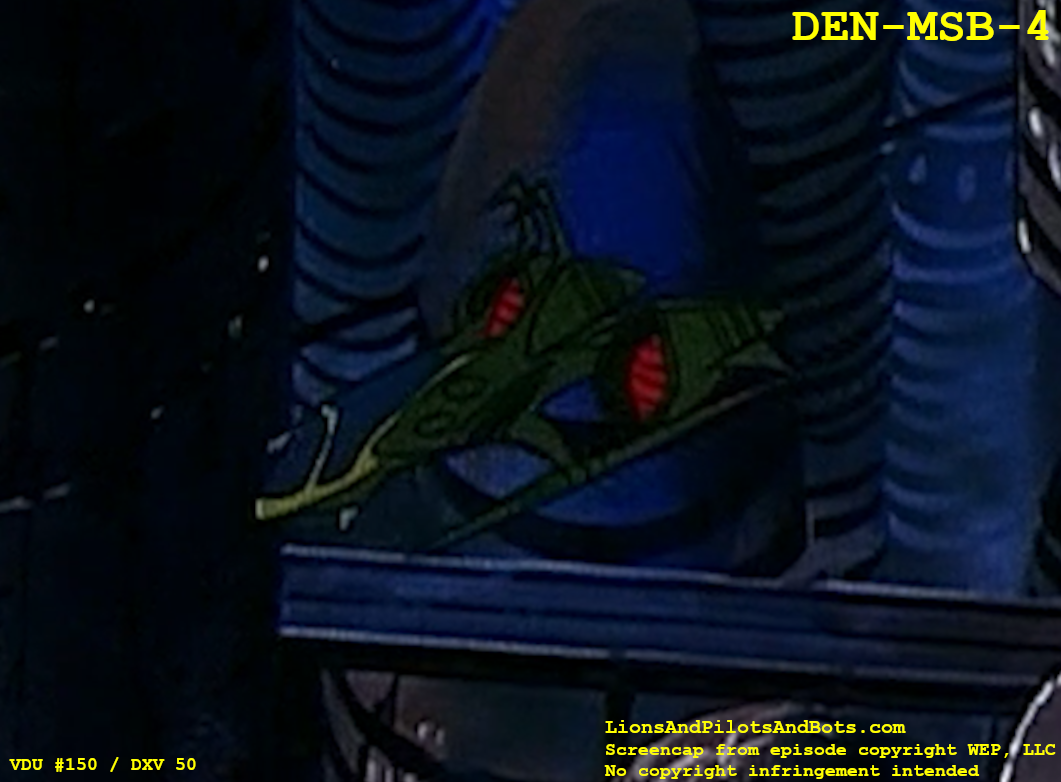
DEN-MSB-4 ships consist of a forward fuselage connected by spindly struts to large twin pods. The ships can land on a ski beneath each of the twin pods. DEN-MSB-4 ships can carry multiple DEN-MG-2 tanks in the fuselage.
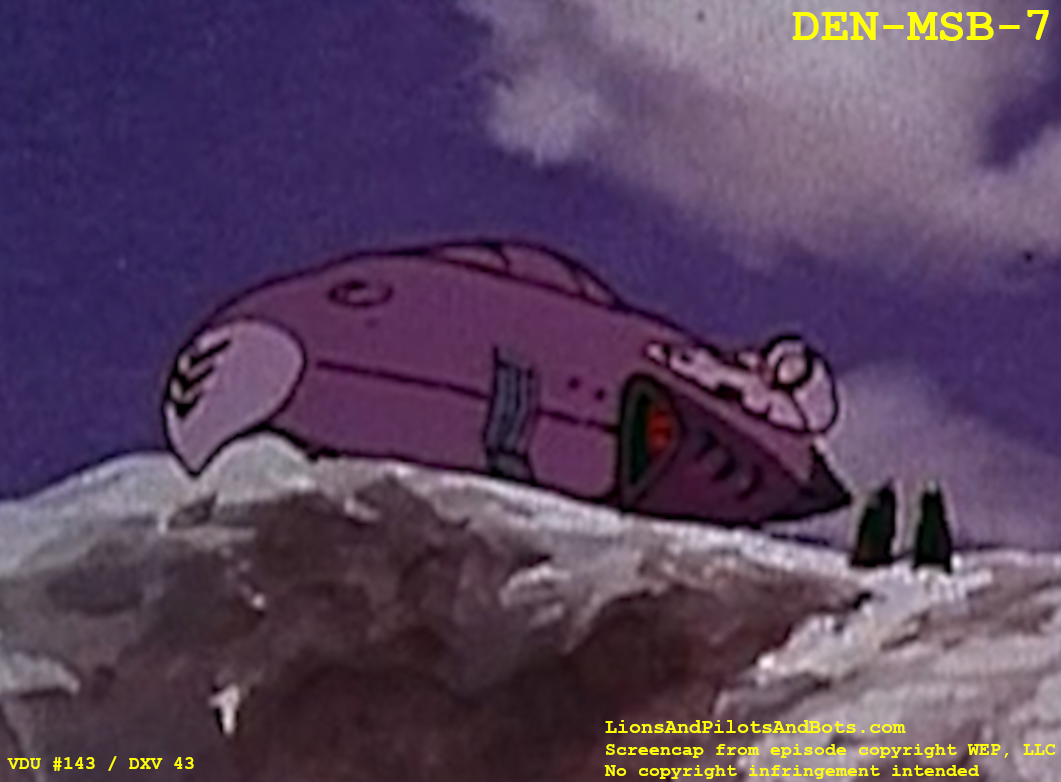
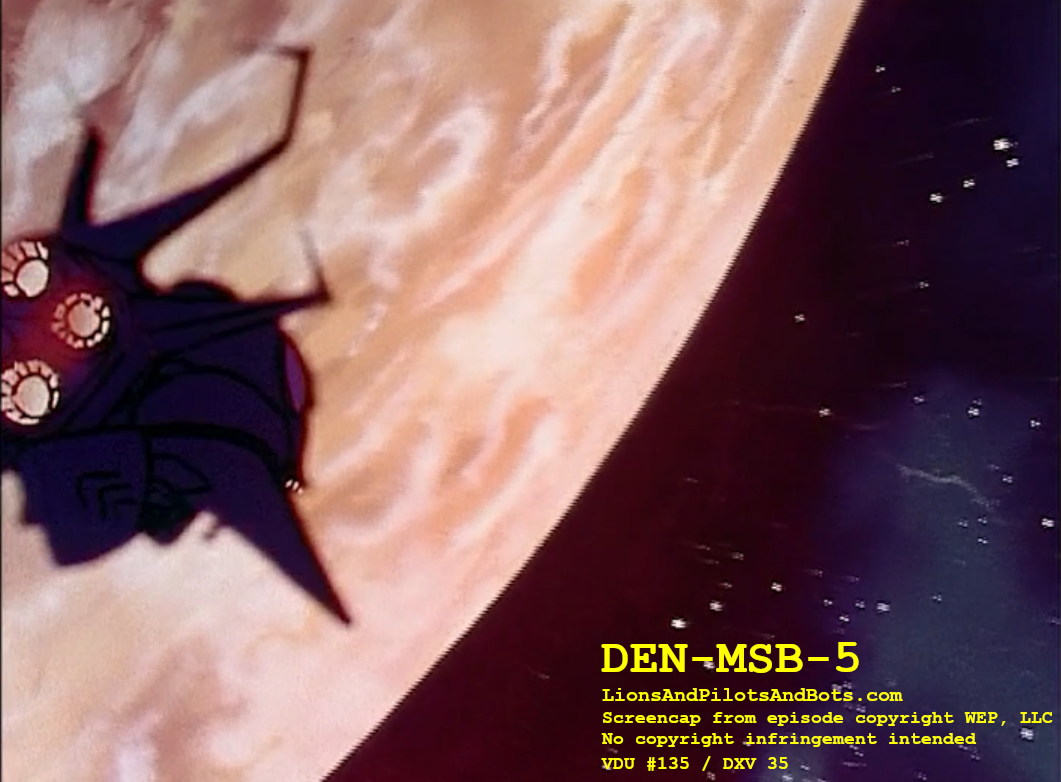
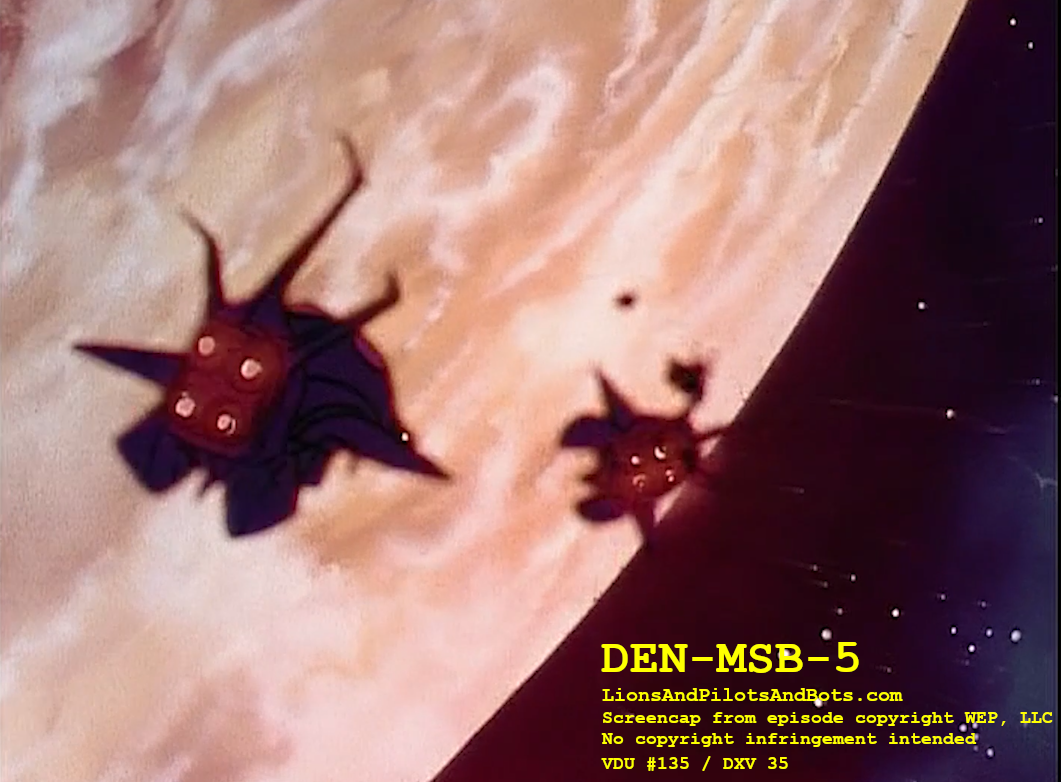
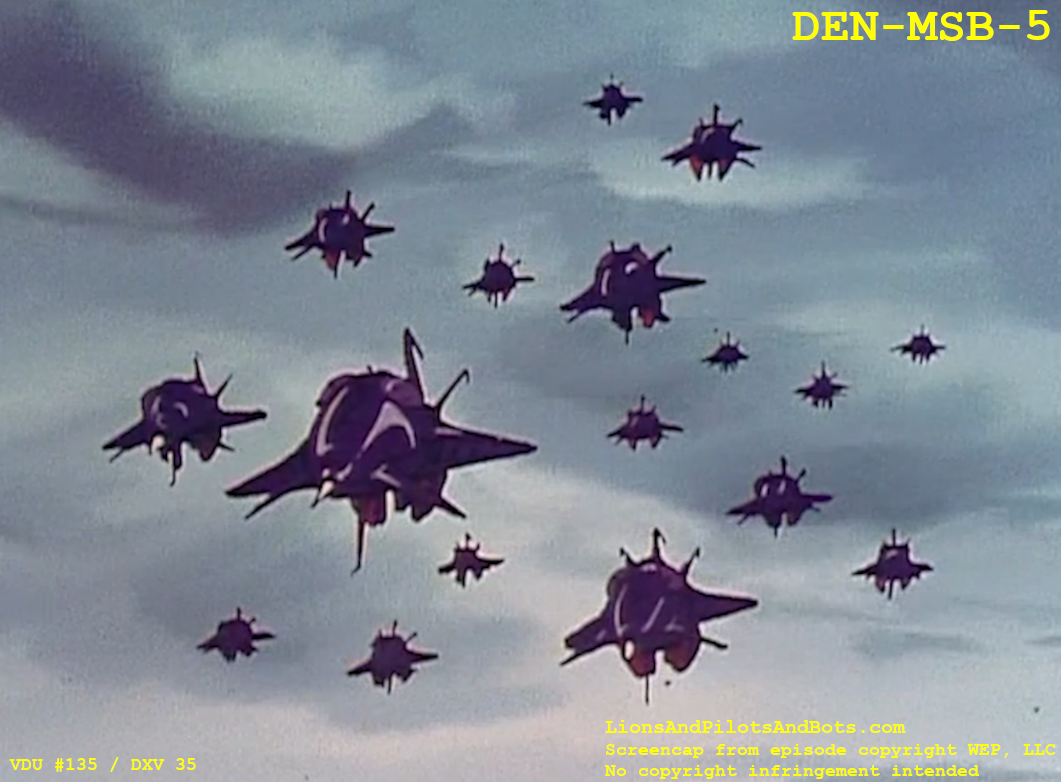
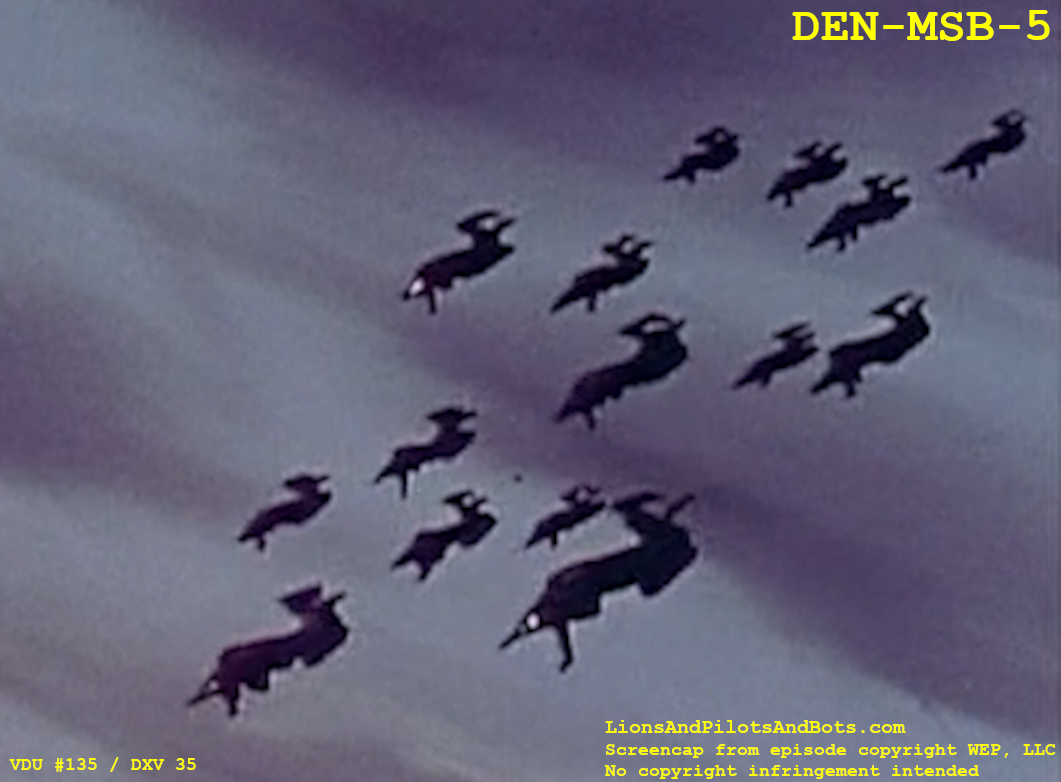
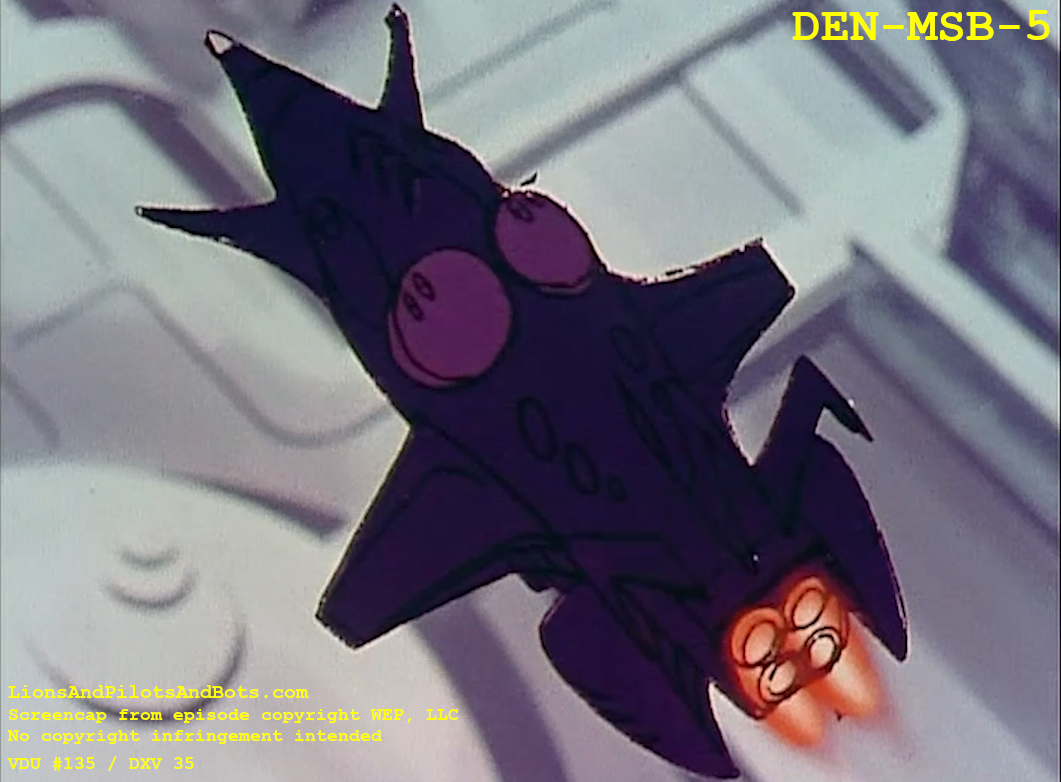
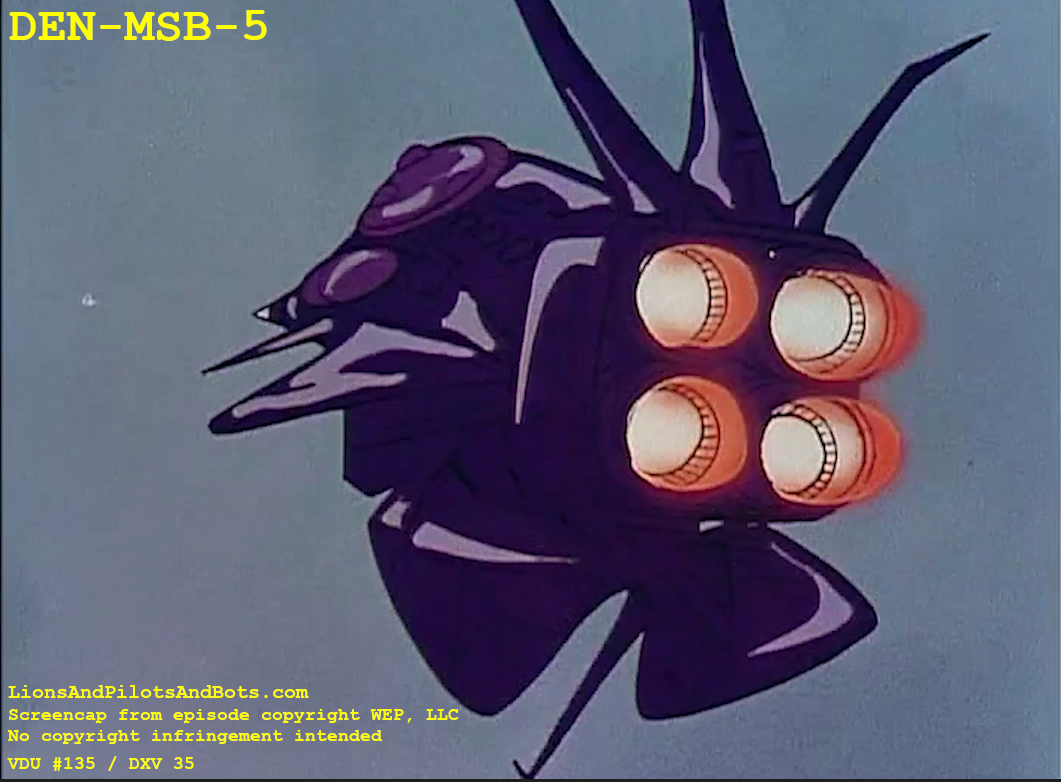
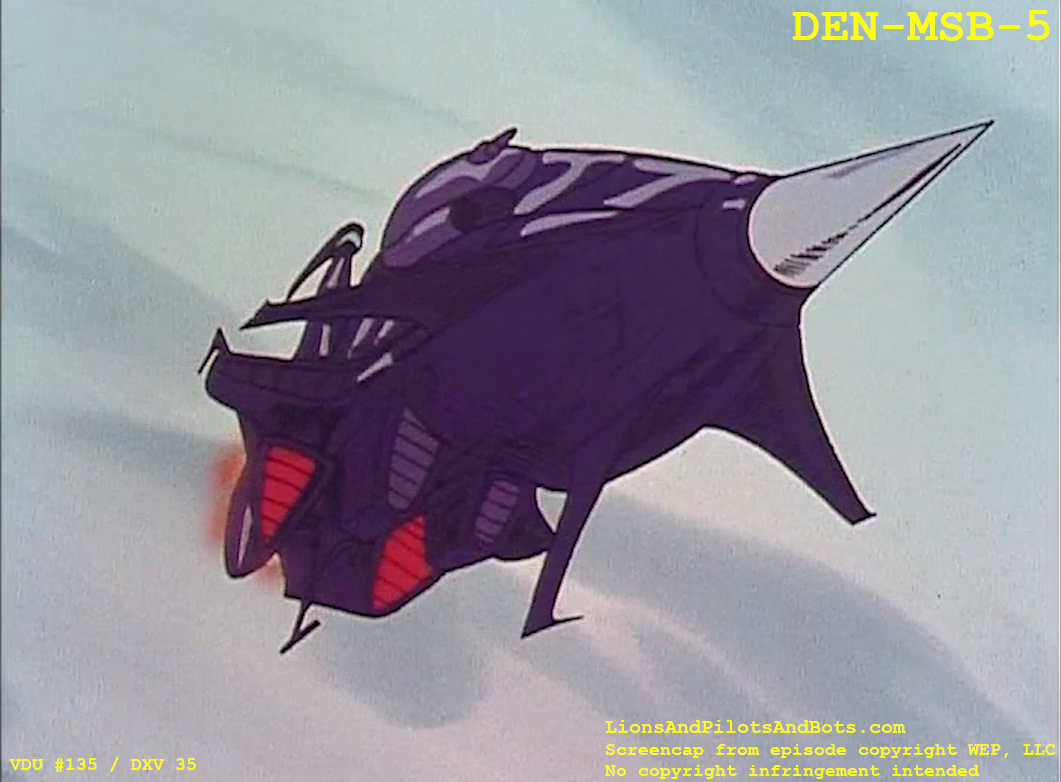
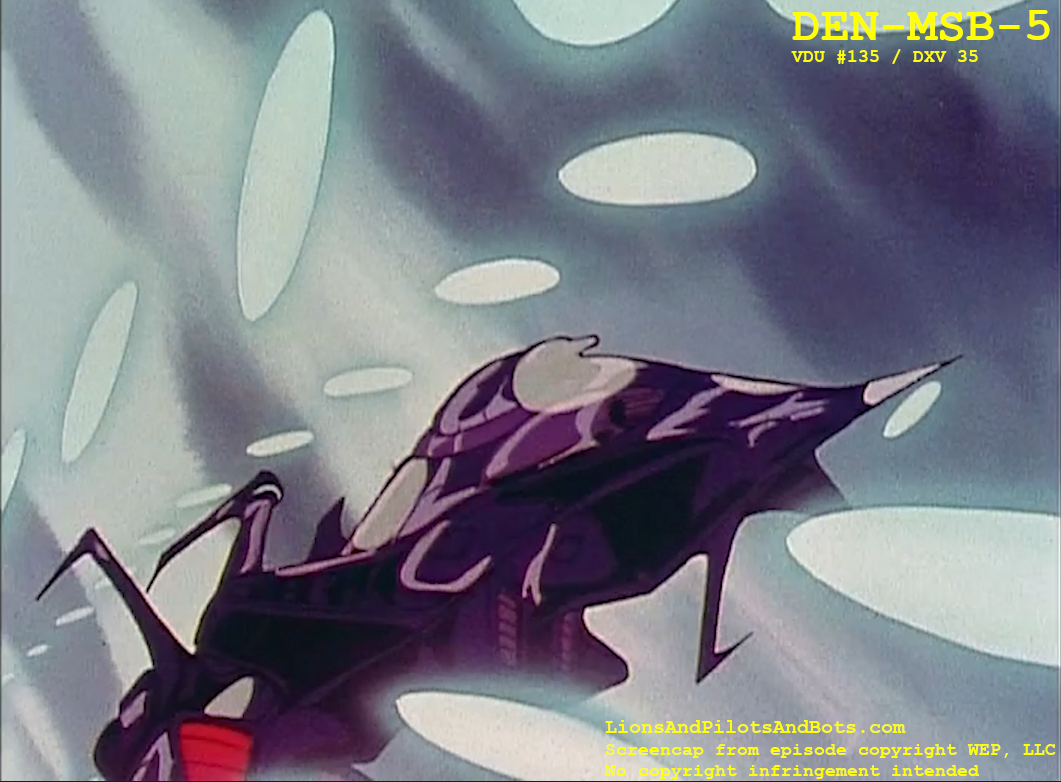
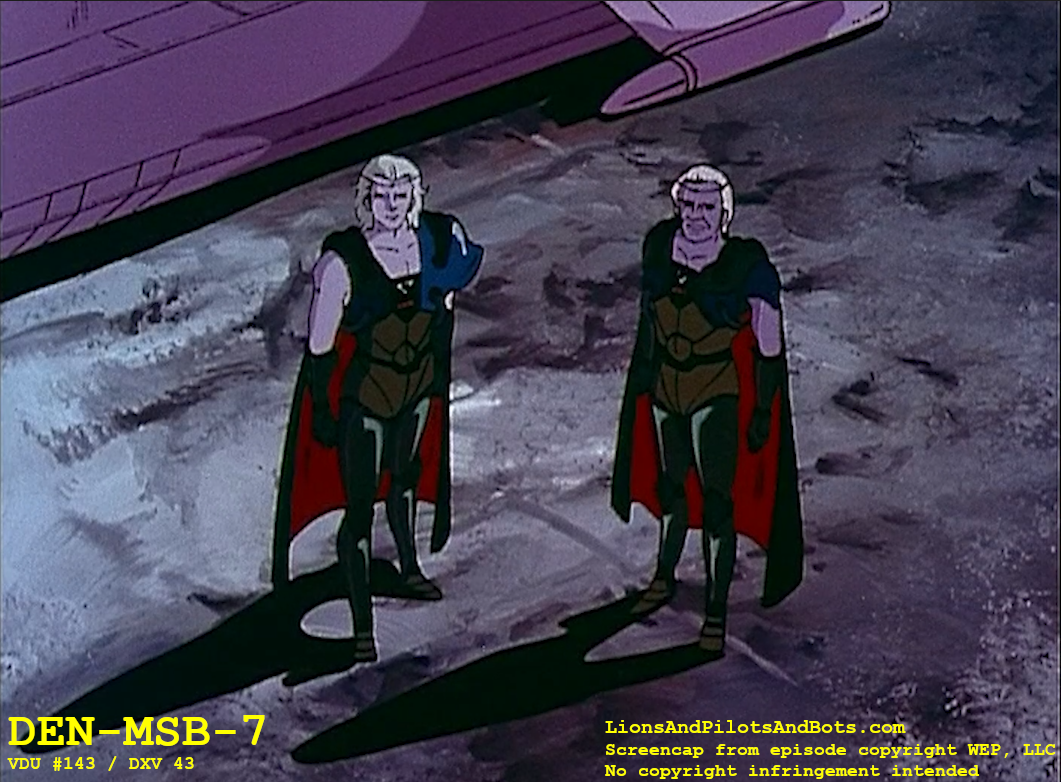
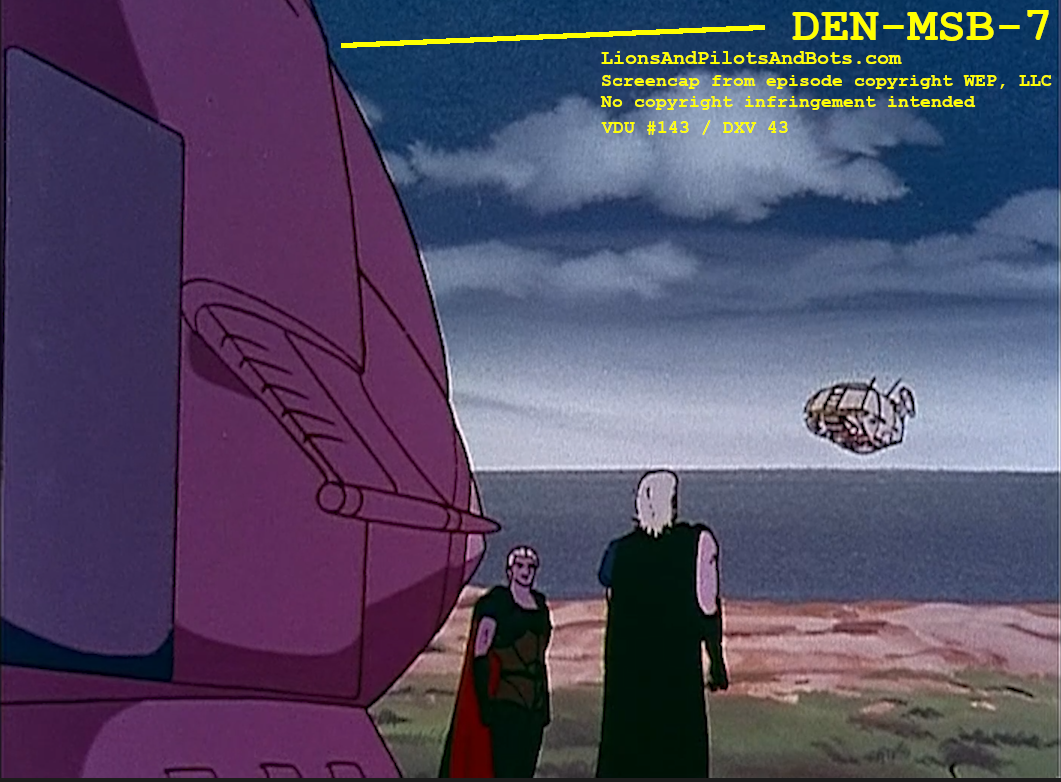
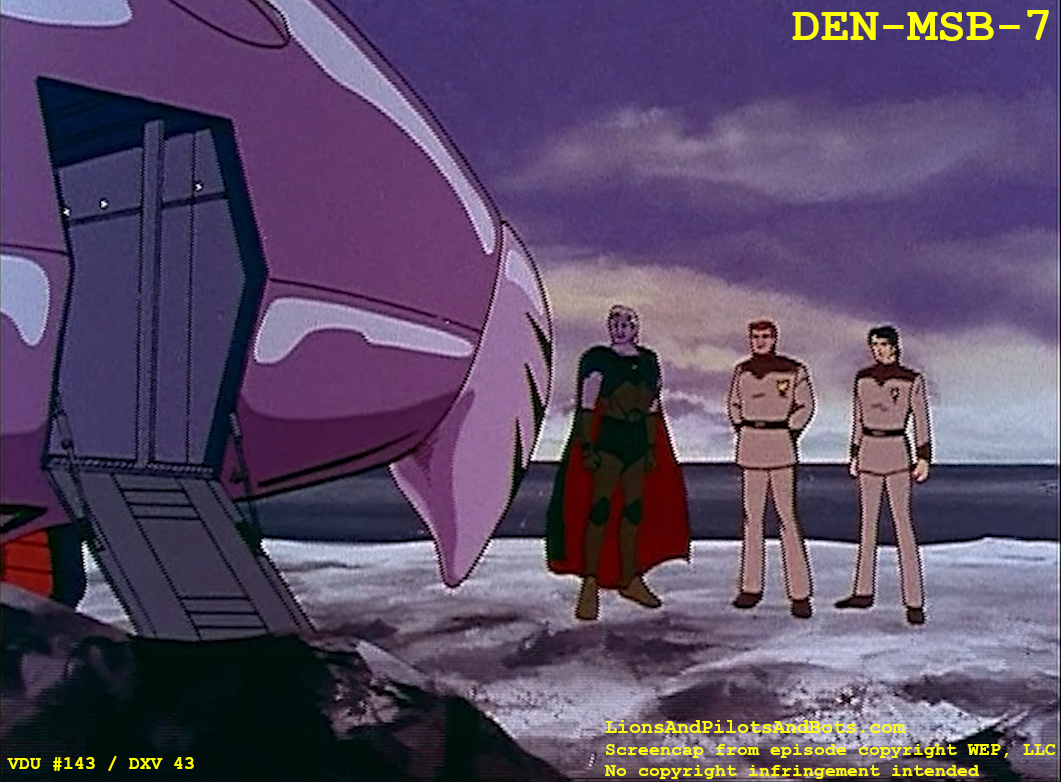
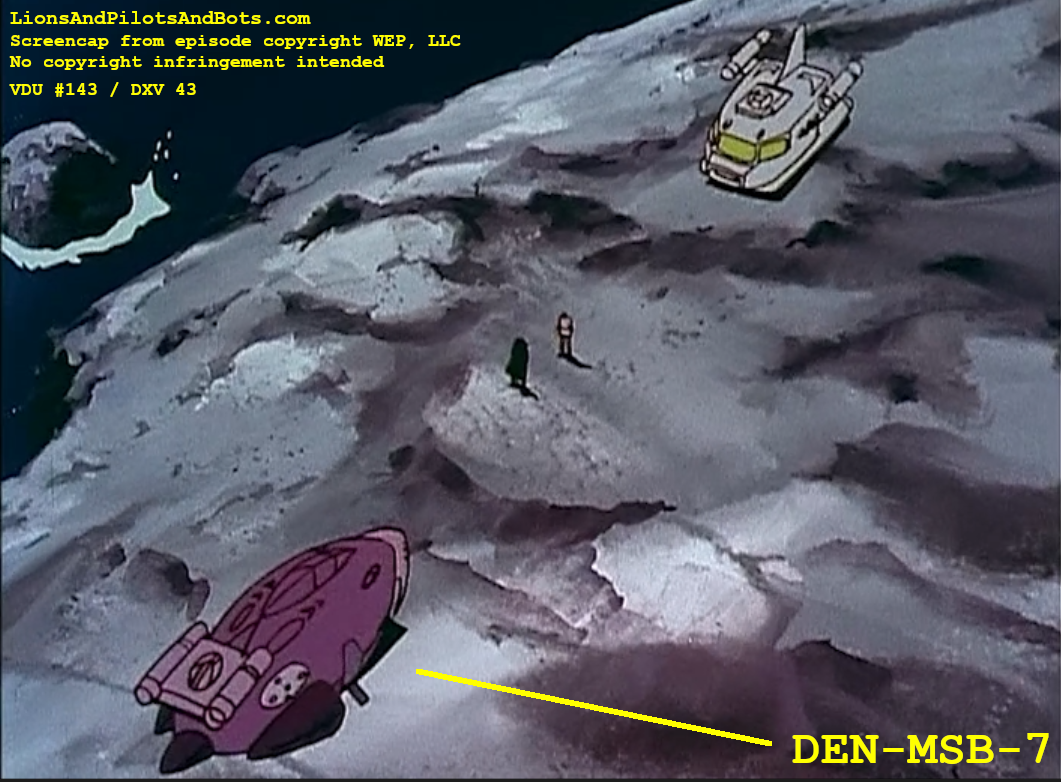
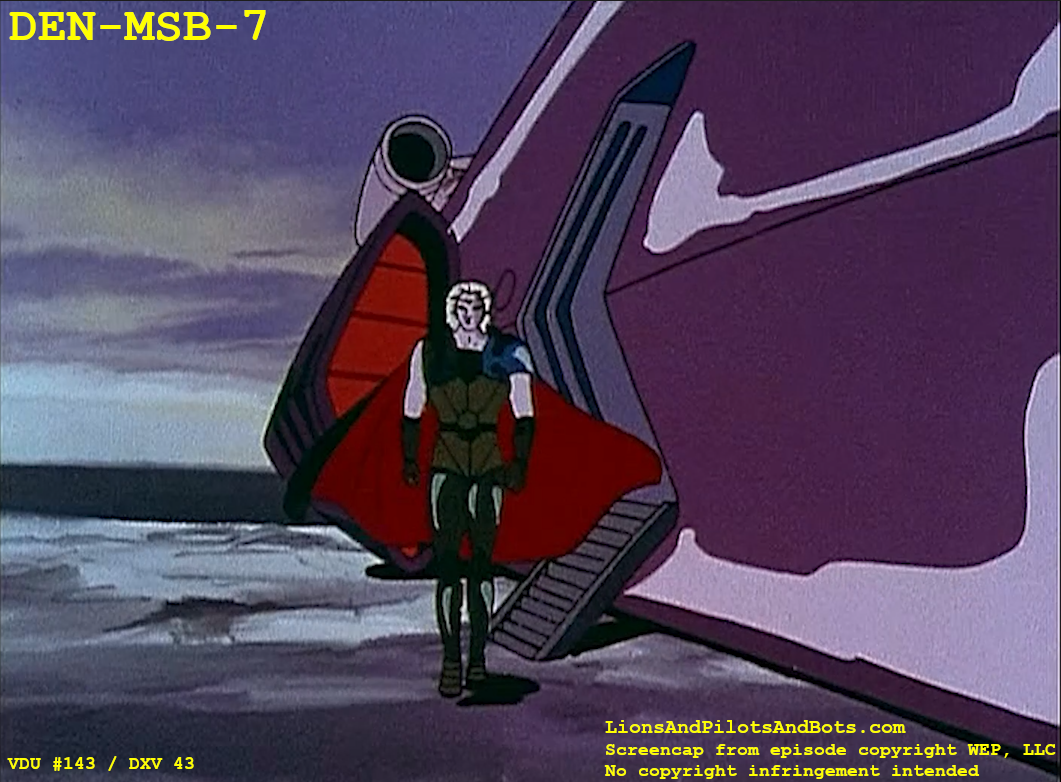
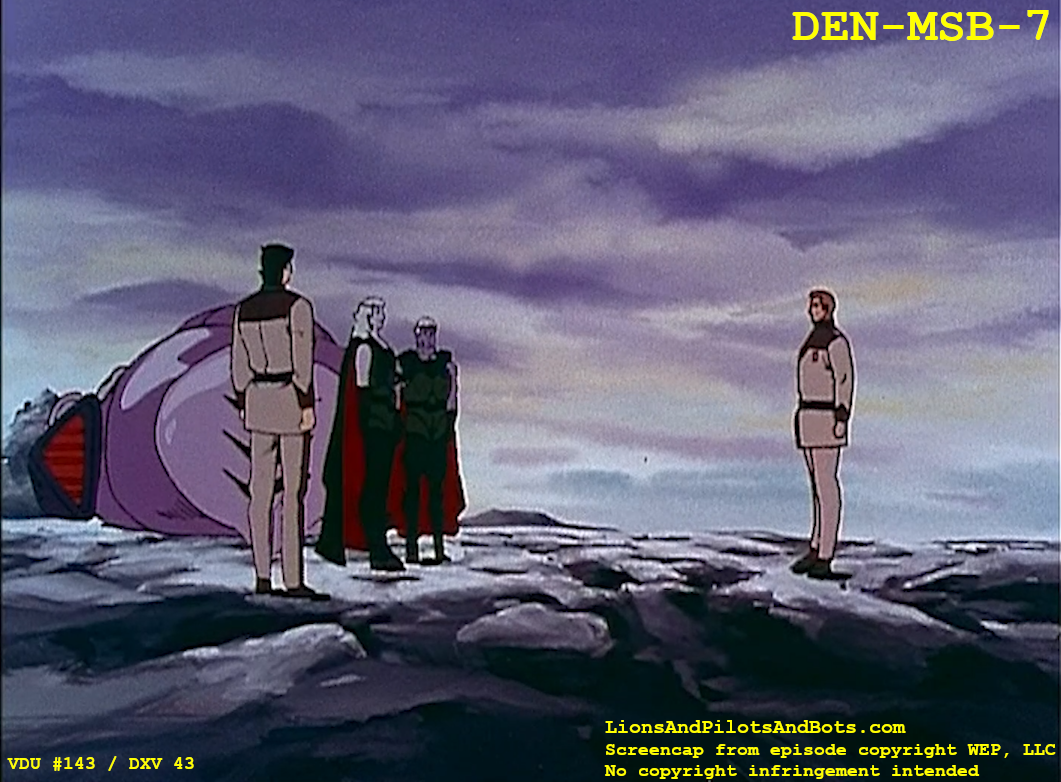
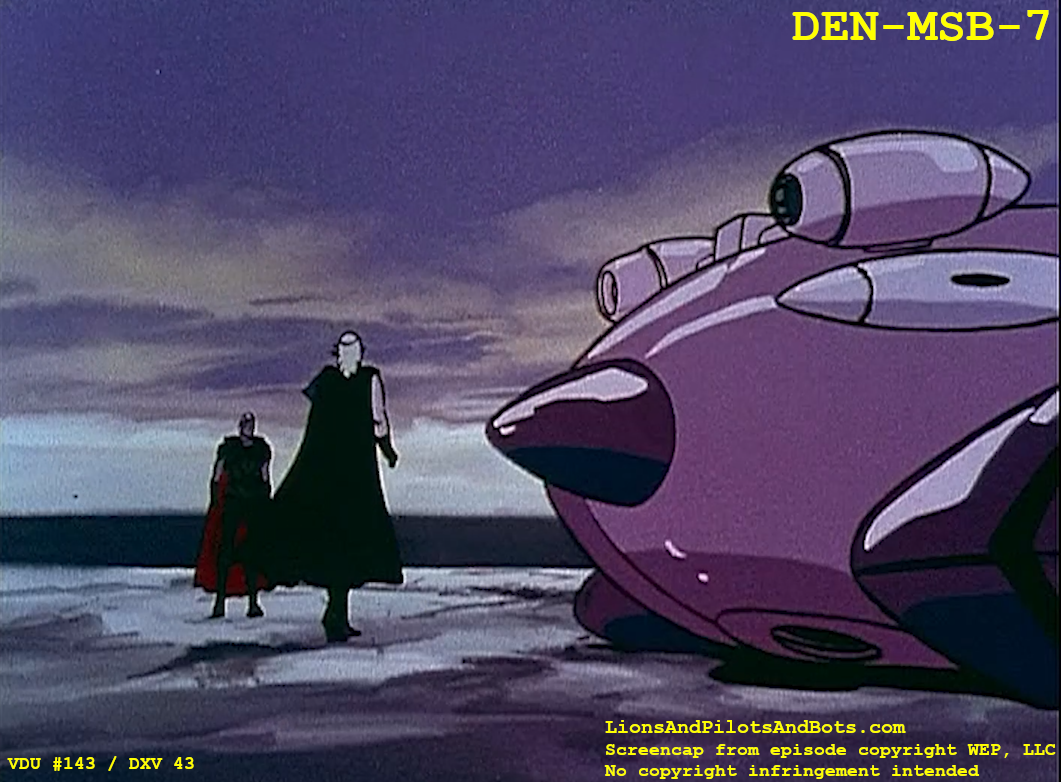
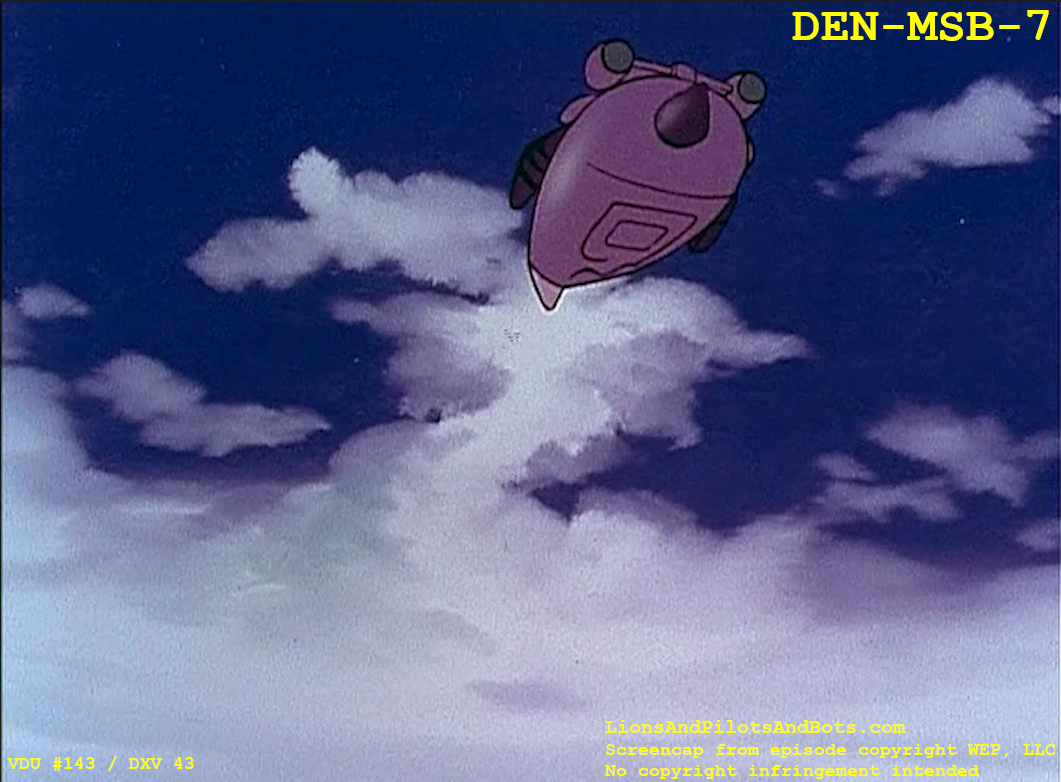
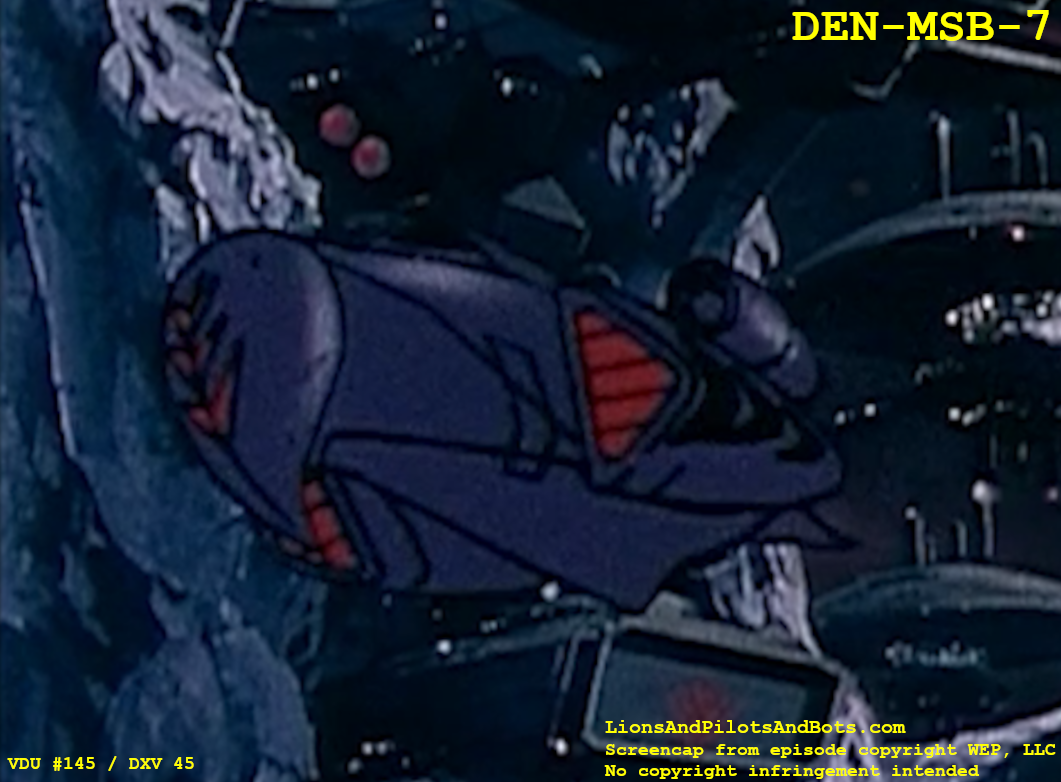
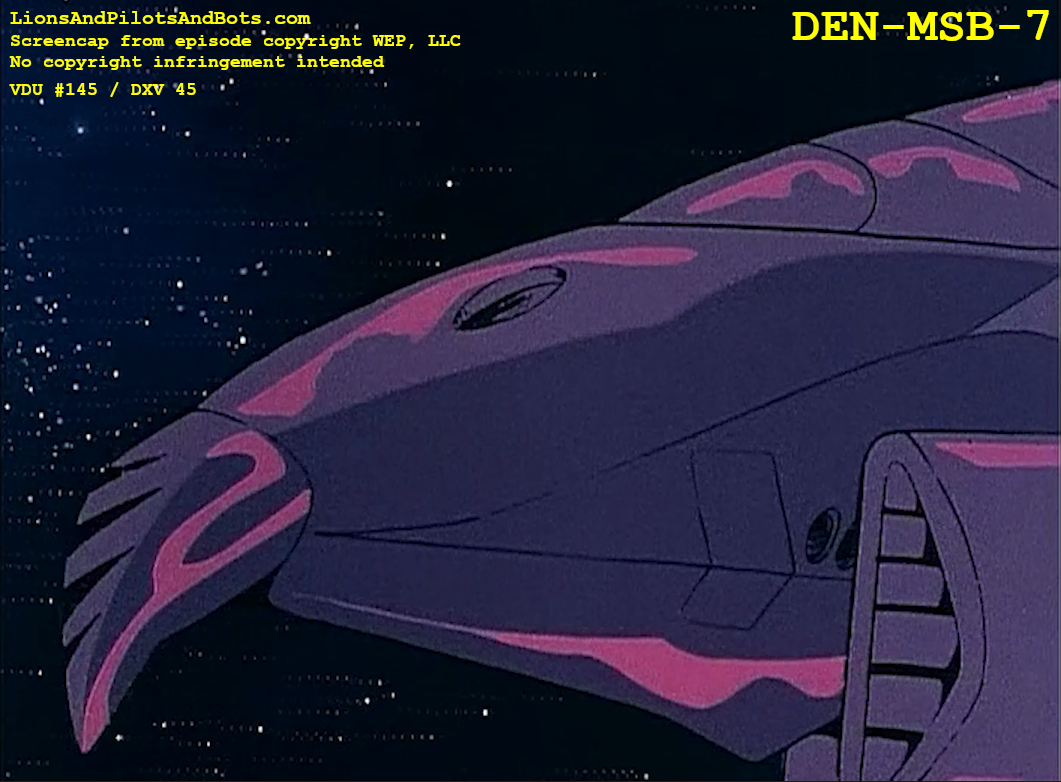
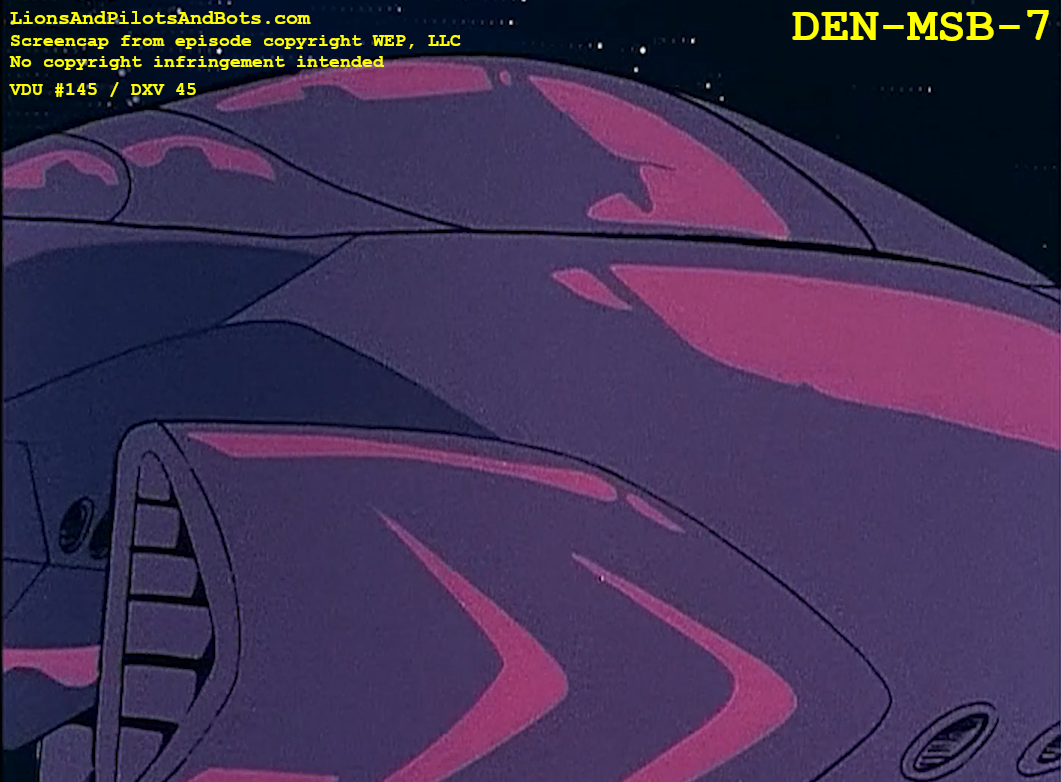
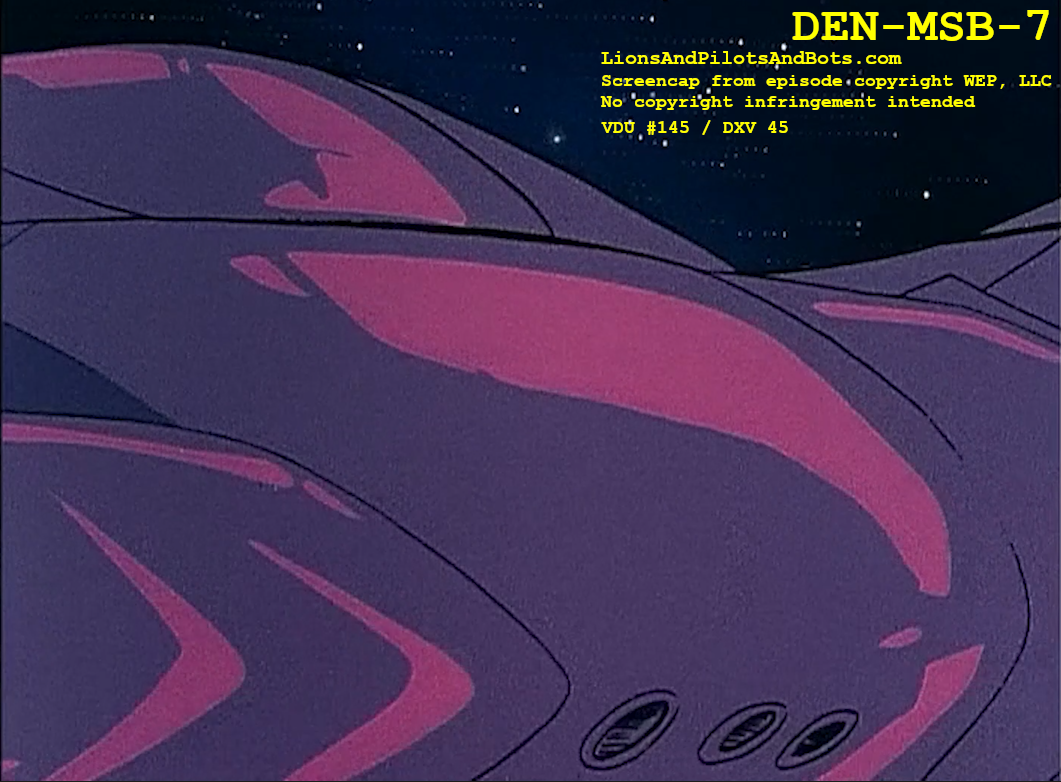
DEN-MSB-7 ships are small personnel transport craft. They have chunky proportions, twin side pods, and an access hatch and circular portholes on either side of the fuselage.
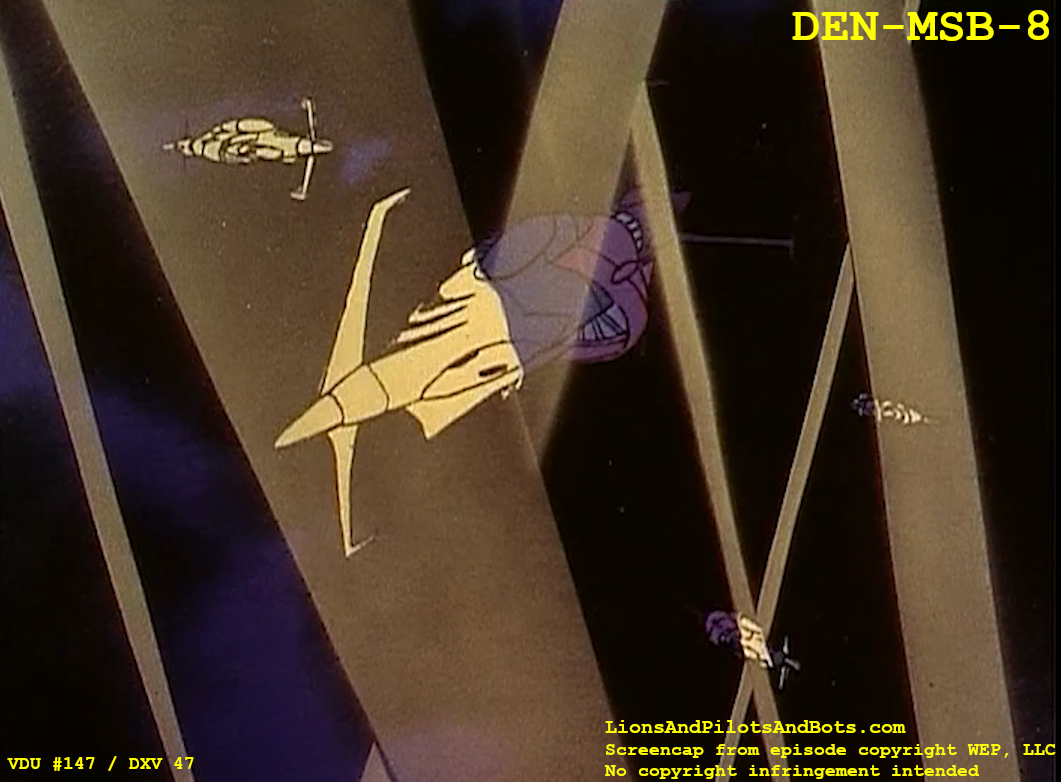
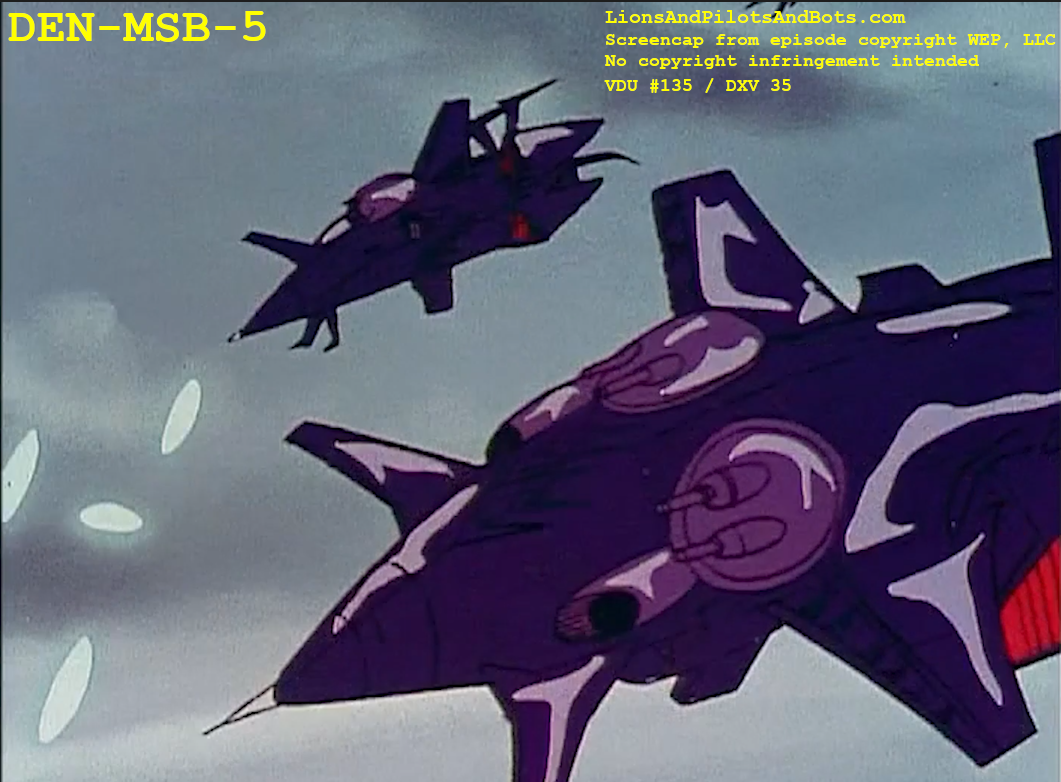
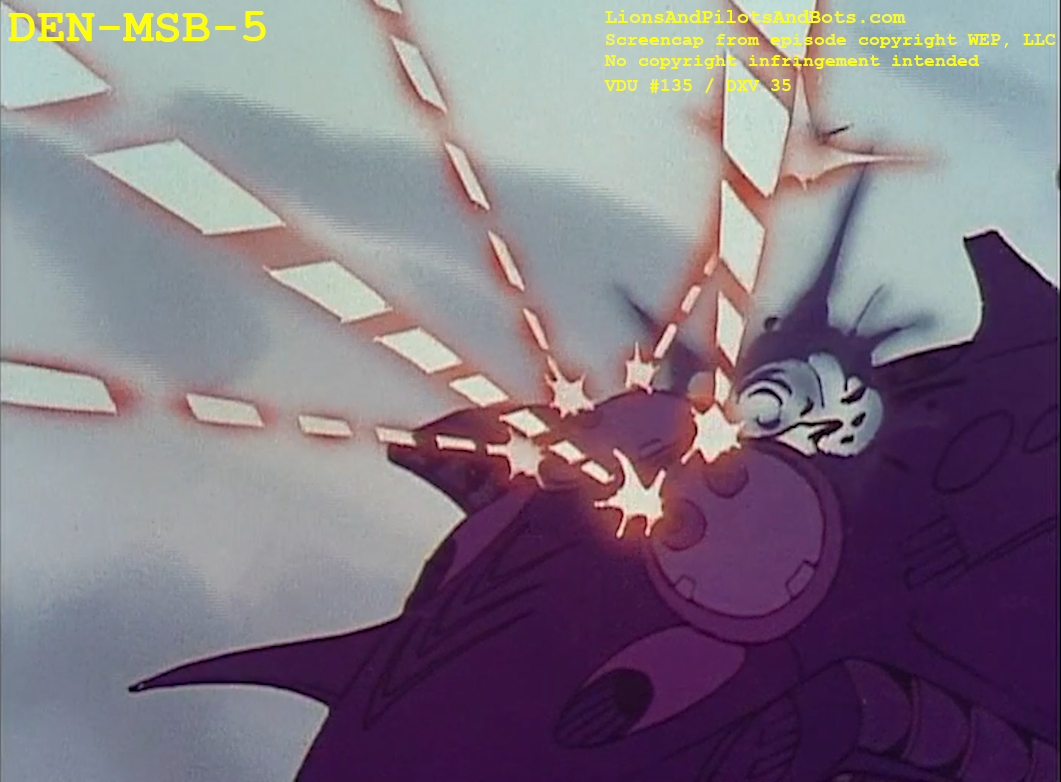
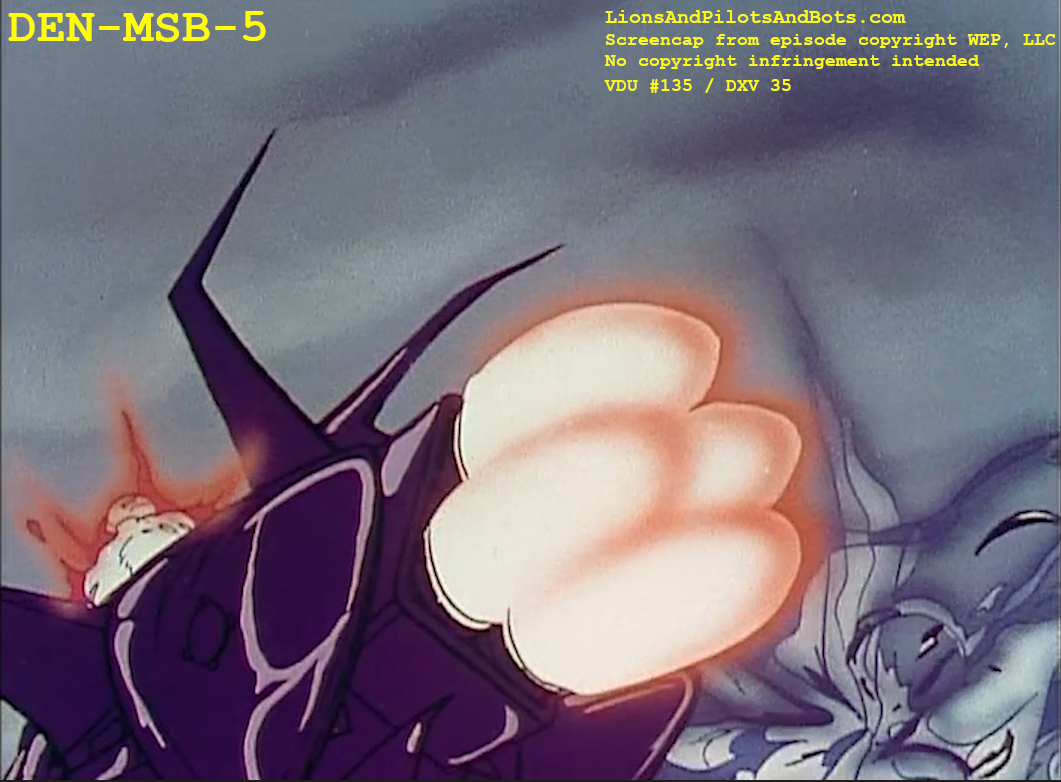
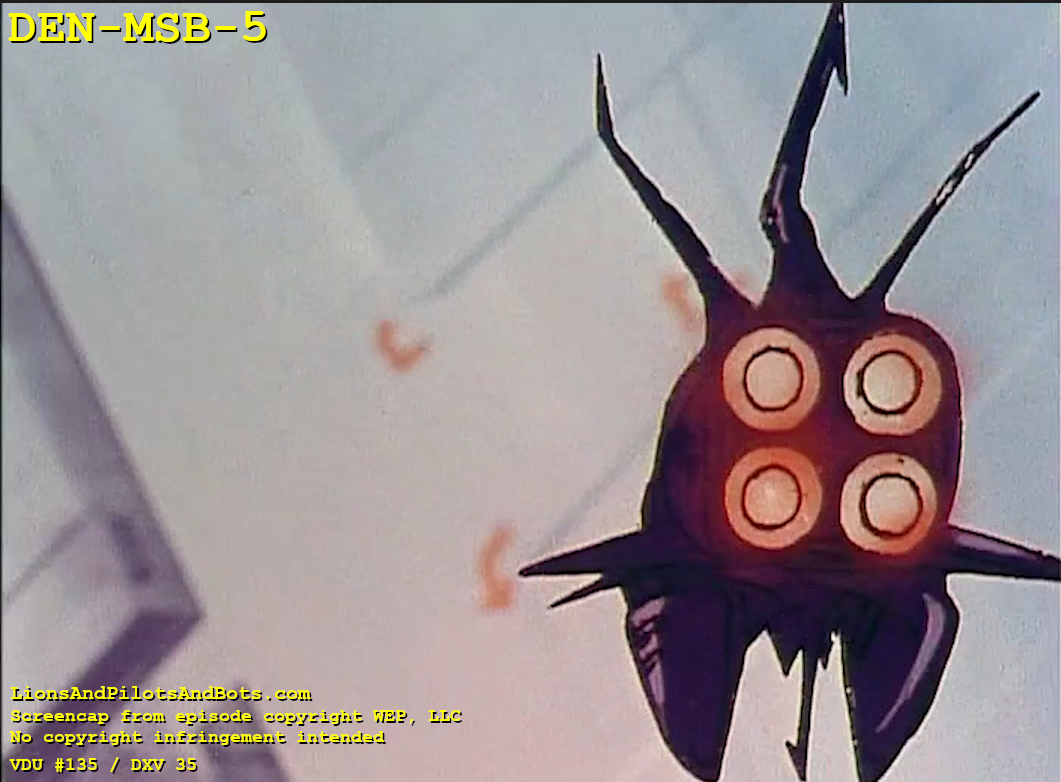
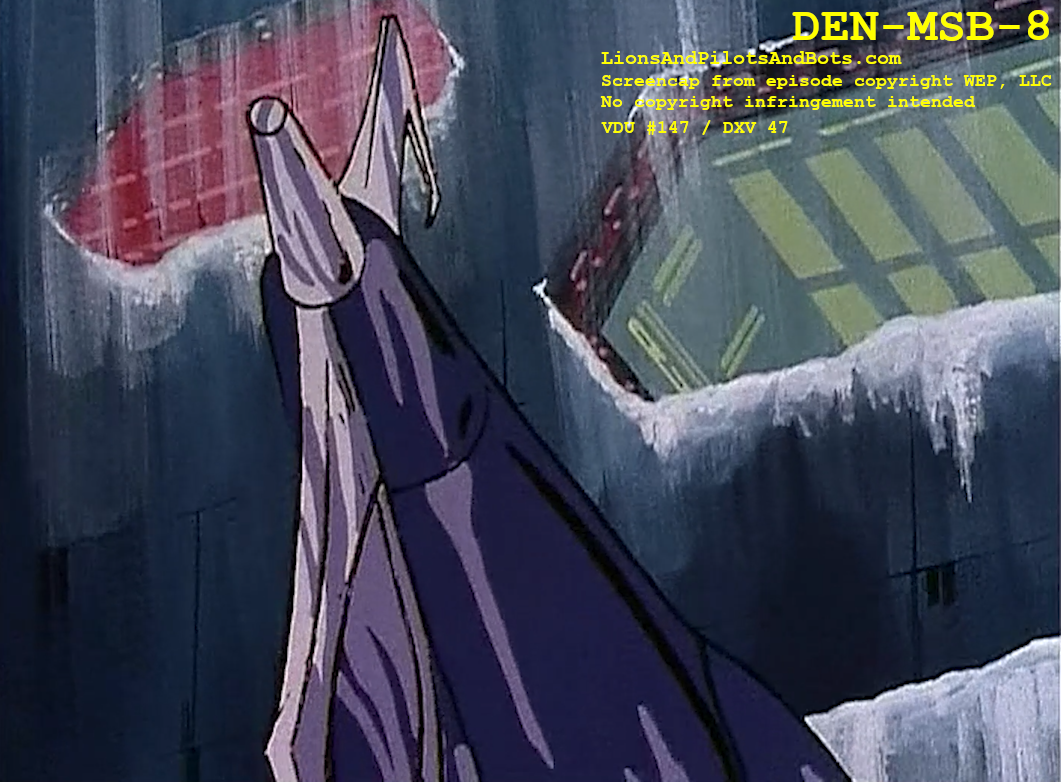
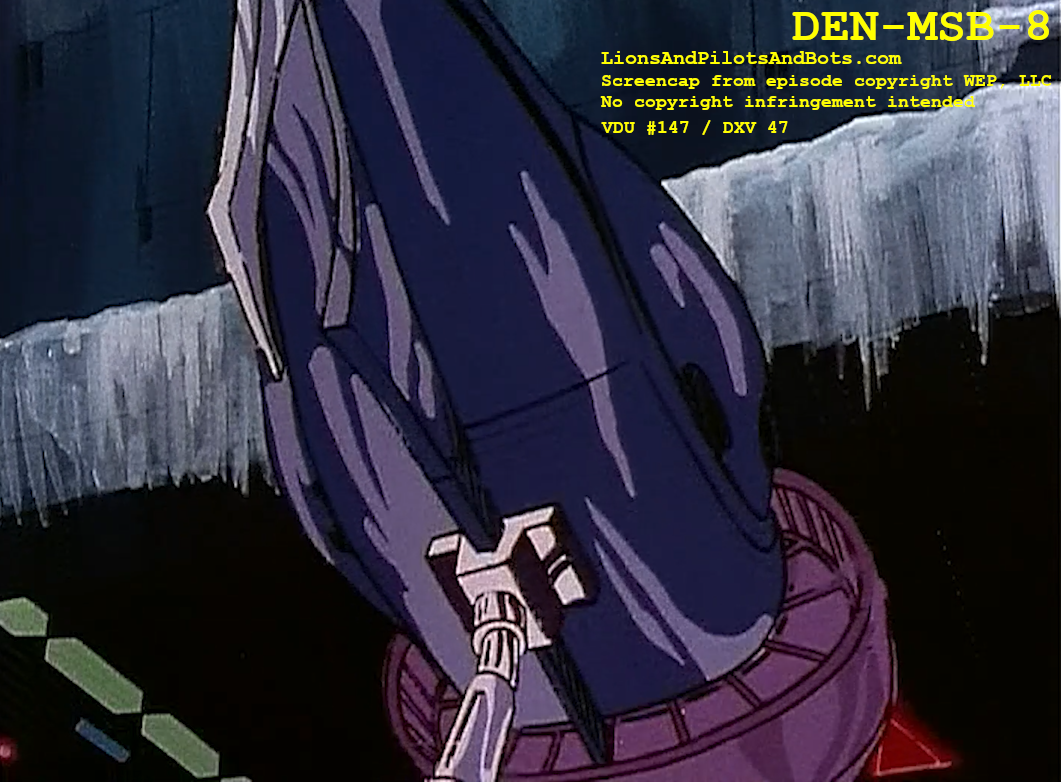
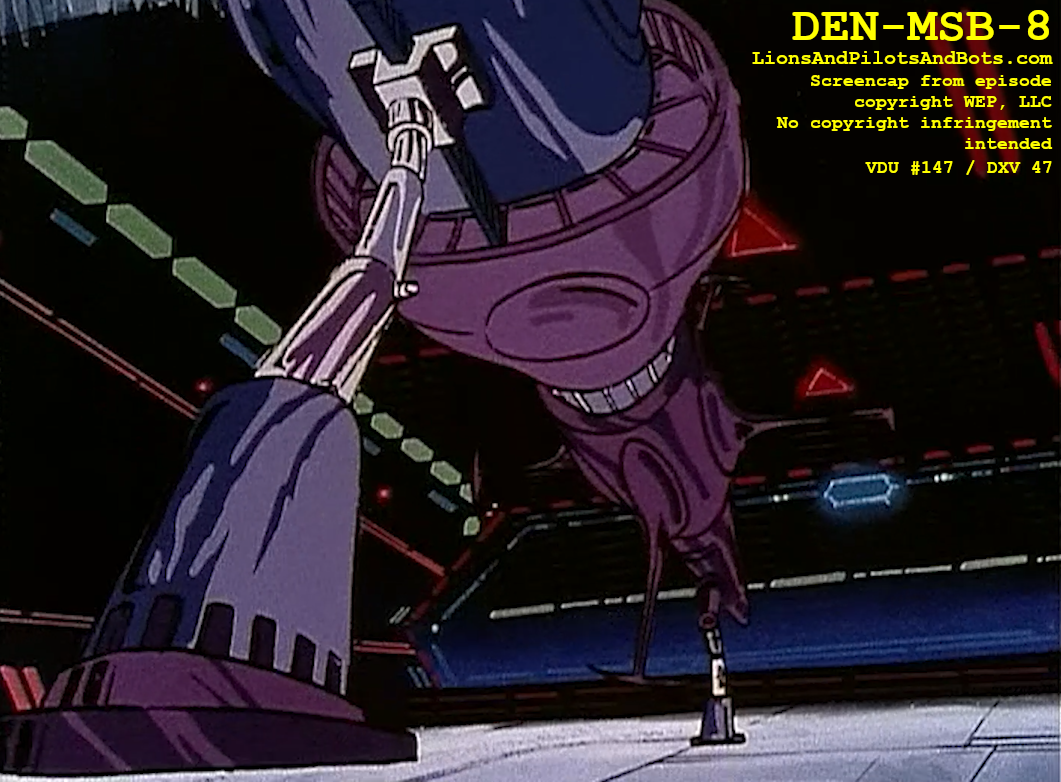
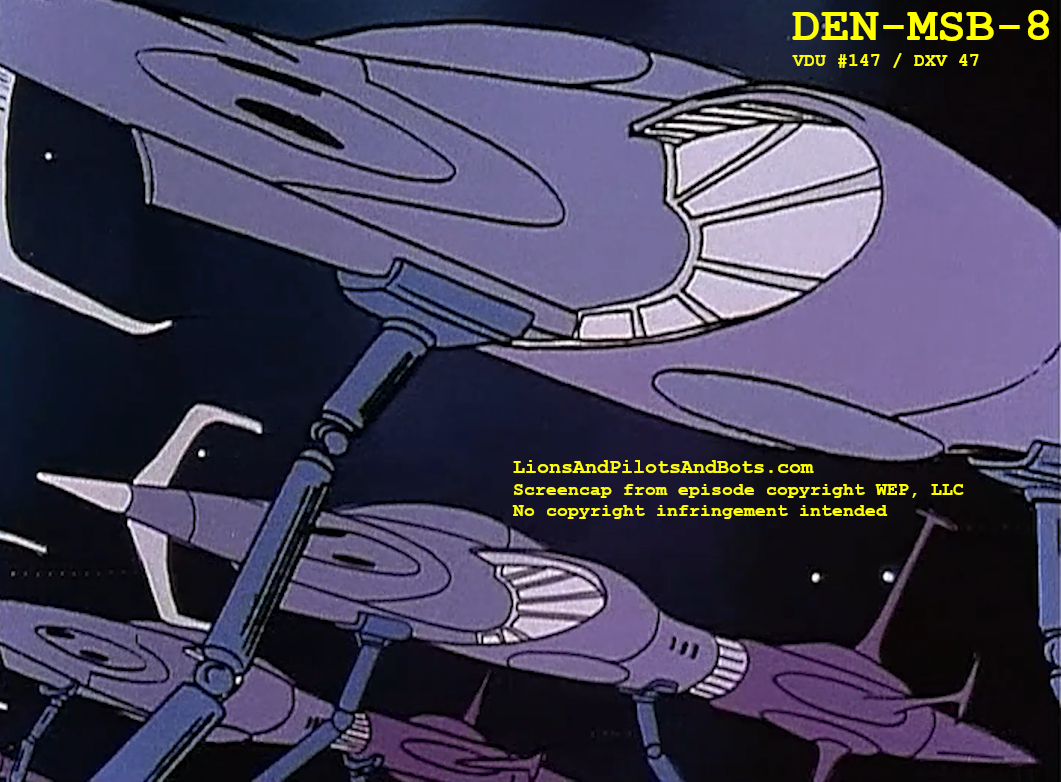
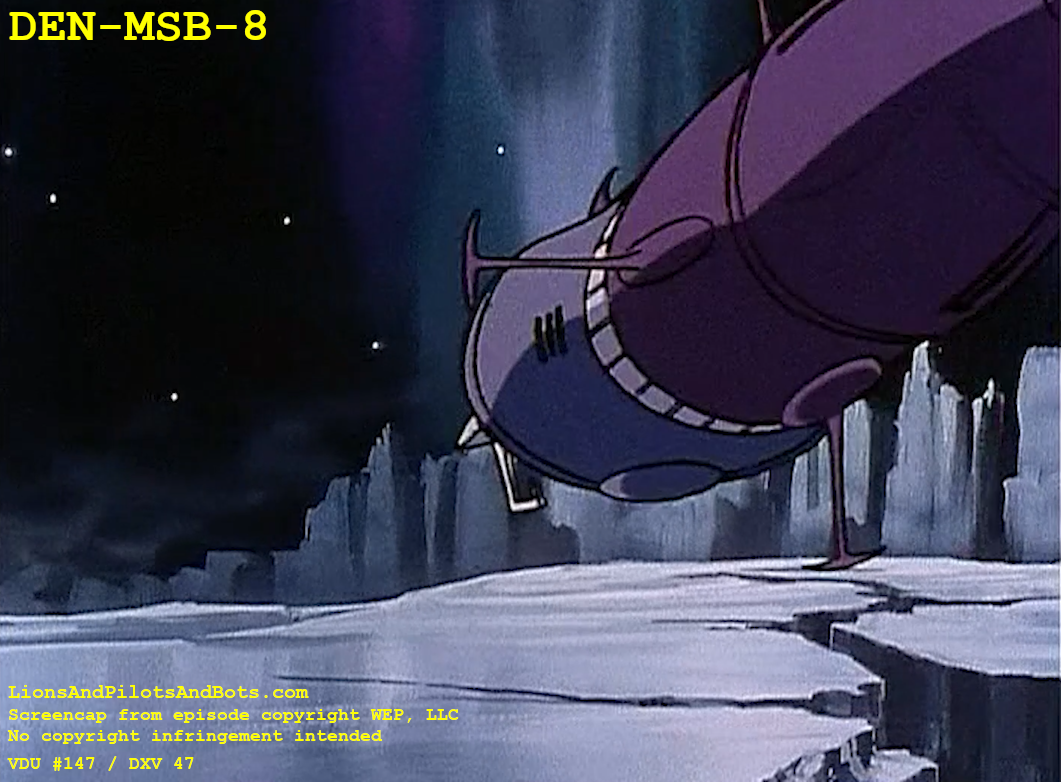
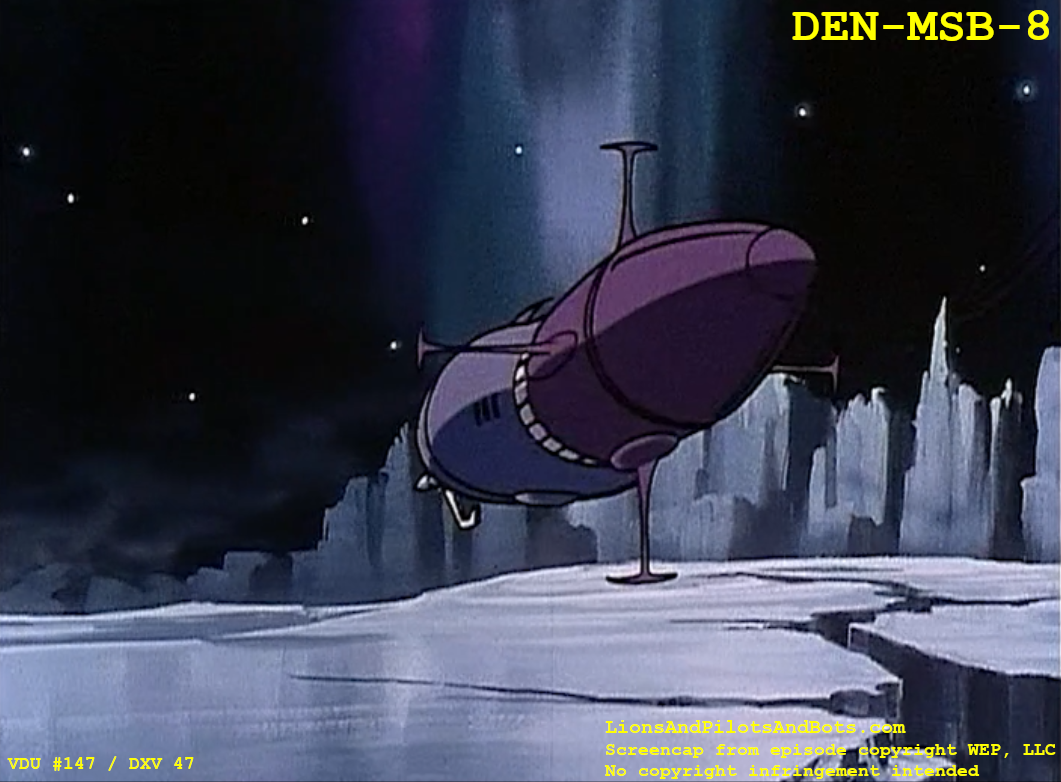
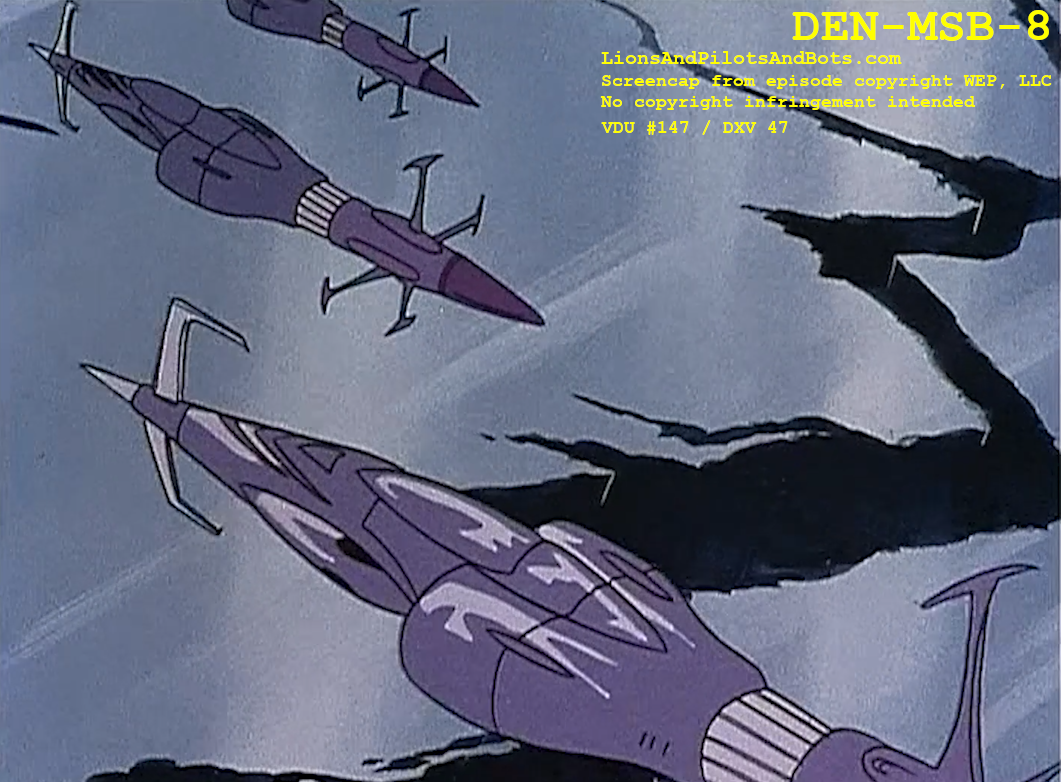
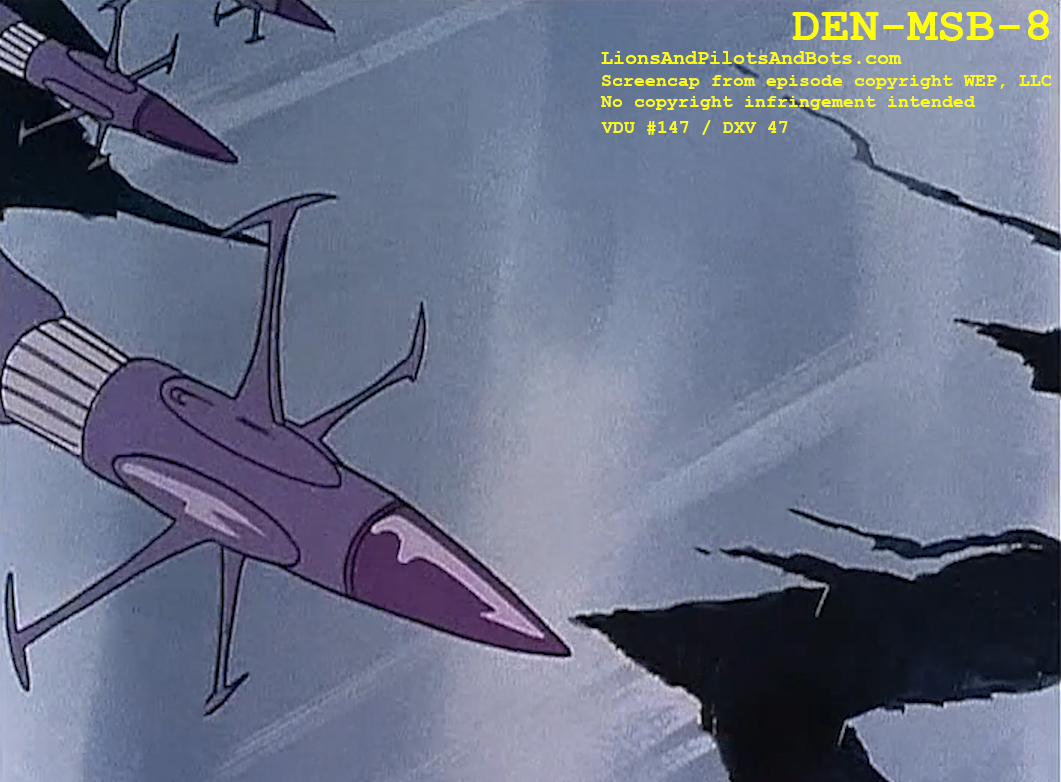
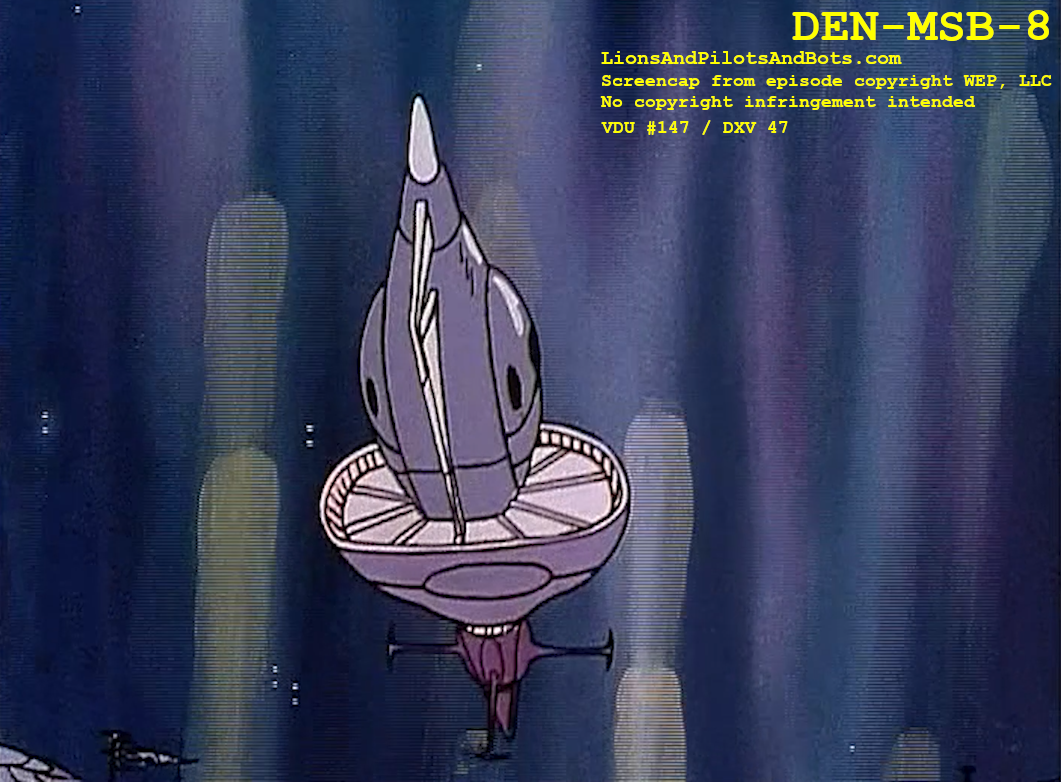
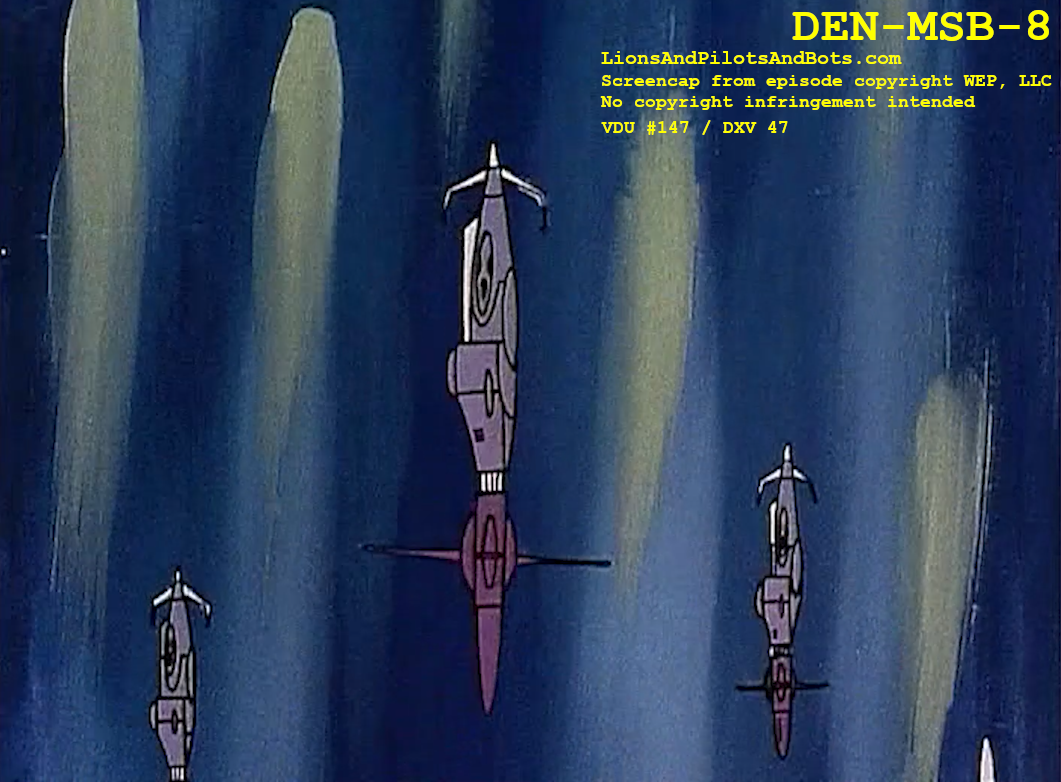
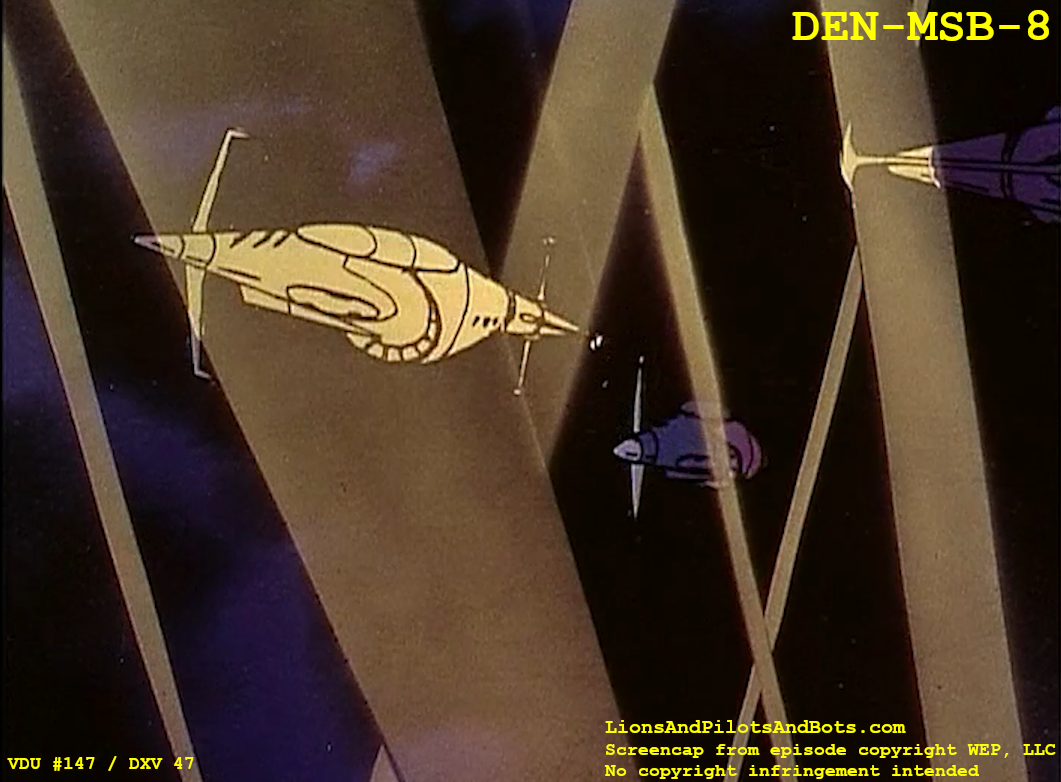
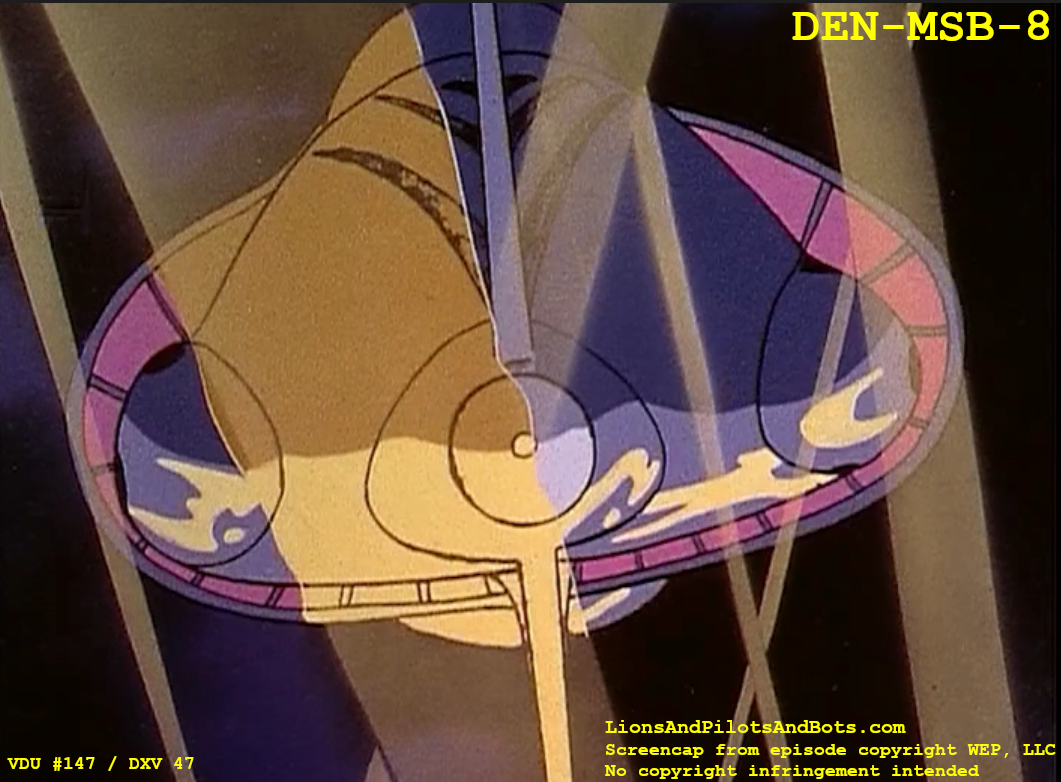
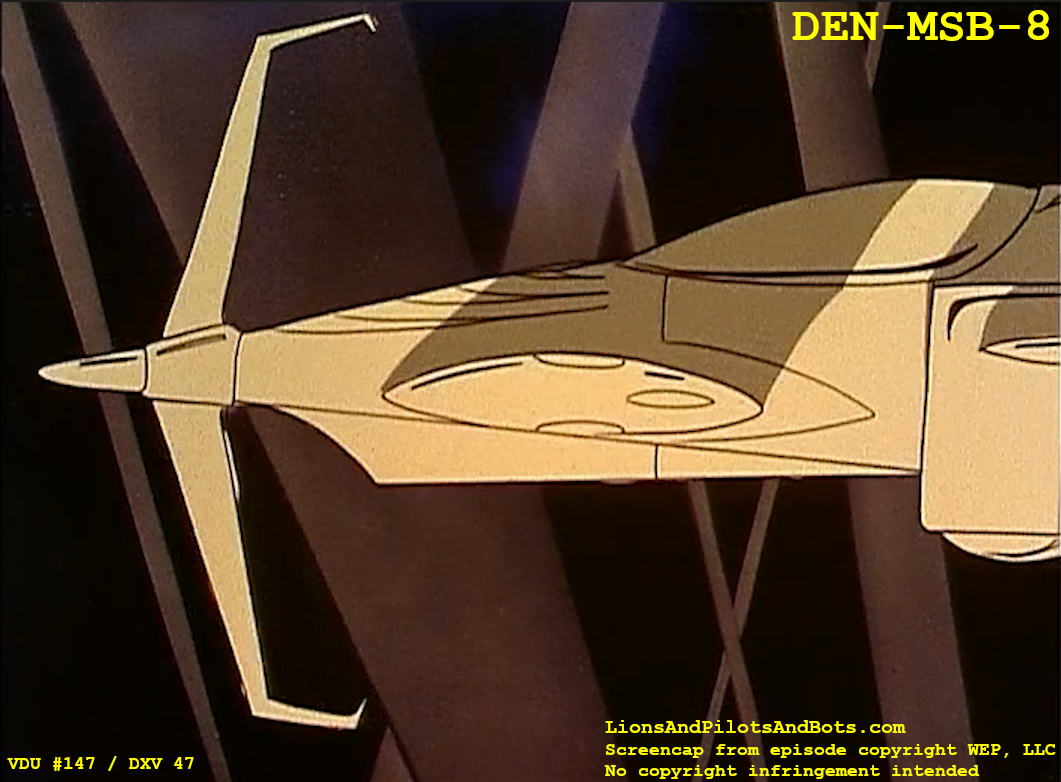
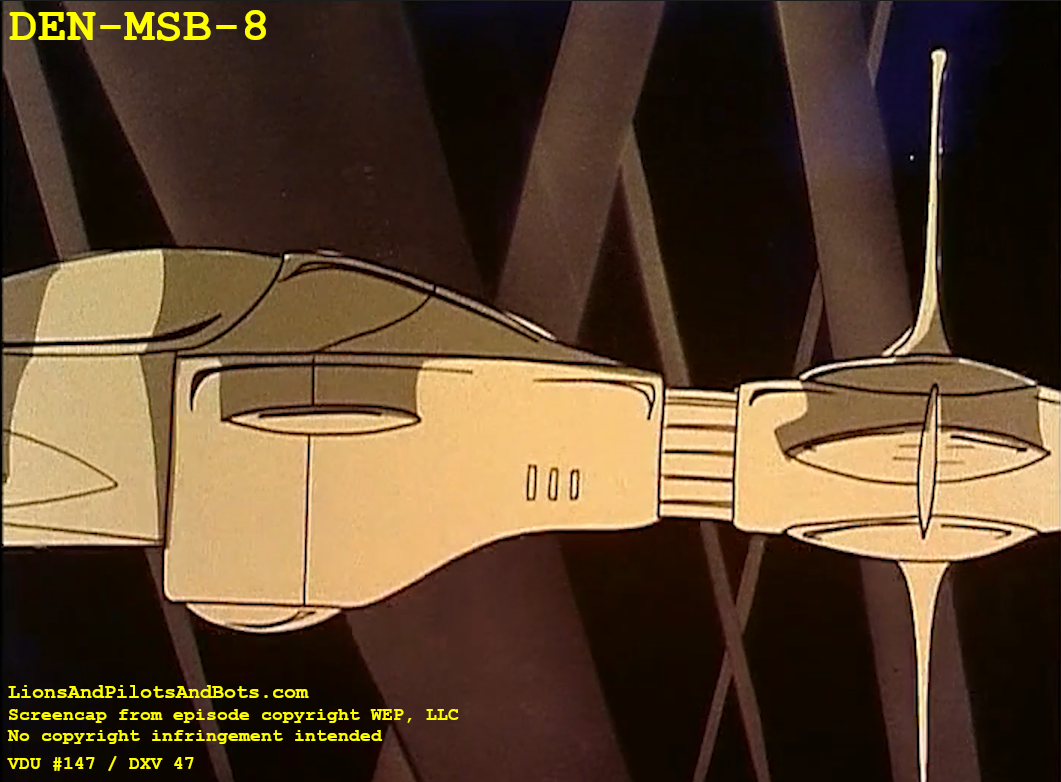
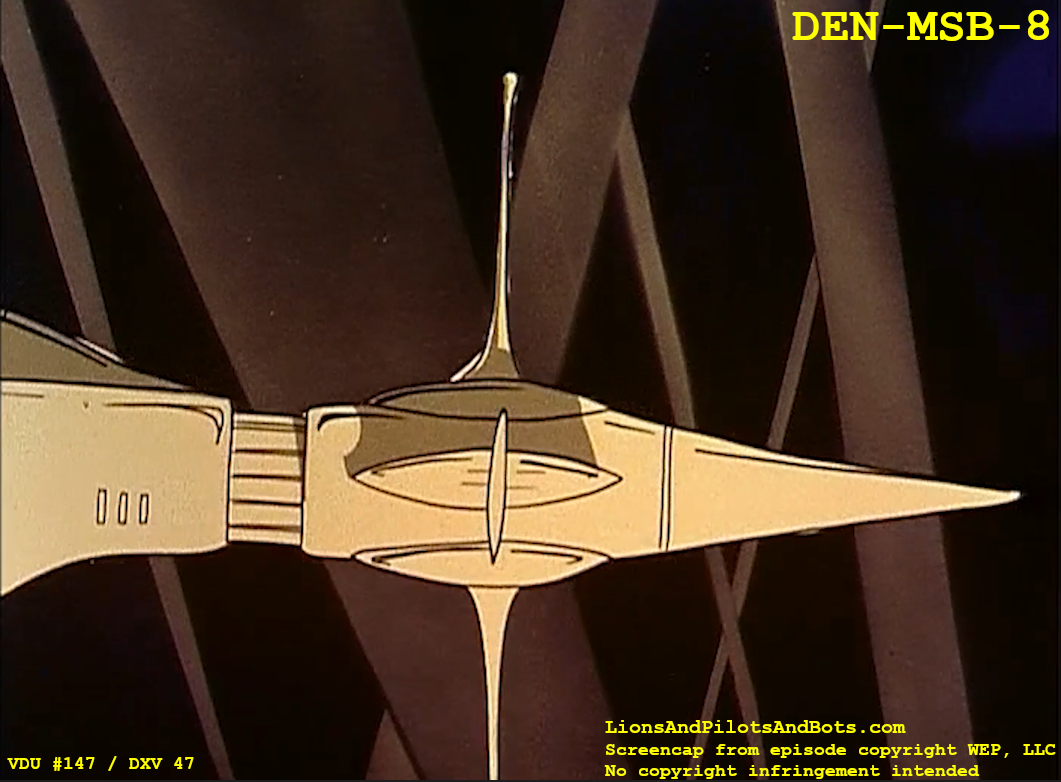
DEN-MSB-8 ships are secret attack ships that can be rendered invisible.
The nose of an DEN-MSB-8 ship resembles the tip of a harpoon, with a pointy tip and vanes that protrude to dorsal and to ventral. The stern has spires that also protrude to dorsal and to ventral.
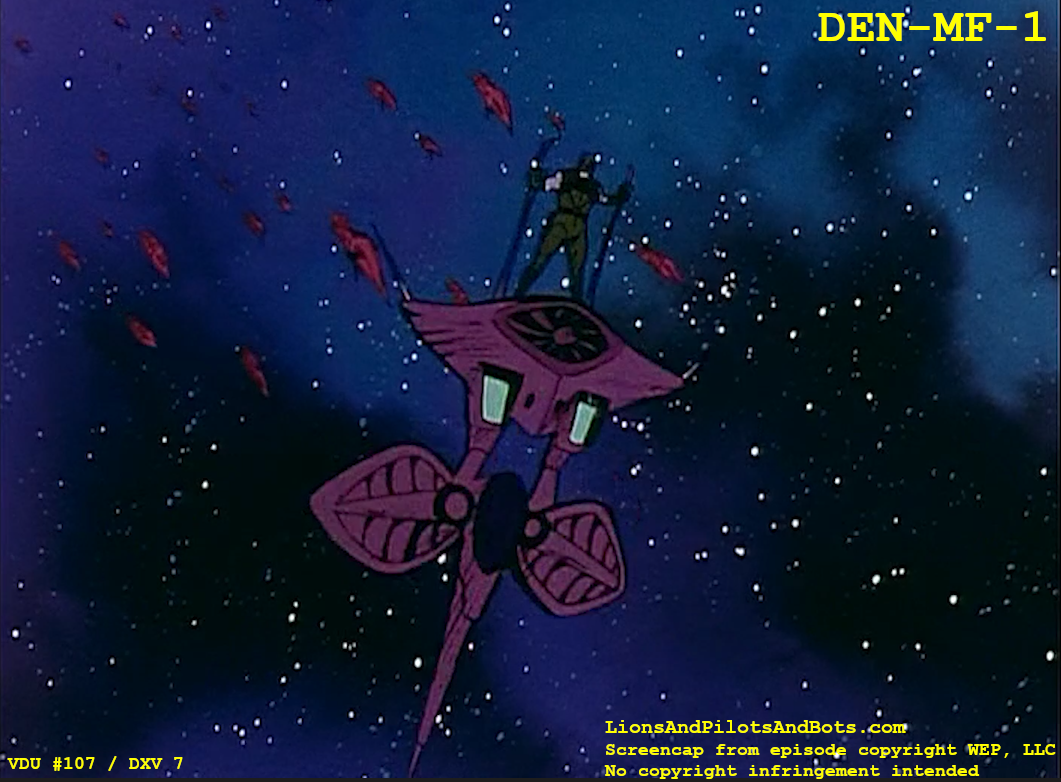
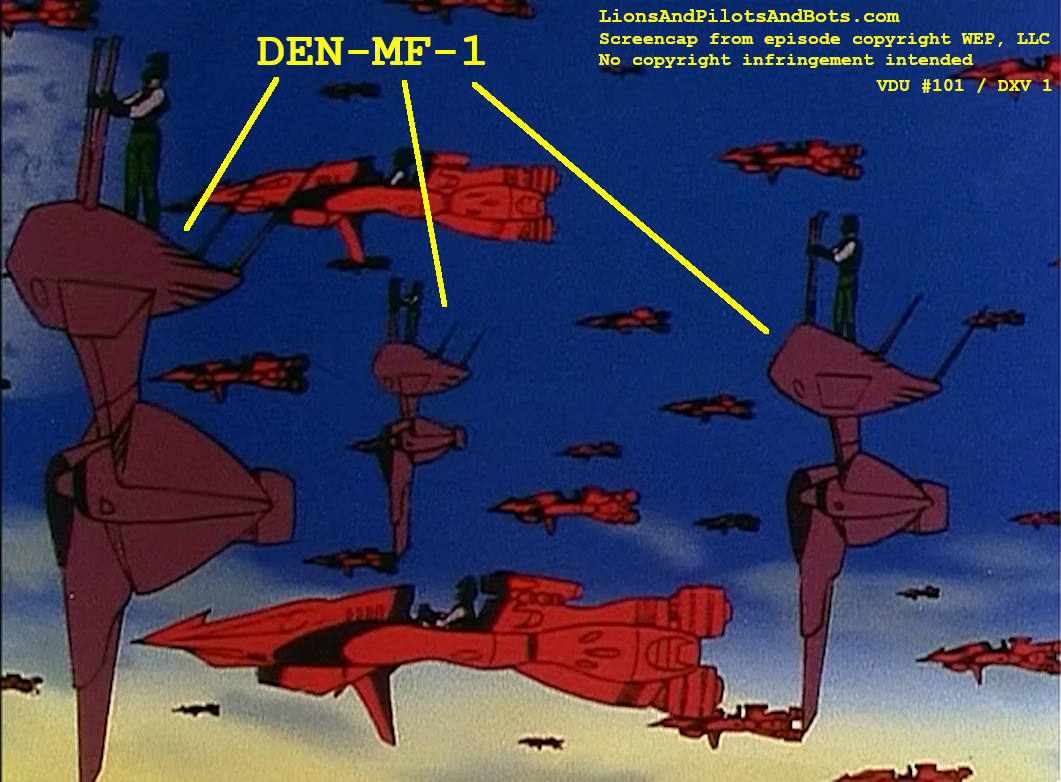
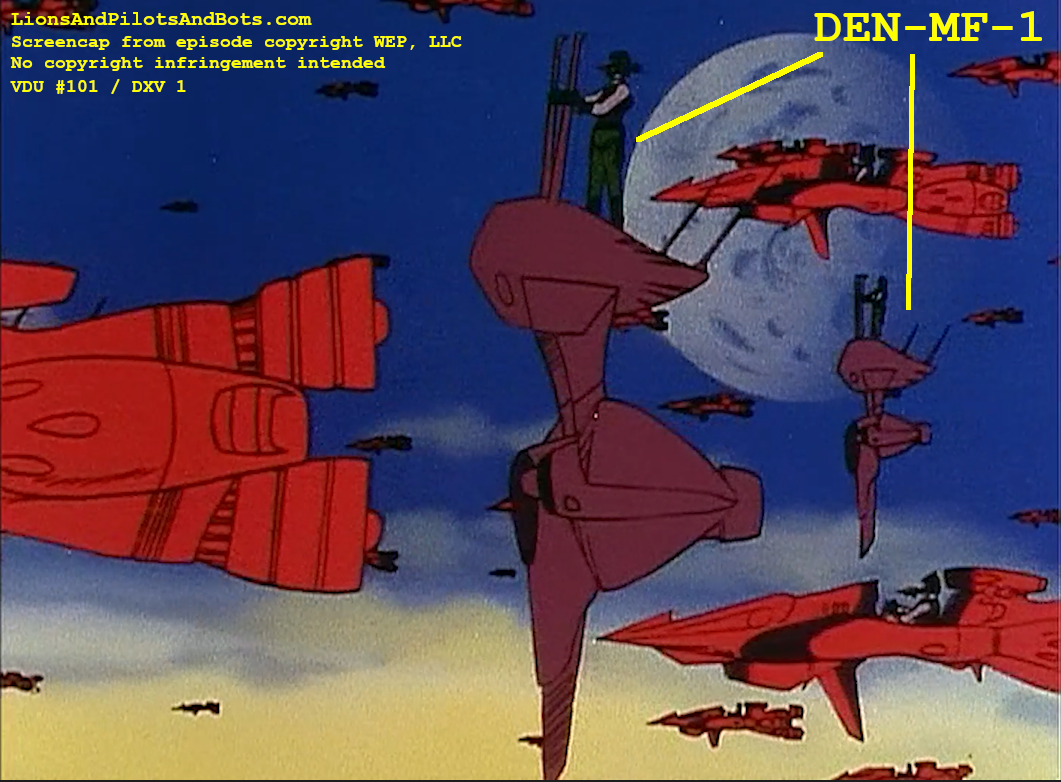
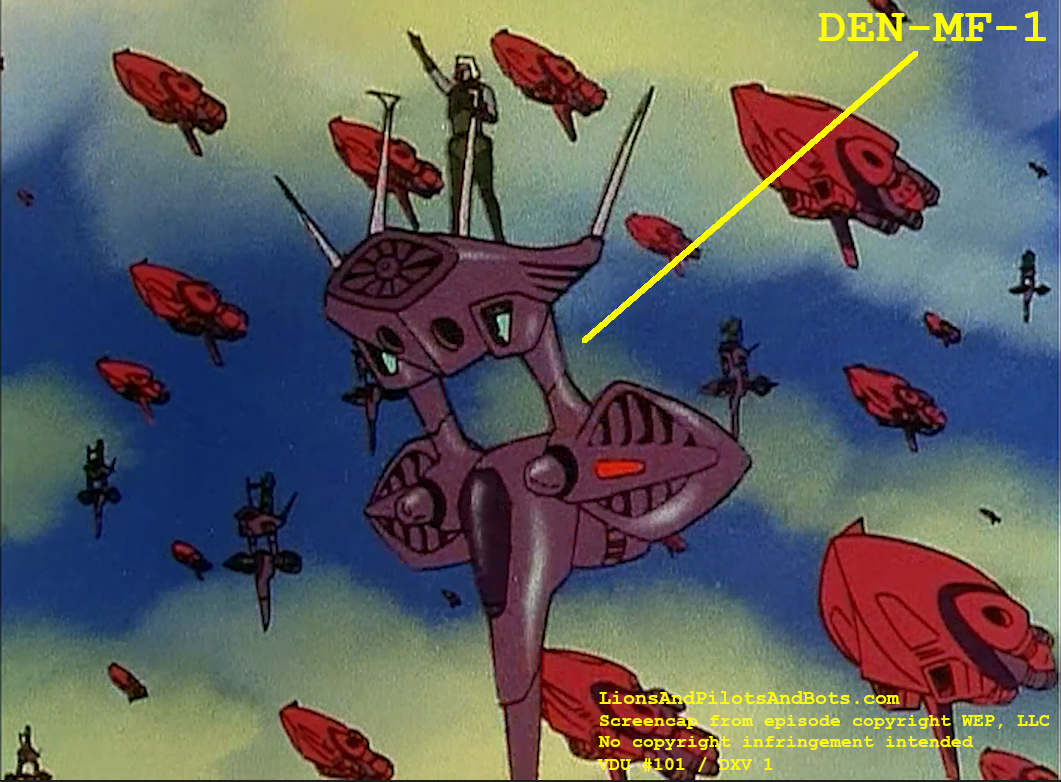
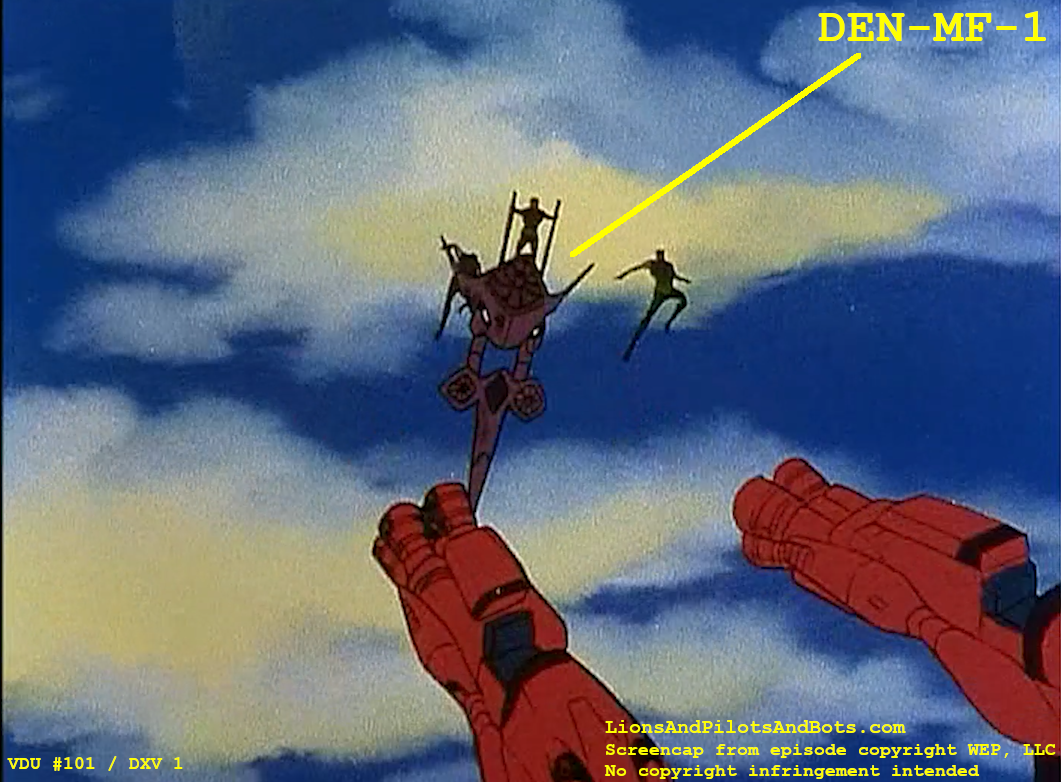
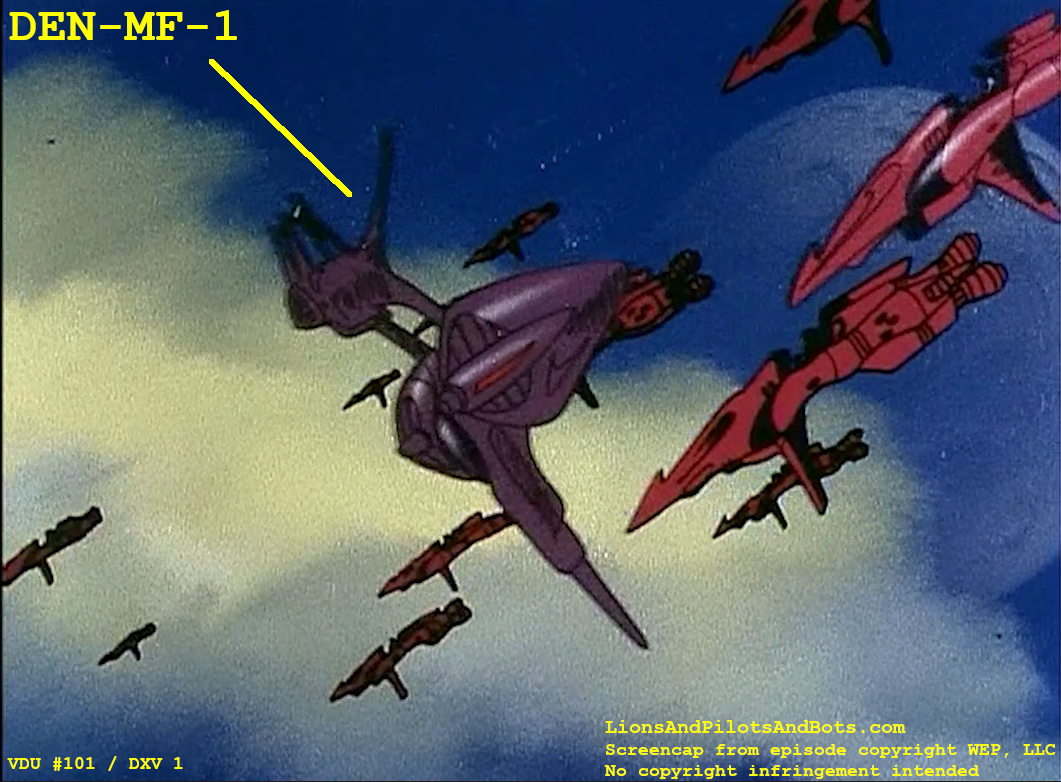
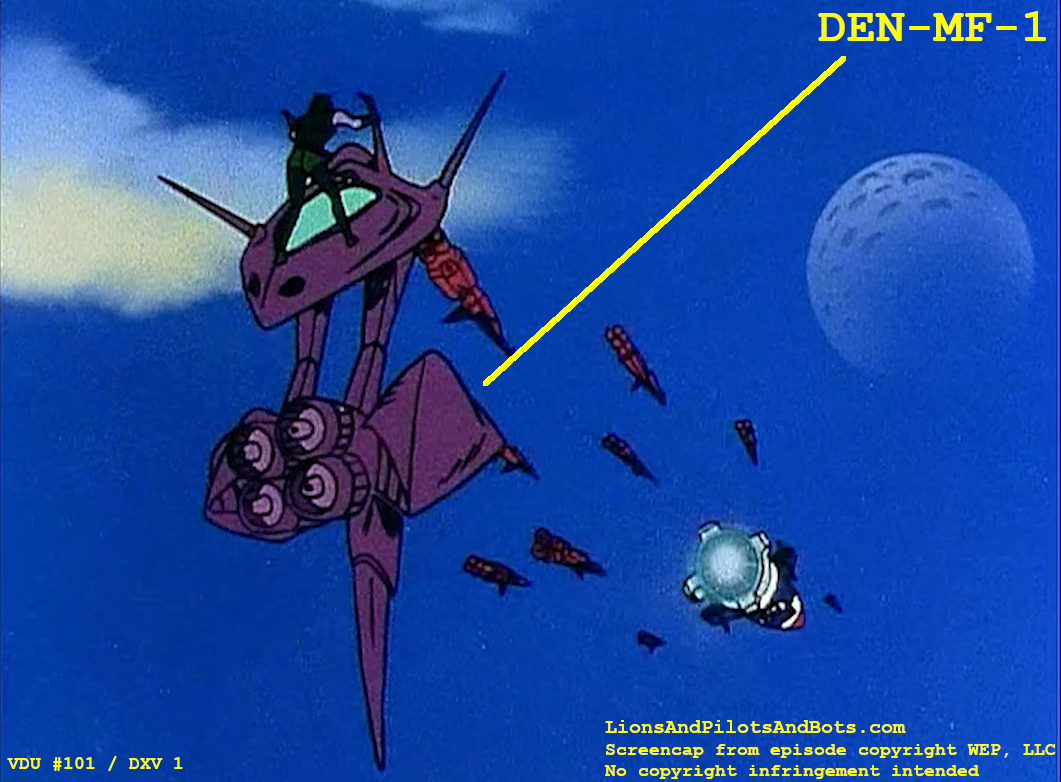
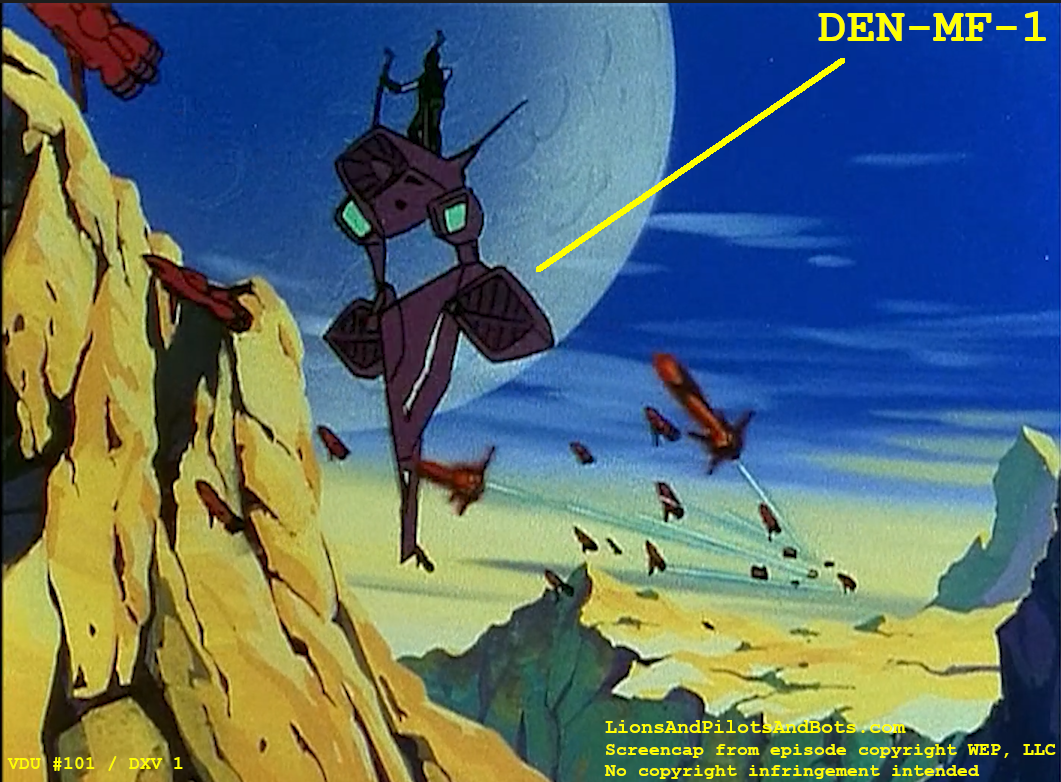
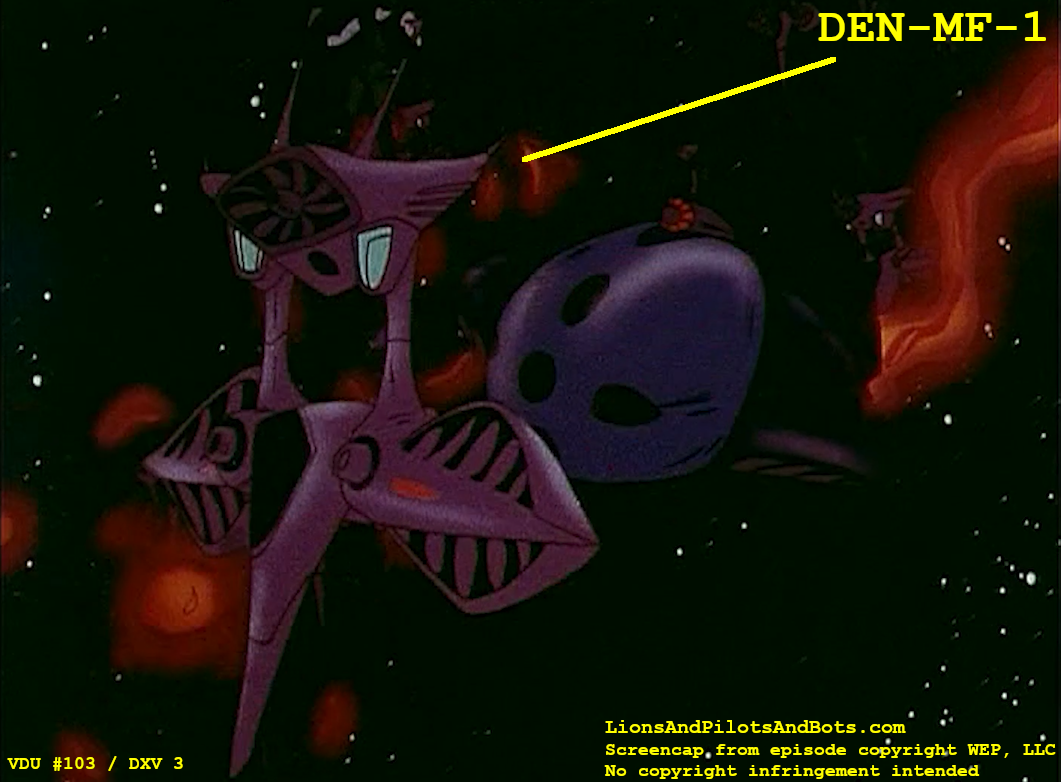
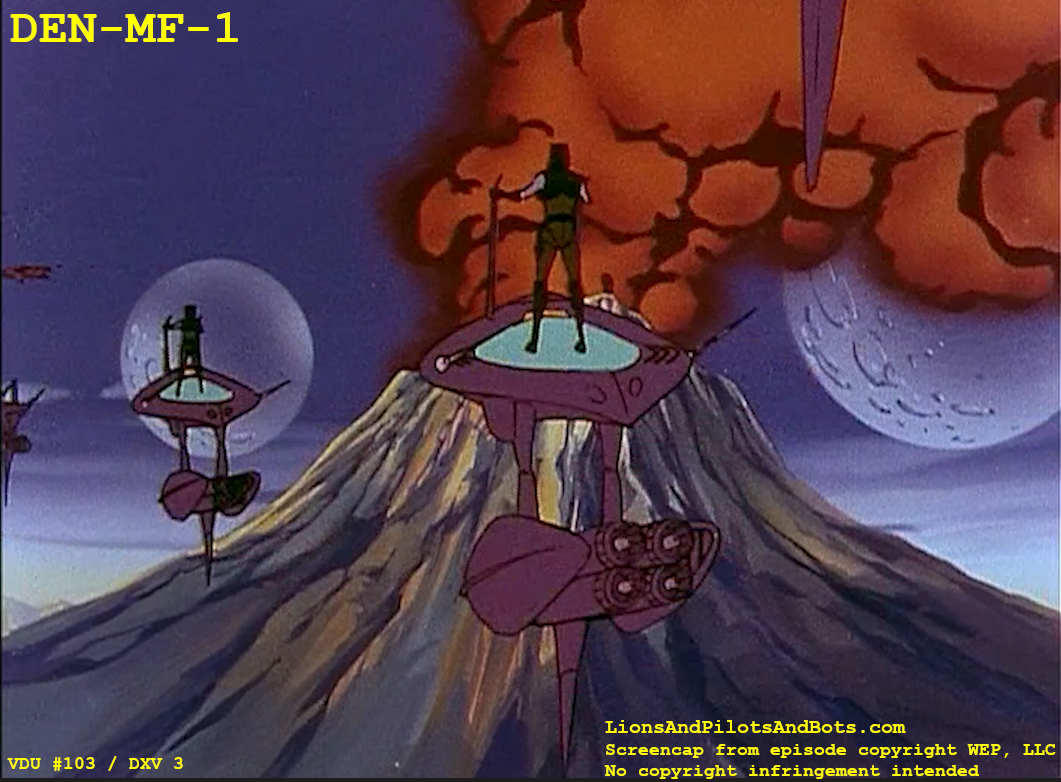
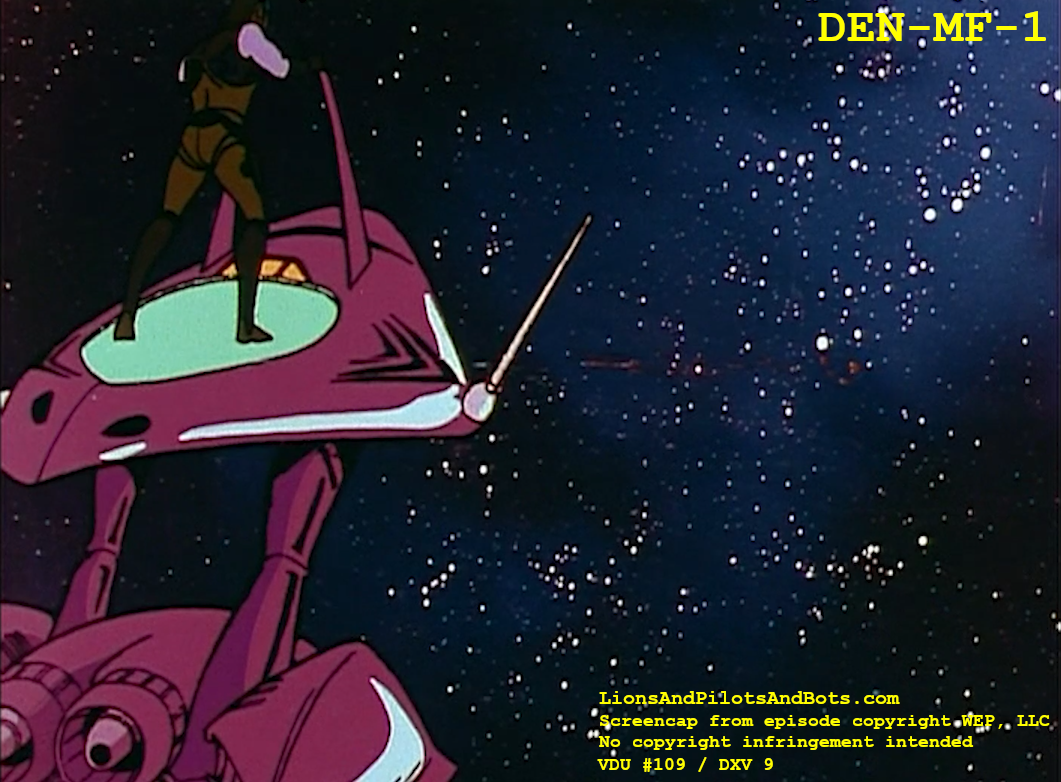
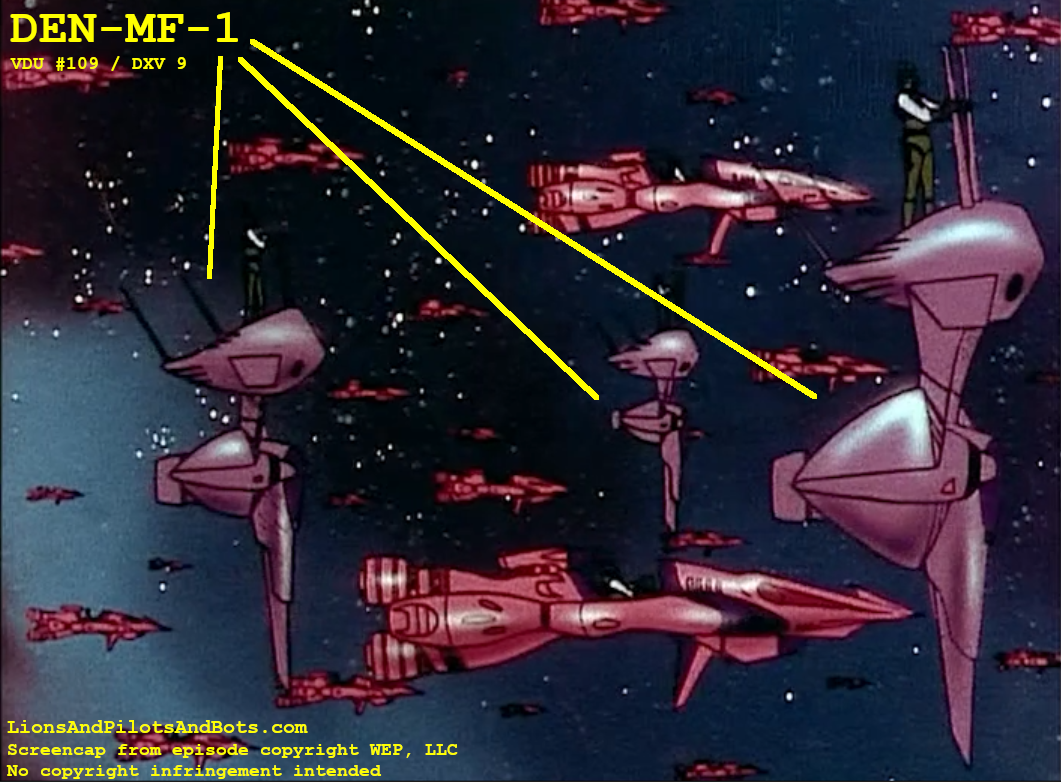
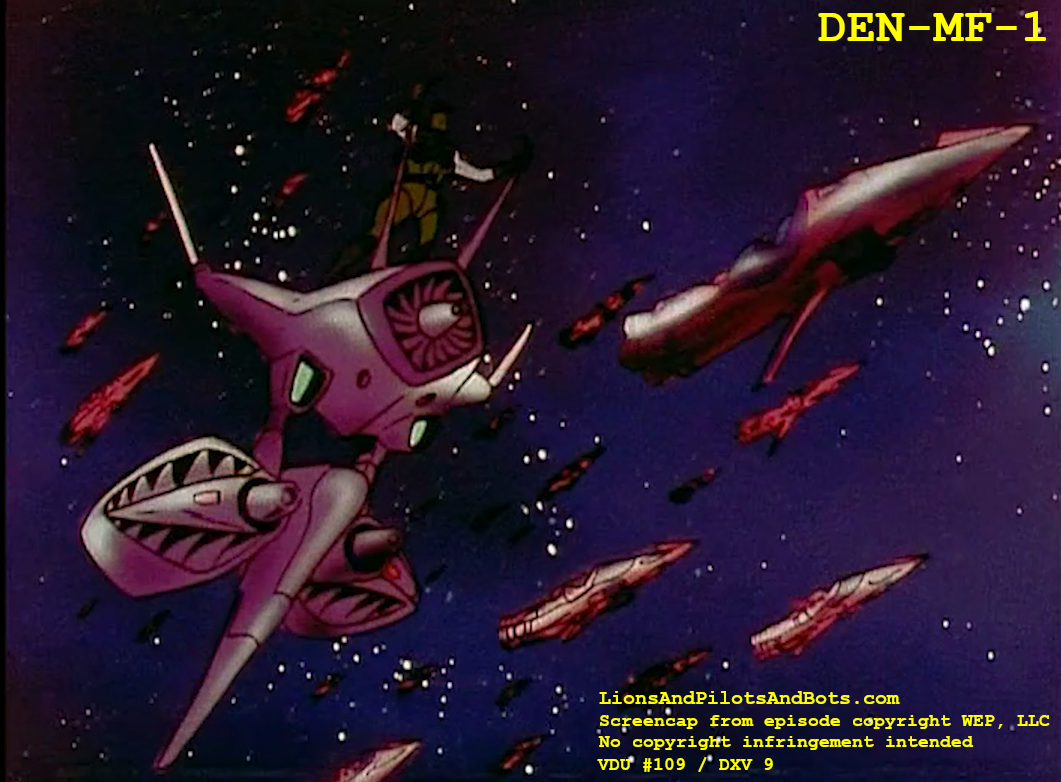
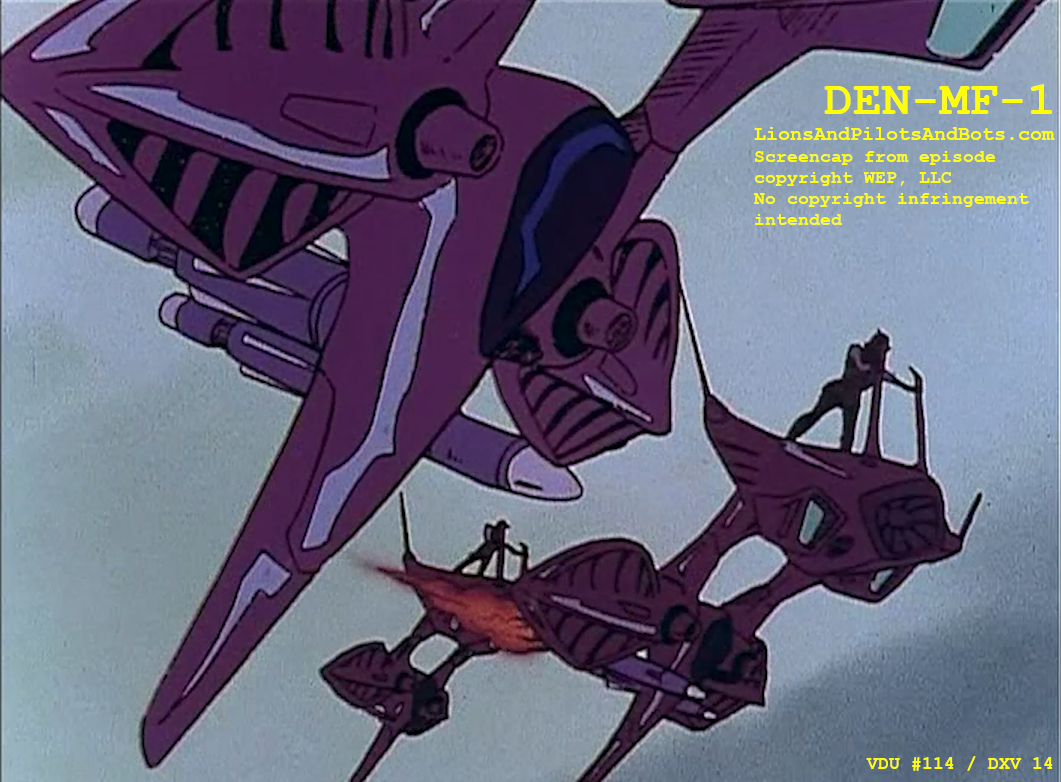
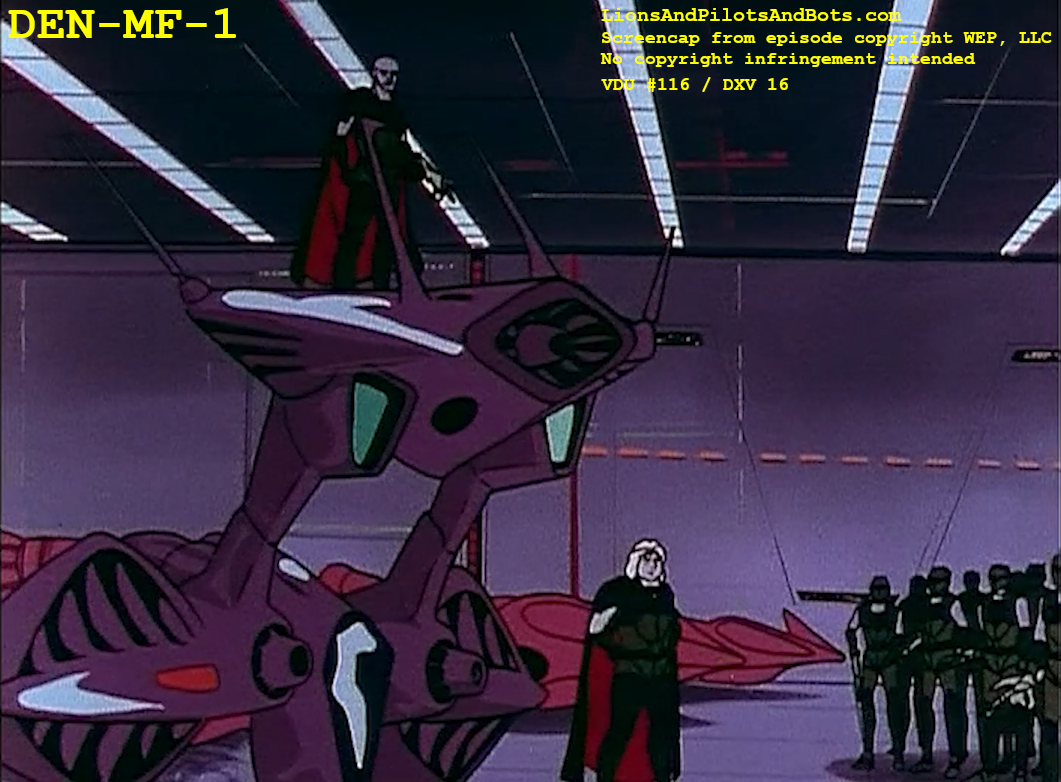
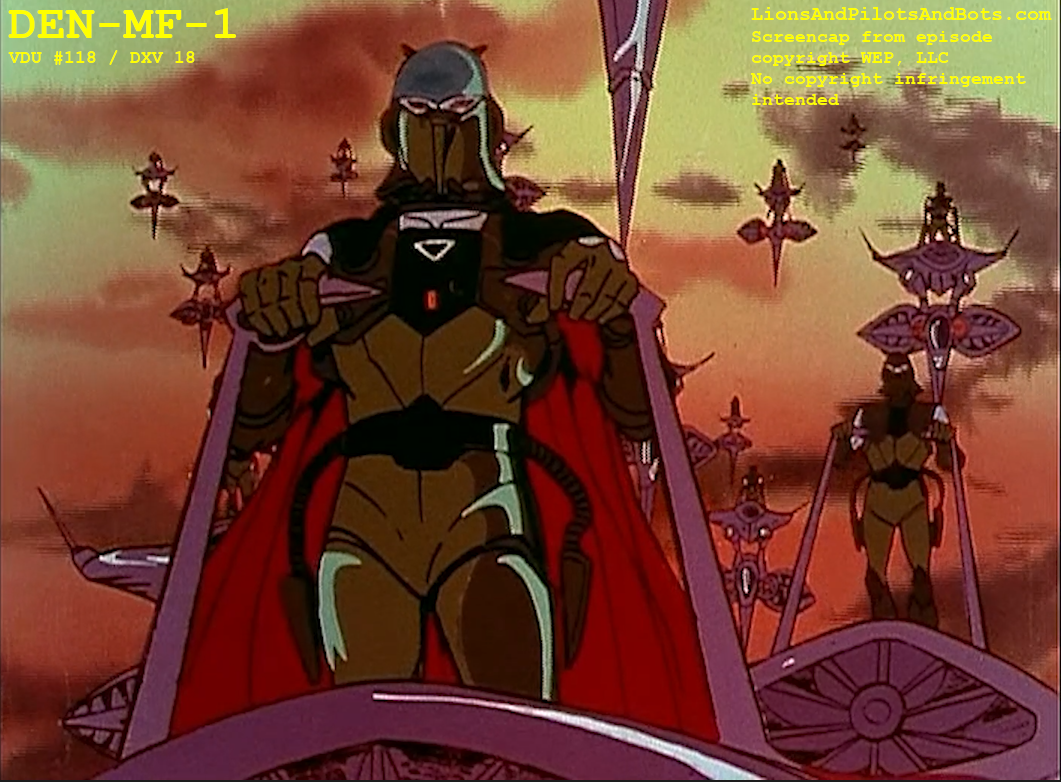
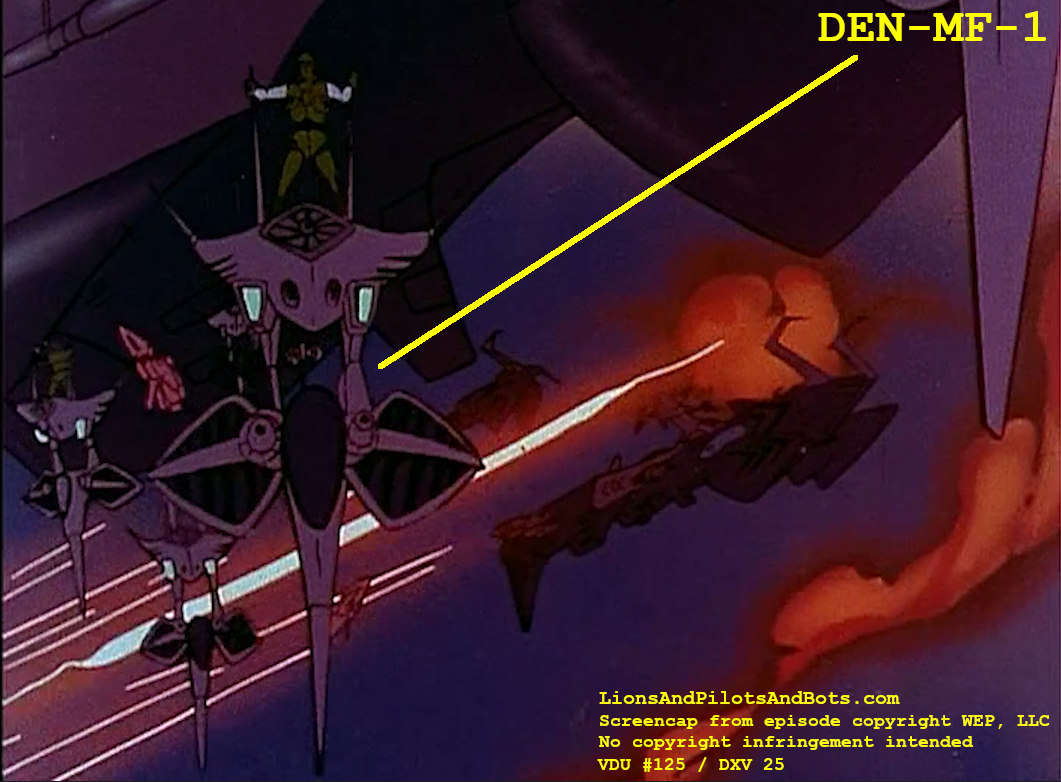
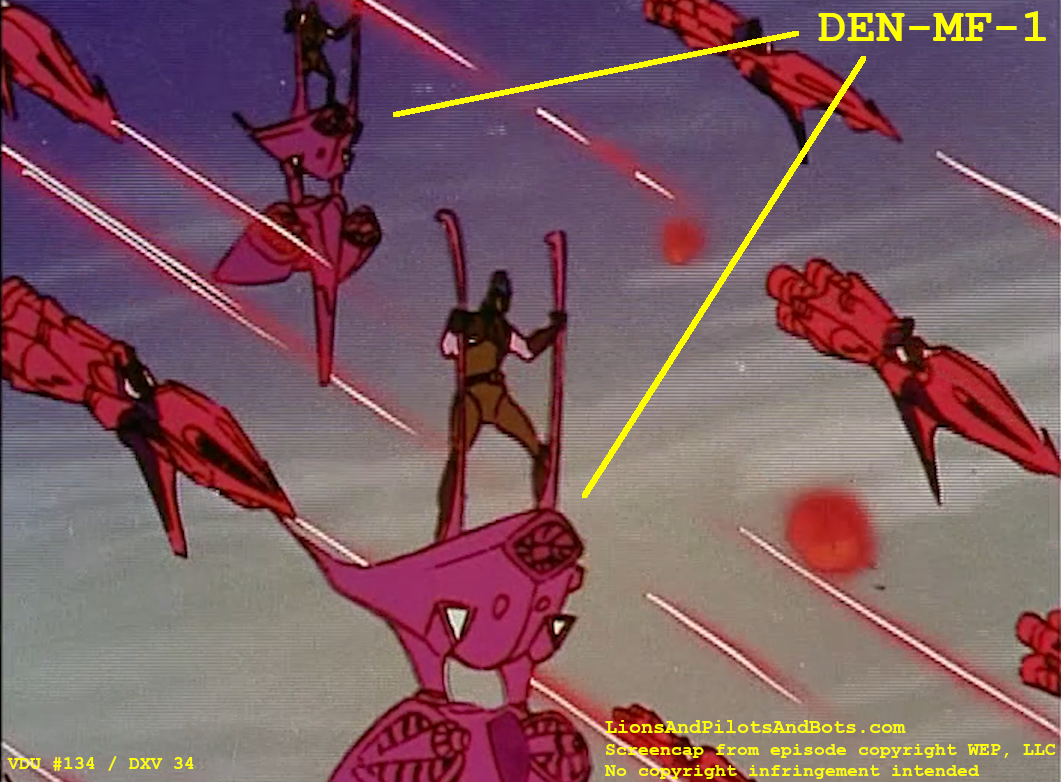
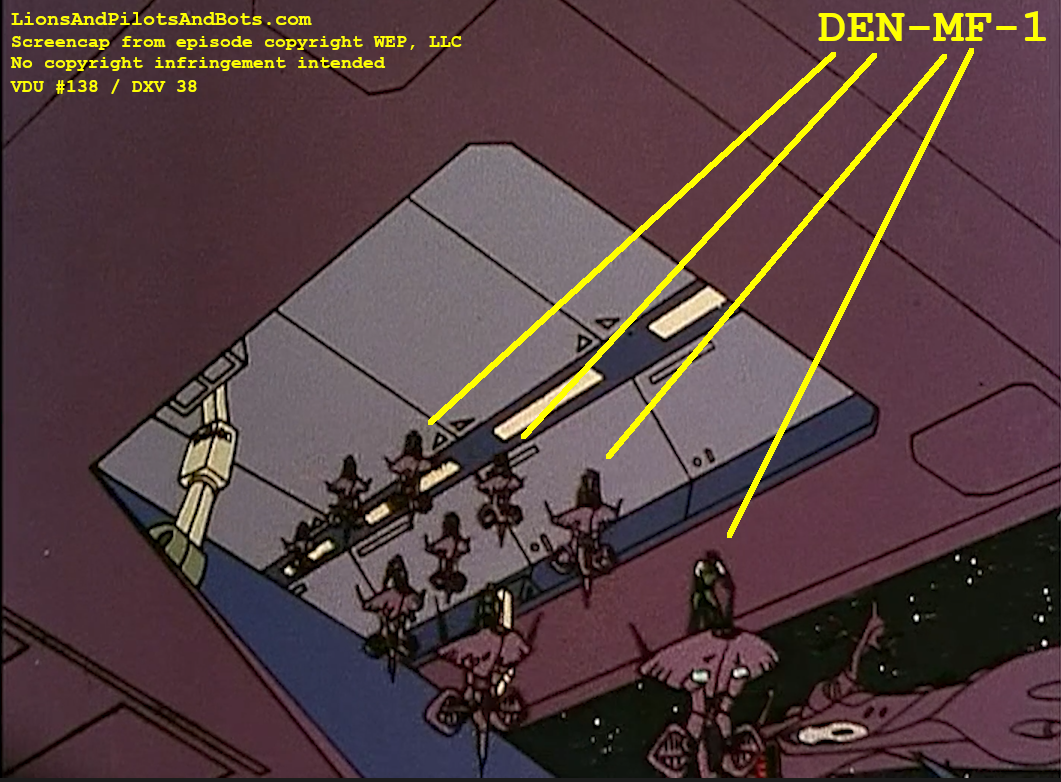
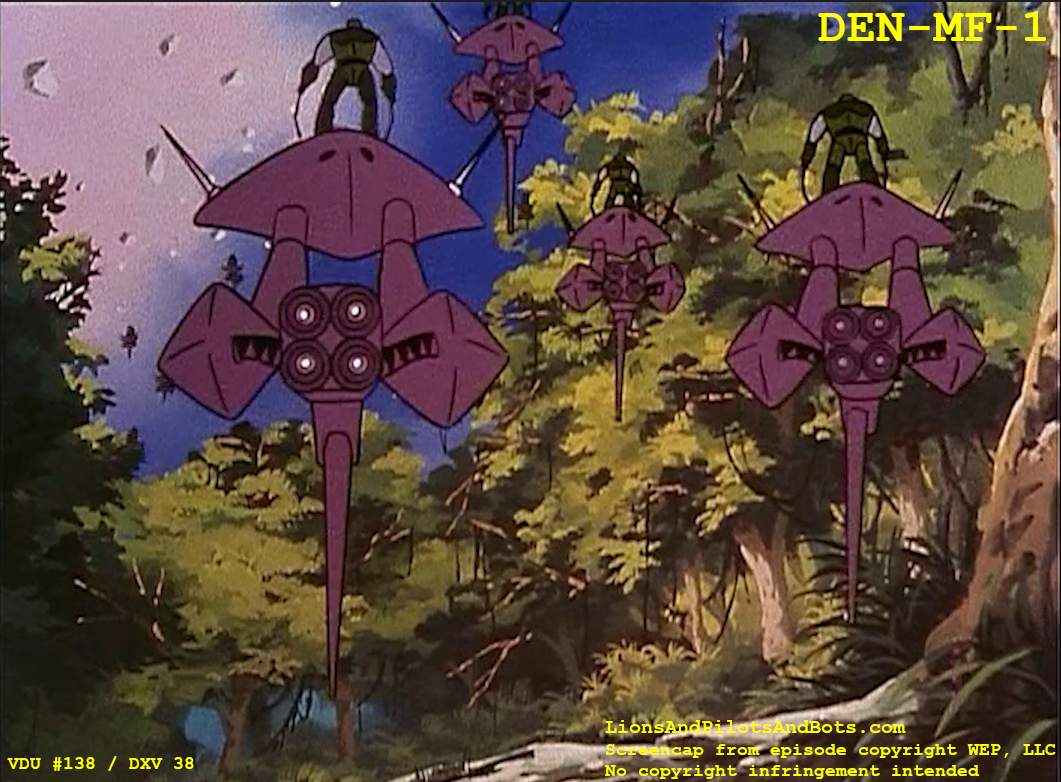
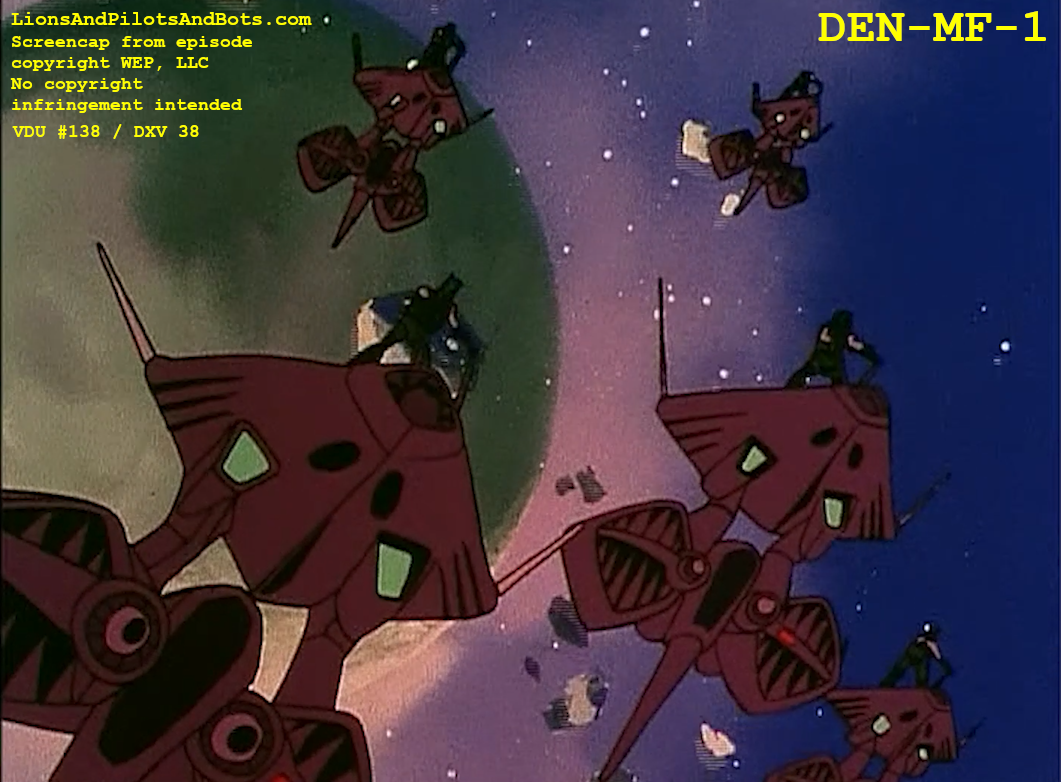
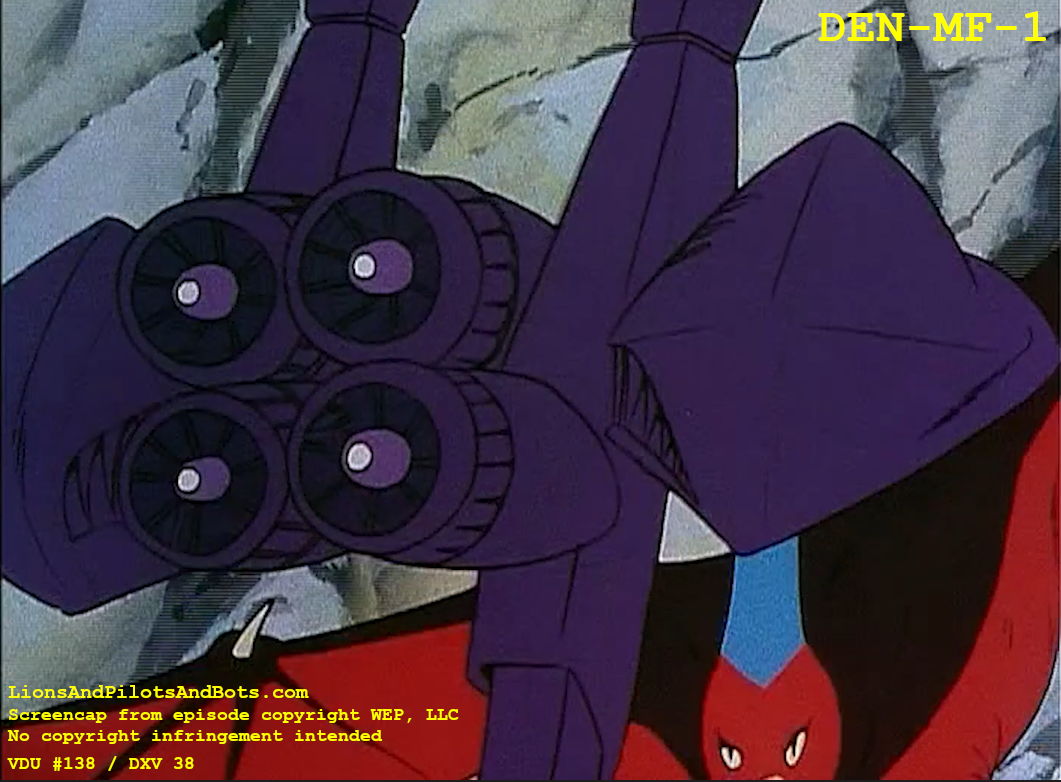
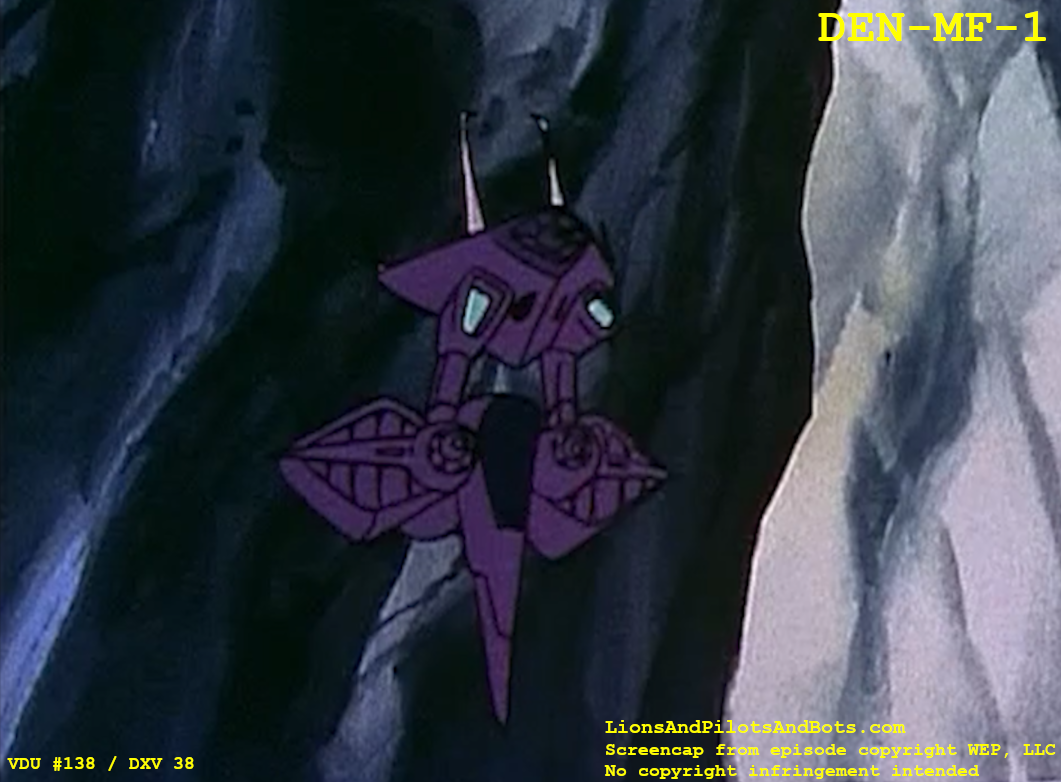
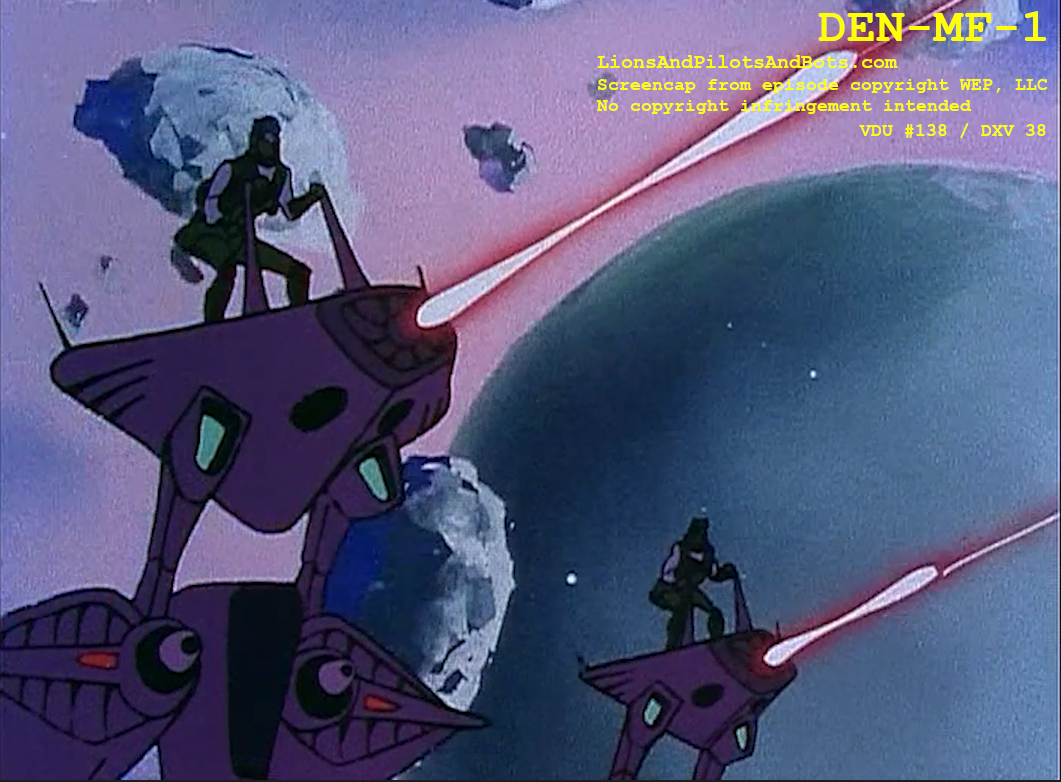
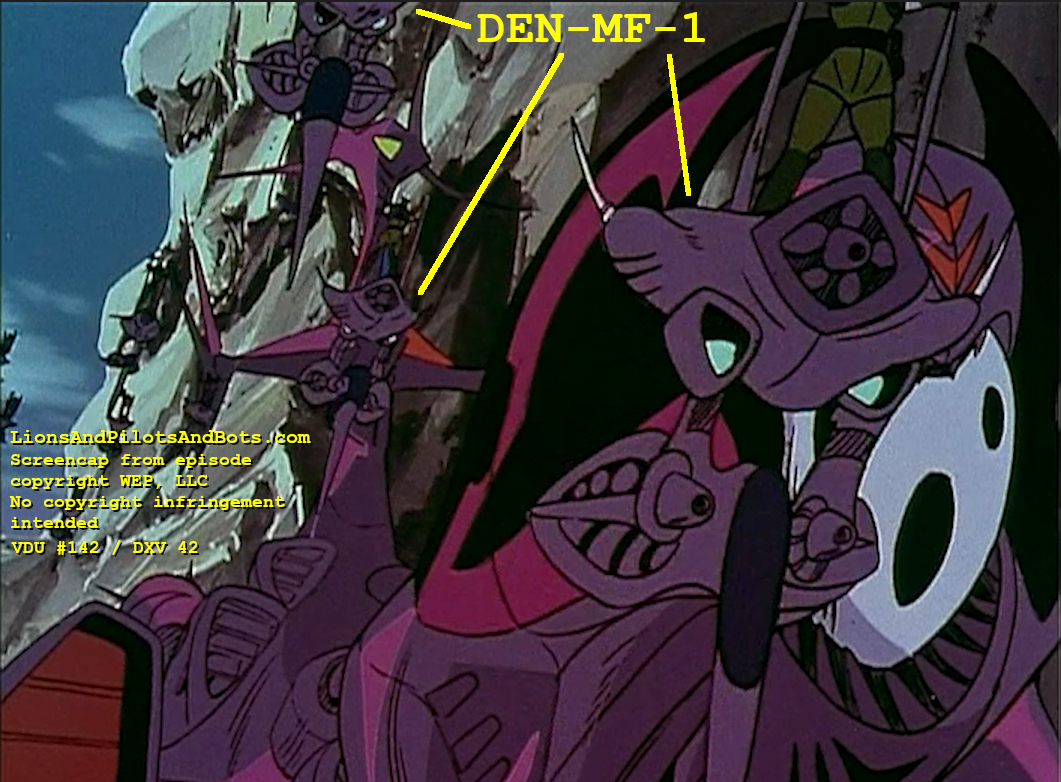
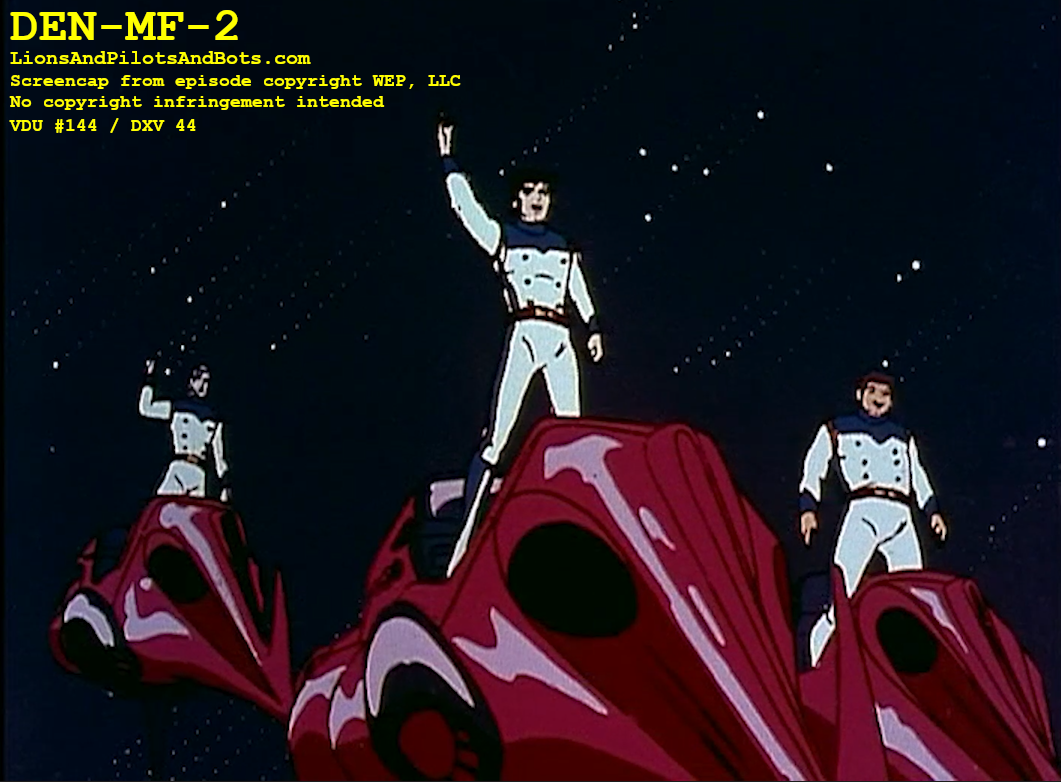
DEN-MF-1 fighters are chariot-like vehicles with an exposed platform for a standing pilot, who operates the fighter by gripping twin control spires. DEN-MF-1 fighters can fly in space or in planetary atmospheres.
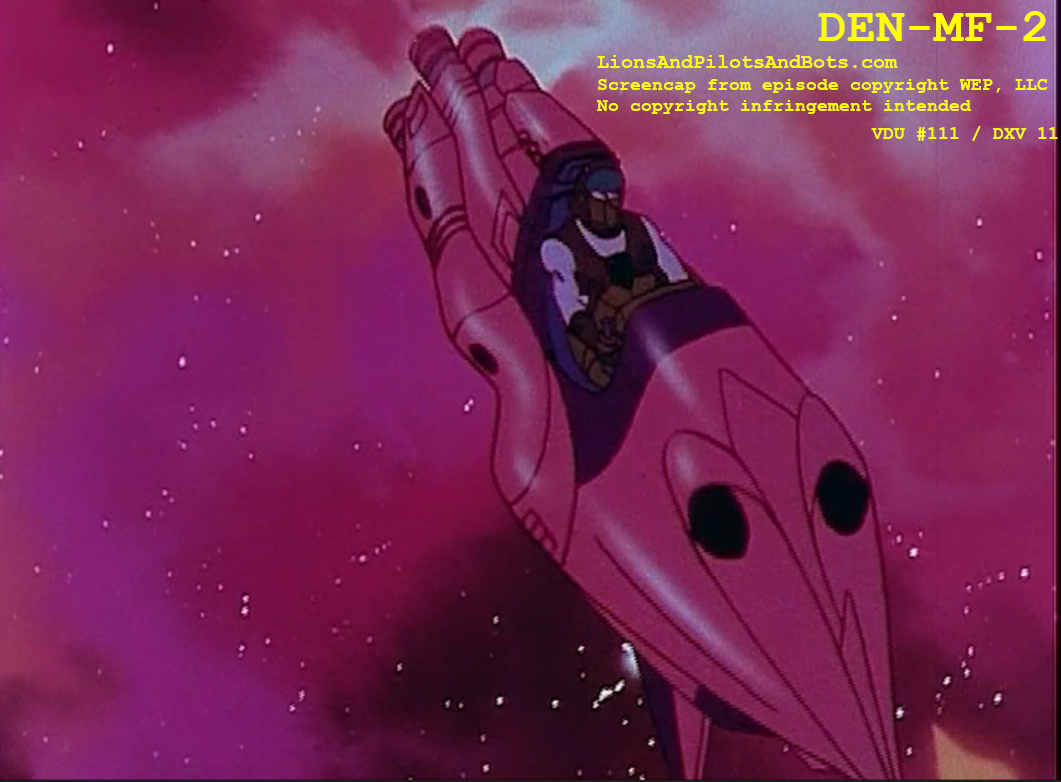
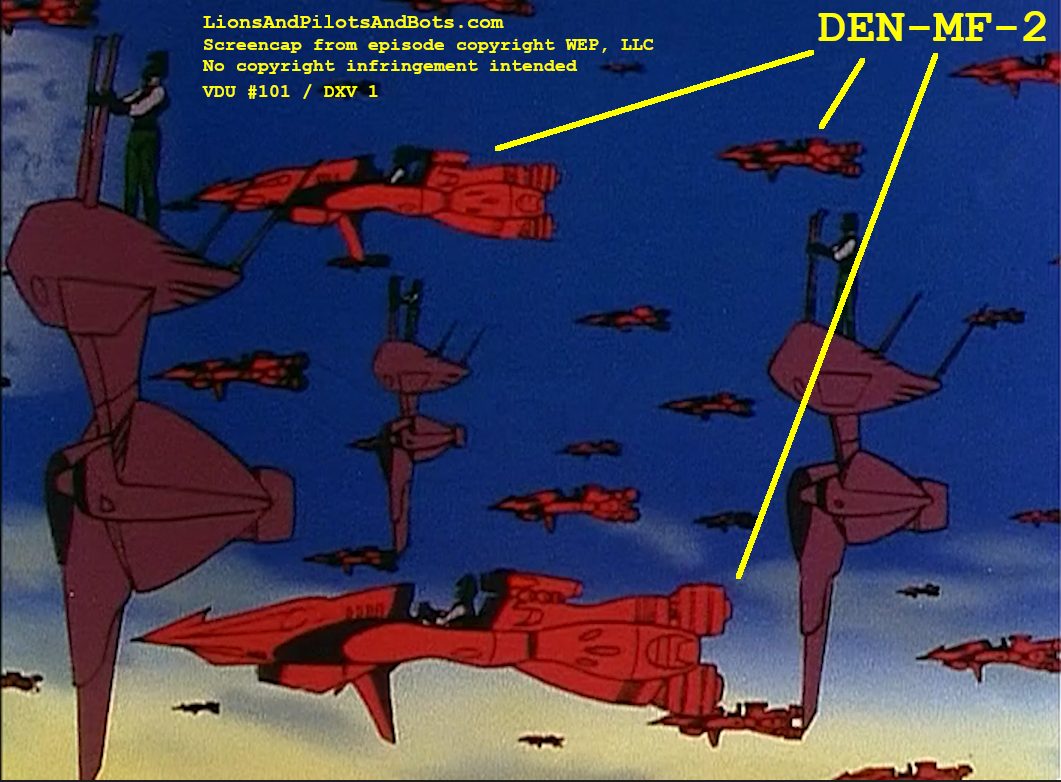
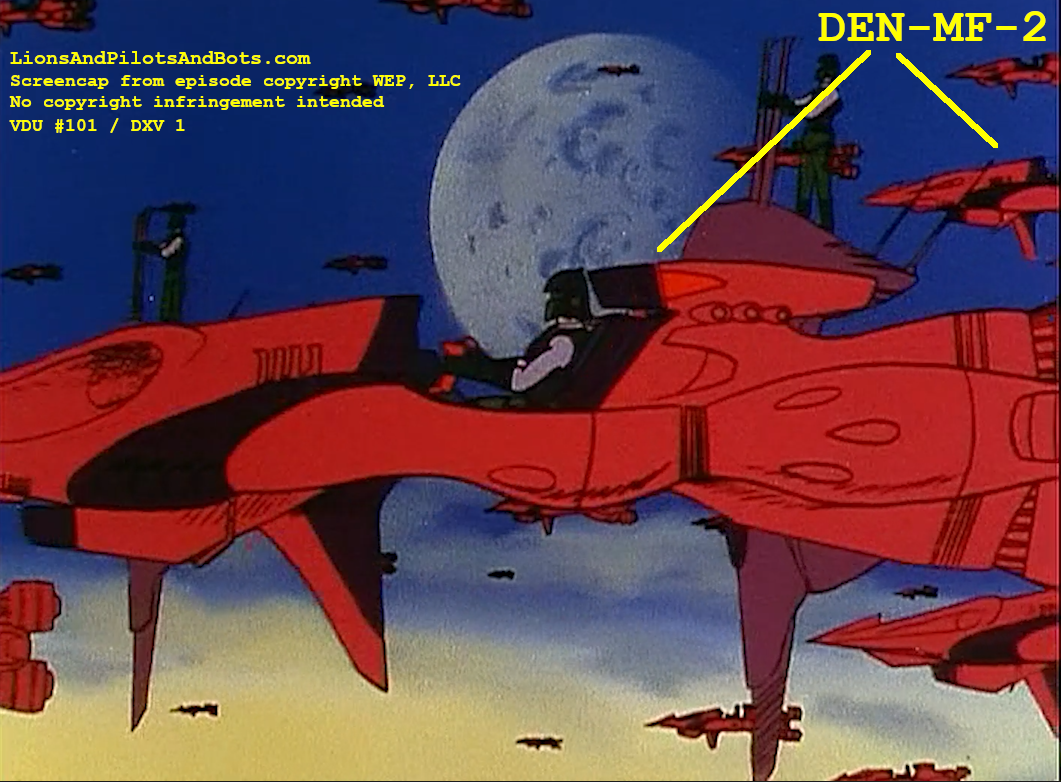
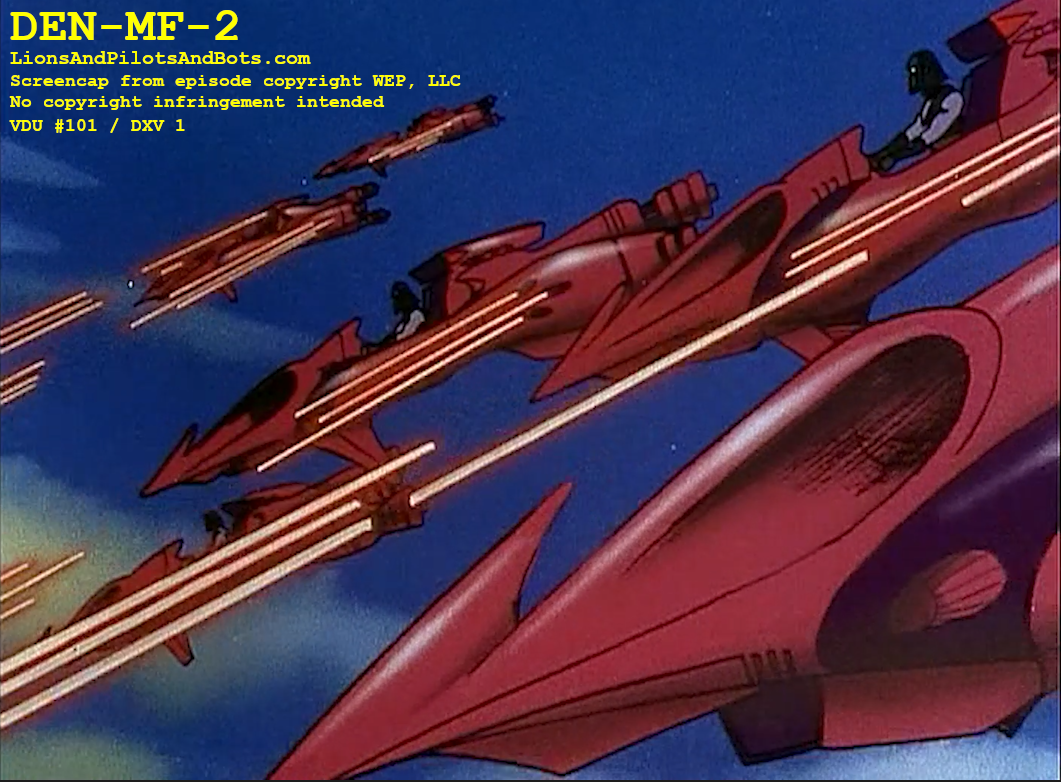
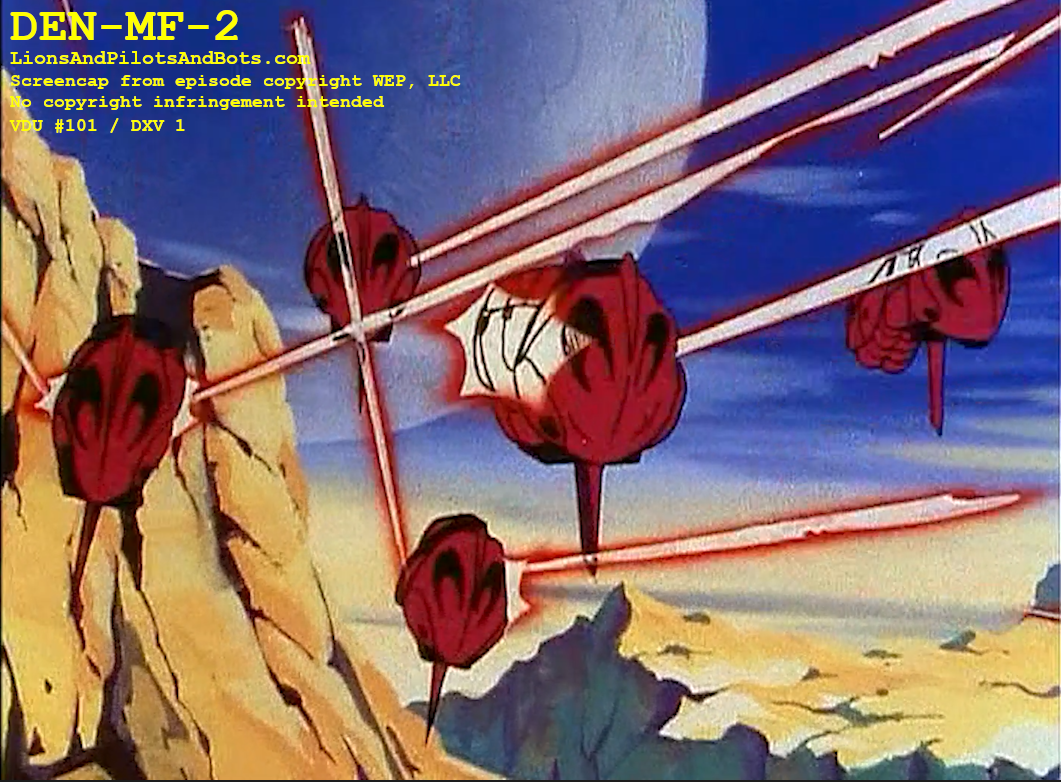
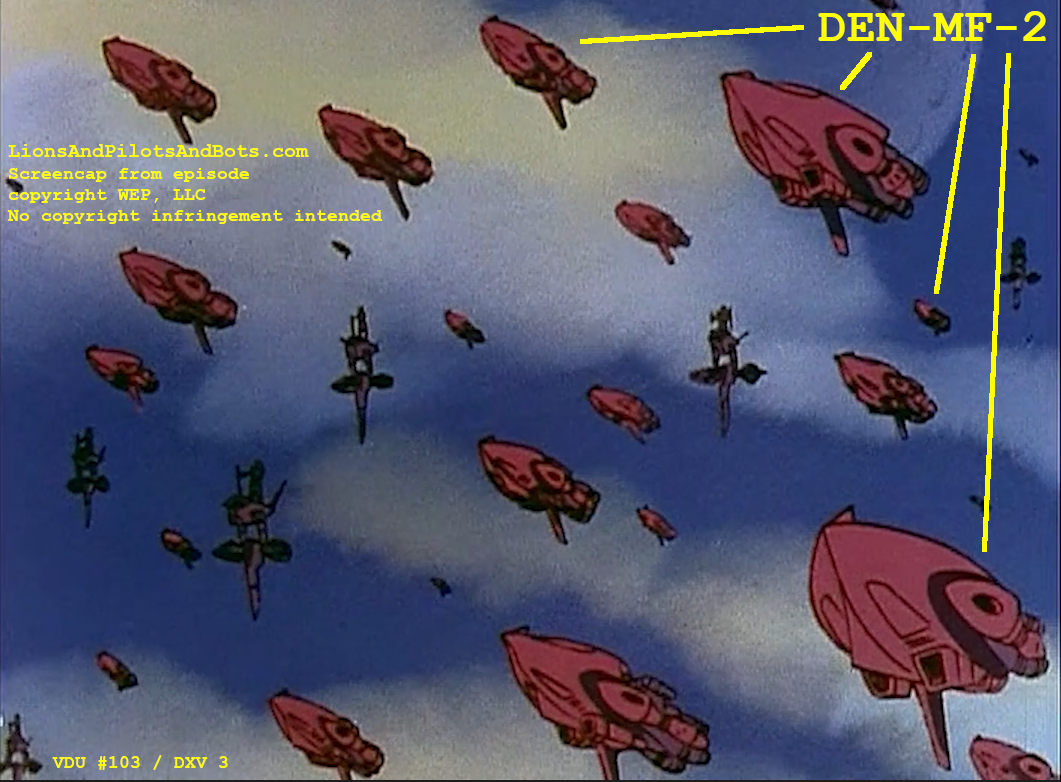
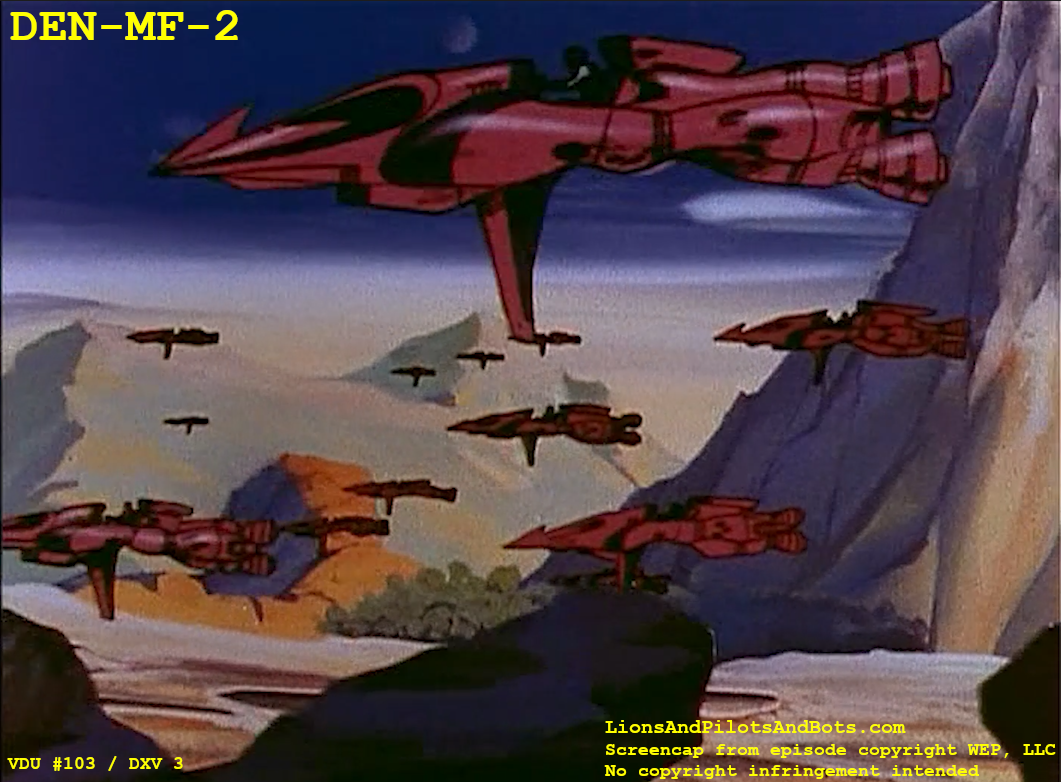
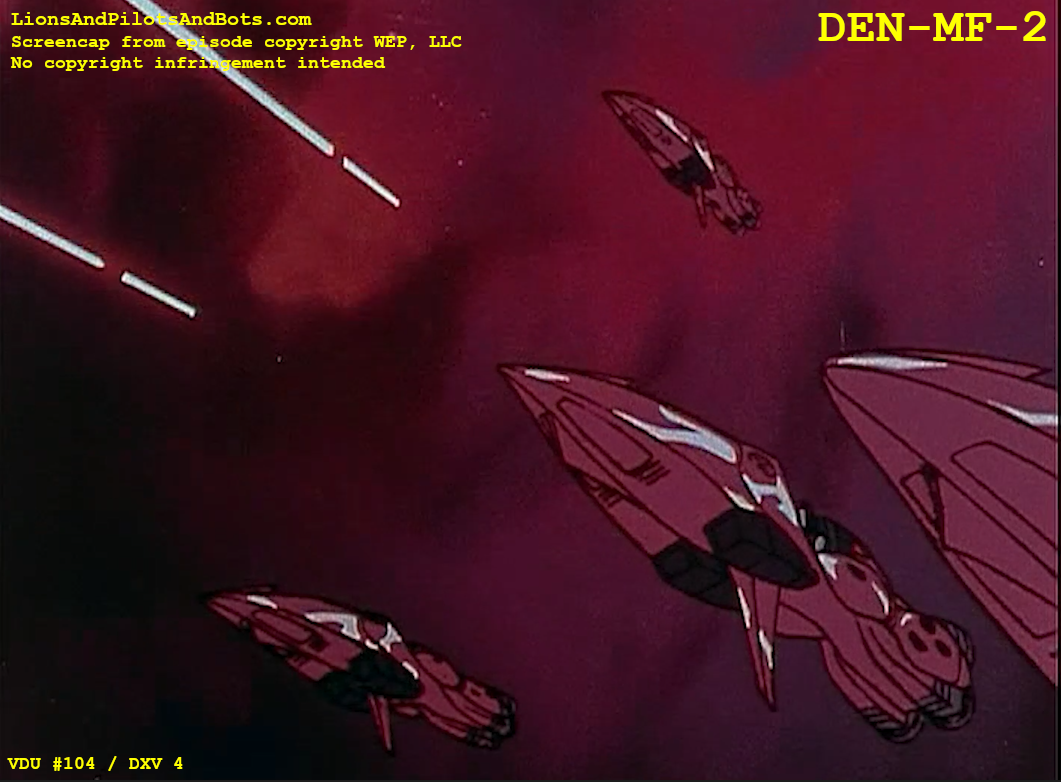
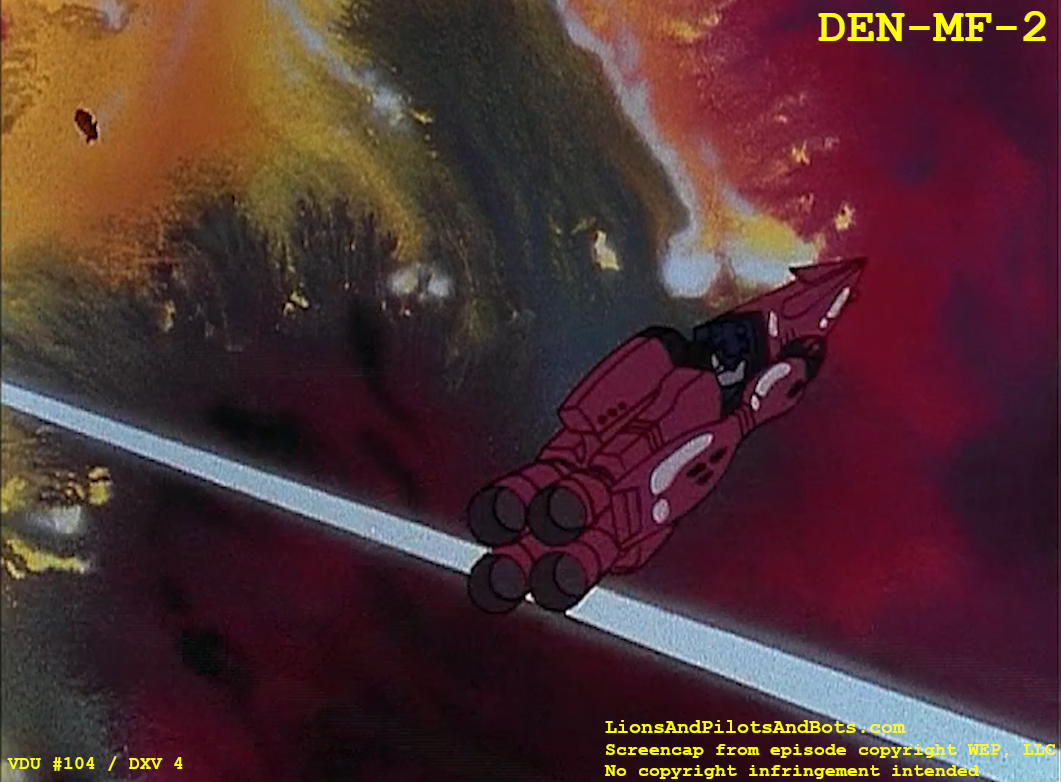
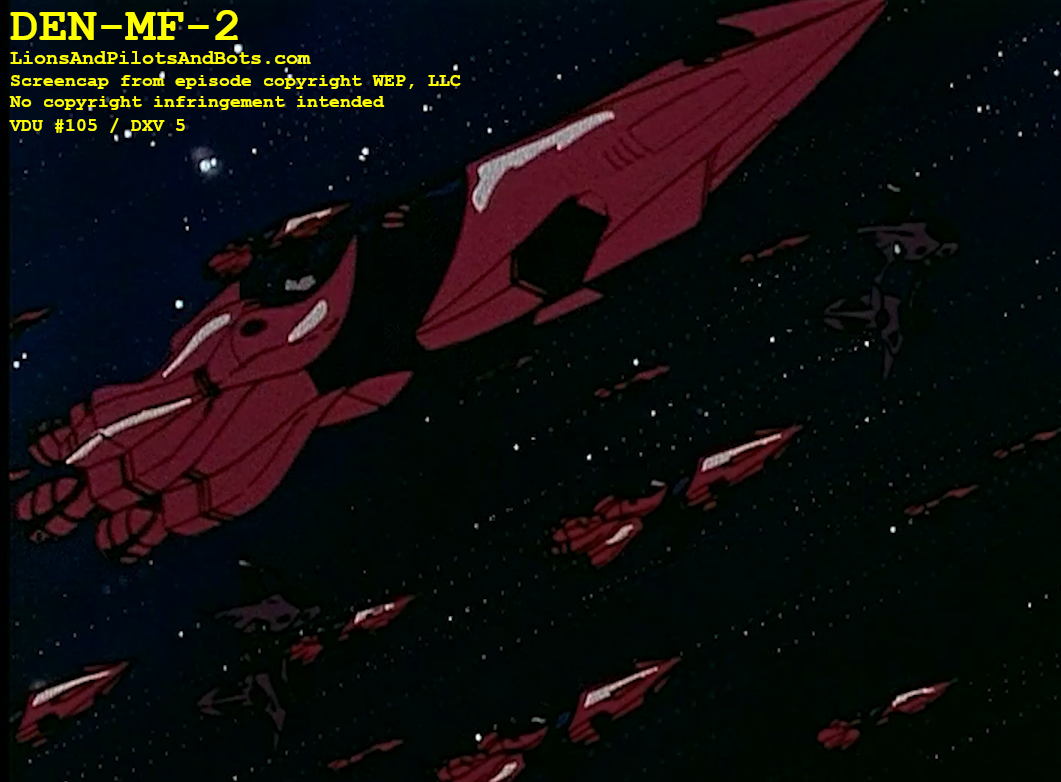
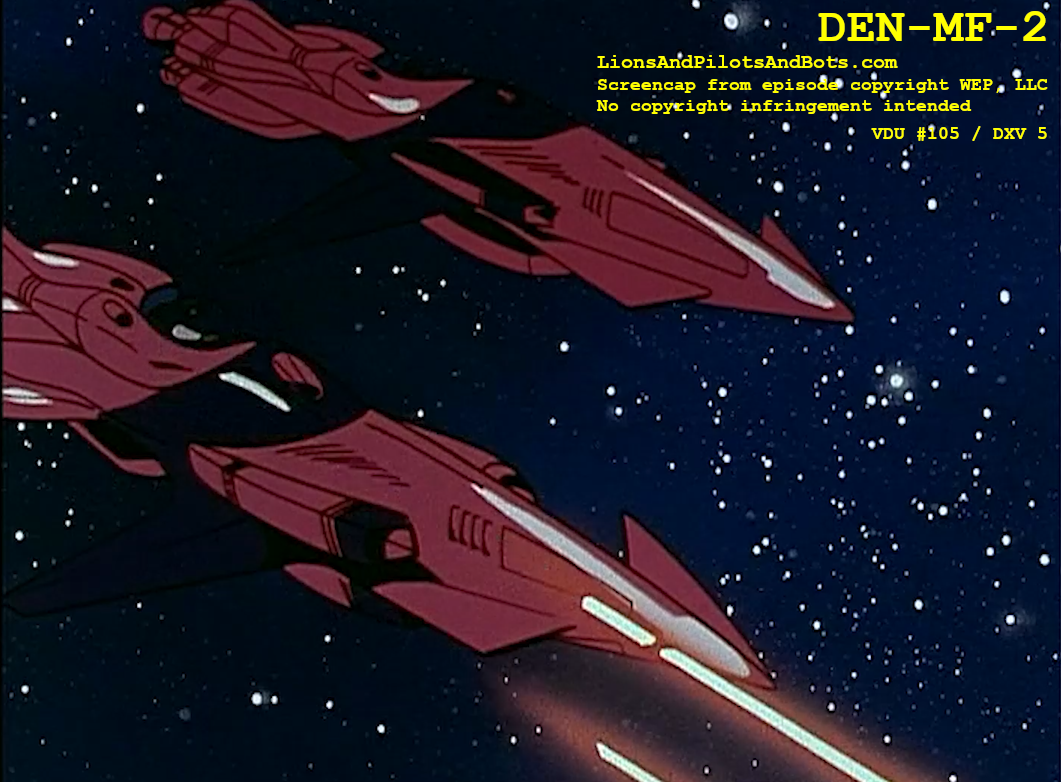
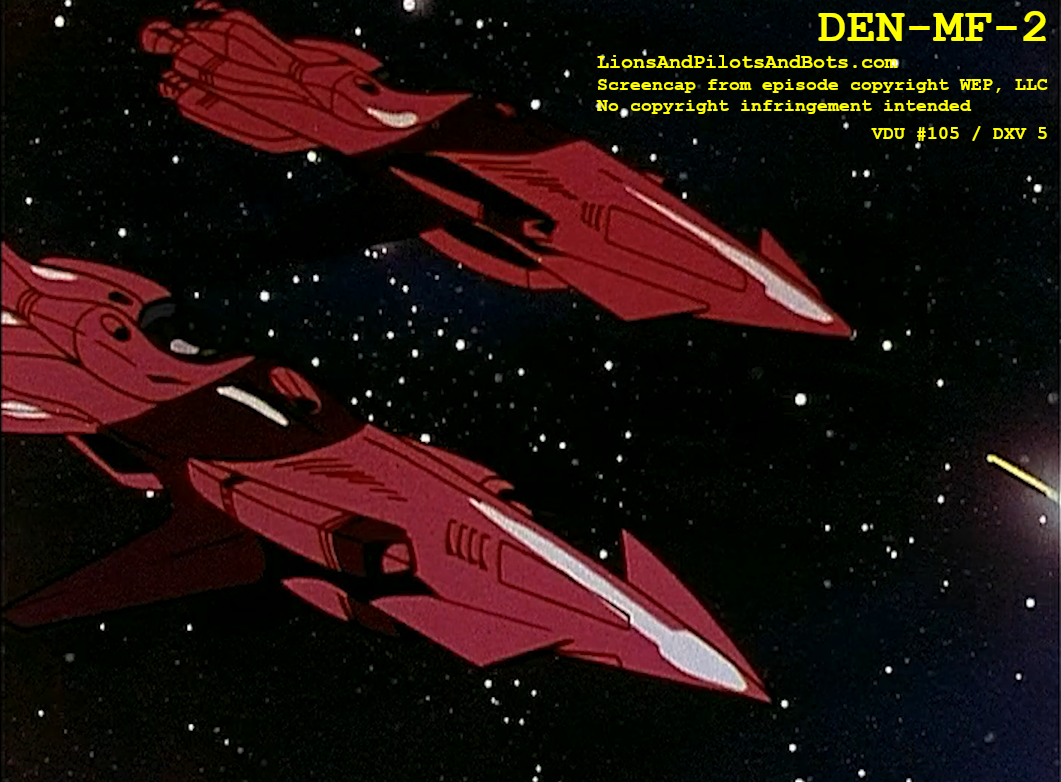
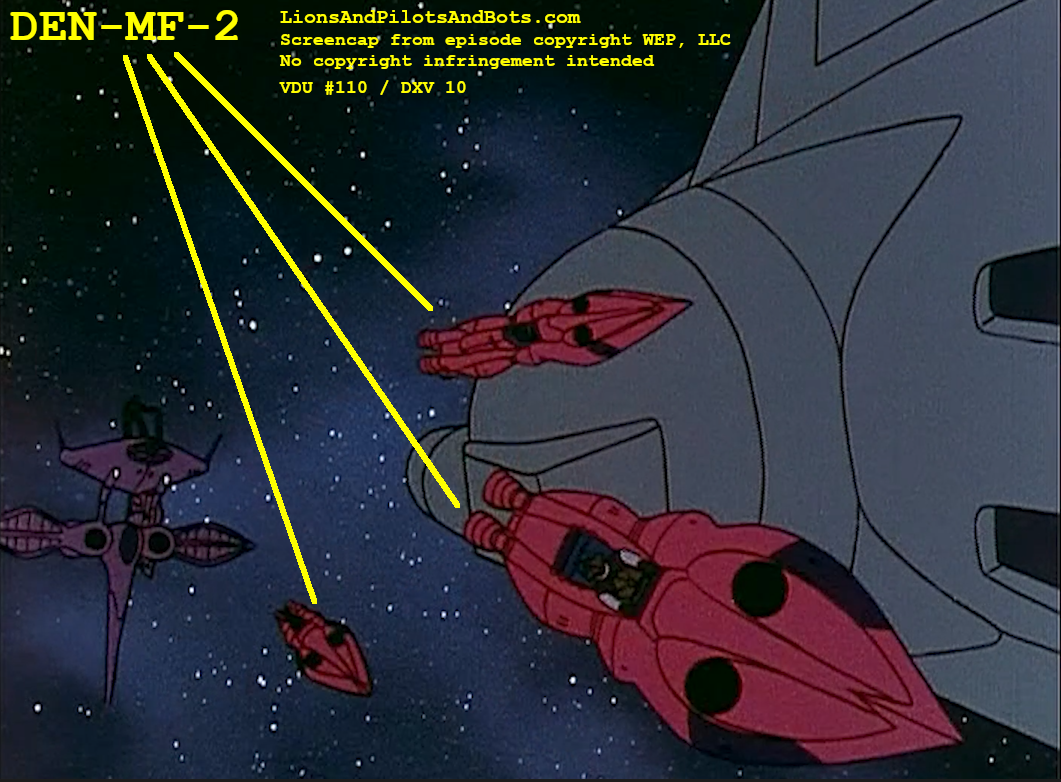
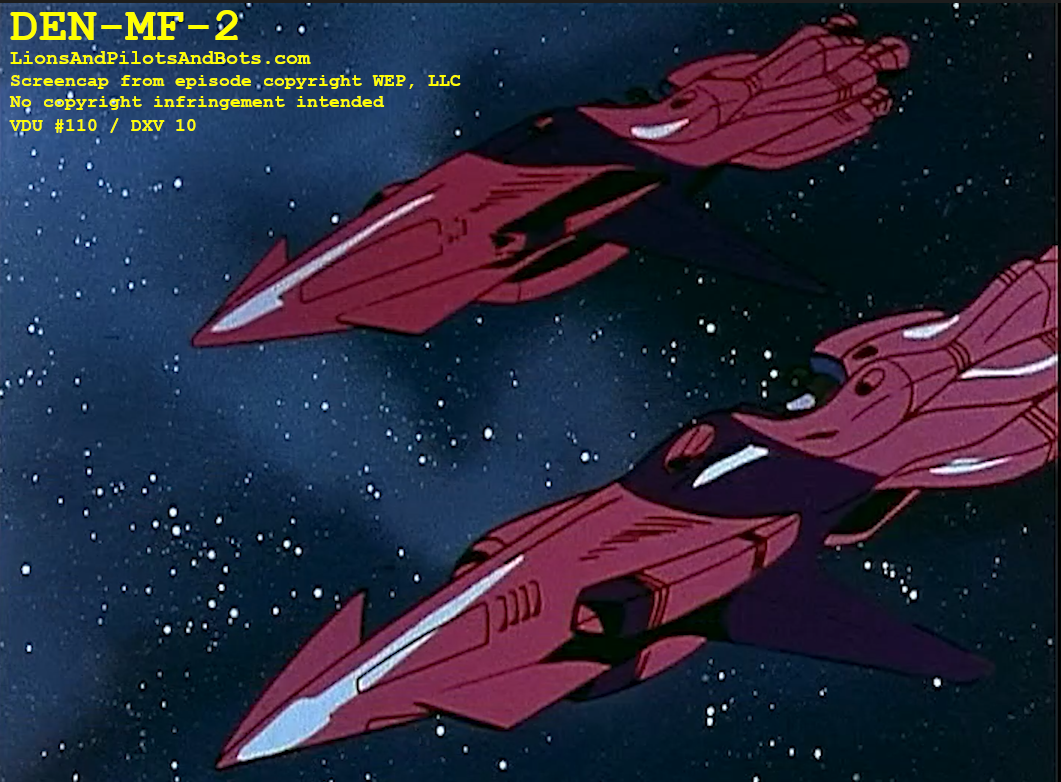
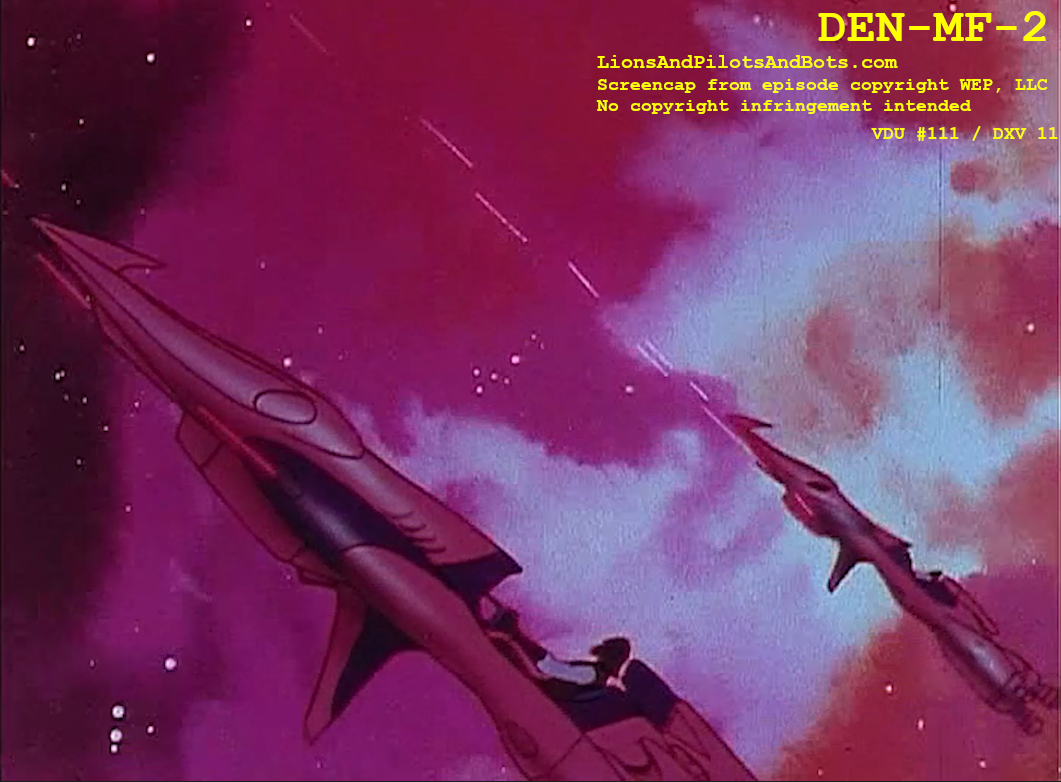
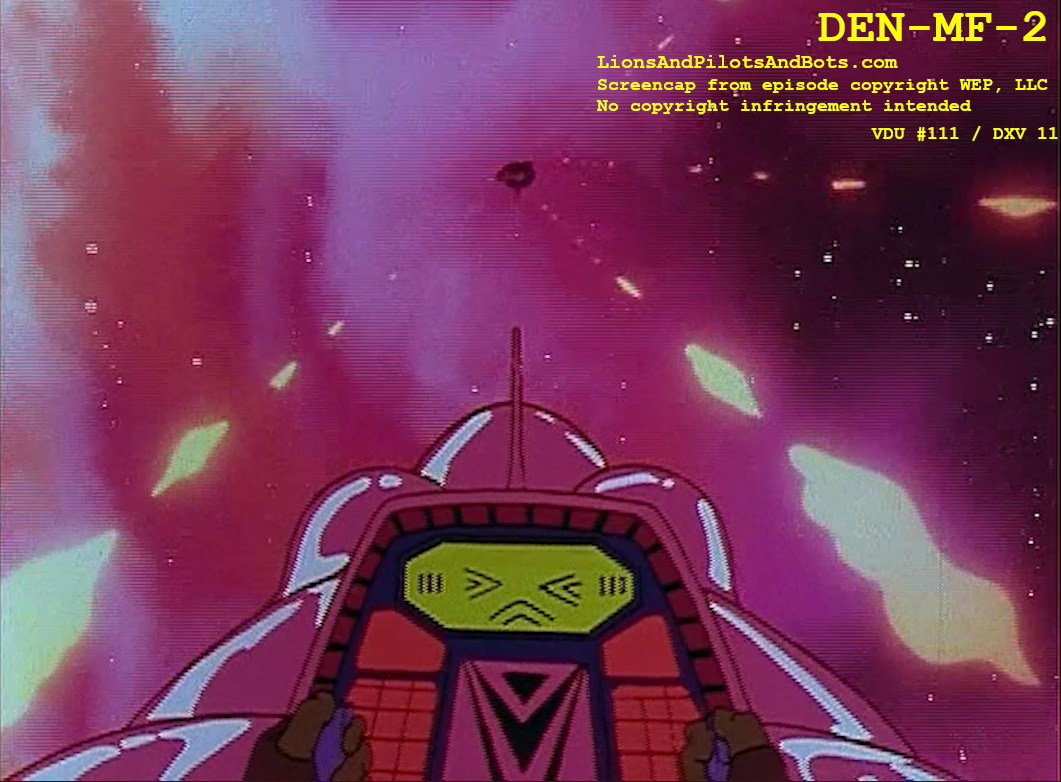
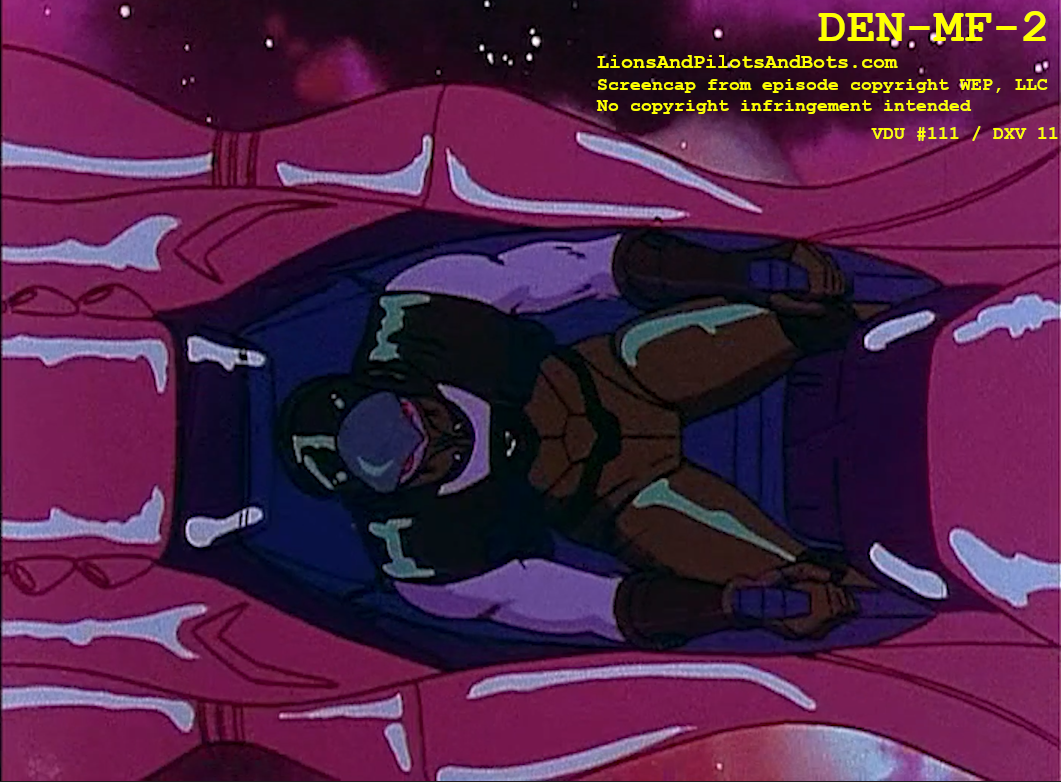
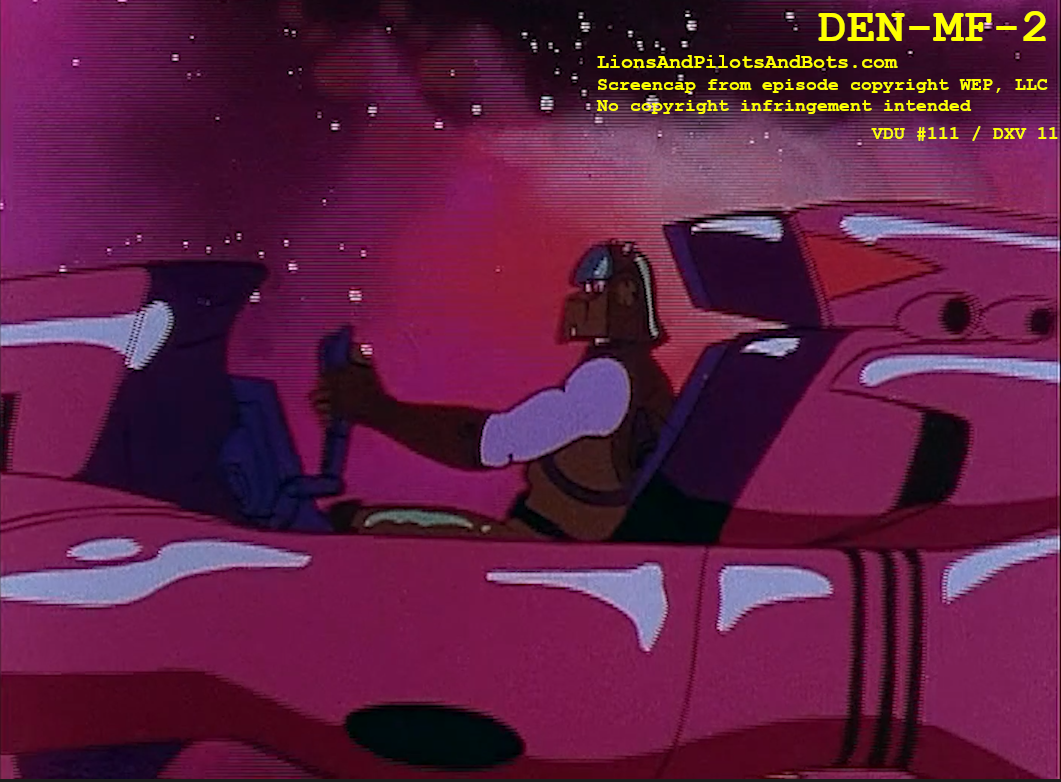
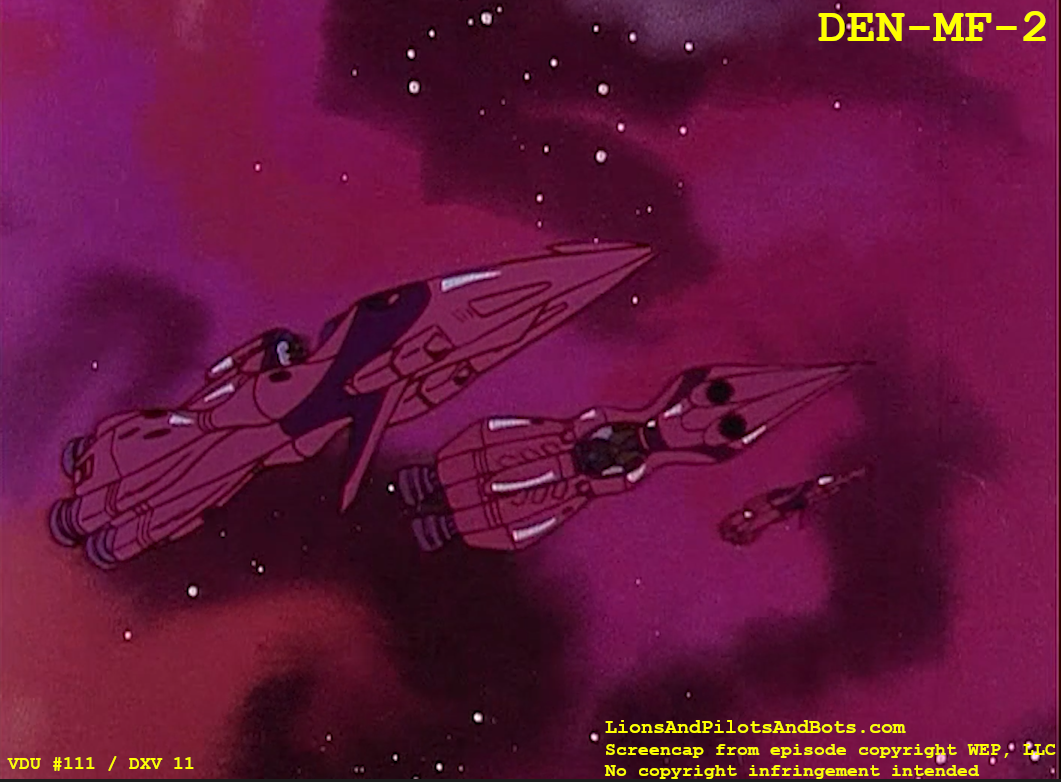
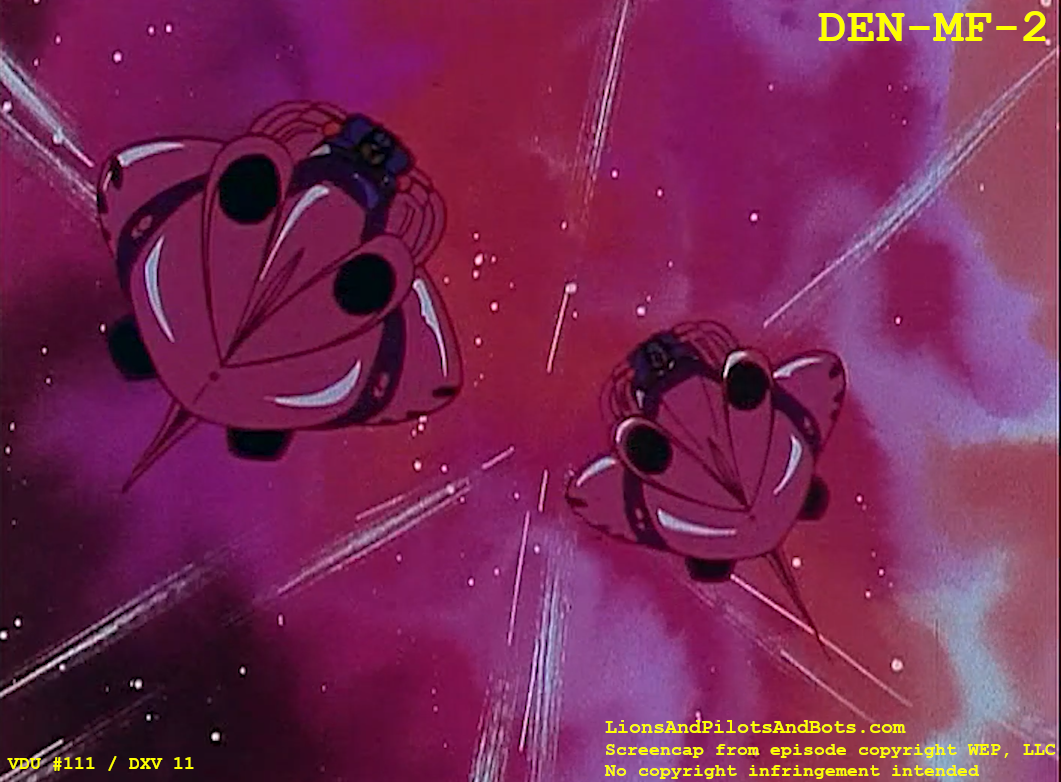
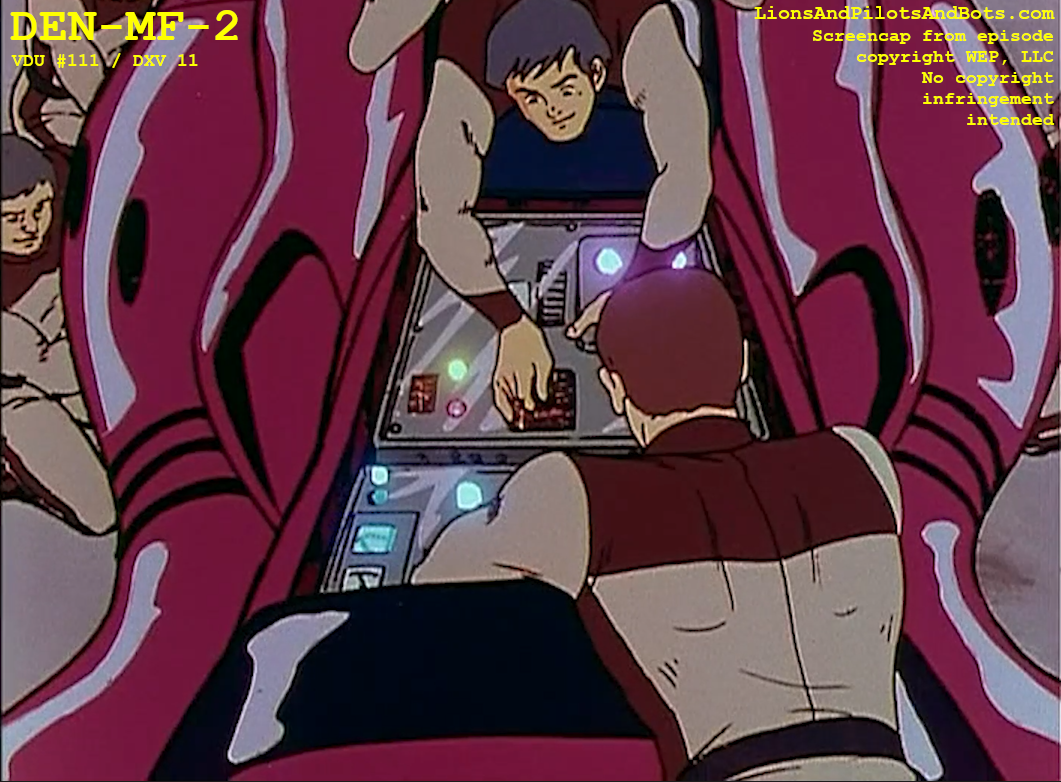
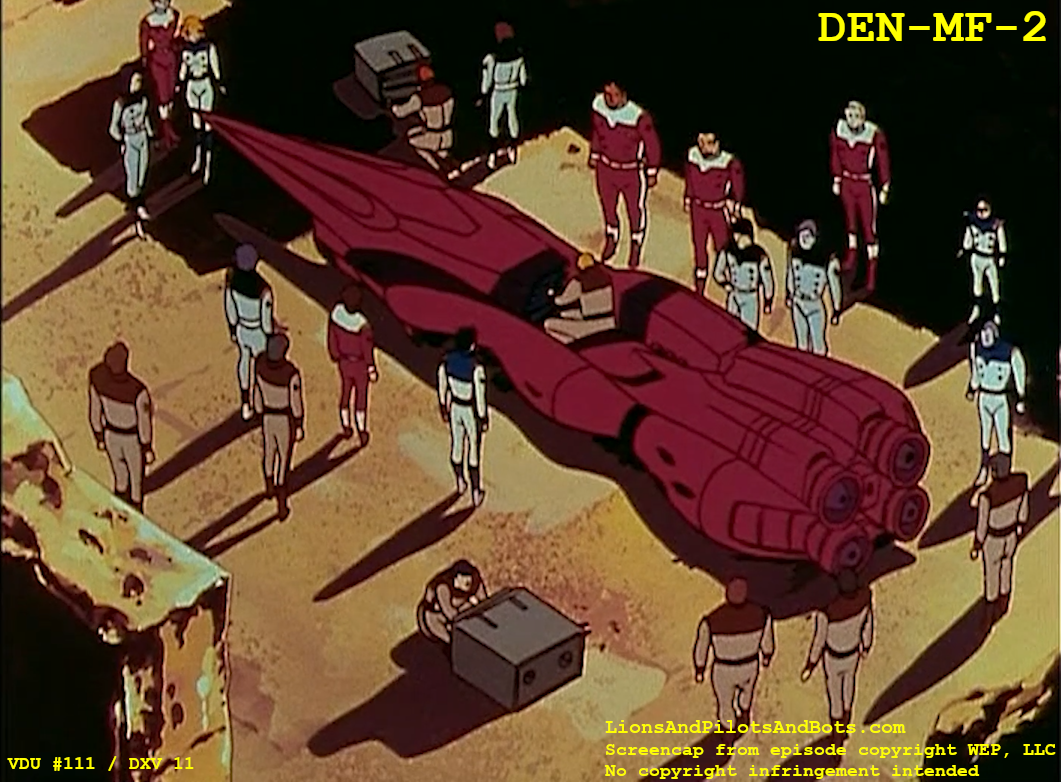
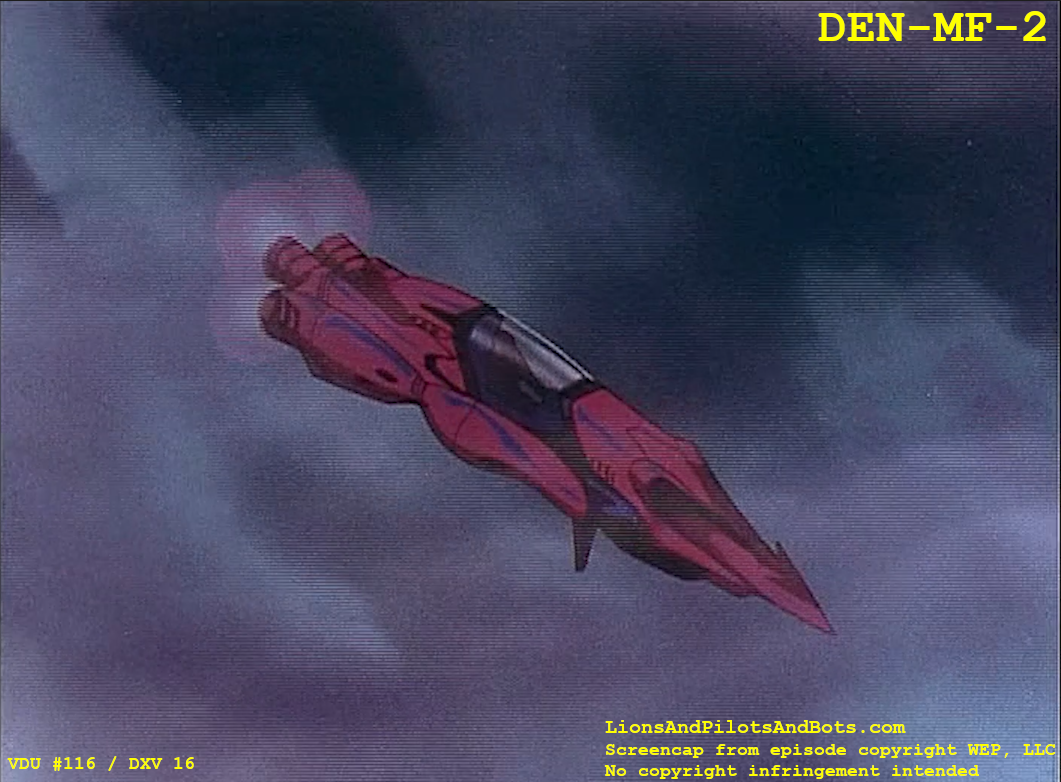
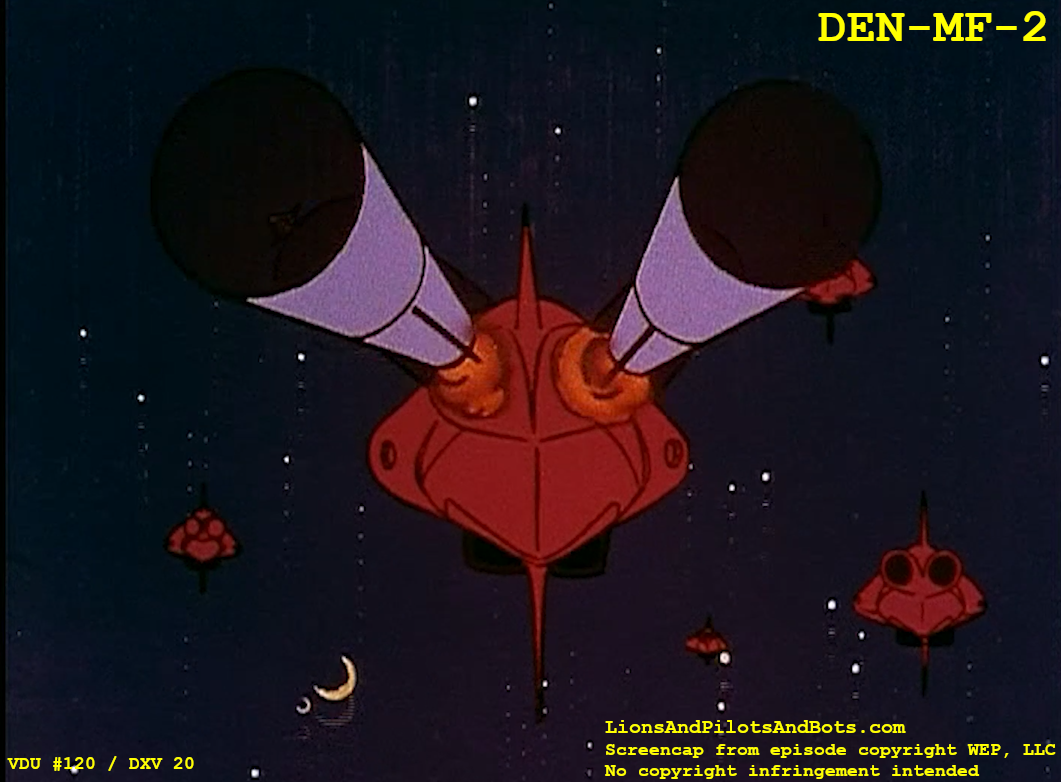
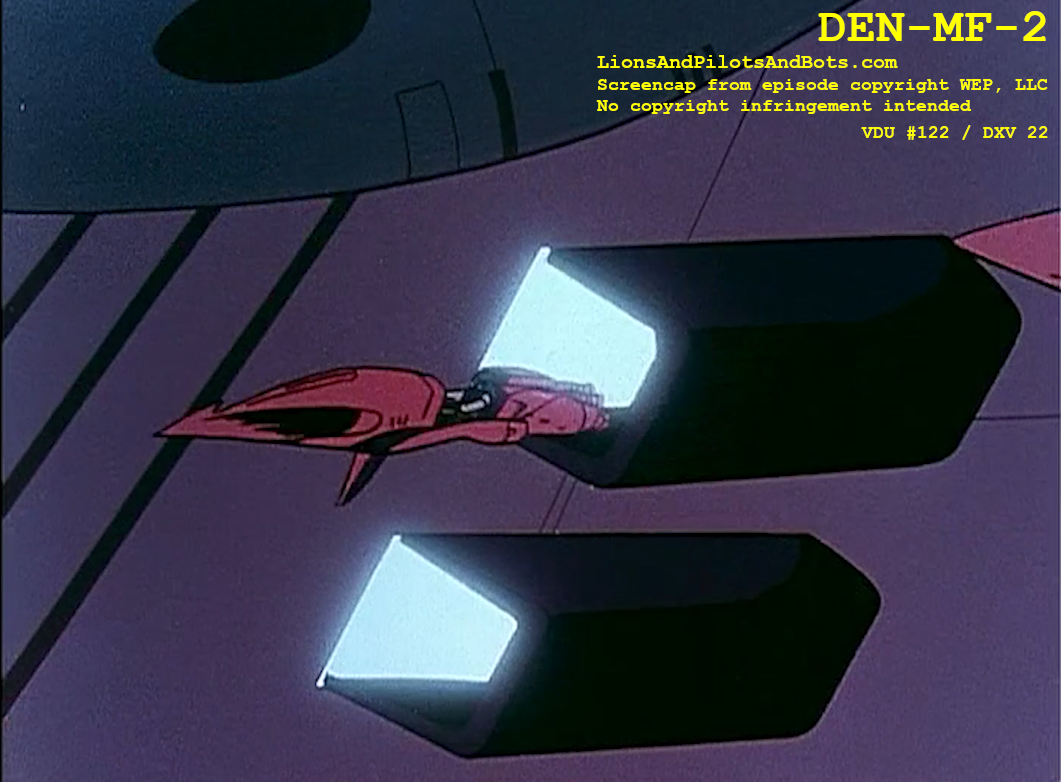
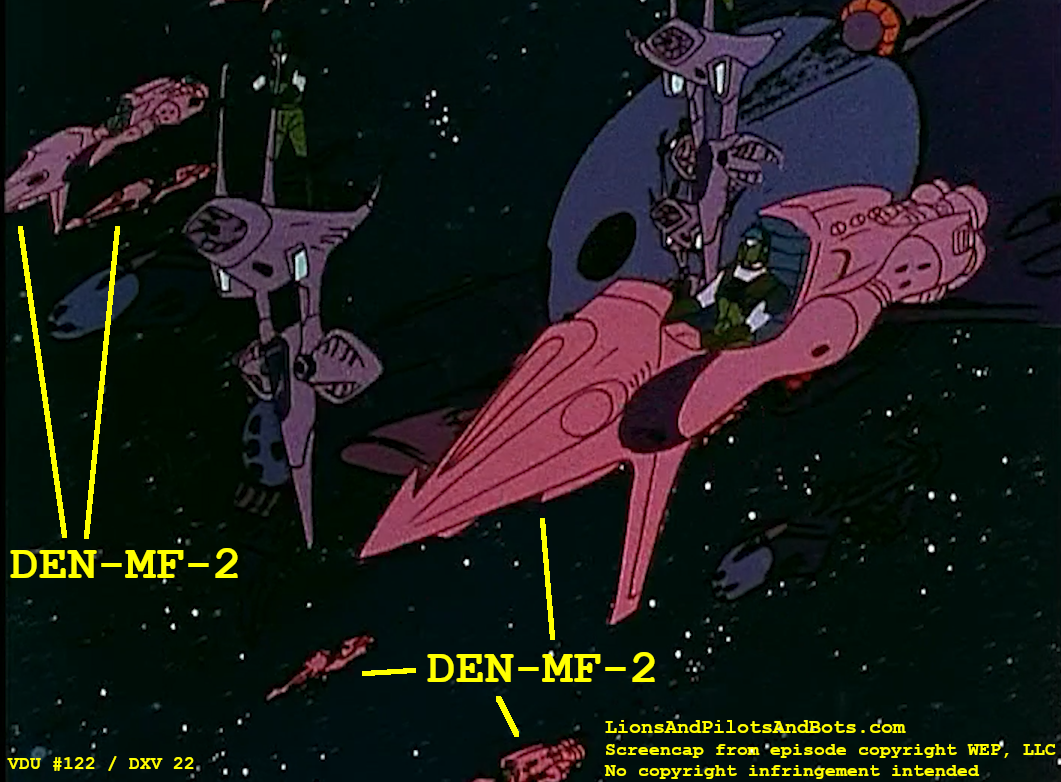
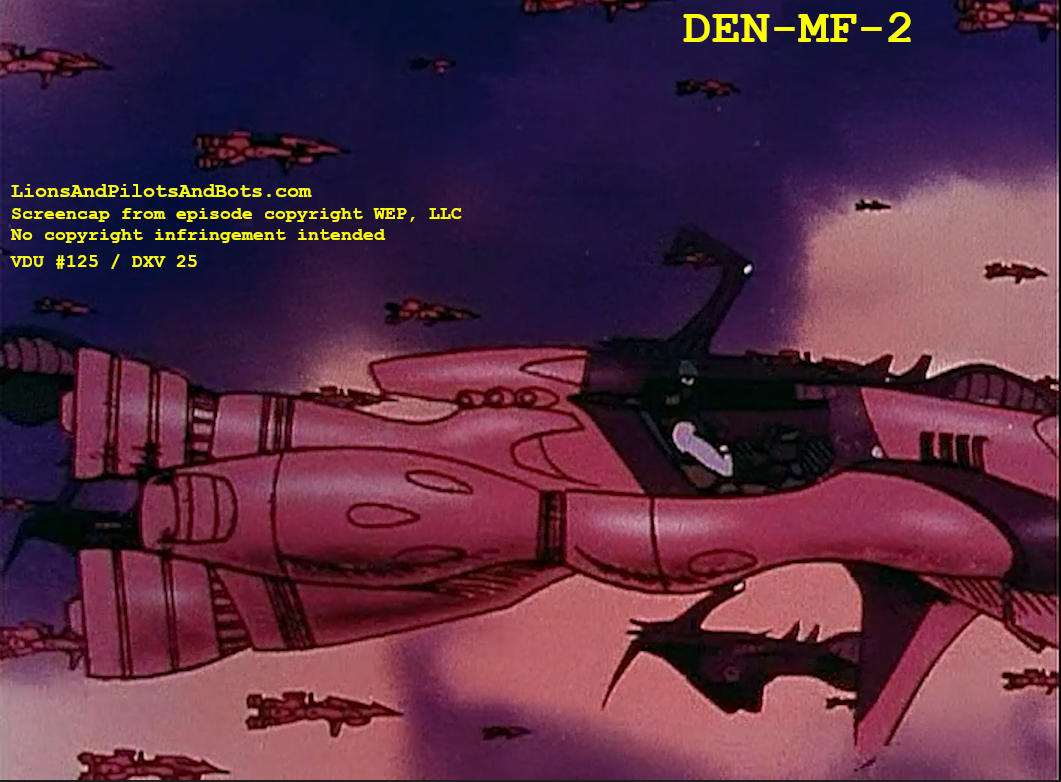
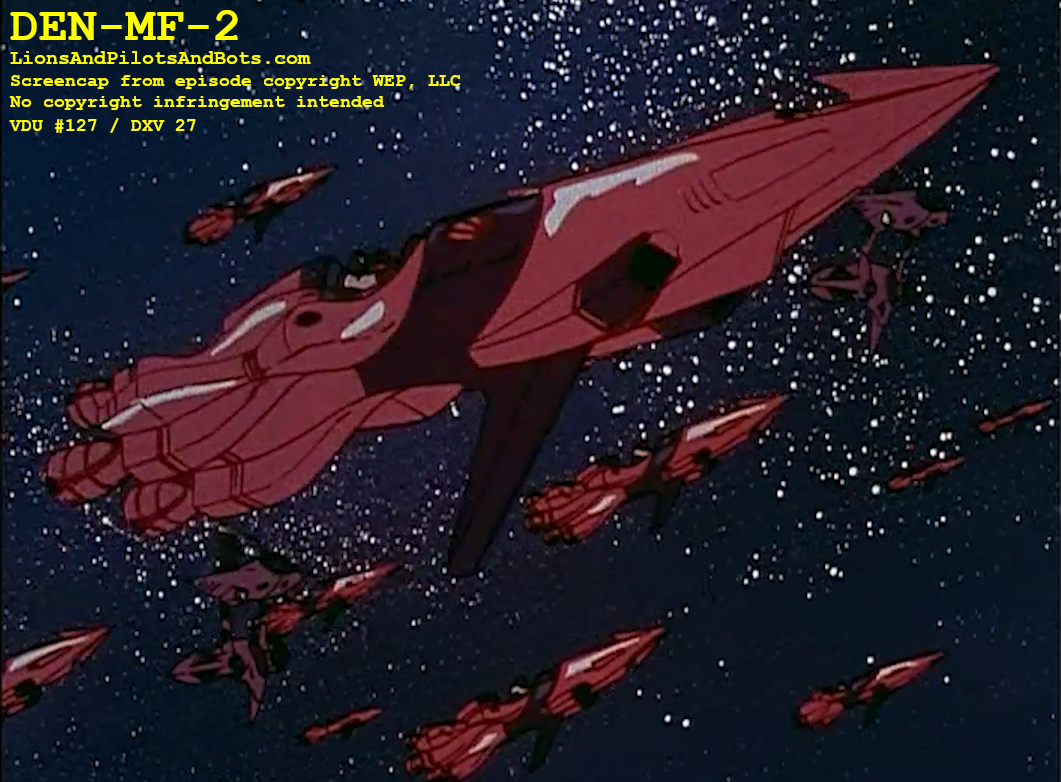
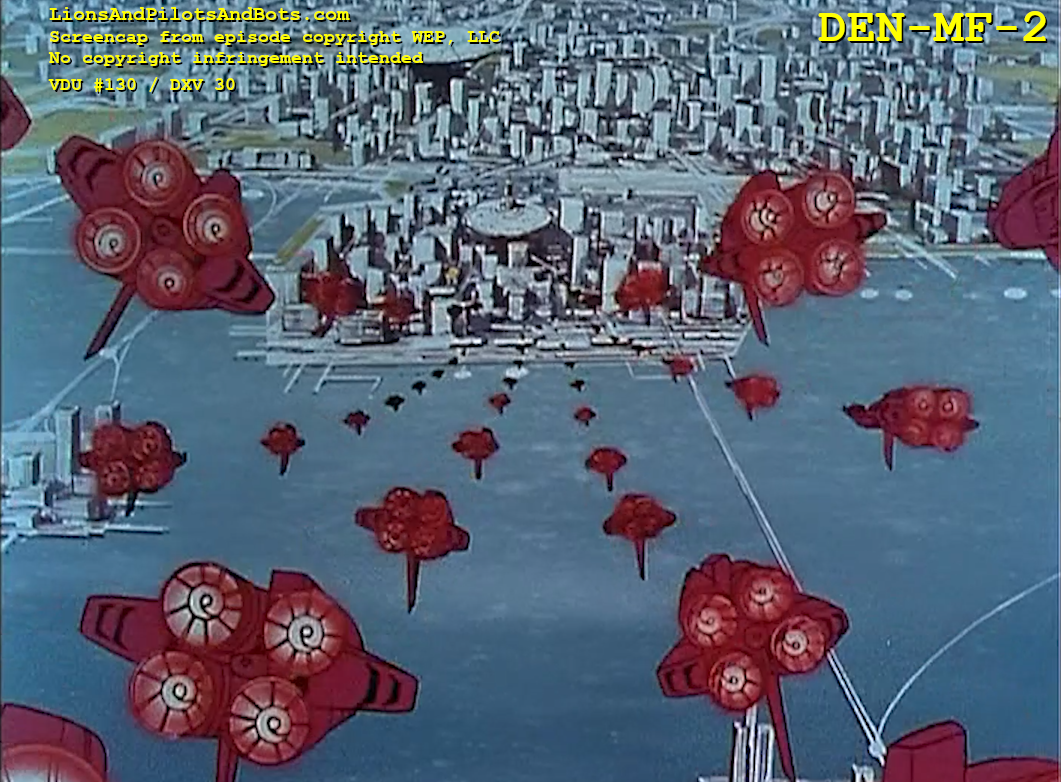
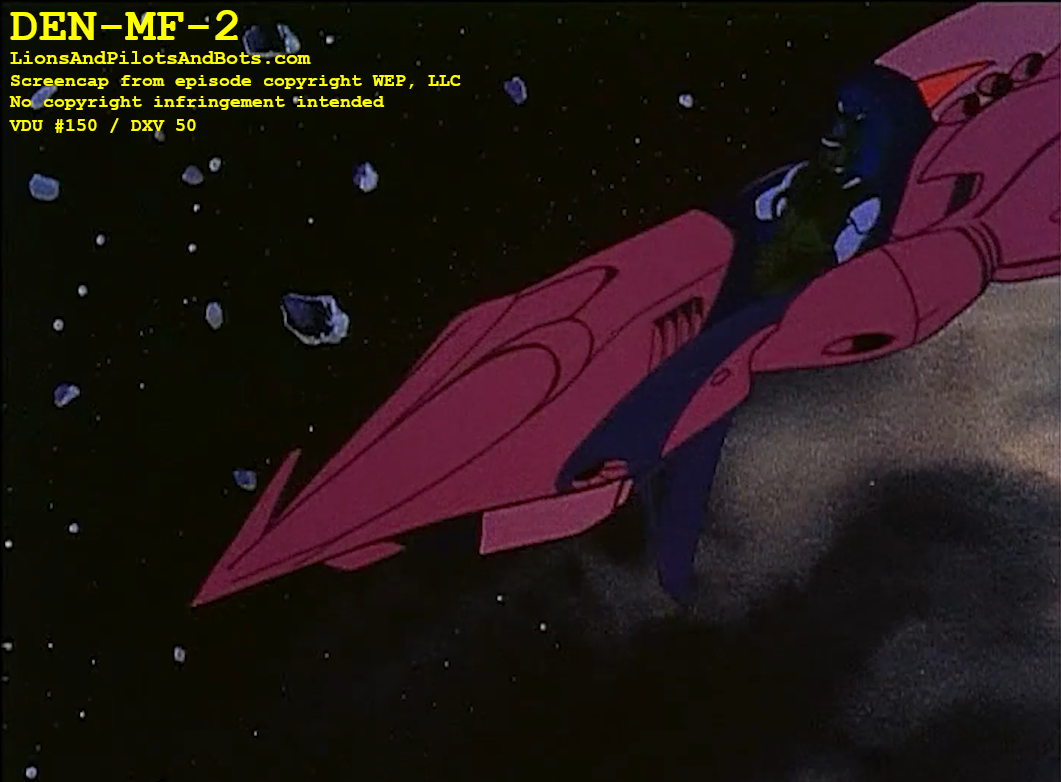
DEN-MF-2 fighters vaguely resemble a bee stinger. They have a pilot compartment with a single seat. The compartment has an open top, offering no protection from outside elements. DEN-MF-1 fighters can fly in space or in planetary atmospheres.
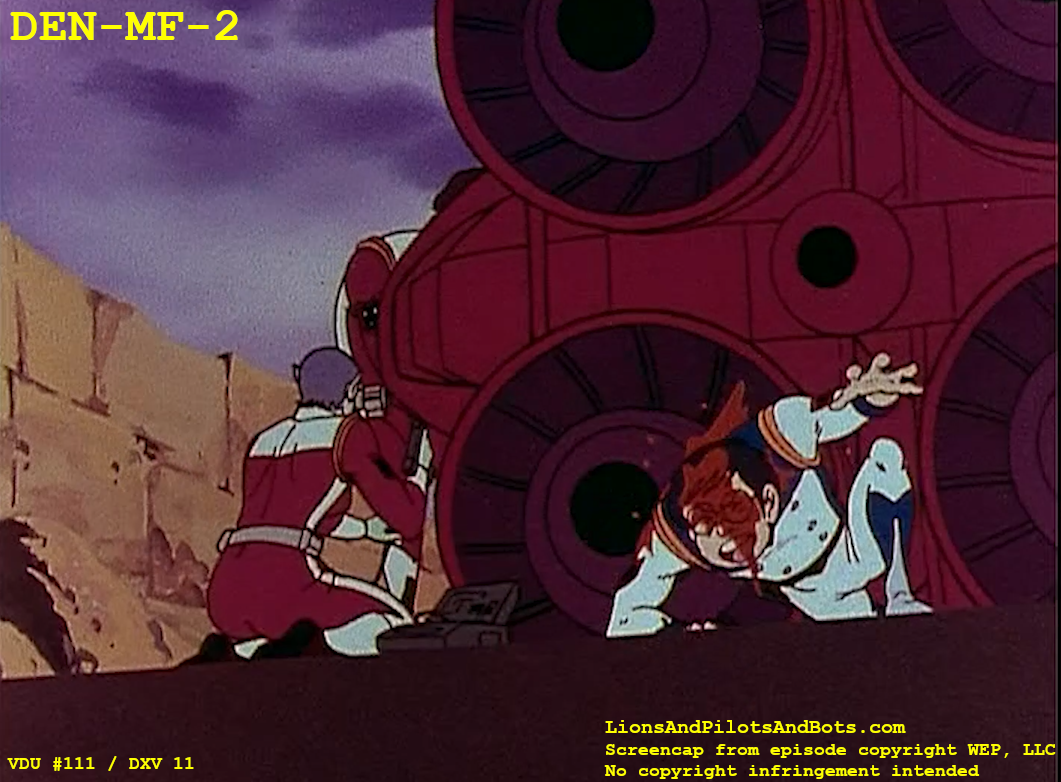
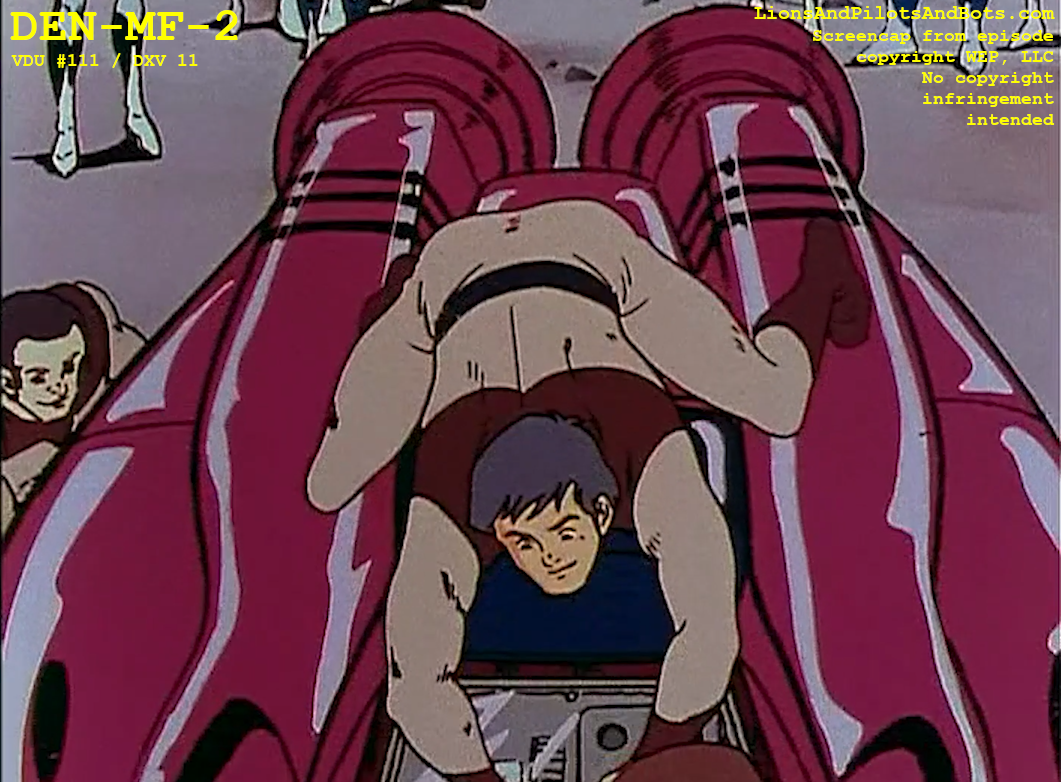
The DEN-MF-2 fighter is most prominently featured in “A Temporary Truce,” when it is flown and crashed by Sandu, repaired by the Voltron Vehicle Team and technicians from the Stellar Ship Explorer, and then shot down by Drule captain Zabor.
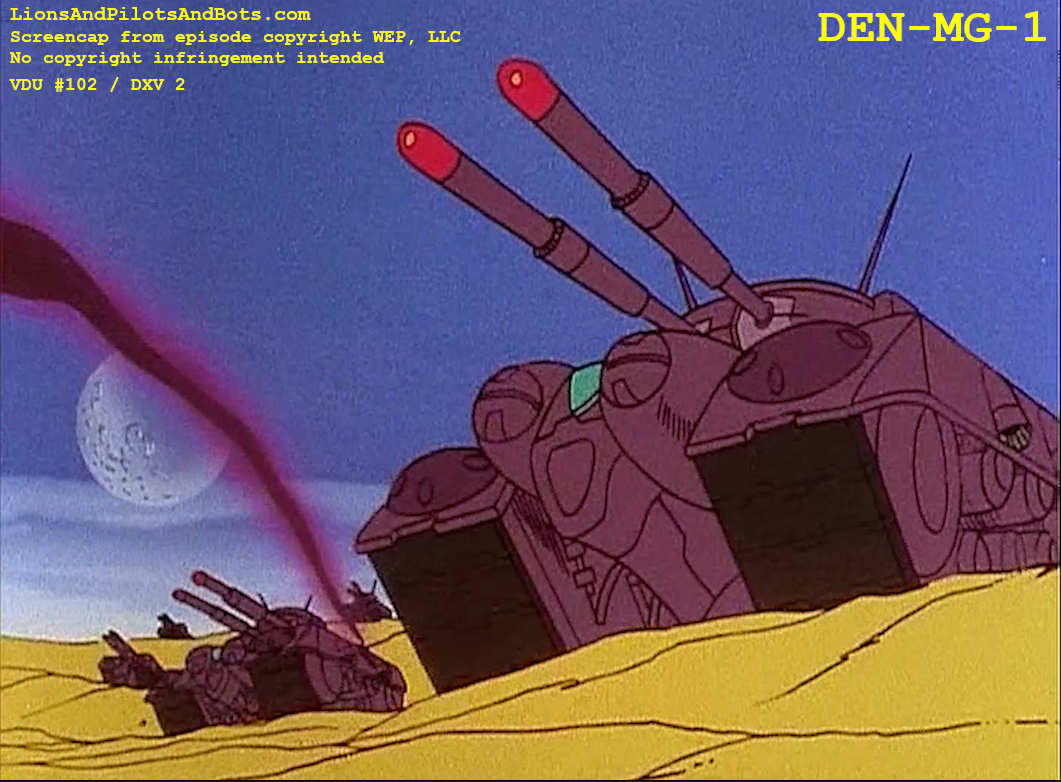
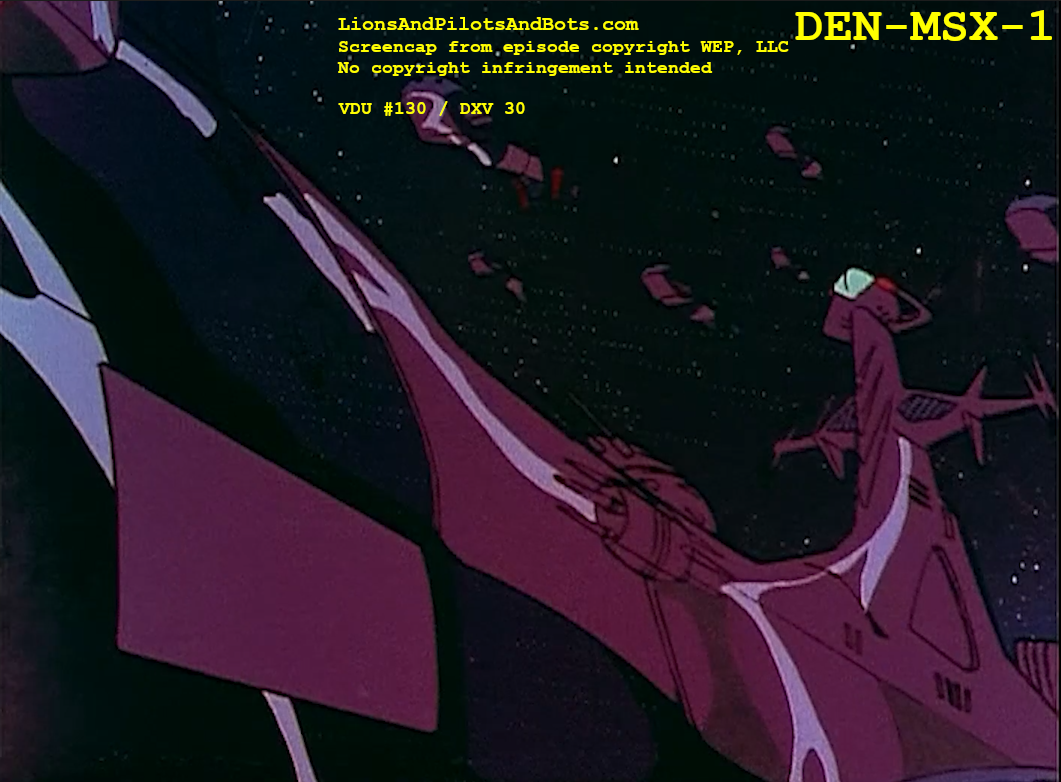
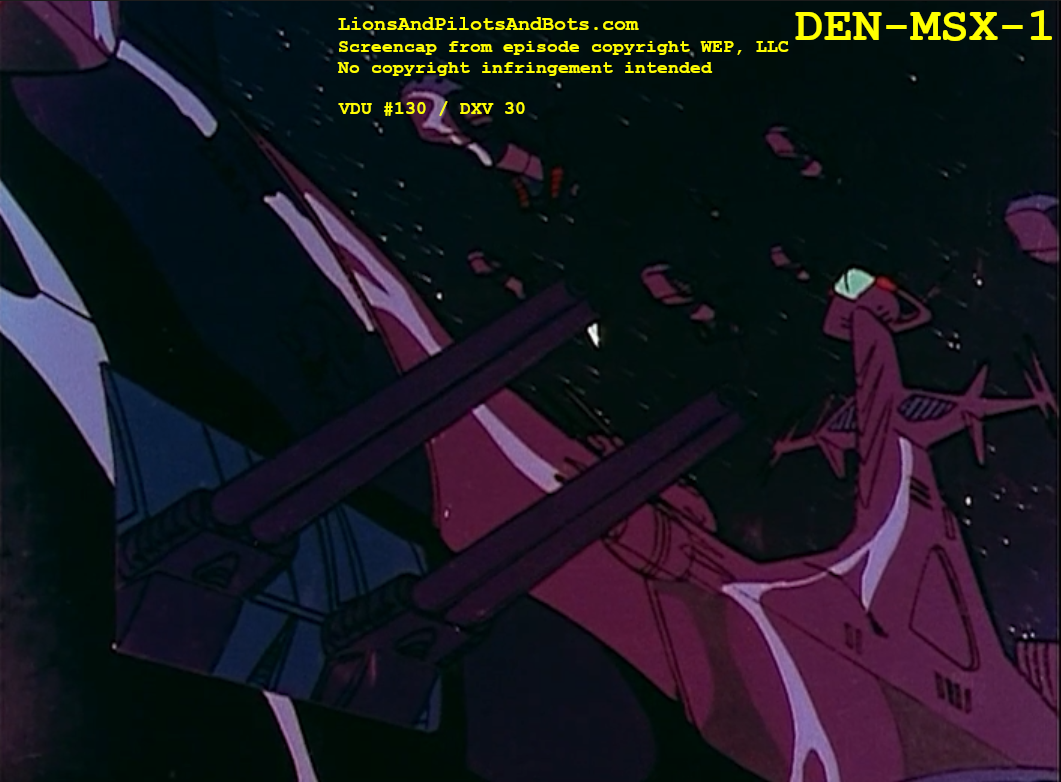
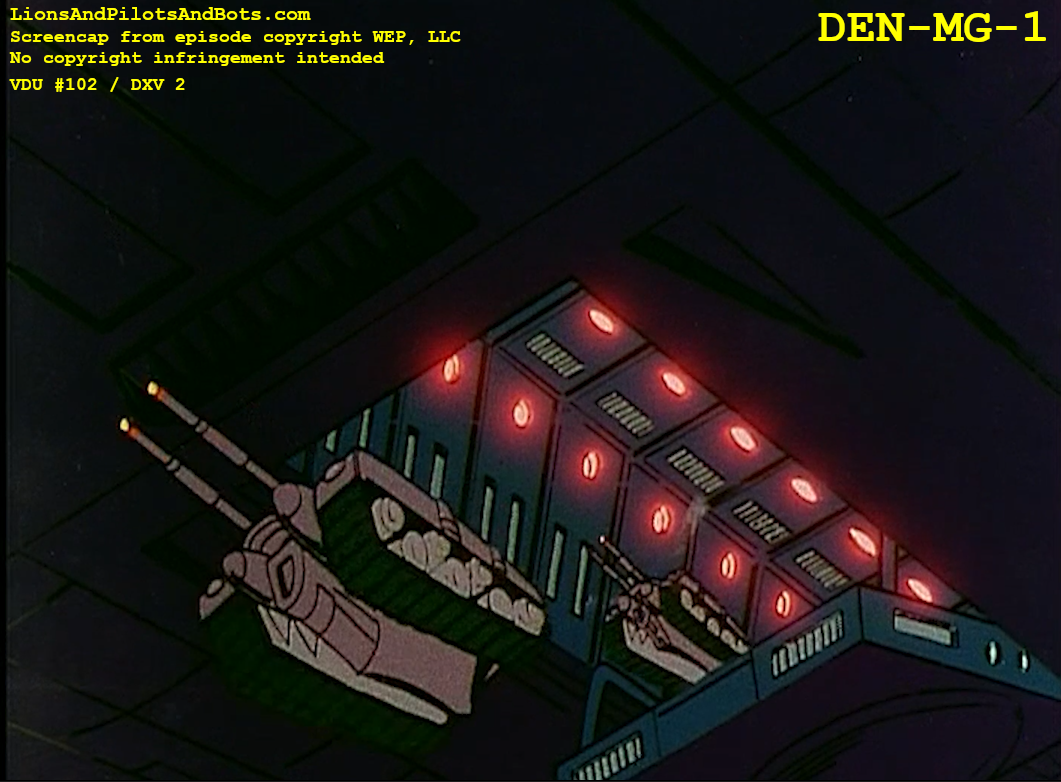
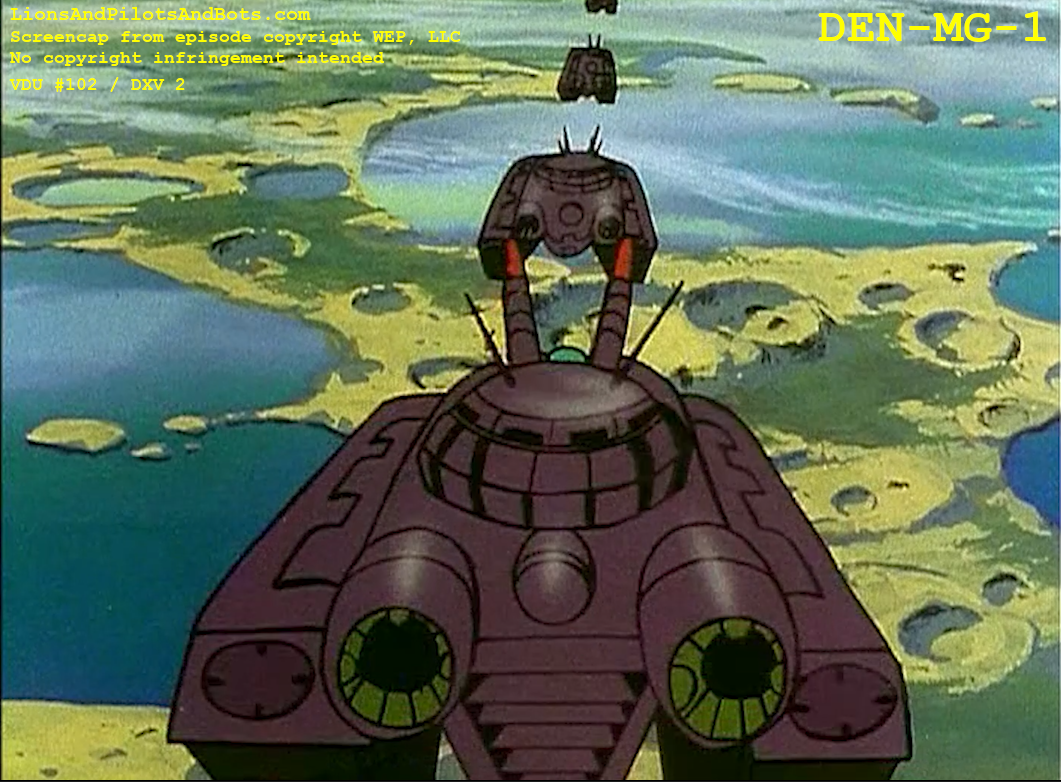
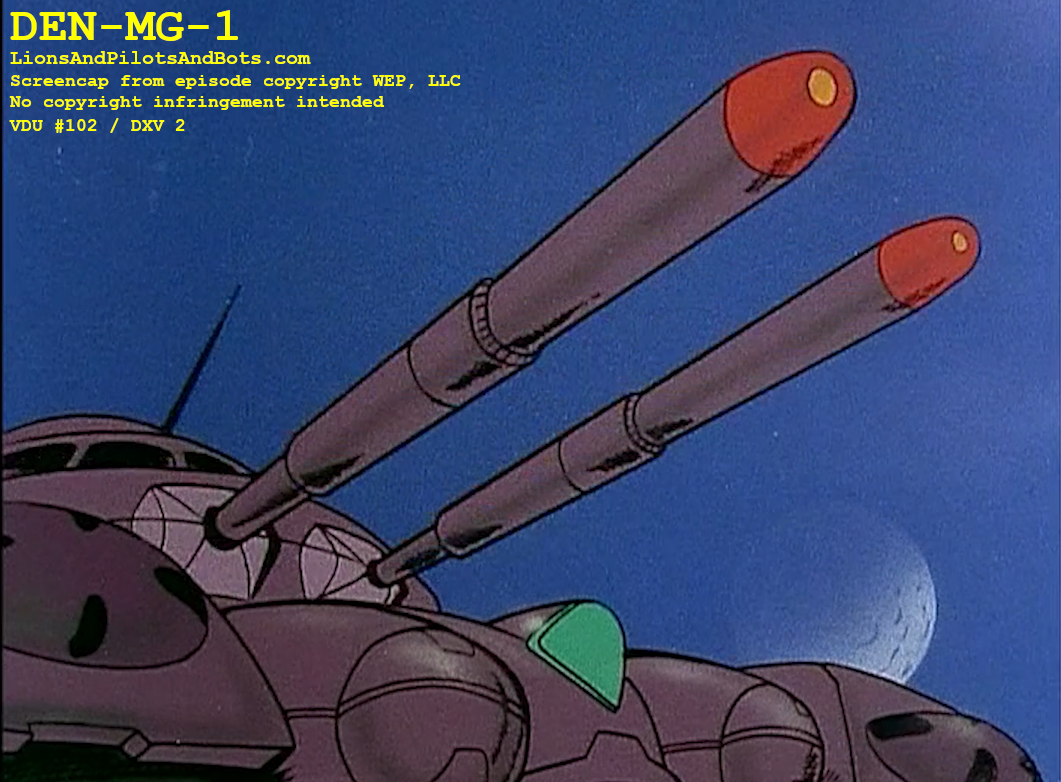
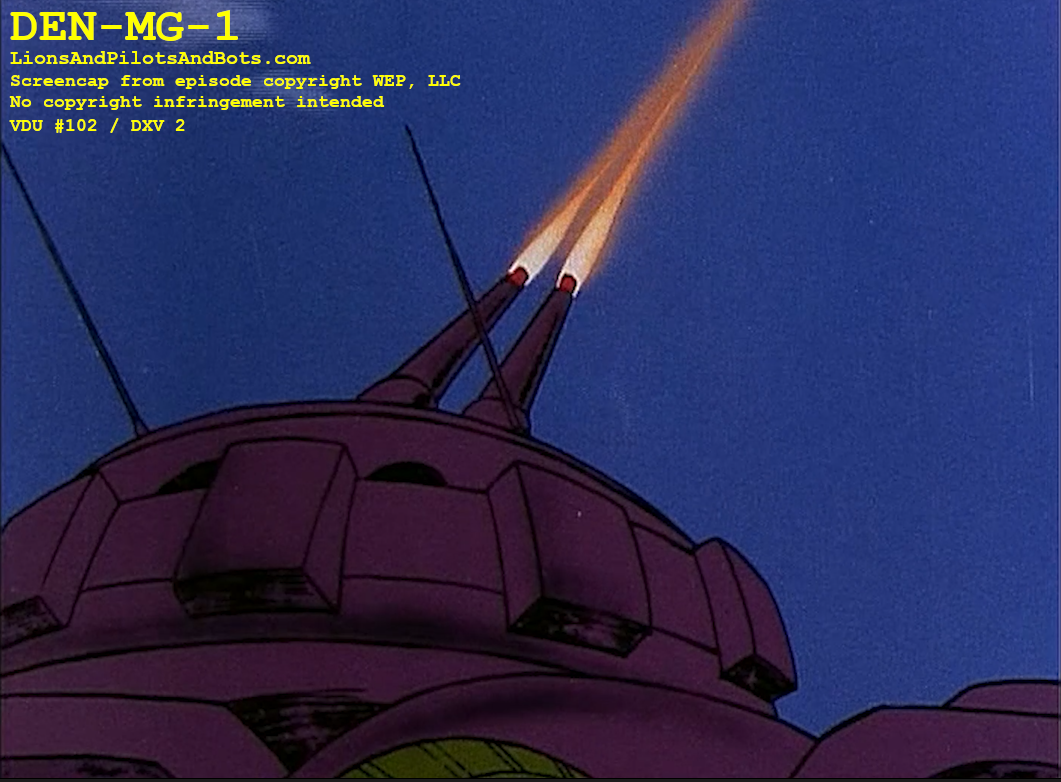
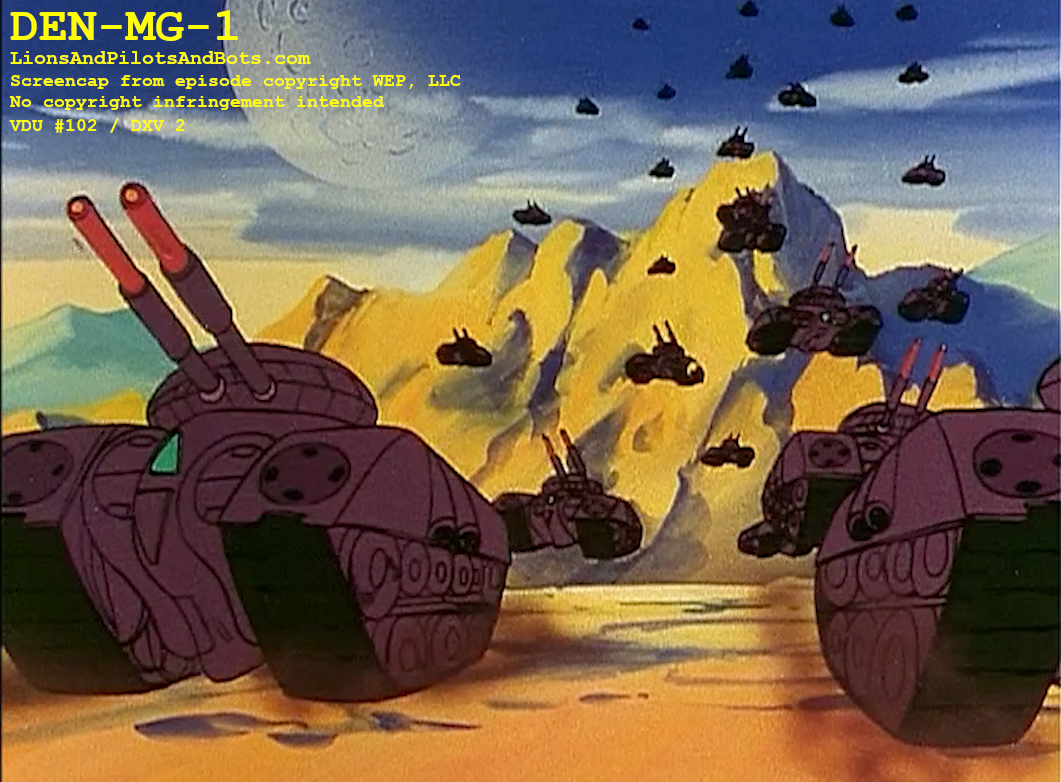
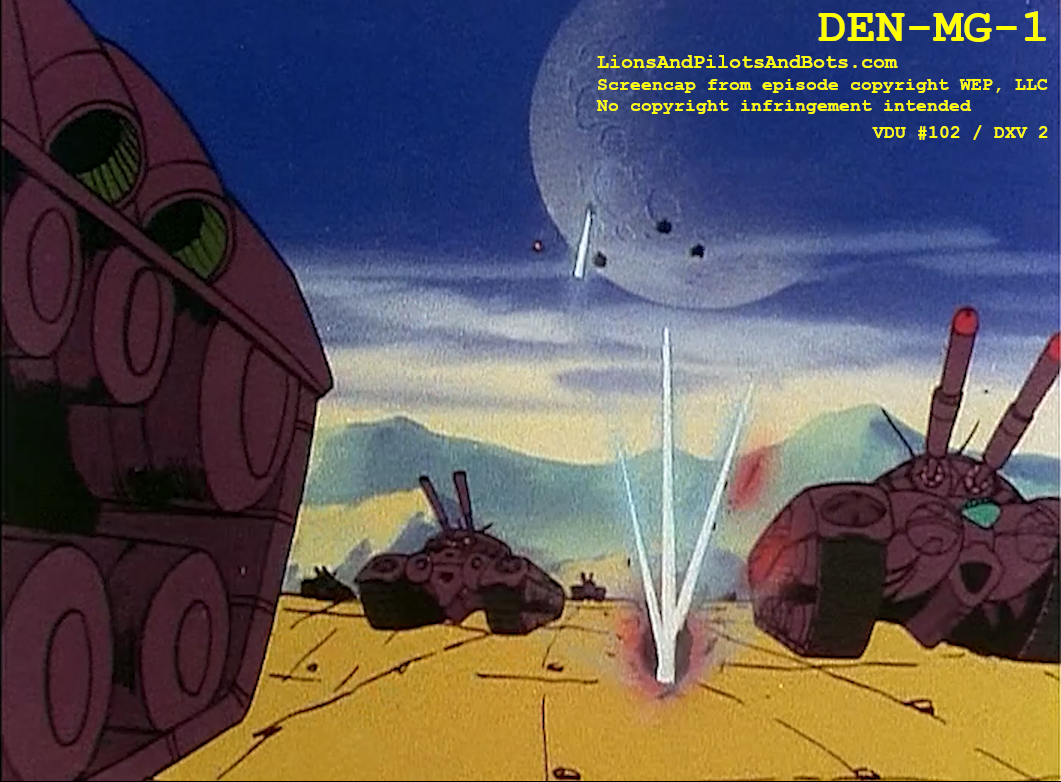
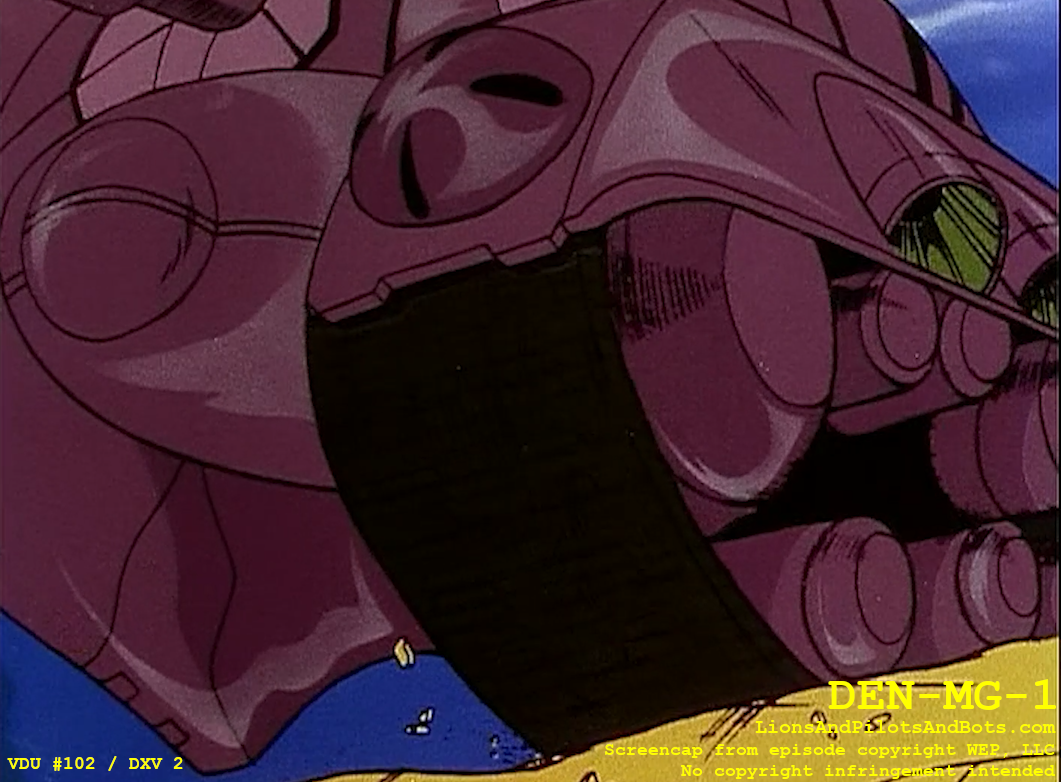
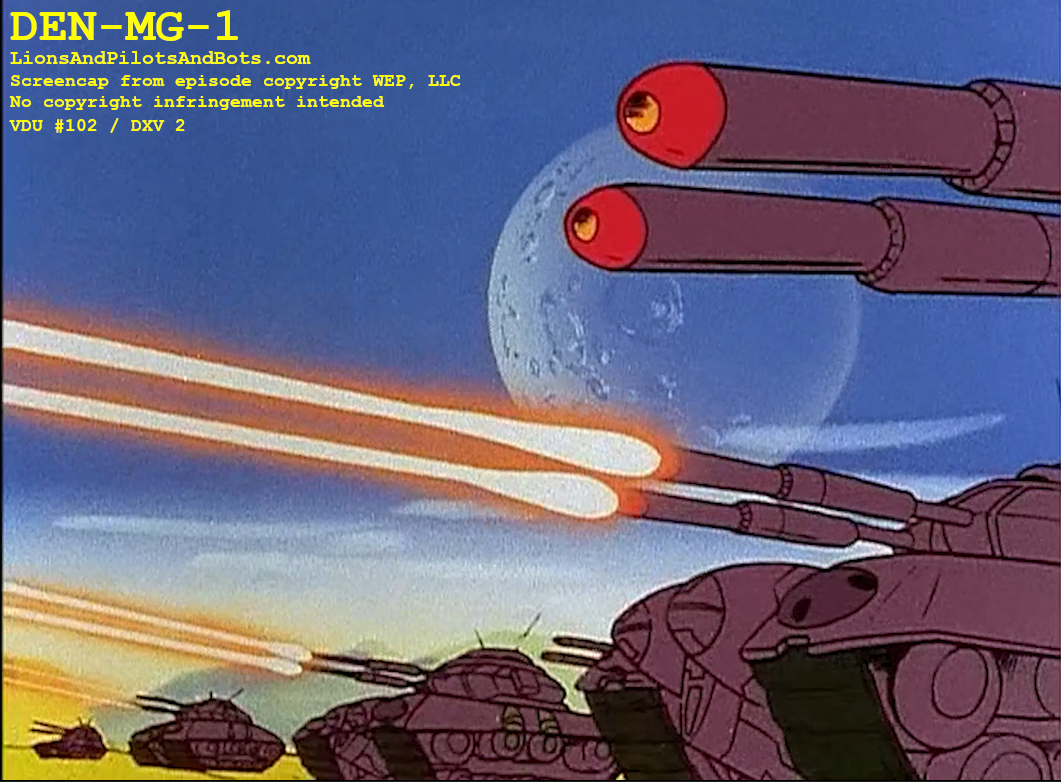
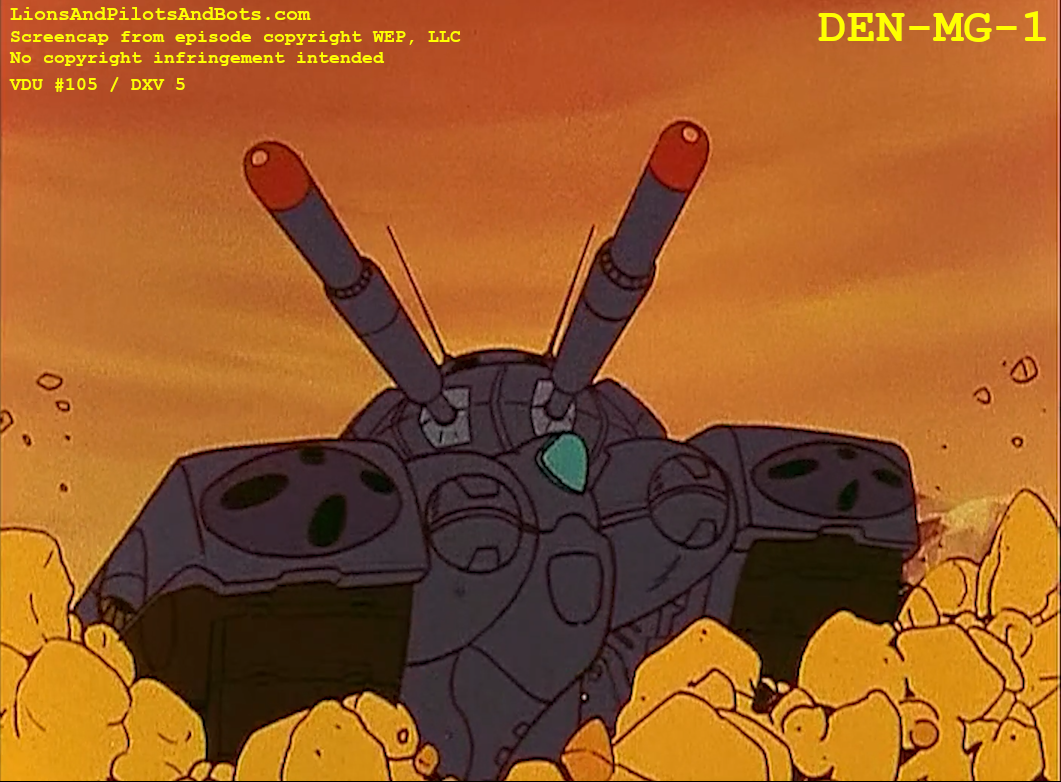
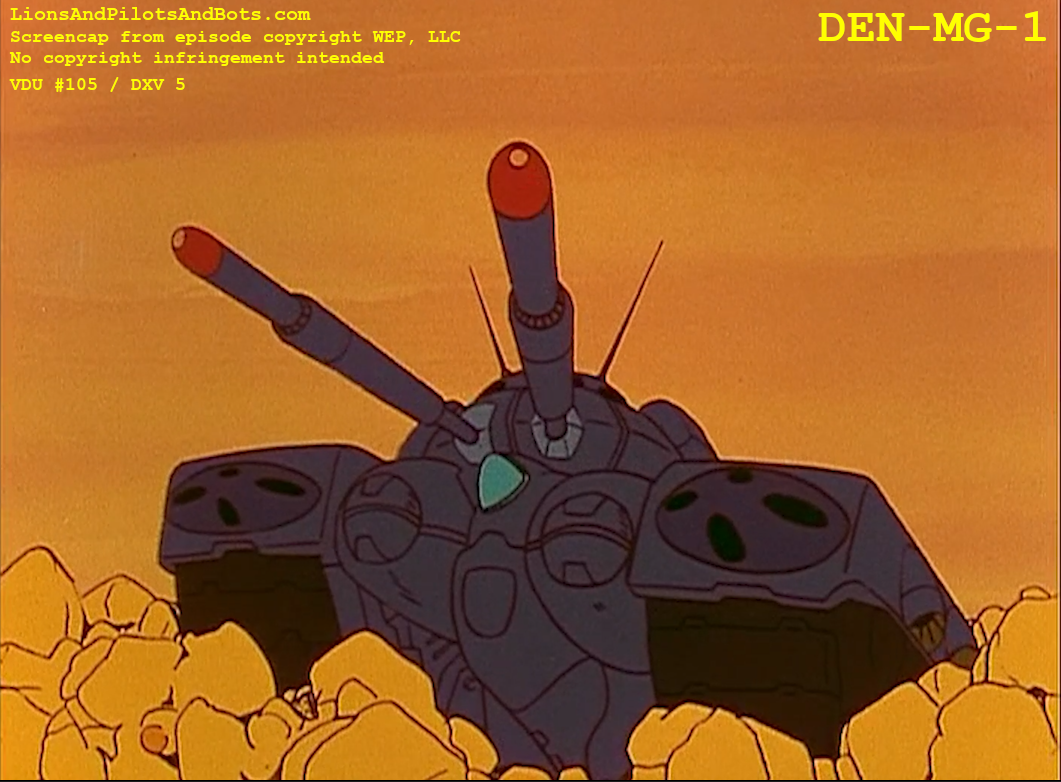
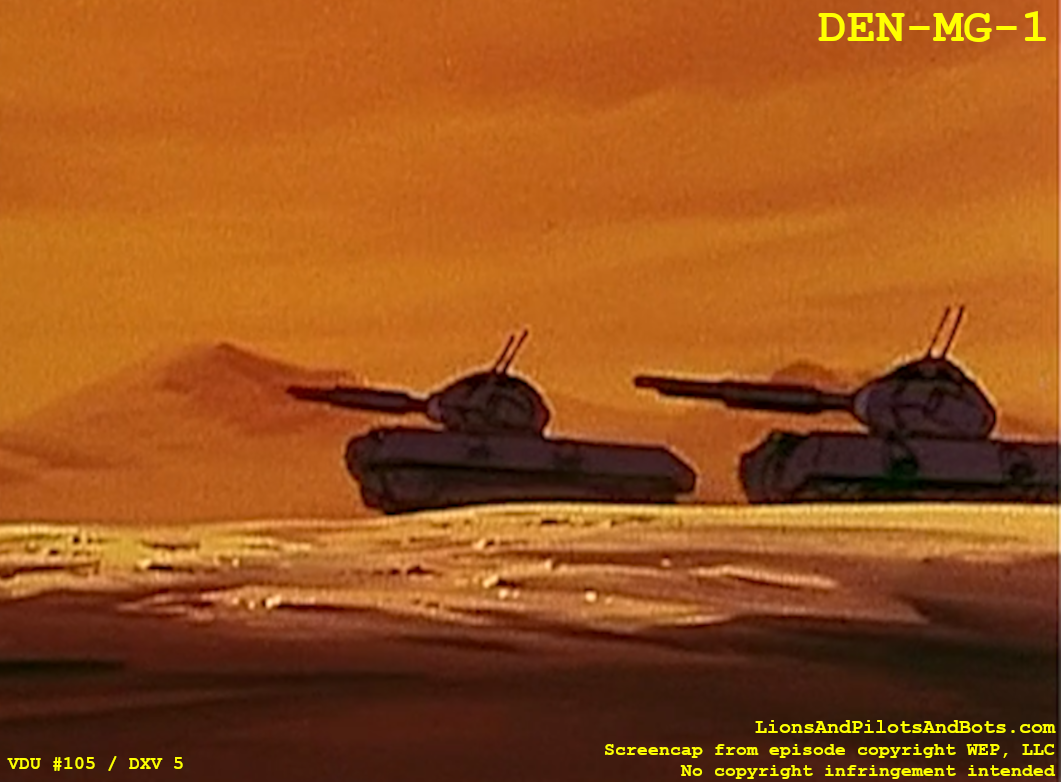
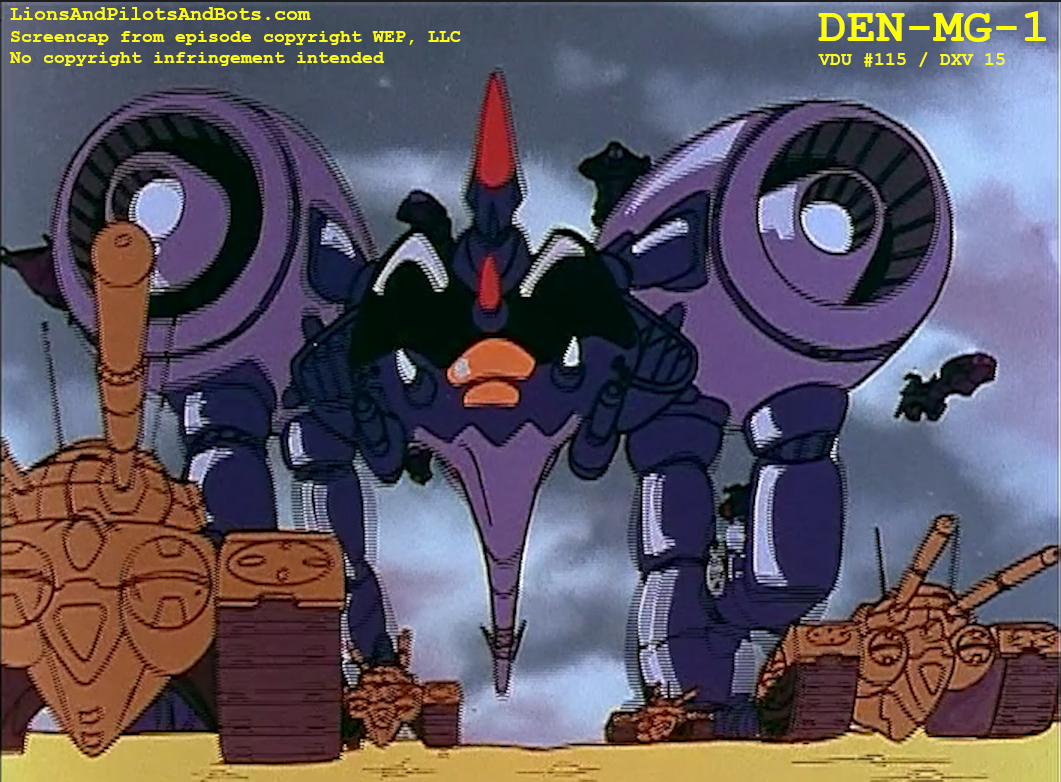
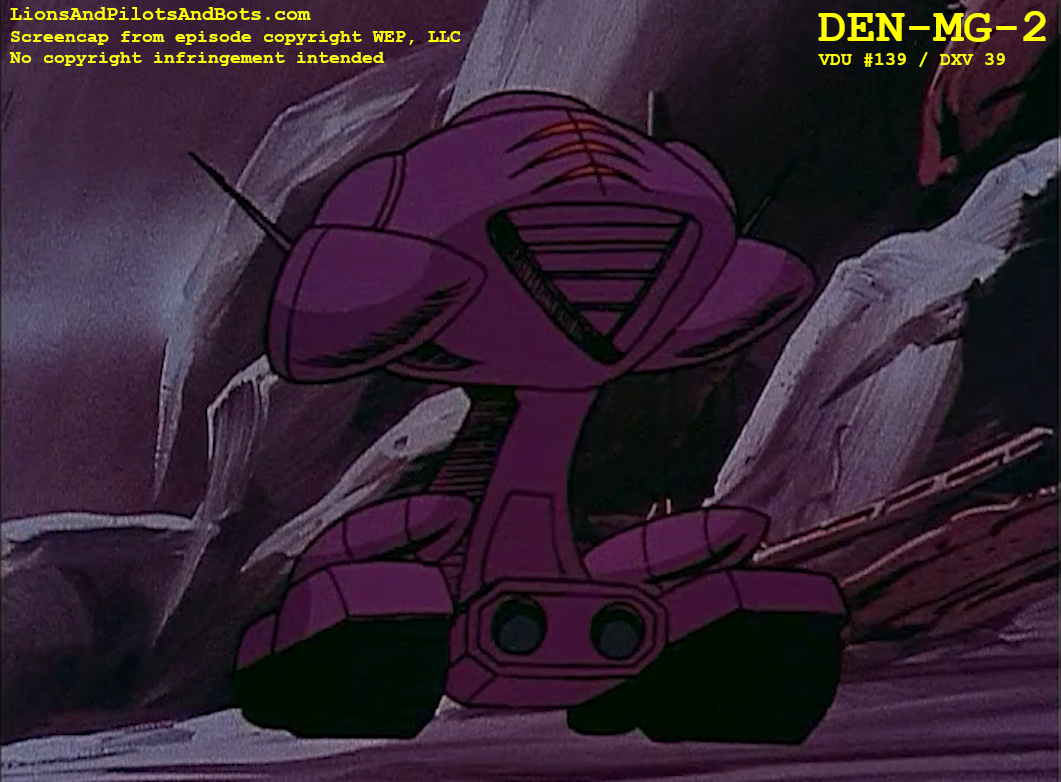
DEN-MG-1 tanks can be dropped from ventral launch bays of planet-orbiting DEN-MSX-1 and DEN-MSA-1 ships. The tanks can descend from orbit in single file. DEN-MG-1 tanks have dual, downward pointing thrusters on either side of the body. The most prominent feature of the tank is a dome-like turret with a long twin barrels.
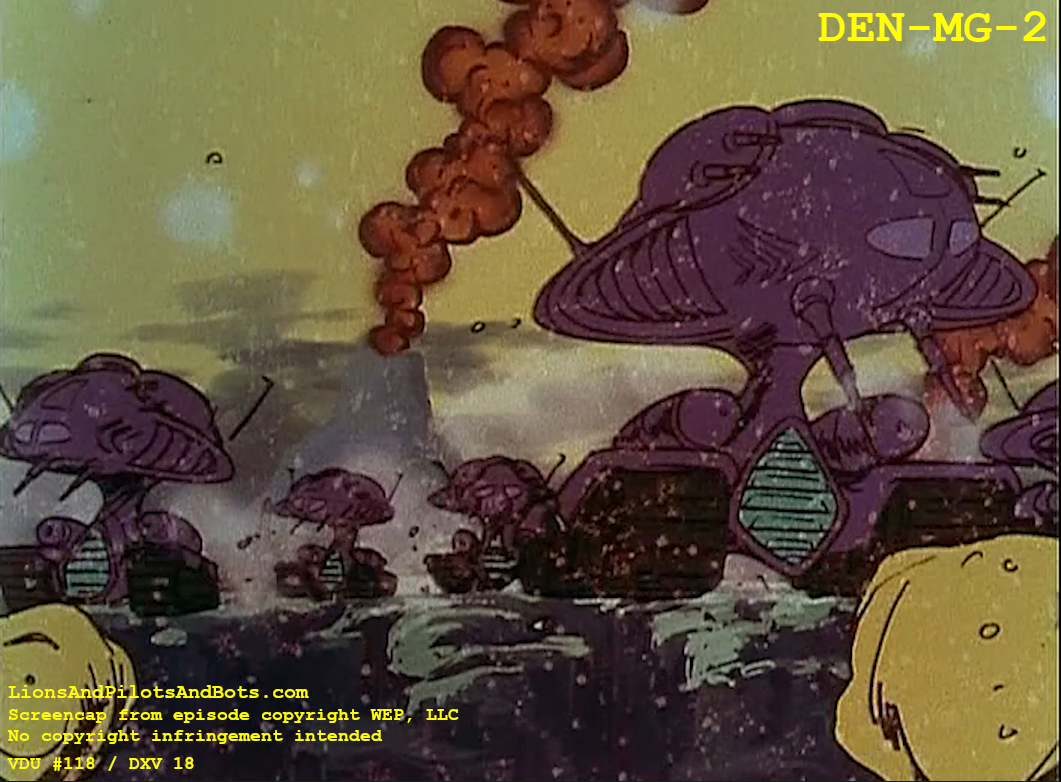
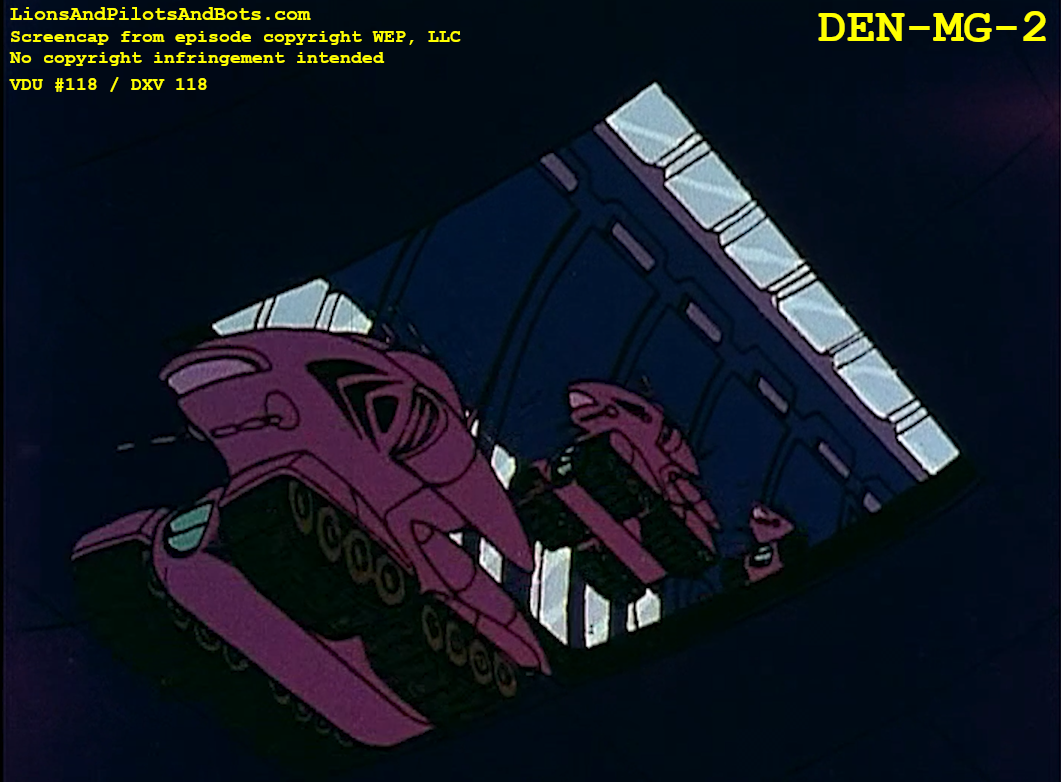
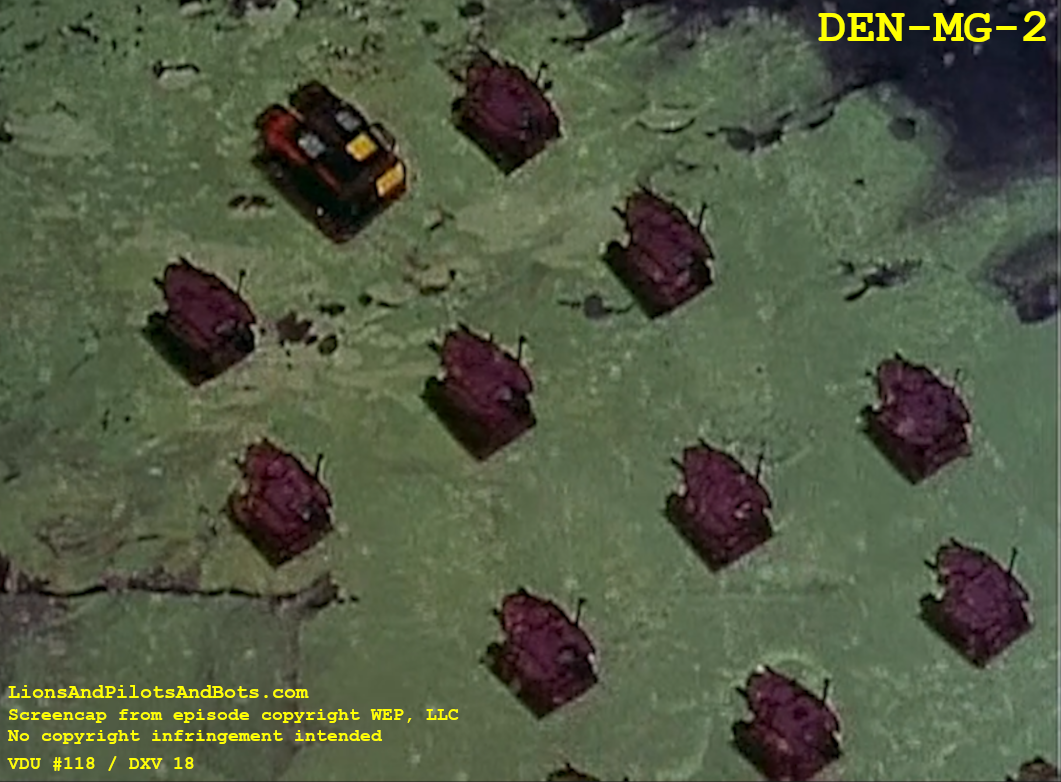
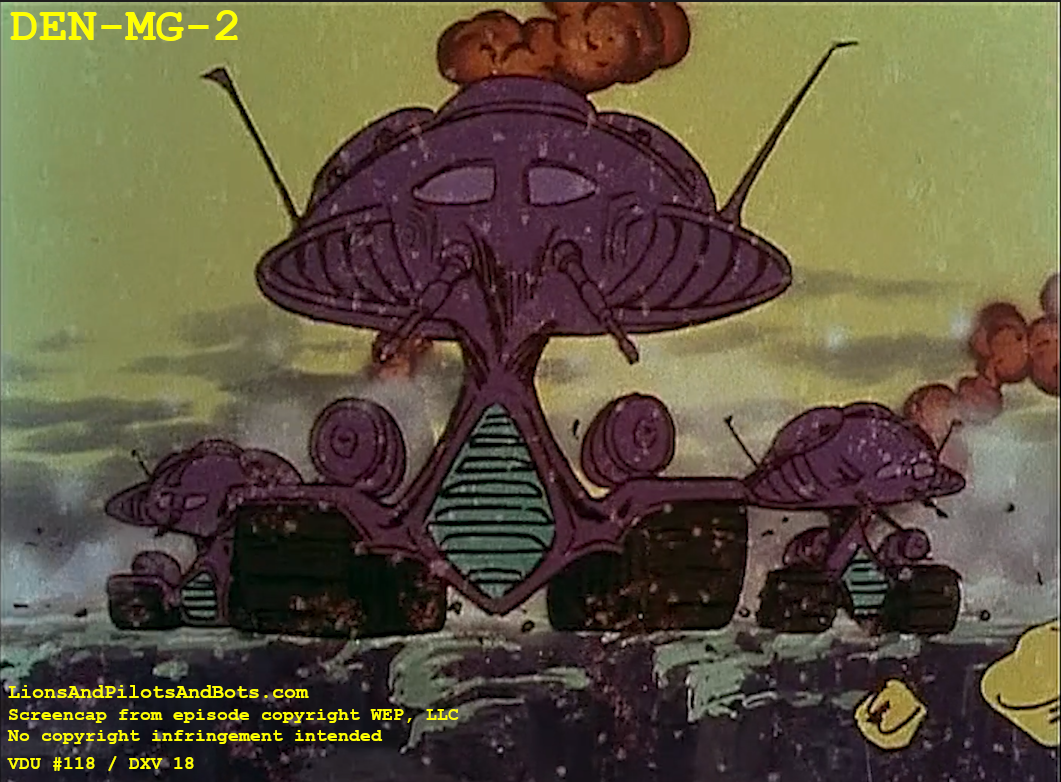
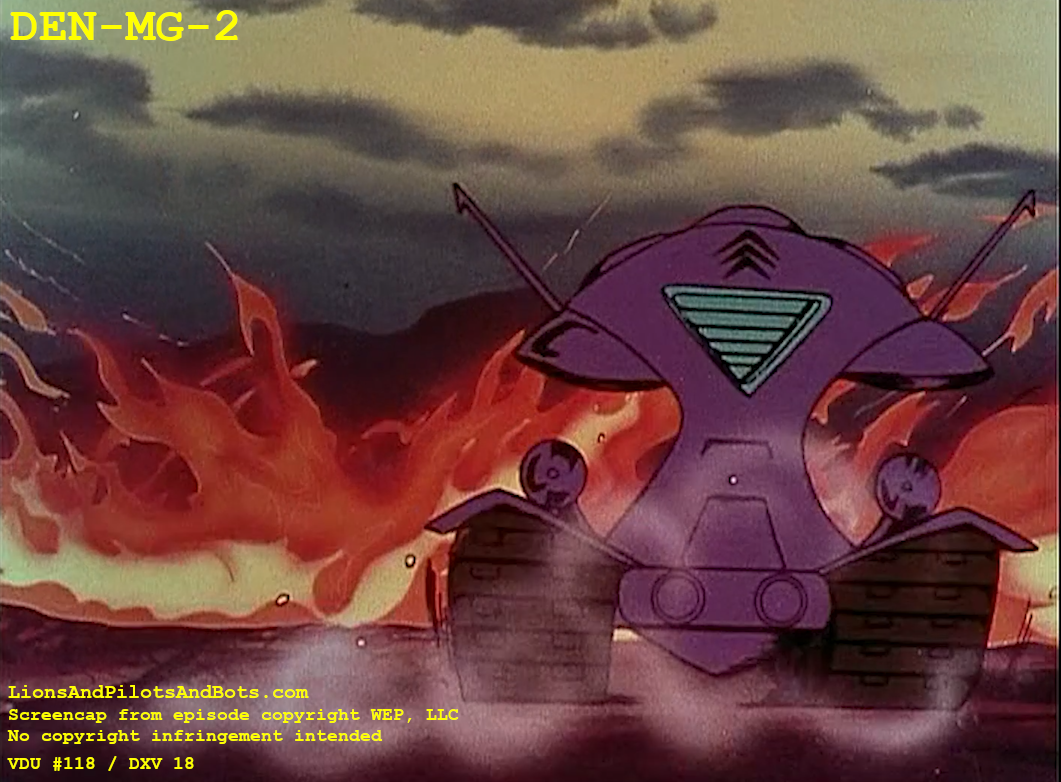
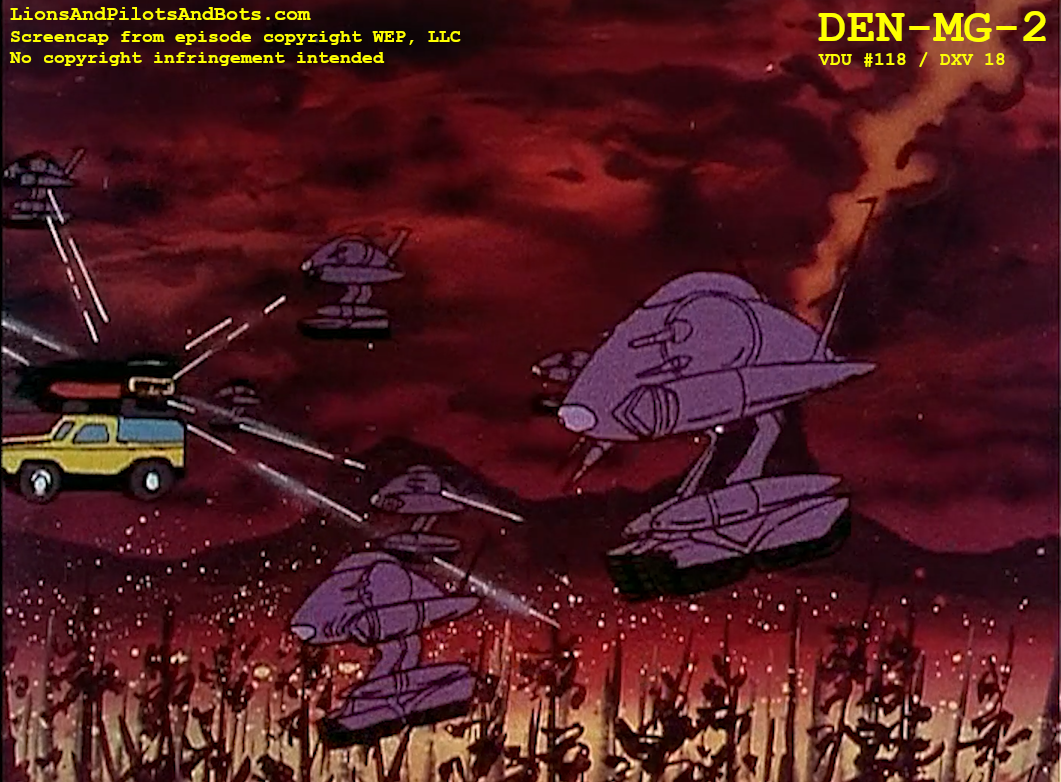
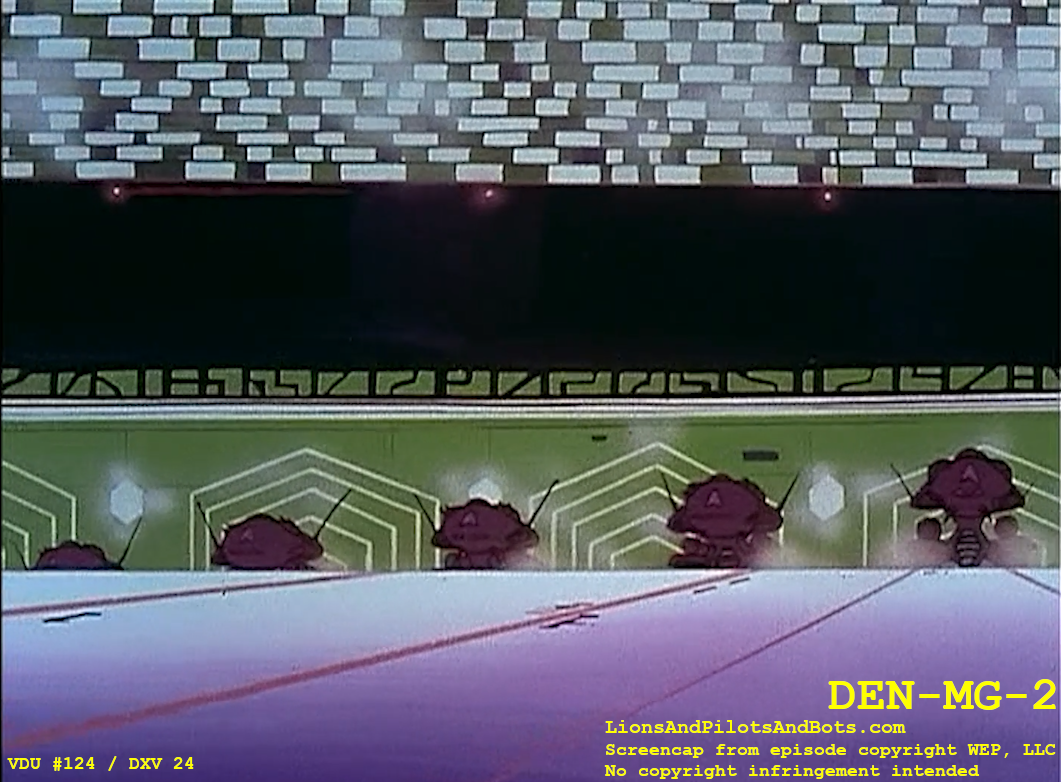
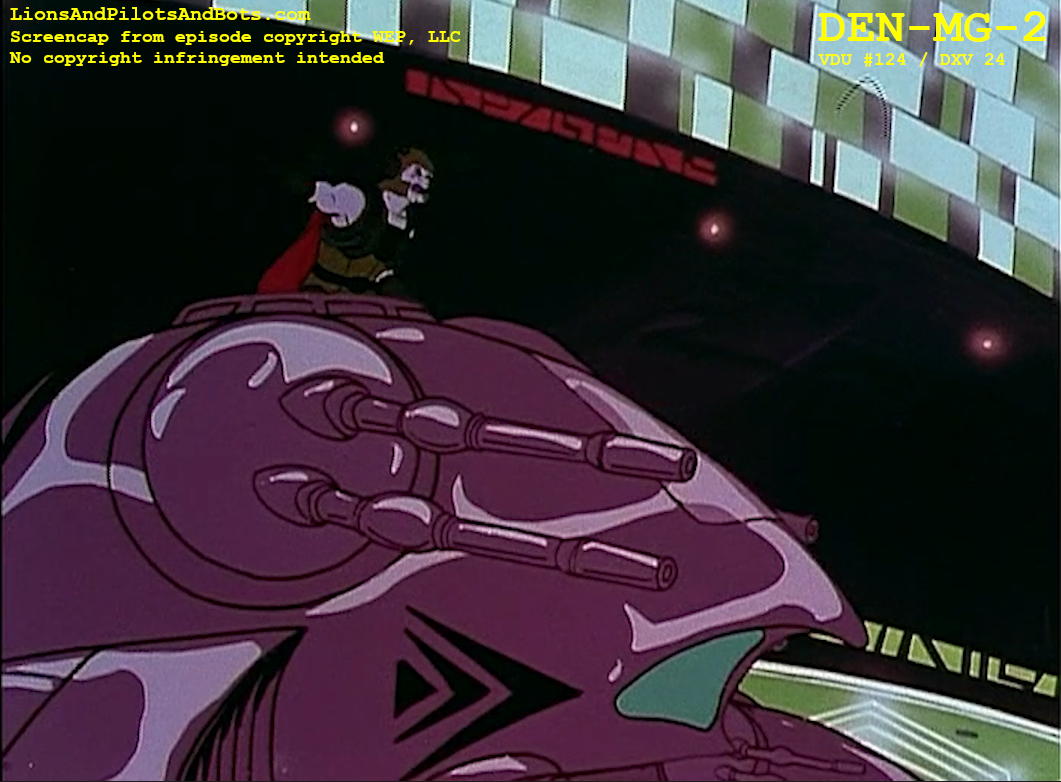
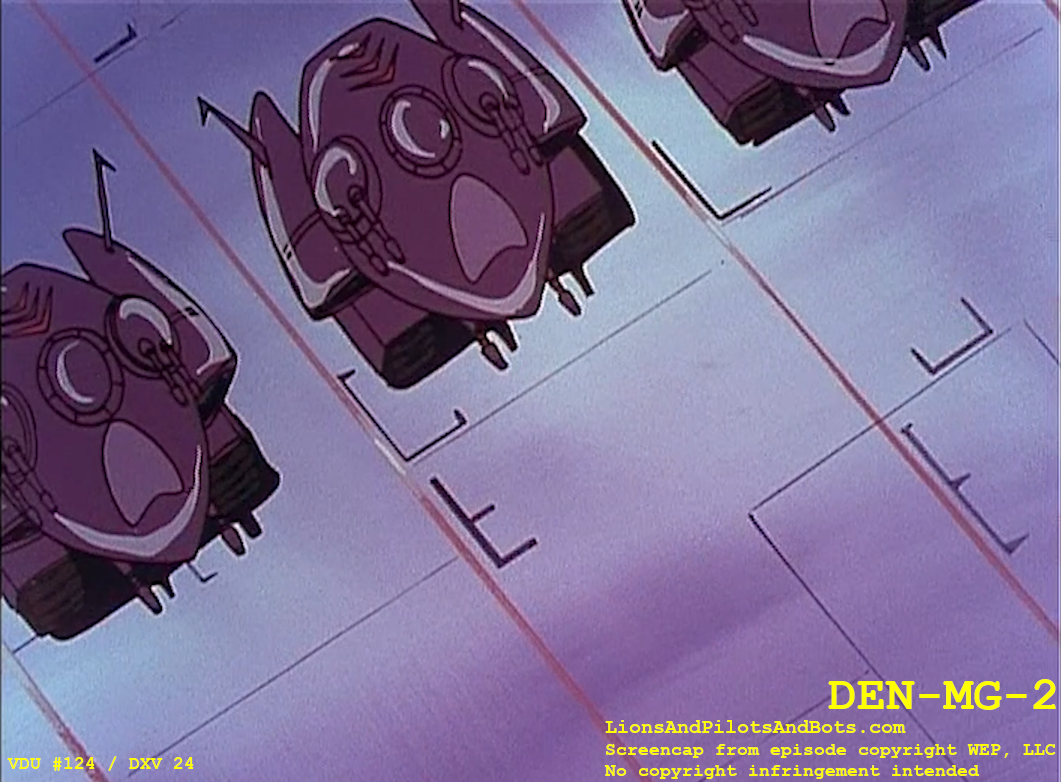
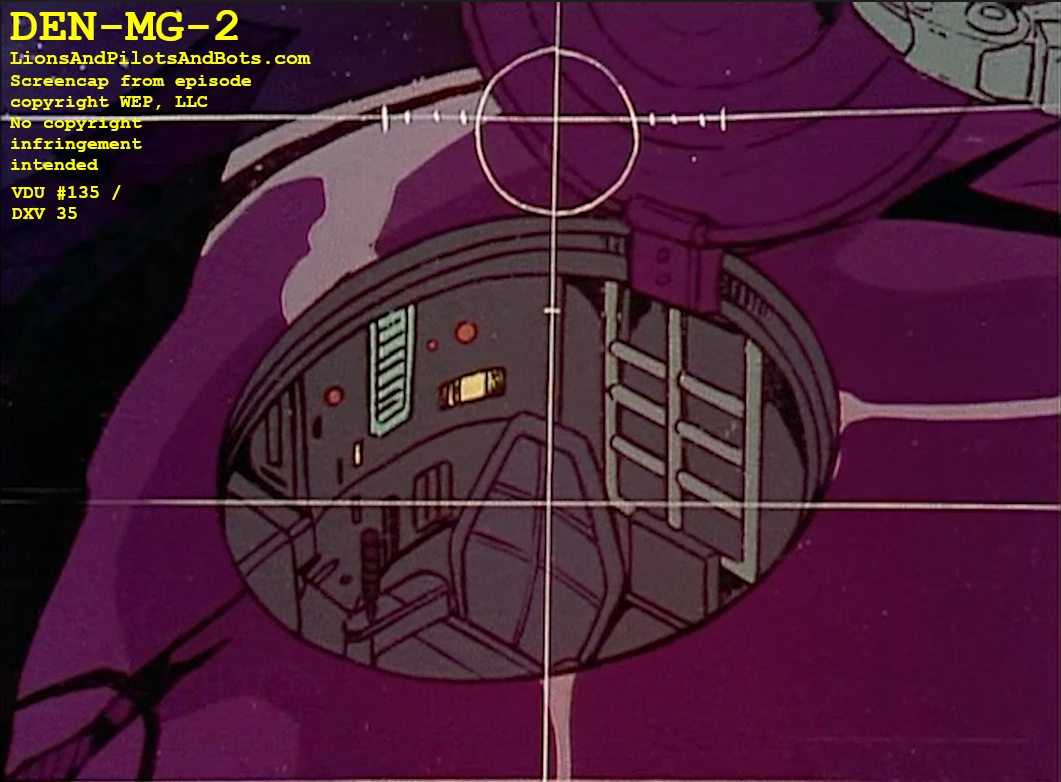
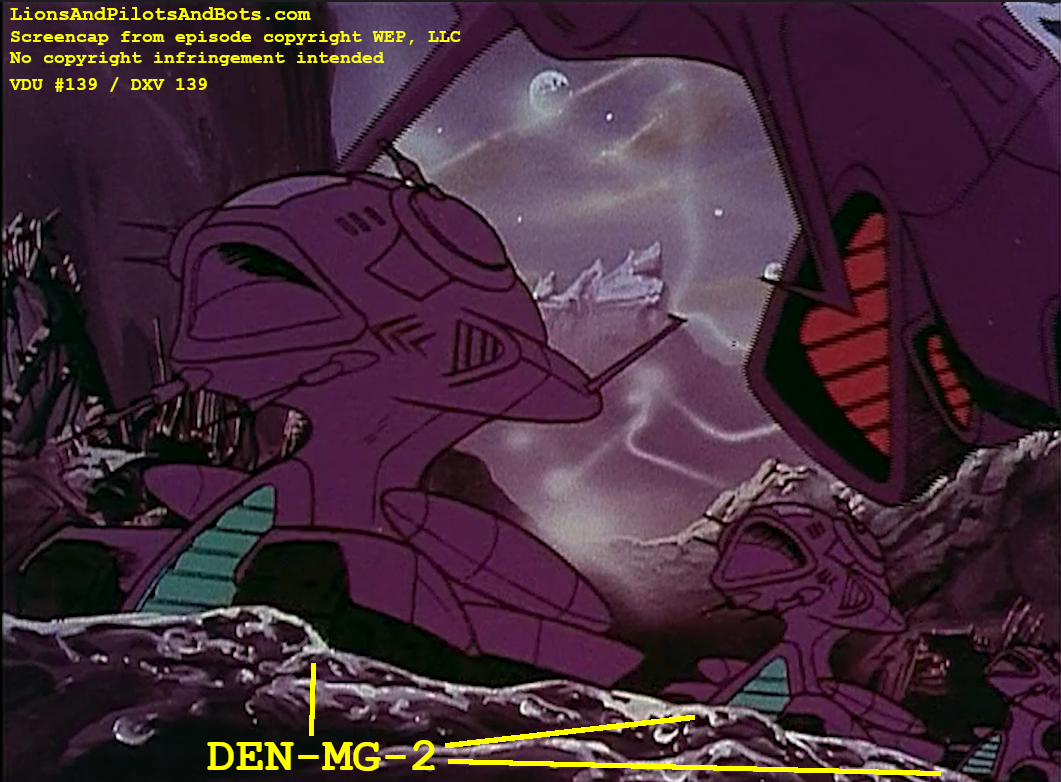
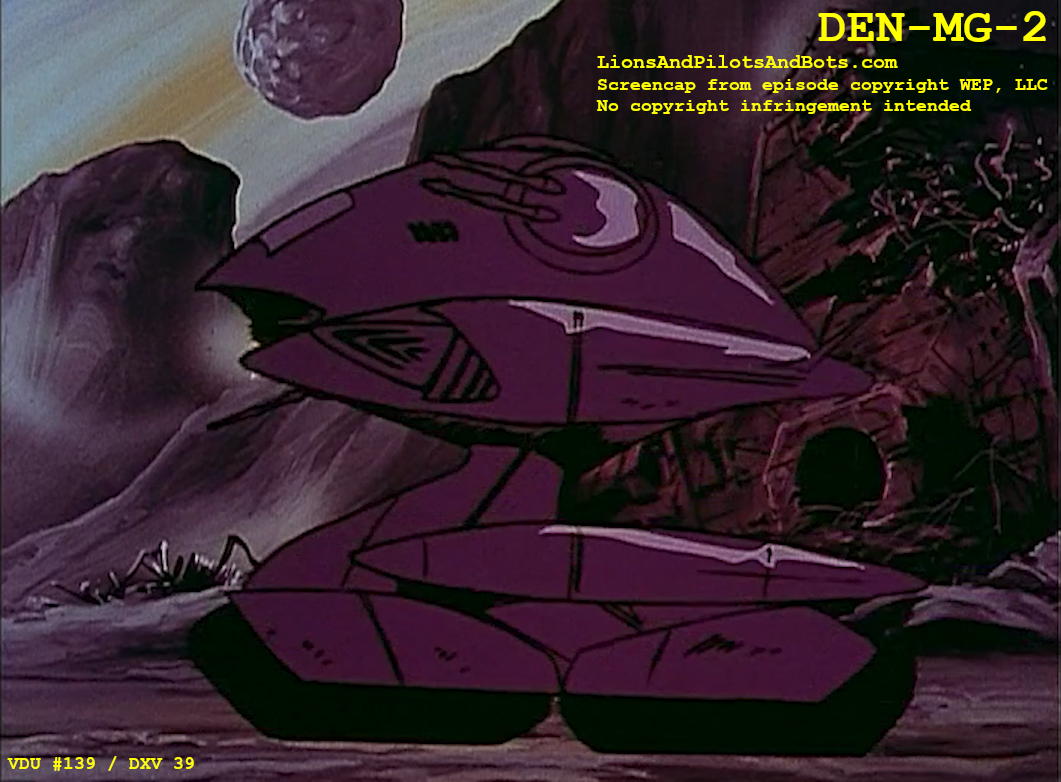
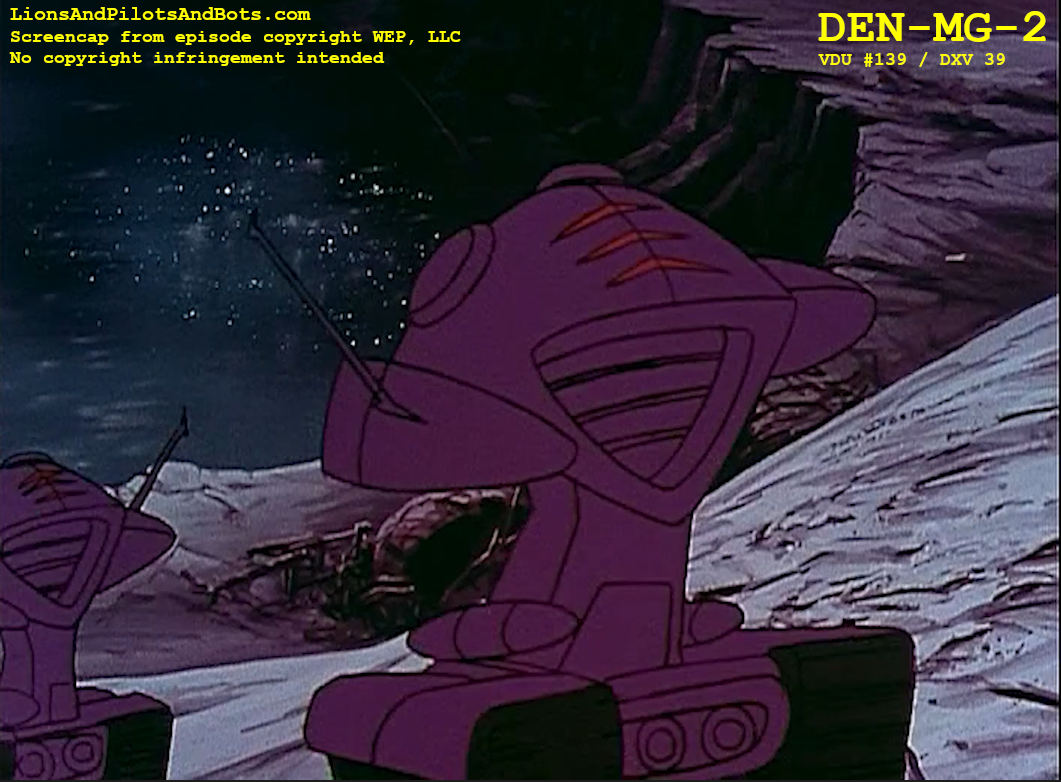
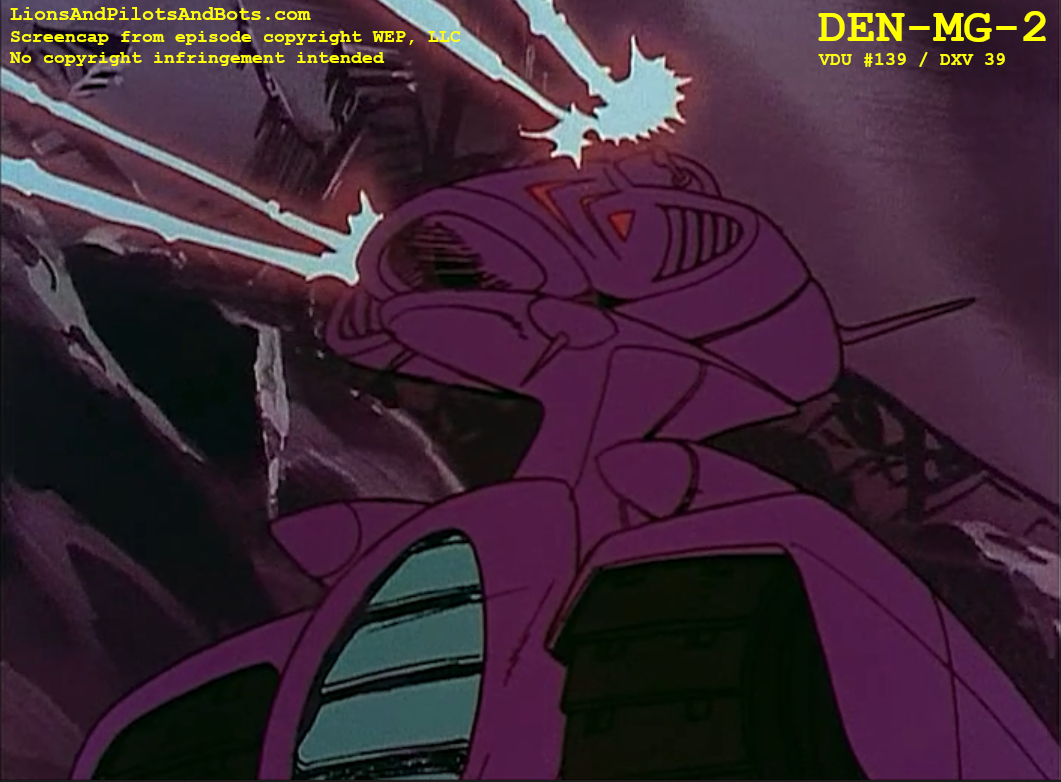
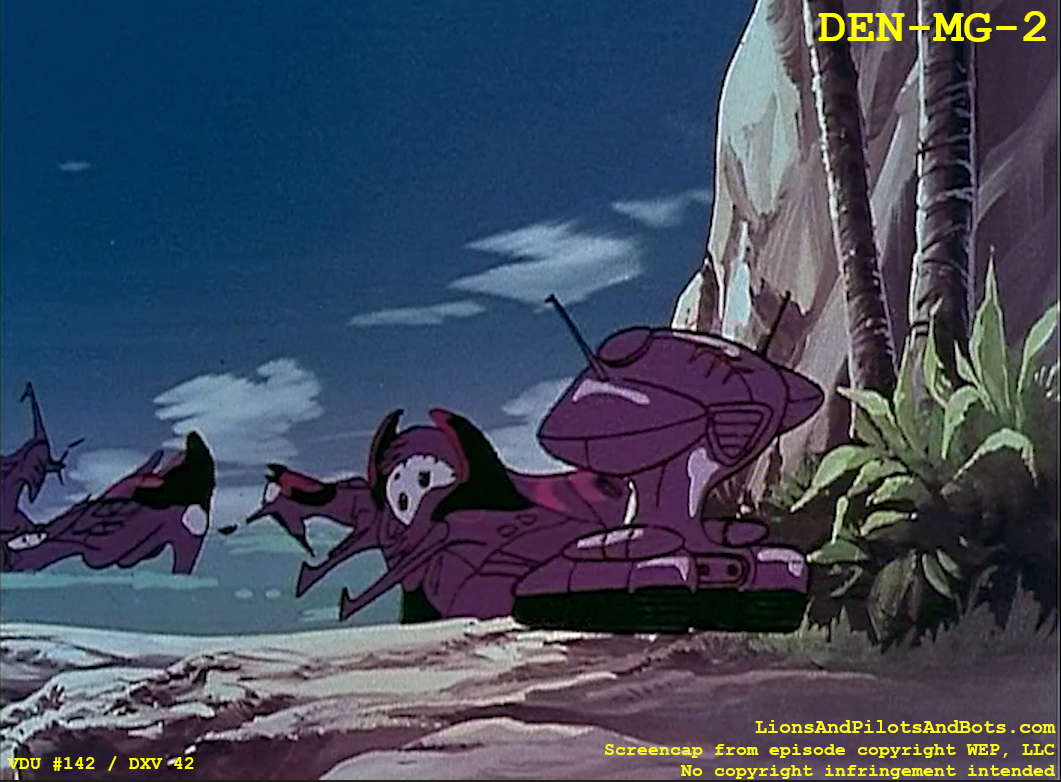
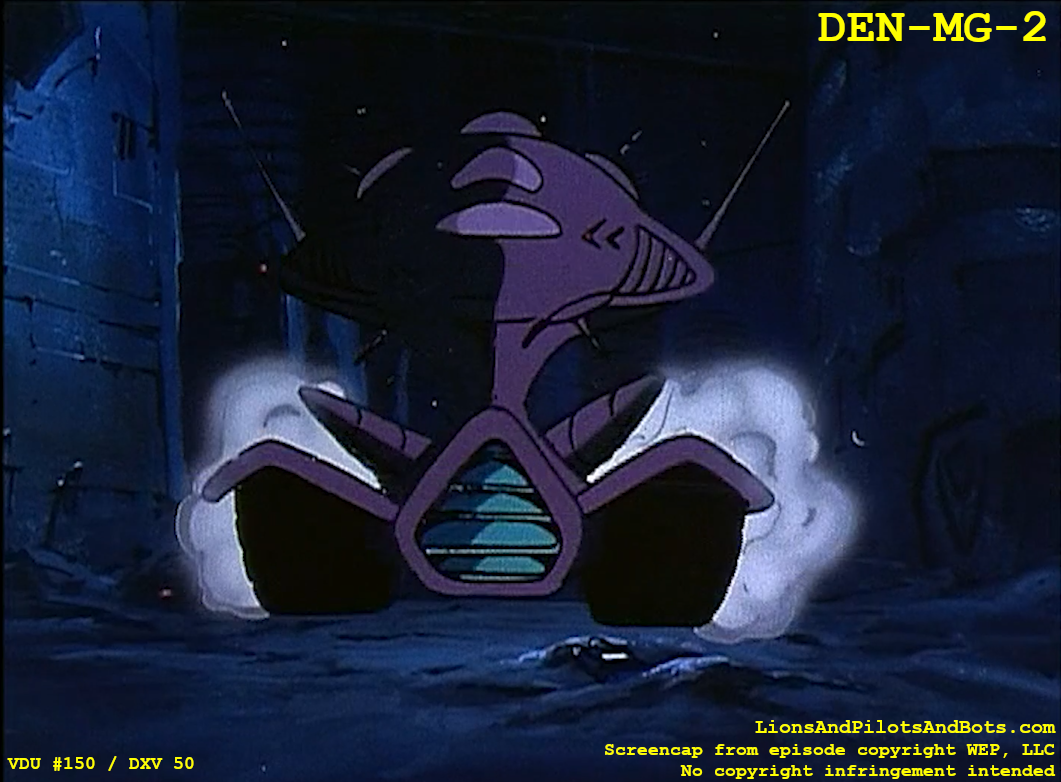
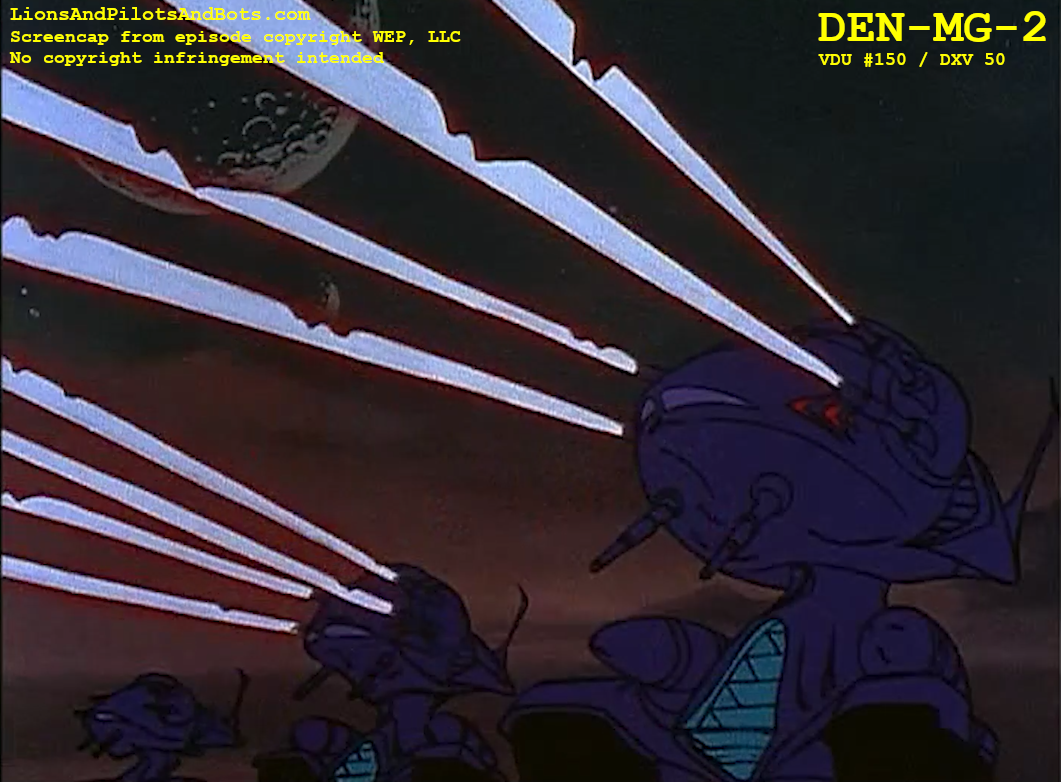
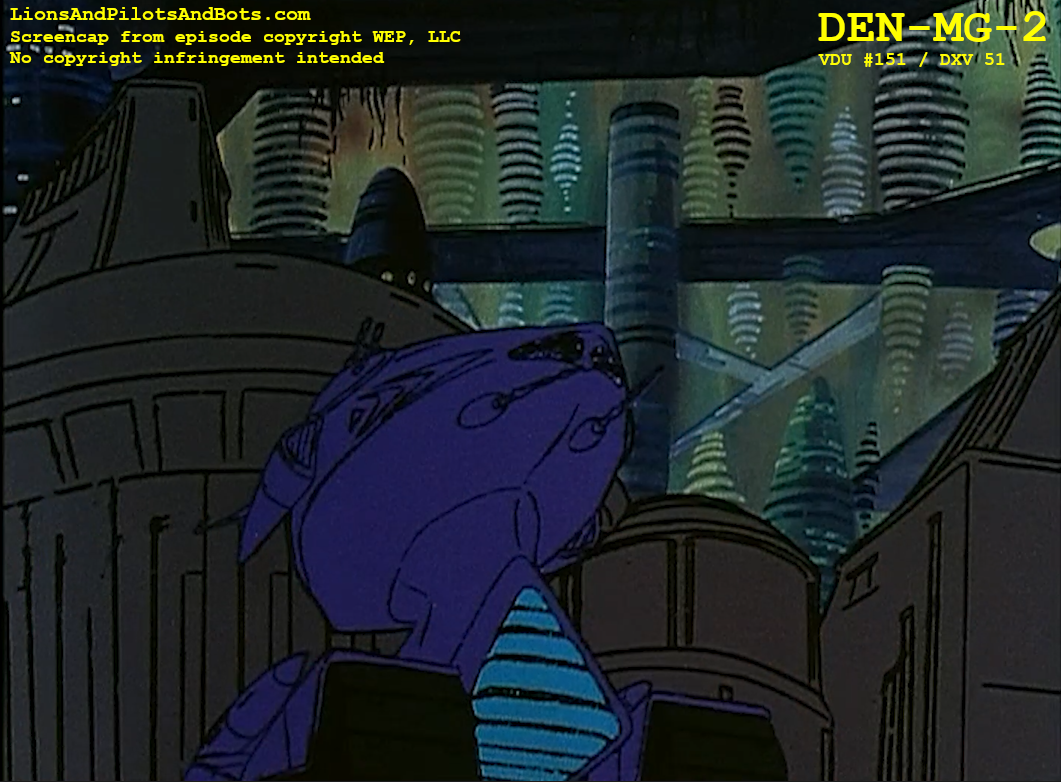
DEN-MG-2 tanks can be dropped from ventral launch bays of larger, planet-orbiting ships. The tanks can descend from orbit in single file. DEN-MSB-4 and DEN-MSX-2 ships can carry multiple DEN-MG-2 tanks in the fuselage.
DEN-MG-2 tanks can hover over a planetary surface for extended periods, whether fully upright or pitched downward slightly. DEN-MG-2 tanks have an upper body, which is armed with multiple cannons and is connected by an underside strut to the lower body, which drives the tank treads. Tank operators occupy a compartment in the upper body, which is accessible through a topside hatch.
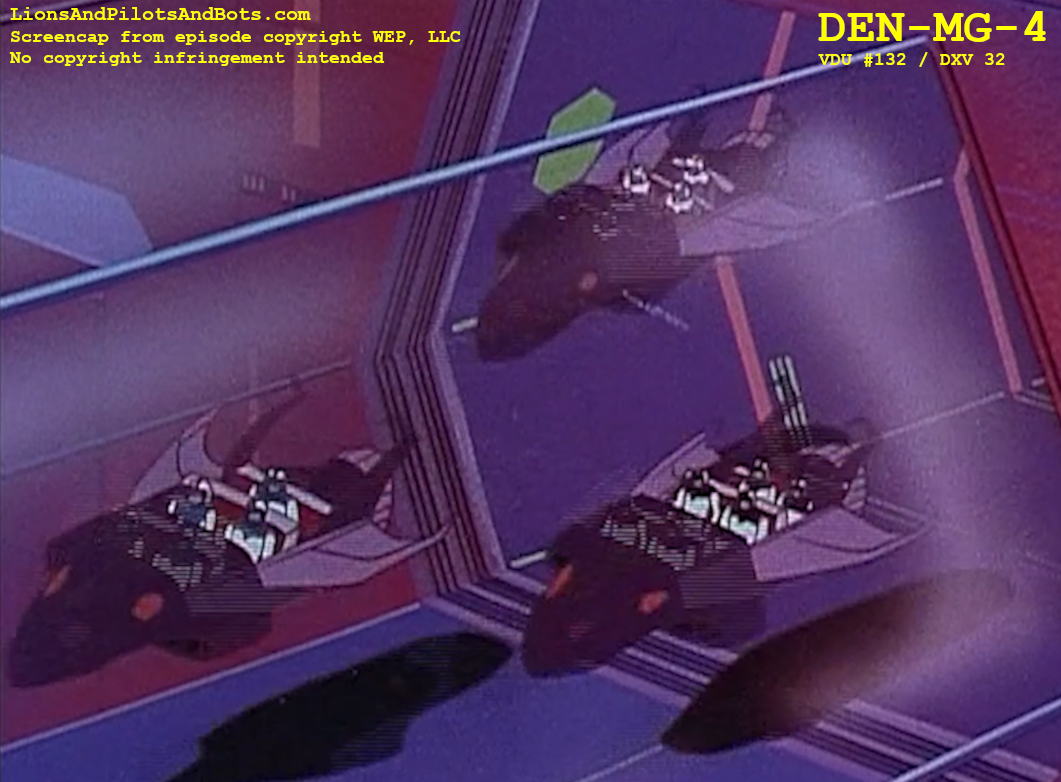
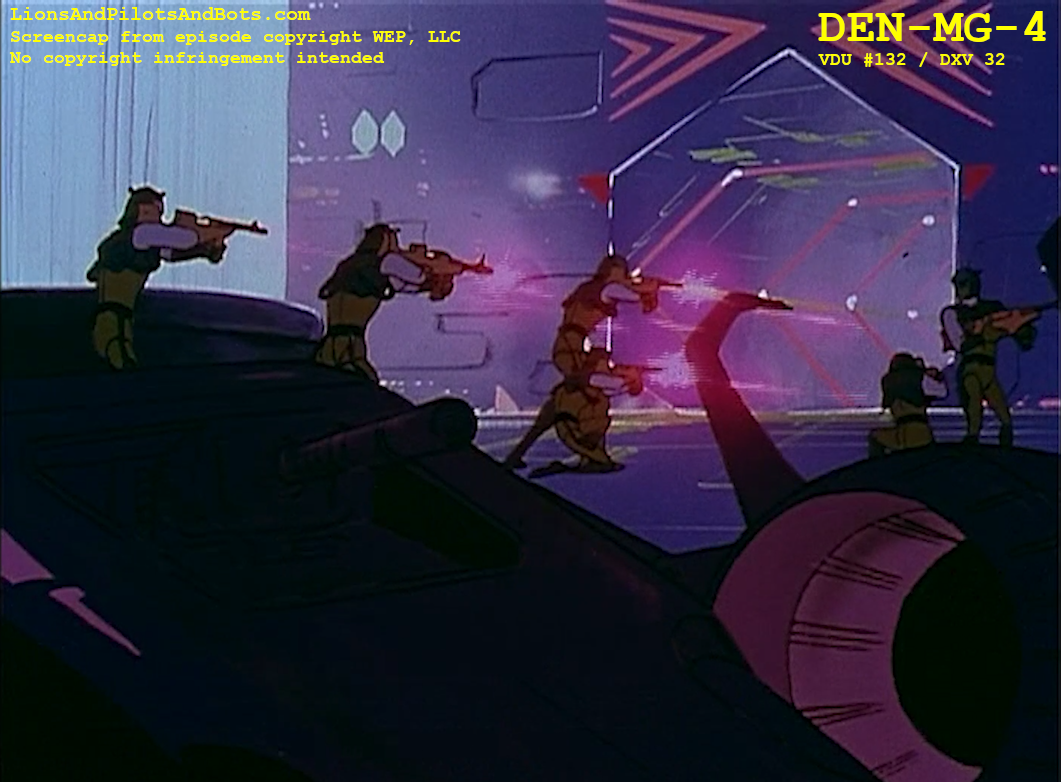
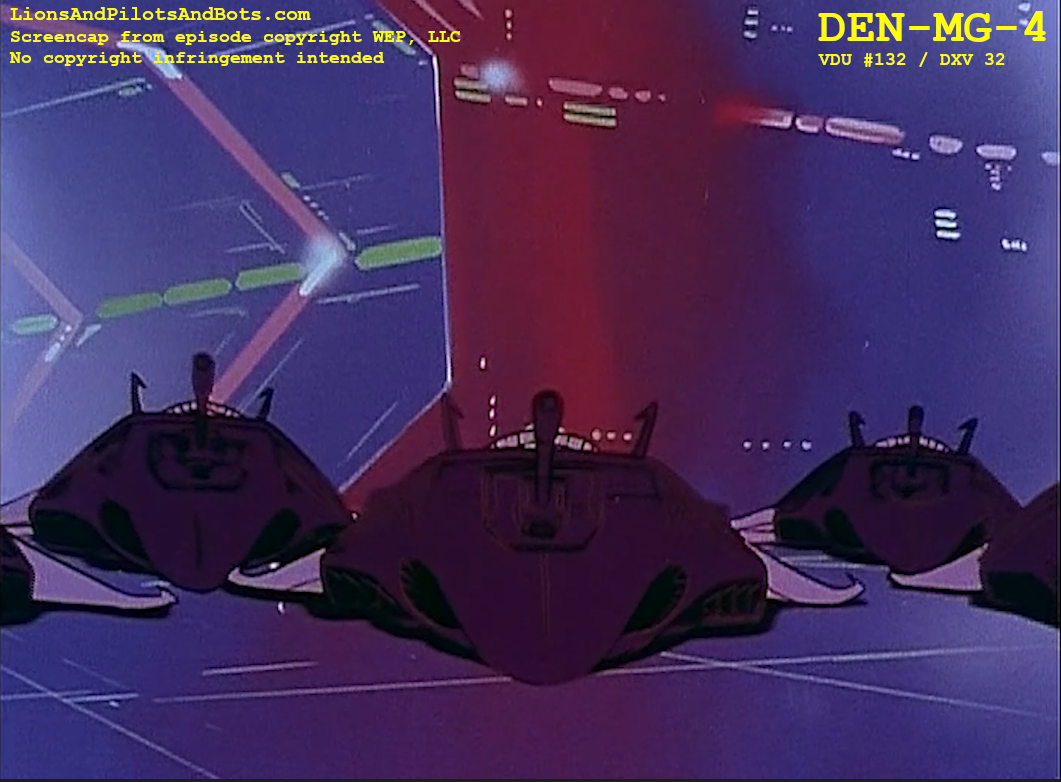
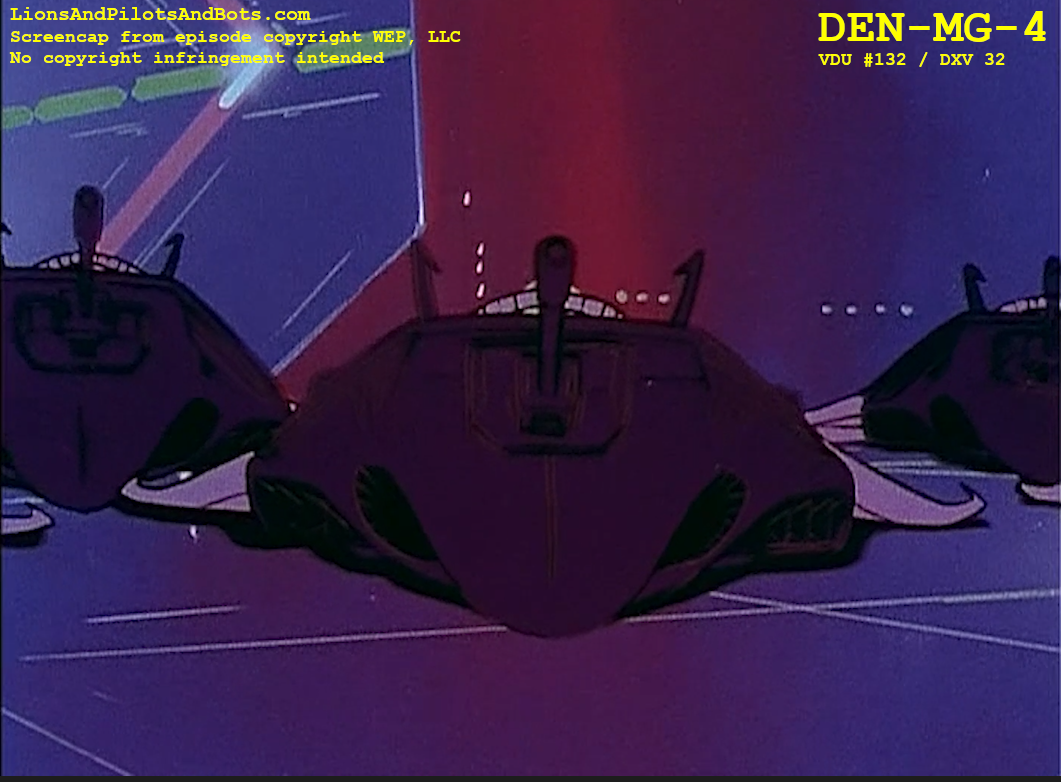
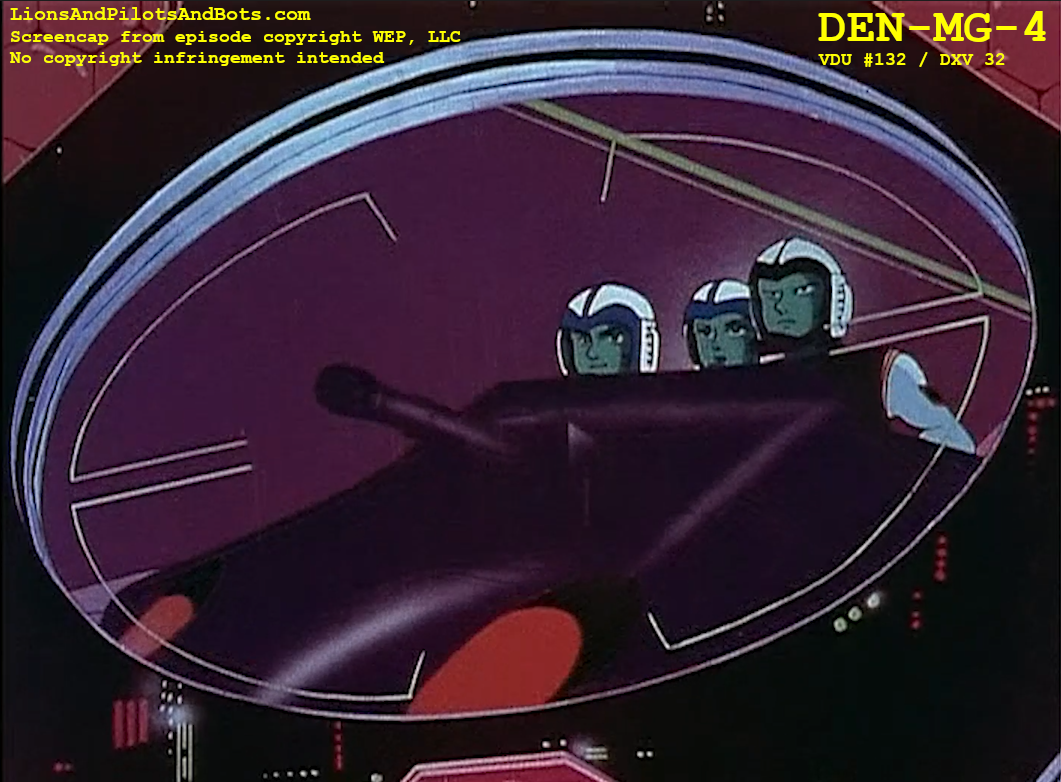
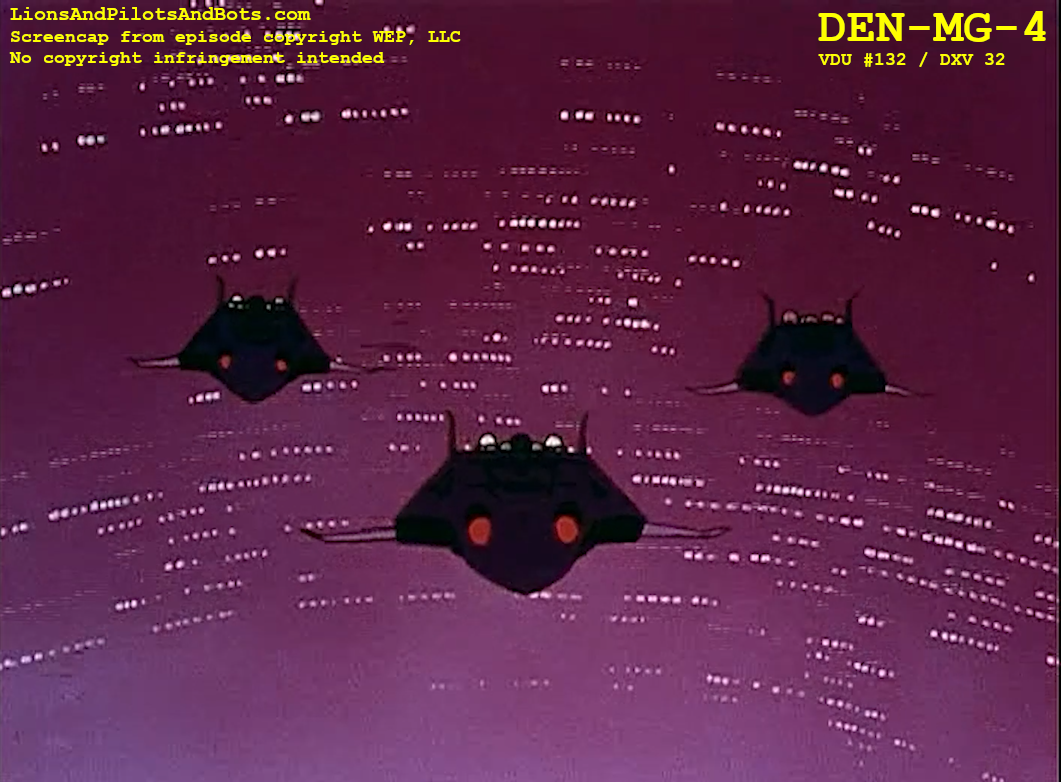
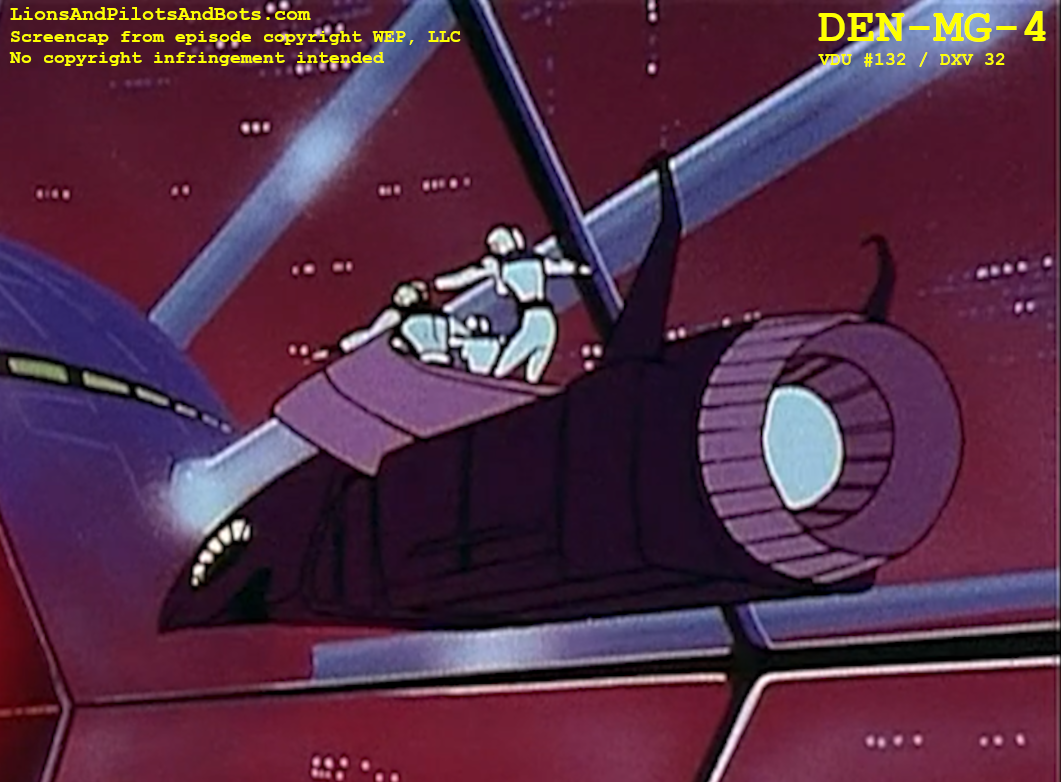
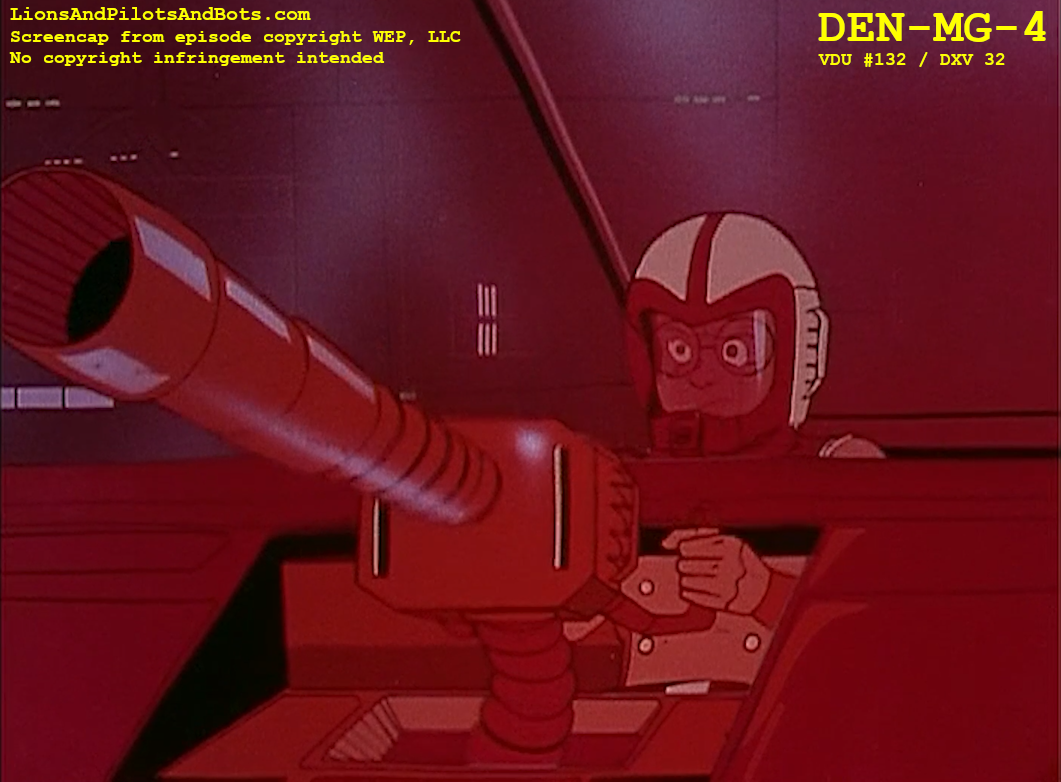
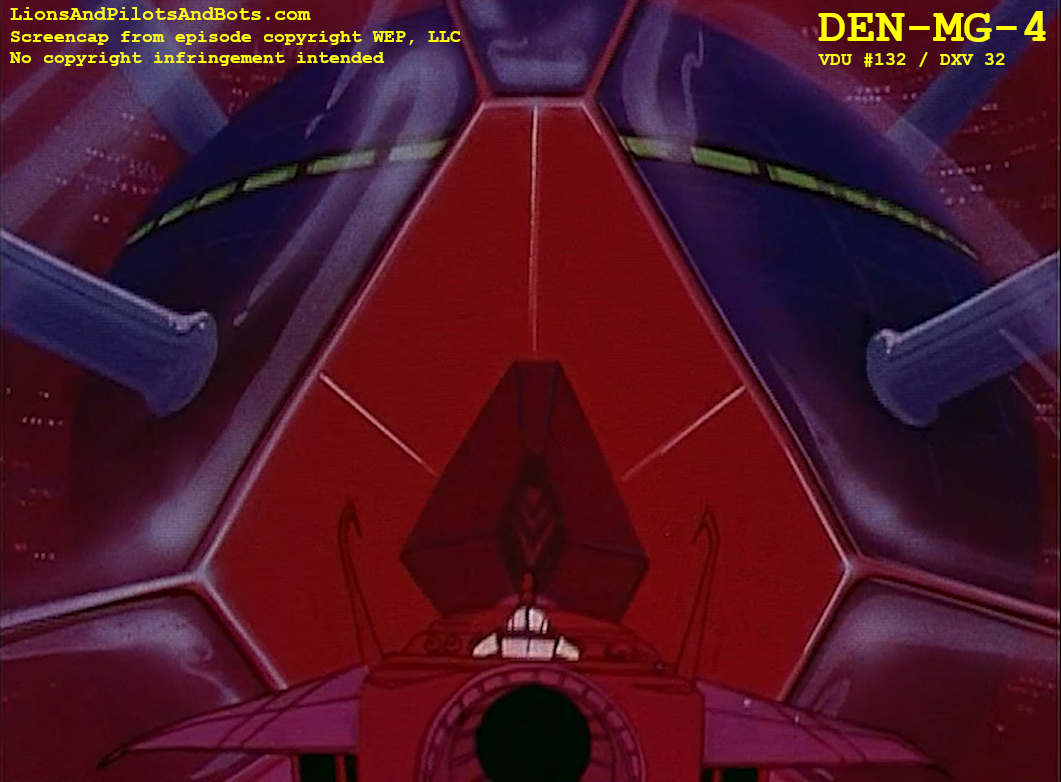
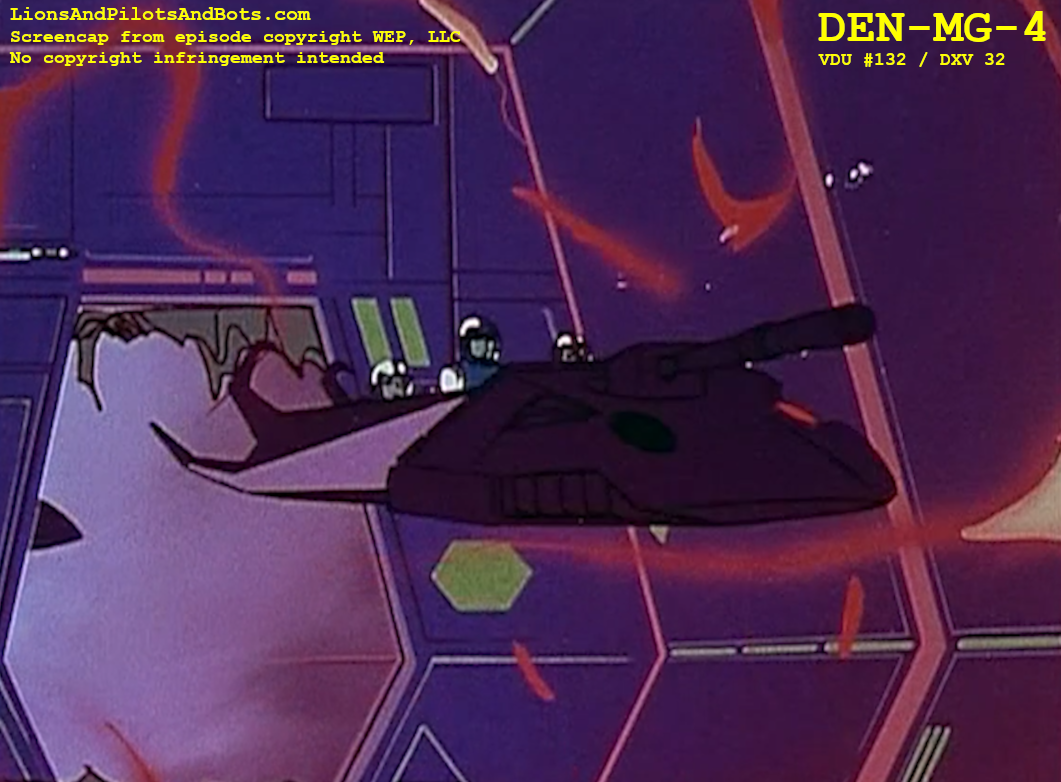
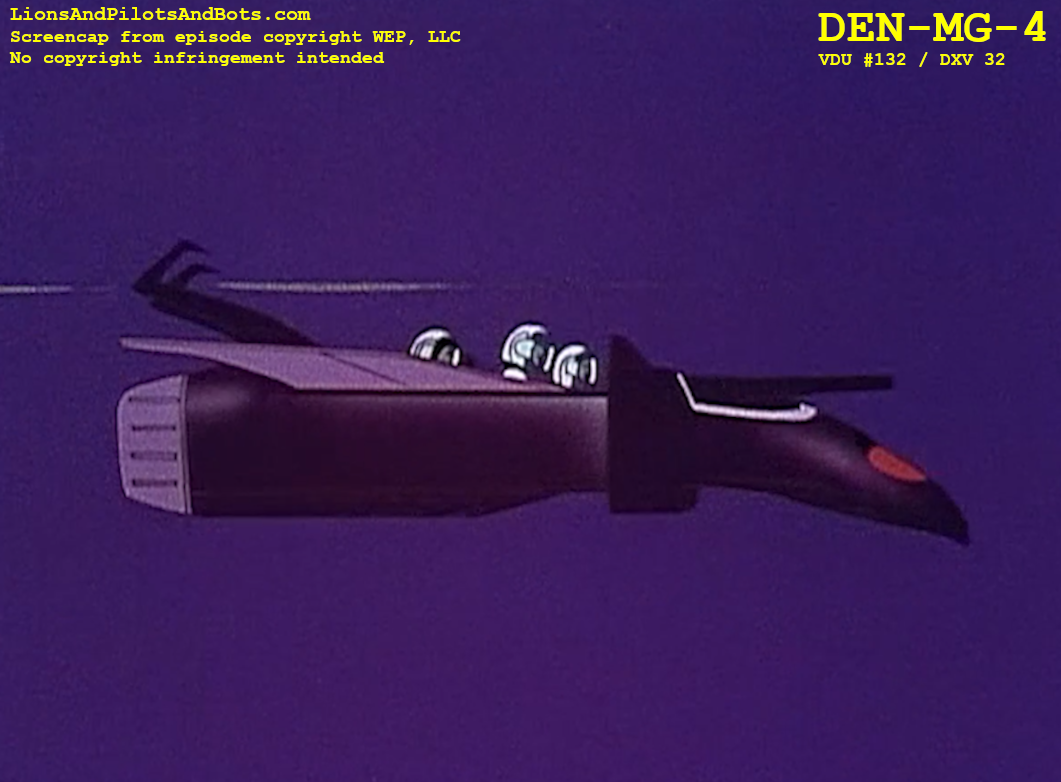
DEN-MG-4 armed transports are open-top hovering craft with a forward-pointing cannon and front and rear bench seats that, in total, can comfortably accommodate at least four occupants. The cannon can be aimed and fired manually.
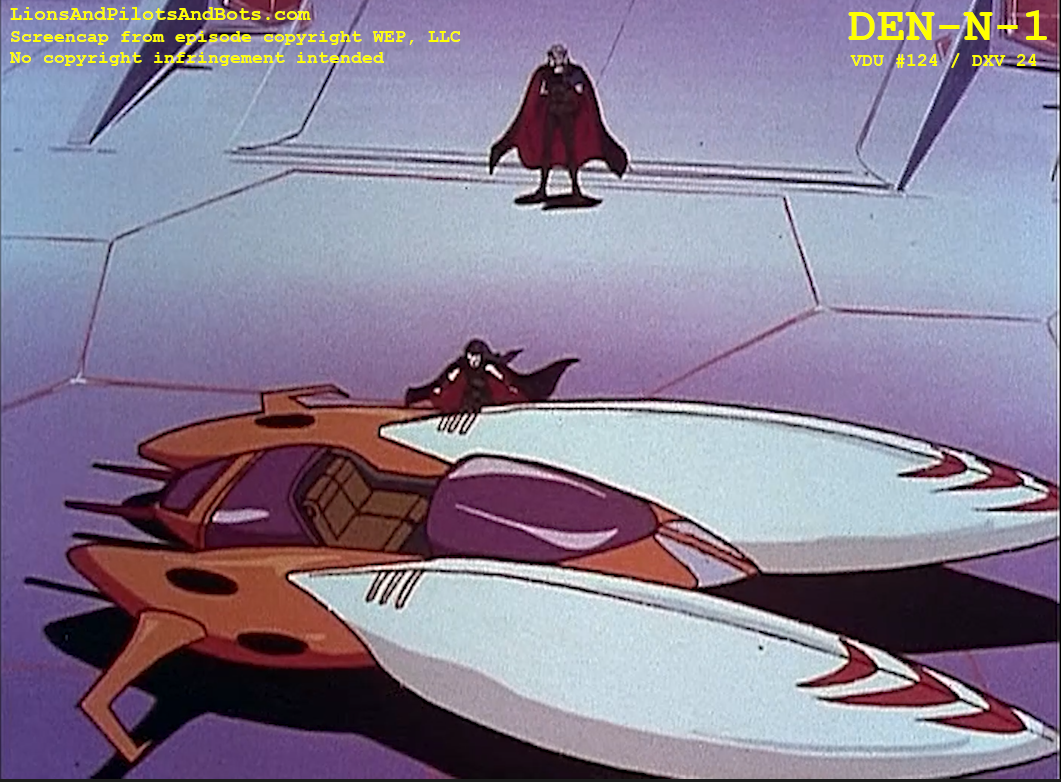
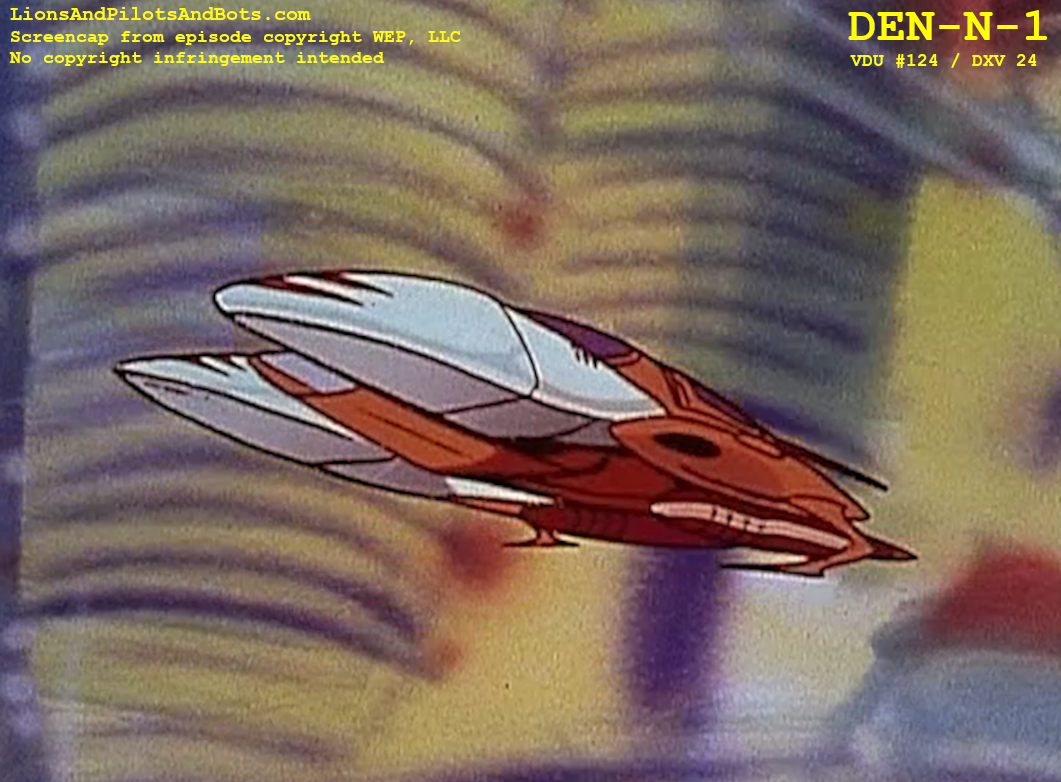
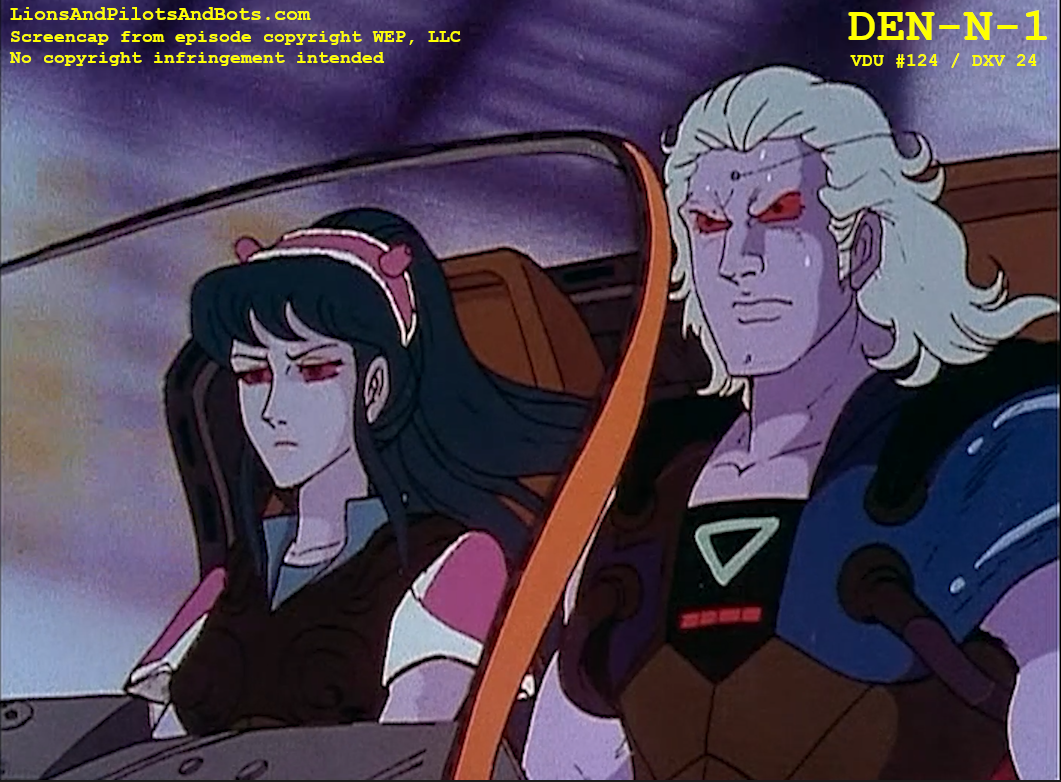
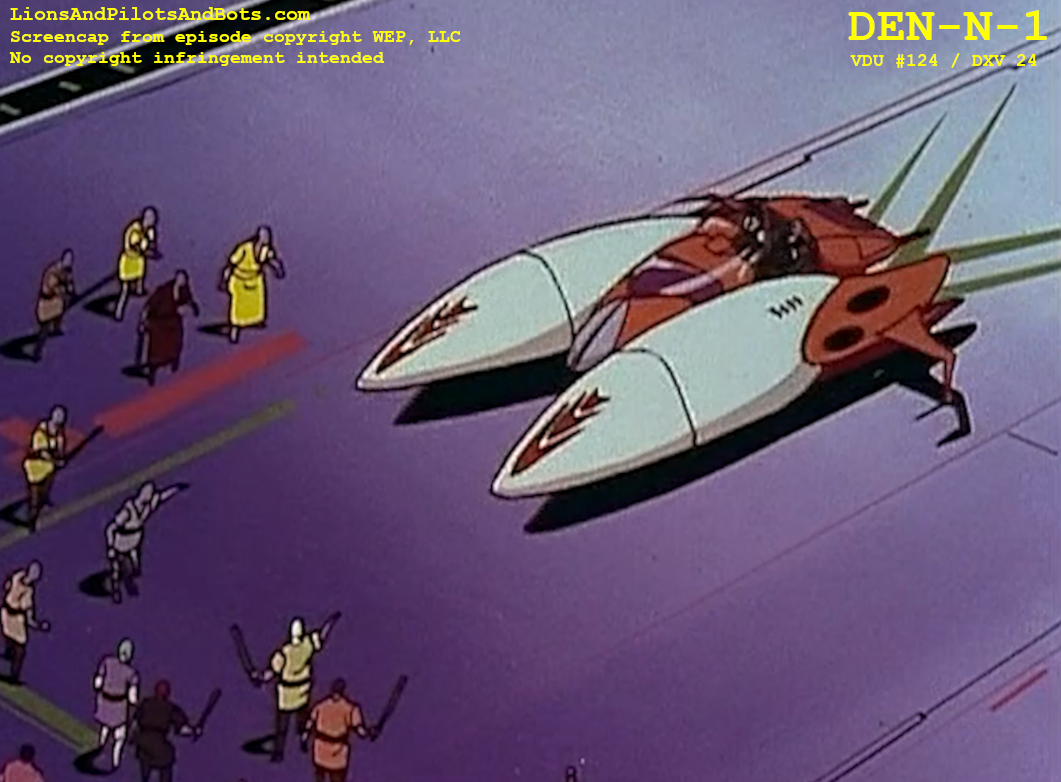
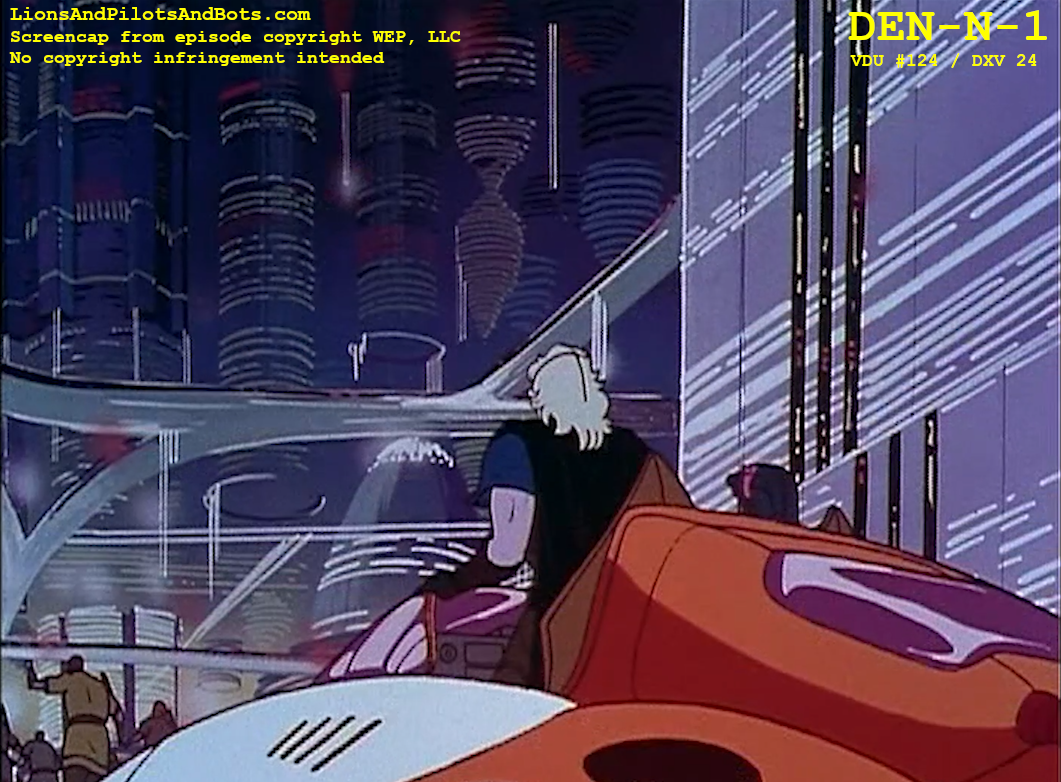
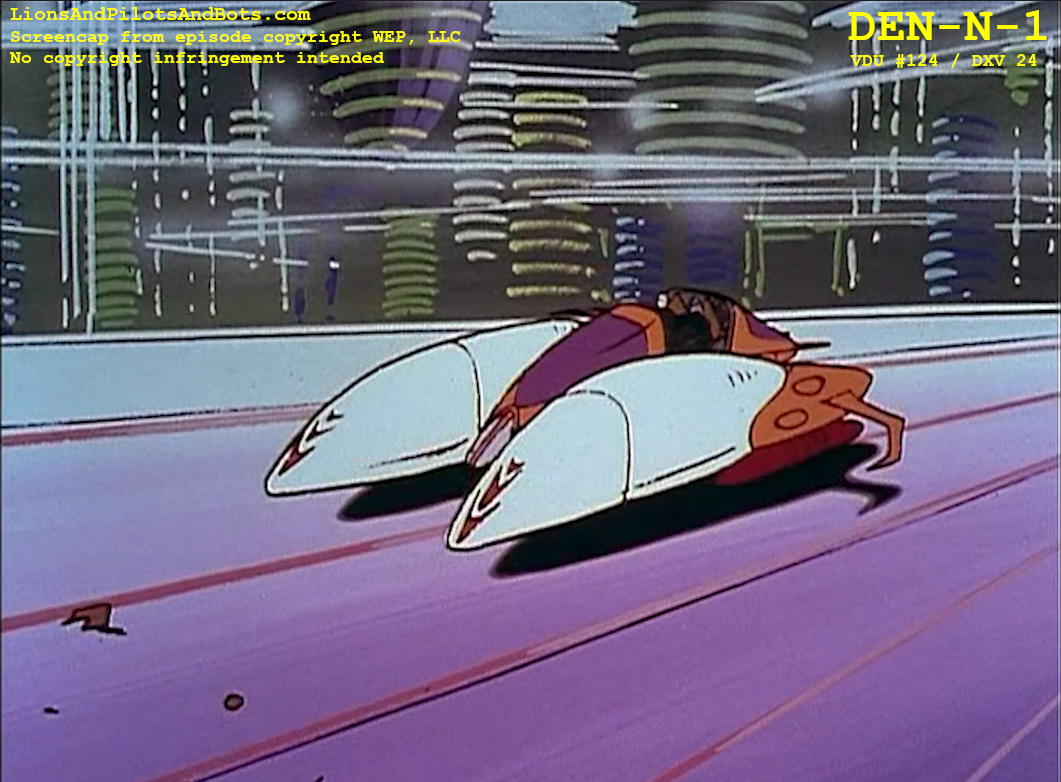
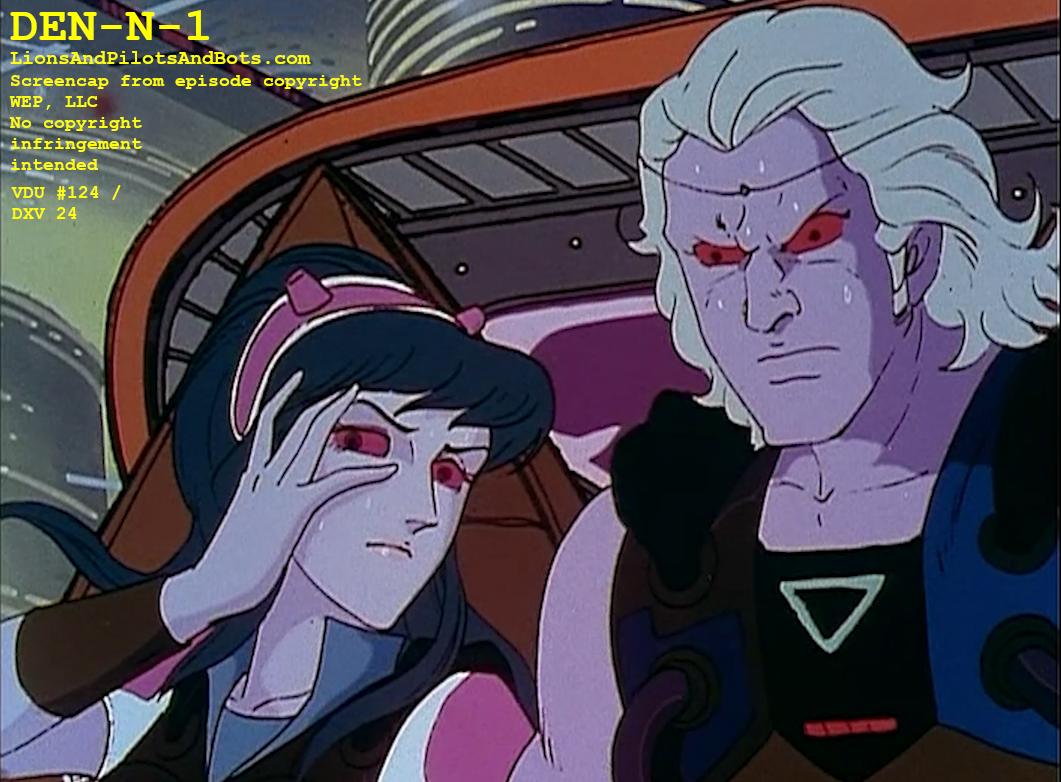
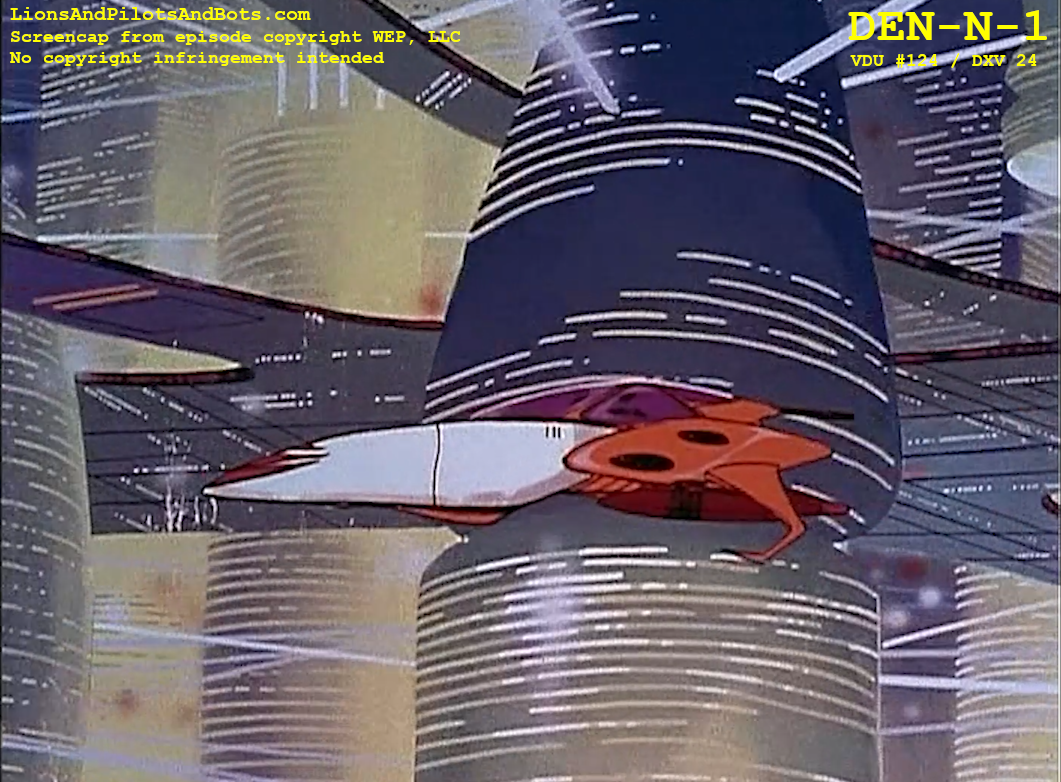
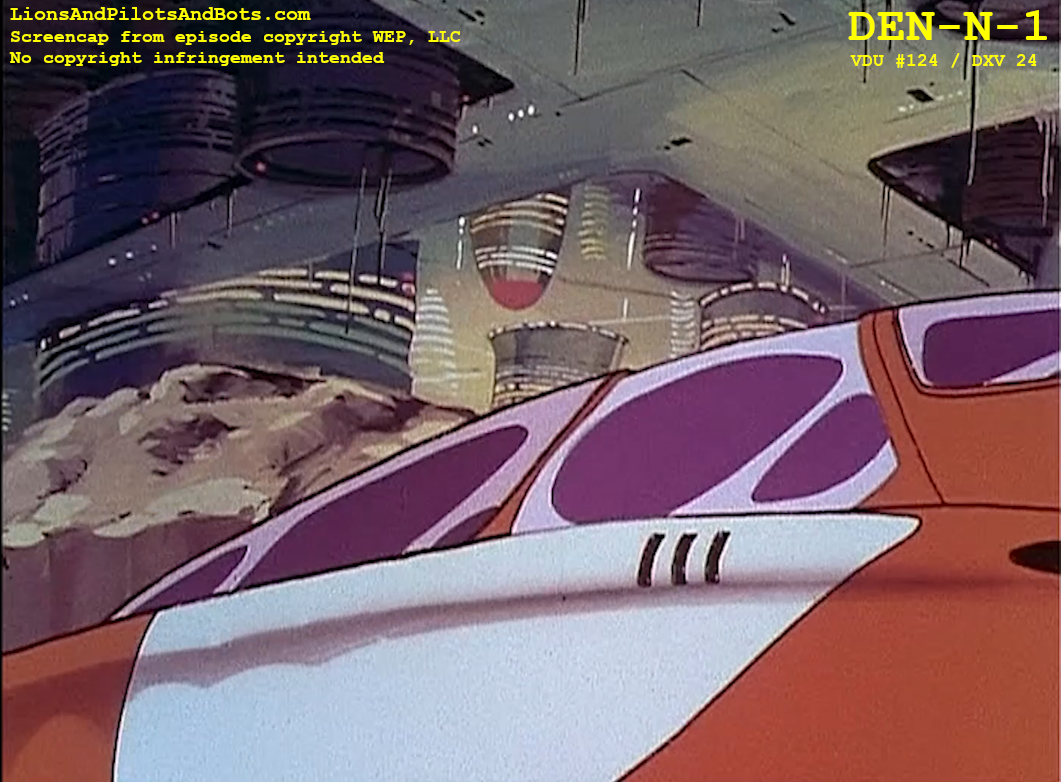
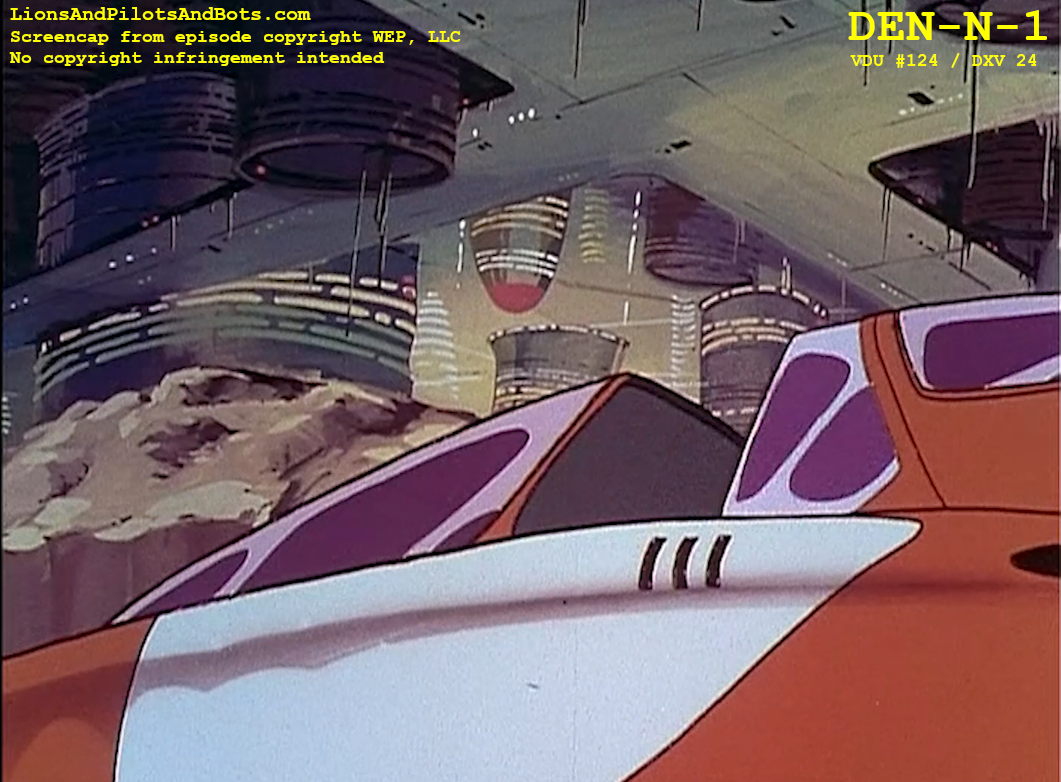
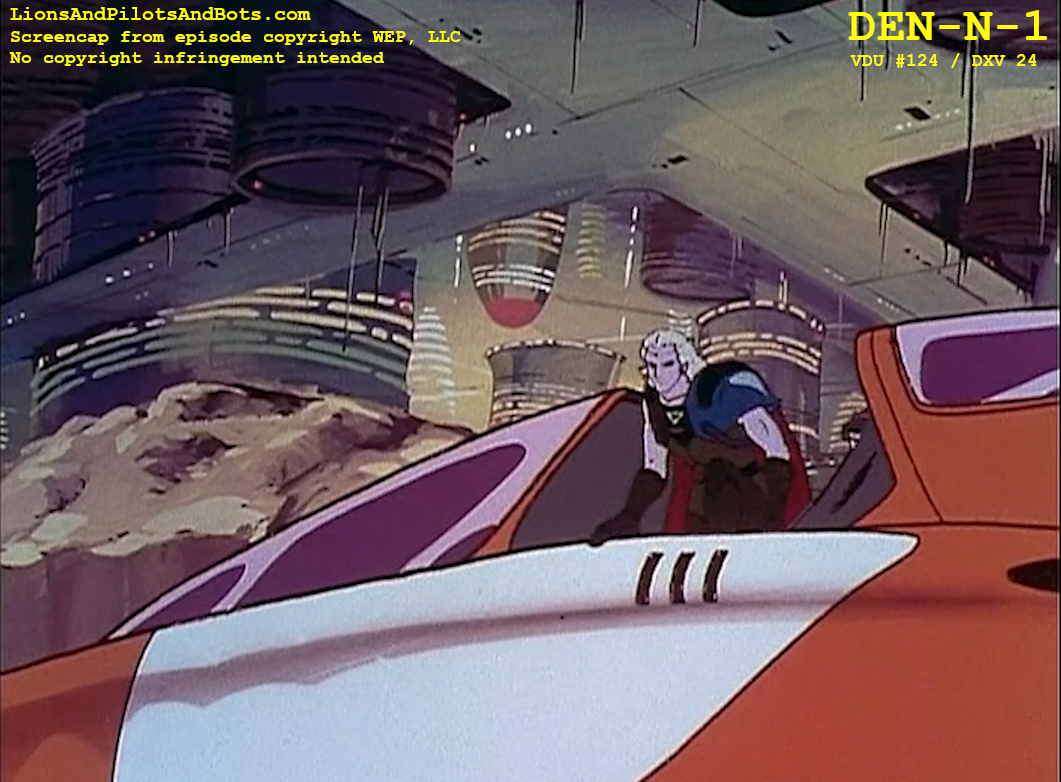
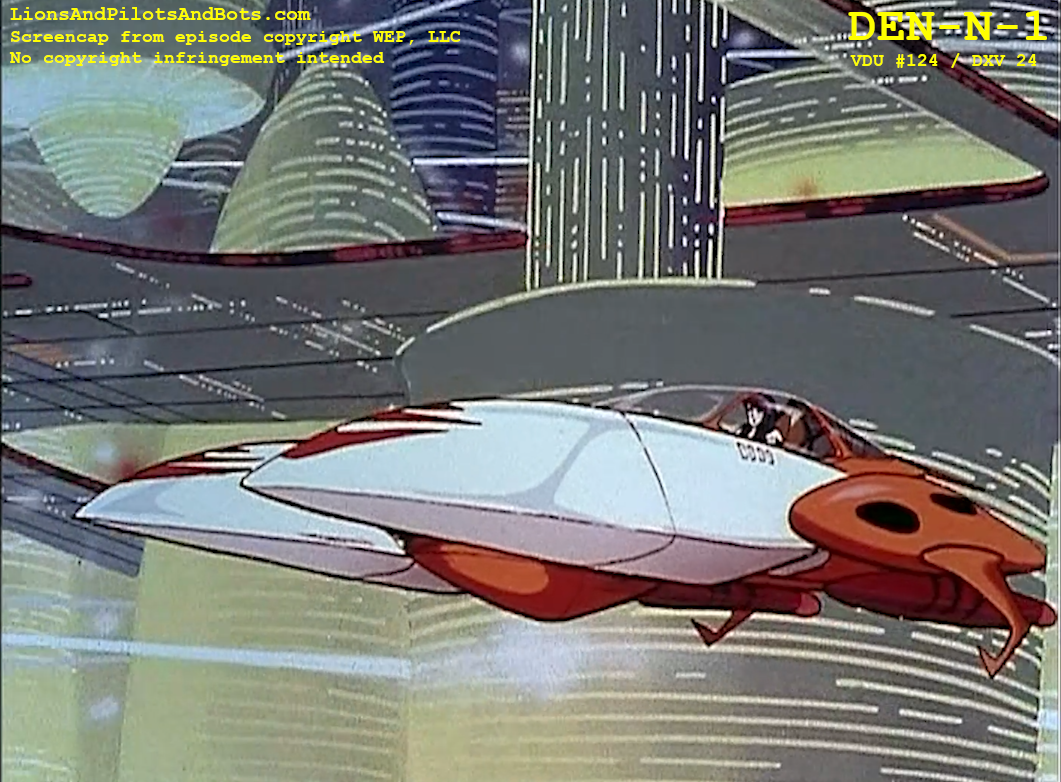
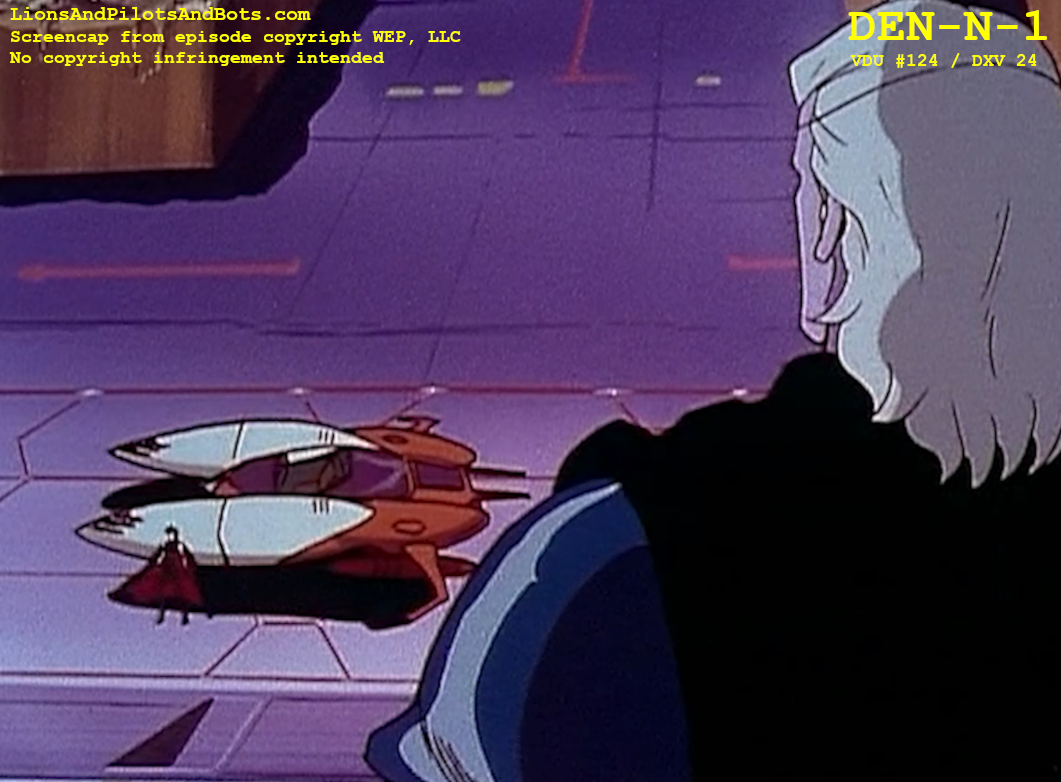
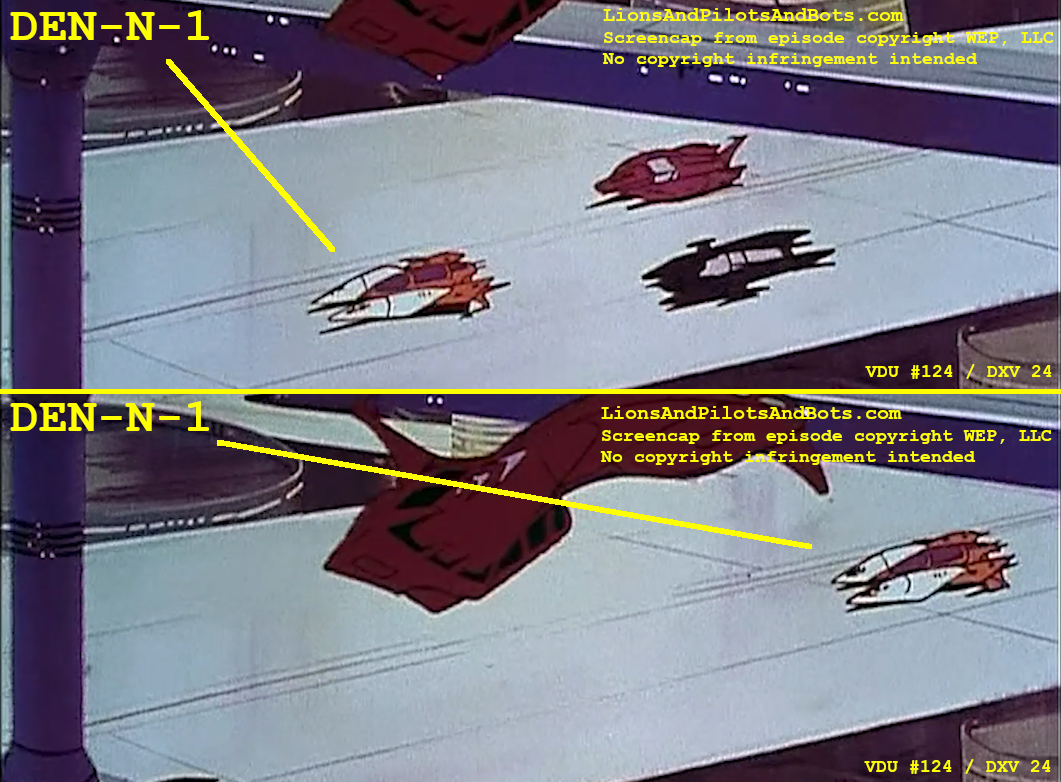
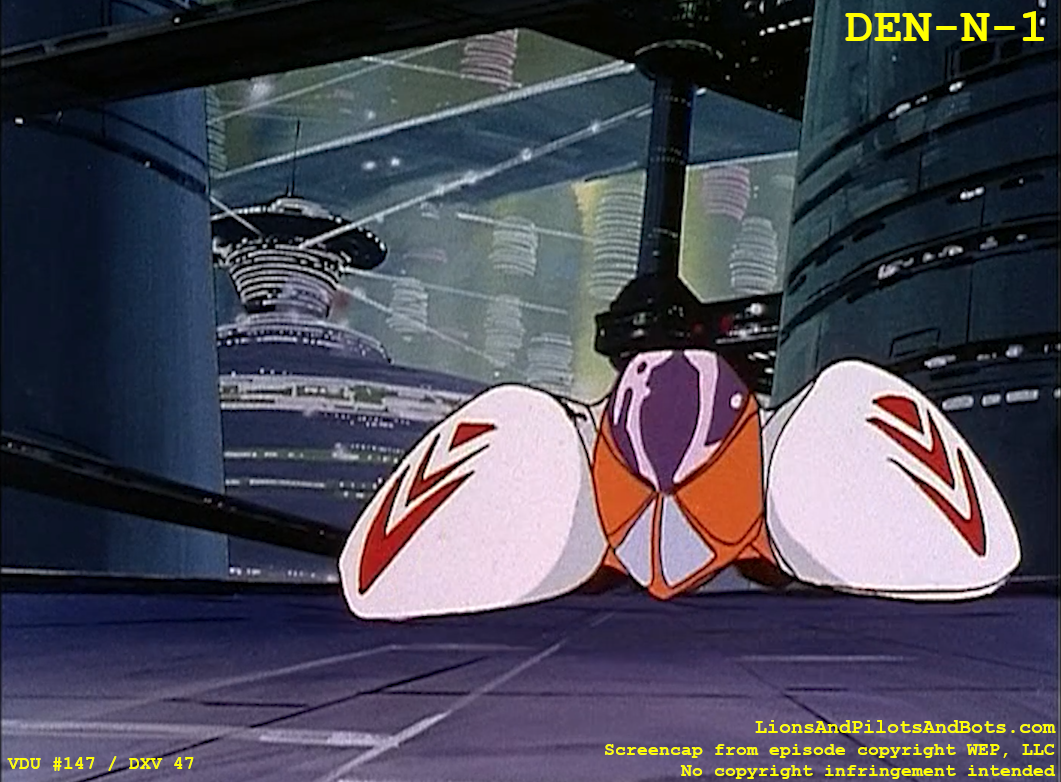
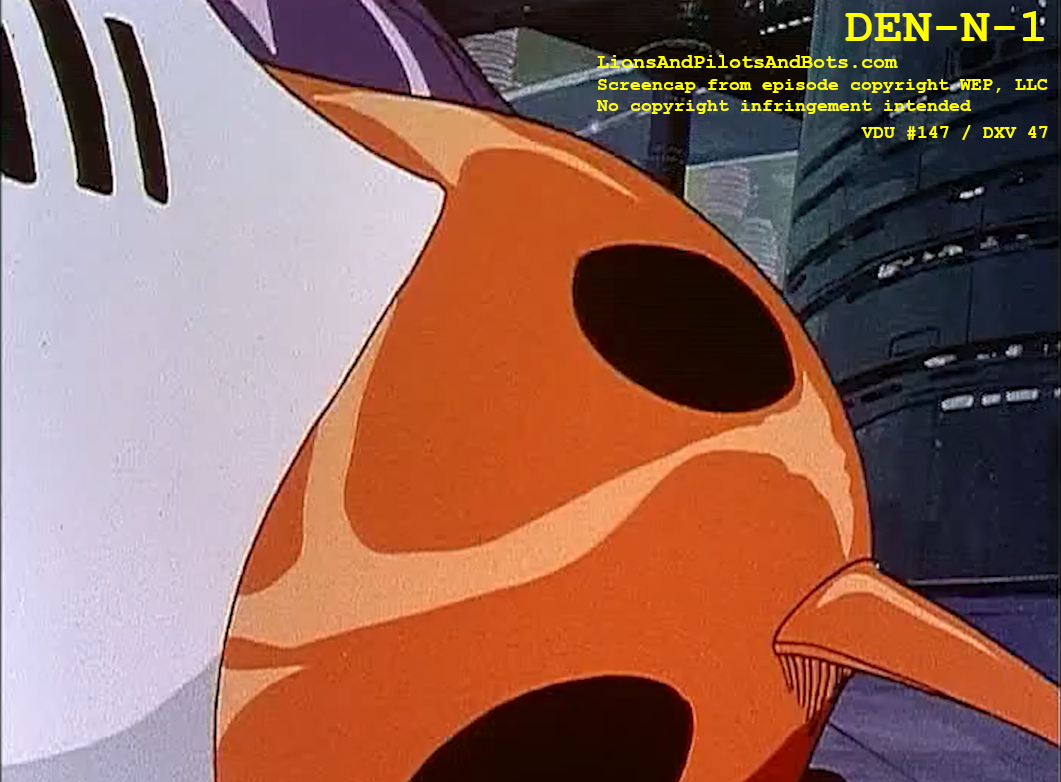
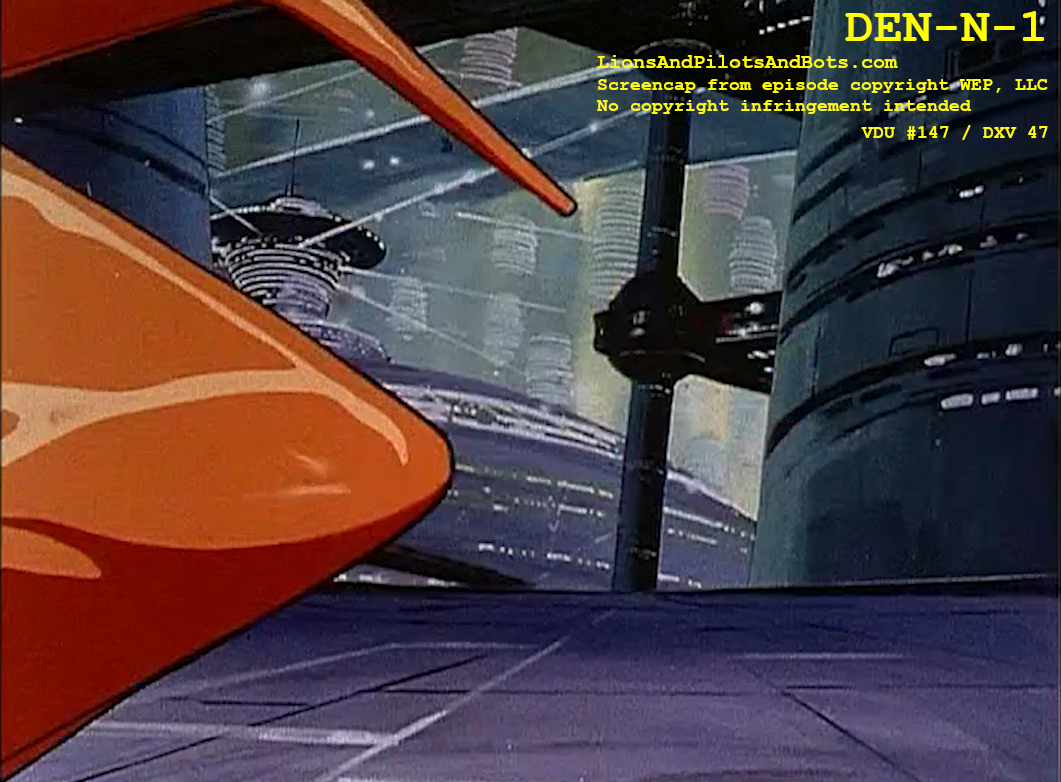
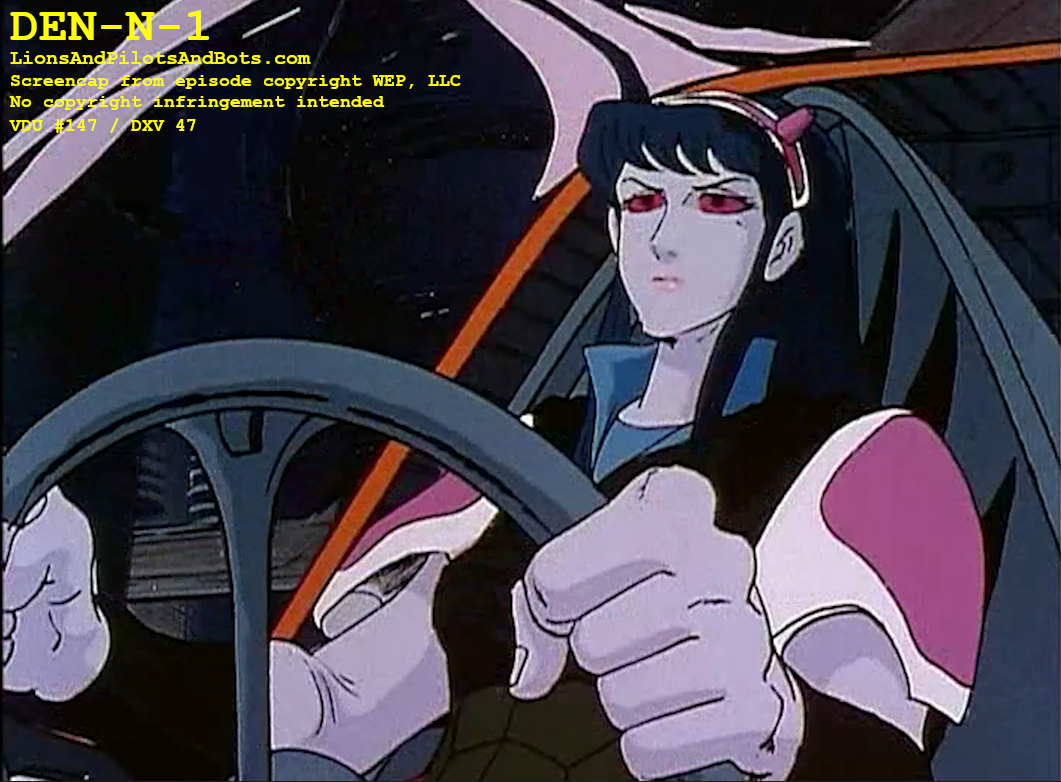
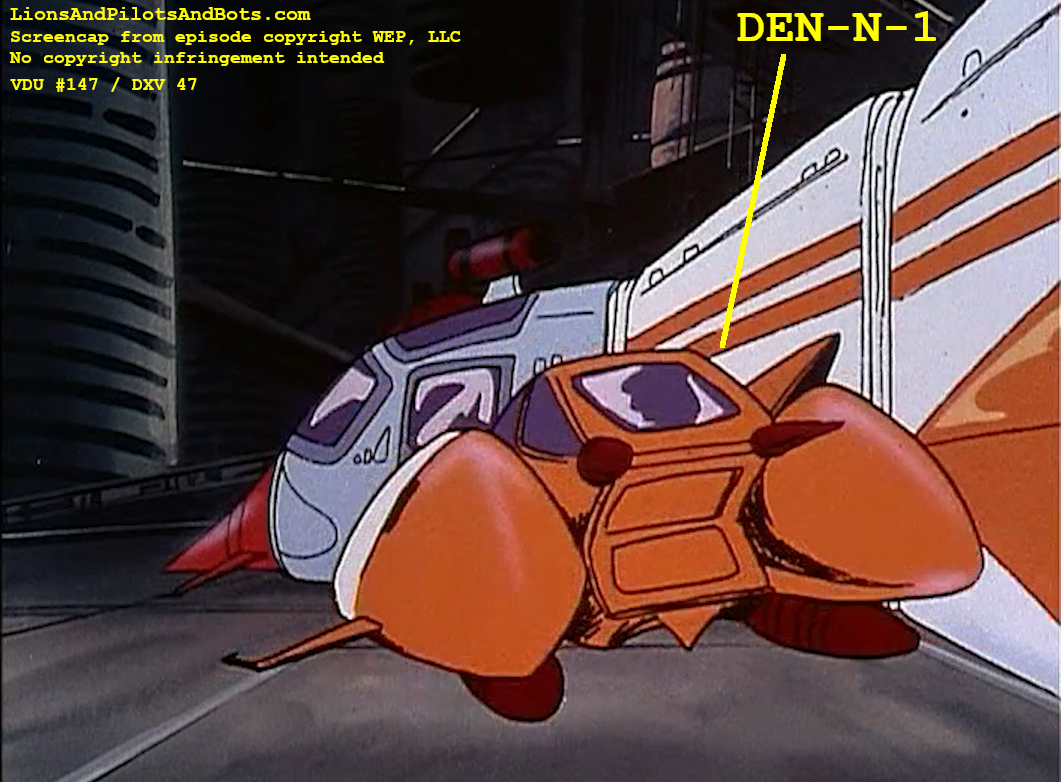
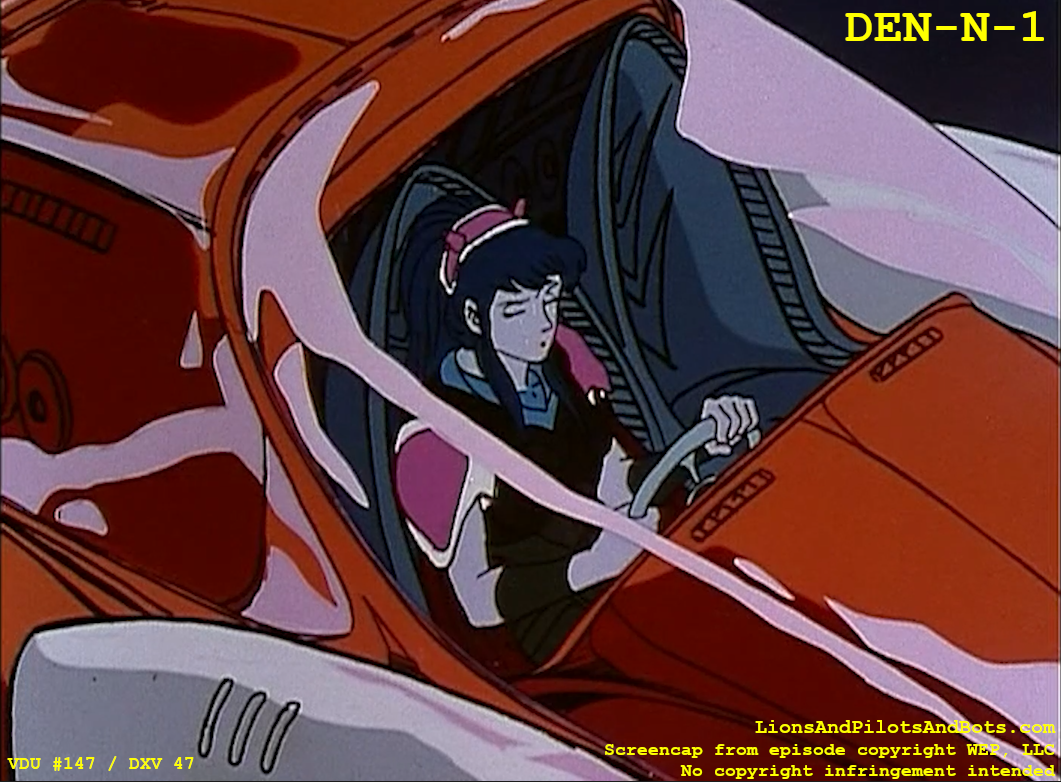
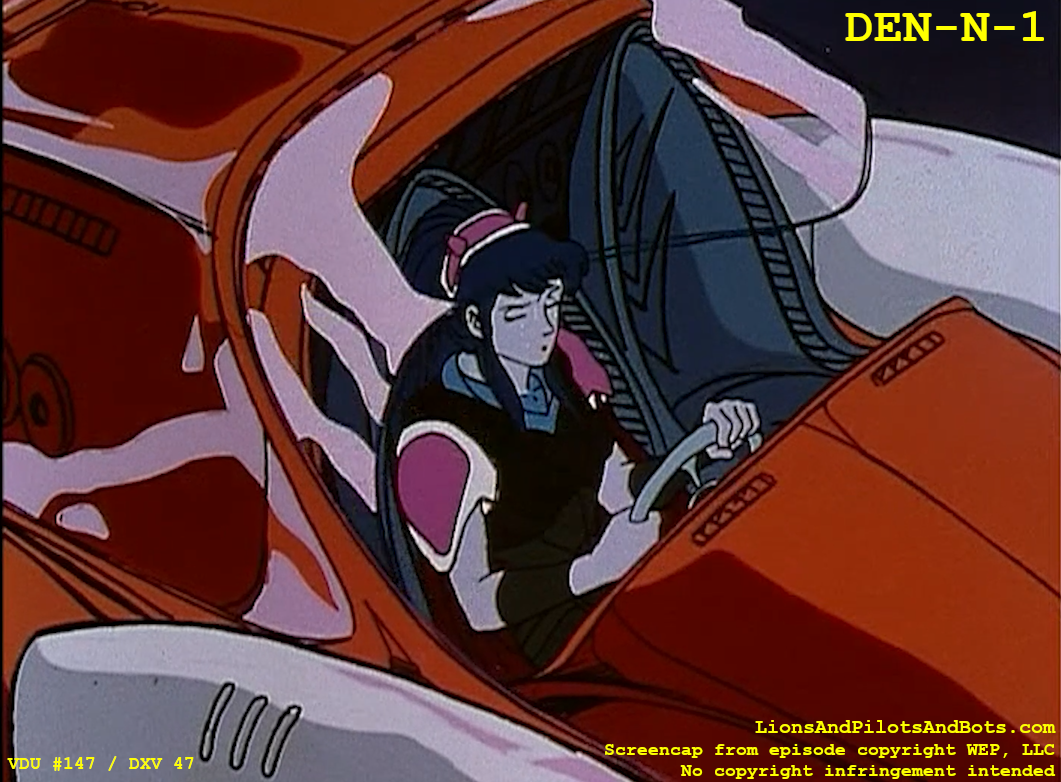
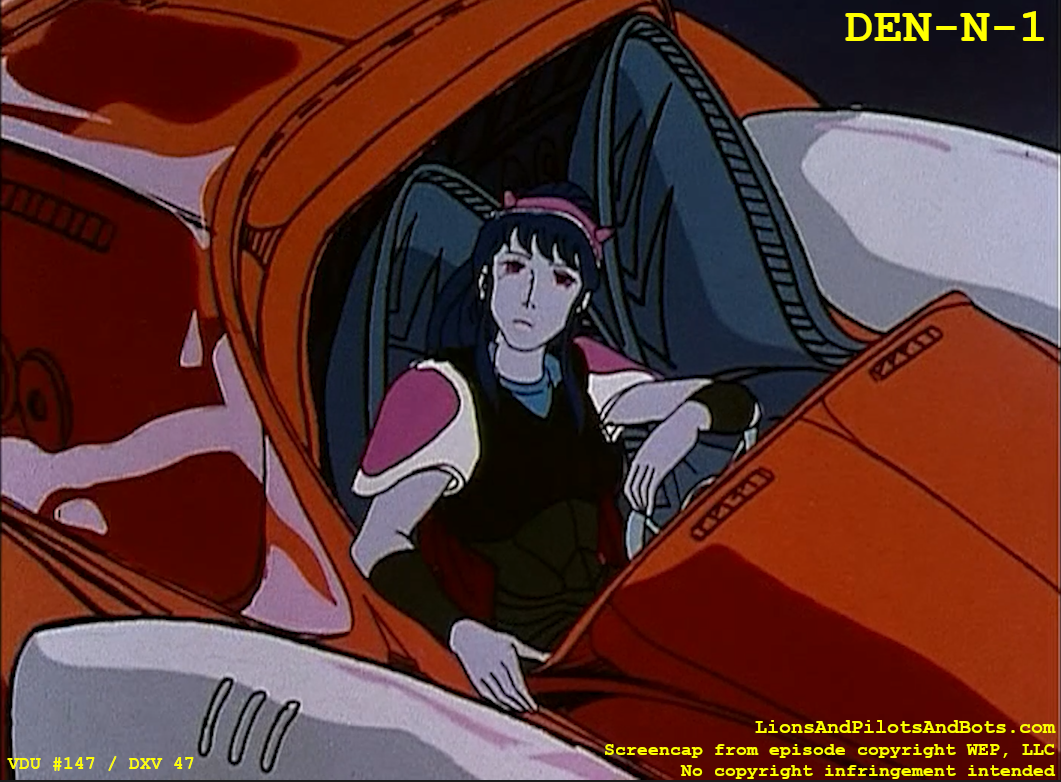
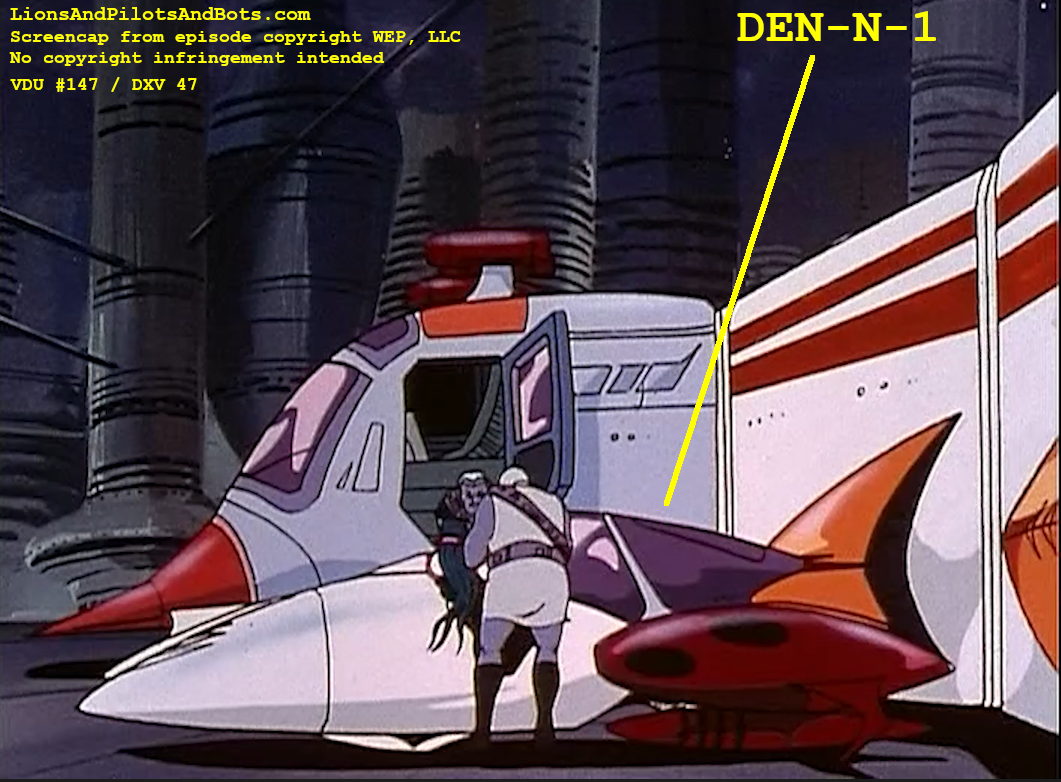
DEN-N-1 hover cars are sleek vehicles that transport up to two occupants. DEN-N-1 hover cars resemble a catamaran, with two large side assemblies, one on either side of the passenger compartment. DEN-N-1 hover cars have small wings near the rear. DEN-N-1 cars have retractable, transparent tops. On Planet Drule, Dorma frequently drives a DEN-N-1 hover car.
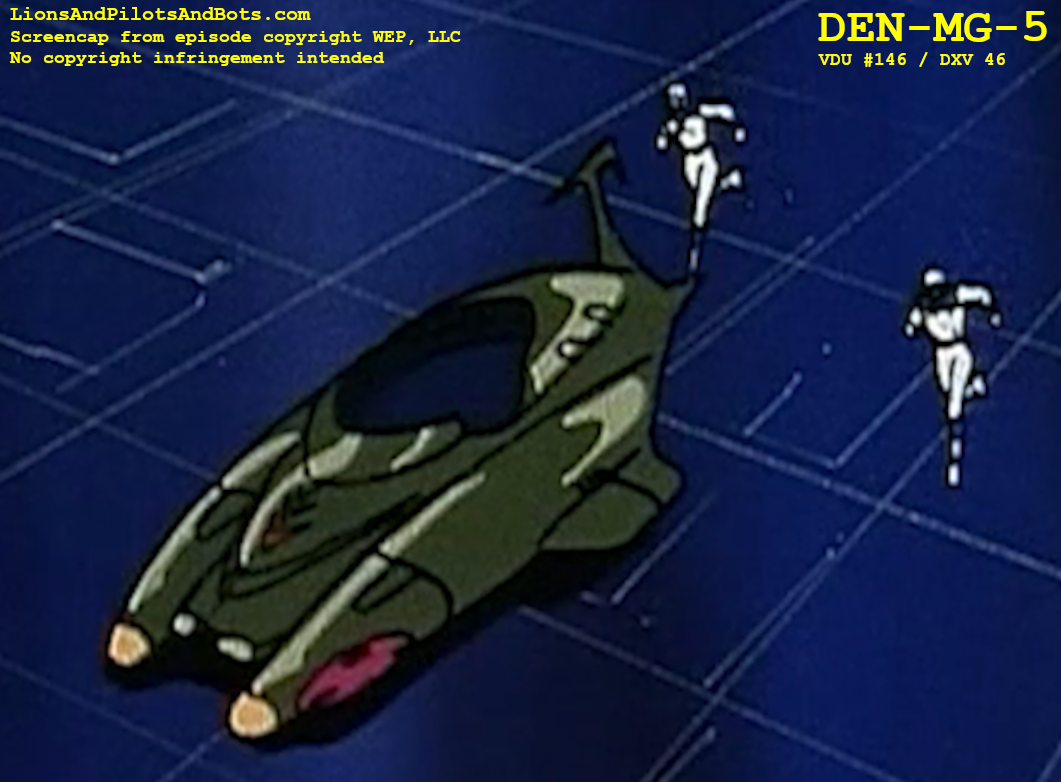
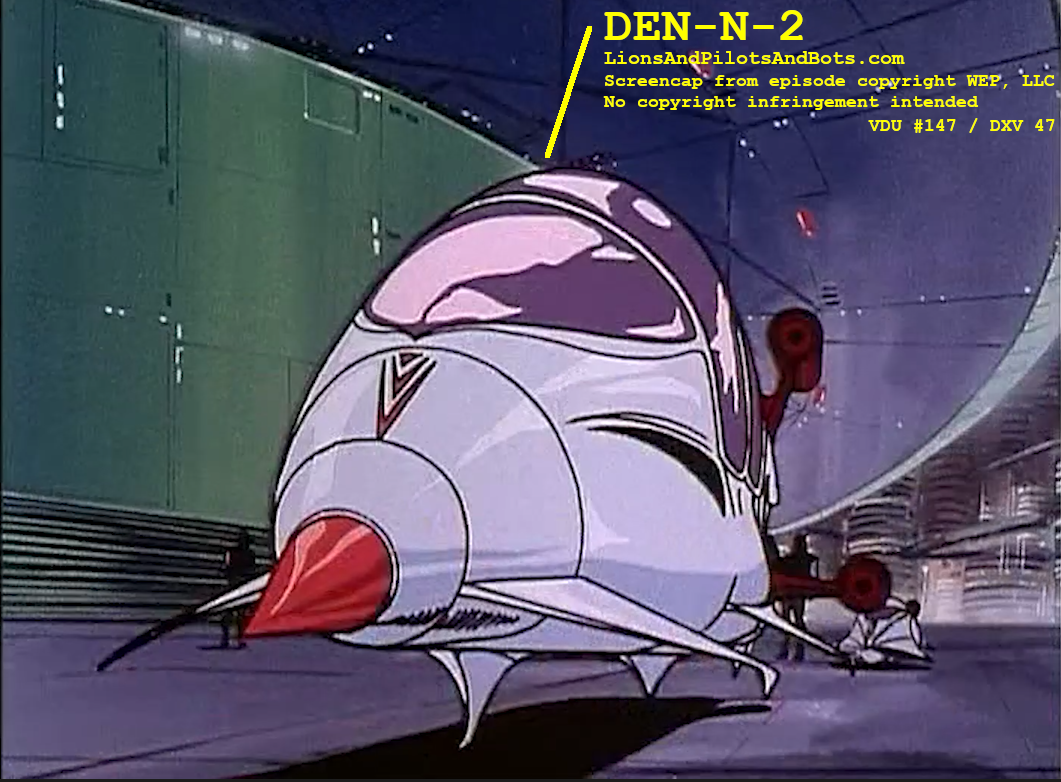
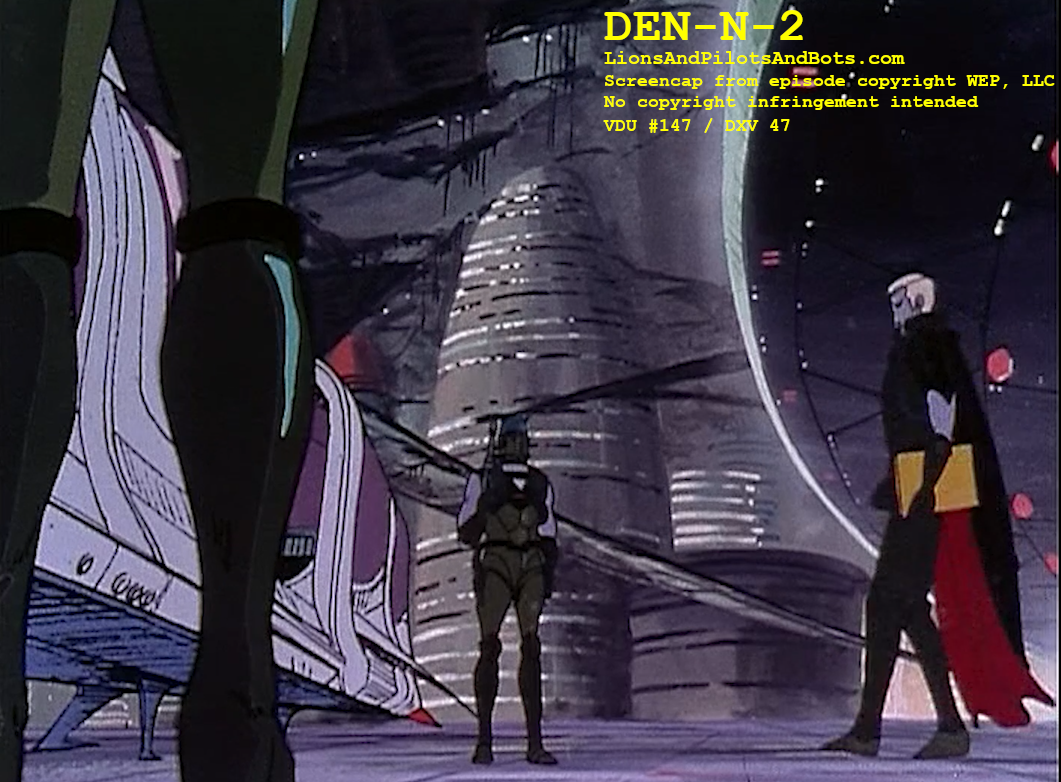
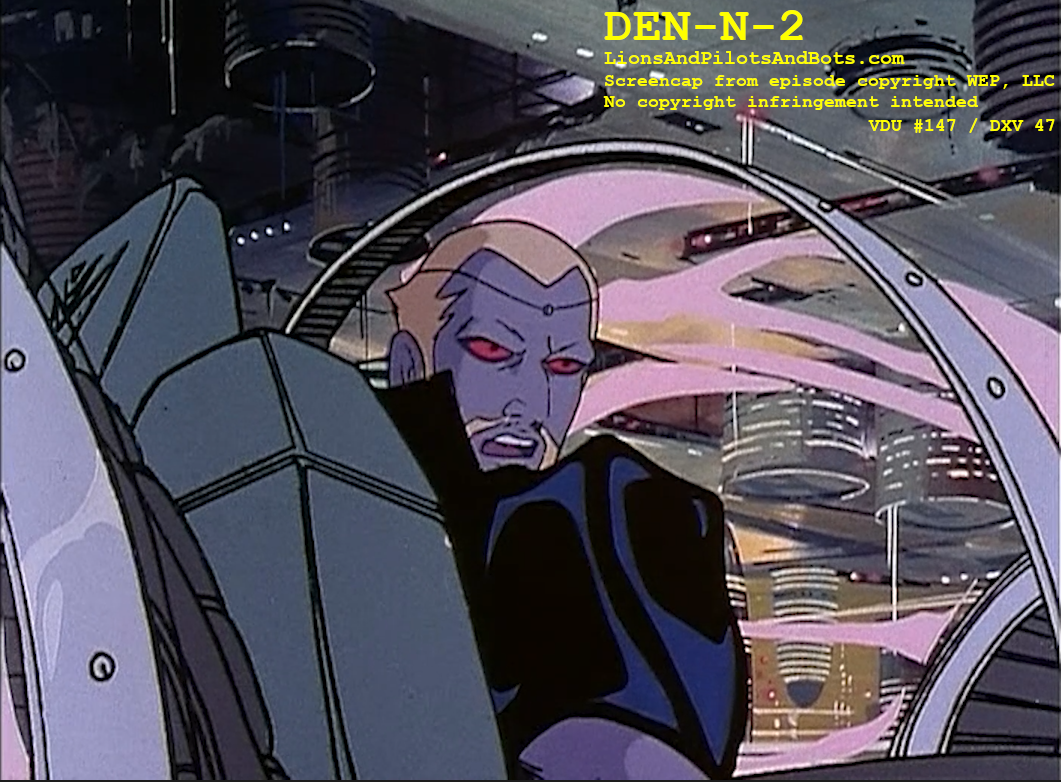
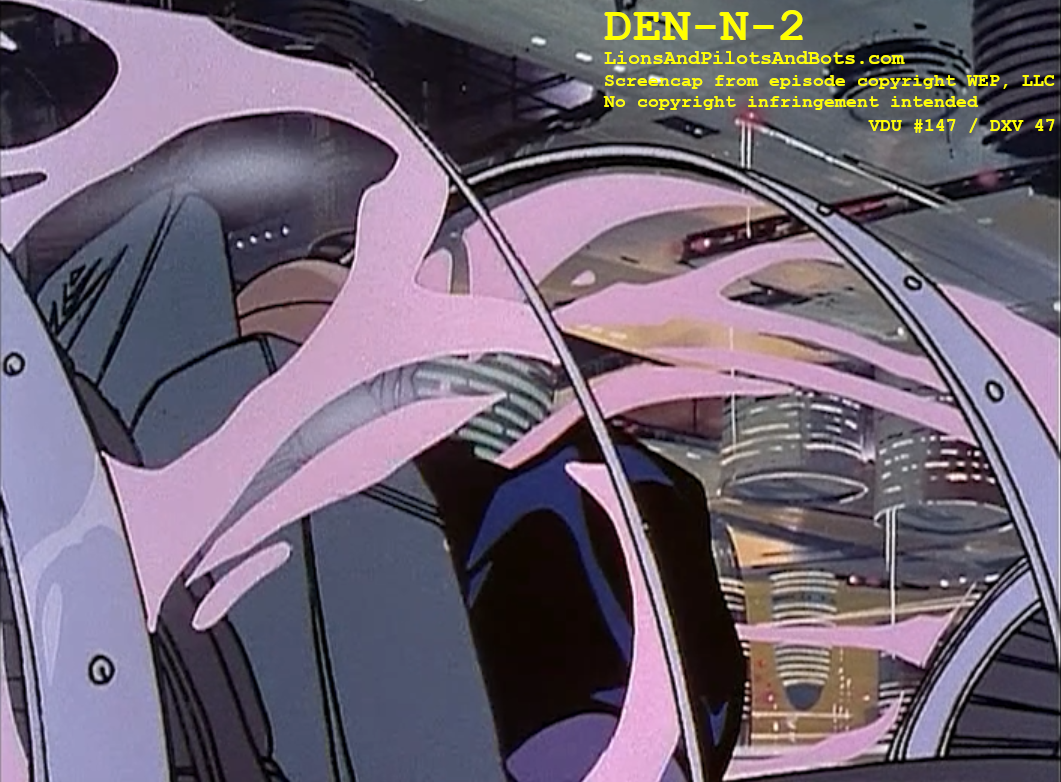
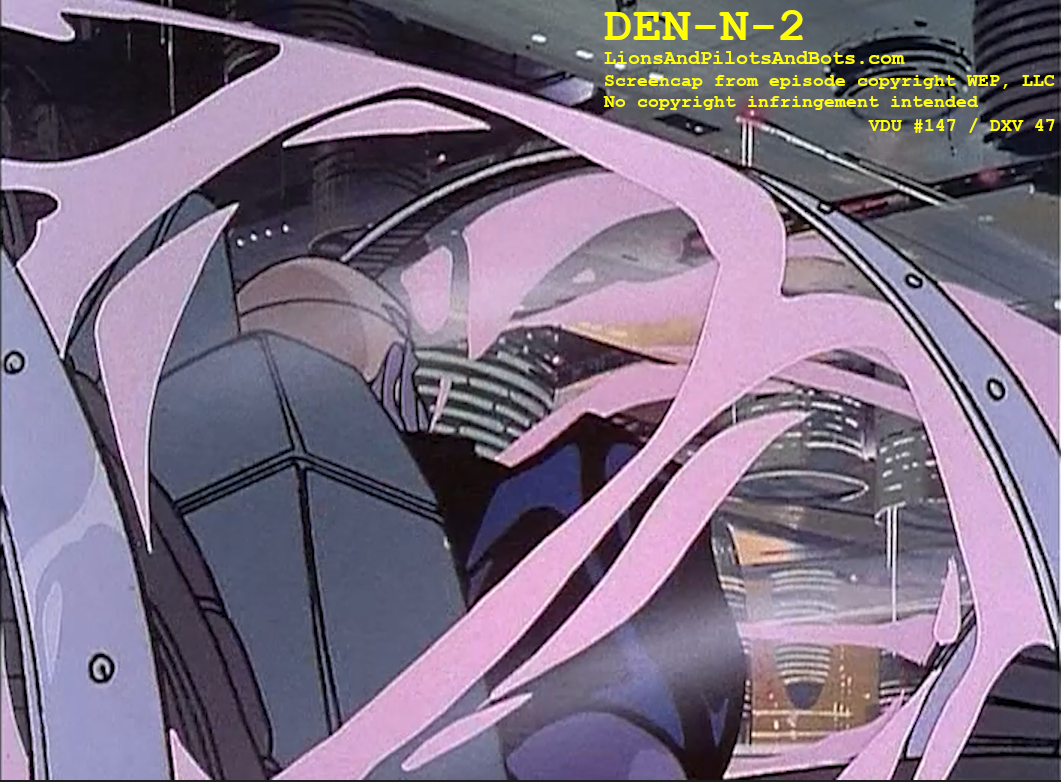
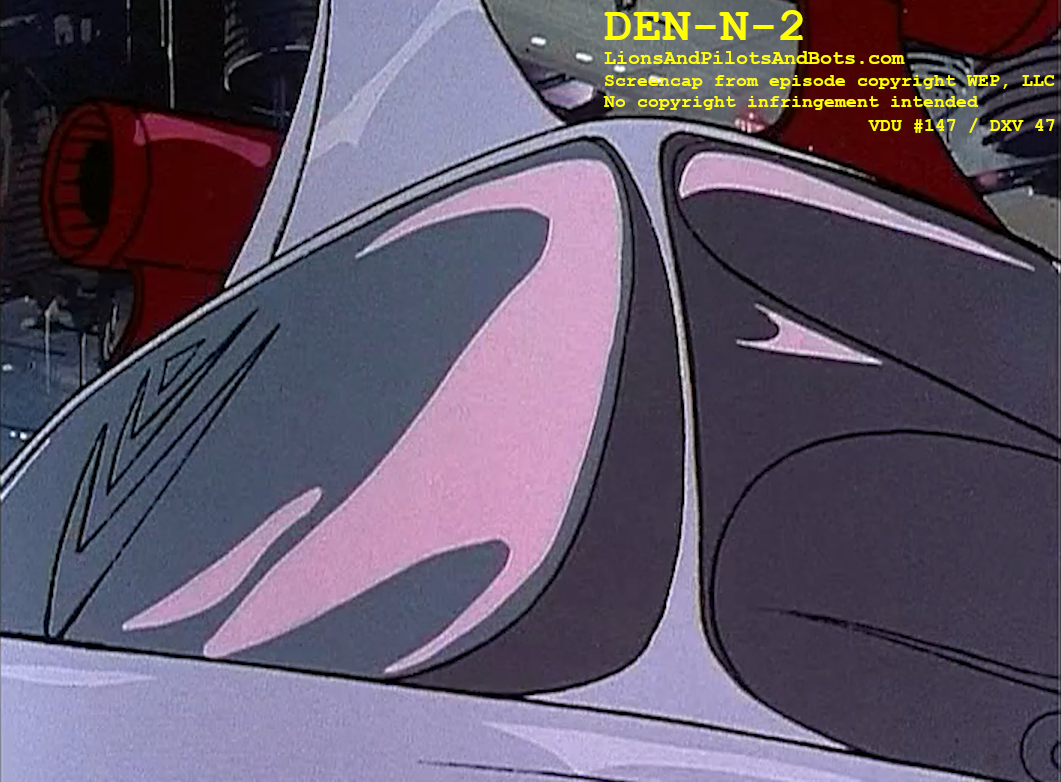
DEN-N-2 hover cabs are used on Planet Drule to transport a small number of passengers. The single-occupant seats of the DEN-N-2 are arranged front-to-back, facing forward. DEN-N-2 hover cabs have a pointy nose, a streamlined fuselage, twin engine nacelles at the top of the fuselage, and an engine nacelle on either side of the fuselage.
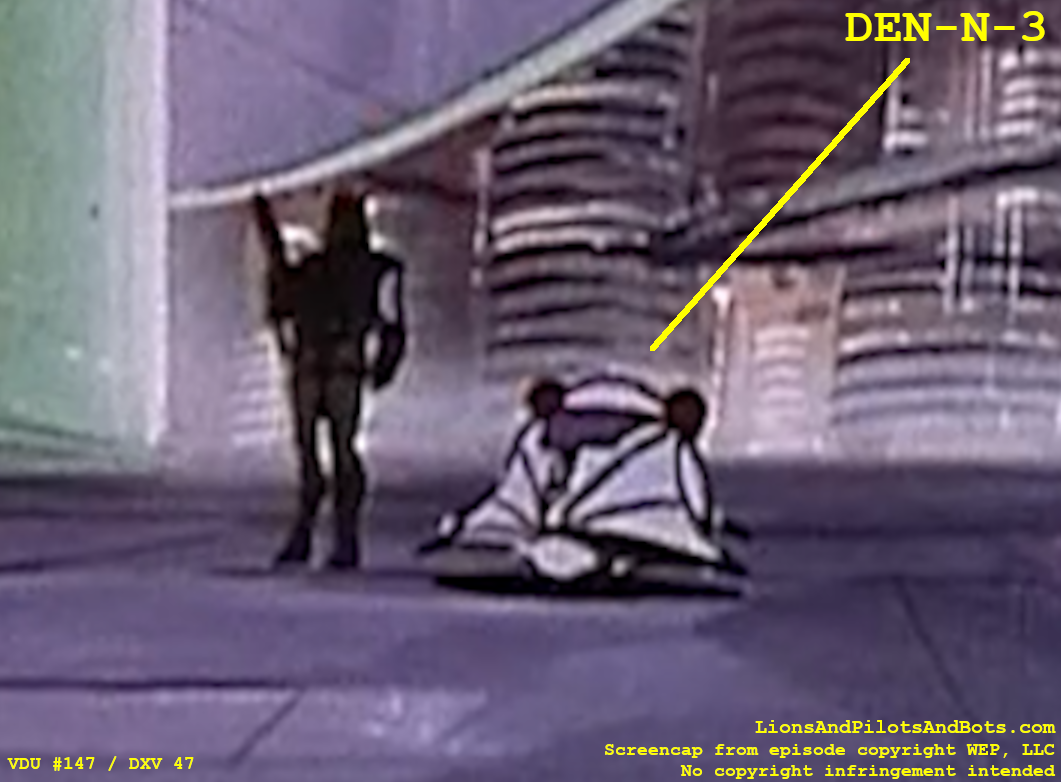
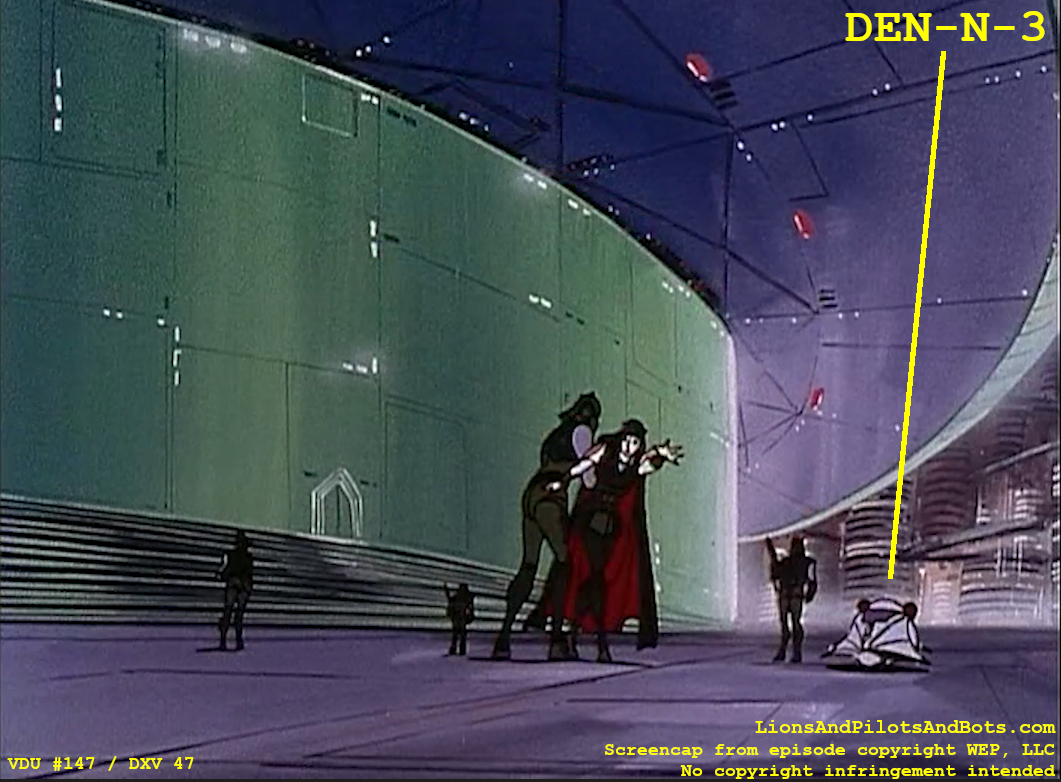
Seen in just one shot of one episode, the DEN-N-3 hover cab is presumably similiar in function to the DEN-N-2 hover cab. The DEN-N-3 has two engine nacelles at the top.
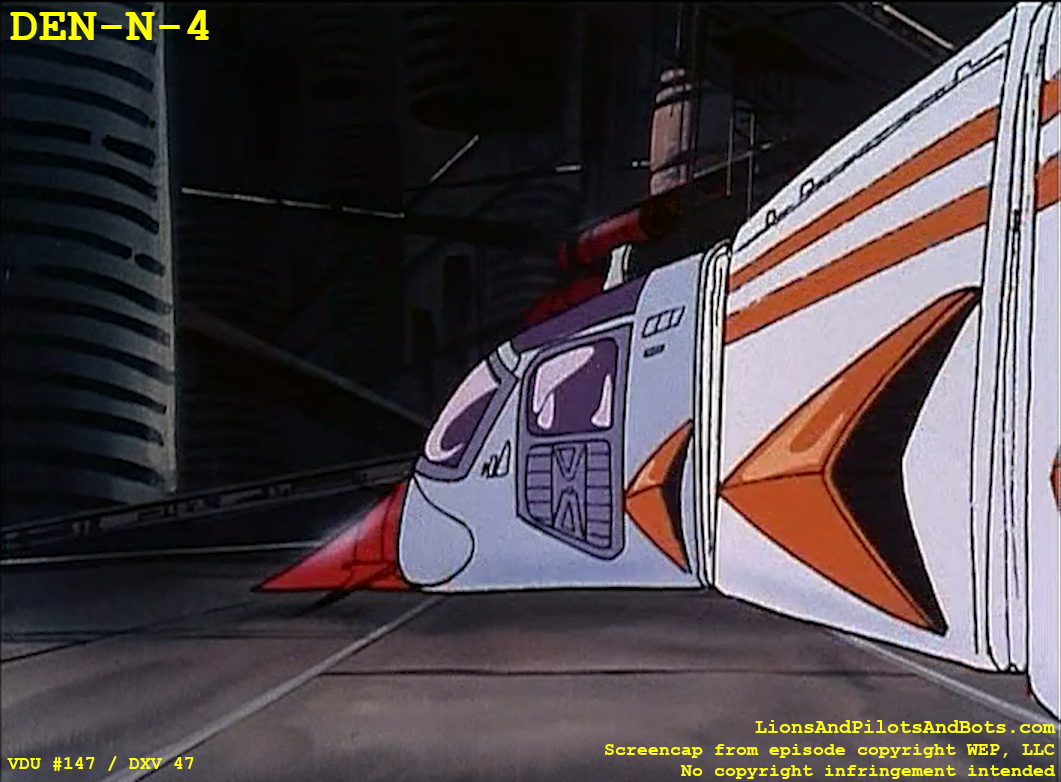
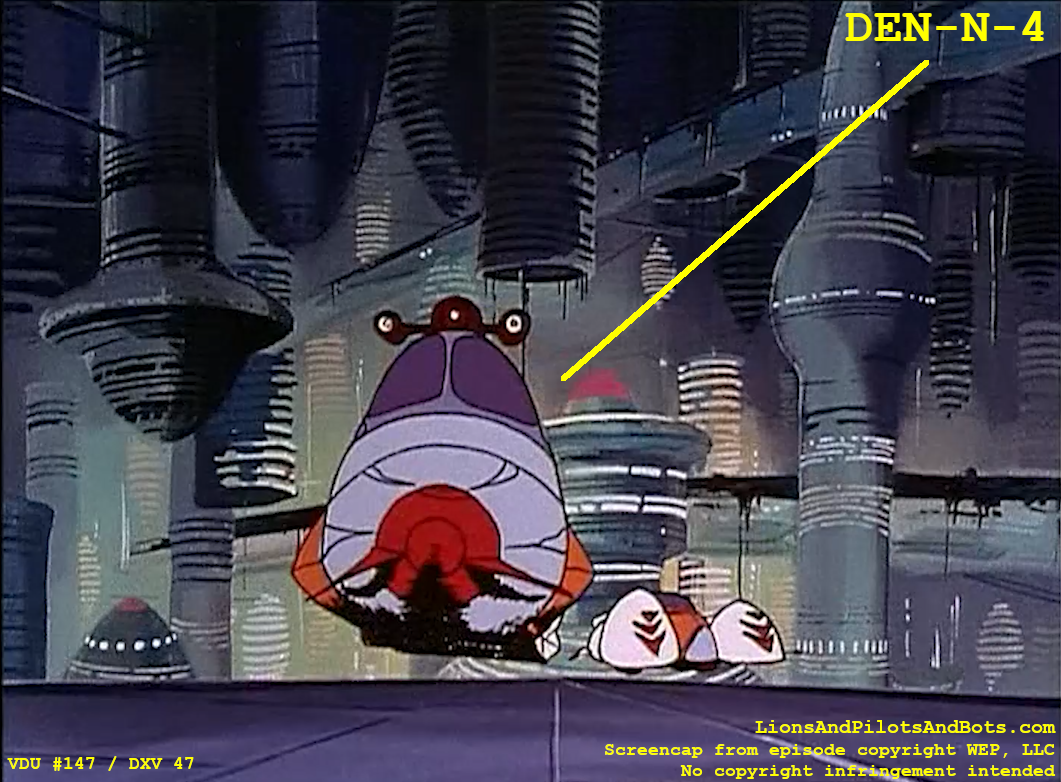
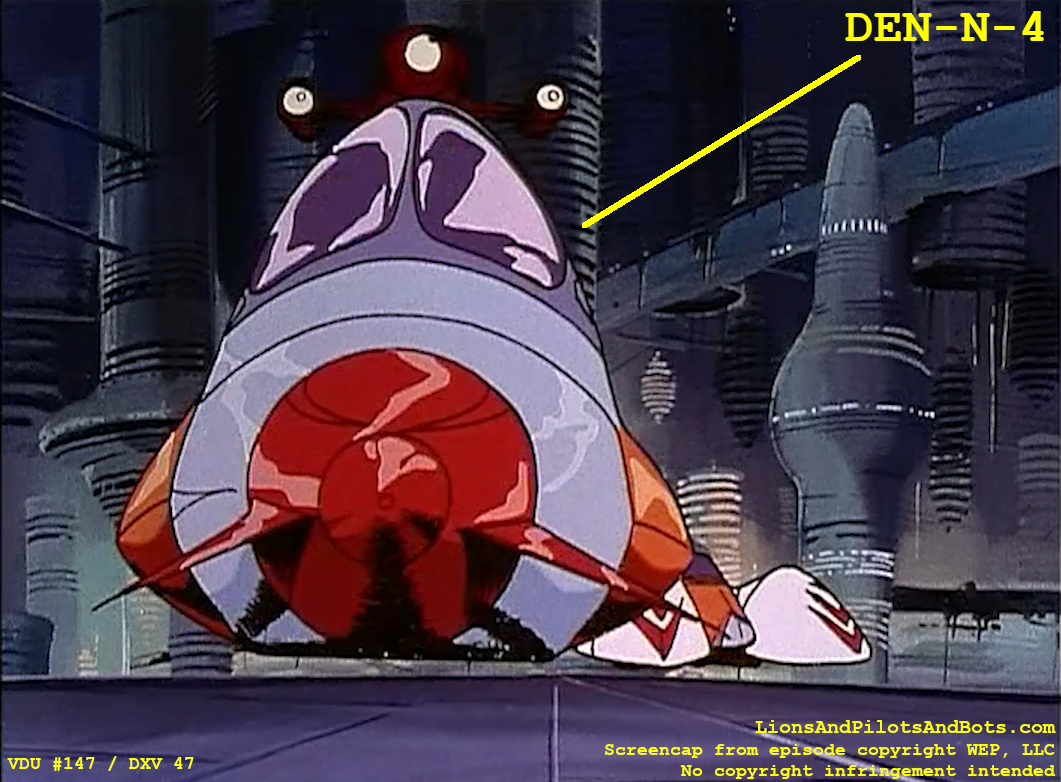
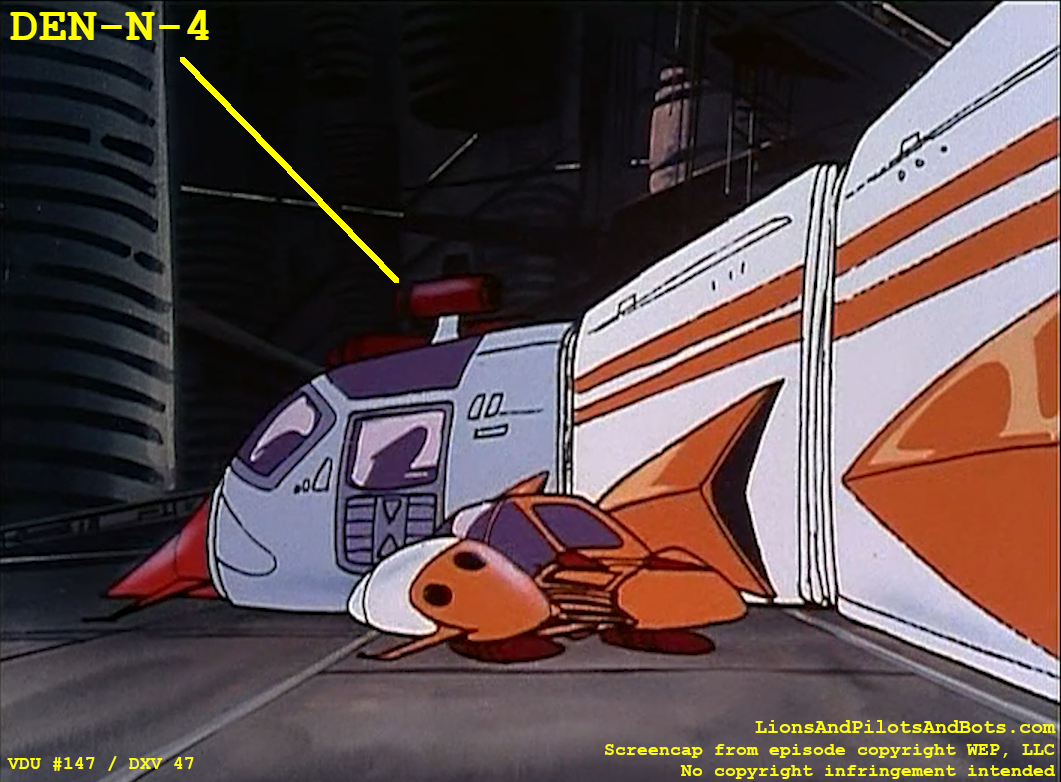
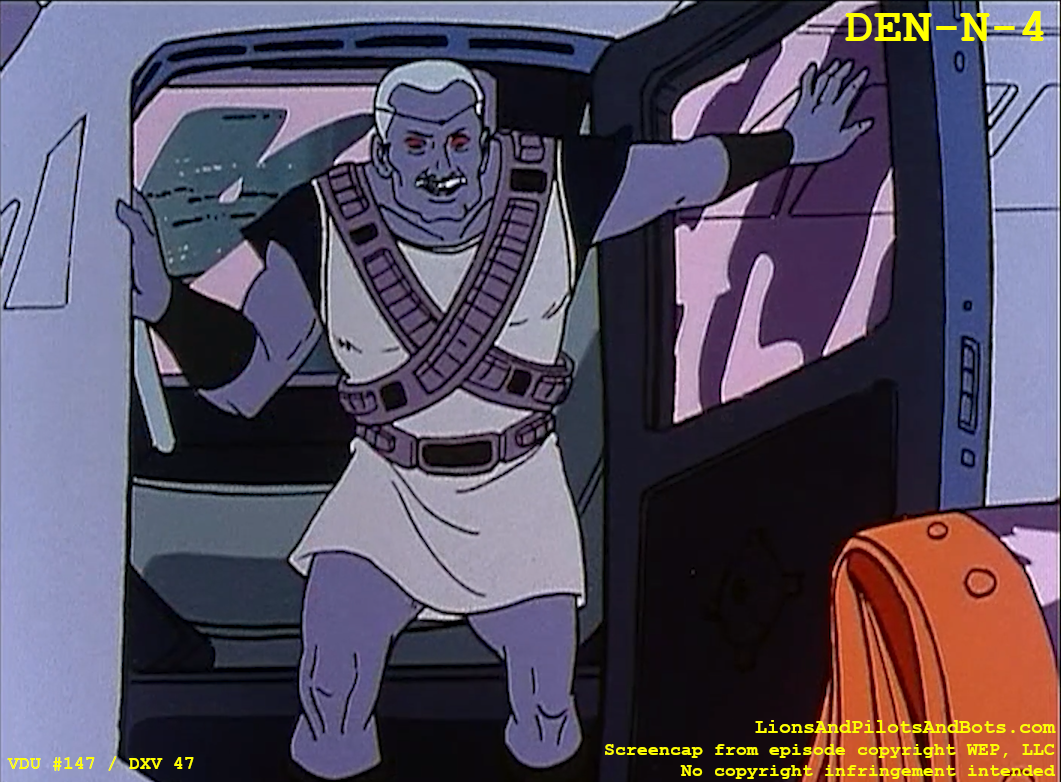
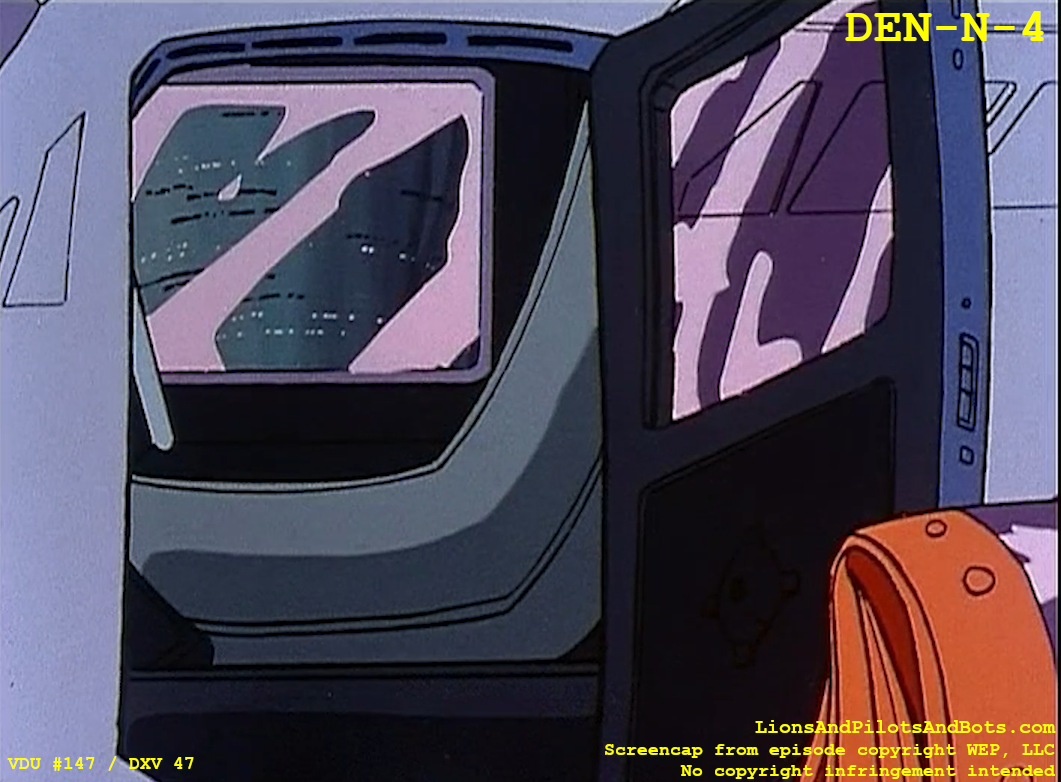
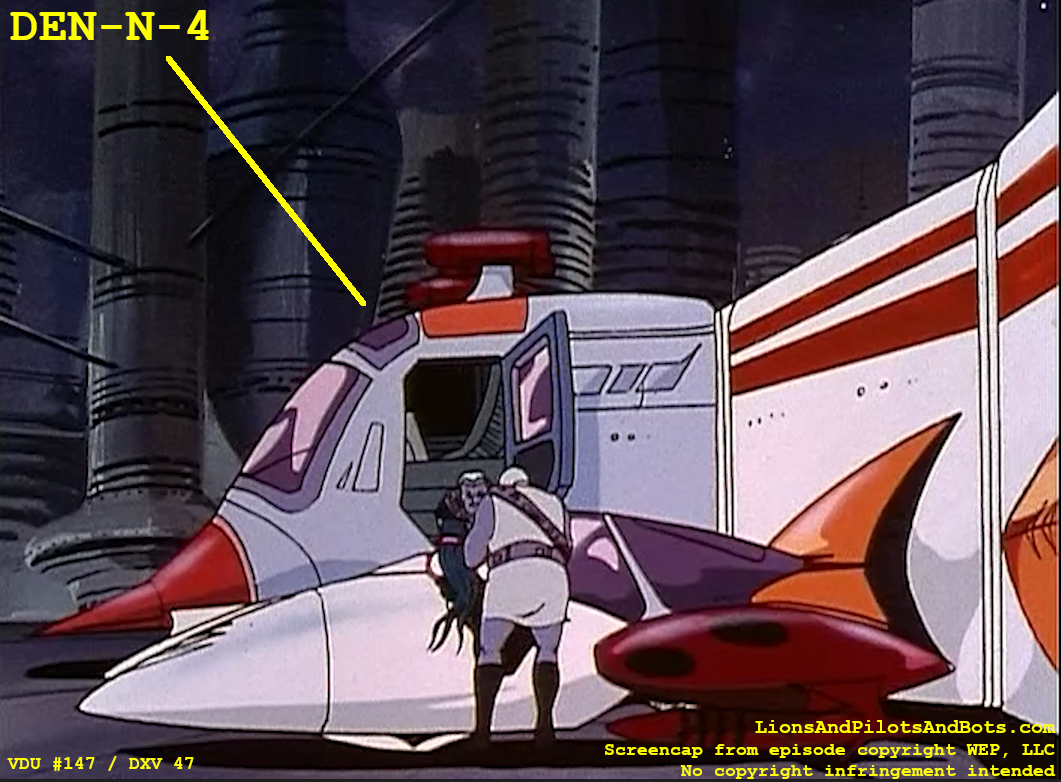
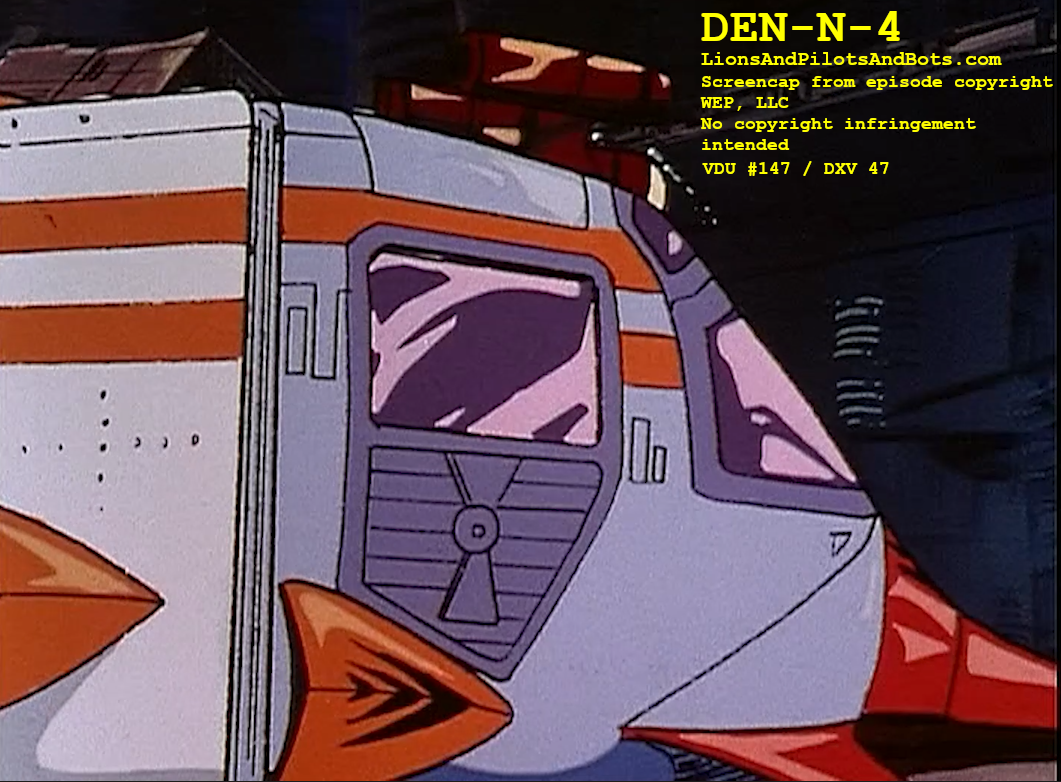
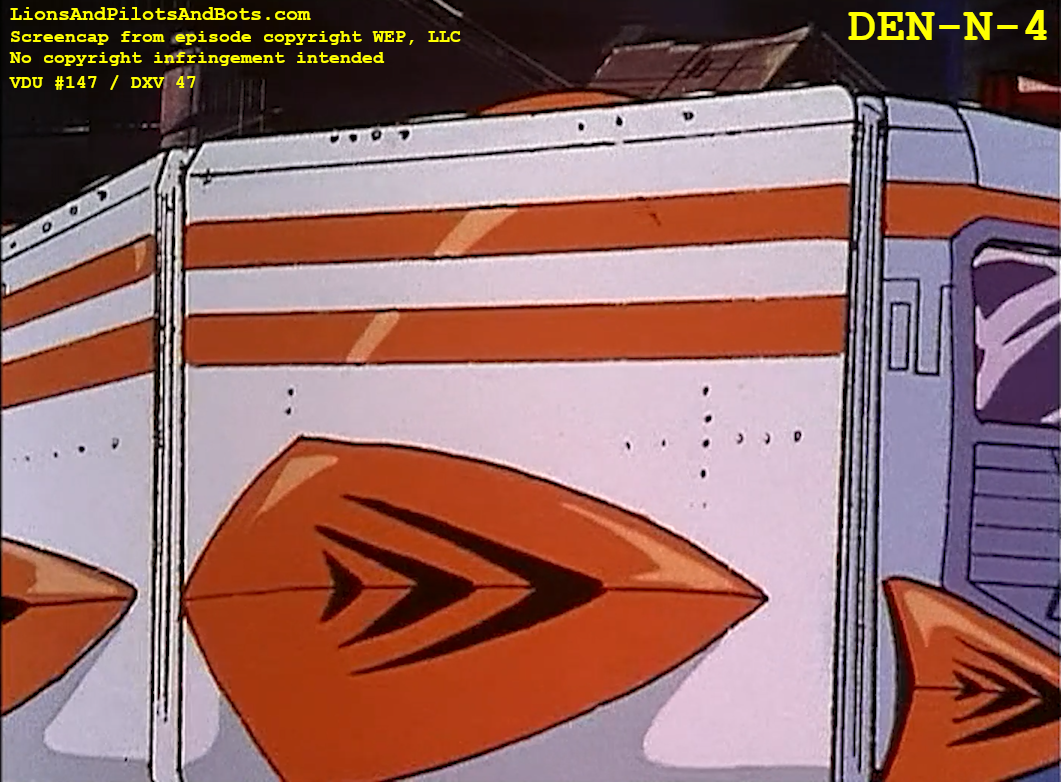
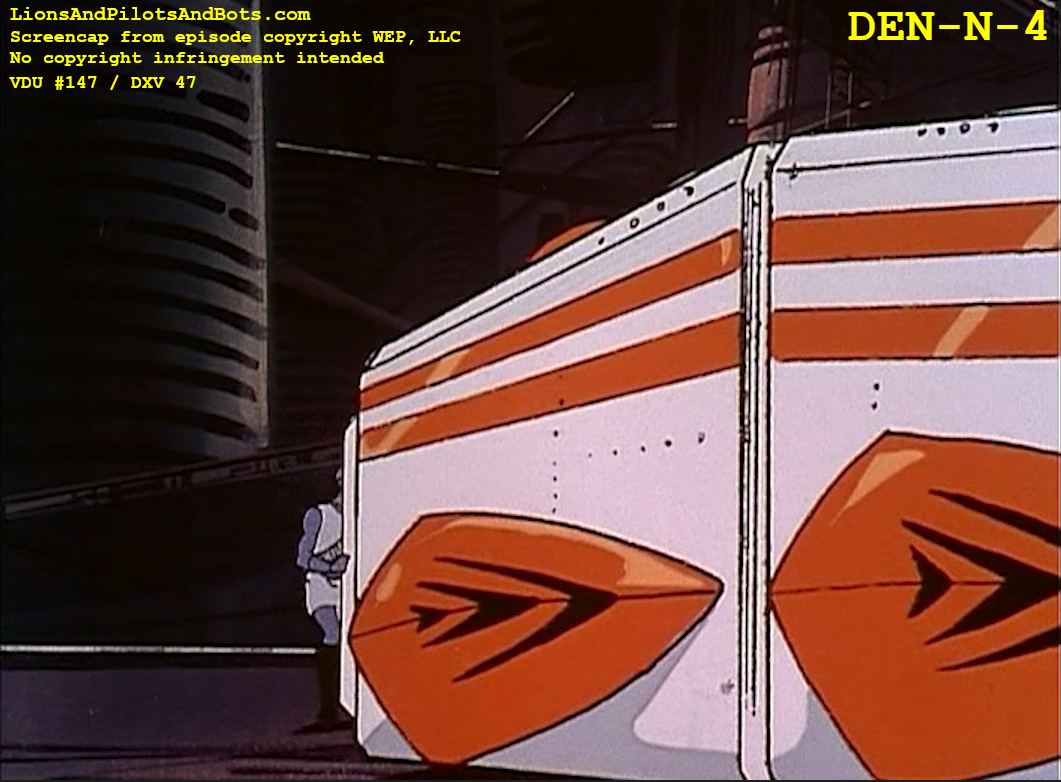
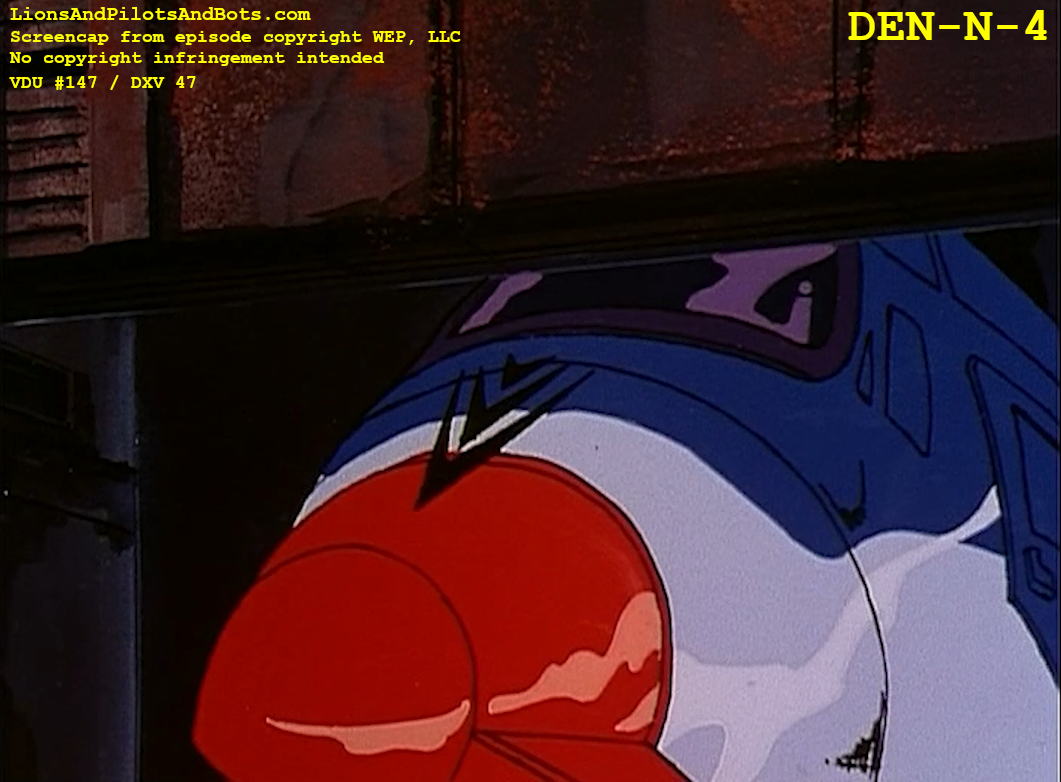
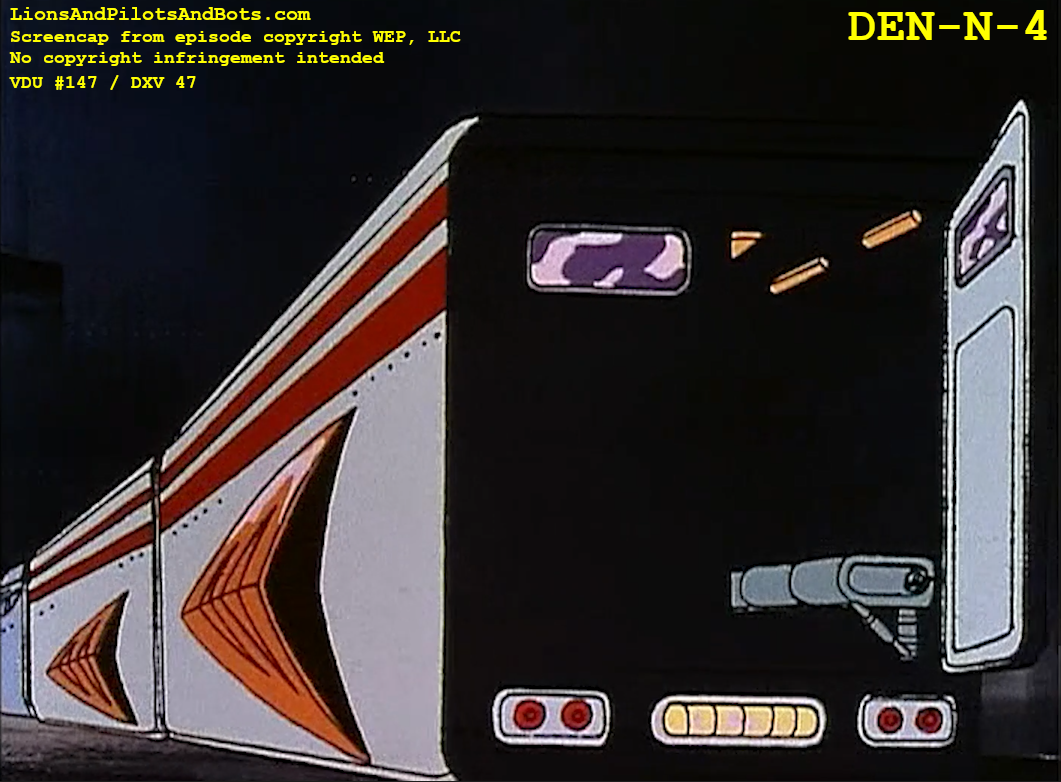
DEN-N-4 hover trains are street vehicles on Planet Drule. They consist of a small cab with a pointed nose, windows on the front and sides, three cylindrical nacelles on top, and a door on either side. The cab can pull at least two boxy cars.
Drule rebel Bakki uses a DEN-N-4 hover train to capture Dorma and convince her to join the Underground Resistance Force.
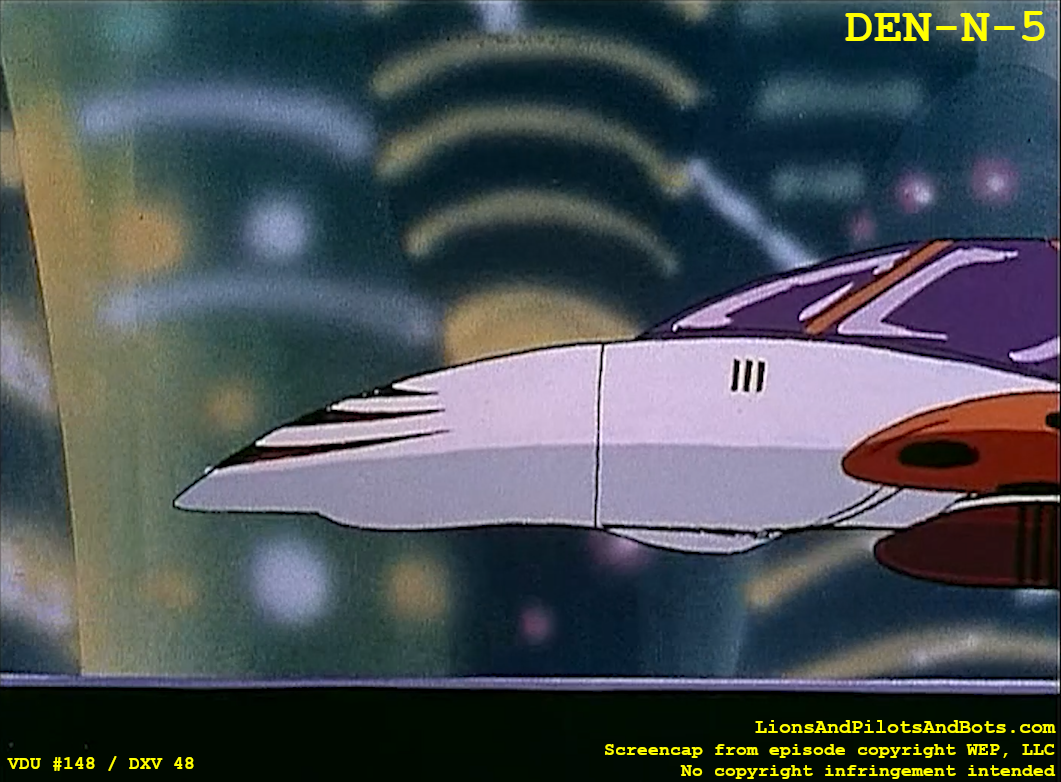
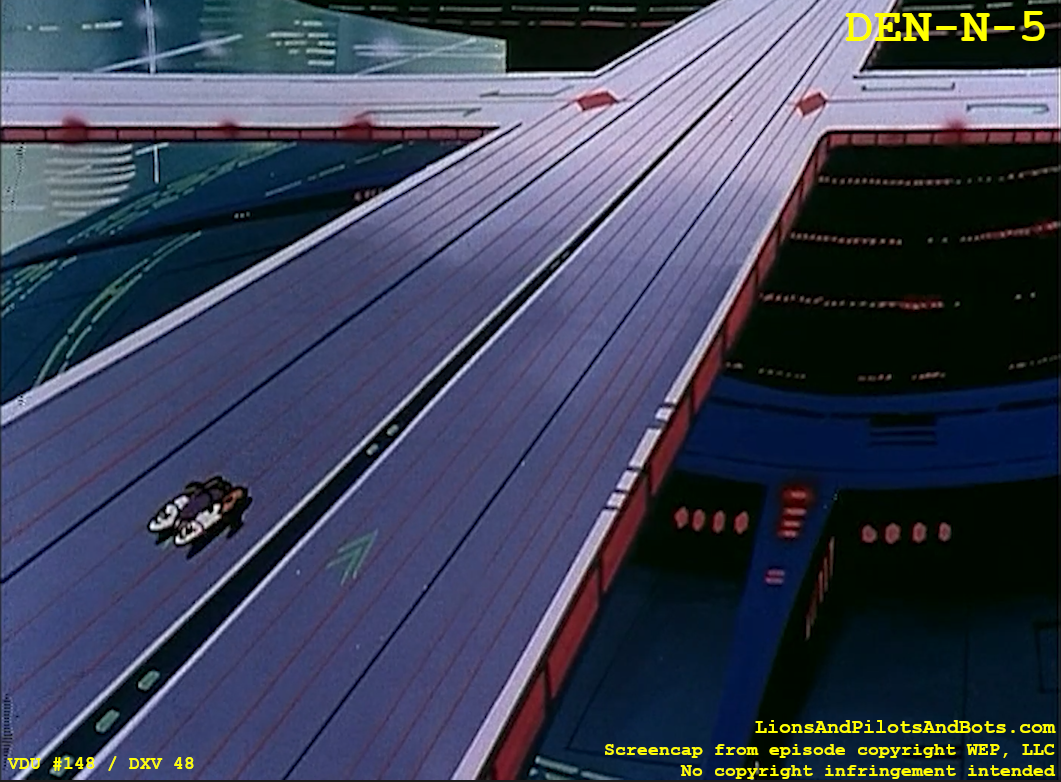
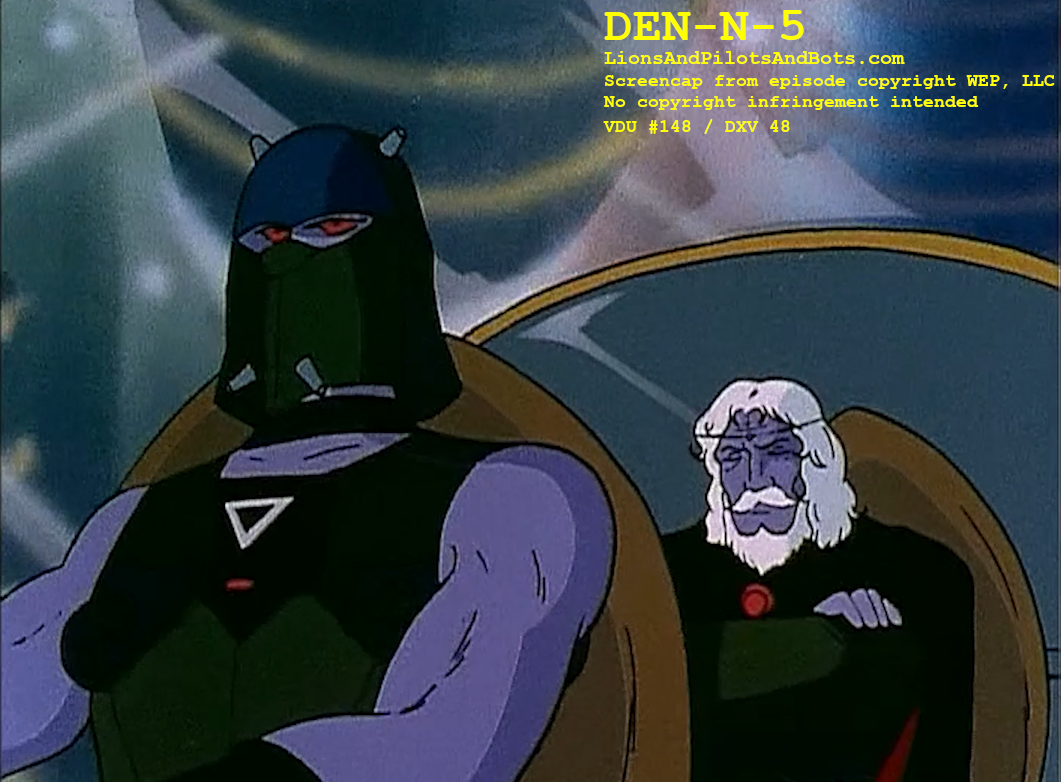
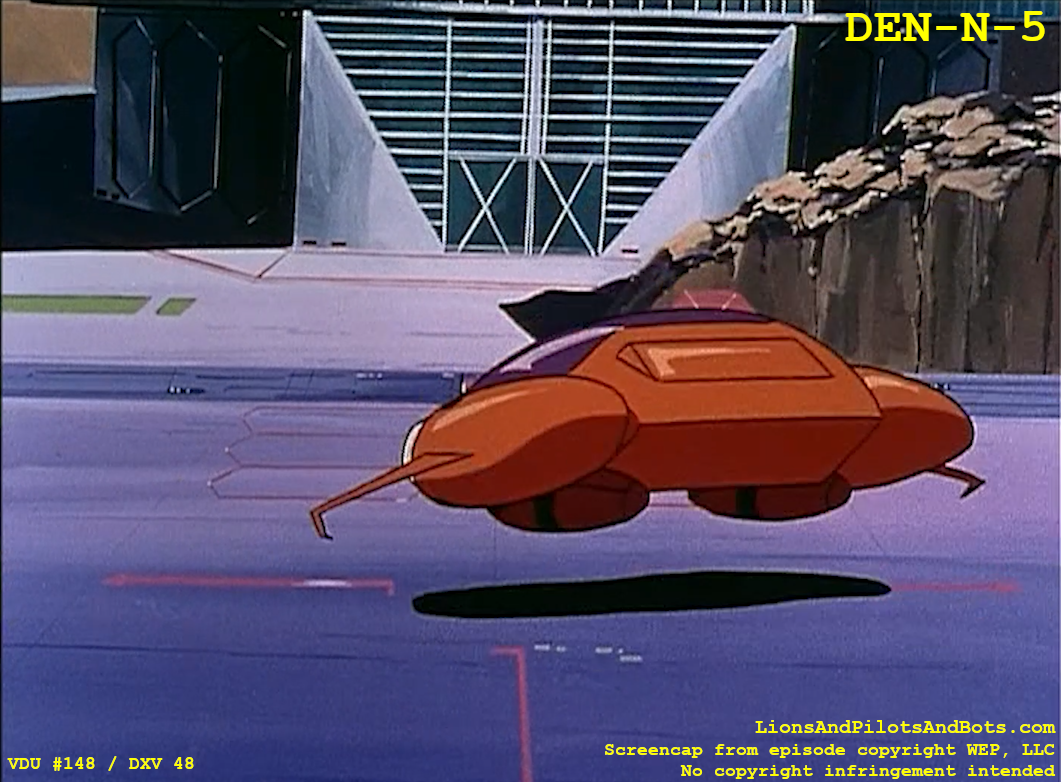
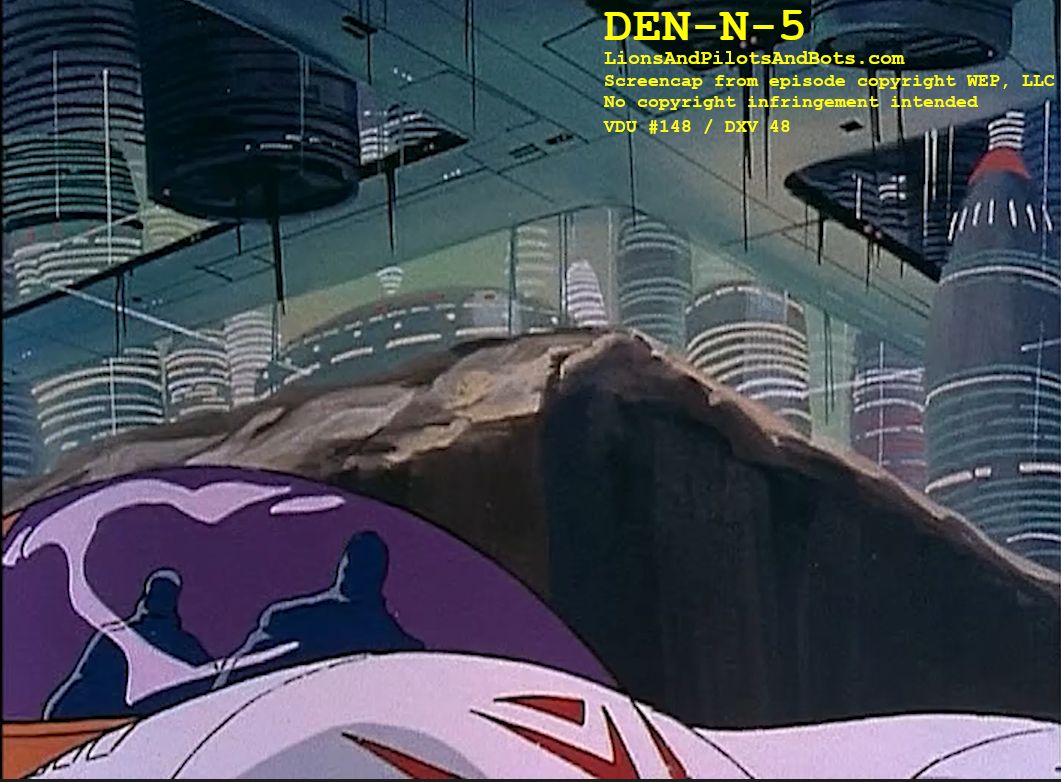
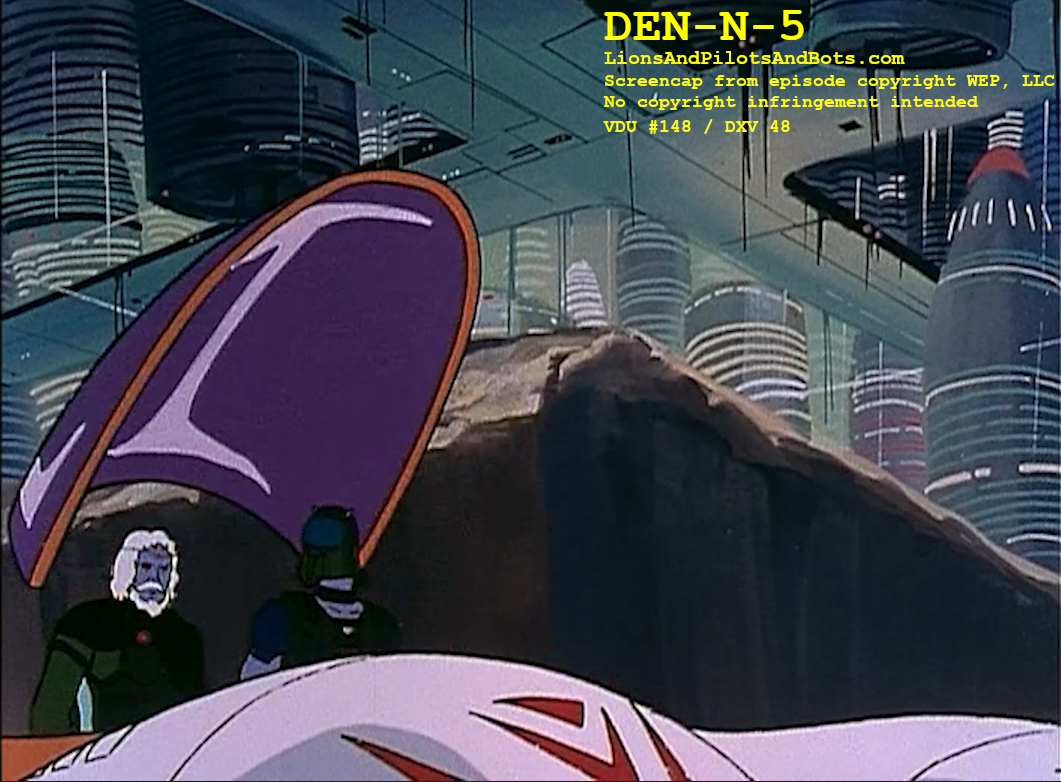
DEN-N-5 hover cabs are used on Planet Drule to transport a single passenger. Superficially similar to DEN-N-1 hover cars, the DEN-N-5 hover cab’s passenger compartment contains two single-occupant seats arranged front-to-back, facing forward. The passenger comparment is accessible by a large, transparent roof hatch that opens upward about a hinge at the rear. The DEN-N-5 resembles a catamaran, with two large side assemblies, one on either side of the passenger compartment. DEN-N-5 hover cabs have small wings near the rear.
In the DEN-N-5’s single appearance, a Drule robot drives a hover cab to transport Mozak to his home.
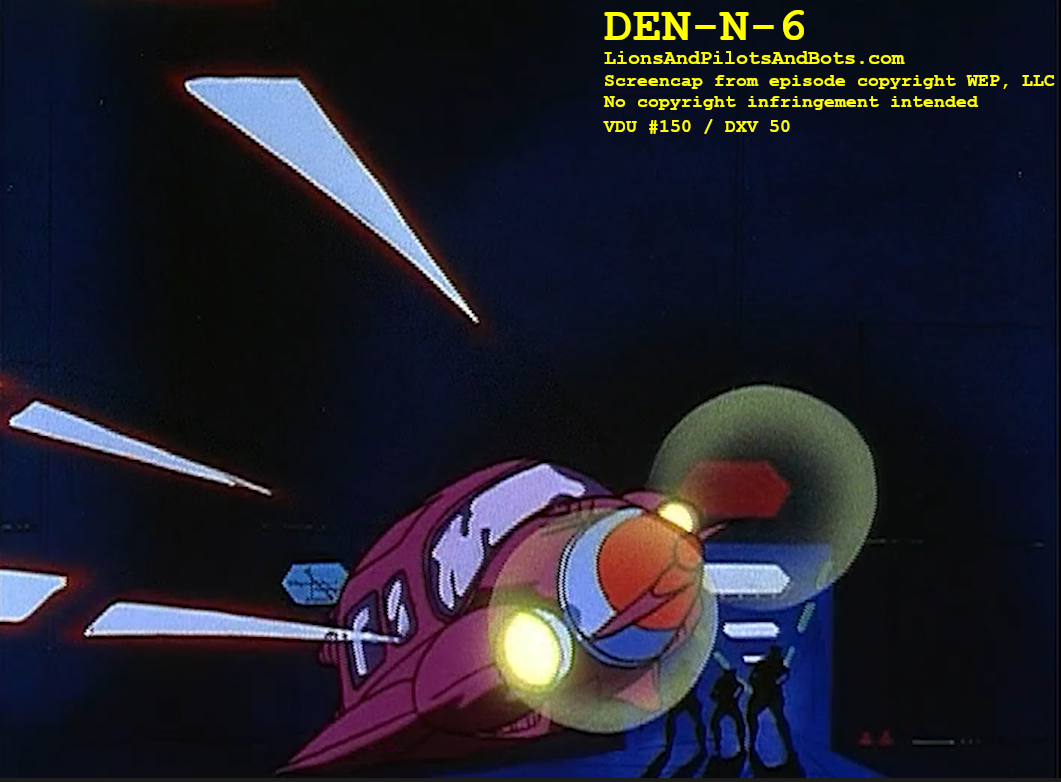
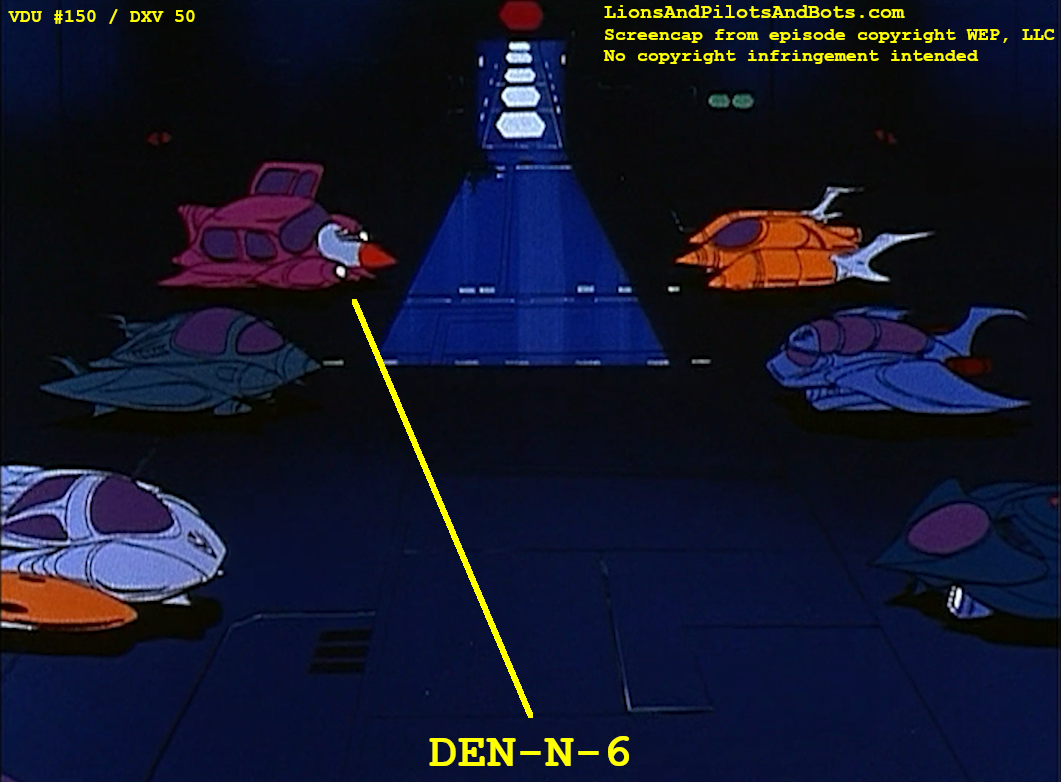
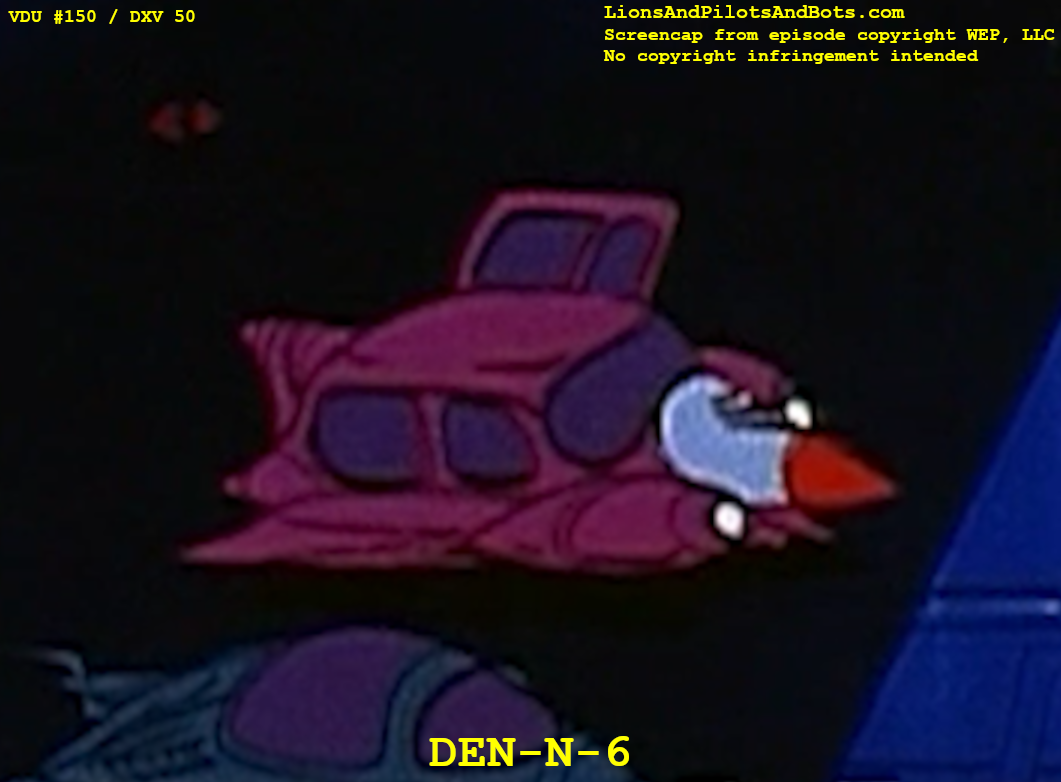
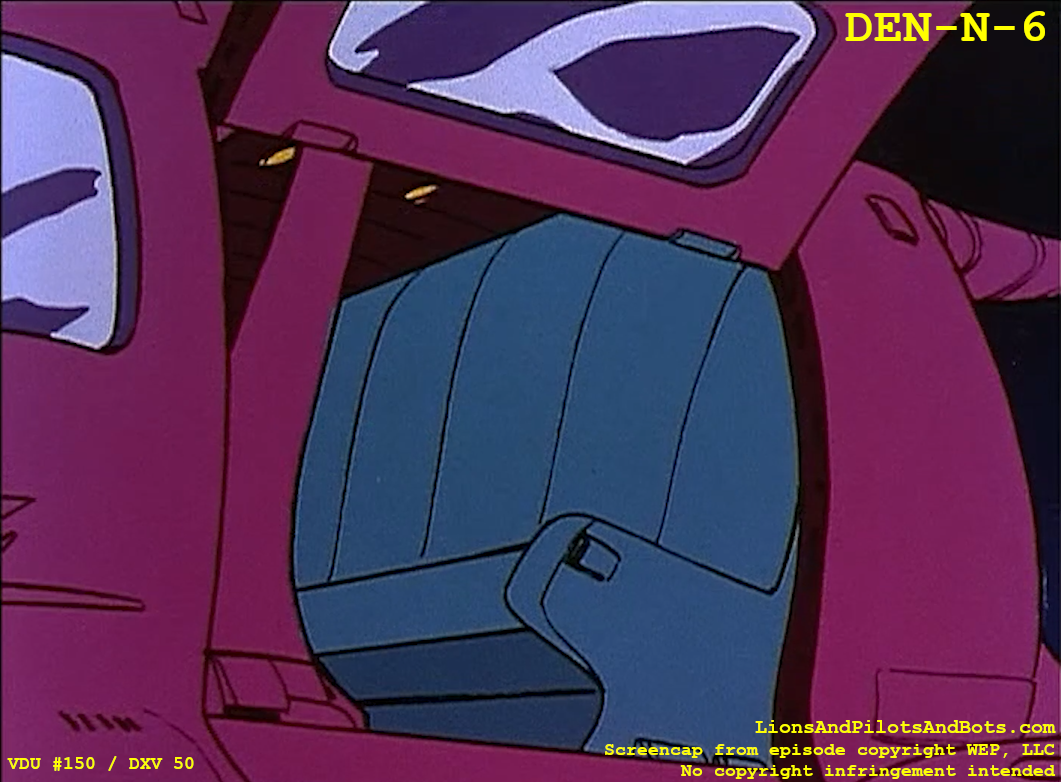
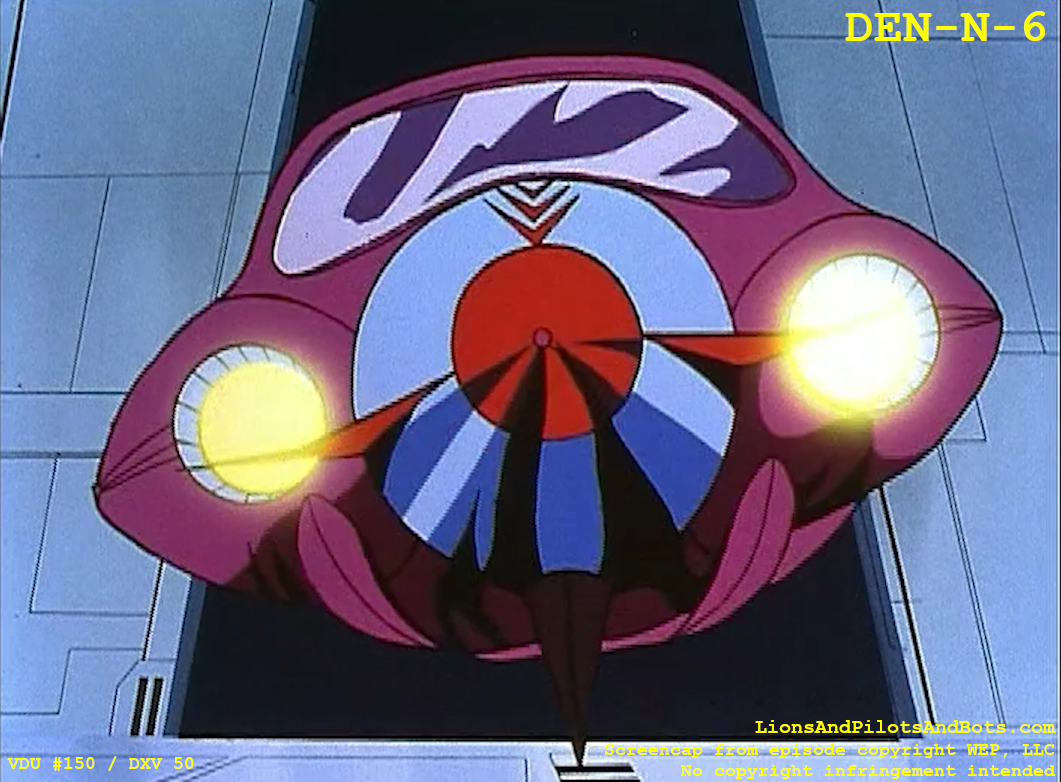
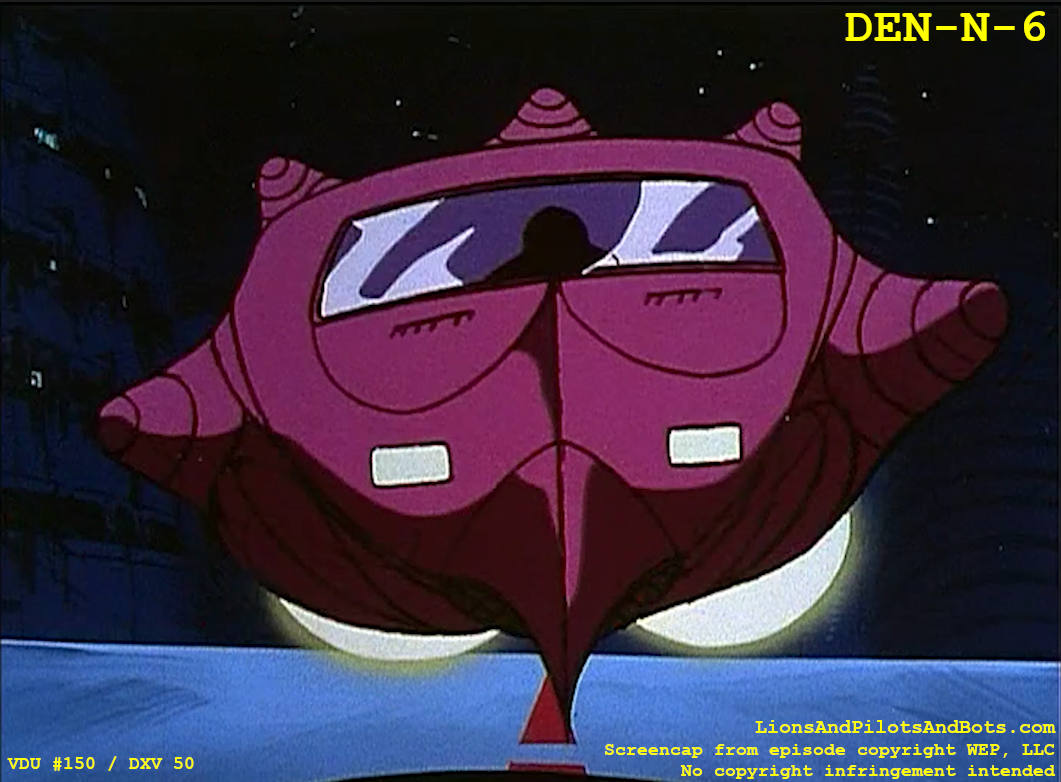
DEN-N-6 hover sedans are used on Planet Drule. The hover sedan has a boxy body with a pointed nose, large windows on the front, back, and sides, small wings on the sides, and a left-side hatch that hinges upward.
On Planet Drule, an DEN-N-6 hover sedan is seen parked among other hover cars. Dorma and Hazar use the sedan to flee from pursuing Drule robots.
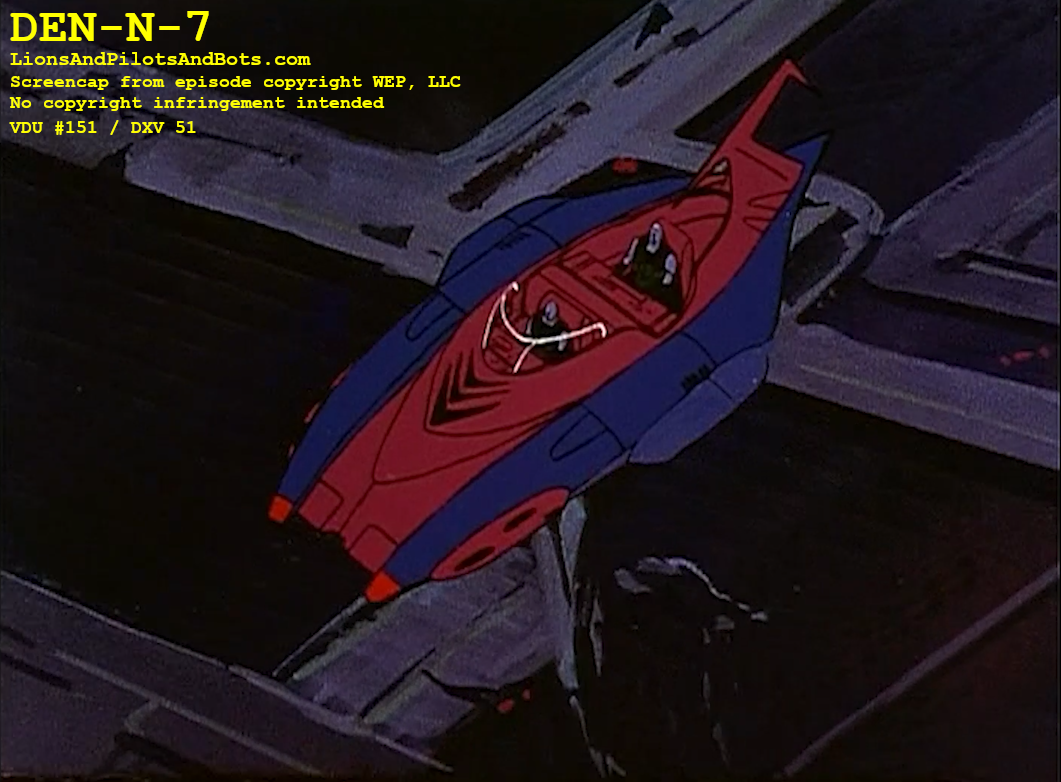
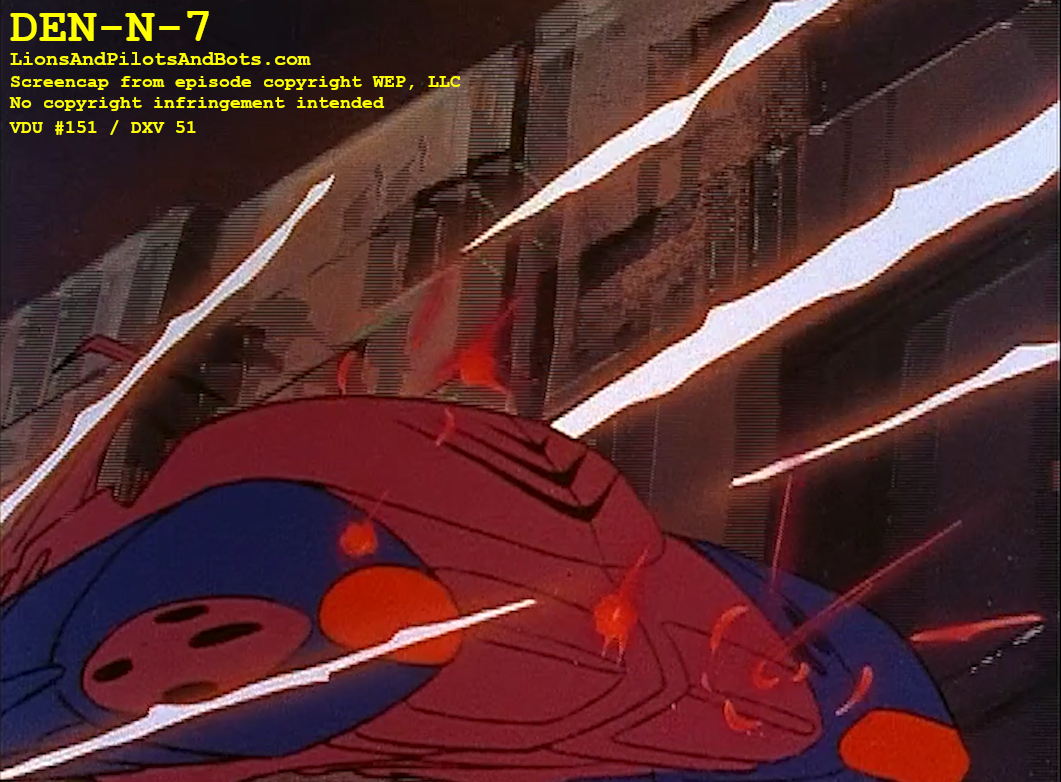
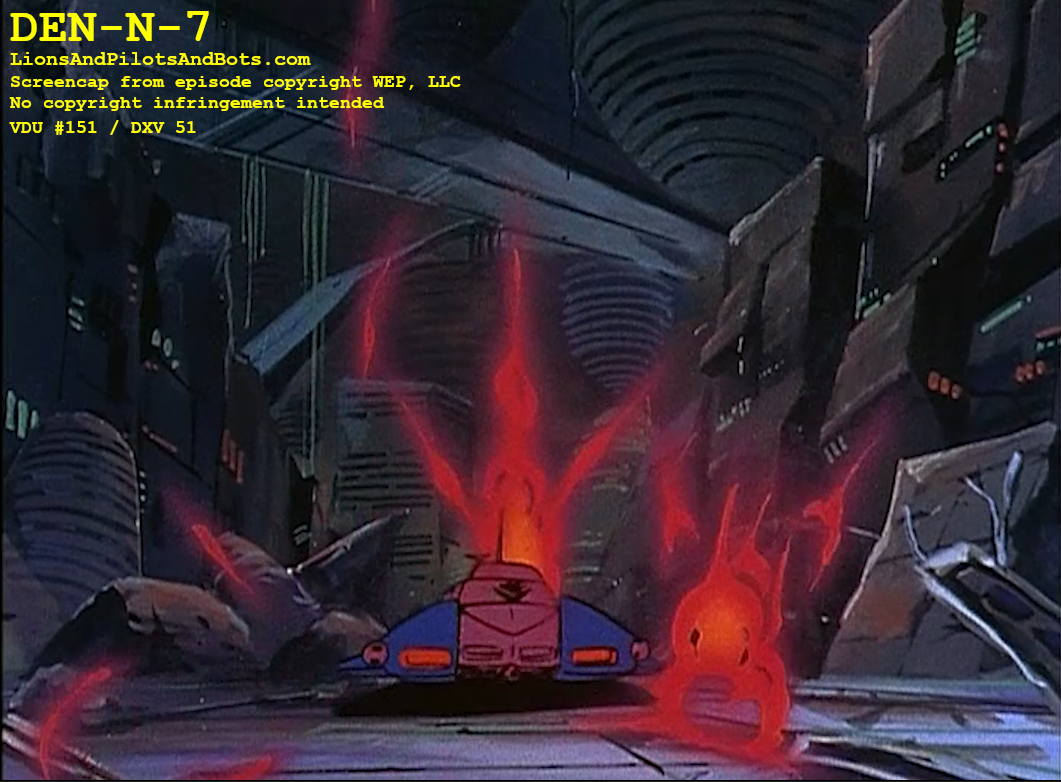
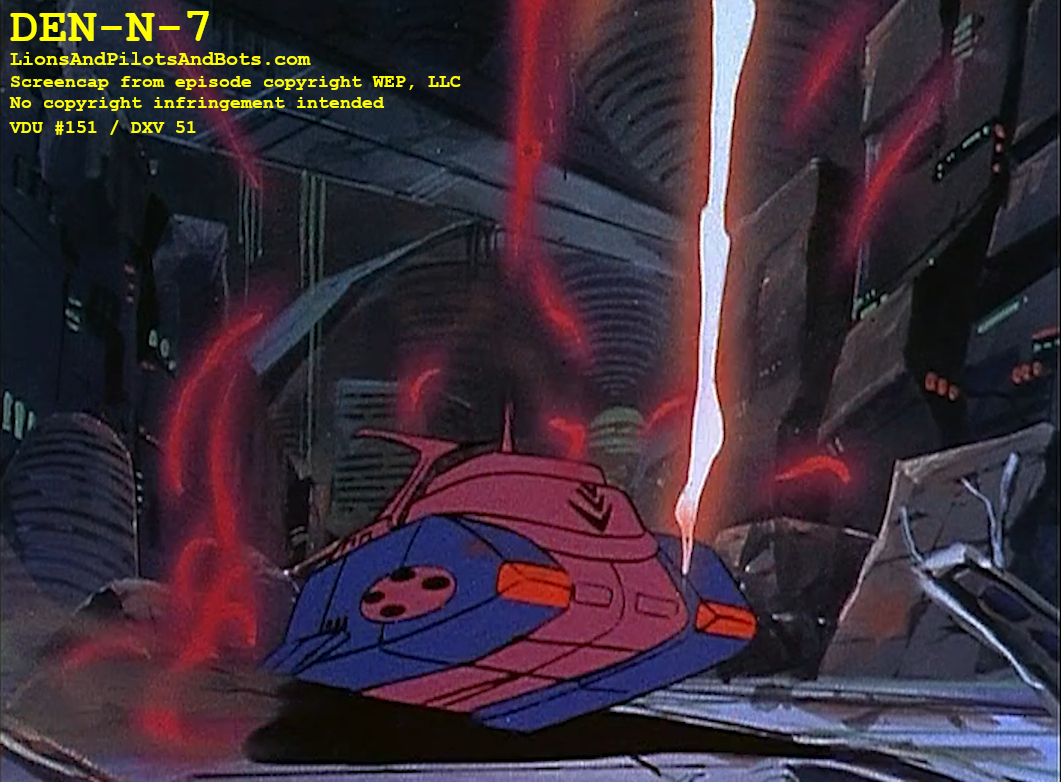
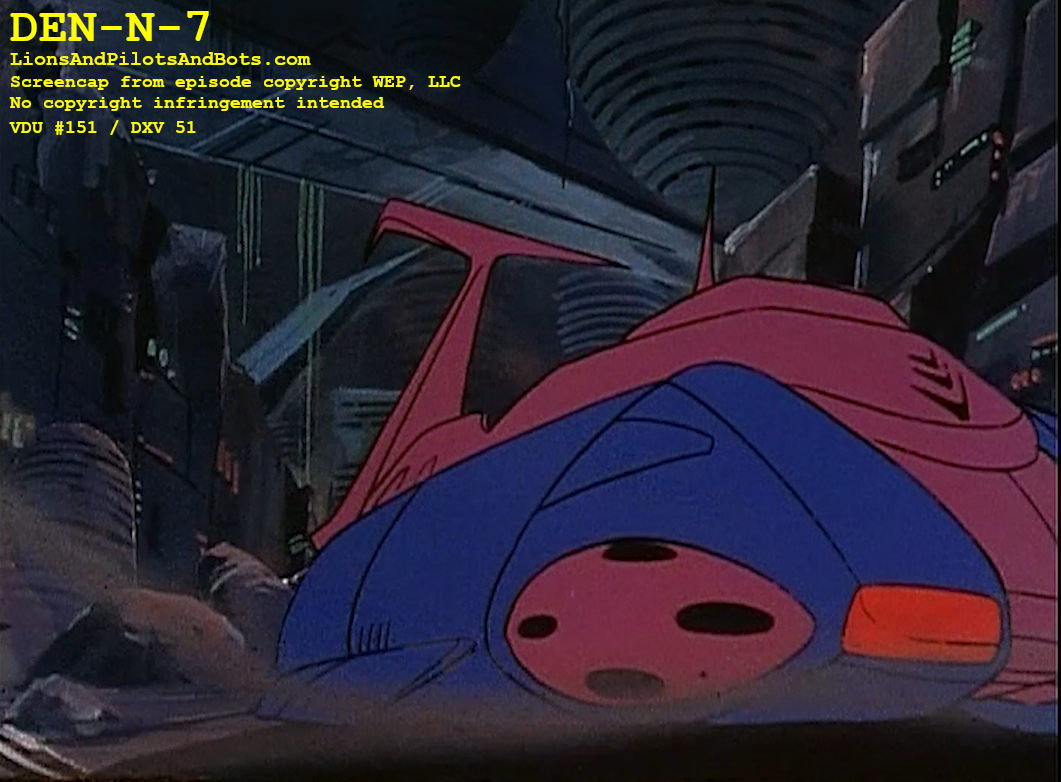
DEN-N-7 hover cars are used on Planet Drule. They have wide but sleekbodies, a topside fin at the rear, and single front driver seat, and a single rear seat. Each seat has an open top. Dorma and Hazar use an DEN-N-7 hover car on Drule.
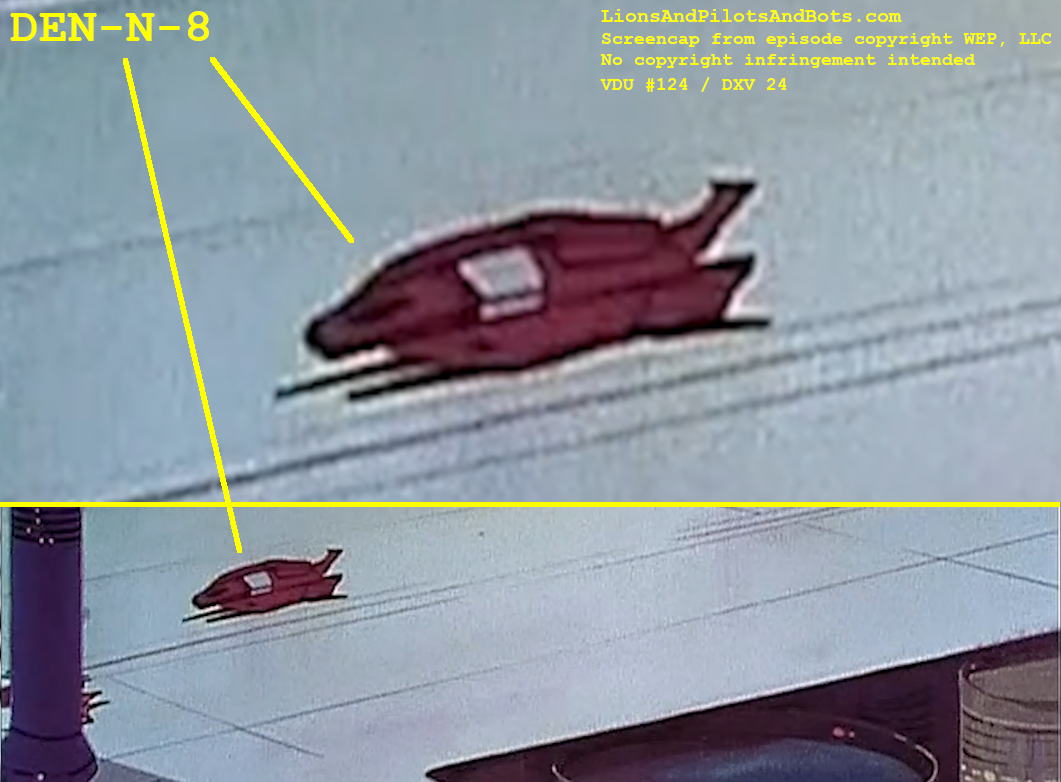
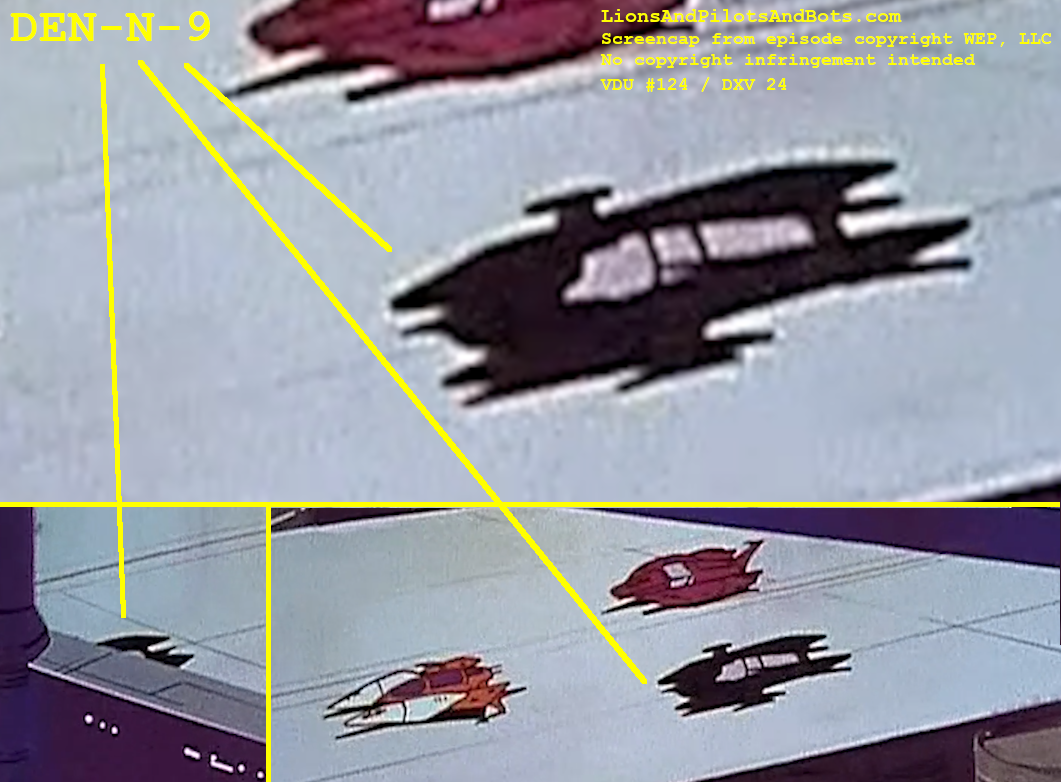
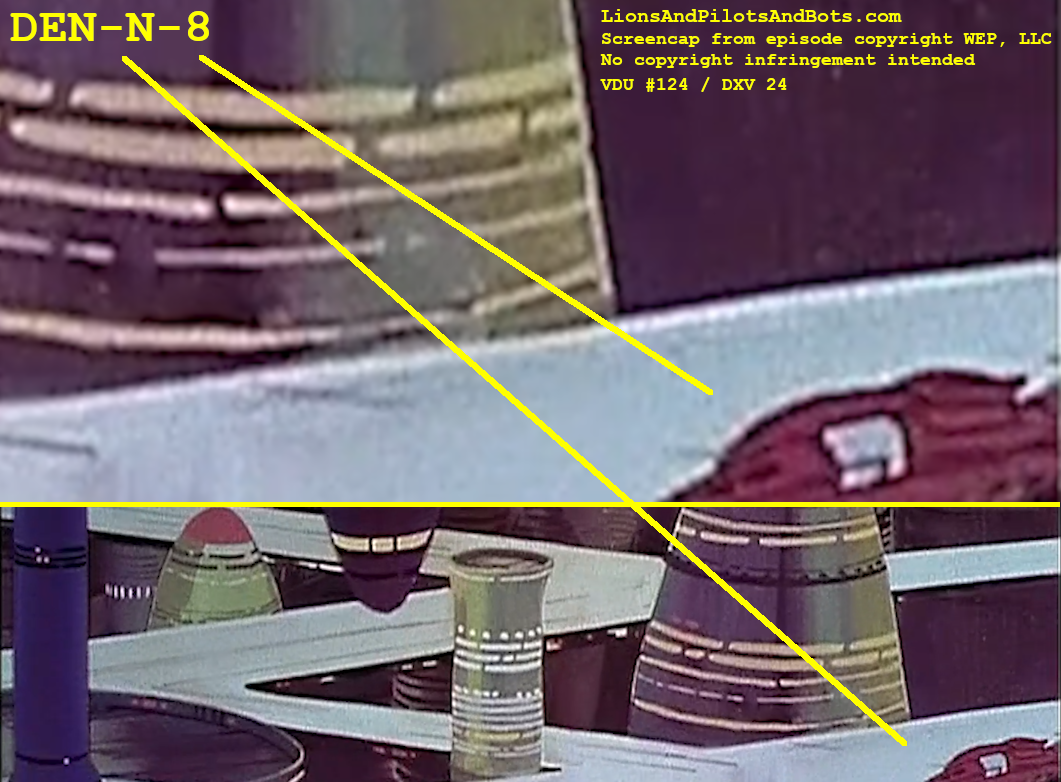
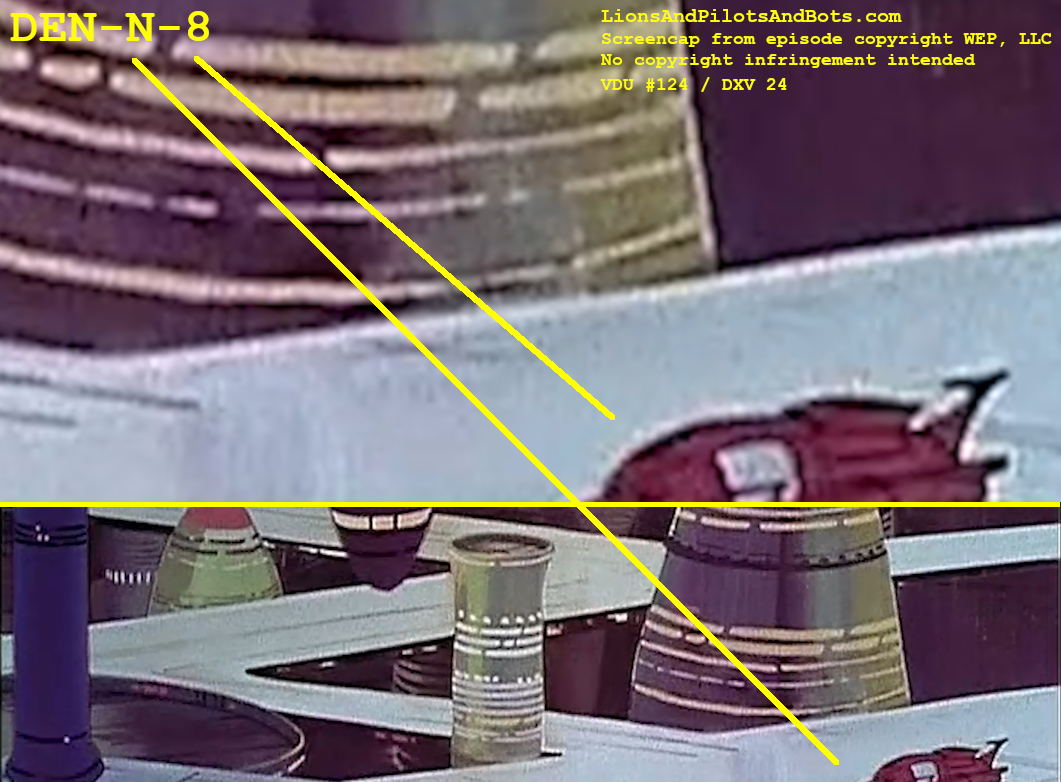
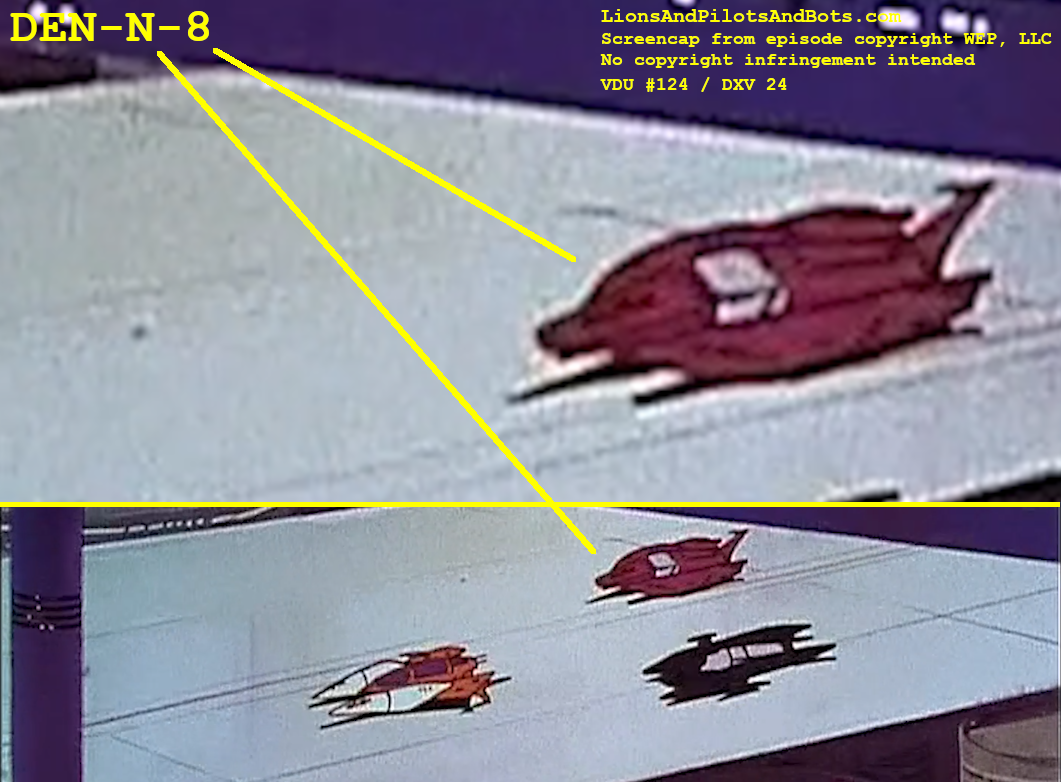
DEN-N-8 hover cars have a large fin on the back of the body, and they have at least two spikes that protrude forward from the front of the vehicle. On Planet Drule, multiple, identical DEN-N-8 hover cars are seen traveling on a busy street.
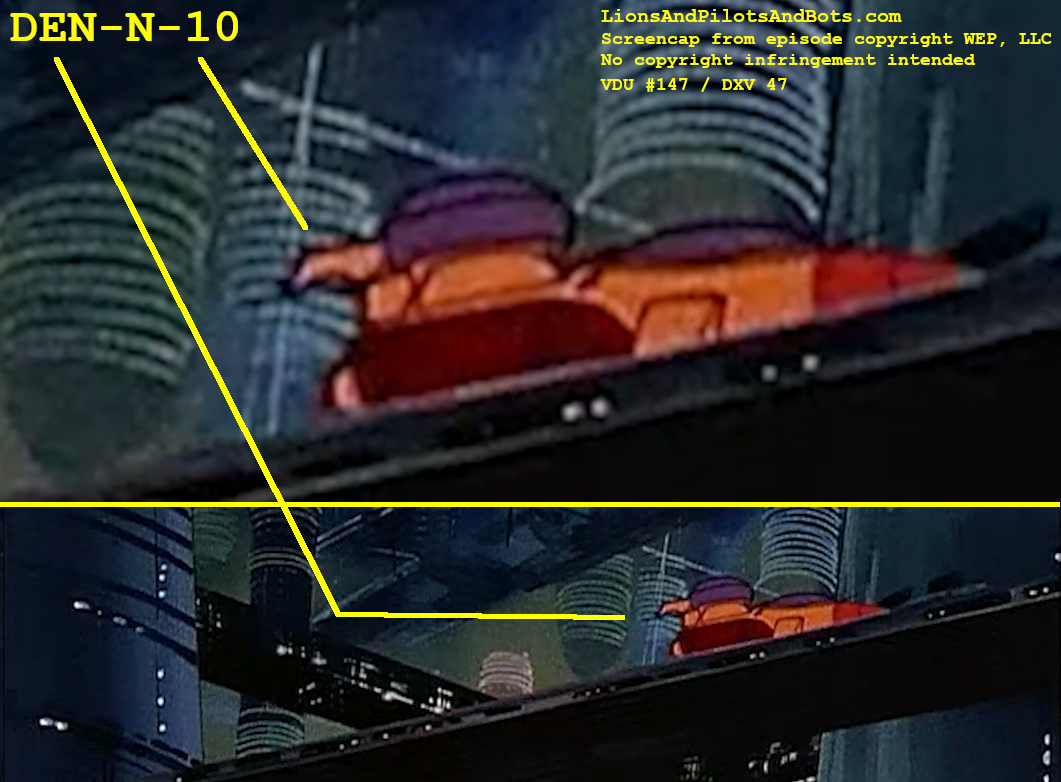
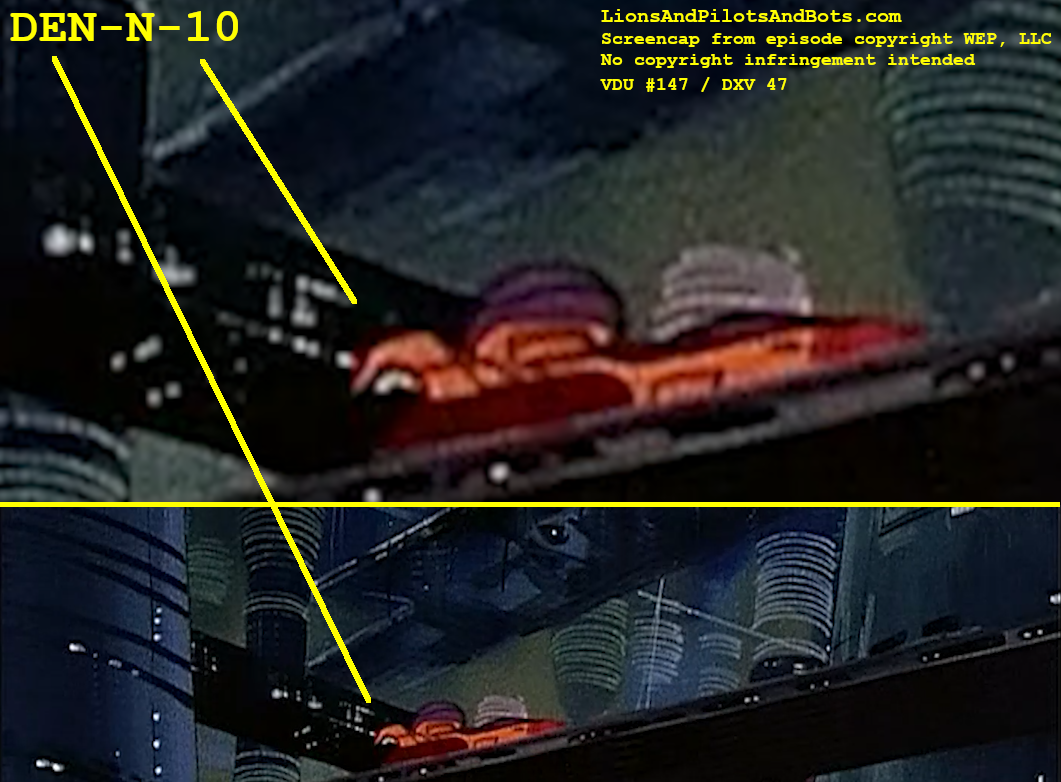
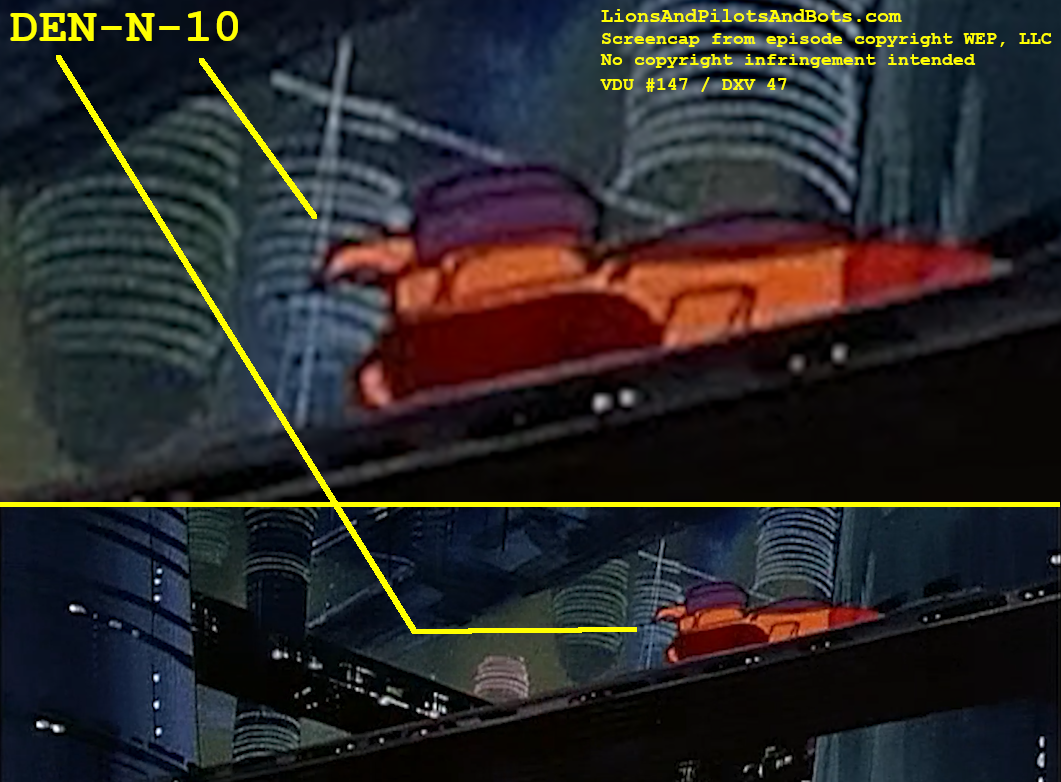
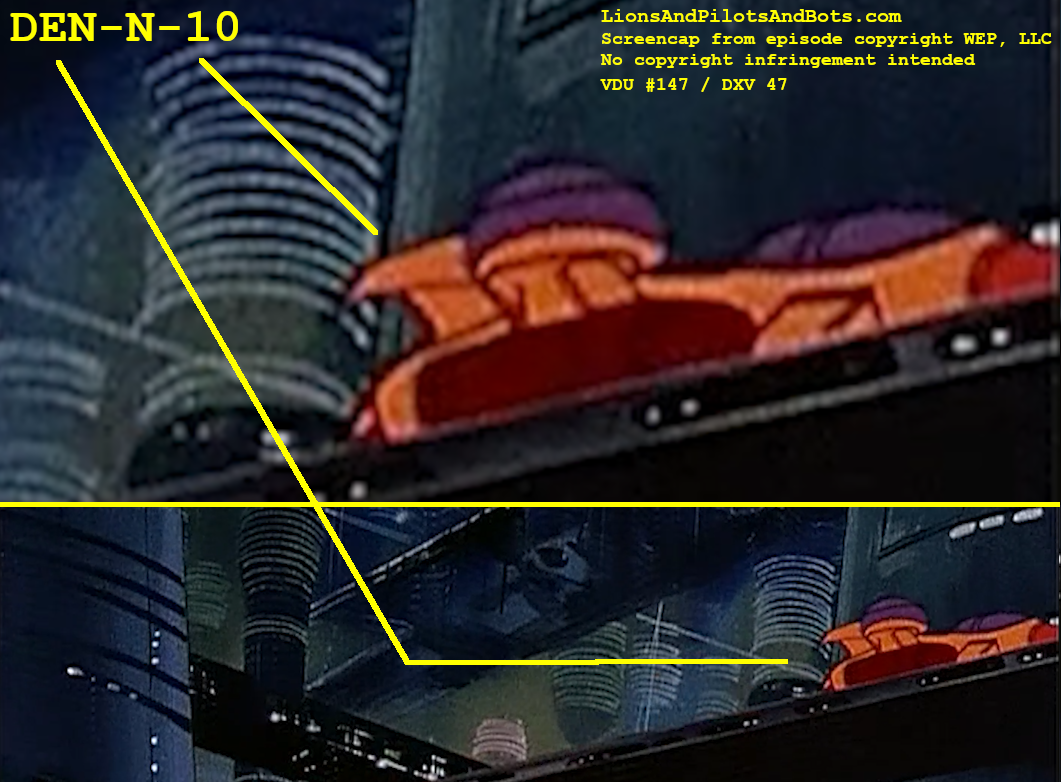
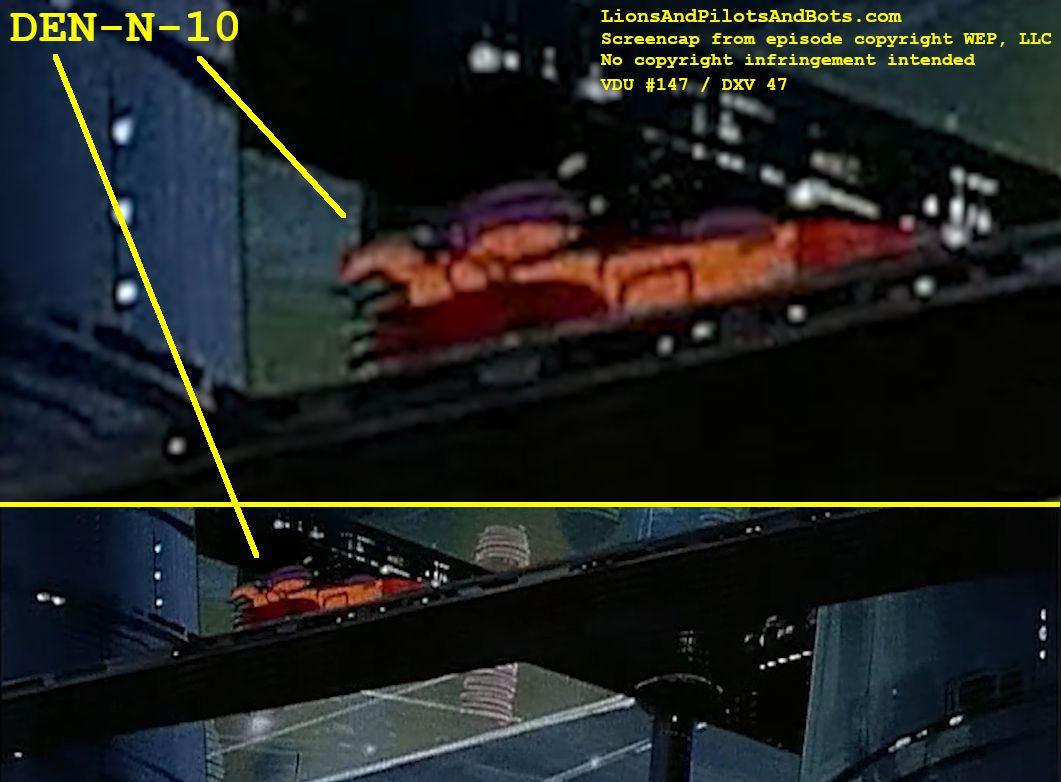
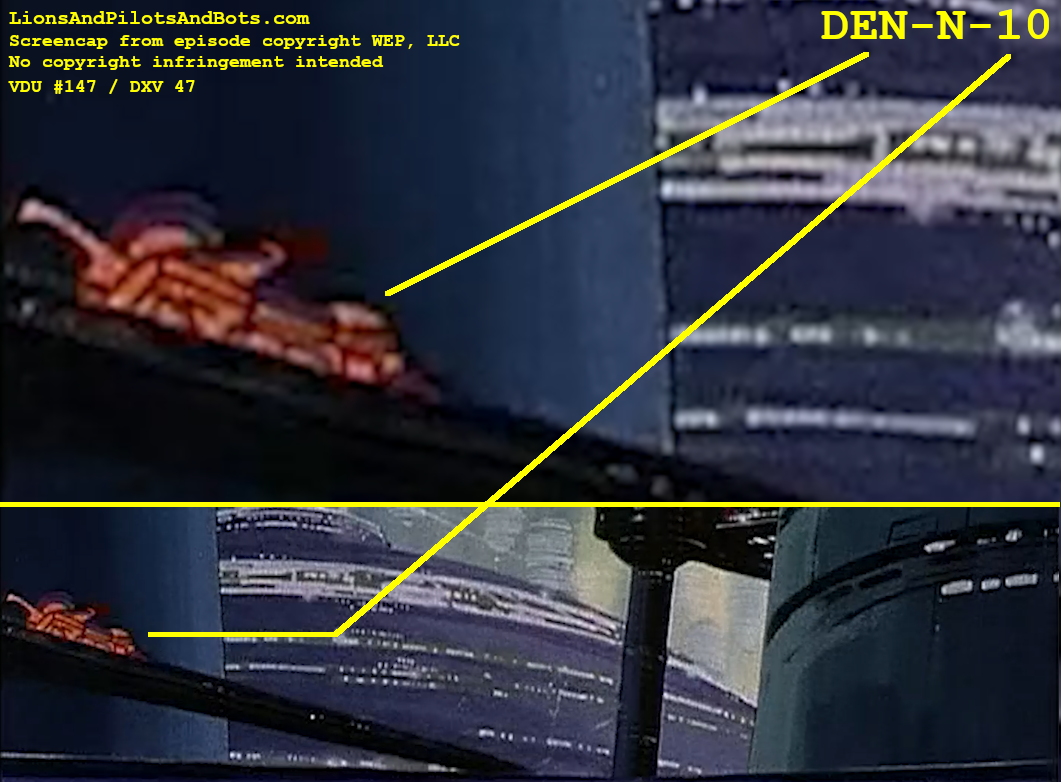
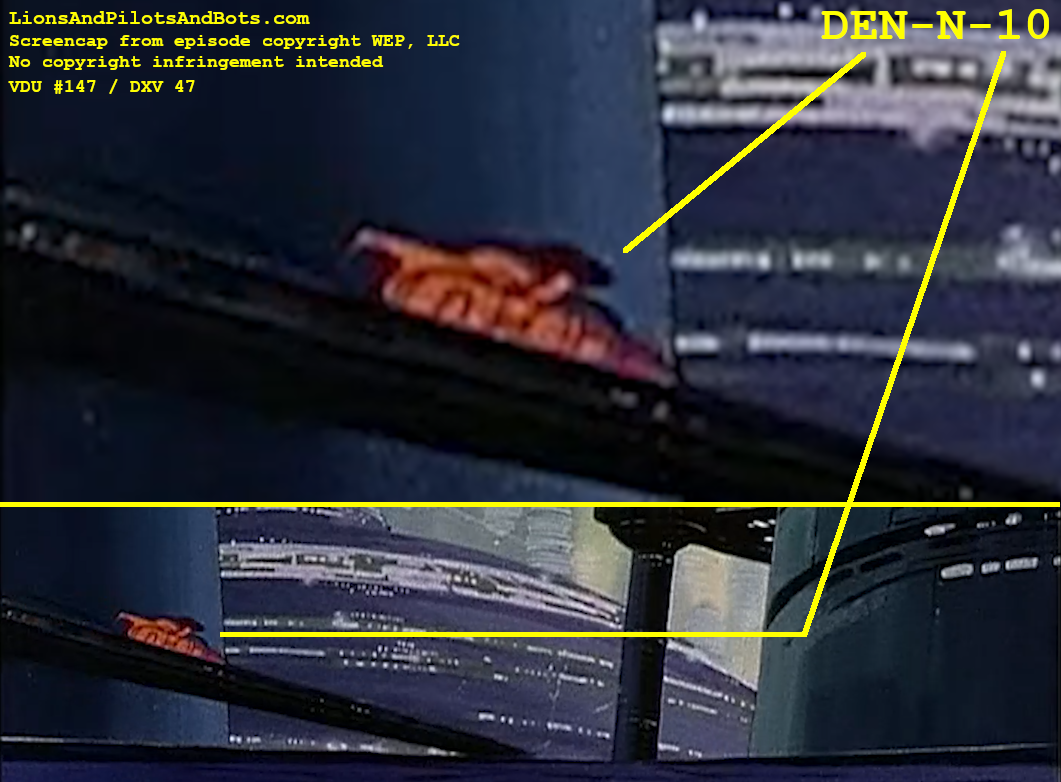
DEN-N-10 hover cars appear to have a cylindrical structure that protrudes from the top of the vehicle body, behind the passenger compartment. On Planet Drule, multiple, identical DEN-N-10 hover cars are seen traveling on a busy street.
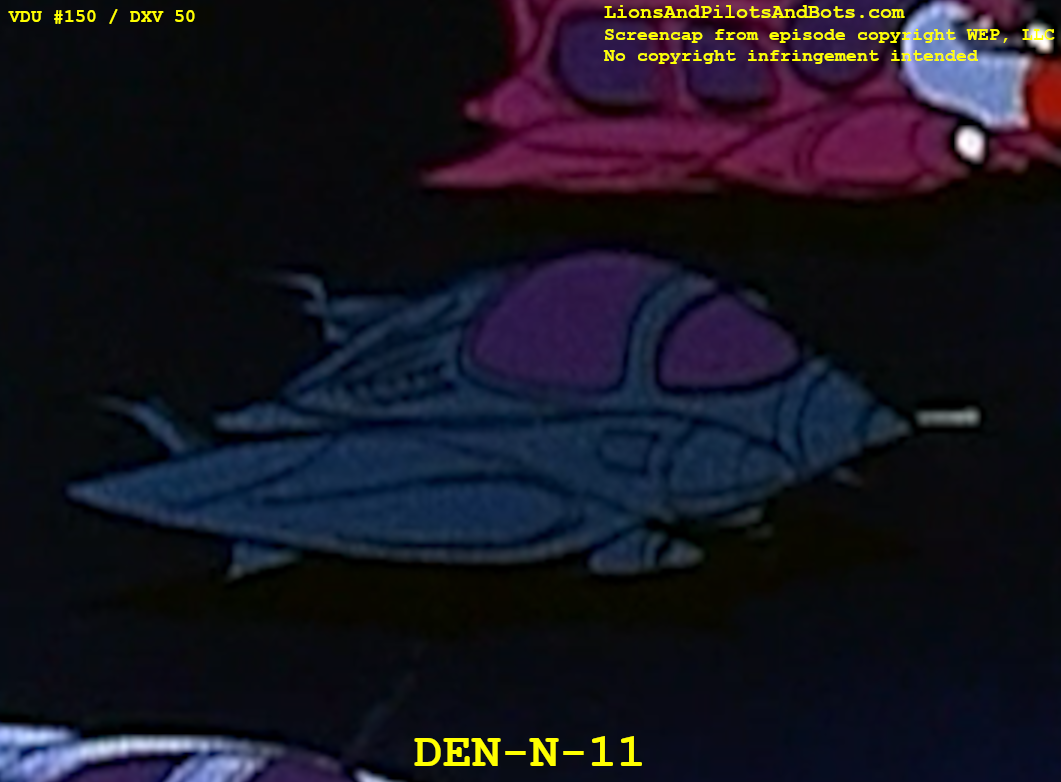
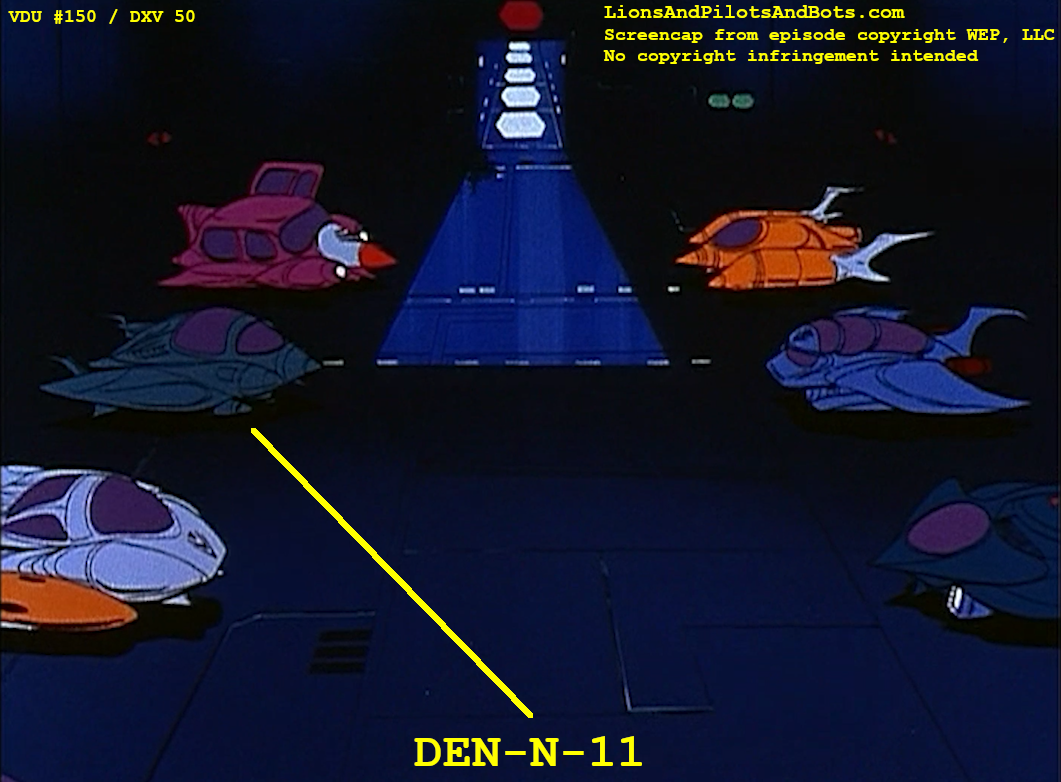
With stubby, chunky proportions, an DEN-N-11 hover car resembles a toy jet. On Planet Drule, an DEN-N-11 hover car is seen parked among other hover cars.
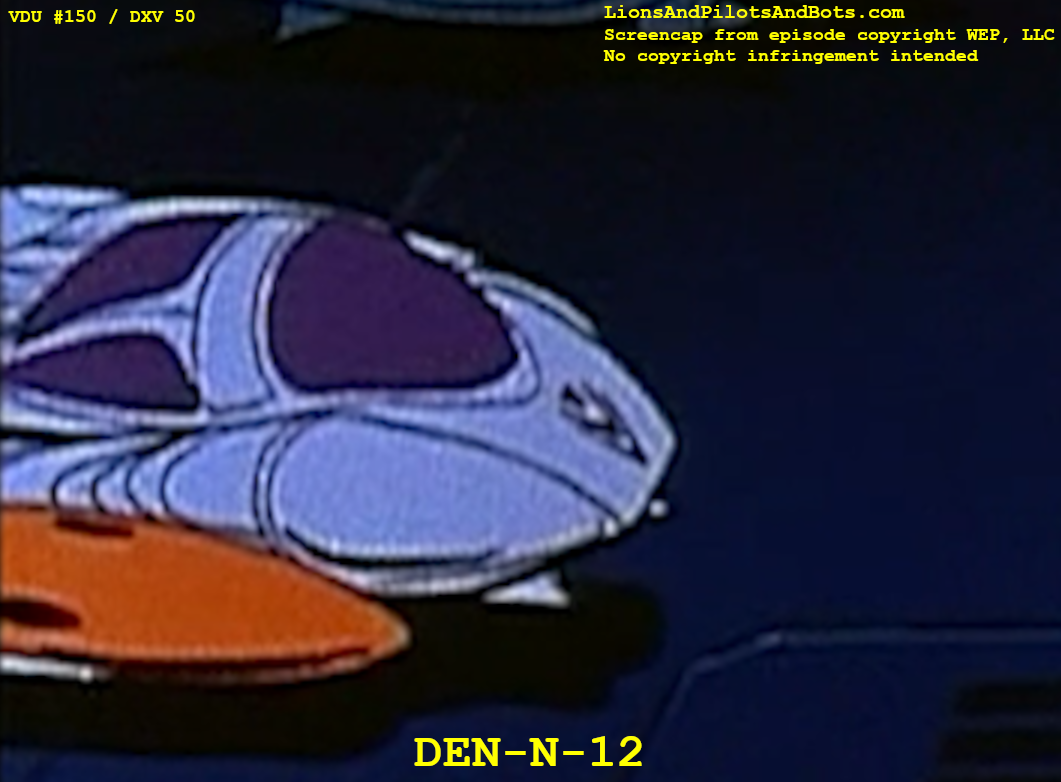
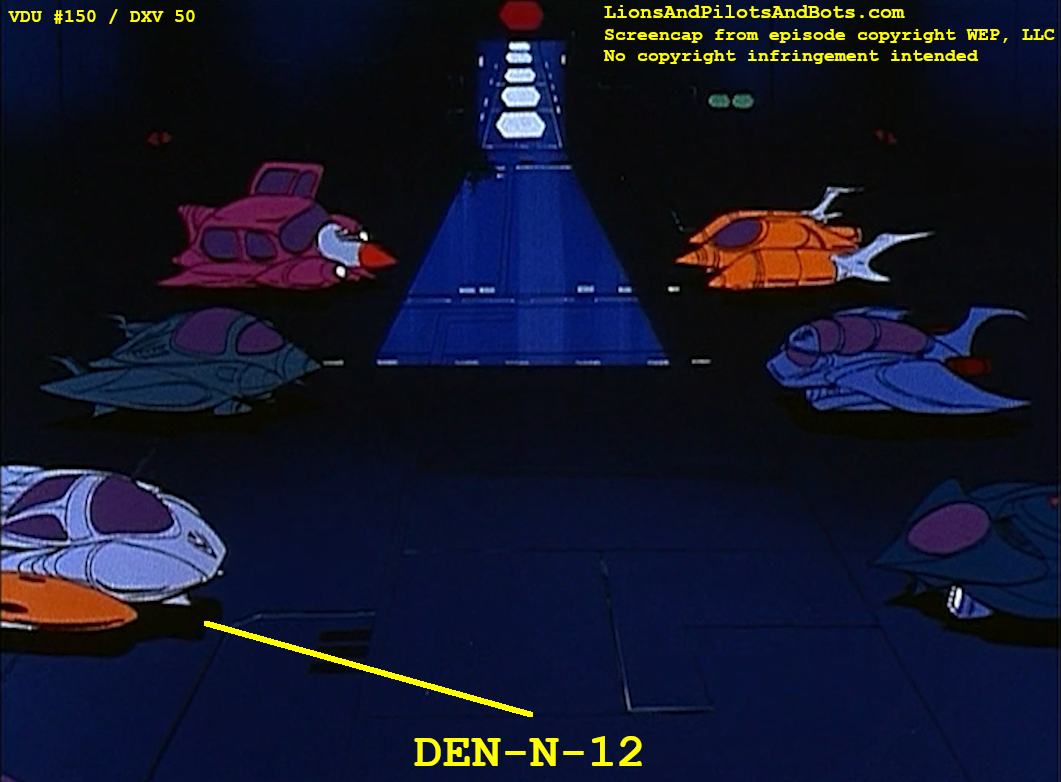
In the DEN-N-12’s only appearance, only the front of the vehicle is seen. Its passenger compartment has highly stylized windows. On Planet Drule, an DEN-N-12 hover car is seen parked among other hover cars.
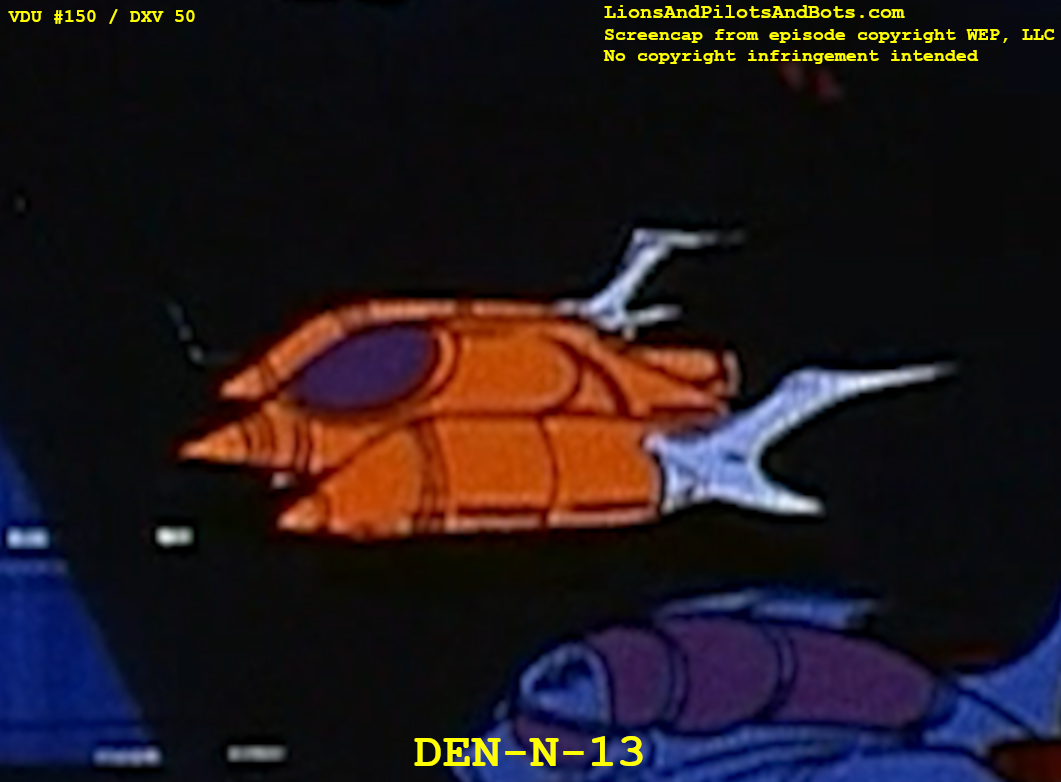
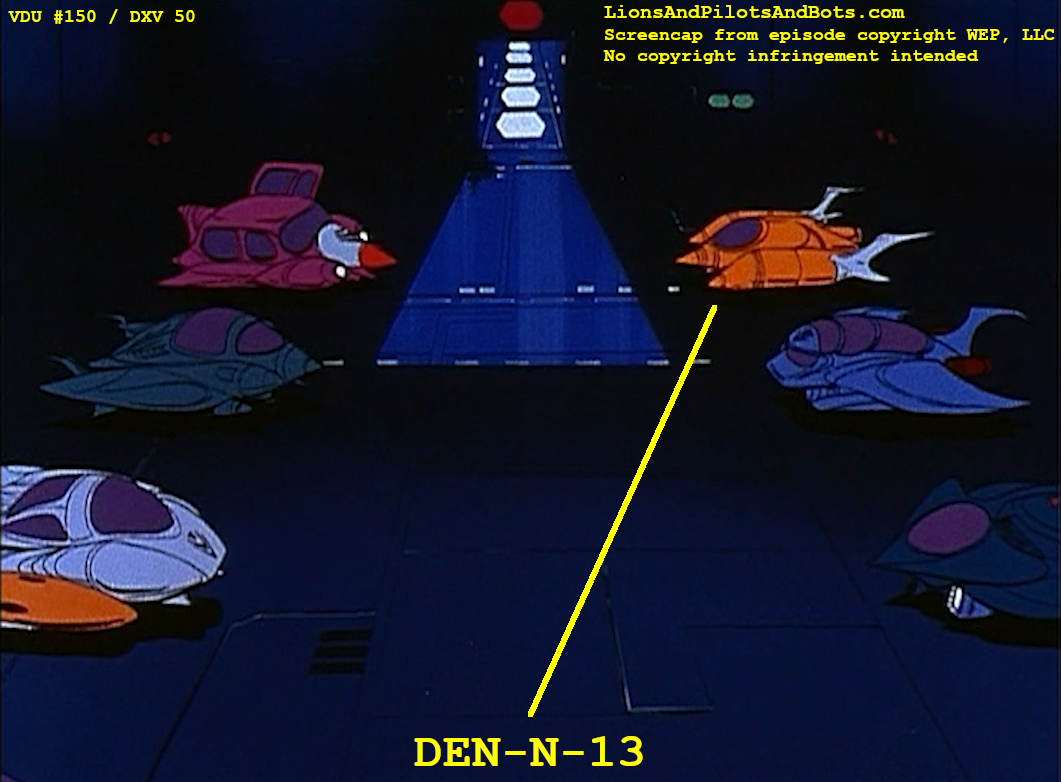
DEN-N-13 hover cars have side pods with pointed front ends and, at the rear, topside and outboard fins. On Planet Drule, an DEN-N-13 hover car is seen parked among other hover cars.
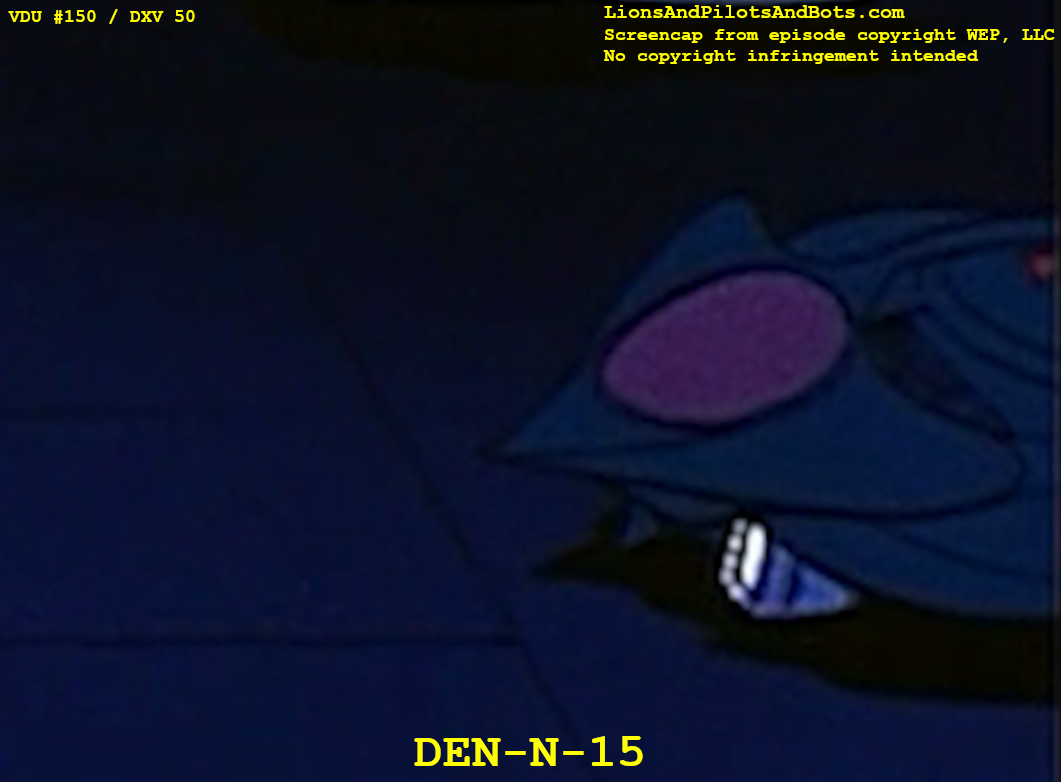
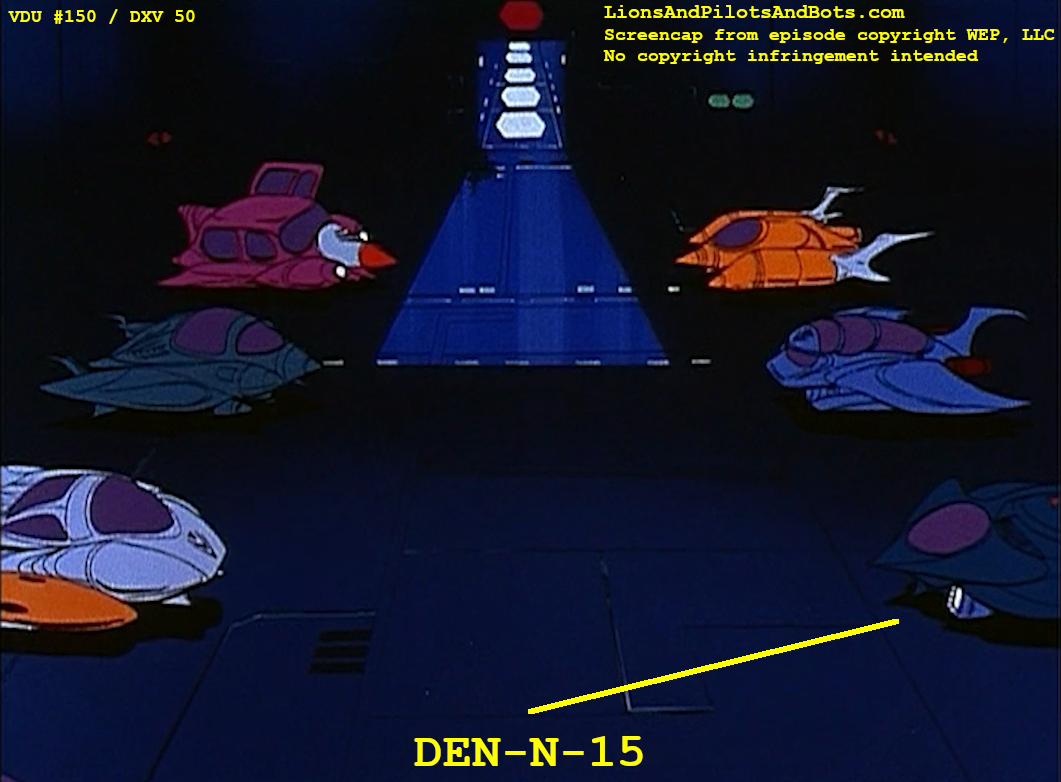
In the DEN-N-15’s only appearance, only the front of the vehicle is seen. The vehicle’s passenger compartment has a bulbous overhead window, and the vehicle body has an underlung pod. On Planet Drule, an DEN-N-15 hover car is seen parked among other hover cars.
It is somewhat surprising that, in an anime program that was produced to air one episode per week for 52 consecutive weeks, ARMORED FLEET DAIRUGGER XV contained so many vehicle designs – 35 for the Galveston Empire alone. VOLTRON benefited from this variety of impressive artwork, and fans of both programs have as well.
Future LionsAndPilotsAndBots… Dot Com articles will examine even more designs from VOLTRON: DEFENDER OF THE UNIVERSE.
VOLTRON: DEFENDER OF THE UNIVERSE takes place in Earth’s future, during a time when Earth is an integral part of an interstellar union known as the Galaxy Alliance, and spaceflight between star systems is commonplace.
No aired episode of the program establishes when the VOLTRON story takes place.
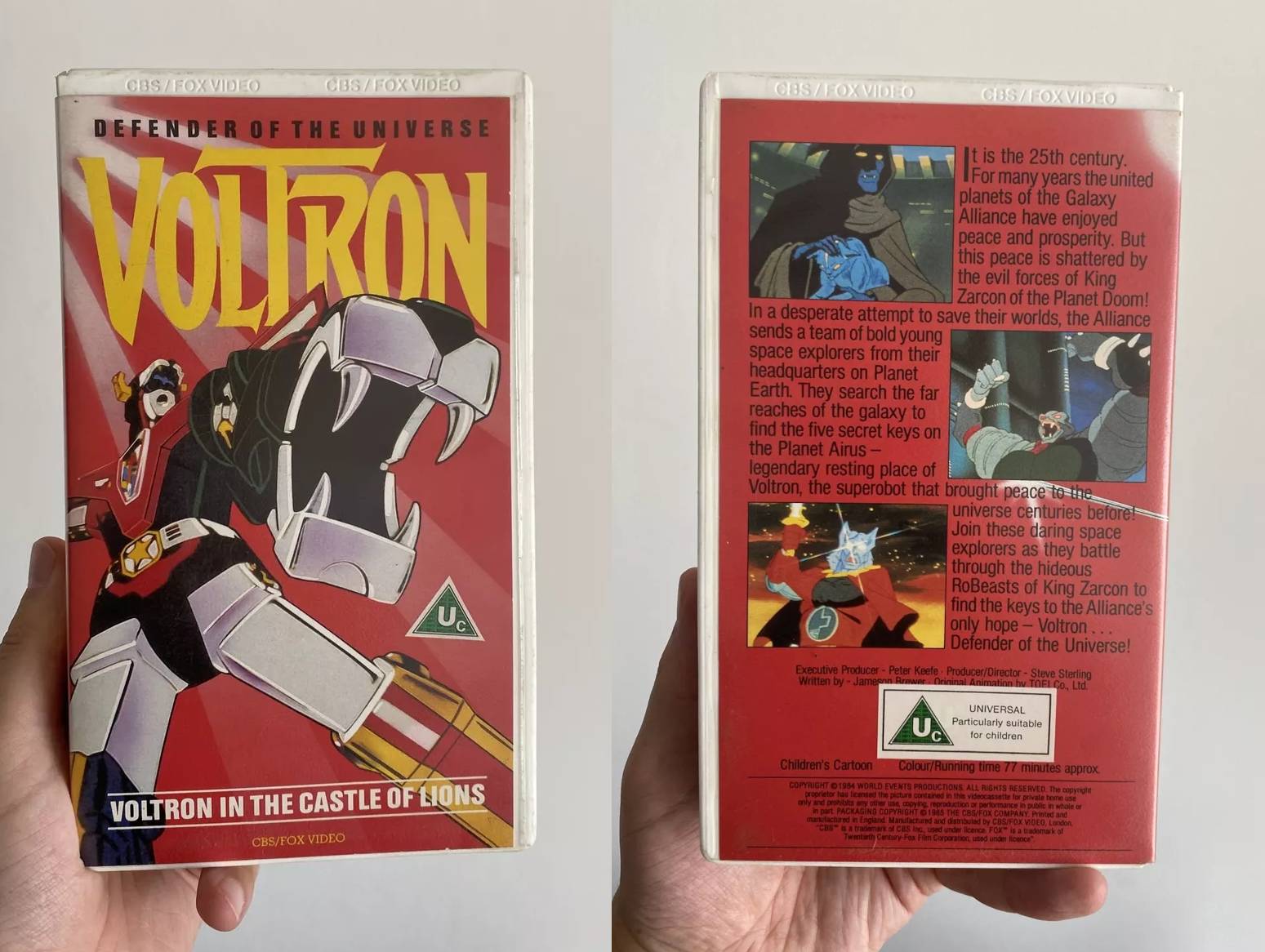
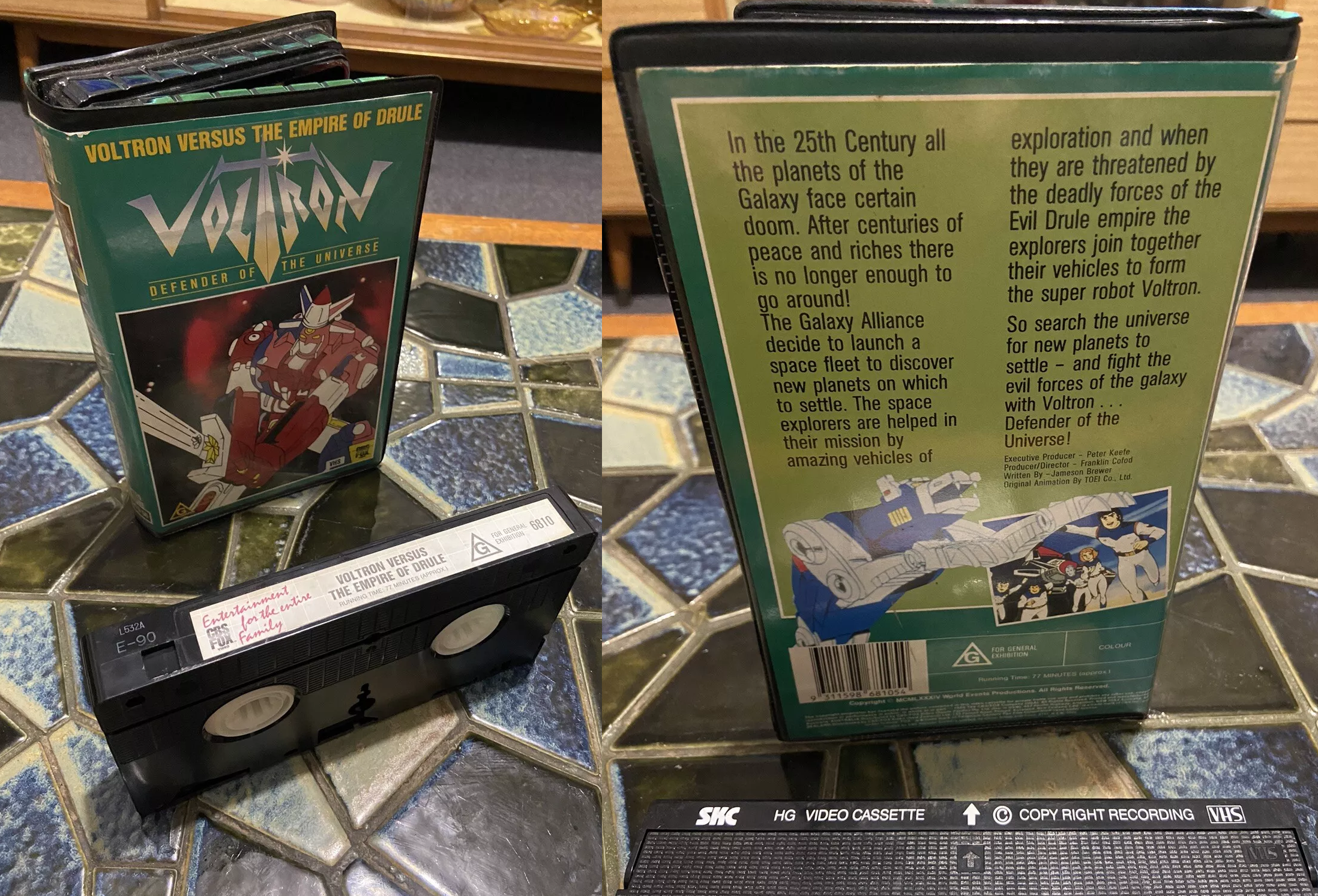
On the other hand, VOLTRON’s century was revealed on the packaging of some VOLTRON videocassettes. In the images below, some 1980s home video releases of VOLTRON, specifically those sold by CBS FOX, include copy on the backs of the boxes, stating that “it is the 25th century.”
Released in the mid-2000s, the Media Blasters DVD releases of VOLTRON: DEFENDER OF THE UNIVERSE include all three unaired pilot episodes of the show. The first pilot features the Vehicle Team, and the second and third pilots feature the Lion Force. The first pilot also includes voiceover narration by Commander Hawkins, who, like the CBS FOX videocassette boxes, states “it’s the 25th century.”
Some other marketing materials also establish VOLTRON’s time period as the 25th century. These materials might be the focus of a future article.
Unlike VOLTRON: DEFENDER OF THE UNIVERSE, the anime programs from which VOLTRON was adapted, 1981’s BEAST KING GOLION and 1982’s ARMORED FLEET DAIRUGGER XV were set in entirely different time periods.
BEAST KING GOLION was set in 1999, and ARMORED FLEET DAIRUGGER XV was set 2200. The two anime programs had entirely unrelated stories. VOLTRON recontextualized both programs’ stories as taking place in a single continuity.
Why did VOLTRON’s writers establish the show’s setting as the 25th century? Jameson Brewer, VOLTRON’s original head writer, likely made that decision. Unfortunately, Brewer died in 2003, so we can only speculate. I’ve done just that, and I’m reasonably certain that VOLTRON’s 25th-century setting was inspired by a far older science-fiction phenomenon: Buck Rogers.
The Buck Rogers comic strip ran in US newspapers from January 7, 1929, until 1967. In the comic strip, the character of Buck Rogers falls into a cave and succumbs to a strange gas that places him in suspended animation until he awakens in the 25th century — specifically in the year 2429.
A Buck Rogers radio adaptation premiered in 1932. Universal Pictures released a film serial adaptation in 1939. In 1979, just five years before VOLTRON’s 1984 television debut, the made-for-television movie BUCK ROGERS IN THE 25TH CENTURY was released theatrically, followed later that year by a weekly television series of the same name and cast on the NBC television network. In the BUCK ROGERS movie and TV series, Buck Rogers emerges from suspended animation in the year 2491.
Jameson Brewer was born in 1916. He would have been 12 or 13 when the Buck Rogers comic strip was published, roughly 16 when the radio program first aired, and in his early twenties when the film serial first ran. Even if Brewer had never been exposed to Buck Rogers media during his younger years, he would almost certainly have known of its existence from its enormous popularity.
At a minimum, Brewer would likely have been aware of BUCK ROGERS IN THE 25TH CENTURY.
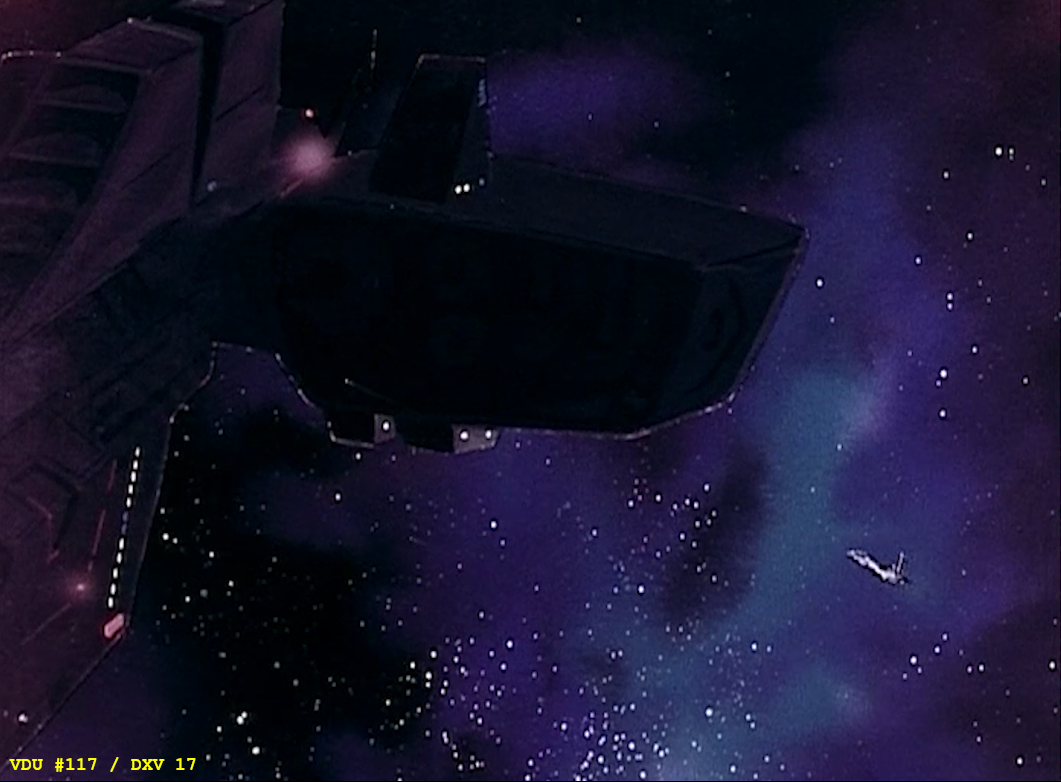
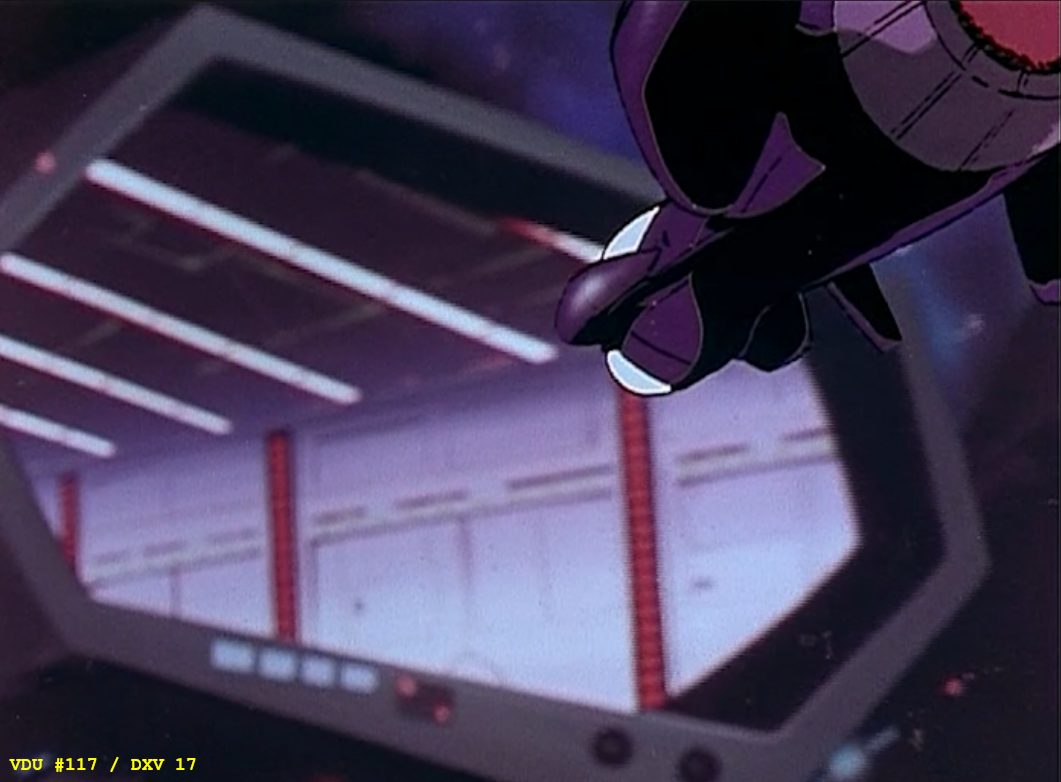
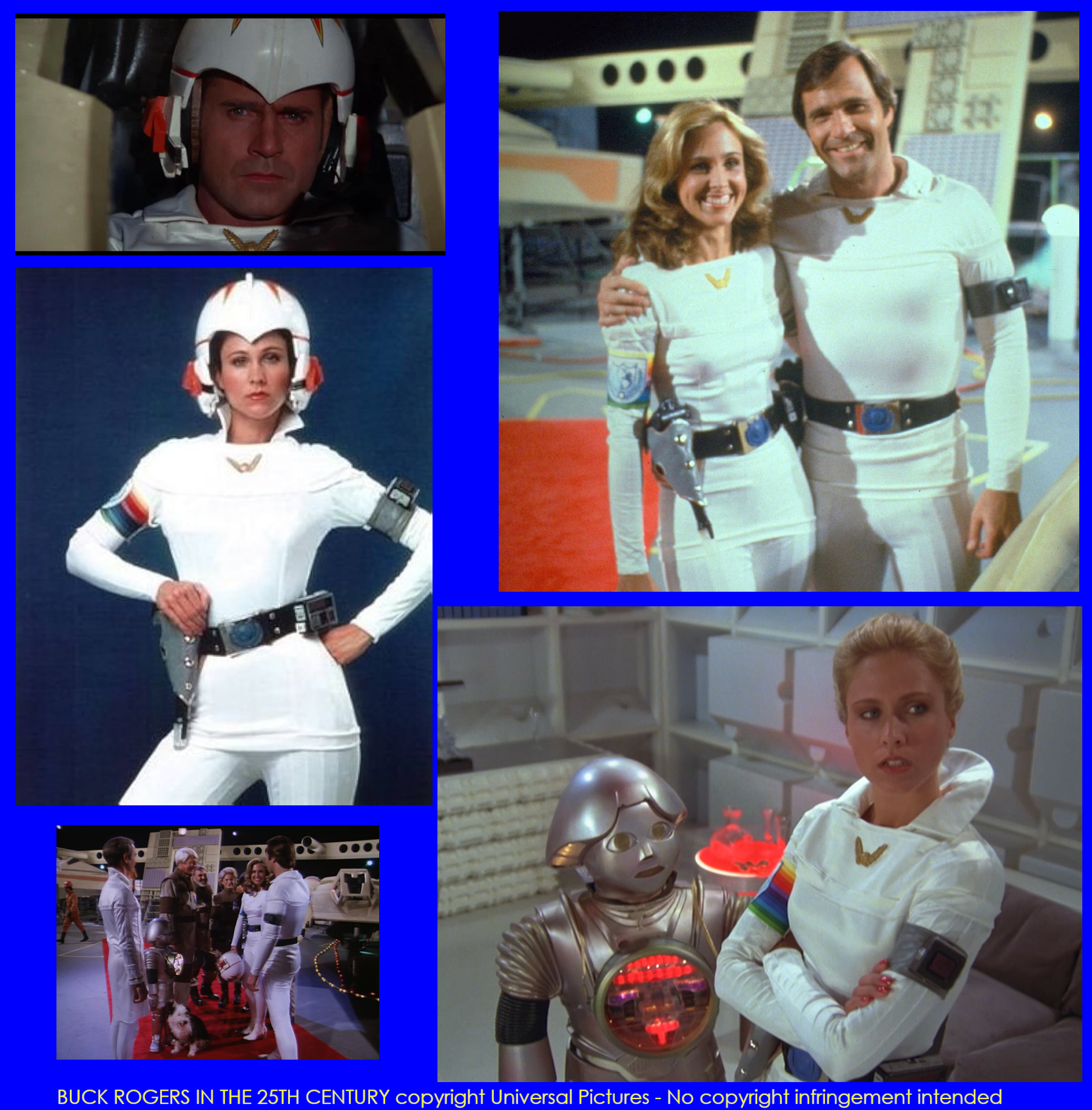
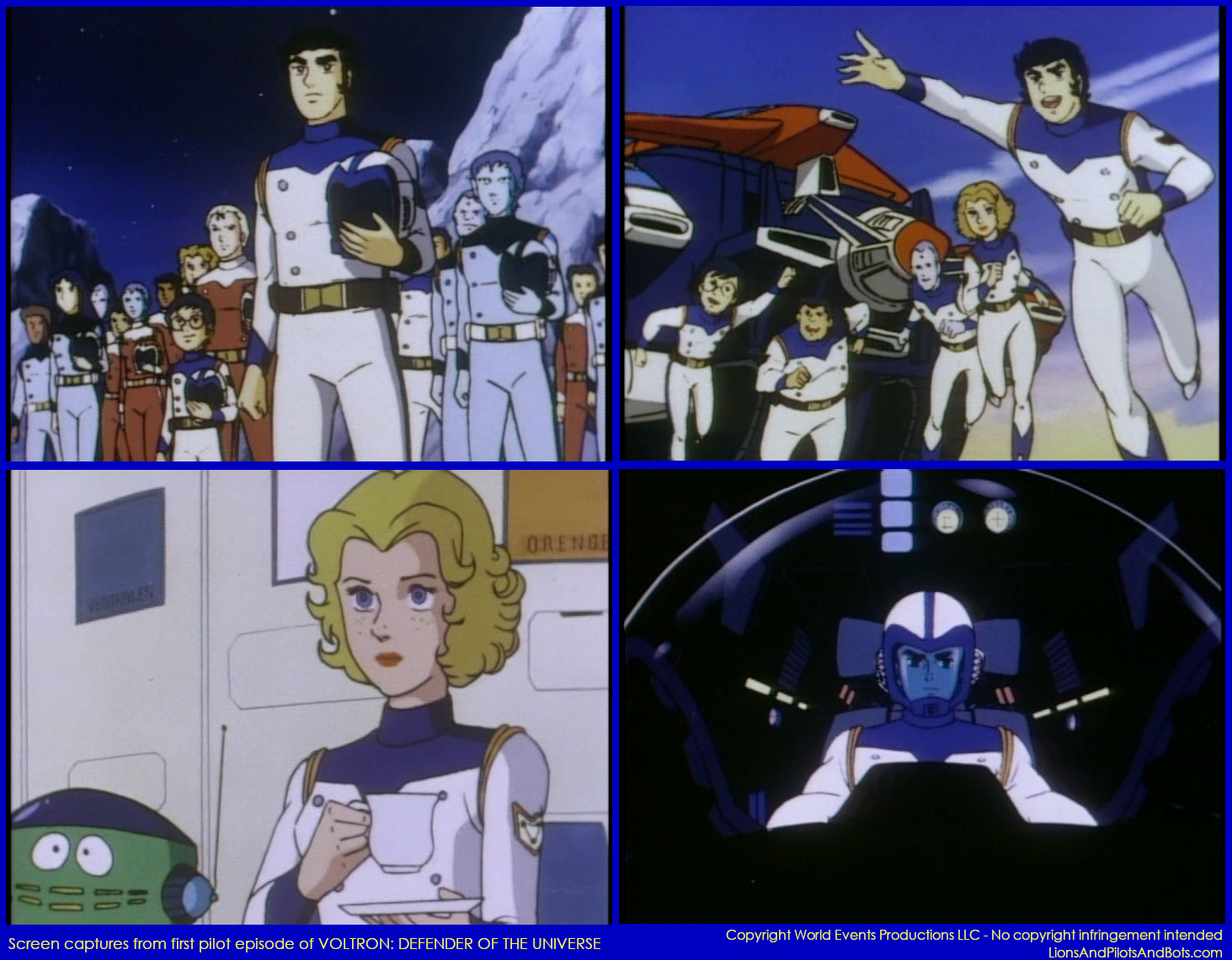
The first pilot episode of VOLTRON: DEFENDER OF THE UNIVERSE was adapted from the ARMORED FLEET DAIRUGGER XV episode “Galactic Clash.” The imagery of the first VOLTRON pilot is somewhat reminiscent of BUCK ROGERS IN THE 25TH CENTURY. Maybe Jameson Brewer was inspired by a memory of Buck Rogers, whether recent or from days of long ago, when he presumably made the decision to set VOLTRON in the 25th century.
How tall is Voltron? The answer depends on which Voltron is being referenced.
Voltron, as seen in VOLTRON: LEGENDARY DEFENDER (2016-2018)
Voltron, as seen in VOLTRON FORCE (2011-2012)
Voltron, as seen in VOLTRON: THE THIRD DIMENSION (1998-2000)
Stealth Voltron, as seen in VOLTRON: THE THIRD DIMENSION (1998-2000)
Lion Force Voltron, as seen in VOLTRON: DEFENDER OF THE UNIVERSE (1984-1985) and VOLTRON: FLEET OF DOOM (1986)
Vehicle Team Voltron, as seen in VOLTRON: DEFENDER OF THE UNIVERSE (1984-1985) and VOLTRON: FLEET OF DOOM (1986)
Let’s do some analysis to figure out how big each of these big bots “really” is.
I apologize for the low quality of some of the images that are featured in this article. I chose to focus on data rather than “pretty pictures.”
Voltron from VOLTRON: LEGENDARY DEFENDER
During the Netflix run of VOLTRON: LEGENDARY DEFENDER, the height of that program’s Voltron robot was established, fairly clearly, in at least two references.
Voltron Website
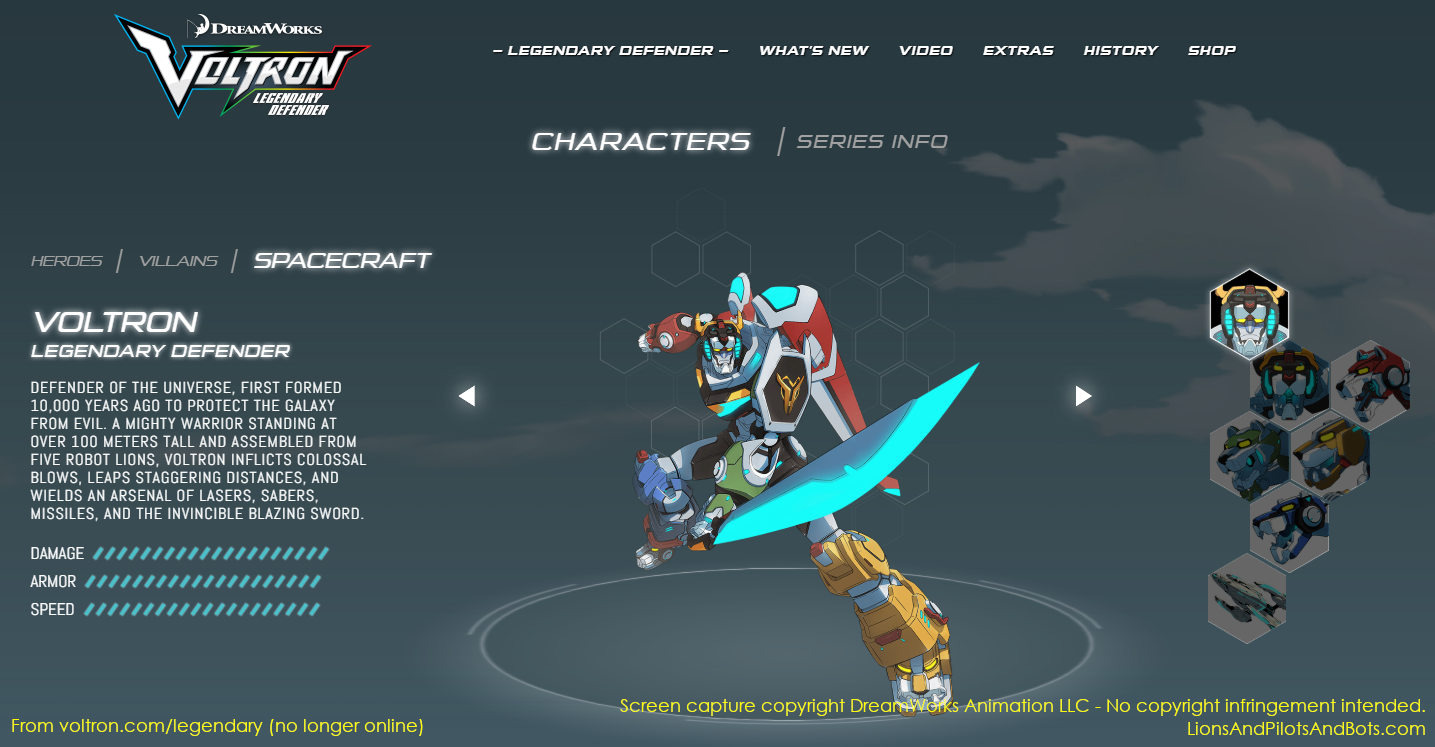
By May 26, 2016, but by this writing, no longer online, the official Voltron website (at http://www.voltron.com/legendary) contained a page of basic information about VOLTRON: LEGENDARY DEFNDER‘s characters and technology, including Voltron. As shown in this screen capture from the website, the Voltron page described Voltron as “a mighty warrior standing at over 100 meters tall.”
Official Voltron Facebook Page
A May 7, 2016 post on the Voltron Facebook page, still online as of this writing (link), includes a low-resolution diagram of Voltron, the Statue of Liberty, and the Taj Mahal, with dimensions and dimension lines to show how tall each object is. The diagram establishes Voltron’s standing height as 100.584 meters. Since 2.54 centimeters equals exactly one inch, 100.584 meters is exactly 330 feet. Likely for artistic reasons, the diagram uses a perspective rendering of Voltron, rather than an orthographic rendering. (A perspective rendering represents what an object would look like through an eye or camera lens. An orthographic rendering is like a blueprint drawing.)
A quirk about the image is that the dimension line makes it appear as if Voltron’s height is measured from the bottoms of Voltron’s feet to the tips of its wings in some arbitrarily extended position. A standing height would be more realistically measured from the bottoms of the feet to the top of the head.
By examining the diagram in Adobe Illustrator, if Voltron’s height is 100.584 from feet to wing tips, then I estimate the robot’s height from feet to the top of the head — the crown, so to speak — to be 84.1 meters (276 feet), and I estimate the robot’s height from feet to the tips of the horns on the robot’s head to be 85.4 meters (280 feet). With all that said, are we really meant to believe that Voltron’s height was measured from the robot’s feet to the tips of arbitrary posed wings?
One thing to keep in mind that is that this image was released over one month before the June 16, 2016, release of VOLTRON: LEGENDARY DEFENDER. Height measurements and dimension lines aside, this image is less an “engineering drawing” than an artistic composition that offers a preview of the robot itself. For this reason, despite the dimension line on the image, we might surmise that the robot’s height is “really” measured to the top of the head. Let’s examine another image and see if that might indeed be true.
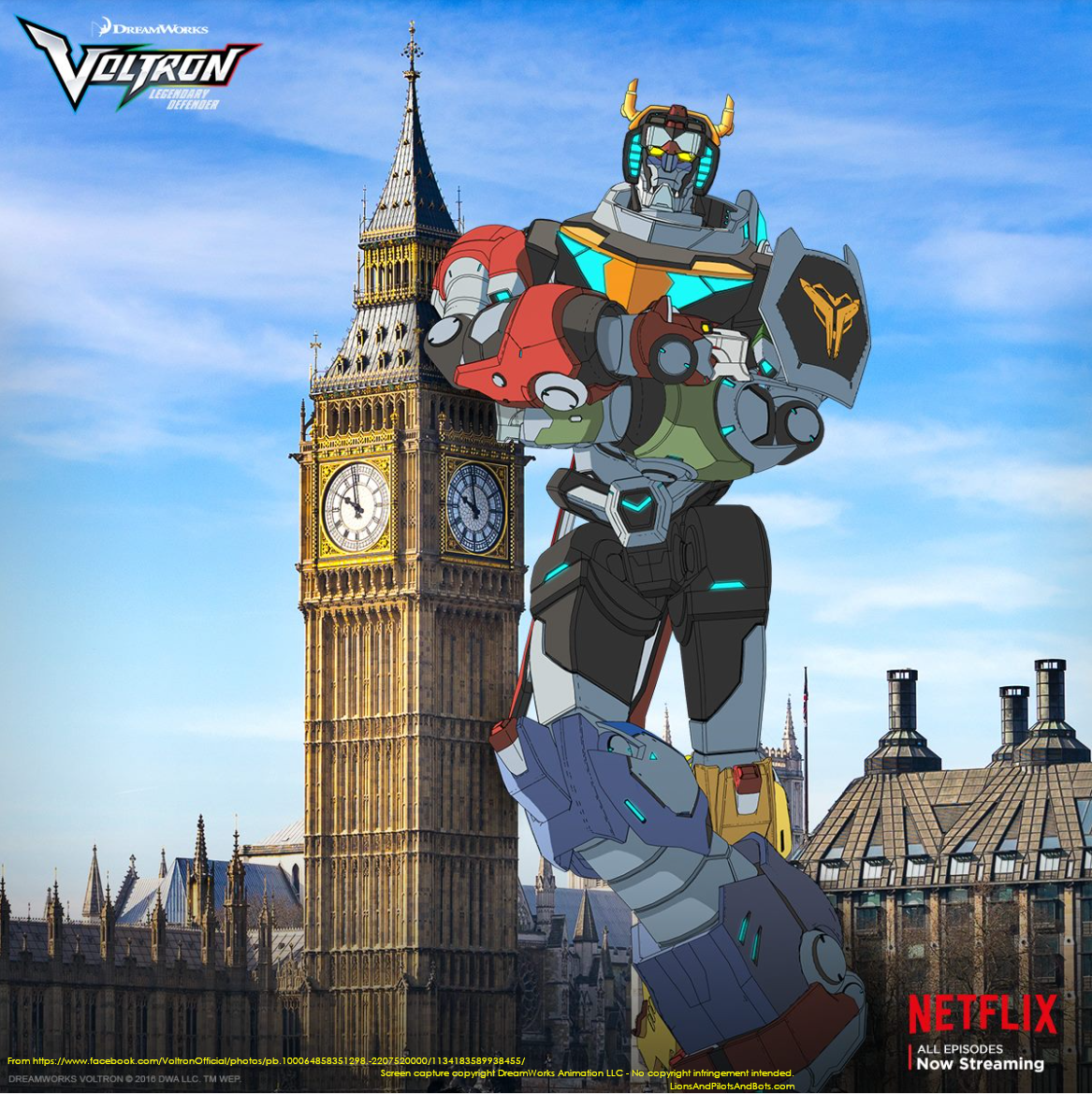
A July 14, 2016 post on the Voltron Facebook page, still online as of this writing (link), includes a color rendering of Voltron striking a pose, wings down, next to Big Ben. According to the Big Ben page on Wikipedia (https://en.wikipedia.org/wiki/Big_Ben), Big Ben’s tower stands 96 meters (316 feet) tall. Voltron is not standing at attention, but the robot, from feet to top-of-head, or feet to tops-of horns, appears to be slightly shorter than Big Ben — but not as short as the 84.1 to 85.4 meters that the May 16, 2016, Facebook diagram suggests. The July 14, 2016 image is also an artistic composition, and like the May 16, 2016, it almost certainly wasn’t meant to be a precise reference. The choice to make Voltron slightly shorter than Big Ben might have been a purely aesthetic decision.
It’s probably safe to assume that Voltron’s 100.584-meter (330-foot) standing height is “really” measured from the bottoms of the robot’s feet to the top of its head – which might or might be the tips of its horns.
Lion Force Voltron from VOLTRON: DEFENDER OF THE UNIVERSE
Before I began researching for this article, I had encountered numerous online claims that Lion Force Voltron’s standing height is 60 meters (197 feet). I wanted to see if there was evidence to support these claims.
The 2014 book VOLTRON: FROM DAYS OF LONG AGO: A THIRTIETH ANNIVERSARY CELEBRATION, by Brian Smith, Marc Morrell, Joshua Bernard, and Jacob Chabot, establishes that Lion Force Voltron stands “at an awe-inspiring 300 feet tall.” 300 feet is 91.4 meters. This measurement is over 50% taller than the oft-claimed 60-meter figure. What is the origin of the 60-meter claim?
Before we investigate where the 60-meter claim might have originated, I should point out that the very book from which the 300-foot height is established also offers some evidence for Voltron being 60 meters tall.
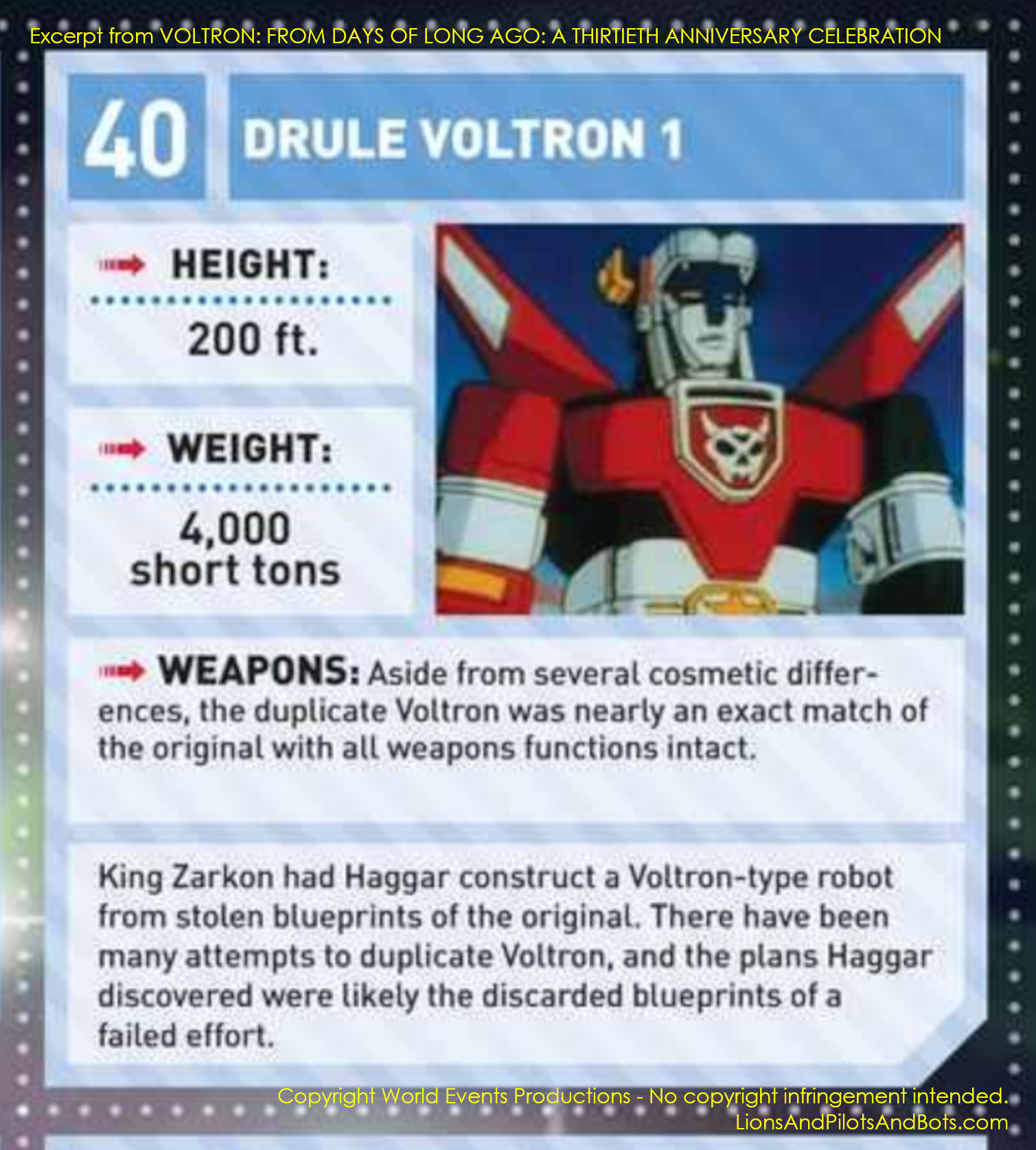
FROM DAYS OF LONG AGO contains a section that I have described as a “Robeast Rolodex” — a short description of many of the Robeasts that Lion Force Voltron and Vehicle Team Voltron encounters in VOLTRON: DEFENDER OF THE UNIVERSE, and that Voltron encounters in VOLTRON FORCE. Far Universe Entry #60, “Drule Voltron 1,” describes the Haggar-created Voltron lookalike Robeast that Lion Force Voltron battles in the VOLTRON: DEFENDER OF THE UNIVERSE episode “Voltron Vs. Voltron” (Production Number 244). This entry describes the Voltron lookalike as being 200 feet tall, or 61.0 meters. In the episode, Voltron and its lookalike are clearly intended to be the same size.
In 1997, toy company Trendmasters released a plastic and die cast metal toy of Lion Force Voltron that, despite minor changes, was basically a re-release of Matchbox’s 1985 Voltron III, or Lion Force Voltron toy, which in turn was basically a re-release of the 1981 Popy / Bandai GB-36 Golion toy in Japan. One panel of the Trendmasters toy’s box contains size information about, not Voltron, but rather each of the five lions that combine to form Voltron.
The panel specifies each lion’s height, in meters.
Black Lion: 40 meters (131 feet)
Red and Green Lions: 20 meters (98 feet)
Blue and Yellow Lions: 30 meters (66 feet)
Based on how the lions are reconfigured to form Voltron, Voltron’s height can be estimated by adding the length of Black Lion to the length of Blue or Yellow Lion. Each lion is much longer than it is tall, so if these metrics are accurate, then Lion Force Voltron would be significantly taller than even the 300-foot (91.4-meter) claim in FROM DAYS OF LONG AGO.
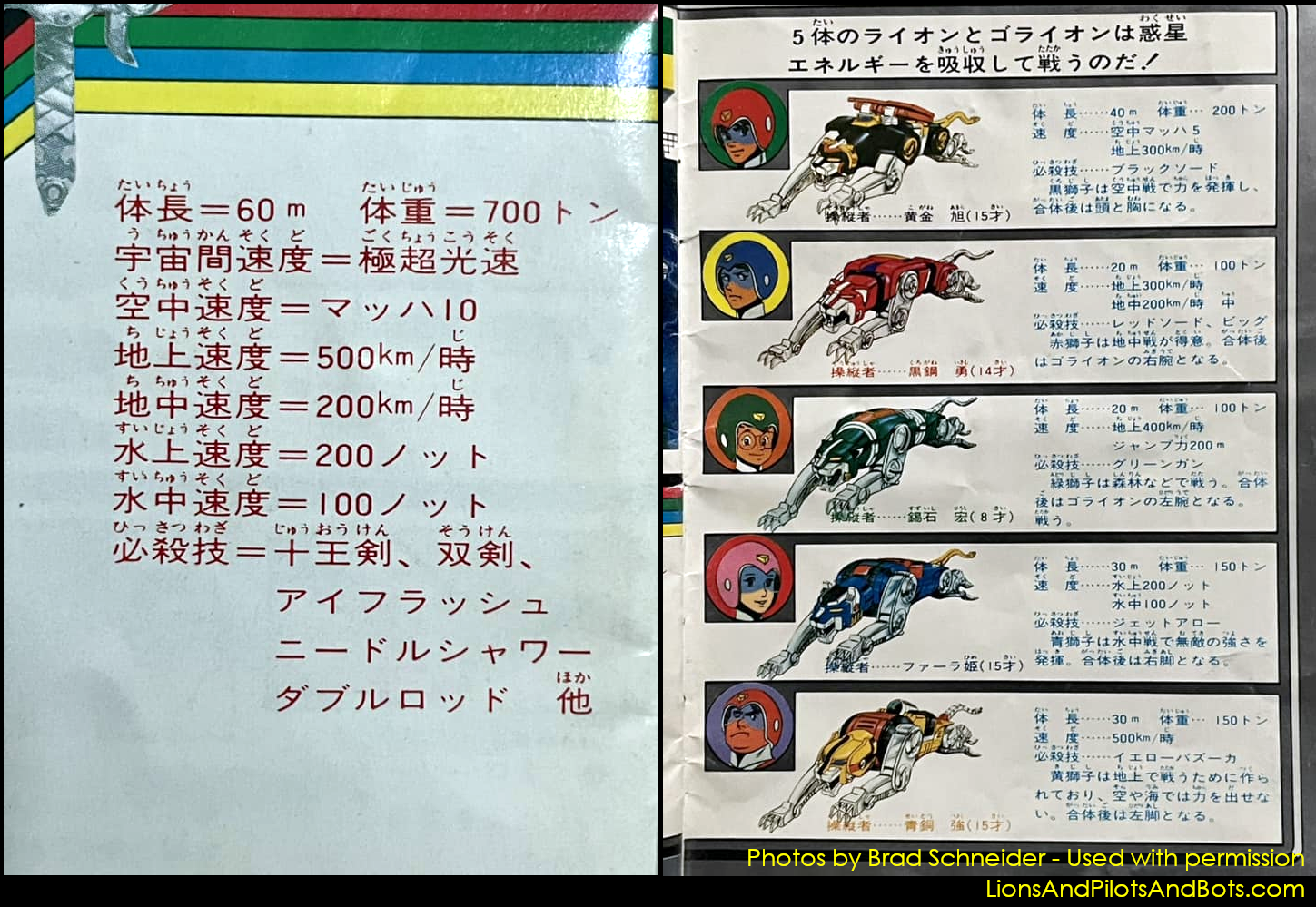
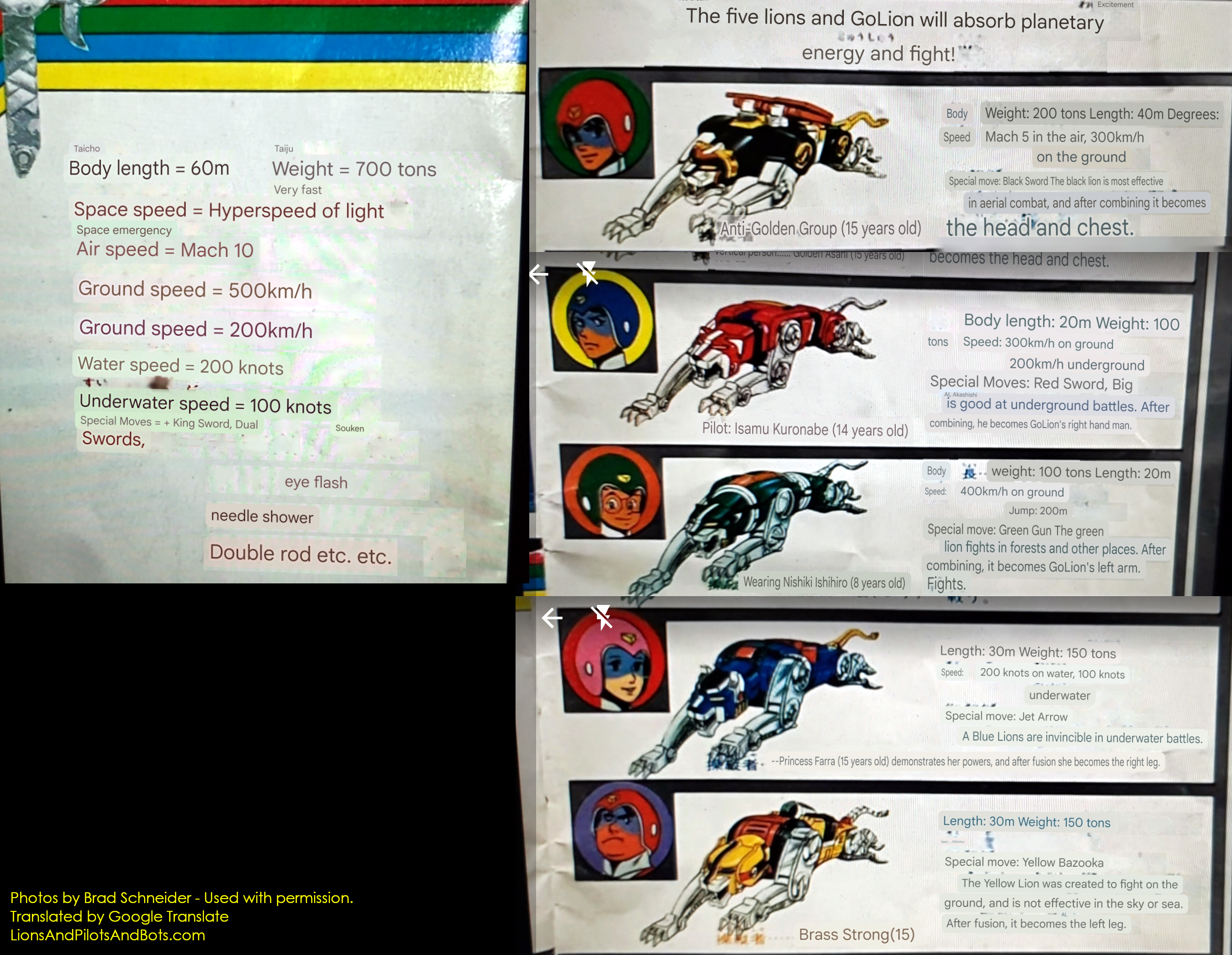
In search of more information about Lion Force Voltron’s height, let’s go back further — waaaaaay back, to the instructions of the Popy/Bandai Golion GB-36 toy. As a reminder, most Lion Force Voltron episodes of VOLTRON: DEFENDER OF THE UNIVERSE were adapted from the 1981 anime program BEAST KING GOLION. Thanks to Voltron collector Brad Schneider for providing these photos.
Because the Golion instructions are in Japanese, I used Google Translate and my smartphone’s camera to translate the Japanese text.
The translated instructions reveal the height of Golion and the lengths of each lion.
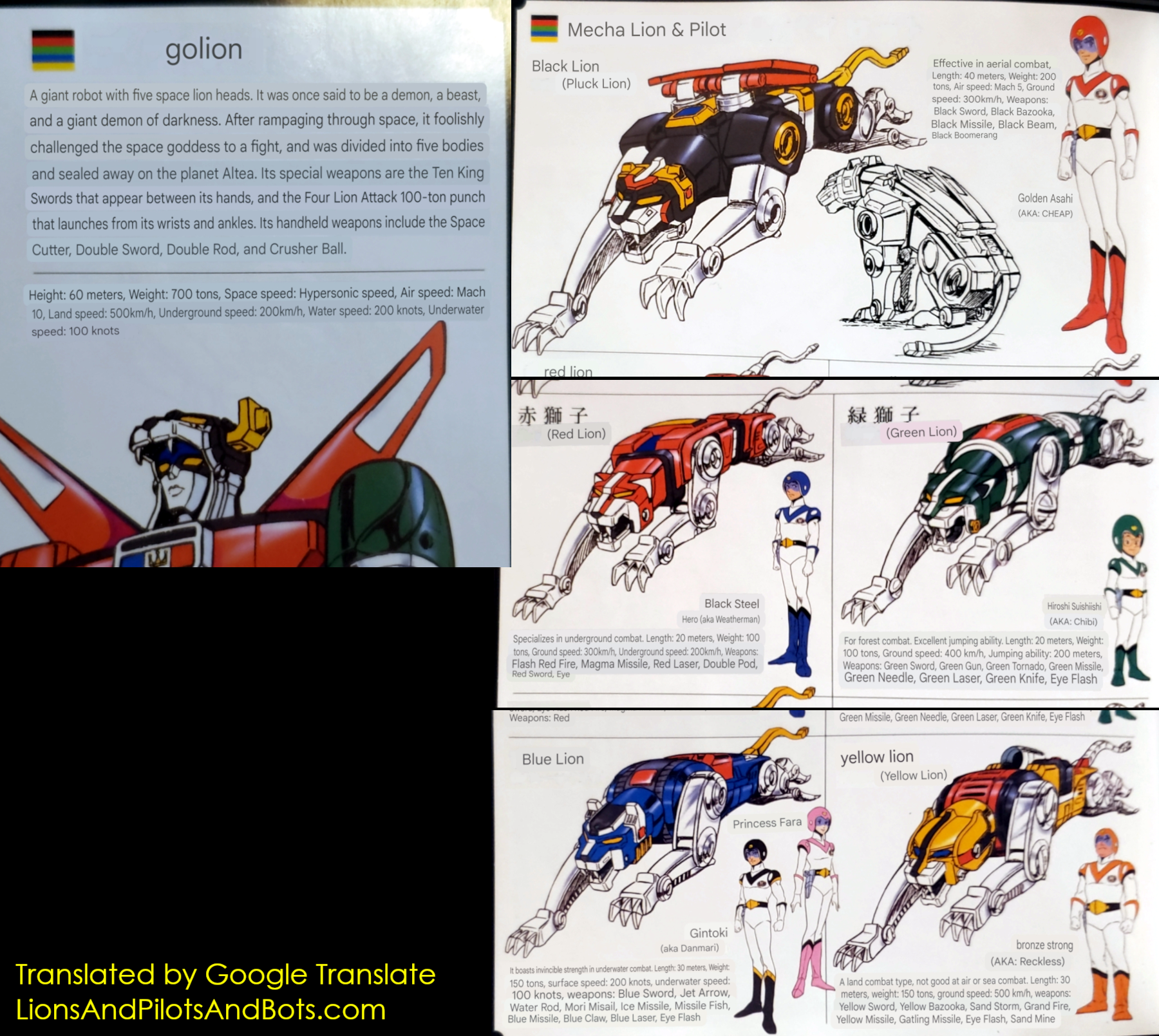
Golion height: 60 meters (197 feet)
Black Lion length: 40 meters (131 feet)
Red and Green Lion lengths: 20 meters (98 feet)
Blue and Yellow Lion lengths: 30 meters (66 feet)
The lion length values do match the “height” values that Trendmasters printed on their Voltron toy box.
The instructions of Bandai’s 2017 Soul of Chogokin GX-71 Golion also contain the same metrics, as shown in the translated photos below.
What do we conclude from this evidence? Unlike VOLTRON: LEGENDARY DEFENDER, the evidence is somewhat contradictory, but my conclusion is that Lion Force Voltron, like Golion, has a standing height of 60 meters (197 feet).
Vehicle Team Voltron from VOLTRON: DEFENDER OF THE UNIVERSE
Before I began researching for this article, I had encountered numerous online claims that Vehicle Team Voltron’s standing height is 60 meters (197 feet). I wanted to see if there was evidence to support these claims.
The 2014 book VOLTRON: FROM DAYS OF LONG AGO: A THIRTIETH ANNIVERSARY CELEBRATION, by Brian Smith, Marc Morrell, Joshua Bernard, and Jacob Chabot, establishes that Vehicle Team Voltron stands “at over 300 feet tall.” On the other hand, since the book uses the 300-foot height for Lion Force Vfoltron, and a 200-foot height for the Voltron lookalike Robeast, its claim about Vehicle Team Voltron’s height is similarly suspicious.
In VOLTRON: FLEET OF DOOM (1986), Vehicle Team Voltron and Lion Force Voltron are shown to be roughly the same size. This, coupled with my conclusion about Lion Force Voltron being 60 meters (197 feet) tall, suggests to me that Vehicle Team Voltron also has a standing height of about 60 meters.
I own a Popy/Bandai Dairugger DX toy — the toy that corresponds most closely to the Popy/Bandai Golion GB-36 toy from which I posted photos of the instructions. Unfortunately, my Dairugger toy does not include its original instructions. I will update this page with Dairugger DX instructions if I should find someone who owns them and is willing to share photos.
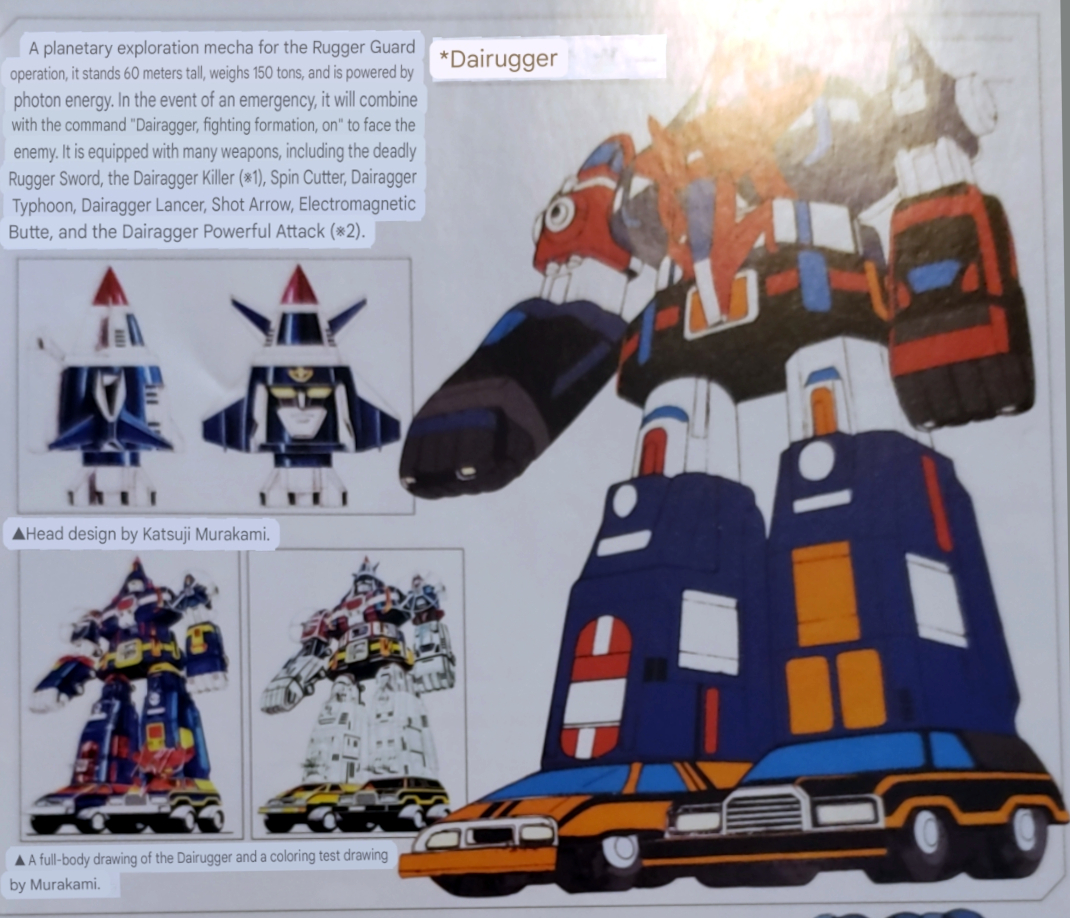
The instructions of Bandai’s 2019 Soul of Chogokin GX-88 Dairugger reveal Dairugger’s height to be, like Golion, 60 meters.
Voltron from VOLTRON: THE THIRD DIMENSION
Voltron from VOLTRON: THE THIRD DIMENSION is of the same “classic-style” design as Lion Force Voltron from VOLTRON: DEFENDER OF THE UNIVERSE, except for minor, stylistic changes. Having seen no evidence to the contrary, I assume that Voltron from VOLTRON: THE THIRD DIMENSION is of the same standing height as Lion Force Voltron from the 1980s program. As previously mentioned, that height is 60 meters (197 feet).
Stealth Voltron from VOLTRON: THE THIRD DIMENSION
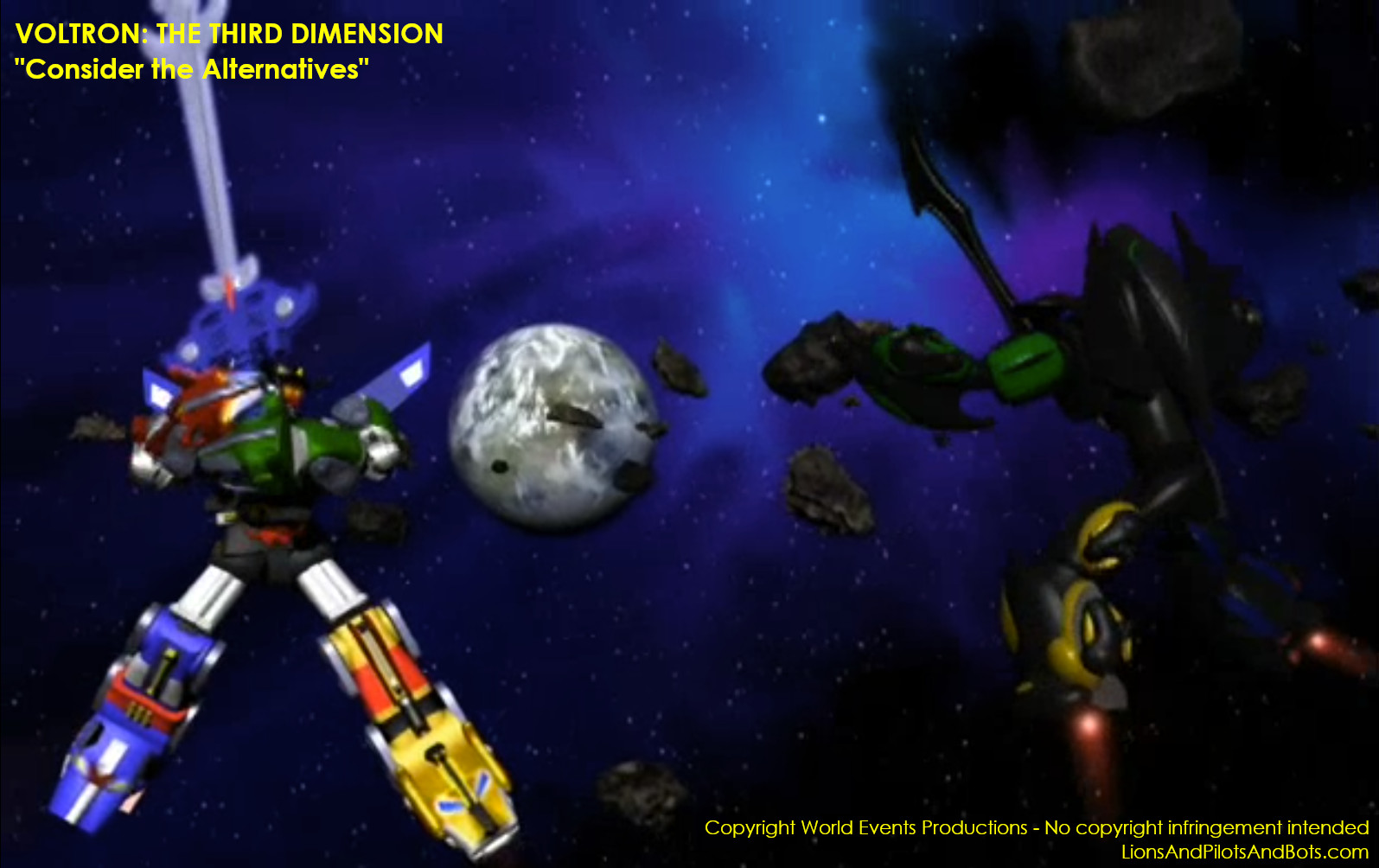
In the VOLTRON: THE THIRD DIMENSION episode “Consider the Alternatives,” Stealth Voltron encounters a classic-style Voltron from an alternate universe. The robots appear to be of similar size. Having seen no evidence to the contrary, I assume that Stealth Voltron is of similar standing height as that of classic-style Voltron from VOLTRON: THE THIRD DIMENSION: approximately 60 meters (197 feet).
Voltron from VOLTRON FORCE
One thing that I didn’t mention about VOLTRON: FROM DAYS OF LONG AGO: A THIRTIETH ANNIVERSARY CELEBRATION is that the book’s “in-universe” sections treat VOLTRON: DEFENDER OF THE UNIVERSE, VOLTRON FORCE, and the six VOLTRON FORCE comics by VIZ Media as having a shared continuity. The book suggests that the visual differences between Lion Force Voltron from VOLTRON: DEFENDER OF THE UNIVERSE and VOLTRON FORCE are the result of upgrades that were performed by the Voltron Force: Keith, Lance, Pidge, Princess Allura, and Hunk. Arguing whether that makes sense is outside the scope of this article. What is in scope is that the book’s mention of Lion Force Voltron being “an awe-inspiring 300 feet tall” — that is, 91.4 meters tall — applies to Voltron regardless of its visual appearance. This means that Voltron from VOLTRON FORCE, like Voltron from VOLTRON: DEFENDER OF THE UNIVERSE, is 300 feet (91.4 meters). That said, as previously mentioned, the Voltron lookalike Robeast iss said to be 200 feet — 61.0 meters — tall.
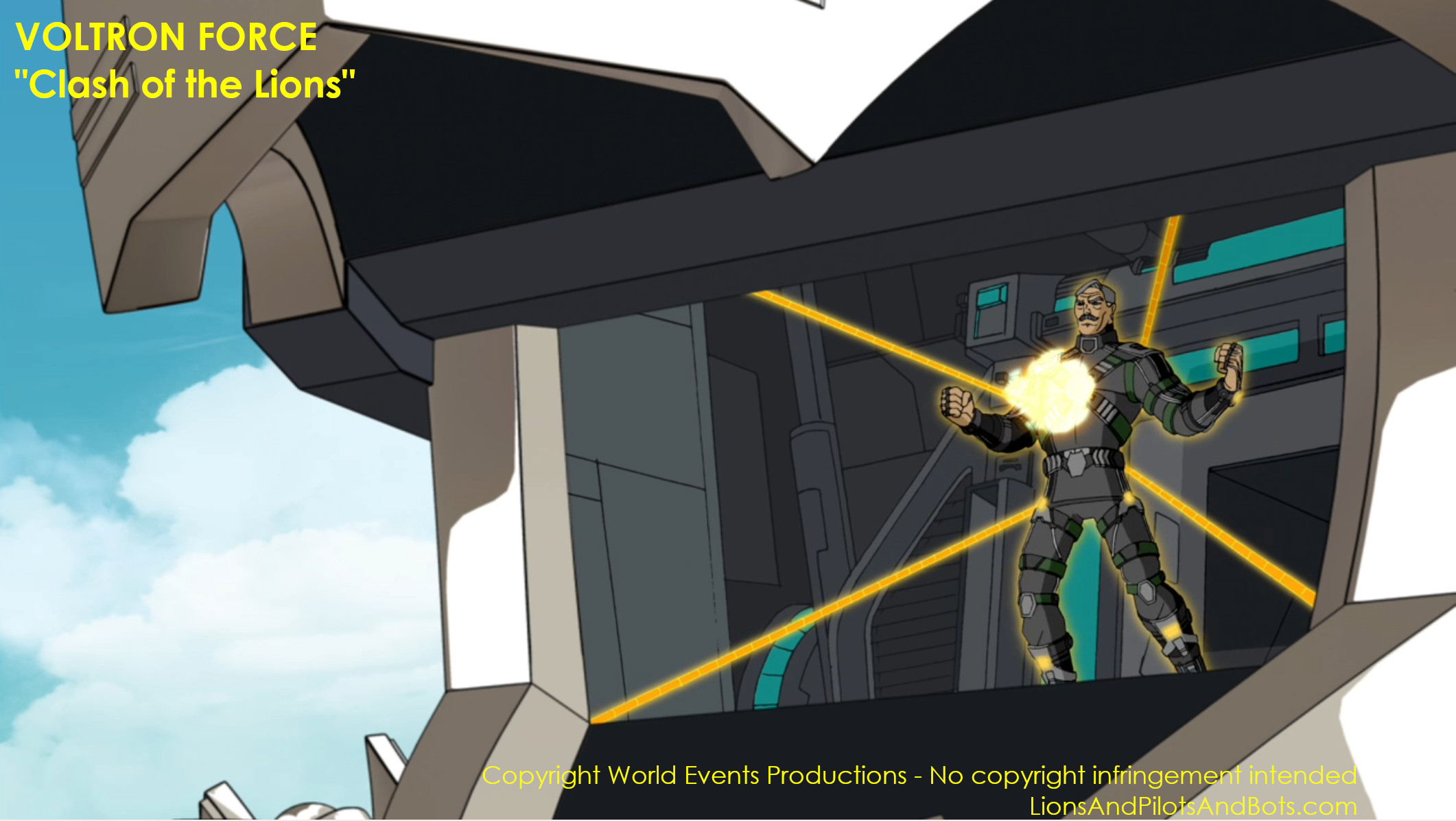
The height of Voltron from VOLTRON FORCE is the most ambiguous of all the Voltron robots, because I have been unable to find any references that are more definitive than the contradictory figures in FROM DAYS OF LONG AGO. In the VOLTRON FORCE cartoon itself, and likely also in every Voltron production, the sizes of the lions and Voltron can vary from shot to shot or scene to scene. Simply for its relevance to the plot, if we choose this image from the episode “Clash of the Lions,” we can see that Voltron’s head is large enough, with Voltron’s face retracted, to allow Sky Marshall Wade to stand inside Black Lion’s open mouth. This is consistent with many other episodes, which show Voltron Force pilots and cadets entering and exiting the individual lions by way of the lions’ mouths.
Based on visual evidence that I will provide in a future article, an adult human could stand inside the mouth of a lion that forms a 60-meter-tall Voltron. For that reason, unless any future contradictory information, I’ll assume that Voltron from VOLTRON FORCE, like all other Voltron robots except the version from VOLTRON: LEGENDARY DEFENDER, is about 60 meters (197 feet) tall.
Conclusion
To summarize, based on as much evidence as I have found, and with conclusions and assumptions that I drew from sometimes conflicting sources, the Voltron robots have the following heights:
Lion Force Voltron from VOLTRON: DEFENDER OF THE UNIVERSE: 60 meters (197 feet)
Vehicle Team Voltron from VOLTRON: DEFENDER OF THE UNIVERSE: 60 meters (197 feet)
“Classic-style” Voltron from VOLTRON: THE THIRD DIMENSION: 60 meters (197 feet)
Stealth Voltron from VOLTRON: THE THIRD DIMENSION: 60 meters (197 feet)
Voltron from VOLTRON FORCE: 60 meters (197 feet) (barring evidence to the contrary)
Voltron from VOLTRON: LEGENDARY DEFENDER: 100.584 meters (330 feet)
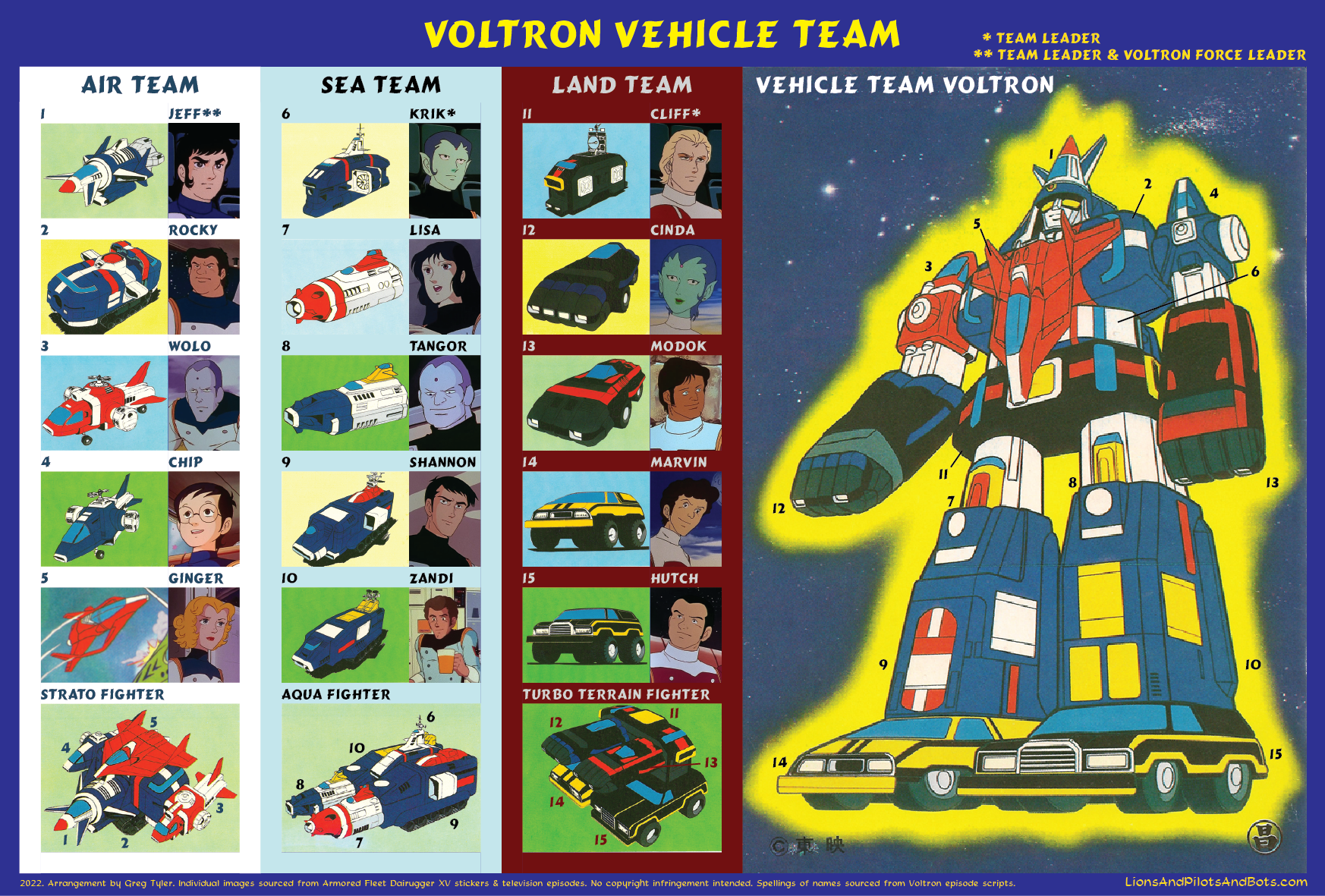
I just created this guide to the pilots and vehicles of Vehicle Team Voltron from VOLTRON: DEFENDER OF THE UNIVERSE. Enjoy! (Click the image to view it at full size.)
The episodes of Voltron‘s first season originally aired out of sequence with respect to the corresponding episodes of Beast King Golion.
The episodes of Voltron‘s second season originally aired out of sequence with respect to the corresponding episodes of Armored Fleet Dairugger XV.
The double-length “Fleet of Doom” episode, which was animated specifically for Voltron, isn’t considered one of the program’s episodes, but rather a distinct production; however, in some markets, the episode was edited into two regular-length episodes that aired alongside the program’s 124 regular episodes.
While examining scripts from Voltron, I learned about the episodes’ production numbers:
The first season’s 52 episodes have production numbers 201-252. Their sequence matches that of the Beast King Golion episodes from which they were adapted.
The second season’s 52 episodes have production numbers 101-152. Their sequence matches that of the Armored Fleet Dairugger XV episodes from which they were adapted.
The third season’s 20 episodes have production numbers 301-317 and 319-321. Their sequence matches that of the episodes’ original air dates.
The third-season episode with production number 318 was never completed or aired. Video-only excerpts from this unfinished episode were an extra in the Media Blasters DVD sets of the mid-2000s.
The “Fleet of Doom” script has no production number.
In the original “Voltron Trilogy” concept for Voltron:
Voltron I, which later became known as Vehicle Team Voltron, was the titular robot in Armored Fleet Dairugger XV.
Voltron II was the titular robot from Lightspeed Electroid Albegas.
Voltron III, which later became known as Lion Force Voltron, was the titular robot in Beast King Golion.
That “Voltron I’s” 52 episodes have production numbers in the 100s, and “Voltron III’s” initial 52 episodes have production numbers in the 200s, suggests that the decision not to adapt Lightspeed Electroid Albegas into “Voltron II” was made fairly early in production — perhaps even during pre-production.
The Madman Entertainment DVDs of the early 2000s and the Universal DVDs of 2019 numbered the Voltron episodes as follows:
The first season’s 52 episodes are numbered as “Lion Force” episodes 1-52. Their sequence matches that of the Beast King Golion episodes from which they were adapted.
The third season’s 20 episodes are numbered as “Lion Force” episodes 53-72. Their sequence matches that of the episodes’ original air dates.
The second season’s 52 episodes are numbered as “Vehicle Force” episodes 1-52. Their sequence matches that of the Armored Fleet Dairugger XV episodes from which they were adapted.
The Media Blasters DVDs of the mid-2000s numbered the Voltron episodes as follows:
The first season’s 52 episodes are numbered as episodes 1-52. Their sequence matches that of the Beast King Golion episodes from which they were adapted.
The third season’s 20 episodes are numbered as episodes 53-72. Their sequence matches that of the episodes’ original air dates.
The second season’s 52 episodes are numbered as episodes 73-124. Their sequence matches that of the Armored Fleet Dairugger XV episodes from which they were adapted.
The table below is my attempt to capture all this information in one place. You can sort a column by clicking on its header. You can sort multiple columns by holding the Shift key while you select multiple columns. (Sorting by multiple columns probably won’t work on most mobile browsers.)
The abbreviated column headers are as follows:
Prod #: Voltron production number
Seas: Voltron season number (in original air date order)
Bot: Indicates Lion Force Voltron or Vehicle Team Voltron
Seas for Bot: For a given Voltron robot (Lion Force Voltron or Vehicle Team Voltron), the season number (in original air date order)
Title: Episode title
OAD: Original air date
MB DVD Ep #: Episode number according to the Media Blasters DVDs of the mid-2000s
ME / Univ DVD Ep #: Episode number according to the Madman Entertainment DVDs of the early 2000s and the Universal Home Entertainment DVDs of 2019
An: Original anime program (Beast King Golion or Armored Fleet Dairugger XV)
During a recent re-watch of the Voltron: Defender of the Universe episode “Letters from Home,” which was adapted from the Armored Fleet Dairugger XV episode “Get Yourself Together, Mutsu,” I noticed a funny Easter egg.
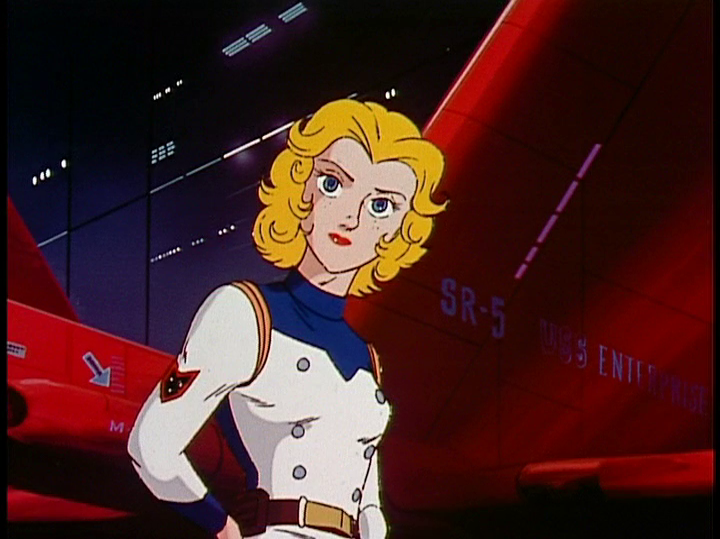
In this single shot, Ginger’s Voltron vehicle or “Rugger” bears the name “USS Enterprise,” presumably from Star Trek! Some old-school fans differentiate the Vehicle Team episodes of 1980s Voltron by likening it to Star Trek, while likening the Lion Force episodes to Star Wars. Maybe this is why!
I have no idea why the “USS Enterprise” marking would be next to an “SR-5” marking. Ginger’s Rugger is Rugger #5, so “R-5” would make sense… but what’s with the “S?” In Voltron, Ginger is part of the Air Team — but “Air” doesn’t start with “S.” The five Air Team vehicles combine into the Strato Fighter, so maybe that’s where the “S” comes from. On the other hand, in Dairugger, the team is called the Air Rugger Team — the “Aki Team” for short, and the five Ruggers form the Air Rugger. None of those terms start with “S.”
Then again, I’m trying to rationalize a marking that’s next to a nonsensical “USS Enterprise” marking. Curse you, brain, for overthinking yet again! :)