
The DreamWorksTV YouTube channel (link) has released its first “Voltron Vlog,” by none other than Coran from Voltron Legendary Defender!
Category: TV
Out of Order: Voltron vs. Golion and Dairugger
When I first watched Voltron: Defender of the Universe in weekday syndication between 1984 and 1986, I had no idea that the show had been adapted from the anime programs Beast King Golion and Armored Fleet Dairugger XV. I first learned this in the late 1980s, in an issue of Starlog magazine, in an article about what was then called “Japanimation.”
When Media Blasters released the Voltron: Defender of the Universe DVD box sets, I noticed something as I thumbed through the episode synopses that had been packaged in the box sets: the episode numbers and the original air dates often seemed… off. For example, Lion Force episode eight, “The Stolen Lion,” originally aired eight days after episode seven, “The Lion Has New Claws.” This seemed odd, since the program ran in weekday syndication. Barring reruns, I would expect two consecutive episodes to air no more than three days apart — the earlier episode airing on a Friday, and the later episode airing on the following Monday.
But things got even weirder. Lion Force episode 14, “Yurak Gets His Pink Slip,” originally aired ten days before episode 13, “The Witch Gets a Facelift.”
As a Star Trek fan, I knew that many episodes of the 1960s television series had originally aired out of production sequence. The first episode to air, “The Man Trap,” was the eighth episode to have been produced. Still, with Voltron: Defender of the Universe having been adapted from two already produced programs, it seemed strange that its episodes would have been adapted out of sequence.
It turns out that the episode numbers in the Voltron DVD box sets correspond to the original air date sequences of the original anime programs. Episodes 1-52 correspond to episodes 1-52, respectively, of Beast King Golion. Episodes 73-124 correspond to episodes 1-52, respectively, of Armored Fleet Dairugger XV. (Episodes 53-72 are the 20 Lion Force episodes that had been animated specifically for Voltron. The “Fleet of Doom” feature episode was sold as a separate DVD.)
For this article, I decided to see just how out of order Voltron: Defender of the Universe is with respect to Beast King Golion and Armored Fleet Dairugger XV.
Here is a comparison of the original air date sequence of all 52 Golion episodes with the original air date sequence of the first 52 Lion Force Voltron episodes.
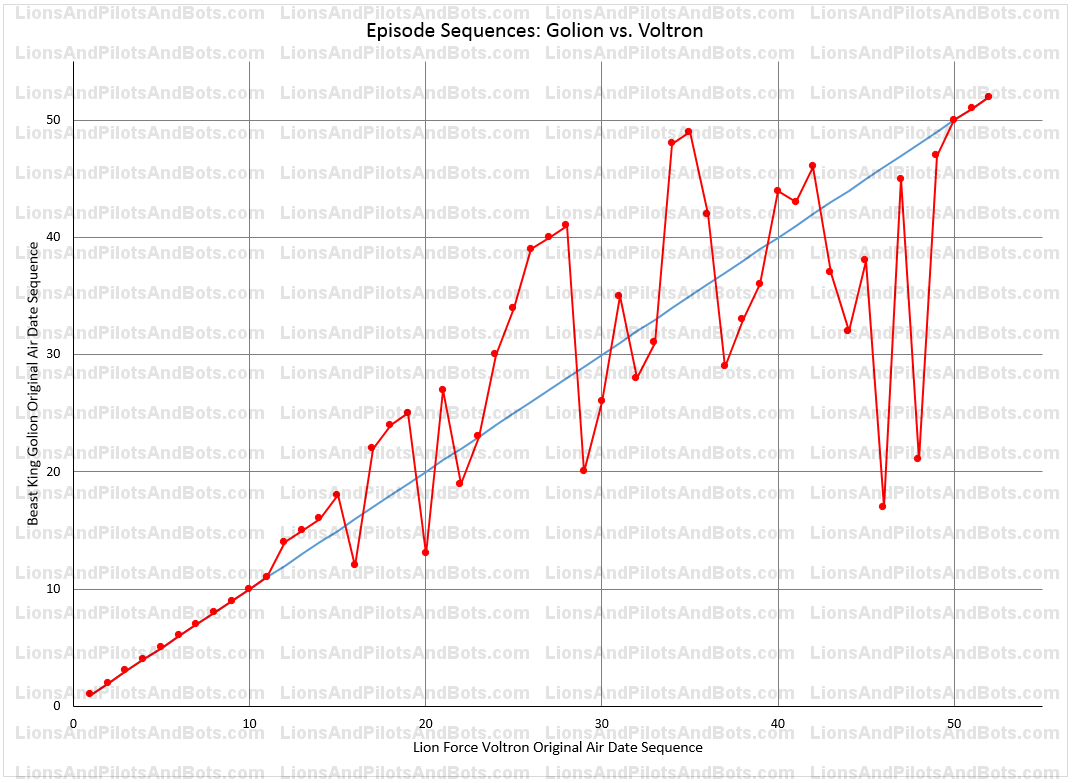
As you can see…
- The first eleven Lion Force Voltron episodes originally aired in the same order as the corresponding Golion episodes.
- The last three Lion Force Voltron episodes originally aired in the same order as the corresponding Golion episodes.
- The episodes between the first eleven and the last three are a jumbled mess!
Here is a comparison of the original air date sequence of all 52 Dairugger episodes with the original air date sequence of all 52 Vehicle Team Voltron episodes.
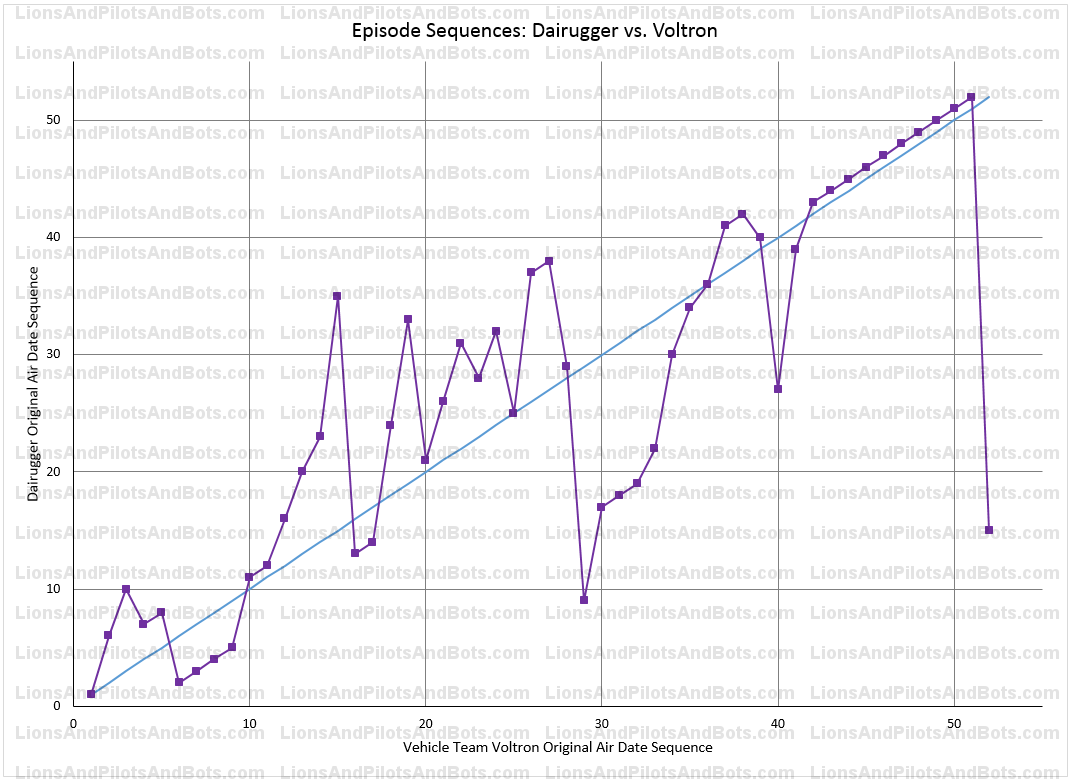
From this graph, we can see that…
- Even the first several Vehicle Team Voltron episodes are out of sequence with respect to Dairugger.
- The only long stretch of Dairugger-sequenced Vehicle Team Voltron episodes are episodes 42-51, which correspond to Dairugger episodes 43-52, respectively.
- The final Vehicle Team Voltron episode was the 15th episode of Dairugger!
Even this isn’t the whole story of how out of order Voltron was compared to the original anime programs. Let’s put all of the data together, but first, let’s keep in mind that:
- The first 52 Lion Force episodes of Voltron: Defender of the Universe are considered the program’s “first season.”
- The 52 Vehicle Team episodes are considered the “second season.”
- The “extra 20” Lion Force episodes — that is, the episodes that were animated specifically for Voltron — are considered the “third season.”
- “Fleet of Doom,” the feature-length, animated-for-Voltron episode that often aired in two parts, is generally considered an “extra” episode. (It is not shown in the chart below.)
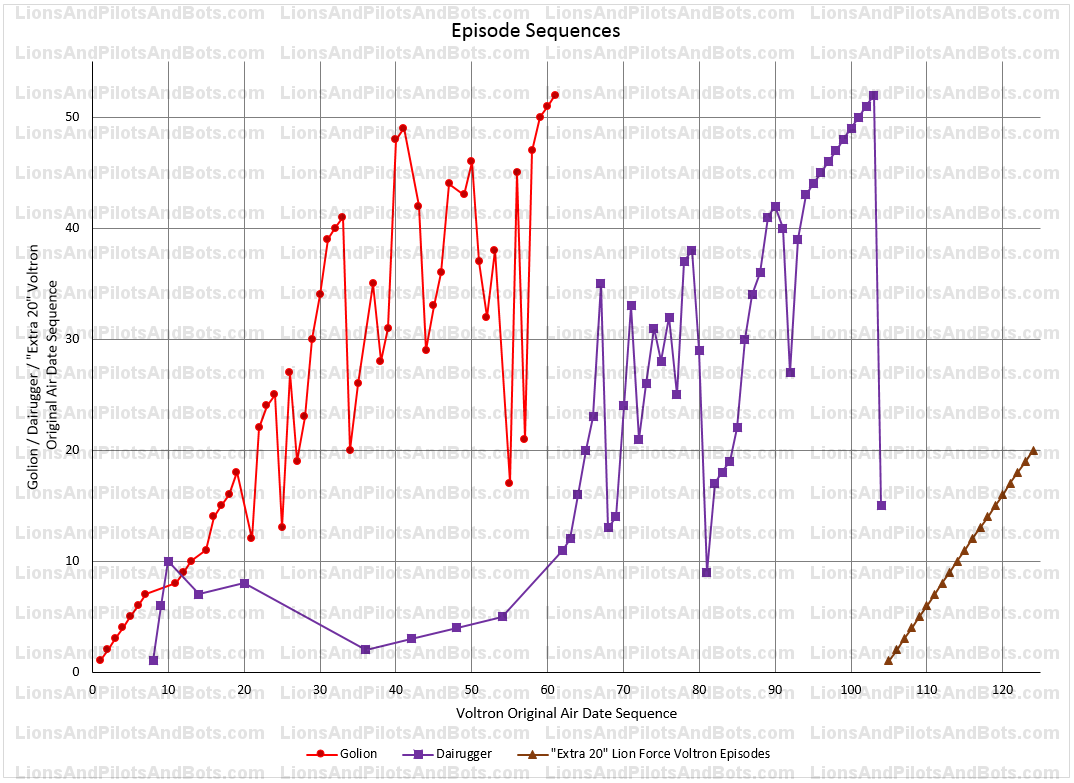
The first several Vehicle Team episodes originally aired scattered throughout the first 52 Lion Force episodes! It’s likely that these Vehicle Team episodes were repeated again at the beginning of the long stretch of Vehicle Team episodes. There’s a large enough time gap after the first 52 Lion Force episodes for this to have occurred. Still, this is kind of strange.
So what happened? Here is my guess:
- The first several Voltron episodes to be produced were Vehicle Team episodes. This is only speculation, but the pilot episode screened at the NAB conference in February 1984 featured Vehicle Team Voltron (then called Voltron I), and much of the early Voltron marketing materials featured only Vehicle Team Voltron.
- Sometime before Voltron debuted on television in September 1984, someone at World Events Productions decided that the Lion Force episodes adapted from Golion were better than the Vehicle Team episodes. A decision was made to air the Lion Force episodes first.
- After several Vehicle Team episodes of Voltron had been produced, the show makers transitioned into producing all 52 Lion Force episodes adapted from Golion.
- When Voltron premiered in September 1984, Lion Force episodes were broadcast.
- Unable to produce Lion Force episodes quickly enough to keep up with weekday airings, occasional, already completed Vehicle Team episodes were broadcast from time to time.
- After production of all 52 Lion Force episodes adapted from Golion had been completed, the remaining Vehicle Team episodes were produced.
- The Vehicle Team “batch” of episodes aired first with reruns of the already aired Vehicle Team episodes, followed by the ones that had not yet aired.
- After production of all 52 Vehicle Team episodes had been completed, 20 all-new Lion Force episodes, plus the “Fleet of Doom” special, were produced.
- After all of the Vehicle Team episodes had aired, the all-new Lion Force episodes, plus “Fleet of Doom,” were broadcast.
As for why the Voltron episodes aired out of sequence relative to Golion and Dairugger, I suspect the writers did not recognize the serialized nature of the anime programs. This is understandable, given the frantic pace of production, coupled with the anime episodes being in Japanese and lacking English subtitles. In addition, the Voltron episodes might not have been aired in the order in which they had been written or completed. Since the show’s original head writer, Jameson Brewer, died in 2003, we will likely never know for certain.
What are the take-aways from all this? First, it takes a lot of time to produce an animated television series — even one for which the animation was pre-produced. Second, creative and logistical decisions are made at all points in the production process. Third, the popularity of Voltron in the 1980s, and even today, is a testament to the dedication and ability of everyone who worked on Voltron, Golion, and Dairugger. Finally, it took a bit of work to be a Voltron fan in the 1980s, but I already wrote about that, didn’t I?
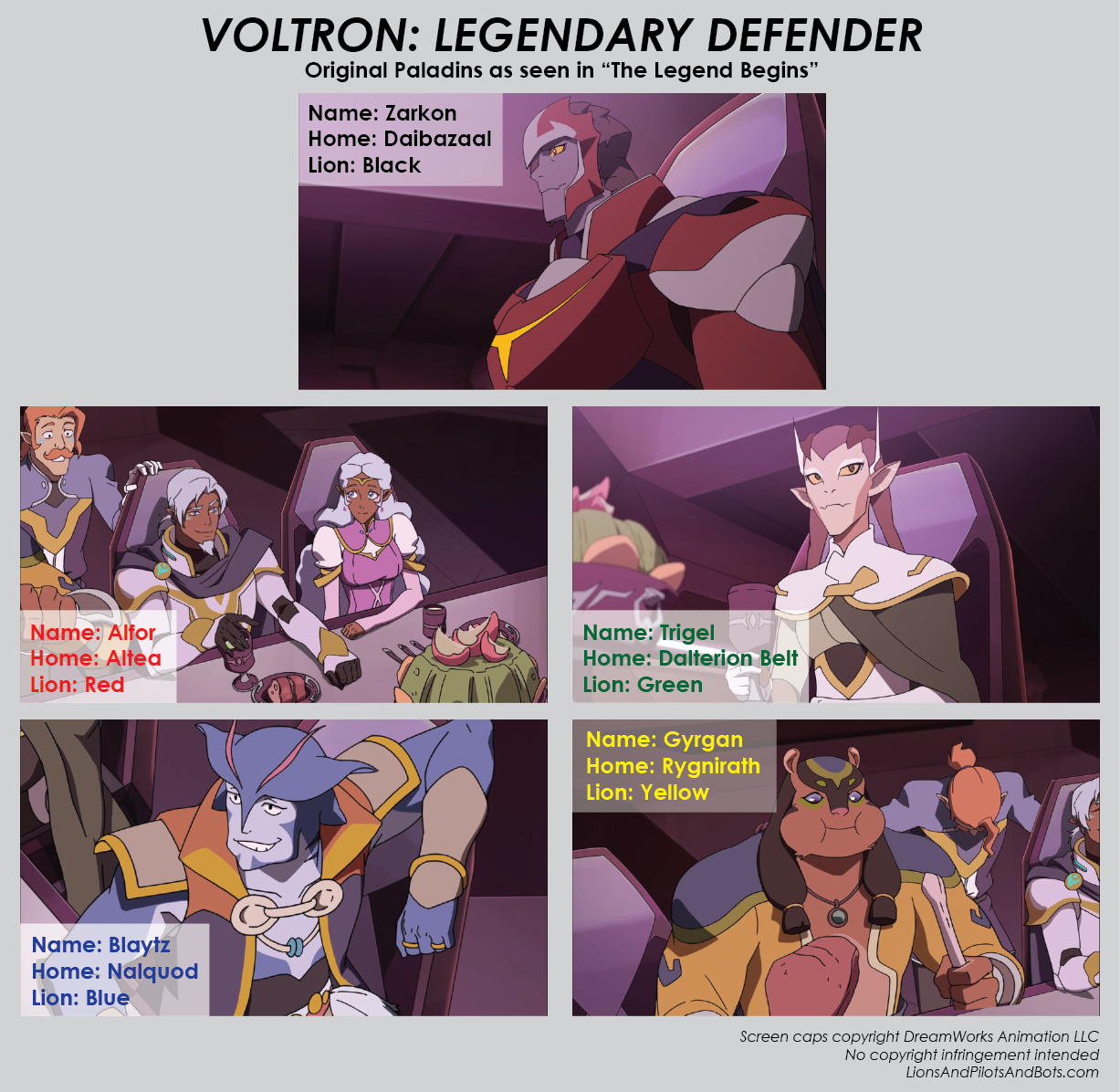
Voltron Legendary Defender – Original Paladins Visual Reference
While rewatching “The Legend Begins,” the final episode of the third season of Voltron Legendary Defender, I created this image so that Voltron fans such as myself could better remember the original five Paladins of Voltron. Enjoy!
Let’s Voltron: The Official Voltron Podcast #108
On August 22, Episode 108 of Let’s Voltron: The Official Voltron Podcast hit the Internet. I wasn’t able to be a part of this episode, so Lexi Hoffman (@RedLion004 on Twitter) joined host Marc Morrell as they interviewed Jamie Gray Hyder, who portrays Zethrid in Voltron Legendary Defender. Marc and Lexi also reviewed episodes 10 through 12 of the second season of Voltron Legendary Defender.
Check out Let’s Voltron: The Official Voltron Podcast #108 here: https://letsvoltron.simplecast.fm/episodes/d2f9e3f4/jamie-gray-hyder-zethrid-interview
Interview: Sesinio Ampongan, Jr. – Voltron Force
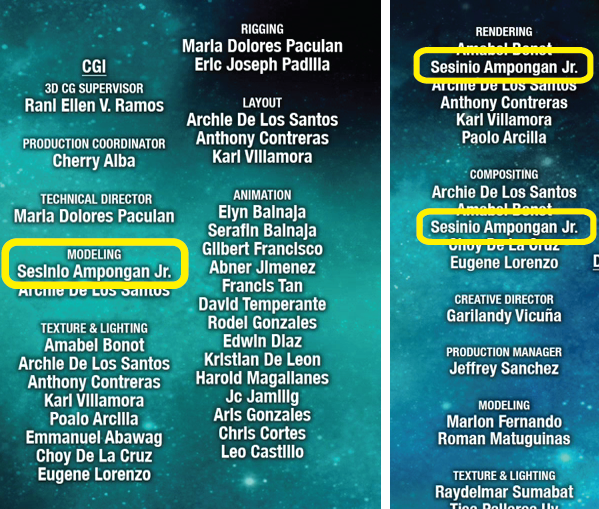
It takes many skilled and talented people to create a television series like Voltron Force. In that series, Sesinio Ampongan, Jr., is credited as a CGI modeling, rendering, and compositing artist. Here is an exclusive interview with Sesinio.
How did you become involved in 3D art and art in general?
I took up Bachelor of Arts in Fine Arts in one of the universities here in the Philippines. I, later on, enrolled again in another university and took up Bachelor of Science in Digital Illustration and Animation and got a degree. So it merely was a traditional/non-digital in the beginning and later on evolved to digital.
Is computer graphics your primary artistic medium? Do you also work in non-digital media, such as pencil, ink, or paint?
I can do traditional art using pencil, ink, watercolor and oil paint. It indeed is a big help if you at least know the traditional art if you want to do computer graphics.
What are some of your favorite digital and non-digital tools for your art?
For non-digital, I prefer pencil, ballpen, and paper. For digital, if you are referring to computer applications/software, I usually used Autodesk Maya, Adobe Photoshop, and Zbrush.
Who or what are some of your sources of inspiration?
Anyone who wows me through their crafts especially if it’s something new and unique.
What are some of your favorite works of art, books, TV programs, animated programs, movies, etc.?
I’m a fan of Dragon Ball Z and any movies equipped with kick-ass visual effects.
How did you become involved in Voltron Force?
I was part of the studio (Toon City Animation, Inc.) who WEP and Kickstart Productions outsourced it to. I was the lead 3D modeler back then.
What did you know of Voltron before you worked on Voltron Force? Would you call yourself a Voltron fan?
I really am not a fan of Voltron since I grow up from a place with almost no access to television. It was only during my teenage years that I learned about this comic character that it is a huge robot transformed from 5 lions.
What were your roles on Voltron Force? What kinds of things did you do? What specific elements of the show did you 3D-model?
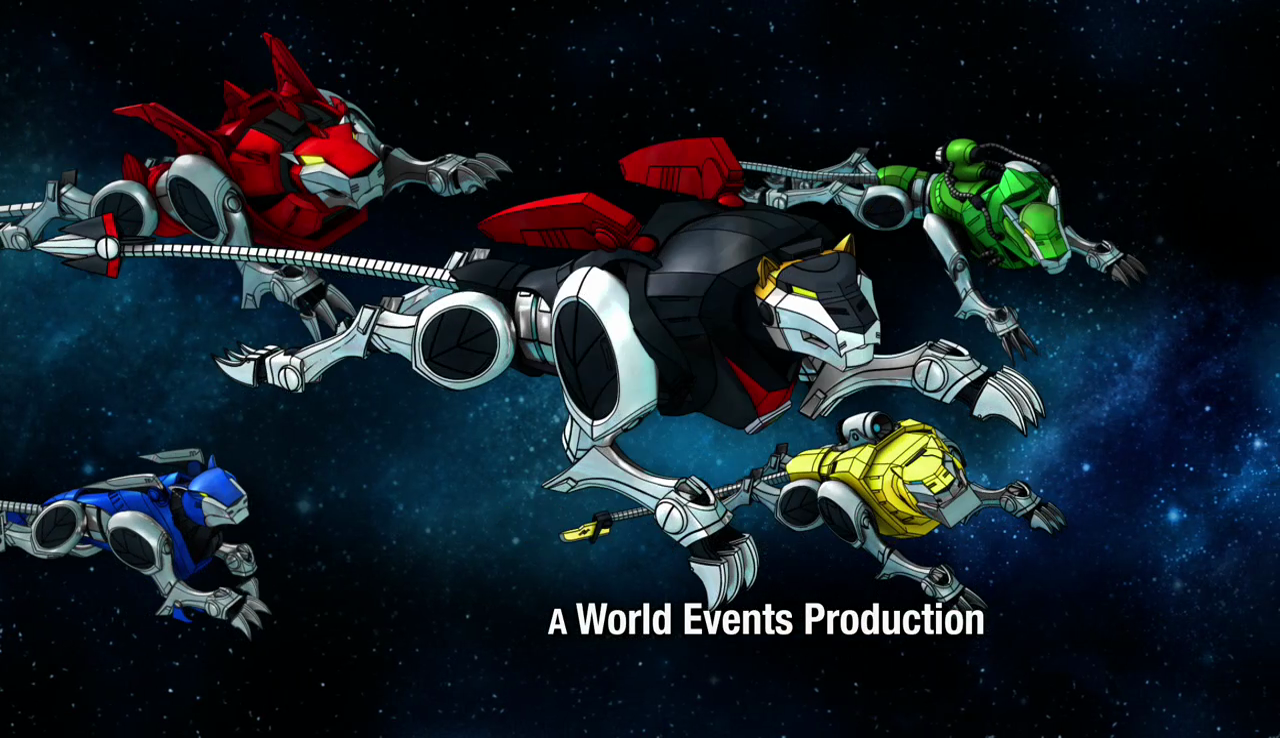
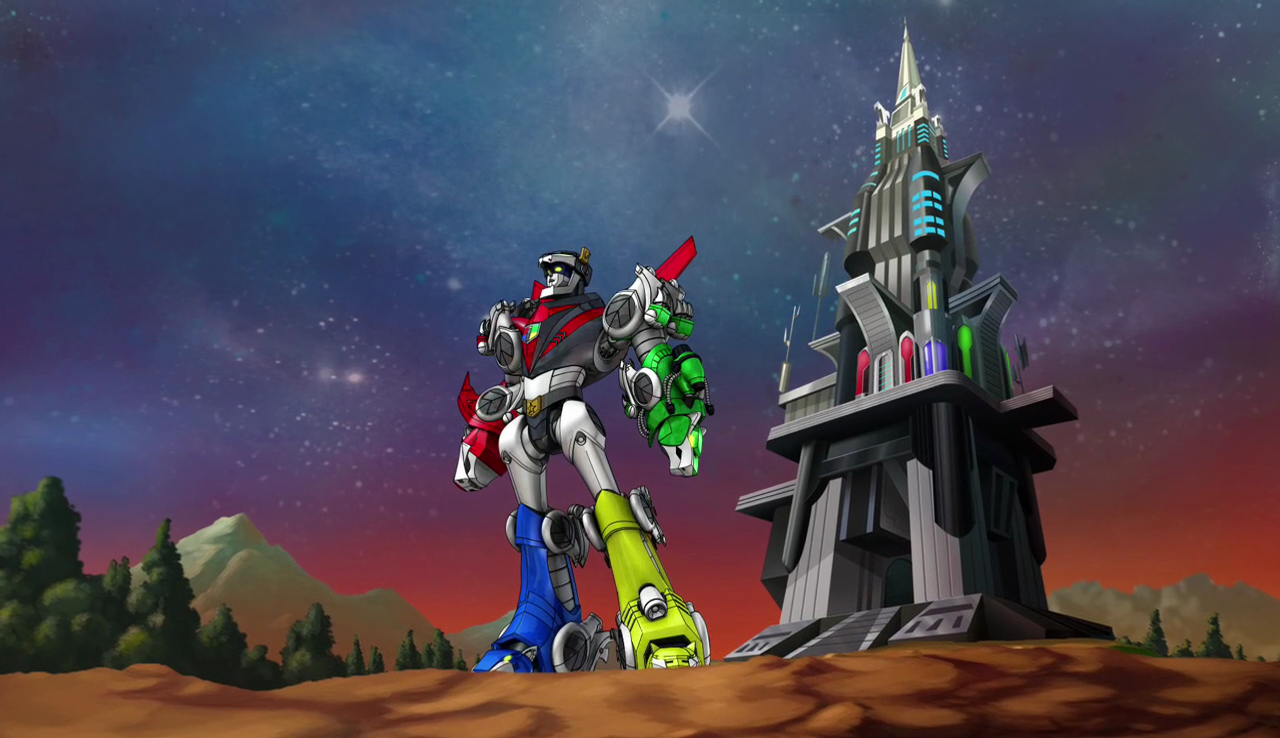
I was the lead 3D modeler during the process. I was the one responsible for the creation of the main characters like the Voltron itself(including the blue, green, yellow and red Voltron), the 5 lions, some of the Robeasts, vehicles, weapons, spaceships and a lot more.
Which software tools did you use while working on Voltron Force?
I used Autodesk Maya.
Are the models meshes, or are they based on splines such as NURBS?
They were all modeled using polygons.
Who were the main designers of the Voltron Lions and the Voltron robot itself?
I have no idea who the main designers are because from my recollection, the designs were already provided by our client.
When you created the 3D CGI models of the Lions and Voltron for Voltron Force, what were your initial references? Did you have designers’ sketches, or rough 3D models, or physical maquettes, or something else?
My initial references were the sketches provided by the client. It includes the orthographic views of the designs, the front, side, back and profile views. Sitting beside me during the process is our technical director/rigger discussing with me on how the model will work once rigged and how the body parts will move.
Did the designs of the Lions or Voltron change as a result of them being given three-dimensional form? For example, did anything that looked good on paper not translate well to 3D?
After almost tracing the designs verbatim on the 3D software, our creative director altered some parts of the designs because yes, some of them didn’t translate well and don’t look good in 3D.
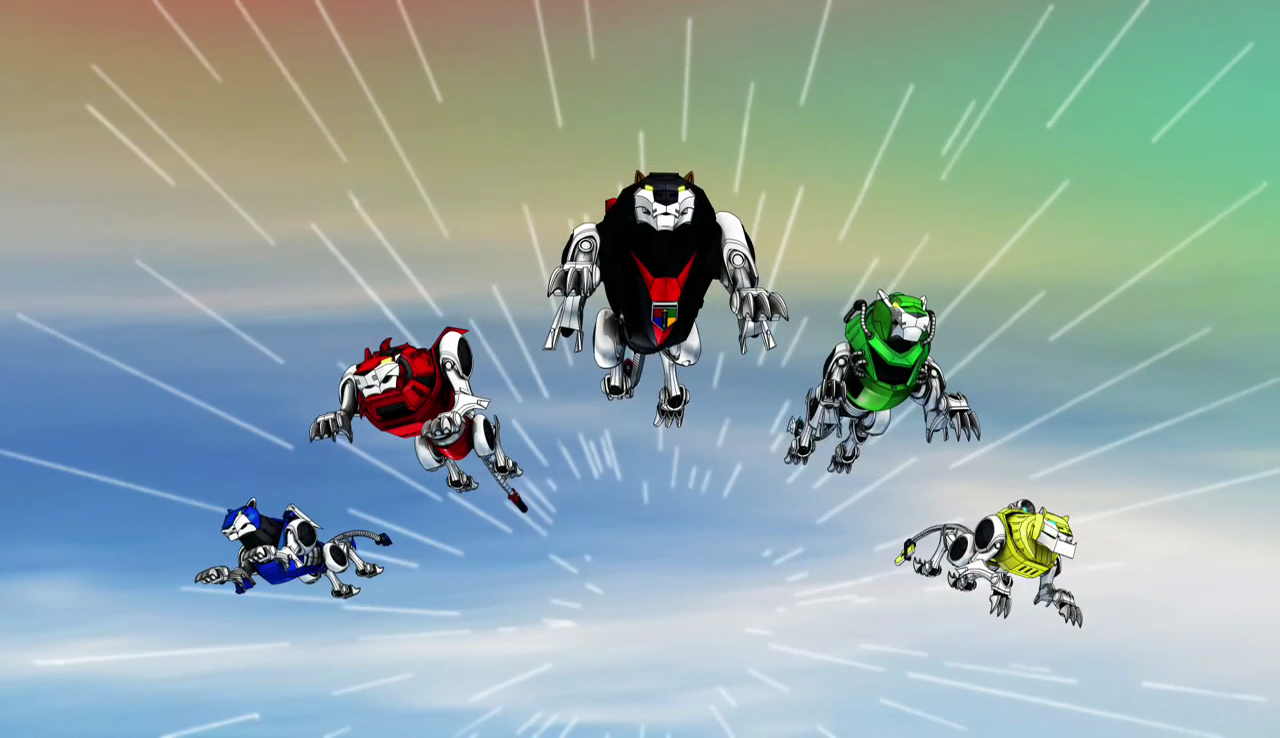
Were there parts of the Lions or Voltron that had not been well defined by the designers? Did you have to “fill in the gaps” as you created the models?
Yes, there are some. This is normal and understandable especially that almost all of the parts of the robots are moving since they’re mechanical so we need to adjust and “fill in the gaps”. But we made sure that overall look of the models still matches the designs.
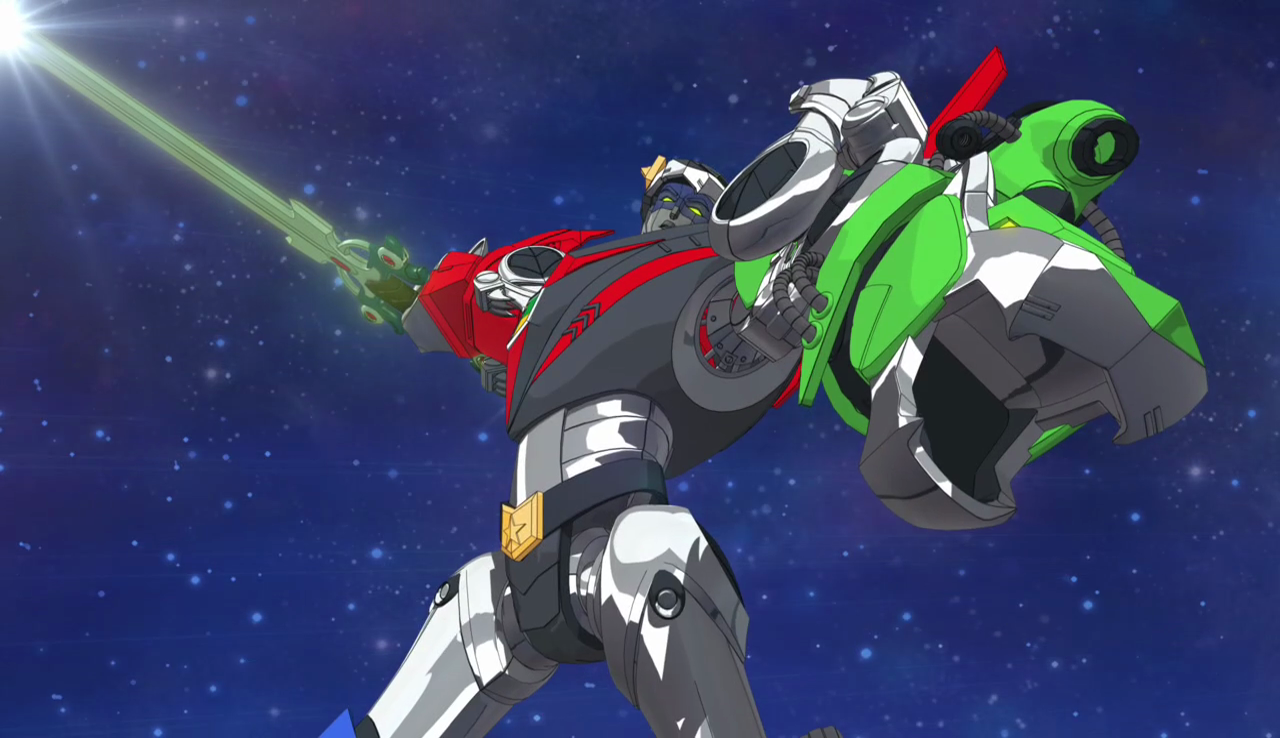
As you were modeling the Lions and Voltron, did you take into consideration things such as rigging and range of motion, or were those things figured out after the models had been completed?
Yes, of course, I have to consider those. While I was modeling, I need to always consult our rigger and lead animator for rigging and animation and deformation issues. It’s a practice we often follow and is part of our production pipeline.
Can the 3D models of the Lions “really” convert into the 3D model of Voltron, or were the models of the Lions and Voltron completely different? Were any parts of the Lion models used directly on the Voltron model?
Yes, the Lions can convert into the model of Voltron but not completely and perfectly. We added some “cheats” and camera tricks to make the transformation look flawless, 😀
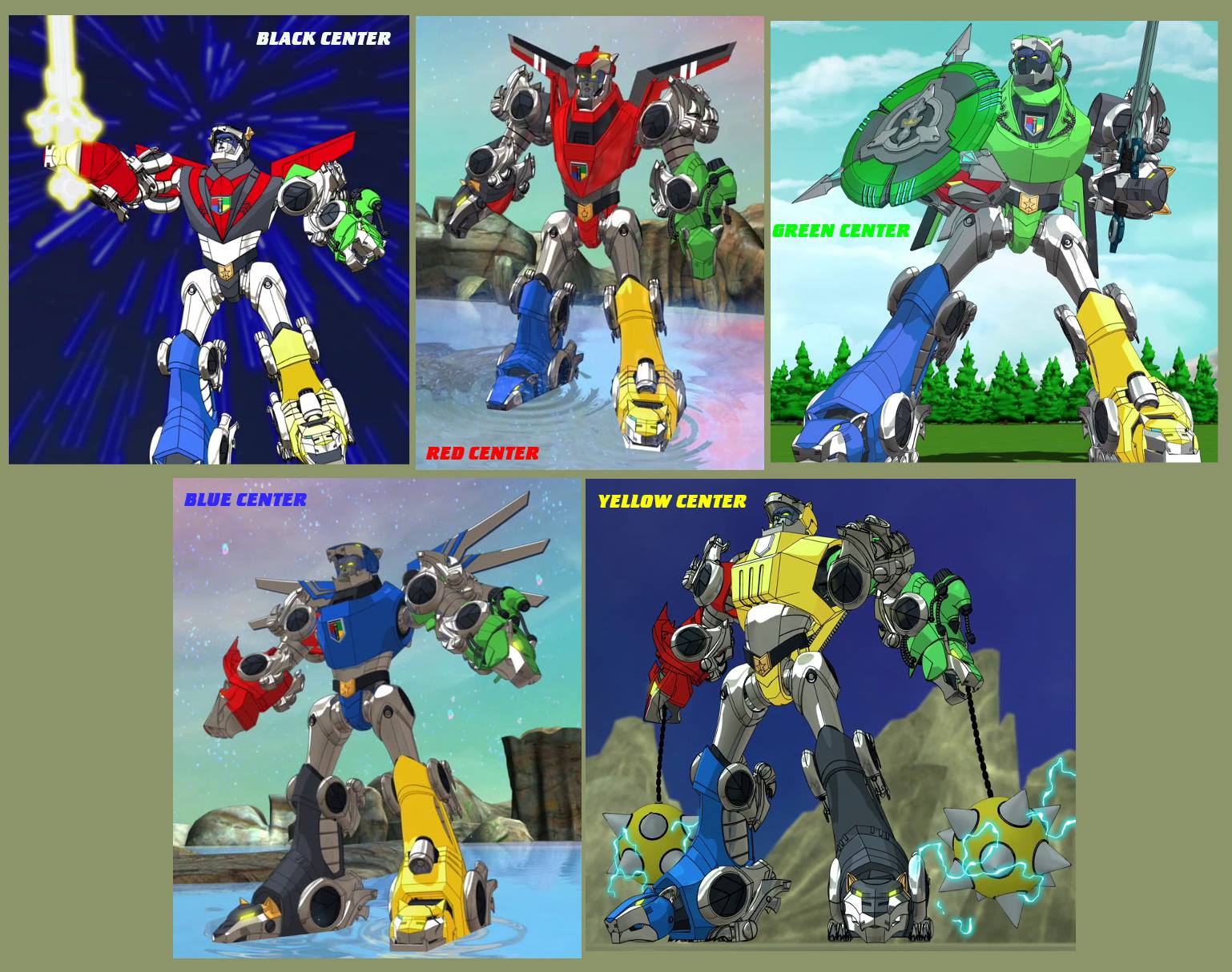
In Voltron Force, the Black Lion can switch places with any other Lion to form a different configuration of Voltron, so Voltron has five configurations: Black Center, Red Center, Green Center, Blue Center, and Yellow Center. Were these five Voltron models based on the same “skeleton?” Did they have the same proportions, rigging, etc., or were they different?
Yes, they basically have the same skeleton setup. Their proportions too, are the same. On the other hand, there is a small difference on rigging side, especially on the back of each robot where lies different weapons/parts where there is a need for additional controllers.
Since you created the 3D CGI models of the Lions and Voltron, you are probably more familiar with them in a “physical” sense than anyone else. How well do you think they could have been made into toys?
I actually saw my models turned (it was 3D printed I think) to toys by Mattel if I’m not mistaken. Toys were a bit small and I saw that some of the details were lost.
If you were designing transformable Voltron Force lions, how might you go about making lions that could form all five of Voltron’s configurations? (I imagine this would be a fun design challenge!)
If in 3D, I imagine my design of the lions composed of hundred of parts and each one moving and rotating while transforming into a Herculean kick-ass Voltron.
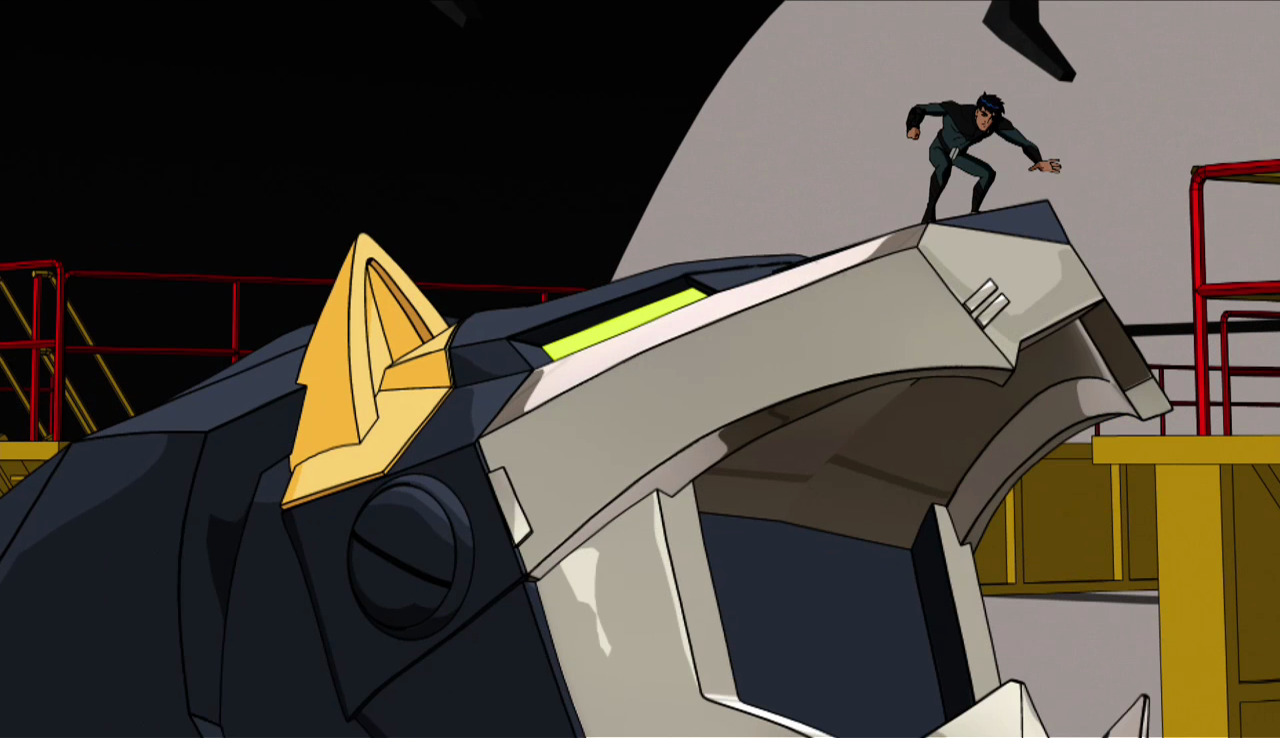
Were you happy with the look of the show? What things, if any, might you have done differently if given the chance?
Yes, I was. But it could have been better if we did it in full 3D including those 2D characters manning the lions/Voltron. That could be more exciting and challenge on the 3D part.
How did you feel about Voltron Force being canceled after just one season? Would you have liked for the show to have continued for more seasons?
I feel sad of course, especially for the thousand or I would say millions of avid fans of Voltron out there.
Have you watched Voltron: Legendary Defender? What do you think of it?
I have watched a portion of it and looks nice! The new designs of the lions and Voltron itself look better.
What would be your “dream” job as an artist?
How about being part of the 3D team to create Voltron Movie? 😀
Do you have any advice for anyone who would like to become a professional modeler and/or work in the animation industry?
If 3D animation is your passion, don’t stop practicing and hone your skills whether it’s modeling, animation, rigging, lighting, and rendering. Furthermore, don’t stop and rely on just one software because almost every year, lots of new 3D software are being introduced. Practice and innovate, otherwise, you’ll be left behind.
For people who would like to see more of your artwork online, what are some links that people can check out?
You may check some of my works on my website. It’s http://sesinioamponganjr.wixsite.com/lordczy and https://www.artstation.com/czy
Thanks to Sesinio Ampongan, Jr., for sharing his talents in the creation of Voltron Force, and for participating in this interview!
Let’s Voltron: The Official Voltron Podcast #107:
Yesterday Let’s Voltron: The Official Voltron Podcast #107 was released! In this episode, Marc Morrell and your friendly neighborhood author of this web site talk with Lendy Tayag, whose LEGO Ideas Voltron model from Voltron: Defender of the Universe has been approved to be an actual licensed LEGO model, to be released sometime in 2018!
(This web site previously reported the LEGO announcement here: https://lionsandpilotsandbots.com/2017/08/03/lendy-tayags-lego-ideas-voltron-is-go/)
We also discuss the all-new Voltron Legendary Defender: The Paladin’s Handbook, which was released yesterday. (I will be reviewing the book on this website in the coming days.)
Finally, Marc and I spin through all seven episodes of the third season of Voltron Legendary Defender, sharing our thoughts about each episode.
You can listen to Let’s Voltron #107 at this link: https://letsvoltron.simplecast.fm/episodes/759439a0/lego-voltron-designer-lendy-tayag-season-3-review
Voltron Legendary Defender on Amazon Video
The first two seasons of Voltron Legendary Defender are now available on Amazon Video! You can buy access to individual episodes, or to entire seasons.
Season 1 – https://www.amazon.com/The-New-Alliance/dp/B0743NP3FD/
Season 2 – https://www.amazon.com/The-Ark-of-the-Tajueer/dp/B0743P3M4T/
Voltron: Legendary Defender on iTunes?
Fellow Voltron fan JC Baker, in the “Voltron Central” Facebook group, has reported finding the first two seasons of Voltron Legendary Defender on iTunes. Baker reported seeing each season available in standard definition (SD) or high definition (HD) for $14.99.
It was announced at San Diego Comic Con 2017 that the program would soon be available through outlets such as Netflix.
Let’s Voltron: The Official Voltron Podcast #106: AJ LoCascio (Lotor), Voltron at SDCC 2017, VLD S3 Initial Reaction & More
Let’s Voltron: The Official Voltron Podcast #106 will be released later today! This episode features an exclusive interview with AJ LoCascio (Prince Lotor from Voltron Legendary Defender), the conclusion of the podcast’s coverage of Voltron at San Diego Comic Con 2017 (with guest Shannon Muir), an initial reaction to the recently released third season of Voltron Legendary Defender (with three guests), and a surprise at the end!
Check out Let’s Voltron at: http://letsvoltron.com
Name Reference: Lotor’s Generals (Voltron Legendary Defender)
Here is a simple reference for the names of Lotor’s four generals from Voltron Legendary Defender. The generals were introduced during the program’s third season.
The spellings of the names are based on the English subtitles of the episodes. Pronunciations are based on how their names are pronounced in the episodes.
(Click the image to full it at full size.)
